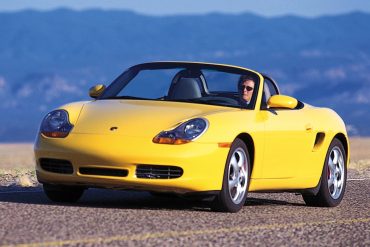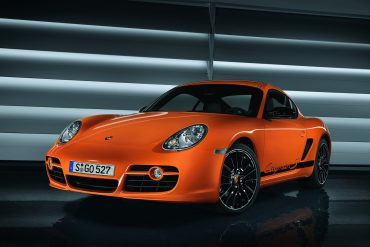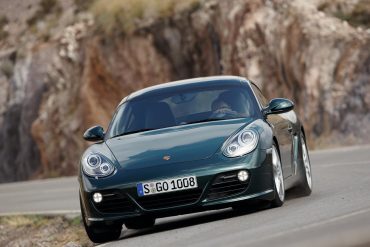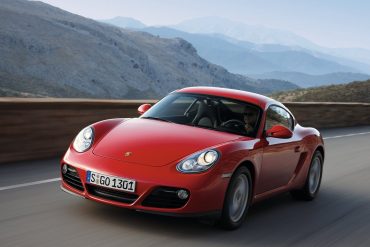

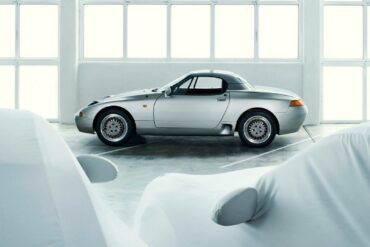
Porsche 984 Concept Car
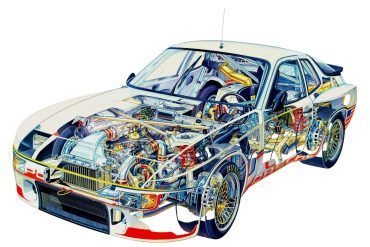
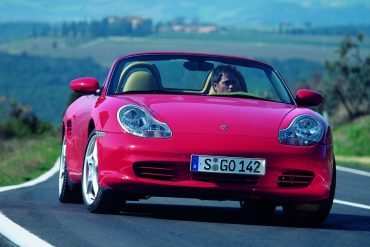
Sports two-seater concept car: As a study for a future vehicle concept, between 1984 and 1987 the Porsche Development Center in Weissach worked on a compact, lightweight, and aerodynamic roadster. The project was inspired by a development job previously undertaken for the Spanish automaker Seat. As a small and relatively inexpensive sports car in the price range of US$ 14,000, the Porsche 984 was designed to appeal to a young, sporty clientele.
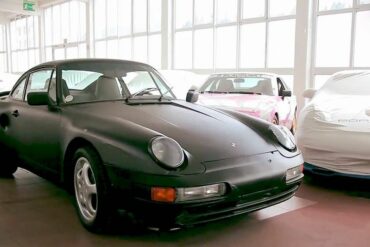
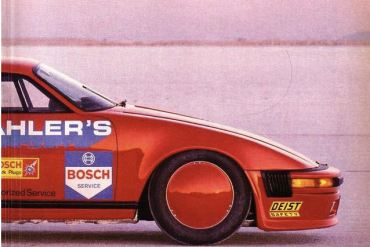
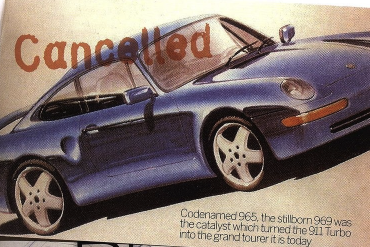
The Porsche 965 was an engineering mule, used to try and solve the tough problem of how to replace the 930's turbocharged, air-cooled engine to power a new sub-959, range-topping 911. Costs ballooned, the project floundered, and ultimately in its last throes, its engineers got desperate. The flat-six with water-cooled heads was too complex, and too expensive, to work. A water-cooled Audi V8 was tested out back, a last-ditch effort to find a cost-effective, power-dense solution.
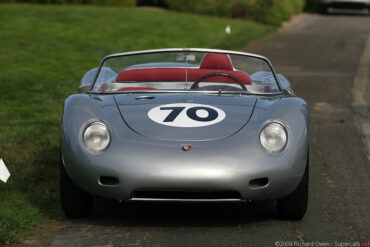
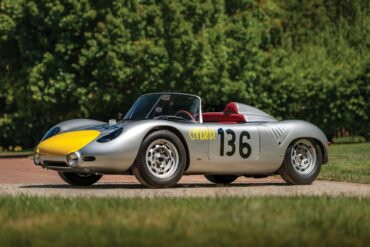
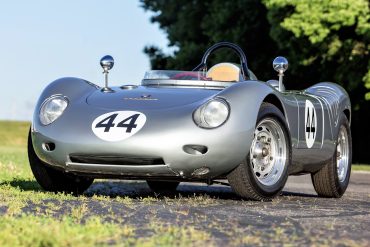
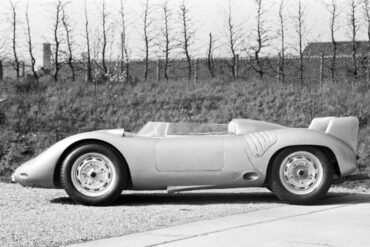
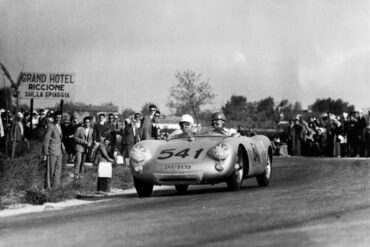
The 1961 Porsche RS was one of the last Spyders made by Porsche that used the potent 4-cam engine. It was a successor to the 1960 RS60 which was a highly developed version of the original 550 RS Spyder. These diminutive racecars excelled on the tighter courses like the Targa Florio which was first won by Porsche in 1956. That victory marked the first time a sports car with a midship engine had won a major motor sports event.
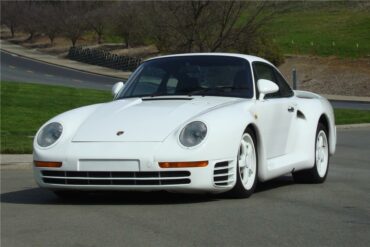
The first prototype receiving those modifications was code named “F3”, and was destroyed in the first crash test. A total of 37 prototypes and pre-production cars were used for testing and press activities. Most of these prototypes were dismantled and discarded, but several managed to survive. In 1985, Porsche’s head of development Helmut Bott earmarked 29 930 Turbo chassis to be turned into 959 prototypes for testing.
Porsche 787
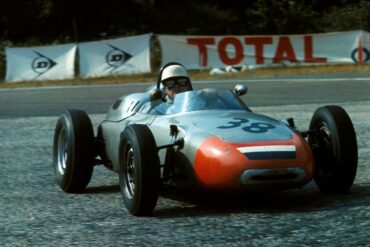
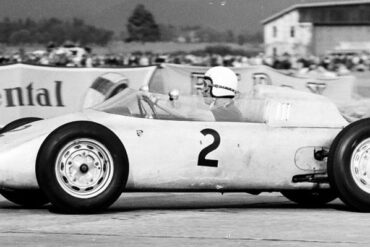
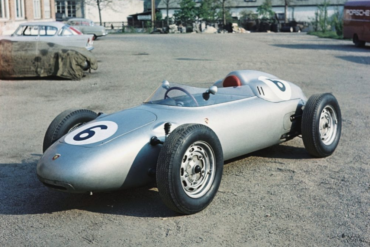
The Porsche 787 is a Formula One (F1) racing car built and raced by Porsche for one year in 1961. The first car (a prototype) was created from the experimental Porsche F2 car with chassis number 718/2-05. The 1961 Porsche 787 was the first Porsche with fuel injection, 6-speed transmission and coil springs in all corners. Only two 787s, serial numbers 78701 and 78702, were ever built. Due to their lack of power and poor handling it was retired.
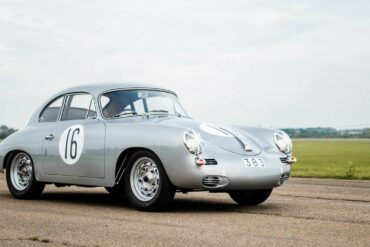
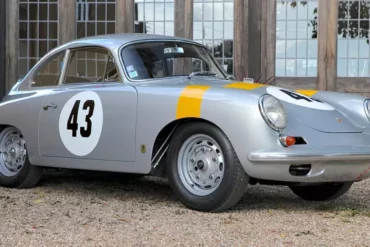
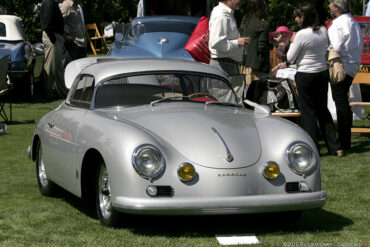
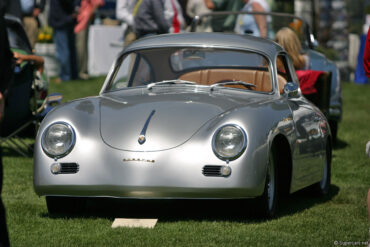
While all 356 Carreras are rare and desirable cars, the 1961 B Carrera GT is a very special animal indeed. Built from lightweight materials and sporting Porsche’s most powerful racing engine of the time, they were in a different league to the most highly specified road car that the Stuttgart factory then produced. Porsche produced only 49 of the 356B Carrera versions for 1960/61 and all were coupes. Many were painted Silver.
Around 20 Super 90 Coupes were ordered with the lightweight GT package for racing. They used aluminum panels, a lightweight interior and plexiglas windows to shed over 200 lbs off the standard production coupe. Inside the car came equipped with a roll bar, leather-strap window lifts and speedster seats. Aluminum exterior panels included the doors, hood, rear deck lid.
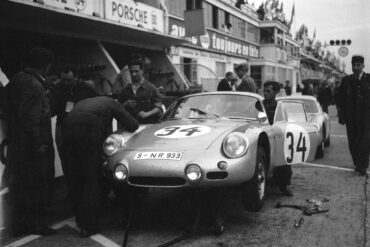
In keeping with FIA regulations, Porsche created a new lightweight 356 with help from Abarth. After Porsche had considered numerous Italian companies to manufacture a lightweight 356 body, they settled on Abarth. Franco Scaglione penned the first initial drawings which attempted to reduce frontal area, overall height. Included was an adjustable scoop on the rear deck lid. Made entirely of aluminum, Abarth's body was smaller than the Reutter 356.
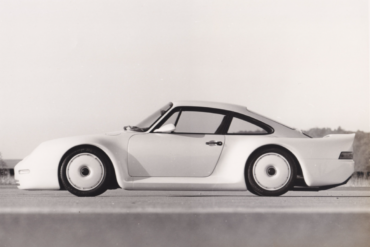
The idea for 959 was born as early as 1983 when this so-called Guppe B prototype was displayed at Frankfurt Motor Show. While there were glimpses of the contemporary 911 in the Gruppe B – the wheelbase, the roofline, the windows and doors, much of the interior – in truth the new model had little in common with Porsche’s perennial sports car. The production 959 ended up being launched in 1987.
The fifth and the last of the 718/2 F2 cars, with chassis number 718/2-05 was an experimental formula racing car. It had the 718/2 chassis, but a different body. The car never got its own type number. It was a one-off car, continuous development project that later evolved into something that became the prototype for the 1961 Porsche 787 F1 car and then even for the 1962 Porsche 804 F1 car. 718/2-05, was first seen at the F2 race on Solitude race track near Stuttgart in July 1960.
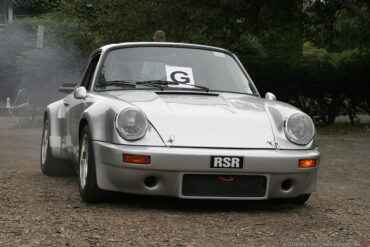
In the 1970s Porsche was serious about turbocharging and this prototype signaled the way for later cars like the 930 and the RSR 3.0. It was also the one of the very first show cars fitted with the wide body, large alloy wheels, whale tail and a turbocharged version of the flat-6. All these details eventually appeared on the 911 RSR 3.0-liter race car of 1974. The show car was built from a standard 911S fixed with a radical body kit.
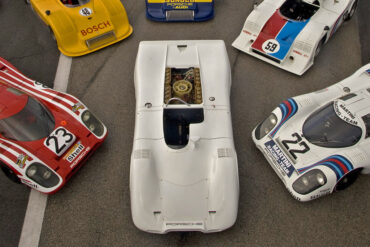
The Group 7 class in CanAm was virtually unlimited with regard to regulation, so Porsche was free to try many different avenues to source extra power. Two main themes were explored: the first was to go into uncharted territory and turbocharge engines with an exhaust-driven turbine. Eventually this was the chosen route, but it didn't reach fruition until a larger 16-cylinder engine was tried.
Porsche 718 RS 60
For the 1960 season the FIA made changes to the regulation regarding the windscreen and cockpit size. These rules changes together with a larger (1.6-litre) Type 547/3 engine, developing 160 horsepower (120 kW) and a new double wishbone rear suspension brought about the RS 60 model. The RS 60 brought Porsche victory at the 1960 12 Hours of Sebring with a car driven by Hans Herrmann and Olivier Gendebien. 1960 also saw Porsche win the Targa Florio with Hans Herrmann being joined on the winner podium by Jo Bonnier and Graham Hill. z
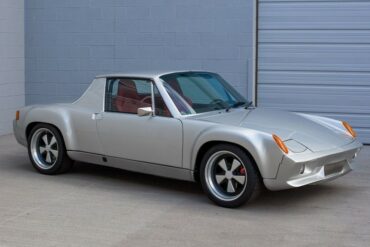
After a highly modified 914 finished sixth overall at Le Mans in 1970, Ferdinand Piëch saw potential for a higher-performance, luxurious version that could be registered for highway use, and pursued the idea of what would become the Porsche 916. Planned for the 1972 model year, the Porsche 916 program was cancelled after eleven prototypes were built.
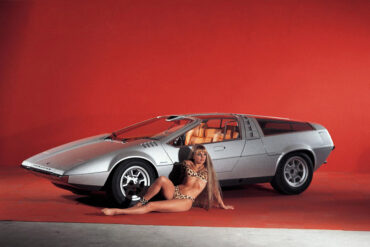
The Porsche Tapiro is a concept car built by Porsche in 1970. It was designed by Giorgetto Giugiaro and has a traditional 1970s wedge design, which critics say somewhat resembles the De Tomaso Mangusta. The chassis is based on the Porsche 914/6, and it features gullwing-style doors. First shown at the 1970 Turin Motor Show, it will be remembered as one of the most unusual Porsches and the first car to receive Italdesign’s signature wedge shape.
Porsche 718/2 F2
In 1959 Porsche unveiled the prototype of a narrow, open-wheeled car called the Porsche 718/2 that married the 718's mechanicals with a more traditional single-seat Formula body. For 1960 the production 718/2, starting with chassis number 718201, received revised bodywork, a 6-speed transaxle, and a wheelbase extended by 100 mm. A total of five cars were built. Some of these four-cylinder cars were later raced in F1 under the 1962 1½ litre formula.
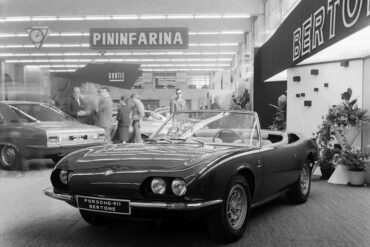
Southern California Porsche dealer Johnny von Neumann knew what his customers wanted, and a Targa top Targa 911 wasn’t it. With Porsche’s approval, he hired designer Nuccio Bertone to create a one-off 1966 Porsche 911 Spyder, in hopes of launching low-volume production. Just one example was constructed.  The engine incorporated a vertically-mounted cooling fan, a 9.1:1 compression ratio and two triple-choke 40PI Solex carburettors. Peak output was 130bhp at 6100rpm and 174lb-ft at 4200rpm. Transmission was via a Type 901 five-speed gearbox and single-plate clutch.
A handful of push-rod 356As were delivered from the factory with a lightweight package that was usually reserved for the Carrera race cars. Called GTs, these got the stripped out interior, aluminum doors, a large fuel tank and Porsche ATE disc brakes. As few as four Speedsters came equipped this way. Since the four-cam was only a marginal improvement in power, the regular 1600 Super was more than enough for the small car.
Following the Pre-A prototypes and a run of quad-cams with the 1500cc engine, the 1600 Carrera GT was a performance 356 that used a larger version of the Porsche 550 Spyder's potent engine. As early as 1958, some Carreras were fitted with a larger engine known as the Type 692. The new unit featured a larger displacement which was better suited for the 1600cc class. Furthermore, it was improved considerably adopting plain bearings and new ignition system.
Porsche 718 RSK Mittellenker
Porsche created the single-seat 718 RSK Mittellenker (center steering) to compete in Formula 2 racing. The body differed from the 718 2-seat sports racer only to accommodate the central driving position, with revised seat, steering, shifter and pedal placement, and the aerodynamic fairing behind the driver’s head moved from the left to the middle. Instead of having a full-width cockpit, the body sides were extended toward the center to create a space solely for the single driver, with a short, wrap-around windshield.
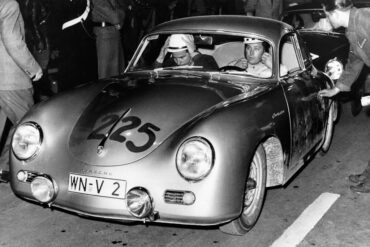
In May of 1957, Porsche offered two distinct versions of the Carrera, one called the de Luxe for the street and this model, the Gran Turismo, for the track. The main difference between the two models was weight. The Carrera GT was a purpose-built car with little on board amenities. For instance, no heater was fitted giving the car its 'icebox' nickname. Furthermore, the interior was stripped of sound deadening, side windows were replaced by pull-up Perspex units and only simple door panels were fitted.
The 718 was a development of the successful Porsche 550A with improvements made to the body work and suspension. The car's full name is 718 RSK, where "RS" stands for RennSport (sports-racing) and the "K" reflects the shape of the car's revised torsion-bar suspension. It had a mid-engined layout and used the 142 horsepower (106 kW) 1.5-litre Type 547/3 quad-cam engine introduced in the 550A. There were several variations, including the RSK Mittellenker.
The 550A was based on Porsche’s first purpose-built racing car, the mid-engined RS 550 Spyder. Appearing at the end of 1956, the 550A differed from its predecessor by use of a full tube spaceframe with several rear supportive cross-members, rather than the heavier welded-up sheet steel internal structure of the 550. The rear swing axles of the 550 were replaced by a new low-pivot arrangement that made handling much more predictable.