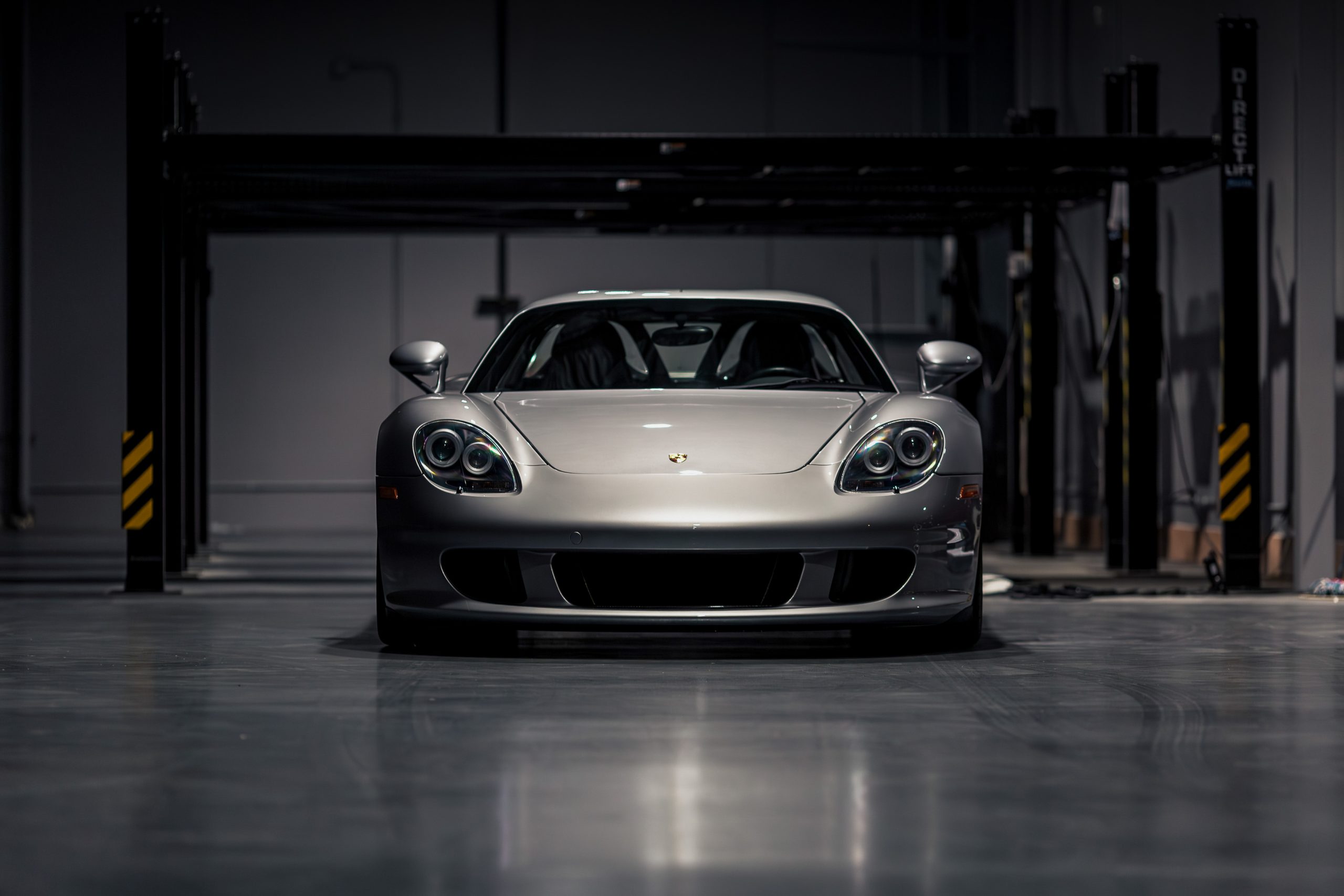
Porsche 904 – The Story
Porsche’s Type 904, officially called the Carrera GTS because Porsche and Peugeot were in dispute over numeric designations with “0” in them, succeeded the RSK Type 718 as the last sports-racing iteration of the 356 series.


The Story / Brief History / Model Guides / Performance / Images / Videos / FAQ / Updates
Manufacturer: Porsche
Production Years: 1964–1965
Production: 120 units
Assembly: Germany: Stuttgart, Zuffenhausen
Designer: Ferdinand Alexander Porsche
Body style: 2-door coupe, 2-door roadster (Bergspyder)
Layout: Rear mid-engine, rear-wheel-drive layout
Engine: 2.0 L Flat 4, 2.0 L Flat 6 (904/6), 2.0 L Flat 8 (904/8 & Bergspyder)
Dimensions: Wheelbase: 90.5 in (2,300 mm), Height: 42 in (1,100 mm)
The Porsche 904, officially known as the Porsche Carrera GTS, stands as one of the most iconic and influential sports cars ever produced by the Stuttgart-based marque. Born out of necessity and crafted with precision, the 904 bridged the gap between Porsche's purebred race cars and its road-going sports cars, leaving an indelible mark on both motorsport history and automotive design.
Produced between 1964 and 1965, the 904 was Porsche’s answer to evolving FIA regulations, which required manufacturers to build at least 100 street-legal units of their race cars to qualify for competition in the GT class. Porsche, under the leadership of Ferdinand Alexander "Butzi" Porsche, not only met the challenge but exceeded expectations, creating a car that was as stunning to look at as it was effective on the track.
With its lightweight fiberglass body, mid-engine layout, and a variety of powerful flat-four, flat-six, and even flat-eight engines, the 904 quickly proved itself as a formidable competitor. It achieved significant victories at legendary events like the Targa Florio, Sebring 12 Hours, and 24 Hours of Le Mans, cementing its reputation as one of Porsche's most successful race cars of the era. But the 904 wasn’t just about performance—it was also a design masterpiece. The sleek, aerodynamic shape, penned by Butzi Porsche, became a blueprint for future Porsche sports cars.
The Porsche 904, officially known as the Porsche Carrera GTS, holds a unique place in automotive history as both a formidable race car and an elegant road-going sports car. Introduced in 1963 for the 1964 racing season, the 904 was Porsche's response to changing FIA regulations that required manufacturers to produce at least 100 road-legal units for homologation in the GT class. What followed was a car that not only met the requirements but exceeded expectations, becoming one of Porsche’s most iconic creations.
The story of the Porsche 904 begins with the end of Porsche’s Formula 1 program in 1962. Seeking to refocus on sports car racing, Porsche needed a successor to the 718 RSK and RS 60 models. Under the leadership of Ferdinand Alexander "Butzi" Porsche, grandson of company founder Ferdinand Porsche, the design team embarked on creating a car that was light, aerodynamic, and adaptable for various engine configurations.
Unlike its predecessors, the 904 was the first Porsche to feature a fiberglass-reinforced plastic (FRP) body bonded to a steel ladder-frame chassis. This innovative approach not only reduced weight but also simplified production. Porsche collaborated with Heinkel, an aerospace company, to produce the lightweight bodies, which were then mounted onto the chassis at Porsche’s factory in Zuffenhausen.
The 904’s design was a departure from Porsche’s previous race cars. Butzi Porsche, who had recently designed the first-generation Porsche 911, penned the sleek, minimalist shape. The car's low-slung profile, curved fenders, and teardrop-shaped roofline not only enhanced aerodynamics but also gave the 904 a timeless aesthetic that still turns heads today.
Beneath the fiberglass body, the mid-engine layout provided optimal weight distribution, improving handling and cornering performance. Initially, the 904 was powered by the 2.0-liter, four-cylinder Type 587/3 engine, a highly advanced unit derived from Porsche’s earlier 356 Carrera models. Producing around 180 horsepower, the engine featured dual overhead camshafts, twin-plug ignition, and dry-sump lubrication, making it one of the most complex four-cylinder engines of its time.
To cater to different racing classes and privateer customers, Porsche later offered the 904 with more powerful engines, including the 2.0-liter flat-six from the newly introduced 911 and the 2.0-liter flat-eight derived from Porsche’s Type 771 race engine.
The Porsche 904 made its competitive debut at the 1964 Monte Carlo Rally, where it immediately proved its capabilities by finishing second overall, driven by Eugen Böhringer and Rolf Wütherich. This strong start was a sign of things to come, as the 904 quickly established itself as a dominant force in international sports car racing.
One of the 904’s most significant victories came at the 1964 Targa Florio, where it claimed first and second overall, showcasing its reliability and performance on one of the world’s most challenging road races. The 904 also performed admirably in endurance events like the 12 Hours of Sebring, 1000 km of Nürburgring, and the legendary 24 Hours of Le Mans, often outperforming more powerful competitors thanks to its lightweight design, exceptional handling, and fuel efficiency.
Between 1964 and 1965, the Porsche 904 secured numerous class wins and overall victories, cementing its reputation as one of the most versatile and successful race cars of its era.
While the 904 was primarily designed for racing, Porsche’s decision to build at least 100 homologation units meant that the car was also available to private customers as a road-legal sports car. In total, 106 examples were produced, making the 904 a rare and highly coveted collector's item today.
Despite its racing pedigree, the 904 offered a surprisingly comfortable driving experience for the road. The interior featured bucket seats, a simple dashboard, and basic amenities, though it remained focused on performance rather than luxury. With its mid-engine layout, responsive handling, and distinctive styling, the 904 quickly earned praise from enthusiasts and automotive journalists alike.
Although the Porsche 904 had a relatively short production run, its impact on Porsche’s future designs was profound. It marked Porsche’s first use of a fiberglass body, a technology that would later be employed in other race cars and production models. The mid-engine layout also became a hallmark of Porsche’s future racing machines, including the legendary Porsche 917 and modern Porsche Boxster and Cayman models.
Today, the Porsche 904 is celebrated not only for its racing success but also for its aesthetic purity and technical innovation. Original examples are highly sought after by collectors, with pristine models commanding prices well into the seven figures at auctions.
In essence, the Porsche 904 represents the perfect fusion of form and function, embodying Porsche's unwavering commitment to engineering excellence and motorsport success. It remains a shining example of what can be achieved when racing ambition meets design ingenuity.
From the track to the road, the Porsche 904 continues to captivate enthusiasts and collectors alike, standing as a testament to Porsche's golden era of motorsport innovation.
The 904 was produced by Porsche in 1964 and 1965. It was officially called Porsche Carrera GTS due to the same naming rights problem that required renaming the Porsche 901 to Porsche 911. Built for racing, the Porsche 904 spawned several models, largely differentiated by their engine.


Below we have outlined a basic overview of some key specifications for the Porsche 904 models. For more in-depth specs, see our 904 spec by model.
Call us biased, but we think the Porsche 904 is one of the sexiest cars of all time. These galleries prove it.


The most asked questions about the amazing Porsche 904.
The Porsche 904 is super rare so its hard to pinpoint an accurate market given the lack of examples. There have only been a handful of sales in the last five years and those went between US$1.5 million to US$2.5 million.
In addition to 106 units with four-cylinder engines, six works racing (904/6 Carrera GTS) cars with 200-hp, six-cylinder engines and three 904/8 with eight-cylinder powertrains were produced in total. There was also the 904 Bergspyder, of which five units were produced for racing.
The four cylinder Porsche 904 coupe, manufactured from 1963 to 1964, was street-legal under road traffic laws, allowing it to be driven not only on race tracks but also on public roads.
The Porsche 904/4 GTS (1963-1964) had a top speed of 163 mph. The Porsche 904/8 Carrera GTS managed a top speed of 161 mph.
Recent auctions, awesome review videos and all the latest news and posts regarding anything to do with the Porsche 904.
Join Our Porsche Community
Sign up for our weekly Porsche newsletter. The latest Porsche news, rumors, reviews and more delivered to your inbox. Cool Porsche stuff perfect for the flat-six obsessed.