
Porsche Models
All
Latest


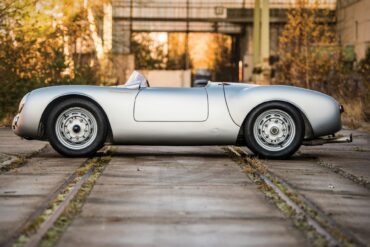

The Porsche 550 Spyder was introduced at the 1953 Paris Auto Show. It was simple, small and packed a real punch. It was Porsche's first production racing car. The car was completely street legal, so it could be driven to the races and back home. A really special engine was developed for it, engineered by Ernst Fuhrmann. It was a flat DOHC engine, meaning it had 4 overhead camshafts like the Porsche type 360 design for Formula 1.
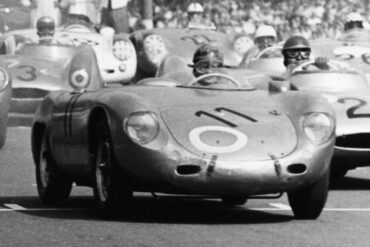
Planned as a successor to the Porsche 550. A one off prototype was the 1956 super-light design utilising one of the spare 550 frames – 550-098 called ‘Mickey Maus’ which, with Richard von Frankenberg at the wheel, was reduced to a melted wreck that same year in a spectacular crash at the Avus race track. Known as Type 645, it was the beginnings of the new Type 718 Porsche with a shorter wheel base and unique suspension.
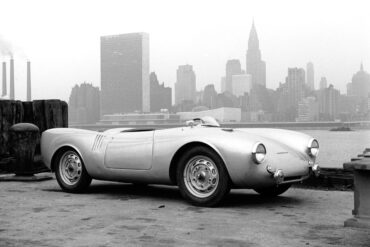
In 1953 Porsche created a series of 550 prototypes and 550-03 became the most important car in Porsche history by winning the 1954 Carrera Panamerica with Hans Herrmann at the wheel. This singular victory lent the Carrera nameplate to future models and also marked the first international victory of a mid-engine car. Only 15 prototypes were made until regular production began in 1954 of the Porsche RS Spyder.
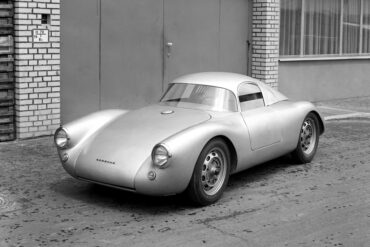
One year before Porsche started production of the legendary RS Spyder, they experimented several unique 550 Prototypes. Two of these were fitted with removable hardtops that transformed the diminutive roadster into a sleek coupe. These were quite successful on faster circuits, but the roadster was later preferred as a more saleable car. The Coupes were retained by the factory to contest the Carrera Panamericana race.
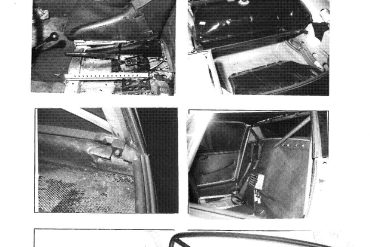
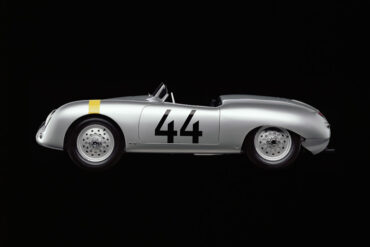
Successful VW Dealer and racer Walter Glöckler built several specials for the German Car Championship including this roadster. It was built with assistance from Porsche in Zuffenhausen and raced without its optional hardtop in the 1952 champion before being shipped overseas for SCCA racing. Weidenhausen created the body from aluminum with a nose that bore close resemblance to the 356 Porsche but had semi-skirted rear wheels and cutaway rear corners similar to Glockler-Porsche 1 and 2.
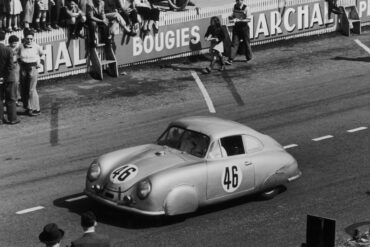
In 1950, eleven remaining Gmund chassis were assembled after the factory returned to Germany and converted to SL (Sport Leicht) racing specification. They received 1,086-cc engines, enlarged fuel tanks, louvered quarter-window covers, wheel spats, streamlined aluminum belly fairings, and a pedestal-mounted shifter. Three Type 356/2 cars raced at Le Mans in 1951; two crashed, but 356/2-063 performed flawlessly, winning the 1,100-cc class.
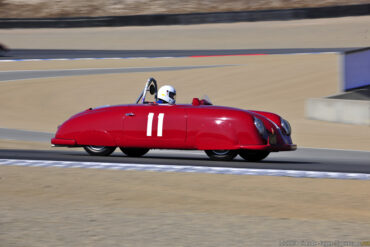
When Porsche went to Le Mans, they reverted to aluminum shells made at their first factory in Gmünd, Austria. Three of these coupes, called 356 SL, raced Le Mans. All three Le Mans cars were shipped to America by Max Hoffman and sold to Fritz Kosler, Ed Trego and John von Neumann for SCCA racing. Before the 1952 races at Torrey Pines, von Neumann had Emil Diedt remove the coupe's roof, creating in effect the first Carrera Speedster.
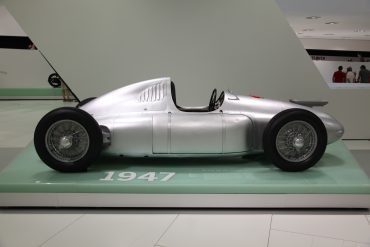
The Cisitalia Grand Prix is a single-seater car for the postwar 1.5-litre supercharged Grand Prix class, built by Italian sports car manufacturer Cisitalia and introduced in 1949. It was designed on behalf of Cisitalia by Porsche between 1946–47, and is therefore also known by its Porsche project number, Typ 360. An extremely advanced design, it proved too complex to build for the small Italian firm (and lead to the financial downfall of the company).
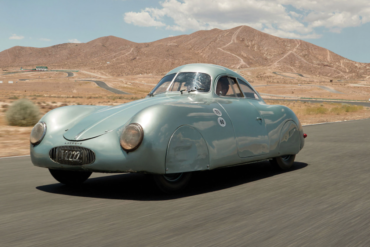
The Porsche 64, also known as the Type 64 and Type 60K10, is considered by many to be the first automobile from what was to become the Porsche company. The first KdF Berlin-Rome competition car, chassis number 38/41, was finished on August 19, 1939. It had a streamlined body and small 4-cylinder aircooled 1100 cc flat engine.






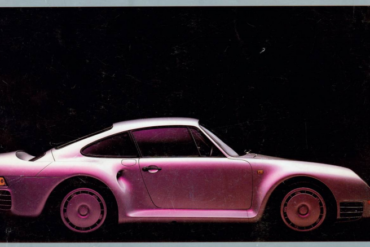
Porsche 959 Sales Brochure This is the original 1988 sales brochure for the 959. The 959 was produced in 1988...
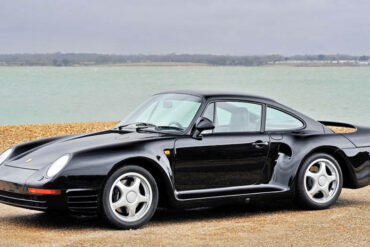
Porsche 959 Spare Parts Catalogs (1987 – 1988 Model Year) These official Porsche PET Diagrams and codes for the 1987...
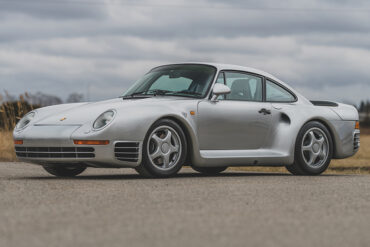
Porsche Option Codes – Porsche 959 Looking to decode your Porsche 959 option codes? Want to know what those codes...
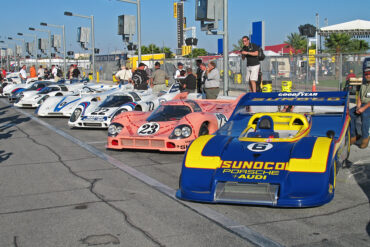
Porsche 917 Turns 40 Porsche launched the 917 40 years ago and it’s still their most important racecar to date. This...