
Porsche Models
All
Latest


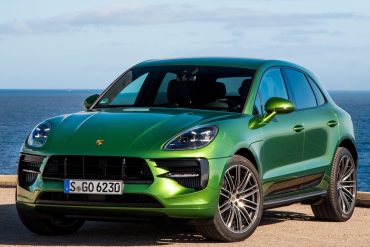

2019 – 2021 Porsche Macan S Pictures & Gallery...
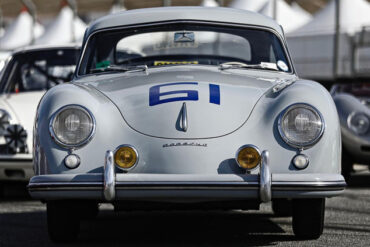

It is interesting how, sometimes when you trace an old classic car or historic racer back to its roots, you...
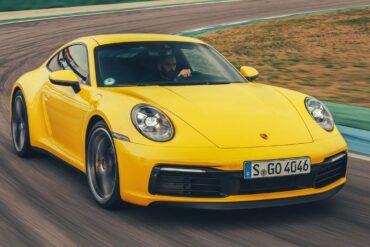
First Drive in the 992 Carrera 2S Doorhandles that pop out? Cupholders that bump your elbows? Pinky fingers getting trapped?...


While diplomats and cartographers may technically show the roads around Le Mans as French soil, Porsche has laid claim to...

GT3 RS 4.0 RS Ride & Review Our first video with Henry at Lakeside Classics and what a way to...
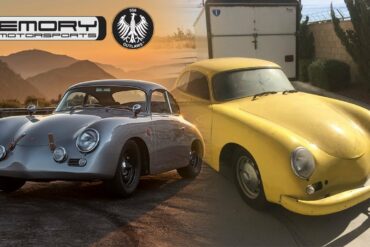
How we made the 1959 Emory Outlaw RHD Coupe in GT Silver How we made the 1959 Emory Outlaw RHD...

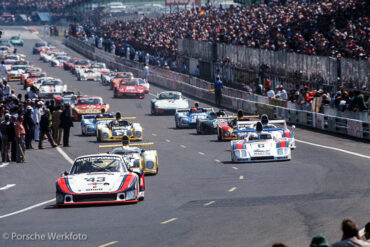
As we wave goodbye to 2018 and usher in a brand-new year, we look back on the top ten favourites...


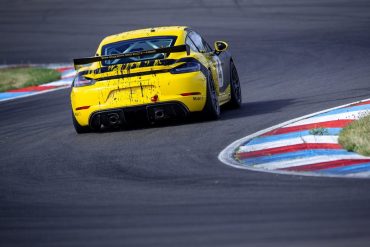
On 3 January 2019 the 718 Cayman GT4 Clubsport was unveiled in two variants, Competition and Trackday, with first customer cars delivered to customer teams ahead of the 2019 Roar Before the Rolex 24 Hours at Daytona International Speedway. The race car is powered by a 3.8-litre naturally-aspirated flat-six engine producing 425 PS (419 bhp; 313 kW) at 7,500 rpm and 425 N⋅m (313 lb⋅ft) at 6,600 rpm connected to a 6-speed PDK gearbox. The kerb weight is 1,320 kg (2,910 lb). Both variants feature a welded-in roll cage, a six-point harness and race bucket seat, a selection of body parts made of natural-fibre composite materials and race suspension from the 911 GT3 Cup.

How to Convert a Classic into An Electric Car...

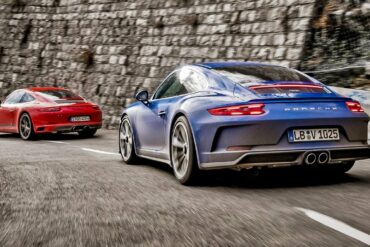
Comparing The Analogue Porsches A clash of the analogue Porsches? It’s a David vs Goliath battle of retro-flavoured 911s as...

Porsche 911 Carrera RSR Turbo 2.1 On Track This is a 911 that wrote a big part of Porsche history....
Amongst its numerous attributes, Porsche sports cars have always been about performance, engineering, innovation and being different. From the production...
The Base 991 Carrera Video Review If you want to buy a new 911 now, you’d better be prepared to...

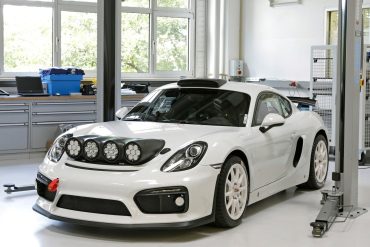
Porsche plans to return to rally racing with a 718 Cayman GT4 Clubsport R-GT Rallye. The car came about because of the positive response Porsche received on a rally car concept that it sent out into the world. Before the official car comes, Porsche did some testing with its 718 Cayman GT4 Clubsport-based concept race car. The company let racing legend Walter Röhrl get behind the wheel at the GP Ice Race in Austria.

991.2 Porsche 911 GT3 RS Review We go for a drive in the 2018 Porsche 911 GT3 RS. And we...

Porsche is celebrating their 70 years in the making with the Porsche 911 Speedster Concept car. With the Carrera Cabriolet 4 body as its canvas, the Speedster concept pays homage to its predecessors - most notably, the Porsche 356 1500 Speedster. The limited production Speedster is immediately distinguishable from the current 911 line-up, with its “double bubble” tonneau cover and other unique offerings and design tweaks.


The Porsche Rennsport Reunion VI in September 2018, was always going to be a special event, as the Porsche company...

The Mission E Cross Turismo concept is a more outdoorsy activity-wagon version that was first displayed at the 2018 Geneva motor show. This concept was built as a drivable car. Porsche essentially took the Mission E project’s hardware in development, so it serves as a snapshot of where things stood about two years into a five-year program.


The Porsche vision “Renndienst” (2018; 1:1 hard model) is the free interpretation of a family-friendly space concept for up to six persons. The design team designed a futuristic “space shuttle“ with exciting proportions. The study shows how the Porsche design DNA with its characteristic surface modeling can be transferred to an unknown vehicle segment for the brand.

The decline of Group 6 and the growth of Group C saw the emergence of what is today widely regarded...
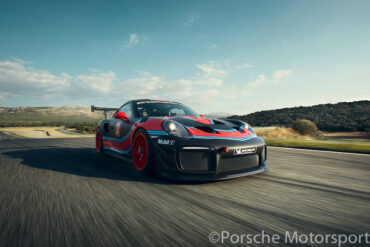
The new Porsche 911 GT2 RS Clubsport celebrated its world premiere at the Los Angeles Auto Show on 28 November...
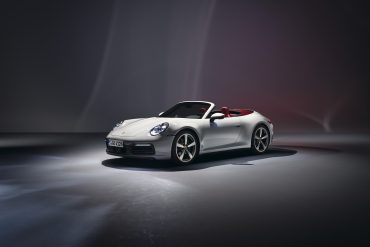
The Porsche 911 Carrera S Cabriolet also features a heated glass rear window and integrated magnesium support elements. The automatic fabric top opens and closes at speeds of up to 31 miles per hour in just 12 seconds – one second quicker than before. The 992 Carrera S Cabriolet gets a twin-turbo 3.0-liter flat-six with 443 bhp and 390 ft lbs of torque. That is 29 more horsepower and 22 more ft lbs of torque than the outgoing model.
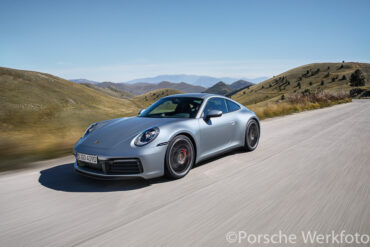
There was a sensation on the West Coast of America last night with the Porsche 911 World Premiere in Los...
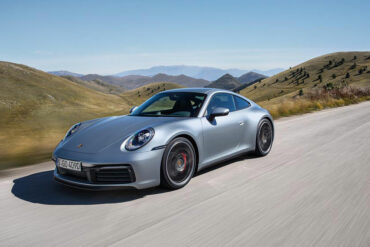
If the base 911 coupe doesn't do it for you, maybe the Carrera S coupe gets you over the line. For about $20k more, you get more horsepower, torque vectoring and bigger wheels. The Carrera S uses a version of the 3.0L twin-turbo flat-6 that generates 443 hp and 390 lb-ft of torque. Torque vectoring allows different amounts of torque to be distributed between drive wheels on the same axle. This means the inside wheel can turn slower than the outside wheel for improved cornering.
Removing the roof the car is supposed to have little impact on its chassis stiffness and curvy road prowess, but Porsche tells us that the current generation 911 Cabriolet drives just as well as the coupe. Powering the base Cabriolet is the same impressive turbocharged flat-six engine that makes 379 bhp @ 6500 rpm and 331 ft lbs of torque. The base cabriolet can do the 0 to 60 mph run in 4.2 seconds flat. With the optional Sport Chrono Package that drops to 4.0 seconds.
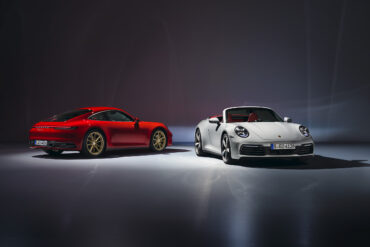
The most basic version of the Porsche 911 Carrera is pretty sweet. Porsche chose to detune the twin-turbocharged flat-six engine and downgrade some of the chassis components. These cars offer very good performance and driving dynamics for a slightly lower price. While marginally larger and heavier than the 991-generation model it replaced, the 992 is also more advanced. Power climbs by 15 bhp from the 991 Carrera, to 379 bhp @ 6500 rpm, which is more than enough horsepower for the street.

The world has become obsessed with anniversaries or facts that you can leverage, in order to bring your message across....


Porsche scores fourth place at Macau in the 2018 FIA GT World Cup in Macau. In a fiercely contested race...




Both the factory Porsche 911 RSRs finished on the podium at the final round in 2018 of the WEC in...

There will be four Porsche 911 GT3 R on the starting line of the world’s toughest street race, the FIA...
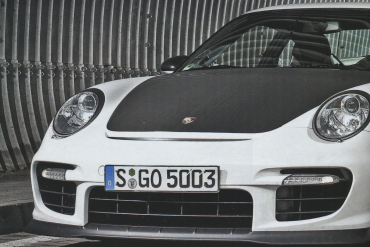
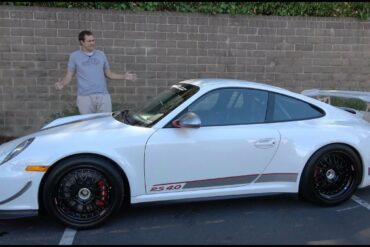
Doug DeMuro Reviews the 911 GT3RS 4.0 The 2011 Porsche 911 GT3RS 4.0 is one of the most desirable modern...
I am a big fan of Steve Sutcliff’s video reviews. He gets cars and you can tell just how genuinely...
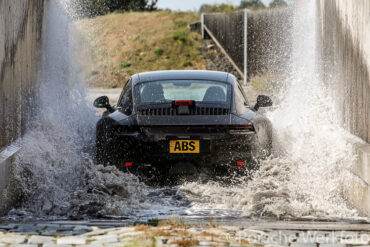
The endurance tests for the eighth generation of the Porsche 911 enters the home straight as the new model will...

There is little that you can add to the vast history that is already known about the Porsche 917, or...
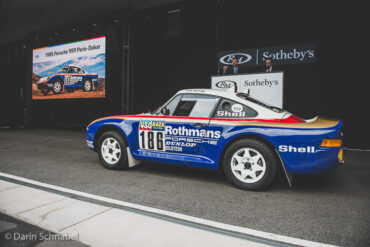
Lot #196, the 1985 Porsche 959 Paris-Dakar, outstripped its pre-sale estimate at RM Sotheby’s Porsche 70th Anniversary Auction at the...

Porsche 911 GT3 (991.2) Manual Fun On this Special episode James and Thomas take a spin in the legendary Porsche...

Cayman GTS vs Boxster GTS Shootout We go for a drive in the 2018 Porsche Cayman GTS and Porsche Boxster...


Owning a sports car is a compromise: on the one hand, it doesn’t have the space of a family estate,...

Which Is a Better First Porsche? 996 C4S vs 997.2 C2 If you’re looking to buy your first 911, and...

Doug Demuro and the 991.2 GT2 RS The 2018 Porsche 911 GT2RS is the craziest Porsche 911 of all time....


With an investment of €6-billion and 1200 new employees, Porsche will enter the electric era with the new Taycan. The...

A Proper Road Review of the 991.2 GT2 Rs Henry Catchpole gives the Porsche 911 GT2 RS (991.2) a proper...
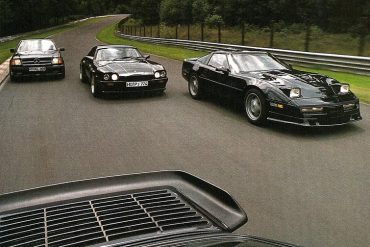


After racing at Spa, Zandvoort, Dijon, Magny Cours and Barcelona, the Porsche teams and drivers went to the south of...
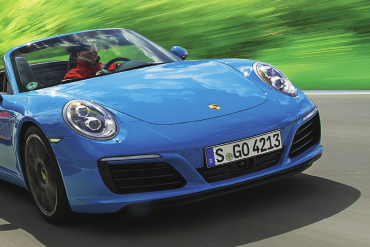

At the halfway point in the 2018/2019 WEC Super Season, Porsche leads the field in the GT Manufacturers title by...

Perfectly Describing the Magic of the 911 2.7 RS Respected architect Jonathan Segal poetically describes what the 1973 Porsche 911 2.7L...

Chris Harris Reviews the New 718 Cayman S Chris Harris gets the verdict on the Porsche 718 Cayman S. ...
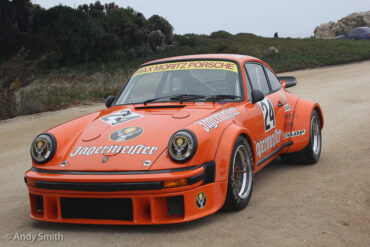
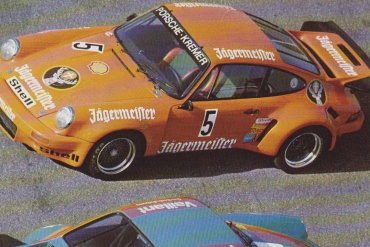
The Jägermeister 934 is one of the most recognisable liveries in the world of motor racing. It adorned the bodies...
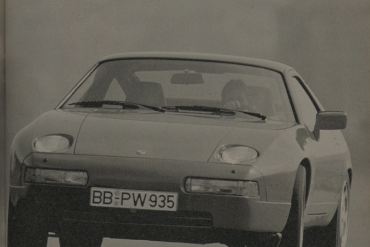


The Story of the Porsche 911 – A Timeline Porsche Prepares To Evolve Beyond The 356 By the early 1960’s,...

Without any doubt, one of the highlights of my year in motorsport in 2018 was the opportunity to pilot the...

The origins of the 1998 Porsche 911 GT1 Le Mans winner can be traced back to a roadgoing version of...
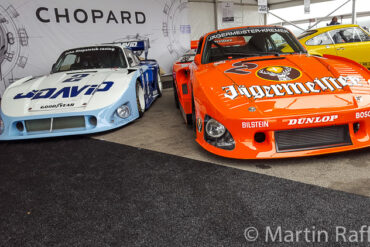

It’s hard to know where to begin when writing a report on Porsche Rennsport Reunion VI. It was both an...
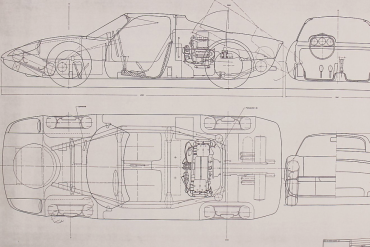


While the original 986 Boxster was a sweet ride, its performance began to lag behind newer competitors like the Honda S2000. Powered by a 2.5-litre flat six-cylinder engine, the base model was upgraded to a 2.7-litre engine in the year 2000. The gearbox options in the Boxster 2.7 are the same as in 2.5, but they got new type designations due to improvements. Externally, the 986 Boxster 2.7 looks like Boxster 2.5. Inside the side airbags are standard and the plastic feeling has been reduced. The fuel tank is a larger 64-liter. Alcantara trim is available on the options list.

Porsche’s sixth edition of the by now much-anticipated Rennsport Reunion kicked off on Wednesday 26 September 2018. You could have...


It was eight years ago, in March 2010, that Porsche presented its first hybrid supercar, the 918 Spyder Concept Study,...
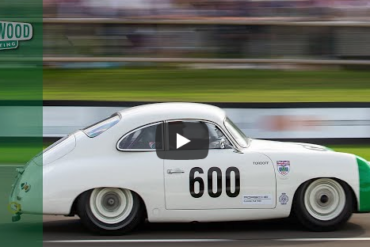
Video featuring Tordoff’s impressive run from last to 2nd in his Porsche 356 in the Fordwater Trophy at the Goodwood...

Mobil 1 The Grid attended the recent Festival of Porsche at Brands Hatch, where 2015 Le Mans winner Nick Tandy...

Porsche GT2 RS vs Lamborghini Aventador S! The title says it all. Just two friends drag racing two amazing cars...

Ultimate Track Test Road Racers. Ford GT, Porsche 911 GT2 RS, AMG GT R and Lotus Exige Cup 430 –...

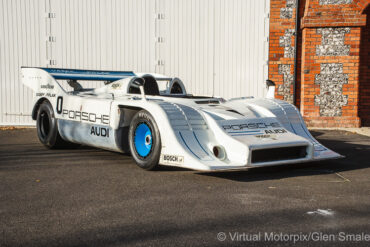
Jody Scheckter was born in East London on the east coast of South Africa, a sleepy seaside town that actually...

The Ultimate Restomod? Paul Stephens has been restomodding classic Porsche 911s for years. The Le Mans Classic Clubsport is his...

The IMSA series came once again to WeatherTech Laguna Seca Raceway in California for the penultimate round in the 2018...
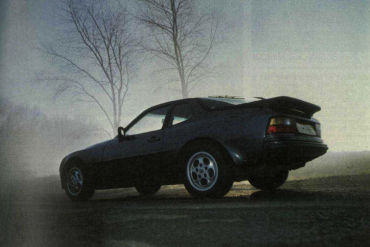

Rituals of Rennsport The power of Porsche is rarely measured on a dyno, but you can always tell when it’s...

Best On Track POV Video I’ve Ever Seen This Porsche 911 Carrera RSR being hammered on-track is the stuff of...
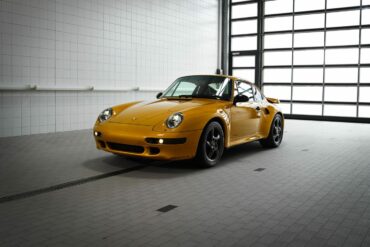
Porsche’s New Take On The Old 993 Porsche announced earlier this year that the marque’s 70th anniversary would in part,...

Porsche upgraded the performance of its 924 with the introduction of a turbocharged model in 1979. While the lower end of the engine remained unchanged, many improvements were made to the upper end of the engine as well as the drivetrain. On the outside, the car gained alloy wheels, a distinctive NACA duct in its hood, and a rear spoiler. Horsepower increased from the naturally aspirated 125 bhp to 170 bhp in the turbo.