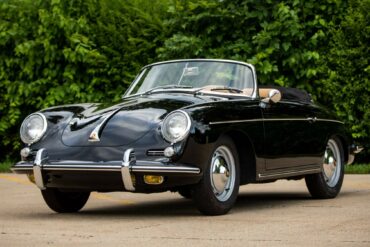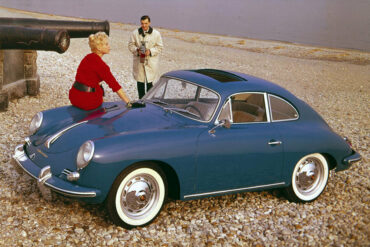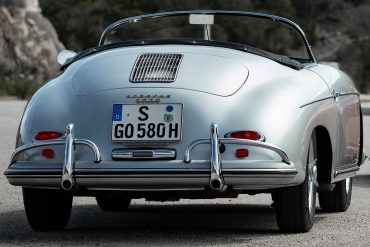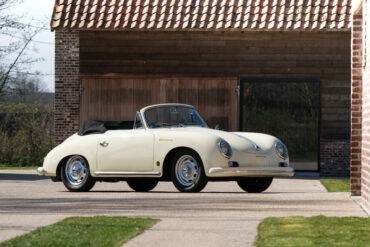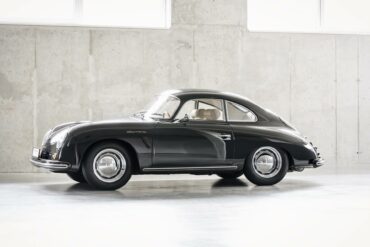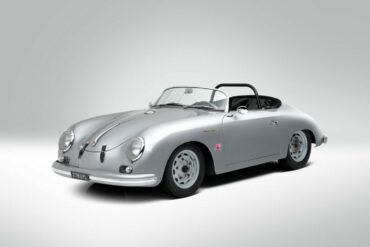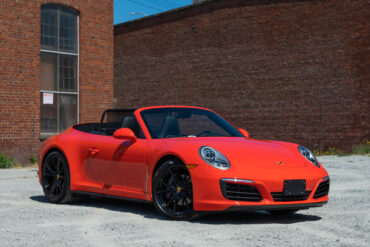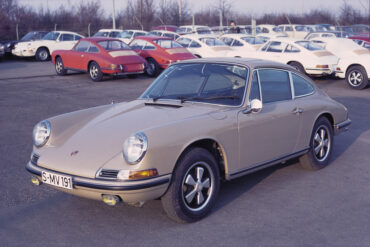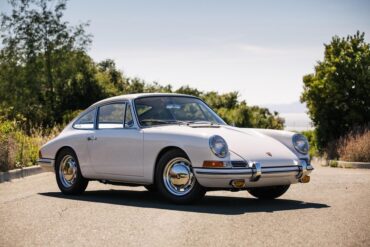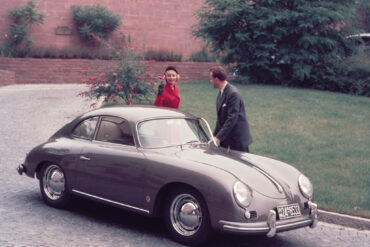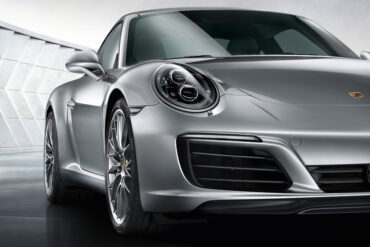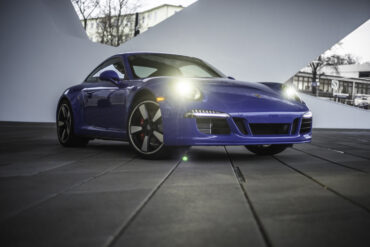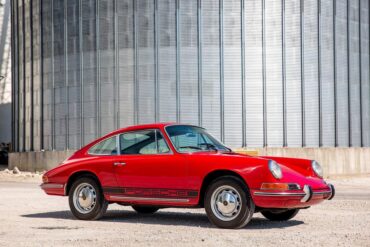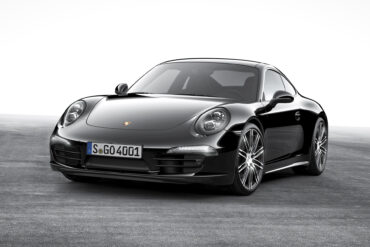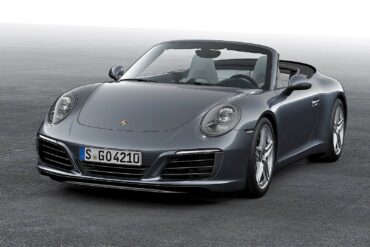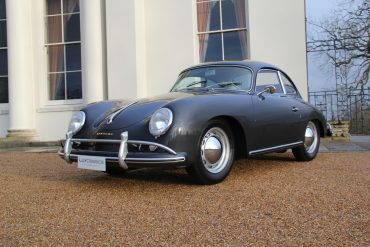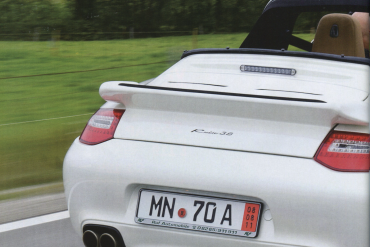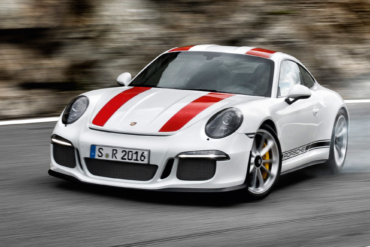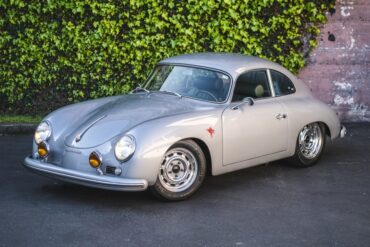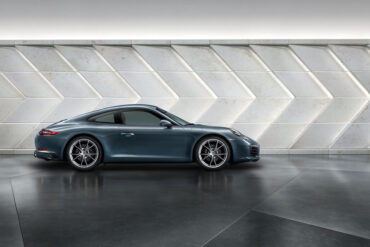

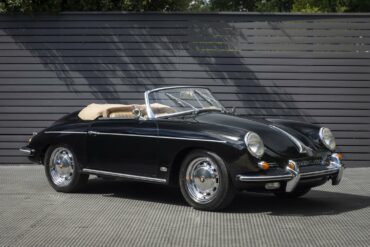
In September of 1959 Porsche revealed their fully updated 356 known as the 356B. This had a completely revised body that was more suitable for the American market. New to the model was the Type 616/7 Super 90 engine which was an indirect replacement for the Carrera de Luxe models. The engine was fully revised with a new intake manifold, a larger Solex 40 PII-4 carburetor and the Carrera air filters.
Porsche Models
All
- Porsche 911
- Porsche 914
- Porsche 917K
- Porsche 918
- Porsche 924
- Porsche 928
- Porsche 944
- Porsche 959
- Porsche 962
- Porsche Boxster Concept
- Porsche Carrera GT
- Porsche Cayenne
- Porsche Cayenne 955/957 (1st Gen)
- Porsche Cayman 987 (2nd Gen)
- Porsche RS Spyder (9R6)
- Porsche Boxster 986 (1st Gen)
- Porsche Cayman 981 (3rd Gen)
- Porsche 356 Pre-A
- Porsche Boxster 987 (2nd Gen)
- Porsche Cayenne 958 (2nd Gen)
- Porsche 718 Cayman 982 (4th Gen)
- Porsche 356 A
- Porsche Boxster 981 (3rd Gen)
- Porsche 356 B
- Porsche 718 Boxster 982 (4th Gen)
- Porsche 356 C
- Porsche 968
- Porsche Panamera
- Porsche Panamera 970 (1st Gen)
- Porsche Panamera 971 (2nd Gen)
- Porsche Boxster
- Porsche Cayman
- Porsche Macan
- Porsche Taycan
- Porsche 912
- Porsche 919
- Porsche 956
- Porsche 2708 Indy
- Porsche Type 64
- Porsche 918 RSR Concept
- Porsche 918 Spyder
- Porsche 918 Concept
- Porsche 918 Spyder Prototype
- Porsche 917
- Porsche Race Cars
- 911 Carrera RS 2.7
- Porsche 550
- Porsche 718
- Porsche 901 (911)
- Porsche Concept Cars
- Porsche 904
- Porsche 906
- Porsche 907
- Porsche 908
- Porsche 910
- Porsche 911 (F-Series)
- Porsche 911 (991)
- Porsche 911 (G-Series)
- Porsche 911 (964)
- Porsche 911 (993)
- Porsche 911 GT1 Race
- Porsche 911 GT1 Street
- Porsche 911 (996)
- Porsche 911 (997)
- Porsche 916
- Porsche 919 Hybrid
- Porsche 934
- Porsche 934/5
- Porsche 935
- Porsche 936
- Porsche Mission E
- Porsche 928 S
- Porsche 928 S2
- Porsche 928 S4
- Porsche 928 GT
- 911 Speedster Concept
- Porsche 928 GTS
- Porsche 928 Specials
- Porsche 928 H50
- Porsche 928 CS/SE
- Porsche 935 Tribute
- Porsche 597
- Porsche 551
- Porsche Mission E Cross Turismo
- Porsche 911 (992)
- Porsche Concept 917
- Porsche Sport Tourer Electric
- Porsche Le Mans Living Legend
- Porsche 960 Turismo Concept
- Porsche 919 Street
- Porsche 904 Living Legend
- Porsche 906 Living Legend
- Porsche 911 Vision Safari Concept
- Porsche Bergspyder Concept
- Porsche 917 Living Legend
- Porsche Macan Vision Safari
- Porsche Vision 916
- Porsche Vision 918 RS
- Porsche Vision 920
- Porsche Vision E
- Porsche 917 16-Cylinder Prototype
- Porsche 959 Gruppe B
- Porsche Carrera GT Concept
- Porsche Tapiro Concept
- Porsche 718 Cayman GT4 Rallye
- Porsche Taycan 4S
- Porsche Taycan Turbo
- Porsche Taycan Turbo S
- Porsche Type 360
- Porsche 645 Spyder
- Porsche 550 Coupé (Prototype)
- Porsche 550 Spyder (Prototype)
- Porsche 550 Spyder
- Porsche 550 RS Spyder
- Porsche 550A RS Spyder
- Porsche 787 F1
- Porsche 804 F1
- Porsche 904 Carrera GTS
- Porsche 904/6 Carrera GTS
- Porsche 904/8 Carrera GTS
- Porsche 904 Bergspyder
- Porsche 906 Spyder
- Porsche 906 LH Coupé
- Porsche 965 (911)
- Porsche 906 E Carrera 6
- Porsche 942
- Porsche 906/8 Coupé
- Porsche 959 Prototype
- Porsche 906 Carrera 6
- Porsche 969
- Porsche 910 Bergspyder
- Porsche 989
- Porsche 910 Targa
- Porsche 909
- Porsche C88
- Porsche 718 RSK Spyder
- Porsche Panamericana
- Porsche 718 RS 60 Spyder
- Porsche 718 RS 61 Spyder
- Porsche 718 W-RS Spyder
- Porsche 718 GTR Coupe
- Porsche 718/2 F2
- Porsche 718 RS 61 LM Coupé
- Porsche 718 RSK Mittellenker
- Porsche 907 K
- Porsche 907 LH
- Porsche 908/01 LH Coupé
- Porsche 908/01 K Coupé
- Porsche 908/02 K Spyder
- Porsche 908 K Flunder Spyder
- Porsche 908 LH Flunder Spyder
- Porsche 908/03 Spyder
- Porsche 908/03 Spyder Turbo
- Porsche 919 Hybrid Evo
- Porsche 984
- Porsche LMP2000
- Porsche LMP1-98
- Porsche 917 LH-69
- Porsche 961
- Porsche WSC-95
- Porsche 917 K-69
- Porsche 917 ‘Interserie Spyder’
- Porsche 917 K-70
- Porsche 917 K-71
- Porsche 917 LH-70
- Porsche 917 LH-71
- Porsche 917/20
- Porsche 917/10-71
- Porsche 917/10-72
- Porsche 917/10 Turbo
- Porsche 917/20 Turbo
- Porsche 917/30
- Porsche 914/4 (1.7 L)
- Porsche 914/4 (2.0 L)
- Porsche 914/6 (2.0 L)
- Porsche 914 LE
- Porsche 914/4 (1.8 L)
- Porsche 914/8
- Porsche 914-6 GT
- Porsche 924 (Base)
- Porsche 924 Turbo
- Porsche 924 Carrera GT
- Porsche 924 Carrera GTR
- Porsche 924 Carrera GTS
- Porsche 924S
- Porsche 924 Rallye Turbo
- Porsche 924 Carrera GTP
- Porsche 924 SCCA
- Porsche 944 Coupe
- Porsche 944 S Coupe
- Porsche 944 S2 Coupe
- Porsche 944 S2 Cabriolet
- Porsche 944 Turbo Coupe
- Porsche 944 Turbo S Coupe
- Porsche 944 Turbo Cup
- Porsche 944 Turbo Cabriolet
- Porsche 944 GTP
- Porsche 944 Swiss Special
- Porsche 944 French Special
- Porsche 944 Celebration
- Porsche 944 S2SE
- Porsche 968 Coupe
- Porsche 968 Cabriolet
- Porsche 968 CS Coupe
- Porsche 968 Turbo S
- Porsche 968 Turbo RS
- Porsche 968 Sport
- Porsche 959 Rally
- Porsche 959 Komfort
- Porsche Cayenne 9YA/9YB/9YC (3rd Gen)
- Porsche 959 Sport
- Porsche Boxster (Base)
- Porsche Boxster S
- Porsche Boxster S Special Edition
- Porsche Boxster Spyder
- Porsche Boxster RS 60 Spyder
- Porsche Boxster GTS
- Porsche Boxster T
- Porsche Cayman (Base)
- Porsche Cayman S
- Porsche Cayman GTS
- Porsche Cayman GT4
- Porsche Cayman R
- Porsche Macan 95B (1st Gen)
- Porsche Cayman S Black Edition
- Porsche Macan (Base)
- Porsche Cayman S Sport
- Porsche Macan S
- Porsche Cayman S Design Edition 1
- Porsche Macan GTS
- Porsche Cayman T
- Porsche Macan Turbo
- Porsche Cayman GT4 Clubsport
- Porsche Taycan (Base)
- Porsche 718 Boxster 25
- Porsche Taycan 4
- 964 Carrera
- Porsche Formula E
- 964 Carrera 4
- ’30 Jahre’ Anniversary
- 964 Speedster
- 964 Turbo
- 964 Carrera RS
- 964 Carrera Cup
- 964 RSR
- 993 Carrera
- Porsche Cayman GT4 RS
- 992 Edition 50
- 993 Carrera 4
- 993 Carrera 4S
- 911 2.0 Bertone Roadster
- Porsche Macan T
- 993 Carrera S
- Porsche Mission R Electric
- 992 Sport Classic
- 993 Targa
- Porsche Vision Gran Turismo
- 993 Turbo
- 993 Carrera RS
- 996 Carrera
- 992 America Edition 911
- 993 GT2
- 996 Carrera 4
- 993 Carrera Cup
- 996 Targa
- 996 Carrera 4S
- 996 Turbo
- Porsche 963
- 996 Turbo S
- Porsche 718 Cayman GT4 ePerformance
- 996 GT3
- 996 GT3 RS
- 996 GT2
- 996 GT3 Cup
- 996 GT3 R
- 996 GT3 RSR
- 996 GT3 RS Race
- 997 Carrera
- 997 Carrera S
- 997 Carrera 4
- 997 Carrera 4S
- 997 Targa
- 997 Targa 4S
- 911 Carrera 3.0 Coupe (G-Series)
- 997 Turbo
- 997 Turbo S
- 992 Carrera T
- 997 GT2
- 997 GT2 RS
- 997 Speedster
- 992 Dakar
- 997 Carrera GTS
- 997 Carrera 4 GTS
- 997 GT3 Cup
- 997 GT3 R
- 997 GT3 RSR
- 997 GT3
- 997 GT3 RS
- 991 Carrera
- 997 GT3 R Hybrid
- 991 Carrera 4
- 991 Carrera S
- 991 Carrera 4S
- Porsche 981
- 991 Targa 4
- Porsche Vision 357
- 991 Targa 4S
- 991 Turbo
- 991 Turbo S
- 991 Carrera GTS
- 991 Carrera 4 GTS
- 991 Targa 4 GTS
- 991 911 R
- 991 GT3
- 991 GT3 RS
- 991 GT2 RS
- 991 Speedster
- 991 GT3 R
- 991 GT3 Cup
- 991 RSR
- 991 Carrera T
- 992 Carrera
- 992 Carrera 4
- Porsche Type 540 America Roadster
- 992 Carrera S
- Porsche 718 Spyder RS
- 992 Carrera 4S
- 992 RSR
- 992 Targa 4
- 992 Targa 4S
- Porsche Mission X
- 992 Carrera GTS
- 992 Carrera 4 GTS
- 992 Targa 4 GTS
- 992 Turbo
- Porsche RS60 Spyder
- 992 GT3 R
- 992 Turbo S
- 992 GT3
- 992 911 S/T
- 992 GT3 Touring
- 992 GT3 RS
- 911 (G-Series)
- 992 GT2 RS
- 992 GT3 Cup
- 911 Carrera 3.0 (G-Series)
- Porsche Taycan GTS
- Porsche 356 SC
- 911 S (G-Series)
- 992 GT3 R Rennsport
- 911 Carrera RSR 2.8
- 911 SC (G-Series)
- 911 S/T
- 911 (Base Model)
- 911 Carrera 3.2 (G-Series)
- 911 L
- 911 SC Safari
- 911 Turbo (930)
- 911 T
- 911 Carrera RSR Turbo 2.1
- 911 E
- 911 Carrera RSR 3.0
- 911 S
- 911 SC San Remo
- Porsche 356
- Pre-A Speedster
- 911 R
- 911 Carrera 3.2 Clubsport
- Porsche 953
- 911 T/R
- 911 Carrera 25th Anniversary
- 911 Carrera RS 3.0
- 911 SC RS
- 911 Turbo LE
- Beutler Coupe
- 911 3.2 Speedster
- 911 Carrera 2.7 (G-Series)
- 911 Carrera Commemorative
- 911 Turbo 2.7
- Porsche 911 GT1
- Porsche 99X Electric
- 964 Turbo S
- Porsche Taycan Turbo GT
- Porsche Panamera 976 (3rd gen)
- Porsche Macan Electric (2nd Gen)
- Porsche 954
- Porsche Taycan Y1A/Y1B (1st Gen)
- Porsche Cayenne (4th Gen)
- Porsche Macan Turbo Electric
- Porsche Macan 4S Electric
- Porsche Macan 4 Electric
- Lohner-Porsche
- Porsche Macan Electric (Base)
- Porsche Taycan 9J1 (1st Gen)
- 992 “Turbo 50”
- Porsche Macan GTS Electric
- Porsche Type 940
- 992 Transfăgărășan Tribute
- Porsche 963 RSP
- 992 Carrera T Club Coupe
- 997 Sport Classic
- 992 GT3 90 F. A. Porsche
- Porsche Type 542
- Porsche Type 166
- Vision Renndienst Concept
- 991 50th Anniversary
- 997 Black Edition
- Porsche Cayenne Electric
- 992 GT3 SC
- 992 GT4 R
- 993 Turbo S
- 992 Spirit 70
In September of 1959 Porsche revealed their fully updated 356 known as the 356B. This had a completely revised body that was more suitable for the American market. The 1600 Super was also known as the 1600 S and that is what we are covering on this page. The 1600 Super sat in the middle of the lineup, below the Super 90 and above the base 1600. There were several variants with the base 1600 S engine, including the Coupe, Cabriolet, Notchback Coupe and Roadster, across both the T5 generation and T6 generation.
Porsche 911 (993) GT2 Driven Charles Morgan takes us through one of his favourite cars – the 911 993 GT2....
The 356 B T5 Coupe was the direct replacement of the Porsche 356 A Coupe. The T5 Coupe bodies were produced by German coachbuilder company Reutter. The 356 B T5 Coupe played a huge role in the growth seen by Porsche in the early 1960s. Like the Cabriolet, Roadster, and Notchback Coupe siblings, the Coupe was offered with 1600, 1600S, S90, and Carrera engine options paired to a four-speed synchromesh 741 transmission. In late 1961, Porsche introduced the T6 body and updates, which built on the success of its very popular predecessor.
One Take in a Tuned Porsche 996 Turbo X50 The Porsche 996 has sustained a long reputation for reliable speed,...
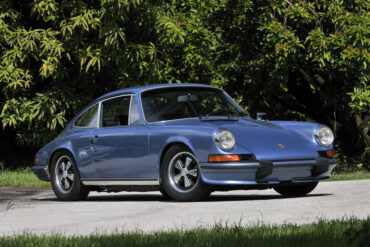
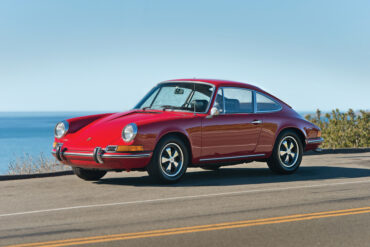
The final early 911S befitted from Porsche's 2.4-liter engine the the long-wheel-base body. As such it is one of the final classic 911s before the 2.7 came out in 1973. Visually, the 2.4 range received a new chin on the front valence that was standard on the 911S and optional for the rest of the range. The S model had slight larger 6Jx15 Fuchs alloy wheels over the other models. The final early 911S benefitted from Porsche's 2.4-liter engine the the long-wheel-base body
Of all the Carreras, the 1959 de Luxe was best suited for the road. Not only was it the most luxurious 356, but it was also was the only year to get the large 1600cc 4-cam engine. The Type 692/2 engine was a much different engine than the 1500cc unit it replaced. The newer unit used plain main bearings instead of roller bearings. Furthermore, the distributors were moved to the end of the crankshaft and the engine shroud was better attached to the 356A body. With twin Solex carburetors, the somewhat detuned version offered 105 bhp @ 6500 rpm.
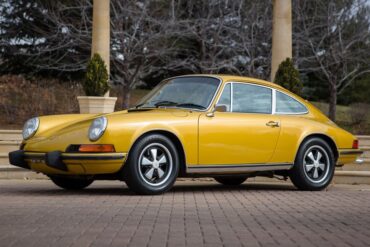
The Porsche 911E continued as the midrange 911 model for 1972 and 1973, fitting between the contemporaneous 2.4L 911T and the 2.4L 911S. As with the T and S variants, Porsche would upgrade the 911E to a new, larger 2,341 cc (2.3 L) engine, commonly known as the "2.4 L" engines. The 911E version, designated 911/52 was rated at 165 hp (it was designated 911/62 with Sportomatic). With the power and torque increase, the 2.4-liter cars also got the newer and stronger transmission.
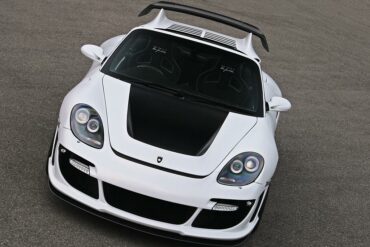
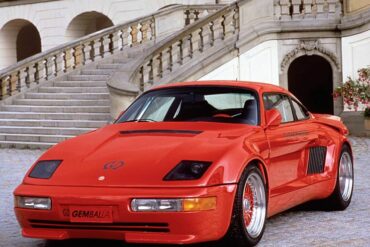
2009 Gemballa Mistrale Right at the market introduction of the Porsche Panamera, GEMBALLA Automobiltechnik GmbH & Co. KG for the...
The 911T Coupe and Targa continued as the entry level 911 for 1972 and 1973. As with the higher-end E and S variants, Porsche upgraded the 911T to a new, larger 2.3 L engine, commonly known as the "2.4 L" engine. With the power and torque increase, the 2.4-liter cars also got the newer and stronger transmission. Non-US versions (ROW), were carbureted and featured the Type 911/57 engine, rated at 130 hp. US-spec 911T's had engine Type 911/51 and were rated at 140 hp.
2002 Gemballa GTR 750 EVO Where Porsche stops, Gemballa takes off. As a long time tuner of Porsches, Uwe Gemballa...
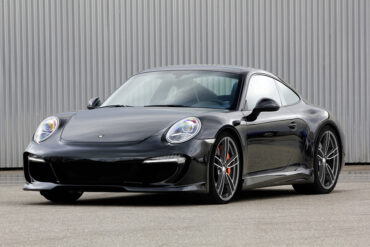
2012 Gemballa GT Coupé The legendary Porsche 911 spirit is alive and well in the new 991 Carrera. Even out...
2012 Gemballa GT Cabriolet The new 991 Carrera Cabriolet is the latest “air-cooled” 911 to stir the Porsche driver’s emotions...
2009 Gemballa Avalanche Roadster GTR 650 EVO-RS As unique car, the EVO-RS is Gemballa’s most potent looking roadster. Based off...
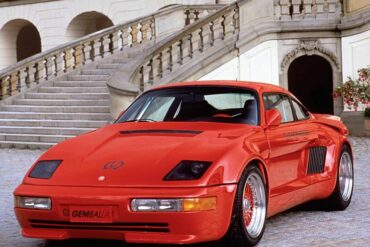
1990 Gemballa 911 Mirage In Detail type Series Production Car price $ $ 375,000 engine Turbocharged Flat-6 valvetrain DOHC displacement...
1995 Gemballa 911 Le Mans Biturbo In Detail engine Twin Turbo Flat-6 displacement 3746 cc / 228.6 in³ bore 102...
2002 Gemballa 911 GTR 650 For 2002 it looks like Porsche tuner, Uwe Gemballa, has tweaked his ulitmate creation, the...
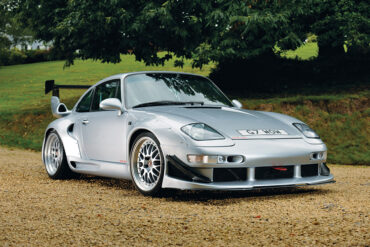
1996 Gemballa 911 GTR 600 At their London Motorcar Sale, RM Auctions sold this Gemballa Turbo. Their catalogues described the...
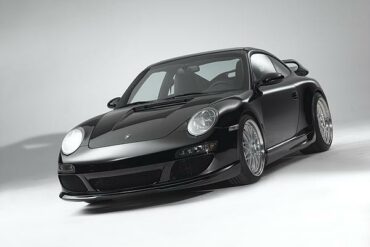
2005 Gemballa 911 GT 3.8 Gemballa have recently released some details of their 997 tuning program. At first glace their...
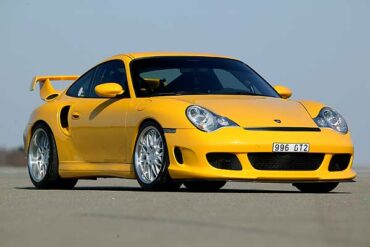
2001 Gemballa 911 GT In Detail = engine Flat-6 valvetrain DOHC 4 Valves / Cyl displacement 3387 cc / 206.7...
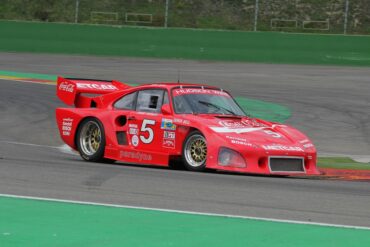
In 1982 Bob Akin Motor Racing commissioned spectacular Porsche 935 to be built for their Le Mans effort. It was built by Chuck Gaa of Gaaco to have a higher topspeed and increased performance. Chuck Gaa fitted a Lola T600 front end to a new bespoke bonded aluminum chassis. According to the regulations, the body retained the 930 roof structure, but was entirely new from the beltline down. The standard 3.2-liter Porsche engine was used and put out 750 bhp.
Along with all the C-series improvements to the 911 line, the 1970 Porsche 911 S was upgraded to include a 180 bhp version flat-6. This further improved the performance credentials of the model which already had Fuchs light alloy wheels and bigger brakes. Specific to the S model's engine was a re-profiled camshaft, larger valves, better porting, higher compression and larger jets for the Weber carburetors. This resulted in 30 more horsepower for a total 180 horsepower.
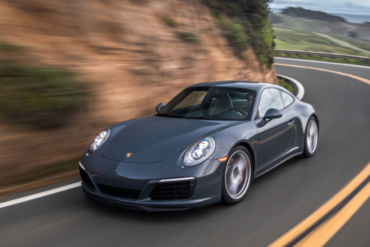
The 991.2 911 Targa 4S is powered by the latest water-cooled 3.0-liter twin-turbocharged flat-six from Porsche, producing 420 hp and 368 lb-ft of torque. It can be optioned with a PDK seven-speed dual-clutch automatic (a seven-speed manual is standard) and all-wheel drive is standard. Whereas the two earlier generations of Targas were little more than 911 Carreras with large glass sunroofs, the 991-series Targa nailed the look and feel of the original.
The 991.2 Targa did get some mild design changes, but they are all inline with the rest of the 991.2 changes. Despite the mild styling revisions, it’s a dramatically different car in terms of its engine. The iconic and highly regarded naturally aspirated 3.4-litre flat-six engine has been ousted for a more environmentally friendly twin-turbocharged 3.0-litre. It keeps its all-wheel drive system and is still an all-weather 911. A sports car with all-wheel drive is the first choice for more than one in three Porsche 911 buyers. It is sporty and comfortable, the turbo engines more powerful and consume less, with the improved all-wheel drive.
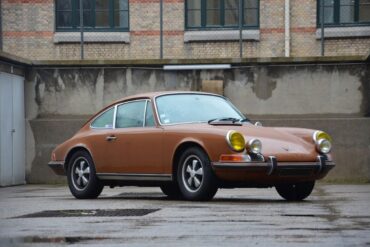
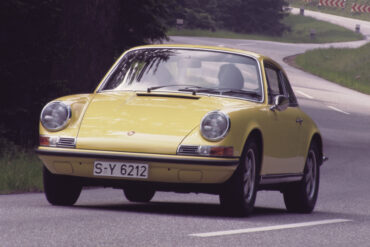
The Porsche 911E continued as the midrange 911 for the 1970 and 1971 model years, fitting between the contemporaneous 2.2L 911T and the 2.2L 911S. It produced 155 bhp and featured all the upgrades that came with C-Series production including longer wheelbase, Fuchs alloy wheels. Both the E and S model 911 had an aluminium engine-lid and aluminium bumpers. The 911 E 2.2 was once again available as either a Coupe or Targa body. For model year 1972, the 2.2L 911E was replaced by the 2.4L 911E.
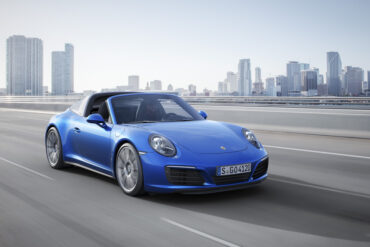
The Porsche 911T continued as the entry level 911 for the 1970 and 1971 model years, sitting below the 2.2L 911 E and the 2.2 L 911 S. The 911 T featured all the upgrades that came with C-Series production updates including longer wheelbase and Fuchs alloy wheels. During its production years it was available as both a Coupe or Targa bodystyle. As with the E and S variants, Porsche would upgrade the 911T to a larger 2.2 liter engine.
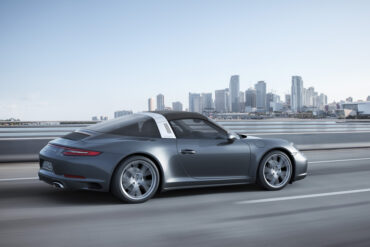
A new turbo flat-six engine is the headline news. Still super fast and surefooted all year round. The revised four-wheel-drive 911 makes the car's appeal on year-round, any-occasion usability even stronger. The 911 Carrera 4S receives a series of subtle styling updates as part of a reasonably comprehensive mid-life facelift. Included is a redesigned front bumper sporting active air ducts that open and close to channel air to the front-mounted radiators dependent on throttle load, revised headlights with altered internal graphics, larger exterior mirror housings and new door handles.
The Porsche 911 E was designed to fall nicely between the 911 T touring model and the top of range high-performance 911S. The Porsche 911 T would continue for its second year in Europe, and newly introduced into the United States market, as the entry level offering for the 911, sitting below the 1969 911E and the 1969 911S. The 1969 911E was powered by engine Type 901/09 (Type 901/11 with Sportomatic) featuring mechanical fuel injection (MFI). The 2.0 L Aircooled Flat 6 was good for 140 bhp at 6500 rpm.
Using factory 935/78 ‘Moby Dick’ plans, Kremer built their own version. In doing so they modified the body to their own design to include more downforce. Only two cars were built in K4 specification. Bob Wollek drove the first car to win the Porsche Cup in 1981. Later this car was sold to John Fitzpatrick Racing and driven by John Fitzpatrick and David Hobbs to many successes in the IMSA series.
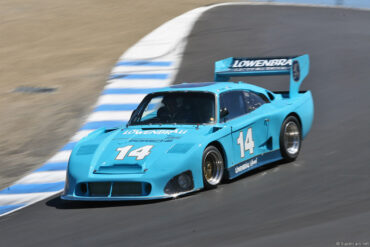
In 1977 Kremer sufficiently improved the 935 to begin series production of their own version. It was the third Kremer built on Porsche's successful platform and many 935/934s were updated to reflect ideas from the brothers in Cologne. The K3 version of their 935 was a great success and won the 1979 24 Hours of Le Mans, 1980 Sebring 12 Hours outright.
Upon seeing the factory 935s and what was possible using the 930 platform, the Kremer bothers from Cologne built up their own version. Their first car contested the World Championship of Makes in 1976 and in the following year, an updated version known as the K2 was further modified. Compared to the Porsche 935, the Kremer version was much more slab sided and featured fences along the top of the rear fender to direct air to the rear wing.
Available in all body styles, the Porsche 356 A Carrera featured the race car-derived 1500 cc four-cam engine (type 547) developed for the Porsche 550 Spyder. Rated up to 110 hp, it was the top performance 356 A model available. Variants included the Carrera 1500GS and Carrera 1500GT, differentiated by their horsepower. In 1958, Porsche updated the Carrera engines (now type 692), increasing the displacement up to 1600 cc and output increased to 105 and 110 hp respectively. In 1959 horsepower for the GT increased again to 115.
The new downsized flat-six gets forced induction, more power and greater efficiency, just like in the basic refreshed 911 Carrera, this time mated to a four-wheel-drive system nicked wholesale from the Turbo. Apparently one in three 911 buyers opt for a four-wheel-drive variant, so this is an important car to get right. The 3.0-liter twin-turbo flat-six in the 911 Carrera 4S is good for 414hp and 368 ft lbs of torque, helping it get from 0 to 62 mph in 4.2 sec with a manual, 4.0 seconds with the PDK and 3.6 sec with the PDK and optional Sport Chrono pack.
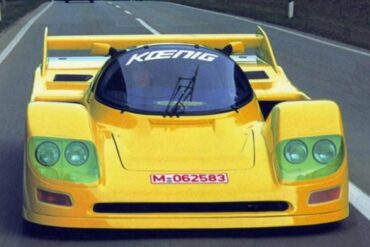
1991 Koenig-Specials C62 One of the more notorious tuners is Koenig Specials. As the focus of the company has been...
The Porsche 911L (Lux) was introduced in model year 1968 in both Europe and the United States in coupe and targa variants. Approximately 1,610 samples were produced in total, of which 1,169 were coupes, and 575 were Targas. For the 1969 model year, the 911L would cease to exist, paving the way for a new mid-tier offering in Europe and the US, the 1969 911E, and for the higher-end 1969 911S in North America.
Despite looking outwardly similar to the preceding models, Porsche thoroughly updated their 356 line in 1956 and called their new model the 356A. At the core, this included a larger 1600 cc engine, but also a curved-glass windshield and a thoroughly revised suspension. At the 1955 Frankfurt Motor Show in September of 1955, Porsche released the 356A/1600 to the world with cabriolet, coupe and speedster bodies from Reutter. The 356A/1600 was a great performer, good for a sprint to 60 mph in 13.5 seconds and hit a top speed of 109 mph.
The Carrera 4 Cabriolet gets that wonderful extra-wide body and an AWD system hooked up to its new turbocharged 3.0-liter flat-six engine. Additionally, the Carrera 4 Cabriolet gets a spate of new goodies, including a unique taillight section, and an updated infotainment system that brings the sports car’s connectivity to a whole new level. The open top Carrera 4 does a great job as an all-rounder, giving drivers the all-weather assurance of all-wheel drive and combining it with open top driving fun. Dynamically, it is up there with its coupe sibling.
In 1967 the A-Series Porsche production line was divided into the entry-level 911T, the standard 911 L for Lux and the sporting 911S. The 911L was effectively the 911 2.0 from previous years with only very minor updates such as new door handles, a brushed aluminum dashboard, a black steering wheel and other very minor details. In Europe, where it was considered the midrange model it featured engine Type 901/06 (Type 901/07 with Sportomatic) rated at 130 hp. In North America, the 911L was the highest level offering.
Koenigsegg Agera R vs Porsche 918 Spyder Weissach Package 50-320+ km/h...
Thought it carries a similar design to the new 911, the Carrera 4 has its own unique features, the most obvious being an AWD system hooked up to its new turbocharged 3.0-liter flat-six engine. The C4 gets a spate of new goodies, including a unique taillight section, and an updated infotainment system that brings the sports car’s connectivity to a whole new level. Inside the new 911 Carrera 4, there are only a few changes, the most important is the new infotainment system. With 370 hp on tap from the direct-injection, twin-turbo flat-six and all-wheel drive putting all those ponies to the ground, the C4 is more than quick enough.
In 1966 the beefier 160hp 911S was introduced as the first variation of the 911. The "S" which stood for "Super" boasted performance upgrades and modifications that included larger valves, a higher compression ratio, better porting and larger carburetor jets. Along with the mechanical tweaks, the 911S also received chassis upgrades in the form of a rear anti-roll bar, Koni shocks, distinctive 5-spoke Fuchs alloy wheels and ventilated disc brakes on all four corners to replace the solid discs.
The switch to turbocharging delivers predictably faster acceleration, with 0 - 60 mph taking just 3.9 seconds with the PDK transmission and Sport Chrono optioned. The quarter mile is dispatched in 12.2 seconds and the top speed for the open top Carrera S is 190 mph. These numbers are pretty impressive for an open top 911 that is just as comfortable driving around town as it is on back roads on spirited runs. With the 991.2 Carrera S Cab, it can be argued that there is no real need dynamically to opt for. the coupe body. A great overall sports car that is fast, fun and happens to have no roof.
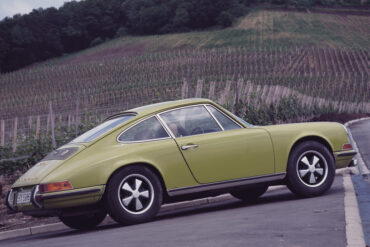
The first generation of the Porsche 911 begins in late 1964 and goes through 1968. The "base" model was an instant hit. During this period, Porsche would make continuous improvements and tweaks to the body, to its short wheelbase (SWB) chassis, and to its 2.0 liter flat six engine. Model year 1968 would be the last for the early 911, a transition that would begin with the introduction of the higher output 911S in 1967, followed by the 911L and a new entry level 911T in 1968, and finally, the 911E in 1969. The base 911 was available as both a Coupe and Targa (starting in '67).
Despite looking outwardly similar to the preceding models, Porsche thoroughly updated their 356 line in 1956 and called their new model the 356A. At the core, this included a larger 1600 cc engine, but also a curved-glass windshield and a thoroughly revised suspension. At the 1955 Frankfurt Motor Show in September of 1955, Porsche released the 356A/1600 to the world with cabriolet, coupe and speedster bodies from Reutter. Produced in 1959 only, the Porsche 356 Convertible D was the replacement for the 356 A Speedster, which was discontinued after 1958.
Porsche purists might moan that the flat-six engine in the rear is no longer naturally aspirated, but with more power and torque, improved efficiency and some advanced interior tech giving this 911 an even bigger breadth of ability than before, this facelifted 991-generation model carries on where the old car left off. Sure, it’s lost a touch of that high rev zing from the old car, but if you add the sports exhaust, the bark from the engine inside and out is still intoxicating. And so is the speed. The 991.2 Carrera S is absolutely amazing on both road and track and still the best sports car around.
To celebrate 60 years of Porsche Club of America, PCNA (Porsche Cars North America) ordered 60 units of 911 Carrera GTS Coupés in Club Blue from Porsche Exclusive. All 60 cars were equipped with SportDesign aerokit (including ducktail). These Club cars were not numbered because it wasn't a special series by Porsche AG, but a series of similarly equipped cars ordered by PCNA. The cars got a few unique touches by Porsche Exclusive, like the special "Club Blau" paint, the "Club Coupe" stickers on the doors, the door entry guards with ''GTS Club Coupe" lettering and number "60" embossed on the armrest cover.
Put most simply, a 912 is essentially a 911-style body mated with a 356-derived 4-cylinder engine. The 356 was Porsche’s first mass-marketed sports car. The Porsche 911 is the most successful sports car of all time. the new 912 came equipped with 90HP motor was a slightly detuned version of the 95HP motor that had powered its predecessor, the 356SC. However, despite this reduction of power, and despite the 912 being a heavier car, it was actually faster than the 356SC thanks to more streamlined aerodynamics and a more advanced suspension system.
The 2016 Carrera and Boxster Black Editions add some extra niceties for a value-adjusted price. And as the names suggest, both cars come in any color scheme you want so long as it’s, yes, black on black. Or black on black on black in the case of the ragtops. Available in coupe and convertible forms, with rear- or all-wheel drive, each powered by the base 350-hp 3.4-liter flat-6 engine, the 911 Carrera Black Edition adds other design treats too.
The cylinder number and position (six, horizontal) remained the same as before, but the displacement has been reduced to 3.0 liters (from 3.4 liters) and a pair of turbos has been strapped on the engine. And thanks to the force-feeding’s high potential, the same 3.0-liter unit is used for the Carrera S as well (instead of the 3.8-liter flat-six). As a result, the power figures in the Carrera 2 Cabriolet gained 20 hp and some 40 lb-ft of torque vs the prior generation. More importantly, the turbocharging makes the Carrera’s 332 foot-pounds of torque available way quicker, from just 1,700 rpm.
From the outside, the 356A kept to the Porsche mantra of stepwise evolution. The new model was outwardly identical to the previous version except for the wider tires, a small rub-strip below the doors, a fully-curved front window and enamel paint replacing lacquer previously used. The 356 A came with an all-alloy air-cooled Flat 4 engine in four states of tune, with the 1300 having Type 589/2 engine with 60 bhp and 65 lb-ft of torque.
Sticking to their strengths, Porsche has created the most sought after car in its line-up, the 2017 Porsche 911 R. We have seen numerous rumors about this car for a couple of months now and this time we finally get to see it. The new Porsche 911 R with 4-litre naturally aspirated flat-six engine with a six-speed manual gearbox is coming to us for sure. It's lighter and faster with its engines pumping out 493 bhp at 8,250 rpm and 333 lb-ft at 6,250 rpm. The result is probably the best 911 of the modern era. Porsche at its finest.
From the outside, the 356A kept to the Porsche mantra of stepwise evolution. The new model was outwardly identical to the previous version except for the wider tires, a small rub-strip below the doors, a fully-curved front window and enamel paint replacing lacquer previously used. The 356 A came with an all-alloy air-cooled Flat 4 engine in four states of tune, with the 1300 having Type 506/2 engine with 44 bhp and 60 lb-ft.
The 991.2 generation Carrera range update was a big one. The base coupe looks about the same, but under the hood Porsche did something crazy. Gone is the 3.4 liter naturally aspirated flat 6, replaced by a 3.0 turbocharged flat six. The good news is that the new engine is pumps out 370 hp and 331 ft lbs of torque, a big leap over the previous generation (output is up over the previous car by 20 horsepower and 44 lb-ft of torque). Inside, the updated 911 hasn’t changed dramatically, and although Porsche’s new PCM infotainment system is faster and more intuitive to use.
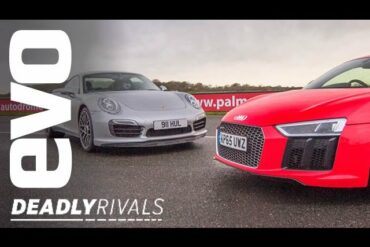
Audi R8 V10 Plus vs Porsche 911 Turbo S | EVO DEADLY RIVALS Our friends at EVO test the brand new 2015...
Porsche 911 GT3 RS Who needs an annoying journalist talking about steering feel and the latest enhancement to the suspension...
Sub 10 Minute Pikes Peak Run in Porsche 911 GT3 Turbo Cup On the quest to break his own personal recordJeff...
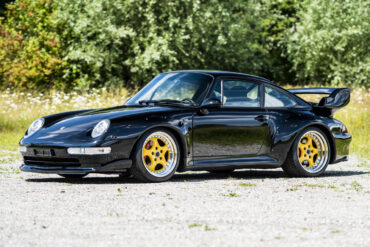
The GT2 was the hardcore, race-focused version of the 993 Turbo, using essentially the same 3.6 L twin-turbocharged engine, but slightly modified with increased power output. The car was made to compete in the FIA GT2 racing class. Among this already very exclusive circle of 57 cars there is an even more rare community. 20 of the 57 road-legal cars were produced in a second – and last – badge with upgraded engine power (450 PS) called GT2 “Clubsport” which make them the last Porsche models with air-cooled engines.
The Porsche 911 GT2 (or GT as it was initially called) from the 993 Porsche series was built in order to meet homologation requirements for the GT2 class racing which had banned all-wheel-drive vehicles by the mid 1990's. As a two-wheel drive vehicle, the GT2 had significant weight savings as compared to the standard 993 Turbo from Porsche, making it instantly competitive in racing. The 993 GT2's original 3.6 L (220 cu in) engine generated a maximum power output of 316 kW (430 PS; 424 hp). There was an update in 1998 that upped power to 450 bhp.
Real Rivals. Which Is Better? We test the brand new 2015 Audi R8 V10 Plus against the 991 Porsche 911...
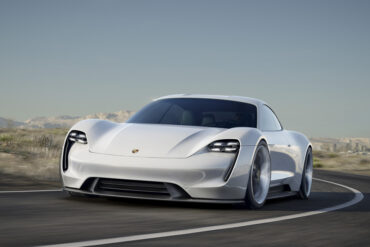
With the Mission E prototype at the IAA 2015, Porsche offered a preview of a vehicle that will be a genuine Porsche and a fully-fledged alternative to vehicles with a combustion engine – in terms of both driving performance and range. The concept car combines the unmistakable emotional design of a Porsche with excellent performance and the forward-thinking practicality of the first 800-volt drive system. Four doors and four single seats, all electric and over 600 hp.
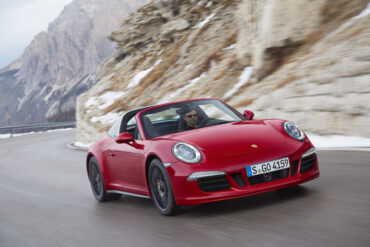
The Targa 4 GTS gets Porsche’s a powerful non-turbo rear-mounted flat-six engine with 430 bhp @ 7500 rpm and 325 ft lbs of torque from 5750 rpm, driven to all four wheels via Porsche Traction Management. Performance is also enhanced via the standard Sport Chrono package, which provides faster throttle response and more aggressive shift mapping. In addition, the GTS benefits from Porsche Active Suspension Management - Porsche’s proprietary adaptive suspension system with continuously variable dampers. Mechanically, this is the perfect package for a daily 911 that is also performance focused when you need it to be.
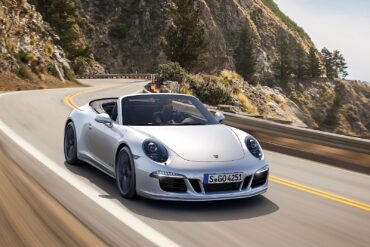
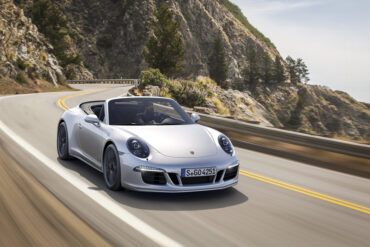
So what else do you get when you buy a 991 Carrera 4 GTS Cabriolet? First of all you get a 30 hp bump over the Carrera 4S to 430 hp from the 3.8L naturally aspirated flat-six. You get forged centre-lock black 20-inch wheels, dynamic engine mounts, the Sports Chrono Package, PASM adaptive damping with a lowered ride height, an interior swathed in Alcantara, a sinister front fascia with black intakes and custom rear apron with black tailpipes that broadcast the goods through an uber-nasty sport exhaust system. Other trim details include black lettering and smoked headlights.
With all-wheel drive and all the GTS goodies, the Carrera 4 GTS sits in a very practical place in the Porsche 911 lineup. The 4 GTS is a Carrera 4S with all the items Porsche thinks you should have at a price that is less than choosing them yourself. Standard equipment on the GTS that is normally optional on the Carrera S includes the Sport Chrono Package, Sport Exhaust, bi-xenon lights with PDLS (Porsche Dynamic Lighting System) and PASM (Porsche Active Suspension Management). Inside, four-way adjustable sport seats are standard.
Like the rest of the GTS lineup, the 991.1 Carrera GTS Cabriolet is essentially a kind of 991 Greatest Hits package, hand-picking some of the more desirable components and options from the 911 range. It gets Porsche's PASM (Porsche Active Suspension Management), Sport Chrono with Sport Plus, the Sport Exhaust system, and a ride height that's roughly four-tenths of an inch lower than non-GTS models. It also gets a version of Porsche's 3.8-liter flat-six with 430 hp, hits 60 mph in 4.0 seconds equipped with the PDK (4.4 to 60 mph for the manual), and tops out at 189 mph.
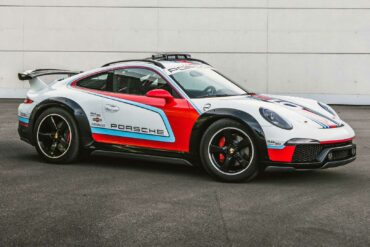
The Porsche 911 Vision Safari a sports car-based rally car concept, designed and built by Porsche in 2012, based on the Porsche 911 (generation 991) and harkening back to the original car, the Porsche 911 SC Safari from 1978. Features a raised suspension, reinforced wheel housings and large bumpers.
More aggressive looks, significant extra power, and highly desirable options. This is the perfect all-round 911. In manual, there is nothing that feels as complete. Some of the technical ingredients that generate even more driving dynamics and driving fun: 430 hp (316 kW) power, the Sport Chrono package and the PASM active damper system which lowers the car's ride height by ten millimetres. The extra punch of the 430-hp engine pushes the 911 Carrera GTS coupe up to 190 mph in rear-wheel-drive/manual-transmission configuration, 2 mph higher than the 400-hp Carrera S.
This is the open-top model for those who don’t want the full convertible experience – and it’s only available in the wide-hipped four-wheel drive bodyshell. The new Targa is a striking design, echoing the 1965 original with its fixed rollover bar. The Targa 4S, gets you the more powerful 3.8 engine from the Carrera S. It mixes regular Carrera 4S go with a sense of style and everyday usability (those occasional rear seats, the real possibility of 30mpg in everyday driving). Great car.
For this 991 generation Targa, Porsche went back to the original Targa concept, albeit with an even sexier design and some very cool technical tricks to boot. Porsche wanted to resurrect its classic design, but the company feared that owners would not want to get out of the car, lift off the roof panel, and stow it in the trunk. The other issue was, in the words of 911 product line director Dr. Erhard Mossle, "that the manual solution was a little bit old-fashioned." The 911 Targa 4 gets the same 350 horsepower, 3.4-liter six-cylinder motor as its hardtop siblings.
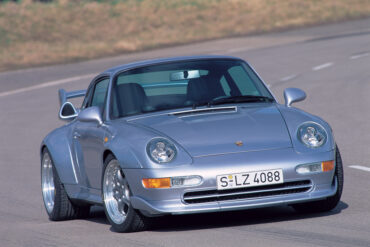
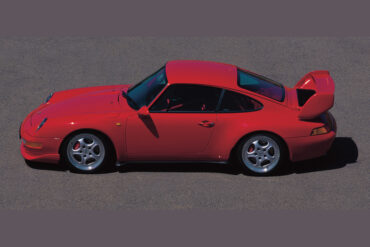
The 993 Carrera RS Clubsport, 213 of which were built to meet the FIA GT2 homologation requirements, is a race-ready, although street legal variant of the 993 Carrera RS, not to be confused with the track only 993 Carrera Cup RSR. Emphasizing its competition credentials, the 993 Carrera RS Clubsport came with a welded-in roll cage as standard, considerably increasing its rigidity, racing bucket seats, six-point safety harnesses, battery isolator switch, fire extinguisher, and a huge fixed rear wing, the latter also available on the 'base model' Carrera RS.
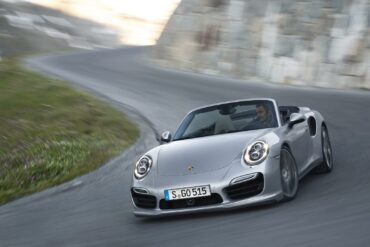
The 2014 Porsche 911 Turbo Cabriolet is a great companion to its coupe sibling. The Porsche 911 Turbo Cabriolet delivers the same blend of dynamism, performance and efficiency offered by the Coupe. The turbocharged 3.8-litre six-cylinder engine delivers 520 bhp and it helps drivers accelerate from zero to 60 mph in just 3.1 seconds (there goes your hair style). Compared to the 997.2 Turbo Cabriolet the new Turbo Cab delivers 30 bhp more power and are 0.2 seconds faster in terms of their standard acceleration. It is also up to 15% more efficient and more luxurious and comfortable to boot.
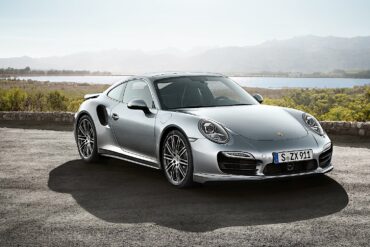
The 2014 Porsche 911 Turbo is a technological extravaganza. Adaptive aerodynamics, four-wheel steering, torque vectoring, active four-wheel drive, adaptive dampers, launch control, twin-clutch automatic gearbox – you get the picture. This is the first time we've had a chance to sample all of this on British roads. Two versions are available; both are powered by an uprated version of the previous 911 Turbo's 3.8-litre twin-turbo flat-six engine. The new 911 Turbo has even more power and more electronic systems. It is still a straight-line monster that will blow you away in terms of the sheer might of that engine and traction.