
Porsche Models
All
Latest


The Carrera 4 Cabriolet was released with the rest of the 4 and 4S models as 2006 model year cars. With a sure-footed, four-wheel drive powertrain as well as that "wide-body" stance, and with tops that open or close at the touch of a button, the Carrera 4 Cabriolet really started to make the case it could do it all. The wide look gave the 4 a widened track, larger wheels and tires and four-wheel-drive powertrain that gives more dynamic stability, especially in inclement weather conditions. Developed at the same time as the coupe.

The 997 Carrera 4 was the all-wheel-drive version of the standard 997 Carrera and it arrived as a 2006 model year car (along with the 4S models). The 997.1 Carrera 4 had a3.6 L Watercooled Flat 6 (M96/05) engine that was good for 321 bhp @ 6800 rpm and 273 ft lbs @ 4250 rpm. It had a sub 5 second 0 - 60 mph hour time and a top speed of 174 mph. The transmission (six-speed manual or five-speed Tiptronic) feeds a forward propshaft that mates to a viscous coupling unit with a front differential.

The Carrera S convertible was introduced to the market at the same time with the Carrera Cabriolet, a few months after their coupe-versions were unveiled. The convertible version for the Carrera S got reinforcements needed for the cabriolet built while the engineering was going on for the coupe, ensuring that the drop-top version was just as strong and performance-focused. It got the same engine as the Carrera S and made a case for itself as the best 911 of the range at the time.

The 997 Carrera S was the first step up in performance over the base 997 Carrera. Available over two distinct generations, the 997.1 Carrera S used a 3.8-liter engine producing 355hp – the available X51 Powerkit bumped that number to 376hp. From 2009 onwards, the 997.2 Carrera S offered 380hp from 3.8 liters. Besides a more powerful engine, it also comes standard with 19 inch wheels, larger brakes, and a lowered suspension with PASM.

Just a few months after the introduction of the 2004 911 (997 series), the convertible version was released. The release of the 997 911 Carrera Cabriolet marked the first time since 1977 that Porsche has given the convertible 911s the same engines as their Coupe siblings. The base 997 Carrera Cabriolet gets the 3.6-liter flat six-cylinder engine with 321 bhp and 273 ft lbs of torque. The convertible version for both Carrera and Carrera S was developed at the same time with the coupe.

The base Carrera has essentially the same 3.6 L flat-6 engine that its predecessor, the Type 996 Carrera used, now good for 321 bhp @ 6800 rpm and with torque of 273 ft lbs @ 4250 rpm. The sprint from 0 to 60 mph is over in just 4.80 seconds and top speed is 177 mph. The quarter mile is over in a respectable 13.1 seconds. The 911 Carrera is now faster, more stable, more precise and forgiving, an altogether superior-make that more efficient-sports car than the 996.


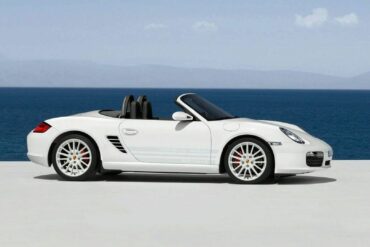
The limited production Boxster S Porsche Design Edition 2 debuted in October 2008 as 2009 model. It featured a free-flowing exhaust system, which raised power from 217 kW (291 hp) at 6,250 rpm to 223 kW (299 hp) at an identical 6,250 rpm. It came in a unified Carrera White paint scheme with matching white 19-inch wheels, a black and grey interior with white gauges, red taillights and light grey stripes along the body. 500 were made for the worldwide market, 32 shipped into the U.S. and 18 into Canada.
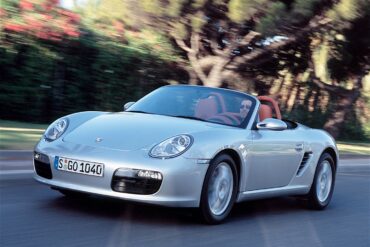
The original Porsche Boxster was a huge success and help Porsche grow its customer base, so when the second-generation Boxster (987) came to the US market as a 2005 model it wasn’t a surprise that it followed a similar formula. While the 987 Boxster retained only 20 per cent of the 986’s DNA, it looked similar enough to us that it felt more like a mild refresh than a totally new model update. The engine and transmissions were, for the most part, carry-overs, albeit with the obligatory and customary modest bump in performance and power (now at 240 horsepower).









The base model Porsche 924 was produced for model years 1976 to 1986. During its production run, VW decided to stop manufacturing the engine blocks used in this version (the 2.0 L 924), forcing Porsche to continue production for model year 1987 with a more powerful engine, calling it the 924S. The base model 924 had a production run of 121,000 vehicles approximately.


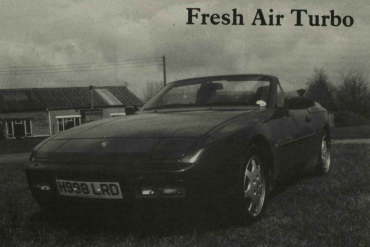


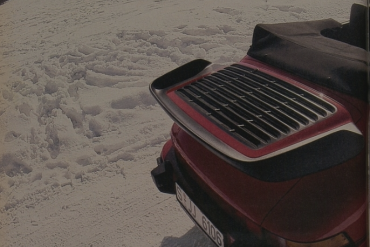

2,500 cabriolets were made in the 993 Carrera 4. The 993 Carrera 4, sold between 1995 and 1998, uses the same powerplant as the standard 993 Carrera, but puts power down to all four wheels through a 6-speed manual transmission. A “Carrera 4” badge on the tail, along with silver-painted brake calipers and clear front and side turn signals, help distinguish the all-wheel drive C4 from the C2 sibling.
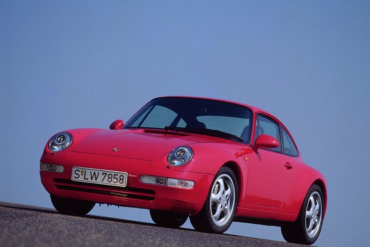
The 993 Carrera 4, sold between 1995 and 1998, uses the same powerplant as the standard 993 Carrera, but puts power down to all four wheels through a 6-speed manual transmission. A “Carrera 4” badge on the tail, along with silver-painted brake calipers and clear front and side turn signals, help distinguish the all-wheel drive C4 from the C2 sibling. Approximately 4,700 coupes and 2,500 cabriolets were made. It was replaced by the Porsche 911 Carrera 4 (996 generation) in 1999.
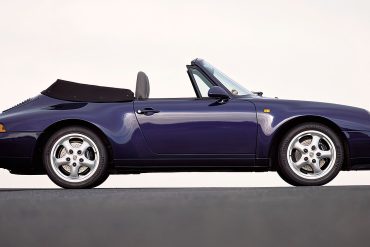
Introduced in 1994 the Porsche 911 Cabriolet was more of a Grand Tourismo vehicle than a sports car. The 911 Cabrio featured the same cues as its coupe version, but with a few differences apart from the lack of a fixed roof, of course. The 3.6-liter engine was offered in two versions, with 275 hp and 285 hp. The latter featured the VarioCam system. Both versions were mated to either a 6-speed manual or a 4-speed automatic.
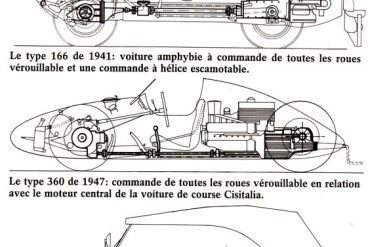


A Drive In An Emory Outlaw 356 Third generation SoCal gearhead Rod Emory takes Jay through his 1958 Emory Special...




Hard Acceleration in 996 Carrera Scene taken from Episode 6 of cars moving parts by isaflummi. Acceleration to V-Max on...




‘Scary’ is not an adjective uttered often by seasoned racing drivers in the company of their peers, but it tripped...




Porsche 917/30-003 1975 Team Penske In 1976 Penske sold the chassis to privateer Otis Chandler. Pictured Riverside, 1979. Porsche 917/30-003...

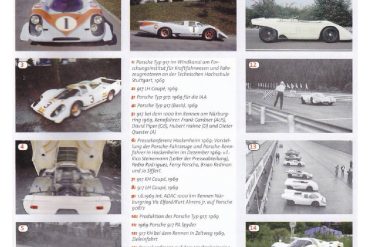


Production of the $845,000 plug-in hybrid car was limited to 918 units to maintain exclusivity. The last car was spoken...