
Porsche Models
All
Latest


First Generation – Porsche Boxster vs Boxster S Richard Hammond reviews and compares the Porsche Boxster and the Boxster S,...

POV on the Backroads In A 2001 Porsche Boxster S Love this video of a backroad run in a 2001...


First Generation Porsche Boxster (986) Paint Color Options This post outlines all the color options for the first generation Porsche...

Porsche Boxster (986) Transmission Codes The base Boxster got the option of a Tiptronic automatic and a 5-speed manual gearbox...

Porsche Boxster (986) Engine Codes Interestingly, the Boxster 986 engine codes are not related to type 986 (they are not...

1st Generation Porsche Boxster (986) Story & History Porsche Boxster (1997 – 2004) Date of unveil by Porsche AG: official...
In 2004, the Boxster S Special Edition, also called 550 Spyder Boxster S Special Edition was introduced with a production run of just 1,953 cars (paying homage to the 550 Spyder's year of introduction). 500 cars were made for the US Market. These were all painted in GT Silver Metallic, the same colour as the Carrera GT concept presented in 2000, and had unique cocoa-brown full-leather interior as standard with grey natural leather as a no-cost option.

The Boxster S was revised along with its Boxster version in 2003. From the outside, the 2002 Boxster S featured an apron with three air-intakes, one more than the non-S version. The 3.2-liter unit was installed in the Boxster since 2000, but after the facelift it was improved by 10 hp, reaching 258 hp. It was paired as standard with a 6-speed manual, or a 5-speed Tiptronic (automatic) as an option. As expected, the manual version was quicker and faster.

The first generation Boxster got a facelift and refresh for the 2003 model year. The 2003 Boxster came on the market with new engines and new options. It also had a new face, but not that different than the first generation. The result was more horsepower, the 2.7 liter now good for 225 bhp @ 6300 rpm and 192 ft lbs @ 4750 rpm. Power was up by 8 horsepower over the prior year model, while torque was unchanged. From the outside, the 2002 Boxster featured an apron with two air-intakes on the sides.

The 718 Porsche Cayman GT4 is everything you could possibly want in a sports car. The sublime combination of a legendary chassis and naturally aspirated 6-cylinder Porsche engine is accentuated by the emphasis that less is more when done right - and nobody does this better than Porsche’s GT division. No one will make the argument that these are objectively inexpensive cars, but for those in the market for an introductory dose of supercar sensory-overload, the GT4 checks all the boxes, and then some. Need a track car and daily driver in one package? Then the 718 Cayman GT4 may be the car for you. An absolute blast.

Similar to the 911 T, the 718 Cayman T is not the fastest, most luxurious or even the cheapest of all the 718 variants. However, the car is a unique combination of features and nuances that add up to more than the sum of its parts. The T-wins are the perfect car for somebody who knows exactly what they want, and wants nothing more than that - the purist’s car. The Cayman T is equipped with the base-model 718’s mid-mounted 2.0L flat-four turbocharged engine, which produces 296 bhp @ 6500 rpm and 280 ft lbs of torque. The Sport Chrono package is included as standard.


When Porsche announced it was leaving the World Endurance Championship to focus on Formula E, it was a big signal that the future of Weissach motorsport would be electric. That future arrived in 2019 with the Porsche 99X Electric – the brand’s first factory all-electric race car and the car that carried Porsche through the Gen2 era of Formula E (Seasons 6–8). Concept and Positioning

The Porsche Taycan Turbo S is pumping out 750hp and 774lb-ft tq from 93 kwH battery and 2 electric motors. The Turbo S is clocked at a super-fast 2.6 seconds for the 0-60 mph. The performance is mind-bogglingly quick and it is utterly relentless at any speed. But most impressive is just how the Taycan Turbo S drives through the bends, how it feels when moving going quickly. It feels like a Porsche. On the inside, it is modern, luxurious and feels like the future. We love everything about the Taycan Turbo S except the price. It ain't cheap.

1st Generation Porsche Taycan (9J1) Story & History Official photos: Turbo & Turbo S 2019 September 4, 4S 2019 October...

The new GT3 Touring Review 2022 Porsche 911 GT3 Touring review! The new GT3 Touring is absolutely the GT3 I...



Porsche Cayman GT4 Is Perfect. Period. Join Matt as he jumps in one of his all-time favourites, the Porsche 718...

The 2022 GTS get the same engine that powered last year's Turbo model, a twin-turbocharged 2.9-liter V-6 rated for 434 horsepower and 405 lb-ft of torque, which amount to increases of 59 horses and 22 lb-ft over the previous GTS. All Macans also come standard with a seven-speed dual-clutch automatic transmission and all-wheel drive, which combine to push the GTS into the "genuinely fun" category of athleticism and should help it mimic the Turbo's 3.5-second sprint to 60 mph.

Front fascia with newly designed spoiler. The characteristic Macan side blades in new designs. The redesigned rear fascia and diffuser. Revised steering wheel options. The base turbocharged 2.0-liter four-cylinder now makes 261 horsepower. Standard features include a 10.9-inch touchscreen infotainment system, a 10-speaker audio system, and LED headlights.

Porsche introduced yet another facelift for the Macan lineup for the 2022 model year. The range got more power under the hood, a refreshed design, and an improved interior. The base turbocharged 2.0-liter four-cylinder now makes 261 horsepower. It is a newly developed, turbocharged four-cylinder engine that helps hustle the base Macan from 0 - 60 mph in just 6.2 seconds and reaches a top speed of 144 mph. The redesign on the outside gives the base 2022 Macan a tighter look.

After a one-year hiatus, Porsche brings us a Macan Turbo with more power, more speed, and more standard equipment. It swapped its twin-turbocharged 3.6-liter V-6 for a new twin-turbo 2.9-liter V-6 shared with versions of the larger Cayenne SUV and the Panamera. Porsche claims that it's enough to punt the all-wheel-drive Macan Turbo to 60 mph 0.3 second quicker than before. This is the top of the Macan lineup heap.

The GTS returned to the lineup for 2020 after a year off. Its twin-turbo 2.9-liter V-6 makes 375 horsepower and 383 lb-ft of torque. Quickness is important in a crossover with sporting intentions, but we love the way the GTS handles and acts like a true sportscar. Apple CarPlay, available as part of the Premium package or as a standalone option, gains wireless connectivity, while wireless device charging has been added to the designated Smartphone Compartment option.

The Macan has important upgrades for the 2019 model, featuring new and improved front lights with LED headlights as standard and three-dimensional LED lights in the rear. The new model features a 3.0-liter turbocharged V6 engine generating 348 horsepower and 354 lb-ft of torque. The new and more powerful engine marks an increase in both horsepower and torque over the prior Macan S models. 0 to 60 mph in 4.9 seconds with the optional Sport Chrono and top speed is 157 mph.

In July 2018, Porsche unveiled a new facelift for the Macan range in Shanghai. The production started the following month and the Europeans saw it at the Paris Motor Show in September. The 2019 Porsche Macan update includes refreshed exterior styling that includes updated front and rear bumpers, new taillamps that span the width of the liftgate, and new wheel designs. The base Macan receives a 248-hp turbocharged four-cylinder.

The top model in the Porsche Macan lineup is the Macan Turbo and in 2017 Porsche made it extra special by offering a Performance Package add on. After the performance enhancement, the twin-turbocharged, 3.6-litre V6 engine delivers 324 kW (440 hp; combined fuel consumption 9.7–9.4 l/100 km; CO2 emissions 224–217 g/km). With 30 kW (40 hp) more than the Macan Turbo, this figure places this variant firmly in the top spot in this model line. The car now accelerates from zero to 100 km/h in just 4.4 seconds

For the 2017 model year, Porsche added the Macan GTS trim to the lineup. The new Macan GTS gets a higher-output version of the twin-turbo V-6 that powers the S model. It also gets tweaked performance-oriented chassis, unique design elements and additional standard equipment. The 2.9-liter twin-turbo V6 engine delivers 355 bhp @ 6000 rpm and 369 ft lbs of torque from 1650 rpm. Combined with the newly adapted PDK dual-clutch transmission, the Macan GTS can accelerate from zero to 60 mph in 4.4 seconds.

Porsche’s oil burner variant is a fairly irresistible redo of Audi’s architecture. Aside from the compact size, there is no obvious visual connection to the Q5. Porsche’s designers went to work inside and out. The Macan S Diesel is the economical long-distance runner of the three Macan models. Its 3.0-litre, six-cylinder V-engine has tons of torque and lots of range.

The top model in the Porsche Macan lineup is the Macan Turbo. It launched in 2016 as the most powerful vehicle in the competitive compact SUV segment and its 3.6 liter twin-turbo V6 engine is a real gem. Good for 395 bhp @ 6000 rpm and torque of 406 ft lbs @ 1350 rpm, it helps the Macan Turbo accelerate from 0 to 60 mph in just 4.50 seconds (with the Sport Chrono package fitted) on its way to a top speed of 165 mph.

Is the Lightweight Pack Worth It on the GTS? Porsche’s 992 is a big leap however, and because of that...

The Macan S was part of the initial Macan launch and it was equipped with a 3.0-liter V6 twin turbo engine delivering 335 hp and also features an active all-wheel-drive system with an electronically controlled, map-controlled multi-plate clutch. This AWD system is fitted on all Macan models. A seven-speed double-clutch transmission is the only transmission on offer.


Porsche subsequently released a base Macan for select Asian markets and the United Kingdom. Using a reworked version of the Volkswagen Group's 2.0-litre inline-four EA888 Gen 3 engine used in multiple applications such as the Audi Q5. This engine became offered globally for the Macan's 2017 model year following an announcement in March 2016

1st Generation Porsche Macan (95B.2) Story & History Macan (2019 – 2021) Official photos: 2-litre 2018 July 25, S 2018...

1st Generation Porsche Macan (95B.1) Story & History Macan (2014 – 2018) Official photos: 2013 November 19, GTS 2015 October...

1st Generation Porsche Panamera (970.2) Story & History Panamera (2014 – 2016) Official photos: 2016 June 28 / Premiere: for...

1st Generation Porsche Panamera (970.2) Story & History Panamera (2014 – 2016) Official photos: 2013 April 3 / Premiere: 2013...
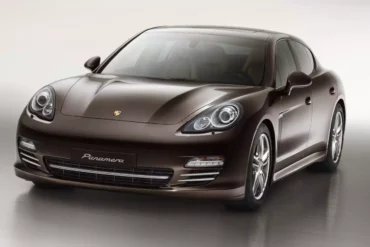
Based as they are on the 300-hp V-6 Panamera and Panamera 4, the Platinum Edition is available with either rear- or all-wheel drive. Outside, the cars are separated from standard V-6 Panameras by platinum silver metallic trim. The shiny stuff covers the grille and rear diffuser accents, the lower half of the side mirrors, and the trunk trim. Porsche also throws in a set of 19-inch Turbo wheels and finishes the window trim in gloss black. A sport design steering wheel is standard, as well as Porsche crests on the front and rear headrests and “Platinum Edition” lettering on the doorsill trim.
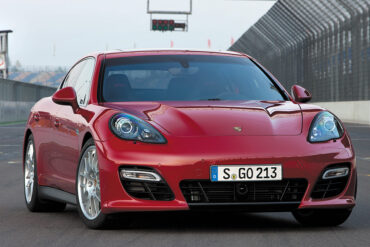
The Panamera GTS was more like a detuned Turbo than an upgraded 4S. Its outside look was on a par with the Panamera Turbo, with large air intakes on the front and standard front section from the SportDesign package, that emphasized the sporty dynamics. On the front, the bi-xenon headlights had black inner bezels and featured four LED daytime running lights. In the rear, there was the same adaptive spoiler that deployed at speeds above 205 kph (121 mph).

Could it be better than a turbo? How about a GT3? This is the new 2022 model year Porsche 911...

Road Review of the Perfect Porsche Street Car The new 992 Porsche 911 GT3 has been kicked even further into...

1st Generation Porsche Panamera (970.1) Story & History Panamera (2009 – 2013) Official photos: 2008 November 24 / Premiere: 2009...
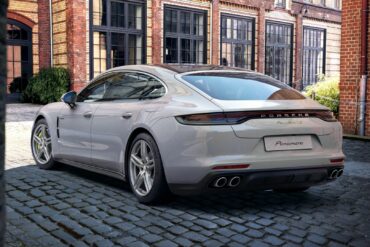
As implied by the 'Executive' designation, this Panamera is tailored to those who love spending time in the rear compartment. It is about 15 cm longer than the standard Panamera 4S E-Hybrid, with most of the extra length dedicated to giving rear passengers more room. Asides from the elongated wheelbase, there's not much to distinguish between the two Panamera 4S E-hybrid models.
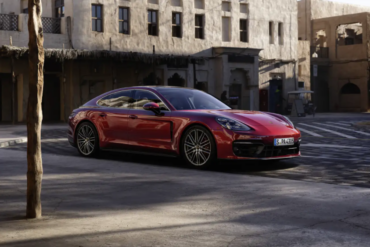
The Executive version of the Porsche Panamera 4 gives you all the extra space with all the same goodness of the twin-turbo V6 engine and its 330 hp of performance. The 7-speed PDK (dual-clutch) automatic transmission was fitted as standard. For the 2021 model year, the Panamera 4 featured a redesigned front fascia, with a different bumper and lower apron. The previously optional Sport Design front end was featured as standard on the facelifted version.
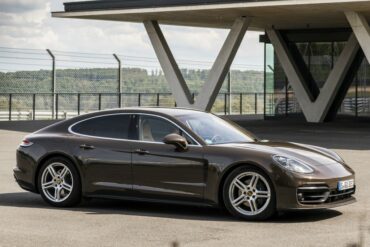
Under the hood, the Porsche Panamera 4 featured a twin-turbo V6 engine, good for 330 hp. It was carried-over from the non-facelifted version. The 7-speed PDK (dual-clutch) automatic transmission was fitted as standard. For the 2021 model year, the Panamera 4 featured a redesigned front fascia, with a different bumper and lower apron. The previously optional Sport Design front end was featured as standard on the facelifted version.
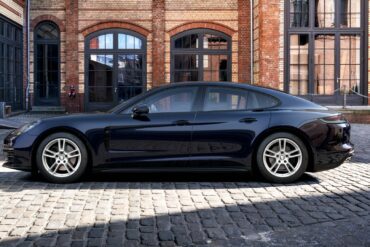
For the 2021 model year, the Panamera featured a redesigned front fascia, with a different bumper and lower apron. The previously optional Sport Design front end was featured as standard on the facelifted version. In the back, the revamped light strip ran seamlessly over the trunk lid, with an adapted contour and new LED taillights were installed. The three-piece retractable wing was kept.
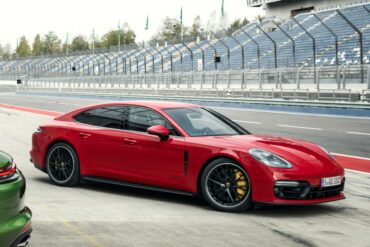
The current 971 generation Porsche Panamera is the latest model from the German marque to receive their always much anticipated, GTS treatment. For the 2019 model year, the second-gen Panamera is now a beneficiary of the badge - which actually stands for ‘Gran Turismo Sport’ - that has come to represent the pragmatist’s choice of Porsche automobile. The Panamera GTS is also now available in a long-roof wagon body style, dubbed the Sport Turismo. The Porsche Panamera GTS Sport Turismo does not have its own unique power plant, but is the beneficiary of a detuned Panamera Turbo engine instead.
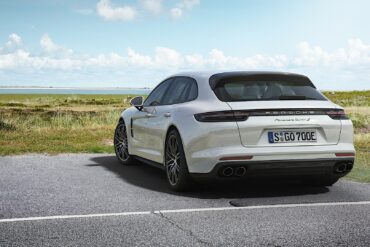
By combining a Porsche Panamera Turbo with the hybrid system already developed for the 4 E-Hybrid, the result is pretty epic. The new Porsche Panamera Turbo S E-Hybrid sees the sportscar manufacturer launch a plug-in hybrid model as the flagship of a model line for the first time. The four-litre V8 engine from the Panamera Turbo is combined with an electric motor, resulting in 500 kW/680 hp of system power and outstanding power delivery: Even when just above idle speed, the Panamera Turbo S E-Hybrid offers an 850 Nm of torque. How about 3.4 seconds 0 - 60 mph time???
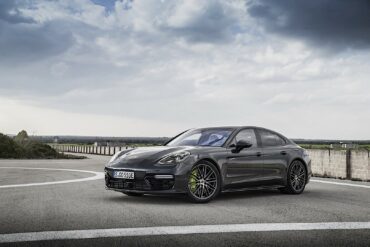
By combining a Porsche Panamera Turbo with the hybrid system already developed for the 4 E-Hybrid, the result is pretty epic. The new Porsche Panamera Turbo S E-Hybrid sees the sportscar manufacturer launch a plug-in hybrid model as the flagship of a model line for the first time. The four-litre V8 engine from the Panamera Turbo is combined with an electric motor, resulting in 500 kW/680 hp of system power and outstanding power delivery: Even when just above idle speed, the Panamera Turbo S E-Hybrid offers an 850 Nm of torque. How about 3.4 seconds 0 - 60 mph time???
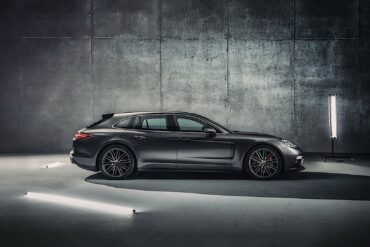
The Porsche Panamera Turbo also got the Sport Turismo body option in 2018. It is a practical five-seater with lots of room, a great design and stonking performance.It got all the same powerful petrol engine as the sedan version of the Panamera Turbo. Its 4.0-litre biturbo V8 develops 404 kW / 550 hp (at 5,750 rpm) and a maximum torque of 770 Nm (between 1,960 and 4,500 rpm). It has 30 hp more power than the previous model and accelerates to 100 km/h in 3.6 seconds.
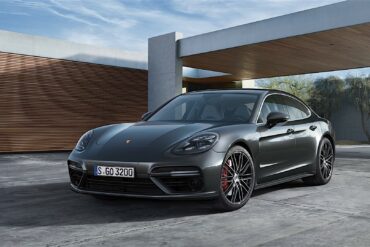
The Panamera Turbo was the best balance between performance, luxury, and comfort. The new, 4.0-liter twin-turbo engine offered 30 hp more than its predecessor, despite having a smaller displacement. The PASM (Porsche Adaptive Suspension Management) was fitted as an option and so was the Porsche Chrono Package. It was fitted as standard with a 7-speed (PDK – dual-clutch) automatic transmission which sent its torque in all corners via PTM (Porsche Traction Management) system.
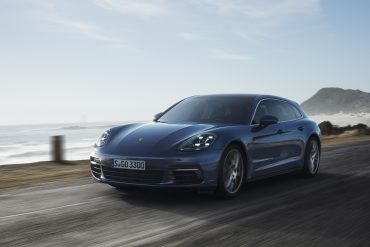
In 2017, at the Geneva Motor Show, Porsche introduced the Sport Tourismo version. It is like a station wagon but has the look of a Shooting Brake. With this design, the Panamera is further away from the 911 rear design. A larger trunk means more space for luggage and golf bags. If the rear seats are folded, the total trunk space can reach 1390 liters (49 cu-ft). In 2017, Porsche installed a V8-diesel engine in the Panamera Sport Tourismo.
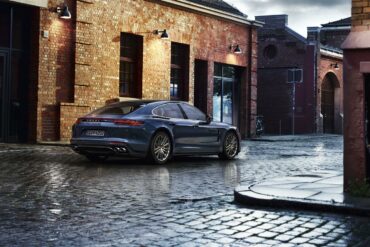
In the Panamera 4S Diesel, a V8 with 310 kW/422 hp generates powerful thrust and a maximum torque of 850 Nm. And our friends in Europe love that kind of power in a sports sedan, which is why Porsche built this car for them. Add some all-wheel-drive security and Diesel mileage, and the Panamera 4S Diesel may be the ultimate cross-continent cruiser.
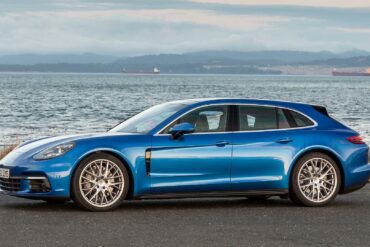
The 2017 Panamera 4S Sport Tourismo was more like a shooting-brake than a station-wagon. More like a lowered Macan than a station-wagon Panamera. Its raked rear looked like it was there to enhance the aerodynamic rather than increase the cargo area. For the powertrain, the 4s Sport Tourismo featured a twin-turbo V6 engine mated to an 8-speed automatic transmission and an all-wheel-drive system.
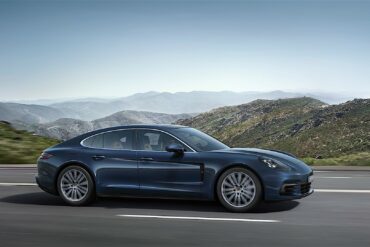
The second generation of the Panamera was introduced as a 2017 model year car and the full suite of variants was available straight out of the gates. They all got a visual update and lots of improvements across the board. The Panamera 4S featured 19” light-alloy wheels and only two colors as standard: black and white as standard. The engine was a new 2.9 L twin-turbo V6 which was good for 434 bhp @ 5650 rpm and 406 ft lbs @ 1750 rpm of torque.
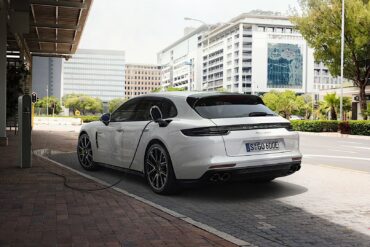
This is one practical family car with very green credentials and incredible performance. The Porsche Panamera 4 E-Hybrid was the first all-wheel-drive Panamera hybrid and in Sport Turismo body style it is more practical and dare we say it looks better too. Just like the coupé-style Porsche Panamera sports saloon, the Sport Turismo is characterized by its very dynamic proportions, which also allow it to feature three full rear seats.
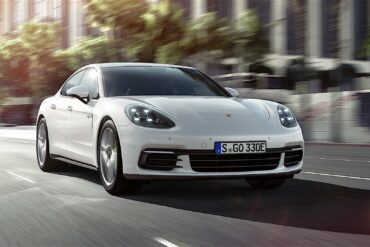
The fourth model of the Panamera was introduced at the 2016 Paris Motor Show. It was the enhanced plug-in hybrid version, named 4 E-Hybrid. It was the first all-wheel-drive Panamera hybrid. It was fitted with a more powerful electric motor and a twin-turbo 2.9-liter V6 gasoline engine. The powerplant was fitted to an 8-speed automatic gearbox. Its predecessors were fitted with rear-wheel-drive only. The Panamera 4 E-hybrid always started in electric mode and turned on its gasoline unit later.
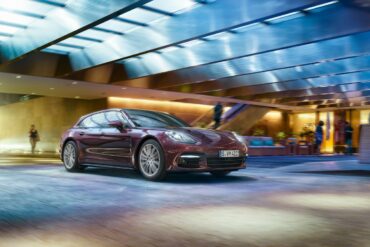
Porsche expanded the Panamera family with the addition of a new body version: The Porsche Panamera Sport Turismo. The Panamera 4 got the Sport Turismo treatment. The Panamera 4 Sport Turismos gets the same all-wheel drive system and underlying mechanicals. That means, it gets the base Panamera's 330-hp turbocharged 3.0-liter V-6. Porsche doesn't call the Sport Turismo a station wagon, but that's kinda sorta what it is.
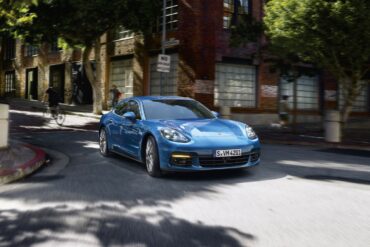
The Panamera finally looked great, with a wider, lower, sleeker design that fixed all the hunchback look of the old design. Porsche launched the second generation Panamera for the 2017 model year. Complementing the fresh threads is a completely reimagined interior, replete with touch-capacitive surfaces and massive display screens. The Panamera 4 got a 3.0-liter, turbocharged V-6 with 325 bhp @ 5400 rpm and 332 ft lbs @ 1800 rpm. Performance was impressive, taking only 5.6 seconds to hit 60 mph and a respectable 163 mph top speed.
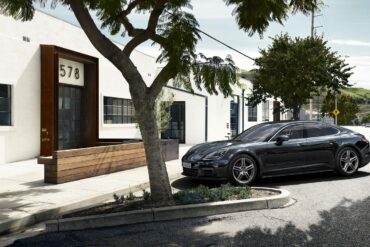
Porsche launched the second generation Panamera for the 2017 model year. The updates were meaningful. The Panamera finally looked great, with a wider, lower, sleeker design that fixed all the hunchback look of the old design. Complementing the fresh threads is a completely reimagined interior, replete with touch-capacitive surfaces and massive display screens. The base Panamera got a 3.0-liter, turbo V-6 with 325 bhp and 332 ft lbs. Takes only 5.6 seconds to hit 60 mph and has a respectable 163 mph top speed.

Tom Voelk Drives The 991 Targa 4 GTS The Porsche 911 is available in coupe, cabriolet and Targa models. But...
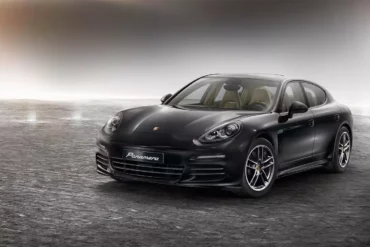
For the 2016 model year, Porsche has added a new version of the Panamera that it has dubbed the “Edition.” Despite its weird name, the Panamera Edition adds a lot of value at a price that is only slightly north of the base model’s MSRP.
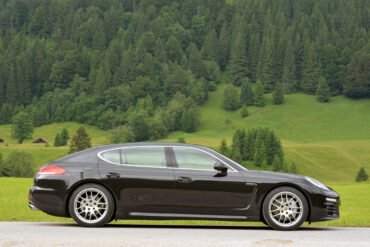
As part of the mid-cycle Panamera refresh, Porsche introduced two "Executive" models. The Panamera 4S Executive and the Panamera Turbo Executive. These variants had especially high standards for space, ambience and ride comfort. The wheelbase and passenger compartment were extended by 15 centimetres, and both of these dimensions directly benefit comfort in the rear seating area, since the body was extended behind the B pillar in the long version.
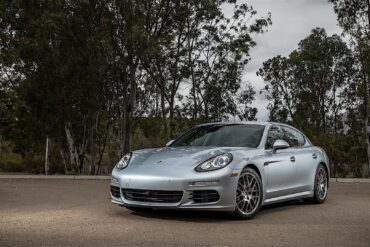
The biggest change for the 2013 Panamera S was under the hood, where a twin-turbo 3.0-liter V6 engine was installed. It replaced the older 4.8-liter naturally aspirated unit. It was a win-win combination since it offered 20 hp more and it was more fuel-efficient. Unlike its predecessor, it was available exclusively with a 7-speed automatic (PDK – dual-clutch). Overall, a great update and almost the perfect passenger car.
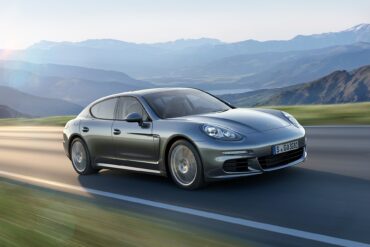
The big focus for the Panamera Diesel update was around the engine. It got a completely new 300-bhp engine and dynamic performance package. Power output was up by 50 bhp (around 20% increase) with performance improved across the spectrum. Acceleration from 0 - 60 mph is now 6.0 seconds, while the top speed has increased to 178 mph. In addition to the improved power output, dynamic performance was also optimized: For instance, the Porsche Panamera Diesel now features the controlled rear-axle differential lock with Porsche Torque Vectoring Plus (PTV+) as standard for the first time.
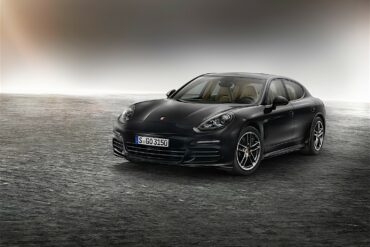
The Panamera received a fairly substantial mid-cycle update for 2014. The base engine, installed in the Panamera version, was an upgraded version of the previously used 3.6-liter V6. For the 2014 model year, it was mated exclusively with a 7-speed (PDK – dual-clutch) automatic gearbox and the 6-speed manual was dropped. It also gained some extra horses. The power of the V6 engine in the Panamera increased ten hp (eight kW) to 306 bhp @ 6200 rpm and 295 ft lbs @ 3750 rpm of torque.
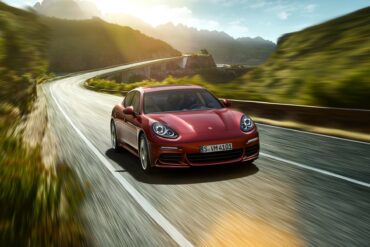
The 2014 Panamera lineup was given a great refresh. The base engine, installed in the Panamera 4 version, was an upgraded version of the previously used 3.6-liter V6. For the 2013 model year, it was mated exclusively with a 7-speed (PDK – dual-clutch) automatic gearbox and the 6-speed manual was dropped. It also gained some extra horses. The power of the V6 engine in the Panamera increased ten hp (eight kW) to 306 bhp @ 6200 rpm and 295 ft lbs @ 3750 rpm of torque.
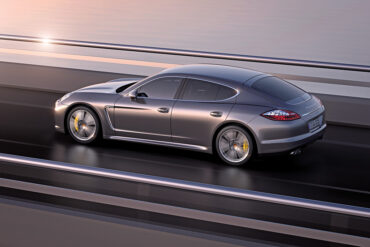
The Turbo S featured the same 4.8-liter bi-turbo engine from the Turbo version, but with a new engine management system and improved turbochargers. The result was a 550 hp beast that could blast most of the supercars on the road with a 0-100 kph (0-62 mph) time of 3.8 seconds. It's all-wheel-drive and the Sport Chrono Package Turbo were standard features.
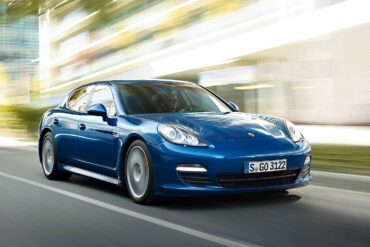
The Porsche Panamera S Hybrid marks the beginning of a new chapter of Porsche Intelligent Performance, continuing the success story of the four-door Gran Turismo. Not only is the new model the most economical Porsche of all time, it also outperforms by a mile all full hybrid production cars of its class, the luxury class, in terms of consumption and CO2 emissions. And at the same time, without any restrictions, it offers the sporty, exclusive character and custom comfort so typical of this unique Porsche Gran Turismo family.
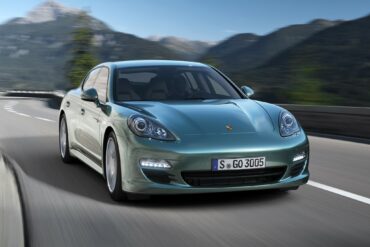
In May 2011, Porsche unveiled the diesel version for its four-door Panamera. With the introduction of that version, it switched from a road runner to a long cruiser luxury sports-sedan. Porsche didn't want to lose that market and decided to offer a diesel version for the Panamera. Since the car was designed for long travels, a diesel engine would give it a range of over 1200 km (746 miles). After the initial shock of its regular customers, soon the orders started to pick-up.
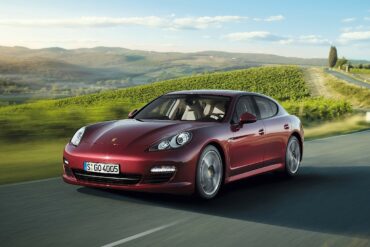
The Panamera 4 was the entry-level all-wheel-drive version for the Panamera, the long-waited four-door Porsche. The Panamera's headlights resembled those installed on the Cayenne. The profile resembled an elongated 911 or the 989 concept-car. On the front fenders, two vents were used to extract the air within the wheel-well and decrease the front-lift effect. In the back, the taillights resembled those found in the Cayman. In the back, on the trunk-lid, a retractable wing was installed. It was automatically extended at speeds over 120 kph (74.5 mph).
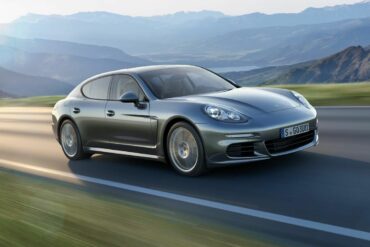
The entry-level Panamera featured a 3.6-liter V6 engine carried-over from Audi. It was paired as standard to a 6-speed manual. A 7-speed PDK (dual-clutch) was on the options list. The base-model Panamera and Panamera 4 were introduced in 2010. While it came later than the initial variants, the base Panamera was no second class car. As a everyday passenger car it was plenty powerful with great luxury and plenty of standard features.


3rd Generation Porsche Cayenne (9YA) Story & History Cayenne (2019 – Present) Date of unveil by Porsche AG: 2017 August...

2nd Generation Porsche Cayenne (958.2) Story & History Cayenne (2015 – 2018) Date of unveil by Porsche AG: 2014 July...

2nd Generation Porsche Cayenne (958.1) Story & History Cayenne (2010 – 2014) Date of unveil by Porsche AG: 2010 February...

The Porsche 911 GT3 Touring Is Perfect Does it get much better than this for a supercar that offers so...

The Cayenne GTS is the hair-splitter’s latest achievement. It’s a Cayenne powered by the same 4.8-liter V-8 as seen in the Cayenne S but tuned for an additional 20 horsepower and 11 pound-feet of torque to make 420/380. It wears a body similar in style to the Cayenne Turbo, meaning a domed hood, blacked-out trim, and body-color fender extensions and side skirts. And it’s loaded with standard performance gear that is optional on lesser Cayennes. What isn't there to like?
M5 vs 911 Turbo Drag Race The 2022 BMW M5 CS ($170,800 CAD as specced, ~$143,000 USD) is an absolute...


PDK vs Manual 992 GT3 – Which Is Better We are back in North Cumbria for a very special episode...

Epic Road and Track Test The new, 992-generation Porsche 911 GT3 is one of the best road-going Porsche’s ever built....

Car and Driver said "It isn't really a coupe, but this 541-hp fastback SUV is the same awesome Cayenne Turbo underneath—with a sexier backside". We agree. Here's what you need to know. With its 541-hp twin-turbo 4.0-liter V-8, eight-speed automatic transmission, and all-wheel drive, the new fastback version of Porsche's largest SUV is mechanically identical to the conventional Cayenne Turbo SUV, and the two vehicles feel exactly the same from behind the wheel.

Its top model was the Cayenne Turbo, with 550 hp under the hood. The third generation came to fix what its predecessor was criticized for: the exterior design. While the second generation featured some details that could remind of a Hyundai, the third generation was completely new from tip to toe. Under the hood, the Cayenne Turbo featured a 4.0-liter V8 unit with two turbochargers. It was mated as standard to an eight-speed automatic transmission.

The V8 is back in the Cayenne GTS after a break for the second generation (it got a twin-turbo V6). The Cayenne GTS is now also available in the new "Coupe" body style. A twin-turbocharged 4.0-liter V8 is good for 453 horsepower and 457 lb-ft of torque. Zero to 60 mph takes a claimed 4.2 seconds if the Sport Chrono package is fitted, and top speed rises to 168 mph. he only transmission available is an eight-speed automatic. This is one sweet ride.

The 434-hp Cayenne S goes from 0 - 60 mph in just 4.2 seconds. Its twin-turbocharged 2.9-liter V-6 helps it to crush the quarter-mile in just 12.8 seconds. Perhaps even more impressive is that the on the optional 21-inch Pirelli P Zero summer tires, the Porsche has a 0.93 g of cornering grip. This is basically a sports car in an SUV body. The Cayenne's dynamic excellence is unmatched in the segment. Easily the best SUV on sale today.

The E-Hybrid version of the current Cayenne came in 2018. Porsche used the same platform as the Bentley Bentayga and the Lamborghini Urus for the third generation of the Cayenne. This platform was designed from the beginning to accept a hybrid version. It also featured a rear-axle steering system which really helps with low speed turning and cornering at speed.

The third generation of the Porsche Cayenne was unveiled in August 2017. The third generation Cayenne is built on a totally new platform, shared with SUVs like the Bentley Bentayga and Lamborghini Urus. It was fitted with important technical upgrades, such as the rear-axle steering system, which allowed a better cornering speed and an easier parking maneuver.