
Porsche Models
All
Latest

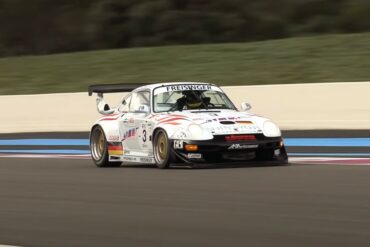

The racing sportscar is prepared by Porsche following the Le Mans GT2 regulations for the over 1,150 kg weight classification. It features a 3.6-litre engine with two turbo-chargers (KKK 24 with 33.8 mm restrictors), which delivers around 450 hp at 5,750 rpm. Even this racing vehicle, with its suspension featuring a McPherson front axle and Porsche multi-link rear axle with LSA system, closely resembles its production relative. Utilizing a steel 993 Twin Turbo chassis with modifications for racing, scored numerous victories in a wide variety of racing venues.
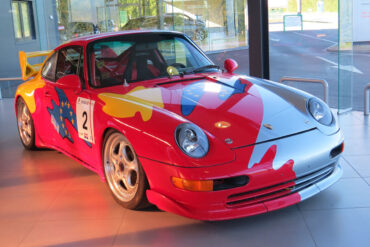
The 993 Carrera Cup 3.8 was developed from the 993 Carrera RS, as purpose-built competition car designed by Porsche for its single-model racing series taking place around the world. Replacing the 964 Carrera Cup, the 993 Carrera Cup had a claimed 315 bhp on tap, weighed only 1,100kg, and offered a top speed of around 270km/h (170mph). Approximately 216 samples were built. The Carrera Cup should not be confused witth the Carrera RSR, or the 993 Carrera RS Clubsport version.
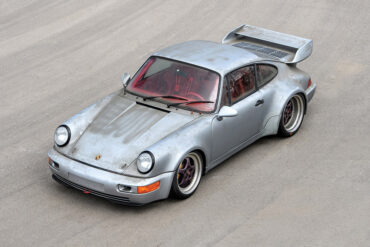
With the 1993 Carrera 2 as the starting point, Porsche had to make at least 50 roadgoing cars in order to qualify this new model for the Carrera ADAC GT Cup, which served as the basis for a motor racing variant to come, the Carrera RSR 3.8. The RSR 3.8 was nothing short of an all-out race car that could be delivered to the track in a ‘just add driver’ form. The Porsche Carrera RSR 3.8 racked up a catalogue of impressive international race results right from the outset, winning overall at the Spa 24 Hours, Suzuka 1000km, and the 24 Hours of Interlagos.
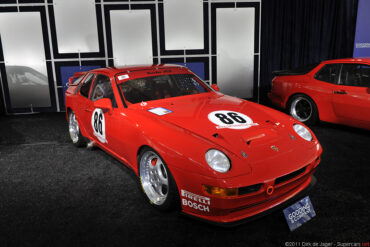
In 1992, Porsche introduced the 968 Turbo RS racecar which it developed to compete in the new ADAC GT racing series in Germany. The car was based on the 968 coupe with limited lightening due to the regulations of the series which had a 4kg/bhp power/weight ratio limit. The car featured a K27 turbo boosting the 3.0 litre, 4 cylinder engine and an 8V head, similar to the 944 Turbo S, rather than using the 16V 968 head.
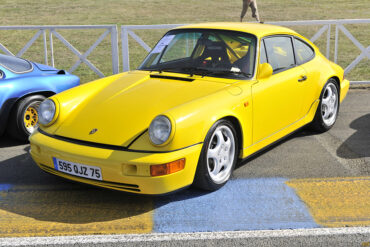
For race teams and track day customers Porsche prepared a small number of the 964 Cup cars according to the FIA NG-T regulations. Officially called the Competition model, these custom-ordered cars were an intermediary step between the Carrera Cup option (M001) and the standard tourer (M002). This M0003 option was available directly from Porsche as a road-going model. These cars had almost all the Carrera Cup modifications including the new suspension. This lowered the car by 40mm in the rear and 50mm in the front. It also included fitting of the larger 930 Turbo disc brakes and adjustable anti-roll bars.
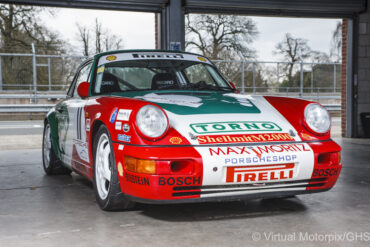

Introduced in 1989 (the year of the 911’s 25th anniversary), the 964 Carrera 4 was a significant new model for the company, but the 4-wheel drive system was deemed unsuitable for the company’s racing series. Manufactured alongside the Carrera 4 at the same time was the more traditional rear-wheel drive Carrera 2, but this model’s launch was only planned for a year later, in the hope that it would not detract from potential sales of the Carrera 4. The 1990 season was the first season that saw the 911-based model become the pillar on which the Porsche Carrera Cup series has been established.
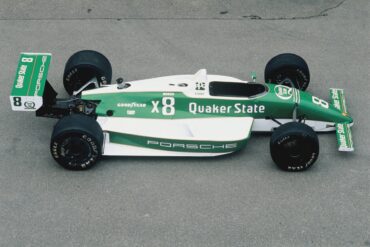
Porsche again attempted to enter CART in 1987. This time it would be a full factory effort, chassis and all. The car had an aluminum-plastic monocoque chassis attached to a 2.6 Liter, 800hp V8. Information gained from their 1980 bid would be used to build the car. This was their first mistake. Indy had stepped up their game over that seven year span. The pole speed at Indy had advanced from 192 mph in 1980 to 215 mph in 1987. It was a different world.
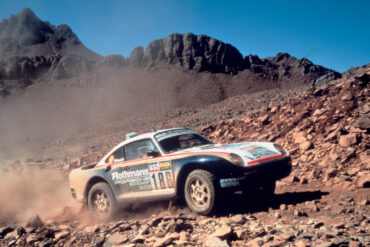
The 959 took both first and second place in the 1986 Paris-Dakar rally. For 1986, the Dakar Porsches finally got all the upgrades from the 959 project, including the active four-wheel drive system offering four driving modes adjusted by the computers. This gave Porsche a 1-2 finish, with supporting 959 Dakar engineer Unger Kussmaul crossing the line at sixth. Once the champagne had dried up, Porsche deemed its Dakar program accomplished.
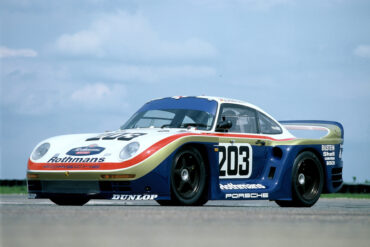
The Porsche 961 was the racing version of the 959 supercar. While the 959 rallye car was also internally called 961, publicly only the circuit racer was called 961. Only one 961 was built. It had 959 prototype chassis number which in turn was from the 1985 911 Turbo chassis number sequence: WP0ZZZ93ZFS010016. The 961 was entered at the 1986 Le Mans 24 hour race. Uncommonly, the 24 hour race was scheduled for May 31-June 1 that year, two weeks earlier of the typical Le Mans weekend in the middle of June.
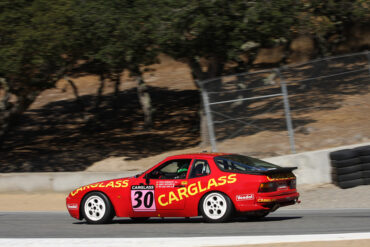
In late 1985 Porsche developed the 944 “Weissach turbo cup race car” to provide amateur enthusiasts with a cost effective entry into motorsports. Porsche initially designed to participate in a single-marque racing series run in conjunction with 1986 German ADAC Supercup races, but soon spread to Italy, Spain, Belgium, Austria , USA, Canada and even Czechoslovakia. The cars were modified extensively for racing duties, including taking out a lot of weight.
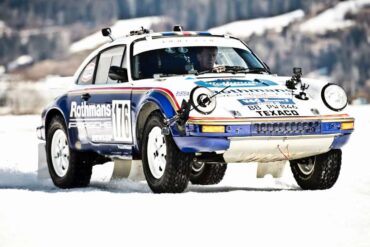
The Porsche 953 ranks as one of the finest off-roaders Porsche has ever made. It was basically a souped-up 911 designed specially to give Porsche an advantage in the 1984 Paris–Dakar Rally. Just a year later, it was replaced by the 959. Despite its brief run, it still managed to make quite the impression. Built around a massively enhanced suspension and a supremely powerful 300 bhp (224 kW), 6-cylinder engine, it showed Porsche knew more than just sportscars.
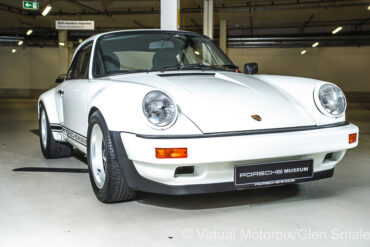
Built so that the factory Rothmans Porsche Rally Team could hit the international stage, the SC RS used the Turbo’s body with fibreglass bumpers and aluminium doors. In Autumn 1983, Porsche presents the 911 SC/RS for motor racing. The engine originates from the 911 SC, with improved performance achieved by the mechanical ball fuel injection, increased compression, the cylinder heads from the 935 and forged pistons. Racing seats are fitted in place of the standard seats.
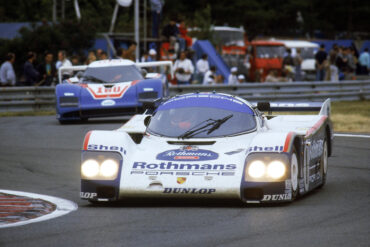
The Porsche 962 arrived on scene in 1984 as essentially a Porsche 956 for the IMSA/US market. A biturbo version was used in competition racing in Europe, while an IMSA version with a turbocharger featured in North America. The 962 C was based on the 956, with a 120 millimetre longer wheelbase and competed in LeMans. It differed from the IMSA version. The driver trio Stuck/Bell/Holbert was victorious at Le Mans in 1987. Porsche offered the 962 to privateers to race on their own and they were hugely successful.
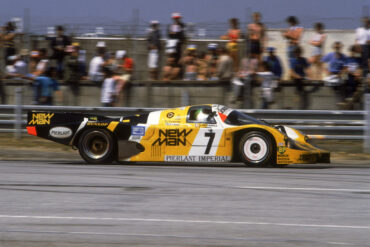
In 1984 Porsche offered a full works-specification car known as the 956B. This provided the New-Man Joest Racing team with a winning formula and they dominated the 1985 24 Hours of Le Mans with a resounding victory. One of the main differences between the customer 956 and the 956B was the Bosch Motronic engine management. This allowed more precise ignition and injection which in turn provided better economy and more power.
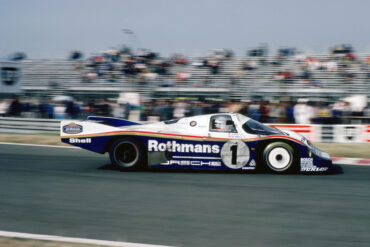
The Porsche 956 was a Group C sports-prototype racing car designed by Norbert Singer and built by Porsche in 1982 for the FIA World Sportscar Championship. It was later upgraded to the 956B in 1984. In 1983, driven by Stefan Bellof, this car established a record that would stand for 35 years, lapping the famed 20.832 km (12.93 mi) Nürburgring Nordschleife in 6:11.13 during qualifying for the 1000 km Sports Car race.
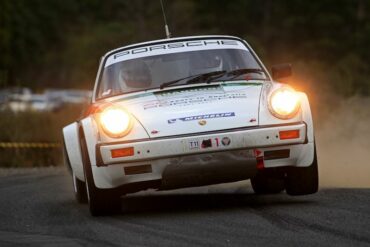
Röhrl and Geistdörfer very nearly won that San Remo Rally, after a comeback that would have been one for the ages. Röhrl and Geistdörfer were up against a field of faster, more powerful four-wheel-drive cars in their rear-wheel-drive Porsche 911 SC, and somehow managed to pull within an eyelash of victory. Unfortunately, a broken driveshaft forced the pair to retire, leaving Michele Mouton's Audi Quattro to run away with the race.
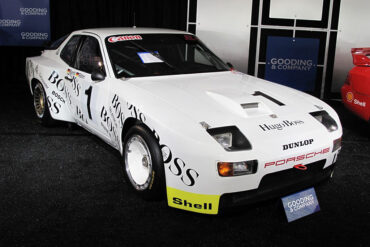
In 1981 Porsche developed two 944 prototypes to succeed the 924 GTPs which raced the 1980 24 Hours of Le Mans. To coincide with the release of the 944 in fall of 1981, Porsche prepared a GTP version to promote the car before the launch. The GTP was equipped with a special Type 949 cylinder block with dry sump lubrication, KKK K28 turbocharger and an air-to-air intercooler.
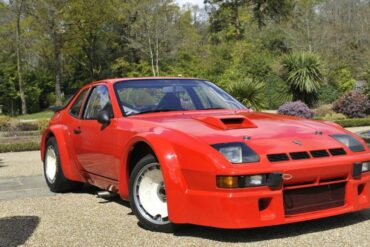
The Carrera GTR was the ultimate 924 Street/Race Car in 1981. The GTR had larger flares, larger wheels and tires, improved brakes and a whopping 375 horsepower from the 2.0L turbocharged dry-sump engine. At $75,000, the GTR would have cost over $200,000 in today’s money, but what you got was a 180 mph screamer for the street, but in full race trim.
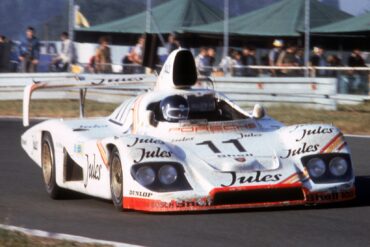
Because the traditional pre-test is cancelled in 1981, Porsche is forced to start at Le Mans without testing. None the less, the race ends successfully: Jacky Ickx and Derek Bell win almost an hour ahead of the second placed competitor – right in time for the 50th anniversary of Dr. Ing. h.c. F. Porsche AG, and 30 years after Porsche’s first start at Le Mans.
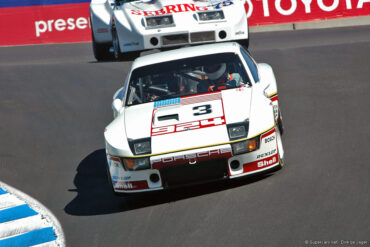
GTP cars were produced in 1980, three of which were special LeMans race cars. The cars had the 2.0L turbocharged 924 engine with a huge front-mounted intercooler and increased boost to increase output to 320 HP and 285 lbs/ft of torque. The engine used Bosch mechanical fuel injection and with a weight of 2050 pounds had a top speed of 180 mph. It was third in the GTP class, with an 6th place finish overall, and another finished fifth in class and 12th overall.
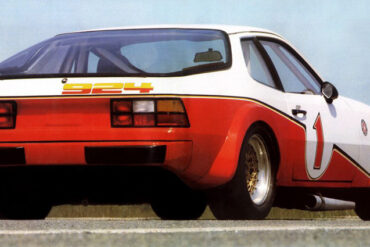
These cars were designed by the factory to race in SCCA D Production Championship starting in 1979. The Porsche project number of these race cars was 933. Only 16 were built by the factory. However, if you had the right connections, you "could" buy the parts as a kit from Porsche to convert your street car into a fully race-ready 924.
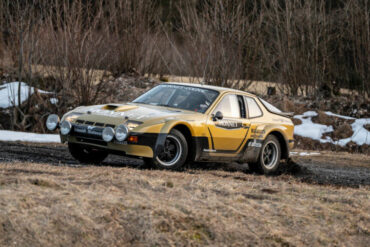
As a top-secret project, the Porsche Museum workshop and the Porsche Heritage department worked on a special front-engined sports car from 1981. 40 years ago, starting on May 15, this car competed in the Deutsche Rallye-Meisterschaft (German Rally Championship). Behind the wheel was non other than Walter Röhrl, with Christian Geistdörfer next to him.
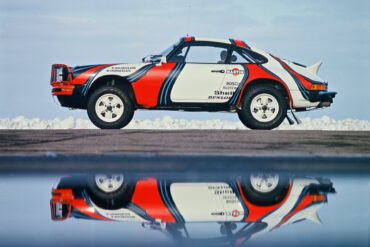
In 1978, the works team fields two 911 SC at the East African Safari Rally. The name of game is to survive 5,000 kilometres of the toughest tracks in sweltering heat and torrential rain. The conditions take their toll: of the 72 starters, 13 reach the finish line. Martini Racing Porsche System Engineering signs on two specialists to drive: Sweden’s Björn Waldegård (Start No. 5) and Kenyan Vic Preston Jnr (Start No. 14).
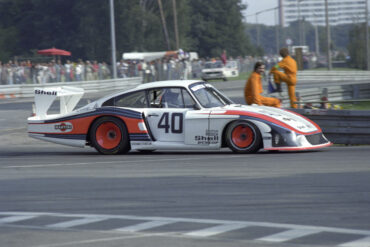
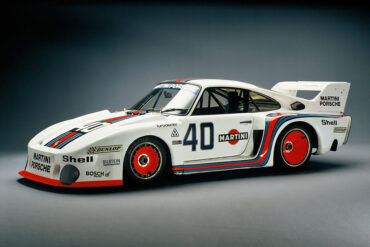
The 935/78 was the ultimate expression of the 911 factory race car before Porsche officially withdrew from motor sport. Raced under the Group 5 silhouette series, great liberties were taken with the design and the result was nicknamed ‘Moby Dick’ for its large size and huge overhangs. The 935/78 was built under Porsche's Chief Racing by Norbert Singer for high speeds at Le Mans. Due to the advanced shape of the car 227 mph or 366 km/h was possible.
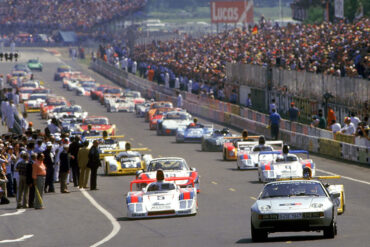
For the 1978 Le Mans, Porsche created two new 936/78. The first one was built using chassis 936-001, which had already served for the 936/76 and 936/77. The second car was built on a new chassis and numbered 936-003. Because of the new water-cooled 24-valve engine, the 936/78 came with huge NACA ducts on the sides for the radiators and a new rear end with hanging spoiler.
The 935 ‘Baby’, based on the successful 935 Group 5 race sports car, was created in 1977, after only four months of development,, specifically for entries in the small division (up to 2000cc) of the German Sports Racing Championship. Compared to the Group 5 car, this little 935 had a six cylinder turbo engine of 370bhp, reduced to a displacement of 1.4-litres. A thorough diet helped ‘Baby’ meet the minimum weight of 750kg as dictated by the rules.
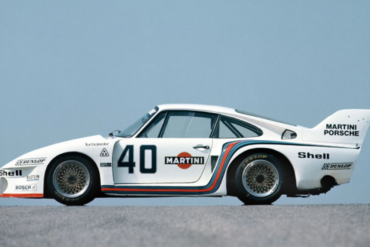
The 935/77 was a result of relaxed rules and the car got a completely new suspension. The mirrors were incorporated into the front fenders and the rear window had a new angle. The 935/77 was visually very pleasing. While the 935/76 had a single turbocharger, the 2.85-litre engine of the 935/77 had two turbochargers. There was also a "baby" 935/77 built with a smaller 1.4-litre turbocharged engine to compete in the national German DRM series under 2 liter class.
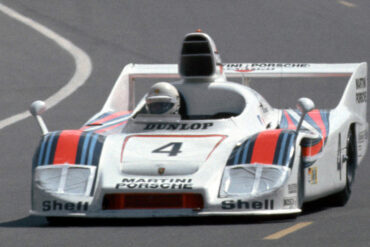
In 1977, Porsche returned to Le Mans with the 936/77. Its body was smaller, lower, shorter and further refined aerodynamically. The engine now featured two turbochargers and delivered 20 more horsepower. At one of the most dramatic races in history, Jacky Ickx, Jürgen Barth and Hurley Haywood slayed the armada of four Renault works cars and two factory-supported “Mirage” with Renault motors. In the year 1981, the 936 celebrated a sensational comeback with another overall Le Mans victory.
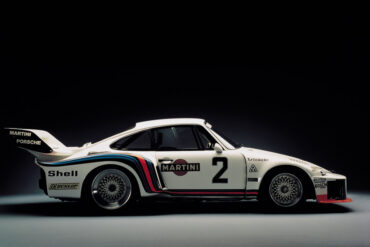
The Group 4 racer based on the 911 Turbo (930) was called 934 and the Group 5 Porsche was called 935. The first version of the 935 looked similar to the 911 Carrera RSR. The first customers for 935 were Martini Racing and Kremer Racing. The Martini car was a full factory development, while Kremer made its own enhancements already before the first race. By 1977, the 935 was sold as a customer car for these series to race against cars like the BMW CSL.
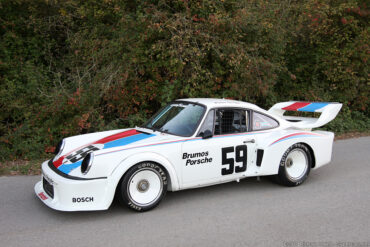
In 1967 Porsche prepared a small number of 934 Porsches with 935 Group 5 parts for the Trans-Am and IMSA GTO series. In the end, the 934/5 dominated the Trans-Am series by taking to top five positions in the championship. Ludwig Heimrath became the 1977 Trans-Am champion in his 934/5 by protesting Peter Gregg's highly modified car. Together they humbled the Corvette C3s and the Group 44 Jaguar XJS.
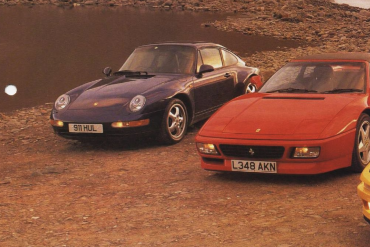
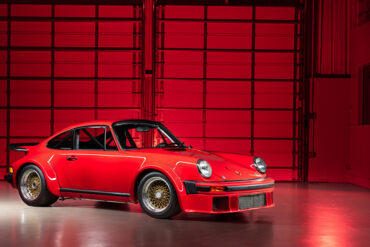
Using the 930 Turbo as a basis, Porsche built the 934 for Group 4 GT racing. It replaced the outgoing Carrera RSR while winning GT Championships in Europe and performing very well in America for Trans Am. Porsche built the 934 from a standard 930 bodyshell and production rear spoiler, but almost nothing else was left alone. The suspension was converted to solid mounts and nylon bushings with adjustable anti-roll bars.
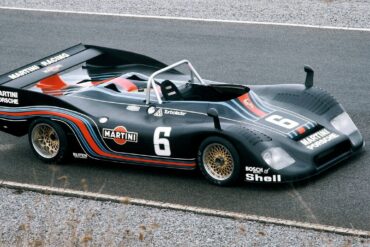
The Group 6 Porsche 936 was the successor to the 908/03 and the turbocharged 917. While the 917 had a 5.4-litre flat-12 biturbo engine, the 936 got a 2.1-litre flat-6 single turbo engine. The reason for the 2.1-litre displacement was to fit inside the 3-litre class (turbocharged cars had a coefficient of 1.4). Despite the small capacity, the engine developed more than five hundred horsepower. Imagine such power in a ~700 kg/1540 lb car!
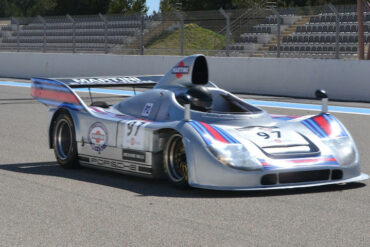
Porsche decided to end its 20-year history of factory sports car racing and sold the 908/03 cars to customers. In 1975, some 908s were fitted with turbocharged engines, similar to those used in the Porsche 934 GT car. Several customer-908s were upgraded with 936-style bodywork. The Porsche 908/80 Turbo of Joest and Jacky Ickx which finished 2nd in the 1980 24 Hours of Le Mans turned out later to have a real Porsche 936 chassis, though.
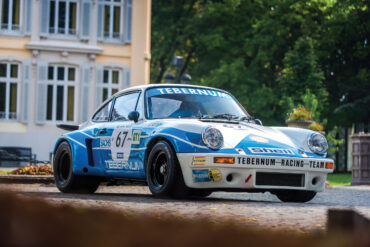
For the 1974 racing season 911 Carrera RSR 3.0 (246 kW) and RSR Turbo 2.1 (338+ kW) were created - the 3.0L for the customer teams and the 2.1 turbo for Porsche’s own team. The Carrera RSR 3.0 was made in small numbers for racing. The 3.0 RSR would go on to become the most successful Group 4 racing car of its time thanks to its combination of low weight, immense Porsche 917 brakes, impeccable handling, and a 330+hp naturally aspirated flat-6.
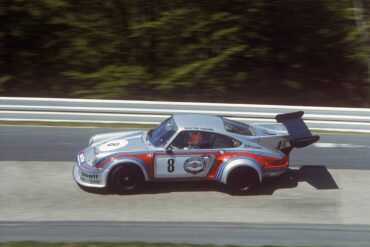
For 1974 both the 911 Carrera RSR 3.0 and RSR Turbo 2.1 were created - the 3.0L for the customer teams and the 2.1 turbo for Porsche’s own team. The 911 Carrera RSR Turbo 2.1 developed 338-368 kW in power, but as the engine was small, the turbo lag was big and it wasn’t as easy to drive out of the corners as it was with the 3-litre normally aspirated car. Weight reduction measures included plastic hoods, fender flares and doors and an aluminium safety cage.
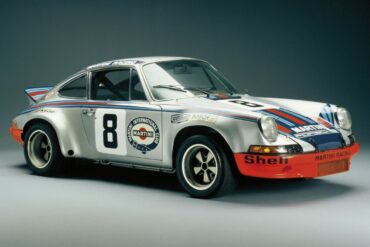
Introduced in 1973, the RSR was a factory-built racing car based on the 911 chassis. The Porsche 911 Carrera RSR 2.8 was the first 911 to ever wear the RSR badge. Homologated for racing by the iconic 1973 Porsche 911 Carrera RS, the RSR’s racing career got off to the perfect start thanks to Brumos Racing’s overall triumph in the 1973 24 Hours of Daytona, while a factory car won the latest ever Targa Florio road race. For the privateer in the mid-1970s who wanted to go sports car racing this was the chosen weapon.
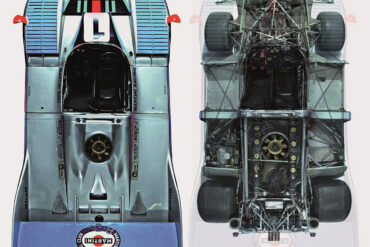
The 917/20 Turbo is a confusing car - its chassis number reads 917/30-001, but it is not the real 917/30. In its first race it was called as the 917/10 Turbo. Sharp eye can detect that it was not just the 917/10 Turbo, but an evolution of it. At the same time it was not the evolution of the 1971 Le Mans 917/20. Still, the car should not be called as the 917/30 to distinct it from the "real" 917/30 Can-Am racers and in 1974 it was decided to call it as the 917/20 Turbo.
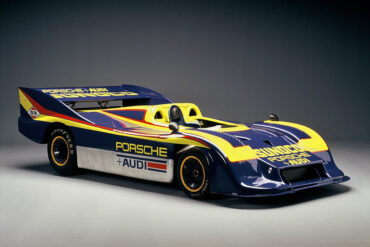
The final evolution of the 917 was created after Ferdinand Piëch had left the Porsche company in 1972. Two complete 917/30 Can-Am cars with 2500 mm (98.4") wheelbase were made for Roger Penske Enterprises racing team. They were chassis 917/30-002 and 003. The 001 car was not a real 917/30 and was raced in Europe at the Interserie. The Can-Am 917/30 had a 5.4-litre flat 12-cylinder twin-turbo engine which produced so much power that nobody really knew how much.
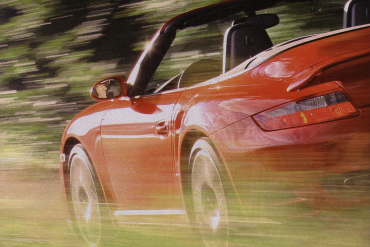
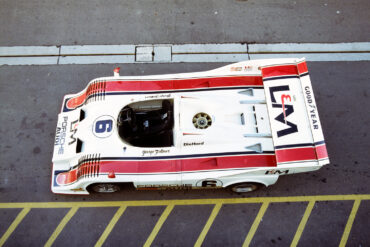
The first turbo-Porsche, Can-Am winner 1972, Interserie winner 1972, 1973. The first ever publically seen turbocharged Porsche was the 917/10 Turbo with chassis number 917/10-011. It was entered for the June 11, 1972 Can-Am Mosport race. Mark Donohue was fastest in the qualification with it, but scored second in the 80 laps race after the 8.1-litre McLaren. The Porsche Turbo era had begun. Eight 917/10 were racing in 1972 in Can-Am and in Interserie.
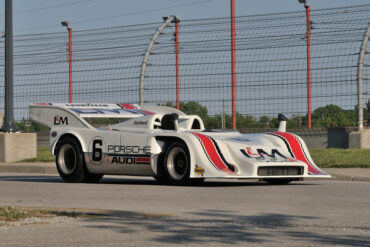
The 1972 917/10 was similar in its design to the 908/03, but, of course, had the 12-cylinder engine instead of the 3-litre flat-8. The 917/10-72 was first seen at the Interserie Nürburgring race on April 3. It was the chassis 004 car of Leo Kinnunen and Keimola Racing Team AAW. Kinnunen scored 4th in the first race, but would win the championship by the end of the season. The second Interserie race was at Monza on May 1st and that race was won by chassis 917/10-002 and Willy Kauhsen.
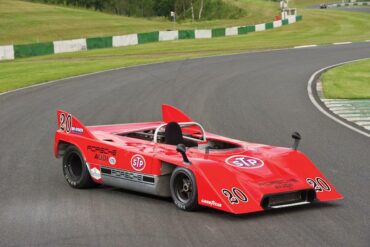
Jo Siffert was the first to take the 917 to Can-Am championship. The car he used in 1969, was the 917 PA Spyder. Although he participated in one Can-Am race in 1970 with a 917 K, that season he skipped. He was back from mid-season 1971 and now with the 917/10. Only two 917/10 were created in 1971. The chassis 001 was used for testing and the 002 by Siffert. He took part in six races out of ten, managed podium finishes three times and scored 4th in the season, like in 1969.
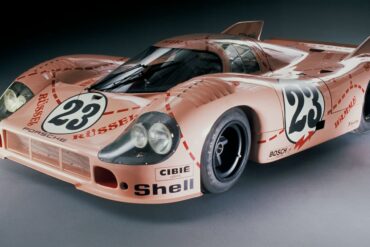
An attempt to blend the best aerodynamic characteristics from both the short-tailed 917 K and long-tailed 917 LH led to the the 917/20, otherwise known as the Pink Pig. The car's combination of a long body, stubby face, and wide hips gave it a pig-like look, which inspired Porsche designer Anatole Lapine to give the car a pink paint job with butcher cut lines covering the exterior. It was hugely popular at the 1971 Le Mans race, and was the fastest in qualifying and nearly came in fifth place, before a brake failure caused it to crash before the finish line.
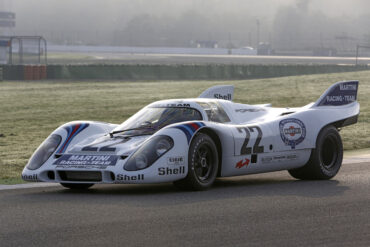
The “shark fins” on the tail gave the Porsche 917 KH 1971 greater directional stability and reduced wind resistance by 11 percent. In 1971 a veritable armada of six Porsche 917s started at Le Mans. The car with start number 22 was special. The white race car with the characteristic Martini stripes had the new “shark fins” on the tail that Porsche had first used in pretraining in April. This 917 was also the first Porsche with a magnesium tubular frame to be used in a race.
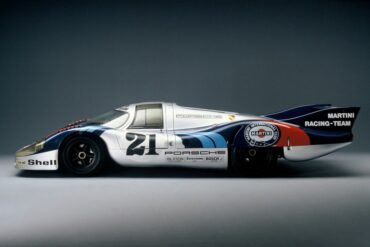
Like the 917 LH of 1969 and 1970, the 1971 version was also made for one race only - the 24 hours of Le Mans. The 917 LH-70 had already proved that the body was excellent for Le Mans, so the aerodynamical modifications for 1971 were mild. The front was modified and the rear wheels were covered. The 917 LH-70 that scored 2nd at the 1970 Le Mans 24H (chassis 917-043) was modified for the Le Mans 1971.
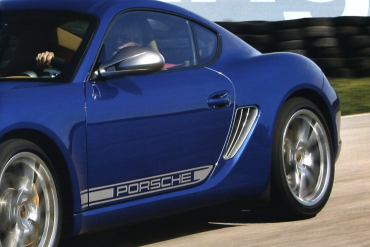
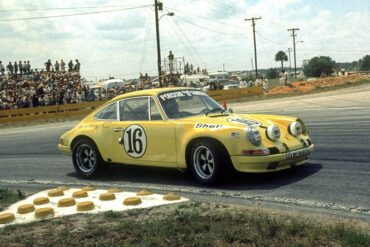
Porsche developed the S/T, of which 33 were built in 1970 and 1971, taking full advantage of new FIA rules allowing a two-inch wider track. Accordingly, wheel arches were widened to accommodate seven-inch front and nine-inch rear wheels. Weight reduction was even more radical, including thinner-gauge steel for the roof and floorpans. Heating ducts, seat slide supports, the glove-box lid, ashtray, sun visors and rear torsion-bar covers were deleted.
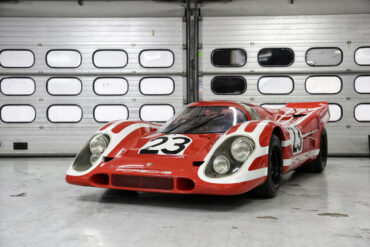
The 917 Kurzheck Coupé (917K) first appeared in 1970 and contributed more to the Porsche 917 story than any other variant. It was a high-down force version that featured a cut-off tail for increased downforce. This reduced the cars top speed, as much as 30 mph. Le Mans winner 1970, Interserie winner 1970 and Manufacturers' World Championship for Porsche in 1970.
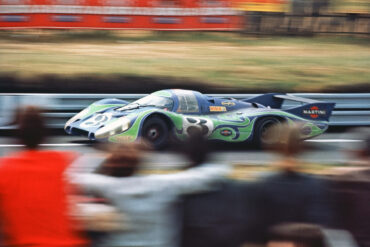
With the aerodynamic instability of the 917 in the 1969, two separate configurations were used in 1970. These were the short-tail Kurzheck version and the less common Langheck or long-tail. Most of the 917's accolades were achieved by the 917 Kurzheck, leaving the Langheck a less popular, but ultimately just as potent contender.
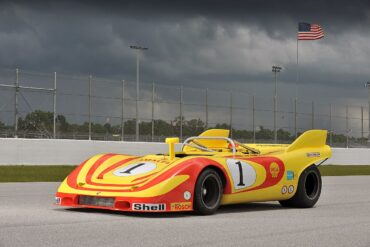
By 1969, Porsche develops the 917 Spyder with a view to competing in the extremely popular North American racing series, the Canadian American Challenge Cup (Can-Am). Three units featuring 4.5-litre twelve-cylinder naturally aspirated engines are constructed in Zuffenhausen, and Jo Siffert takes one to the US to compete in the Can-Am races, ultimately placing fourth overall. The car becomes known as the 917 PA Spyder, with “PA” standing for “Porsche + Audi” as they are the two sales organisations in the US at the time.
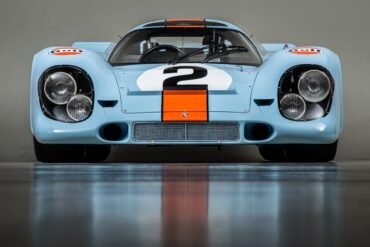
Although the longtail 917 was introduced first, it was meant only for the Le Mans. This meant, the short tail 917 K ("Kurz" in German for short) was raced first. The only engine available in 1969 was the 4.5-litre flat 12. The factory team enters one 917 K also for the Nürburgring 1000 km race, where it scores 8th. The factory team would not enter 917 K for racing anymore in the season, only private teams will.
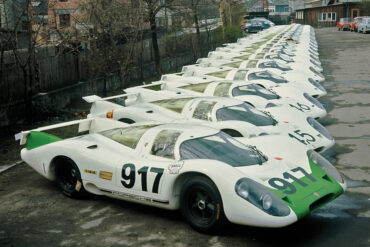
For the 1969 racing season an absolutely new Porsche 917 with 4.5-litre 12-cylinder engine was created. Ferdinand Piëch relied on the skilfulness of Hans Mezger, who was responsible for the overall construction of the vehicle and its engine. The aim was to create the fastest racing car ever. Short and long tail versions were developed, called as the 917 K ("Kurz" = short in German) and the 917 LH ("Langheck" = long tail). The first car was assembled in December 1968.
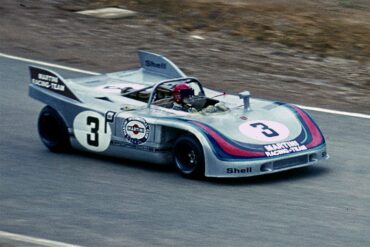
Although Porsche concentrated primarily on development of its twelve cylinder 917 from the middle of 1969, the eight cylinder 908 was also developed further. This 908 received a completely new tubular frame based on that of the 909 Bergspyder and its three liter engine was moved forward by mounting the gearbox ahead of the differential to achieve more equal weight distribution.
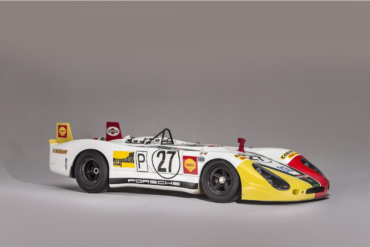
The longer tail 908 Spyders were created only with the Flunder body - the body that's upper surface is almost flat between the axles - and not with the "normal" curvy Spyder body. Very few LH Flunders were created, both with 908/02 and 908/01 chassis numbers. 908 LH Flunder Spyder was first used at the 1969 Le Mans 24h race by Jo Siffert and Brian Redman, but they had to retire because of the gearbox failure. The only excellent result was 3rda at the 1970 Le Mans.
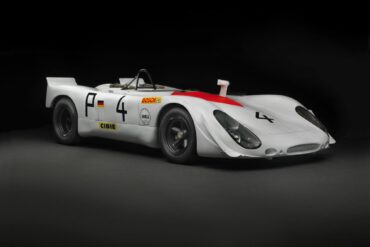
The 908/02 K Spyder and 908 K Flunder Spyder were basically the same cars with slightly different bodyworks. If you look at the non-Flunder Spyder, you see that the body drops after the front wheel arch and rises again before the rear wheel arch. In the Flunder version, this concavity doesn't exist. The difference between the two versions was mainly visual, no difference in racing use. The first competition the Flunder was entered, was the Nürburgring 1000 km on June 1, 1969.
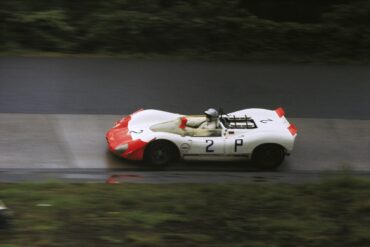
Introduced in 1969, the three-litre 908/2 is an evolution of the Porsche 908K Coupe. As the rule book for the season no longer required a minimum windscreen height nor the requirement to run a spare wheel, Porsche opted for a much lighter Spyder body; which looked like a chopped version of the short-tail Coupe used in 1968. The Spyder body was perfectly suited for high downforce races like the Nürburgring 1000 km and the Targa Florio. It was also about 100 kg lighter than the Coupe.
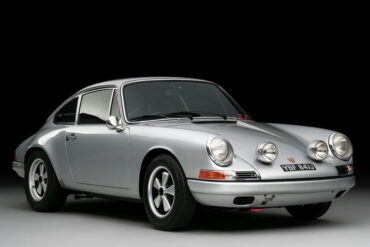
To homologate the 1968 911 for competition purposes, Porsche began with the Spartan 911 T which were a full 54 kg (118 pounds) lighter than their 'S' siblings. Porsche offered clients the opportunity to buy a 911 T outfitted with competition equipment directly from the factory, and the resulting cars have become known as the 911 T/R. They were built in low quantities to a range of specifications depending on their intended competition purposes.
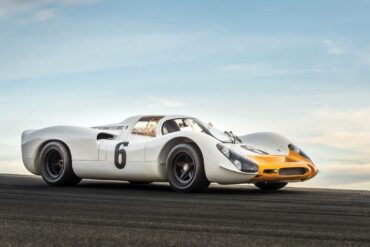
The Porsche 908/01 K Coupé was basically a 907 K with the new 3-litre flat-8. “K” in the designation stands for Kurz which is “short” in German, meaning the car had short-tail body compared to the 908 LH (“langheck”, long-tail). Although 907 and 908 were similar, there was a visual difference - the 907 had symmetrical front openings and the 908/01 K had asymmetrical. The 908/01 K debuted on May 19 at the Nürburgring 1000 km race and won it outright.
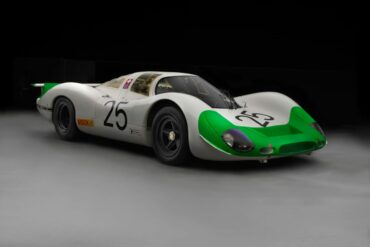
The FIA’s new three-liter prototype (Group 6) and five-liter sports car (Group 4) regulations adopted for 1968 presented the opportunity for Porsche to update its 907, which had won races but lost the championship. In came a 2997 cc flat-eight engined 908. Despite its aero appearance, it was no easy car to drive fast, weaving as speeds approached 200 mph. Despite winning the 1000km Nürburgring, the 908 was anything but convincing in 1968.
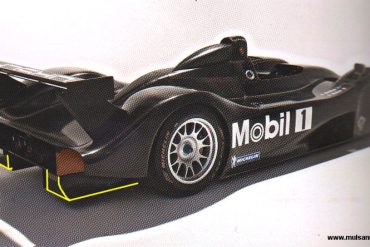
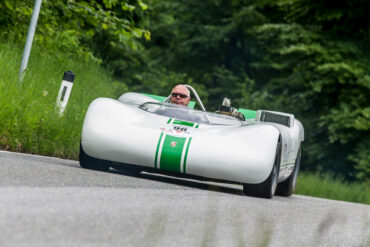
The pinnacle for hillclimb racing was the mid-1960s and perhaps the most extreme machine of the era was the Porsche 909 Bergspyder. It took weight saving to the extreme. The 909 Bergspyder did not win a major event. It ended up being an awesome laboratory of ideas (not all worked). The 909 Bergspyder was based on the 910, but Piëch had tasked his team of engineers, including the legendary Peter Falk, to remove weight on every component.
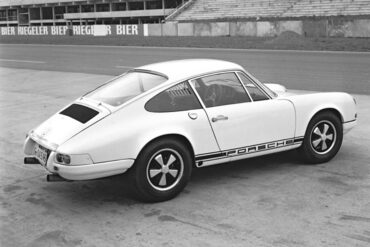
Based on the 911S, the 911 R was produced by Porsche to compete in the FIA’s GT 2.0 category. To make it competitive, the 911R was powered by a flat-six engine, Type 901/22 from the Porsche 906, capable of 210 hp. It went on a diet too, with weight savings coming from everywhere, getting the 911 R down to just 1,800 pounds dry. Four prototypes were constructed after which Porsche had coachbuilder Karl Baur build another 20 customer cars. In the end, because of the modifications to the 911R, the FIA refused to homologate the car.
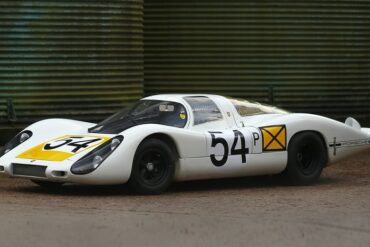
In 1967, Porsche brought a new kind of car to Le Mans. The 907 had a small flat-six and incredibly low bodywork, was aerodynamically optimized. Ford won Le Mans, but the 907 proved its worth. At the end of March, 1968, Porsche had four type 907 chassis ready, and brought them to the 24 Hours of Daytona. Fully developed, the 907 now used a 2195 cc aircooled, magnesium alloy flat-eight with Bosch fuel injection, good for 278 bhp at 8700 rpm. The 907LH (lang heck, or long tail) was slippery, stonking fast and wicked hard to drive. And it won.
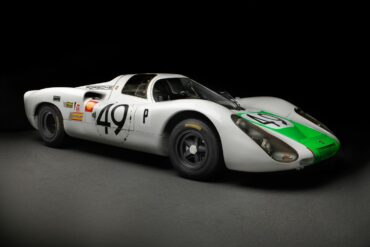
The K in 907K stands for short-tail ("Kurz" in German). Porsche brought four new 907s with short-tail bodies to the rugged Sebring circuit in March 1968. Seven laps in, one 907 was out, and a second suffered engine troubles after 46 circuits. Not to worry, as the other two dominated the race. Porsche 907 024 with drivers Hans Herrmann (Germany) and Jo Siffert (Switzerland) went from the pole position to a dominating victory at an average speed of 102.512 mph, 10 laps ahead of its sister 907.
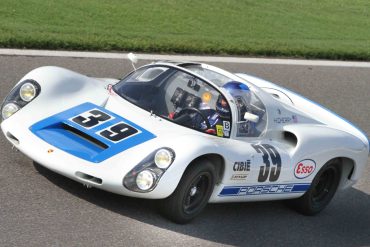
Porsche 910 was the evolution of the 906 with Ferdinand Piëch as its main driving force and Hans Mezger as the head engineer. It came before 907, 908 and 909. Compared to the 906, the 910 had 13" Formula 1 wheels with central locking (906 had 15" 5-bolt wheels), more rounded design everywhere and the roof panel was removable. Because of the targa roof, the cool-looking gullwing doors of the 906 had to be forgotten.
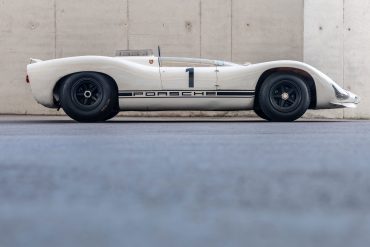
In 1967 and 1968, the Porsche 910/8 Bergspyder was the dominant force before the 909 came along. Porsche’s 910 was essentially an updated 906 and were championship-winning machines thanks to being extremely nimble and well-suited to mountain roads. It had titanium (brake calipers), beryllium (brake discs), magnesium (wheels), electron (tank), plastic (body) and aluminium. The running gear was similar to that of a Formula 1 car, including an eight-cylinder boxer engine.
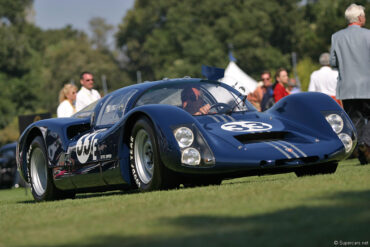
The technology in racing during the mid 60s was shifting from carburetors to fuel injection. Porsche began experimenting and the Bosch injection system proved to be the most reliable. Though the performance did not increase, it did provide superior throttle response over the Weber carburetors, and it was easier to tune. To compliment the new engine, a new body was created which reduced drag levels. Porsche dubbed the resulting car, with its new engine and body work, the 906E, with the 'E' representing 'Einspritzung, or injection.
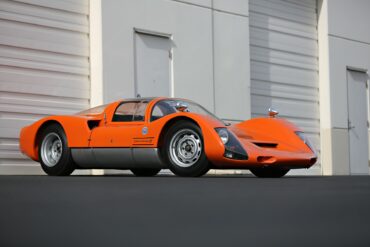
Developed for endurance sports car racing, the 906 was a street-legal racing car that raced in the FIA's Group 4 class against cars like the Ferrari Dino 206 P. They often won their class behind the much larger prototypes such as the Ford GT40 Mk II and Ferrari 330 P3/4. Based off the same principles as the 904, the 906 used a boxed steel chassis with a fiberglass body that added rigidity to the design. The greatest success of the Porsche Carrera 6 "Standard" was undoubtedly the victory at the Targa Florio 1966.
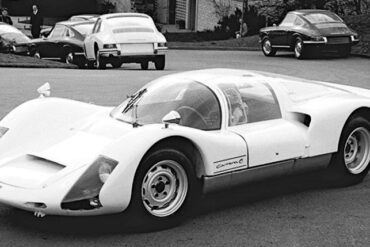
Four factory 906s received an air-cooled eight-cylinder boxer engine of the type 771, which was already used in the 904/8. The engine had a displacement of 2.2 liters with a compression of 10.2: 1 and vertical shafts that drove the two overhead camshafts per cylinder bank. The maximum output was 198 kW (270 hp) at 8600 rpm. All vehicles were equipped with a five-speed manual transmission of the type 906 and a ZF limited-slip differential . The gear ratios could be exchanged as required without removing the gear.
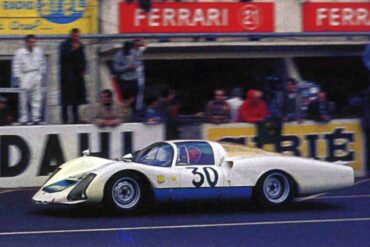
The 906 LH was capable of achieving 174 mph/280 km/h with its 2-litre engine (906 K: 165 mph/265 km/h). At high speed the long tail started to create lift (opposite to downforce), which made the car go fast on the straight, but was dangerous to drive. At Le Mans, the 906 LHs with their experimental bodies competed in the 2-litre prototype class.
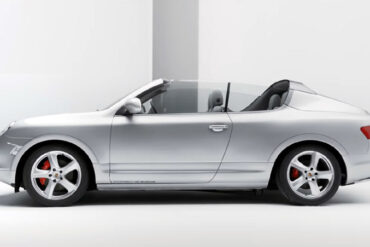
It is not clear if the Cayenne Cabriolet was ever intended for production, but considering how much work was put into the concept car, the project was taken seriously. The car has the nose and brakes from the Cayenne Turbo, but this concept car might have a normally aspirated engine, if at all. Porsche has not unveiled any technical information.
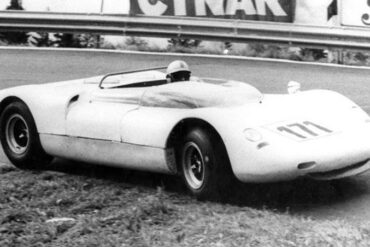
A spider body was fitted, and its inaugural appearance was at the Swiss Ollon-Villars hillclimb where it was met with disappointing results that were clearly to-do with poor testing and rushed development. The Ferrari's easily dominated the event and sent Porsche and their ''Ollon Villars Spyder' back to the drawing-board.
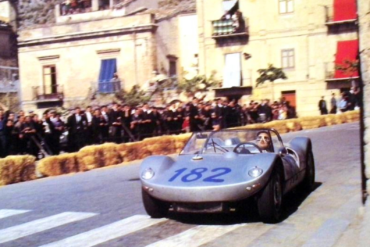
For the underpinnings of the new 904 Bergspyder, the Porsche engineers recycled five chassis originally laid down for a production version of the six-cylinder 904/6 Coupes. The steel platform chassis of the 904 was reinforced with cross-braces to compensate for the rigidity that had originally been provided by the coupe body. The Bergspyders were tried with both the exotic twin-cam eight-cylinder engine and a highly tuned flat six.
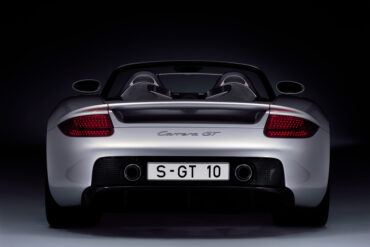
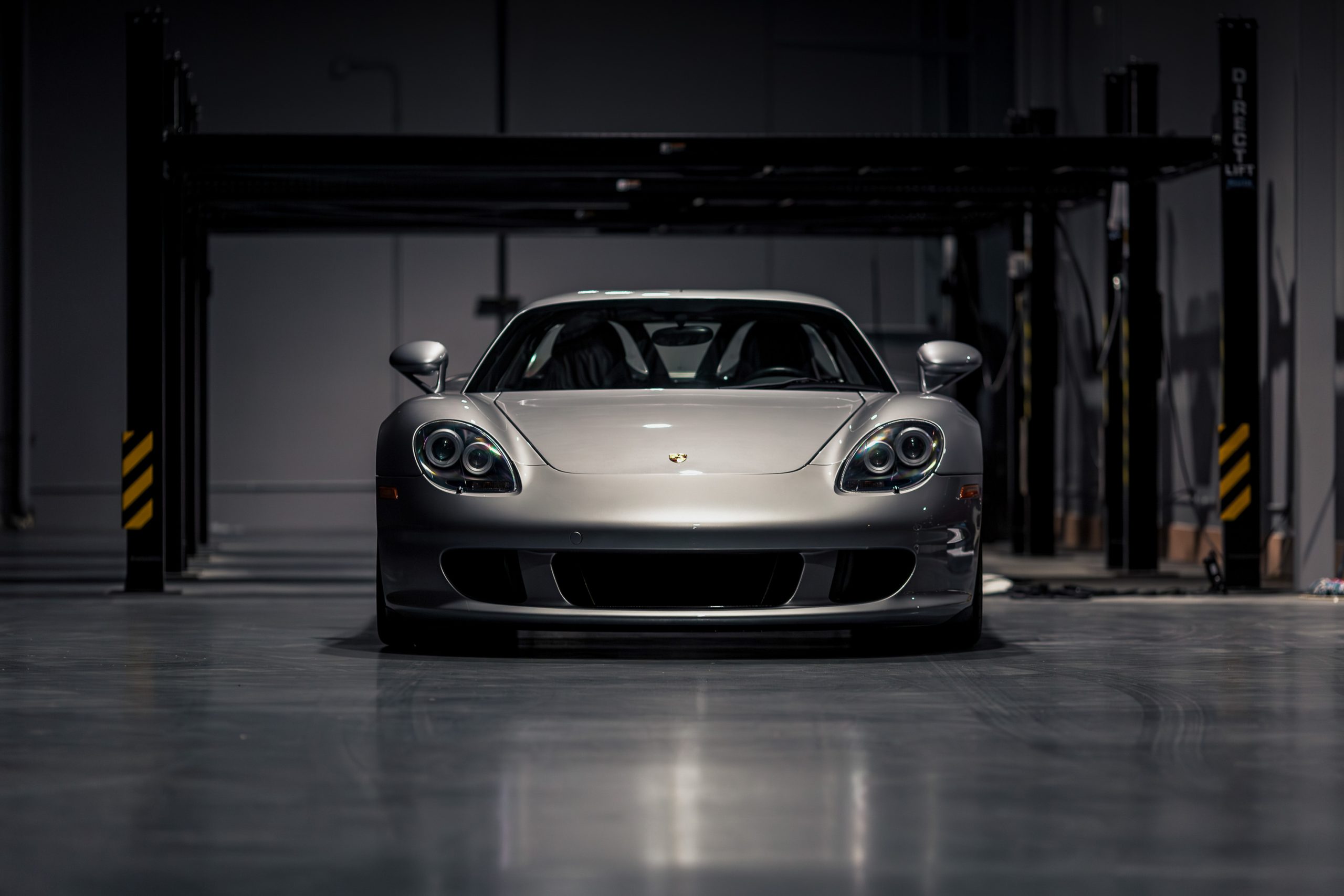
For the 2000 Paris Motor Show, Porsche prepared a concept supercar that eventually turned into a limited production car. The concept's basic shape and specification were close the production version, which included a low-mounted V10 engine that was sourced from their scrapped Le Mans prototype program in 1999. Two functioning concepts were produced for both the European and North American show circuits.
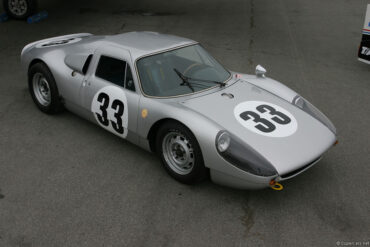
Three factory race cars were fitted with a flat eight-cylinder power plant derived from the 1962 804 F1 car, the 225 hp (168 kW) 1,962 cc (119.7 cu in) Type 771, which used 42 mm (1.7 in)-throat downdraft Weber carburetors. The Type 771s, however, suffered a "disturbing habit" of making their flywheels explode. The 904/8 cars had a short and relatively unlucky racing career.
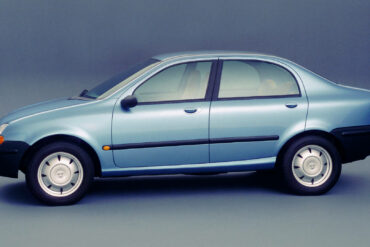
Porsche designed the C88 experimental car for China. The brief was simple: the car had to be cheap, efficient, large enough to carry five people, and be built in China under a joint venture with First Automotive Works (FAW). Given the rate at which the Chinese car market was growing – not to mention the 1.2 billion people who lived there at the time – it’s no surprise that a number of firms responded with plans and prototypes. Porsche was one such company.
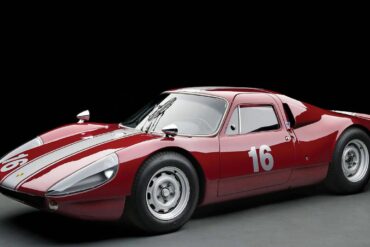
In 1965, the 904’s second and final production year, some examples received a version of the 911’s 2.0-liter flat-six. This version was dubbed the 904/6 and was focused on the factory works effort by Porsche. Six of these cars were so equipped and used a chassis number of 906-0xx. Porsche built a total of six similar 904/6 Works team cars with the following chassis number assignments: 906-001, 002, 005, 006, 011, and 012.
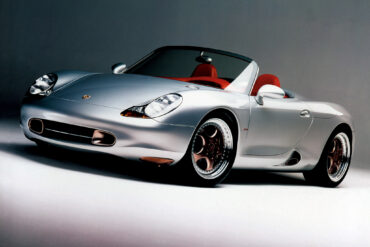
The year was 1993 and the month was January when Porsche took the wraps off the Boxster design study at the Detroit Motor Show. The public and automotive media received the newcomer will great enthusiasm, celebrating Porsche’s decision to embrace the mid-engine configuration once more with a feeling. But better still, the Boxster saved Porsche from bankruptcy. This is the car that played a big part in Porsche's success moving forward.
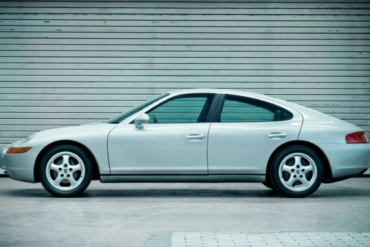
The Porsche 989 a four door performance oriented touring sedan that maintained the iconic shape of the 911 Carrera, but unlike the Panamera, never saw production after it was developed by Porsche between 1988 and 1991. After Ulrich Bez left Porsche in September 1991, the project lost momentum. The severe slump in 928 sales made executives re-think the project. The Porsche Panamera is considered to be the spiritual successor to the 989 project.
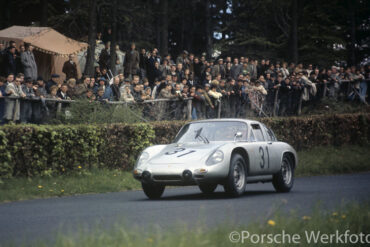
One of the most confused of all Porsche is this DKS or Dreikantschaber. It might appear like a mid-engine RS61 Coupe, but it is a rebodied 356B with a rear-mounted engine. Unlike the earlier 356s, this one featured fared-in driving lights and cut-off greenhouse reminiscent of of the RS61 coupe. Porsche didn't give this new a car a name since it was homologated and considered a Carrera 2 by the FIA. It was nicknamed Dreikantschaber.
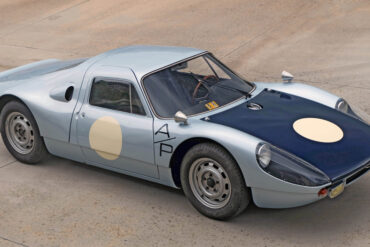
The Porsche 904 debuted late in 1963, for the 1964 racing season. Porsche designed the 1965 Porsche 904 Carrera GTS variant to compete in the FIA-GT class at various international racing events and a street-legal version debuted in 1964 in order to comply with FIA’s Group 3 homologation regulations. When the 904 Carrera GTS debuted, it represented Porsche’s first foray into fiberglass bodywork and the last hurrah for its four-cam, four-cylinder engine.
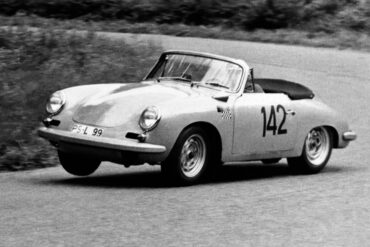
As with the earlier versions, the Carrera was offered both in a Carrera GT Deluxe version for the road and the Carrera GT for racetrack duties. Unlike these earlier models, the new car benefited from the 2.0 liter engine introduced as the Carrera 2 was unveiled in September 1962. The 2.0 Carrera used a variant of the Type 547 engine with a larger bore and stoke, having 1966cc.
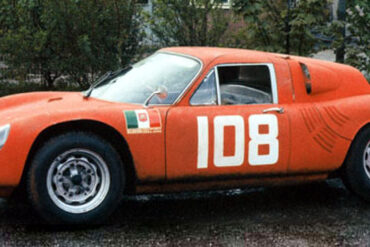
The chassis number 718-046 of a 1961 718 RS 61 Coupé was used for a new car called 718 GTR in 1962.. The Coupé version was developed from this RS 61 donor and was initially fitted with a 4-cylinder engine. This car was also upgraded to an 8-cylinder F1 derived engine which produced 210 horsepower (160 kW). The car was also fitted with disc brakes. A GTR Coupé driven Jo Bonnier and Carlo Maria Abate won the 1963 Targa Florio making it three wins at the event for a 718 car.
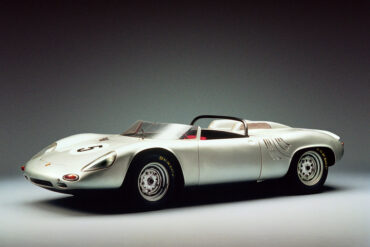
The 1961 4-cylinder special Spyder is the car that became the 1962 8-cylinder W-RS Spyder. It started during the 1961 racing season, when three special 718 racing cars were created for the factory team. Two of those special cars were built as coupés and one as a Spyder - with chassis number 718-047. For the 1962 season, the car got some changes and became known as the Porsche 718/8 W-RS Spyder. Out went the four cylinder and in came an eight-cylinder engine from the Porsche F1 race car (enlarged to 2 liters).
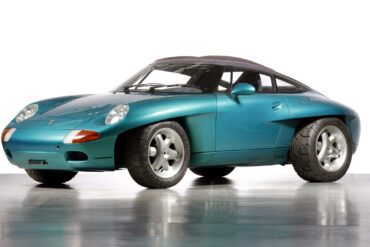
When Dr. Ferry Porsche turned 80 years old, he received a 1989 Porsche Panamericana concept car as a gift. The 1989 Porsche Panamericana concept car was a striking two-seater concept study, shown to the public for the first time at the 1989 International Motor Show in Frankfurt, Germany. The Panamericana concept stole the show, drawing surprised and admiring sighs from fans everywhere.
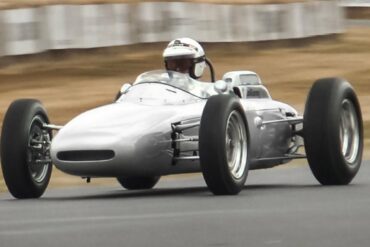
The Porsche 804 was produced by Porsche to compete in Formula One (F1). It raced for a single season in 1962 in the 1½ litre formula. For 1962 Porsche developed an 8-cylinder engine for F1. It was air-cooled and had twin overhead camshafts, four Webber carburetors, and two valves per cylinder. Porsche stayed with carburetors and steel rims while other manufacturers had moved to lightweight wheels and fuel-injection.
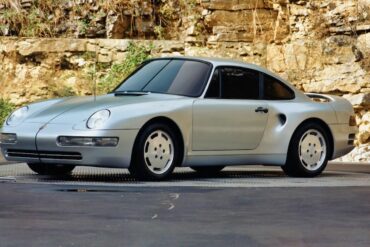
In 1988, Porsche produced a two-door called the 969, based upon the bodystyling of the 911. Intended as the successor to the Porsche 930, the car did not get past the prototype stage. Porsche intended to create a more powerful, range topping model, based loosely upon the 911. The 969 was to feature a hugely powerful twin-turbocharged engine, and was to pick up where the Porsche 959 left off, using much of the supercar's technology.
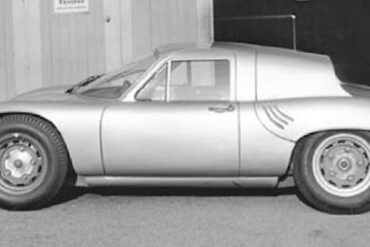
The story of the 718 coupé began in 1960 when a customer ordered a one-off design from Karosserie Wendler. The car was built on the Porsche 550 chassis. Front-end design came from the 718 Spyder. The roof and the rear end were unique creations by Wendler. For the Le Mans 24h race in June 1961, Porsche created two 718 RS 61 Coupés. They shared the side view silhouette of the Wendler coupé and the rear end of the 718 Spyder, but the front design was original to the car.
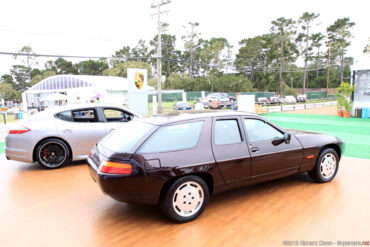
In 1987 Porsche experimented with a long-wheel-base 928 called the H50 that accommodated four doors and full-size rear seats. It was built on the then recently released S4 platform with the 330 bhp V8. Two different versions of the H50 were made, one as a station wagon and another as a hatchback. Porsche was pretty serious about testing the car and put it though 5000 miles of testing
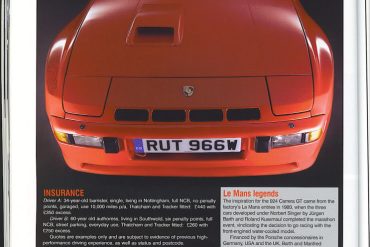
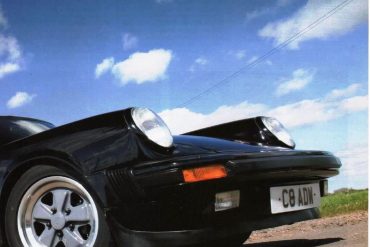
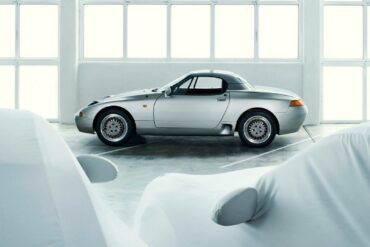
Sports two-seater concept car: As a study for a future vehicle concept, between 1984 and 1987 the Porsche Development Center in Weissach worked on a compact, lightweight, and aerodynamic roadster. The project was inspired by a development job previously undertaken for the Spanish automaker Seat. As a small and relatively inexpensive sports car in the price range of US$ 14,000, the Porsche 984 was designed to appeal to a young, sporty clientele.