
Porsche Models
All
Latest


Autocar Compares the BMW M3 GTS to the 997 Porsche 911 GT3 Can the hardcore BMW M3 match the legendary...
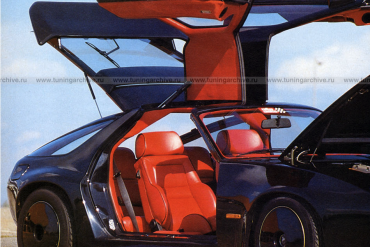
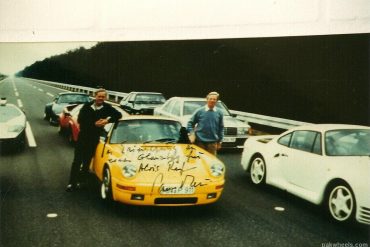
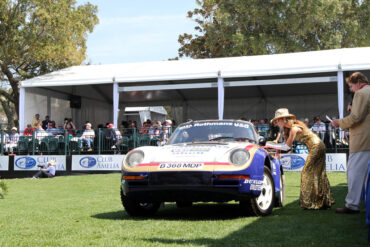
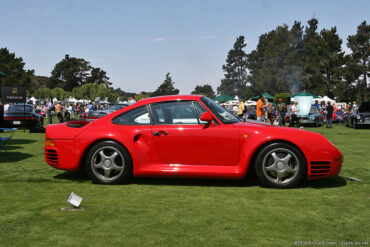
Porsche 959 Sport (1987 – 1988) Pictures...
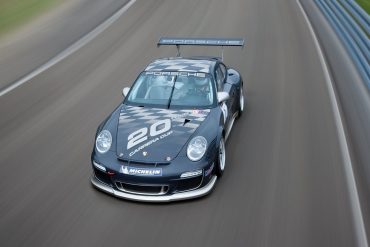
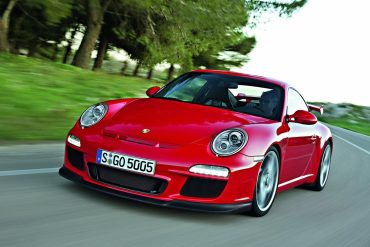
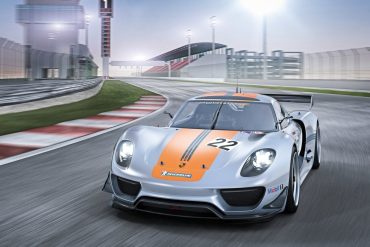
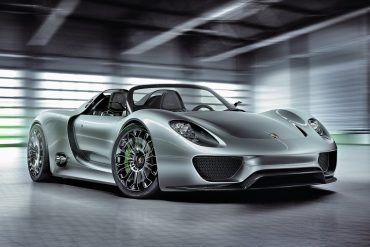



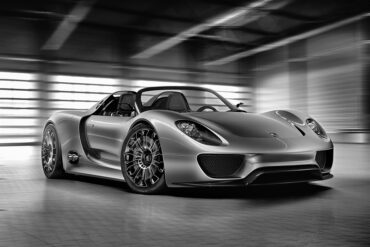
The 918 Spyder concept combines high-tech racing features with electric-mobility to offer a fascinating range of qualities. The highly-innovative 918 Spyder concept car combines Porsche's Intelligent Performance philosophy with the high-technology from motorsport, with classic but modern design to make a truly convincing statement.
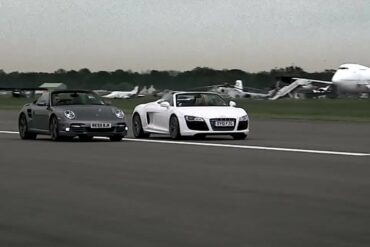
Top Gear Drag Race – Audi R8 vs Porsche 997 Jeremy heads out on to the test track and pits the...
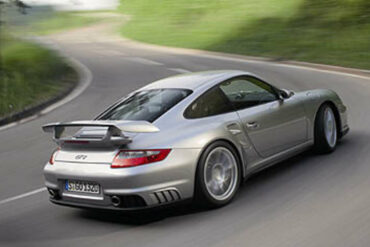
The 997 GT2 RS Is the Fastest Stick-Shift Production Porsche Ever Chris Harris drives the all new 911 GT2....

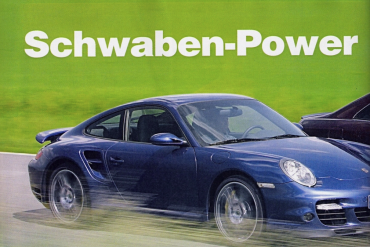
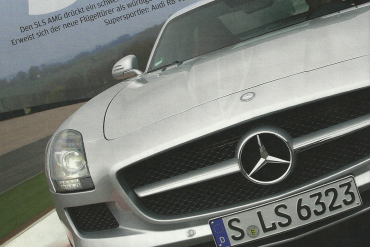
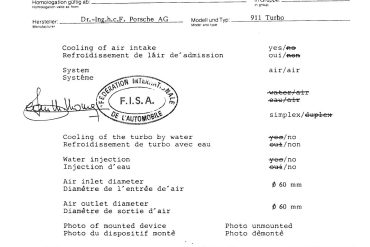
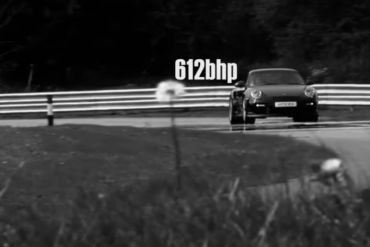
Auto Express Reviews The 997 Porsche 911 GT2 RS The 911 GT2 RS is the fastest and most powerful production...
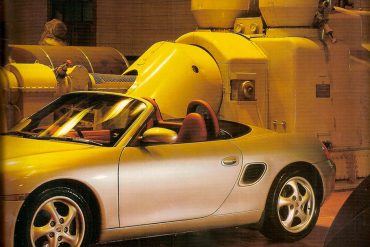
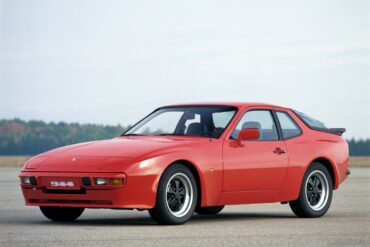
The base Porsche 944 coupe was built between 1982 and 1989, essentially the same platform as the Porsche 924 (there was some overlap as the 924 was produced till 1988). The 944 was intended to last into the 1990s, but major revisions planned for a 944 S3 model were eventually rolled into the Porsche 968 instead, which replaced the 944.
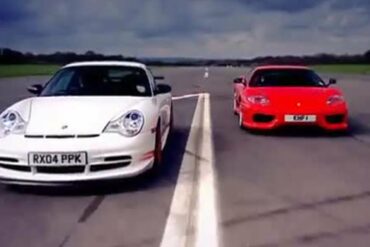
Clarkson Spanks the Porsche 996 GT3 RS vs Ferrari 360 Track days with Jeremy Clarkson and the Porsche GT3 RS...
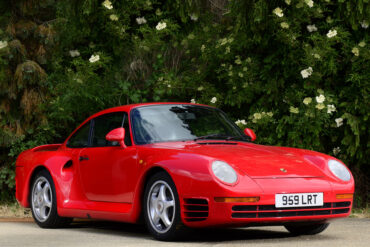

Porsche 959 Wallpaper Collection We have curated the ultimate collection of the best Porsche 959 Wallpapers and HD backgrounds for...
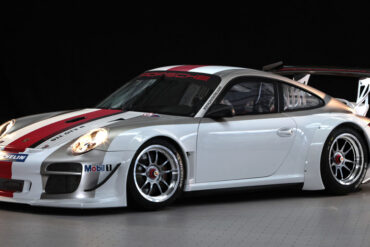
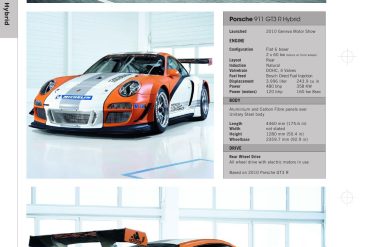
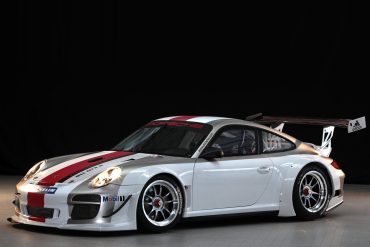
Following the Porsche 911 GT3 Cup, Porsche AG, Stuttgart, is entering yet another racing car in the 2010 motorsport season: The 911 GT3 R will be raced in series based on the international FIA GT3 regulations, thus succeeding the 911 GT3 Cup S. The main focus in developing this new model was on even better drivability and even easier handling. The 911 GT3 R is powered by a four-litre six-cylinder boxer engine delivering maximum output of 480 bhp (353 kW) transmitted to the rear axle by a sequential six-speed dog gearbox.
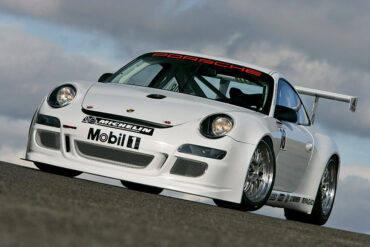
To a large extent, the 3.6-litre boxer engine is identical to the power unit used in the Porsche Mobil1 Supercup and the international Carrera Cup championships. Power output has increased by 20 horsepower to now 440 hp (324 kW) at 8,000 rpm. Maximum torque is up by ten Nm to 430 at 7,250 revs per minute. The power increase results from optimised engine electronics and a modified exhaust system. In contrast to the GT3 Cup, the body of the Cup S is not based on the road-going GT3 but on the GT3 RS.
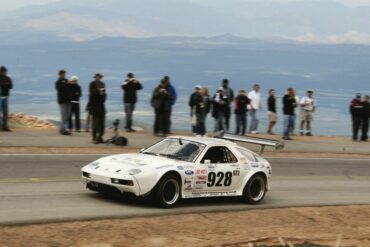
In 2007, 2008 and 2009 American racing driver Carl Fausett took his specially prepared and supercharged 1978 Porsche 928 to the Pikes Peak International Hill Climb and competed in the Open Division. Fausett placed third in the Open Division in both 2007 and again in 2009, where he was also the fastest 2WD car. At that time, much of the race course was gravel.
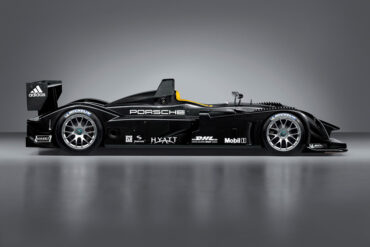
Following a development year with Penske Motorsports in ALMS, Porsche revealed the final version of their LMP2 contender for the 2007 season. Known as the 'EVO' model, it had a host of upgrades that made it suitable for customer-funded teams to successfully compete. This model dominated the P2 class at events like Le Mans and Sebring. It raced from 2007 till 2010 with strong results across the board.
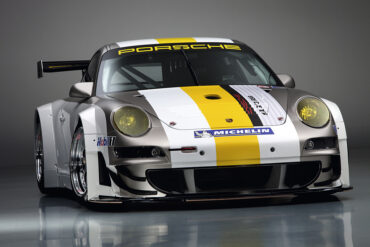
Porsche has announced the introduction of the new 2007 911 GT3 RSR (type 997) for the American Le Mans Series and other world GT racing venues. The latest version of the most successful racing sports car in history is based on the street production model 911 GT3 RS (model year 2007) and was launched in late 2006. The 911 GT3 RSR has wider rear fenders and rear track to improve performance capabilities over its predecessor. The car has also been developed to fit into the 1,225 kg class. The new car is built in accordance with the ACO LMGT2 Regulations and the FIA Article 257.
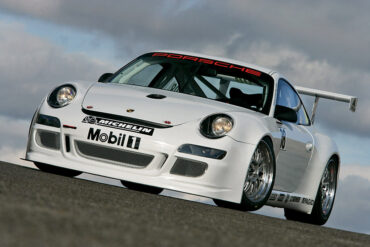
The Porsche 997 GT3 Cup was a series of race cars created by Porsche to enter the Fédération Internationale de l’Automobile (FIA) Group GT3 racing class. Replacing the 996 GT3 Cup, the 997 Cup's 3.6 litre engine is rated at 294 kW (400 PS; 394 hp) and was mated to a six-speed sequential transmission. In 2009, the GT3 Cup received several 997.2 updates including a new 3.8 litre engine with an output of 331 kW (450 PS; 444 hp).
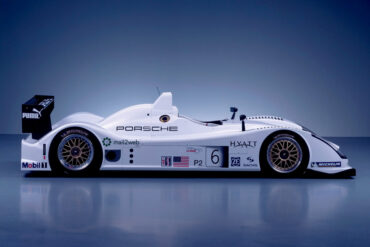
The Porsche RS Spyder, internally called 9R6, exists only thanks to a customer order made in 2004 by Penske Motorsports, a subsidiary of Penske Racing. The 9R6 was built according to the Le Mans Prototype class 2 (LM P2) regulations and to be raced at the American Le Mans Series (ALMS) in USA and Canada. The ALMS was created in the spirit of the Le Mans endurance races, hence the name of the series.
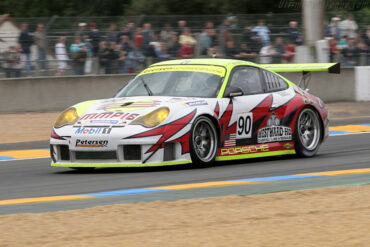
Based on the road-going 996 911 GT3 RS, the GT3 RSR features improvements to its predecessor in all key areas. The vehicle is available in an ACO (Automobile Club de l'Ouest) version for competing in Le Mans and in the American Le Mans Series as well as in a FIA specification. The 911 GT3 RSR features a modified front which improves downforce at the front axle. The 3.6-litre, six-cylinder boxer engine delivers 445 hp at 8,250 revs. Maximum torque is now 405 Nm at 7,200 rpm, with top revs reached at 8,500 (for the FIA specification with two 30.8 mm air restrictors). Race cars never got more exciting than this.
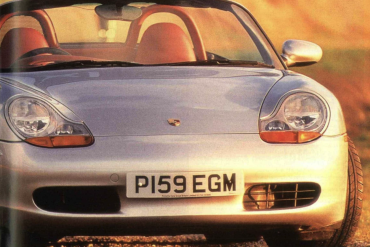
Ferrari F355 vs Porsche 911 Turbo (993) Ferrari F355 F1 vs Porsche 911 Turbo (993) with Engine Kit 430 HP...
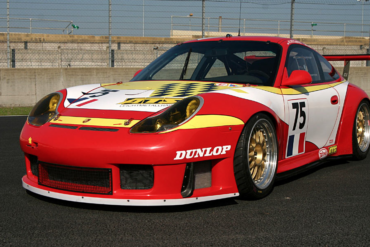
In the 2000 FIA GT Championship, the 996 GT3 R was the dominant racer in the new N-GT class and won every run. In the same year, the factory-supported Phoenix Racing won the 24-hour race at the Nürburgring. In 2001, the modified version, now called the 996 GT3 RS, was used. The vehicle was not only very successful in its class, it also achieved overall victories. Modelled on the 911 GT3 R, the GT3 RS race cars offered a number of technical improvements, which combine to ensure a racing car with optimal competitiveness. 50 racing cars were produced.
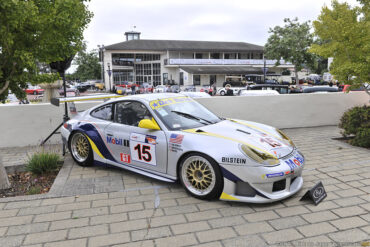
The 996 GT3 R was a one-year-only (2000 model year) special of which only 63 were produced. The car took the basic GT3 bones and amplified it for motorsport. The Mezger engine produced over 400 horsepower, while factory-fitted adjustable shock absorbers gave better handling. Most notably, the GT3 R wore carbon-fiber bodywork meant for ultimate light weight in motorsport. The 996 GT3 R was introduced in 1999 as a replacement for the 993 RSR. Before its introduction, it was extensively tested at Weissach and Paul Ricard. In the 2000 FIA GT Championship, the 996 GT3 R was in the N-GT class and won every run. Won the 24-hour race at the Nürburgring.
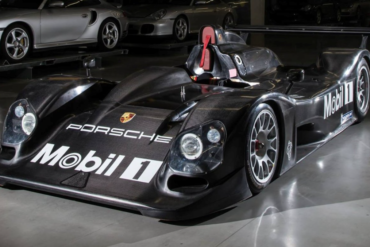
The Porsche LMP2000 (also known as the Porsche 9R3) is a Le Mans Prototype racing car that was developed between 1998 and 2000, but never raced. One car was built, and it was designed around a modified version of Porsche's 3.5-litre V10 engine that was originally designed for Formula 1 in 1992. The project was canceled before the car was built, leading to various rumors about the reason for its demise.
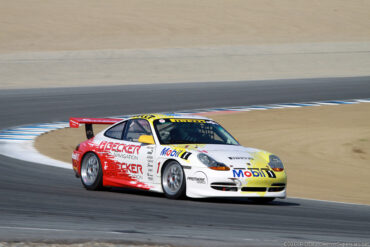
The 996 GT3 Cup served as the basis for the 996 GT3 road car, featuring a 3.6 litre engine with 355 hp. For the 1999 season the engine output was increased to 365 hp. For the 2001 season the GT3 Cup received modified aerodynamics including an enlarged rear wing and improved cooling. For 2002, the GT3 Cup received several changes, adopting facelift 996.2 features such as Turbo-style headlights. The new body significantly improves aerodynamics and cooling. Engine output was increased to 380 hp. For 20003 onward, the power was hiked once again, with the engine now pumping out 385 bhp @ 7250 rpm and of torque 288 ft lbs @ 6500 rpm.
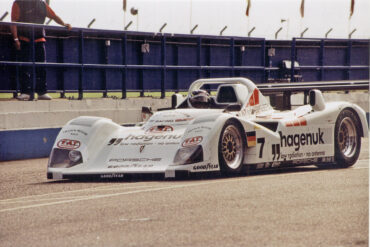
The Porsche WSC-95 (sometimes referred to as the TWR WSC-95) was a Le Mans Prototype originally built by Tom Walkinshaw Racing. It was modified by Porsche from the original Group C Jaguar XJR-14 from which it derived,[1] and run by Joest Racing. The WSC-95 saw very little race action even though it won the 24 Hours of Le Mans in both 1996 and 1997 without being acknowledged as a factory supported project. Later upgraded to the Porsche LMP1-98 before being retired. Only two cars were ever built.

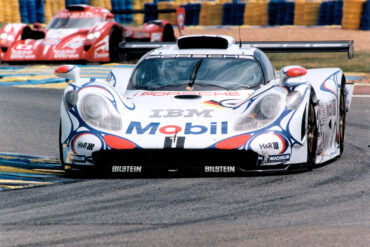

The 1998 GT1 car was a totally rethink and vast upgrade versus the prior year car. 1998 Le Mans 24-hour race In the 1998 jubilee year, the Porsche team celebrated its 16th overall victory in Le Mans with a double win for the 911 GT1 98. On 6th/7th June, the winning car was driven by Laurent Aiello, Allan McNish and Stéphane Ortelli. It was almost 50 years to the day on which the first Porsche sports car saw the light of day.
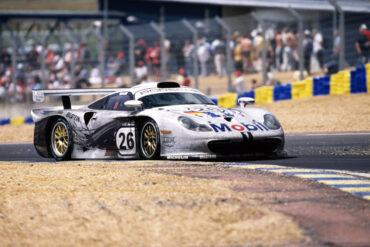
Towards the end of the 1996 season, Porsche made revisions to the 911 GT1 in preparation for the 1997 season. The front end of the car was revised including new bodywork which featured headlamps that previewed the all-new generation of the (996) Porsche 911 which would be unveiled in 1997. It had the same engine as the previous version, but new aerodynamic elements allowed the 1997 version to be considerably faster than the 1996 version. At Le Mans the works cars led the race but did not last the full distance; a privately entered 1996 specification GT1 managed 5th overall and third in its class.
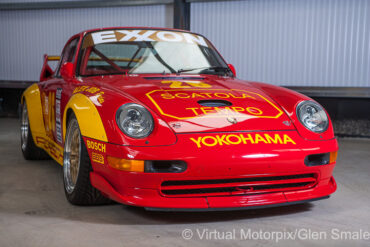
The 993 Carrera RSR takes the 993 Carrera RS formula and makes it even more track-ready by adding a roll-cage and removing carpet, power windows, and a/c. There were just thirty Porsche 911 Cup 3.8 RSR (Type 993) race cars produced for the 1997 season. This model was the last of the breed of air-cooled, naturally-aspirated 911 race cars to come from the Weissach race department before the introduction of the Type 996 water-cooled cars. To find a 993 3.8 RSR that participated in some of the world’s toughest endurance races in period, and survived unscathed and unmolested, is quite rare.
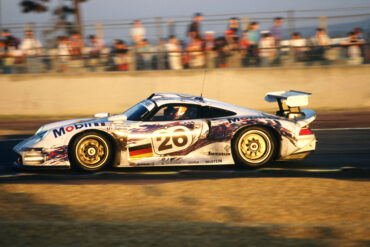
In spite of its 911 moniker, the car actually had very little in common with the 911 of the time, only sharing the front and rear headlamps with the production sports car. Designed and developed to compete in the GT1 class of sportscar racing, which also required a street-legal version for homologation purposes. It was powered by a twin-turbo flat 6 that was good for 600 bhp. The 1996 911 GT1 clocked at a top speed of exactly 330 km/h (205 mph) on the legendary Mulsanne Straight.