
Porsche 911 GT3 & GT3 RS
The Ultimate Guide To the Ultimate Race-Bred Sports Car
Featured / Brief History / 911 GT3 Generations / 996 / 997 / 991 / 992
Few automotive badges carry the weight of a heavy-handed promise like the one found on the rear decklid of a Porsche 911 GT3. Since its debut in 1999, the GT3 has served as the ultimate bridge between the racetrack and the mountain pass, effectively distilling Porsche’s decades of motorsport dominance into a package that can be registered with a license plate. While the rest of the 911 lineup has embraced turbocharging for efficiency and torque, the GT3 remains a defiant sanctuary for the naturally aspirated flat-six, characterized by a high-pitched, 9,000-rpm scream that has become the definitive soundtrack of the modern purist.
The lineage of this icon can be traced back to the legendary 1973 Carrera RS 2.7, a car that set the blueprint for lightweight, track-focused 911s. However, the "GT3" nameplate specifically arrived with the 996 generation, originally intended as a homologation special for FIA racing. Over the subsequent decades—through the analog perfection of the 997, the high-tech leap of the 991, and the aerodynamic wizardry of the current 992 - it has evolved from a niche enthusiast choice into Porsche’s definitive "halo" car. It isn't just a faster 911; it is the physical manifestation of the brand’s engineering soul.
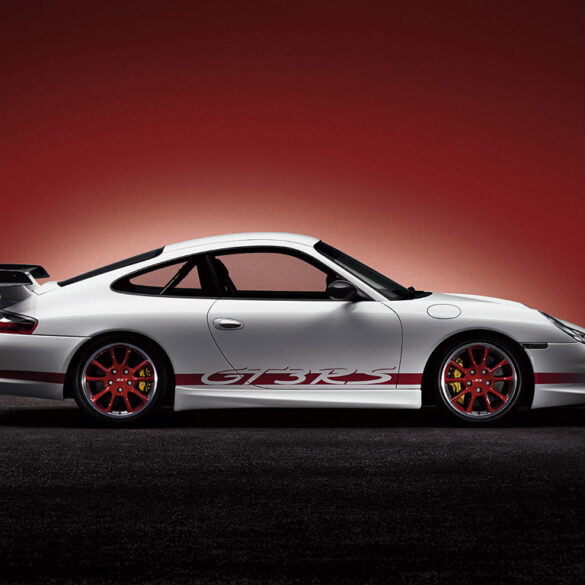
Stepping up to the GT3 RS (or RennSport) shifts the conversation from "fast road car" to "race car with indicators." If the standard GT3 is a scalpel, the RS is a specialized surgical laser. Every iteration of the RS—from the blue-and-red-decaled 996 to the massive "swan-neck" winged 992—focuses on three uncompromising pillars: extreme weight reduction, advanced aerodynamics, and unrivaled chassis precision. It is where Porsche tests the absolute limits of what a street-legal vehicle can do, often lapping the Nürburgring in times that embarrass dedicated mid-engined supercars costing twice as much.
Ultimately, the GT3 and GT3 RS represent more than just performance figures; they are the guardians of a specific driving experience. In an era of increasing automation and hybridization, these cars remain tactile, vocal, and demanding. They require a driver who wants to feel every pebble through the steering rack and every gear change in their spine. For those who believe that driving should be a visceral, heart-thumping event rather than a commute, this badge isn't just a status symbol—it's a religion.
The 911 GT3 Legend - Stories, Buyer's Guides & Featured Editorial
The 911 GT3 isn’t just a model line — it’s a philosophy. Born from Porsche’s racing program and refined over more than two decades, the GT3 represents the purest expression of what a road-going 911 can be when lap times, driver feedback, and mechanical honesty take priority over everything else. The GT3 story is one of relentless evolution, engineering obsession, and an unwavering commitment to naturally aspirated performance. This section is dedicated to the GT3 legend in full. Here you’ll find long-form editorials exploring the key moments that shaped the GT3 lineage — the engines that defined generations, the controversial decisions that split enthusiasts and the cars that reset expectations.
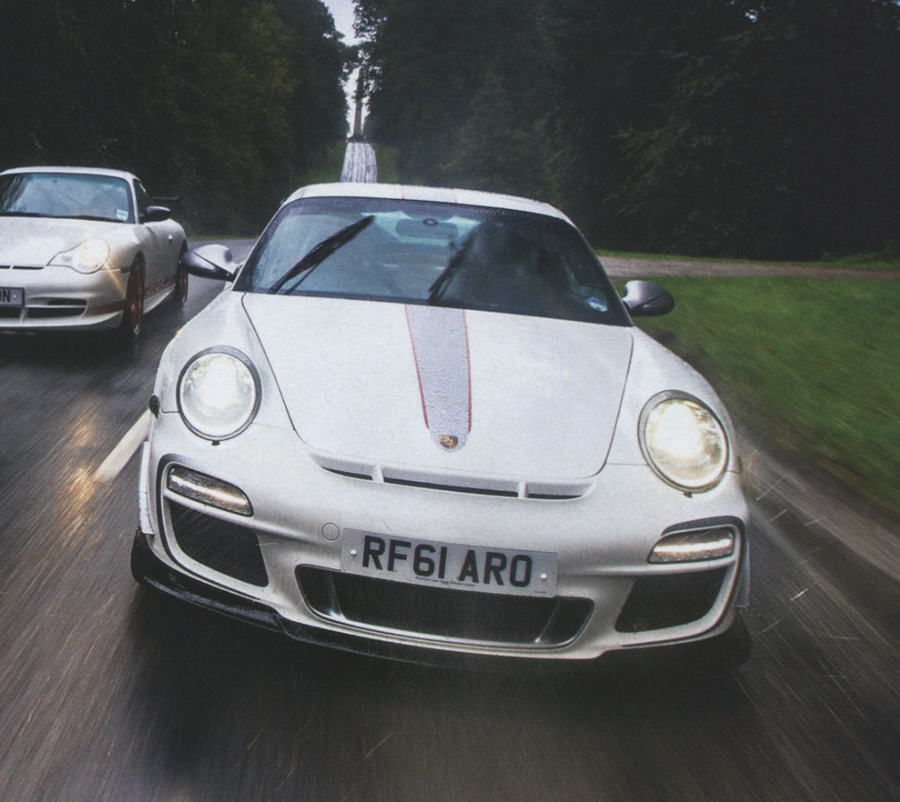
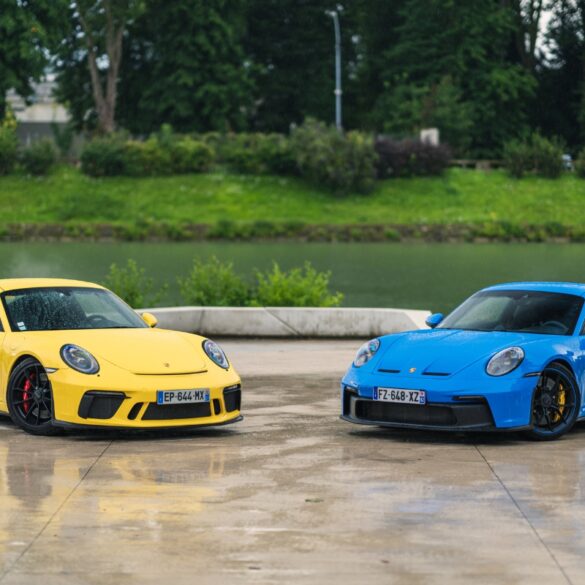
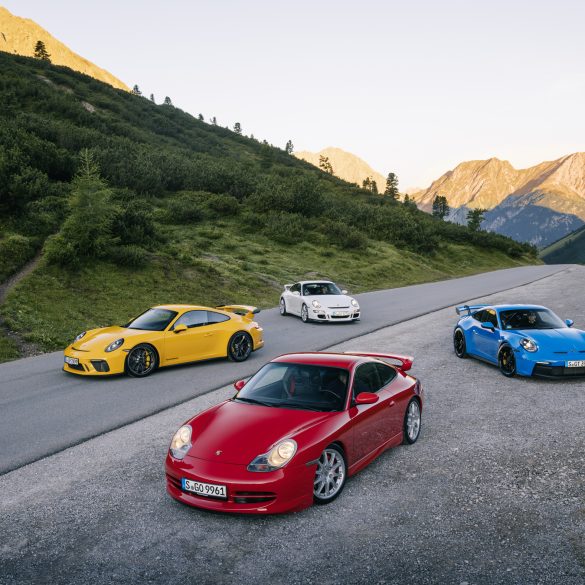
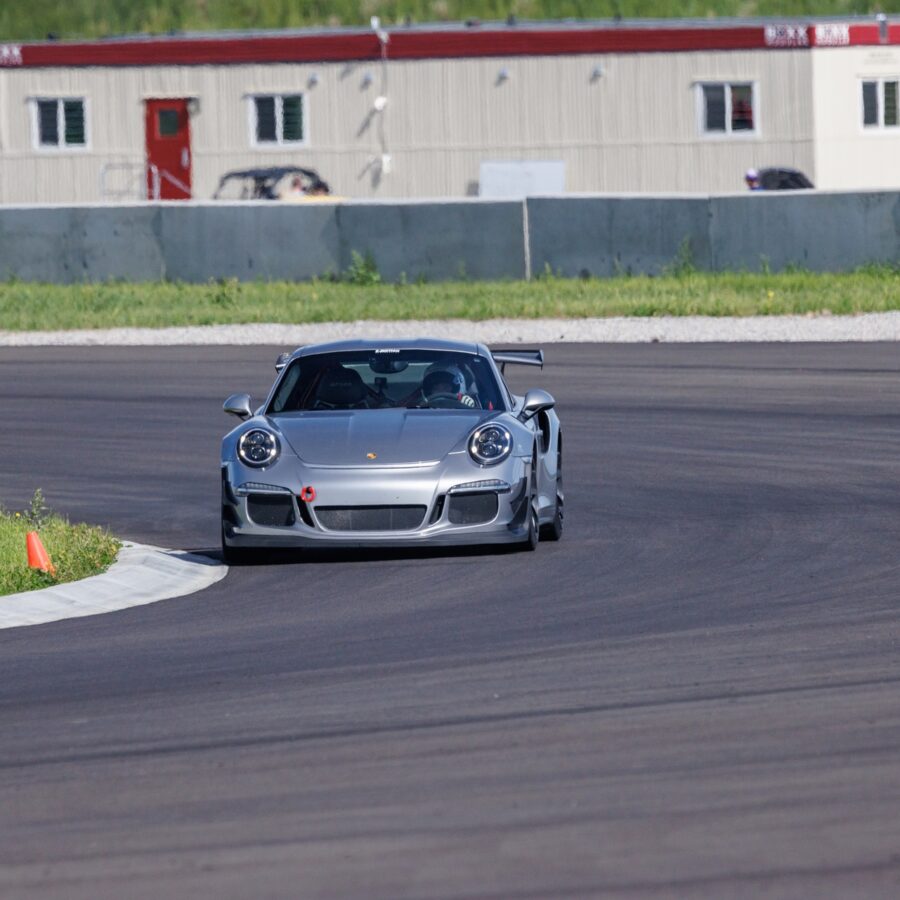
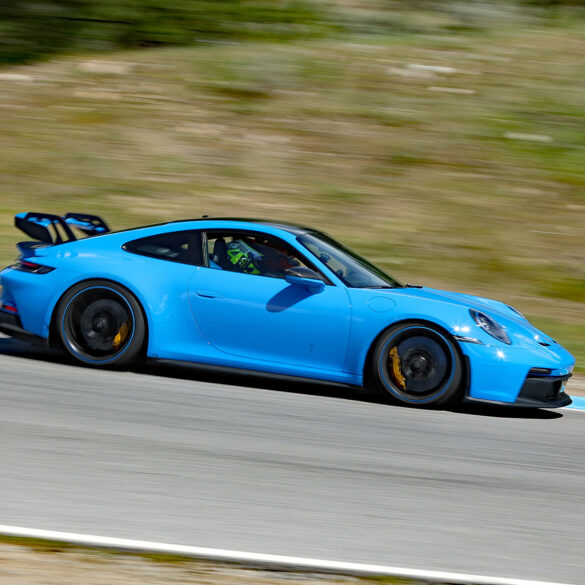
Porsche 911 GT3 - A History
911 GT3 Generations & Timeline
The evolution of the GT3 is a story of Porsche moving from a niche "homologation" experiment to creating the most sought-after driver’s car in the world. While the technology has leapt forward, the recipe has remained remarkably consistent: natural aspiration, rear-wheel drive, and a obsessive focus on weight.
The Water-Cooled Pioneers: 996 & 997
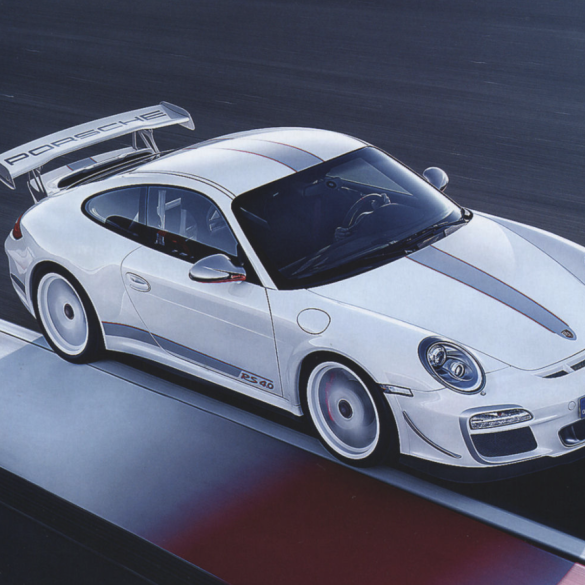
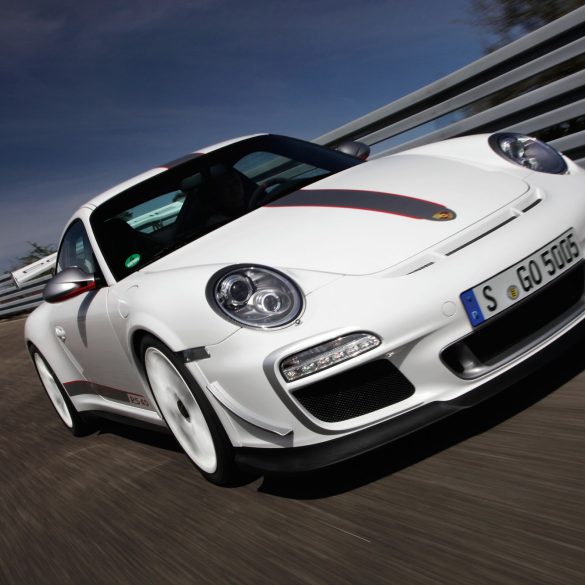
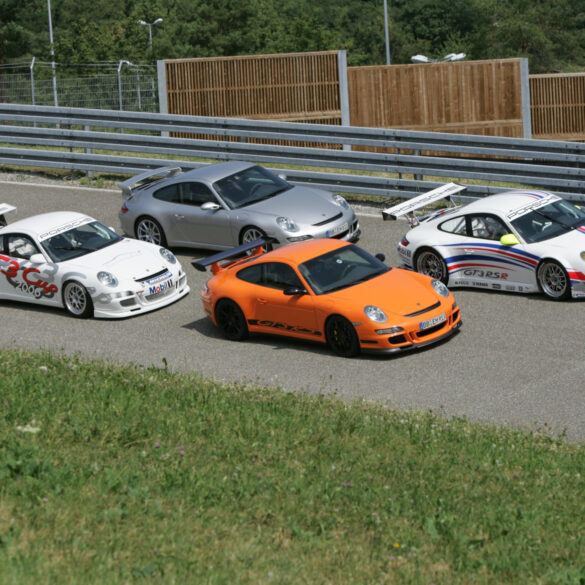
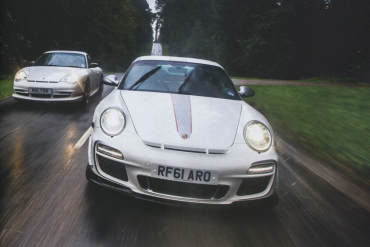
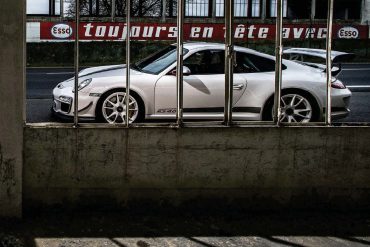
The 996 generation (1999–2005) was the birth of the legend. It was the first to wear the GT3 badge and featured the famous "Mezger" engine, a powerplant with direct roots in Le Mans racing. It was raw, analog, and famously difficult to master. The 997 generation (2006–2011) is often cited as the "sweet spot" for purists. It refined the 996’s rough edges, introduced active suspension (PASM), and culminated in the GT3 RS 4.0—a car widely considered one of the greatest 911s ever built, representing the final, glorious evolution of the original racing block.
The Digital Leap: 991
The 991 generation (2013–2019) marked a massive shift. It was longer, wider, and—initially—controversially ditched the manual gearbox for the lightning-fast PDK dual-clutch transmission. It also introduced rear-axle steering, making the car feel impossibly agile. Porsche listened to the fans for the "991.2" mid-cycle refresh, bringing back the manual transmission and moving to a 4.0-liter engine that could scream all the way to 9,000 RPM. This era turned the GT3 from a hardcore track tool into a polished, world-beating supercar.
The Modern Masterpiece: 992
The current 992 generation (2021–Present) is where Porsche stopped looking at road cars for inspiration and started looking at their GT3 RSR race cars. The biggest change was the move to a double-wishbone front suspension, giving the car front-end grip that was previously unthinkable in a 911. The 992 GT3 RS took this to the extreme with active aerodynamics and a massive "swan-neck" rear wing that generates more downforce than the actual race cars. It is, quite simply, the most advanced internal combustion 911 ever to leave the factory.
The GT3 Evolution
Fun & Free to Download
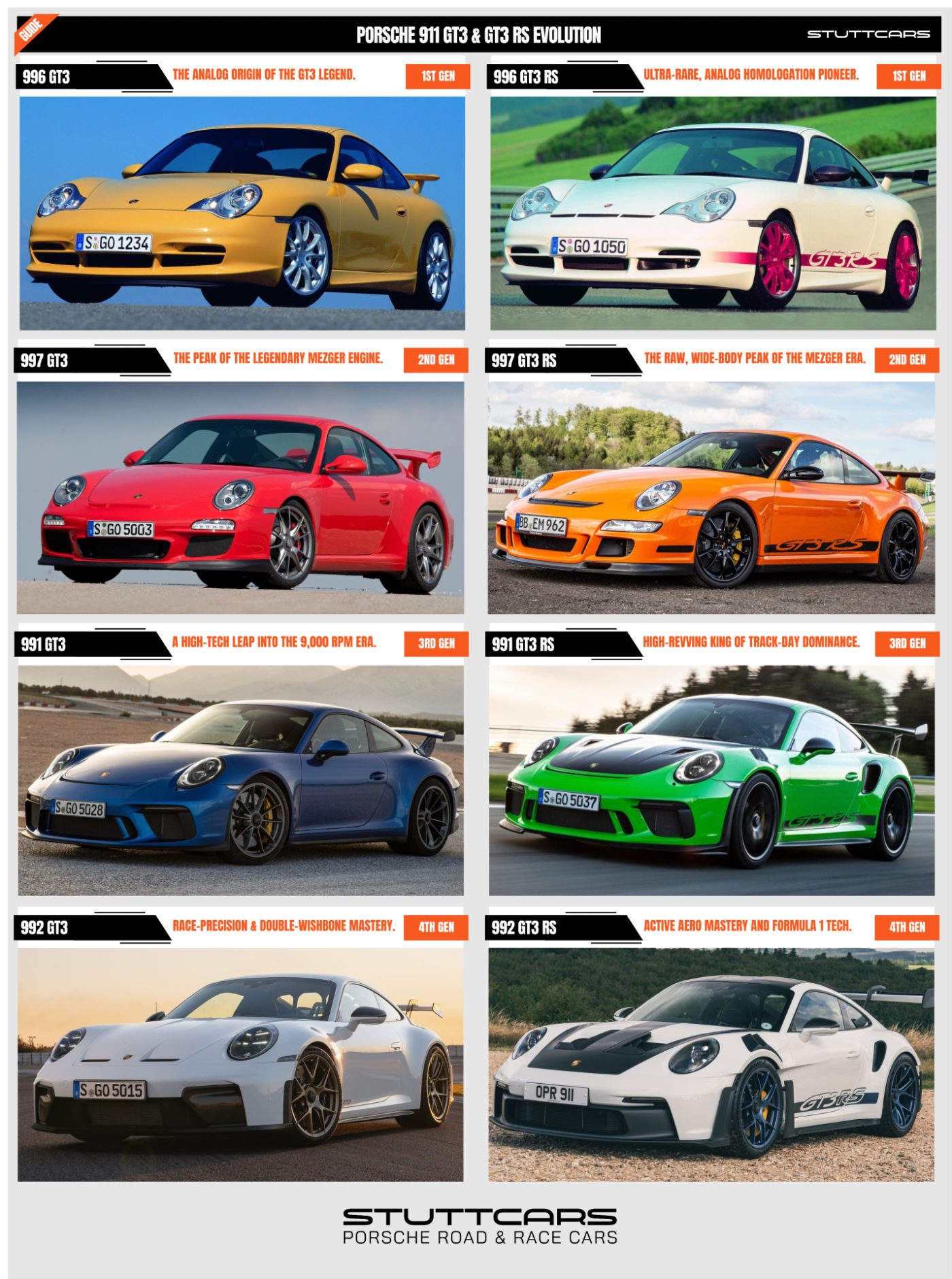
Porsche 911 GT3 (996) (2000 – 2005)
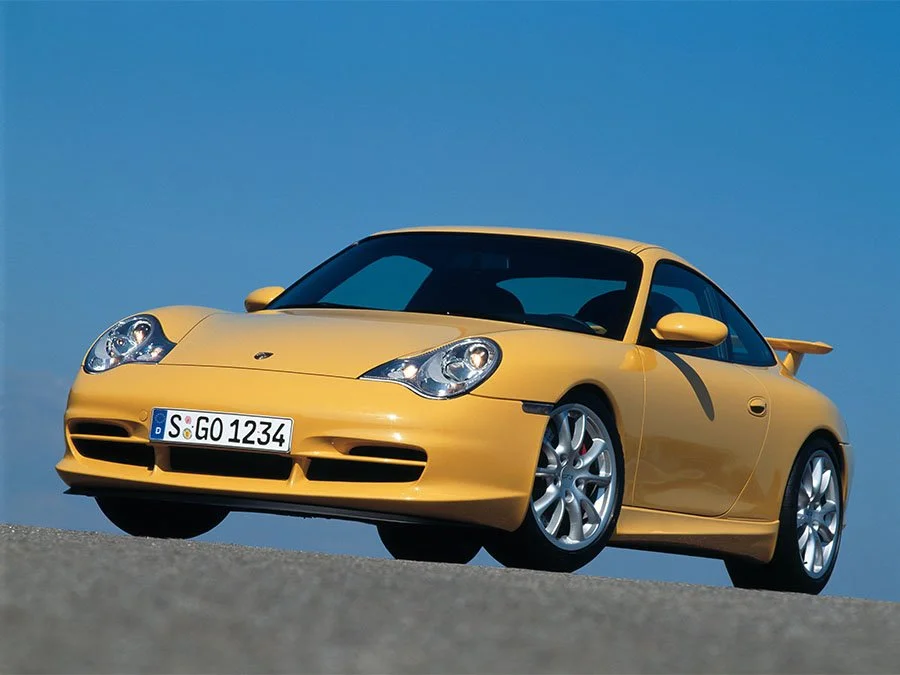
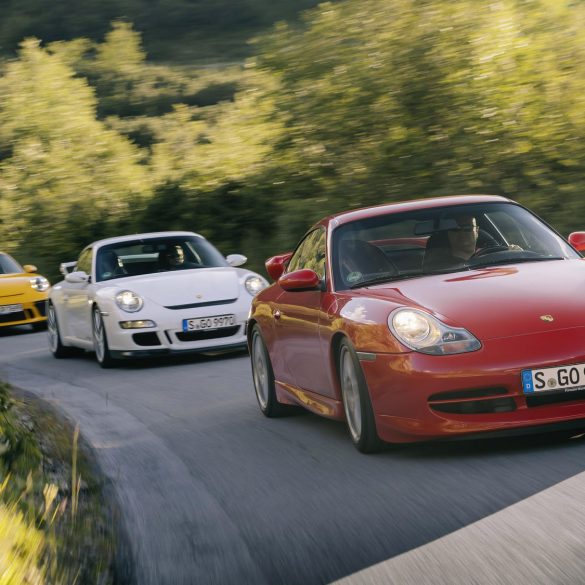
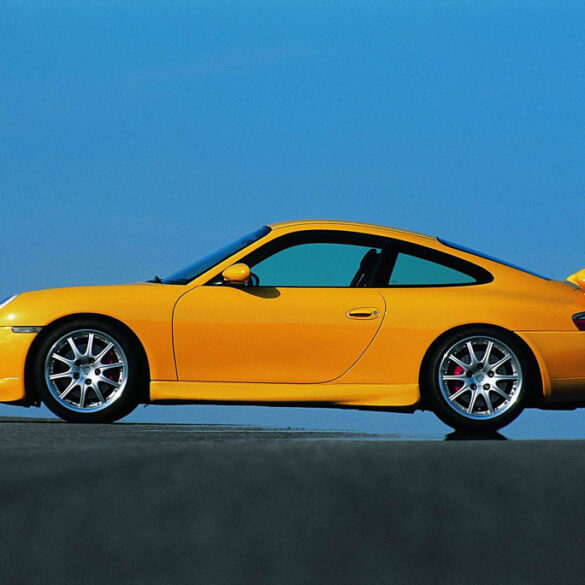
The Porsche 996 generation GT3 represents a pivotal chapter in Porsche’s revered GT lineage, marking the first time the GT3 name was applied to the brand’s water-cooled 911 platform. Introduced in 1999 as a 2000 model, the original 996 GT3 was a back-to-basics, track-focused interpretation of the 911 that emphasized driver engagement and performance over creature comforts. Based on the 996 Carrera but significantly reworked, it featured a naturally aspirated 3.6-liter flat-six derived from the 911 GT1 race engine and equipped with Porsche’s first use of VarioCam. With 360 hp and a lightweight setup — including thinner glass, manual everything, and substantial chassis stiffening — the first-gen GT3 delivered astonishing agility and responsiveness. Critics and enthusiasts alike praised its raw feel and precise steering, even as the 996’s headlight design and interior quality drew mixed reactions.
In 2003, Porsche introduced the 996.2 GT3 (Mk II) as part of a broader refresh for the 996 platform. The engine grew to 3.6 liters with power up to 381 hp and benefited from improved breathing, higher rev capability, and enhanced torque delivery. The 996.2 GT3 also gained aesthetic and aerodynamic refinements, including revised front and rear fascias, upgraded brakes, and optional lightweight components that sharpened its track performance. The suspension was retuned, and Porsche offered the new optional six-speed “dogleg” manual that became beloved for its short, precise shifts — particularly in racing applications. This version further solidified the GT3’s reputation as a dual-purpose machine that could dominate track days while remaining reasonably civil on the road.
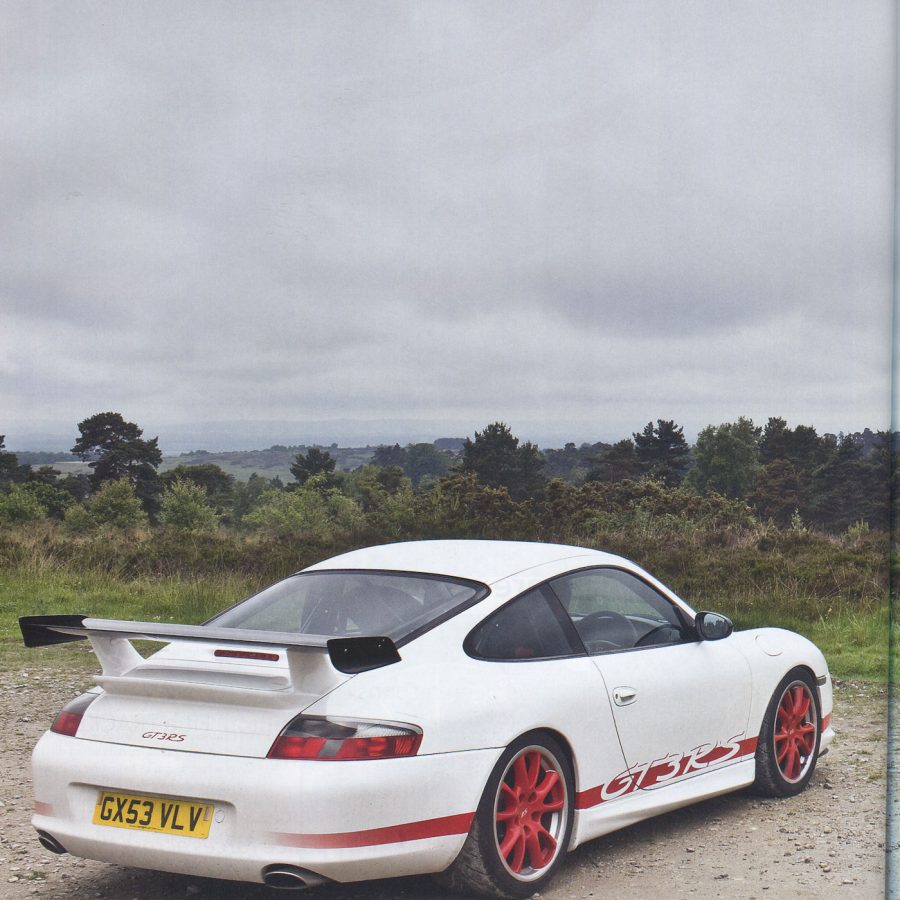
Following on the heels of the updated GT3, Porsche released the 996.2 GT3 RS, a more extreme, homologation-inspired variant that pushed the platform further toward pure performance. The RS stripped weight aggressively, adopting a carbon-fiber hood, thinner glass, and a spartan interior with lightweight racing seats and minimal sound insulation. Aerodynamic enhancements, such as a larger rear wing and deeper front air intakes, increased downforce and stability at speed. Mechanically, the RS retained the potent 381 hp engine but benefited from even firmer suspension, track-biased geometry, and limited-slip differential tuning that made it markedly more focused than the standard GT3. Production numbers were lower, and the RS was aimed squarely at enthusiasts seeking a more visceral, uncompromising experience.
Today, the 996 GT3 and its subsequent updates — especially the 996.2 and the 996.2 RS — are appreciated for their role in redefining what a GT3 could be on a modern 911 platform. While the water-cooled 996 era remains polarizing among some purists, its GT3 variants are widely respected for their blend of precision engineering, thrilling performance, and unfiltered driving character. They represent the bridge between classic analogue Porsche dynamics and the more sophisticated, electronically aided GT3s that would follow on 997 and later generations, making them compelling choices for enthusiasts and collectors alike.
Porsche 911 GT3 (997) (2007 – 2012)
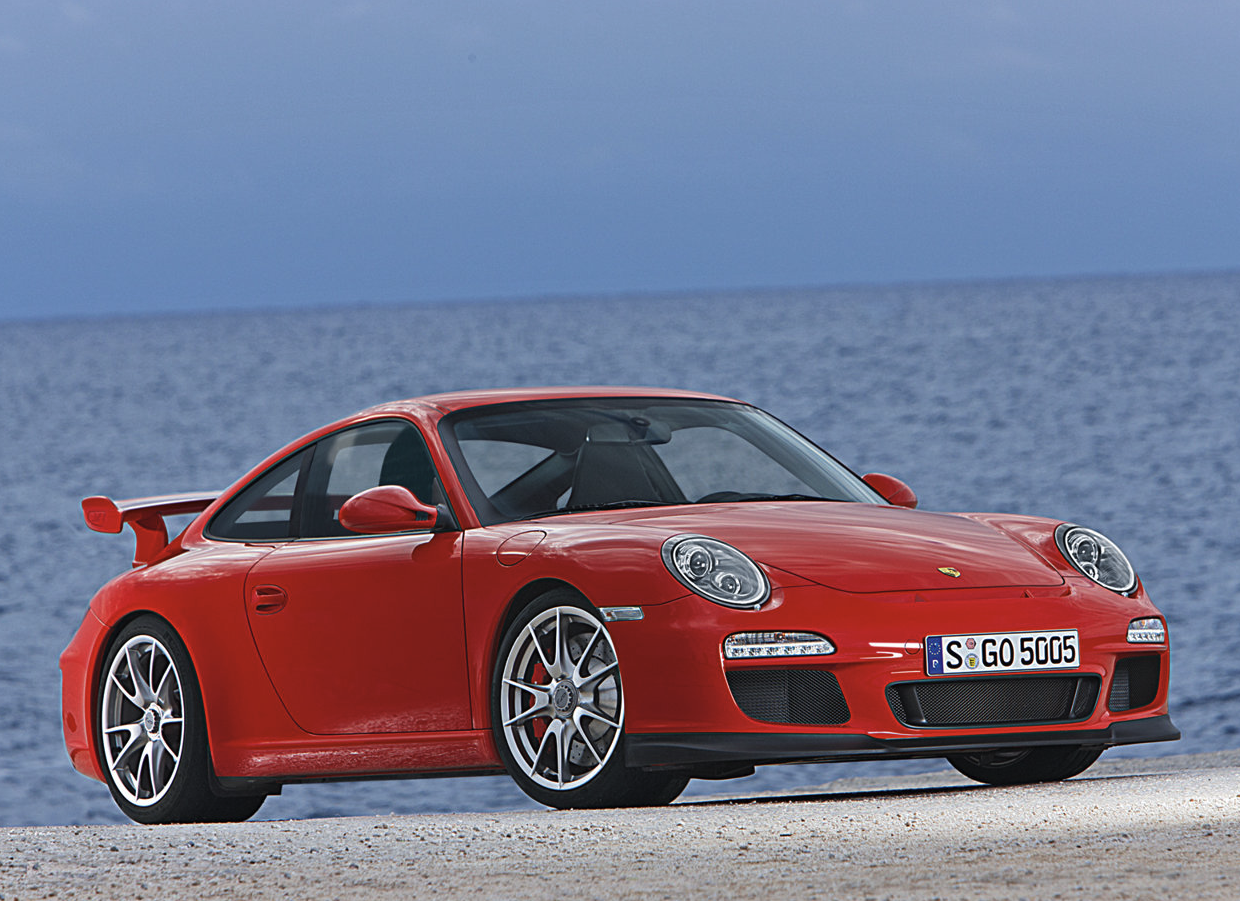
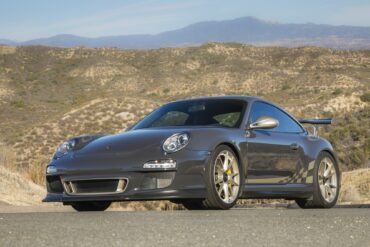
The Porsche 997 generation GT3 built on the foundation laid by the 996, refining the formula with sharper dynamics, stronger engines, and a more polished yet still intensely focused character. Launched in 2006 as the 997.1 GT3, it marked a return to the classic 911 silhouette that many enthusiasts preferred over the 996’s styling. At its heart was a 3.6-liter naturally aspirated flat-six making 415 hp, delivered through Porsche’s famed six-speed manual (with optional optional Porsche Doppelkupplung (PDK) dual-clutch introduced later). The 997.1 brought significant upgrades in chassis stiffness, suspension geometry, and braking capability, making it quicker, more responsive, and more confidence-inspiring than its predecessor. With a balanced, rev-happy engine and a visceral connection between driver and machine, the first-gen 997 GT3 was widely celebrated as one of the purest driver’s cars of its era.
In 2009, Porsche introduced the 997.2 GT3, representing the most substantial mechanical evolution of the 997 series. Its engine grew to 3.8 liters and produced 435 hp, boasting a broader torque curve and even greater high-revving enthusiasm. The incorporation of PDK as the primary gearbox (with the manual as a no-cost option) marked a notable shift; the seven-speed PDK delivered lightning-fast shifts that improved both road usability and lap times. The 997.2 also featured refinements in aerodynamics, cooling, and suspension tuning that enhanced performance and daily usability without diluting the core GT3 ethos. It remained an analogue experience despite technological advances, with razor-sharp steering, strong brakes, and a chassis ready to thrive on both road and track.
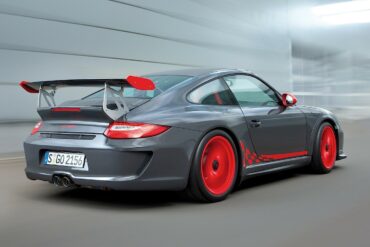
Alongside the standard GT3 models, the 997 GT3 RS variants took the concept further toward race-bred performance. The first of these, the 997.1 GT3 RS, was introduced shortly after the 997.1 GT3 and adopted a more aggressive stance, weight-saving measures, and a larger rear wing to increase downforce. It retained the 3.6-liter engine but was optimized for track use with stiffer suspension, reduced sound insulation, and a more spartan interior — all designed to sharpen focus and reduce mass. When the 997.2 platform arrived, Porsche followed with the 997.2 GT3 RS, which integrated the larger 3.8-liter engine and many of the 997.2’s mechanical advances into the RS package. These RS versions emphasized even greater cornering capability, aerodynamic load, and driver engagement, appealing to those whose priority was uncompromising track prowess.
Together, the 997 GT3 and GT3 RS family represent a high point in naturally aspirated 911 performance, blending purist driving dynamics with technological sophistication. The evolution from the 997.1 through the 997.2 and onto the RS variants shows Porsche’s dedication to incremental improvement — enhancing power, control, and everyday usability while preserving the visceral connection that defines a true GT3. For enthusiasts and collectors, the 997 GT3 lineage remains a benchmark: a generation that masterfully balanced analog driving thrills with modern performance.
Porsche 911 GT3 (991) (2014 - 2019)
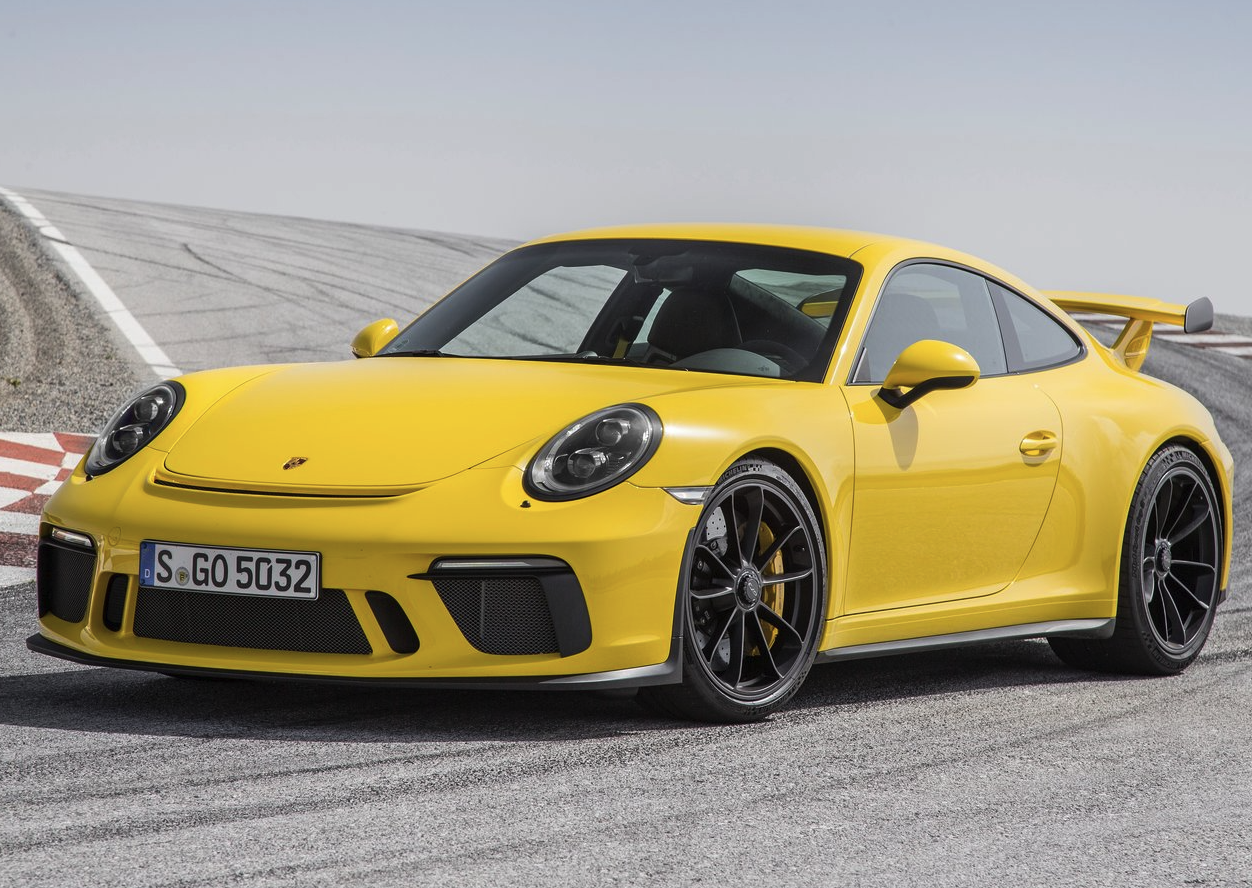
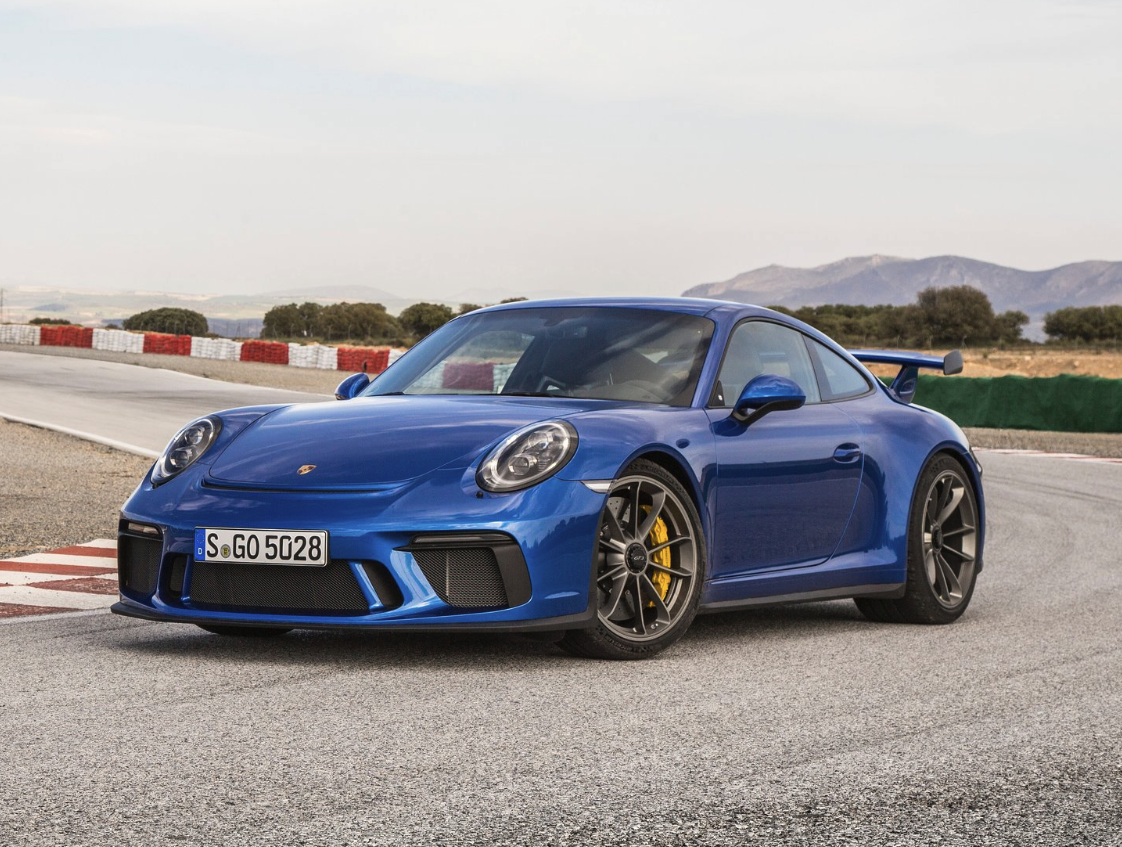
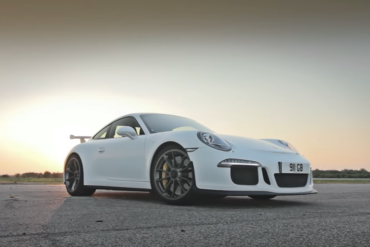
The Porsche 991 generation GT3 marked a bold leap forward for the GT3 line, ushering in a new era of performance, precision, and technological sophistication. Introduced in 2013, the first 991 GT3 retained the core philosophy of its predecessors — a naturally aspirated, high-revving flat-six with razor-sharp chassis dynamics — but amplified nearly every aspect of the car. At 3.8 liters and producing 475 hp, the engine was mounted with strengthened internals and optimized airflow, delivering strong midrange torque and exhilarating top-end power to 9,000 rpm. For the first time in a GT3, Porsche’s dual-clutch PDK gearbox was offered alongside a six-speed manual, and it quickly became the benchmark for fast, precise shifts that enhanced both lap times and road usability. With sophisticated rear-axle steering, a wider stance, and stiffer suspension, the 991 GT3 set new standards for balance and agility.
In 2017, Porsche introduced the 991.2 GT3, refining the already exceptional formula with targeted upgrades that made it more capable on both road and track. The engine grew slightly to 4.0 liters and was tuned to produce 500 hp, delivering even more thrust without sacrificing the trademark high-revving character. On the chassis side, Porsche enhanced aerodynamic efficiency with a larger front splitter and revised rear wing, boosting downforce without dramatically increasing drag. Brake cooling was improved, ride quality sharpened, and PDK calibration refined, all contributing to a car that was quicker, more precise, and more confidence-inspiring under hard use. The manual remained available, providing purists an analog alternative, but it was the PDK variant that showcased blistering performance and consistency — especially on extended track outings.
The GT3 RS variants in the 991 lineup represent the most track-focused expressions of the generation, taking the core GT3 and tuning it for higher downforce, lighter weight, and elevated performance ceilings. The 991.1 GT3 RS, introduced shortly after the first-generation 991 GT3, featured more aggressive aero with a fixed rear wing, vented front fenders, and strategically placed ducts that increased cooling and aerodynamic load. With 500 hp from the same 4.0-liter mill used in the later 991.2 GT3, it combined lightweight construction with race-ready suspension geometry and sticky Michelin Cup 2 R tires to produce astonishing grip and turn-in precision. When Porsche rolled out the 991.2 GT3 RS, the focus on performance sharpened even further, with tweaks to aero balance, cooling, and chassis stiffness that squeezed additional capability out of the platform. These RS variants were unapologetically designed for track dominance, with limited-slip differentials, adjustable sway bars, and additional weight savings that made them formidable contenders in any high-performance driving environment.
Across its iterations, the 991 GT3 family exemplifies Porsche’s ability to blend raw driving engagement with cutting-edge technology, all while maintaining a singular focus on performance purity. The evolution from the first-gen 991 to the 991.2 GT3 and its RS siblings showcases a thoughtful progression: more power, sharper dynamics, and greater precision without diluting the visceral experience that defines a true GT3. For enthusiasts and collectors alike, the 991 generation remains one of the most celebrated — a high-water mark for naturally aspirated 911 excellence that bridged classic Porsche ethos with modern engineering prowess.
Porsche 911 GT3 (992) (2022 - Present)
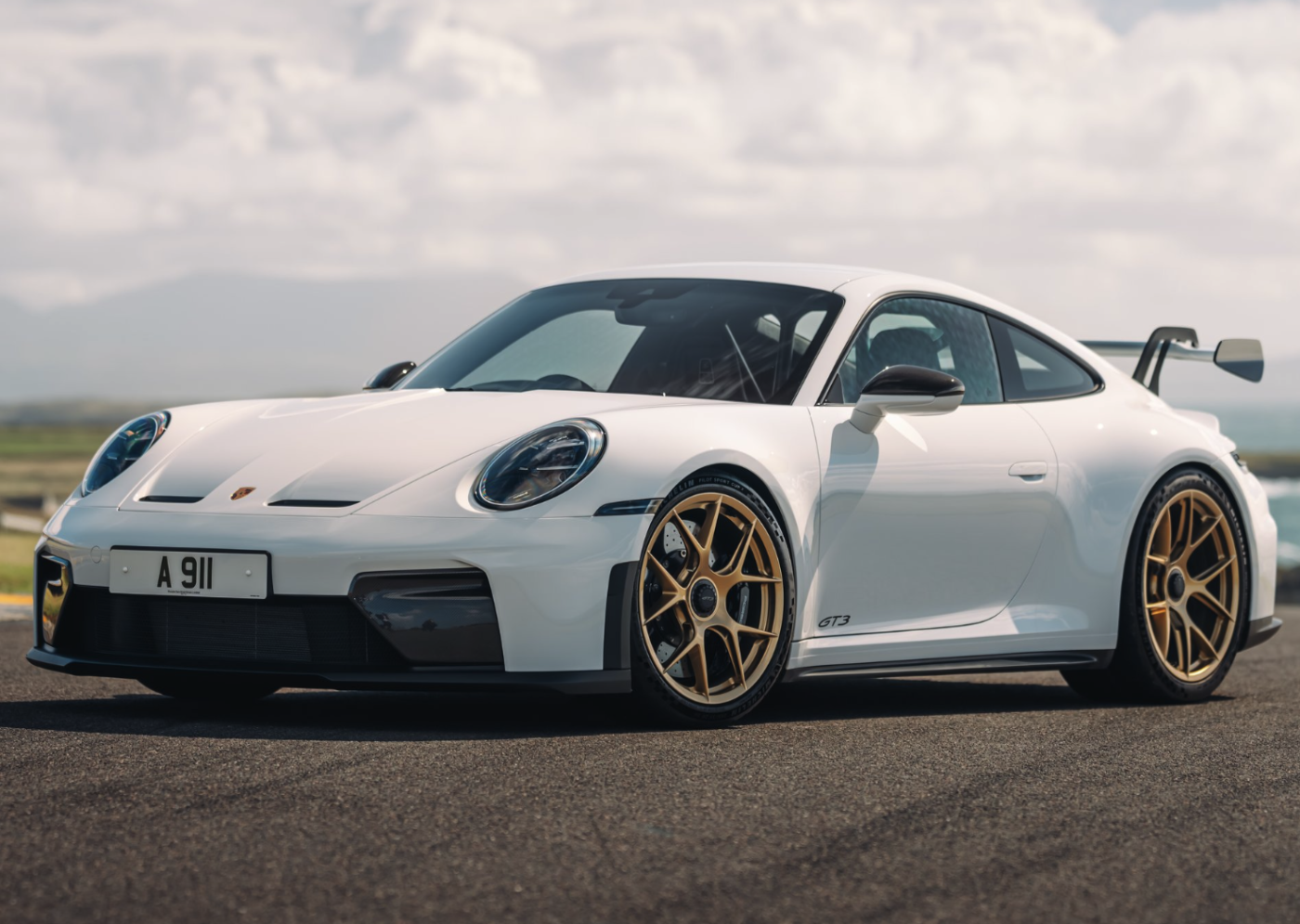
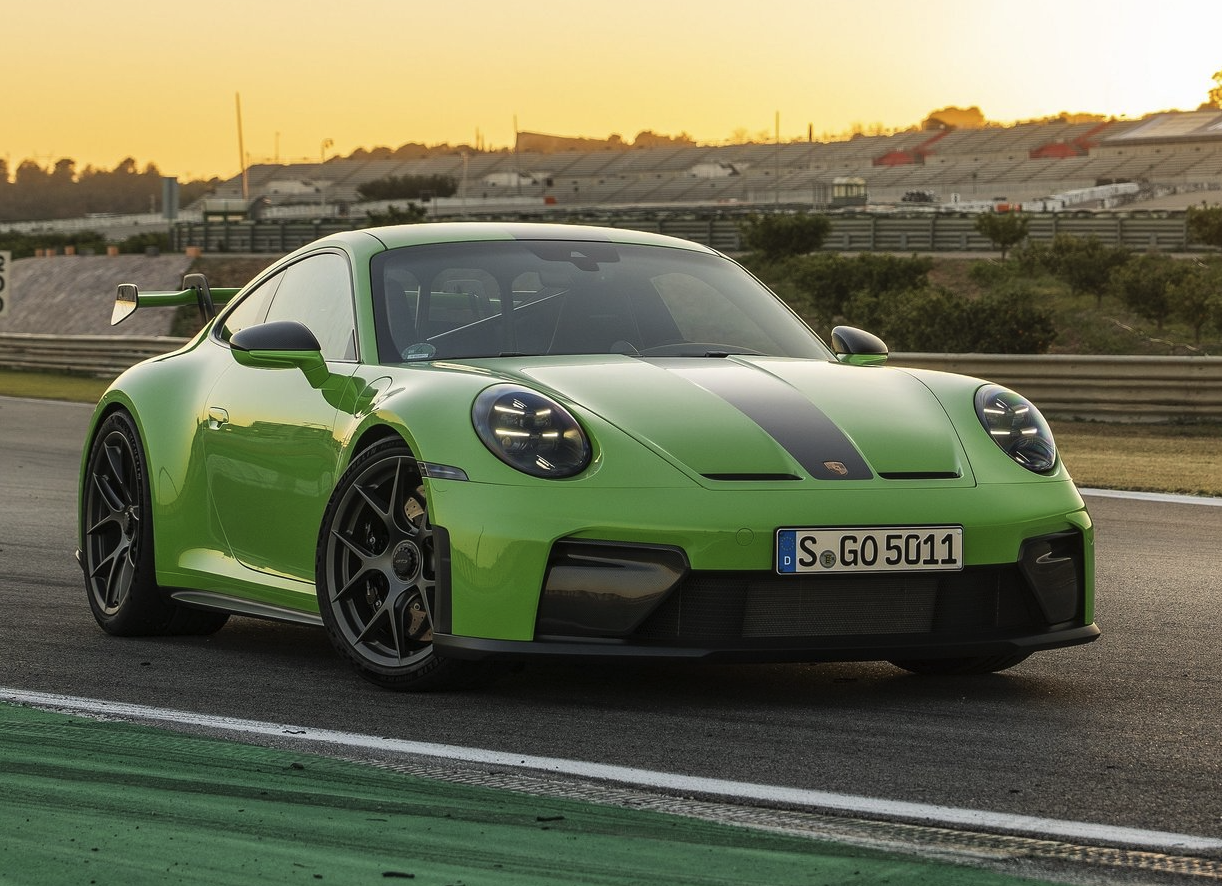
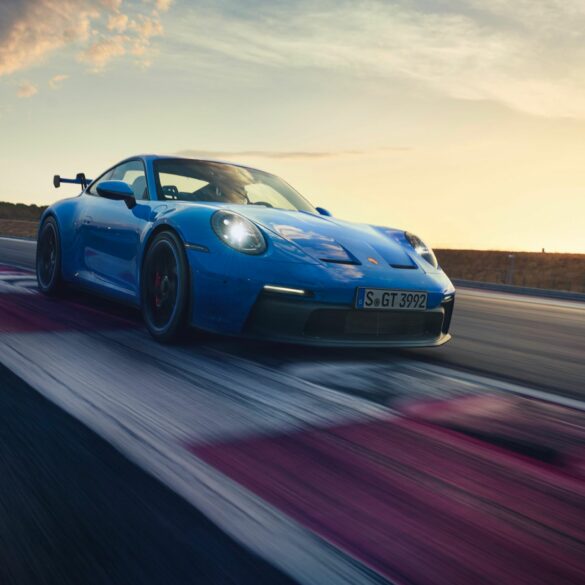
The Porsche 992 generation GT3 continues Porsche’s tradition of creating road-legal track weapons with an uncompromising focus on naturally aspirated performance and race-inspired chassis technology. Launched with the broader 992 911 lineup in 2021, the first 992 GT3 brought significant advances over its 991 predecessor, most notably a 4.0-liter high-revving flat-six producing around 502 hp and a redline near 9,000 rpm, paired to either a seven-speed PDK dual-clutch or a six-speed manual — a rare offering among modern supercars. The 992 GT3 also introduced a double-wishbone front suspension derived from Porsche’s GT racing programs and a swan-neck-mounted rear wing that improved aerodynamic efficiency and high-speed stability, delivering sharper turn-in and greater grip on both road and track. These changes made the 992 GT3 one of the most capable naturally aspirated 911s ever and earned it praise for blending exhilarating performance with everyday usability.
As the 992 lineup has matured, Porsche rolled out refinements commonly referred to as 992.1 to 992.2 updates, which tweak both aesthetic and performance elements to keep the model current. While visually similar, the 992.2 GT3 received subtle aerodynamic tweaks — including revised front and rear bumper designs and larger air inlets — as well as suspension and chassis refinements aimed at improving ride quality, anti-dive behavior, and high-speed stability. Enthusiasts report the updated powertrain and gearing feel more responsive and livelier, helping the car feel racier and more engaging without dramatic changes to its core character.
At the top of the 992 GT3 range sits the 992 GT3 RS, first introduced in August 2022. This variant takes the GT3’s naturally aspirated 4.0-liter engine — tuned to around 525 PS — and wraps it in a far more aggressive aerodynamic and chassis package that pushes the car’s track capability to extremes. With massively increased downforce figures and an active rear wing system inspired by Formula 1’s DRS, the 992 GT3 RS emphasizes aerodynamic load and cooling alongside stiffened suspension and race-oriented tuning. Its performance credentials include sub-3.3-second 0-100 km/h times and a sub-7-minute Nürburgring Nordschleife lap, making it one of the fastest naturally aspirated production 911s ever produced.
While the 992 generation has not yet seen a full second evolution of the GT3 RS hit the market, prototypes of a 992.2 GT3 RS have started appearing, suggesting Porsche is refining the RS formula further with even more focus on aerodynamics, chassis precision, and cooling efficiency for future model years — continuing the tradition of incremental, performance-driven evolution that defines the GT3 lineage
Every 911 GT3 Generation - In Detail
This section takes you through every Porsche 911 GT3 generation in detail, breaking down key details, performance statistics, and the defining characteristics that make each era unique.
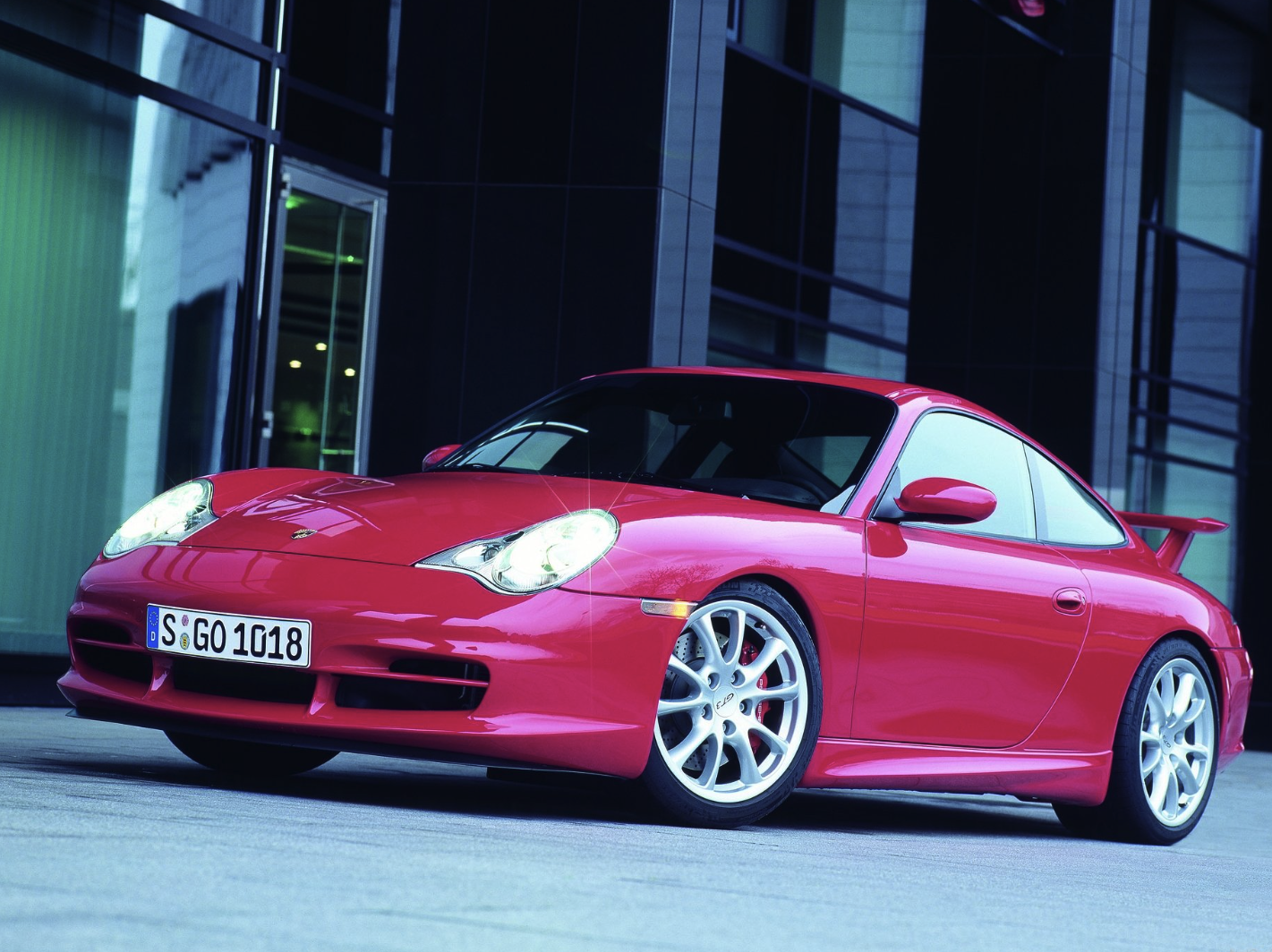
2000-2004
Porsche 996 GT3. Birth of a Legend
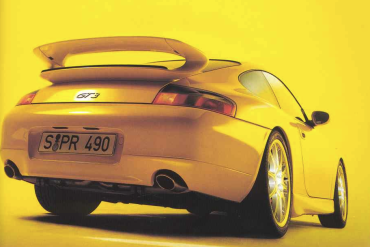
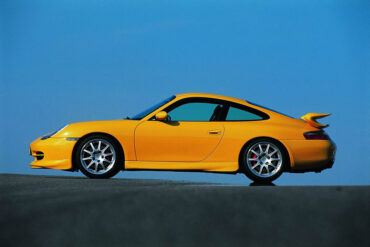
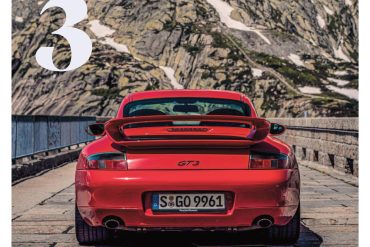
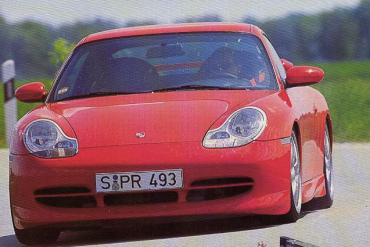
The 996 GT3 was a gamble that paid off. Launched to homologate the 911 for FIA GT3 racing, it introduced the world to the "Mezger" engine and a stripped-back, cable-throttle experience. It was a car for the brave, devoid of electronic aids and designed for one thing: the racetrack.
Porsche 996 GT3 Basics
Generation: 911 (996)
Production Years: 996.1 GT3: 1999–2001, 996.2 GT3: 2003–2004
Assembly: Stuttgart, Germany
Designer: Exterior: Harm Lagaay (996 design leadership), GT
Department: Porsche Motorsport / Weissach
Layout: Rear-engine, RWD
Engines: 3.6-liter naturally aspirated flat-six (Mezger-based).
Power: 996.1 GT3: ~360 hp, 996.2 GT3: ~381 hp
Redline: ~8,200 rpm
Transmission: 6-speed manual
Chassis & Key Mechanicals: Fixed rear wing, Adjustable suspension (track-focused geometry), Limited-slip differential, Big brakes (shared DNA with Cup cars), Lightweight glass and reduced sound insulation
Production (Approx.): 996.1 GT3: ~1,868 units, 996.2 GT3: ~2,313 units. Total 996 GT3: ~4,200 units
Porsche 996 GT3 RS Basics
Generation: 911 (996.2)
Production Years: 2004 only
Assembly: Stuttgart, Germany
Engine: Same 3.6-liter Mezger flat-six as standard 996.2 GT3.
Power: 381 hp, naturally aspirated
Transmission: 6-speed manual
Weight Reduction & RS-Specific Features: carbon-fiber hood, thinner glass, deleted rear seats, fixed-back racing seats, stiffer suspension tuning, larger rear wing and revised aero, unique RS color schemes and decals
Production: ~682 units
More Porsche 996 GT3 Research
Porsche 911 GT3 (996) - The Pure, Analog Origin Story (1999 - 2005)
The 996 GT3 established the GT3 blueprint: Mezger engine, manual-only drivetrain, real motorsport DNA, and uncompromised driver focus. The 996.2 GT3 RS took that formula to its logical extreme, becoming one of the most collectible modern GT Porsches and a direct ancestor of every RS that followed.
The Moment Porsche Changed the Game
At the turn of the millennium, Porsche found itself at a crossroads. The brand had just moved the 911 to water cooling, a decision that unsettled purists and raised uncomfortable questions about identity. The answer wasn’t marketing spin or retro design—it was the 996 GT3. This was Porsche Motorsport’s declaration that the soul of the 911 hadn’t gone anywhere. Instead of softening the blow of change, Porsche doubled down on what mattered most: racing DNA, mechanical honesty, and a car built around the driver rather than the spec sheet.
The 996 GT3 didn’t try to win everyone over. It wasn’t luxurious, forgiving, or especially subtle. What it offered was credibility. From the moment it arrived, it felt less like a tuned road car and more like a homologation special that happened to wear license plates. In hindsight, it wasn’t just a new model—it was the foundation of everything the GT3 badge would come to represent.
The First-Generation GT3: Raw, Focused, Unapologetic
The original 996.1 GT3 set the tone with a level of focus that felt radical for a road-going 911 at the time. It was loud, firm, and deeply mechanical, with steering feel and throttle response that made even contemporary sports cars feel filtered by comparison. There was no attempt to broaden its appeal. The cabin was sparse, the ride was uncompromising, and every input—from clutch to steering wheel—demanded intent from the driver.
What made the car special wasn’t just how fast it was, but how it delivered that performance. The engine encouraged revs rather than torque surfing, the chassis communicated constantly, and the overall experience rewarded commitment. This GT3 felt closer to a Cup car than anything Porsche had sold to the public before, and that sense of authenticity is exactly why it’s so revered today.
The 996.2 Update: Sharpening the Tool
When the updated 996.2 GT3 arrived, Porsche resisted the temptation to reinvent the formula. Instead, it refined it. Power increased, responses sharpened, and the car gained a layer of polish without losing its edge. Cooling was improved, the suspension was further dialed in, and the overall balance felt more confident at higher speeds.
Crucially, the character remained intact. The 996.2 GT3 still felt mechanical, still demanded respect, and still prioritized feedback over comfort. Many enthusiasts see this version as the sweet spot of the generation—a car that retains the rawness of the original while being slightly more usable for frequent track days or spirited road driving.
The 996 GT3 RS: No Compromises Left
If the standard GT3 was already intense, the 996 GT3 RS existed for those who wanted nothing softened. The RS wasn’t about adding power or chasing headlines; it was about subtraction. Less weight, more noise, stiffer responses, and an even tighter connection between car and driver. Everything unnecessary was stripped away, leaving a machine that felt singularly focused on lap times and driver involvement.
Visually, the RS announced itself with bold graphics and a more aggressive stance, but the real difference was felt behind the wheel. It was louder, harsher, and more demanding—but also more rewarding when driven hard. This was a car that asked something of its driver, and in return offered one of the purest driving experiences Porsche had ever delivered.
From Underrated to Essential
For years, the 996 GT3 lived in the shadow of styling debates and later GT3 generations. But time has been kind. Enthusiasts began to look past headlights and interiors and focus on what truly mattered: the driving experience. Today, the 996 GT3 is widely recognized as one of the most important modern Porsches—a car that proved the GT3 concept, validated water cooling, and reconnected the road-going 911 to Porsche’s racing roots.
It’s not the fastest GT3, nor the most technologically advanced. But it may be the most honest. In an era increasingly defined by digital layers and performance abstractions, the 996 GT3 stands as a reminder of what happens when engineers are allowed to build a car with a singular purpose. It didn’t just create a legend—it defined one.
Porsche 911 GT3 & GT3 RS (996) Variants
This section is dedicated to every GT3 and GT3 RS variant of the 996 generation, examined individually and in context. From the original Mk I GT3 that established the formula, to the more refined Mk II, and finally the uncompromising 996 GT3 RS, each variant represents a distinct step in Porsche’s early GT3 thinking. These deep dives focus on why each model exists, how it differs in character and intent, and what role it plays in the origin story of the GT3 badge. This is where the legend was written—incrementally, deliberately, and with motorsport always in mind.
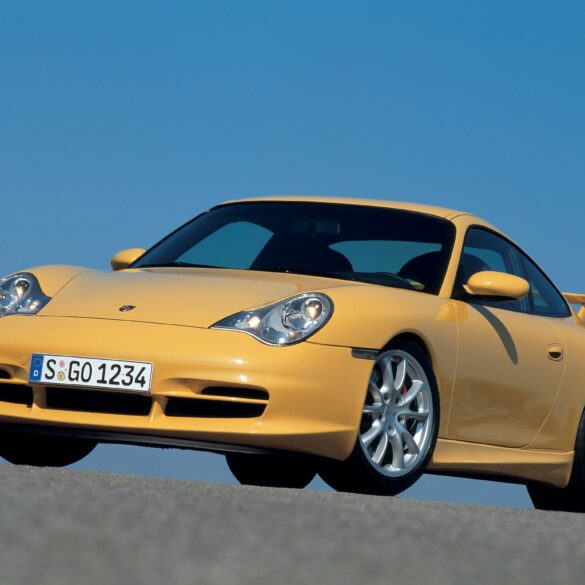
996 GT3 & GT3 RS Videos & Image Galleries
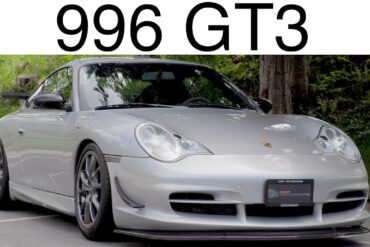
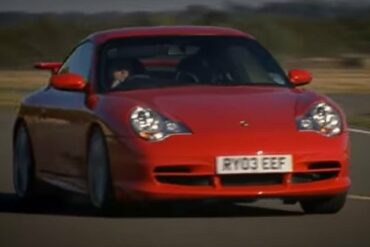
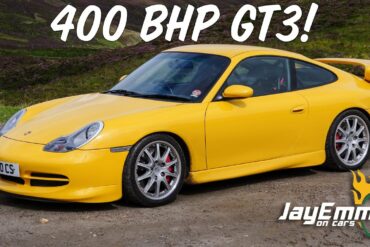
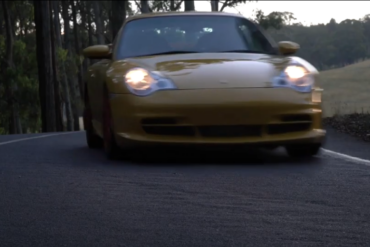
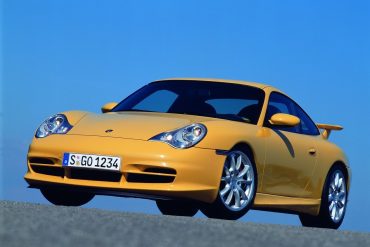
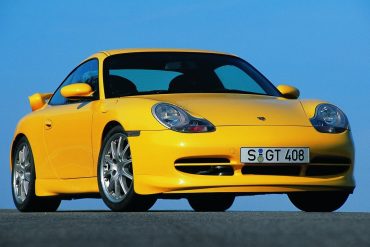
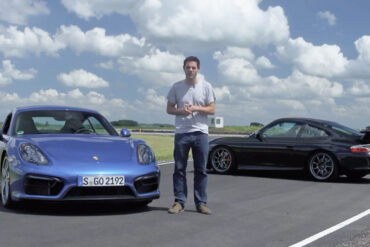
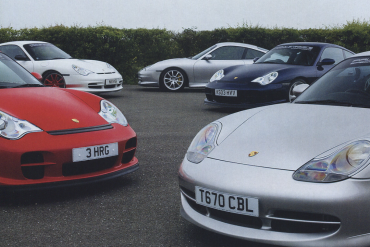
This section is a visual archive of where the GT3 story began. From raw track footage and period road tests to detailed photography of the Mezger engine, stripped interiors, and purposeful aero, these videos and galleries capture the 996 GT3 and GT3 RS in their most authentic form. Whether you’re studying details, revisiting early GT3 history, or simply appreciating the car that defined the badge, this is the 996 GT3 brought to life.
Latest 996 GT3 & GT3 RS Posts & A Deep Into the Archives
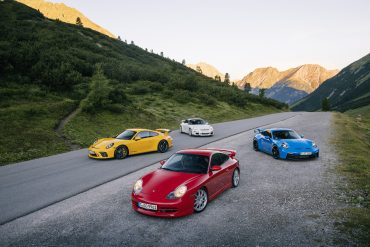
Here you’ll find our most recent editorials, reflections, and analysis on the 996 GT3 and GT3 RS, alongside deep-archive pieces that chart how these cars were once misunderstood—and later reappraised. This section connects fresh perspectives with historical context, showing how the reputation of the first GT3 generation evolved from controversial to foundational.
2007 – 2012
Porsche 997 GT3 - Mechanical Perfection
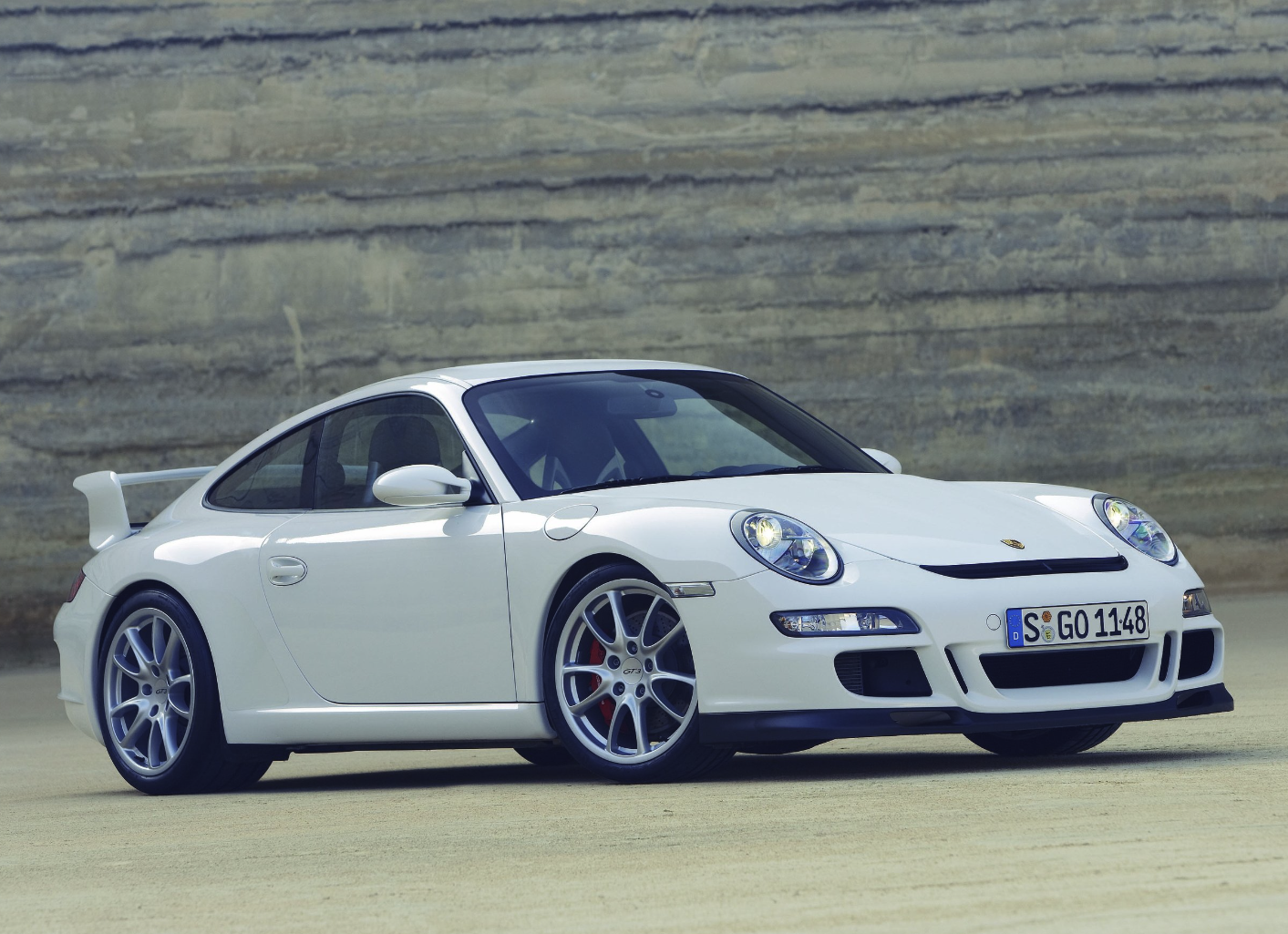
For many, the 997 is the high-water mark of the GT3 lineage. It maintained the compact dimensions and hydraulic steering of the old school while introducing sophisticated tech like PASM (active suspension). This era culminated in the RS 4.0, a car so legendary it still commands seven-figure respect today.
Porsche 996 GT3 Basics
Generation: 911 (997)
Variants: 997.1 GT3, 997.2 GT3, 997.1 GT3 RS, 997.2 GT3 RS, 997.2 GT3 RS 4.0
Production Years: 997.1 GT3: 2006–2008, 997.1 GT3 RS: 2007–2008, 997.2 GT3: 2010–2011, 997.2 GT3 RS: 2010–2011, 997.2 GT3 RS 4.0: 2011
Manufacturing Years: 2006–2011
Location: Stuttgart, Germany
Development: Porsche Motorsport / Weissach
Designer: Exterior design leadership: Michael Mauer, GT development: Porsche Motorsport (Weissach)
Layout: Rear-engine, RWD
Body Style: 2-door coupe
Engines (997.1 GT3 / GT3 RS): 3.6L naturally aspirated flat-six, Output: 415 hp, 405 Nm torque
Engines 997.2 GT3 / GT3 RS: 3.8-liter naturally aspirated flat-six, Output: 435 hp, 430 Nm torque
Engines 997.2 GT3 RS 4.0: 4.0-liter naturally aspirated flat-six, Output: 500 hp, 460 Nm torque
Transmission: 6-speed manual
Chassis & Mechanical Highlights: Hydraulic power steering, adjustable motorsport-derived suspension, reinforced body shell, fixed rear wing (larger on RS models), motorsport braking system (steel standard, PCCB optional), lightweight construction throughout.
Production (Approximate): 997.1 GT3: ~2,378 units, 997.1 GT3 RS: ~1,168 units, 997.2 GT3: ~2,256 units, 997.2 GT3 RS: ~600 units, 997.2 GT3 RS 4.0: 600 units (globally). Total 997 GT3 & GT3 RS Production: ~7,000 units (approx.)
More Porsche 997 GT3 Research
Porsche 911 GT3 (997) - Mechanical Perfection Refined (2006 - 2011)
The 997 GT3 generation is often viewed as the high point of the analog GT3 era. It refined the concept introduced by the 996 with better build quality, stronger engines, and improved usability—without sacrificing mechanical purity. The generation culminated in the GT3 RS 4.0, a car that effectively closed the book on the Mezger engine and manual-only GT3s before Porsche’s inevitable shift toward more digital performance.
The High-Water Mark of the Analog Era and The Generation That Got Everything Right
If the 996 GT3 proved the concept, the 997 GT3 perfected it. This was the moment when Porsche’s GT department hit a rare equilibrium—raw enough to feel mechanical and demanding, yet refined enough to be driven hard without feeling unfinished. The 997 arrived with better build quality, timeless styling, and a sense that Porsche Motorsport had complete confidence in what the GT3 stood for. There was no identity crisis here. The 997 GT3 didn’t need to justify itself; it simply existed as the most focused road-going 911 Porsche could build at the time.
Importantly, the 997 GT3 arrived before the industry-wide pivot toward dual-clutch gearboxes, active soundtracks, and performance-by-algorithm. It still lived in a world where steering feel, throttle response, and chassis balance mattered more than lap-time headlines. That context is everything when understanding why this generation is so revered today.
The 997.1 GT3: Sharpened, Not Softened
The first-generation 997.1 GT3 took the spirit of the 996 and refined it without sanding off its edges. It felt tighter, more cohesive, and more confidence-inspiring, particularly at speed. The chassis was calmer over bumps, the brakes more consistent, and the overall car felt better resolved—less like a race car adapted for the road and more like a road car engineered by racers.
Behind the wheel, the experience was still deeply analog. Steering was hydraulic and alive with information, the engine begged to be revved, and the six-speed manual gearbox demanded deliberate, accurate inputs. This wasn’t a car that flattered lazy driving, but it rewarded commitment with clarity. For many enthusiasts, the 997.1 GT3 represents the ideal balance between usability and purity—a car you could drive to the track, punish all day, and drive home with a grin.
The 997.2 Update: More Precision, Same Soul
When Porsche updated the GT3 for the 997.2 generation, the changes were evolutionary rather than philosophical. Everything became just a little more intense. Responses sharpened, the chassis felt more planted at high speeds, and the engine gained a harder-edged urgency as it climbed the rev range. Cooling improvements and suspension revisions made the car even more capable during sustained track use, reinforcing its reputation as a serious tool rather than a weekend toy.
Crucially, Porsche resisted the temptation to modernize the GT3 in ways that might dilute its character. There was still no PDK, no forced induction, and no attempt to make the car “easy.” The 997.2 GT3 feels like the final, fully mature expression of the original GT3 philosophy—everything the badge had promised, delivered with confidence and restraint.
The GT3 RS: Turning the Dial Past Sensible
If the standard GT3 was already intense, the GT3 RS was Porsche Motorsport asking a simple question: how far is too far? The RS variants took the already focused GT3 and stripped away the last remaining concessions. Less weight, more noise, stiffer suspension, and sharper responses across the board. These were not subtle cars, visually or dynamically, and they weren’t meant to be.
On the road, the RS could feel uncompromising. On track, it came alive. Turn-in was immediate, feedback was relentless, and the sense of connection bordered on overwhelming in the best possible way. The RS wasn’t about comfort or versatility—it was about precision, repeatability, and maximum driver involvement. It demanded skill and rewarded it richly.
The RS 4.0: The Mezger Mic Drop
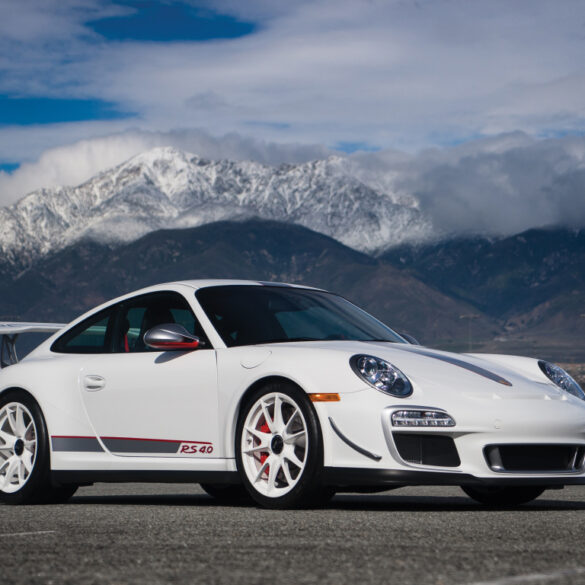
Then came the 997 GT3 RS 4.0, a car that now exists in near-mythical status. More than just a limited edition, it felt like a statement of closure. This was the final evolution of the Mezger engine in a road-going 911, and Porsche treated it accordingly. Everything about the car felt deliberate, from its character to its scarcity. It wasn’t designed to chase trends or redefine the GT3—it was built to finish the story properly.
Driving one feels like accessing the end credits of the analog GT3 era. The engine is ferocious yet linear, the chassis sublime, and the overall experience unfiltered in a way that’s unlikely to ever be repeated. Today, it’s rightly viewed as one of the greatest 911s Porsche has ever built.
Why the 997 GT3 Era Endures
The reason the 997 GT3 and GT3 RS continue to command such reverence isn’t just performance—it’s context. These cars sit at the perfect intersection of old and new: modern enough to be devastatingly capable, yet analog enough to feel deeply human. They don’t rely on software to create excitement. They rely on physics, engineering, and the driver.
In hindsight, the 997 GT3 generation represents a moment Porsche can’t—and likely won’t—recreate. It was the last era before digital performance became unavoidable, and it shows in every interaction. For many enthusiasts, this isn’t just the best GT3 generation. It’s the benchmark against which all others are judged.
Porsche 911 GT3 & GT3 RS (997) Variants
The 997 generation represents the full maturation of the analog GT3, and this section explores each variant as its own expression of that peak philosophy. From the early standard GT3s to the increasingly focused RS models—and ultimately the iconic RS 4.0—these in-depth features unpack how Porsche refined, intensified, and perfected the Mezger-powered GT3. Rather than treating the lineup as a single arc, we examine how each variant pushed the concept forward in subtle but meaningful ways, culminating in one of the most revered GT3 families ever produced.
997 GT3 & GT3 RS Videos & Image Galleries
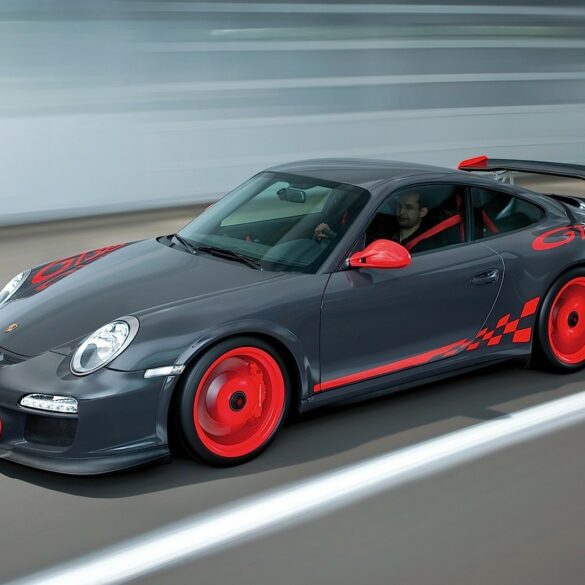
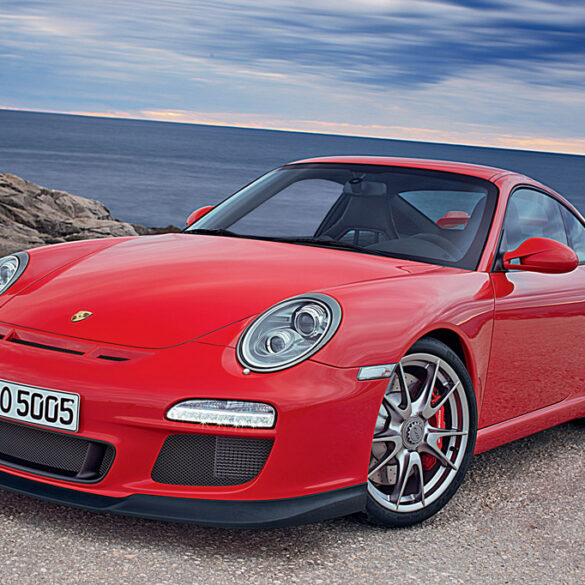
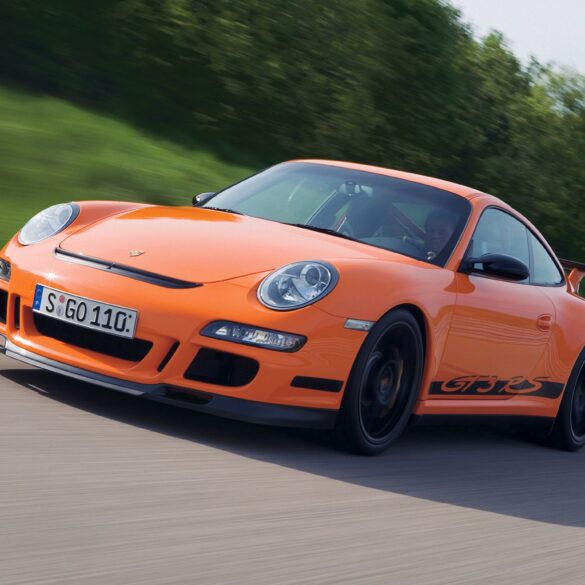
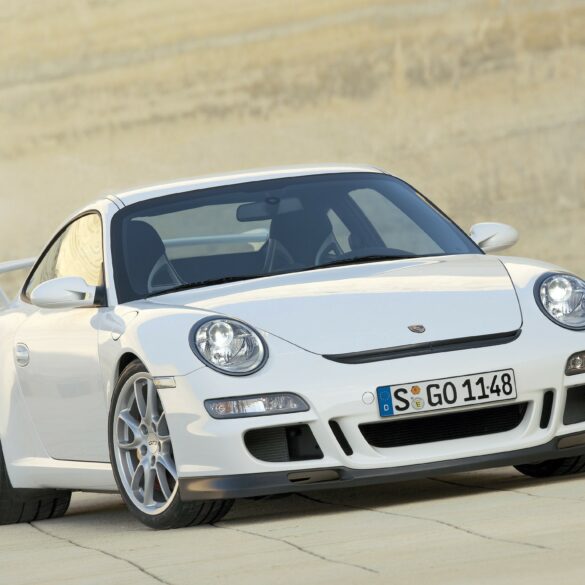
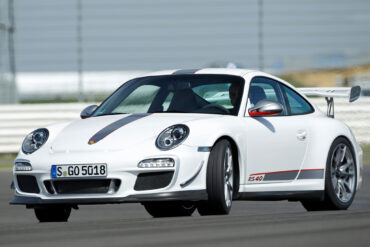
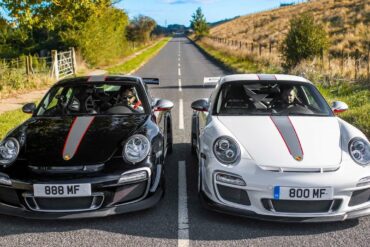
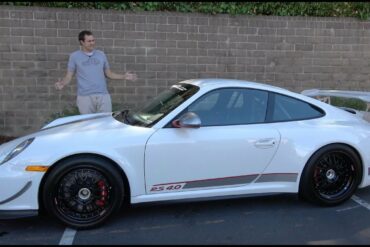
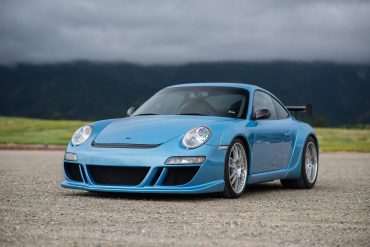
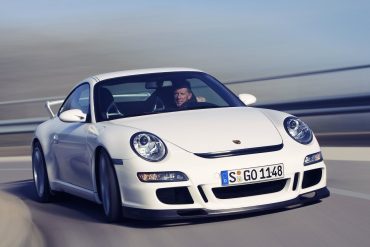
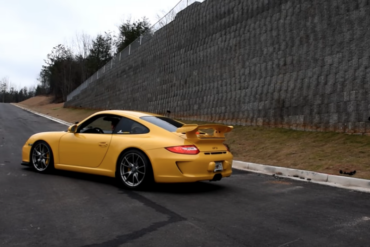
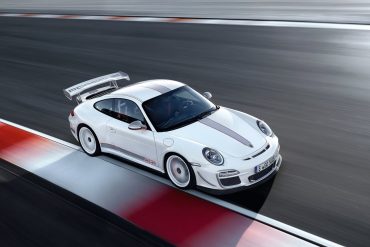
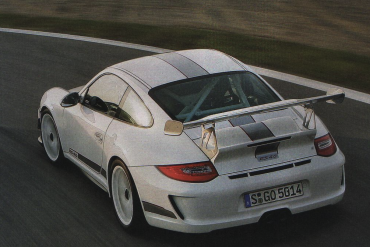
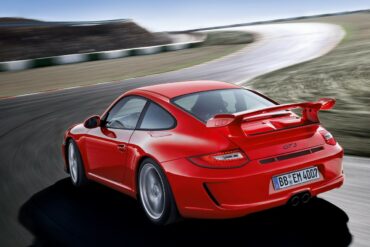
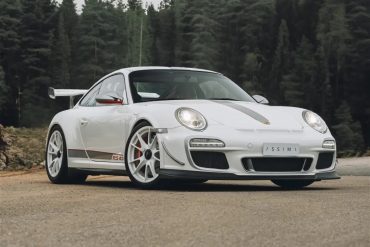
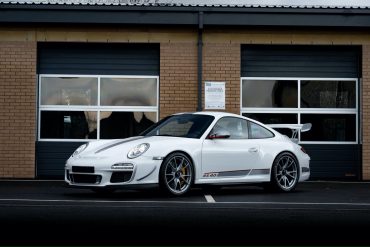
The 997 GT3 era is often considered the visual and mechanical peak of analog GT3s, and this gallery reflects that status. Expect immersive onboard laps, RS-focused track footage, and high-resolution imagery that highlights hydraulic steering, Mezger power, and manual-only engagement. From subtle standard GT3s to the drama of the RS and RS 4.0, this collection documents a generation many view as the benchmark.
![Porsche 997 GT3 RS - ORGASMIC SOUND [CHASING PORSCHE 996 GT3] RAW POV](https://www.stuttcars.com/wp-content/uploads/2018/06/Porsche-997-GT3-RS-ORGASMIC-SOUND-CHASING-PORSCHE-996-GT3-RAW-POV--370x247.jpeg)
997 GT3 & GT3 RS Videos & Image Galleries
This section brings together current commentary and long-form editorials with archived deep dives that explore why the 997 GT3 and GT3 RS have become so revered. From ownership reflections to philosophical comparisons and RS-focused retrospectives, this is where the 997’s reputation is examined, reinforced, and continually recontextualized.
2014 - 2019
Porsche 991 GT3 - 9k RPM Modern Era
The 991 turned the GT3 into a world-class supercar. It grew larger, more comfortable, and significantly faster, introducing rear-axle steering and the lightning-quick PDK transmission. It was the generation that proved a track-focused 911 could be both a precision instrument and a daily-drivable weapon.
Porsche 991 GT3 Basics
Generation: 911 (991)
Variants: 991.1 GT3, 991.2 GT3, 991.1 GT3 RS, 991.2 GT3 RS
Production Years: 991.1 GT3: 2014–2016, 991.1 GT3 RS: 2016, 991.2 GT3: 2018–2019, 991.2 GT3 RS: 2019
Manufacturing Years: 2013–2019
Assembly: Stuttgart, Germany
Development: Porsche GT Division / Weissach
Designer: Exterior design leadership: Michael Mauer, GT development: Porsche Motorsport (Weissach)
Layout: Rear-engine, RWD
Body Style: 2-door coupe
Engines 991.1 GT3: 3.8-liter naturally aspirated flat-six. Output: 475 hp, 440 Nm torque
Engines 991.2 GT3: 4.0-liter naturally aspirated flat-six, Output: 500 hp, 460 Nm torque
Engines 991 GT3 RS (991.1 & 991.2): 4.0-liter naturally aspirated flat-six, Output: 500 hp, 460 Nm torque
Transmission: PDK only (991.1 GT3 & 991.1 GT3 RS) - 7-speed dual-clutch transmission
Transmission: 6-speed manual or PDK (991.2 GT3), PDK only (all 991 GT3 RS variants),
Chassis & Mechanical Highlights: Rear-axle steering (first GT3 generation to feature it), active engine mounts, motorsport-derived suspension, hydraulic steering (exceptional feedback), extensive aerodynamic development, Weissach Package available on RS models
Production Volumes (Approx): 991.1 GT3: ~3,100 units, 991.1 GT3 RS: ~1,800 units, 991.2 GT3: ~2,000 units, 991.2 GT3 RS: ~1,000 units, Total 991 GT3 & GT3 RS Production: ~7,900 units (approx.)
More Porsche 991 GT3 Research
Porsche 911 GT3 (991) - The High-Tech Revolution (2014 - 2019)
The 991 GT3 generation represents a major technical turning point for the model line. It introduced rear-axle steering, moved away from the Mezger engine architecture, embraced PDK as the primary transmission, and pushed the GT3 closer to modern race-car levels of performance. At the same time, the later reintroduction of the manual gearbox in the 991.2 GT3 reaffirmed Porsche’s willingness to respond directly to enthusiast demand.
Reinventing the Legend & A Turning Point for the GT3 Philosophy
The 991-generation GT3 arrived at a moment when Porsche’s GT cars were facing a quiet identity crisis. Expectations were sky-high, but so were the pressures of modern performance: emissions, noise regulations, and a market increasingly obsessed with lap times over feel. The 991 GT3 didn’t simply evolve the formula—it redefined it, introducing new technology, new engineering priorities, and a new interpretation of what a GT3 could be. Unsurprisingly, it also became one of the most debated GT3 generations ever.
This was the first GT3 built on a longer, wider, more rigid platform, and Porsche used that freedom to push boundaries. The result was a car that felt unmistakably faster, sharper, and more composed than its predecessors—but also one that forced enthusiasts to reconsider what “purity” really meant in a modern 911.
The 991.1 GT3: Progress, Controversy, and a Leap Forward
When the first 991.1 GT3 launched, it made headlines for what it didn’t have as much as what it did. The manual gearbox was gone, replaced exclusively by PDK. The legendary Mezger engine was retired in favor of a new GT-specific flat-six. Rear-axle steering arrived, fundamentally changing how a GT3 rotated and behaved at speed. For traditionalists, it felt like sacrilege.
Yet behind the wheel, the 991.1 GT3 was impossible to dismiss. It was staggeringly capable, with a chassis that felt glued to the road and an engine that loved to live at the top of the rev range. The steering—still hydraulic—remained richly communicative, and the car’s balance was unlike anything before it. This was a GT3 that could embarrass supercars on track while still being usable on the road. Over time, many critics softened, realizing that Porsche hadn’t diluted the GT3—it had modernized it, even if the transition was uncomfortable.
The 991.2 GT3: Porsche Listens
If the 991.1 GT3 was about asserting a new direction, the 991.2 GT3 was about refinement—and reconciliation. Porsche responded directly to enthusiast feedback, reintroducing the six-speed manual alongside PDK. It was a clear acknowledgment that engagement still mattered, even in an era dominated by efficiency and speed.
Beyond the gearbox decision, the 991.2 felt more mature in every sense. The engine gained displacement and character, the chassis felt more exploitable at the limit, and the overall car was easier to read when driving hard. It didn’t abandon the technological advances of the 991.1; instead, it integrated them more seamlessly. For many drivers, the 991.2 GT3 represents the most complete GT3 Porsche had built to that point—modern, brutally capable, yet emotionally satisfying.
Welcome to the GT3 with Touring Package
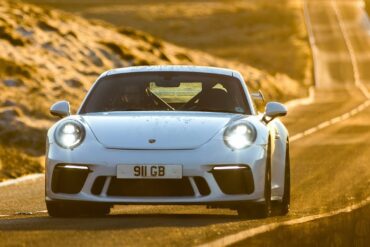
The introduction of the 911 GT3 with Touring Package during the 991.2 generation (2017) was a watershed moment for Porsche, effectively changing the brand’s relationship with its most loyal enthusiasts. Before the Touring, if you wanted the GT department's high-revving, motorsport-derived 4.0L engine, you had to accept a massive fixed rear wing and a "boy racer" aesthetic. The Touring Package changed that by deleting the wing in favor of the variable, retractable spoiler found on the standard Carrera, creating what fans call a "wolf in sheep’s clothing."
To the uninitiated, the 991.2 Touring looks like a standard 911, but underneath it is a pure-bred monster. It retained the same 500-hp naturally aspirated flat-six that screams to 9,000 RPM, the same track-tuned suspension, and the same center-lock wheels as the winged GT3. Crucially, for the 991.2 generation, the Touring was offered exclusively with a six-speed manual transmission. It was a car designed not for chasing tenths of a second on a lap timer, but for the visceral joy of a Sunday morning backroad drive—all while remaining subtle enough to park at a nice restaurant without drawing a crowd.
What made the Touring truly pivotal, however, was the drama surrounding the 2016 911 R. Porsche had released the "R" as a limited-run, manual, wingless special, and because only 991 were made, prices instantly skyrocketed to nearly $1 million as speculators "flipped" them for profit. This move left thousands of actual drivers frustrated and empty-handed. By releasing the Touring Package as a regular, non-limited production option on the GT3, Porsche effectively "broke the market" for speculators. It sent a clear message: the best driving experiences should be available to those who actually want to drive them, not just those looking for a high-yield investment.
This move was so successful that the "Touring" has now become a permanent, highly coveted fixture in the 911 lineup, continuing into the 992 generation. It proved that there was a massive market for "understated" performance—drivers who wanted the absolute best mechanical components Porsche could offer, but without the loud aerodynamic appendages.
The GT3 RS: When the Track Becomes the Point
The 991 GT3 RS took everything the standard GT3 did well and leaned unapologetically toward the circuit. Wider bodywork, dramatic aerodynamics, aggressive cooling solutions, and relentless chassis tuning transformed the RS into a car that felt closer to a race machine than ever before. It wasn’t subtle, and it wasn’t meant to be.
On track, the RS was devastating. Downforce changed the way the car attacked corners, and the rear-axle steering—sometimes criticized on the road—became a weapon at speed. On the street, it was loud, firm, and uncompromising. The RS didn’t try to balance dual roles; it chose a side. For drivers who wanted the purest expression of Porsche’s track-day obsession, the 991 GT3 RS delivered with startling clarity.
From Divisive to Definitive
In hindsight, the 991 GT3 era marks one of the most important chapters in GT3 history. It’s the generation that bridged the analog past and the digital future. It proved that technology didn’t have to erase feel—and that Porsche could push boundaries without losing its identity. The early controversies now feel like growing pains rather than missteps.
Today, the 991 GT3 and GT3 RS are widely respected for what they accomplished. They expanded the GT3’s capabilities dramatically while preserving its core mission: driver engagement above all else. Faster GT3s would follow, and purer ones came before—but the 991 generation is where the GT3 truly entered the modern era, confident that its legend could survive reinvention.
Porsche 911 GT3 (991) Variants
The 991 GT3 lineup marks the most transformative period in GT3 history, and its variants reflect that evolution more clearly than any generation before or since. This section dives deep into each model—from the early PDK-only GT3s that sparked controversy, to the later manual-equipped cars that restored balance, and the increasingly extreme GT3 RS variants that pushed technology to the forefront. Each deep dive explores how Porsche navigated progress, pressure, and purist expectations—making the 991 variants some of the most discussed and re-evaluated GT3s.
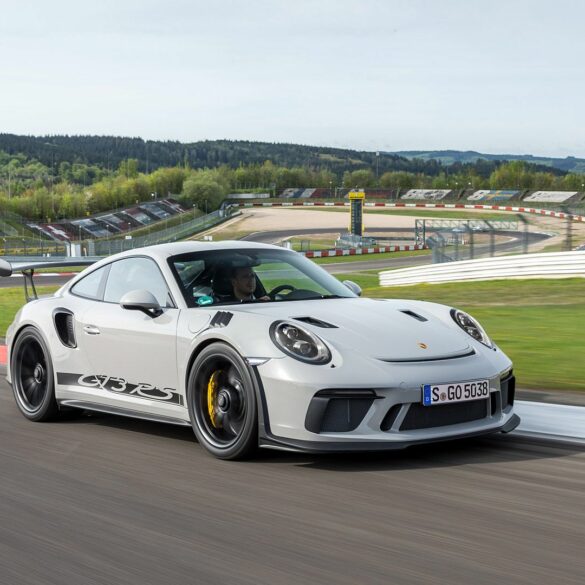
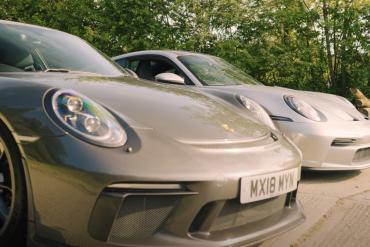
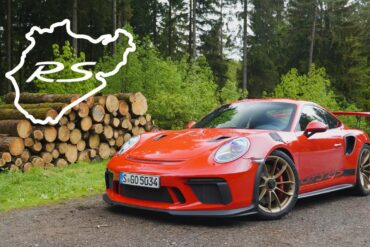
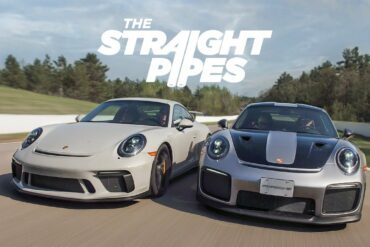
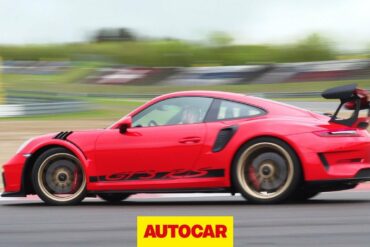
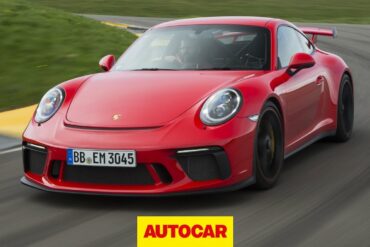
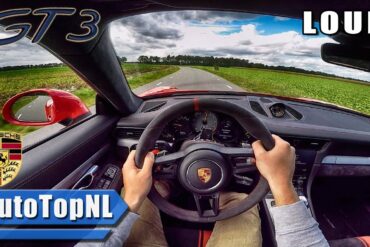
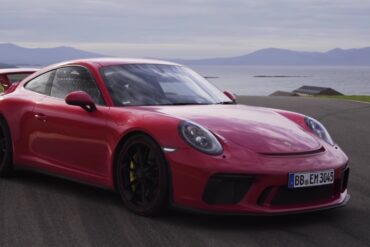
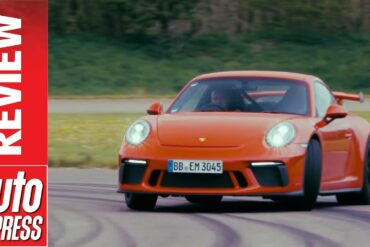
991 GT3 & GT3 RS Videos & Image Galleries
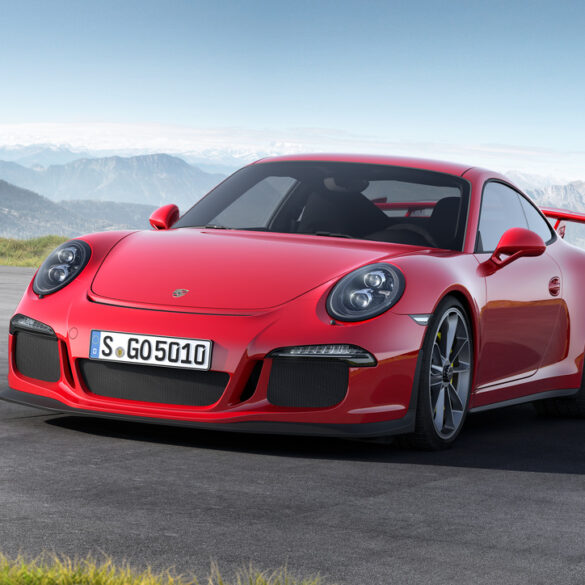
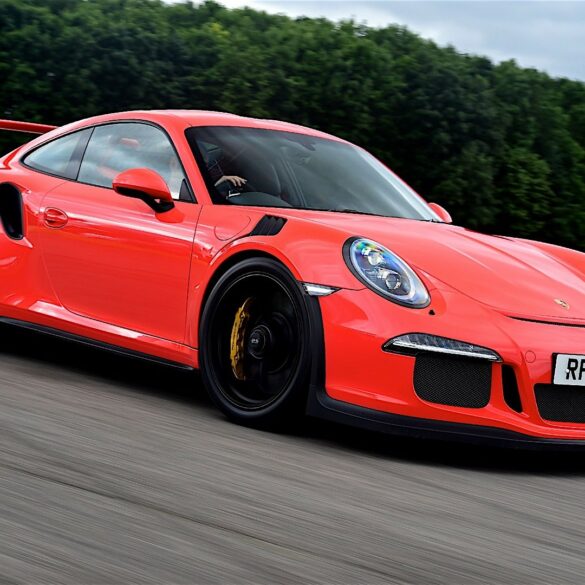
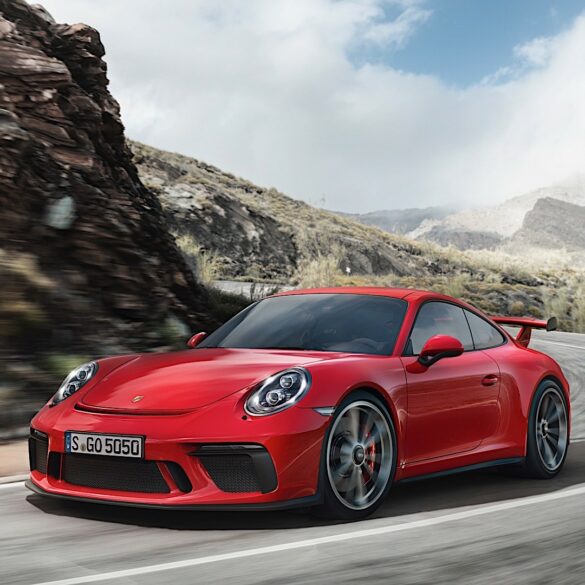
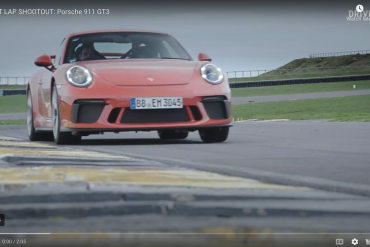
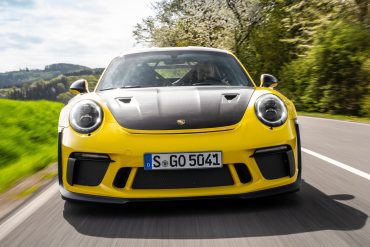
The 991 GT3 marked the GT3’s transition into the modern era, and these galleries capture that shift in motion and detail. High-speed track footage, aero close-ups, and side-by-side looks at GT3 and GT3 RS variants reveal how technology, performance, and tradition collided in this generation. It’s the GT3 evolving—visually, dynamically, and philosophically.
Latest 991 GT3 & GT3 RS Posts & Deep Into the Archives
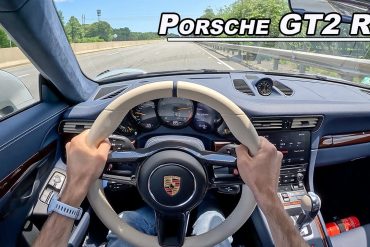
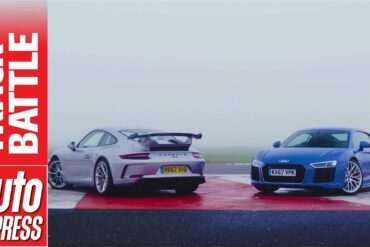
Few GT3 generations sparked as much debate as the 991, and this section reflects that journey. Here you’ll find new analysis and fresh takes alongside archived posts that document early reactions, controversies, and eventual reassessments. It’s a living record of how the 991 GT3 and GT3 RS went from divisive to definitive.
2022-Present
Porsche 992 GT3 - Aero Masterpiece
The 992 generation saw Porsche stop playing by the rules of road cars. By introducing double-wishbone front suspension and extreme active aerodynamics, the current GT3 and RS have entered a new dimension of performance. It is a masterclass in physics, designed to dominate lap times.
Porsche 992 GT3 Basics
Generation: 911 (992)
Variants: 992.1 GT3, 992 GT3 Touring, 992 GT3 RS
Production Years: 992.1 GT3: 2022–Present, 992 GT3 Touring: 2022–Present, 992 GT3 RS: 2023–Present
Manufacturing Years: 2021–Present
Assembly Location: Stuttgart, Germany
Development: Porsche GT Division / Weissach
Designer: Exterior design leadership: Michael Mauer. GT / RS development: Porsche Motorsport (Weissach)
Layout: Rear-engine, RWD
Body Style: 2-door coupe
Engines 992 GT3 & GT3 Touring: 4.0-liter naturally aspirated flat-six. Output: 502 hp, 470 Nm torque
Engines 992 GT3 RS: 4.0-liter naturally aspirated flat-six. Output: 518 hp, 465 Nm torque
Transmission: 6-speed manual (GT3 & GT3 Touring only), 7-speed PDK dual-clutch (GT3, GT3 Touring, GT3 RS)
Chassis & Mechanical Highlights: Double-wishbone front suspension (derived from 911 RSR), rear-axle steering, active engine mounts, extensive use of lightweight materials, swan-neck rear wing (GT3 & RS), active aerodynamic systems on GT3 RS, Weissach Package available on RS
More Porsche 992 GT3 Research
Porsche 911 GT3 (992) - Race Car with a License Plate (2020 - Present)
The 992 GT3 represents the most race-derived GT3 ever built, introducing true motorsport suspension architecture and pushing aerodynamic sophistication—especially in RS form—to unprecedented levels for a road-legal 911. While still naturally aspirated and available with a manual gearbox, it sits firmly at the intersection of analog engagement and modern engineering precision.
When the GT3 Became a Race Car With Plates, This Is The Most Radical GT3 Yet — and the Most Honest
The 992-generation GT3 feels like the moment Porsche stopped pretending the GT3 was merely a “road car with track ability” and fully embraced the idea that it is, at heart, a race car that happens to be road legal. Every previous GT3 nudged closer to that line; the 992 steps right over it. And yet—remarkably—it still feels unmistakably like a 911, still rewards skill over software, and still treats the driver as part of the system rather than a passenger being managed by it.
This generation exists in a world where performance is easy to manufacture digitally. What makes the 992 GT3 special is that Porsche chose a harder path: not more power, not forced induction, but deeper mechanical grip, smarter aerodynamics, and better communication. It’s the most technically ambitious GT3 ever built, but also one of the most purpose-driven.
A Chassis First, an Engine Second
Unlike earlier GT3s, where the engine often stole the spotlight, the story of the 992 GT3 begins with its chassis. The adoption of a double-wishbone front suspension—lifted directly from Porsche’s GT racing programs—fundamentally changed how the car behaves. Turn-in is sharper, mid-corner stability is uncanny, and the front end delivers a level of confidence previously reserved for full-blown race cars.
What’s striking is how this precision doesn’t feel artificial. There’s no sense of the car correcting you or smoothing over mistakes. Instead, it gives you clearer information, earlier warnings, and a wider envelope to work within. The result is a GT3 that feels less dramatic but more devastatingly effective, especially when driven hard.
The 992 GT3 Experience: Clinical or Transcendent?
Much of the early debate around the 992 GT3 centered on whether it had become too good. It’s undeniably calmer, more composed, and more predictable than previous generations. Where a 997 GT3 might dance and demand constant attention, the 992 GT3 feels locked in, almost serene at speed. For some, that initially reads as a loss of drama.
Spend real time with it, however, and the depth reveals itself. The steering remains hydraulic and richly communicative. The engine still thrives on revs and commitment. The manual gearbox—mercifully retained—offers one of the last truly mechanical shifting experiences in a modern performance car. The thrill is still there; it’s just cleaner, more precise, and more dependent on how hard you’re willing to push.
Touring: The Quietly Brilliant Counterpoint
The GT3 Touring deserves special mention, because it captures a very different kind of magic. By removing the fixed rear wing and dialing back the visual aggression, the Touring reframes the 992 GT3 as something closer to a modern interpretation of a classic 911 ethos: subtle, focused, and deeply rewarding without shouting about it.
On the road, the Touring feels more approachable, less confrontational, and easier to live with—yet dynamically, it loses none of the underlying brilliance. For many enthusiasts, the Touring is the “thinking person’s GT3,” a car that delivers everything that matters without leaning into spectacle.
The GT3 RS: Aerodynamics Take Over
If the standard 992 GT3 is a masterclass in balance, the GT3 RS is a statement of intent. This is not an evolution of the RS idea so much as a complete reinterpretation. Aerodynamics are no longer a supporting act—they are the main event. Adjustable elements, active systems, massive downforce figures, and obsessive cooling solutions dominate the car’s character.
Behind the wheel, the RS feels fundamentally different. Grip levels are extraordinary, corner speeds are surreal, and the car seems to bend physics rather than negotiate with it. On track, it is a weapon of rare focus and capability. On the road, it’s loud, stiff, visually extreme, and largely unapologetic about it. The RS doesn’t try to balance roles. It chooses one—and commits fully.
From Driver Engagement to Driver Precision
What distinguishes the 992 GT3 generation is not that it abandoned engagement, but that it redefined it. Earlier GT3s asked the driver to manage the car’s imperfections. The 992 asks the driver to rise to the car’s capability. It’s a subtle but important shift. The satisfaction no longer comes from wrestling the machine—it comes from exploiting it.
That change won’t resonate equally with everyone. Some will always prefer the rawness of earlier generations. But there’s no denying that the 992 GT3 represents Porsche at the absolute peak of its engineering confidence, building a car exactly as it wants to, regardless of nostalgia or noise.
Why the 992 GT3 Matters
In hindsight, the 992 GT3 may be remembered as the generation where the GT3 concept reached its logical extreme. It proves that naturally aspirated performance can still matter in a turbocharged world, that manuals still have a place, and that driver involvement doesn’t have to be sacrificed on the altar of technology.
It’s not the most romantic GT3. It’s not the most forgiving. But it might be the most complete. And in an era where authenticity is increasingly rare, the 992 GT3—especially in Touring or RS form—stands as a reminder that Porsche still knows exactly what this car is supposed to be.
The 992.2 GT3 Updates
When Porsche refreshed the GT3 for the 2025 model year the changes weren’t about throwing in a bigger engine or a whole new platform, but about making what was already superb feel more purposeful and ready for real-world and track use. Porsche didn’t chase headline power figures; the familiar 4.0-liter naturally aspirated flat-six and its 9,000 rpm redline remain, but engineers reworked many underlying systems so the car feels more responsive and coherent in everyday spirited driving.
Visually and aerodynamically, the 992.2’s front end was redesigned with a more aggressive splitter and underbody to boost downforce and airflow management, borrowing ideas from Porsche’s own RS and sport-turbo models. Porsche even introduced aero features previously restricted to the RS onto the standard GT3 — such as improved front aero bars — which subtly improve high-speed stability and cornering precision without altering the car’s character.
Under the skin, Porsche engineers also shortened the gear ratios for both the manual and PDK transmissions by about eight percent, giving the car a livelier throttle relationship and stronger acceleration feel out of slow corners — a change many drivers notice more than any spec sheet number. Suspension damping, bump stops, and steering software were refined as well, partly inspired by lessons from the GT3 RS and the limited S/T model, which results in a GT3 that feels more willing, better balanced, and easier to exploit at its limits.
Finally, the updates reflect a delicate balancing act Porsche had to perform: meeting stricter emissions and certification requirements without compromising the GT3’s core identity. To do that, parts like catalytic converters and throttle components were revised, which slightly altered torque characteristics — but Porsche compensated with gearing and suspension tweaks so drivers still feel a lively, connected experience similar to prior models.
In short, the 992.2 GT3 isn’t a dramatic reinvention, but it feels like a more confident and complete car — one that brings together aerodynamic maturity, mechanical refinement, and real-world driveability while staying true to the naturally aspirated GT3 ethos.
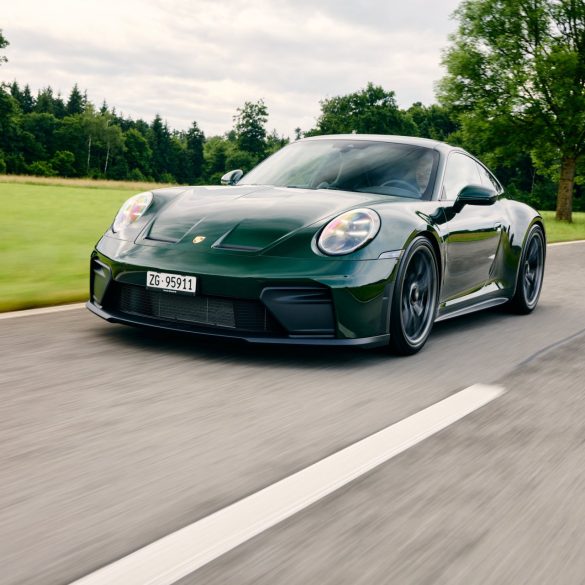
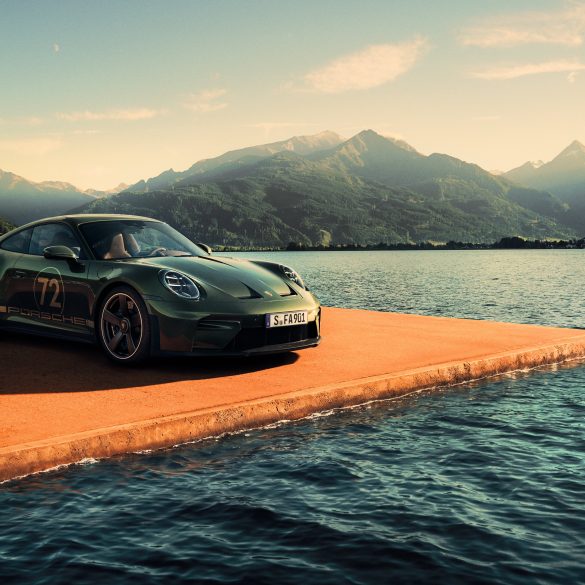
Porsche 911 GT3 (992) Variants
The 992 GT3 generation is the most specialized and purpose-driven GT3 lineup ever built, and this section breaks down each variant on its own terms. From the standard GT3 to the understated Touring and the aero-dominated GT3 RS, these deep dives focus on intent as much as execution—why each version exists, who it’s designed for, and how it fits into the modern GT3 hierarchy. This is the GT3 pushed to its logical extreme, and understanding the nuances between variants is essential to understanding the generation as a whole.
992 GT3 & GT3 RS Videos & Image Galleries
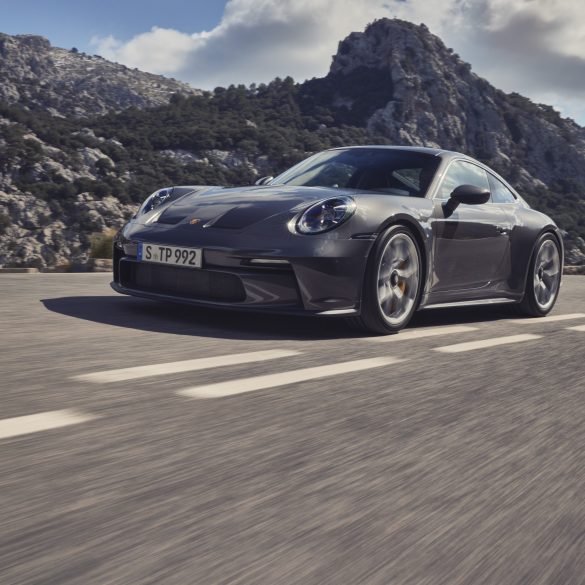
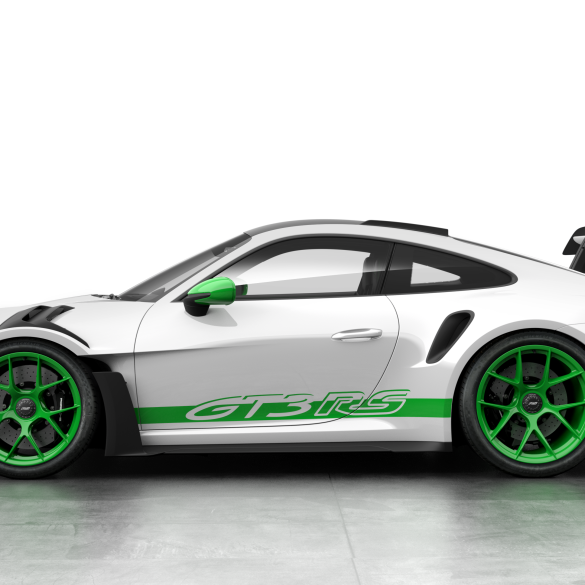
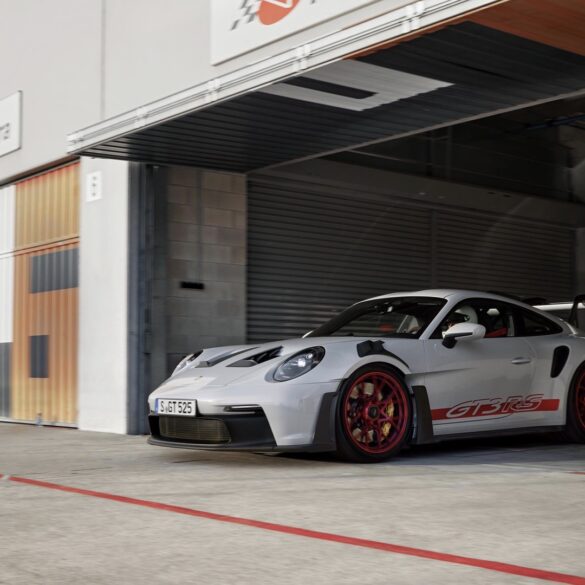
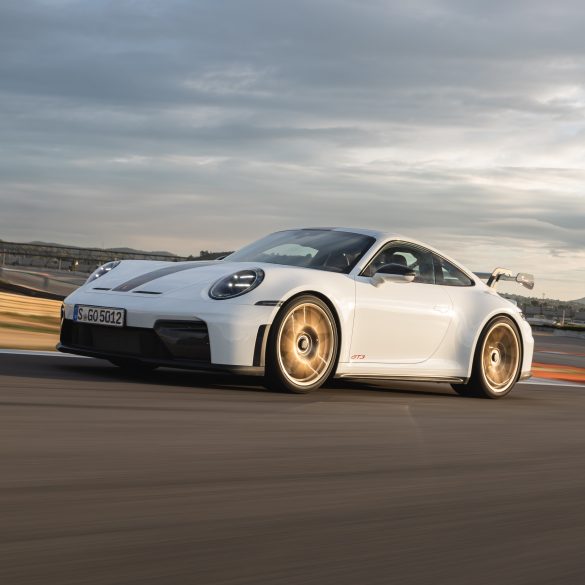
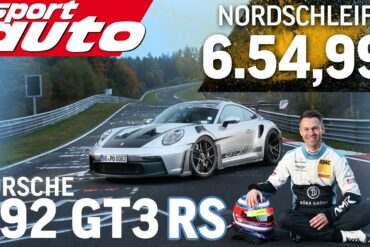
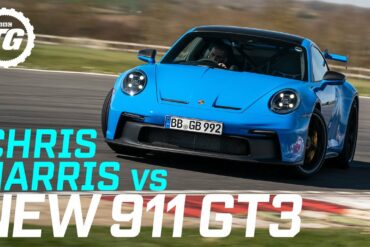
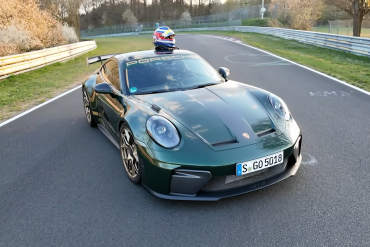
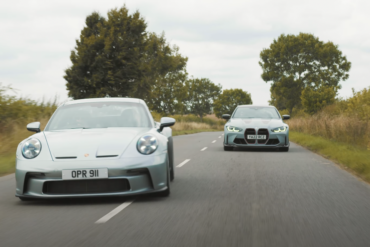
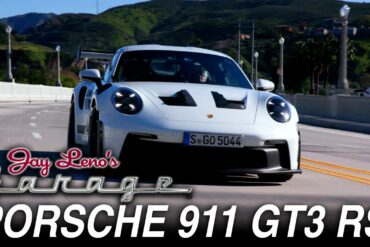
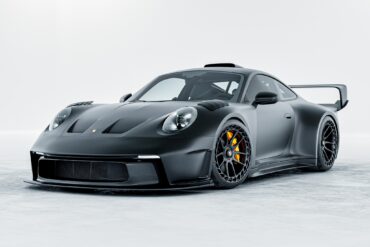
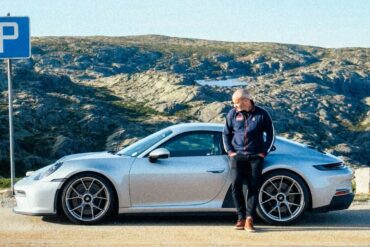
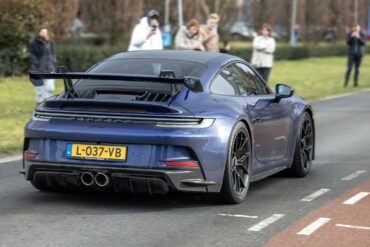
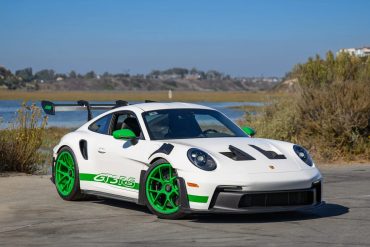
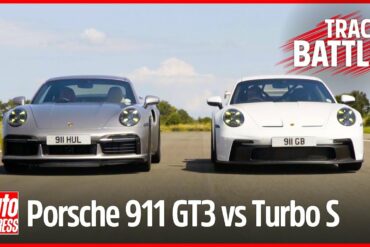
The 992 GT3 and GT3 RS are the most visually aggressive and aerodynamically complex GT3s ever built, and this gallery leans fully into that reality. From Nürburgring footage and active-aero details to contrasts between the GT3, Touring, and RS, these visuals show a GT3 that has crossed decisively into race-car territory—without abandoning its road-going roots.
992 GT3 & GT3 RS Videos & Image Galleries
This section tracks the ongoing evolution of the modern GT3, combining the latest reviews, comparisons, and technical commentary with foundational pieces that explain how the 992 GT3 arrived here. As Porsche continues refining the platform, this archive grows—offering context, critique, and insight into what may ultimately be remembered as the most extreme GT3 generation yet.
Join Our Porsche Community
Sign up for our weekly Porsche newsletter. The latest Porsche news, rumors, reviews and more delivered to your inbox. Cool Porsche stuff perfect for the flat-six obsessed.