

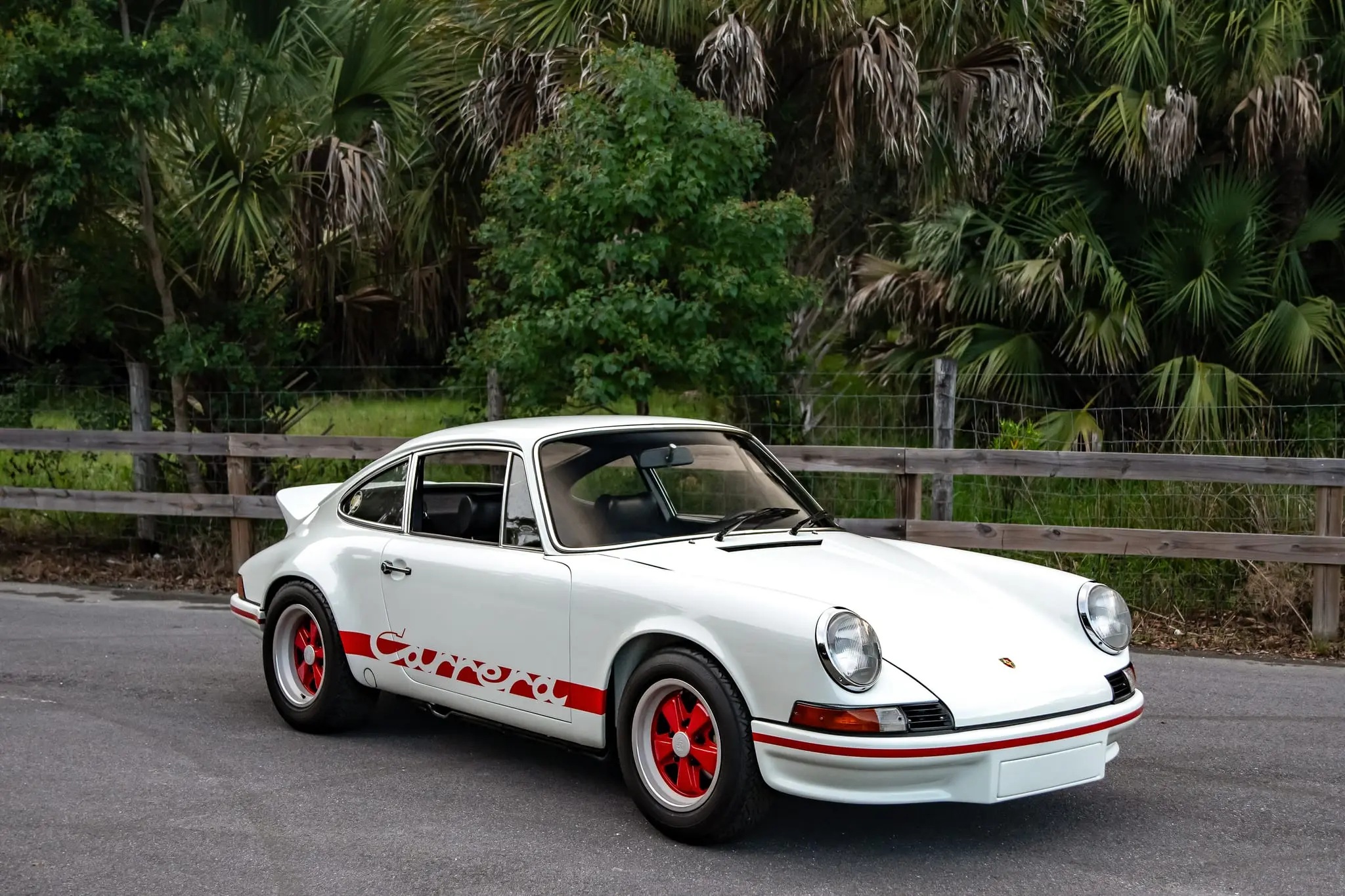
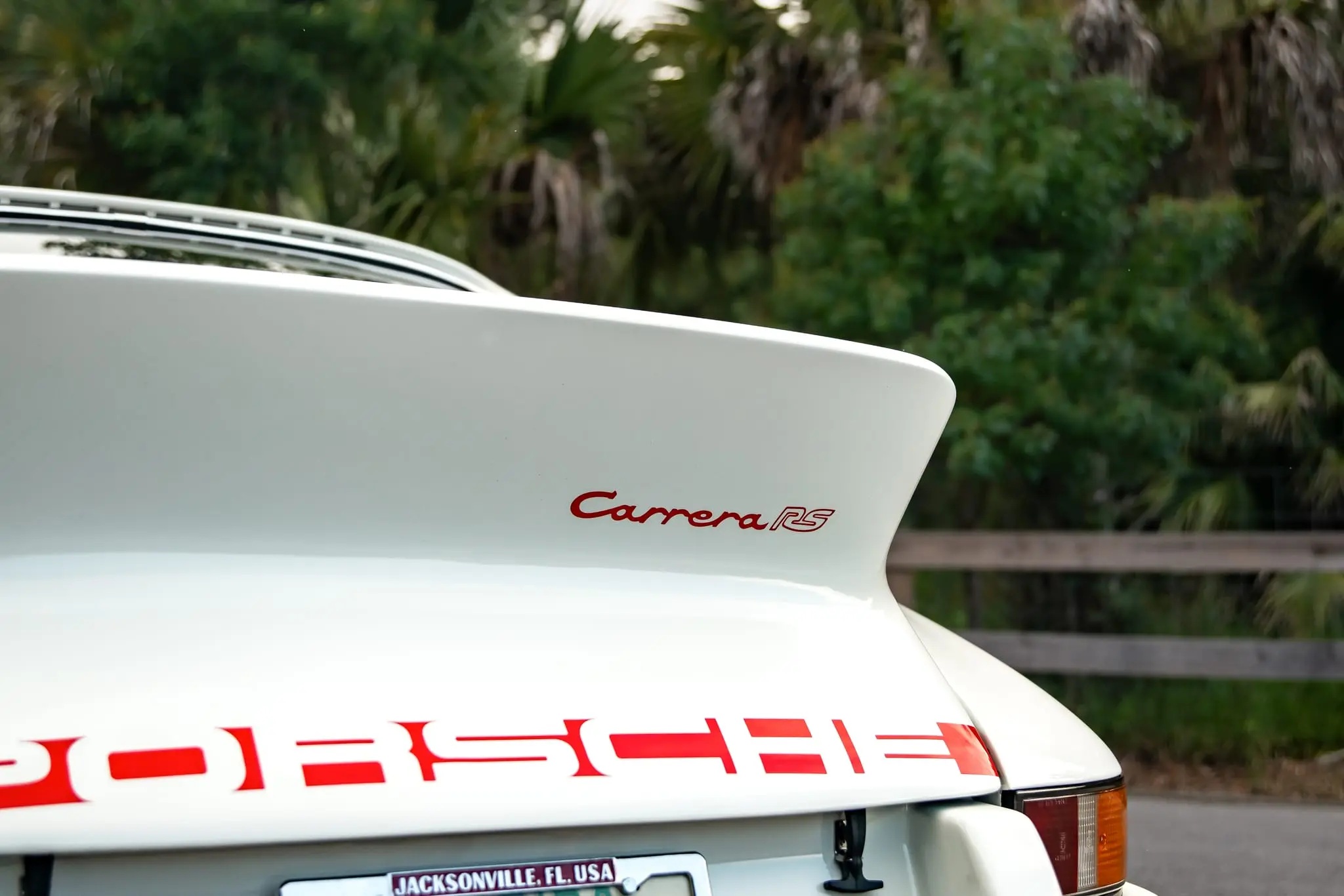
Now listed on Bring a Trailer, this 1973 Porsche 911 Carrera RS 2.7 represents one of the most important homologation specials in Porsche history. Developed from the 2.4-liter 911S, the Carrera 2.7 RS was engineered primarily to satisfy FIA requirements for competition, with “RS” standing for Renn Sport, or motorsport.
Porsche initially needed to build at least 500 examples to secure FIA homologation, a production target that reportedly concerned the company’s sales department. Instead, demand was unexpectedly strong, with more than 50 orders said to have been placed on the first day of its October 1972 Paris Salon debut. Ultimately, approximately 1,590 Carrera RS examples were produced across the 1973–74 period, including only 200 M471 Lightweight cars alongside the more civilized M472 Touring specification.
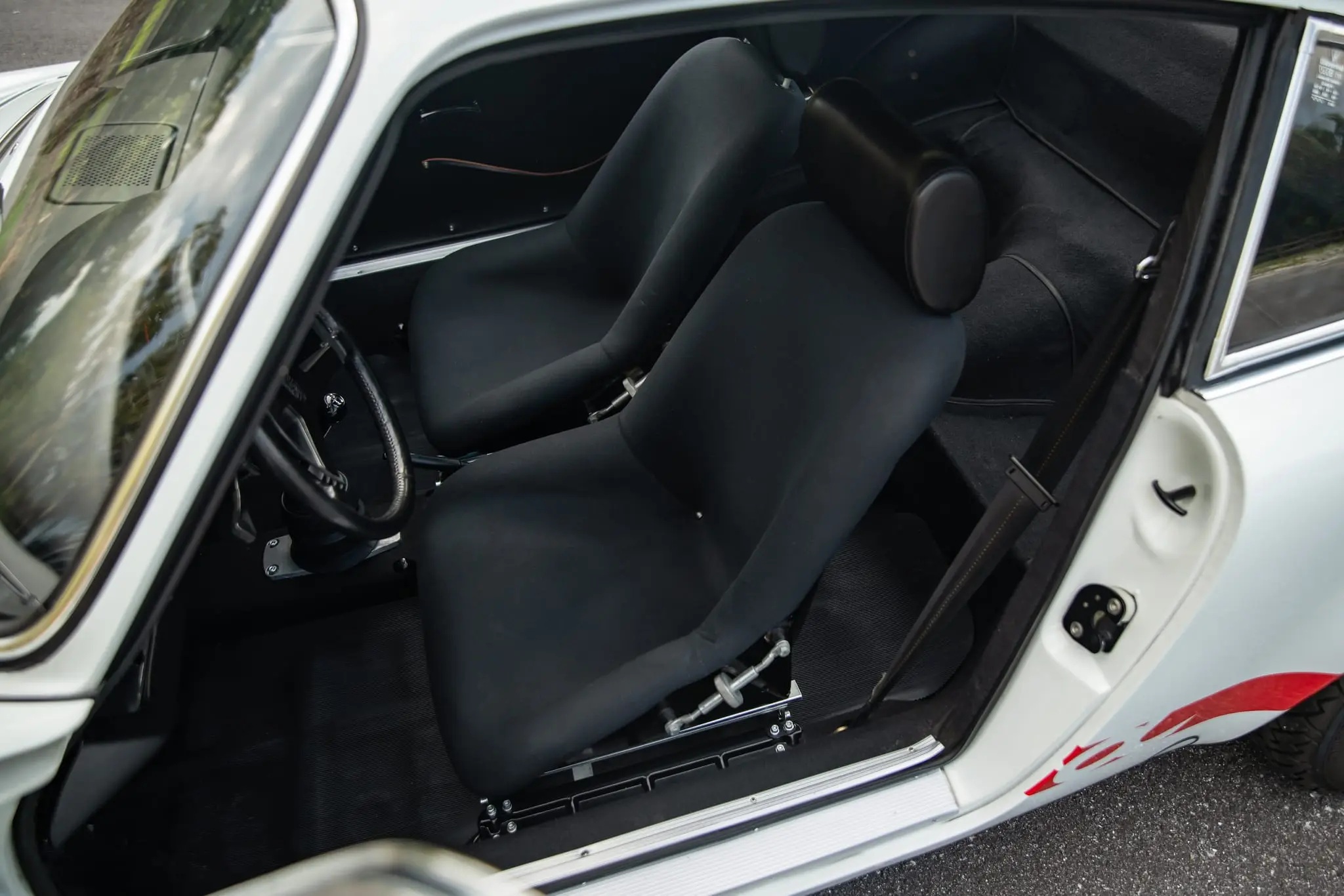
Porsche’s engineers pursued an uncompromising weight-reduction strategy. The Lightweight specification employed thinner-gauge steel, fiberglass bumpers, thinner glass, reduced sound insulation, and a simplified cabin. Rear seats, carpeting, the glovebox door, clock, coat hooks, and armrests were eliminated, while lightweight fixed-shell seats and simple door straps replaced conventional equipment. These measures helped transform the RS into a highly focused performance machine.
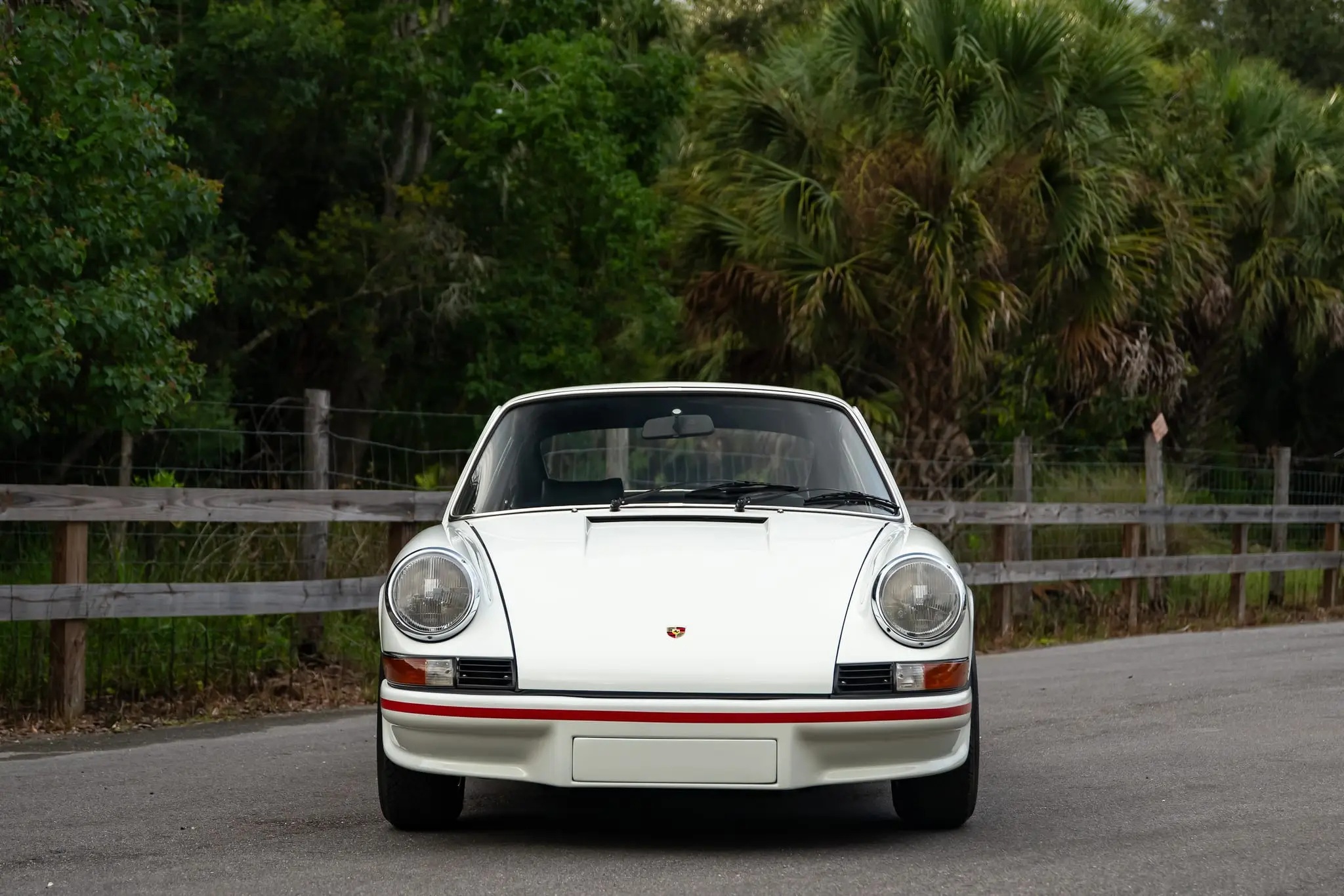
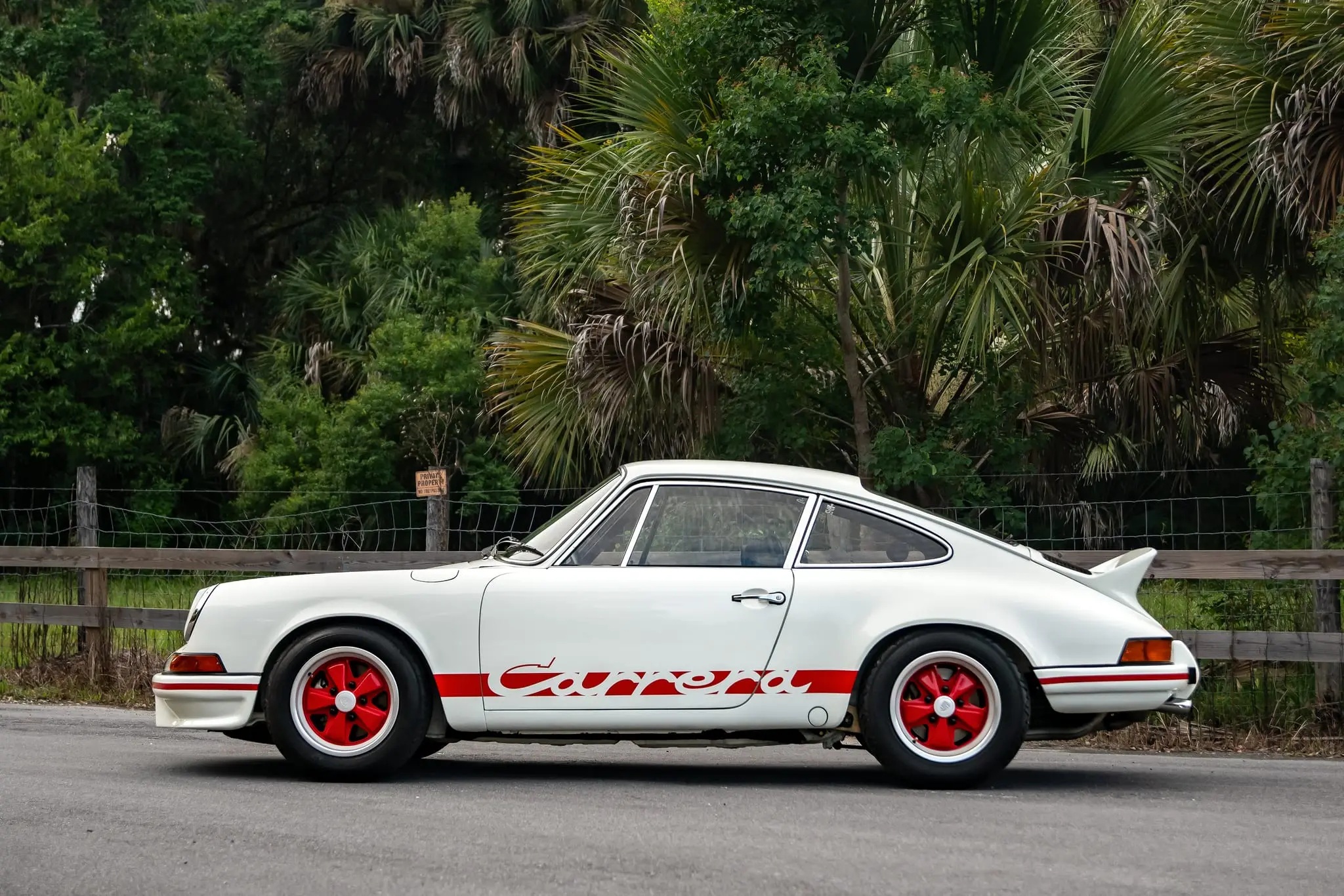
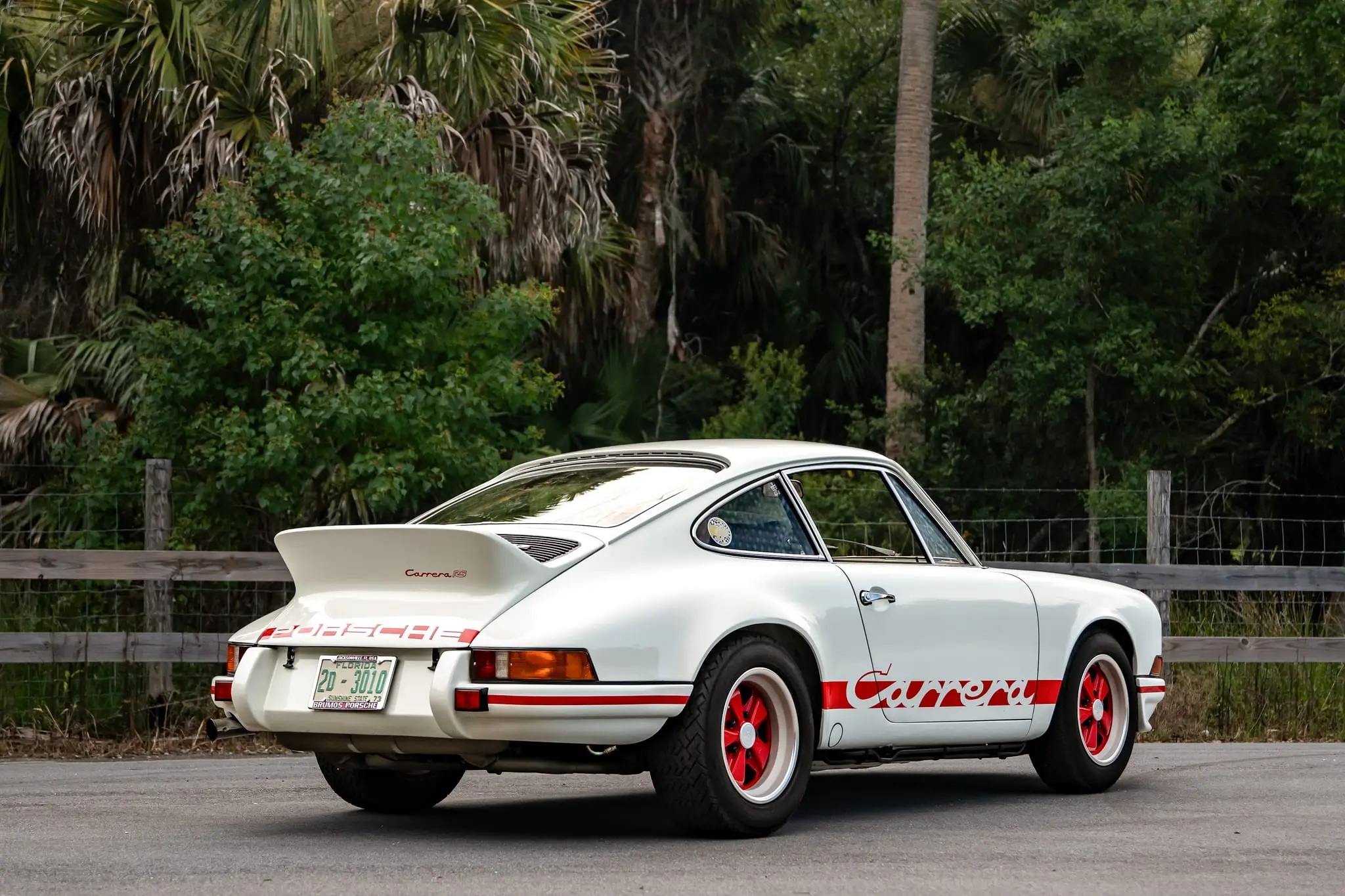
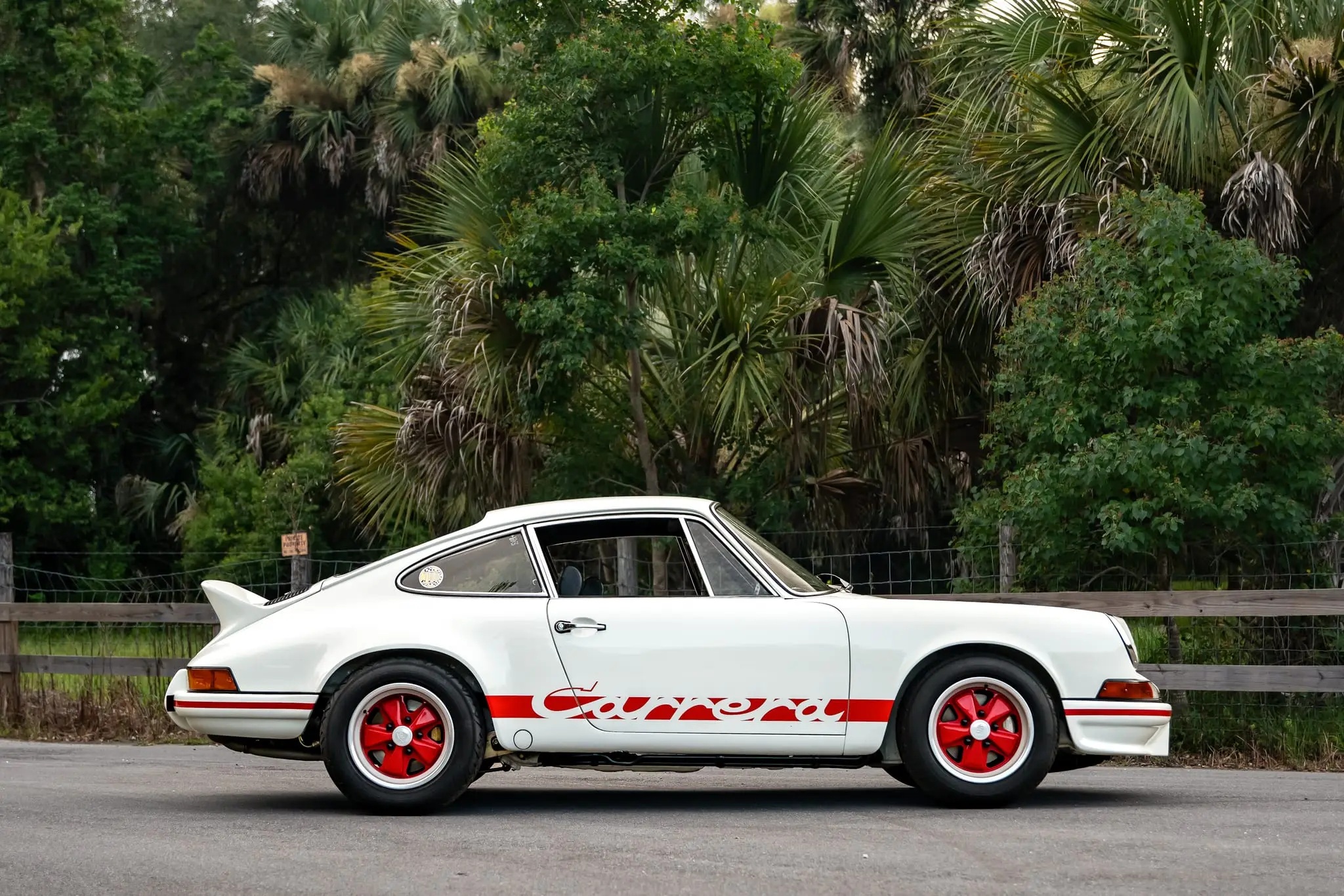
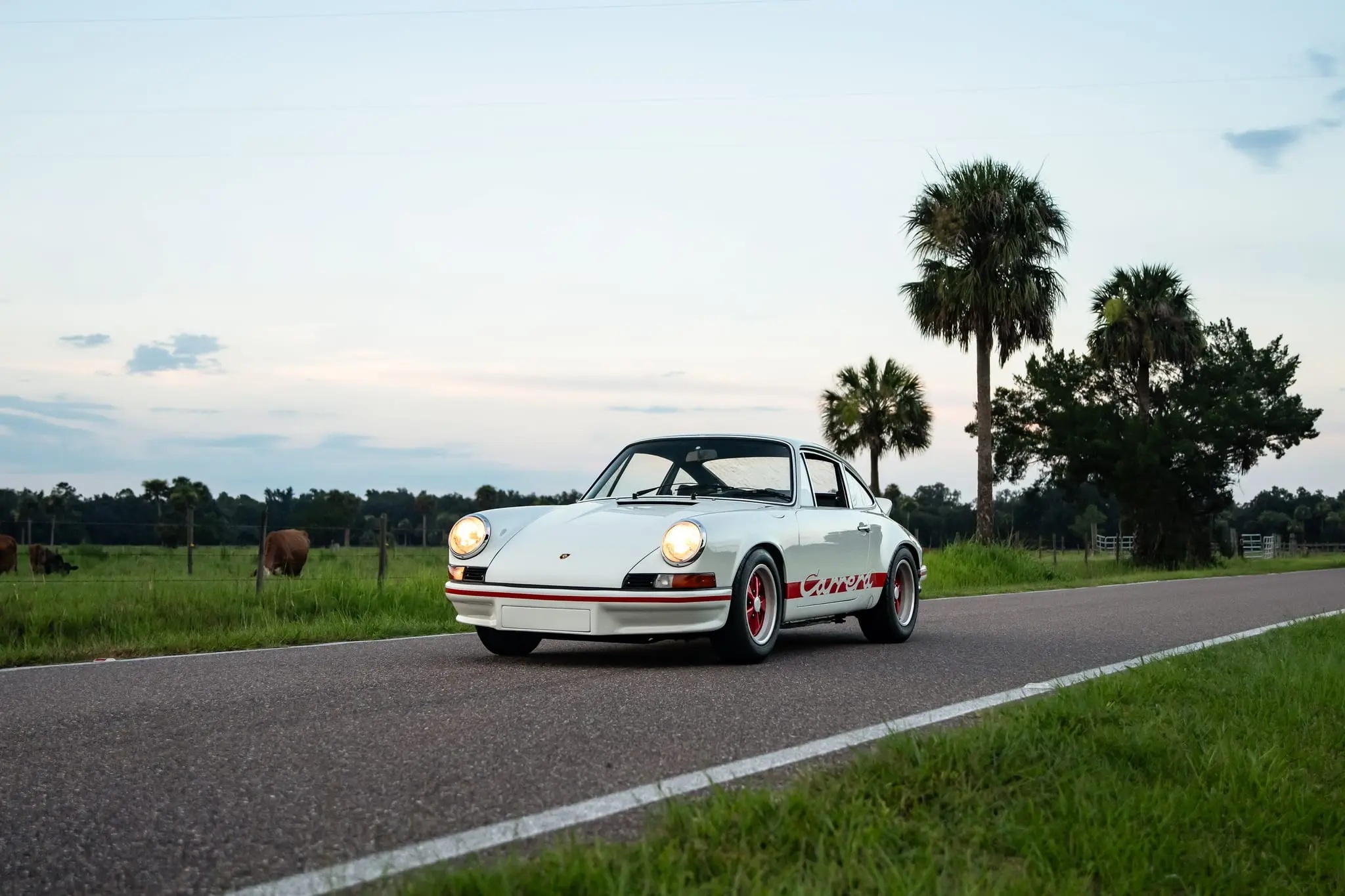
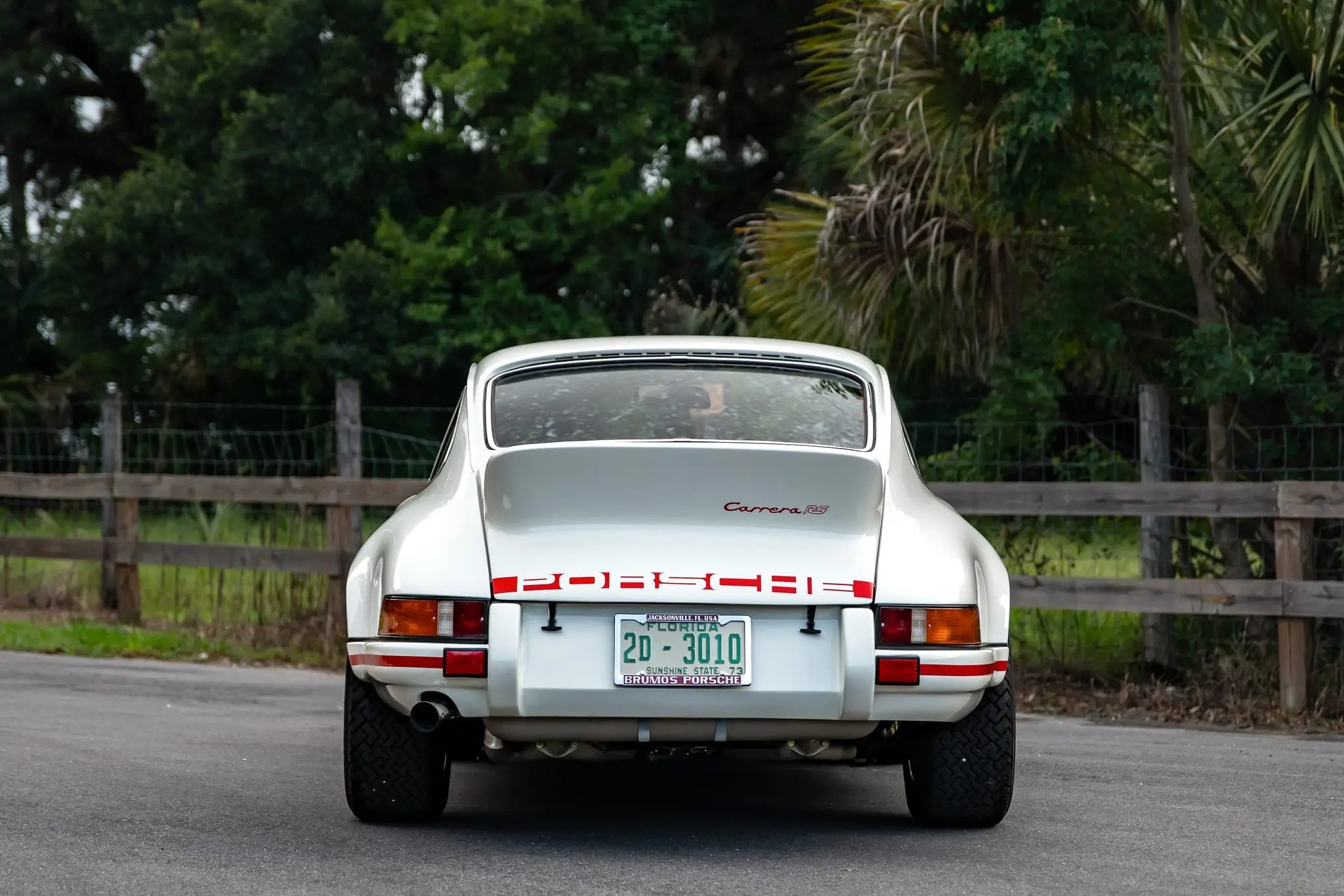
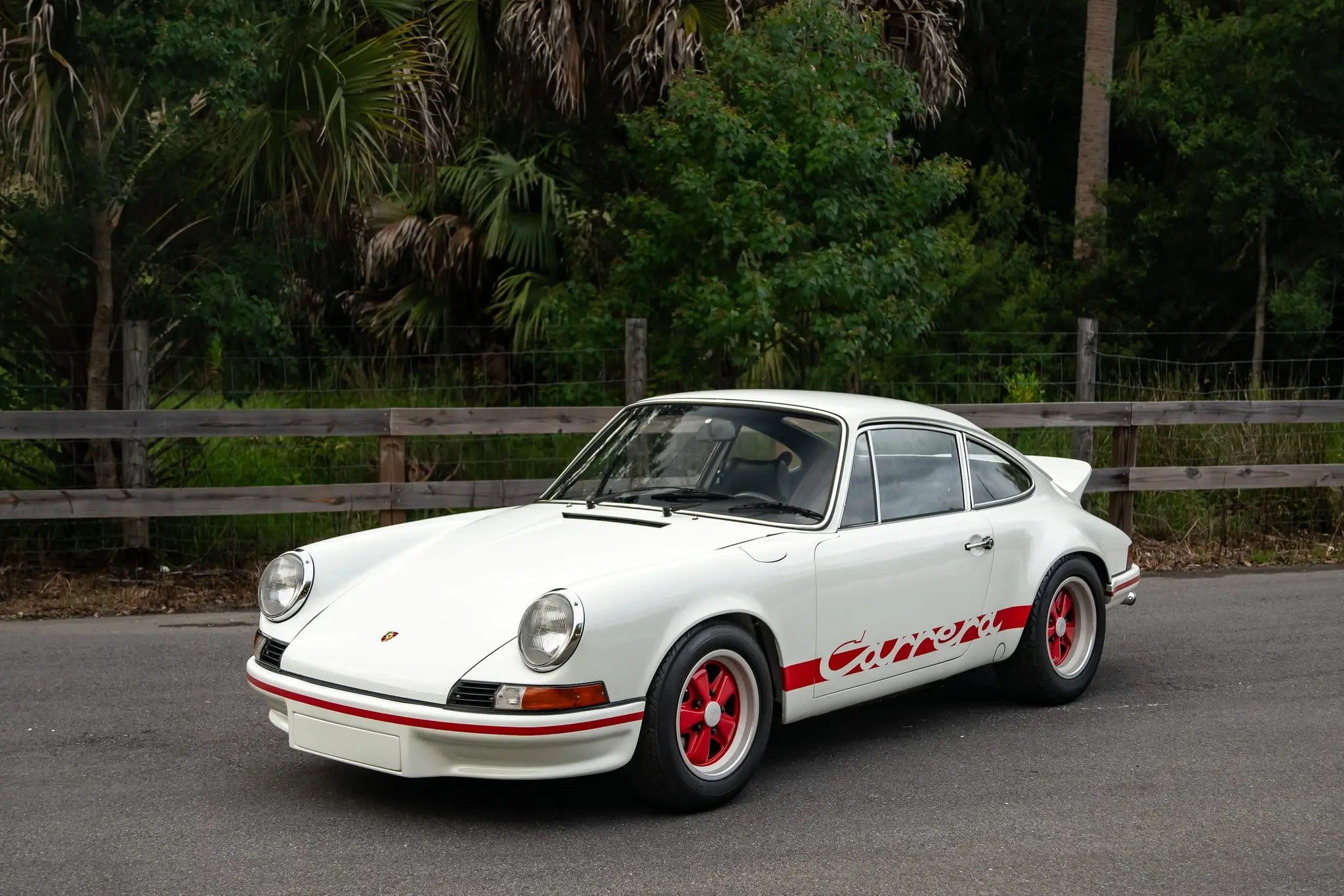
This particular example spent much of its early life in France and was reportedly raced across Europe before undergoing refurbishment in 1995. It subsequently arrived in the United States and was acquired by its current owner in 2022. Finished in Grand Prix White with red Carrera graphics over a black cloth-and-vinyl interior, it rides on 15-inch Fuchs alloys with 185/70 front and 215/60 rear Pirelli tires.
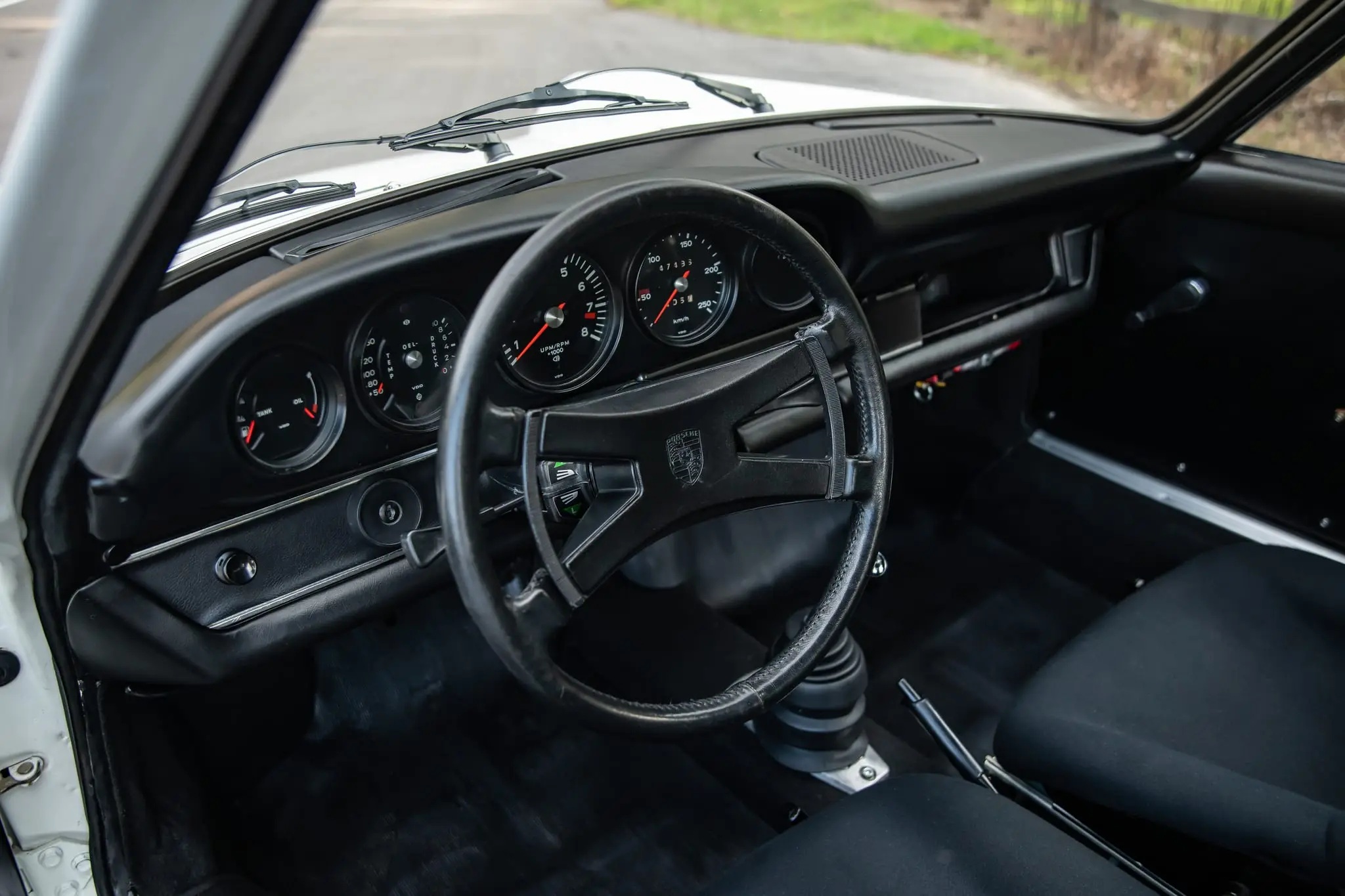
Inside, a four-spoke leather steering wheel frames VDO instrumentation, including a 250-km/h speedometer, 8,000-rpm tachometer, and gauges monitoring fuel, oil level, temperature, and pressure. As an M471 Lightweight, its specification emphasizes the pure competition-focused character that made the Carrera RS 2.7 a defining performance Porsche.
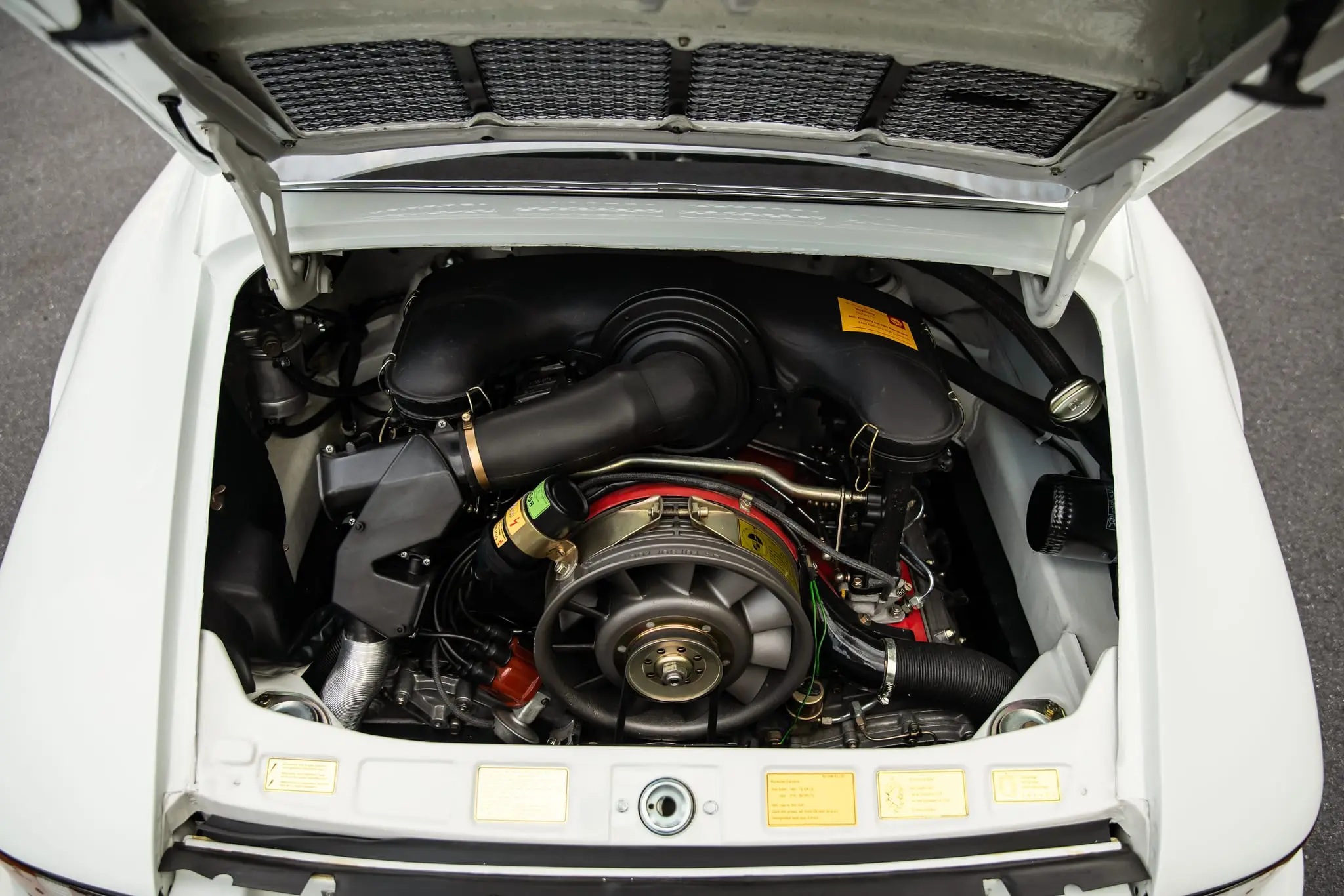
Power came from an enlarged, air-cooled 2.7-liter flat-six derived from the 911S engine. Mechanical fuel injection helped produce approximately 210 horsepower, with drive sent through a five-speed 915 manual transaxle and limited-slip differential. Porsche also strengthened the chassis and suspension, widened the rear track, and fitted ventilated disc brakes at all four corners.
Source: Bring a Trailer