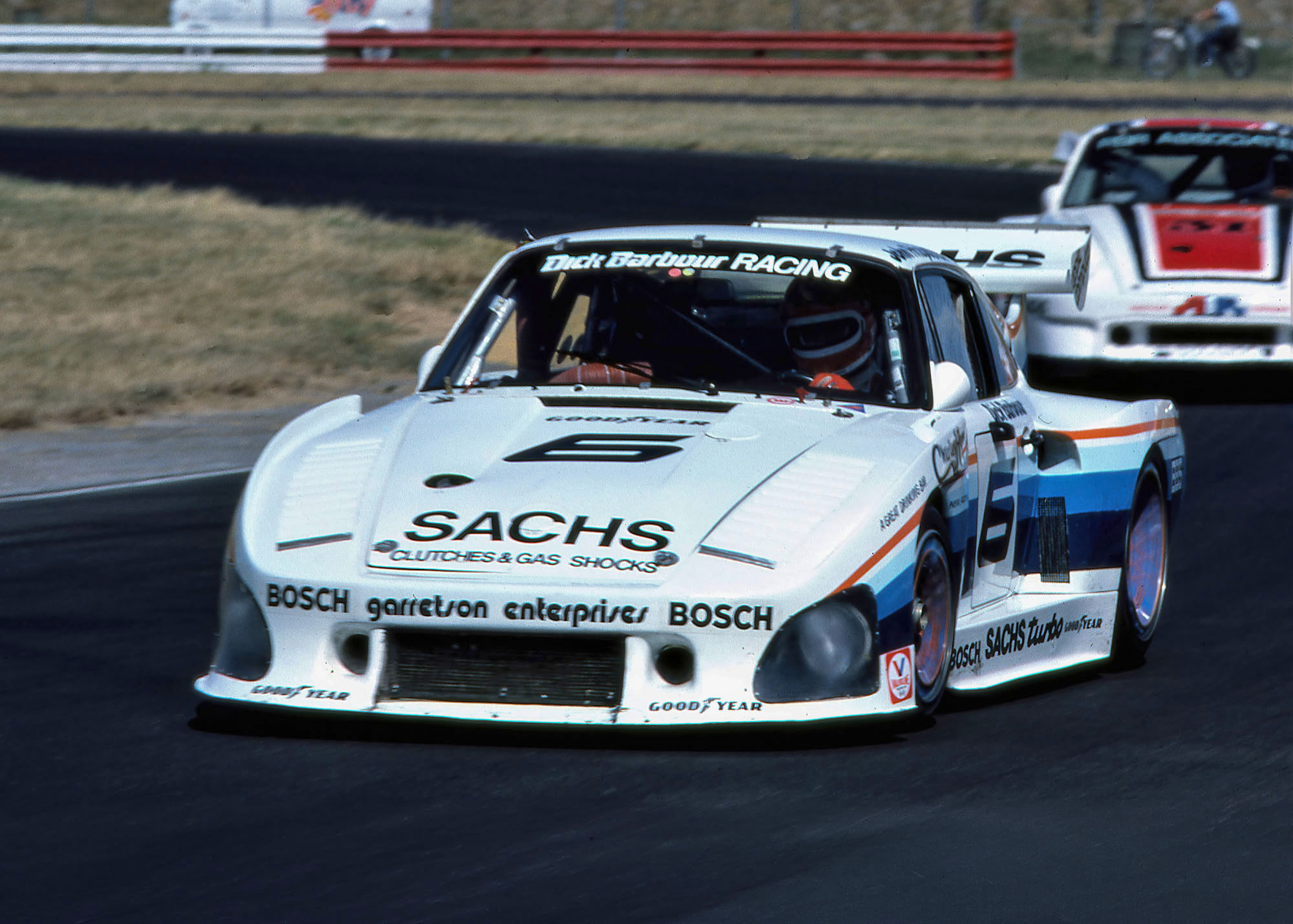
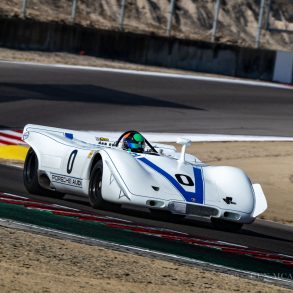
John Fitzpatrick in 000 0023 at Portland IMSA. In a masterful drive, Fitzpatrick ran out of fuel on the cool down lap after winning, while most of the other front runners had stopped for fuel with a few laps left. Photo : Martin Raffauf
Preamble – Early History
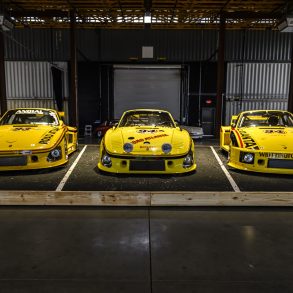
In 1976, the rules for the World Championship of Makes (Sports Cars) changed to use the CSI (FIA) Group 5 category of cars. Group 5 was a highly modified street- car. It was an extension of Group 4, which was a modified road car requiring a minimum of 400 examples be built (Group 5 had no minimum). Porsche had done a lot of work in 1974-1975 with the RSR- turbo car to develop the concept, and in 1976 came out with the 935 model. They raced the car in 1976 and easily won the World Championship. At the start of 1977 they started selling customer cars. They continued developing the car thru 1977, which culminated in the 1978 “Moby Dick” car which ran at Le Mans. This was an ultimate evolution of the concept. After 1978 Le Mans, Porsche basically relegated all 935 racing to customer teams.
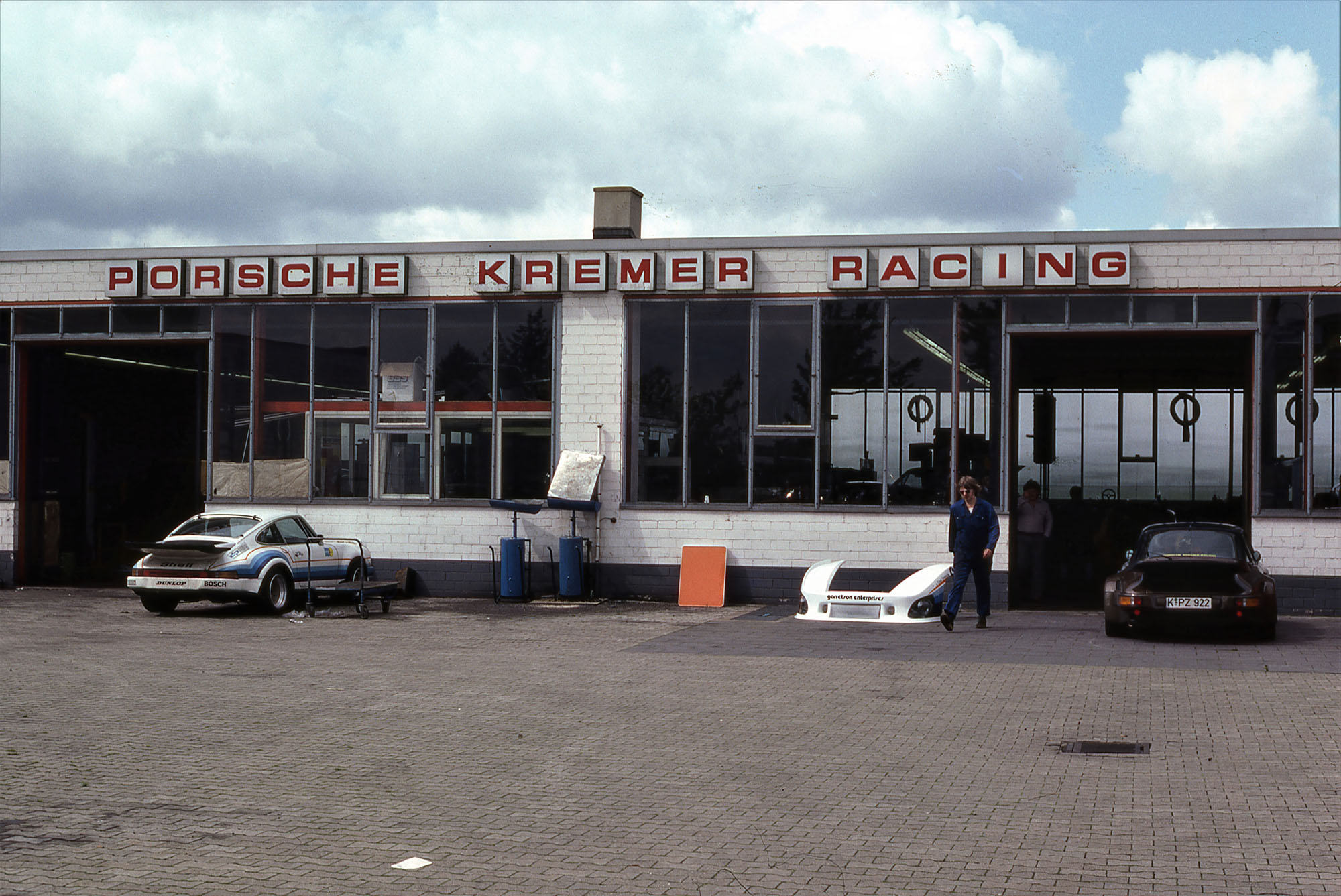
Porsche Kremer in Cologne. May 1980 Photo : Jerry Woods
In 1977, the IMSA (International Motor Sports Association) series in the US did not allow the 935 per their rules. Porsche built a compromise IMSA car called the 934 ½, which was a 934 with IMSA-allowed modifications. Ten were sold. Dick Barbour started in IMSA with one of these original ten cars. By 1978, IMSA allowed the 935, and teams switched to factory-built 935 models, Dick Barbour included. By 1979 teams started building their own cars using Porsche factory bare tubs. Some developed their own modifications, notably the Kremer Brothers in Cologne Germany. They developed their own car, built on a factory tub called the K3 (Kremer K3). When a Kremer car famously won Le Mans overall in 1979, orders started flowing in.
No Subscription? You’re missing out
Get immediate ad-free access to all our premium content.