

Ferry Porsche liked to sum up the company’s origin story in a single line: “In the beginning, I looked around and could not find quite the car I dreamed of, so I decided to build it myself.” For a good part of this decade, though, it felt like Porsche had traded that dream for a spreadsheet. The plan was to go electric, and fast, because that’s where everyone agreed the market was heading. Then the market didn’t go there, and Porsche paid the price.
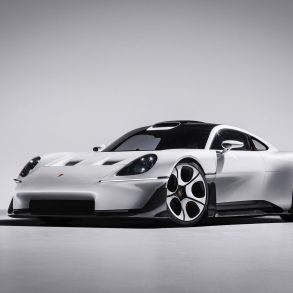
That’s the backdrop for the Mission S, the mid-engine concept Porsche unveiled in Queens, New York, on October 15, the same day Tesla was busy flipping its new Roadster off a ramp in Texas. Our news story on the reveal covers what the car is. This piece is about what it means, and the short version comes from CEO Michael Leiters himself: “With Mission S we will listen to the customer.” For a company that spent years building for where the industry said things were going, that’s about as close to admitting a mistake as a German automaker gets. Porsche, it seems, has learned its lesson.
When Porsche Followed the Trend
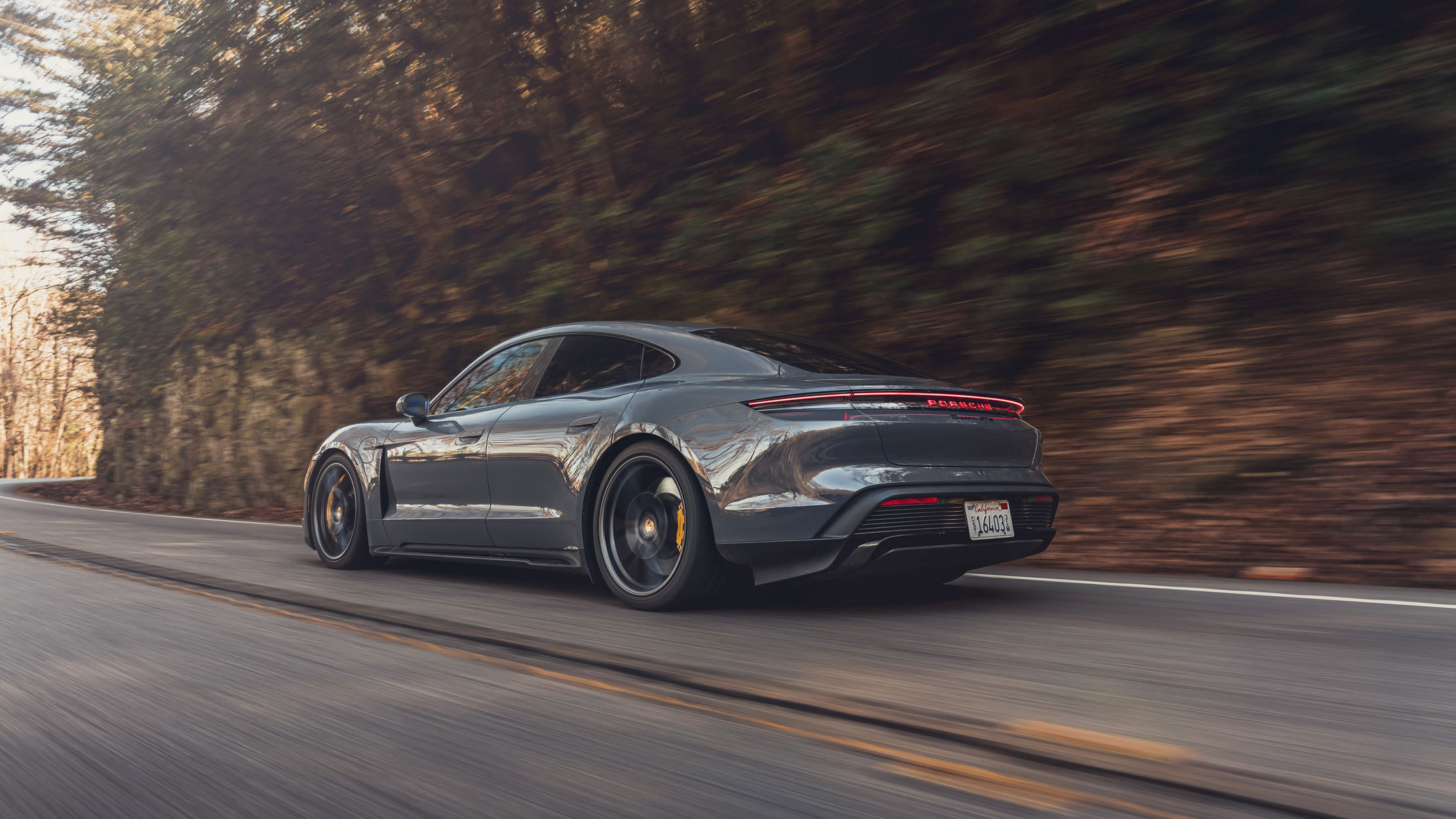
In the early 2020s, Porsche’s electric ambitions were as big as anyone’s. The company said more than 80% of its new cars could be fully electric by 2030, and it lined up the products to get there. The next Macan would be sold only as an EV, the 718 Boxster and Cayman would swap their flat-fours and flat-sixes for batteries, and the Taycan, which really is a brilliant car, would show everyone the way. By July 2024, the tone had changed. “The transition to electric vehicles will take longer than we assumed five years ago,” Porsche said, and from then on customer demand would set the pace.
It’s worth pointing out that Porsche had plenty of company. Mercedes-Benz quietly dropped its plan to go all-electric by 2030 and handed the timeline over to the market. Volvo softened its all-electric pledge to at least 90% electrified, which lets hybrids in through the back door. Bentley, which once promised an all-electric lineup by 2030, now says gas engines will stick around until at least 2033, and Aston Martin’s first EV slipped to 2027. Almost the entire industry had drawn up its 2030 plans for a buyer who, at these prices anyway, never really showed up.

Porsche just had more to lose. Taycan sales dropped 49% in 2024. The electric 718 hit a wall on battery supply, made worse when Northvolt went bankrupt, and by February 2026 there were reports that its cancellation was on the table. The Macan, meant to go EV-only, now needs a petrol successor that won’t arrive before 2028, which is how former CEO Oliver Blume ended up saying three words you rarely hear from a car company boss: “We were wrong.” Then came the bill. In 2025, Porsche took a $3.5 billion writedown tied to its EV pivot, operating profit fell 98% and margins shrank to 0.3%. And the car that held up best through all of it? The 911, the model Porsche had changed the least.
The Mission X, a Hypercar for the Headlines
If one car sums up that period, it’s the Mission X. Porsche revealed it in June 2023, right in the middle of its 75th anniversary celebrations, as the spiritual successor to the 918 Spyder. It was all-electric, built on a 900-volt architecture with the battery tucked behind the seats, and Porsche wasn’t shy about the targets, talking about roughly one horsepower for every 2.2 pounds and the fastest road-legal lap of the Nürburgring Nordschleife. In early 2024, Blume said a production decision would come that year.
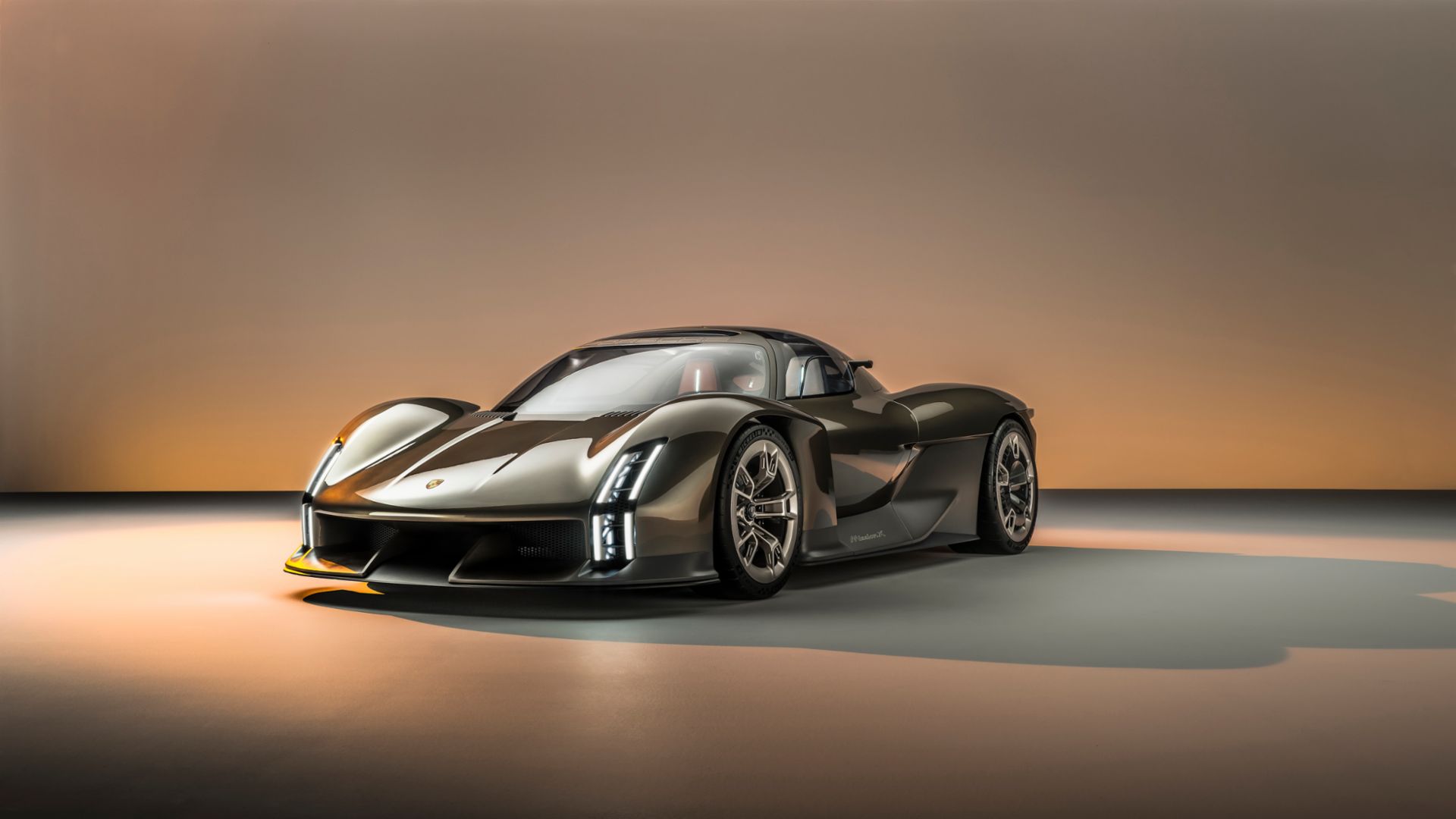
That decision never came. By August 2024, design boss Michael Mauer was calling the Mission X a show car and saying a hypercar wasn’t likely anytime soon. Porsche has never officially killed it, but more than three years later there’s still no price, no date and no confirmed powertrain. Looking back, it was built for the market everyone predicted, and the one that actually showed up wanted something else.
The Mission S Is What Listening Looks Like
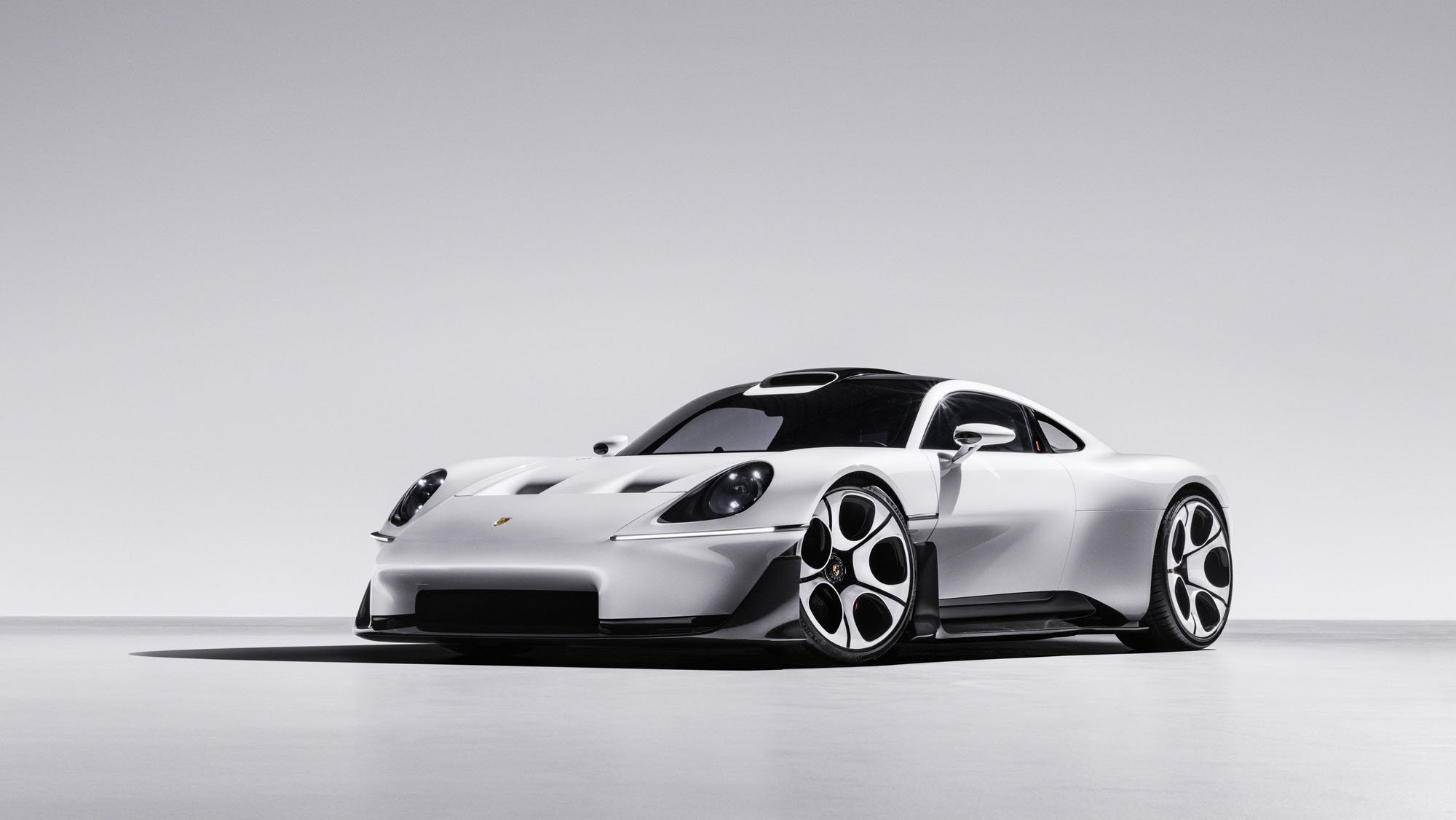
So what does a Porsche built by listening actually look like? Start underneath. The production Mission S will ride on MMB, a new modular mid-engine platform that can handle pure combustion, hybrid or plug-in hybrid powertrains, and that will also underpin the next 911. What it won’t handle is a battery-electric drivetrain, and Leiters kept the explanation short: “There won’t be a BEV on that platform: there is no demand.”
Think about that for a second. Only three years after the Mission X was supposed to point the way forward, Porsche’s CEO is telling reporters that its new flagship platform won’t even offer an EV. And this isn’t a one-off collector’s toy like the Carrera GT or the 918 Spyder. Leiters describes it as “a permanent and versatile addition to our customer offering,” a whole new family of cars above the 911. Porsche still isn’t saying what powers it, but Germany’s Handelsblatt reported in September that the production car will be the first road-going Porsche with a flat-eight engine. Porsche hasn’t confirmed that. R&D chief Michael Steiner did say the car “could be a very pure, lightweight” combustion sports car, or one that pairs performance hybridization with advanced chassis systems, and honestly, either option sounds pretty good from where we’re sitting.
The man making these calls matters too. Leiters became CEO on January 1, 2026, after running McLaren Automotive, and before that he was Ferrari’s technology chief. He knows what people spending this kind of money actually want, and Porsche isn’t hiding who it’s after. The plan is to win over Ferrari and Lamborghini buyers by building fewer cars and charging more for them. In fairness, the pullback from EV-only plans started on Blume’s watch. The Mission S is just the first time we get to see it take physical shape.
Form Follows Function, Again
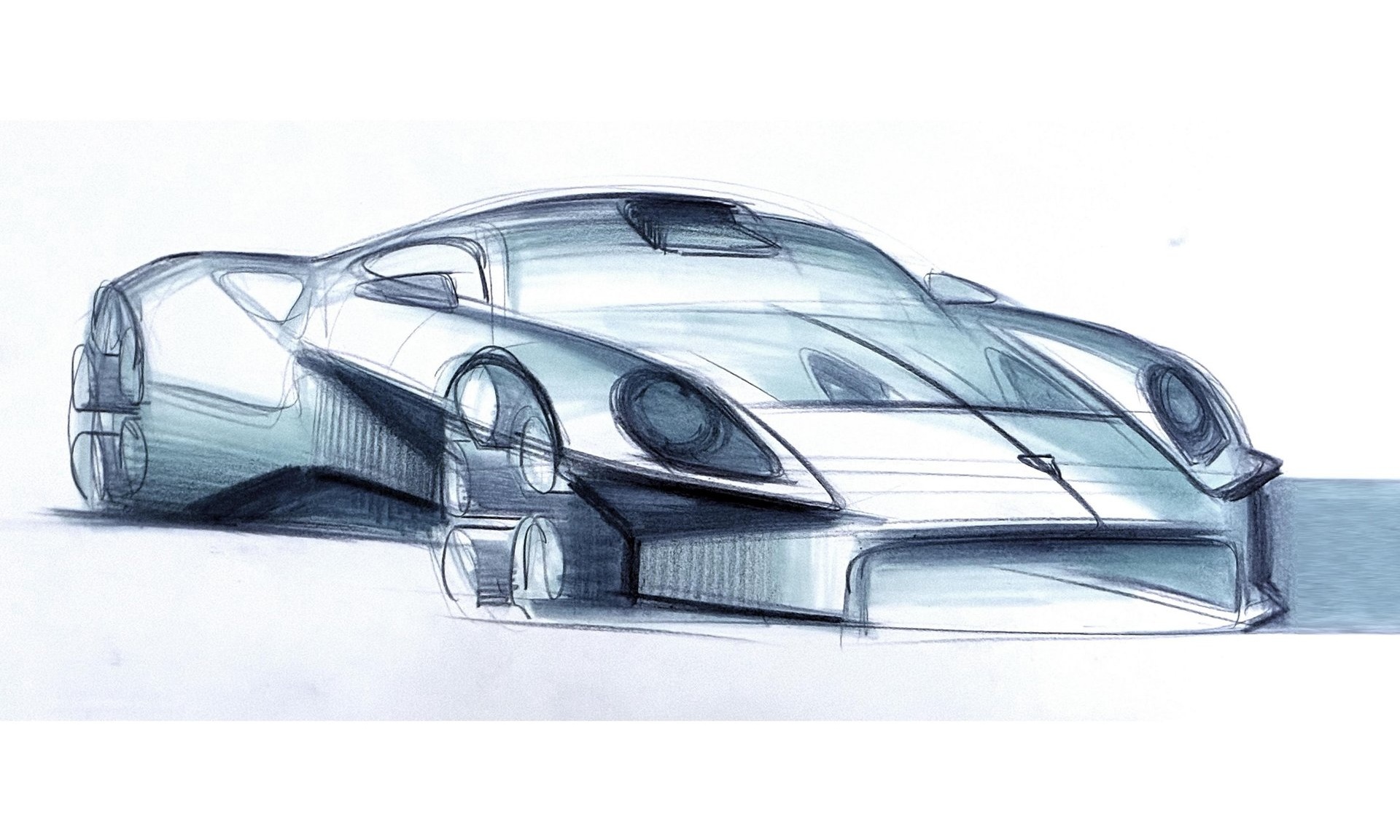
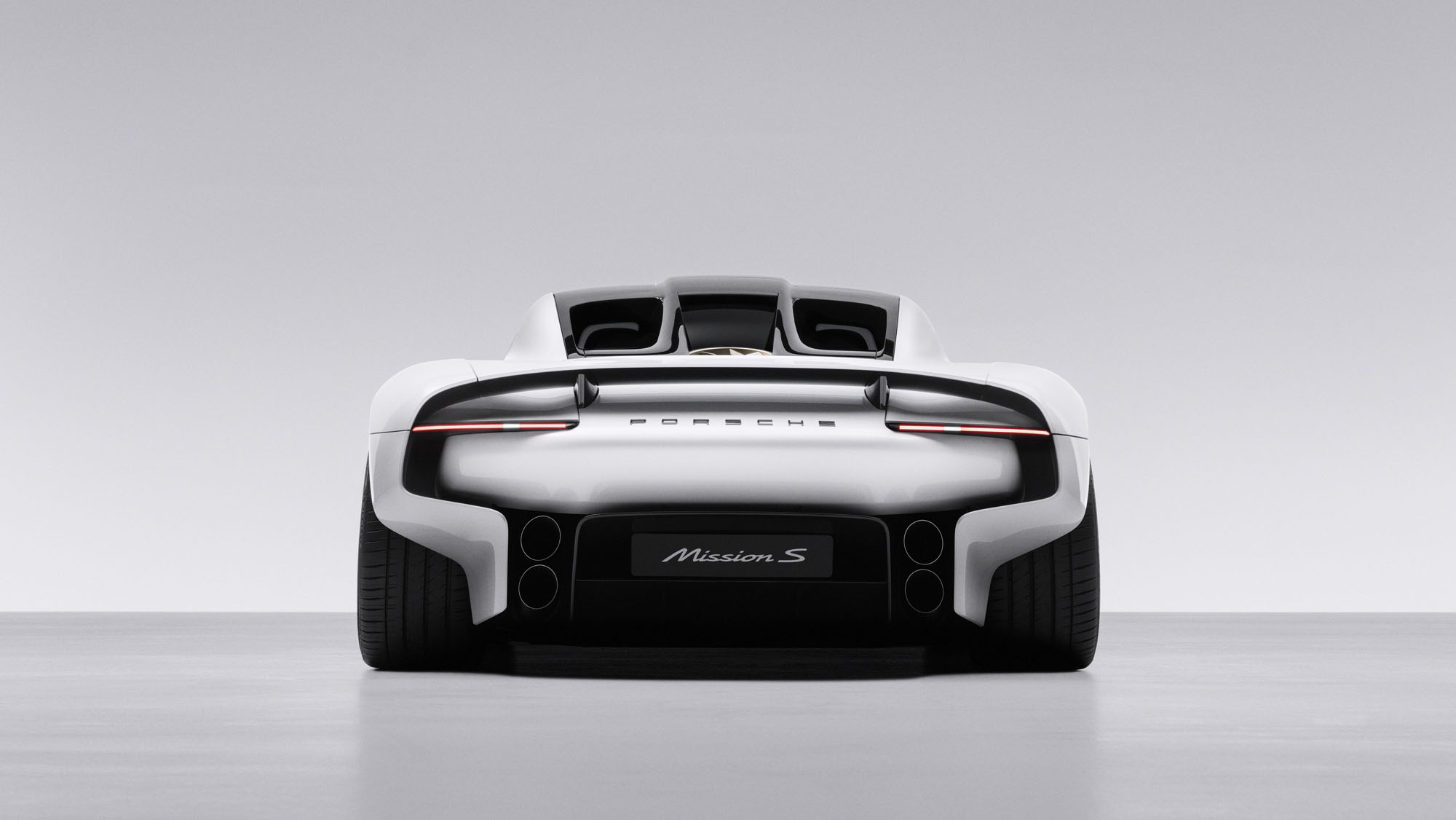
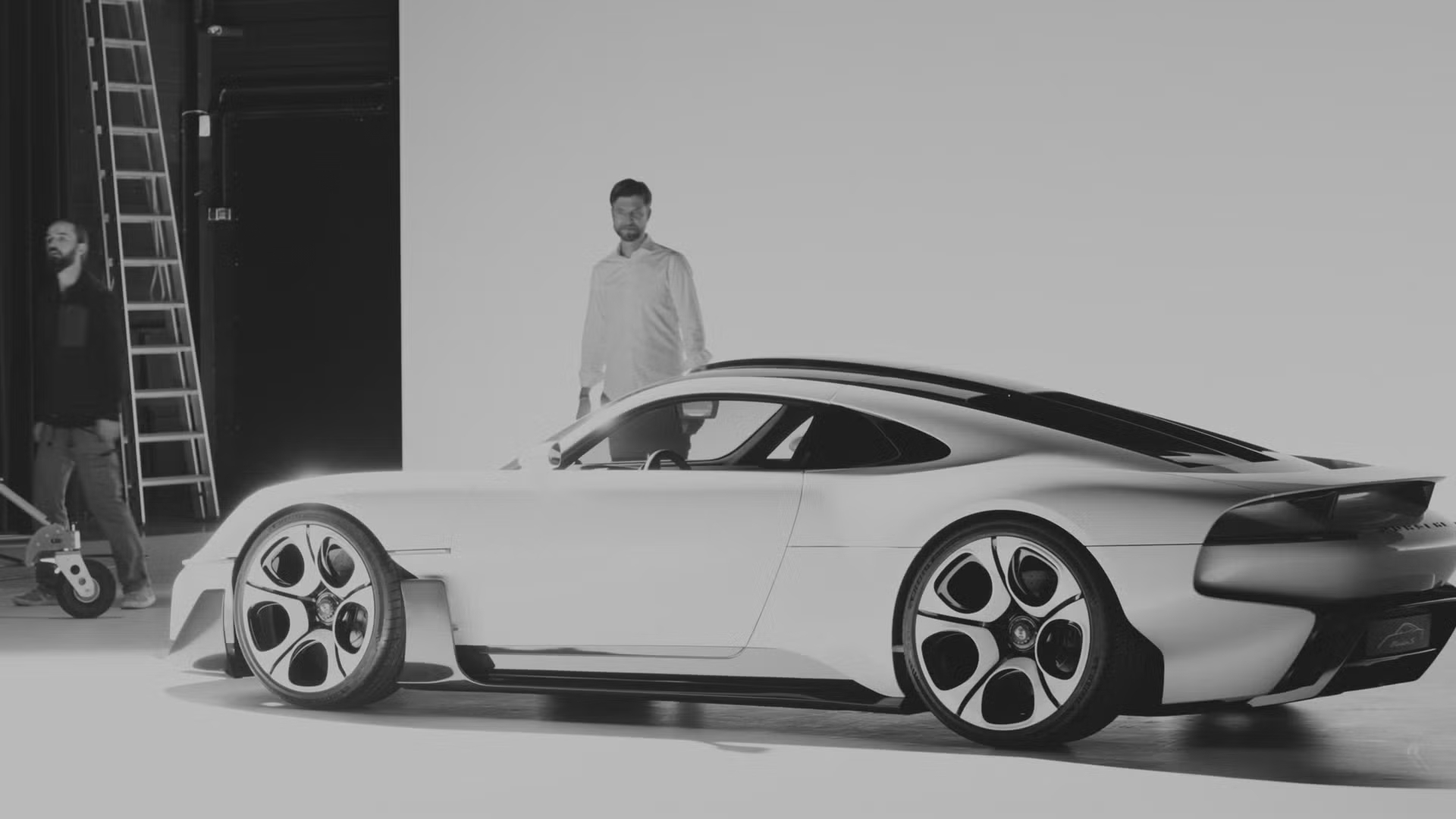
You can see the same thinking in the design. The Mission S is the first car shaped under new Style Porsche boss Tobias Sühlmann, and rather than inventing a new look, he went digging through the archive. There’s a “car-in-car” rear borrowed from the 911 GT1, cooling inspired by the 917, a rear wing shaped like the 959’s and wheels based on the 928’s dial design. On paper, that’s a lot of nostalgia for one car. In the photos, it works, mostly because none of it feels like decoration.
The front fenders are a good example. They stand taller than the hood, just like on a 911, and Sühlmann says that’s on purpose, so the driver can tell where the front wheels and the corners of the car are. “The Bauhaus rule is that form and function work together,” he explained, “and that’s vital in the exterior and interior of our cars.” Porsche people have been saying more or less the same thing for decades, so it’s nice to hear it straight from Zuffenhausen again.
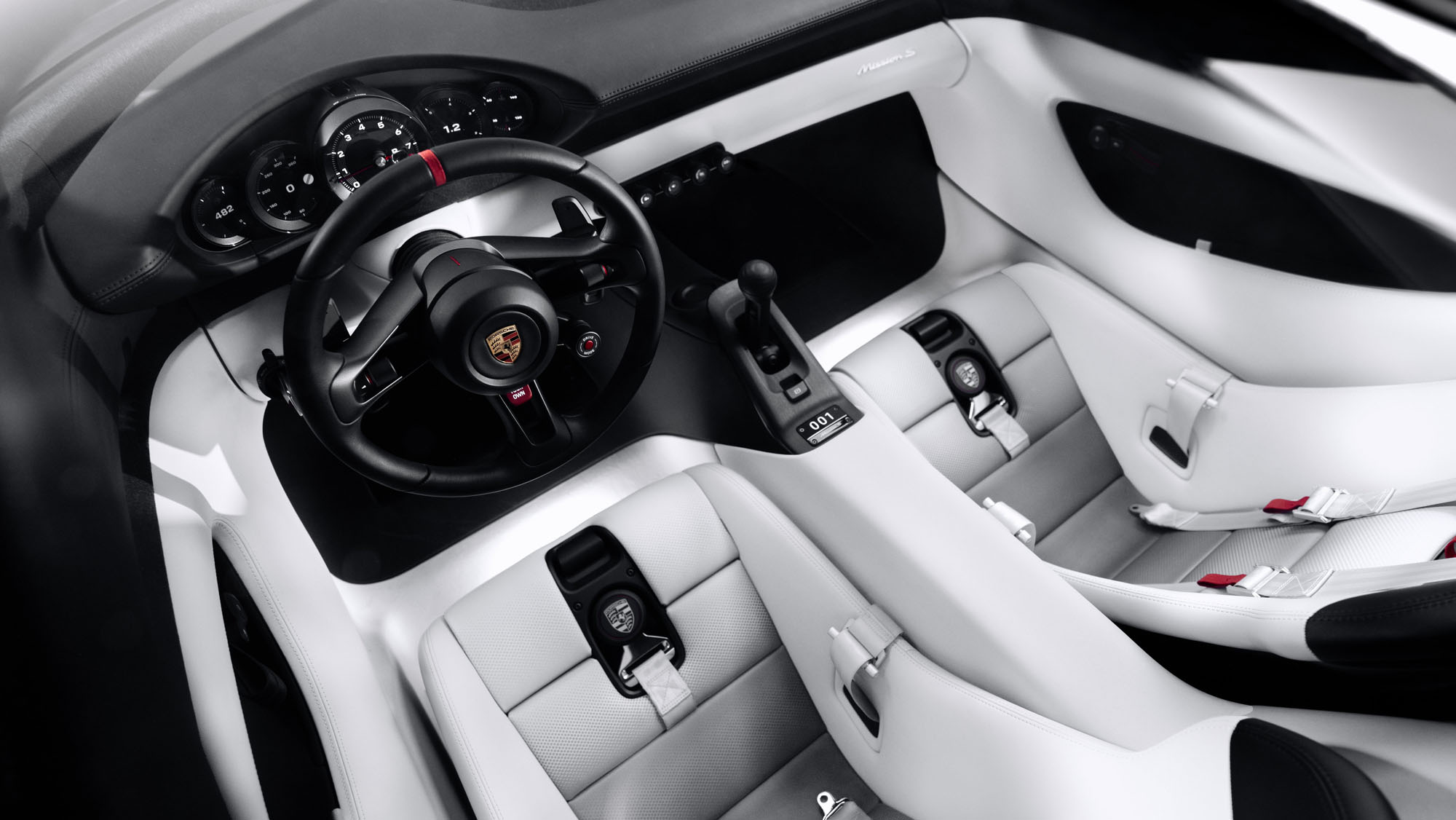
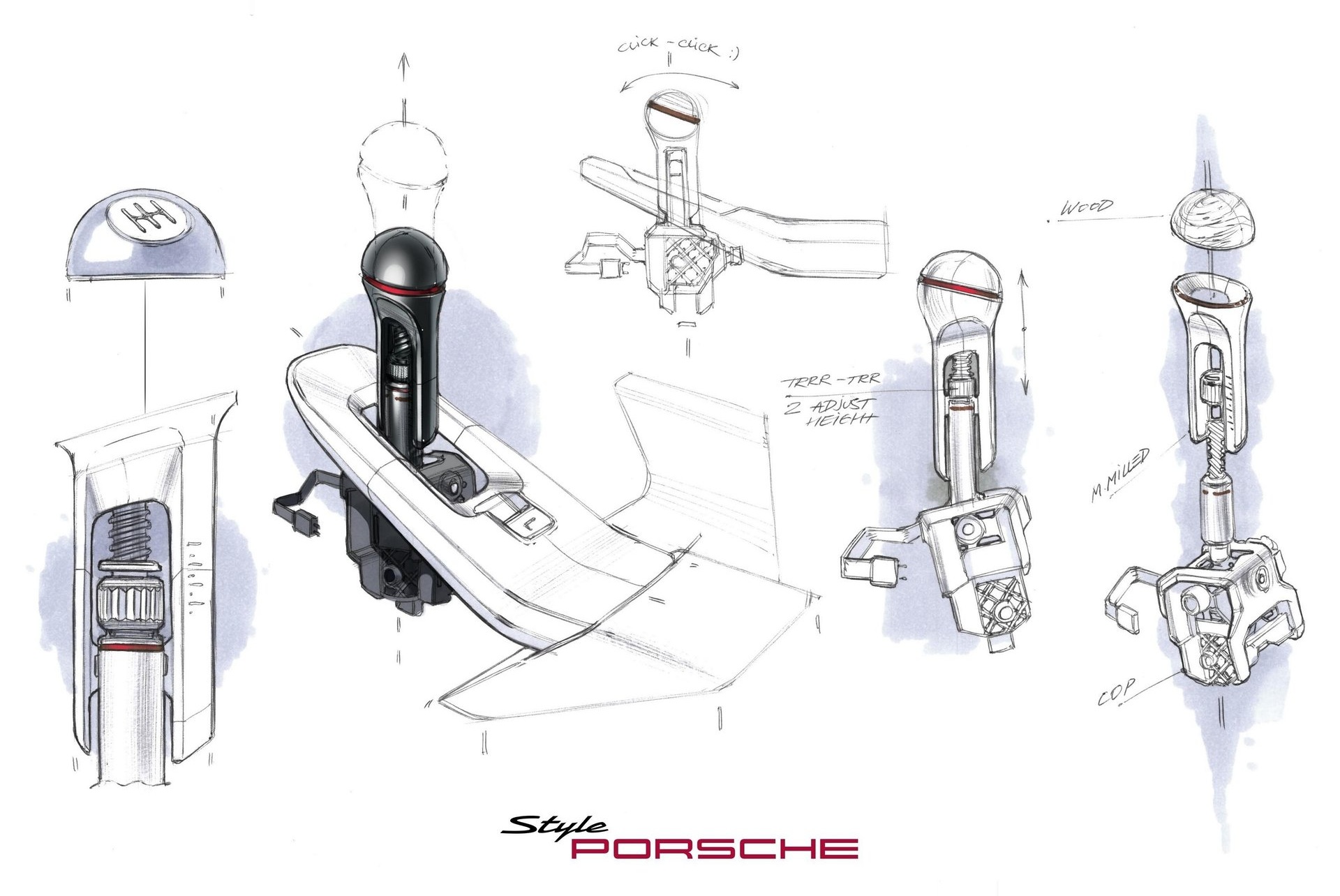
The cabin might be the boldest part of the whole car. There’s no fixed central touchscreen and no screen for the passenger either. Your phone clips onto a retractable MagSafe mount and handles navigation and media through the My Porsche app, which can even dress the instruments in classic Porsche gauge graphics. The rest is refreshingly old school, with physical switches and buttons, a low seating position, bucket seats with racing harnesses and a carbon-fiber shift lever, all inspired by the 550 Spyder and the 356. And yes, the key sits to the left of the steering wheel, where it belongs. Porsche sums up the goal as “simplicity, clarity and intuitive operation,” and after a decade of dashboards turning into iPads, that’s exactly what a lot of us have been asking for.
A Fan for Cooling, Not for Stunts
As it turns out, Porsche couldn’t have asked for a better foil. On the same day as the Queens reveal, Tesla rolled out its new Roadster at a SpaceX test site in Texas, where a driverless car clung to a ramp upside down with suction fans before cold-gas thrusters launched it into a midair flip. It made for an unforgettable video. It also made for a car whose “flying” version, by Tesla’s own admission, isn’t approved for public roads.
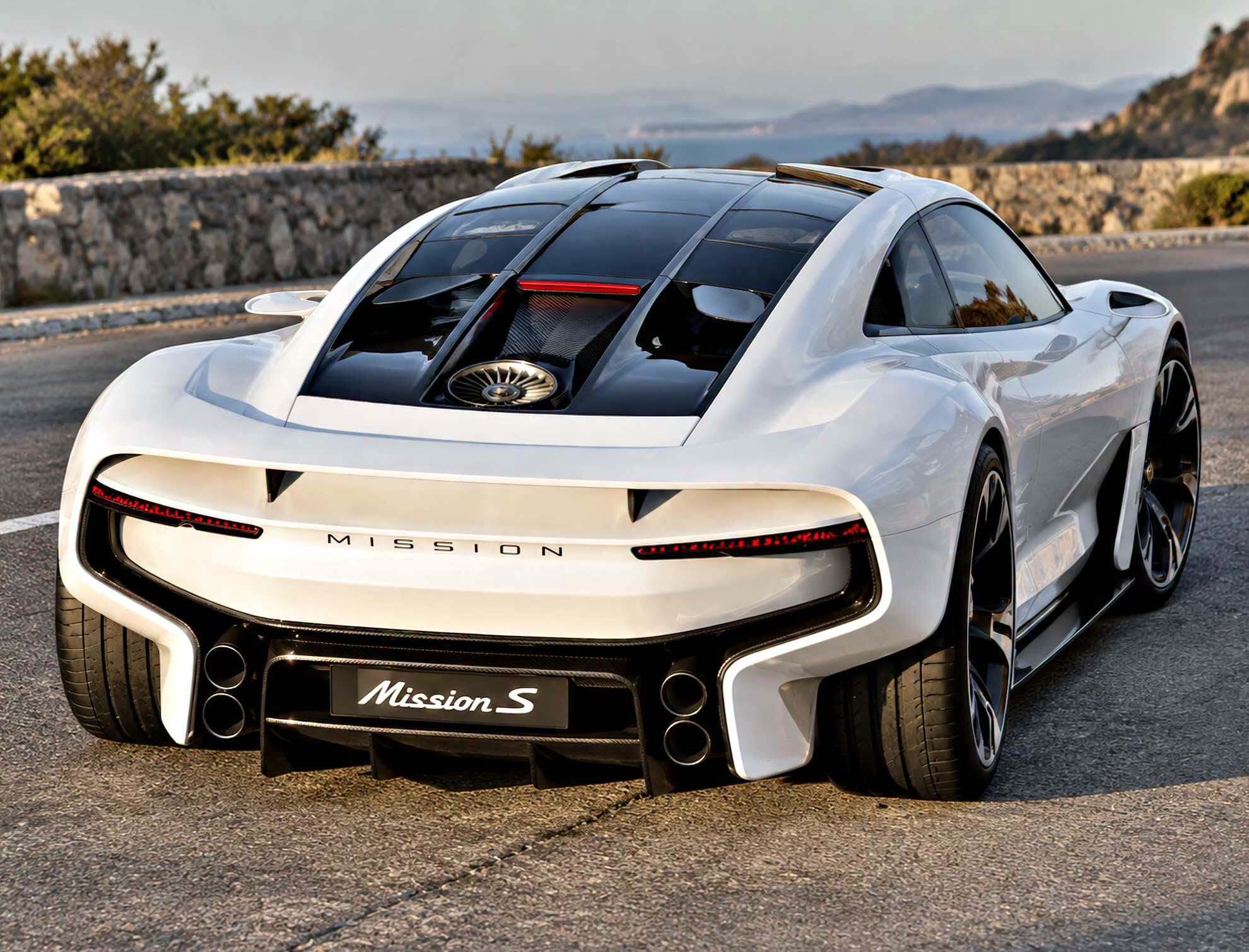
Funnily enough, the Mission S has a fan as well, an exposed unit up top that tips its hat to the 917. Porsche uses it to keep the car cool, which is about as unglamorous as a job gets, and that’s kind of the point. If you want the full Tesla versus Porsche breakdown, we went deep on it in our Sports Car Digest piece on the future of sports cars.
Three Pedals Were the First Clue
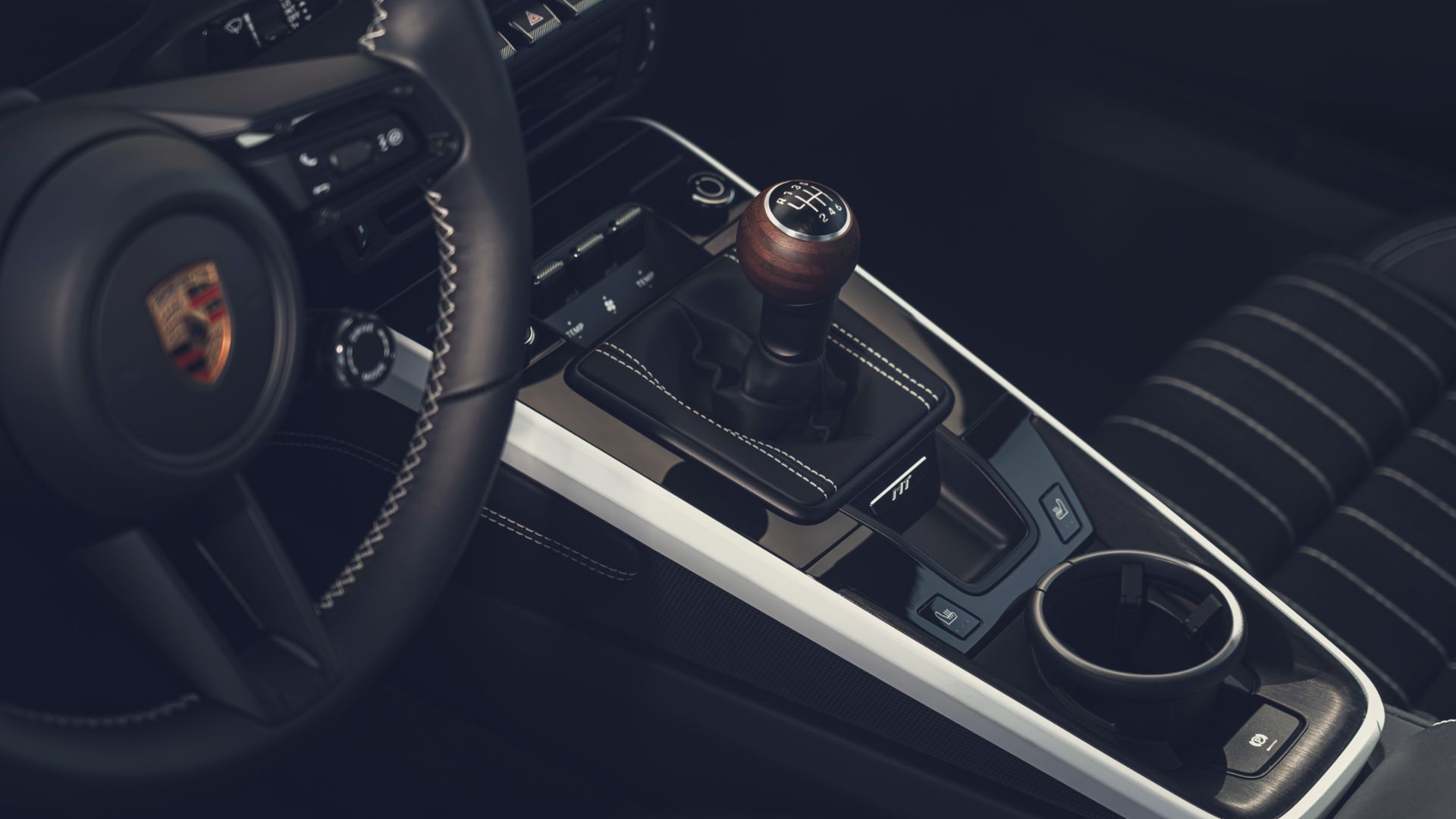
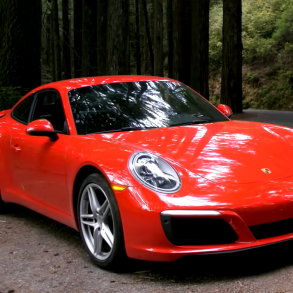
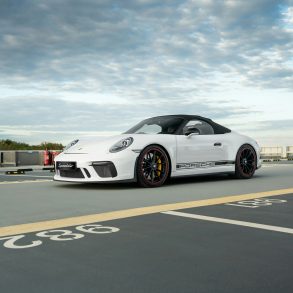
Anyone paying attention could have seen this coming. Back in August at Monterey Car Week, Porsche brought a six-speed manual back to the 911 Carrera S with the new MT Package for the 2027 model year. It’s rear-wheel drive, you can get it as a coupe or a Cabriolet, prices start at $167,100, and it’s sold only in North America. Porsche didn’t dress it up as anything other than a response to fans, saying it was “responding to overwhelming customer demand.” Porsche North America CEO Timo Resch put it better than any press release could: “Managing a clutch and shift lever isn’t for everyone, but for the drivers who want it there really is no substitute.”
Count them up and seven 911 variants now come with a manual in North America, from the Carrera T all the way to the GT3 with Touring Package. Ferrari and Lamborghini dropped the clutch pedal more than a decade ago, so in this corner of the market, that’s close to unheard of.
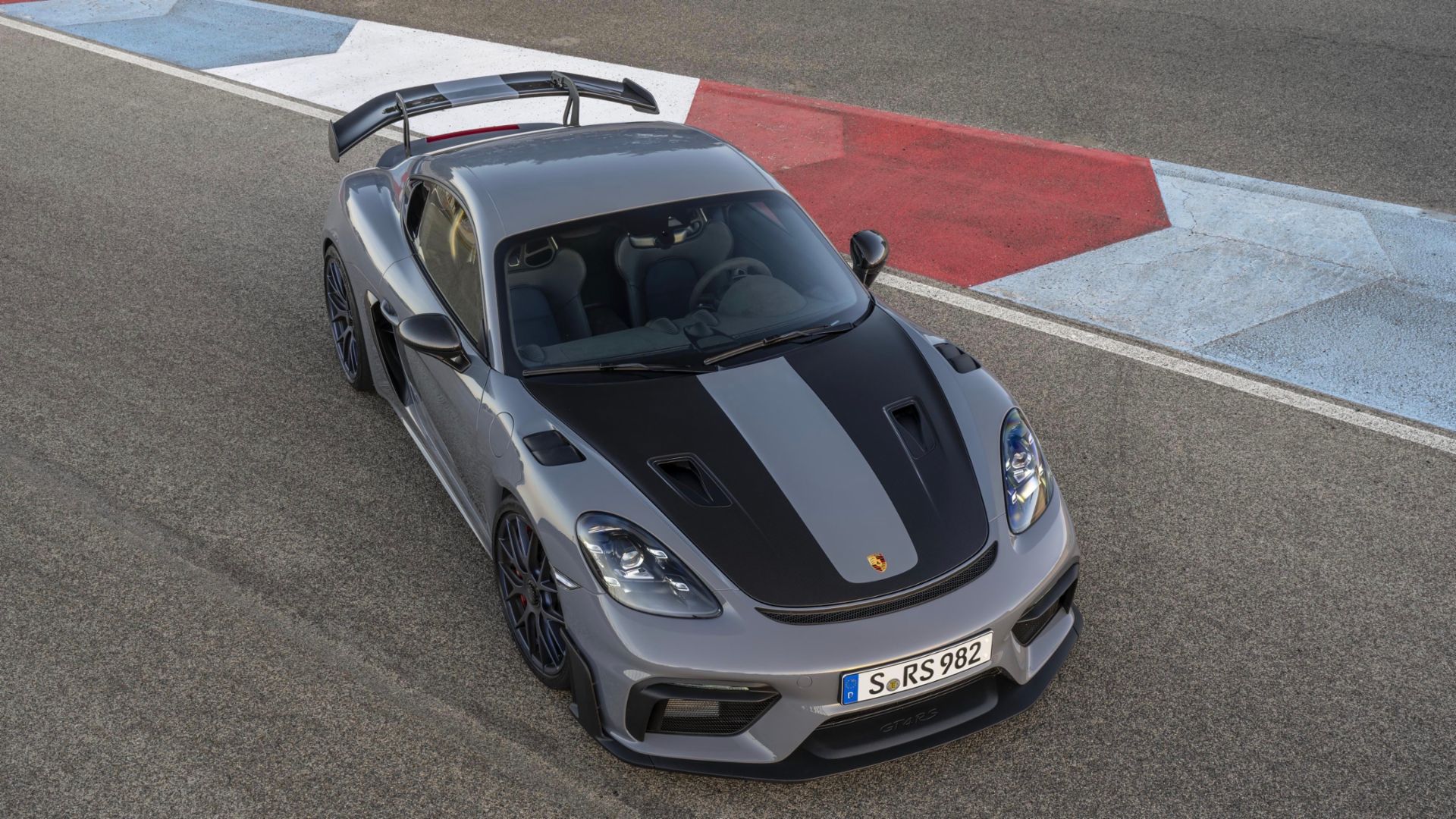
The manual Carrera S isn’t the only sign, either. In September 2025, Porsche confirmed that the hottest versions of the next 718, meaning the successors to the Cayman GT4, GT4 RS and Spyder RS, will keep combustion engines. A petrol Macan is on its way back. And now there’s the Mission S, sitting on a platform built for combustion and hybrids, with a cockpit that would make a 356 owner feel right at home. Any one of those decisions could be a coincidence. All of them together look a lot like a company that stopped asking where the industry is going and started asking what its customers want.
To be fair, backing away from EV-only plans is what almost every carmaker has been doing lately, so you could argue Porsche simply swapped one trend for another. But Porsche went further than that. Very few carmakers at this level are putting a stick shift back into one of their core sports cars or pulling the touchscreen out of a flagship. Those moves don’t follow the industry. If anything, they go against it.
Listening Is Only Half the Job
Of course, a concept is the easy part. Porsche hasn’t shared a single technical spec, a price or a production date for the Mission S, and it’s arriving at a rough time, with profits under serious pressure, China sales down 26% in 2025 and tariffs piling on. There’s also an irony here that’s hard to ignore. The same upmarket strategy that makes the car possible will price it out of reach for most of the enthusiasts it’s supposedly listening to.
Still, Porsche has a habit of keeping its concept-car promises. The 2015 Mission E turned into the Taycan in 2019 with surprisingly few changes, and Porsche already expects long waiting lists for the production Mission S. Listening was the right first step. Now Porsche has to go and build the thing.
Porsche Found Its Compass
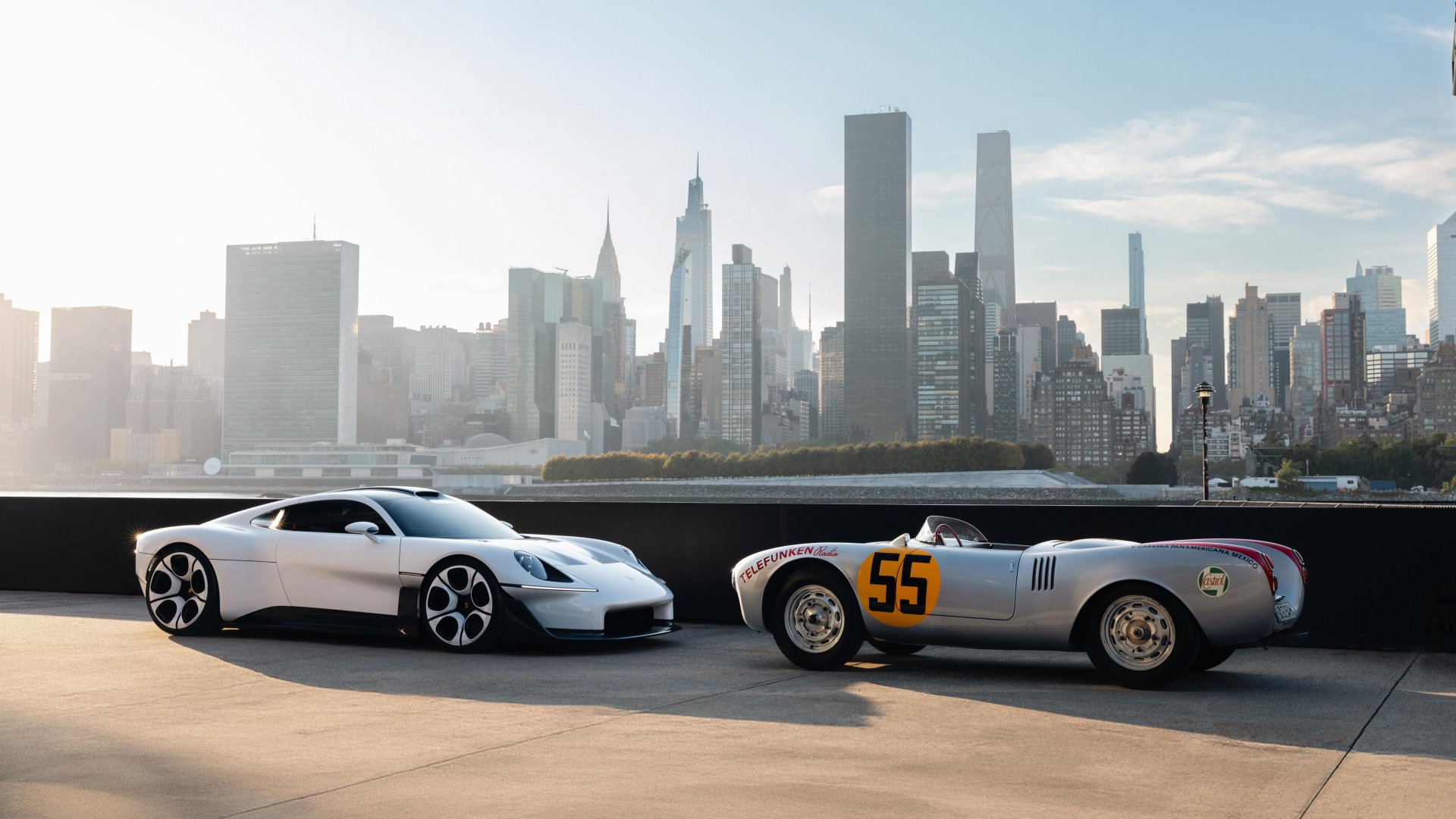
Ferry Porsche built his first car because nobody else was making the one he wanted. For a while, the company he founded seemed more interested in building the car analysts said the world would want, and the world didn’t play along. The Mission S feels like a return to the original idea: a compact, mid-engined car designed around the person behind the wheel and shaped by what that person actually asks for.
Porsche stopped chasing trends, and the Mission S is the result. If the production car stays anywhere near this close to the concept, it could end up being one of the smartest moves the company has made in years.