

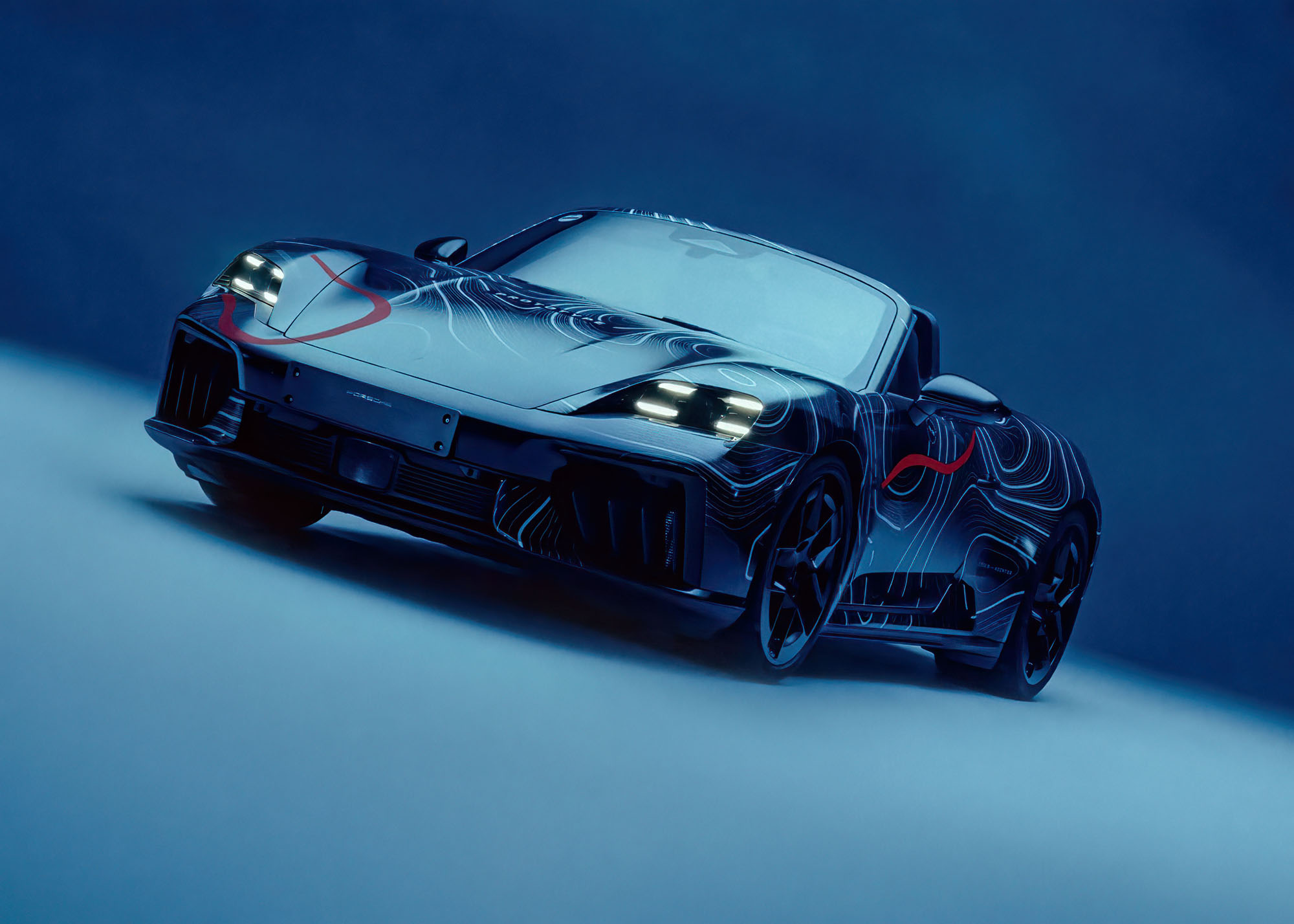
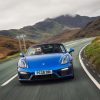
Porsche has entered the final development phase of its first all-electric 718 Boxster ahead of a world premiere in the first quarter of 2027. The company’s first fully electric two-door sports car will retain rear-wheel drive, feature a bespoke 800-volt architecture and become what Porsche describes as the most powerful 718 ever.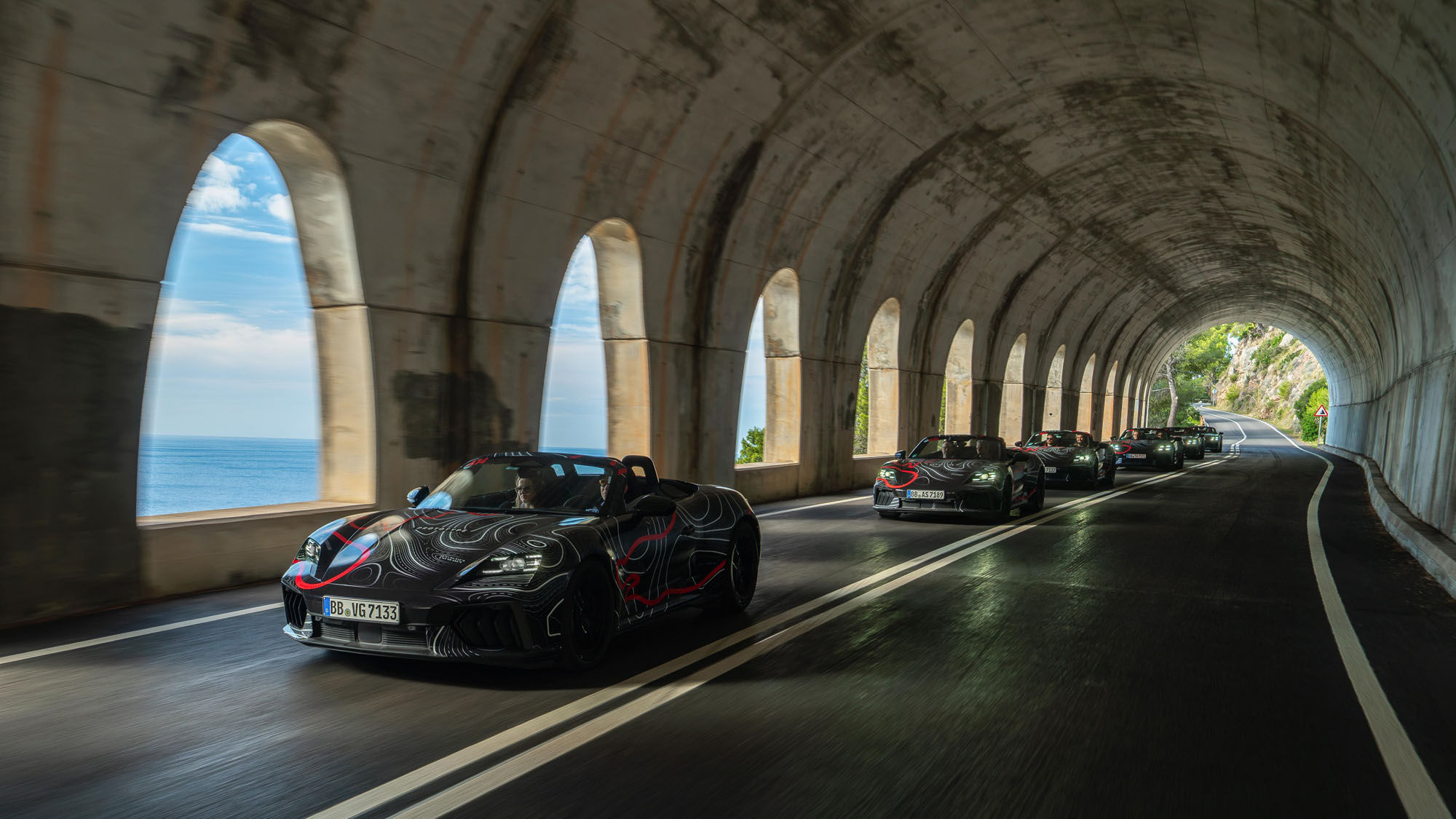
The range-topping model will accelerate from 0–100 km/h (62 mph) in less than three seconds and exceed 250 km/h (155 mph). Porsche has yet to disclose power output, battery capacity, driving range or pricing.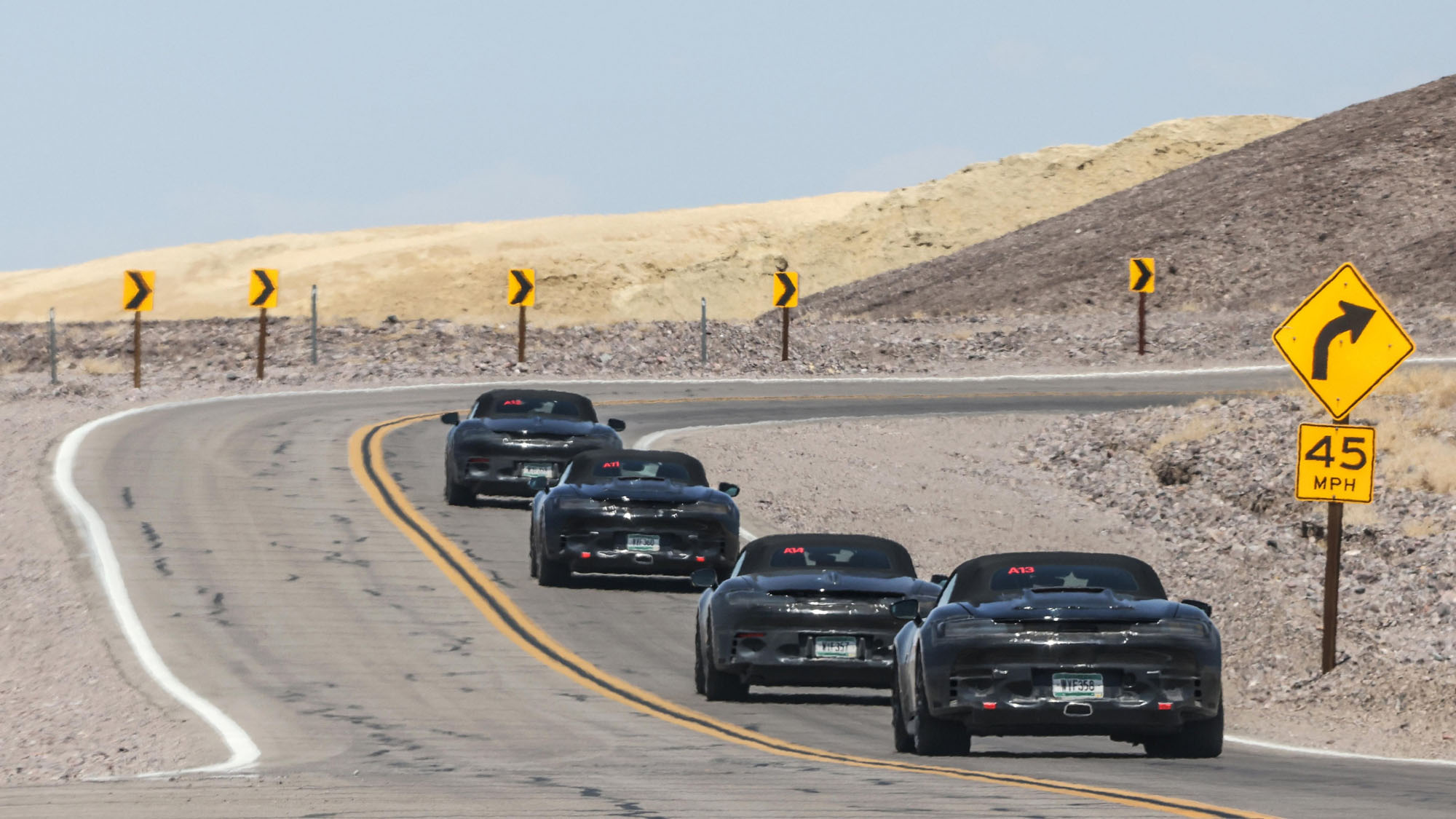
Porsche 718 Boxster E-Core Architecture
Rather than adopting the conventional underfloor battery configuration used by most electric vehicles, Porsche has positioned the battery directly behind the seats. The bespoke E-Core architecture preserves the low seating position and centralized mass of a traditional mid-engined sports car.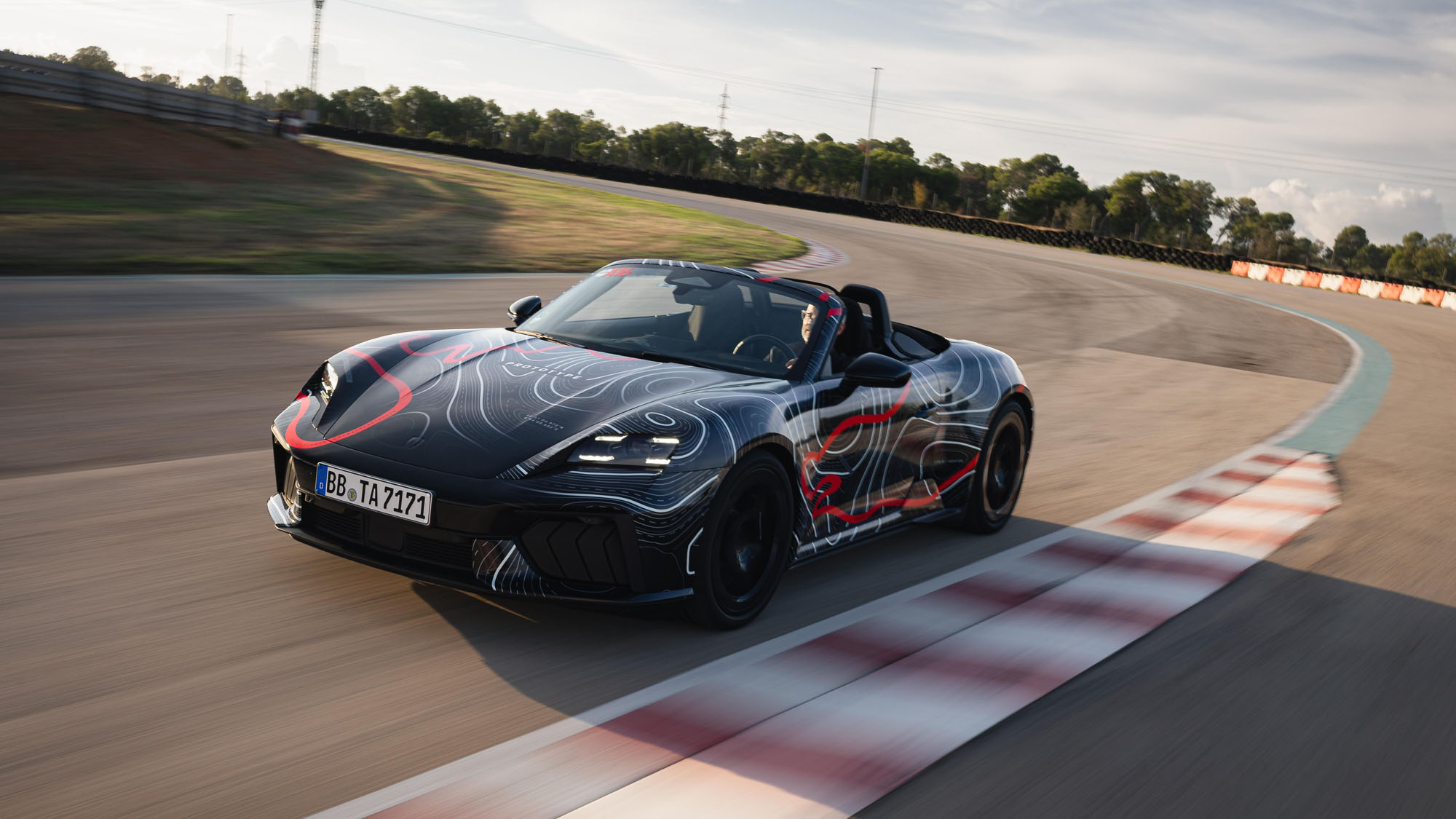
Weight distribution is split 40:60 between the front and rear axles, while Porsche claims overall weight comparable to current T-Hybrid-equipped 911 Cabriolet models. All electric 718 Boxster variants will be rear-wheel drive.
Porsche 911-Derived Chassis Technology
The electric Boxster incorporates several chassis technologies derived from the 911, including steering based on the Carrera GTS, braking and wheel-and-tire specifications, and the electronically controlled PTV+ limited-slip differential. Rear-axle steering will be available for the first time in a 718 Boxster.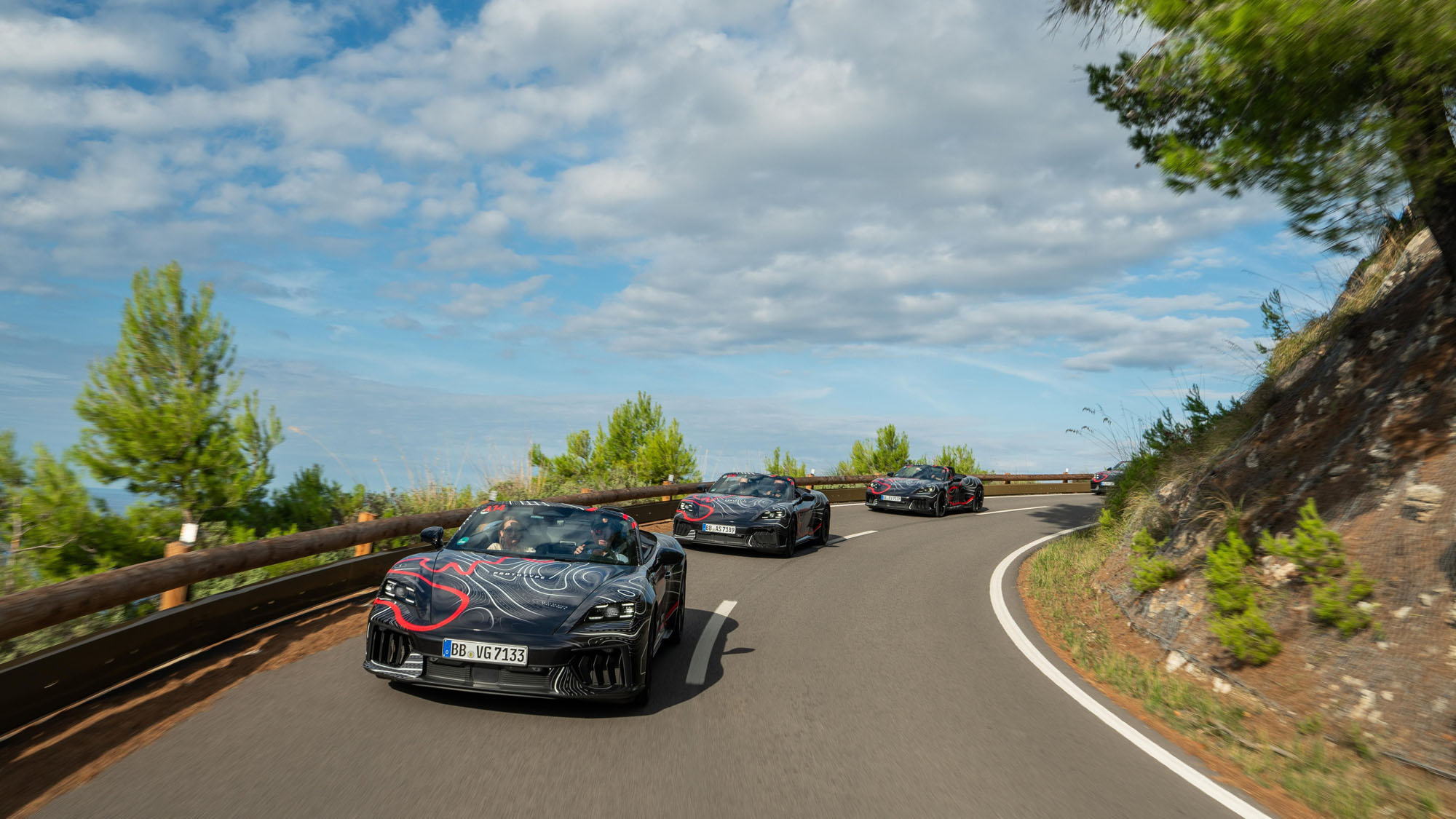
E-Shift Simulates Seven-Speed PDK
Standard across the range, Porsche’s E-Shift system simulates a seven-speed PDK transmission with automatic or paddle-operated virtual gear changes. Porsche says targeted torque increases during shifts ensure identical performance whether the system is activated or not.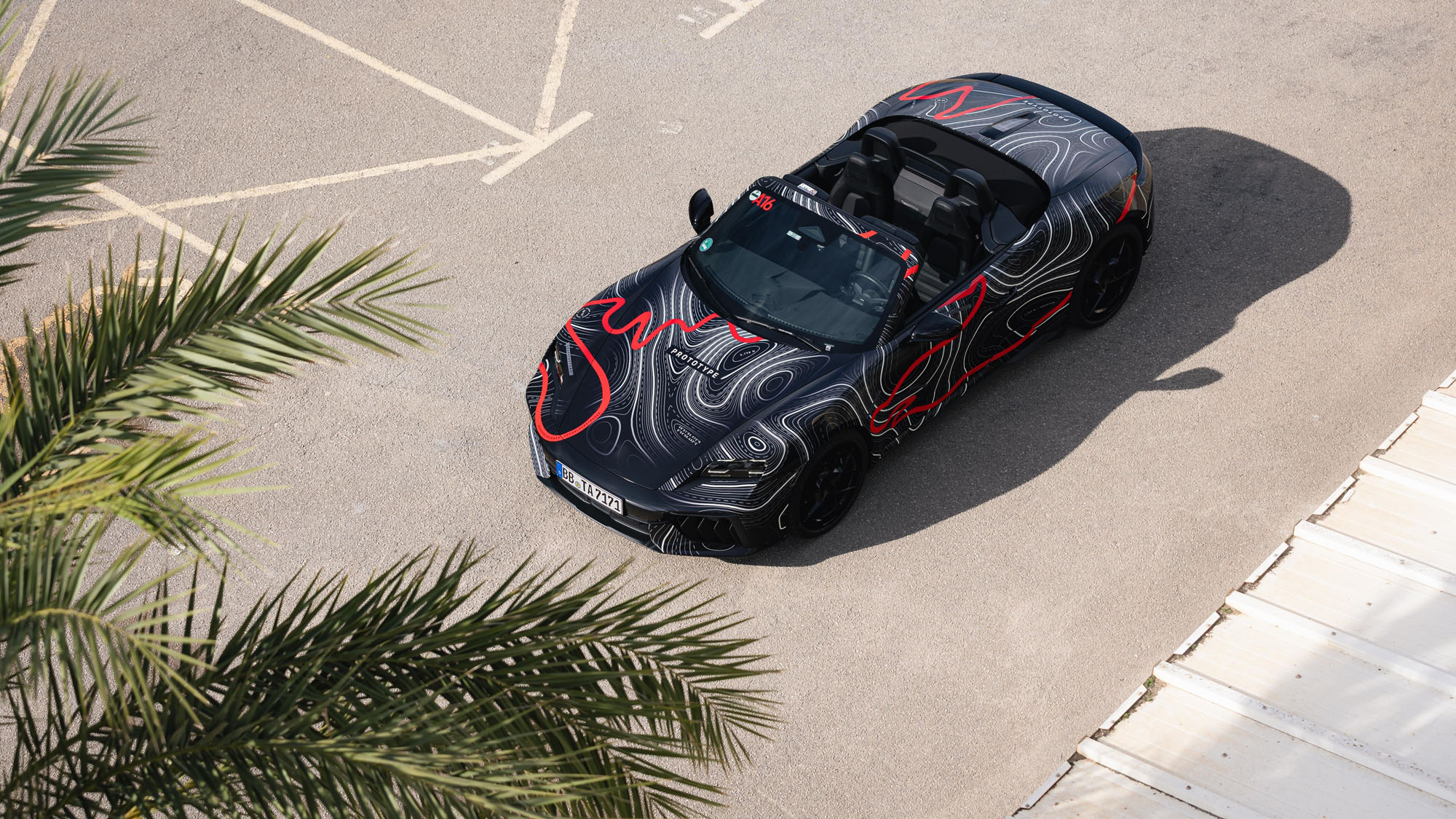
E-Shift also reproduces the six-cylinder boxer engine soundtrack of the 981-generation Boxster GTS. When deactivated, the steering-wheel paddles control three levels of regenerative braking.
Four Million Kilometers of Development Testing
Porsche’s prototype fleet has covered approximately four million kilometers (2.49 million miles) across more than 20 countries. Testing included temperatures ranging from -30°C in Sweden to 51°C in Death Valley, elevations between 86 meters below sea level and 2,750 meters above it, and five different charging standards.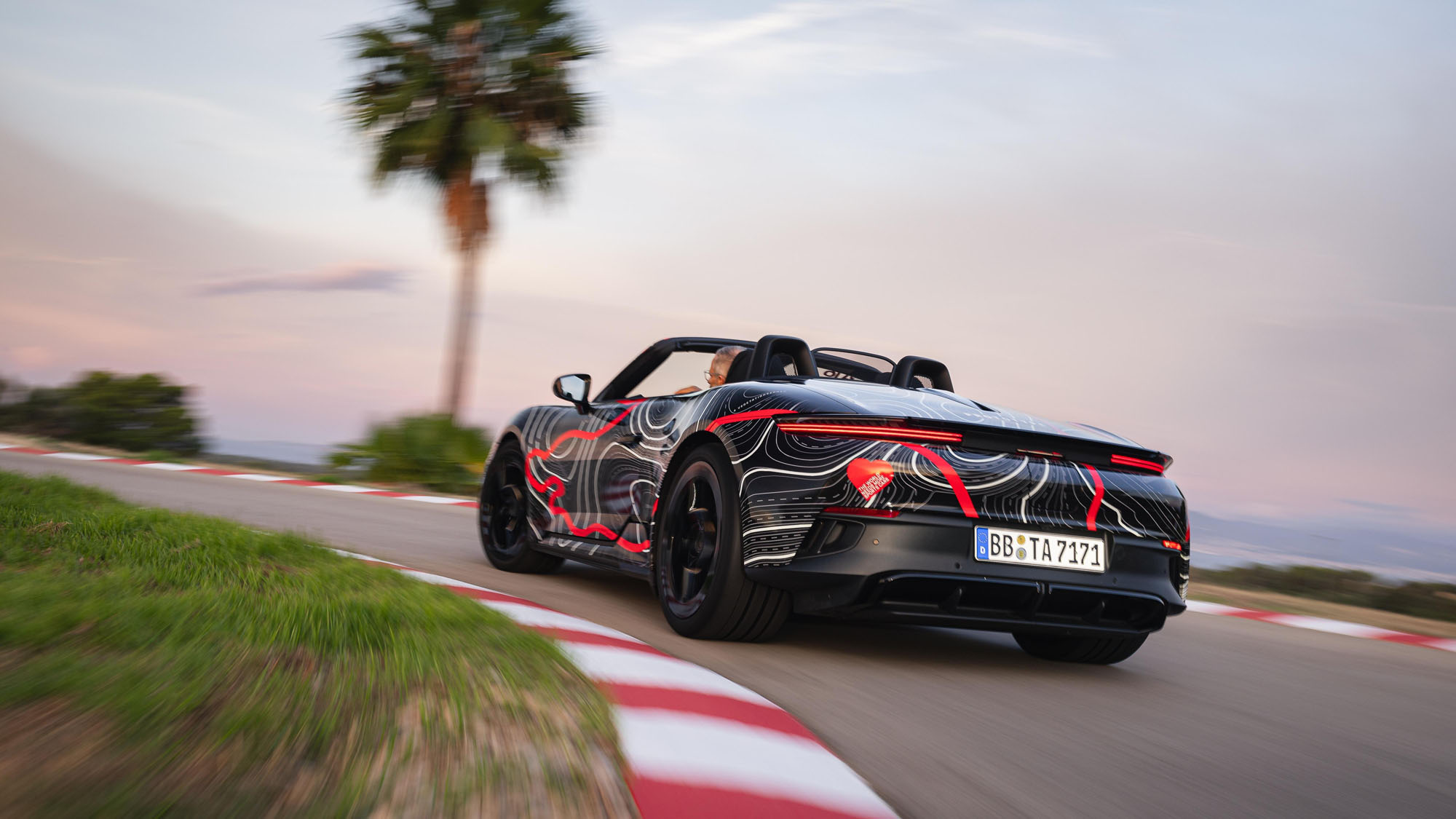
Urban testing in Las Vegas, Los Angeles and Shanghai focused on everyday usability and driver assistance systems. Production will take place at Porsche’s Stuttgart-Zuffenhausen factory, while a four-part development documentary begins November 24, 2026, on Porsche’s YouTube channel and Newsroom.
The Verdict
The electric 718 Boxster represents a fundamental change in Porsche’s entry-level sports car philosophy. Its bespoke battery placement, rear-biased weight distribution and 911-derived chassis suggest Porsche is prioritizing the defining dynamic characteristics of the mid-engined Boxster rather than simply adapting a conventional electric vehicle platform.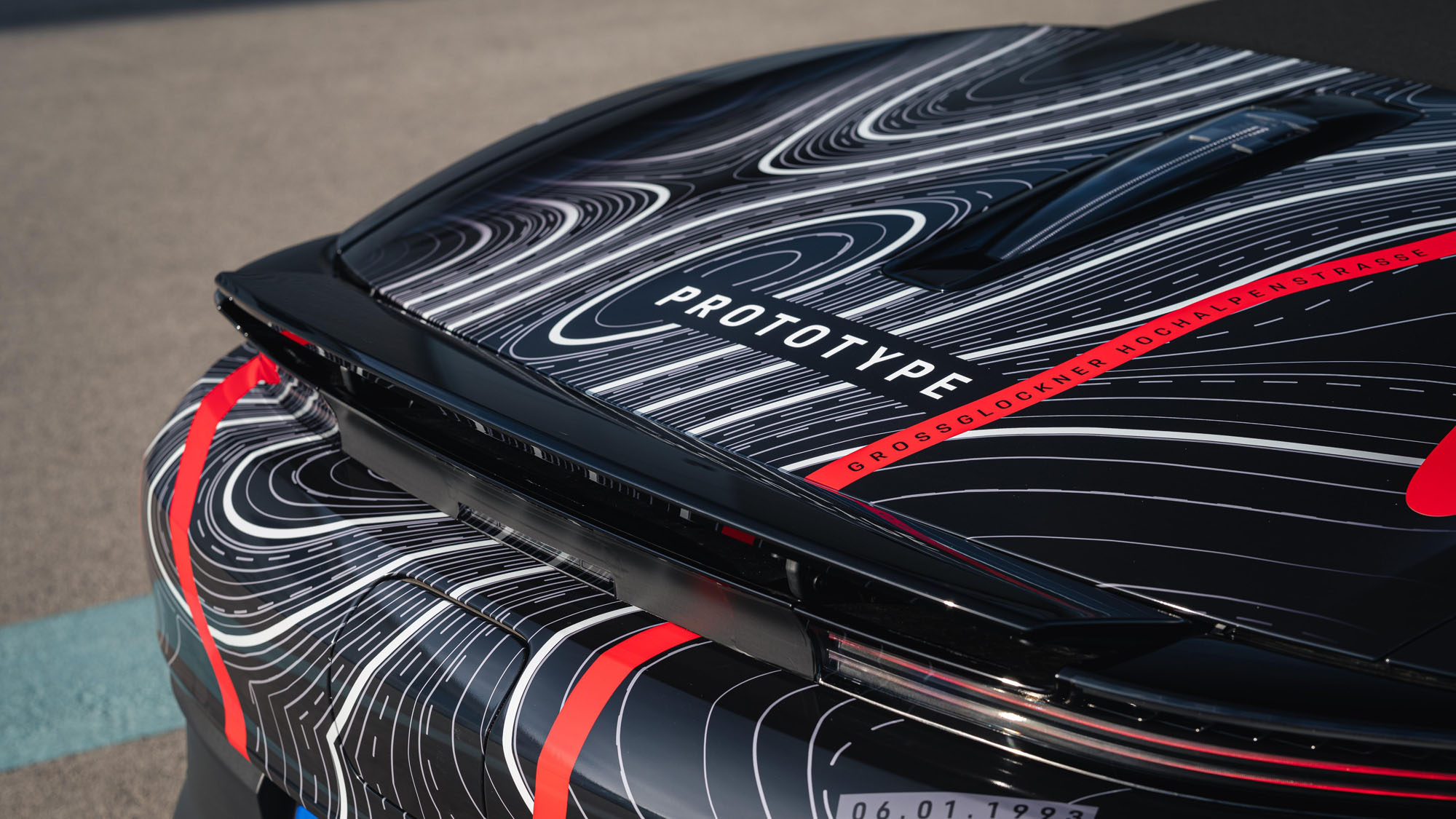

The challenge will be translating those engineering decisions into a driving experience that appeals to traditional Porsche sports car enthusiasts.
Above contents © 2026 Dr. Ing. h.c. F. Porsche AG reviewed and edited by Rex McAfee , @rexmcafee 🏁
Data
| Specification | Announced information |
| Manufacturer | Porsche AG |
| Model | All-electric 718 Boxster |
| World premiere | First quarter of 2027 |
| Battery architecture | 800-volt E-Core |
| Battery location | Directly behind the seats |
| Drivetrain | Rear-wheel drive |
| Weight distribution | 40% front / 60% rear |
| Vehicle weight | Comparable to T-Hybrid 911 Cabriolet models |
| 0–100 km/h | Under 3 seconds* |
| Top speed | Over 250 km/h (155 mph)* |
| Steering | 911 Carrera GTS-derived |
| Rear-axle steering | Available |
| Differential | Electronically controlled PTV+ |
| E-Shift | Standard across all variants |
| Virtual transmission | Seven-speed PDK |
| Regenerative braking | Three selectable levels |
| Development mileage | Approximately 4 million km |
| Testing locations | More than 20 countries |
| Testing temperatures | -30°C to 51°C |
| Charging standards tested | Five |
| Production location | Stuttgart-Zuffenhausen, Germany |