Reinventing Porsche: The 911 Turbo, the Transaxle Revolution, and an Uncertain Future
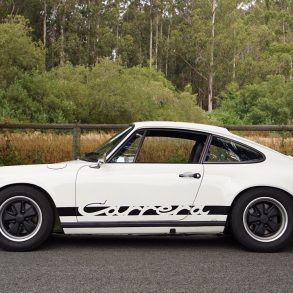
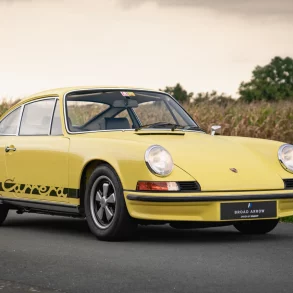
The Porsche 911 entered 1973 as a very different automobile from the one Ferdinand Alexander Porsche had helped shape a decade earlier. Its wheelbase had grown. Its engines had become larger and more powerful. Fuel injection had replaced carburetors on many models. The transmission, suspension, brakes, aerodynamics, and tires had all evolved considerably, and years of competition had transformed the 911 from a somewhat unconventional European sports car into one of the world’s most formidable racing platforms. The Carrera RS 2.7 represented the culmination of everything Porsche had learned during that first decade. It was lighter, faster, more aerodynamic, and more purposeful than any production 911 before it. More importantly, it showed that the car’s basic architecture still had considerable development potential.
The Carrera RS 2.7 stands as the clearest expression of how far the original Porsche 911 had come in just ten years. By 1973, the 911 was no longer simply an intriguing rear-engined sports car; it had matured into a lighter, sharper, more powerful, and more aerodynamic machine that distilled everything Porsche had learned through competition and continuous development. The RS 2.7 was the culmination of that first chapter, proving that the basic 911 formula still had enormous room to grow. At the same time, it arrived just as the broader automotive world was beginning to change, making it both a high point of the early 911 story and a threshold to a very different era.
But the automobile industry was changing around it.
No Subscription? You’re missing out
Get immediate ad-free access to all our premium content.