What to Look for When Buying a Used Porsche Boxster

Credit: Cars & Bids

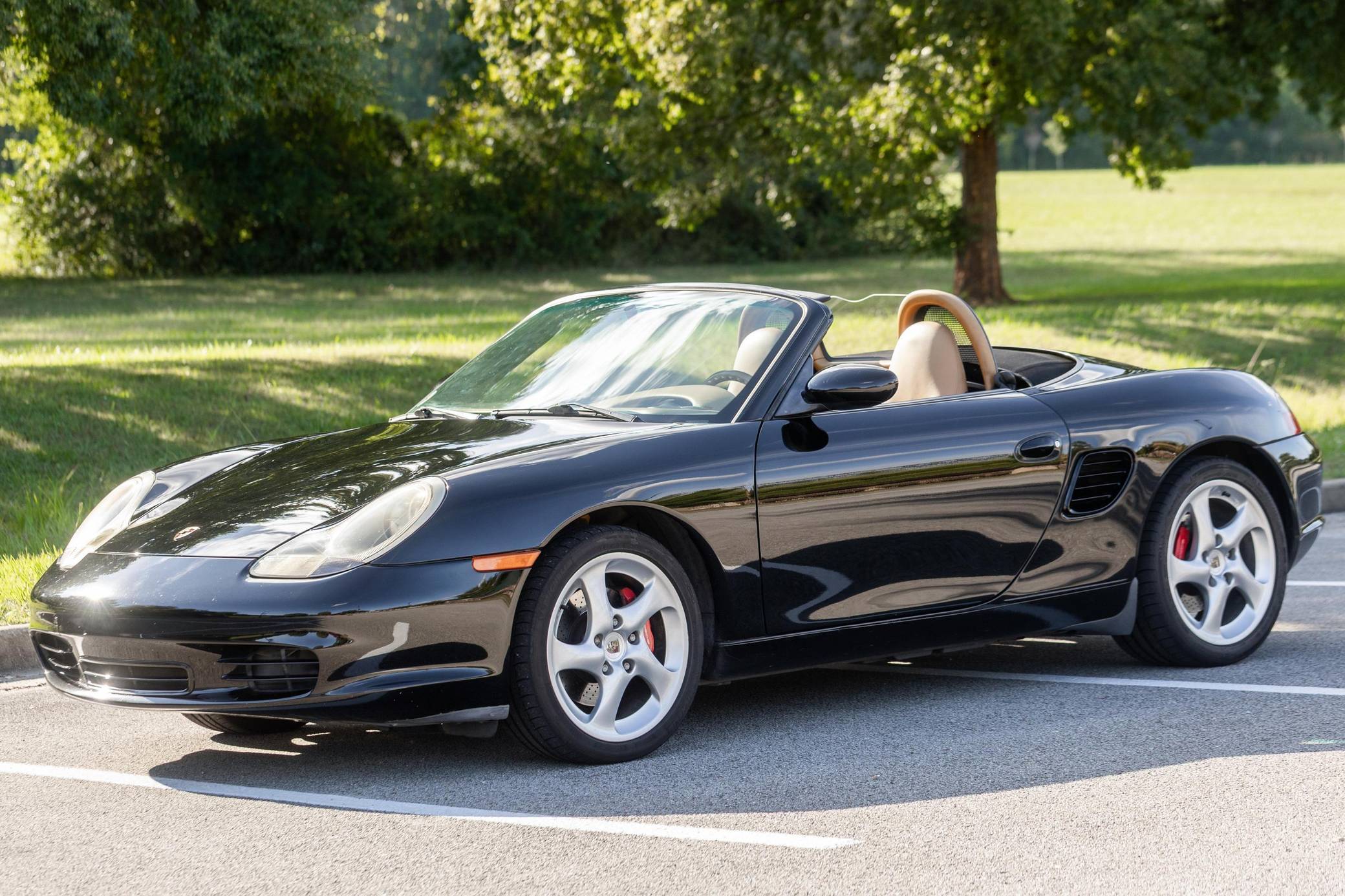
If you are in the market for a used Porsche that balances good value for money and that is modern, affordable and fun enough, the Boxster is hard to beat. In fact, a used Porsche Boxster might be the best value in the brand’s entire back catalog. 

Some early Boxsters trade for less than a newer Camry, and even the newer generations undercut a comparable 911 by a wide margin. Part of this gap exists because of old reputational baggage and also because the market still treats the mid-engine roadster as the junior Porsche which plays in favor of folks looking to buy one used.

However, neither of those reasons holds up once you drive a Boxster. This car feels like a “true Porsche” but without a steep price tag. However, what does hold up is the need to buy carefully, because a cheap Boxster with a hidden problem stops being cheap very quickly. Here’s what you need to know before you start shopping.

The Car That Kept Porsche Alive

Credit: Porsche

People forget how bad things got for Porsche in the early 1990s. Sales had collapsed, the lineup was ancient and the company was reportedly losing money on nearly every car it built. Then came the Boxster concept at the 1993 Detroit Auto Show, and the reaction was strong enough that Porsche greenlit it almost on the spot. The production 986 landed for 1997 as the first truly new Porsche in almost two decades.

The business case behind it was ruthless. The 986 shared its front end, headlights, doors and a good chunk of its interior with the upcoming 996-generation 911, which slashed costs on both cars. Purists hated the parts sharing at the time (the “hairdresser’s Porsche” jokes wrote themselves) but the car sold in numbers Porsche desperately needed. 

Interestingly, the mid-engine layout gave it a balance the 911 of that era couldn’t really match. The snobbery has mostly died off since. These days the Boxster gets talked about as one of the purest driver’s cars Porsche makes, and rightly so.

Four Generations at a Glance

Credit: Porsche

The original 986 ran from 1997 to 2004. It started with a 2.5-liter flat six making 201 hp, later grew to a 2.7, and in 2000 gained the 3.2-liter S that finally gave the chassis the power it deserved. The 987 took over from 2005 to 2012 with sharper looks, a far nicer cabin and more power across the board. The really important change came mid-cycle in 2009, when Porsche switched to direct-injected engines and quietly solved the biggest weakness of the earlier cars. More on that in a minute.

Then there’s the 981, sold from 2013 to 2016, with a longer wheelbase, electric steering and an interior that finally matched the price tag. A lot of enthusiasts will tell you this is the sweet spot, and they have a point. The current 718 (982) arrived in 2017 and swapped the base flat six for turbo fours, a 2.0 with 300 hp and a 2.5 in the S with 350 hp. Strong numbers, divisive soundtrack. Which is exactly why Porsche brought the naturally aspirated 4.0-liter six back for the GTS 4.0 and Spyder.

Common Problems by Generation

Credit: Bo Milbourn

Each Boxster generation has its known weak points, and whether you end up with a great buy or a money pit usually comes down to whether previous owners dealt with them. The upside of buying a car this popular is that it has been picked apart online for over 25 years. No matter what goes wrong with a Boxster, someone has already documented it, diagnosed it and figured out the fix.

So before you look at any specific car, run the VIN through the NHTSA recall database and make sure every campaign was completed. Then go lose an evening on Rennlist. The Boxster and Cayman sections there have generation-specific buying threads that go deeper than any single article ever could, this one included.

986 and 987.1 (1997 to 2008)

Credit: Cars & Bids

The elephant in the room is the intermediate shaft bearing, or IMS bearing, on the M96 and M97 engines. When it fails, it usually takes the whole engine with it, and the repair bill is not pretty. Now, actual failure rates were never as apocalyptic as the internet would have you believe, and the 2006 to 2008 cars got a stronger bearing that fails far less often, but the risk is real. 

Credit: Cars & Bids

On pre-2006 cars, look for paperwork showing an IMS retrofit, or price the job into your offer. While you’re under there, check for rear main seal leaks (a common oil seep from the same engine family, usually minor) and give the plastic coolant tank on 986s a good look, since they get brittle with age and crack. Some 987 S cars with the 3.4 also suffer bore scoring, which announces itself as a ticking noise on cold starts and rising oil consumption.

987.2 through 718 (2009 to present)

Credit: Cars & Bids

The direct-injection engines that arrived in 2009 have no IMS bearing at all, which is exactly why 987.2 cars command a premium over earlier 987s. From here on the Boxster’s mechanical record is genuinely strong. On 981 and 718 cars, your main job is inspecting the front radiators and AC condensers. They sit low in the nose, collect leaves and road grime, and rot from the inside out if nobody ever cleans them. 

Credit: Cars & Bids

Grab a flashlight, look through the front intakes, done. Beyond that, verify PDK fluid services on cars that have it, listen for clunks from worn drop links, and run the top through a full open and close cycle. Early 718 four-cylinders have had scattered reports of small issues here and there, but nothing systemic has ever emerged.

What to Check Before You Buy

Credit: RPM Technik

Whatever generation you land on, get a pre-purchase inspection at a proper Porsche shop. This is not optional. Budget somewhere between $200 and $400, and if a seller pushes back on it, walk. A good PPI includes pulling the over-rev report from the ECU, which logs how many times the engine has been spun past redline and in which ranges. It’s the closest thing you’ll find to a lie detector for “never tracked, always garaged” claims.

Service records matter more than mileage, full stop. A 90,000-mile car with a fat folder of receipts beats a 40,000-mile car with nothing every single time. You want proof of regular oil changes, brake fluid flushes and, on older cars, the IMS and clutch work mentioned above.

Credit: Elite Porsche

And then there’s water. Convertibles live harder lives than coupes, and the Boxster’s roof drains are a classic trouble spot. They clog with leaves, water backs up, and instead of draining under the car it finds its way into the cabin. On early cars it can soak the immobilizer unit under the driver’s seat and leave you with a Porsche that simply won’t start. 

Pull the carpets up and check for damp, musty smells, corrosion on the seat rails. If you find any sign of moisture, get the electrical system professionally assessed before money changes hands, because Boxster repair costs after water intrusion escalate fast once modules and wiring get involved. Five minutes with the carpets up can save you thousands. Check the top itself as well. ears, a cloudy or delaminating rear window on early cars, smooth operation. Tops are consumables and a replacement runs well over $1,000 installed.

Which One Should You Get?

Credit: Motor Authority

Under $20,000, a well-documented 986 or 987.1 with the IMS sorted is a huge amount of sports car for the money. Buy on condition and history, never on price alone. Between $25,000 and $40,000, the 987.2 is the value pick, classic hydraulic steering feel with none of the IMS anxiety. Above that, the 981 is arguably the best all-around Boxster ever made, and clean ones are already starting to hold their value.

The 718 makes sense if you want the newest car and can live with the four-cylinder soundtrack, or if you can stretch to a GTS 4.0, which is a future classic hiding in plain sight. Either way, the formula never changes. Find the best-kept example you can afford, verify everything, get the PPI. Do that and a used Boxster is one of the most rewarding ways into Porsche ownership there is.