
The Air-Cooled Era: The Soul of the Machine & Our Picks For the Greatest Air-Cooled 911s Of All Time !!!
The air-cooled era represents the definitive "analog" chapter of the 911 story, defined by a mechanical purity that modern cars simply cannot replicate. For 35 years, Porsche relied on a distinctive cooling system where massive fans and intricate metal fins dissipated heat directly from the engine block and oil. This lack of a water jacket meant that the "Luftgekühlt" engines produced a raw, metallic symphony—a mix of mechanical clatter and high-pitched intake howl—that became the brand’s acoustic signature. Driving an air-cooled 911 is an exercise in sensory immersion; without modern electronic aids, the driver is in a direct dialogue with a chassis that is famously "alive" and reactive to every throttle input.
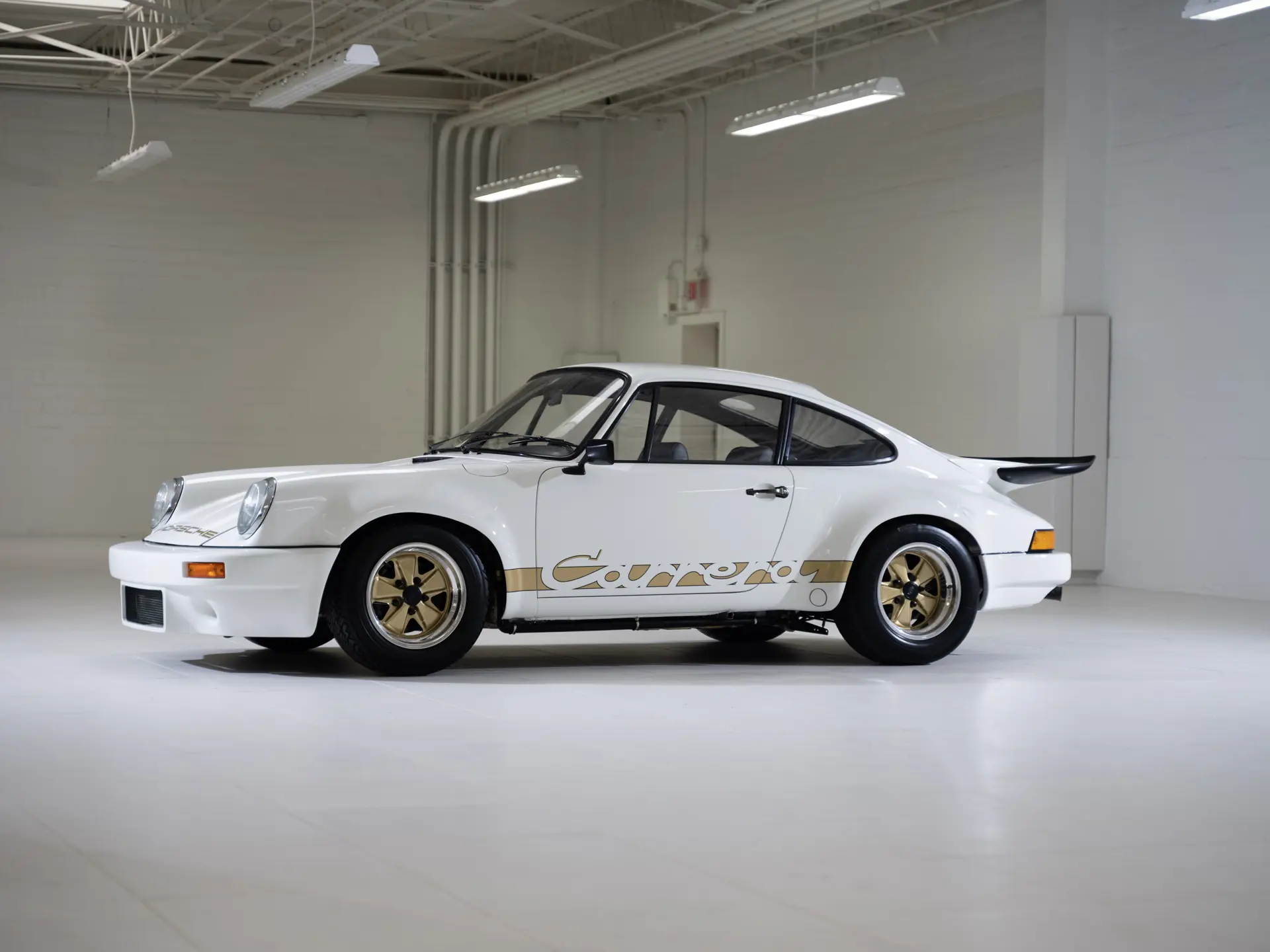
This period saw the 911 evolve from a delicate 2.0-liter sports car into the wide-bodied, twin-turbocharged 993-generation monster of the late 1990s. It was an era of constant, obsessive refinement rather than radical change. Significant milestones like the 1973 Carrera RS 2.7 established the "homologation special" blueprint, while the original 930 Turbo introduced the world to the intoxicating (and often terrifying) rush of boost. Collectors today view these cars as the "White Whales" of the automotive world because they represent the final time a driver was the most important component in the car's performance equation.
Want to see us make tougher choices? Here are our picks for the best Porsche 911s ever.
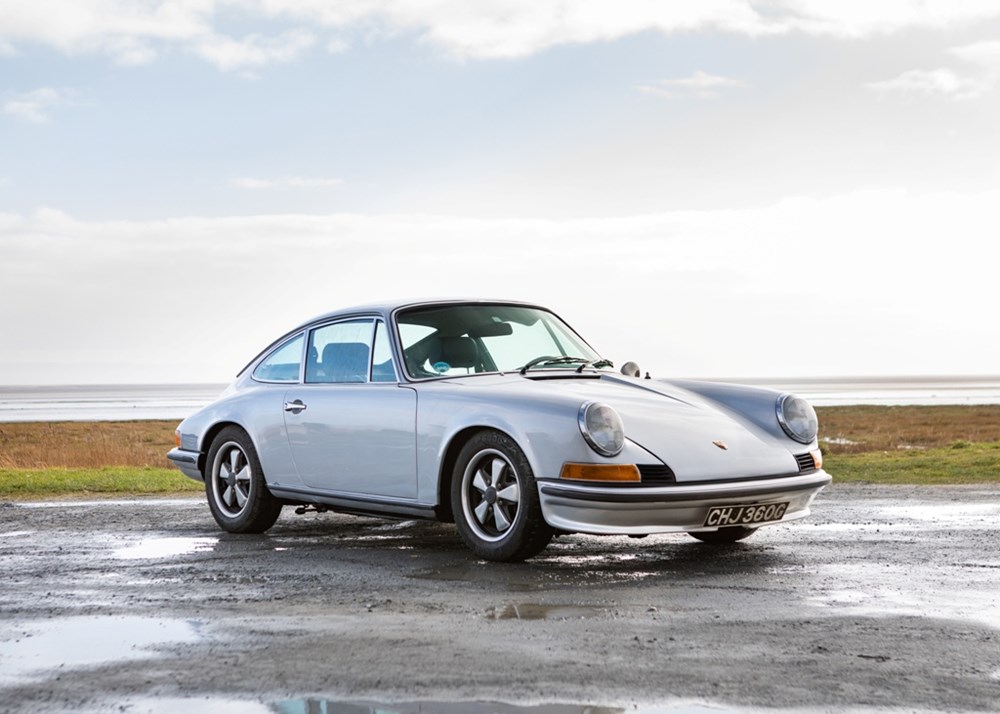
Porsche 911 S Coupe (1967-1969)
The first 911 to fully define Porsche’s performance blueprint - lightweight construction, a high-revving engine, and razor-sharp handling in a pure, unfiltered package. With its motorsport-bred upgrades and perfectly balanced simplicity, it set the template for every great 911 that followed.
Why It's On The List
We considered adding the Targa from 1967, but ultimately we felt the 911 S was a more important model. The 911 S was introduced to increase the performance potential of the very successful 911. It had a more powerful engine along with a number of chassis enhancements that made it very desirable. Becoming the flagship of the fleet, the $6990, 180-hp, 6-cylinder 911S was loaded with performance and luxury features.
Distinctive 5-leaf wheels from Fuchs that were made from forged magnesium-alloy, a leather-covered steering wheel rim, extra instrumentation, an auxiliary gasoline heater, fog lights, pile carpets, and waffled padding on the dash (all pretty luxurious back in 1967 folks).
The tradition of race-inspired 911s really started here. A 2.0-liter flat-six producing 180-hp with a 7,200 rpm redline in 1967 was pretty special. This was clearly a more powerful and sportier car and much better than other cars of the same era.
Details
Year: 1967 - 1969
Generation: F-Series
Units built: 1,823
Engine: Flat-6
Power: 160 bhp
0 – 60 mph: 6.5s
Top Speed: 140mph
Known For
First “S” model: Introduced forged Fuchs wheels, uprated brakes, stiffer suspension, and a higher-output engine—establishing the “S” as Porsche’s performance benchmark.
Peak early-911 purity: Lightweight, narrow-body design with minimal driver aids, delivering unmatched steering feel and mechanical connection that enthusiasts still chase today.
Learn More
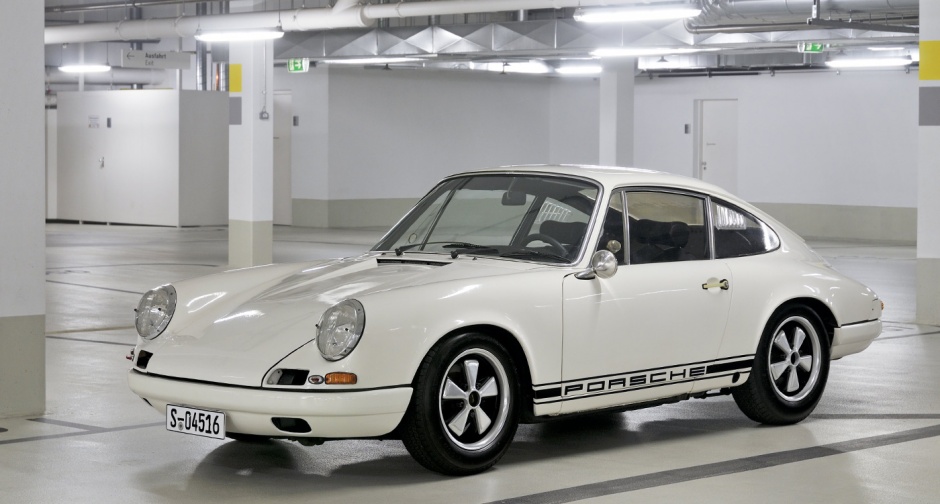
Porsche 911 R (1967-1968)
It stripped the platform to its purest, most motorsport-focused form—extreme lightweight construction paired with a high-revving race-bred engine. Built to prove how far the early 911 chassis could be pushed, it became the philosophical blueprint for every hardcore GT and RS Porsche that followed.
Why It's On The List
In 1967, you could walk into a Porsche dealer and buy a 911 S which was essentially the pumped up 911. No so the 911 R. To take the newly released 911 to its limit, Porsche developed a small series of racing versions that focused primarily on weight reduction. These racers were the first among a series of 911s that would dominate GT racing for over 40 years. Only 23 were built.
Four prototypes initially surfaced from Porsche’s experimental department in Spring of 1967. Every possible component was replaced by a lightweight counterpart. With the standard interior deleted, lightweight windows, fiberglass doors, hood, engine cover and bumpers, the 911R was only 1786 lbs (810 kg), some 500 lbs (230 kg) less than the standard 911! Wow.
Included was the Type 901/22 engine from the Carrera 906 with a standard alloy crankcase. Most cars used Weber 46 IDA3C carburetors, while some featured the mechanical Bosch fuel injection system. Optionally the four-cam Type 901/21 engine which produced 230 bhp (171 Kw) was available. With this engine, the 911 R accelerated from zero to 100 km/h in 5.9 seconds and could cover a distance of one kilometre from a standstill in just 24.2 seconds – one second faster than a Porsche 904 Carrera GTS and a full 5 seconds faster than an Alfa Romeo GTA.
Outwardly, the 911 was distinguished by flared wheel arches, smaller bumpers and distinctive circular rear lights. In detail, the extent of the 911R program becomes apparent with details such as a bank of louvers in the rear quarter windows, plastic door hinges and wider Fuchs alloy wheels.
While initially conceived to race in the sports car class, the R never met homologation requirements and was forced to race with the potent prototype classes. With an estimated sales price of 45,000 DM, a 911 R was nearly twice as expensive as a regular 911 S and did not sell enough units (500 were needed for homologation). The 911 R would have contributed much more to the 911’s legacy had Porsche filled its 500 car requirement for homologation.
Details
Year: 1967-1968
Generation: F-Series
Units built: 23 (19 plus 4 test cars)
Engine: Flat-6
Power: 230 bhp
0 – 60 mph: 5.9s
Top Speed: 152mph
Known For
Extreme lightweight engineering: Magnesium body panels, fiberglass components, and a pared-back interior resulted in a curb weight under 1,850 lbs—astonishing even by modern standards.
Racing-first DNA: Powered by a high-strung flat-six derived from Porsche’s competition engines, the 911 R was conceived as a homologation and endurance weapon, not a road car—cementing its mythic status.
Learn More
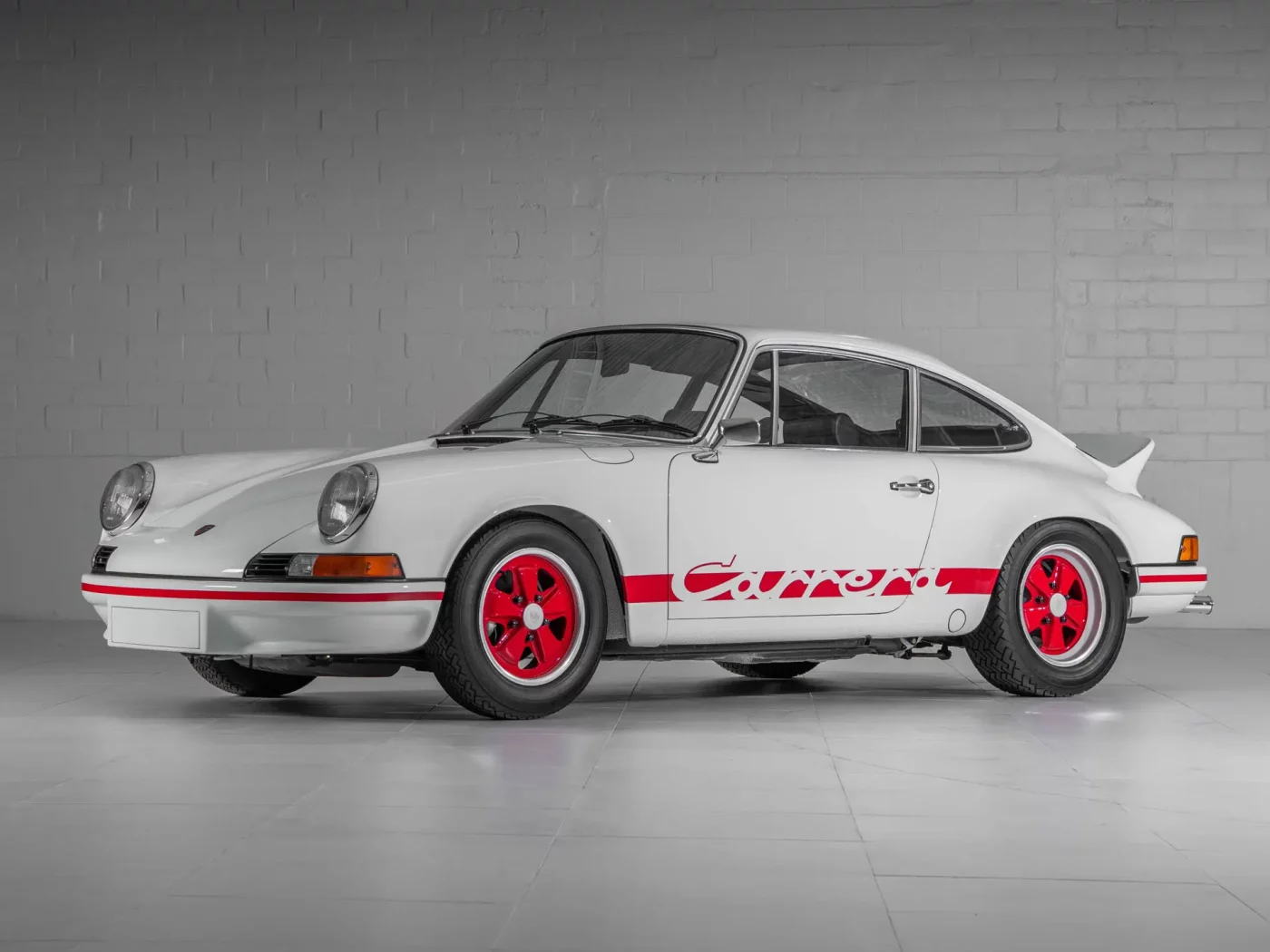
Porsche 911 Carrera RS 2.7 (1973)
Perfected the formula of lightweight construction, motorsport engineering, and everyday usability in a way no road car had before. Built to homologate Porsche’s racing ambitions, it became the definitive expression of what a road-going 911 could be when purity and performance were placed above all else.
Why It's On The List
The Porsche 911 Carrera RS 2.7 is not just the most important 911 collector car—it is the origin point for everything enthusiasts value about Porsche today. Built to homologate the 911 for Group 4 racing, the RS 2.7 was never intended to be a luxury road car or a marketing exercise. It existed because Porsche needed to go racing—and the result was a machine so perfectly balanced that it permanently redefined what a road-going sports car could be.
What elevates the RS 2.7 above every other early 911 is its purity of intent. Weight reduction was obsessive, engineering decisions were ruthless, and every change served performance. The car introduced the now-iconic ducktail spoiler—not for aesthetics, but to stabilize the rear at speed. The suspension was sharpened, the engine uprated, and unnecessary comfort items removed. Nothing about the RS is accidental, and that clarity still resonates five decades later.
From behind the wheel, the RS 2.7 feels alive in a way few cars—before or since—can match. Steering feedback is telepathic, throttle response is immediate, and the chassis communicates every surface change and grip transition. This is the car that taught generations of enthusiasts what “driver-focused” truly means.
As a collector car, the RS 2.7 sits in an untouchable position. It combines motorsport pedigree, cultural significance, and genuine usability in a way that no later RS has fully replicated.
Details
Year: 1973
Generation: F-Series
Units built: 1580 (200 Lightweight, 1300 Touring, 80 Race)
Engine: Flat-6
Power: 210 bhp
0 – 60 mph: 5.8s
Top Speed: 150 mph
Known For
The iconic “ducktail”: The first production Porsche with a rear spoiler, improving high-speed stability and becoming one of the most recognizable design elements in automotive history.
Lightweight RS philosophy: Thinner steel, pared-back interior, and a high-revving 2.7-liter flat-six defined the RS ethos that still underpins Porsche’s GT and RS models today.
Learn More
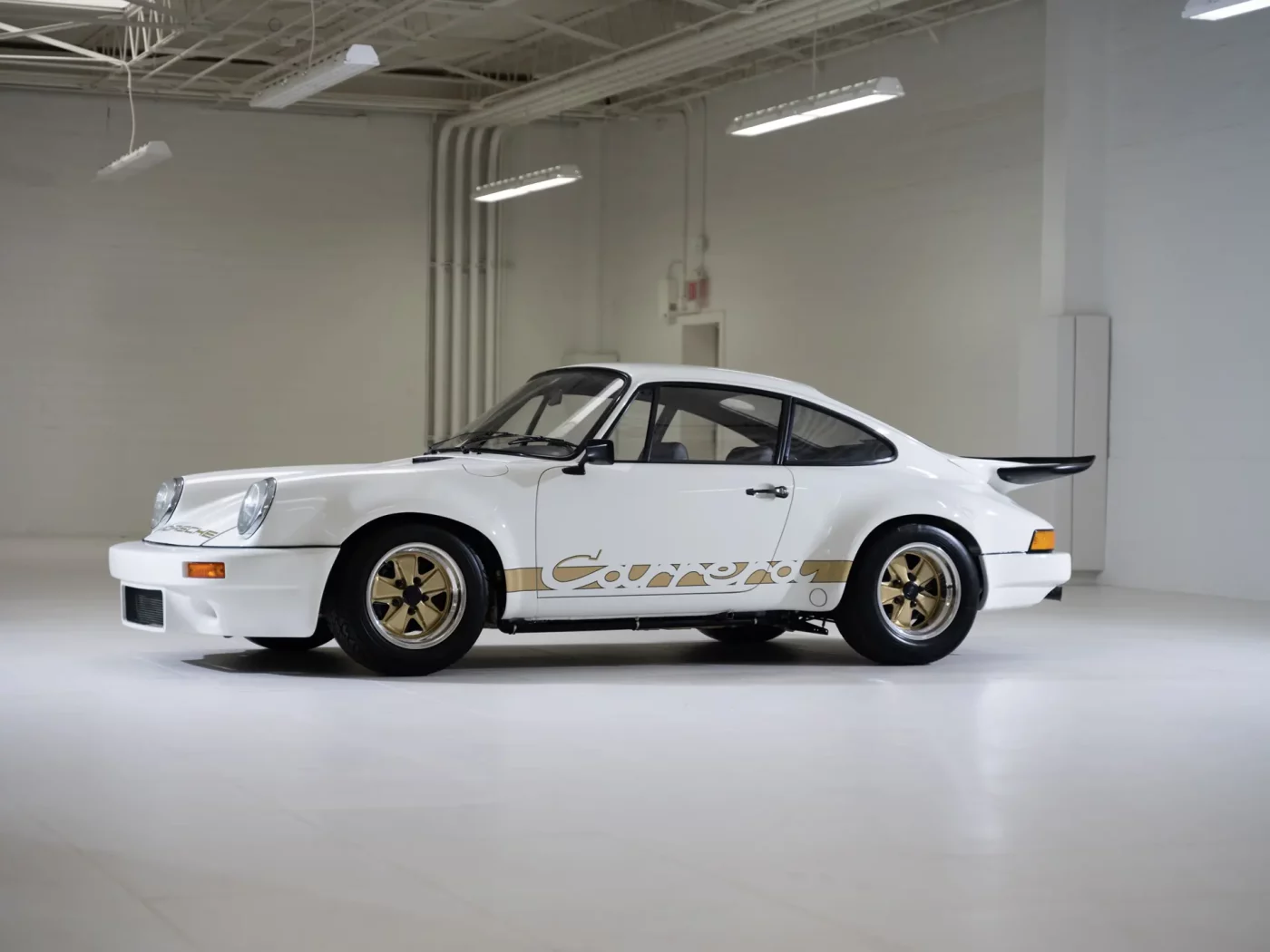
Porsche 911 Carrera RS 3.0 (1974)
Pushed the RS concept fully into race-car territory, blending brutal mechanical grip with a larger, more powerful engine and competition-grade hardware. Built in tiny numbers as a homologation special, it represents the moment the 911 evolved from lightweight road weapon into a true wide-body racing machine.
Why It's On The List
During a successful 1973, Porsche took the opportunity to develop an evolution of the RS 2.7 (having now met stricter requirements of building 1000 road cars per year in line with Group 3 rules). A quirk in the Group 3 rules allowed previously homologated cars (like the RS 2.7), to be homologated with just 100 examples built. So in 1974, Porsche launched the Carrera RS 3.0. It was almost twice as expensive as the 2.7 RS but was much more of a track machine. The chassis was similar to the ’73 Carrera RSR and the brake system was from the Porsche 917. It was a continuation of the race cars for the road trend that all of us Porsche fans love so much.
The 3.0 made 230hp with what was basically as detuned 3.0-liter RSR engine with an aluminum (rather than magnesium) crankcase and street exhaust fitted in place of the open racing unit. Cylinder heads were single-plug rather than the racing twin-plug type, and the compression ratio was given a significant bump over the outgoing 2.7’s 8.5:1 ratio, though it still runs on the equivalent of 93 octane U.S. pump gas.
With its systematic lightweight construction the RS 3.0 only weighed in at 900 kg. This low weight was achieved by using thin-gauge sheet parts and by basically removing parts and equipment from all over the place. Brakes were upgraded to larger four-piston units and the suspension was revised with RSR rear pick-up points allowing for more camber adjustment. There was a five-speed gearbox and limited-slip differential, and the fenders were widened even further to accommodate 8.0-inch wheels up front and 9.0-inches in the rear. The RS 3.0 also had the taller, larger bumpers introduced in all 1974 911s and the new rear “tray”-style spoiler.
Before you ask we love both the RS 2.7 and RS 3.0 the same. The 2.7 is the ultimate dual-purpose 911 from the era. Somebody once nailed it when they said: “The RS 2.7 is 80 percent 911 S. The RS 3.0 is 80 percent RSR.”
Details
Years: 1974
Units built: 109 RS 3.0s, 54 RS trim
Engine: 3.0-liter air-cooled flat-six (derived from RSR)
Power: ~230 hp @ 6,200 rpm
Torque: ~209 lb-ft
Transmission: 5-speed manual
0–60 mph: ~5.4 seconds
Top Speed: ~152 mph
Known For
Race-derived wide body: Flared Turbo-style arches, massive brakes, and uprated suspension made it one of the most aggressive and capable road-legal 911s of its era.
Pure homologation intent: Produced in extremely limited numbers to satisfy FIA regulations, making it one of the rarest and most hardcore RS models ever built.
Learn More
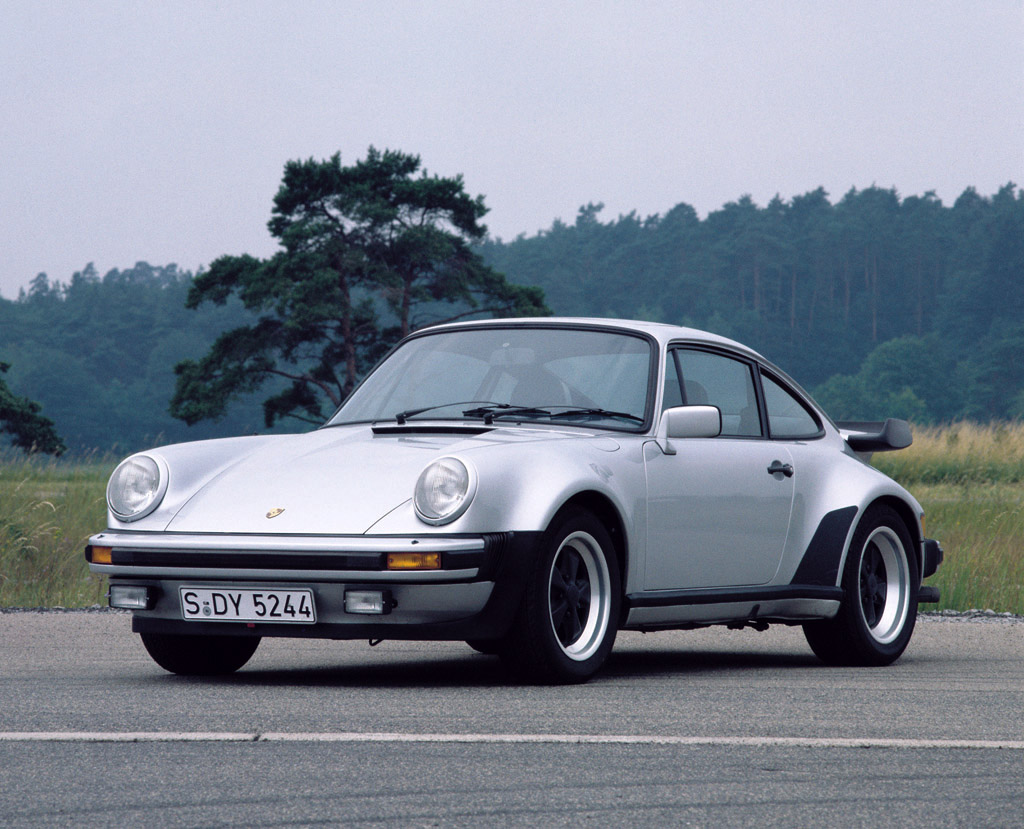
Porsche 911 Turbo - 3.3 Liter - 930 (1978 to 1989)
A visceral 911 experience. It is a car that demands your full attention, punishes your mistakes, and provides a rush that modern, sanitized supercars simply cannot replicate. The "analog violence" is only becoming more desirable.
Why It's On The List
In 1974 Porsche introduced the first production turbocharged 911. In Europe it was called the Porsche 911 Turbo and in the United States it was called the Porsche 930. It looked different than the normal 911s, with wider wheel-arches, bigger wheels and tires and a large rear “whale tail” spoiler. Starting out with a 3.0L engine with 260 hp, it rose to 3.3L and 300 hp for 1978. Only in 1989, its last year of production, was the 930 equipped with a five-speed gearbox. The 930 was replaced in 1990 with a 964 version featuring the same 3.3L engine. There have been turbocharged variants of each subsequent generation of 911.
The Porsche 911 Turbo 3.3-liter (930) is one of the most culturally significant Porsches ever built—and the market is increasingly treating it that way. While early 3.0-liter Turbos established the legend, it was the intercooled 3.3-liter cars that cemented the 930 as an icon, blending fearsome performance with visual drama and real-world usability. Today, that combination is driving a renewed and durable appreciation cycle.
At a fundamental level, the 930 represents Porsche’s first truly successful attempt to tame turbocharging for the road—without sanitizing it. The 3.3-liter engine brought an intercooler, improved durability, and more usable torque, but it retained the defining trait that made the Turbo famous: boost delivered on its own terms. Lag, surge, and rear-engine weight transfer weren’t engineered out—they were embraced. In a modern context, where turbocharging is invisible and algorithmically managed, the 930’s raw behavior feels increasingly special.
Just as important is the 930’s visual and cultural permanence. The wide body, massive rear wing, deep front spoiler, and unmistakable stance created a design language Porsche still references today. This isn’t nostalgia—it’s brand DNA. Few cars are as instantly recognizable across generations, and cars that define a brand’s silhouette tend to perform exceptionally well as long-term investments.
Details
Model: Porsche 911 Turbo 3.3 (930)
Model Years: 1978 - 1989
Production: 18,770 units
Engine: 3.3 L Turbocharged Flat 6
Power: 300 bhp @ 5500rpm
Torque: 304 ft lbs @ 4000rpm
0 - 60 mph: 5.4 seconds
Top Speed: 160 mph
Known For
The original supercar 911: Porsche’s first production turbocharged 911, delivering explosive boost and performance that rivaled — and often embarrassed — contemporary exotics.
Iconic wide-body design: Massive rear arches, deep front spoiler, and the legendary “whale tail” made the 930 one of the most recognizable and intimidating silhouettes in Porsche history.
Learn More
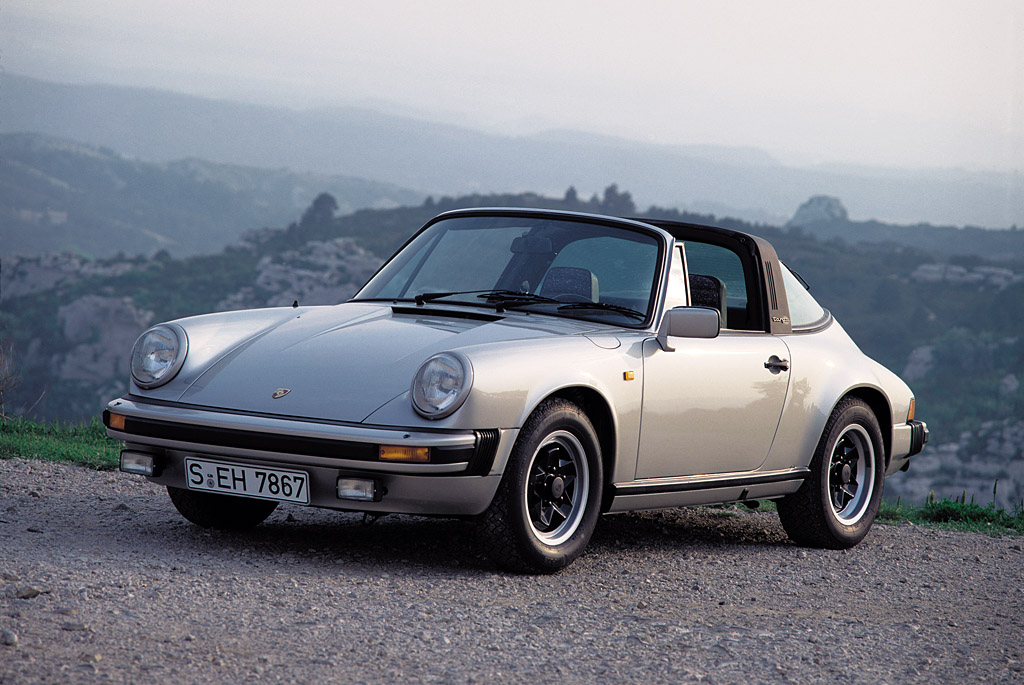
Porsche 911 SC (1978 – 1983)
Saved the 911 itself, proving the platform could be reliable, usable, and still deeply engaging at a time when Porsche was questioning its future. Blending durability with classic air-cooled character, it became the “do-everything” classic 911 that owners could actually drive hard and often.
Why It's On The List
The Porsche 911 SC occupies a uniquely important place in 911 history, representing the moment Porsche quietly perfected the original air-cooled formula. Introduced during a turbulent period for the company—when the future of the 911 itself was uncertain—the SC (Super Carrera) was conceived as a simplified, more durable, and more profitable evolution of the G-Series cars. What emerged was not a flashy halo model, but a deeply cohesive sports car that balanced performance, reliability, and everyday usability better than almost any 911 before it.
At the heart of the 911 SC was its 3.0-liter naturally aspirated flat-six, an engine derived from Porsche’s racing program and tuned for longevity rather than outright edge. Power gradually increased over the model run, but the real achievement was robustness: improved materials, stronger internals, and a reputation for surviving high mileage with proper care. Combined with the classic rear-engine layout, unassisted steering, and compact dimensions, the SC delivered the pure mechanical feedback that defines the classic 911 driving experience—engaging without being intimidating.
The SC also marked a turning point in build quality and usability. Galvanized bodywork dramatically improved rust resistance, while interior refinement made the car more livable as a daily driver without diluting its character. Offered as a coupe, Targa, and Cabriolet, the SC broadened the 911’s appeal and laid the groundwork for the modern “do-everything” sports car Porsche would later master. Importantly, it proved that the 911 could evolve without losing its soul. It may lack the motorsport mystique of an RS or the drama of a Turbo, but its balance, durability, and timeless design have earned it lasting respect.
Details
Model: Porsche 911 SC
Model Years: 1978 - 1983 (Coupe, Targa), 1983 (Cabriolet)
Production: 60,625 units
Engine: 3.0 L Aircooled Flat 6 (Various over years)
Power: 180 bhp @ 5500 rpm (At launch)
Torque: 196 ft lbs @ 4200 rpm (At launch)
0 - 60 mph: 6.3 seconds
Top Speed: 126 mph
Known For
The car that saved the 911: Its robust 3.0-liter flat-six and improved build quality restored confidence in the 911 and ensured its survival into the modern era.
Bulletproof usability: Known for reliability, everyday drivability, and mechanical honesty, making it one of the most approachable and rewarding classic 911s to own today.
Learn More
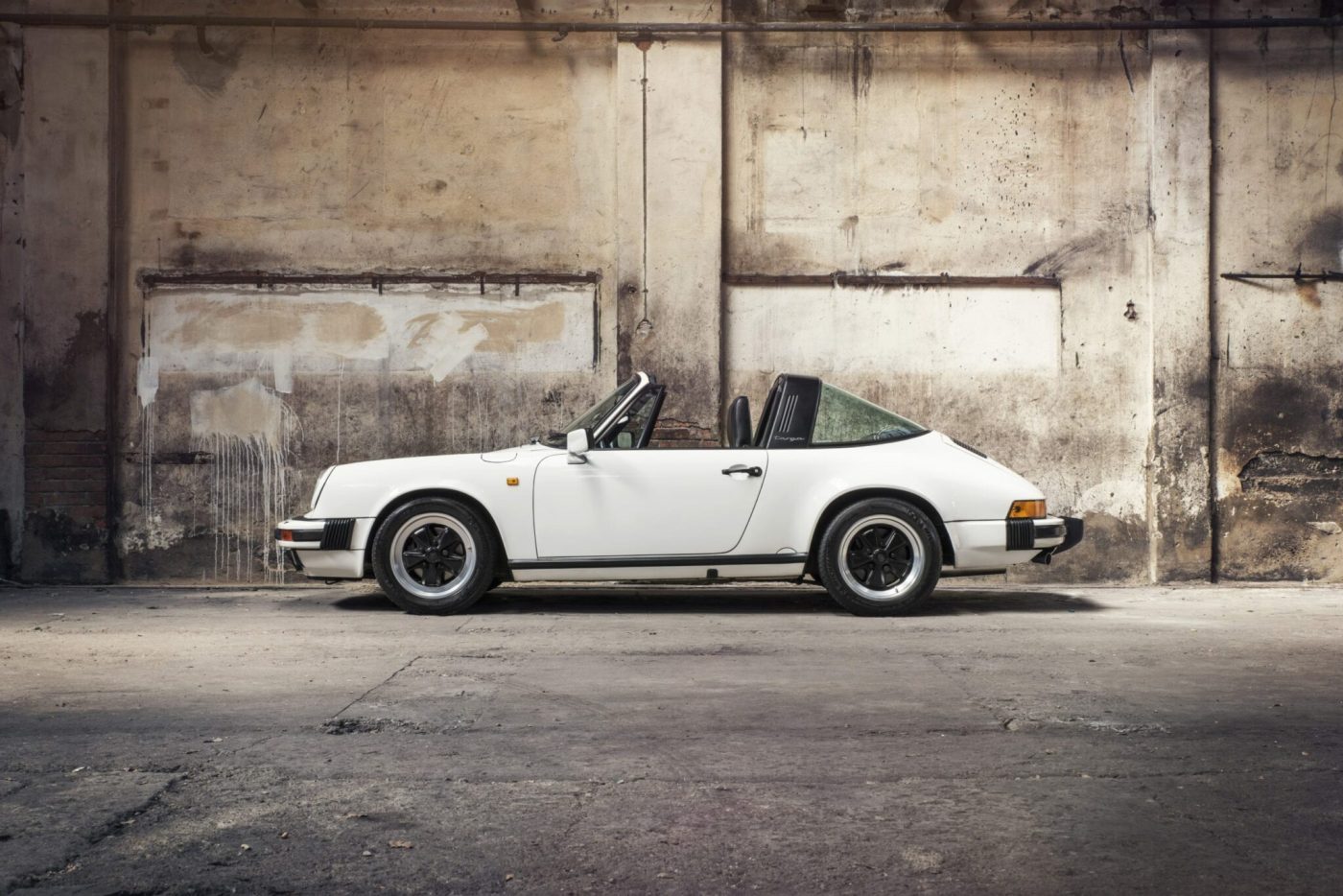
Porsche 911 Carrera 3.2 (1984 – 1989)
The 1984 Porsche 911 Carrera 3.2 is considered one of the best 911s ever because it perfected the classic air-cooled formula, combining proven reliability with increased power, sharper response, and everyday usability. It represents the sweet spot where vintage driving feel meets modern durability, making it endlessly rewarding to drive and easy to live with.
Why It's On The List
The Porsche 911 Carrera 3.2 is widely regarded as the definitive expression of the classic, impact-bumper 911. Introduced as the successor to the SC, it represented a clear step forward in performance, refinement, and engineering confidence—without abandoning the raw, mechanical character that defined earlier air-cooled cars. For many enthusiasts, the Carrera 3.2 strikes the ideal balance between vintage feel and modern usability, making it one of the most complete classic 911s Porsche ever produced.
Power came from the new 3.2-liter flat-six, featuring Bosch Motronic engine management that improved throttle response, efficiency, and reliability. With stronger mid-range torque and a broader powerband than the SC, the Carrera felt faster and more flexible in real-world driving, while still rewarding drivers who worked the engine hard. The steering remained unassisted and richly communicative.
Beyond the drivetrain, the Carrera 3.2 benefited from meaningful upgrades in build quality and durability. Fully galvanized bodywork, improved interiors, and stronger mechanical components made it a car that could be driven regularly without sacrificing longevity. The later introduction of the G50 gearbox further refined the experience, offering a more precise and confidence-inspiring shift that many consider the best manual transmission fitted to a classic 911.
Today, the Porsche 911 Carrera 3.2 is seen as a high-water mark of the air-cooled era before electronics and complexity began to dominate.
Details
Model: Porsche 911 Carrera 3.2
Model Years: 1984 - 1989
Production: 2,880 units
Engine: 3.2 L Aircooled Flat 6
Power: 231 bhp @ 5900 rpm (Europe)
Torque: 209 ft lbs @ 4800rpm
0 - 60 mph: 6.1 seconds
Top Speed: 152 mph
Known For
The definitive classic 911 engine: The 3.2-liter flat-six is celebrated for its durability, torque, and character, earning a reputation as one of Porsche’s most reliable air-cooled powerplants.
Pure, usable performance: Classic narrow-body proportions, communicative steering, and improved ergonomics created a 911 that could be enjoyed daily without diluting its analog soul.
Learn More
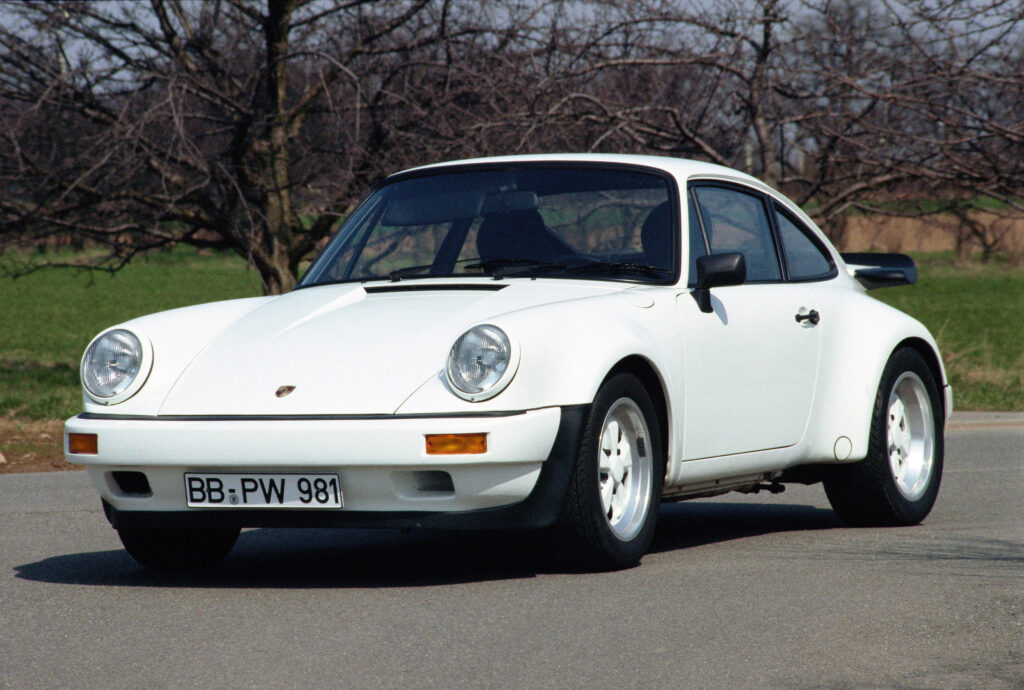
Porsche 911 SC RS (1984)
Porsche at its most uncompromising - built not for comfort or sales, but to dominate international rallying with a lightweight, brutally effective competition car. Rare, purpose-built, and directly tied to works motorsport success, it stands as the ultimate expression of the 911’s off-road and endurance capability.
Why It's On The List
The Porsche 911 SC RS is one of the most legitimate homologation cars Porsche ever built—and one of the least talked about. Created to homologate the 911 for Group B rally competition, the SC RS wasn’t designed to celebrate heritage or excite showroom buyers. It was built because Porsche wanted to go rallying seriously, and regulations demanded a road-going production run. The result is a car that feels far closer to a works competition machine than a conventional RS.
What makes the SC RS unique within the 911 collector hierarchy is its rally-first DNA. Unlike the circuit-focused RS and RSR models before it, the SC RS was engineered to survive brutal surfaces, long stages, and real-world punishment. Reinforced bodyshells, seam welding, adjustable suspension, lightweight panels, and stripped interiors defined the package. This is a 911 designed to be driven hard on imperfect roads—something no other RS truly prioritized.
From behind the wheel, the SC RS feels raw, mechanical, and utterly purpose-built. Power delivery is linear and tractable rather than peaky, ideal for rally conditions. Steering is heavy and communicative, and the chassis feels extraordinarily rigid for an impact-bumper-era 911. It lacks the romanticism of a 2.7 RS or the elegance of a 964 RS—but it replaces that with functional brutality.
Details
Model: Porsche 911 SC RS 3.0
Model Years: 1984
Production: 20 units
Engine: 3.0 L Aircooled Flat 6 (930/18)
Power: 255 bhp @ 7000 rpm
Torque: 184 ft lbs @ 6500 rpm
0 - 60 mph: 5.3 seconds
Top Speed: 158 mph
Known For
Rally-bred homologation special: Developed for Group B rally competition, featuring extensive weight reduction, reinforced suspension, and race-specific hardware.
Extreme rarity and purity: Produced in very limited numbers for homologation, making it one of the rarest and most motorsport-focused 911s ever built.
Learn More
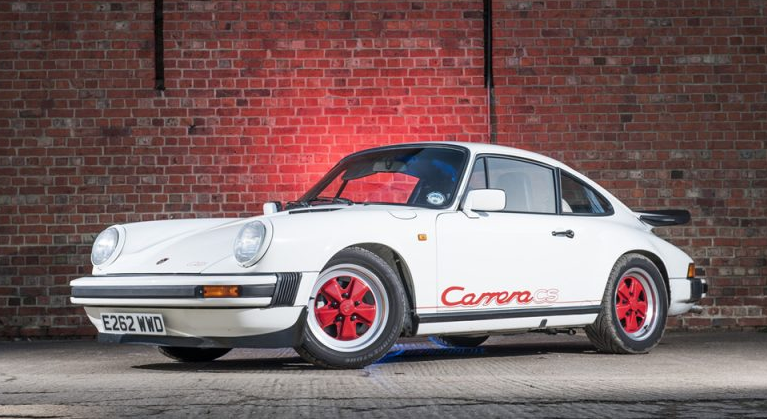
Porsche 911 Carrera 3.2 Clubsport (1988)
It distilled the classic G-body Porsche 911 down to its purest driver-focused form, stripping weight and distractions in pursuit of feel, response and driveability. Subtle rather than flashy, it proved that less mass—not more power—was the key to elevating the 911 driving experience.
Why It's On The List
The Porsche 911 Carrera 3.2 Clubsport represents one of the purest factory-built driver-focused 911s of the classic era. Conceived as a homologation-style special rather than a marketing exercise, the Clubsport stripped the already excellent Carrera 3.2 down to its essentials. Porsche’s goal was simple: remove weight, sharpen responses, and deliver a road car that felt as close to a racing 911 as possible—without increasing power or compromising the underlying mechanical integrity.
Mechanically, the Clubsport shared the same 3.2-liter flat-six as the standard Carrera, but the transformation came through weight reduction. Porsche deleted rear seats, sound insulation, electric accessories, undercoating, and even passenger sun visors, resulting in a car that was roughly 100 kg (220 lb) lighter. Combined with shorter gearing, stiffer suspension tuning, and reduced rotational mass, the Clubsport felt noticeably more urgent and alive, with razor-sharp throttle response and a heightened sense of connection between driver, chassis, and road.
What truly set the Clubsport apart was its character. This was not a luxury sports car or a daily driver—it was a deliberate throwback to Porsche’s competition ethos. The steering was unfiltered, the cabin loud and purposeful, and the driving experience demanded full engagement at all times. It rewarded commitment, punished complacency, and delivered a level of feedback that few road cars—then or now—can match.
Today, the Porsche 911 Carrera 3.2 Clubsport is revered as a rare and uncompromising expression of Porsche’s lightweight philosophy. Built in extremely limited numbers, it has become a benchmark for what an analog, driver-first 911 should be. In hindsight, the Clubsport foreshadowed the GT and RS models that would follow, making it not just one of the greatest classic 911s—but a foundational car in Porsche’s modern performance lineage.
Details
Model: Porsche 911 Carrera 3.2 Clubsport
Years: 1987 - 1989
Production: 340 units
Engine: 3.2 L Aircooled Flat 6
Power: 231 bhp @ 5900 rpm
Torque: 209 ft lbs @ 4800rpm
0 - 60 mph: 5.1 seconds
Top Speed: 154 mph
Known For
Lightweight, no-nonsense philosophy: Reduced sound deadening, deleted rear seats, lighter components, and a higher-revving character sharpened an already great 911.
The thinking enthusiast’s 911: Understated appearance with profound dynamic gains, making it a spiritual precursor to later GT and RS road cars.
Learn More
Porsche 911 Speedster (1989)
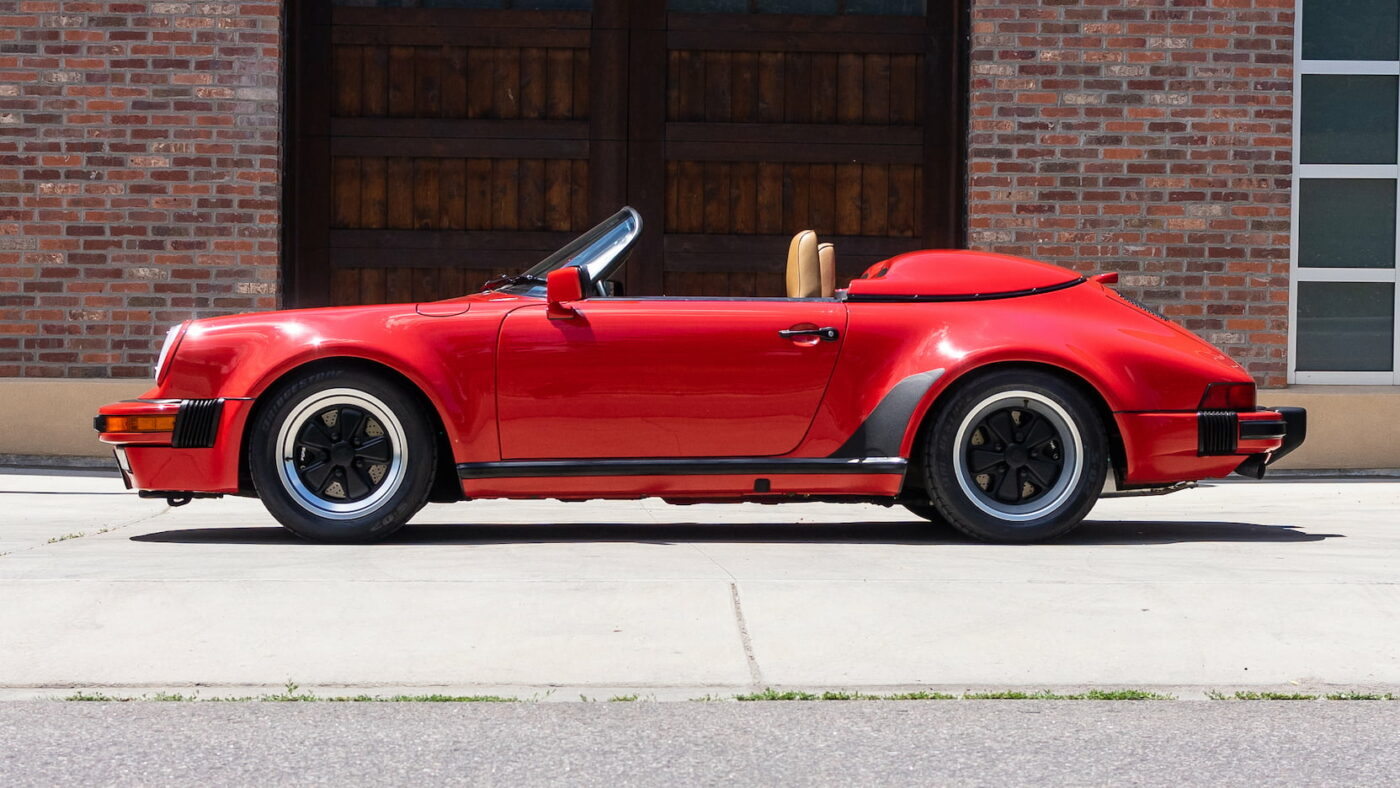
Revived Porsche’s romantic, motorsport-inspired roadster heritage while marking the dramatic final chapter of the classic G-body era. More a statement car than a numbers exercise, it blended raw air-cooled character with unmistakable design to create one of the most emotionally charged 911s ever built.
Why It's On The List
The 911 Speedster was introduced alongside the new 964 Porsche Carrera 4 at the 1988 Frankfurt Show.
It was immediately popular amongst Porsche buyers. Unlike the 964 prototype this Porsche 911 Speedster catered to comfort. It was basically a low-roof version of the Cabriolet and was produced in limited numbers (2,104) as both a narrow body car and a Turbo-look. The Speedster started as a design under Helmuth Bott in 1983 but was not manufactured until six years later.
This was the last vehicle with the old 911 body and that’s why it makes our list of greatest 911s. The Speedster stole some body bits from the 930 Turbo as well as the Turbo’s beefier chassis and heavy-duty four-piston cross-drilled disc brakes. The Speedster is best known for its double-hump cover design .
Undeniably, the Speedster had “collectible” written all over it, and all 2,100 were quickly snapped up by would-be profiteers.
Details
Year: 1989
Units built: 2,104 (171 narrow body, 1933 Turbo-look)
Engine: Air-cooled Flat-6
Power: 231.1 bhp
0 – 60 mph: 6.0 s
Top Speed: 152.2 mph
Known For
Iconic double-hump silhouette: The low windshield and twin rear fairings created one of the most recognizable and evocative 911 designs of all time.
End-of-era significance: Built as the last G-series 911, it stands as a collectible farewell to Porsche’s most analog and design-driven period.
Learn More
Porsche 930 LE (930) (1989)
The final and most refined expression of the original Turbo formula, blending raw boosted performance with the maturity gained from over a decade of development. As the closing chapter of the legendary 930 era, it captures peak air-cooled Turbo character before Porsche moved decisively into the modern age.
Why It's On The List
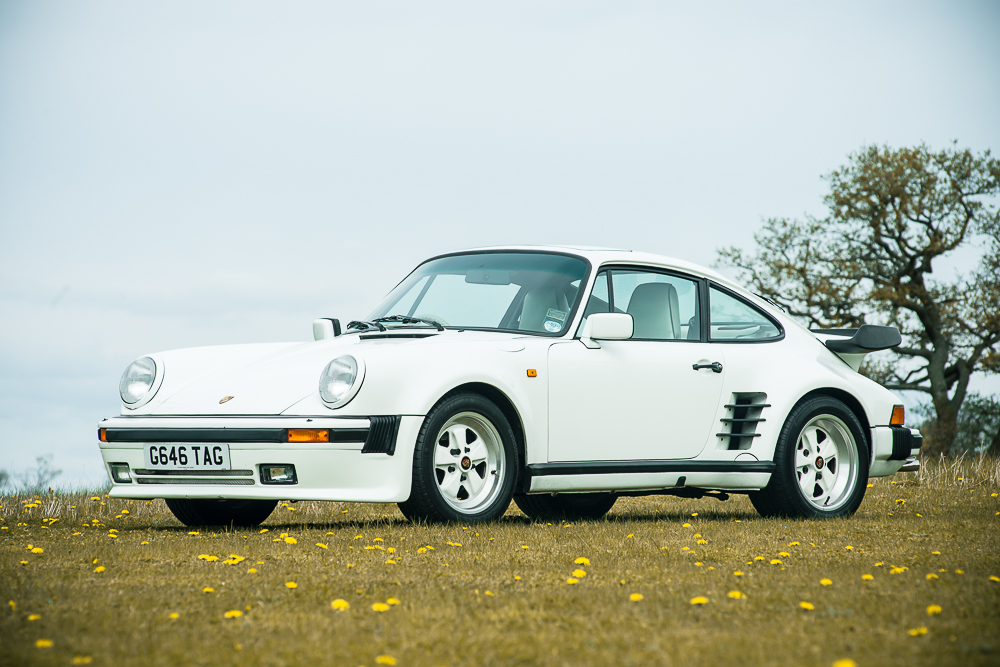
Mechanically, the Porsche 930 LE was essentially identically to the slantnose SE. However, the LE – shorthand for ‘Limited Edition’ – stuck with the Porsche 911’s idiosyncratic raised front wings but gained a deep, 934-esque chin spoiler. Just one example was delivered to each contemporary Porsche Centre for a total of 50 rare units.
The reason this 930 makes our list was because almost everybody thought it would be the last ever 911 Turbo. The 964 Porsche was on its way and many thought that meant the end of the Turbo range. Porsche went ahead and made this limited edition. The original list price for the 930 LE was a staggering £84,492 (its close to £300,000 in today’s money). With the 930 LE, Porsche went out of its way to create the ultimate Turbo and that is special to us.
Each car started life as a standard 3.3-litre Turbo before being passed over to the ‘Exclusive’ team at Zuffenhausen. Each car was rebuilt by hand to include a host of no-cost options but the coolest thing of all was a final gold plaque on the centre console highlighted the LE’s place at the end of the Turbo’s 15-year tenure as Porsche’s true everyday supercar.
Details
Model: Porsche 911 Turbo LE (930)
Model Years: 1989
Production: 50 units
Engine: 3.3 L Turbocharged Flat 6
Power: 330 bhp @ 5750 rpm
Torque: 318 ft lbs @ 4000 rpm
0 - 60 mph: 4.6 seconds
Top Speed: 173 mph
Known For
Final-year 930 evolution: The most polished version of the original 911 Turbo, benefiting from years of mechanical and usability refinements.
End-of-an-era significance: Marks the farewell to the first-generation Turbo 911, cementing its status as a historically important and highly collectible air-cooled icon.
Learn More
Porsche 911 Carrera 4 Coupe (964) (1989 – 1994)
Successfully modernized the 911 without diluting its character, introducing all-wheel drive while preserving air-cooled feel and classic proportions. It marked the moment the 911 became a true all-season, everyday sports car—without sacrificing steering purity or driver engagement.
Why It's On The List
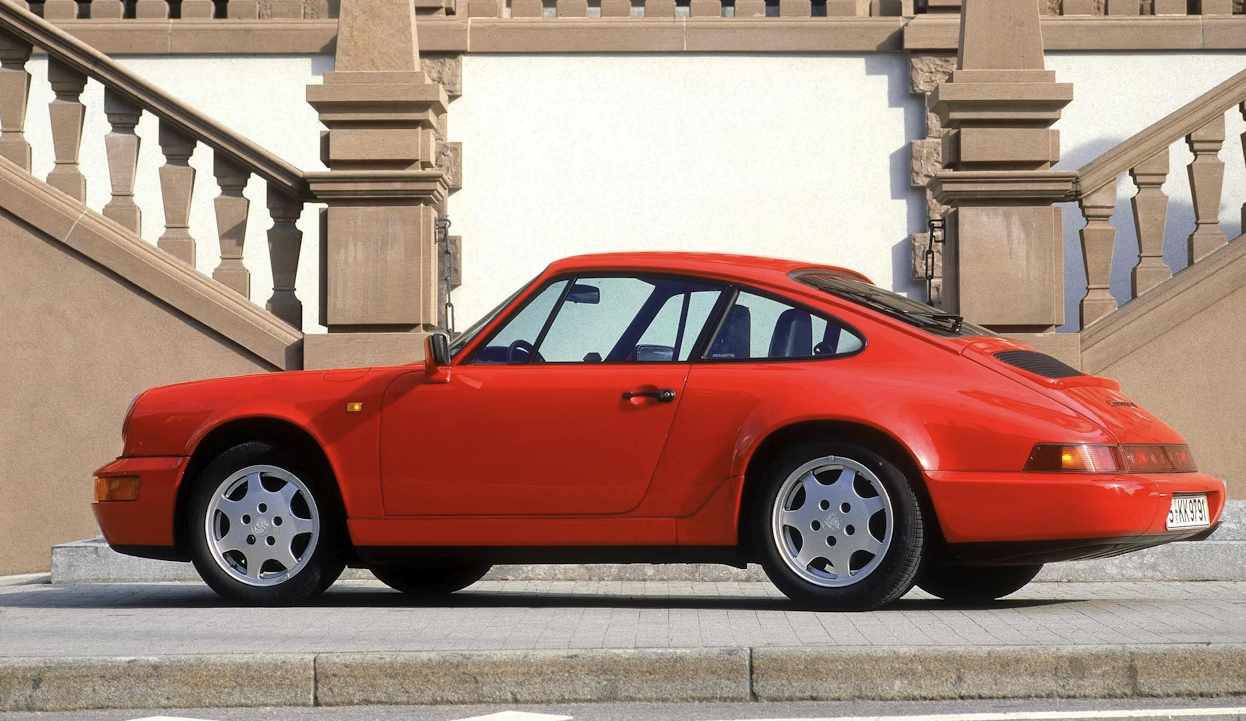
The Porsche 911 Carrera 4 Coupe represents one of the most important technological turning points in 911 history. When the 964 debuted in 1989, Porsche fundamentally re-engineered the 911 for the modern era, and the Carrera 4 was the boldest expression of that shift. Introducing all-wheel drive to the 911 for the first time in a production road car, the Carrera 4 redefined what a 911 could be—expanding its performance envelope without abandoning its rear-engine DNA.
The Carrera 4 used a sophisticated AWD system derived from the legendary 959, actively distributing torque to improve traction and stability in all conditions. Paired with the new 3.6-liter air-cooled flat-six, the result was a 911 that felt more planted, confidence-inspiring, and usable at high speeds or in poor weather than any of its predecessors. While slightly heavier than the Carrera 2, the tradeoff came in the form of remarkable composure, making the car easier to drive quickly without dulling the essential 911 character.
Beyond drivetrain innovation, the 964 generation brought sweeping upgrades that transformed the ownership experience. Power steering, ABS, improved climate control, modernized suspension geometry, and a far more refined interior marked the biggest leap forward the 911 had seen since its original debut. Yet despite these advances, the Carrera 4 Coupe retained an unmistakably analog feel—air-cooled sound, mechanical steering feedback, and a chassis that still demanded driver respect and skill.
Today, the Porsche 911 Carrera 4 Coupe (964) is increasingly appreciated as the bridge between classic and modern 911s. It preserved the soul of the air-cooled era while introducing technologies that would define Porsche’s future. As a landmark model that expanded the 911’s capabilities without diluting its identity, the 964 Carrera 4 earns its place among the greatest Porsche 911s ever made.
Details
Model: 911 Carrera 4 Coupe (964)
Model Years: 1989 - 1994
Production: 13,353 units
Engine: 3.6 L Aircooled Flat 6 (M64/01)
Power: 250 bhp @ 6100 rpm
Torque: 229 ft lbs @ 4800 rpm
0 - 60 mph: 5.6 seconds
Top Speed: 162 mph
Known For
First production AWD 911: Borrowing technology from the 959, the Carrera 4 redefined traction and stability in a rear-engine sports car.
Bridge between eras: Blending classic air-cooled charm with modern suspension, ABS, power steering, and climate control, it set the template for the modern 911.
Learn More
Porsche 911 Carrera 4 Leichtbau (964) (1990)
A no-compromise engineering experiment that fused early all-wheel-drive technology with extreme weight reduction and motorsport intent. Built in tiny numbers as a proof-of-concept, it foreshadowed Porsche’s future GT philosophy by prioritizing grip, balance, and mechanical honesty over luxury.
Why It's On The List
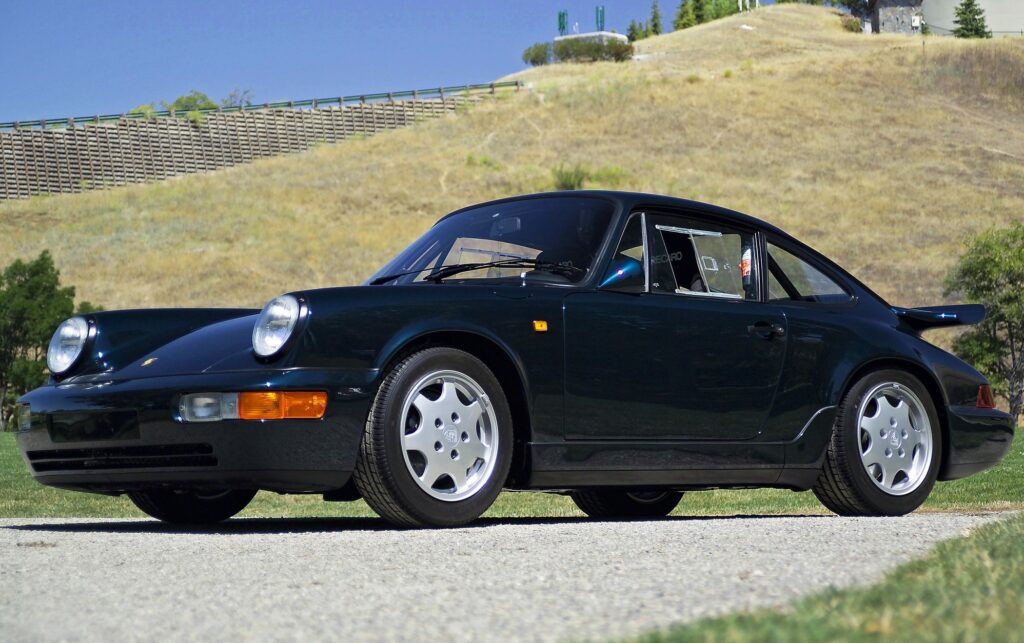
A handful of specially prepared lightweight 911s were fabricated by the Porsche factory and called the Carrera 4 RS Lightweight. Built by Porsche’s customer motorsport division, the Porsche 964 Carrera 4 Lightweight programme was Jürgen Barth’s way of keeping his department employed in the wake of Group C’s collapse.
130kg lighter than a 964 RS, the Carrera 4 Lightweight used the four-wheel drive drivetrain from the Dakar-winning 953 rally car and was originally envisaged for off-road use. The cars employed the same six-cylinder 3600cc boxer engine as the 260hp “regular” RS, but produced some 40 more horsepower due to the exclusion of catalytic converters and mufflers.
The RS Lightweight earned its name thanks to the combined use of an aluminum front lid, aluminum doors, Plexiglas side windows and a fiberglass rear engine lid. Its overall weight was pared down to 1100kg (2200 lbs) thus making for an exceptional power to weight ratio. For those keeping count that is 350kg (770 lbs) lighter than standard 964 C4. They also added a short ratio 5-speed transmission with lightweight flywheel.
The list of weight reduction features included an aluminum safety cage, two Recaro race seats with five-point safety belts, sport steering wheel coupled to a power assisted steering rack and a type 953 Paris-Dakar transmission. The doors and front hood replaced with aluminum versions and side window glass replaced with plexiglass. Carpeting and sound deadening was removed and left as bare metal.
Details
Model: 911 C4 Lightweight (964)
Years: 1991
Production: 22 units
Engine: 3.6 L Aircooled Flat 6 (M64/01)
Power: 300 bhp @ 6500 rpm
Torque: 265 ft lbs @ 5250 rpm
0 - 60 mph: 3.9 seconds
Top Speed: 125 mph
Known For
Extreme factory lightweight: Aluminum panels, stripped interior, thinner glass, and motorsport components resulted in a dramatically lighter and more focused 964.
Prototype for future GT cars: Its blend of AWD stability and weight-saving measures directly influenced Porsche’s later high-performance road and race 911s.
Learn More
Porsche 911 Carrera RS 3.6 (964) (1992-1994)
Redefined the RS philosophy for the modern era, stripping the newly complex 964 back to its raw mechanical core. By combining a high-revving 3.6-liter flat-six with extreme weight reduction and chassis tuning, it delivered one of the purest driver experiences Porsche ever offered.
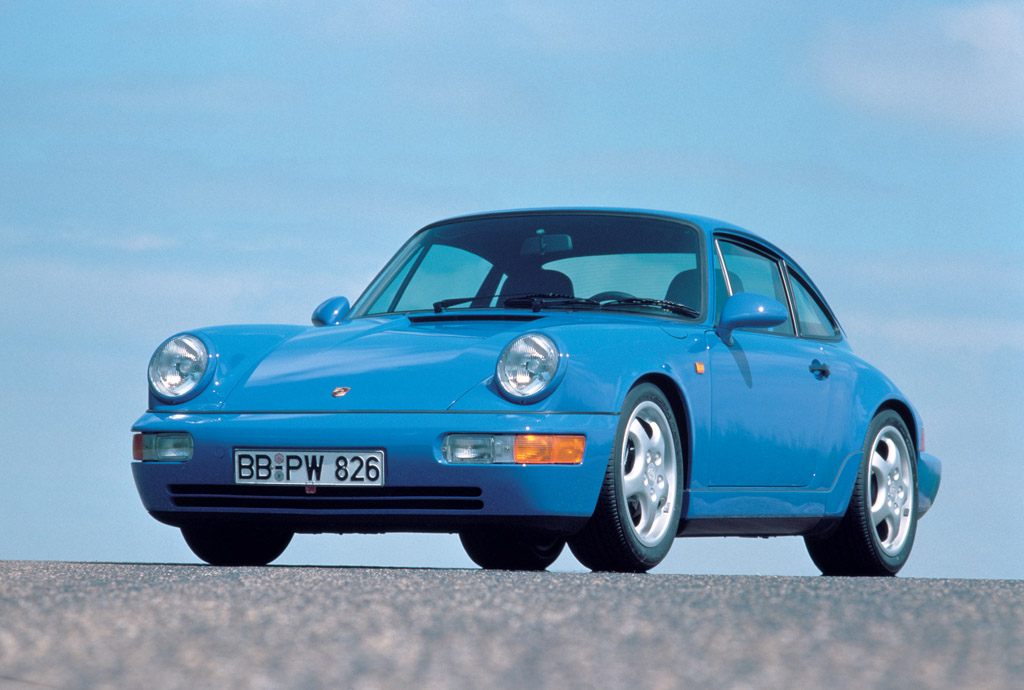
Why It's On The List
The Porsche 964 Carrera RS is one of the most revered driver-focused 911s ever built, representing Porsche’s uncompromising return to its Rennsport philosophy in the modern era. Developed during a period of financial strain for Porsche, the 964 RS was not designed to chase comfort or broad appeal—it was built to satisfy purists. By stripping away excess weight and luxury, Porsche created a car that distilled the 911 down to its most essential elements, echoing the spirit of the legendary 1973 Carrera RS 2.7.
At its core was a revised 3.6-liter air-cooled flat-six producing sharper throttle response and higher revving urgency than the standard Carrera. Combined with significant weight reduction—through thinner glass, deleted sound insulation, lightweight panels, and minimal interior trim—the RS delivered a dramatically more focused driving experience. The suspension was fully reworked with stiffer springs, adjustable ride height, and aggressive alignment settings, transforming the 964’s behavior into something far more immediate, communicative, and demanding.
What truly defined the 964 Carrera RS was its character. Steering was unassisted, noise levels were high, and ride quality was unapologetically firm—but every input was met with crystal-clear feedback. This was a car that rewarded precision and punished mistakes, offering an intimacy between driver and machine that few road cars could match. On road or track, the RS felt alive in a way that transcended raw numbers, delivering confidence through clarity rather than electronics.
Today, the Porsche 964 Carrera RS is widely regarded as a cornerstone of the modern Porsche GT lineage. It set the template for future RS models by proving that extreme focus, lightness, and mechanical honesty could coexist in a road-legal 911.
Details
Model: Porsche 911 Carrera RS (964)
Model Years: 1992 - 1994
Production: 2,282 units
Engine: 3.6 L Aircooled Flat 6 (M64/03)
Power: 260 bhp @ 6100 rpm
Torque: 229 ft lbs @ 4800 rpm
0 - 60 mph: 5.1 seconds
Top Speed: 162 mph
Known For
Return of the RS ethos: Deleted sound insulation, thinner glass, seam-welded body, and stiffer suspension made it a true homologation-style road car.
Benchmark driver involvement: Celebrated for its steering feel, throttle response, and balance, it set the template for every RS model that followed.
Learn More
Porsche 911 Carrera RS 3.8 (964) (1993)
Took the already legendary RS formula and pushed it directly into race-car territory, combining a larger, more powerful engine with aggressive aero and chassis upgrades. Built in extremely limited numbers, it stands as the ultimate factory expression of the air-cooled, naturally aspirated RS ideal.
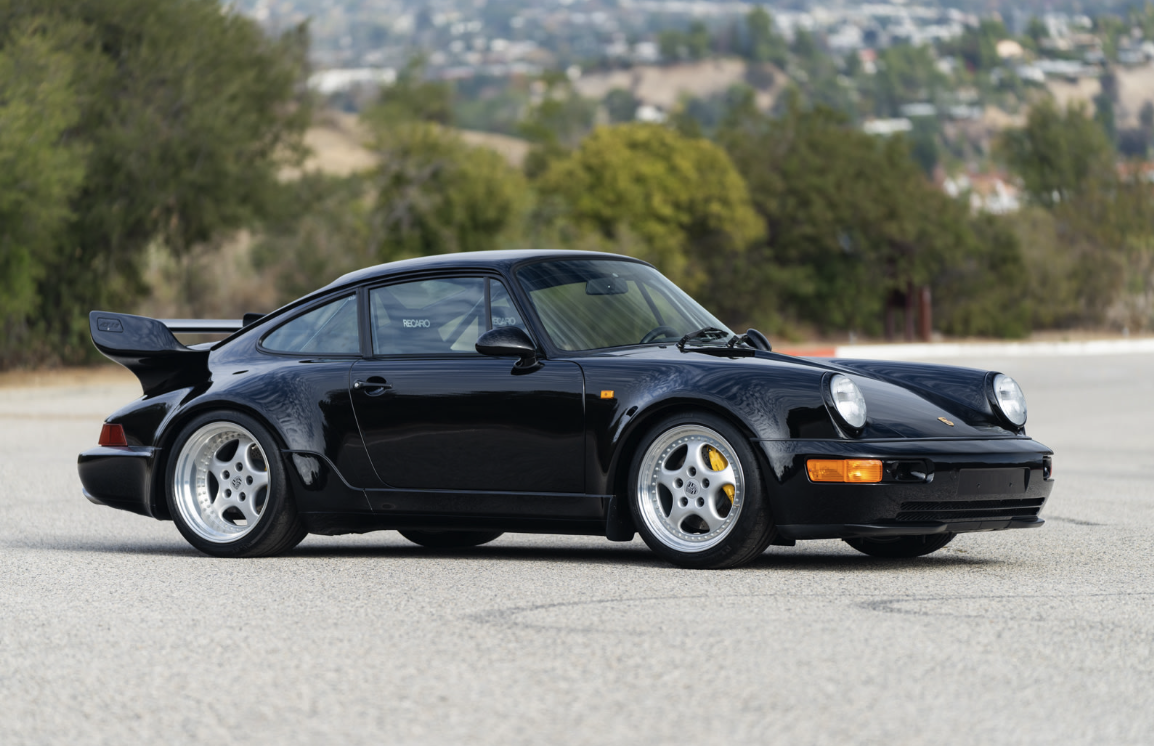
Why It's On The List
The Porsche 911 Carrera RS 3.8 is widely considered the ultimate evolution of the 964-era Rennsport philosophy—and one of the most extreme road-legal 911s Porsche has ever produced. Built in very limited numbers primarily for homologation purposes, the RS 3.8 took the already uncompromising 964 Carrera RS and pushed it even further toward motorsport territory. This was not a car designed for comfort or broad appeal; it was a near-race car for the road, created to satisfy Porsche’s most hardcore drivers.
At its heart was a heavily reworked 3.8-liter air-cooled flat-six, producing significantly more power and torque than the standard 3.6-liter RS. Paired with aggressive gearing and extensive weight reduction, the RS 3.8 delivered ferocious throttle response and relentless acceleration for its era. Porsche removed virtually every non-essential component, while wider bodywork, massive brakes, and a prominent rear wing signaled the car’s true intent. The chassis setup was stiff, adjustable, and unapologetically focused on track performance.
What truly separates the RS 3.8 from other Rennsport models is its intensity. Steering is unassisted and brutally communicative, the ride is firm to the point of discomfort on public roads, and the cabin is stripped to racing basics. Every sensation—noise, vibration, feedback—is amplified, creating an experience that demands total concentration from the driver. It is thrilling, raw, and unforgiving, offering rewards only to those willing to meet it on its terms.
Today, the Porsche 911 Carrera RS 3.8 (964) stands as one of the most collectible and revered 911s ever built. It represents the absolute peak of Porsche’s air-cooled, motorsport-derived road cars before the GT era fully took shape. Rare, uncompromising, and breathtakingly focused, the RS 3.8 isn’t just one of the greatest 911s—it’s a benchmark for what a no-excuses driver’s car can be.
Details
Model: Porsche 911 Carrera RS 3.8 (964)
Model Years: 1993
Production: 55 units
Engine: 3.8 L Aircooled Flat 6 (M64/04)
Power: 300 bhp @ 6500 rpm
Torque: 265 ft lbs @ 5250 rpm
0 - 60 mph: 4.9 seconds
Top Speed: 169 mph
Known For
Race-spec 3.8-liter flat-six: Increased displacement and sharper tuning delivered one of the most thrilling naturally aspirated air-cooled engines Porsche ever built.
Extreme rarity and aggression: Wide bodywork, big rear wing, and motorsport suspension made it one of the most focused—and collectible—964-based 911s ever produced.
Learn More
Porsche 911 Turbo S Leichtbau (964) (1992 – 1993)
Fused supercar-level turbocharged performance with extreme factory weight reduction, creating the most visceral and focused Turbo Porsche of its era. Built in tiny numbers and utterly uncompromising, it represents the ultimate expression of the air-cooled Turbo taken to its logical extreme.

Why It's On The List
The Porsche 964 Turbo S Leichtbau exists at the intersection of homologation logic and mechanical madness. Built in tiny numbers and stripped of nearly every non-essential component, this was Porsche asking a simple question: what happens if we take the already ferocious 964 Turbo and remove restraint? The answer was one of the most extreme, intimidating, and collectible road-going 911s ever produced.
Unlike other Turbo models, the Leichtbau was never meant to broaden appeal. It was conceived to support racing programs and to satisfy Porsche’s internal belief that lighter was always better, even when paired with forced induction. Weight reduction was aggressive and unapologetic—thinner glass, stripped interior, minimal sound deadening, fixed-back seats, and lightweight body panels all contributed to a car that felt far closer to a competition special than a luxury supercar.
On the road, the Turbo S Leichtbau is an exercise in respect. Turbo lag is pronounced, boost arrives violently, and the rear-engine, rear-drive layout leaves little margin for error. There are no electronic safety nets to save a careless driver. This is not a forgiving car—but it is a thrilling one, delivering a rawness and intensity that later GT2 models would refine but never truly replicate.
Key Data & Specifications
Engine: 3.3-liter turbocharged air-cooled flat-six
Power: ~381 hp
Torque: ~369 lb-ft
Transmission: 5-speed manual
Drivetrain: Rear-wheel drive
Weight: ~2,860 lbs
0–60 mph: ~4.0 seconds
Top Speed: ~180 mph
Known For
Extreme factory lightweight Turbo: Carbon fiber panels, stripped interior, thinner glass, and deleted comfort features delivered a brutally raw driving experience.
Ultimate air-cooled Turbo rarity: One of the rarest production 911 Turbos ever built, cementing its status as a holy-grail collector car and peak 964-era performance icon.
Learn More
Porsche 911 Turbo S "Flachbau" (964) (1994)
Fused the most powerful air-cooled Turbo engine with extreme rarity and bespoke Sonderwunsch craftsmanship. Sat at the intersection of supercar performance and factory-built excess. Absolute peak of air-cooled Turbo exclusivity.
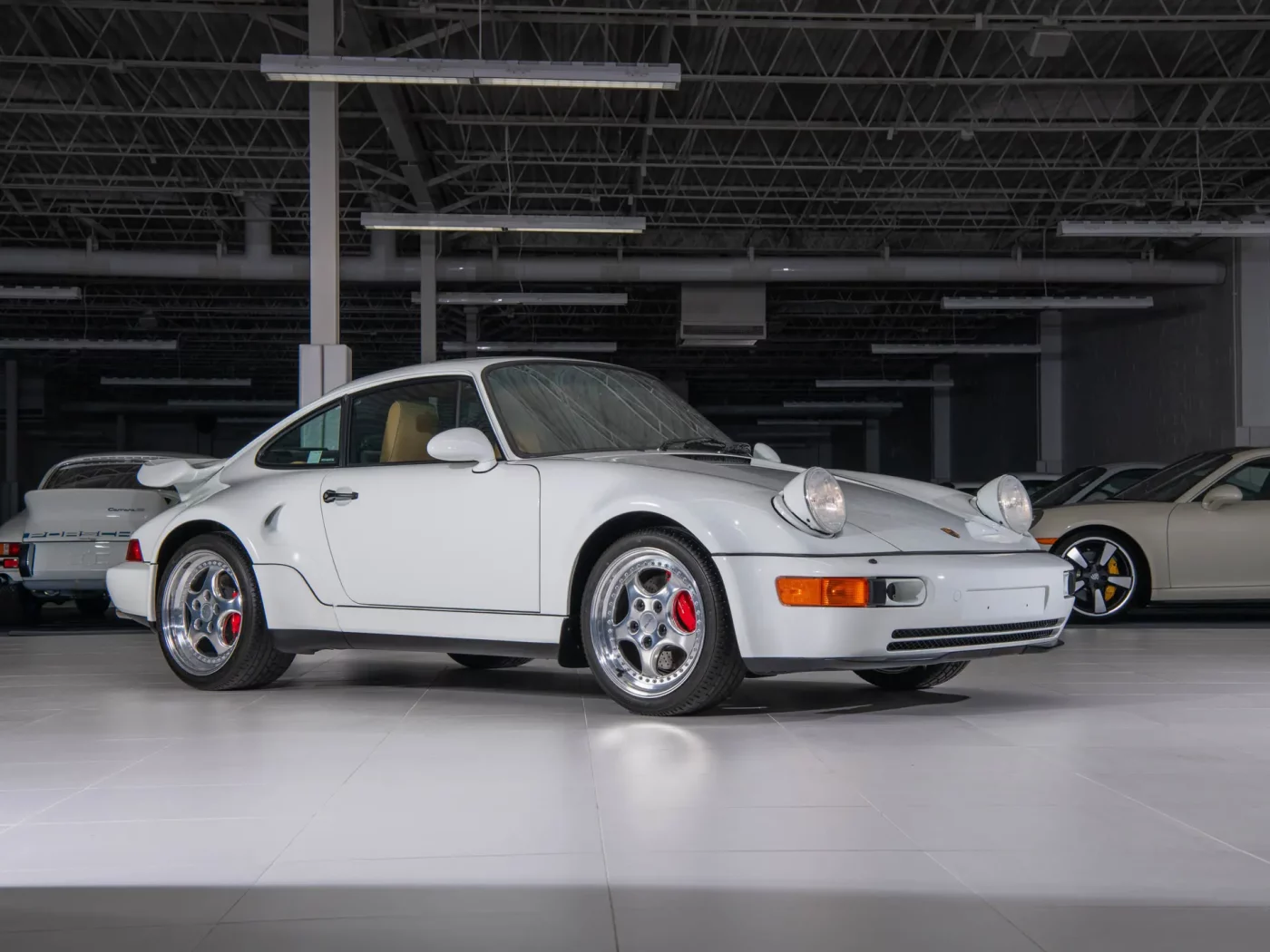
Why It's On The List
The Porsche 911 Turbo S Flachbau stands as one of the most extreme, exotic, and collectible 911s ever produced. Built at the height of Porsche’s bespoke Sonderwunsch (Special Wishes) era, the Turbo S Flachbau combined the fearsome performance of the 964 Turbo S with the iconic flat-nose bodywork inspired by Porsche’s 935 race cars. This was not merely a styling exercise—it was a no-compromise supercar built in vanishingly small numbers for Porsche’s most demanding clientele.
Under the rear decklid sat the uprated 3.6-liter single-turbo flat-six, delivering explosive power and immense torque through the rear wheels. With lightweight construction, aggressive boost tuning, and massive brakes, the Turbo S Flachbau was brutally fast by early-1990s standards—capable of overwhelming acceleration and spine-tingling drama. Unlike later all-wheel-drive Turbos, this rear-drive layout demanded real respect, preserving the raw, high-stakes driving experience that defined Porsche’s most infamous turbocharged 911s.
What truly sets the Flachbau apart is its presence. The slant-nose front end, pop-up headlights, widened bodywork, side strakes, and large rear wing gave the car an unmistakable silhouette—part road car, part endurance racer. Inside, luxury appointments contrasted with the car’s ferocity, reminding drivers that this was both a hand-built showpiece and a serious performance machine. Every detail reinforced its exclusivity, from bespoke trim to its rarity alone.
Today, the Porsche 911 Turbo S Flachbau (964) is regarded as one of the ultimate expressions of the air-cooled Turbo lineage. It represents peak excess, peak performance, and peak individuality from an era when Porsche was willing to build outrageous cars simply because it could. Rare, intimidating, and visually unforgettable, the Flachbau Turbo S earns its place among the greatest—and wildest—Porsche 911s ever made.
Details
Model: Porsche 911 Turbo 3.6 S "Flatnose" (964)
Years: 1994
Production: 75 units (flatnose)
Engine: 3.6 L Turbocharged Flat 6 (M64/50)
Power: 380 bhp @ 5750 rpm
Torque: 384 ft lbs @ 5000 rpm
0 - 60 mph: 4.0 seconds
Top Speed: 174 mph
Known For
Flachbau supercar theater: Slantnose bodywork with pop-up headlights, massive rear wing, and widened arches made it one of the most visually outrageous 911s ever built.
Ultimate air-cooled Turbo S rarity: Produced in extremely limited numbers, combining 3.6-liter Turbo power with hand-built details that place it among the most collectible 964s of all time.
Learn More
Porsche 911 Carrera (993) (1996 - 1998)
Represents the most complete and refined expression of the air-cooled 911, combining modern usability with classic character. As the final air-cooled generation, it delivers timeless design, improved suspension, and everyday drivability without losing the mechanical soul that defines a great 911.
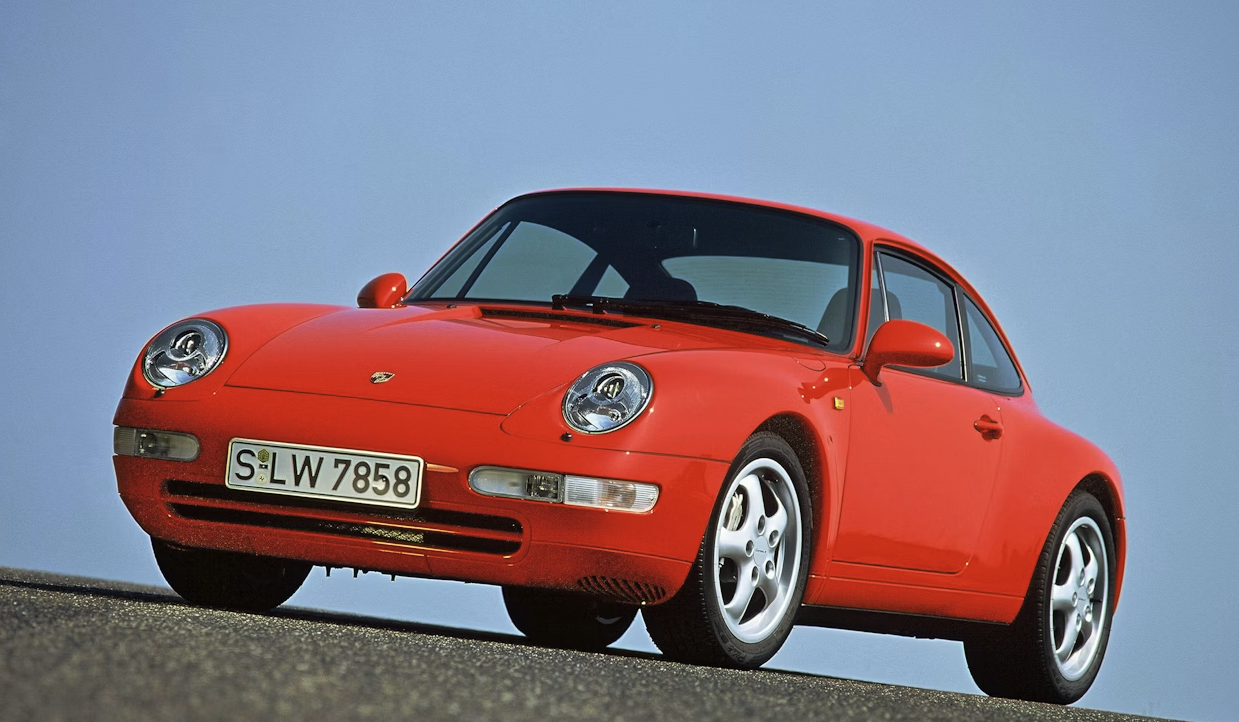
Why It's On The List
The Porsche 911 Carrera (993) is widely celebrated as the most refined and complete expression of the air-cooled 911. As the final generation powered by an air-cooled flat-six, the 993 Carrera arrived at a pivotal moment for Porsche—tasked with modernizing the 911 while honoring three decades of mechanical tradition. The result was a car that felt unmistakably classic yet dramatically more polished, cementing its status as one of the most beloved 911s ever built.
Under the rear decklid sat a revised 3.6-liter flat-six with improved breathing, smoother power delivery, and increased reliability. Just as important was the all-new multi-link rear suspension, which transformed the way the 911 handled by taming the traditional lift-off oversteer that had defined earlier models. The 993 retained its rear-engine character but delivered far greater confidence at the limit, making it both faster and more approachable for a wider range of drivers.
The 993 also marked a major leap forward in build quality, refinement, and design. Its wider stance, integrated bumpers, and flowing lines gave it a timeless aesthetic that many consider the most beautiful 911 ever made. Inside, the cabin felt solid and purpose-built, offering improved ergonomics and comfort without losing the focused, driver-centric layout that defines the 911 experience.
Today, the Porsche 911 Carrera (993) is revered as the end of an era and a high point in the model’s evolution. It blends air-cooled soul with modern engineering in a way no other 911 can replicate. As both a daily-drivable classic and a historically significant milestone, the 993 Carrera earns its place among the greatest Porsche 911s ever created.
Details
Model: Porsche 911 Carrera Coupe (993)
Model Years: 1994 - 1997
Production: 23,127 units (14,541 V1, 8,586 V2)
Engine: 3.6 L Aircooled Flat 6 (M64/05, M63/21)
Power: 268 bhp @ 6100 rpm ('94/'95), 282 bhp @ 6100 rpm ('96/'97)
Torque: 243 ft lbs @ 5000 rpm ('94/'95), 251 ft lbs @ 5250 rpm ('96/'97))
0 - 60 mph: 5.4 seconds
Top Speed: 171 mph
Known For
Last of the air-cooled Carreras: The final naturally aspirated air-cooled 911 Carrera before Porsche moved to water cooling, giving it enduring enthusiast and collector appeal.
Multi-link rear suspension breakthrough: The new rear suspension dramatically improved stability and confidence while preserving the 911’s unique rear-engine feel.
Learn More
Porsche 911 Turbo (993) (1995 - 1998)
Perfected the air-cooled Turbo formula, pairing twin-turbocharged power with AWD for unprecedented speed and stability. As the final air-cooled Turbo 911, it delivered supercar performance with everyday usability. Pinnacle of analog turbo era.
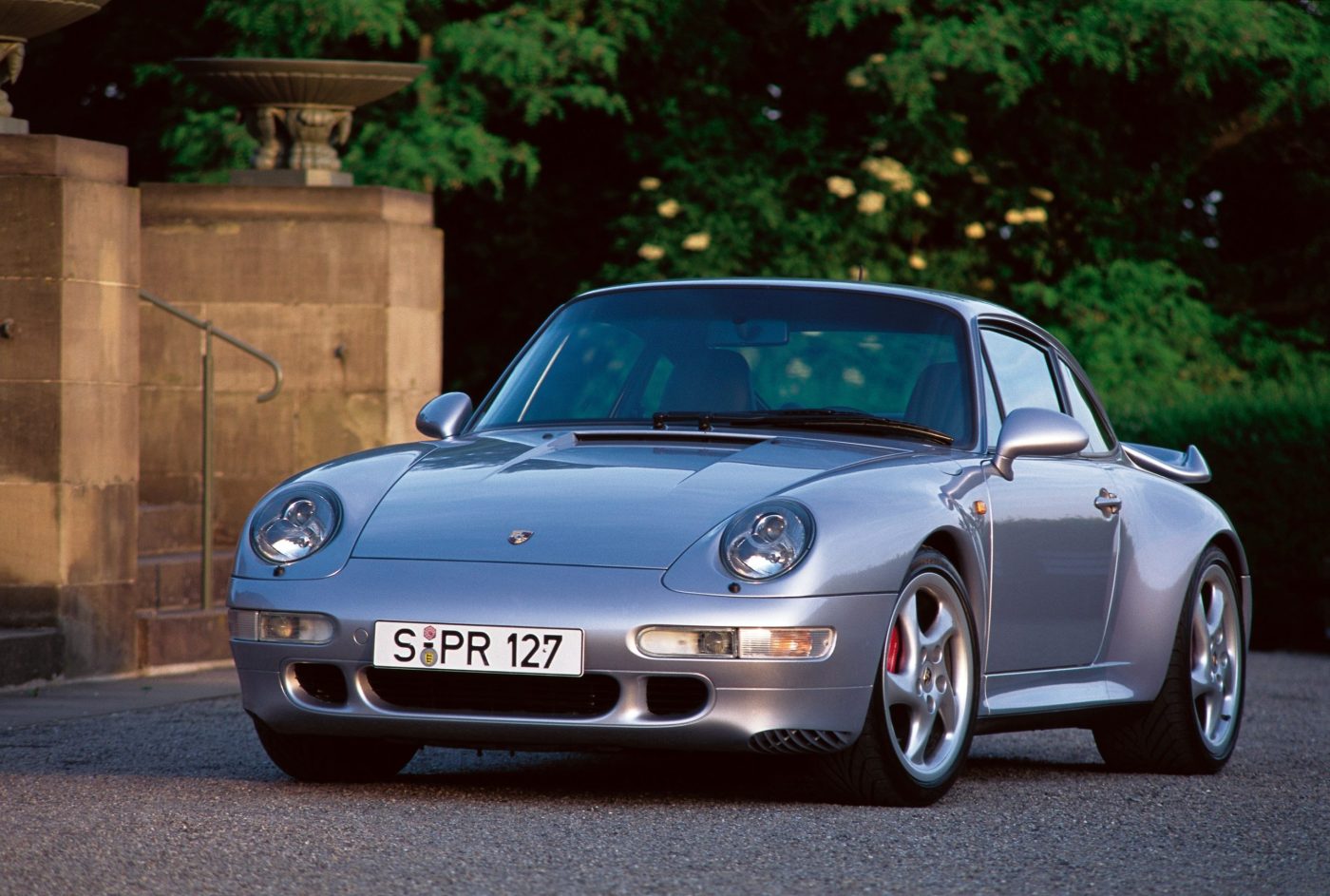
Why It's On The List
The Porsche 911 Turbo (993) stands as one of the most significant and accomplished supercars of the 1990s—and arguably the ultimate expression of the air-cooled Turbo lineage. Arriving at a time when Porsche was redefining its future, the 993 Turbo combined decades of forced-induction experience with cutting-edge technology, delivering a car that was devastatingly fast yet remarkably usable. It marked the moment when the Turbo evolved from a fearsome specialist into a genuinely complete high-performance machine.
Power came from a 3.6-liter twin-turbocharged flat-six, a first for the 911 Turbo, producing relentless acceleration across the rev range. Equally transformative was the introduction of all-wheel drive, which finally tamed the Turbo’s notorious power delivery and allowed drivers to deploy its performance with confidence in almost any conditions. Massive brakes, wide bodywork, and advanced suspension gave the 993 Turbo composure and stability that few rivals of the era could match.
Despite its extreme performance, the 993 Turbo retained a refined, understated character. The interior offered genuine luxury and comfort, while the exterior design—wide hips, fixed rear wing, and subtle aggression—has since become iconic. Unlike earlier Turbos that demanded constant vigilance, the 993 Turbo felt planted, predictable, and confidence-inspiring, without losing the sense of occasion that defines a true Porsche flagship.
Today, the Porsche 911 Turbo (993) is widely regarded as one of the greatest all-around 911s ever built. As the final air-cooled Turbo and one of the most advanced cars of its generation, it represents a perfect convergence of tradition and innovation. Brutally fast, beautifully engineered, and timeless in design, the 993 Turbo earns its place among the very best Porsche 911s ever made.
Details
Model: Porsche 911 Turbo (993)
Model Years: 1995 - 1998
Production: 5,978 units
Engine: 3.6 L Turbocharged Flat 6
Power: 408 bhp @ 5750 rpm
Torque: 398 ft lbs @ 4500 rpm
0 - 60 mph: 4.4 seconds
Top Speed: 180 mph
Known For
First twin-turbo 911: Introduced twin turbochargers and AWD, eliminating much of the Turbo’s traditional lag while delivering massive, usable performance.
Ultimate air-cooled Turbo: Universally regarded as the most complete and refined air-cooled Turbo ever built, with timeless wide-body design and immense real-world pace.
Learn More
Porsche 911 Carrera RS 3.8 (993) (1995 – 1996)
The final air-cooled RS, combining old-school character with modern precision in a way Porsche would never repeat. A thin-glass, stripped-interior masterpiece that many consider the peak of the air-cooled driving experience.
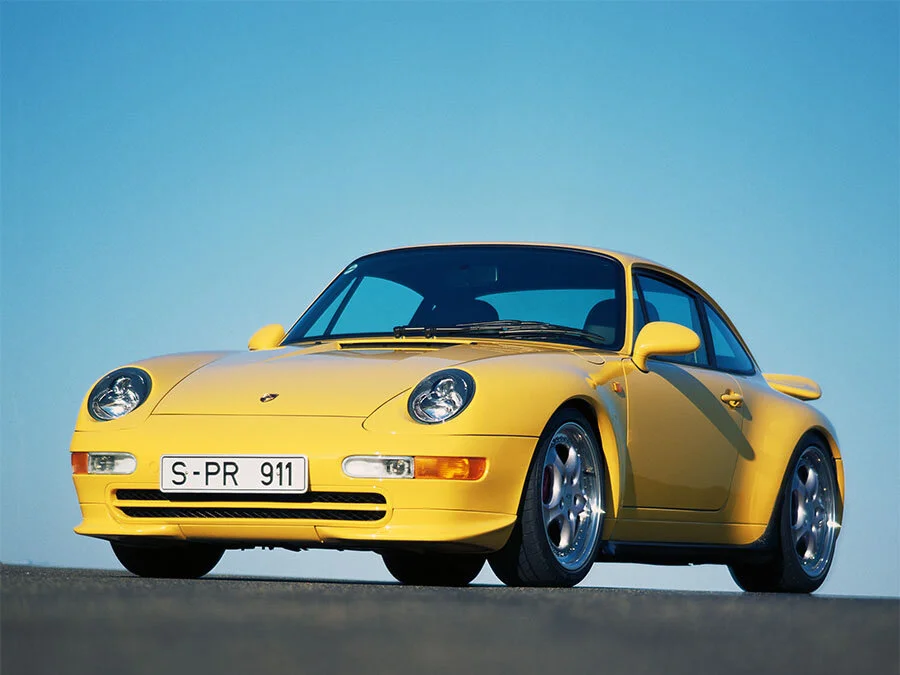
Why It's On The List
The Porsche 911 Carrera RS 3.8 (993) occupies a singular place in Porsche history because it represents both an ending and a culmination. Introduced in 1995, it was the final air-cooled RS, but it was also the most technically advanced air-cooled 911 Porsche ever produced. Unlike earlier RS models that felt raw and sometimes unfinished, the 993 RS 3.8 combined old-school mechanical character with a level of precision and composure that hinted at the modern era to come—without sacrificing purity.
What makes the 993 RS so special is how completely Porsche refined the air-cooled platform before closing the chapter. The wider body, derived from the Carrera 4 shell, dramatically improved rigidity. Multi-link rear suspension brought newfound stability and confidence, taming the traditional 911 lift-off reputation without muting feedback. The result was an RS that felt serious, planted, and devastatingly effective, yet still unmistakably air-cooled in sound, vibration, and feel.
The 3.8-liter engine elevated the experience even further. This wasn’t about headline power figures—it was about response, torque, and durability. The engine pulled harder everywhere than earlier RS models, making the car feel more muscular and authoritative, particularly at high speeds. Where earlier RS cars felt nervous and alive, the 993 RS felt controlled and relentless, more endurance racer than homologation special. It was the moment Porsche proved that air-cooled performance had not yet hit its ceiling.
Rarity and context seal its status among the greatest RS Porsches ever made. Built primarily for Europe and produced in extremely limited numbers, the 993 RS 3.8 was never intended to be widely owned or adored—it was a tool for serious drivers. With the switch to water cooling immediately following, Porsche would never again have the opportunity to evolve the air-cooled RS concept. That finality matters. The 993 RS is not just the last of something—it is the most complete expression of what an air-cooled RS could be.
Details
Model: Porsche 911 Carrera RS 3.8 (993)
Years: 1995 - 1996
Production: 1,014 units
Engine: 3.8 L Aircooled Flat 6 (M64/20)
Power: 300 bhp @ 6,500 rpm
Torque: 262 ft lbs @ 5400 rpm
0 - 60 mph: 4.7 seconds
Top Speed: 172 mph
Known For
Being the final and most refined air-cooled RS Porsche ever built
Blending classic 911 character with near-modern chassis precision
Learn More
Porsche 911 GT2 (993) (1995 - 1998)
Stripped the already ferocious 993 Turbo down to a rear-wheel-drive, race-first weapon built to win GT competition. Savage, lightweight, and unapologetically difficult, it stands as the most extreme road-legal expression of the air-cooled 911.
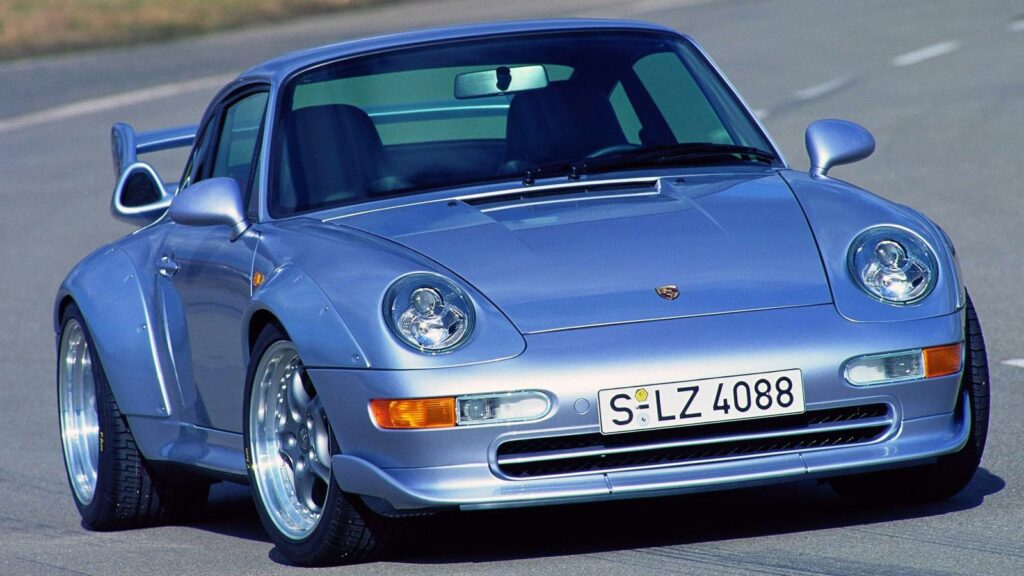
Why It's On The List
The 993 GT2 is special. Based on the 993 Turbo, the 993 GT2 was built for homologation purposes. Porsche took the twin-turbo flat-six engine from the 911 Turbo and combined it with the wide-body rear-drive chassis to create one of our favorite Porsches ever. Only 57 were built and they go for over a million dollars today so don’t expect to find a bargain (remember, this is the last of the air-cooled turbocharged, extreme 911s).
The 993 GT2 featured widened plastic fenders, more aggressive front bumper with side canards and a massive rear wing with air scoops in the struts. It wore new, wider wheels and the ride height was dropped. The 993 GT2’s original 3.6 L (220 cu in) engine developed 429 hp and in 1998 it was upgraded to 444 hp. Top speed of 187 mph and a 0-60 sprint of 3.9 seconds was devastatingly fast back in 1995.
Development work behind the Turbo S LM-GT was a big contributor to the GT2. To take all this hard-earned knowledge and tech to the track, Stuttgart had to meet the FIA’s stringent requirements and build a road-legal homologation run. Thus the 993-generation 911 GT2 was born. The 993 GT2 was introduced in 1995, two years after the 993 911 had been launched.
Details
Model: Porsche 911 GT2 (993)
Years: 1995 - 1996, 1998
Production: 37 units (+21 CS units)
Engine: 3.6 L Turbocharged Flat 6
Power: 424 bhp @ 5750 rpm ('95-'96), 450 bhp @ 5750 rpm ('98)
Torque: 400 ft lbs @ 4500 rpm ('95-'96), 432 ft lbs @ 3500 rpm ('98)
0 - 60 mph: 3.9 seconds ('95-'96), 3.7 seconds ('98)
Top Speed: 186 mph
Known For
No-compromise motorsport DNA: Rear-wheel drive, aggressive weight reduction, massive aero, and turbocharged power made it a homologation special barely disguised as a road car.
The original “widowmaker” GT car: Brutal performance and minimal electronic aids earned the GT2 its fearsome reputation—and cemented its status as a true driver’s 911 legend.
Learn More
Porsche 911 Carrera S (993) (1997 – 1998)
Combined the purity of a naturally aspirated, rear-wheel-drive air-cooled Carrera with the muscular wide-body stance of the Turbo. As the ultimate “non-Turbo” 993, it delivers timeless design, perfect proportions, and one of the most balanced driving experiences of the air-cooled era.
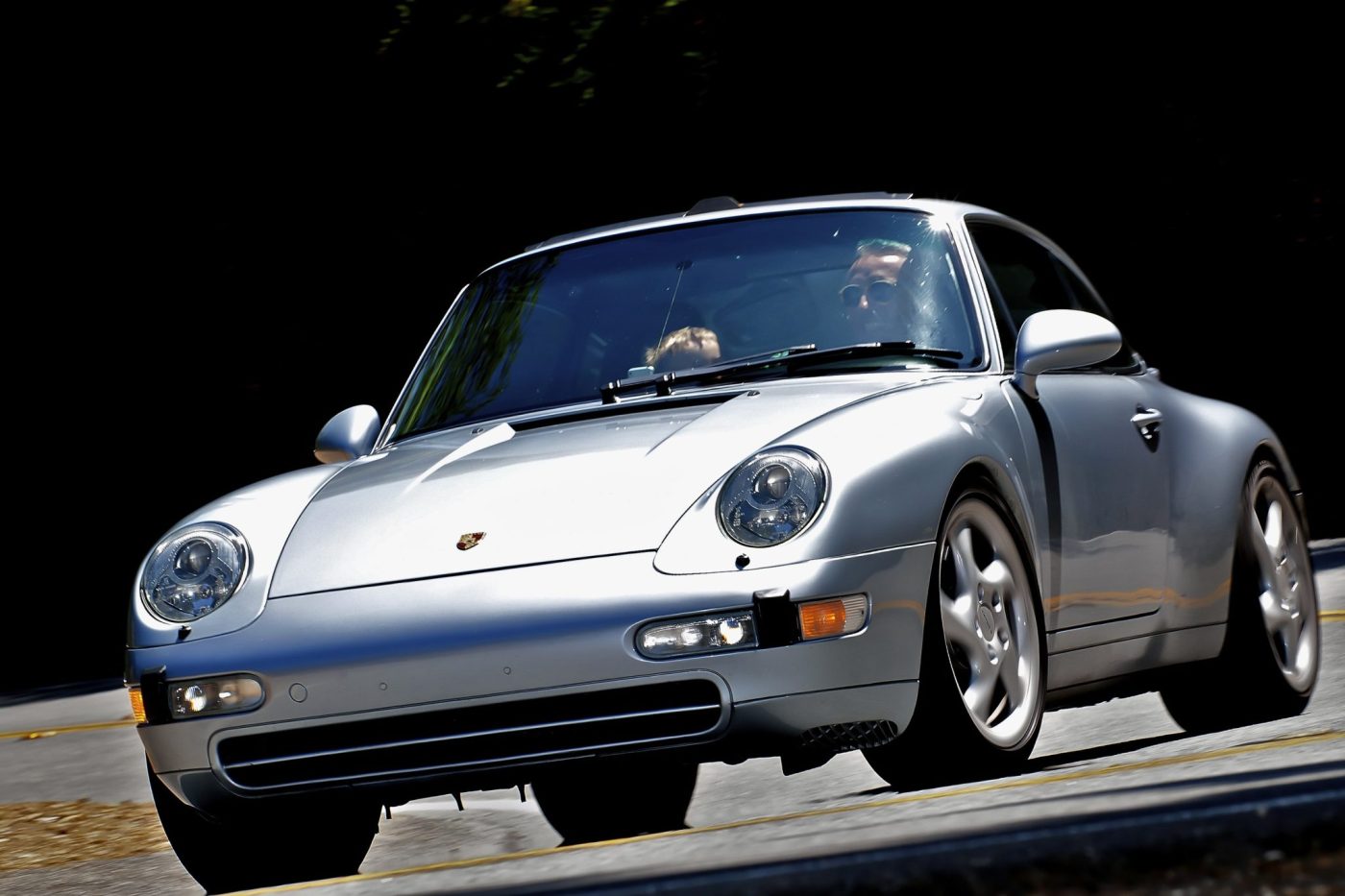
Why It's On The List
The Porsche 911 Carrera S (993) occupies a special place in 911 history as the most elegant and enthusiast-focused expression of the naturally aspirated air-cooled era. Introduced late in the 993 production run, the Carrera S combined the muscular widebody stance of the Turbo with the purity of a rear-wheel-drive, naturally aspirated drivetrain. It was a deliberate celebration of everything enthusiasts loved about the classic 911, distilled into one of the most visually striking and emotionally satisfying road cars Porsche ever built.
Under the rear decklid sat the familiar 3.6-liter air-cooled flat-six, delivering smooth, linear power and a spine-tingling soundtrack that defined the final air-cooled generation. Unlike the Turbo, the Carrera S relied on balance, throttle precision, and driver involvement rather than forced induction. The result was a car that felt more intimate and rewarding on real roads, offering exceptional steering feel, composure at speed, and confidence through corners thanks to the 993’s advanced multi-link rear suspension.
The Carrera S also stood out for its aesthetic and tactile appeal. Its wide hips, lowered stance, and Turbo-style brakes gave it a purposeful presence, while the interior blended refinement with classic Porsche ergonomics. With fewer visual add-ons than later performance models, the Carrera S achieved a timeless, understated aggression that many consider the peak of 911 design.
Today, the Porsche 911 Carrera S (993) is regarded as one of the most desirable non-Turbo air-cooled 911s ever made. It represents the perfect intersection of beauty, balance, and mechanical purity at the end of the air-cooled era. Rare, engaging, and endlessly usable, the 993 Carrera S earns its place among the greatest Porsche 911s ever created.
Details
Model: Porsche 911 Carrera S (993)
Years: 1997 - 1998
Production: 3,714 units
Engine: 3.6 L Aircooled Flat 6 (M63/21)
Power: 282 bhp @ 6100 rpm
Torque: 251 ft lbs @ 5250 rpm
0 - 60 mph: 5.2 seconds
Top Speed: 168 mph
Known For
Wide-body, NA perfection: Turbo-look bodywork without turbochargers, preserving throttle response, steering feel, and classic 911 balance.
Final-era air-cooled desirability: One of the most sought-after 993 variants thanks to its rarity, aesthetics, and status as a peak expression of air-cooled refinement.
Learn More
Porsche 911 Turbo S (993) (1997 – 1998)
Represents the absolute pinnacle of air-cooled Turbo development—more power, more exclusivity, and more presence than any Turbo before it. Built as a final farewell to the air-cooled era, it combined brutal twin-turbo performance with rare, hand-finished details that elevated it into true supercar territory.
Why It's On The List
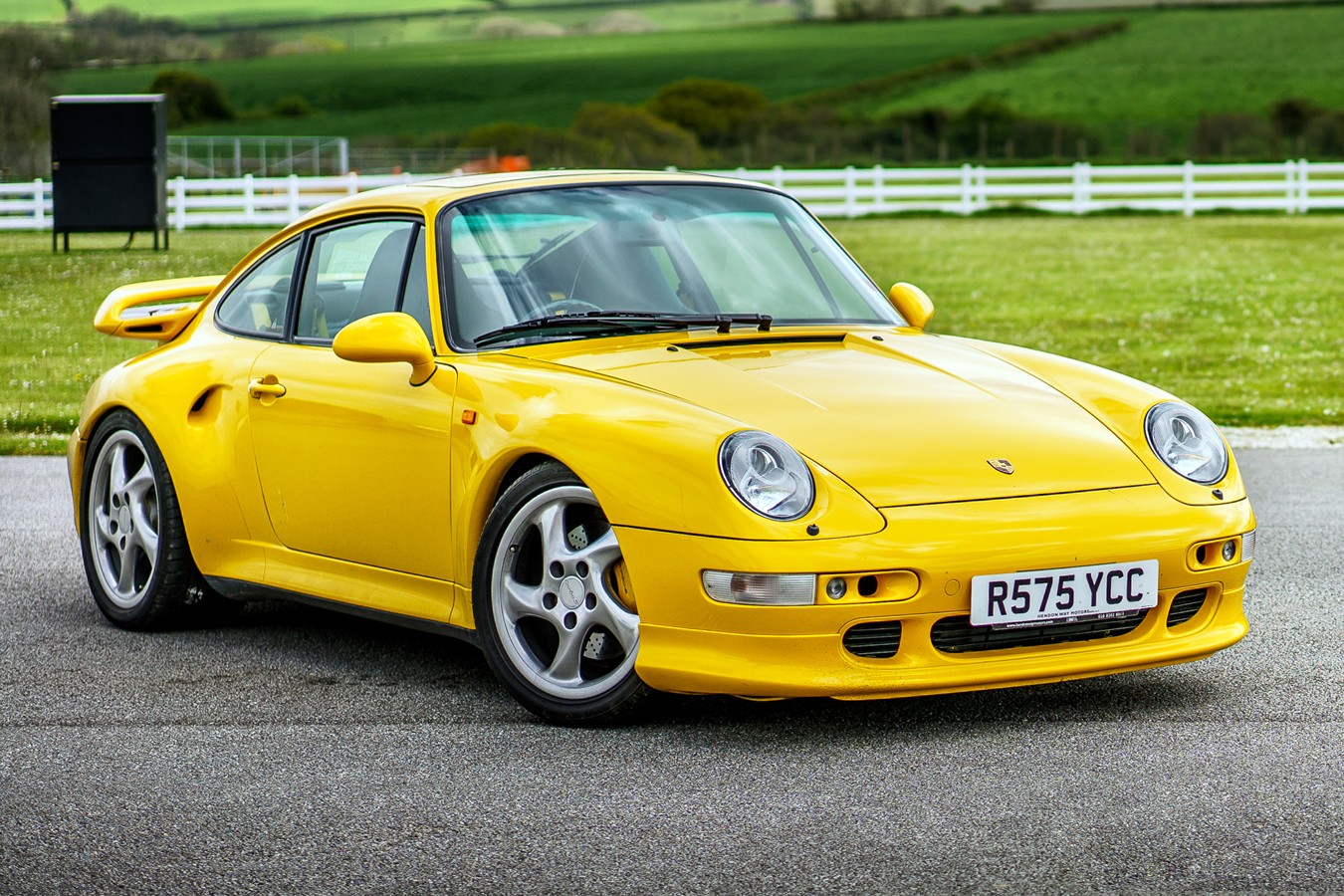
The Porsche 911 Turbo S (993) represents the absolute pinnacle of the air-cooled 911—an ultimate, no-compromise farewell to one of Porsche’s most important eras. Built in very limited numbers at the end of 993 production, the Turbo S was Porsche Motorsport’s final and most extreme evolution of the air-cooled Turbo formula. It wasn’t merely a trim upgrade; it was a statement car designed to showcase everything Porsche had learned about performance, durability, and forced induction before moving on.
At its core was an uprated version of the already formidable 3.6-liter twin-turbo flat-six, delivering significantly more power than the standard 993 Turbo. Power was sent through an all-wheel-drive system that provided remarkable traction and stability, allowing drivers to fully exploit the engine’s explosive acceleration. Massive brakes, reinforced mechanicals, and subtle weight-saving measures ensured the Turbo S could repeatedly deliver its performance without compromise—an engineering triumph even by modern standards.
Visually, the Turbo S was understated yet unmistakably purposeful. Wide Turbo bodywork, a fixed rear wing, and distinctive yellow brake calipers hinted at its enhanced capability without resorting to excess. Inside, the car blended luxury with intent, offering a level of comfort expected of a Porsche flagship while maintaining the focused, driver-centric atmosphere that defined the 993 generation.
Today, the Porsche 911 Turbo S (993) is widely regarded as one of the most collectible and revered 911s ever built. As the final air-cooled Turbo and the most powerful production 911 of its time, it represents the ultimate convergence of tradition, performance, and engineering excellence. Rare, brutally fast, and timeless in design, the 993 Turbo S earns its place among the greatest Porsche 911s ever made—and stands as a fitting full stop to the air-cooled era.
Details
Model: Porsche 911 Turbo S (993)
Years: 1997 - 1998
Production: 345 units
Engine: 3.6 L Turbocharged Flat 6
Power: 424 bhp @ 5750 rpm
Torque: 400 ft lbs @ 4500 rpm
0 - 60 mph: 3.6 seconds
Top Speed: 184 mph
Known For
Most powerful air-cooled 911: Enhanced twin-turbo output and uprated hardware made it the fastest and most formidable air-cooled 911 Porsche ever sold.
Ultra-rare end-of-era icon: Limited production with distinctive details like yellow brake calipers and bespoke trim cemented its status as one of the most collectible 911s of all time.
Learn More
Porsche 911 Turbo "Project Gold" (2018)
Built from a brand-new 993 body shell found in the warehouse, this was a factory "re-manufacturing" of an air-cooled car using modern techniques. It is a one-of-one creation that sold for over $3 million to benefit the Ferry Porsche Foundation.
Why It's On The List
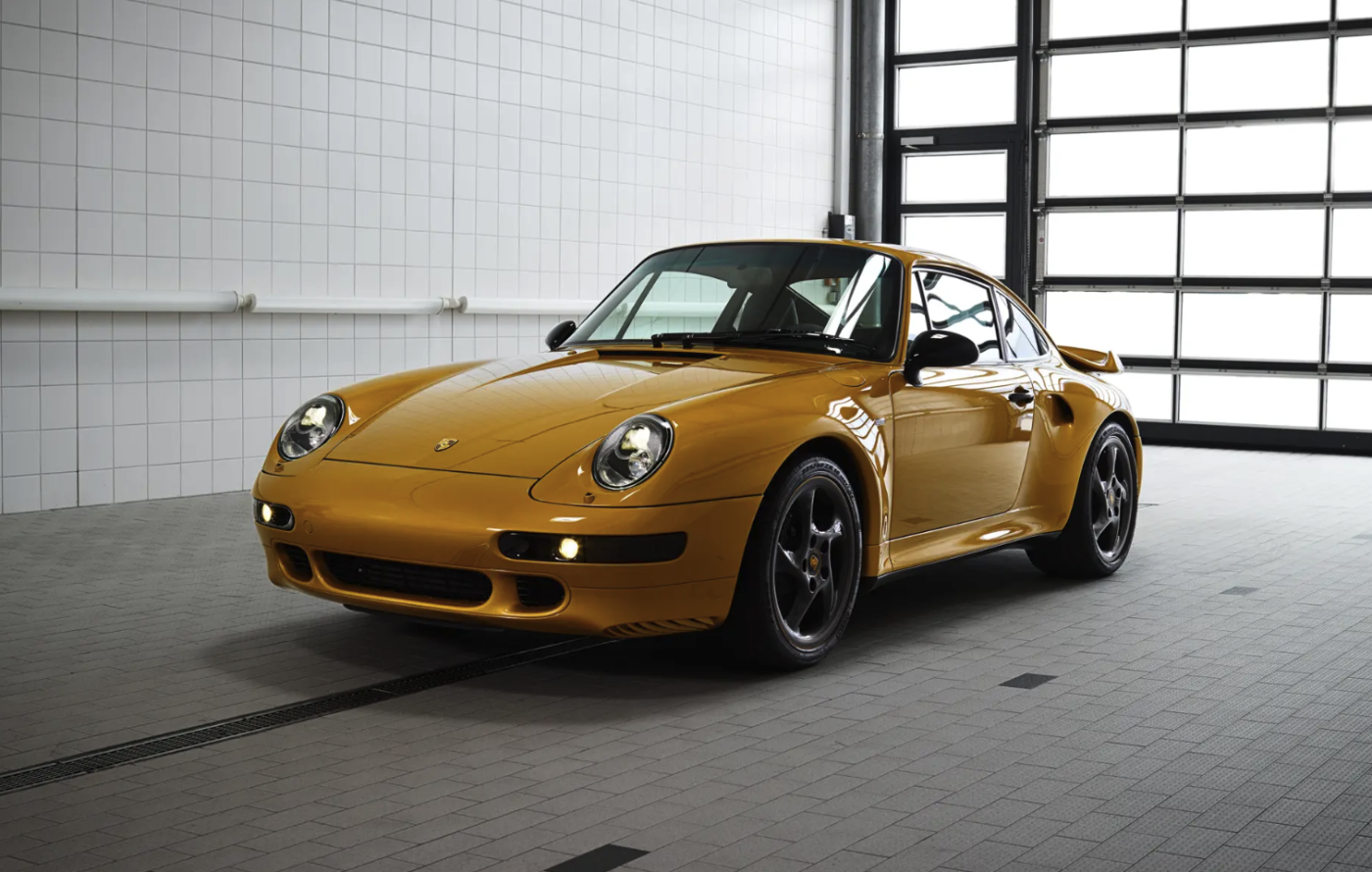
“Project Gold” was conceived by Porsche Classic as part of the 70th anniversary celebration of Porsche sports cars, and it represents the very last air-cooled 911 Turbo ever manufactured—despite being built in 2018 using genuine new-old-stock components and modern assembly techniques. The project began with a genuine 993-series Turbo body shell discovered in Porsche’s warehouse, which was meticulously restored, protected, and assembled with thousands of original parts sourced through Classic’s extensive catalog. The intention was not simply to restore an old car, but to build a brand-new one that honored the engineering and ethos of Porsche’s air-cooled era while carrying forward design cues from contemporary Porsche models such as the 991 Turbo S Exclusive Series.
Underneath its striking Golden Yellow Metallic paint and bespoke interior lies the heart of a 993 Turbo S—its 3.6-liter twin-turbo flat-six developed to 450 horsepower, a configuration right at the pinnacle of air-cooled performance and shared with only a handful of original Turbo S models. The drivetrain, all-wheel drive system, and other key mechanical components were all new builds from genuine Porsche Classic parts.
When it was offered at the RM Sotheby’s Porsche 70th Anniversary Auction in Atlanta in 2018, Project Gold captured the imagination of collectors worldwide, selling for over $3.1 million.
Details
Engine: 3.6 L twin-turbocharged air-cooled flat-six
Power: ~450 hp (993 Turbo S specification)
Transmission: 6-speed manual or automatic (built from Porsche Classic parts)
Drivetrain: All-wheel drive (Porsche’s proprietary system)
Body: Original 993 Turbo shell restored and assembled as new
Color: Golden Yellow Metallic with bespoke interior detailing
Known For
Being the last air-cooled 911 Turbo ever built, assembled new in 2018 from original Porsche Classic parts to celebrate Porsche’s 70th anniversary.
Selling at auction for over $3 million with proceeds benefiting the Ferry Porsche Foundation, underlining its significance as both a collector piece and charitable milestone.
1997 Porsche 911 GT2 (993) "Coppa Florio"
This is the only 993 GT2 ever finished in the light blue "Coppa Florio" color with a full "Can Can Red" leather interior. It is widely considered the most visually striking and personalized air-cooled GT2 in existence.

Why It's On The List
The Porsche 911 GT2 Coppa Florio occupies a unique place in Porsche history as the only 993-generation GT2 finished in Coppa Florio light blue, paired with a full Can Can Red leather interior. Built through Porsche’s Exclusive/Sonderwunsch program, this car took what was already the most extreme air-cooled 911 of its era and infused it with a level of individuality rarely seen on a GT2. In a model line defined by aggression, austerity, and motorsport purpose, the Coppa Florio stands apart as both brutal and beautiful.
Mechanically, nothing was softened. The 993 GT2 was Porsche’s rear-wheel-drive, twin-turbo homologation special—lighter, louder, and far more demanding than the contemporary Turbo. With its wide bodywork, massive rear wing, stripped interior, and race-bred hardware, the GT2 was infamous for rewarding only the most skilled drivers. The Coppa Florio retained all of that intensity, ensuring that its bespoke appearance never came at the expense of authenticity or performance.
What makes this car truly special is the audacity of its specification. Coppa Florio blue is elegant, almost delicate—completely at odds with the GT2’s reputation as the “widowmaker” of the 993 range. The contrast is heightened further by the Can Can Red leather interior, a color more commonly associated with luxury and flair than homologation specials. Yet the combination works brilliantly, turning the GT2 into a rolling statement piece that balances violence with sophistication. It is personalization at the highest level, executed by the factory with absolute confidence.
Details
Engine: 3.6-liter twin-turbocharged air-cooled flat-six
Power: ~430–450 hp (varies by GT2 specification)
Transmission: 6-speed manual
Drivetrain: Rear-wheel drive
Body: Lightweight wide-body GT2 shell with fixed rear wing
Production: Extremely limited overall GT2 run; Coppa Florio is one-of-one
Known For
Being the only Porsche 993 GT2 ever finished in Coppa Florio light blue, paired with a full Can Can Red leather interior
Representing the most personalized and visually dramatic air-cooled GT2 ever produced through Porsche’s Exclusive/Sonderwunsch program