
Best Porsches Ever Made: A Definitive List
Icons, Legends, and Modern Masterpieces. We Rank The 50 Best Porsche 911s Of All Time!
Every Era, Philosophy, & Unforgettable Porsche.
Seventy-five years of Porsche history. Dozens of icons. Countless personal favorites. And one impossible list. Ranking the 50 greatest Porsches ever made is not an exercise in math or lap times—it’s an attempt to distill the soul of one of the most storied manufacturers in automotive history into a single, definitive conversation starter. From race-bred legends and homologation specials to road cars that quietly reshaped what performance, balance, and driver engagement could mean, Porsche’s catalog is so deep that any list like this is destined to spark debate. That’s not a flaw—it’s the point.
To build this list, we looked far beyond raw performance numbers or modern benchmarks. We considered historical significance and influence: did the car change Porsche’s trajectory, redefine a segment, or introduce ideas that still echo today? Driving experience mattered just as much as outright speed—how a car feels, how it communicates, and how it rewards the driver. Motorsport pedigree, engineering innovation, rarity, and long-term desirability all played a role, as did cultural impact: the cars enthusiasts still talk about, chase, and revere decades later. This is not a ranking of the “fastest” Porsches ever made—it’s a celebration of the cars that mattered most. The ones that moved the game forward, captured imaginations, and helped define what Porsche is, was, and continues to be.
How We Practically Chose The Best – Our Process
We broke down the list of all Porsche models by type (race car, production model, 911 models, special editions, supercars and so on). We went through each category to pick our favorite cars. We looked at factors like historical significance, technology, performance, mystique and outright desirability both historically and today. That helped whittle the list down to about 130 cars that we deemed good enough to be considered an awesome Porsche. Next we started to narrow down the list to seventy Porsche’s that were worthy of their place in the best of Porsche list.
Once we had our fifty cars the next phase was a heated discussion for the next month of so trying to rank them all from 50 to 1. Again, we looked at the key factors and let each person on our five person panel decide where the cars sat on the list. Lots of back and forth, arguing, fighting and hours of research later and we had our list of 11 to 50 and our rough top 10. Ranking the top ten took another two weeks of back and forth. The Top 10 was the least satisfying part of this process because the reality is that any car on the Top 10 Porsche list is good enough for first place. It really depends on which factor you find most important and so much of that is personal opinion.
If you look at Porsche cars through the lens of motor racing then your list of the top ten Porsche’s will different than mine since I’m less of a motorsports fan and more into cars I can use on the road. We tried to balance race cars with production cars, special models an supercars to have as fair a list as possible when you consider it all together as Porsche’s body of work across categories.
Ranking Porsches Is a Dangerous Game
Overall, historical significance weighted heavily for the top positions. The 917, 956, and 962 are untouchable because they didn't just win races—they fundamentally changed motorsport and built the financial foundation for everything that followed. Audacity was rewarded. The 963 RSP and 935 Street cars represents Porsche at its most magnificently unreasonable, making race cars road-legal because they could. The "Blueprint" factor elevated cars like the RS 2.7, 550 Spyder, and 911 R (1967) because everything that came after owes something to them.
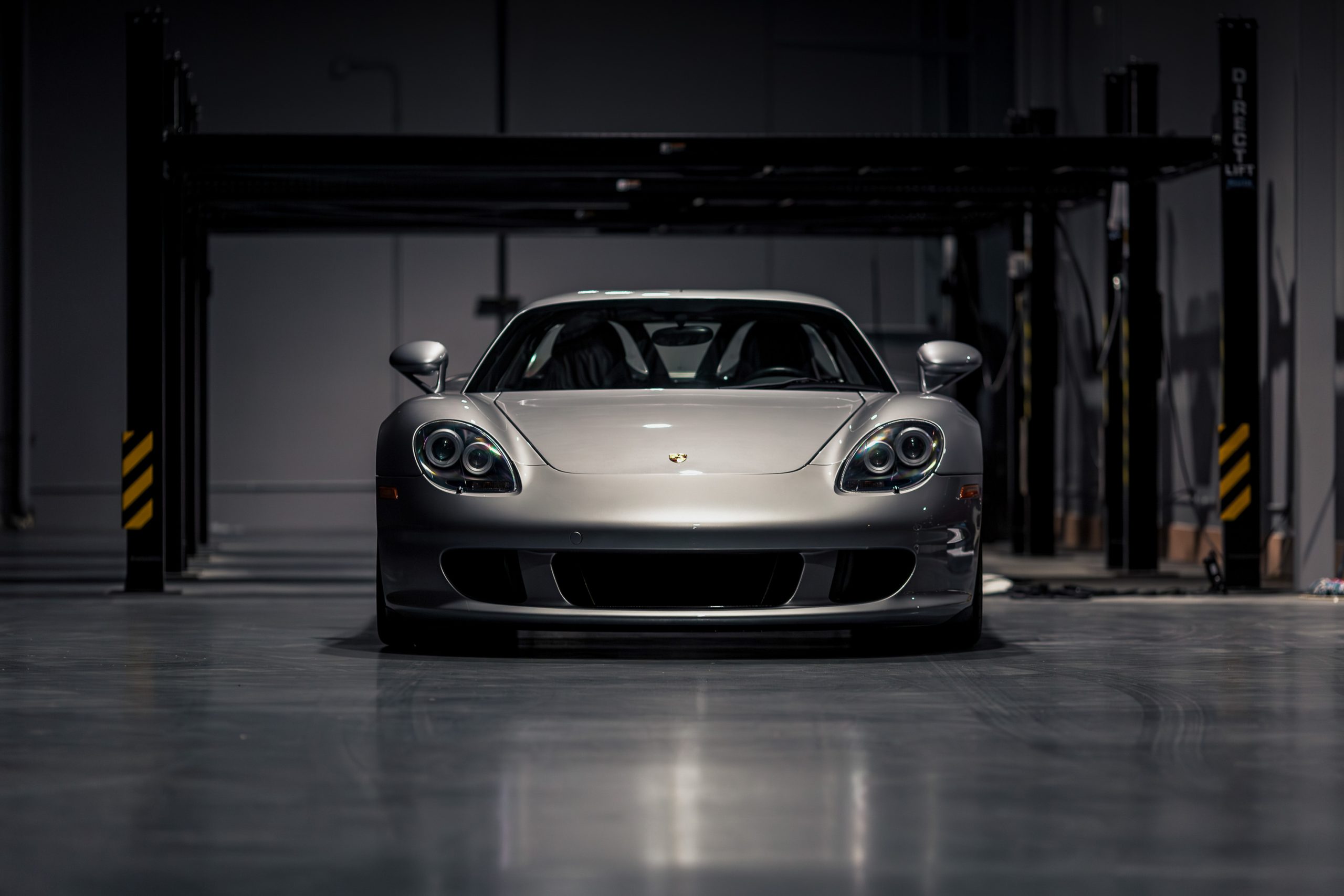
Driver engagement matters deeply for road cars. The Carrera GT ranks really high on our list because no other Porsche—perhaps no other car—offers that level of raw, analog connection. Business impact was less of a factor, which is why you don't see any Taycans, Macans or Cayennes on the list. The SUVs and sedans had a huge impact on the brand, but they just weren't "special" enough despite how exceptional they are. This is a list that is ultimately a ranking celebrating Porsche's sporting soul.
The All Time Greats – 50 Best Porsches of All Time! Seventy-Five Years. Hundreds of Legends. One Impossible List.
1. Porsche 917 (K, LH, & 917/30)
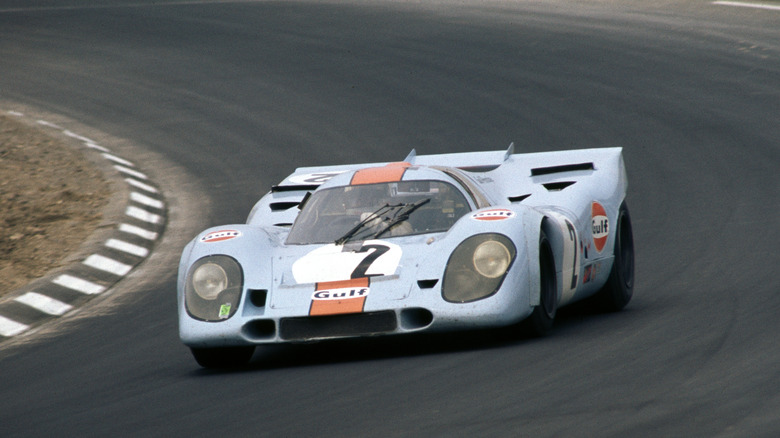
The car that gave Porsche its first overall Le Mans win in 1970, the 917 is famous for its air-cooled Flat-12 engine and the 917/30 variant which produced over 1,100 hp for Can-Am dominance.
Why It's On The List
The Porsche 917 is the most legendary race car ever built. Developed to meet the FIA's new 5-liter prototype regulations for 1969, Porsche constructed 25 examples in just 10 months to achieve homologation—a feat of engineering determination that bordered on madness. The car's air-cooled flat-12 engine initially produced around 580 hp, but development pushed this figure dramatically higher over the car's lifespan.
The 917K (Kurzheck, or ""short tail"") delivered Porsche's first overall victories at Le Mans in 1970 and 1971, forever changing the brand's status in motorsport. The longtail 917LH variants were built for maximum speed on the Mulsanne Straight. But it was the 917/30, developed for the unrestricted Can-Am series, that became truly monstrous—its twin-turbocharged flat-12 produced over 1,100 hp in race trim and reportedly 1,500+ hp in qualifying specification.
The 917 transcended motorsport to become a cultural phenomenon, immortalized in Steve McQueen's 1971 film ""Le Mans."" Its Gulf Oil livery—powder blue and orange—remains one of the most recognizable color schemes in automotive history. The car was so dominant that regulations were changed specifically to end its reign.
Ranking Rationale
The most iconic race car ever built. The 917 delivered Porsche's first overall Le Mans victories (1970, 1971), dominated Can-Am with the 1,500+ hp 917/30, and became a cultural phenomenon through Steve McQueen's film. It fundamentally changed what was possible in motorsport and created the template for Porsche's racing dominance. No other car in history combines this level of success, innovation, and mythology.
Learn More
2. Porsche Carrera GT (2004 - 2007)
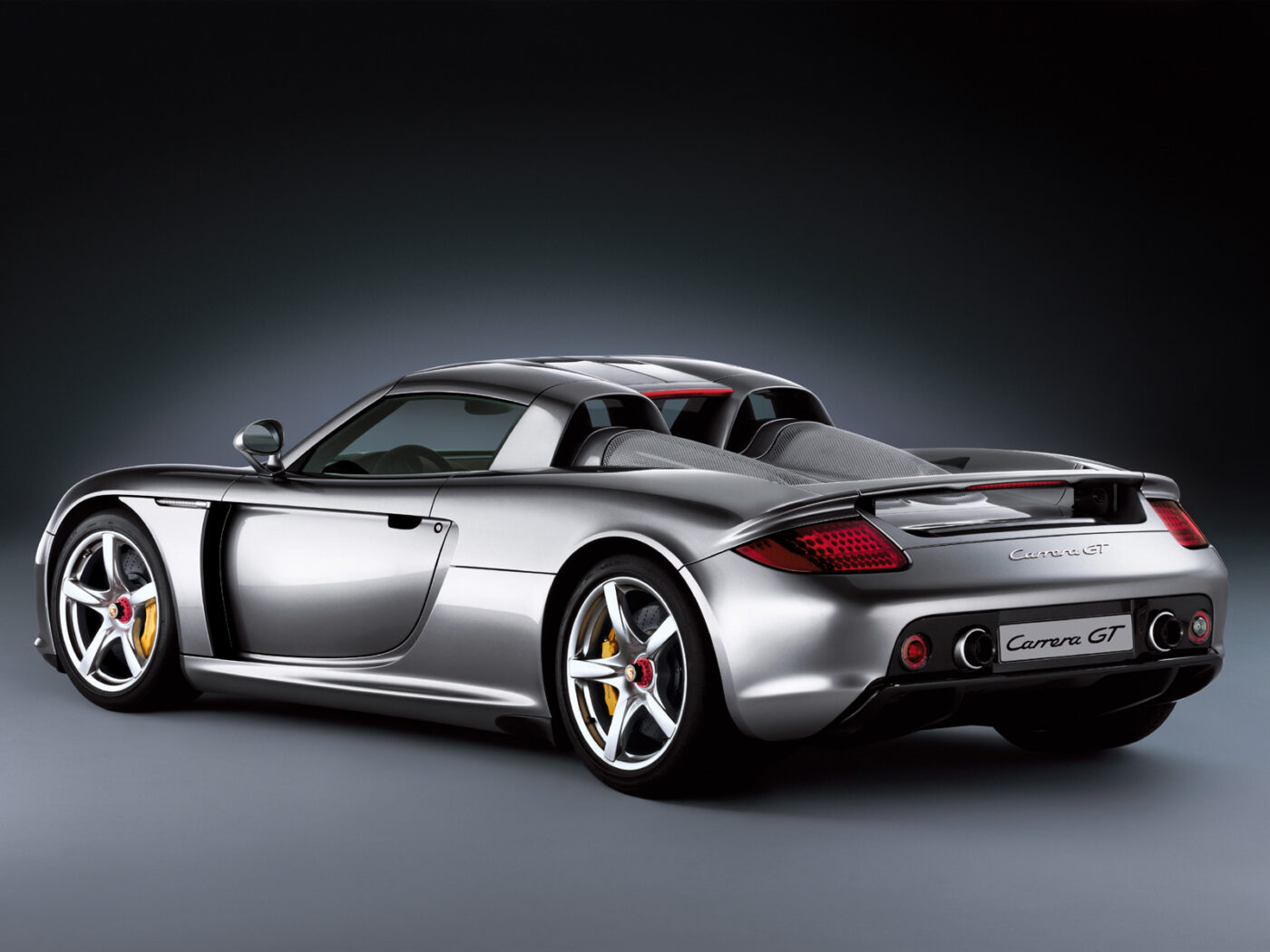
Renowned for its screaming 5.7L V10 derived from a canceled Le Mans project, this is the ultimate analog supercar. With a manual and no electronic stability control, it offers one of the rawest and most rewarding driving experiences in history.
Why It's On The List
The Porsche Carrera GT emerged from the ashes of a canceled Le Mans prototype program. When Porsche abandoned its LMP1 project in the late 1990s, engineers convinced management to adapt the racing V10 engine for a road-going supercar. The result was one of the purest, most uncompromising driving machines ever produced.
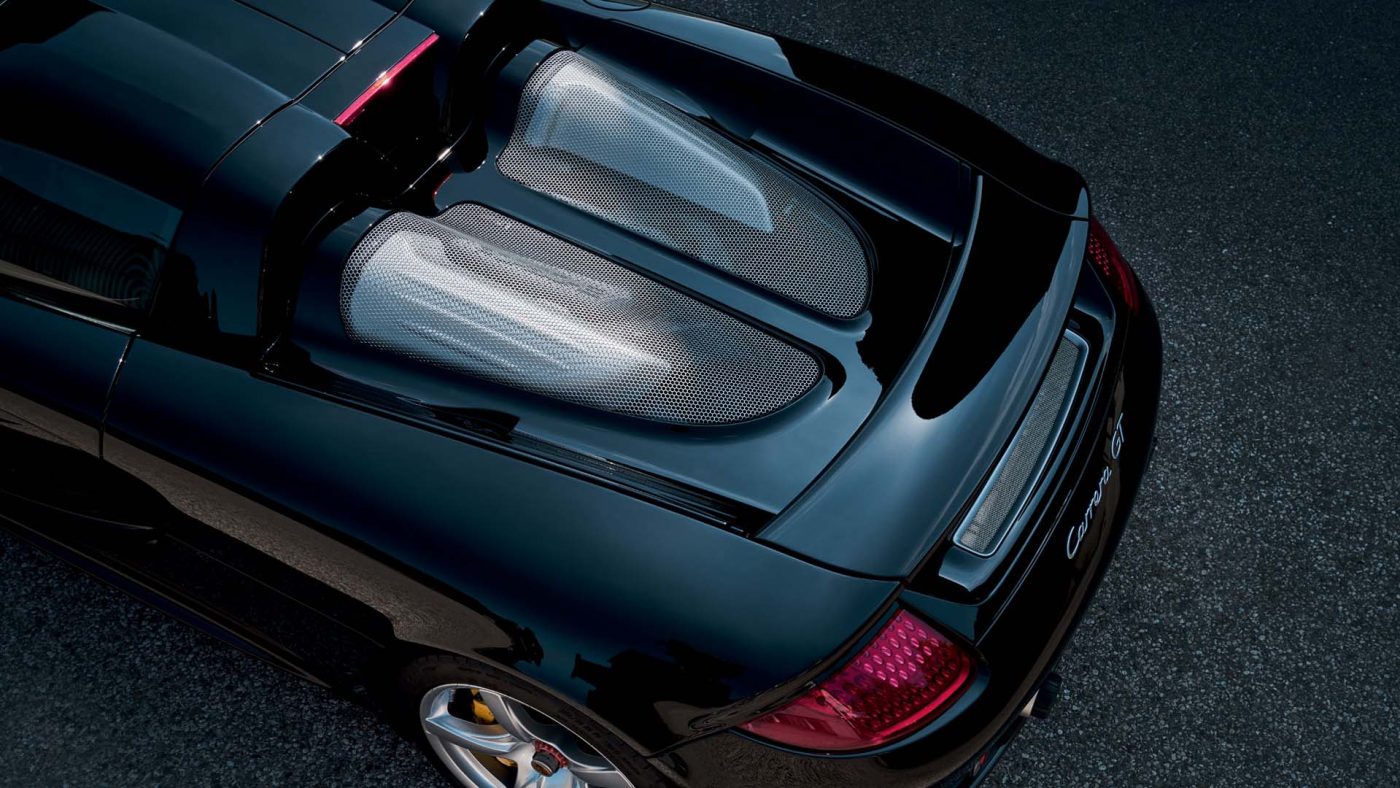
The heart of the Carrera GT is its 5.7-liter naturally aspirated V10, producing 612 hp and revving to 8,400 rpm with a sound that remains unmatched in automotive history. The engine sits in a carbon fiber monocoque chassis, driving the rear wheels through a six-speed manual gearbox with a notoriously tricky ceramic clutch. There is no stability control, no electronic nannies—just the driver, the machine, and the laws of physics.
Weighing just 1,380 kg (3,042 lbs) dry, the Carrera GT offers a driving experience of terrifying purity. It demands absolute respect and rewards skill like few other cars. The raised wooden gearshift knob pays homage to the 917, and the car's entire ethos channels that same unfiltered racing philosophy. Only 1,270 examples were built, and it remains the benchmark against which all analog supercars are measured.
Ranking Rationale
The ultimate analog supercar. A screaming 5.7L V10 derived from a canceled Le Mans project, a proper six-speed manual, and no electronic stability control. It offers one of the rawest and most rewarding driving experiences ever created. This is the car that proves Porsche could build a mid-engine hypercar to rival anything from Italy—and make it more visceral.
Learn More
3. Porsche 911 Carrera RS 2.7 (1973)
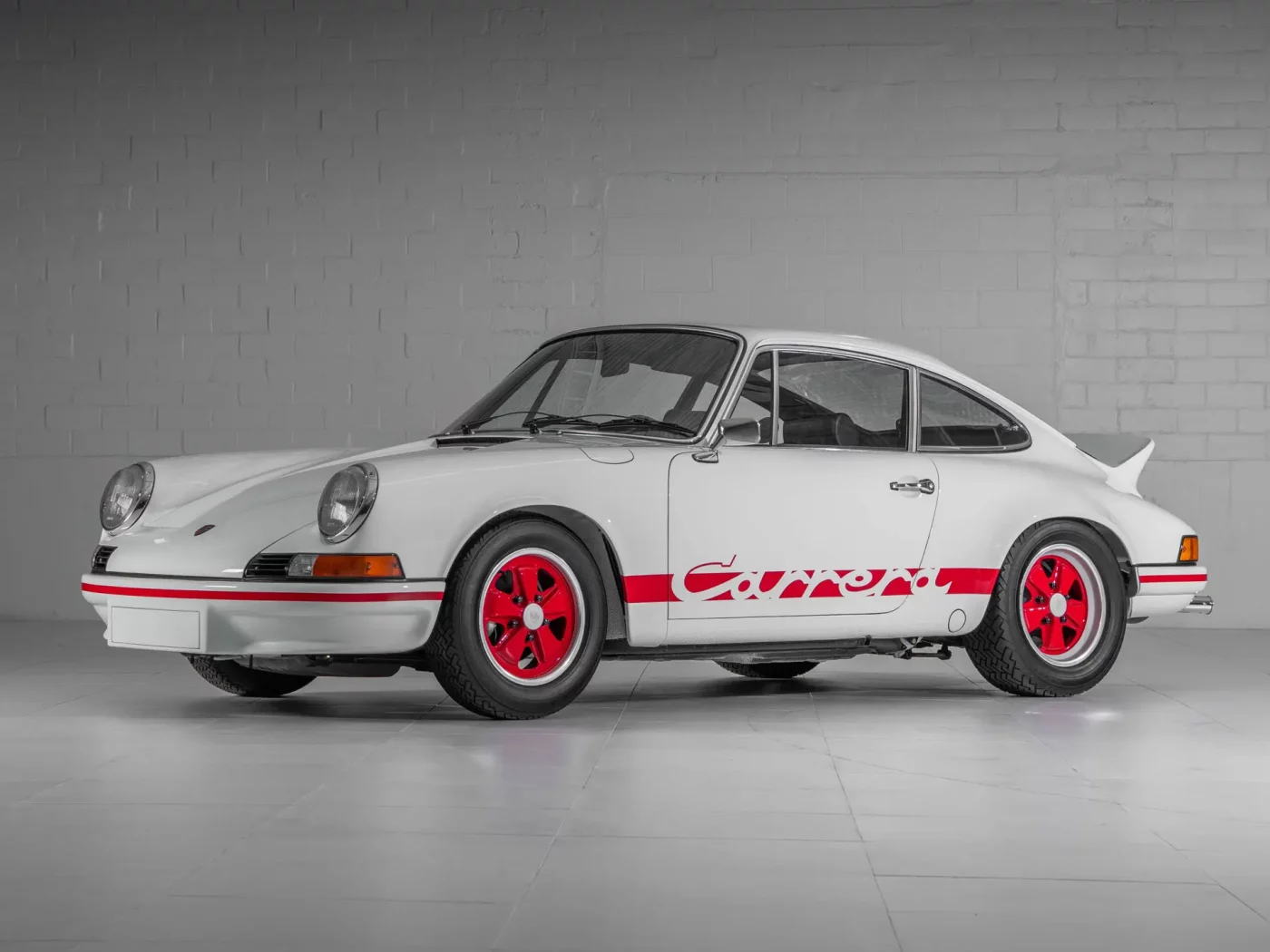
Perfected the formula of lightweight construction, motorsport engineering, and everyday usability in a way no road car had before. The definitive expression of what a road-going 911 could be when purity and performance were placed above all else.
Why It's On The List
The Porsche 911 Carrera RS 2.7 is the car that defined what a sports car could be. Built to homologate the 911 for Group 4 racing, the RS (Rennsport) stripped away luxury and added performance with surgical precision. The result was a 911 that weighed just 975 kg (2,150 lbs) thanks to thinner steel, thinner glass, and the deletion of sound deadening, undercoating, and unnecessary trim.
The 2.7-liter flat-six produced 210 hp—modest by modern standards but transformative in 1973—and was paired with the iconic ducktail rear spoiler that became a design signature for decades to come. The engine was derived from the 2.4-liter unit but featured larger bore, Nikasil-coated cylinders, and mechanical fuel injection. The chassis was stiffened, the suspension lowered, and wider rear wheels fitted under subtly flared arches.
Porsche initially planned to build 500 examples for homologation; demand forced them to produce 1,580. The RS 2.7 established the template that every RS, GT3, and lightweight 911 special has followed since: take the standard car, reduce weight, increase power, sharpen the chassis, and remove distractions. It is the philosophical foundation of Porsche's entire GT department.
Ranking Rationale
The blueprint. The RS 2.7 perfected the formula of lightweight construction, motorsport engineering, and everyday usability in a way no road car had before. The ducktail spoiler became an icon. Every RS, GT3, and lightweight special that followed exists because this car proved the concept. The most important road-going 911 ever built.
Learn More
4. Porsche 956
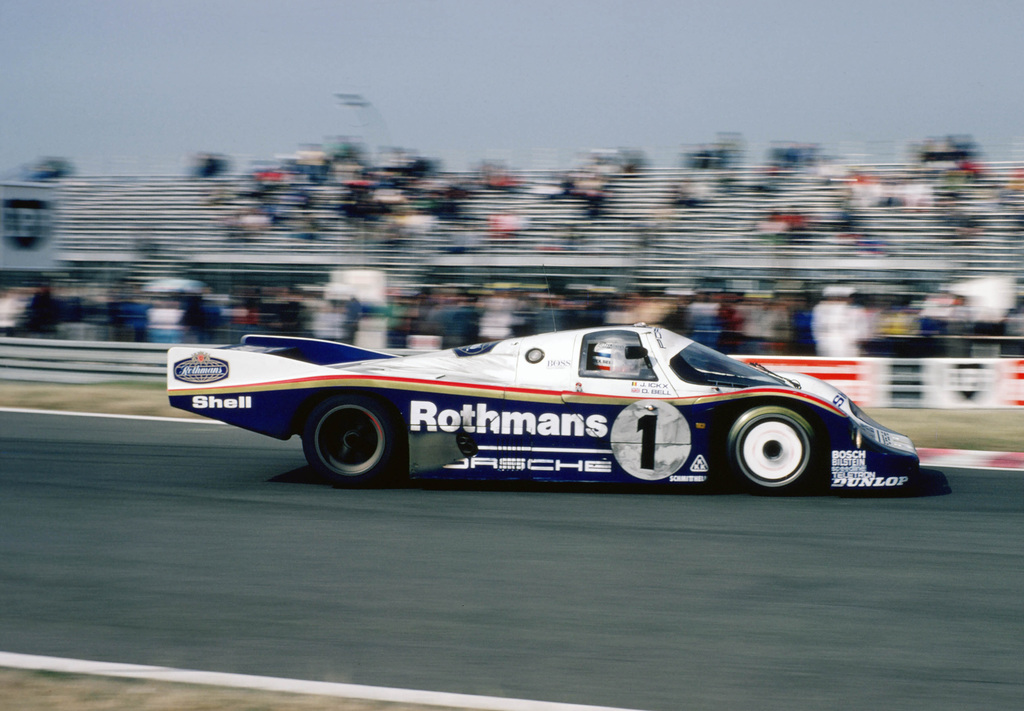
Rewrote the rules of endurance racing, pairing groundbreaking ground-effect aerodynamics with turbocharged reliability to dominate Group C. Four straight Le Mans victories and total control of the WSC made it the car that defined an era.
Why It's On The List
The Porsche 956 revolutionized prototype racing when it debuted in 1982. It was the first racing car to feature a driver's feet positioned ahead of the front axle centerline—a safety innovation that became mandatory—and the first Porsche to use ground-effect aerodynamics, generating massive downforce through venturi tunnels beneath the car.
Powered by a 2.65-liter twin-turbocharged flat-six derived from the 935's engine, the 956 produced around 620 hp in race trim. The aluminum monocoque chassis was both incredibly strong and remarkably light. The car dominated Group C racing with an iron fist: it won Le Mans four consecutive years (1982-1985), often filling the top positions on the podium with multiple 956s.
Stefan Bellof's 6:11.13 lap of the Nürburgring Nordschleife during the 1983 1000km race stood as the outright lap record for 35 years—a testament to both the car's capabilities and Bellof's extraordinary talent. The 956 wasn't just fast; it was reliable, sophisticated, and so well-developed that privateer teams could purchase examples and compete at the highest level.
Ranking Rationale
Rewrote the rules of endurance racing. Ground-effect aerodynamics, monocoque chassis, and turbocharged reliability delivered four consecutive Le Mans wins (1982-1985). Stefan Bellof's 6:11 Nordschleife lap stood for 35 years. The 956 didn't just win races—it defined Group C and changed prototype engineering forever.
Learn More
5. Porsche 962
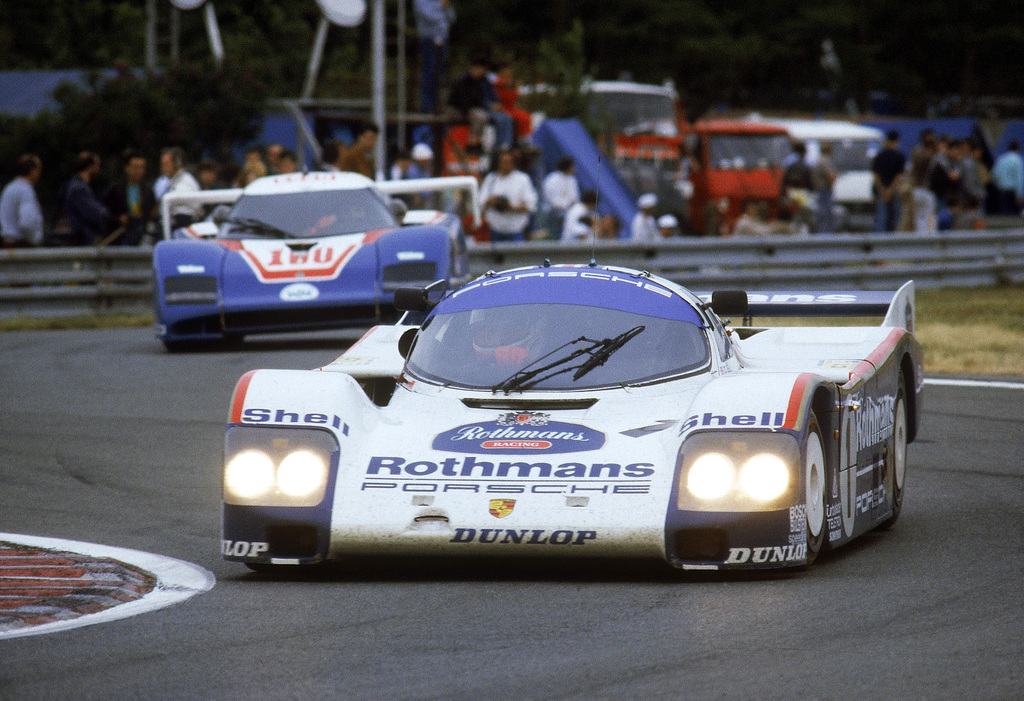
Took the 956’s brilliance and turned it into the longest-running reign in prototype racing history. Winning Le Mans, Daytona, Sebring, and championships on both sides of the Atlantic, it became the ultimate race car. One of the most successful ever.
Why It's On The List
The Porsche 962 was developed as an evolution of the 956 to meet IMSA's stricter safety regulations, which required the driver's feet to be behind the front axle line. This necessitated a longer wheelbase, which actually improved the car's handling characteristics. The 962 would become the most successful prototype racing car in history.
In its various forms, the 962 dominated racing on both sides of the Atlantic throughout the 1980s and into the early 1990s. It won Le Mans in 1986 and 1987, claimed multiple IMSA GTP championships, and took victory at virtually every major endurance race including Daytona and Sebring. The car was so competitive that privateer teams were still winning races with 962s well into the 1990s, nearly a decade after its introduction.
Porsche built approximately 91 customer 962s, and independent constructors produced many more variants. The car's combination of turbocharged performance, aerodynamic efficiency, and mechanical reliability made it the benchmark against which all other prototypes were measured. Its longevity in top-level competition remains unmatched in the modern era.
Ranking Rationale
The most successful prototype racing car in history. It dominated Le Mans, Daytona, Sebring, IMSA, and the World Sportscar Championship simultaneously for nearly a decade. Privateers were still winning races with it into the 1990s. This level of longevity and cross-discipline dominance will never be repeated.
Learn More
6. Porsche 959
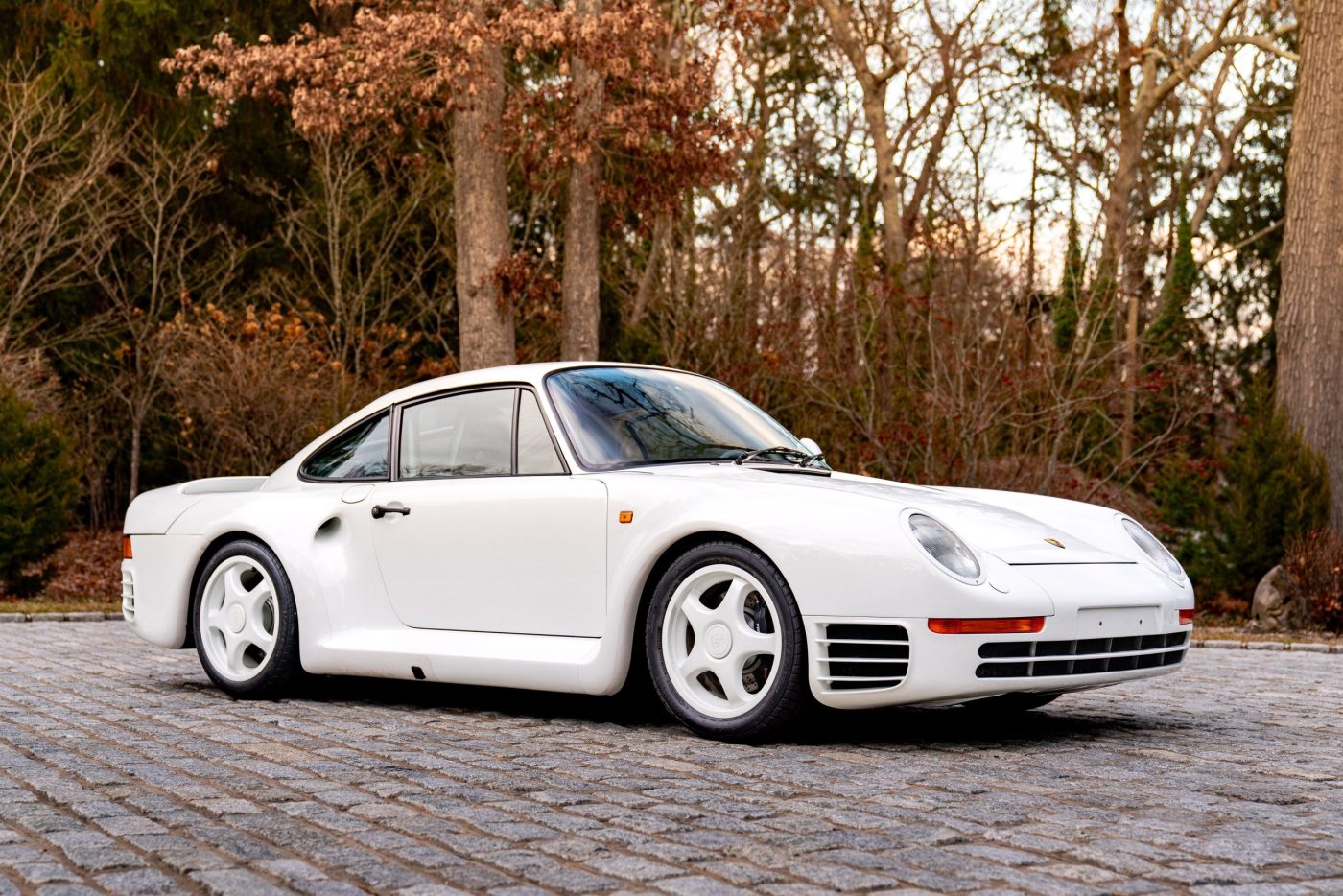
The most technologically advanced car of its era, it introduced the world to sequential turbocharging and intelligent all-wheel drive. It wasn't just a supercar; it was a rolling laboratory that predicted the future of performance decades before its time.
Why It's On The List
The Porsche 959 was the most technologically advanced automobile of its era, a rolling laboratory that introduced innovations which wouldn't become mainstream for decades. Developed initially for Group B rally competition, the 959 featured sequential twin turbocharging, a sophisticated electronically-controlled all-wheel-drive system, adjustable ride height and damping, tire pressure monitoring, and a kevlar-aramid/aluminum composite body.
The 2.85-liter twin-turbocharged flat-six produced 450 hp, channeled through a six-speed manual gearbox to all four wheels via Porsche's PSK (Porsche-Steuer Kupplung) system, which could vary torque distribution based on conditions. The car could accelerate from 0-60 mph in 3.6 seconds and reach a top speed of 197 mph—figures that embarrassed supercars costing twice as much.
Beyond its specifications, the 959 proved its worth by winning the 1986 Paris-Dakar Rally outright, finishing 1-2 in one of the most grueling motorsport events on Earth. Only 337 examples were built, and the car was so advanced that it was initially banned from import into the United States. The 959 didn't just predict the future of performance cars—it invented it.
Ranking Rationale
The most technologically advanced car of its era. Sequential turbocharging, intelligent AWD, tire pressure monitoring, adjustable ride height—the 959 predicted the future of performance cars by two decades. It won Paris-Dakar in 1986. Every modern supercar owes something to this rolling laboratory.
Learn More
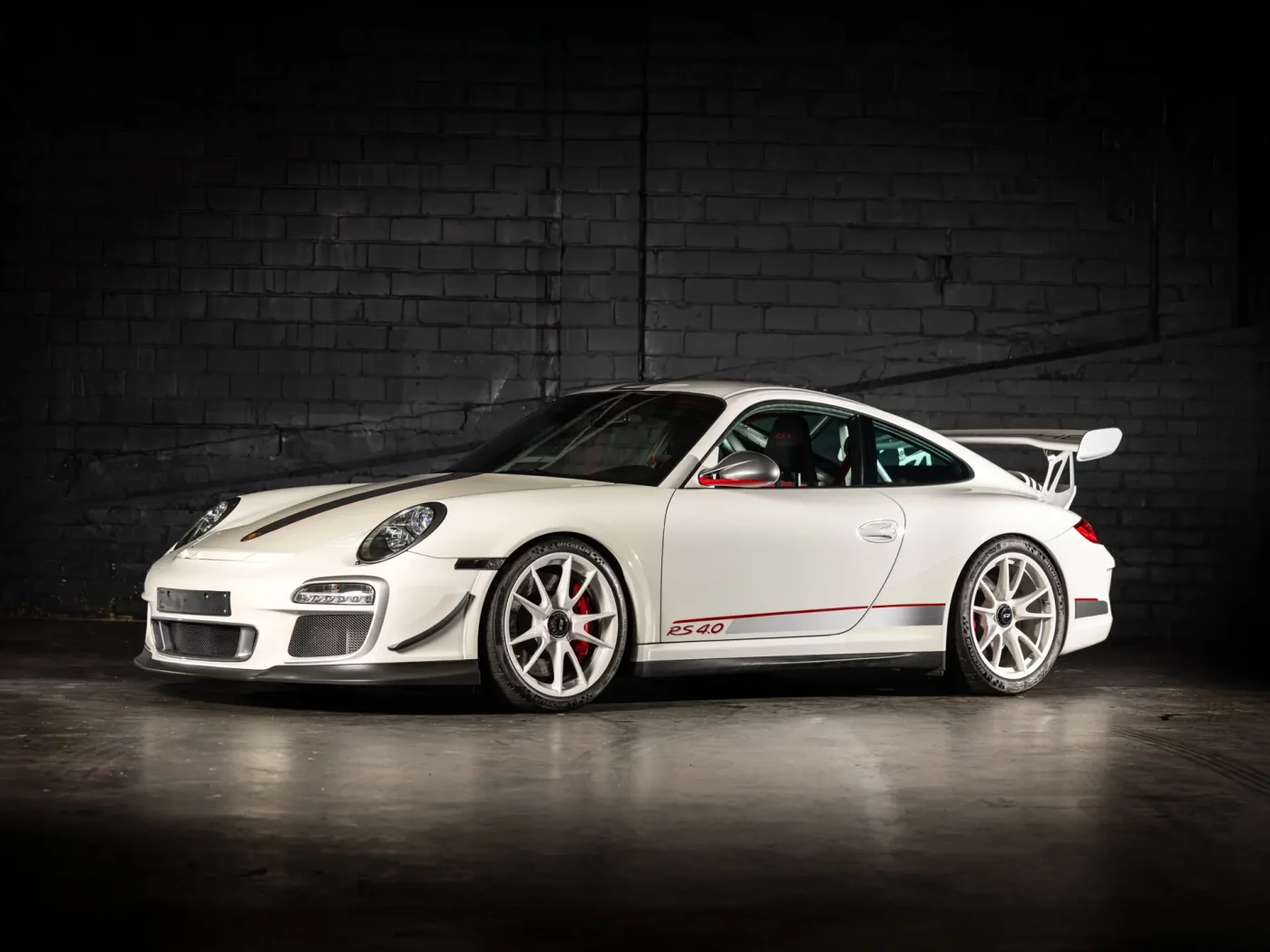
7. Porsche 911 GT3 RS 4.0 (997) (2011)
The ultimate and final evolution of the Mezger-powered, naturally aspirated RS philosophy. Built as a no-compromise farewell, it combined the largest-displacement NA flat-six Porsche ever fitted to a 911 with race-grade chassis tuning to deliver a near-perfect road-legal race car. Might be the best 911 ever. The unicorn.
Why It's On The List
The Porsche 911 GT3 RS 4.0 represents the final evolution of the Mezger-engined, naturally aspirated RS philosophy—a last, glorious hurrah before emissions regulations and market demands forced a different path. Limited to just 600 units worldwide, it was instantly recognized as something extraordinary.
The 4.0-liter flat-six was the largest naturally aspirated engine Porsche had ever fitted to a 911, producing 500 hp at a screaming 8,250 rpm. Derived directly from the RSR racing engine, it featured titanium connecting rods, forged pistons, and dry-sump lubrication. The soundtrack—a mechanical wail building to a crescendo—remains one of the most intoxicating sounds in automotive history.
Combined with aggressive weight reduction (1,360 kg dry), race-derived suspension, and aerodynamics producing significant downforce, the GT3 RS 4.0 delivered a driving experience of almost telepathic precision. Many experienced journalists and collectors consider it the greatest 911 ever built—a car that achieved the perfect balance of road usability and track capability before the modern era of turbocharging and electronic intervention.
Ranking Rationale
The unicorn. The final evolution of the Mezger-powered, naturally aspirated RS philosophy. The largest-displacement NA flat-six ever fitted to a 911 (4.0L), race-grade chassis tuning, and a send-off that many consider the greatest 911 ever built. It was Porsche saying farewell to an era with the best possible statement.
Learn More
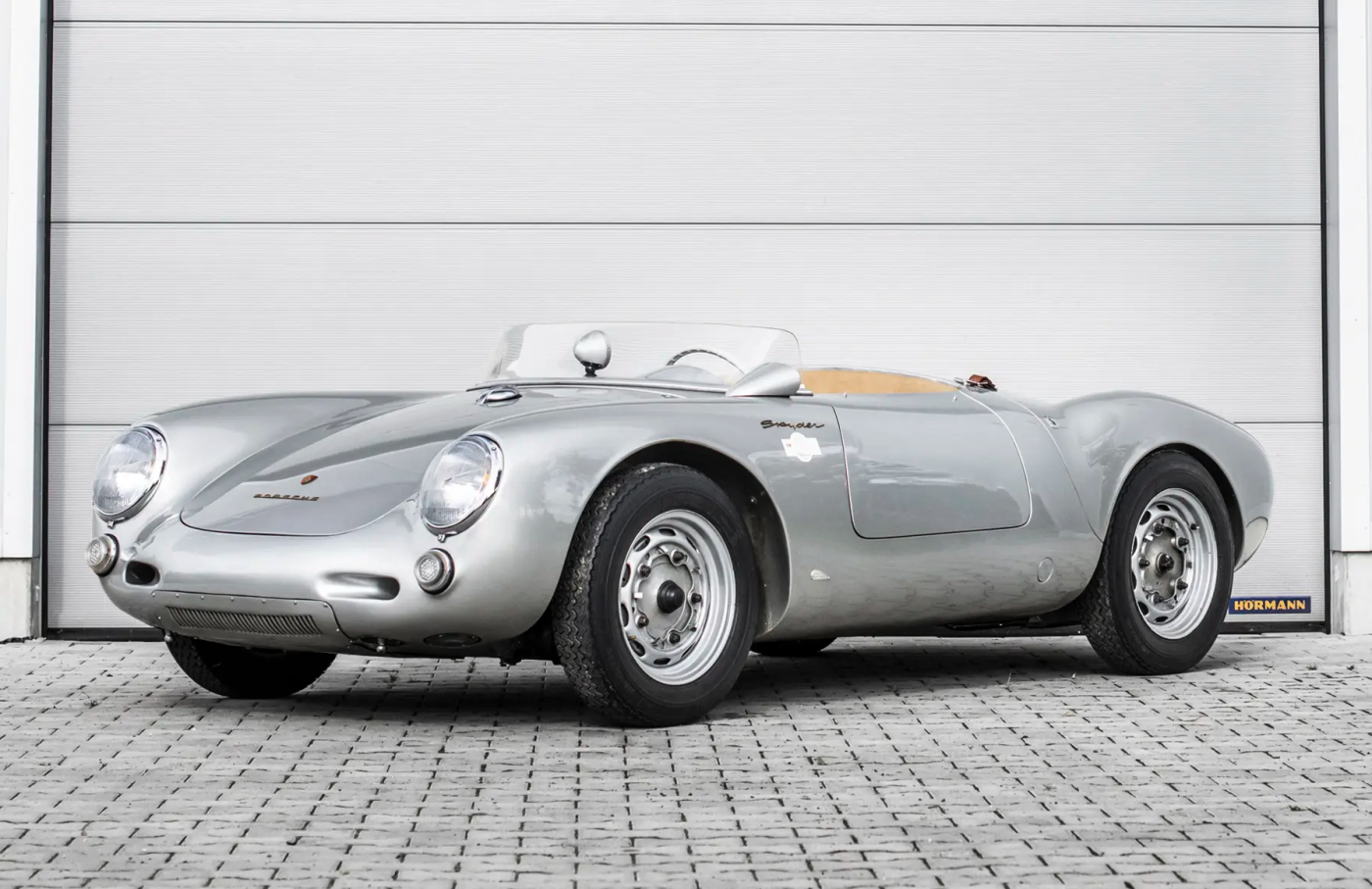
8. Porsche 550 Spyder
Known as the "Giant Killer," this lightweight mid-engine car defeated much larger engines to win the 1956 Targa Florio and became a cultural icon. Cementing its reputation through intelligence, not horsepower.
Why It's On The List
The Porsche 550 Spyder was Porsche's first purpose-built racing car, and it established the engineering philosophy that would define the brand for decades: beat larger, more powerful competitors through superior handling, lighter weight, and technical innovation. Nicknamed the ""Giant Killer,"" the 550 routinely defeated cars with twice its displacement.
Powered by the Type 547 four-cam flat-four engine—one of Ernst Fuhrmann's masterpieces—the 550 produced around 110 hp from just 1.5 liters. The mid-engine layout, tubular space frame chassis, and all-independent suspension gave the car exceptional balance and agility. At just 550 kg (1,212 lbs), the power-to-weight ratio was competitive with much larger machinery.
The 550's racing successes were remarkable: class wins and often overall podiums at Le Mans, the Carrera Panamericana, the Targa Florio (outright victory in 1956), and the Nürburgring. The car's cultural significance extended beyond motorsport when James Dean's fatal crash in his 550 Spyder in 1955 immortalized both the actor and the car. The 550 Spyder proved that Porsche's philosophy of ""intelligent performance"" could triumph over brute force.
Ranking Rationale
The 'Giant Killer' that started the legend. Before Le Mans wins, before the 917, the 550 was defeating engines twice its size through engineering brilliance. The 1956 Targa Florio victory announced Porsche to the world. Its cultural significance (James Dean) transcends motorsport. Every Porsche race car traces its philosophy here.
Learn More
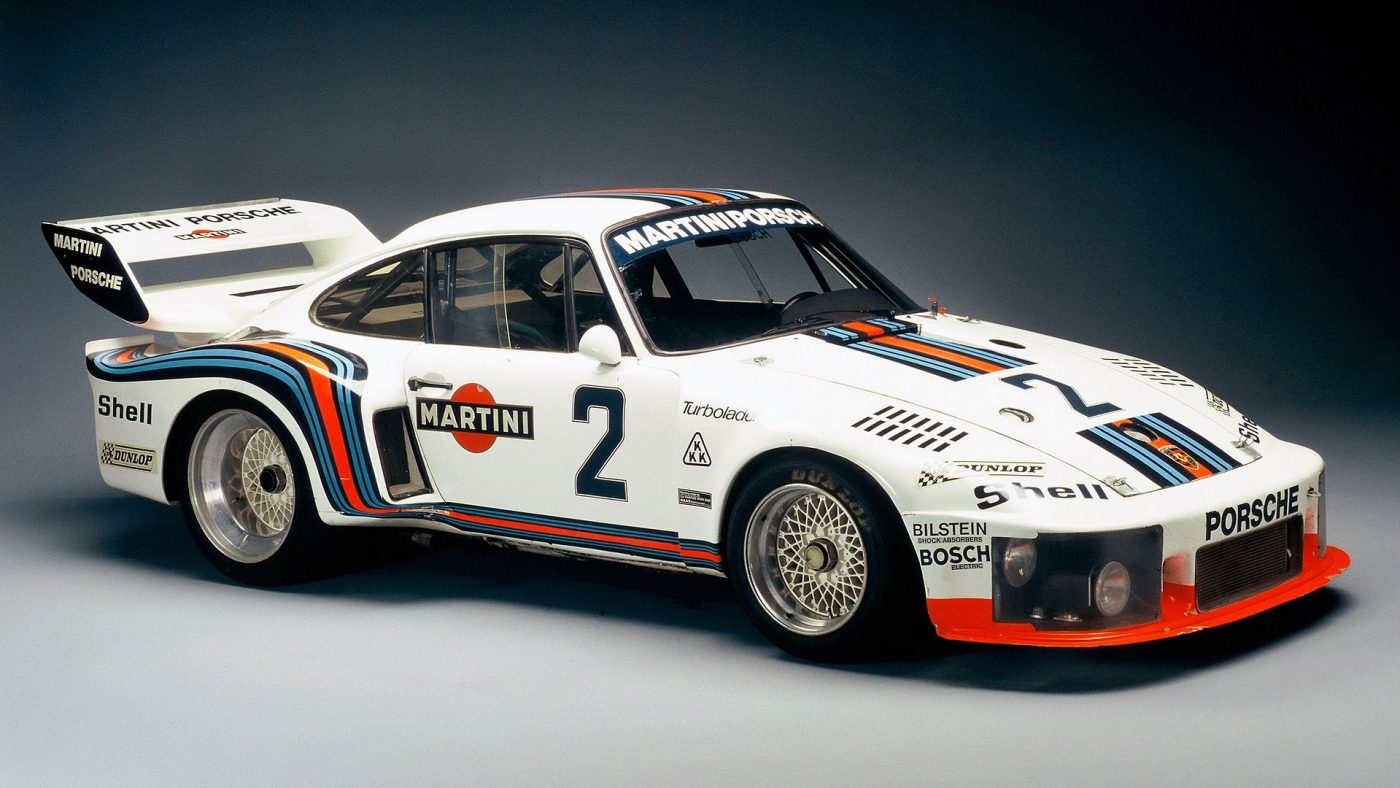
9. Porsche 935
Turbo brutality unleashed, proving Porsche could dominate silhouette racing just as ruthlessly as prototypes. At full strength they produced 845 hp and achieved a top speed of 366 km/h at Le Mans.
Why It's On The List
The Porsche 935 was Group 5 silhouette racing incarnate—a turbocharged, wide-bodied monster that dominated the late 1970s and early 1980s with an iron fist. Based on the 930 Turbo's homologation, the 935 pushed the regulations to their absolute limit, with later versions bearing almost no visual resemblance to the road car from which they were derived.
The most famous variant, the 935/78 ""Moby Dick,"" featured a drastically elongated body, massive rear wing, and a 3.2-liter twin-turbocharged flat-six producing over 845 hp. At Le Mans, it reached speeds exceeding 366 km/h (227 mph) on the Mulsanne Straight. The car's whale-like silhouette became one of the most recognizable shapes in motorsport history.
The 935's dominance extended far beyond factory efforts. Porsche sold customer versions that won the 24 Hours of Daytona, the 12 Hours of Sebring, and countless other events. The car proved that turbocharged technology could be made reliable enough for endurance racing while delivering performance that naturally aspirated competitors simply couldn't match.
Ranking Rationale
Group 5 silhouette racing belonged to Porsche, and the 935 was the weapon. 'Moby Dick' remains one of the most visually striking race cars ever built. With 800+ hp and 227 mph at Le Mans, it was turbo brutality incarnate. It won Daytona, the Nürburgring 24 Hours, and became the template for privateer dominance.
Learn More
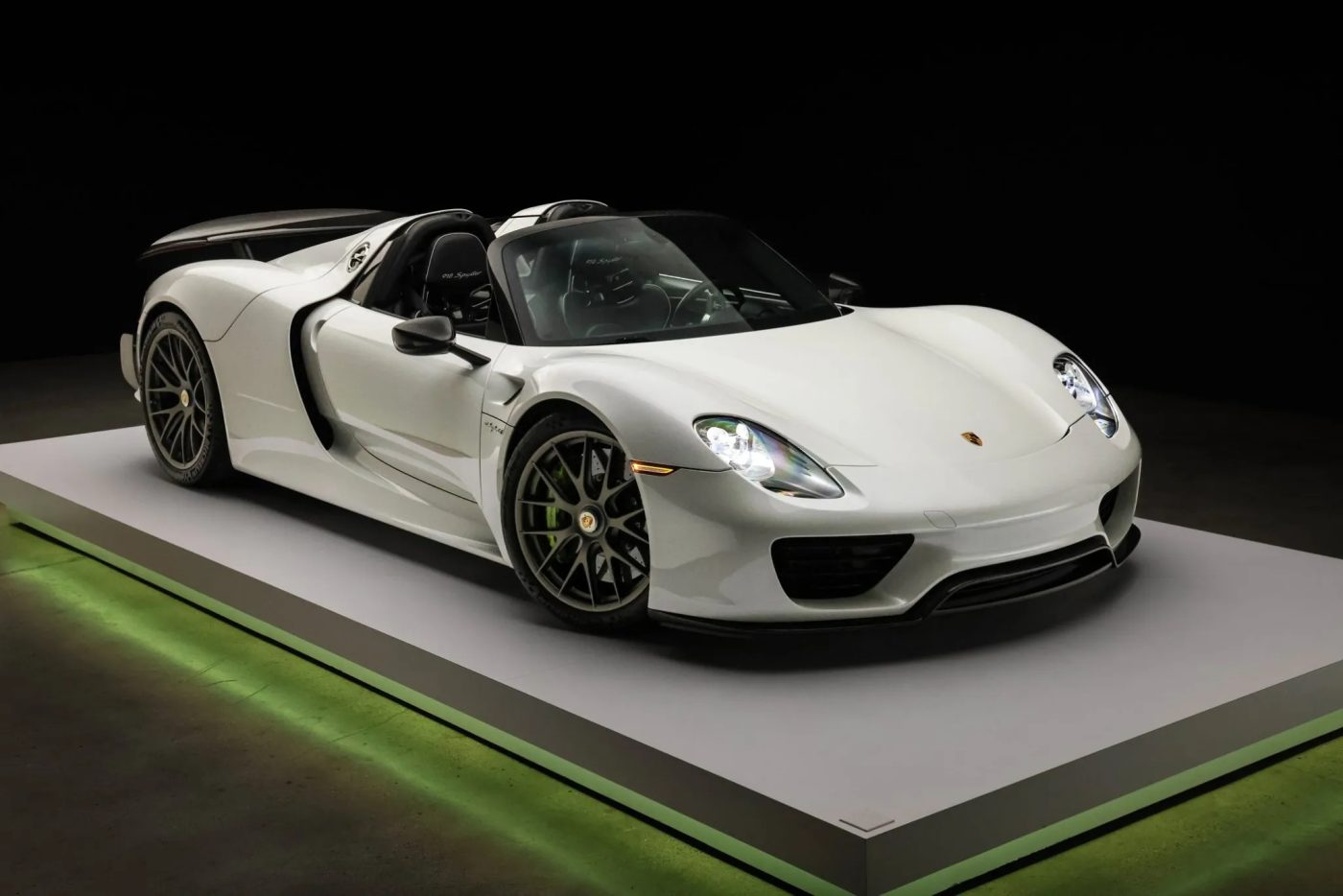
10. Porsche 918 Spyder (2015)
The 918 proved that hybrid technology could be synonymous with soul-stirring speed. Its combination of a high-revving V8 and electric motors delivers a staggering 887 hp and a sub-2.5 second 0-60 mph time.
Why It's On The List
The Porsche 918 Spyder proved that hybrid technology and driving excitement were not mutually exclusive. As part of the ""Holy Trinity"" of hybrid hypercars alongside the McLaren P1 and Ferrari LaFerrari, the 918 offered a distinctly Porsche interpretation: technology in service of the driving experience rather than as an end in itself.
The powertrain combined a 4.6-liter naturally aspirated V8—derived from the RS Spyder racing engine—with two electric motors, producing a combined 887 hp. The V8 alone generated 608 hp and revved to 9,150 rpm, delivering a visceral, race-bred soundtrack. The electric motors provided instant torque and enabled pure-electric driving for short distances, while the sophisticated all-wheel-drive system offered multiple driving modes from full electric to maximum attack.
Performance figures were staggering: 0-60 mph in 2.5 seconds, 0-124 mph in 7.2 seconds, and a top speed of 214 mph. The 918 also set a production car lap record at the Nürburgring with a time of 6:57. Porsche built 918 examples, and the car demonstrated that the company could lead the hybrid revolution while maintaining its commitment to driver engagement.
Ranking Rationale
The car that proved hybrids could have a soul. 887 hp, sub-2.5 second 0-60, and a high-revving V8 working in harmony with electric motors. It set the template for the modern hypercar trinity (with the P1 and LaFerrari) and remains a stunning achievement of integrated engineering. Porsche's vision of the electrified future.
Learn More
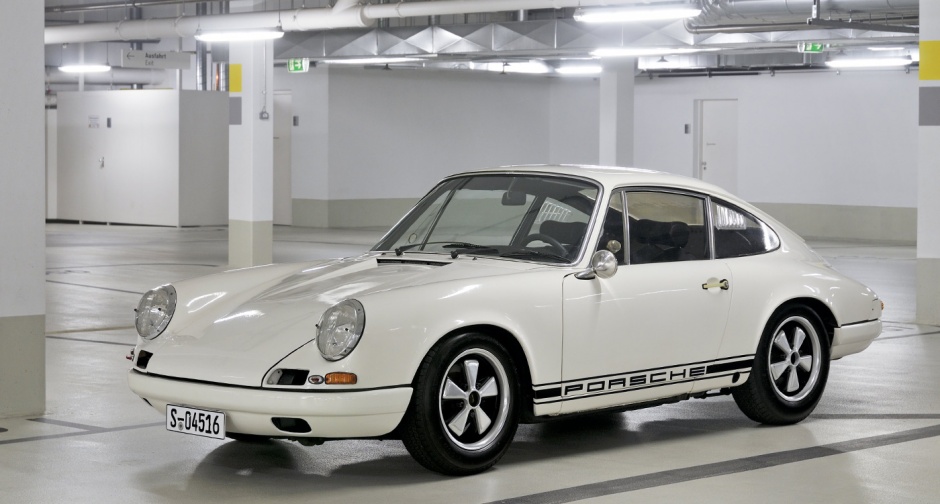
11. Porsche 911 R (1967-1968)
It stripped the platform to its purest, most motorsport-focused form—extreme lightweight construction paired with a high-revving race-bred engine. Built to prove how far the early 911 chassis could be pushed, it became the philosophical blueprint for every hardcore GT and RS Porsche that followed.
Why It's On The List
The Porsche 911 R was the first truly extreme lightweight 911, built in tiny numbers (approximately 20 examples) to prove the platform's competition potential. It established the philosophical template that would guide every RS, GT3, and special lightweight 911 for the next six decades.
Engineers stripped the 911 to its absolute essence: fiberglass doors, hood, and engine cover replaced steel panels; plexiglass windows saved additional weight; sound deadening and comfort features were eliminated. The result was a car weighing just 800 kg (1,764 lbs)—roughly 230 kg lighter than a standard 911 S. Power came from a 210 hp version of the Carrera 6 racing engine, breathing through Weber carburetors.
The 911 R achieved remarkable success in competition, including victory at the 1967 Marathon de la Route—an 84-hour endurance race at the Nürburgring. More importantly, it proved that the 911's rear-engine layout could be competitive in serious motorsport when properly developed. Every hardcore 911 that followed—from the RS 2.7 to the modern GT3—owes its existence to the lessons learned with the 911 R.
Ranking Rationale
The philosophical blueprint for every hardcore GT and RS that followed. Extreme lightweight construction paired with a high-revving race-bred engine. Built to prove how far the early 911 chassis could be pushed, it became the template that still guides Weissach's GT department today.
Learn More
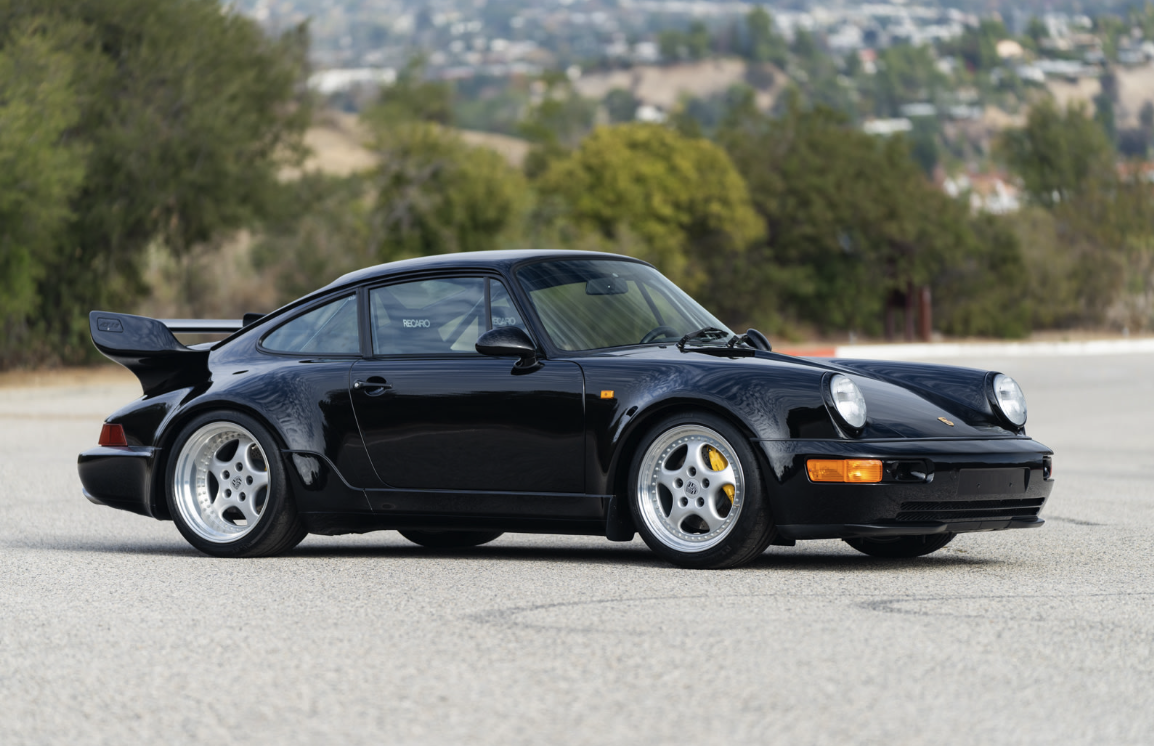
12. Porsche 911 Carrera RS 3.8 (964) (1993)
Took the already legendary RS formula and pushed it directly into race-car territory, combining a larger, more powerful engine with aggressive aero and chassis upgrades. Built in extremely limited numbers, it stands as the ultimate factory expression of the air-cooled, naturally aspirated RS ideal.
Why It's On The List
The Porsche 911 Carrera RS 3.8 (Type 964) pushed the RS formula into genuine race-car territory, combining a larger engine with aggressive aerodynamics and chassis modifications that prioritized track performance above all else. Porsche built only 55 examples of this ultimate air-cooled RS, making it among the rarest and most desirable 911s ever produced.
The 3.8-liter flat-six produced 300 hp—50 more than the standard RS—and featured lightweight internals, revised camshafts, and individual throttle bodies. The car sat lower on stiffer springs, wore massive 18-inch Cup wheels, and featured a dramatic rear wing with adjustable elements. Inside, the cabin was stripped to essentials: lightweight door panels, no rear seats, and minimal sound insulation.
The RS 3.8 was essentially a homologation special for Porsche's Carrera Cup and Supercup racing programs, built to satisfy regulations while providing wealthy enthusiasts with the closest thing to a factory race car they could legally drive on the street. It represents the ultimate expression of the air-cooled, naturally aspirated RS philosophy.
Ranking Rationale
Took the legendary RS formula and pushed it directly into race-car territory. A larger engine, aggressive aero, and competition-grade hardware in extremely limited numbers. The ultimate factory expression of the air-cooled, naturally aspirated RS ideal.
Learn More
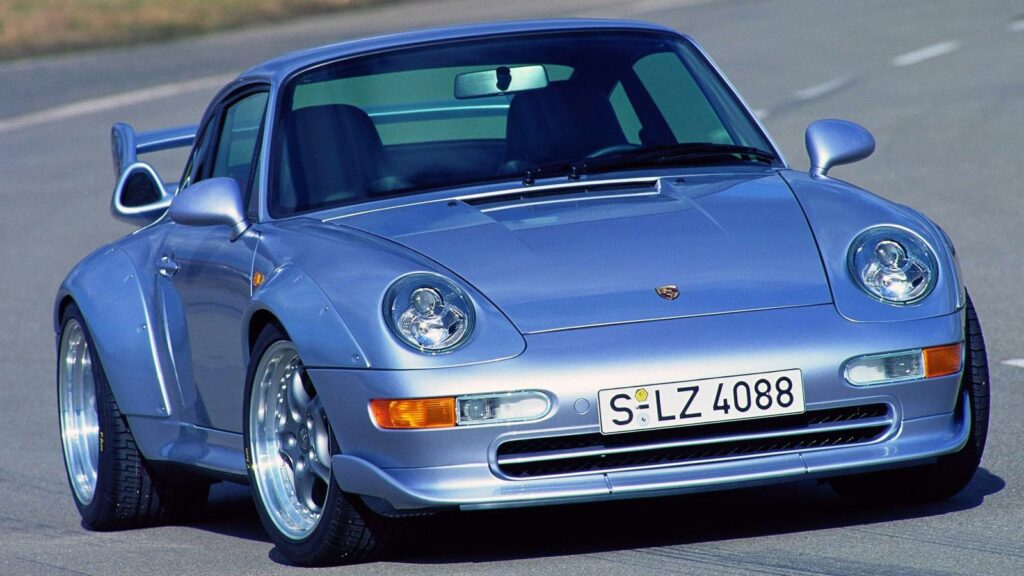
13. Porsche 911 GT2 (993) (1995 - 1998)
Stripped the already ferocious 993 Turbo down to a rear-wheel-drive, race-first weapon built to win GT competition. Savage, lightweight, and unapologetically difficult, it stands as the most extreme road-legal expression of the air-cooled 911.
Why It's On The List
The Porsche 911 GT2 (Type 993) earned its ""Widowmaker"" reputation through a combination of massive turbocharged power, rear-wheel drive, and minimal electronic intervention. Created as a homologation special for GT2 racing, it took the already potent 993 Turbo and transformed it into something genuinely terrifying.
By deleting the all-wheel-drive system and stripping unnecessary weight, Porsche created a car that was both faster and more demanding than the Turbo on which it was based. The 3.6-liter twin-turbocharged flat-six produced 430 hp (later increased to 450 hp), delivered exclusively to the rear wheels through a six-speed manual gearbox. The suspension was lowered and stiffened, massive brakes were fitted, and a dramatic rear wing provided downforce.
The driving experience was not for the faint of heart. Turbo lag meant that power arrived suddenly and violently; the rear-biased weight distribution and rear-wheel drive demanded respect. Yet for those with the skill to master it, the GT2 offered rewards commensurate with its risks. It remains the most savage expression of the air-cooled 911, a car that made no compromises for comfort or safety.
Ranking Rationale
Stripped the already ferocious 993 Turbo to a rear-wheel-drive, race-first weapon. Savage, lightweight, and unapologetically difficult. The most extreme road-legal expression of the air-cooled 911 and the genesis of the 'Widowmaker' legend.
Learn More
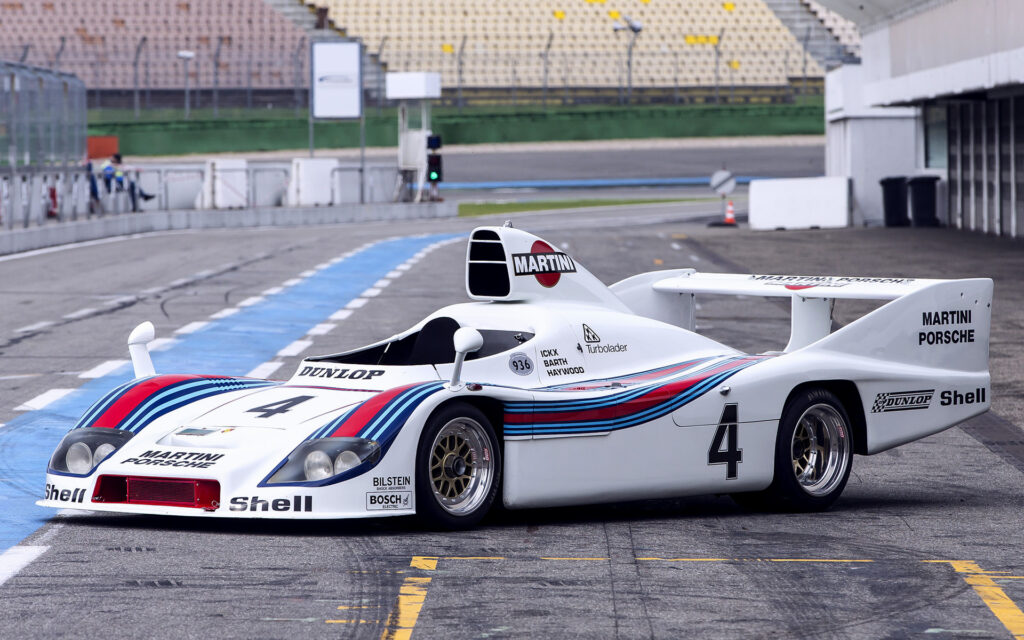
14. Porsche 936 Spyder
The first turbocharged car to win Le Mans overall (1976), it secured 3 total victories at the Circuit de la Sarthe using a 2.1L turbocharged Flat-6.
Why It's On The List
The Porsche 936 was the first turbocharged car to win Le Mans outright, achieving that milestone in 1976 and proving that forced induction was the future of endurance racing. Built to compete in the new Group 6 regulations, the 936 utilized technology developed from the 934 and 935 programs while featuring an open-cockpit spyder configuration.
The 2.1-liter turbocharged flat-six produced around 520-540 hp in race trim, housed within an aluminum monocoque chassis that weighed just 700 kg (1,543 lbs). The car's combination of light weight, turbocharged power, and aerodynamic efficiency made it devastatingly effective, particularly at Le Mans where it claimed three overall victories (1976, 1977, 1981).
Jacky Ickx's drive in the 1977 Le Mans, where he wrestled the 936 to victory in appalling rain conditions, remains one of the most celebrated performances in motorsport history. The 936 bridged the gap between the 917 era and the 956/962 dynasty, proving that Porsche could adapt to new regulations while maintaining dominance. It demonstrated that turbocharging could be made reliable enough for 24-hour racing.
Ranking Rationale
The first turbocharged car to win Le Mans overall (1976). Three total victories at La Sarthe. The 936 bridged the gap between the 917 era and the 956/962 dynasty, proving forced induction was the future. Jacky Ickx's 1977 rain victory remains one of the greatest drives in motorsport history.
Learn More
15. Porsche 911 GT1 98
A massive landmark in Porsche's history, representing the moment the 911 transitioned from a modified road car into a purpose-built carbon-fiber prototype. It was the ultimate evolution of the GT1 project that began in 1996.
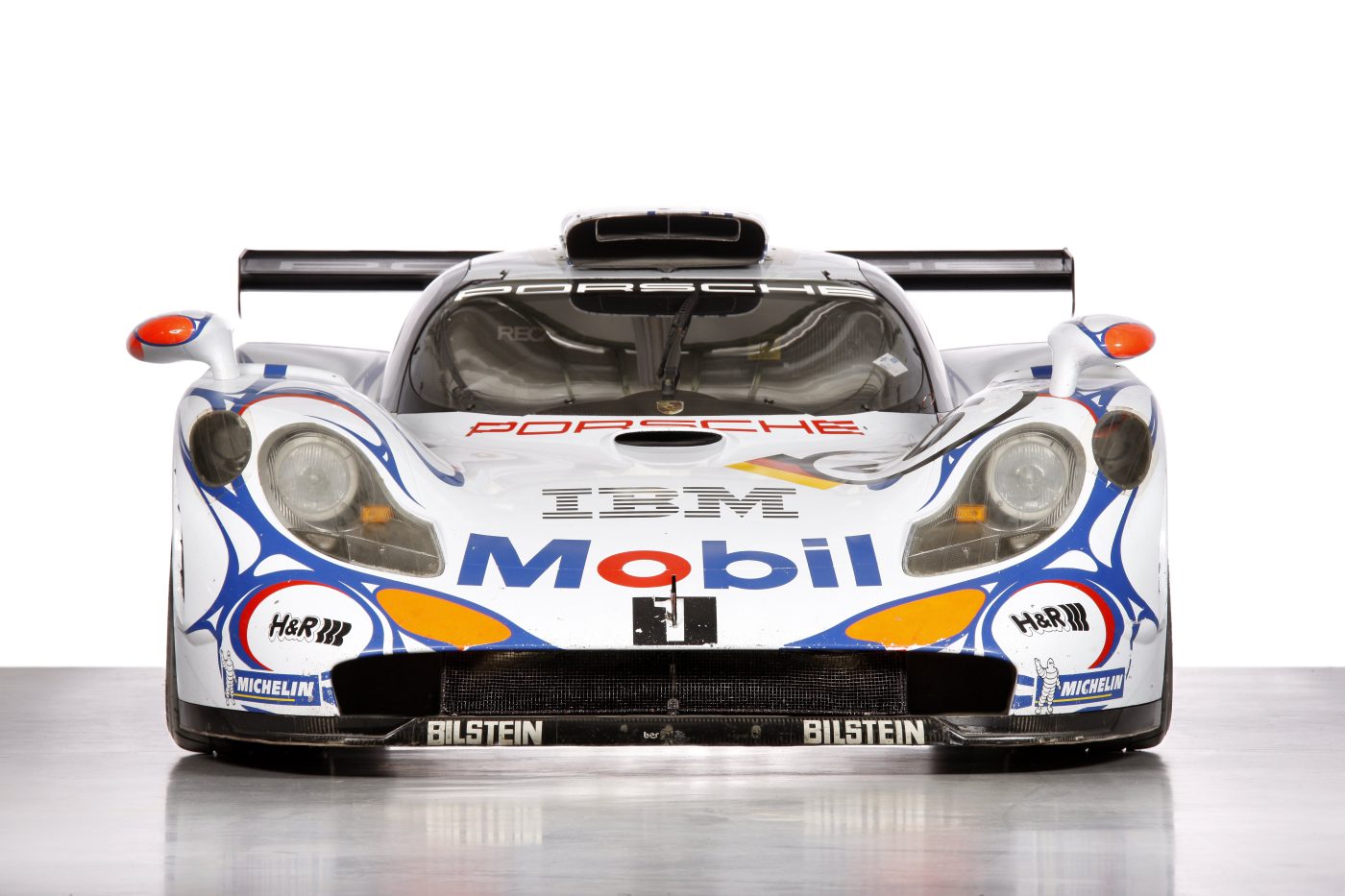
Why It's On The List
The Porsche 911 GT1 98 represents the ultimate evolution of Porsche's controversial GT1 program—a car that stretched the definition of ""production-based"" to its absolute breaking point. While wearing the 911 badge, the GT1 98 shared virtually nothing with any road-going Porsche: it featured a carbon fiber monocoque, mid-mounted engine, and aerodynamics developed purely for racing.
The 3.2-liter twin-turbocharged flat-six, positioned ahead of the rear axle rather than behind it, produced approximately 550 hp in race configuration. The car weighed just 950 kg (2,094 lbs) and featured sophisticated aerodynamics that generated massive downforce. Every element was optimized for the singular goal of winning Le Mans.
That goal was achieved in dramatic fashion at the 1998 24 Hours of Le Mans, where the GT1 98 finished 1-2 in what would be the final year of the GT1 era. The victory validated Porsche's aggressive interpretation of the regulations and secured another Le Mans trophy. The GT1 program demonstrated that Porsche would do whatever it took—including building a mid-engine prototype and calling it a 911—to maintain its position as the king of endurance racing.
Ranking Rationale
A massive landmark representing the moment the 911 transitioned from modified road car to purpose-built carbon-fiber prototype. The 1998 Le Mans victory was audacious—a '911' winning overall with a mid-mounted engine. Controversial, brilliant, victorious.
Learn More
16. Porsche 911 Turbo - 3.3 Liter - 930 (1978 to 1989)
A visceral 911 experience. It is a car that demands your full attention, punishes your mistakes, and provides a rush that modern, sanitized supercars simply cannot replicate. The "analog violence" is only becoming more desirable.
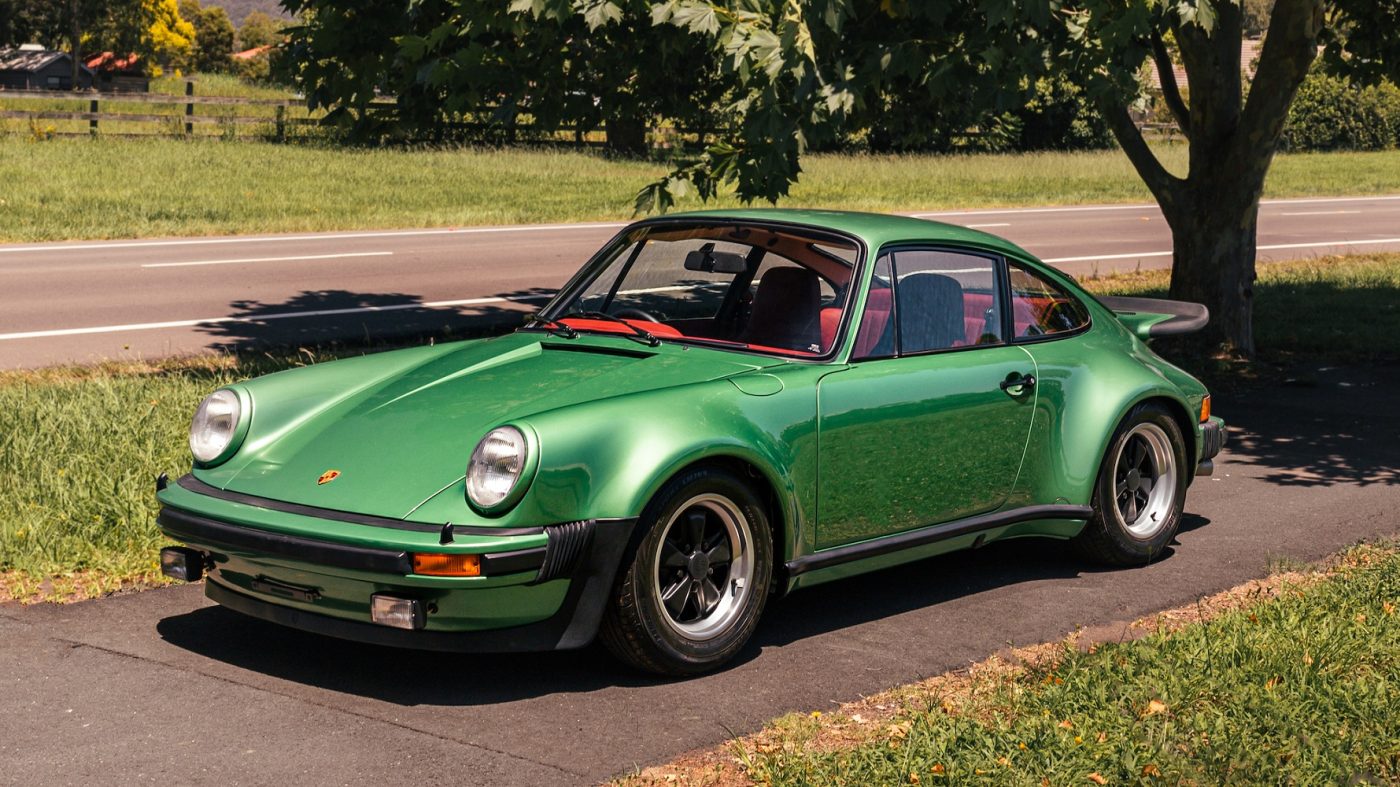
Why It's On The List
The Porsche 911 Turbo 3.3 (internally designated 930) defined what ""Turbo"" meant for an entire generation of enthusiasts. Introduced in 1978 as an evolution of the original 3.0-liter Turbo, the 3.3 featured an intercooler that increased power to 300 hp while improving reliability and drivability—though ""drivable"" remained a relative term.
The 930's character was defined by its fearsome turbo lag and sudden power delivery. Below 3,500 rpm, the engine felt merely brisk; above that threshold, the turbocharger would spool violently, catapulting the car forward with an urgency that caught many drivers unprepared. Combined with the rear-engine weight distribution and relatively primitive suspension, the 930 demanded absolute respect.
The iconic ""whale tail"" rear spoiler housed the intercooler and became one of the most recognizable design elements in automotive history. The flared rear fenders, necessary to accommodate wider wheels, gave the Turbo an aggressive stance that countless imitators would attempt to replicate. The 930 remained in production with minimal changes until 1989, a testament to the rightness of its original formula. It transformed the 911 from a sports car into a supercar.
Ranking Rationale
A visceral experience that demands full attention and punishes mistakes. The 'widow-maker' reputation was earned through brutal turbo lag and snap oversteer. This is analog violence—the kind of driving experience modern, sanitized supercars cannot replicate. The car that made 'Turbo' mean something.
Learn More
17. Porsche 908
The Porsche 908 is a masterclass in agility and longevity, serving as the high-revving bridge to the 917 era and securing Porsche’s first-ever World Sportscar Championship in 1969.
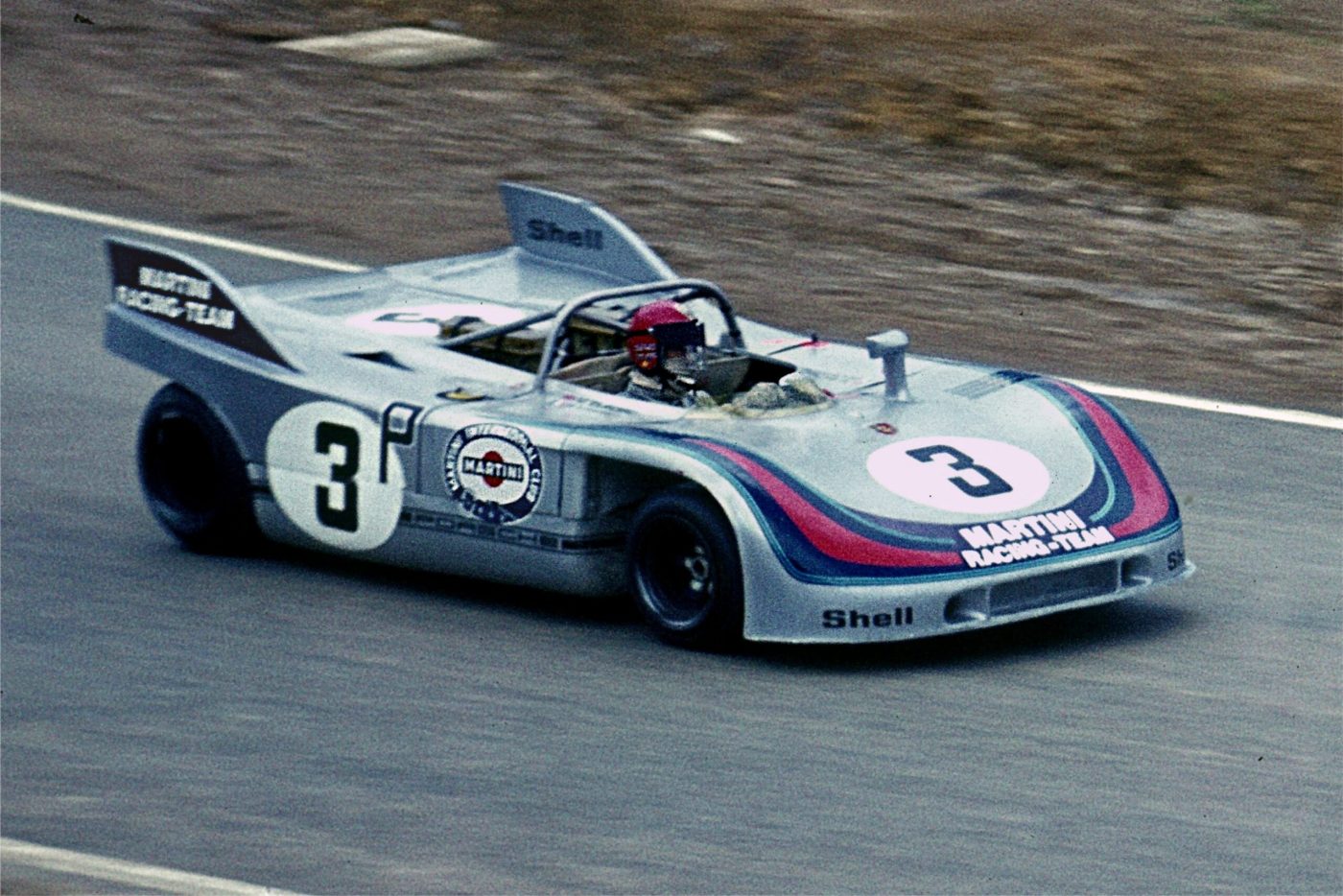
Why It's On The List
The Porsche 908 was the high-revving bridge between Porsche's early sports racing cars and the legendary 917 era. Designed to compete in the 3-liter prototype class, the 908 featured a sophisticated flat-eight engine that could rev to 8,400 rpm, producing around 350 hp from its 2,997cc displacement.
The car achieved immediate success, helping Porsche secure its first-ever World Sportscar Championship manufacturers' title in 1969. While the 917 would soon overshadow it for outright wins, the 908 remained competitive on tighter, more technical circuits where its lighter weight and superior agility gave it an advantage. Many drivers, including Pedro Rodríguez, actually preferred the 908 to the more powerful but more challenging 917.
The 908/3, developed specifically for the Targa Florio, is considered one of the most beautiful racing shapes Porsche ever created. Its organic, flowing lines were sculpted purely by the demands of the Sicilian mountain roads. The 908 program demonstrated that Porsche could compete at the highest level of prototype racing and laid the groundwork for the engineering triumphs that would follow.
Ranking Rationale
The high-revving 3.0L flat-eight that delivered Porsche's first World Sportscar Championship (1969). Lighter and more agile than the 917, many drivers preferred it on technical circuits. The 908/3 Targa Florio car is one of the most beautiful shapes ever created. The bridge that made the 917 era possible.
Learn More
18. Porsche 935 Street
This custom build was commissioned by Mansour Ojjeh, founder of TAG Group. It was the first model completed by the Porsche Exclusive division (after the carmaker’s formal recognition of the Sonderwunsch programme).
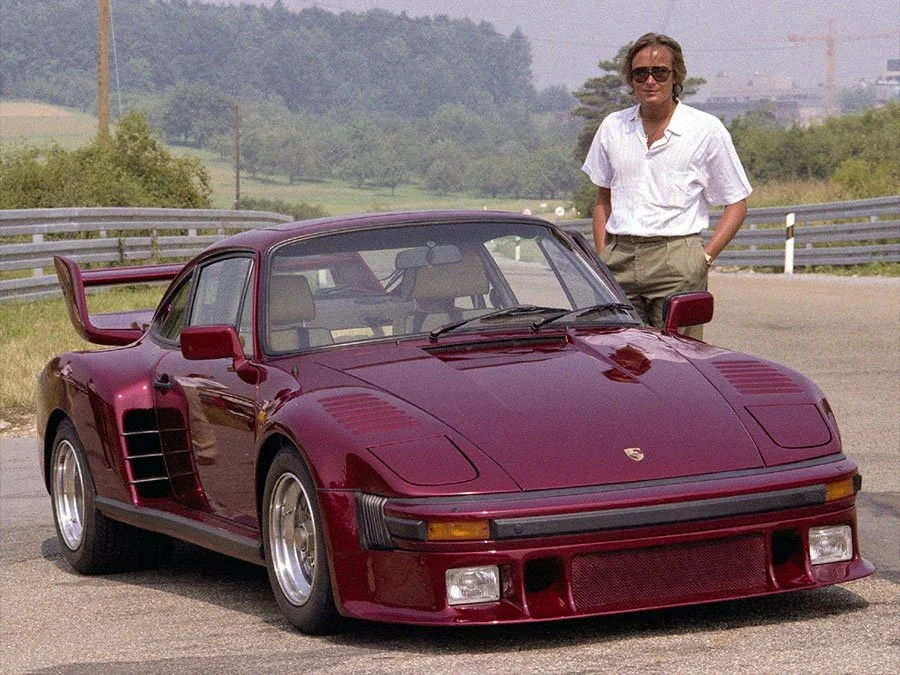
Why It's On The List
The Porsche 935 Street commissioned by Mansour Ojjeh holds a unique place in Porsche history as the car that formally launched the Sonderwunsch (special wishes) program. Ojjeh, founder of TAG Group and the man who would later bring Porsche engines to McLaren's Formula 1 program, wanted a street-legal version of the dominant Group 5 racer, and Porsche agreed to build it.
The conversion required significant engineering to make the race car comply with road regulations while preserving its essential character. The twin-turbocharged flat-six was detuned for reliability but still produced massive power, and the distinctive slant-nose bodywork was adapted for street use with proper lighting and minimal comfort provisions.
This car represented the formalization of Porsche's willingness to fulfill extraordinary customer requests—a tradition that continues today through Porsche Exclusive Manufaktur and the revived Sonderwunsch program. Without Ojjeh's commission and Porsche's willingness to undertake such ambitious projects, the entire culture of factory-special Porsches might not exist as we know it today. The 935 Street is not just a car; it's the origin story of Porsche's bespoke division.
Ranking Rationale
The car that started Porsche Exclusive. Commissioned by Mansour Ojjeh (founder of TAG Group), this street-legal version of the dominant Group 5 racer was the first model completed after Porsche formally recognized the Sonderwunsch programme. It's not just a car—it's the origin story.
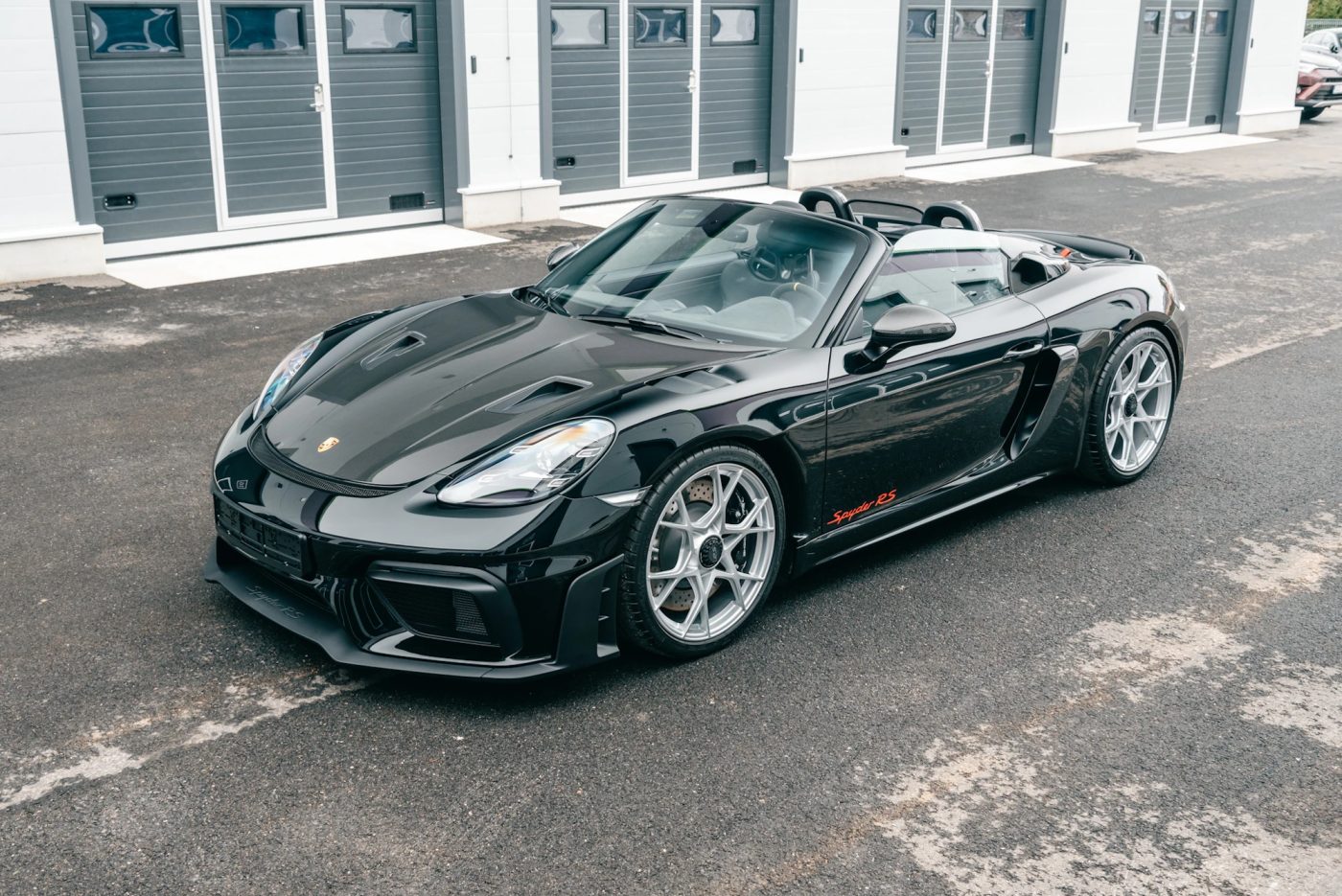
19. Porsche 718 Spyder RS
One of the Greatest Porsches Ever! The Ultimate Peak: A GT3 Engine with the Roof Cut Off
Why It's On The List
The Porsche 718 Spyder RS represents the ultimate evolution of the modern mid-engine Porsche sports car, finally combining the platform's exceptional chassis dynamics with an engine worthy of its potential. By fitting the naturally aspirated 4.0-liter flat-six from the 992 GT3, Porsche created what many consider the finest driver's car in their current lineup.
The GT3-derived engine produces 503 hp and revs to 9,000 rpm, delivering a soundtrack that ranks among the best in the automotive world. The mid-engine layout provides near-perfect weight distribution, while the open-top configuration adds an extra dimension of sensory engagement. A six-speed manual is standard (with PDK optional), reinforcing the car's driver-focused mission.
Weighing just 1,410 kg (3,108 lbs), the 718 Spyder RS offers a power-to-weight ratio that rivals dedicated supercars. More importantly, its chassis balance and steering precision make it one of the most rewarding cars to drive at any speed. The Spyder RS proves that the mid-engine Porsche can finally stand alongside—and in some ways surpass—the legendary 911 when given equal mechanical respect.
Ranking Rationale
A GT3 engine with the roof cut off. One of the greatest driver's cars of this generation and arguably the most engaging car Porsche currently sells. It finally unleashed the mid-engine platform's full potential without the 911's shadow.
Learn More
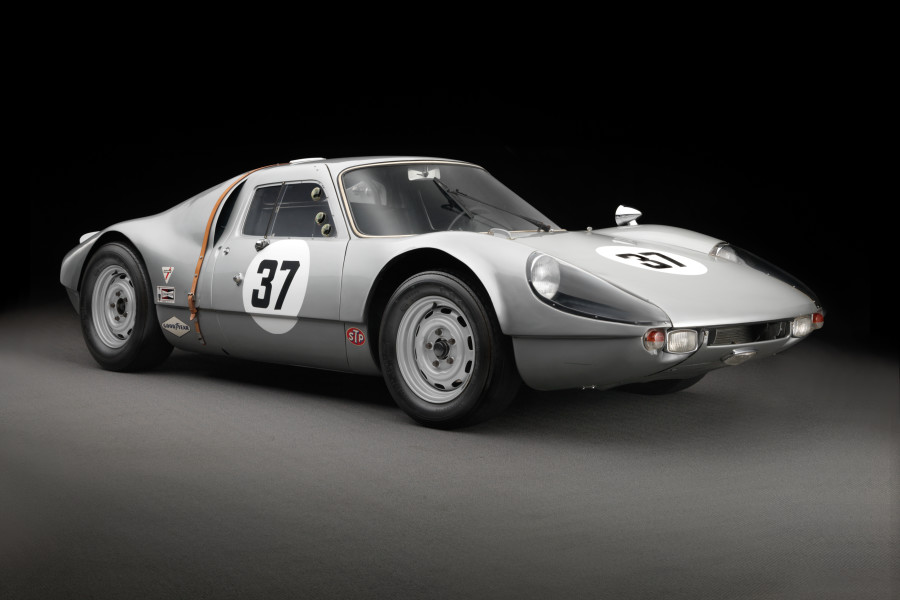
20. Porsche 904 Carrera GTS
A masterpiece of mid-century design, the 904 was the first Porsche to use a fiberglass body. It was a dual-threat machine, equally comfortable winning on the racetrack as it was being driven to the circuit.
Why It's On The List
The Porsche 904 Carrera GTS occupies a unique position in Porsche history as the last car the company built that could genuinely serve as both a competitive race car and a road-going sports car. Its fiberglass body—the first ever used by Porsche—clothed a steel ladder frame chassis with fully independent suspension and a mid-mounted engine.
The standard engine was the Type 587/3 four-cam flat-four producing 180 hp, though six-cylinder and eight-cylinder variants were also built for competition. The car weighed just 655 kg (1,444 lbs), giving it exceptional performance despite relatively modest power figures. At Le Mans in 1964, 904s achieved remarkable results including class victories and strong overall finishes.
Perhaps the 904's most legendary moment came at the 1964 Targa Florio, where it achieved a 1-2 overall finish—a remarkable result for a ""customer"" car competing against purpose-built prototypes. The 904's beautiful, flowing lines were penned by Ferdinand Alexander Porsche, and it remains one of the most elegant shapes to wear the Porsche badge. It represents the romantic ideal of the dual-purpose sports car: drive to the track, race, and drive home.
Ranking Rationale
The pivotal 'bridge' model that moved Porsche from early lightweight Spyders into the dominant prototype era. Its 1-2 finish at the 1964 Targa Florio announced new ambitions. The last Porsche you could genuinely drive to the track, race, and drive home—the romantic ideal made real.
Learn More
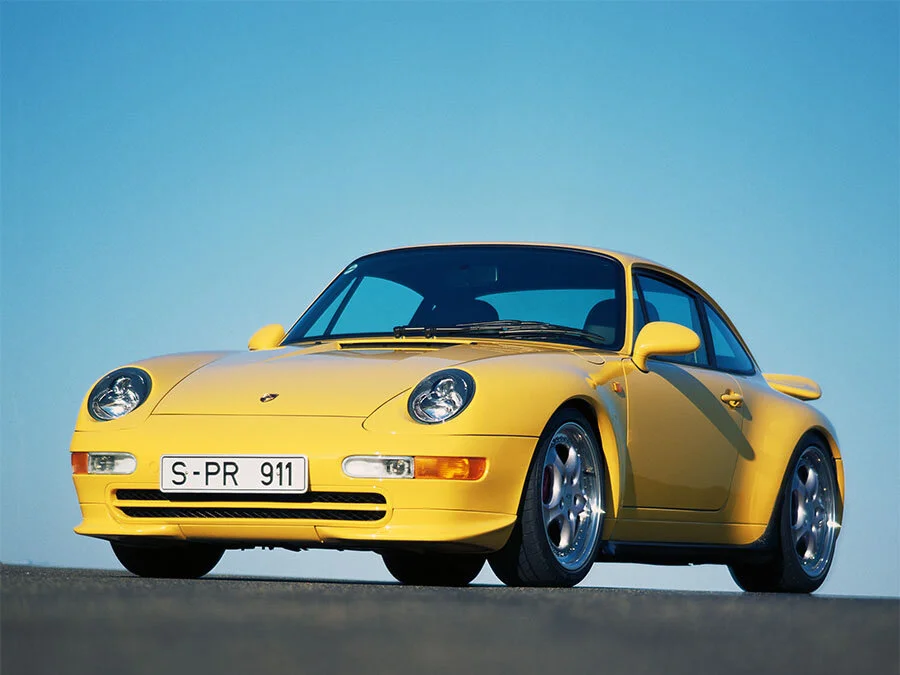
21. Porsche 911 Carrera RS 3.8 (993) (1995 – 1996)
The final air-cooled RS, combining old-school character with modern precision in a way Porsche would never repeat. A thin-glass, stripped-interior masterpiece that many consider the peak of the air-cooled driving experience.
Why It's On The List
The Porsche 911 Carrera RS 3.8 (Type 993) stands as the final air-cooled RS, combining the refinement of the 993 platform with the uncompromising philosophy of the Rennsport badge. Built as a homologation model for Porsche's Supercup racing series, it offered customers the closest experience to a factory race car while remaining street-legal.
The naturally aspirated 3.8-liter flat-six produced 300 hp, featuring lightweight internals, revised intake and exhaust systems, and careful engine balancing. Porsche reduced weight through thin glass, aluminum panels, and the deletion of comfort features including air conditioning and power windows. The result was a car that weighed approximately 1,270 kg (2,800 lbs)—roughly 100 kg less than a standard Carrera.
Only 227 examples were produced, split between RS and the even more hardcore RS Clubsport variants. The 993 RS represents the end of an era: the last naturally aspirated, rear-wheel-drive, air-cooled RS that Porsche would ever build. For many enthusiasts, it captures the essential 911 experience—character, sound, and mechanical purity—better than any car before or since.
Ranking Rationale
The final air-cooled RS. Thin glass, stripped interior, old-school character with modern precision—Porsche would never repeat this combination. Many consider it the peak of the air-cooled driving experience. A masterpiece of restraint.
Learn More
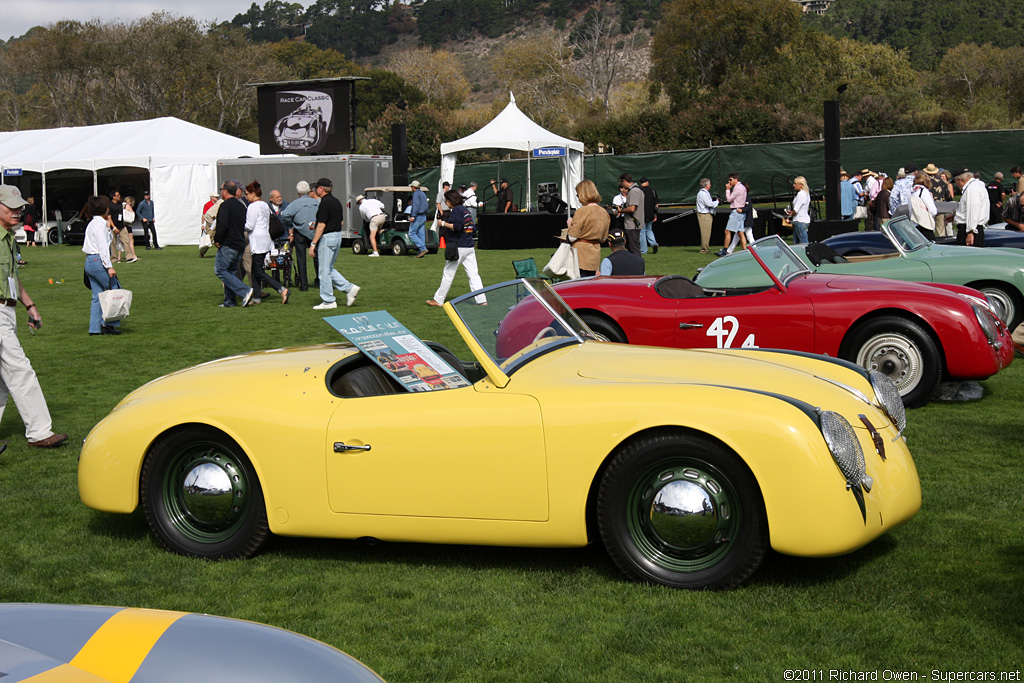
22. Porsche 356 America Roadster (1952)
With only 16 units ever built, this was a stripped-down, aluminum-bodied racer designed specifically for the U.S. market. It is widely considered the spiritual ancestor of the legendary Speedster, embodying the "less is more" philosophy.
Why It's On The List
The Porsche 356 America Roadster was a lightweight, competition-focused variant built specifically for the American market in 1952. Only 16 examples were produced, making it one of the rarest early Porsches and the spiritual ancestor of the legendary Speedster that would follow three years later.
The America Roadster featured an aluminum body that significantly reduced weight compared to the standard steel-bodied 356. The interior was stripped to essentials, with bucket seats, minimal instrumentation, and a removable Plexiglas windscreen. Power came from the 1.5-liter flat-four producing approximately 70 hp—modest by later standards but effective given the car's featherweight construction.
The car was conceived by Max Hoffman, the legendary importer responsible for bringing European sports cars to America. He recognized that American enthusiasts wanted something more focused than the standard 356 coupe, and Porsche delivered. The America Roadster established the template that would guide the Speedster, the RS 2.7, and every lightweight Porsche special that followed: remove weight, add purpose, and let the driver connect directly with the machine.
Ranking Rationale
Only 16 built. Aluminum body. Designed for American racers. This is the seed from which the Speedster, and Porsche's entire lightweight philosophy, grew. Foundational DNA that echoes through every stripped-out special that followed.
Learn More
23. Porsche 911 Speedster (991) (2019)
Served as the emotional grand finale of the 991 era, combining a GT3-derived naturally aspirated engine with a manual gearbox and uncompromising driver focus. Stripped of excess and rich in heritage, it distilled decades of 911 evolution into one unforgettable final statement.
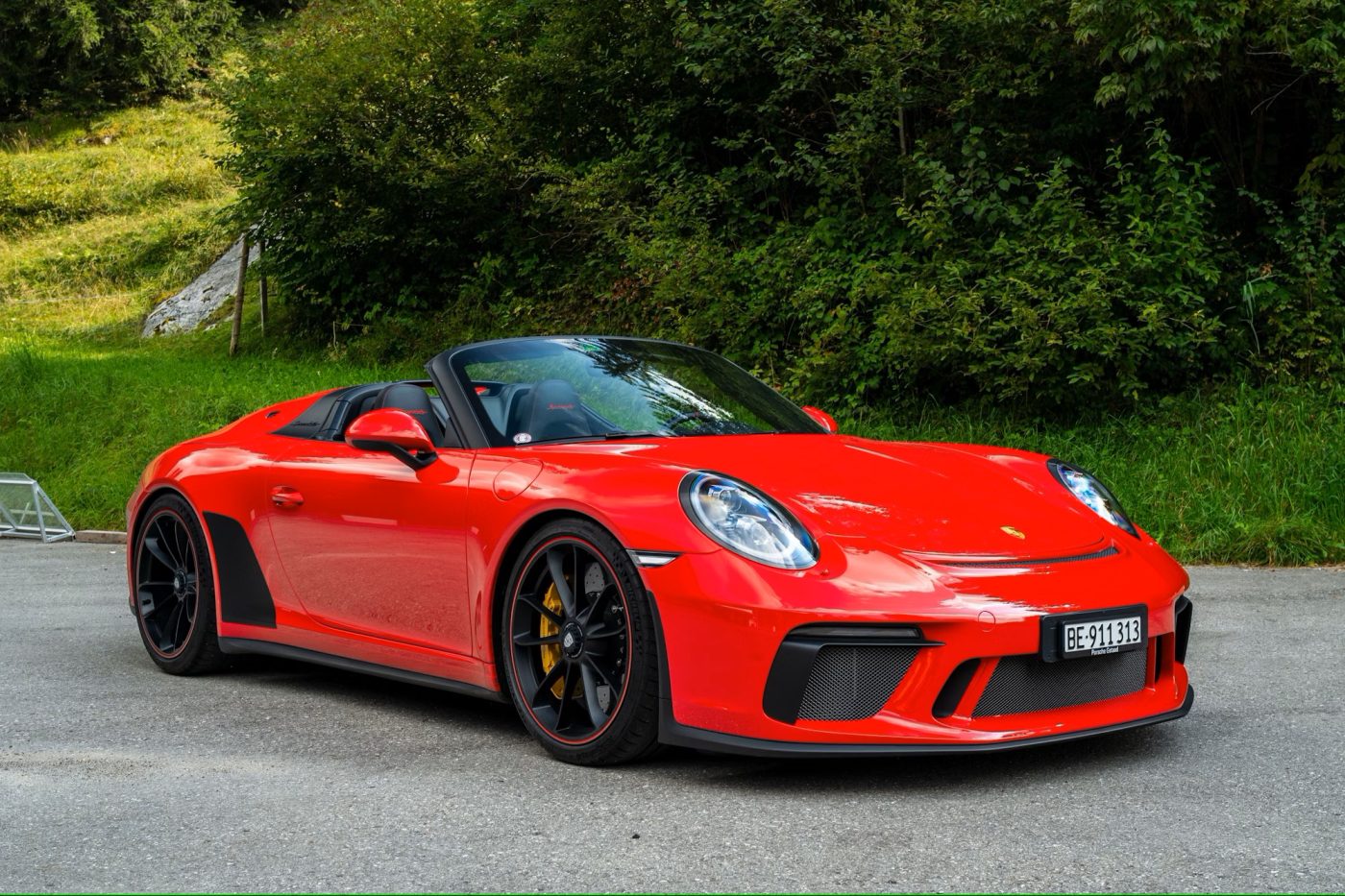
Why It's On The List
The Porsche 911 Speedster (Type 991) served as the emotional grand finale for the 991 generation, distilling decades of 911 evolution into a single, purpose-built driver's car. Limited to 1,948 units (honoring the year of Porsche's founding), it combined the best mechanical components available with classic Speedster design cues.
The heart of the car was the 4.0-liter naturally aspirated flat-six from the GT3, producing 502 hp and capable of revving to 9,000 rpm. Unlike the GT3, the Speedster was offered exclusively with a six-speed manual gearbox, reinforcing its focus on driver engagement over ultimate lap times. The chassis utilized GT3 suspension components with specific calibration for the Speedster's character.
The distinctive double-bubble tonneau cover, shortened windscreen, and unique ""Talbot"" side mirrors recalled Speedsters from Porsche's past while the carbon fiber construction reflected modern engineering. Heritage Design packages offered period-correct liveries that further emphasized the car's connection to history. As a final statement for the 991, the Speedster perfectly balanced nostalgia with capability.
Ranking Rationale
The emotional grand finale of the 991 era. GT3-derived naturally aspirated engine, manual gearbox, uncompromising driver focus. Stripped of excess and rich in heritage, it distilled decades of 911 evolution into one unforgettable statement.
Learn More
24. Porsche 911 SC RS (1984)
Porsche at its most uncompromising - built not for comfort or sales, but to dominate international rallying with a lightweight, brutally effective competition car. Rare, purpose-built, and directly tied to works motorsport success, it stands as the ultimate expression of the 911’s off-road and endurance capability.
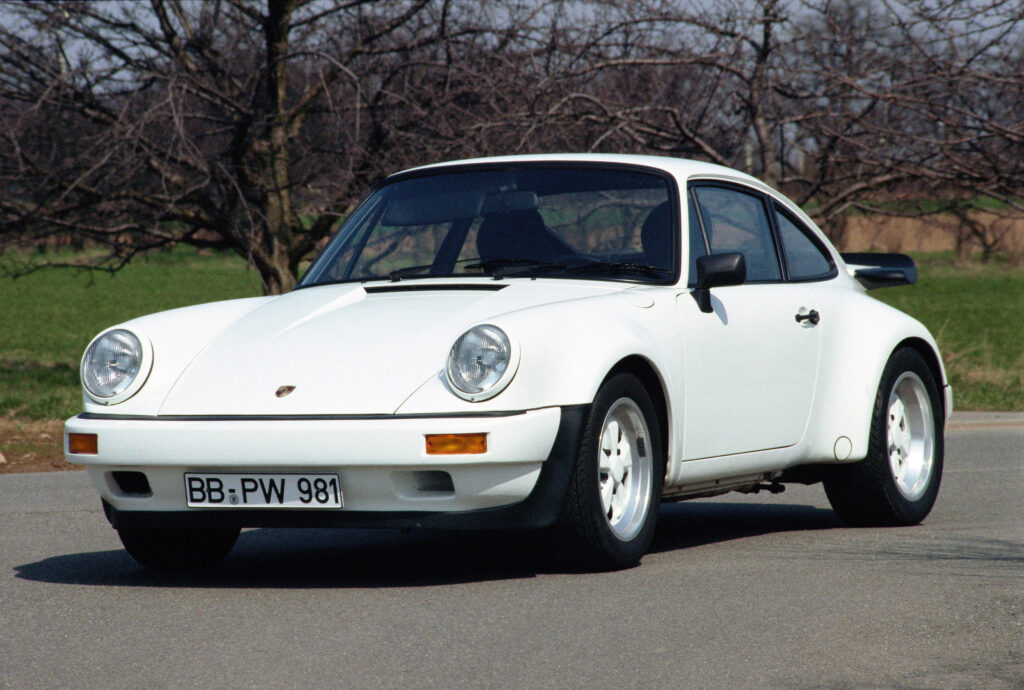
Why It's On The List
"The Porsche 911 SC RS was built with a singular purpose: to dominate international rallying. Created as a homologation special, Porsche produced only 21 examples of this lightweight, naturally aspirated weapon designed to compete in Group B competition against turbocharged monsters from Audi, Peugeot, and Lancia.
Based on the 911 SC platform, the SC RS featured extensive weight reduction including aluminum body panels, Plexiglas windows, and a stripped interior. The 3.0-liter flat-six was extensively modified with racing components, producing approximately 255 hp in road trim and significantly more in competition specification. A close-ratio gearbox and limited-slip differential completed the mechanical package.
While the SC RS faced overwhelming opposition from the four-wheel-drive turbocharged Group B cars on loose surfaces, it proved devastatingly effective on tarmac events. The car achieved notable success in events like the Tour de Corse, where its rear-engine handling characteristics and mechanical simplicity could be exploited. The SC RS represents the last serious factory attempt to compete with a naturally aspirated, rear-wheel-drive 911 in top-level rallying."
Ranking Rationale
Porsche at its most uncompromising—built not for comfort or sales, but to dominate international rallying. Rare, purpose-built, and directly tied to works motorsport success. The ultimate expression of the 911's off-road and endurance capability.
Learn More
25. Porsche 911 R (991) (2016)
A deliberate rejection of lap-time obsession, reviving the joy of a manual gearbox, a high-revving GT3 engine, and a wingless, understated design. Built purely for driver engagement, it proved that emotional connection—not outright speed—was still the soul of the 911.
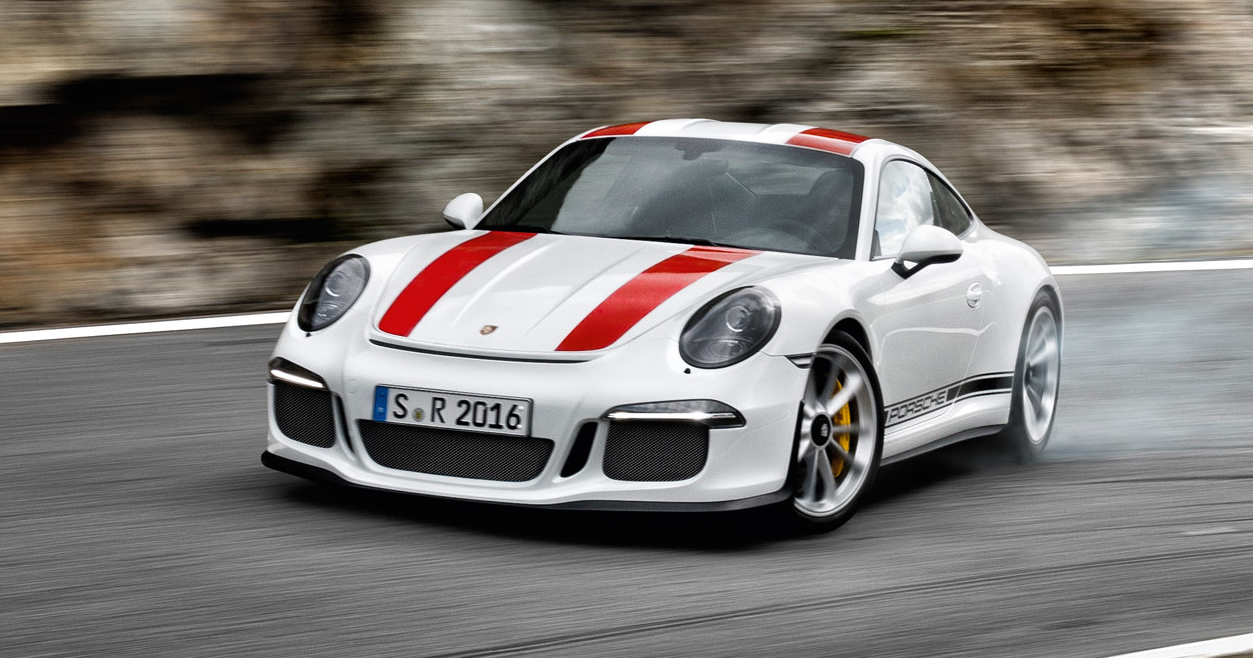
Why It's On The List
The Porsche 911 R (Type 991) was a deliberate rejection of the lap-time obsession that had come to dominate sports car development. By combining the GT3 RS's magnificent 4.0-liter naturally aspirated flat-six with a six-speed manual gearbox and a wingless, understated body, Porsche created a car focused purely on driving pleasure.
The 500 hp engine revved to 8,800 rpm, delivering power through a single-mass flywheel that emphasized mechanical connection over refinement. Weight was reduced through carbon fiber components and the deletion of the rear seats and air conditioning (though both could be optioned back). The result was a car weighing approximately 1,370 kg (3,020 lbs)—lighter than the PDK-equipped GT3.
Limited to 991 units, the 911 R became an instant collector phenomenon, with prices rapidly exceeding $1 million on the secondary market. While the speculation was unfortunate, the car's appeal was genuine: it proved that Porsche understood what enthusiasts truly wanted. Sometimes the fastest car isn't the best car—sometimes the best car is the one that makes you feel most alive.
Ranking Rationale
A deliberate rejection of lap-time obsession. By reviving the joy of a manual gearbox, high-revving GT3 engine, and wingless design, it proved that emotional connection—not outright speed—was still the soul of the 911.
Learn More
26. Porsche 959 Rally
After a failure in 1985 where all three cars retired, Porsche returned in 1986 to claim 1st and 2nd place overall (and 6th for the support car). This was unheard of for a "supercar" in a race dominated by heavy trucks and rugged SUVs.
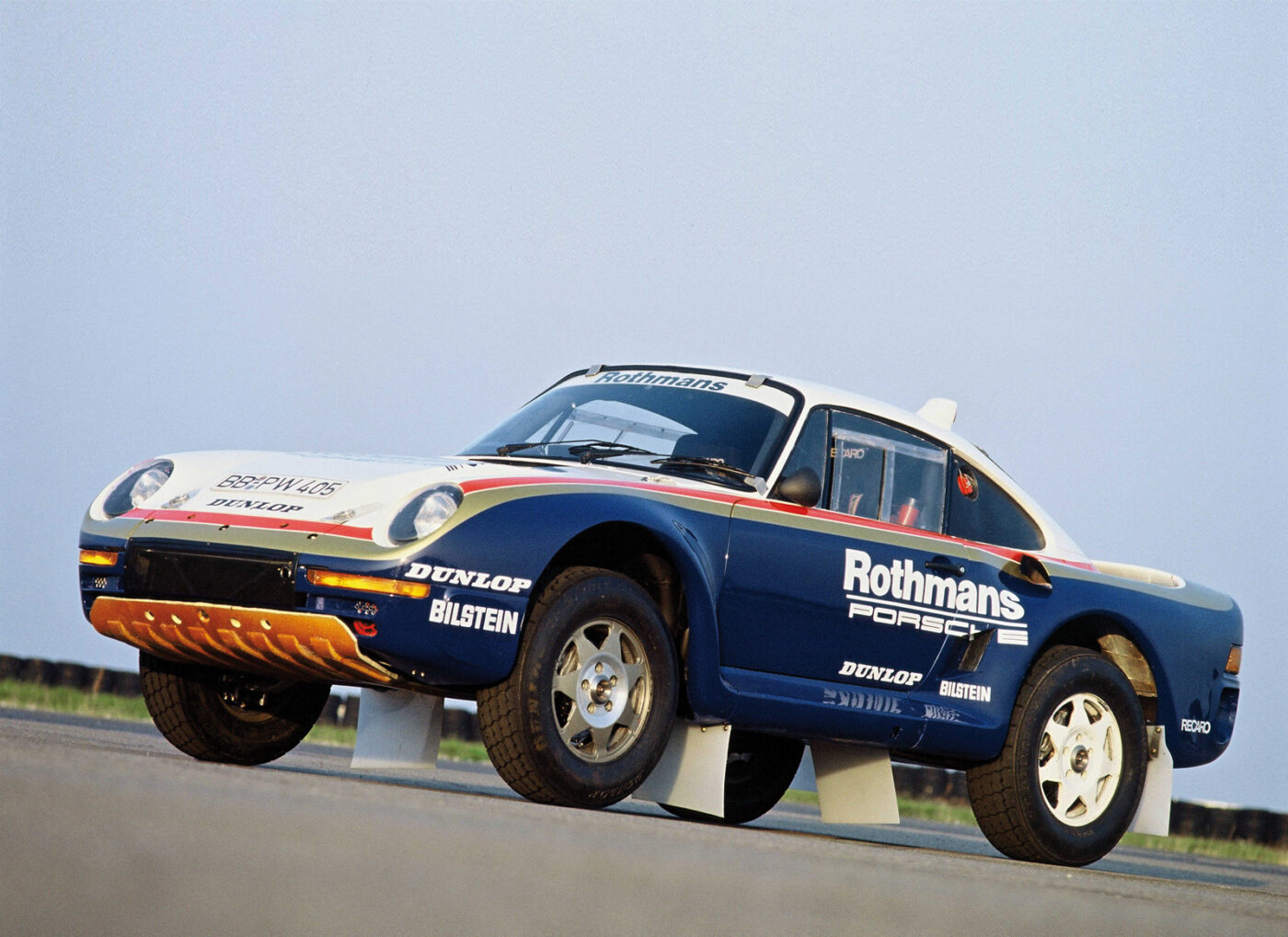
Why It's On The List
The Porsche 959's Paris-Dakar victory in 1986 remains one of the most improbable results in motorsport history. Taking a sophisticated, technology-laden supercar into the most grueling off-road race on Earth seemed like hubris—until Porsche proved it could be done with a 1-2 finish that embarrassed the purpose-built trucks and SUVs that typically dominated the event.
The rally-prepared 959 retained the road car's twin-turbocharged flat-six and sophisticated PSK all-wheel-drive system but added reinforced suspension with dramatically increased travel, underbody protection, and reliability modifications necessary for crossing the Sahara Desert. The car's electronic systems, initially seen as potential weak points, proved remarkably robust.
After all three factory 959s retired from the 1985 Paris-Dakar, the 1986 victory was both vindication and revenge. René Metge and Dominique Lemoyne drove their 959 to overall victory, with Jacky Ickx and Claude Brasseur finishing second. The result proved that the 959's advanced technology wasn't just for high-speed heroics on smooth tarmac—it could conquer the most hostile terrain on the planet.
Ranking Rationale
A supercar winning the Paris-Dakar Rally was absurd—and Porsche did it with a 1-2 finish in 1986. In a race designed for trucks and rugged SUVs, the 959 proved that technology could conquer the Sahara. One of the most improbable victories in motorsport history.
Learn More
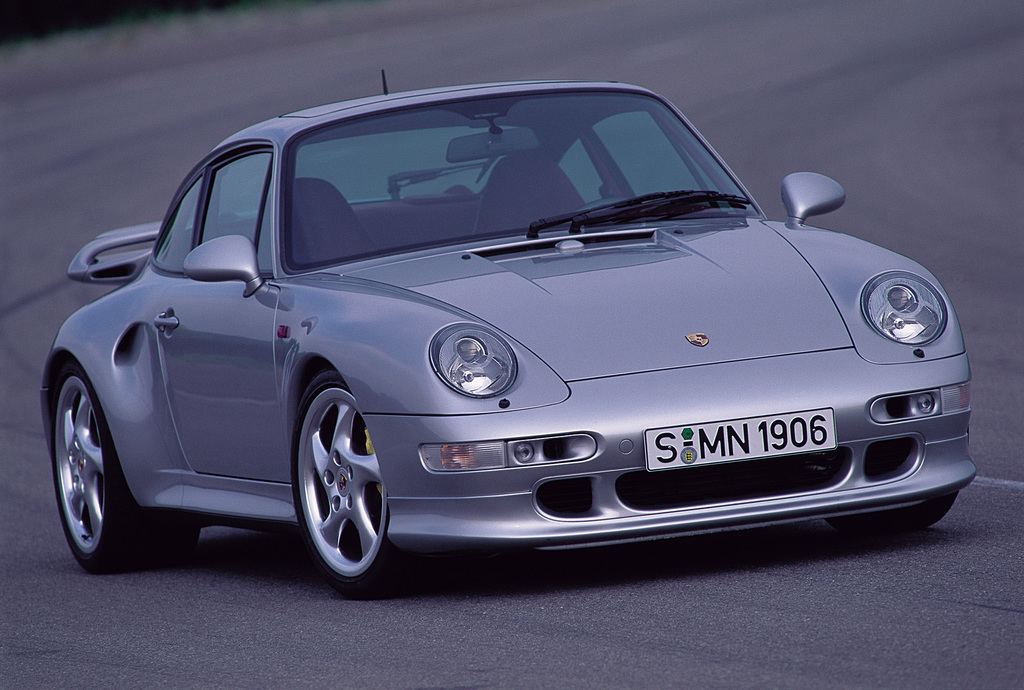
27. Porsche 911 Turbo S (993) (1998)
As the final hurrah for the air-cooled 911, this special edition was the most powerful factory-built 993 ever made. It featured distinctive yellow brake calipers and air intakes on the rear fenders, with only 345 units produced worldwide.
Why It's On The List
The Porsche 911 Turbo S (Type 993) represented the ultimate development of the air-cooled Turbo formula, the most powerful factory 993 ever produced. Introduced in 1997 as a farewell to the air-cooled era, the Turbo S combined the standard Turbo's twin-turbocharged engine with additional modifications that elevated it to true supercar status.
The 3.6-liter flat-six received larger turbochargers, revised engine management, and additional cooling capacity, increasing output to 450 hp (compared to 408 hp in the standard Turbo). The car featured distinctive yellow brake calipers—a visual signature that would become associated with Porsche's highest-performance models—along with carbon fiber interior trim and exclusive upholstery options.
Only 345 examples were built worldwide, making the 993 Turbo S one of the rarest modern Porsches. Its combination of the 993's refined chassis, powerful twin-turbo engine, and all-wheel-drive security made it one of the most capable grand tourers of its era. As the final statement of the air-cooled Turbo lineage, it represents both an ending and an apex—the ultimate expression of a formula that began with the original 930.
Ranking Rationale
The final hurrah for the air-cooled 911. The most powerful factory-built 993 ever made, with distinctive yellow brake calipers and only 345 units produced worldwide. A proper farewell to an era.
Learn More
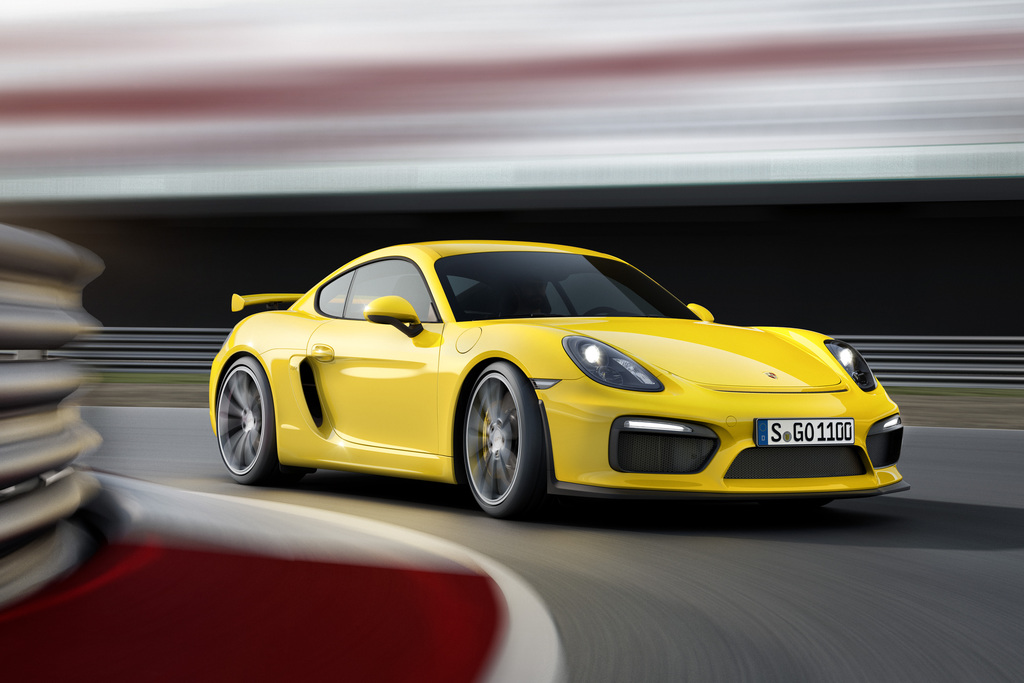
28. Porsche Cayman GT4 (981) (2015 - 2016)
This was the moment the Cayman finally "grew up," inheriting the 3.8L engine from the 911 Carrera S. It was a love letter to enthusiasts, offered exclusively with a six-speed manual and GT3-grade suspension.
Why It's On The List
The Porsche Cayman GT4 (Type 981) marked a watershed moment for the mid-engine platform: the first time Porsche gave the Cayman genuine GT credentials rather than deliberately handicapping it to protect 911 sales. The result was a car that many enthusiasts consider the purest driver's Porsche of its generation.
The GT4's 3.8-liter flat-six was borrowed directly from the 911 Carrera S, producing 385 hp—more than any previous Cayman. Paired exclusively with a six-speed manual gearbox (no PDK option was offered), the engine delivered its power through a limited-slip differential to the rear wheels. Suspension components came from the GT3, including adjustable dampers and upgraded anti-roll bars.
The chassis balance was exceptional. With the engine positioned ahead of the rear axle, the GT4 offered near-perfect weight distribution and handling precision that even the 911 couldn't quite match. At the Nürburgring, it lapped faster than the 997 GT3. For many drivers, the GT4 represented exactly what a sports car should be: engaging, approachable, and rewarding without being intimidating. It proved the Cayman could stand on its own merit.
Ranking Rationale
The moment the Cayman finally 'grew up.' It inherited the 3.8L engine from the 911 Carrera S, came exclusively with a six-speed manual, and featured GT3-grade suspension. A love letter to enthusiasts that proved the mid-engine platform could stand on its own.
Learn More
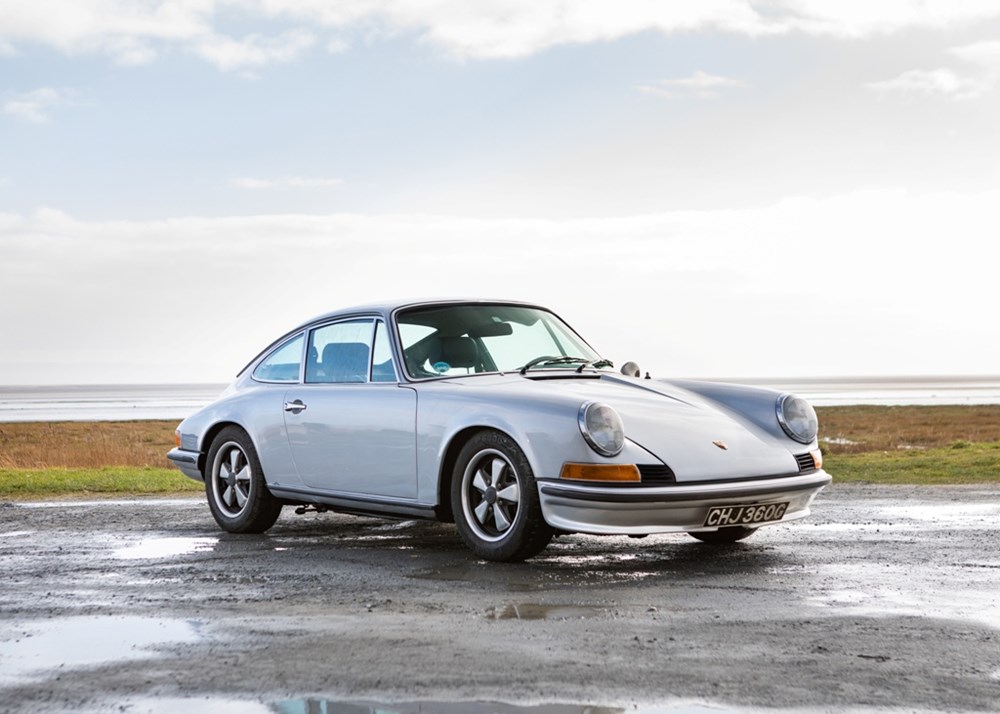
29. Porsche 911 S Coupe (1967-1969)
The first 911 to fully define Porsche’s performance blueprint - lightweight construction, a high-revving engine, and razor-sharp handling in a pure, unfiltered package. With its motorsport-bred upgrades and perfectly balanced simplicity, it set the template for every great 911 that followed.
Why It's On The List
The Porsche 911 S, introduced in 1967, was the first performance-focused variant of the 911 and established the template that would guide every ""S"" model for decades to come. It took the already impressive base 911 and elevated it with meaningful improvements to power, handling, and braking.
The 2.0-liter flat-six received Weber carburetors, higher compression, revised camshafts, and other modifications that increased output from 130 hp to 160 hp. Ventilated brake discs—a first for a production Porsche—improved stopping power, while Koni shock absorbers and wider wheels enhanced handling. The distinctive Fuchs forged alloy wheels, which would become synonymous with the 911, debuted on the S model.
Inside, the S featured a leather-wrapped steering wheel and upgraded instrumentation including a mechanical stopwatch. While these might seem like minor additions today, they signaled Porsche's intent to offer serious drivers something special. The 911 S proved that the basic 911 concept could be refined and enhanced without losing its essential character—a lesson Porsche would apply countless times in the decades that followed.
Ranking Rationale
The first 911 to fully define Porsche's performance blueprint. Lightweight construction, high-revving engine, razor-sharp handling in a pure, unfiltered package. It set the template for every great 911 that followed.
Learn More
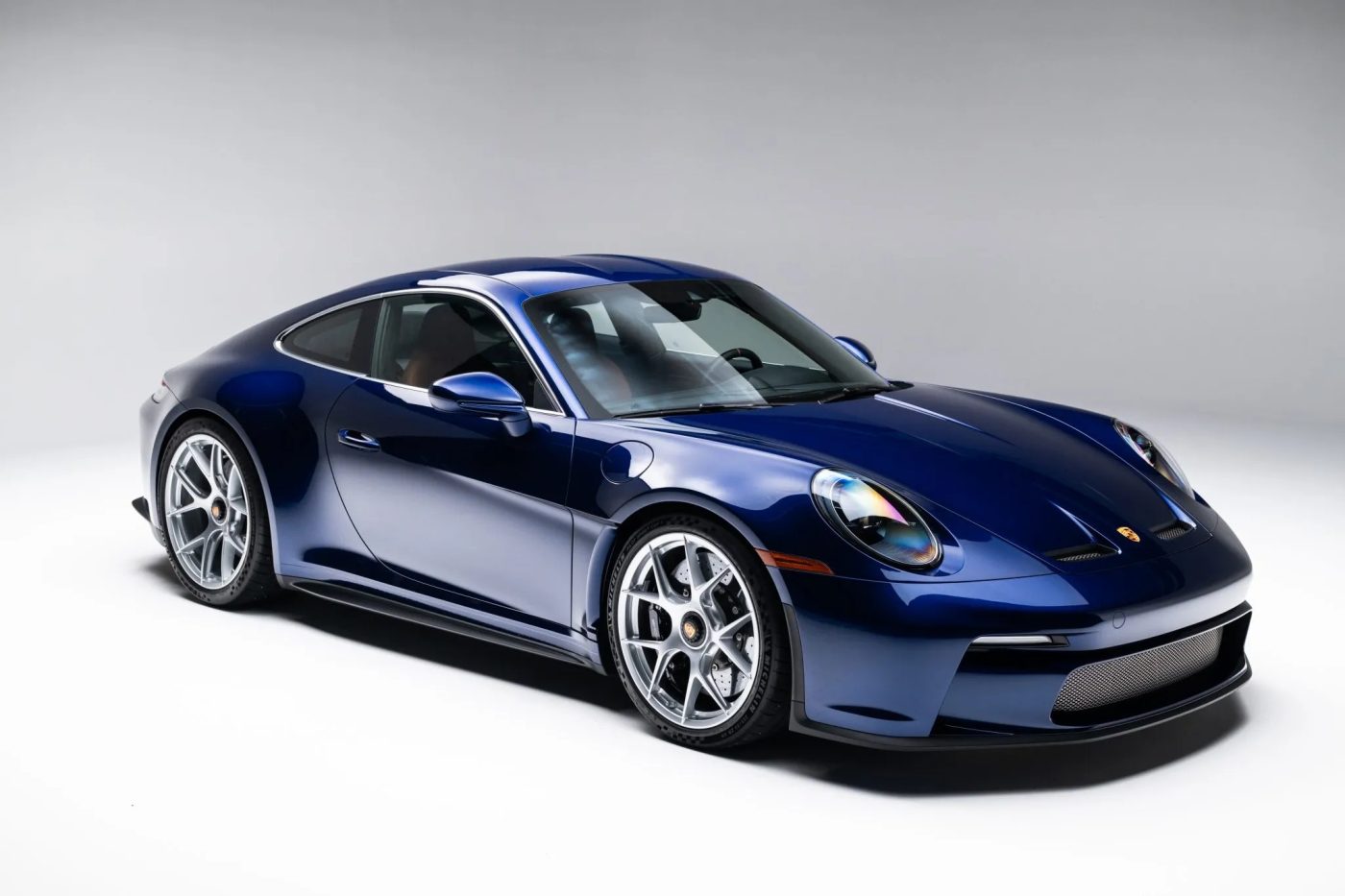
30. Porsche 911 S/T (992) (2024 – 2025)
Distilled six decades of Porsche motorsport philosophy into the lightest, most driver-focused 992 ever built. By pairing the GT3 RS–derived engine with a manual gearbox and a wingless, lightweight body, it delivered pure engagement over lap-time obsession. Probably the best 911 ever made.
Why It's On The List
The Porsche 911 S/T (Type 992) distills six decades of Porsche motorsport philosophy into the lightest, most driver-focused 992 ever built. Created to celebrate the 911's 60th anniversary, the S/T takes the GT3 RS's engine and pairs it with a six-speed manual gearbox, a wingless body, and extensive weight reduction.
The 4.0-liter flat-six produces 518 hp and revs to 9,000 rpm, delivering its power through a short-throw manual with a single-mass flywheel for maximum mechanical connection. Weight savings came from magnesium wheels, carbon fiber body panels, carbon bucket seats, and the deletion of rear seats. The result is a 992 weighing approximately 1,380 kg (3,042 lbs)—lighter than the manual GT3.
The S/T's character emphasizes engagement over outright lap times, with a subtly revised suspension tune that prioritizes road feel and driver feedback. Limited to 1,963 units (honoring the first year of 911 production), the S/T represents what many consider the ideal modern 911: raw, focused, and uncompromisingly driver-centric.
Ranking Rationale
Distilled six decades of Porsche motorsport philosophy into the lightest, most driver-focused 992 ever built. GT3 RS–derived engine with a manual gearbox and wingless, lightweight body. Pure engagement over lap-time obsession. Many consider it the best 911 ever made.
Learn More
31. Porsche 963 RSP (2025)
The Porsche 963 RSP is Porsche’s most extraordinary modern one-off: a genuine Le Mans prototype modified just enough to live on select public roads, built as a bespoke tribute and a bridge between past and present racing legends.
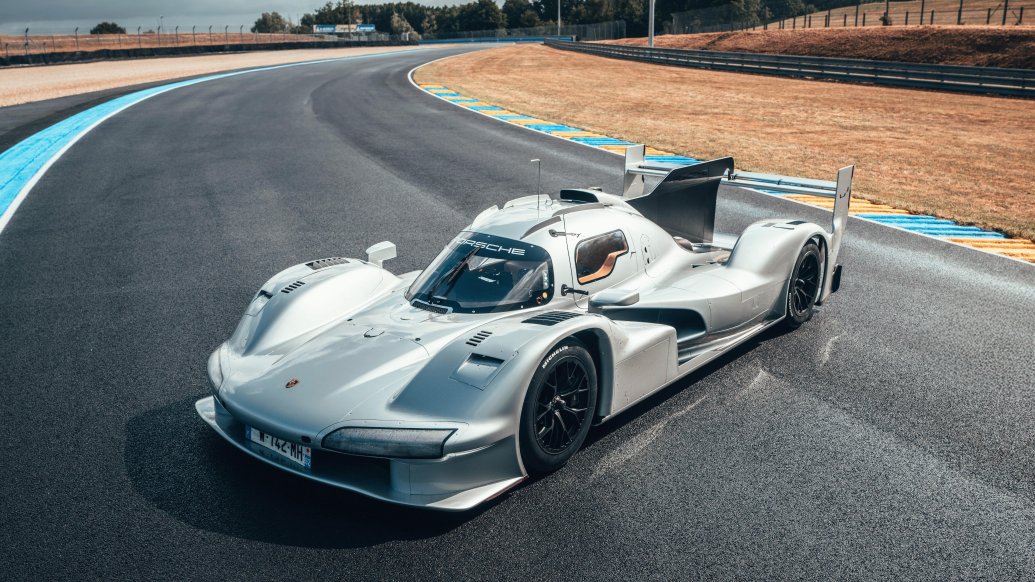
Why It's On The List
The Porsche 963 RSP represents the modern continuation of Porsche's tradition of making race cars road-legal. Based on the 963 LMDh prototype that competes in the FIA World Endurance Championship and IMSA SportsCar Championship, the RSP (Road-legal Special Project) is a bespoke, one-of-one creation that pushes the boundaries of what's possible on public roads.
The 963 race car features a 4.6-liter twin-turbocharged V8 combined with a spec hybrid system, producing around 680 hp in competition trim. The RSP adaptation required modifications for road compliance while preserving as much of the prototype's character as possible—no small feat given the car's purpose-built racing origins.
This project echoes the spirit of the 917 street conversions from the 1970s, demonstrating that Porsche's willingness to blur the line between race track and road remains undiminished. The 963 RSP exists as both a tribute to Porsche's endurance racing heritage and a statement about its current capabilities—a bridge between generations of Le Mans machinery.
Ranking Rationale
The spiritual successor to the 917 street car. Taking a modern LMDh prototype and making it road-legal is an act of magnificent ambition. It bridges Porsche's past audacity with present-day engineering, proving that the spirit of 'race car for the road' lives on at Stuttgart.
Learn More
32. Porsche 718 RSK
A mid-engine masterpiece that dominated its class and influenced every Porsche racer that followed.
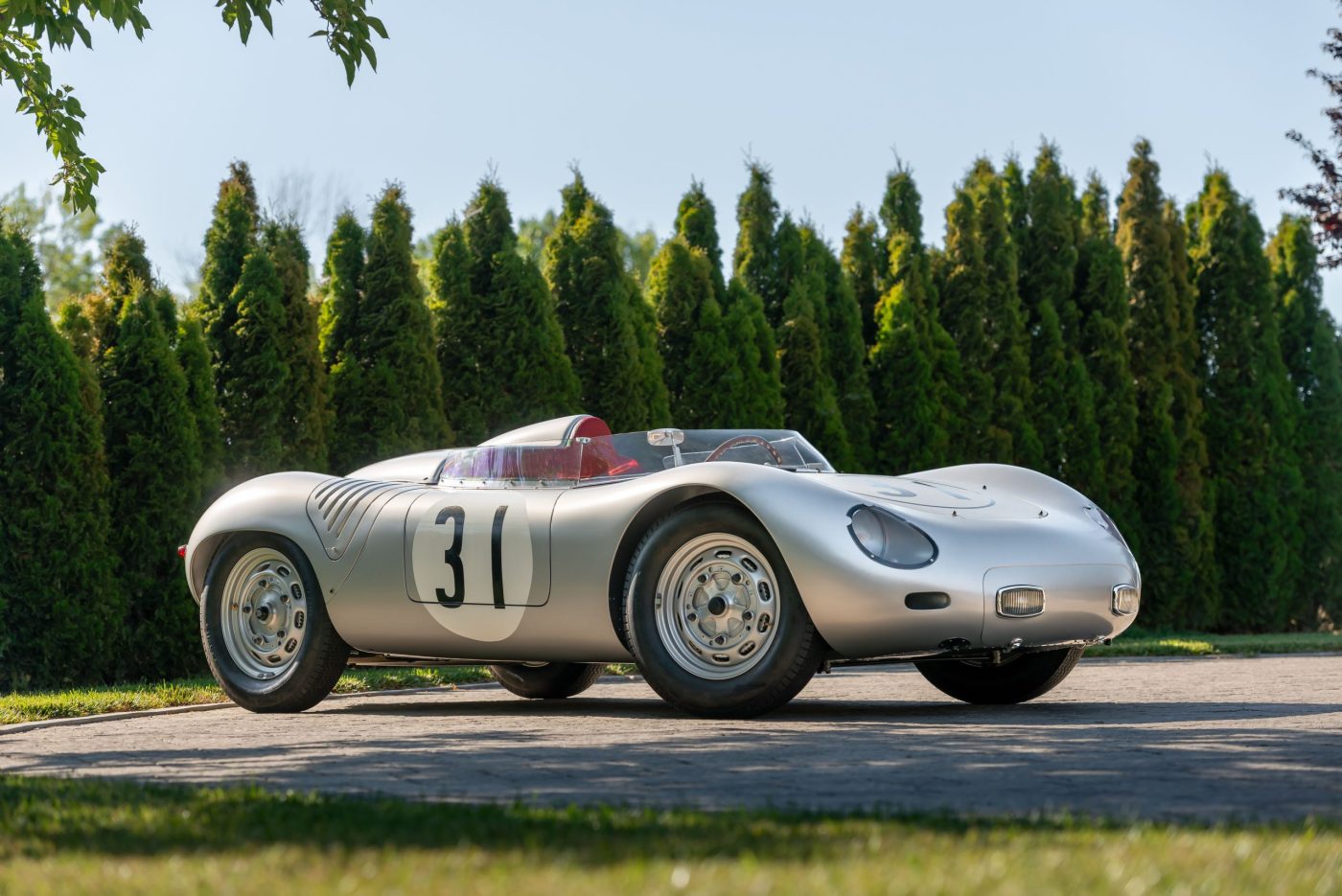
Why It's On The List
The Porsche 718 RSK, introduced in 1957, was the evolution of the successful 550 Spyder and represented a significant step forward in Porsche's racing technology. The designation ""RSK"" derived from ""Renn Sport Kurzheck"" (racing sport short-tail), distinguishing it from the longer-tailed RS variant built for high-speed circuits.
The RSK featured the Type 547/3 four-cam flat-four engine producing approximately 142 hp in standard form, though racing versions developed considerably more. The tubular space frame chassis was more sophisticated than the 550's, with improved suspension geometry that enhanced handling. At just 550 kg (1,212 lbs), the power-to-weight ratio was exceptional for its era.
The 718 RSK achieved remarkable success in international competition, including class victories at Le Mans and strong results at the Targa Florio and Nürburgring 1000km. Perhaps more importantly, it influenced the design of every mid-engine Porsche racer that followed, from the 904 through the 917. Its elegant, flowing lines make it one of the most beautiful racing shapes Porsche ever created—a genuine masterpiece of form following function.
Ranking Rationale
The mid-engine masterpiece that dominated its class in the late 1950s. It influenced every Porsche prototype that followed and remains one of the most elegant racing shapes ever penned. A foundational car that doesn't always get its due.
Learn More
33. Porsche Cayman R (987.2) (2012)
The Lightweight Purist. Proof that adding lightness is the most effective way to build a sports car.
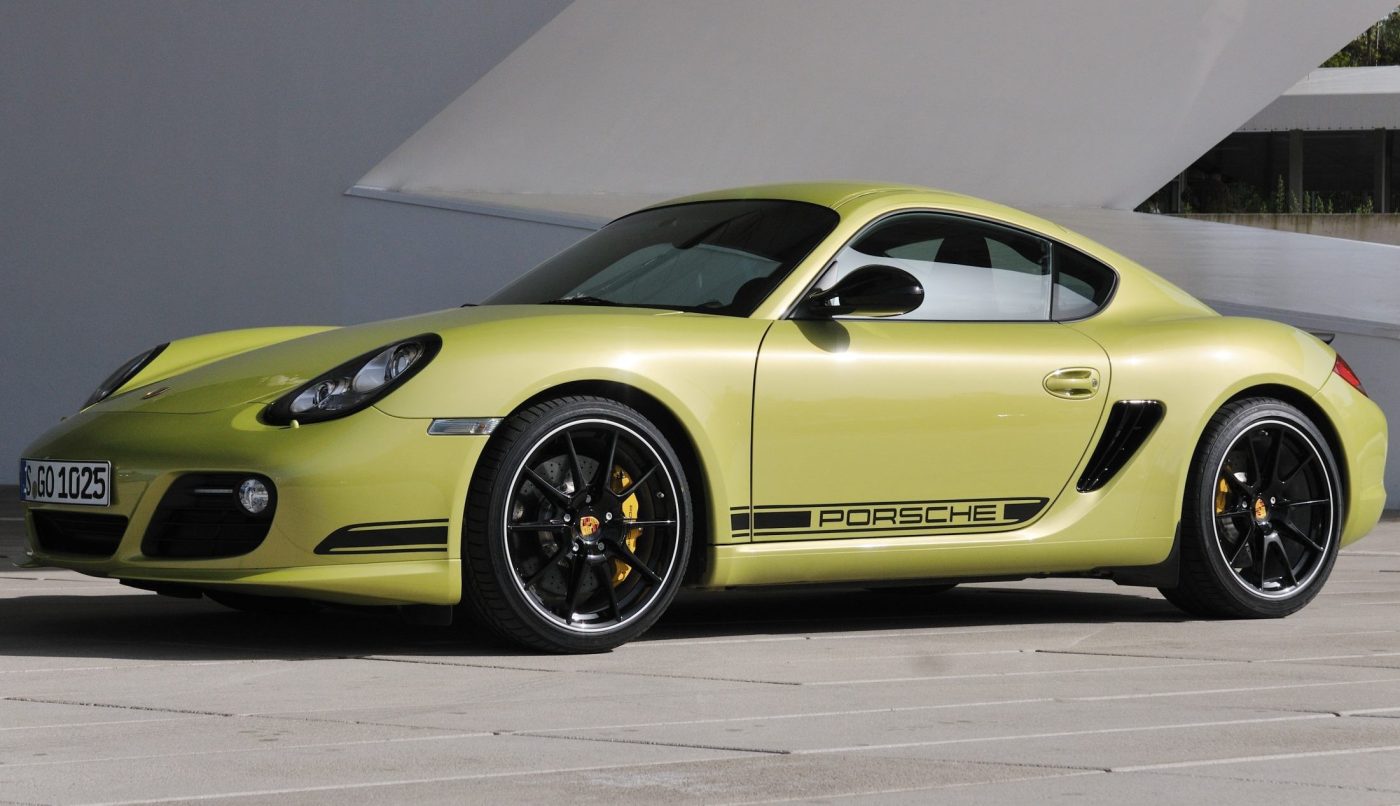
Why It's On The List
The Porsche Cayman R (Type 987.2) applied Colin Chapman's philosophy—""simplify, then add lightness""—to the mid-engine Porsche platform. While the power increase over the standard Cayman S was modest (330 hp vs. 320 hp), the comprehensive weight reduction program transformed the car's character.
Porsche removed the air conditioning, radio, and door handles, substituted lighter glass and aluminum panels, and fitted fixed-back sport seats. The result was a car weighing approximately 55 kg less than the Cayman S. Combined with lowered and stiffened suspension, larger brakes, and a standard limited-slip differential, the R became a focused driving instrument.
The Cayman R demonstrated that the mid-engine platform could deliver exceptional dynamics when freed from the artificial handicaps Porsche typically imposed to protect 911 sales. On technical roads or track, the R's balance and precision were revelatory. It remains one of the purest expressions of the Cayman concept.
Ranking Rationale
The Colin Chapman philosophy applied to a Cayman. Proof that less really is more. It remains a benchmark for mid-engine balance and lightweight purity.
Learn More
34. Porsche 968 Clubsport (CS)
This stripped-out, track-focused version of the 968 is widely considered one of the best-handling front-engine cars ever built. By removing the rear seats and sound deadening, Porsche created a pure, lightweight weapon for the enthusiast driver.
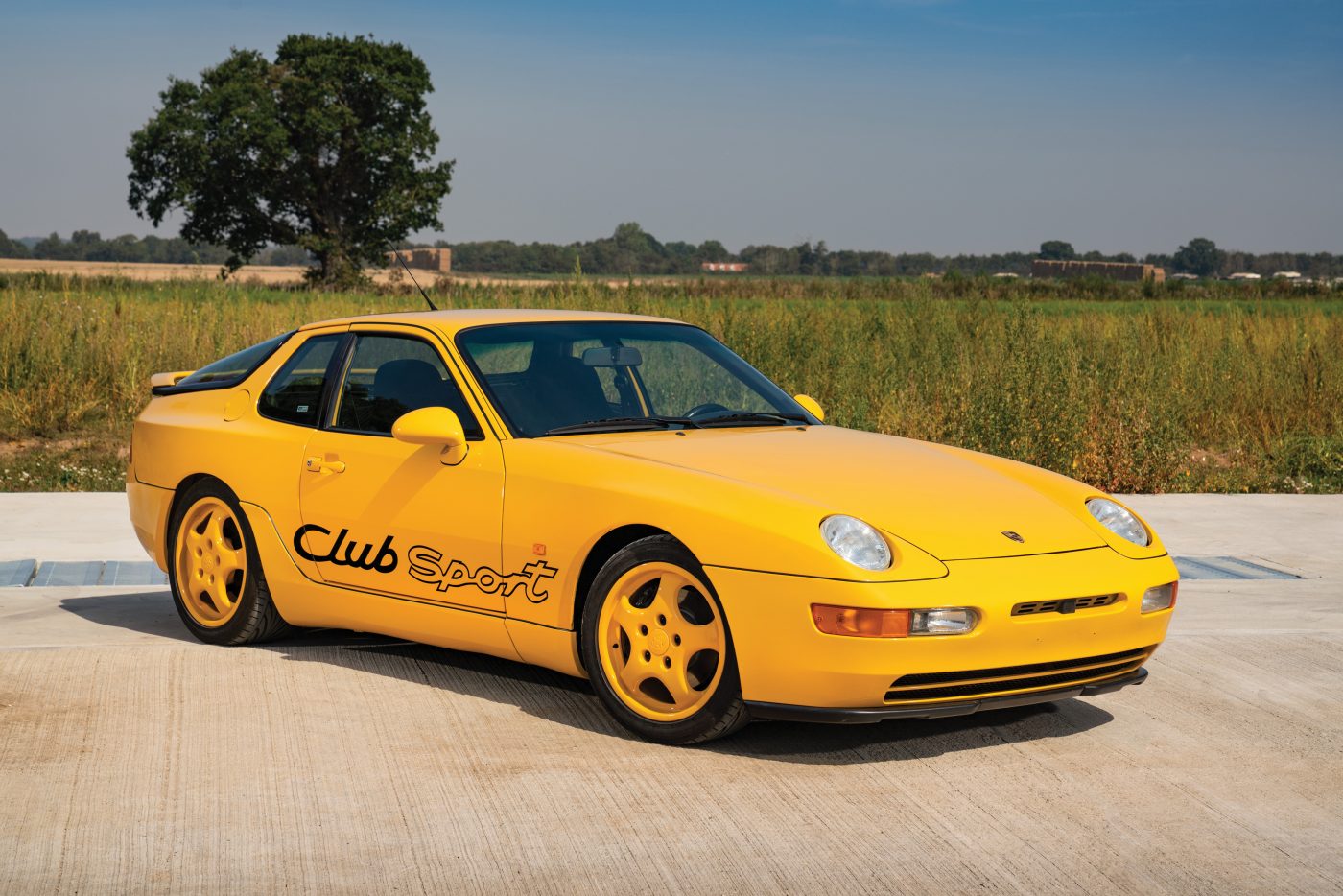
Why It's On The List
The Porsche 968 Clubsport is widely regarded as one of the finest-handling front-engine sports cars ever built. By stripping the already capable 968 of unnecessary weight and comfort features, Porsche created a driver's car that could embarrass many mid-engine competitors on a challenging road.
The formula was familiar from RS models: delete the rear seats, air conditioning, power windows, central locking, and sound insulation. The result was a car weighing approximately 1,320 kg (2,910 lbs)—roughly 100 kg lighter than the standard 968. The 3.0-liter inline-four remained unchanged at 240 hp, but the improved power-to-weight ratio transformed the car's character.
What made the Clubsport special was its chassis balance. The transaxle layout—engine in front, gearbox at the rear—provided near-perfect 50/50 weight distribution. Combined with the reduced weight and recalibrated suspension, the Clubsport offered handling precision that few cars at any price could match. It proved that the front-engine Porsche formula, perfected over three generations of the 924/944/968 series, could deliver genuine sports car performance.
Ranking Rationale
A masterclass in chassis dynamics. Stripping weight from an already brilliant platform created a front-engine car that could embarrass mid-engine rivals. Widely considered one of the best-handling front-engine cars ever built. A true cult hero.
Learn More
35. Porsche 911 RSR 2.14 Turbo
If the 917 was the car that put Porsche on the map for overall wins, the RSR 2.14 Turbo was the car that saved the 911's racing career by dragging it into the forced-induction era. One of the most historically important experimental racers.
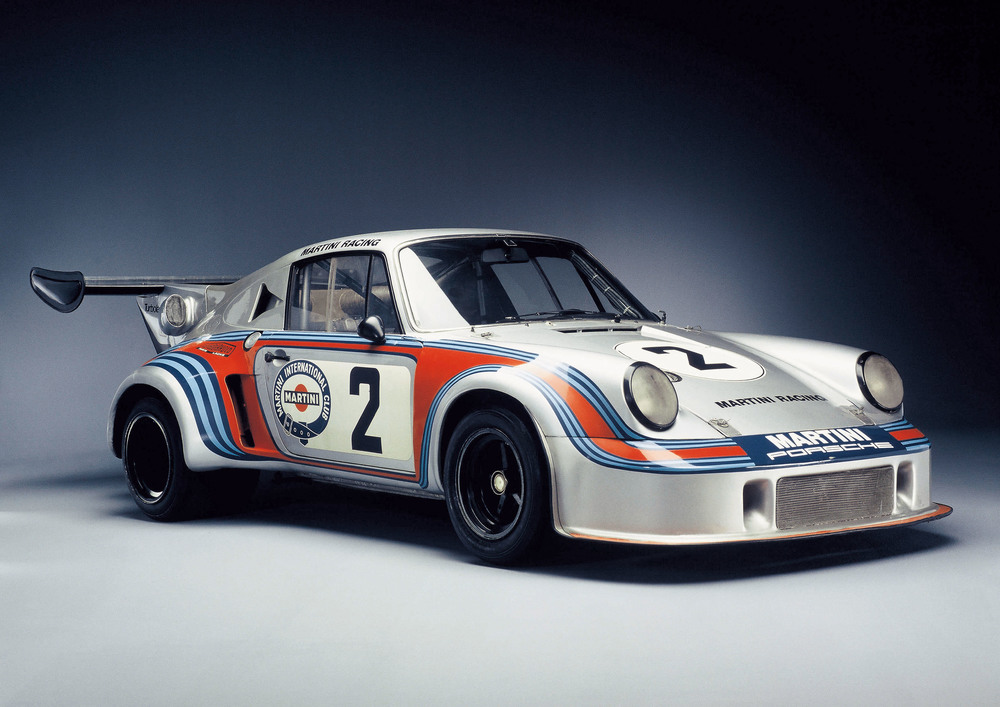
Why It's On The List
The Porsche 911 RSR 2.14 Turbo was one of the most historically important experimental racers Porsche ever built. Developed in 1974 as a testbed for turbocharged technology, it would directly influence the development of the 934, 935, and ultimately the road-going 930 Turbo.
The ""2.14"" designation referred to the engine's displacement—2,142cc—which, when multiplied by the FIA's 1.4 turbo equivalency factor, brought the car just under the 3.0-liter class limit. The single-turbo flat-six produced approximately 500 hp, a remarkable figure that demonstrated the potential of forced induction in the 911 chassis.
While the RSR 2.14 Turbo achieved limited competitive success due to reliability issues inherent in early turbo development, its real value lay in the lessons learned. Every challenge overcome—heat management, throttle response, boost control—contributed to the turbocharged Porsches that would dominate the late 1970s and 1980s. The car saved the 911's racing career by proving that forced induction was the path forward.
Ranking Rationale
Not the most successful car on this list, but one of the most historically important. The experimental test bed that proved turbocharging could work in the 911 chassis, directly leading to the 934, 935, and every turbocharged Porsche that followed. The car that saved 911 racing.
Learn More
36. Porsche 911 GT3 (991.2) (2018 – 2019)
Reunited cutting-edge GT performance with a manual transmission, restoring a level of driver involvement purists feared was lost. By offering both PDK and a six-speed manual, it proved that ultimate performance and emotional engagement could coexist in a modern GT3.
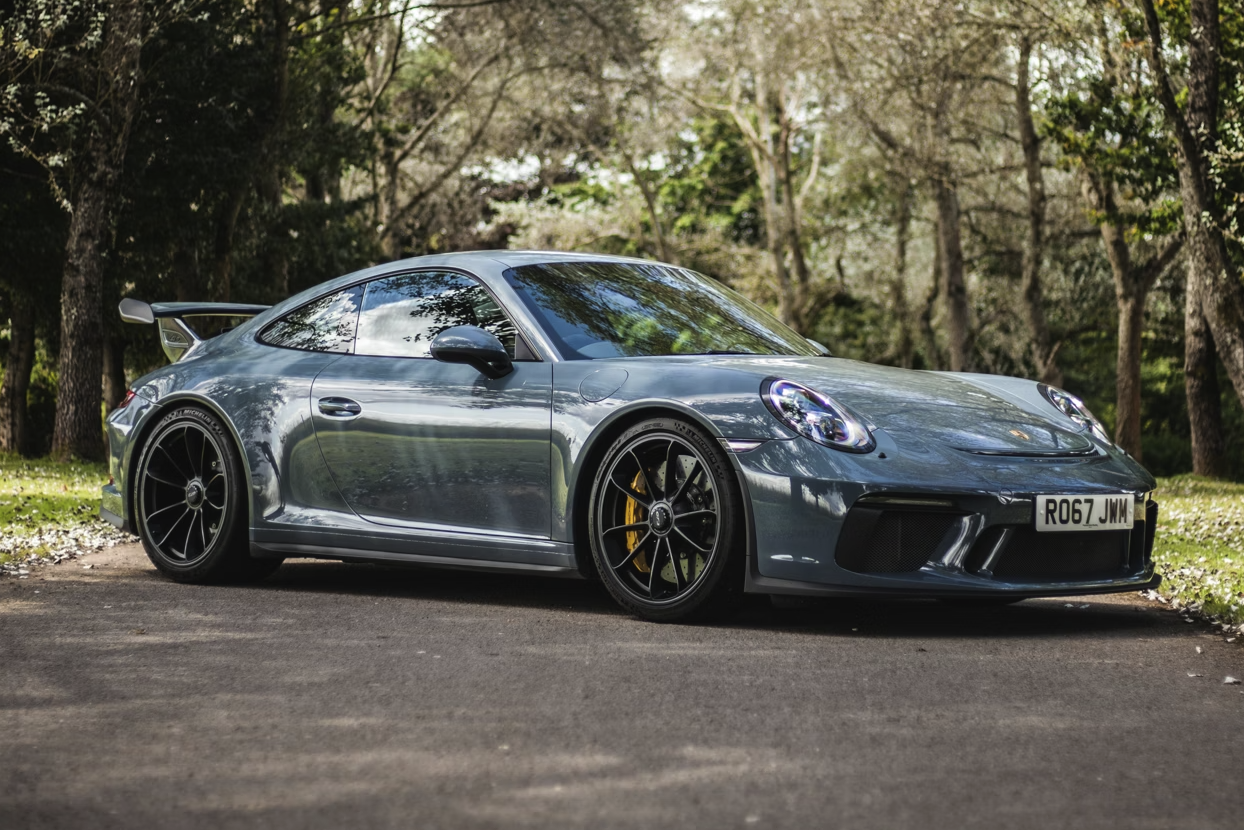
Why It's On The List
The Porsche 911 GT3 (Type 991.2) represented a significant moment for the GT3 lineage: the return of the manual gearbox option. After the 991.1 GT3 was offered exclusively with PDK, the outcry from enthusiasts convinced Porsche to bring back the traditional three-pedal experience, acknowledging that driving engagement mattered as much as lap times.
The 4.0-liter naturally aspirated flat-six produced 500 hp and revved to 9,000 rpm, featuring a revised version of the engine that would also power the 911 R. The PDK transmission remained the fastest option, but the six-speed manual—with its short throws, perfect weighting, and auto-blip function—restored the connection that many felt had been lost.
Beyond the transmission, the 991.2 GT3 featured refined aerodynamics, improved suspension, and subtle chassis tweaks that made it even more capable than its predecessor. It could lap the Nürburgring in under 7:13, yet remained approachable and rewarding on public roads. The 991.2 GT3 proved that Porsche would listen to its most passionate customers.
Ranking Rationale
Reunited cutting-edge GT performance with a manual transmission, restoring driver involvement purists feared was lost. By offering both PDK and a six-speed manual, it proved ultimate performance and emotional engagement could coexist.
Learn More
37. Porsche 911 Turbo S Leichtbau (964)
Took the already fearsome Turbo formula and stripped it to its most extreme, motorsport-focused form. By combining massive turbocharged power with radical factory weight reduction, it delivered one of the rawest, most intimidating driving experiences Porsche has ever sold to the public.

Why It's On The List
The Porsche 911 Turbo S Leichtbau (Type 964) was the ultimate expression of lightweight Turbo philosophy applied to the air-cooled era. ""Leichtbau"" means ""lightweight construction"" in German, and Porsche took that mandate seriously, creating one of the most extreme road-legal 911s of its generation.
Based on the 964 Turbo 3.6, the Leichtbau received extensive weight reduction treatment: thinner glass, aluminum doors and hood, carbon fiber seats, and deletion of sound deadening, air conditioning, and electric windows. The result was a car approximately 180 kg lighter than the standard Turbo S—a significant reduction that transformed the driving experience.
The 3.6-liter turbocharged flat-six produced 385 hp in the Leichtbau, but the reduced weight made those horses feel far more potent. Only 86 examples were built, making it one of the rarest 964 variants. The Turbo S Leichtbau demonstrated that the weight-reduction philosophy applied so successfully to naturally aspirated RS models could work equally well with turbocharged power.
Ranking Rationale
Took the already fearsome Turbo formula and stripped it to its most extreme, motorsport-focused form. Massive turbocharged power with radical factory weight reduction. One of the rawest, most intimidating driving experiences Porsche has ever sold to the public.
Learn More
38. Porsche 911 Carrera GTS Coupe (997) (2011 – 2012)
Perfectly blended everyday usability with genuine enthusiast performance, sitting precisely between the Carrera S and GT3. As the final naturally aspirated, hydraulic-steering Carrera before turbocharging took over, it represents a last, perfectly judged expression of the classic 911 formula.
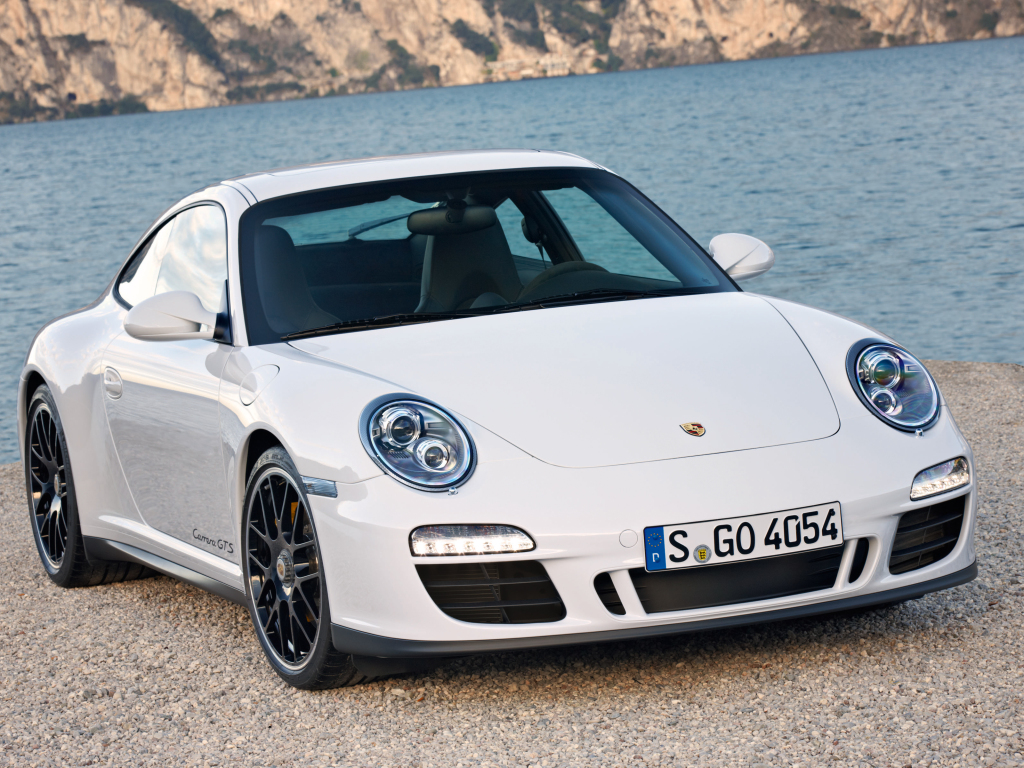
Why It's On The List
The Porsche 911 Carrera GTS (Type 997) defined what the GTS badge would mean for future generations: the perfect balance between the everyday Carrera and the track-focused GT3. It combined the wide body of the Carrera 4S with rear-wheel drive, additional power, and chassis enhancements that made it the enthusiast's choice.
The 3.8-liter naturally aspirated flat-six produced 408 hp through a center-lock crankshaft and other performance modifications. The suspension was lowered 20mm on PASM adaptive dampers, and larger brakes with black calipers added stopping power. The wider body provided space for the larger rear wheels needed to put the power down.
Perhaps most significantly, the 997 GTS was the last naturally aspirated, hydraulically power-steered Carrera variant before turbocharging and electric steering became standard. For many enthusiasts, it represents the final evolution of the ""classic"" 911 formula before the modern era of forced induction and electronic assistance. As such, it's become increasingly collectible.
Ranking Rationale
Perfectly blended everyday usability with genuine enthusiast performance. The final naturally aspirated, hydraulic-steering Carrera before turbocharging took over. A last, perfectly judged expression of the classic 911 formula.
Learn More
39. Porsche 914/6 (1970 - 1972)
The collaboration between VW and Porsche resulted in this quirky, mid-engine targa that utilized the 2.0L flat-six from the 911. Though misunderstood at launch, its balance and agility have made it a highly prized collector's item today.
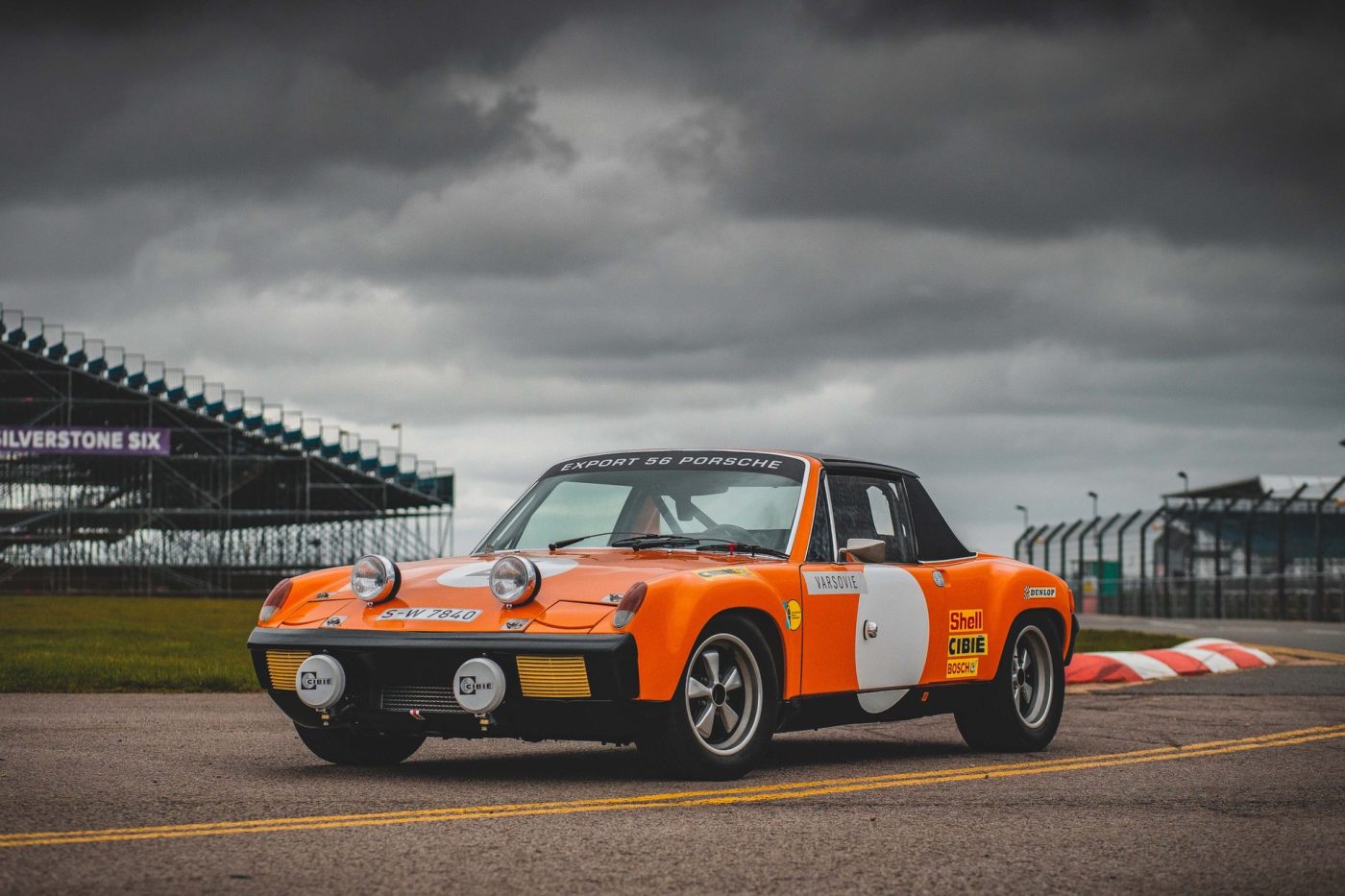
Why It's On The List
The Porsche 914/6 was the result of a collaboration between Volkswagen and Porsche that produced one of the most misunderstood cars in the brand's history. While the four-cylinder 914 was criticized as a ""VW in Porsche clothing,"" the six-cylinder variant offered genuine sports car performance and handling.
The 2.0-liter flat-six from the 911 T produced 110 hp, giving the lightweight mid-engine chassis (under 1,000 kg) a power-to-weight ratio competitive with more expensive machinery. The mid-engine layout provided exceptional balance, and the targa-style removable roof panels added versatility.
Initially dismissed by enthusiasts who felt the 914 diluted the Porsche brand, the model has been thoroughly reappraised in recent years. The 914/6's exceptional handling dynamics and relative rarity (only about 3,300 were built) have made it a sought-after collector car. History has vindicated the 914/6 as a genuine Porsche—one that may have been ahead of its time.
Ranking Rationale
The misunderstood middle child. With the flat-six, it was a genuinely capable sports car. Time has vindicated it, and values reflect its newfound appreciation. The quirky mid-engine targa that finally got its due.
Learn More
40. Porsche 928 GTS (Manual)
The Porsche 928 GTS with a manual gearbox is the final, perfected expression of Porsche’s front-engine grand touring vision—powerful, elegant, and quietly dominant.
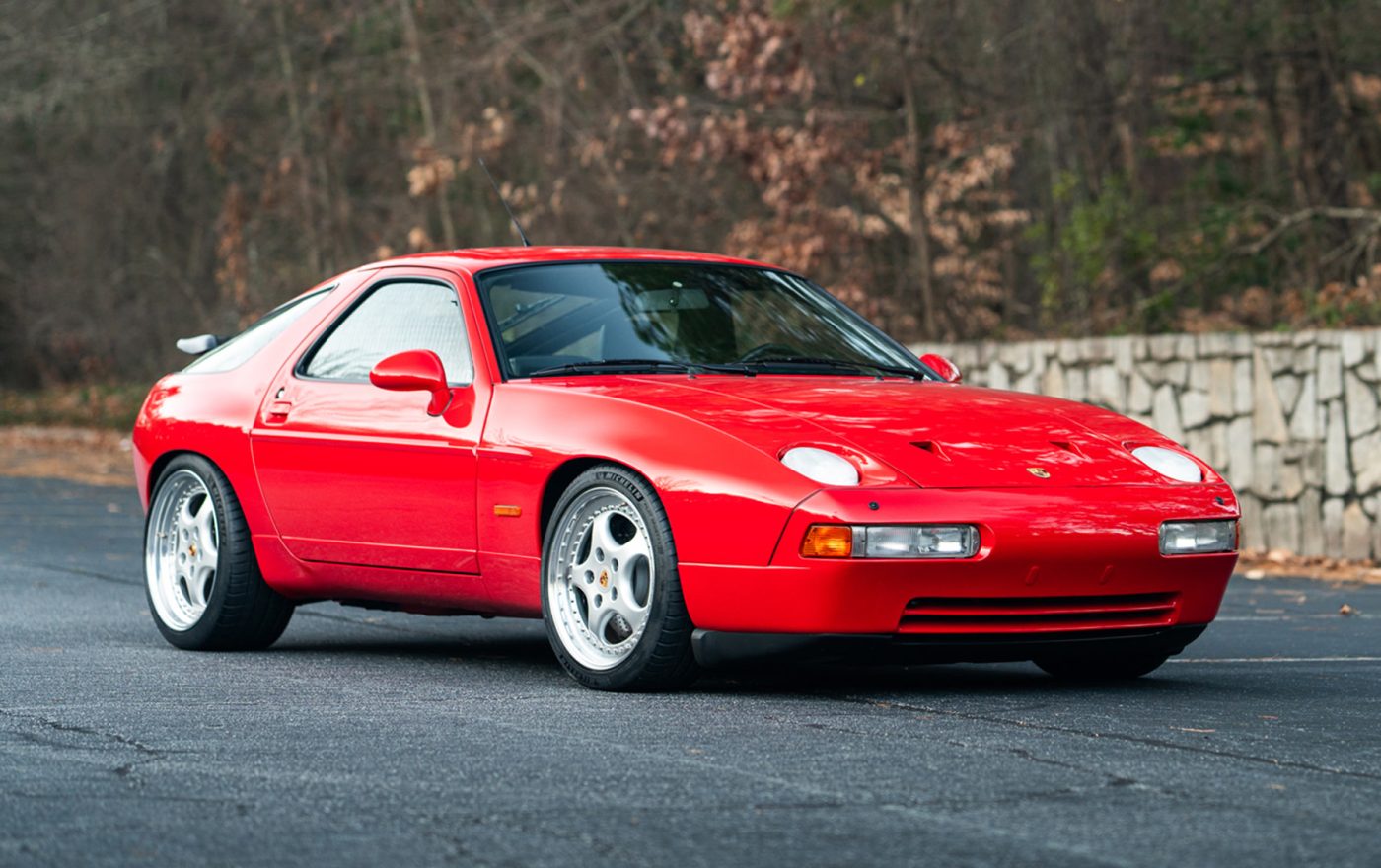
Why It's On The List
The Porsche 928 GTS with a manual gearbox represents the final, most refined expression of Porsche's front-engine V8 grand touring vision. After years of attempting to position the 928 as the 911's replacement, Porsche created the GTS as a swan song that finally delivered on the platform's potential.
The 5.4-liter V8 produced 350 hp and 369 lb-ft of torque, driving the rear wheels through either a four-speed automatic or a five-speed manual gearbox. The manual version, significantly rarer, offered a more engaging driving experience that emphasized the chassis's excellent balance. The GTS also received wider bodywork, improved suspension, and subtle styling updates.
While the 928 never replaced the 911 as Porsche intended, the GTS earned respect as a genuine grand tourer—comfortable enough for cross-continent drives yet engaging enough for enthusiastic driving. The manual version particularly has become collectible among those who appreciate its unique character: a V8-powered, front-engine Porsche that handles as well as any contemporary sports car.
Ranking Rationale
The final, perfected expression of Porsche's front-engine grand touring vision. The grand tourer Porsche hoped would replace the 911. It failed that mission, but with a manual gearbox, it's a magnificent, wonderfully weird GT car.
Learn More
41. Porsche 919 Hybrid
The Porsche 919 Hybrid is defined by its incredible hat-trick of overall Le Mans victories and three consecutive World Endurance Championships (2015–2017), which re-established Porsche as the undisputed king of endurance racing in the modern era. An unrestricted version of the 3-time Le Mans winner holds the all-time Nürburgring lap record.
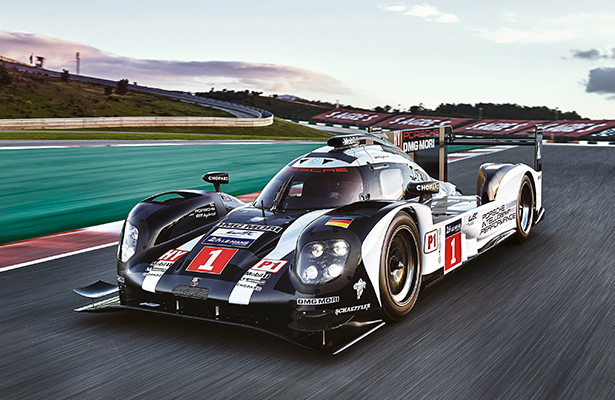
Why It's On The List
The Porsche 919 Hybrid marked Porsche's return to top-level prototype racing after a 16-year absence, and it did so with technology that pushed the boundaries of what was possible in motorsport. The car combined a 2.0-liter turbocharged V4 combustion engine with two energy recovery systems—one harvesting braking energy, another capturing exhaust heat—to produce a combined output exceeding 900 hp.
The 919 Hybrid dominated the FIA World Endurance Championship like few cars before it, winning three consecutive Le Mans 24 Hours (2015, 2016, 2017) and three consecutive WEC manufacturers' and drivers' championships. It proved that Porsche could master the complex hybrid regulations and beat established competitors like Audi and Toyota at their own game.
After the factory program ended, Porsche created the 919 Hybrid Evo—a version freed from WEC regulations. In 2018, this ultimate evolution set the all-time lap record at the Nürburgring Nordschleife with a time of 5:19.55, obliterating the previous record and demonstrating the car's true potential when unleashed. The 919 Hybrid represents the pinnacle of modern prototype engineering.
Ranking Rationale
Porsche's return to top-level prototype racing was absolute vindication. Three consecutive Le Mans wins (2015-2017), three WEC titles, and the Evo version's 5:19.55 Nürburgring lap—the fastest ever recorded—proved Porsche could dominate the hybrid era as thoroughly as any other. The modern masterpiece that silenced all doubters.
Learn More
42. Porsche 911 Carrera 4 Leichtbau (964) (1992)
Built using surplus parts from the 953 Paris-Dakar rally effort, this car featured the advanced all-wheel-drive system of the 959 in a lightweight 964 body. Only 22 were hand-assembled by the customer racing department.
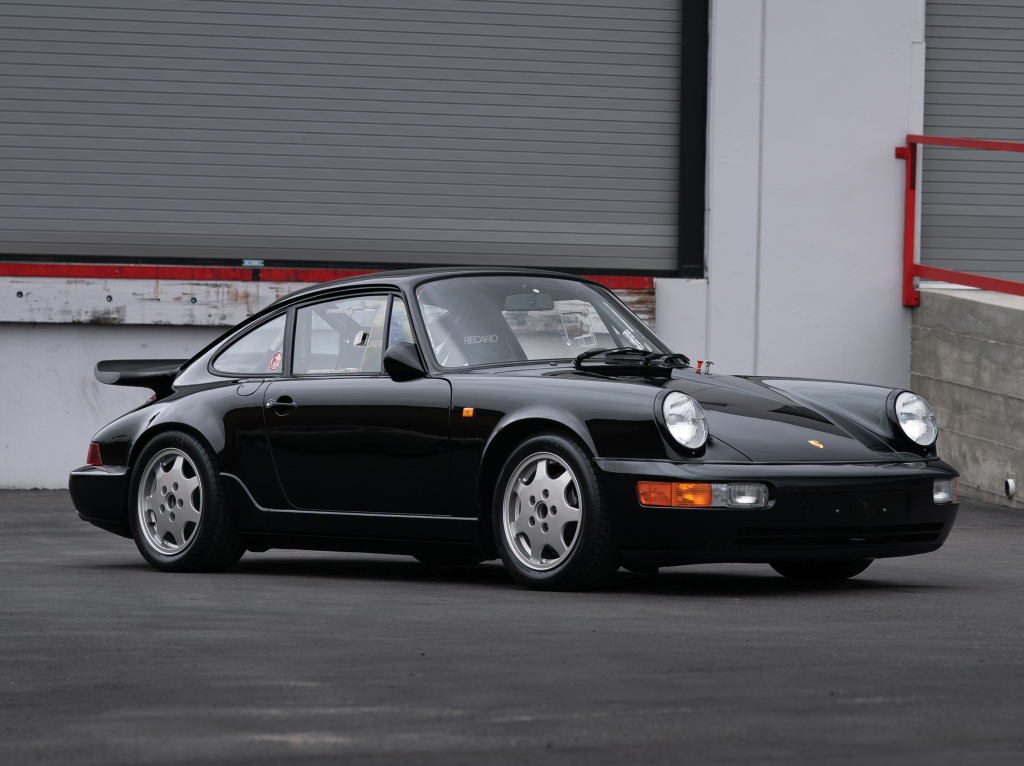
Why It's On The List
The Porsche 911 Carrera 4 Leichtbau (Type 964) was an experimental lightweight variant produced in tiny numbers to explore the potential of combining Porsche's all-wheel-drive system with aggressive weight reduction. Built primarily for homologation purposes, it foreshadowed future GT philosophy.
The standard Carrera 4's sophisticated all-wheel-drive system added weight, which Porsche attempted to offset through familiar RS-style modifications: thinner glass, lightweight door panels, deletion of sound deadening and comfort features, and sport seats. The 3.6-liter flat-six remained standard, producing 250 hp.
Only 22 examples were built, making the Carrera 4 Leichtbau one of the rarest 964 variants. While it never achieved the iconic status of its rear-wheel-drive RS siblings, it represented an important engineering exercise that explored the viability of all-wheel-drive in performance-focused applications. Lessons learned would inform future models including the 993 Turbo.
Ranking Rationale
A no-compromise engineering experiment fusing early all-wheel-drive technology with extreme weight reduction. Built in tiny numbers as a proof-of-concept, it foreshadowed Porsche's future GT philosophy.
Learn More
43. Porsche 911 GT3 RS (992.1) (2023 – 2025)
Pushed the concept of a road car to the brink, prioritizing aerodynamics, grip, and adjustability over every traditional comfort or aesthetic norm. With Formula 1–inspired active aero and driver-adjustable suspension controls, it became less a sports car and more a rolling aerodynamic weapon.
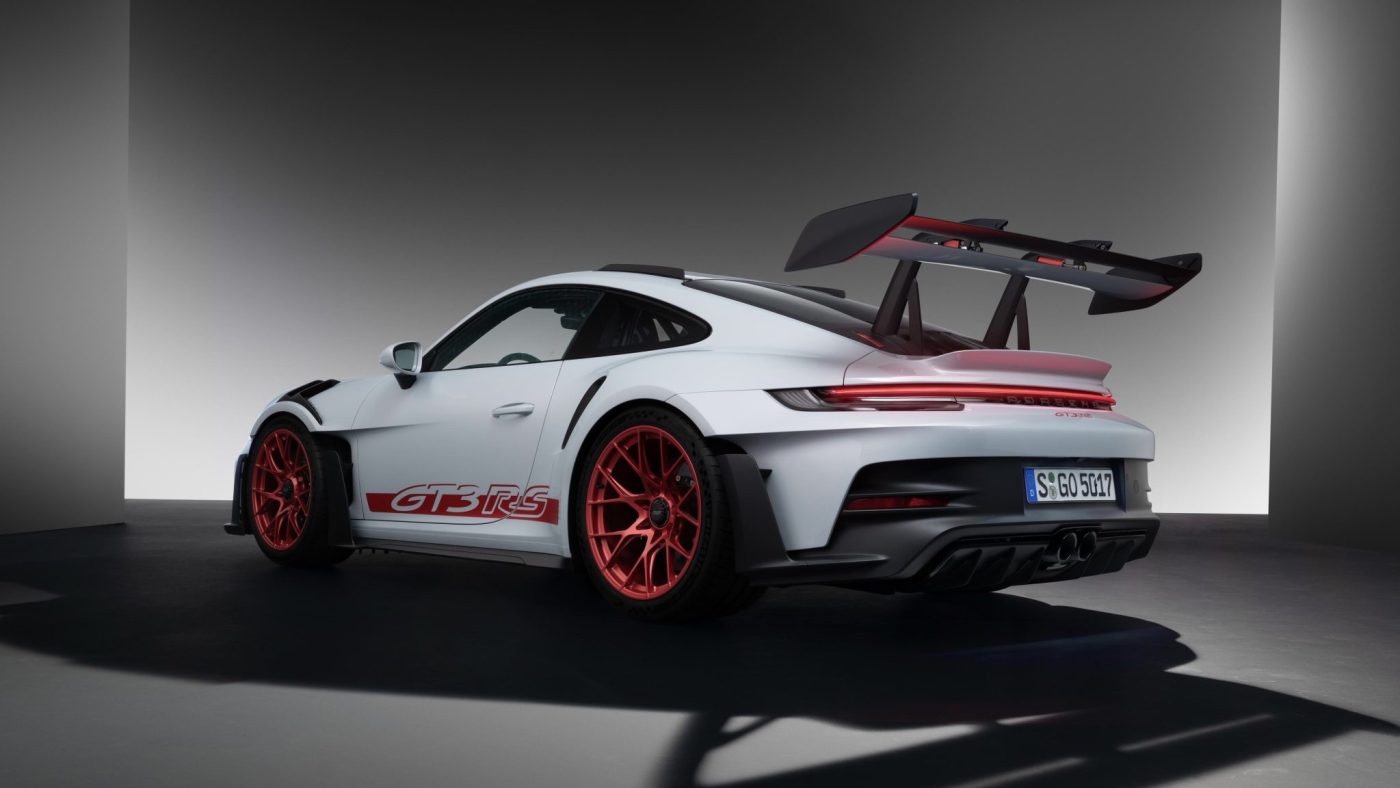
Why It's On The List
The Porsche 911 GT3 RS (Type 992.1) pushed the concept of a road-legal sports car further than ever before, prioritizing aerodynamics and track capability over traditional notions of usability. With Formula 1-inspired active aerodynamics and race-car levels of downforce, it represented a new extreme for the RS badge.
The centerpiece was the DRS (Drag Reduction System) rear wing, which could flatten at high speeds to reduce drag or stand tall for maximum downforce. Combined with the front splitter, dive planes, and underbody aerodynamics, the RS generated up to 409 kg of downforce at 177 mph—more than double the previous GT3 RS. The 4.0-liter flat-six produced 518 hp.
The interior featured a driver-adjustable dashboard with controls for the suspension and aerodynamics—race-car equipment in a road car. The RS could lap the Nürburgring in 6:49.328, faster than many purpose-built supercars. Yet some enthusiasts felt it had crossed a threshold into something no longer quite a road car. The debate itself proved how far Porsche was willing to push the 911 formula.
Ranking Rationale
Pushed the concept of a road car to the brink. F1-inspired active aero, driver-adjustable suspension controls—less a sports car and more a rolling aerodynamic weapon. The most extreme road-legal 911 ever built.
Learn More
44. 1994 Porsche 911 Turbo S X85 Flachbau
This is one of the rarest and most desirable 911 models, with only 75 units produced globally. Thirty-nine examples, with the internal code ‘X85’, were earmarked for the US market.
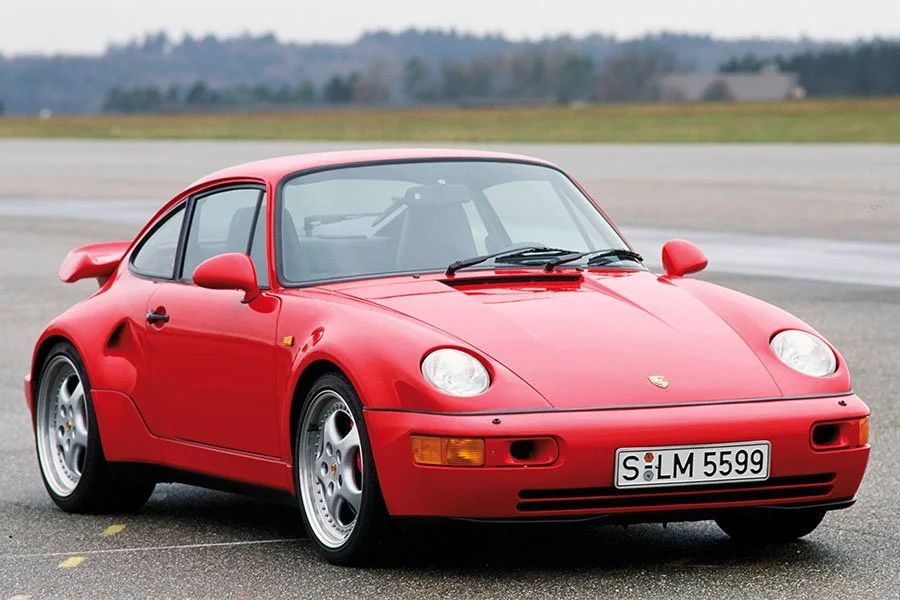
Why It's On The List
Towards the end of Porsche 964 production Porsche offered a limited series of Turbos known as the 3.6 S. The ’36S’ package included specific body kits that varied depending on market as well as the X88 ‘S’ motor.
The Porsche factory had 93 Turbo chassis left. These were all transferred to Porsche Exclusiv and hand built as the very special 964 Turbo 3.6 S. They were offered with normal, or ‘Flachbau’ slant nose front ends. While the vast majority of Turbo S’ were fitted with the ‘Flachbau’ nose as a no-cost option, the Turbo S could also be had with the traditional 964 nose as well. In all, 76 Flatnose cars were made while 17 non-Flatnose (known as Package option) cars were made.
Easily identifiable by the ‘flat-nose’ front end, the 911 Turbo S Flachbau was on the 964 generation 911 Turbo. At the time, these unique Porsches were converted to the ‘S’ specification by the Porsche Exclusive department. Bigger turbochargers and other mechanical tweaks boosted the power output to 385 hp, about 25 hp more than the base 911 Turbo.
Other styling highlights, apart from the flattened nose, include air intakes on the rear quarter panels, a unique front splitter, a rear wing with louvres and quad exhaust tips.
Ranking Rationale
The slantnose is one of the most visually striking 911 variants ever, and the X85 is its final, most refined form. Only 39 came to the US. The ultimate expression of 1980s Porsche drama.
Learn More
45. Porsche 911 Carrera 3.2 Clubsport (1988)
It distilled the classic G-body Porsche 911 down to its purest driver-focused form, stripping weight and distractions in pursuit of feel, response and driveability. Subtle rather than flashy, it proved that less mass—not more power—was the key to elevating the 911 driving experience.
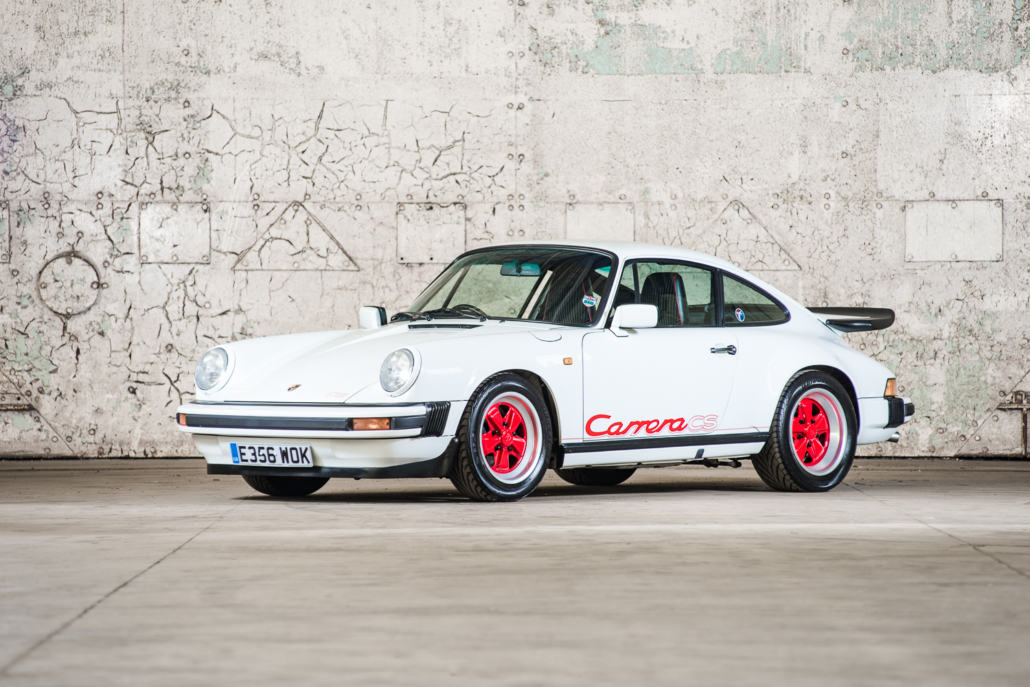
Why It's On The List
The Porsche 911 Carrera 3.2 Clubsport was a subtle but meaningful expression of the lightweight philosophy applied to the classic G-body 911. Built during the final years of the Carrera 3.2's production run, the Clubsport removed unnecessary weight and distractions to create a more focused driver's car.
The modifications were relatively modest compared to later RS models: deletion of rear seats, power windows, air conditioning, and some sound insulation, along with standard fitment of short-throw gear lever and sport seats. The 3.2-liter flat-six remained unchanged at 231 hp, but the reduced weight—approximately 70 kg less than a standard Carrera—enhanced both acceleration and handling.
The Clubsport represented a philosophical statement as much as a technical one. It proved that less truly was more, and that the 911's essential greatness could be amplified through subtraction rather than addition. This approach would guide Porsche's development of the Carrera T models decades later, making the 3.2 Clubsport a quiet pioneer.
Ranking Rationale
Distilled the classic G-body 911 to its purest driver-focused form. Subtle rather than flashy, it proved that less mass—not more power—was the key to elevating the 911 driving experience.
Learn More
46. Porsche 911 GT2 (997) (2008 - 2009)
Delivered unfiltered supercar performance by combining massive turbocharged power with rear-wheel drive and minimal electronic intervention. Ferociously fast yet brutally demanding, it stands as one of the last truly intimidating, analog-feeling Turbo-era 911s. Truly a unique and amazing car only few could handle.
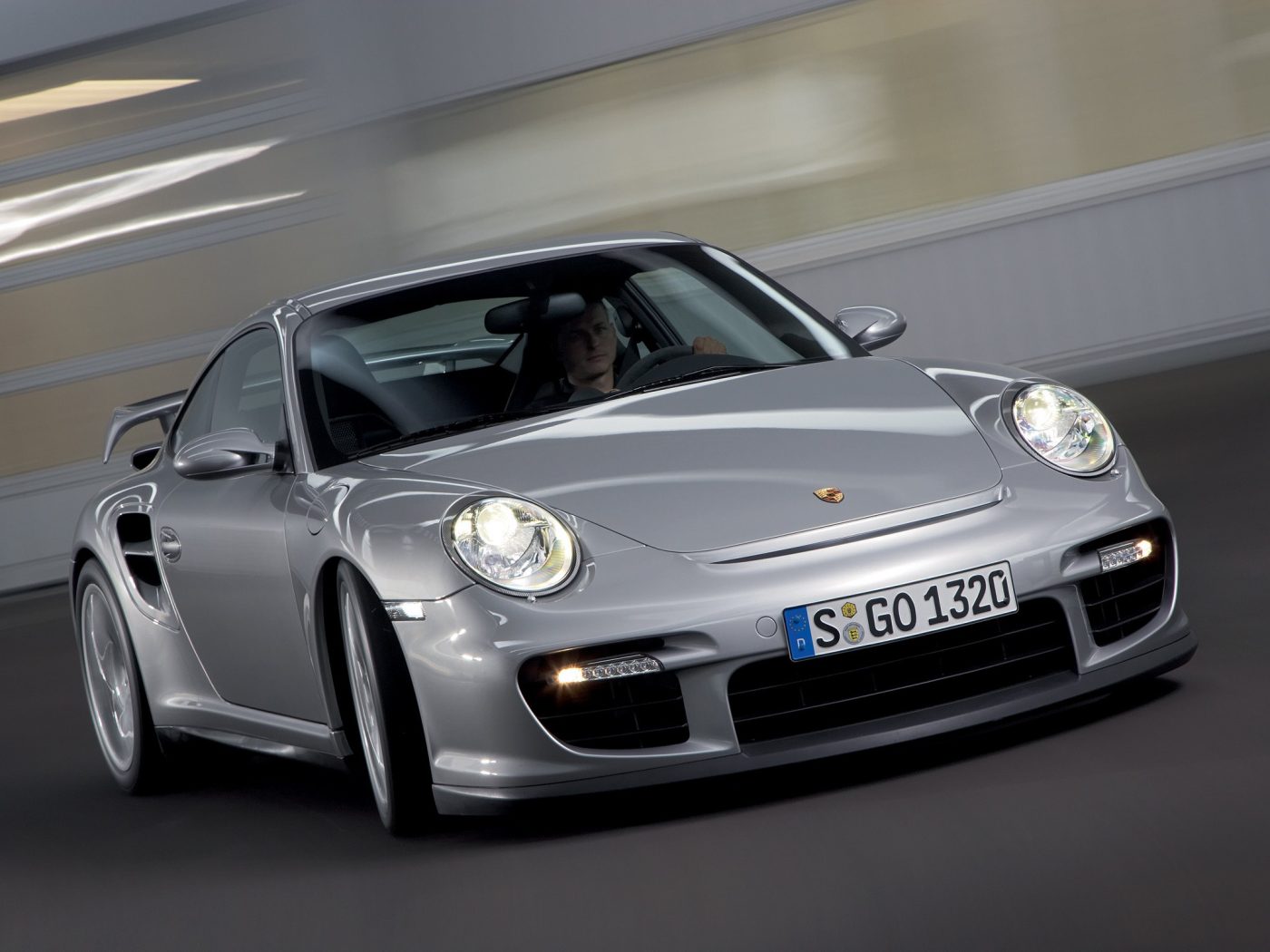
Why It's On The List
The Porsche 911 GT2 (Type 997) delivered 523 hp of twin-turbocharged fury to the rear wheels with minimal electronic intervention, creating one of the last truly intimidating 911s. It was the fastest, most powerful 911 ever built at the time of its release—and one of the most demanding.
The 3.6-liter engine featured variable turbine geometry turbochargers that reduced lag while providing massive top-end power. Ceramic composite brakes, borrowed from the Carrera GT program, provided stopping power commensurate with the acceleration. Yet unlike the subsequent GT2 RS, the GT2 offered no stability control—Porsche trusted (or dared) drivers to manage the car themselves.
The 997 GT2 occupied a unique position: more powerful than the GT3 yet without the all-wheel-drive security of the Turbo. It required commitment and skill, rewarding talented drivers while punishing mistakes harshly. For those who could master it, the GT2 offered a driving experience of unfiltered intensity.
Ranking Rationale
Massive turbocharged power with rear-wheel drive and minimal electronic intervention. One of the last truly intimidating, analog-feeling Turbo-era 911s. A unique and amazing car only few could handle.
Learn More
47. Porsche 924 Carrera GT
A wide-bodied, turbocharged homologation special that brought legitimate racing pedigree to the 924 platform. Only 400 were built, making it one of the rarest and most aggressive-looking transaxle cars in existence.
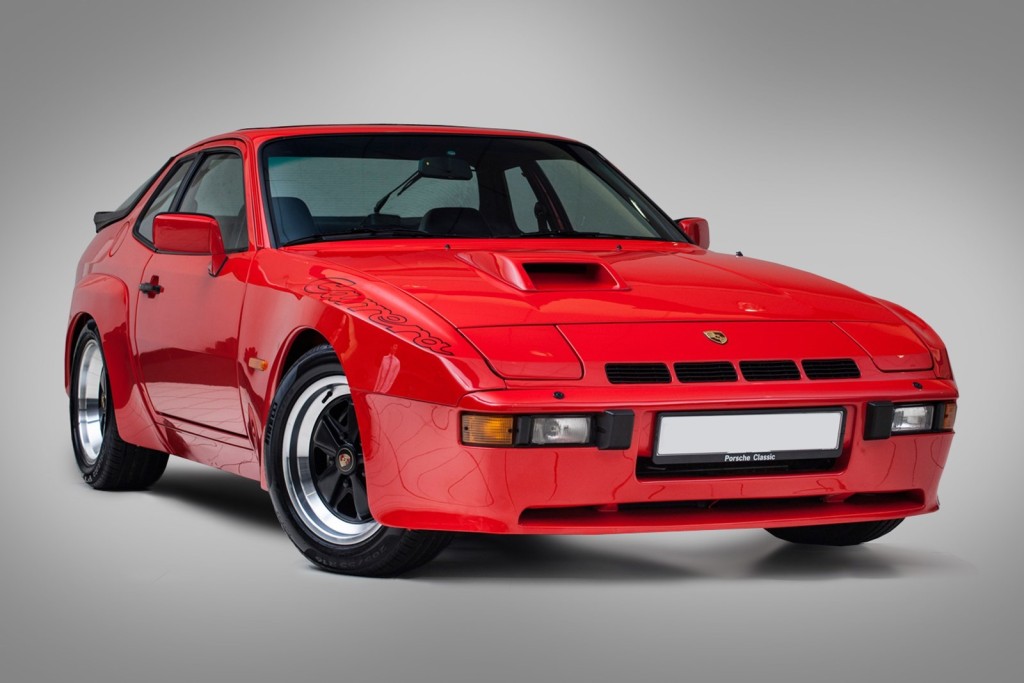
Why It's On The List
The Porsche 924 Carrera GT was a homologation special that transformed the entry-level 924 into a genuine racing weapon. To satisfy Group 4 competition requirements, Porsche built approximately 400 road-legal examples featuring wide-body aerodynamics, a turbocharged engine, and chassis modifications that bore little resemblance to the standard car.
The 2.0-liter turbocharged four-cylinder produced 210 hp—nearly double the base 924's output—and featured an air-to-air intercooler that was state-of-the-art for its time. The wide-body fenders accommodated larger wheels and tires, while the front spoiler and rear wing improved high-speed stability.
The 924 Carrera GT proved that the front-engine transaxle platform could support serious performance. It achieved success in international GT racing and laid the groundwork for the 944 and 968 that would follow. Today, survivors are among the most sought-after transaxle Porsches, appreciated for their rarity and racing heritage.
Ranking Rationale
A wide-bodied, turbocharged homologation special that brought legitimate racing pedigree to the 924 platform. Only 400 built, making it one of the rarest and most aggressive-looking transaxle cars.
Learn More
48. Porsche 911 GT2 RS (991) (2018 – 2019)
Pushed the platform to its absolute limit, combining 700 horsepower with extreme weight reduction and race-grade aerodynamics. Nicknamed “The King,” it proved the 911 could rival—and dominate—hypercars while remaining road legal.
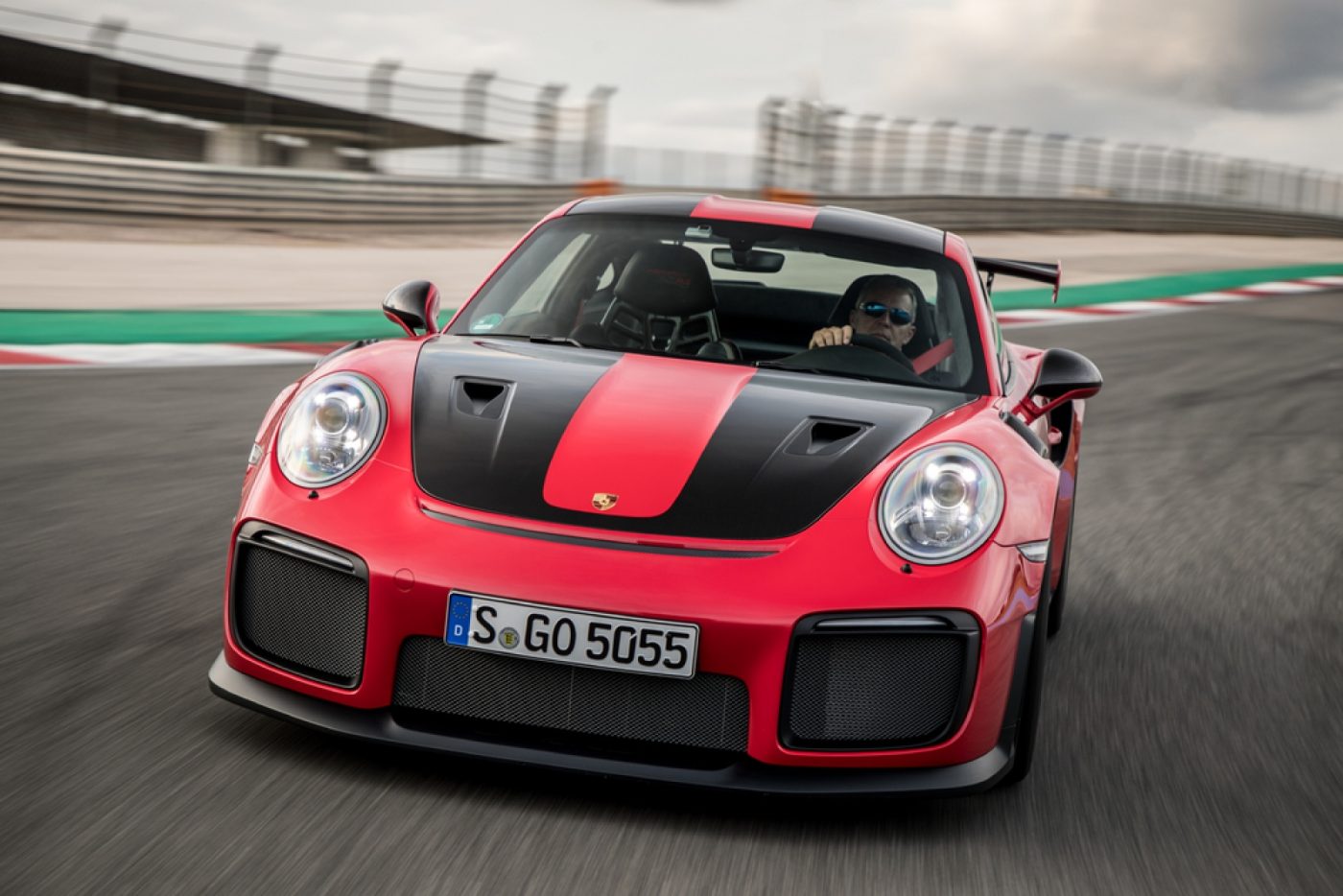
Why It's On The List
The Porsche 911 GT2 RS (Type 991) was the most powerful and fastest road-legal 911 ever built when it debuted in 2017. With 700 hp from its twin-turbocharged 3.8-liter flat-six, it obliterated the Nürburgring production car lap record with a time of 6:47.3—a figure that seemed almost impossible for a rear-engine sports car.
The engine featured larger turbochargers, revised intake and exhaust systems, and water-spray intercooling. Power reached the rear wheels through a seven-speed PDK gearbox with shorter ratios than the standard GT2. Extensive use of carbon fiber and magnesium reduced weight to 1,470 kg (3,241 lbs), while the massive rear wing and front splitter generated 340 kg of downforce at top speed.
Despite its fearsome reputation, the 991 GT2 RS was more approachable than its predecessors thanks to sophisticated electronic systems that helped manage the massive power. Yet it remained true to the GT2's essential character: a rear-wheel-drive, turbocharged monster that demanded respect. They called it ""The King"" for good reason.
Ranking Rationale
Pushed the platform to its absolute limit with 700 hp, extreme weight reduction, and race-grade aerodynamics. Nicknamed 'The King,' it proved the 911 could rival—and dominate—hypercars while remaining road legal.
Learn More
49. Porsche 944 Turbo S
With near-perfect 50/50 weight distribution, the 944 Turbo S proved that front-engine Porsches could handle just as well as their rear-engine siblings. It remains a benchmark for the "transaxle" era, blending 80s styling with genuine track capability.
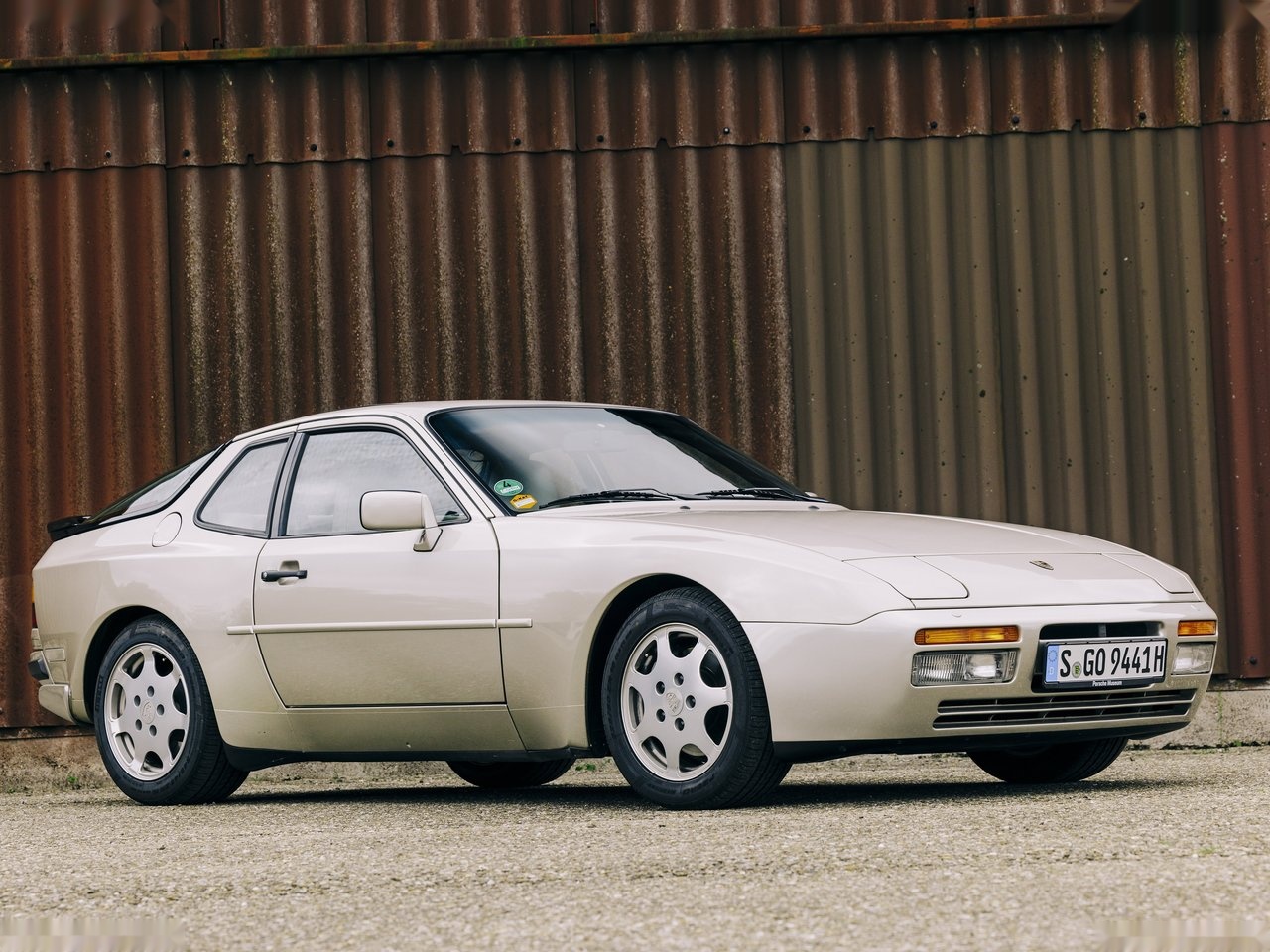
Why It's On The List
The Porsche 944 Turbo S represented the ultimate development of the transaxle four-cylinder platform, combining significant performance upgrades with the near-perfect weight distribution that made the 944 series such capable handlers. It remains a benchmark for what front-engine sports cars can achieve.
The 2.5-liter turbocharged inline-four was extensively modified for the Turbo S, receiving a larger turbocharger, improved intercooling, and revised engine management that increased output to 250 hp—a significant jump from the standard Turbo's 220 hp. More importantly, the engine's character was refined, with improved throttle response and reduced turbo lag.
The chassis received corresponding upgrades including stiffer springs, revised dampers, larger anti-roll bars, and the M030 sport suspension option as standard. The result was a car that could embarrass many supposedly superior sports cars on challenging roads. The 944 Turbo S demonstrated that the transaxle Porsche formula, often dismissed as ""entry-level,"" could deliver genuine high performance.
Ranking Rationale
Near-perfect 50/50 weight distribution proved front-engine Porsches could handle just as well as their rear-engine siblings. The benchmark for the 'transaxle' era, blending 80s styling with genuine track capability.
Learn More
50. Porsche 911 Carrera GT3 & GT3 Touring (992.2) (2025 – Present)
Represents the purest, most refined evolution of Porsche’s naturally aspirated motorsport philosophy in the modern era. By offering both the full aero GT3 and the understated Touring, Porsche perfected the balance between ultimate track precision and high-revving, road-focused engagement.
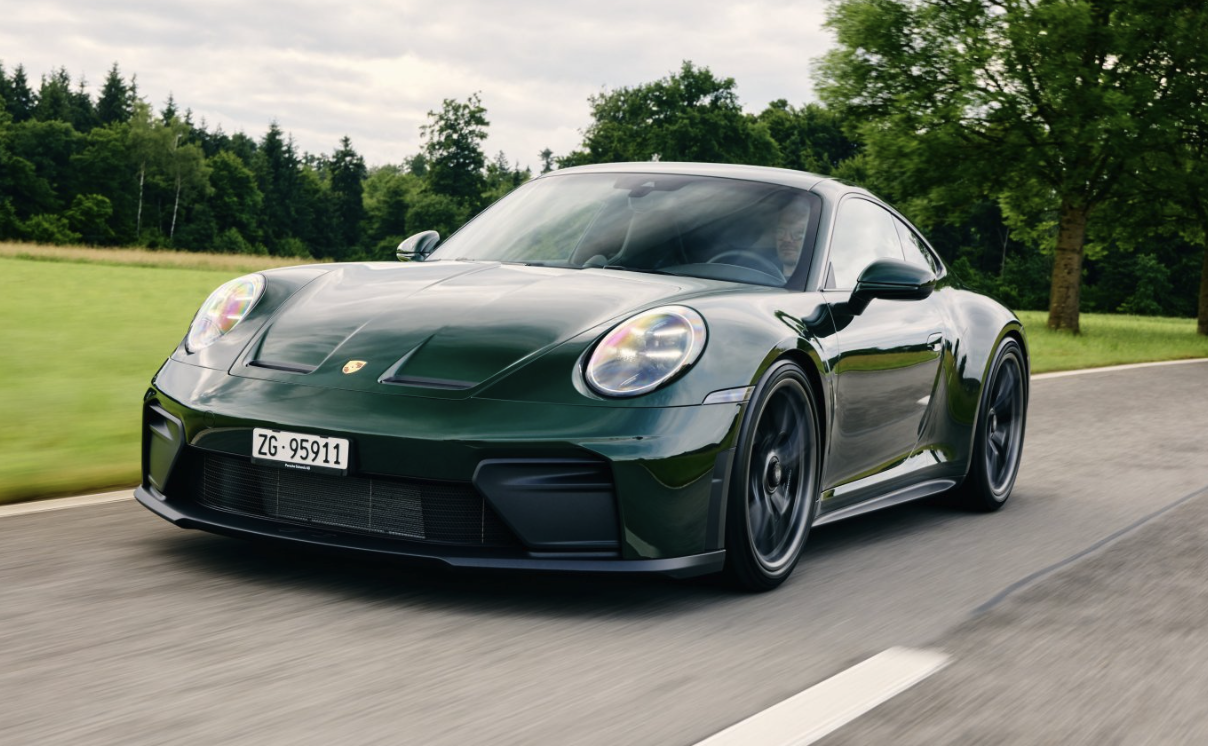
Why It's On The List
The Porsche 911 GT3 and GT3 Touring (Type 992.2) represent the continued refinement of Porsche's naturally aspirated, high-revving philosophy. While the basic formula remains unchanged—4.0-liter flat-six, 9,000 rpm redline, either manual or PDK—subtle improvements to aerodynamics, chassis tuning, and engine response have made this the most capable GT3 yet.
The standard GT3 features the dramatic fixed rear wing and aggressive aerodynamics, while the Touring deletes the wing for a more understated appearance. Both versions share the same mechanical specification, offering customers a choice based on aesthetic preference rather than performance compromise.
By continuing to offer a naturally aspirated engine when regulations and market trends push toward turbocharging, Porsche has made a statement about the value of character over specifications. The 992.2 GT3 proves that there's still demand for cars built around emotional engagement rather than mere efficiency.
Ranking Rationale
The purest, most refined evolution of Porsche's naturally aspirated motorsport philosophy. Full aero GT3 or understated Touring—Porsche perfected the balance between ultimate track precision and road-focused engagement.