

Manual vs. PDK: Why the Carrera T Exists
Once upon a time, you paid more for automatic transmission. Today, with the ubiquity of double-clutch transmissions on premium gasoline cars, the manual gearbox has almost entirely disappeared. On the Porsche sports cars, PDK, until recently a $2,500 option (which 80% of buyers opted for), has evolved into the standard gearbox, and, since the demise of the 718 mid-engine cars, only choice available except for the highly specialist GT3.
For devotees of shifting yourself, the T (for “Touring”) has become the only option. But, priced 10% more than the base Carrera 992 and offering no more performance, does the “T” justify the extra?
From S and GTS to the Modern T
In the 1980s, just plain Carrera (leaving aside Turbo variants); by 1995, the 911 had spawned an “S” derivative, at that time simply an upgraded specification. By 2004, with the advent of the 997, the “S” sported a larger engine and was a genuinely faster car than the plain, cheaper Carrera.
In the final year of 997 production, Porsche decided to expand the Carrera range with the GTS, introducing it as filling the gap between the motorsport-oriented 911 GT3, which essentially had ploughed its own furrow with the track community, and the Carrera S. The GTS was an astute combination of S options, including the Power Kit, which raised both torque and high-RPM response, but sold for less than the cost of adding those options as an “S” buyer.
Pleased with the success of its GTS sub-brand (a marketing coup which had begun with the Cayenne and was steadily extended to the rest of the range), Porsche saw a further opportunity to broaden its 911 Carrera line-up.
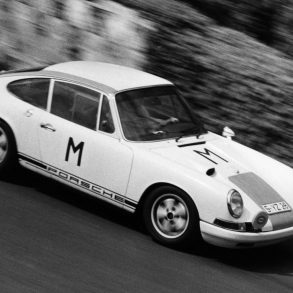
The Carrera T first appeared in 2018, during the latter days of the 991.2 range. The “T” moniker, standing for “Touring,” came once again from Porsche’s rich history: the 911T of 1967 had been introduced as the 911 entry-level model of a three-car range comprising the “T,” the 911 (later 911L), and the 911S.
The lowered power output of the “T,” a modest 110 bhp compared with the 130 and 160 bhp of the 911 and the “S,” was achieved by lowering the compression ratio, which allowed Porsche to save costs on the crankshaft and cylinder liners. This less ambitious tuning resulted in a rather flatter torque curve, which meant a four-speed gearbox sufficed, and the “T” was not only the least equipped—so cheapest—911, but also the lightest. This was deliberate on Porsche’s part as it was destined to be the competition homologation model, later providing the basis for the fabled Carrera RS 2.7.
The First Modern Carrera T (991.2)
The latter-day Carrera T first appeared in 2018 as a 991.2 model. Unlike its predecessor, it was not the entry-level 911, but one up from the base Carrera.
Although it shared the Carrera’s 3-litre twin-turbo flat-six in the same state of tune, for its additional $8,000, the “T” offered the manual seven-speed gearbox, limited-slip differential, and PASM, which lowered its stance by a couple of inches.
As this combination was not available on the Carrera, Porsche’s rationale was that this 911 variant would appeal to the “sporty” driver. Rear seats were a no-cost option, and, without these, the 1,420 kg of the new “T” enabled its maker to boast that this was the lightest 911. The appeal to Porsche’s historical lightweight tradition was clear; the Zuffenhausen marketing department rarely misses a trick.
The 992.2 T: What’s New and Different
The eighth and latest generation, the 992, was launched in 2019. A 992.1 Touring appeared in due course, largely repeating the formula of the previous model, and again it was on the price lists for barely two years.
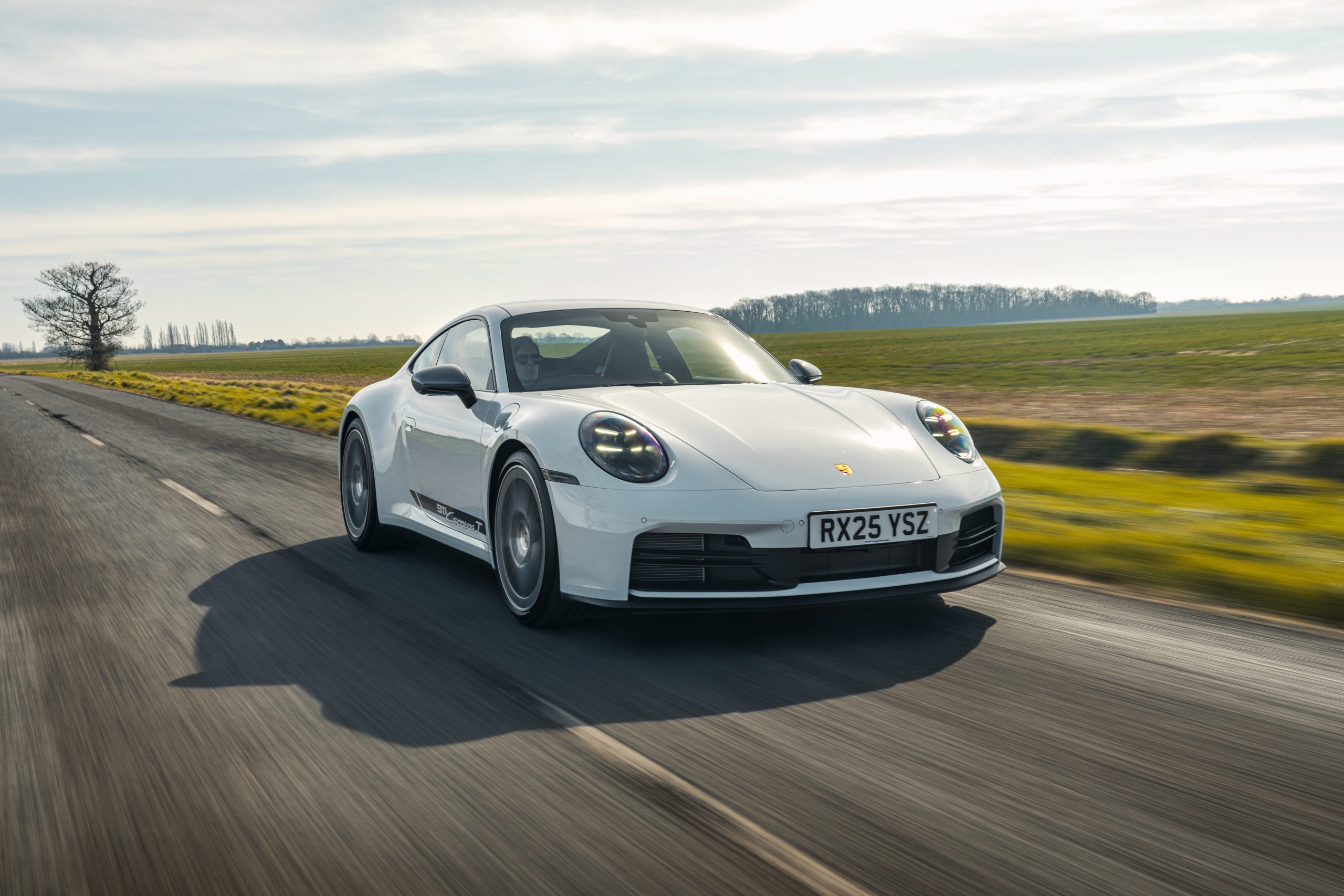
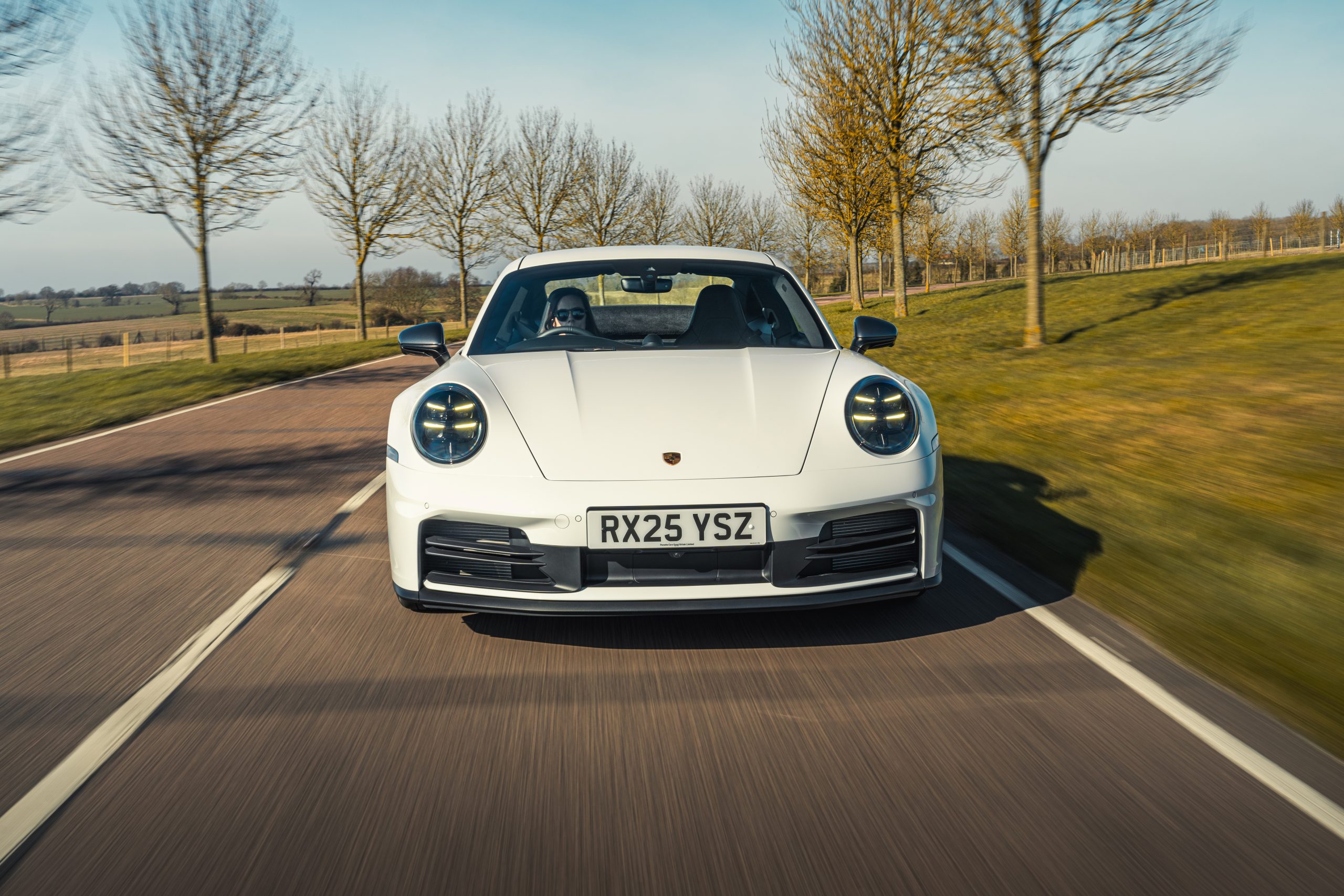
With the advent of the facelifted 992.2 range, another “T” was expected, duly arriving a year later. This time, the marketing people had been more active: pitched unashamedly at the “keen driver” (did Porsche not consider other Carrera buyers as “keen drivers”?), the 992.2 T went further than before to differentiate itself from the Carrera.
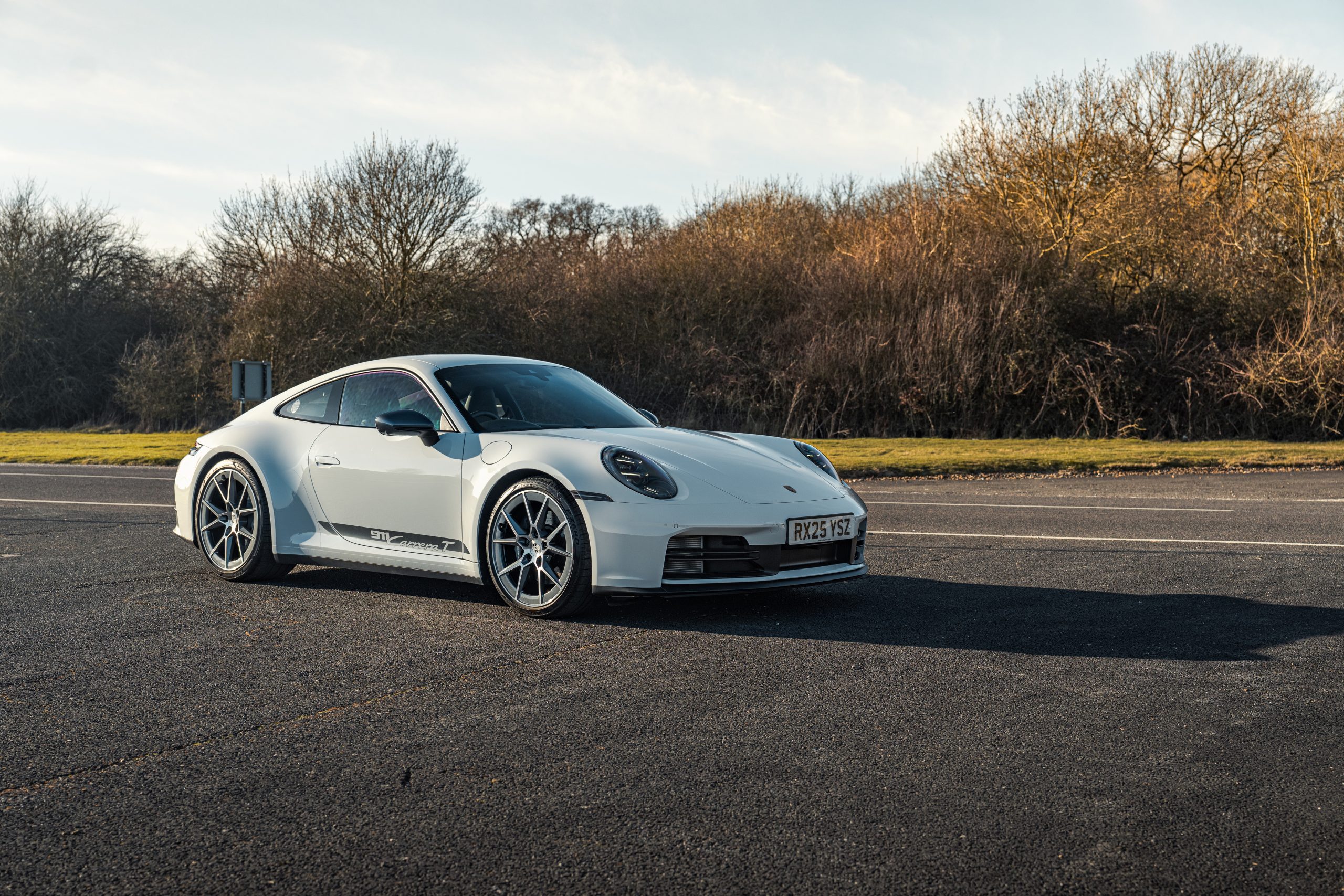
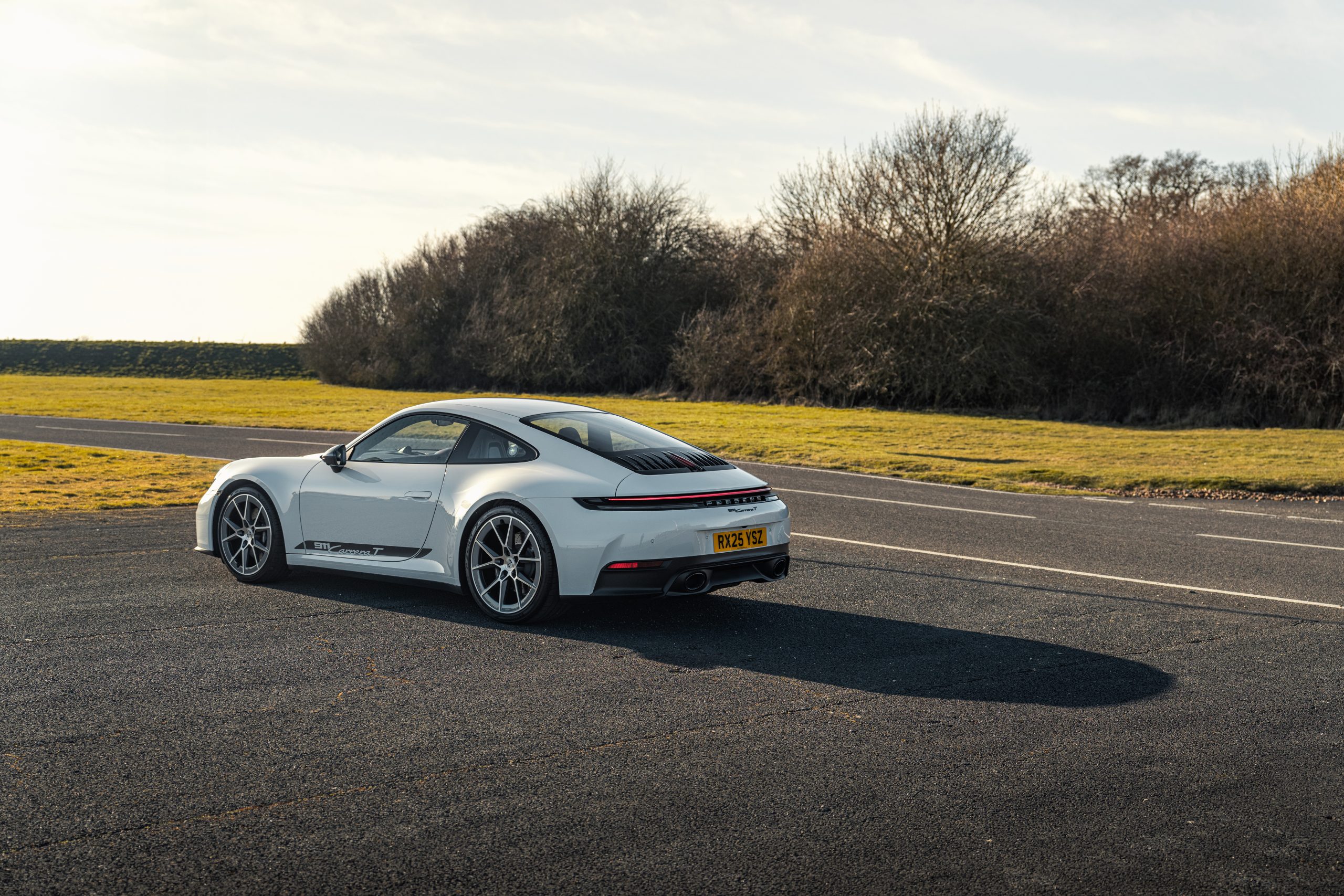
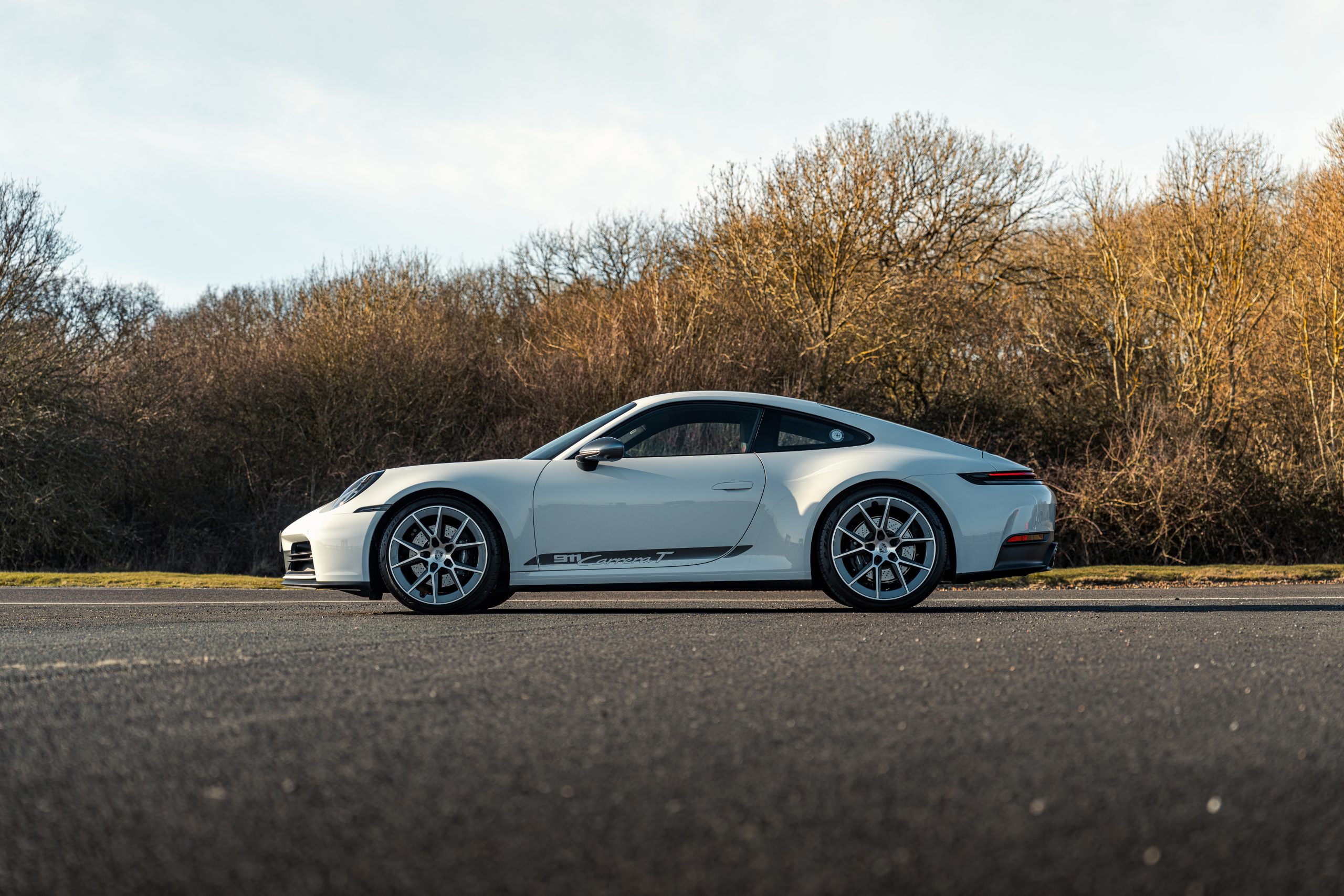
Standard specification included a sports exhaust, sports seats, and PASM adjustable damping. Not visible was the lighter side window glass (as before), but the latest Touring sported its own 20”/21” wheel design—distinctive, if a shade over-elaborate. But the real talking point was, exactly as Porsche intended, the manual gearbox.
The Six-Speed Returns and Why It Matters
When the 991 range was launched, PDK had already become the dominant transmission choice. But, to the dismay of “gearstick” enthusiasts, the 991 manual option was no longer the smooth-shifting and satisfying Aisin six-speed ’box of the 997, but a seven-speed from ZF, which turned out to be something of a poor relation of the seven-speed PDK ZF was now supplying for the vast majority of Porsches.
With four ratios plus reverse across the top of the gate, it was all too easy to wrong-slot a shift with this seven-speed, and the mechanism was uncharacteristically baulky; seventh gear, derived directly from the double-clutch gearbox, was too high to be of any use below 80 mph.
Porsche effectively admitted this shortcoming by upgrading the 991’s manual gearbox in 2014 with what it termed “optimized shifting.” This was better, but more than one 991 manual owner must have felt envious of the smooth-shifting mechanisms of the Boxster and Cayman range, which retained a six-speed manual option.
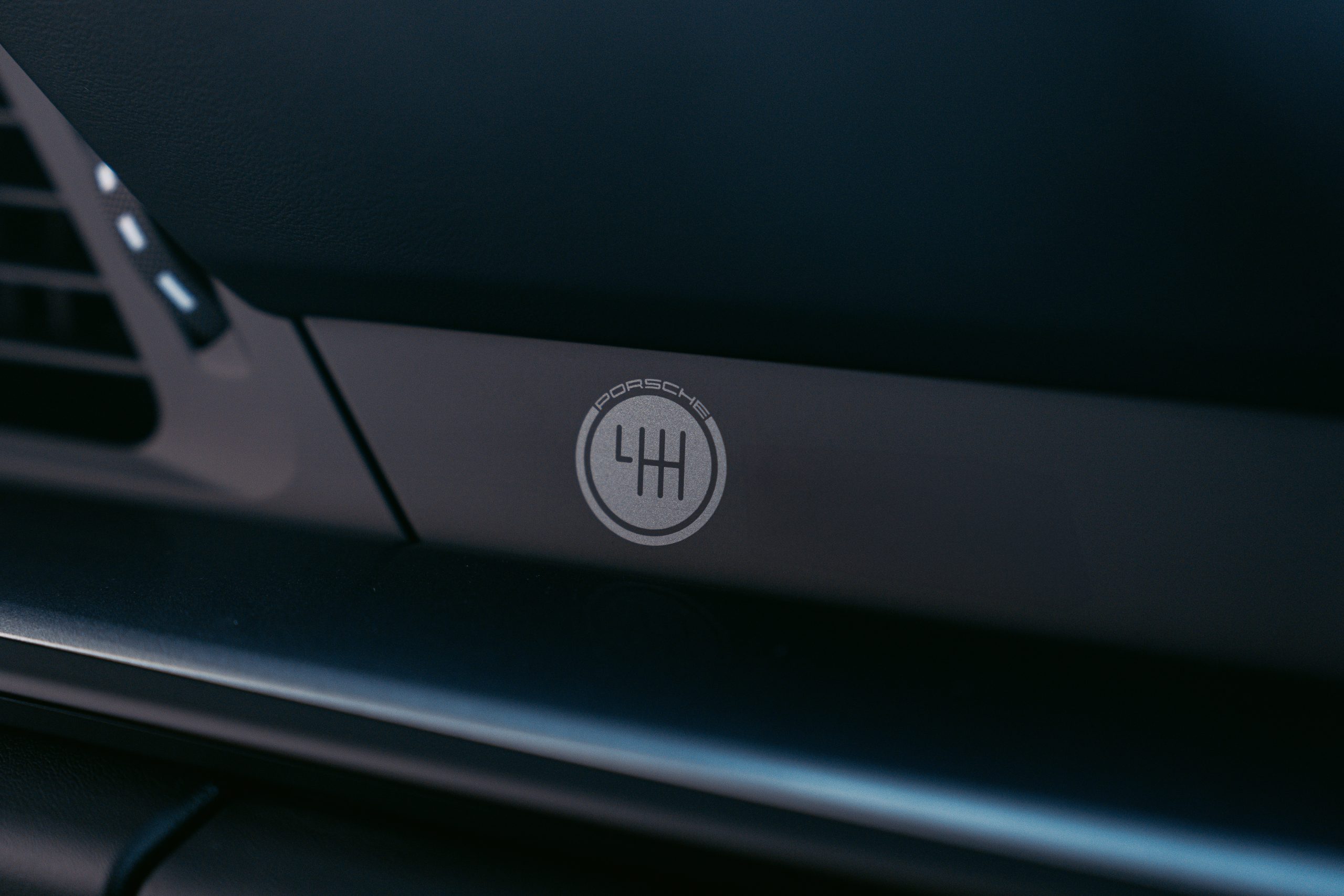
Now, in 2025, the 992.2 T arrived not just with a manual gearbox, but a six-speed unit. This, it would transpire, was not the “six” of the GT3 cars, but simply the ZF “7” without its top ratio—but it marked a welcome return to the “six” synonymous with 911s since 1993. Porsche made much of this in its sales literature and on the Touring itself, which had window stickers, fascia, and even an “MT” plaque on the console to reinforce the point.
Inside the 992.2 T: Cabin and Ergonomics
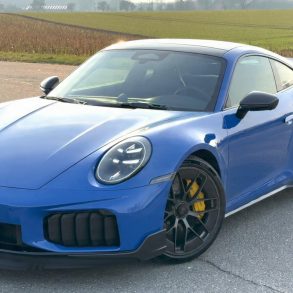
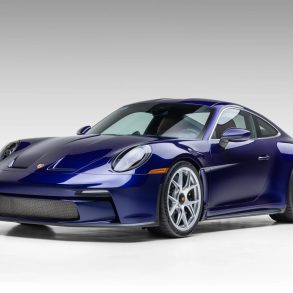
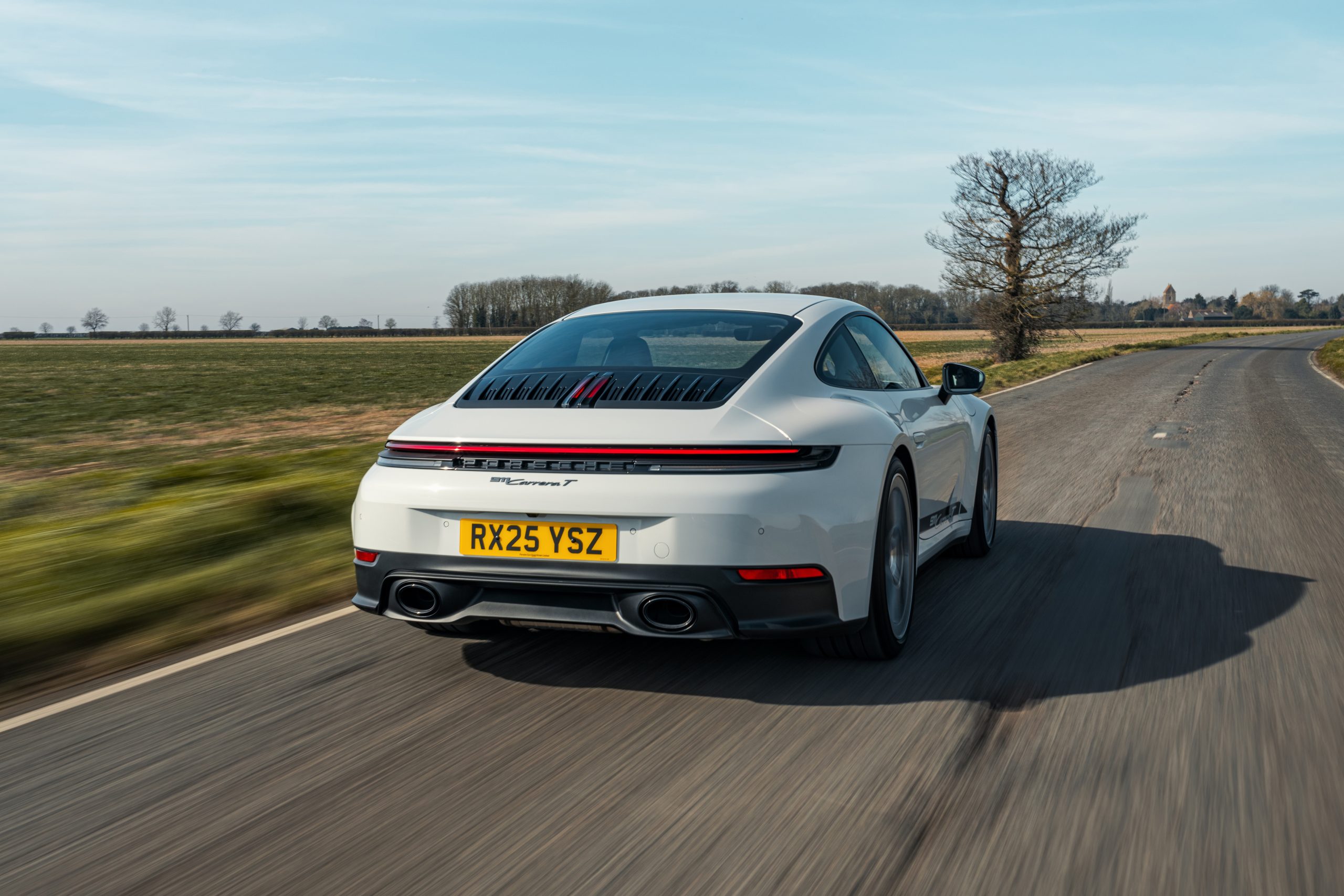
The 2025 911 Touring 992 Carreras all use the same widebody, so only its badging differentiates the Touring from its sister Carreras, although the observant will spot the slightly lowered stance and the detail differences of the front air intake.
The cabin, bereft of rear seats in the tradition of the original Carrera RS (though these are a no-cost option), is otherwise the familiar 911 environment. The T’s doors are now opened by the standard Carrera handles, not the pull cords of yore, which neither saved significant weight nor were especially easy to operate.
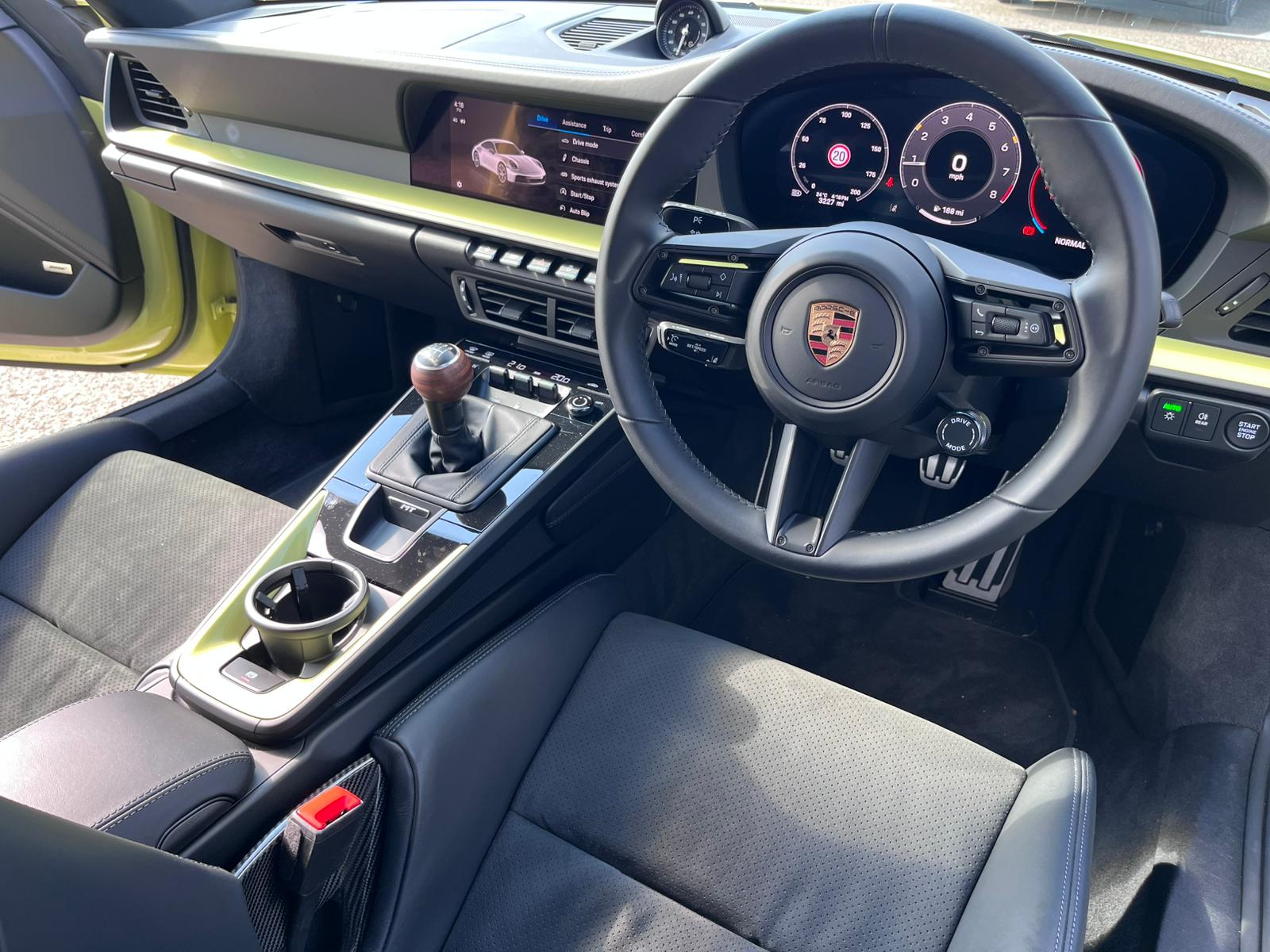
Fittings and furnishings are of Porsche’s usual high standard, and the 911’s ergonomics have long been an industry benchmark. However, not even Porsche can escape the drift to “tech,” and the instruments have all been replaced by a modular panel, which can be configured to show analogue-style dials.
Aesthetically, this presentation is a poor substitute for the analogue instruments of previous generations, and the inevitable touchscreen (which at least remains a reasonable size) requires some acclimatisation for those unfamiliar with it.
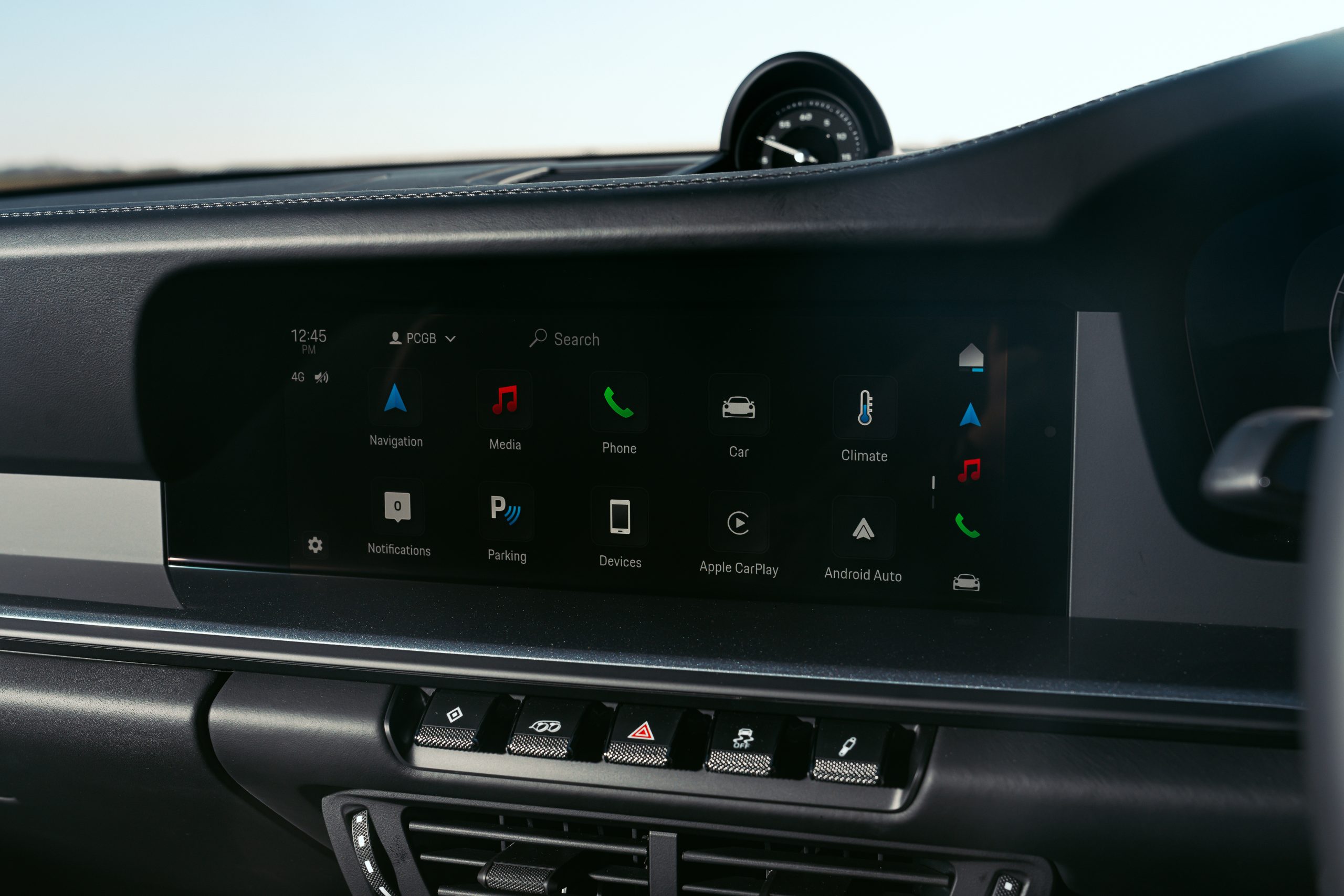
Unlike the basic mechanical controls of the automobile, which for decades have been the same in all cars, indicator stalks and pedal disposition, touchscreens vary from manufacturer to manufacturer. But Porsche has always got the traditional components right: the Carrera’s steering wheel, for example, is heavily stitched but surprisingly tactile and a pleasure to handle.
Starting means turning a knob rather than pressing a button, but once again the key needs to be stowed between the seats. Surely the time-honoured method of having the key inserted in the ignition was superior, rather than loose and rattling in the console.
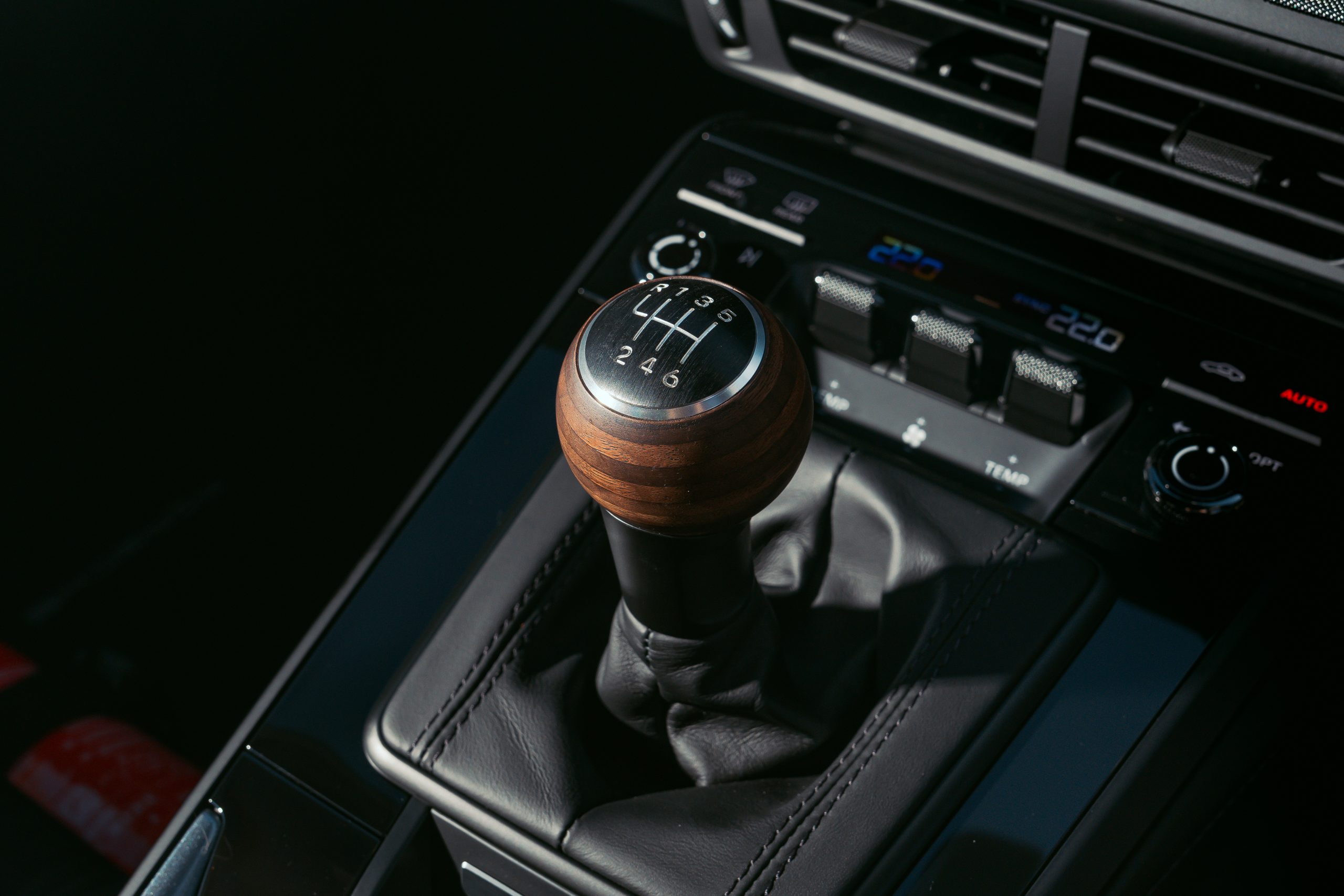
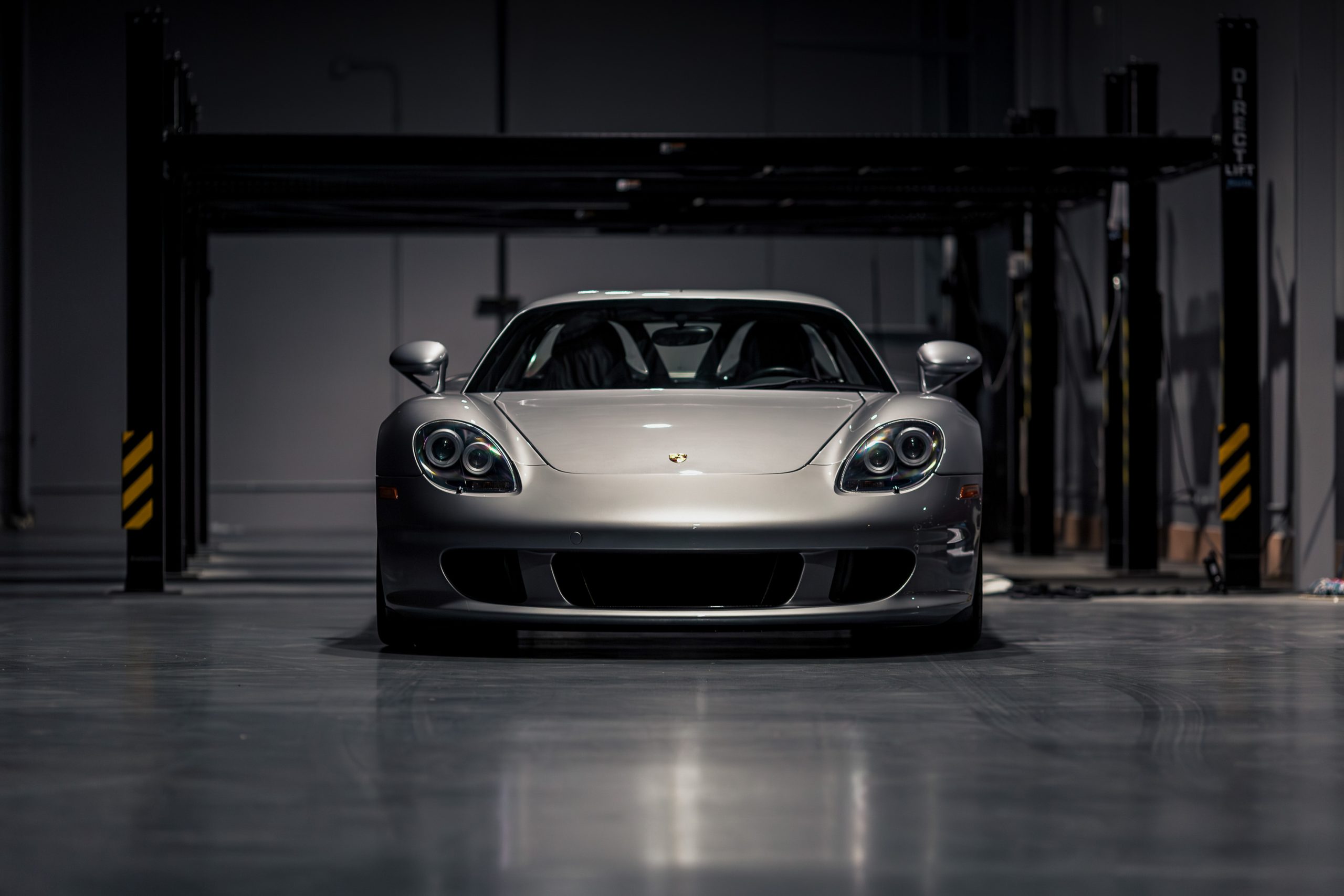
Of course, the sine qua non of the 992 Touring’s interior is that manual gearshift, and Porsche has done it proud with a splendid wooden gear knob recalling the distinctly analogue Carrera GT, and, if you peer under the dashboard, three handsomely finished alloy pedals.
On the road, these all work in that very Porsche harmony. The gearshift is intuitive, precise, and on a par with the six-speed used in the late and much-missed Boxster and Cayman. Like theirs, the Touring’s steering feels just right, and—big car though the modern 911 is, simply park alongside a 997 to appreciate how it has grown—the driver soon gains confidence to place the car accurately through bends and in traffic generally.
Turbocharged Character vs. the Old Naturally Aspirated Feel
In 2016, the turbocharged, downsized three-litre flat-six (and demotion of the 718s to four cylinders) was not a course Porsche wished to take, because, besides adding weight and complexity, the turbo diminishes the purity of the engine’s response. But, with no escape from ever-tightening environmental requirements, there is no denying that Porsche has made a very fine job of integrating forced induction.
Exhaust-driven turbocharging means that, from about 2000 rpm, by which time the intake fans are spinning fast enough to have an effect, the engine achieves maximum torque almost immediately. So well has Porsche harnessed the boost that today the turbo effect is apparent only to a driver familiar with previous naturally aspirated generations.
The Carrera’s induction system maintains an almost flat torque curve between 1950 rpm and 5000 rpm, and the car responds almost irrespective of what gear it is in. By contrast, the earlier naturally aspirated (and, at over 100 bhp/litre, highly tuned) flat-sixes tended to reach maximum torque at about 4500 rpm and maximum power at over 6600 rpm.
It meant the driver of the manual gearbox car (the PDK version did it for him) had to think about which ratio to be in for overtaking or rapid acceleration. The removal of this challenge—replaced by a PDK transmission that does the deciding for the driver—is partly why enthusiastic drivers lament the passing of natural aspiration.
If turbocharging is today inevitable (short of a $250,000+ GT3), at least the 992 Touring brings back the traditional six-speed. Despite the turbo flat-six’s willingness to pull from 2000 rpm, the quality of the shift enhances the experience of driving the Carrera, and means that Porsche’s “keen driver” will, almost unconsciously, go up and down the ratios, often unnecessarily.
On the Road and at Silverstone: Performance Impressions
There is, of course, more to this Carrera than its gearbox. As a point-to-point sports car, it has few equals in production today. The alacrity with which the 911 obeys its driver has long been exceptional, and the Carrera and its pilot develop almost a complicity in the way the 911’s dynamic prowess can be exploited.
The base Carrera is, according to Porsche, quicker off the line—3.9 s to 62 mph compared with 4.3 s of the mechanically identical Carrera T—but this is the usual difference between PDK and manual gearboxes. On the road, this half second is not apparent; the T simply shoots from corner to corner, and because the driver is that much more engaged, it feels faster.
Our test incorporated a visit to Porsche UK’s Experience Centre at Silverstone, where the sharply twisting half-mile circuit, which requires both hands on the wheel, was lapped quickest by simply leaving the T in third gear—its mid-range torque pulling the Carrera out of corners which would have demanded second gear with a naturally aspirated model.
More familiar was the authority with which the 911 dispatched the circuit’s variety of tight, sometimes adverse-camber corners, a reminder of how utterly resolved the Carrera’s handling has become.
Ride Quality, Noise, and the Touring Paradox
Chassis control on Porsches is masterful, and the sporting “T” is no exception. Even with PASM set at its lowest, the ride is firm, and only on the harshest surfaces, where broken blacktop begins to disturb the balance of the car, will the driver feel the need to slow.
Interior comfort, though, is diminished by relatively high cabin noise levels. Porsche deleted some rear cabin sound-deadening for the T and, combined with lack of rear furniture, the resultant drone can become wearing. Ironic in a “Touring,” which the name suggests was conceived for sustained long-distance motoring.
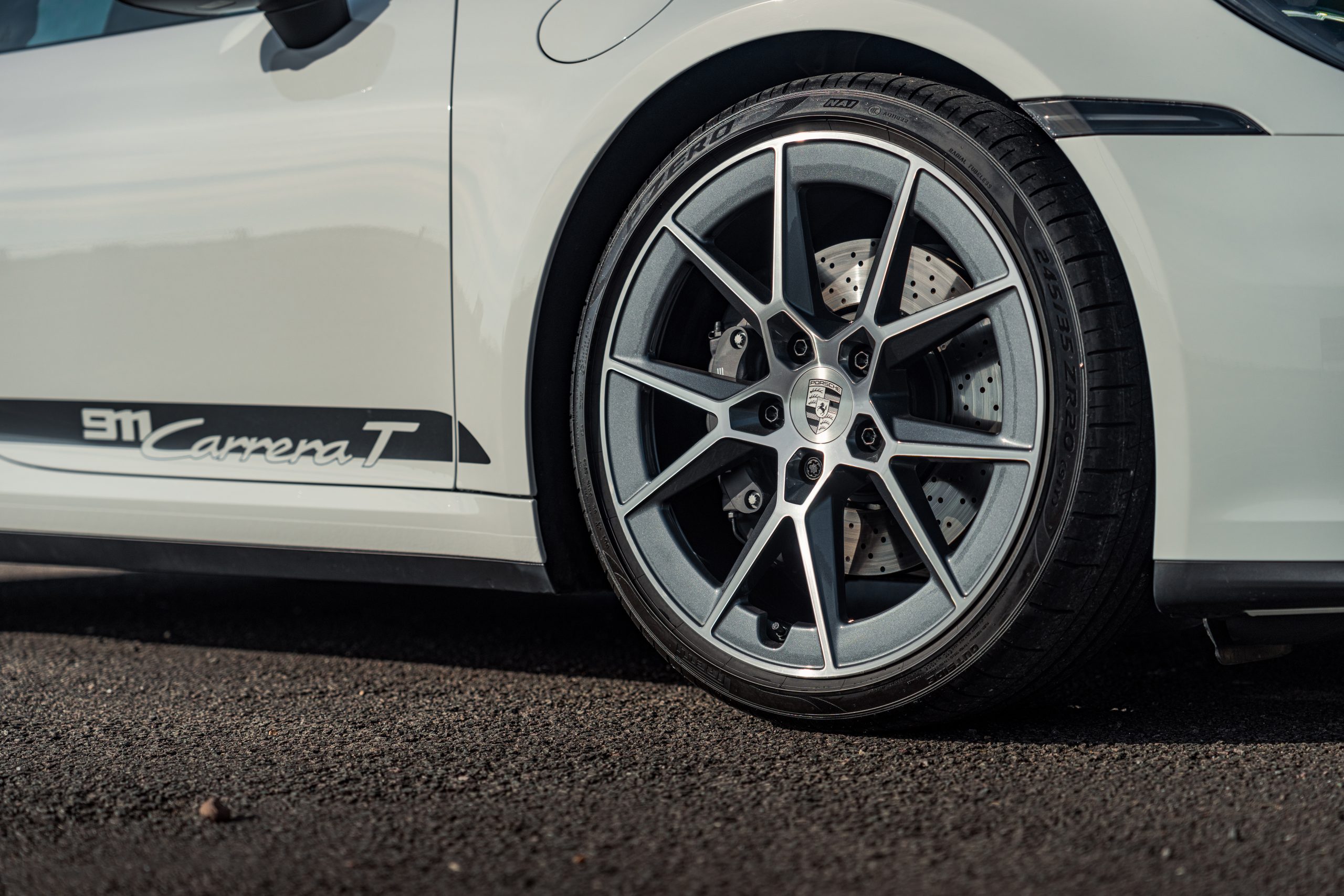
Cruising the highways is not the Carrera T’s forte: tyre resonance is an age-old problem in 911s, and here, standard 305-profile rear tyres, which contribute to the Carrera’s very predictable handling, are also over two feet wide—that is a lot of rubber hitting the tarmac.
Some observers have wondered whether narrower rubber—this is, after all, a less-than-400 bhp 911—would generate less disturbance and, at the same time, endow a little of the playful handling enthusiastic drivers seek.
The plain Carrera is noticeably quieter inside, though it too suffers from tyre noise on some surfaces.
Weight, Tech, and Manufacturing Realities
Purists have long complained that the 911 has become too heavy. That, of course, is relative. In 1975, the base 911 weighed just over a ton; fifty years on, it weighs just over a ton and a half. Given the equipment and comfort the market expects from a premium sports car, not to mention the need to comply with half a century of safety and environmental legislation, the base 911 is still comparatively light.
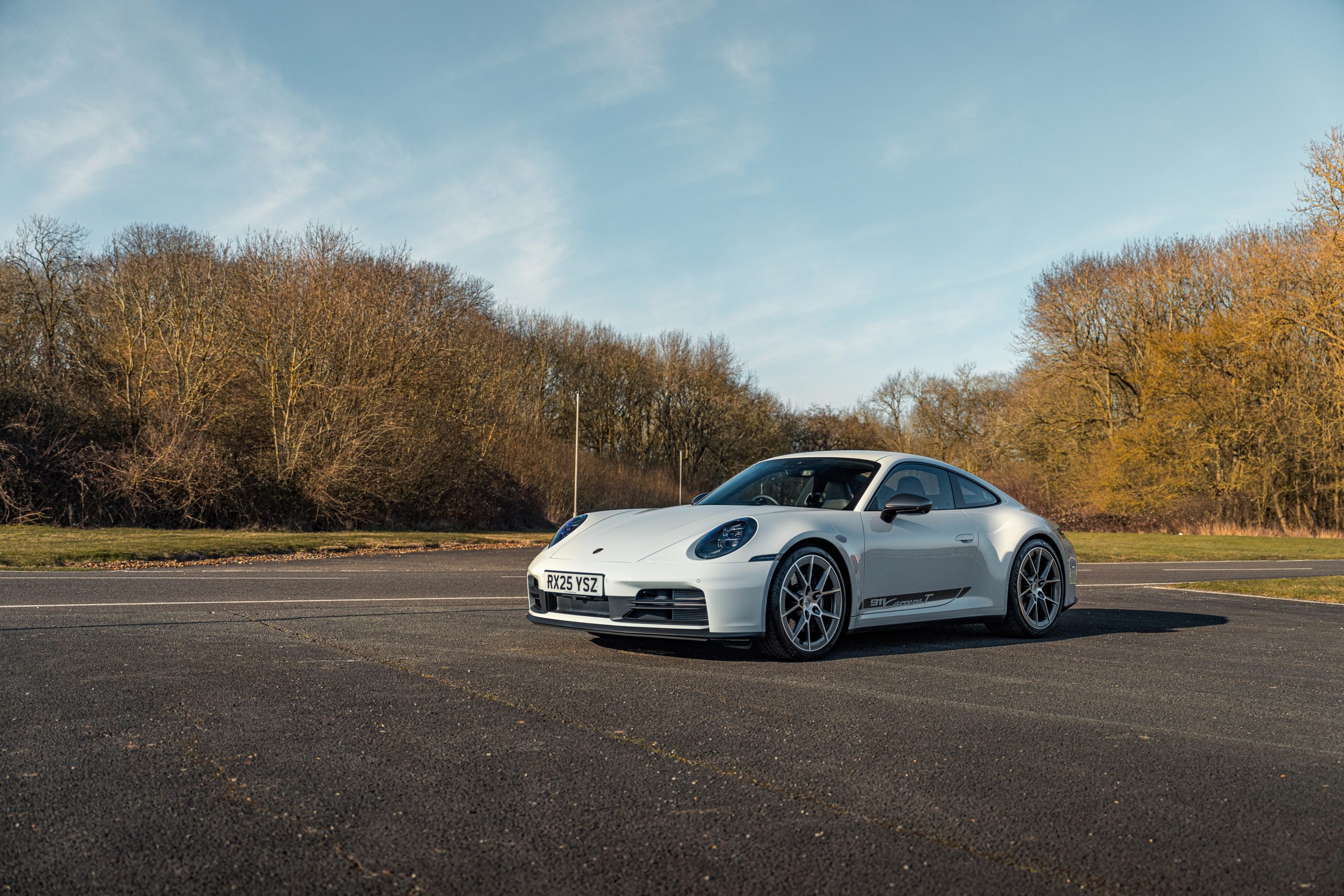
The move to majority use of alloy rather than steel made the (larger) 991 lighter than its 997 predecessor, but this advantage was lost with the 992 generation, which was altogether wider, and this latest expansion remains controversial.
Purists also argue that 911s have “too much tech” as standard: PSM is a legal requirement for all cars, but how often do owners use the firm setting on PASM, and how many asked for torque vectoring and other chassis controls?
Like it or not, within the constraints of mass manufacturing, there is a limit to what Porsche can do: after all, it builds over 50,000 911s a year. In terms of cost, it is often more effective to incorporate a certain level of technology in the entire production, rather than complicate manufacture by versioning.
Verdict: Opportunism or Genuine Enthusiast’s Car
So, the Touring is neither lighter nor simplified in terms of the technology it carries, but it does represent more than cynical marketing—more a case of deft opportunism.
It is different enough from the Carrera to justify itself as a standalone model: the twin-turbo flat-six performs admirably with the manual transmission, and its set-up is sporty enough to appeal not only to Porsche traditionalists but anyone seeking an exciting analogue sports car.
Indeed, Porsche deserves praise for persisting with the mechanical gearbox against the prevailing winds of electric cars, which all but drive themselves.
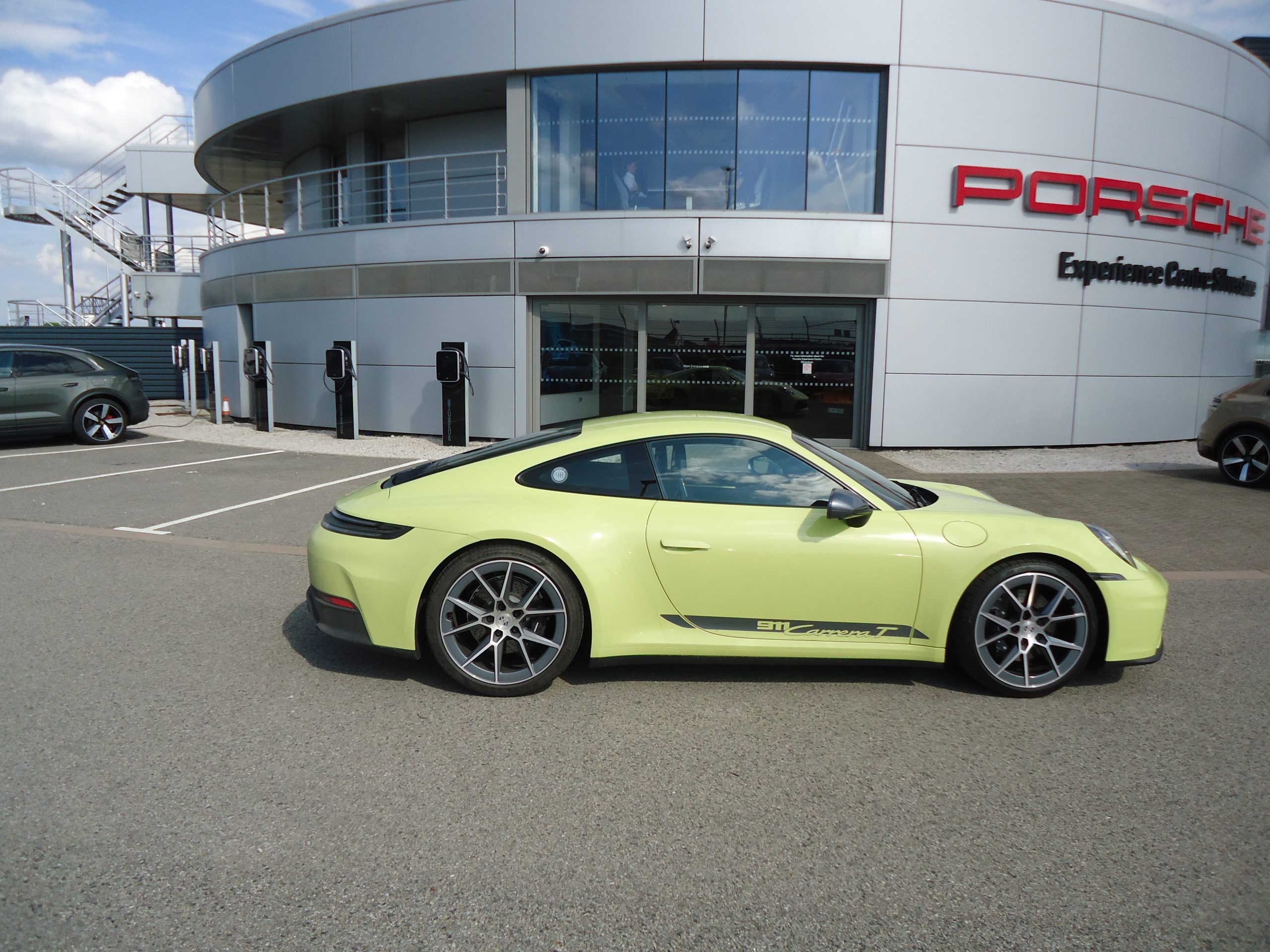
You could argue that offering the “six” only on a specific model and not the base Carrera verges on the cynical, but Porsche would counter that, as PDK became established, demand for manual shifting evaporated—and it’s worth noting that Porsche is alone among premium car makers in retaining the traditional gearbox option.
All modern marketing, of course, is cynical: what is it if it isn’t persuading the customer to buy something they hadn’t thought of and don’t strictly need?
A field where you could accuse Porsche of cynicism is accessories—those tempting extras which finish by adding ten, or even twenty percent, to the base price. Buyers find them hard to resist, and suddenly they have spent $10,000 more than they intended. But Porsche has been doing this since that first 911 Turbo, when it discovered customers were returning for ever more luxurious add-ons. Marketing is only cynical if it works!
Specification: Carrera 992.2 T
- Engine: 2981 cc, six cylinders horizontally opposed; twin turbochargers
- Max Power & Torque: 390 bhp @ 6500 rpm; 332 lb-ft @ 1950–5000 rpm
- Transmission: Six-speed manual gearbox; rear-wheel drive
- Performance: 0–62 mph 4.3 s; maximum speed 183 mph
- Weight: 1520 kg (with standard sports seats)
- Economy: 26–27 mpg (imperial); CO₂ emissions 237–246 g/km
- Price: $132,300 (before tax, delivery, or optional extras)