

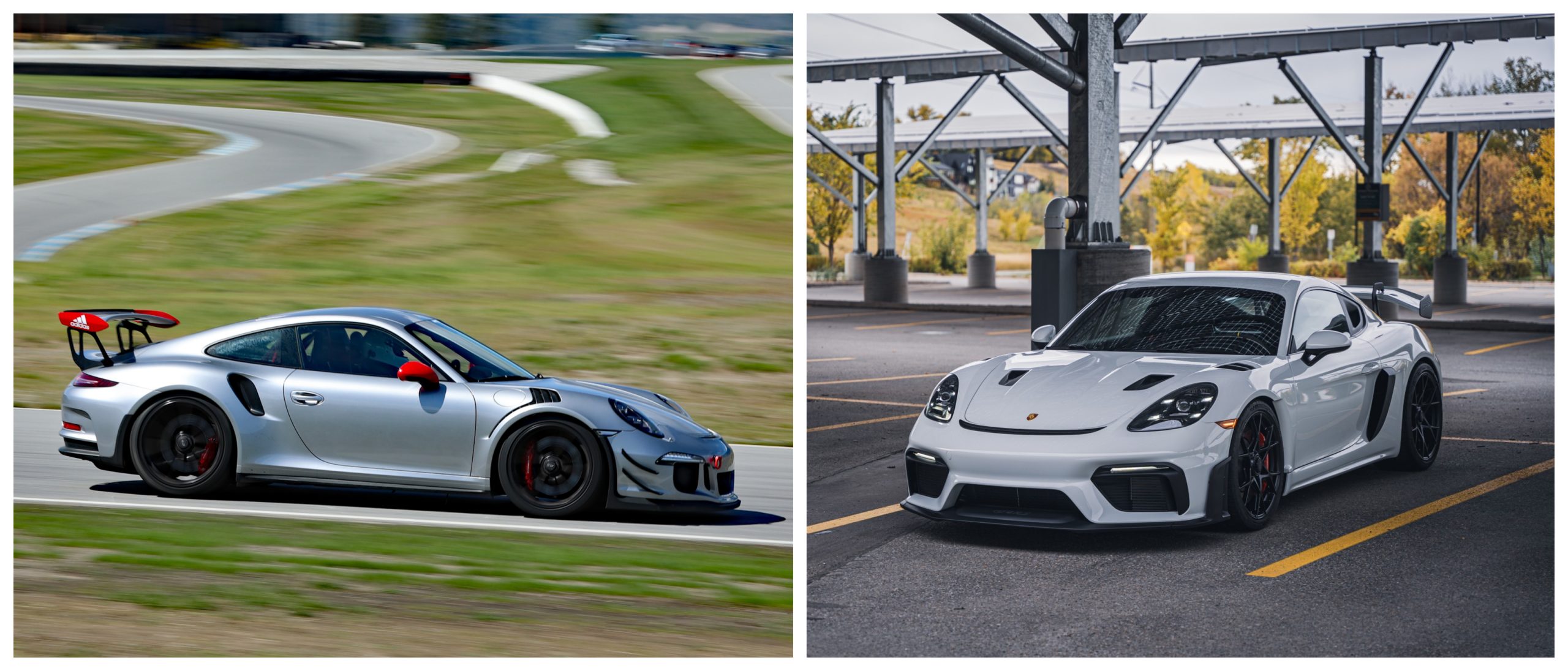
From daily drives to track sessions, here’s what sets these RS models apart—and what ties them together.
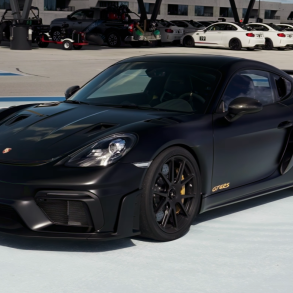
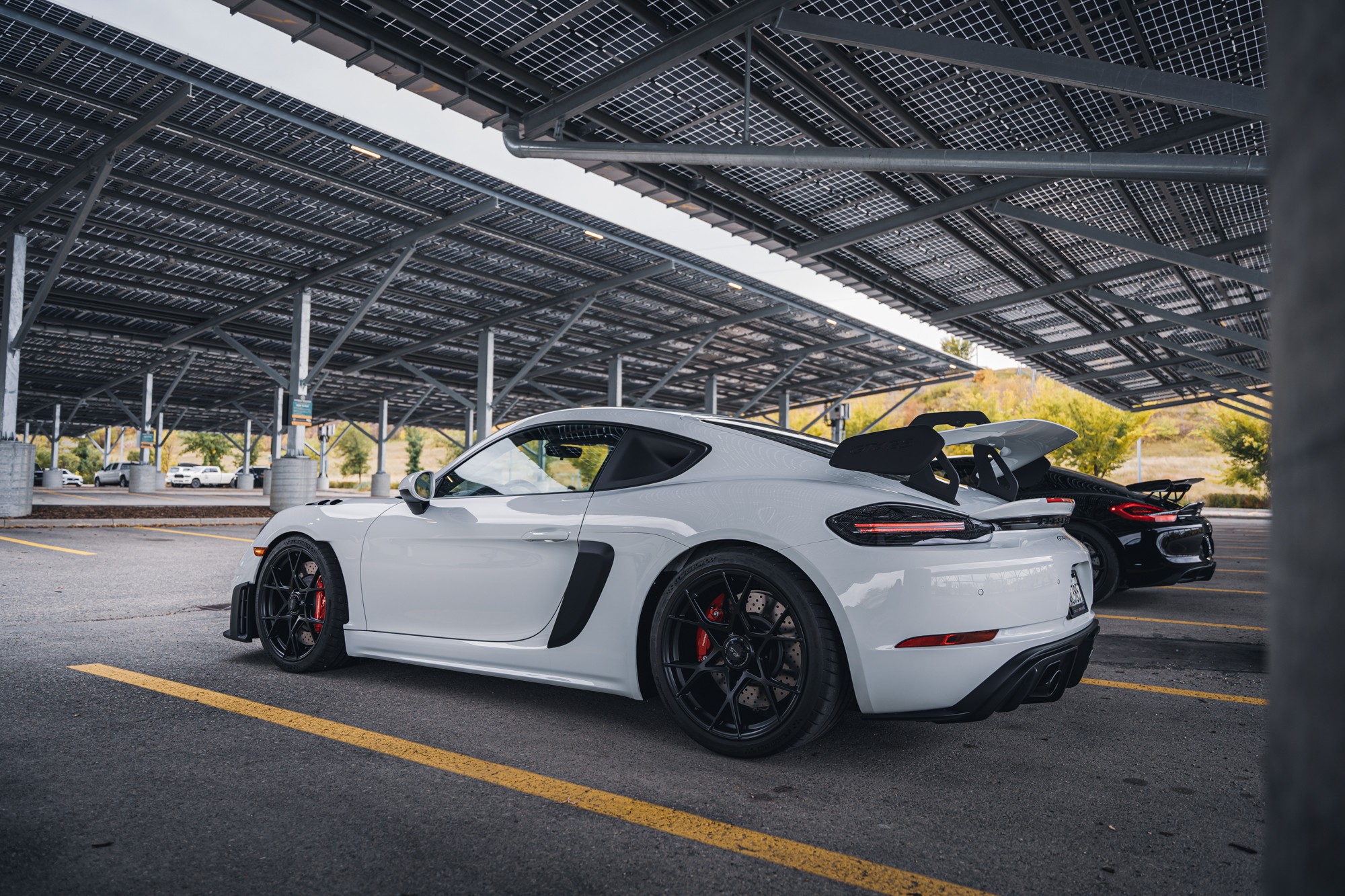
I’ve now had the opportunity to experience my latest P-car—a 2024 Porsche 718 Cayman GT4 RS—a fair amount past its break-in mileage. I think this is a good indicator that I may now speak freely and credibly when it comes to what I think about the car. My tenure so far has included a light-jog-equivalency at my local racetrack to stretch (and not pull) the car’s hamstrings during the final third of its break-in period.
In the brief 2,500 km accumulated on the odometer, I’ve also done plenty of street driving around town, while simultaneously arbitrating the “daily livability” score of a second consecutive RS car. The first, which has been documented in previous articles catered towards race track use, was a 2016 Porsche 911 GT3 RS. That car was ultimately traded in for the Cayman, which has since preserved an uninterrupted connection to the beloved RS bloodline.
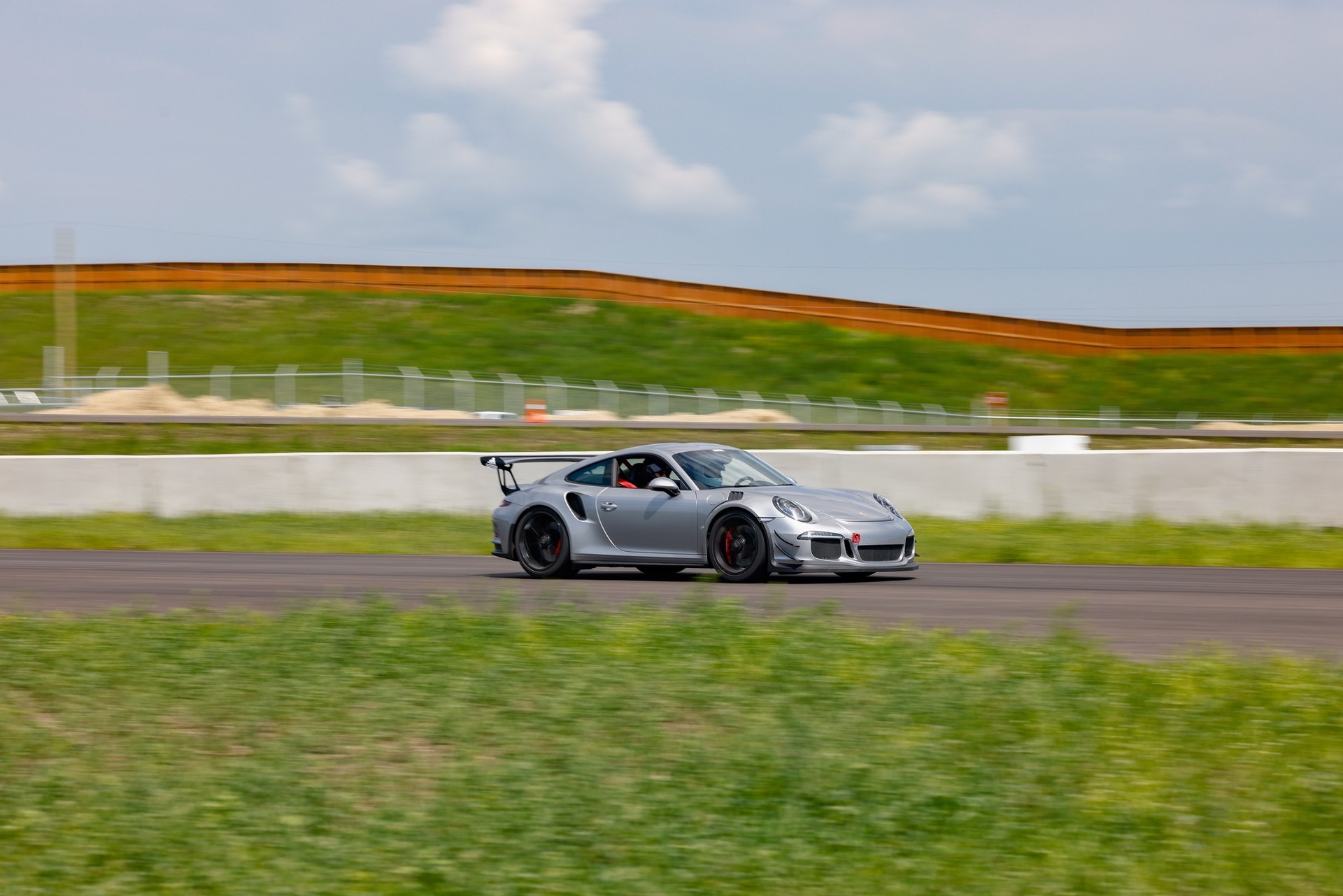
For this article, I’ll be highlighting my experiences with owning both cars and providing comparisons between the two where appropriate.
Managing Expectations (Street)
As objectively amazing as a Porsche RS production car is, they’re not the right car for everyone. It’s all about managing expectations. This section mostly addresses that perspective from a street-legal production car and/or daily driving point of view, as I think that everyone is much more familiar with what the RS cars deliver on the track.
Ultimately, I think how good either car is in this case—especially within such an extremely niche category—mostly comes down to our expectations, and to a lesser but not insignificant extent, our past experiences. I’ve owned my fair share of performance-oriented cars, even well before my foray into Porsche ownership, so it’s going to take a lot more than a firm suspension and loud noises to scare me off.
Daily Driving Sensibilities
That said, a rougher ride on city roads is something I’ve been mostly desensitized to, though I wouldn’t go as far as saying that I necessarily enjoy it over smooth drives during grocery store runs or trips to the opera house. I’m not a masochist! Of course, both the GT3 RS and GT4 RS offer little in terms of comfort, but this should only come as a disappointment if you were expecting anything different.
However, I don’t think anyone buying an RS car through their own volition would ever do so. There are better options out there for the more conventional driver, and within Porsche’s own lineup, the Porsche 911 Turbo S immediately comes to mind. There are, however, ways that you can enhance the urban (and mostly street-legal) driving experience, and this applies to both of the cars being discussed.
Friends In Low Places
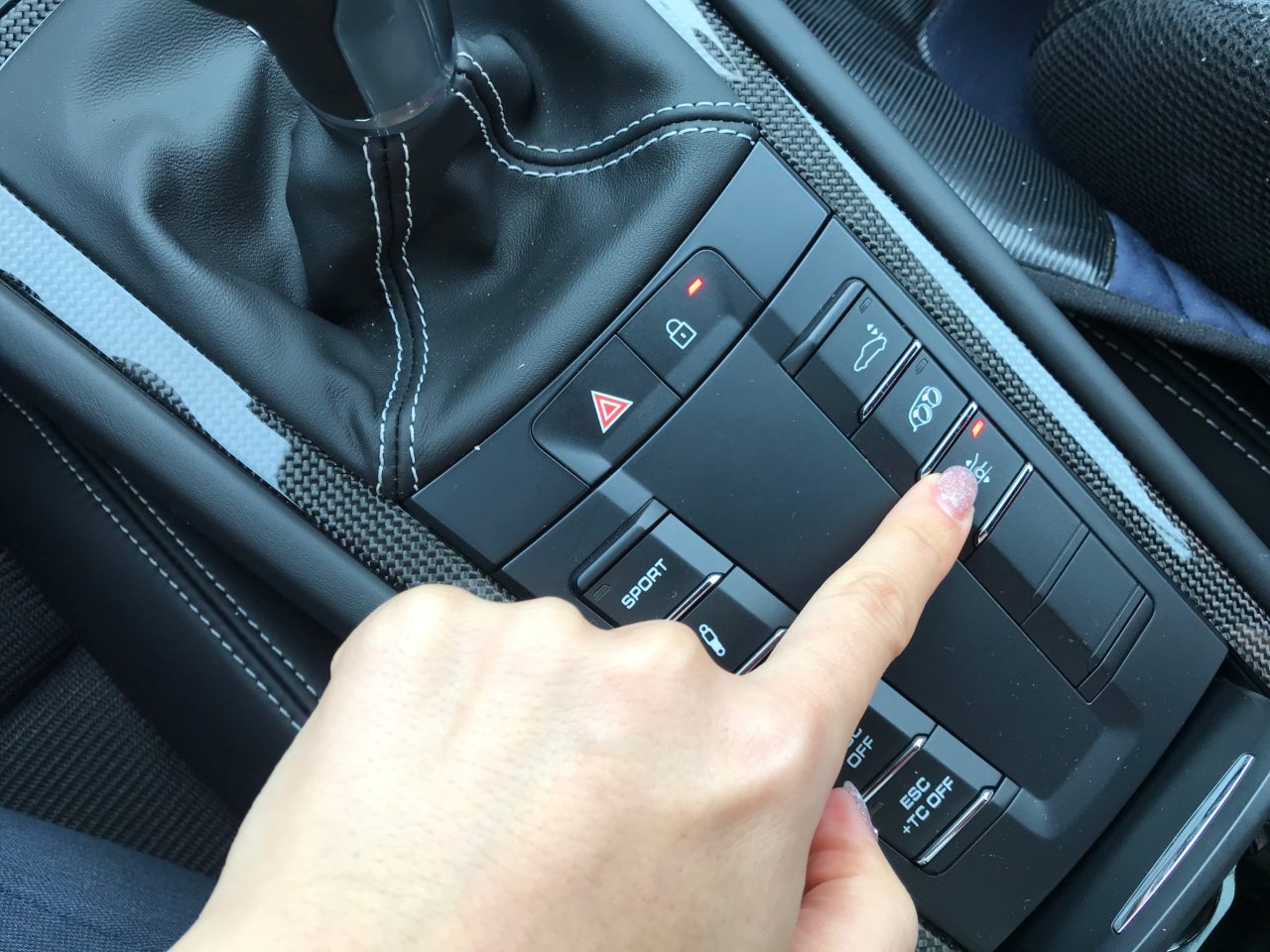
Porsche Front Axle Lift System (FALS). Consider it mandatory. If you’re having a new car built, make this the first option you check off. If you’re in the second-hand market, put examples that come with it higher up on the priority list. You’ll thank me later.
There are only benefits that can come from having FALS installed, as it allows you to more readily negotiate the idiosyncrasies (curbs, ramps, speed bumps, etc.) which you will inevitably encounter during a commute. It can even be useful at the track and make getting under the car—for when you need to swap wheels or inspect something—a more simplified process. I’m so much an advocate of FALS that I believe it will help you love your car more, and your car will in-turn pay you back with unscathed front lips and pristine underbody panels. Truly, a win-win situation.
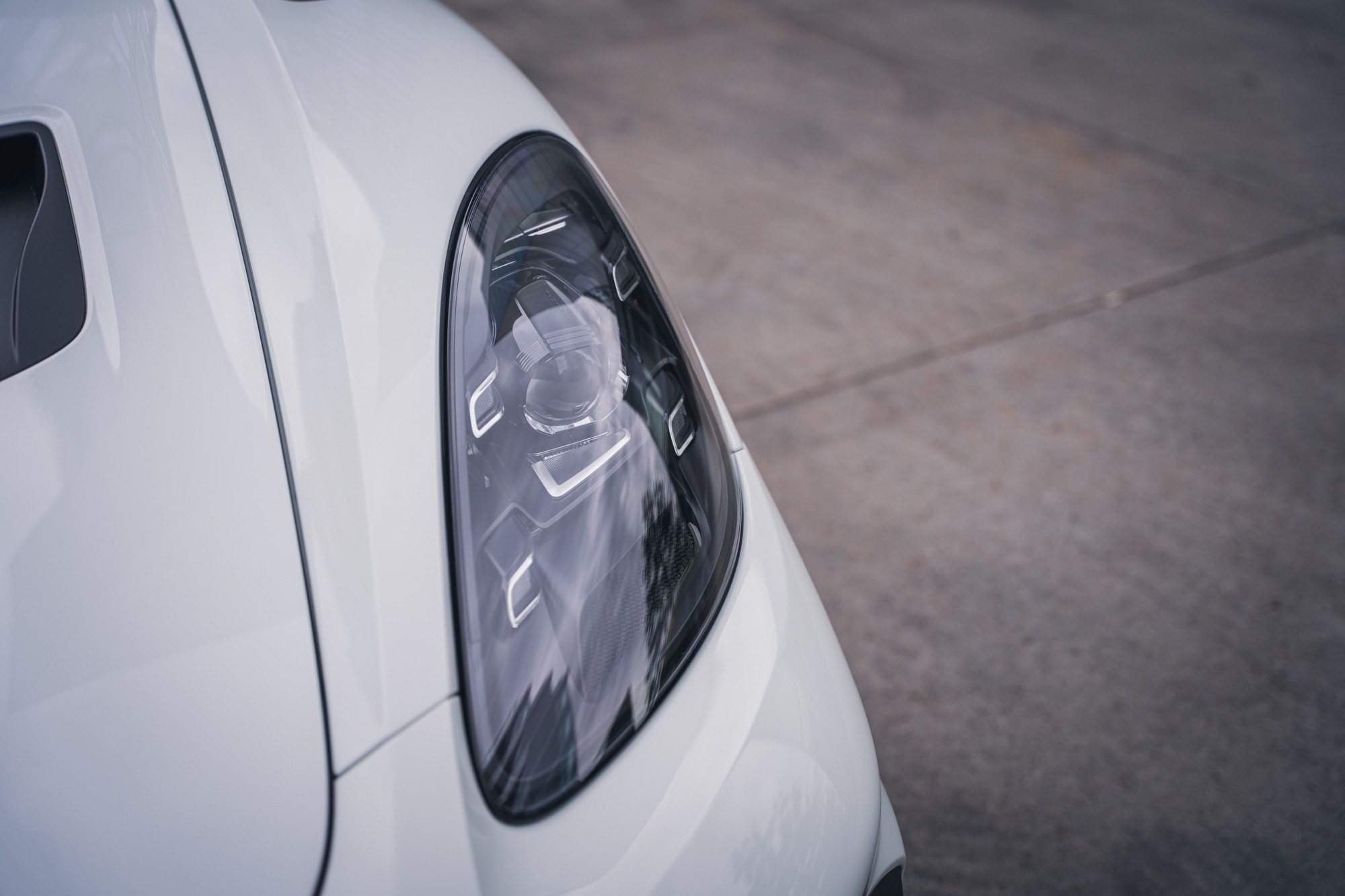
The following is more of a personal opinion. I would also spec (or choose cars with) PDLS or PDLS+ for your GT3 RS or GT4 RS if you intend to do any driving at night, which tends to be most enthusiasts’ “prime time” for cruises and perhaps a bit of backroad tomfoolery. Being better-sighted is never a bad thing, whether it’s for a chill ride home at 2 am or at an HPDE that goes on into the sunset. The upgraded lamps look better, too.
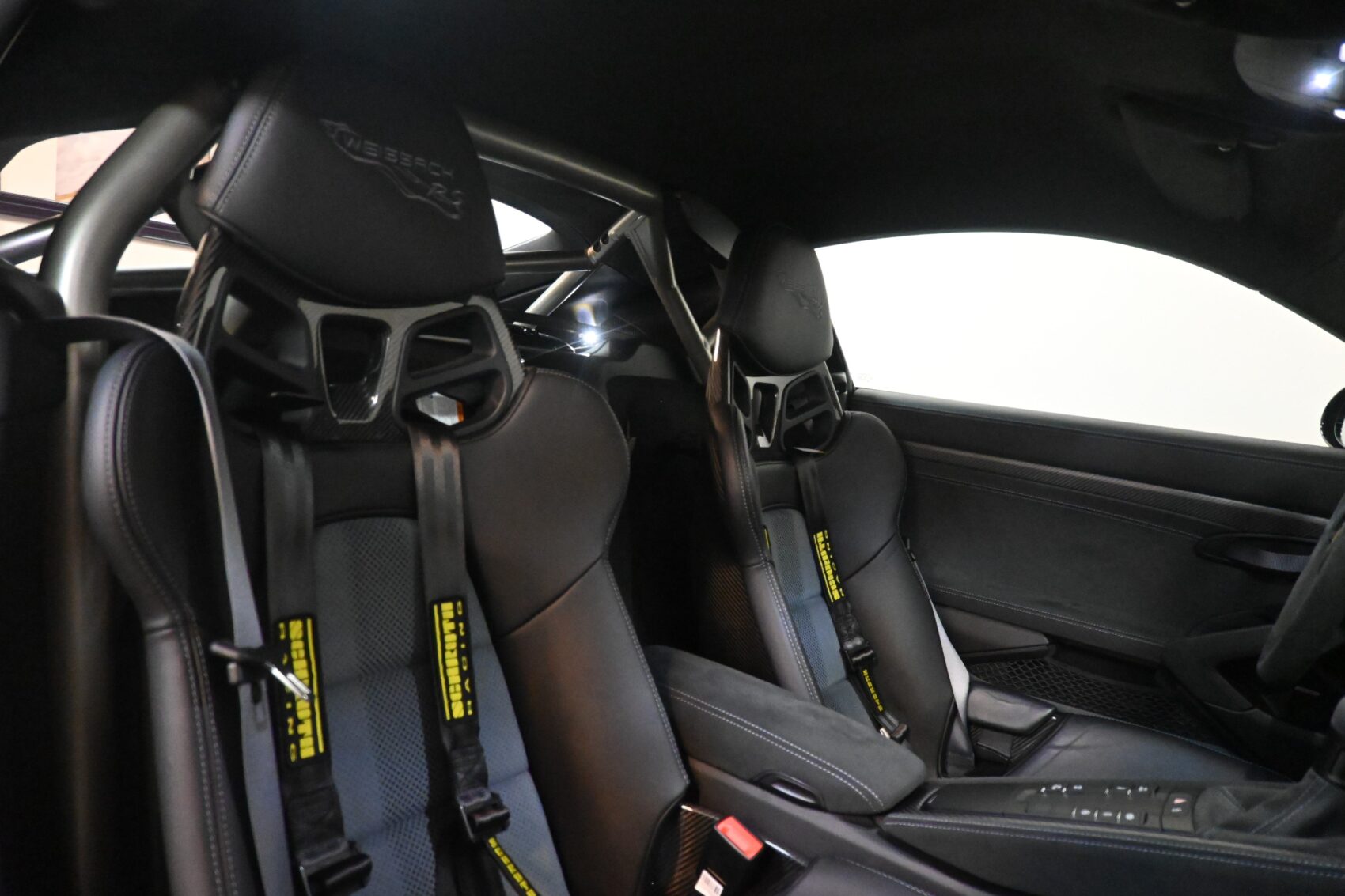
I’m also of the school of thought that you should only ever have Carbon Bucket Seats in an RS car, even if you intend for it to be a daily driver. They’re a standard and no-cost option up front, and if you were to ever opt for the Adaptive Sport Seats and wanted to switch back later, it would cost a lot. To me, the carbon seats are quintessential to owning an RS, and if you wanted a proper grand tourer, then a GTS, Turbo, or Turbo S is more up your alley.
Driving Impressions
Now that we’ve spec’d (or chosen) our perfect GT3 RS or GT4 RS, let’s talk about how they do on public roads.
There’s something that just feels more natural to me with the Cayman, when it comes to driving around town or on the winding backroads. It feels more nimble, and its smaller, mid-engined platform provides the basis—or at least the impression—for a more agile, dextrous and balanced car, particularly when being driven well within the limit.
The 911 seems like it demands more attention (but not necessarily skill) from you at lower speeds, but holds your hand as you get closer to the limit thanks to the more forgiving and communicative nature befitting its modern rear-engine configuration. With its beefier dimensions, parking lot maneuvers or tight spaces require more care, which may detract from the overall experience. The aforementioned FALS will come in handy during these situations.
Suffice to say, the Cayman is a more carefree car to lug around town than the 911. On the open winding roads or an empty highway? Pick your antidote. Neither car will do anything other than impress you to the RSth degree, in slightly different but ultimately parallel fashions. The 4 RS’ induction noise is as quintessential as it is unique, and driving any 3 RS is a deeply visceral and transformative experience.
Where We Really Keep Score (Track)
Apples to Oranges Caveat
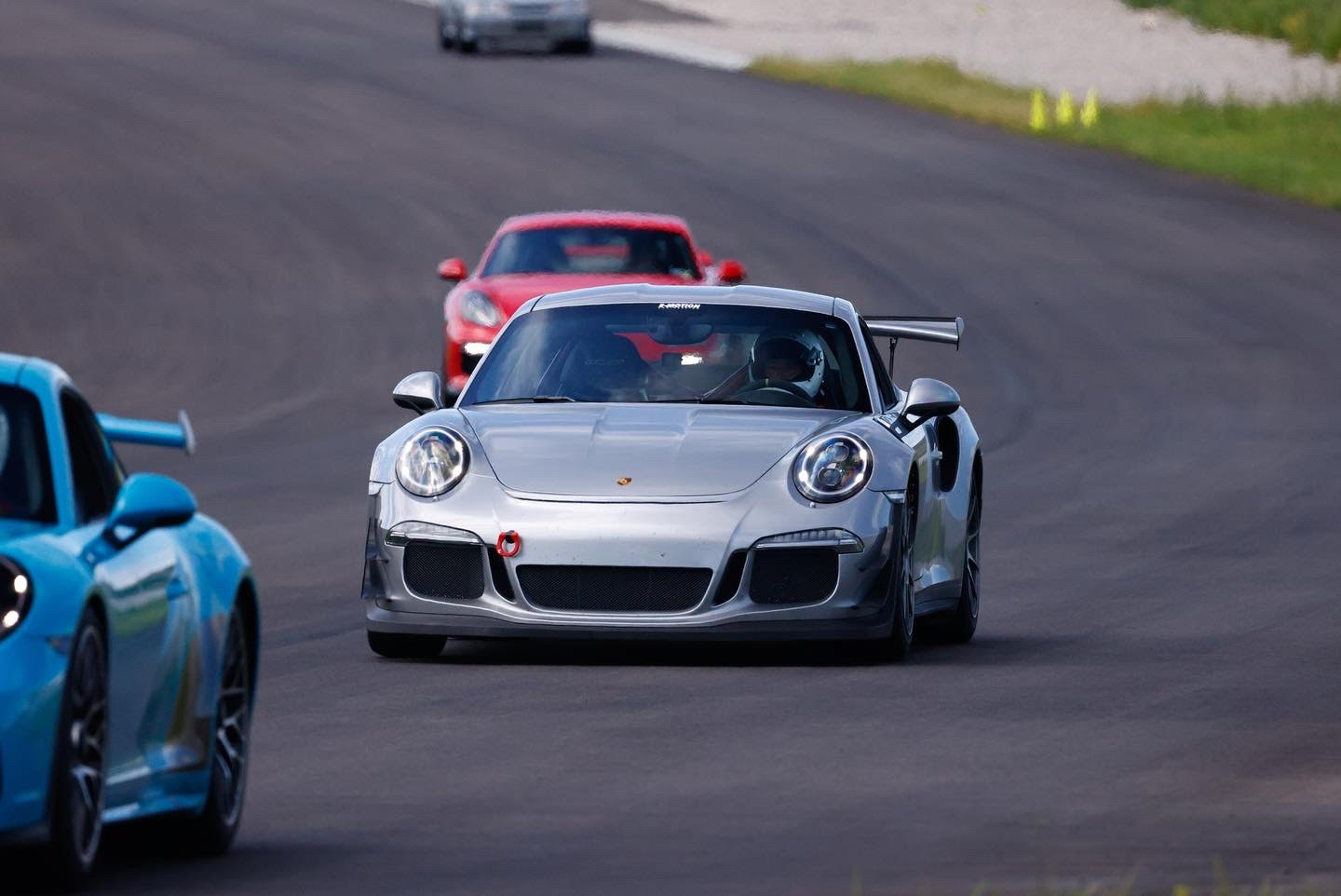
My 991.1 GT3 RS was slightly modified for the track. Though the changes didn’t make the car any faster from a technical standpoint, the goal of its E-Motion Engineering setup was to make the car more responsive to steering input, provide improved feedback/detail of grip, help even-out tire wear, and ultimately give the driver confidence to safely progress towards the limit with greater consistency. Of course, an aggressive track alignment, ride height adjustment, and corner balancing were all part of the equation. Interestingly, this more track-oriented setup in my opinion, made for a better quality of drive on the street, too.
The 718 GT4 RS? Well, that’s entirely stock. Besides having toggled the front and rear aero to its OEM high-downforce setting, the car is completely factory spec, including the wheel alignment settings. Certainly good enough for the street, and basically adequate for driving six-tenths at a local charity track event while it was still in its break-in period.
Which Car Is Faster?
So, with the caveat out of the way, I can say that the 991.1 GT3 RS as it was in its prime, is the faster car—or rather, the car that’s easier to drive faster. That being said, the GT4 RS has yet to have undergone the most rudimentary and critical elements of track-prep, including a proper wheel alignment that on its own, would be transformative and notably shrink the performance gap.
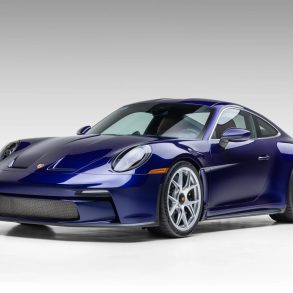
Stock vs. Stock, I would actually give the edge to the GT4 RS, but it’s a close one. That is no longer the case with the 991.2 GT3 RS, which has the benefit of an extra 3 years of R&D over its predecessor. Of course, as we charter into 992 territory, the distinctions between the GT3 RS and GT4 RS are now considerably in favour of the 911 from a performance perspective.
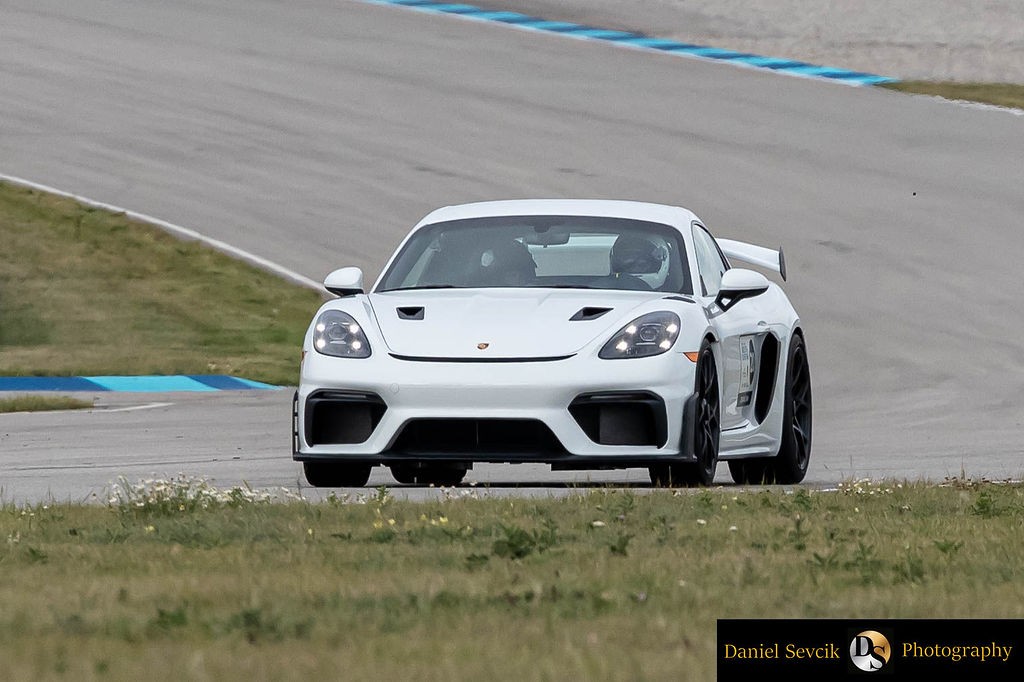
What I can say about the GT4 RS, is that it’s definitely a bit more twitchy approaching the limit, factoring in the aforementioned and also taking into consideration the quirkiness of its diminutive mid-engine configuration. In modern times, the Cayman is generally known to be more difficult to control at the limit than the 911. Or, another way to look at it, is that the 911 is a bit more forgiving—things appear to be no different with these two RS variants in general.
The Data Is Already There
As it pertains to my own anecdotal experience with these cars, dialing in the GT4 RS in the same way that was afforded to the GT3 RS, would obviously provide more evidence-based conclusions, which is what we all want, isn’t it? I mentioned in a previous Stuttcars post, that I have no plans to push the new car at the track, and it will be strictly used as an HPDE instructing tool or for events, like the charity mentioned earlier. Thankfully, others have already gathered this kind of data, and have done it in such a comprehensive way that I would not have been able to duplicate on my own..
For me, Dundon Motorsports has provided the most in-depth and technical documentation specifically pertaining to modifying Porsches to improve them for track-use. The quality of their work—both in the parts they produce, and the methods in which they substantiate their performance—is absolutely top notch. Whether it’s on YouTube or Instagram, you can find an encyclopedia of P-car knowledge to help narrow down your decision on which parts, or even which car, to buy. Other outfits like Silver Rocket, and even Porsche’s own Manthey OEM division, publish similar work but Dundon has got this specific art down to a T.
I recommend perusing the plethora of data all of these high-profile Porsche tuning companies have curated for us. It’ll answer the question of “which car is faster?”, and so much more.
Which Car Should I Buy?
Whether this might be a theoretical or material question for you at this time, it certainly demands a robust internal monologue in order to come to a conclusion. Many factors, beyond the performance of the cars themselves, are at play here.
Both the 718 GT4 RS and 991.1 GT3 RS are currently aligned in price, more or less, under ideal conditions. Of course, the stipulation is that you can only acquire the latter through the used market. Additionally, prices are only evenly yoked if you are able to purchase a GT4 RS at MSRP, which in turn requires your dealership to afford you a new build slot. As others have documented, that is not necessarily a straightforward process to begin with and will only get more convoluted with the curtains about to close on the gas-powered Cayman. This has also buoyed the used car market for the GT4 RS, where sellers are asking over the MSRP.

To segue on that, I think that the GT4 RS offers a lot more in terms of being a collectible or investment piece. There’s both nostalgic and financial appeal in being able to say that you own the very best and very last ICE Cayman ever produced. On the other hand, 991.1 GT3 RS prices will likely go down over time, as they don’t have the vintage status or exclusive character of say, a 997 GT3 RS, and newer iterations of the car continue to shatter previous performance ceilings. Nevertheless, at this cross-section in time, both cars are equally enchanting in slightly different ways. As for the better driving experience? You might as well flip a coin.
If “finding a deal” is something that really gets you going during the car buying process, then the 991.1 GT3 RS will have to be your choice. I’m sure you’ll come across some intriguing propositions as you scour through ads on AutoTrader and duPont Registry. However, if you want something a bit more special, and a lot more “final”, and would like to have the opportunity to option a car to your exact specifications, then stop what you’re doing and get over to your local Porsche Center now.
With all of that said, I will close off by reiterating that it’s not beyond me how fortunate I am to have owned both of these exceptional automobiles. Once again, thank you to the Stuttcars team and to you, the readership, for supporting and finding enjoyment in the content I produce. It really means a lot to me!