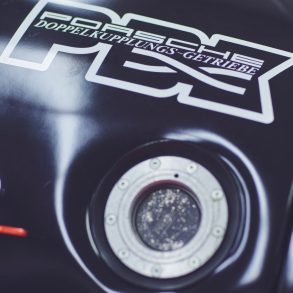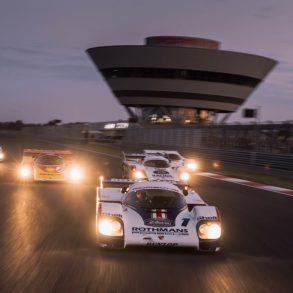


Porsche has never been short of ideas about how a driver should change gear, and not all of them involved a clutch pedal. Back in 1967, barely three years after the 911 went on sale, Zuffenhausen introduced the Sportomatic, a semi-automatic gearbox developed with Fichtel & Sachs that kept the familiar H-pattern lever but did away with the third pedal altogether. A microswitch in the gear lever sensed the driver’s hand, and a vacuum-operated system took care of the clutch, which must have sounded like witchcraft at the time (and to some purists, it still does). That same year, Vic Elford drove a Sportomatic-equipped 911 to victory in the Marathon de la Route at the Nürburgring, which went some way toward silencing the critics. The Sportomatic soldiered on until the end of the 1970s before the Tiptronic automatic took over with the 964 in the early 1990s. The PDK dual-clutch, which Porsche first raced on the 962 C back in 1985, later found its way into the road cars as well.
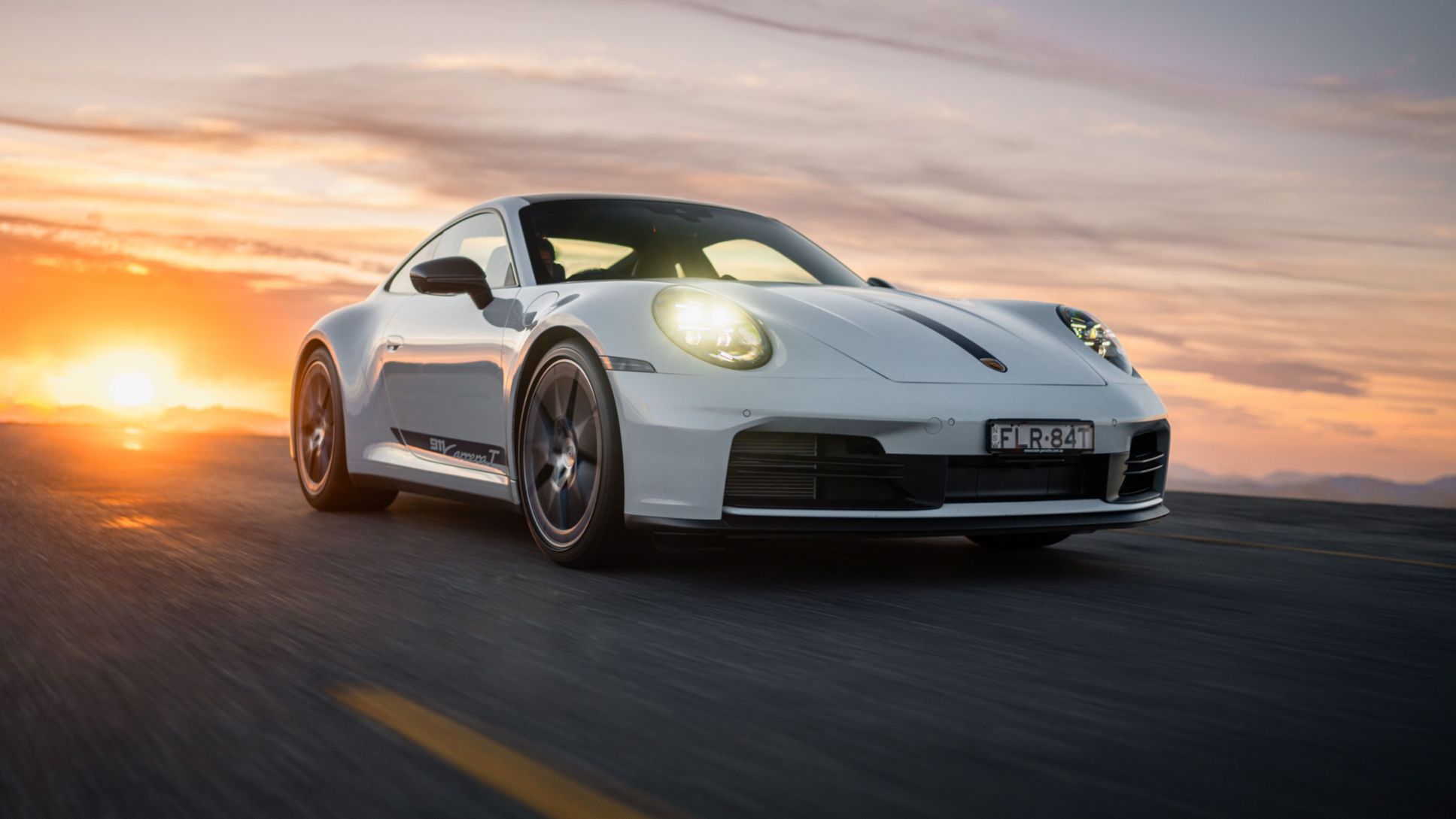
For the best part of six decades, then, the engineers in Stuttgart have been finding new ways to take the clutch away from the driver’s left foot. Now they appear to be working on the opposite problem. The manual has made a comeback in the 911 Carrera S for 2027 through the North America-exclusive MT Package, bringing the number of manual 911 variants on this side of the Atlantic to seven, yet the Carrera GTS T-Hybrid cannot be had with three pedals at all. Two Porsche patents published this year suggest the company has at least been exploring a way around that, although the clutch pedal in question would not be physically connected to a clutch.
Why the T-Hybrid Can’t Have Three Pedals
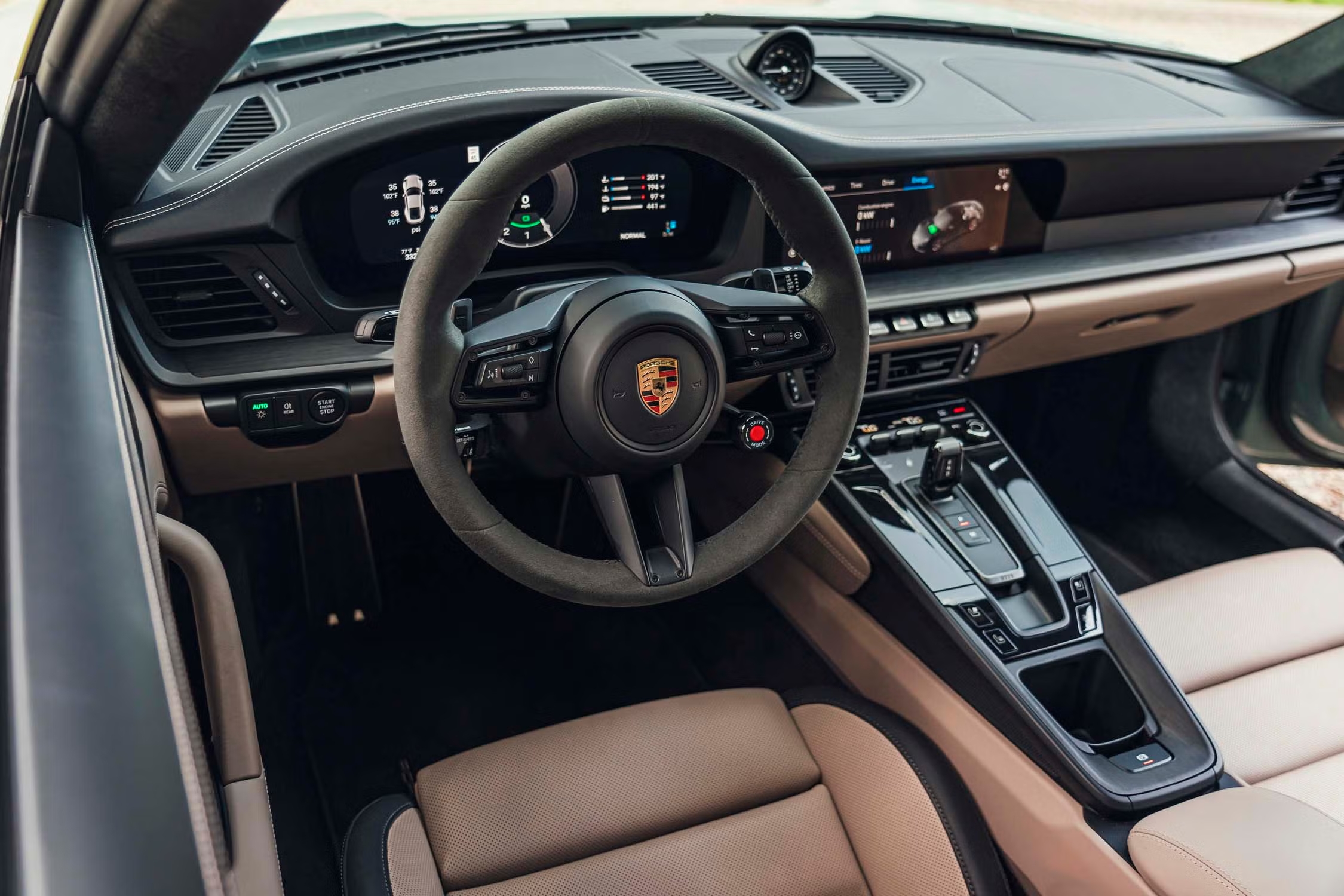
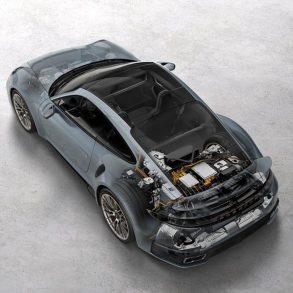
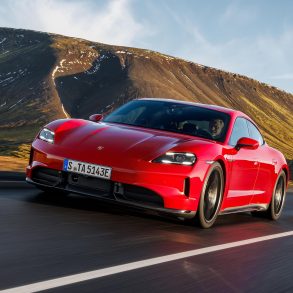
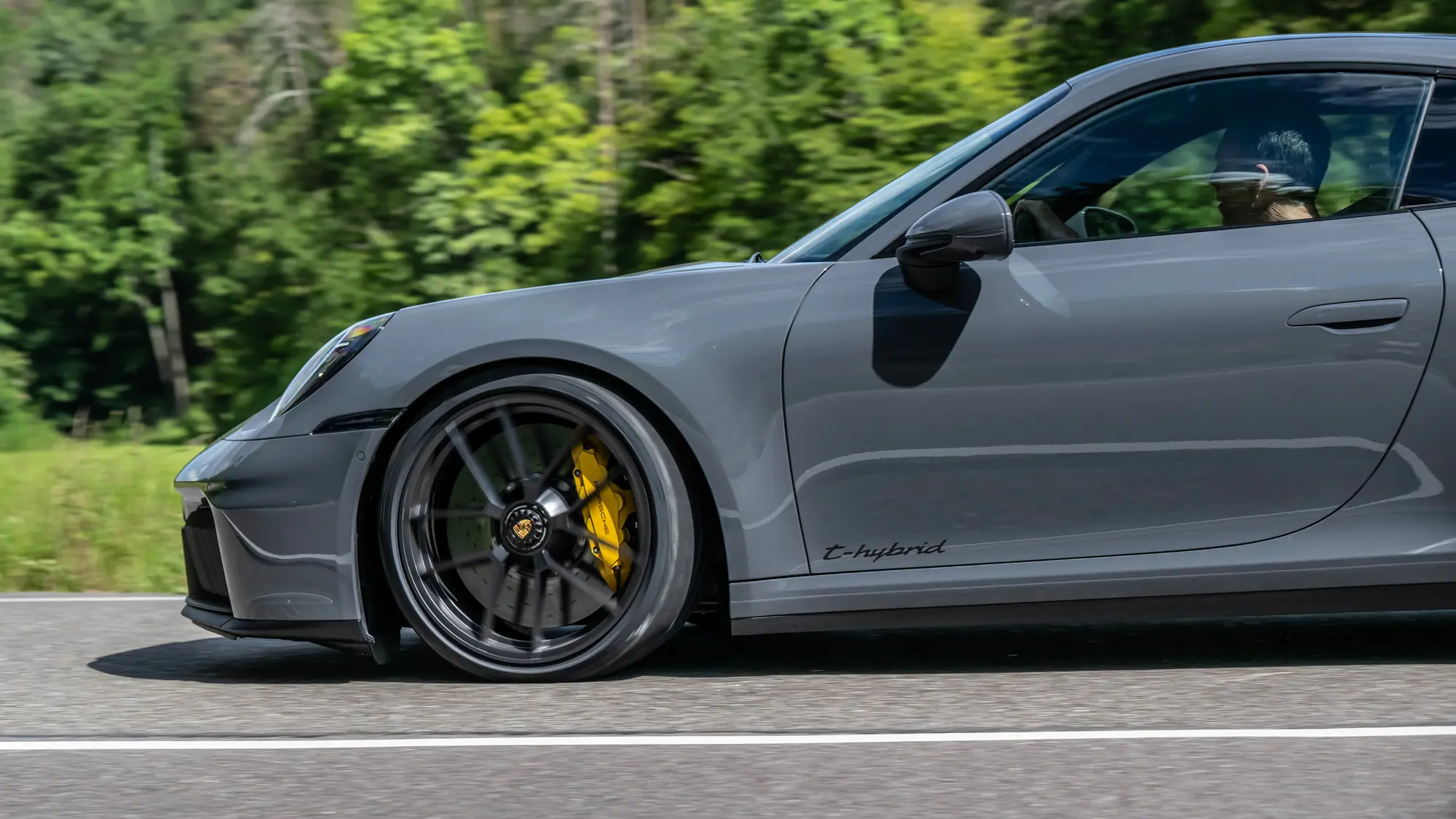
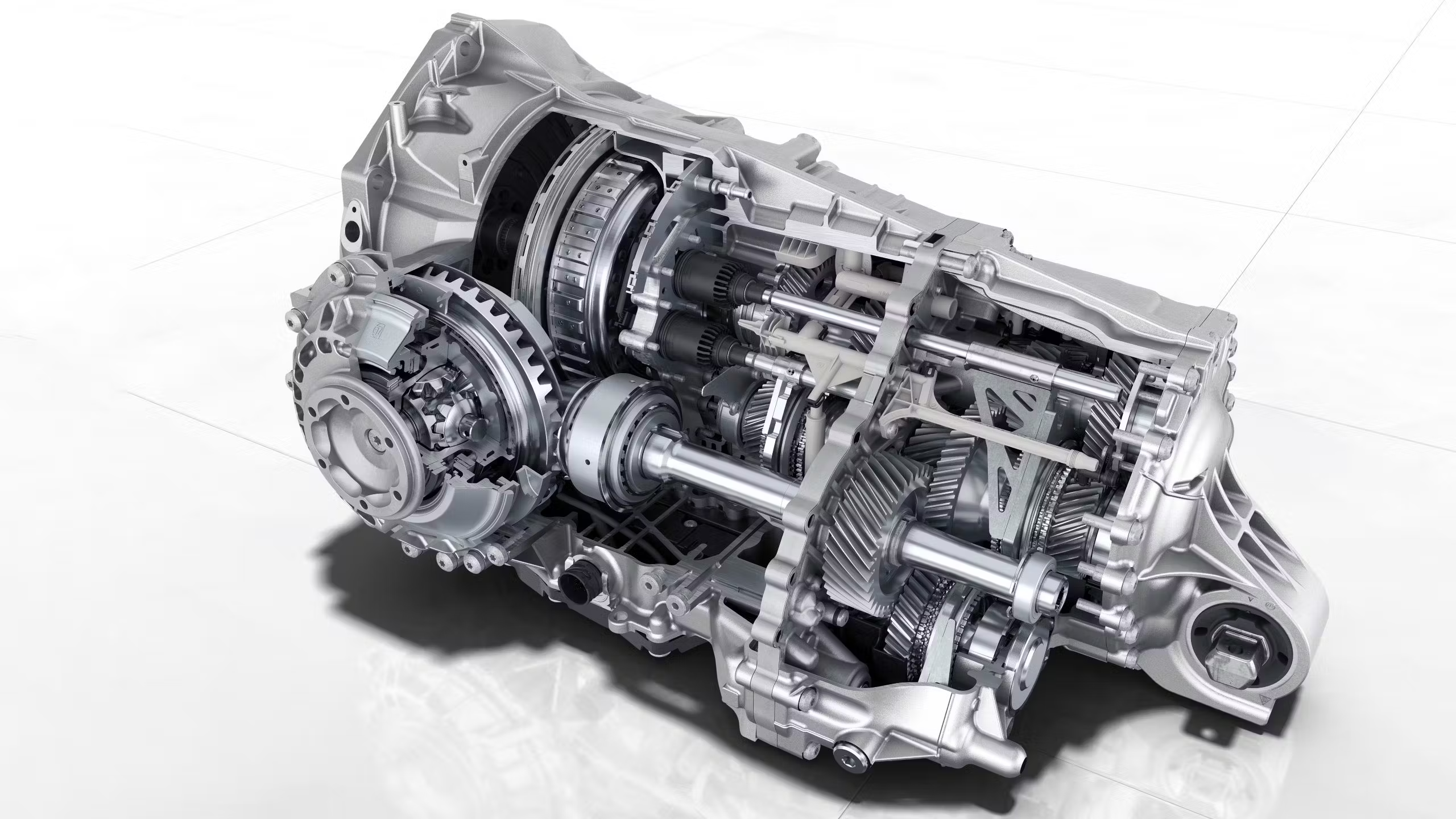
The reason lies in the clever packaging of the first road-going 911 with a performance hybrid. The GTS T-Hybrid combines a 3.6-liter flat-six with an electric turbocharger and a second electric motor, and it is this second motor that causes the problem, as it sits inside a new, strengthened eight-speed PDK. According to Porsche, the motor is coupled directly to the crankshaft via the dual-mass flywheel, and it also performs the tasks of the starter and alternator in the interests of saving weight. On its own, it can contribute up to 54 hp and 110 lb-ft, and the engineers went as far as developing a separate version of the PDK specifically for the T-Hybrid in order to cope with the extra torque. The motor and the gearbox are now so closely integrated that there is simply no room for a conventional manual, and the seven-speed manual that had been offered in the previous GTS disappeared the moment the hybrid arrived.
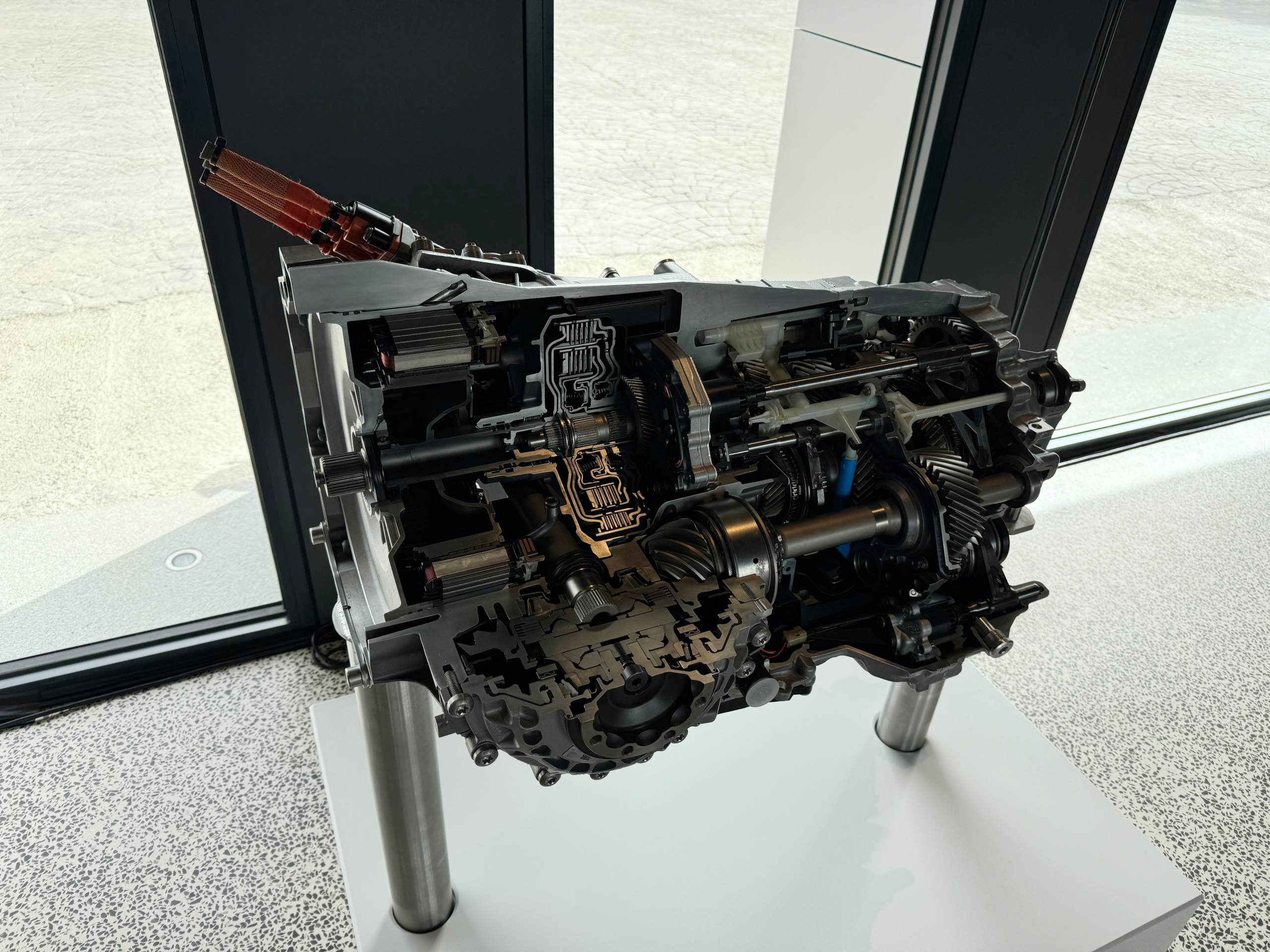
For those Porschephiles who had hoped otherwise, Porsche Cars North America CEO Timo Resch was refreshingly candid when he spoke on the subject in August, saying that the current hybrid setup and a manual like the one in the Carrera S “are not compatible.” He did leave the door slightly ajar, however, adding that he would not be surprised if Porsche’s engineers came up with a solution at some point, just probably not in the form of a conventional manual paired with the hybrid. The timing could hardly be more sensitive. The 718 Boxster and Cayman ended production in October 2025, which left the 911 as the only Porsche that can still be bought new with a manual gearbox, and every PDK-only variant makes that list a little shorter.
What Porsche’s Patents Describe
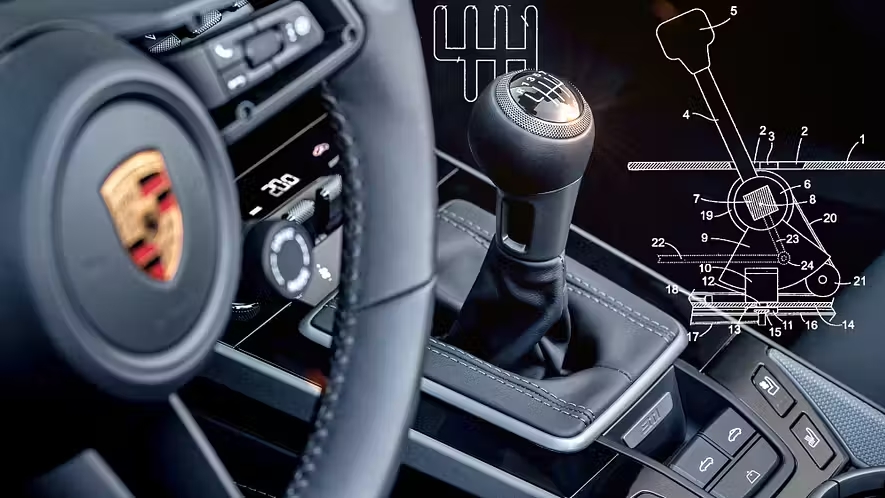
The first of the two patents surfaced in March. Filed with the German Patent and Trade Mark Office on August 30, 2024, and published on March 5, 2026, DE 10 2024 124 792 A1 describes a shift-by-wire gear selector that can be operated in two quite different ways. Moved forward and back, the lever selects Drive, Neutral and Reverse just like any other automatic, but slotted sideways, it switches to an H-pattern in which the driver chooses the individual gears, much like a conventional manual. Sensors keep track of the lever’s position, while electric motors and springs are used to recreate the feel of a mechanical shifter. Curiously, this first design had an H-pattern lever and no clutch pedal, not unlike the Sportomatic of 1967, so it seems some ideas never really go away at Porsche.
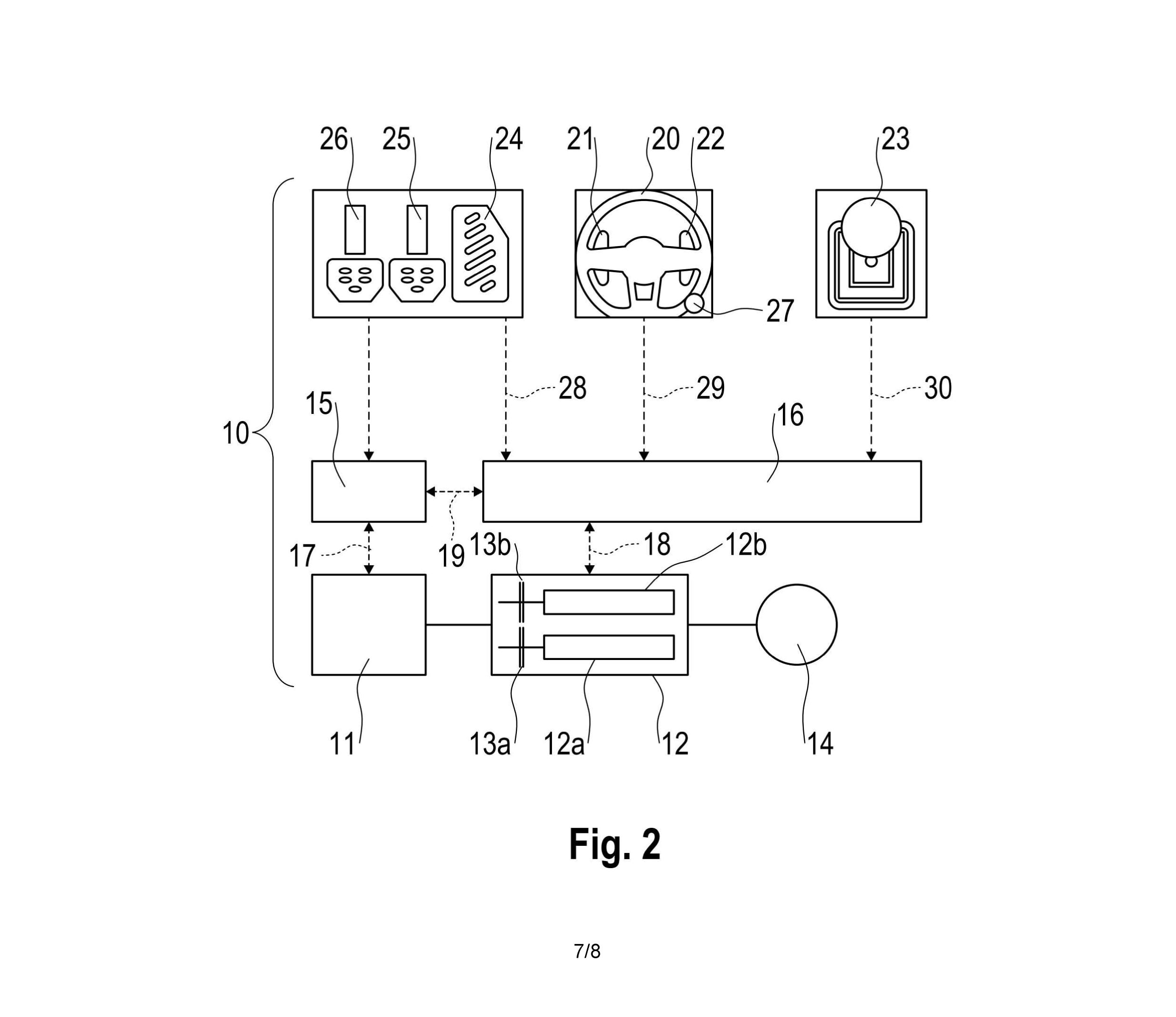
It was the second filing that caught the attention of the enthusiast press. DE102025109563A1, filed on March 13, 2025, and published on September 17, 2026, with Julian Philip Stocks named as the inventor, describes a dual-clutch automatic transmission with three selectable modes. In automatic mode, it behaves like a regular PDK, while sequential mode allows the driver to shift using the paddles or the gear lever, and in either of these modes, a third pedal can be used to disconnect the engine from the wheels until it is released. Manual mode is where things become more interesting, as the pedal turns into a simulated clutch and the lever moves through a traditional H-pattern, with the electronics translating the driver’s inputs into commands for the dual-clutch. Importantly, Porsche says the system could work with combustion engines as well as hybrids, which is precisely the problem facing the GTS T-Hybrid, although the company has not announced any plans to fit it to the GTS or any other model.
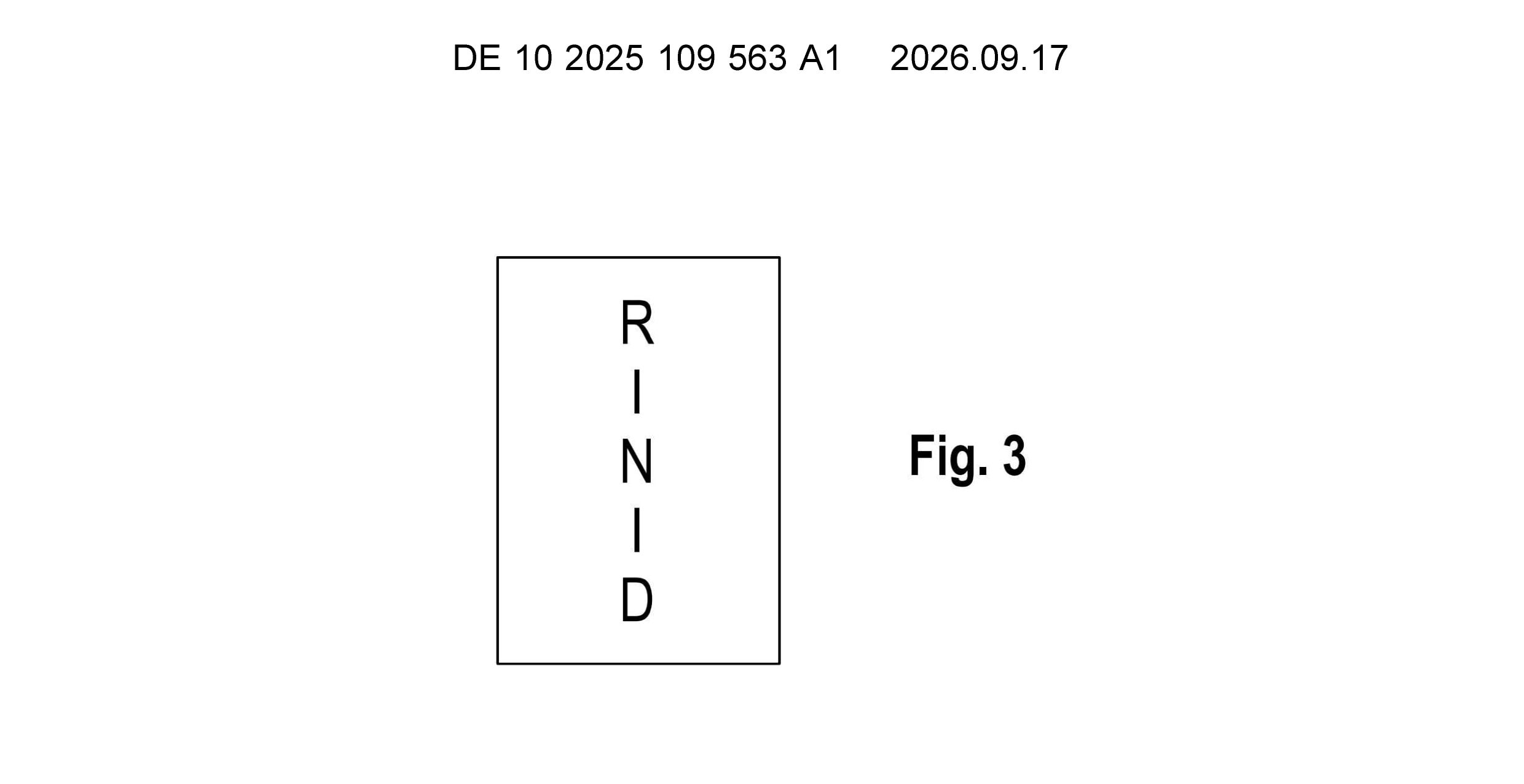
The filing is also surprisingly frank about why Porsche went to the trouble. According to the patent, drivers of manual sports cars feel that two-pedal cars are less sporty and lack emotion, even when fitted with a quick-shifting automatic. It is not often that a patent document reads like a letter to a Porsche club magazine, but on this point at least, the engineers and the enthusiasts appear to be in complete agreement.
How It Compares to Ferrari’s Manuale
Porsche is by no means alone in this line of thinking, as Ferrari has already put a similar idea into production with the 12Cilindri Manuale. The Maranello V12 retains its eight-speed dual-clutch transmission but loses the paddles, and in their place sit a gated shifter and a by-wire clutch pedal, neither of which is mechanically connected to the gearbox.
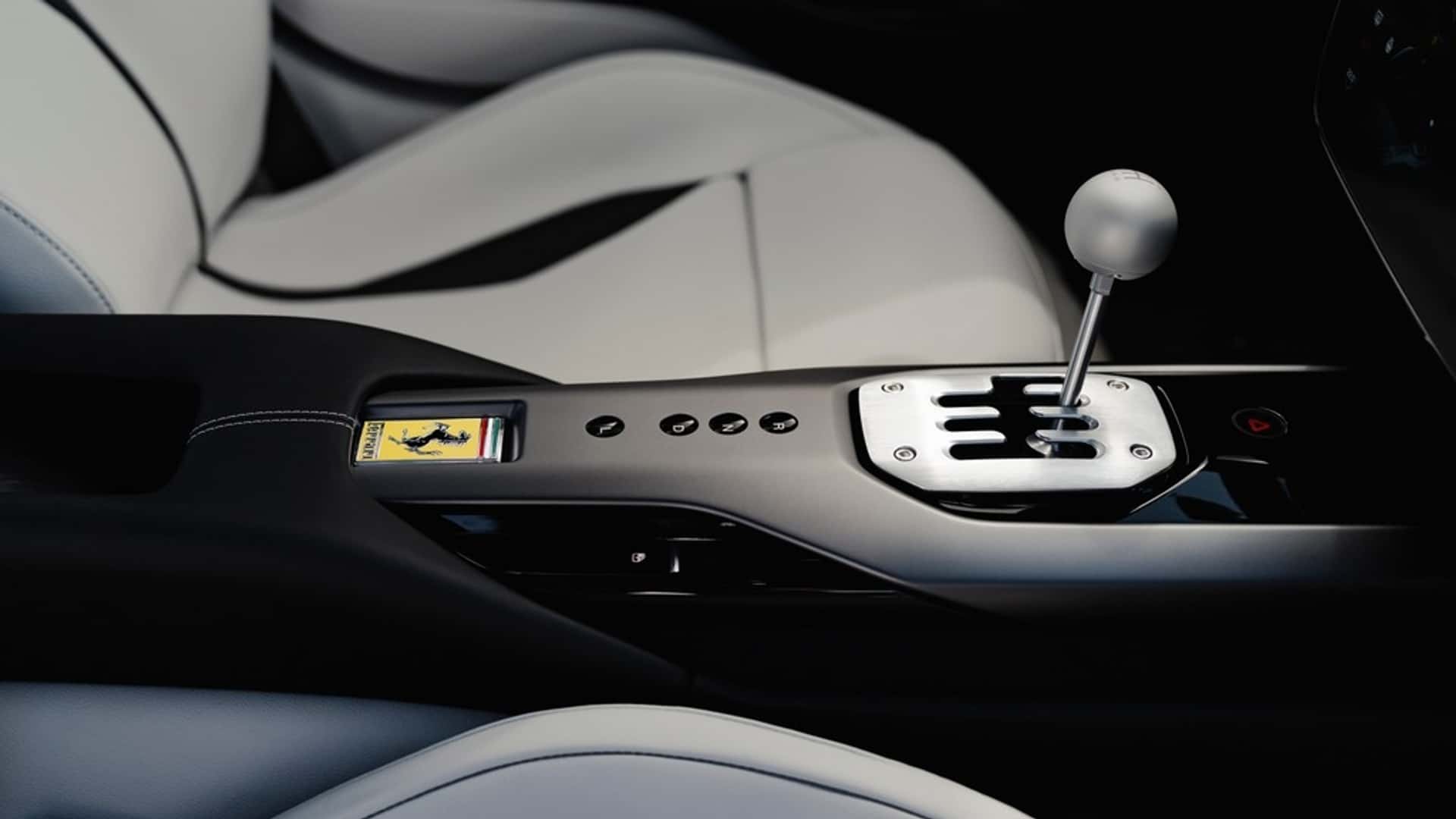
The car can still be stalled, and in manual mode, it will not blip the throttle on downshifts, so the driver has to do the work. Koenigsegg did something along the same lines even earlier with the CC850. The main difference is that Ferrari is building 1,499 examples of the Manuale while Porsche’s system exists only in patent drawings, and the Porsche filing adds a sequential mode that the paddle-free Ferrari does not offer. We explore the fake manual spectrum, from real swaps to virtual gears, in more detail at SportsCarDigest.
The Manual Demand Porsche Can’t Ignore
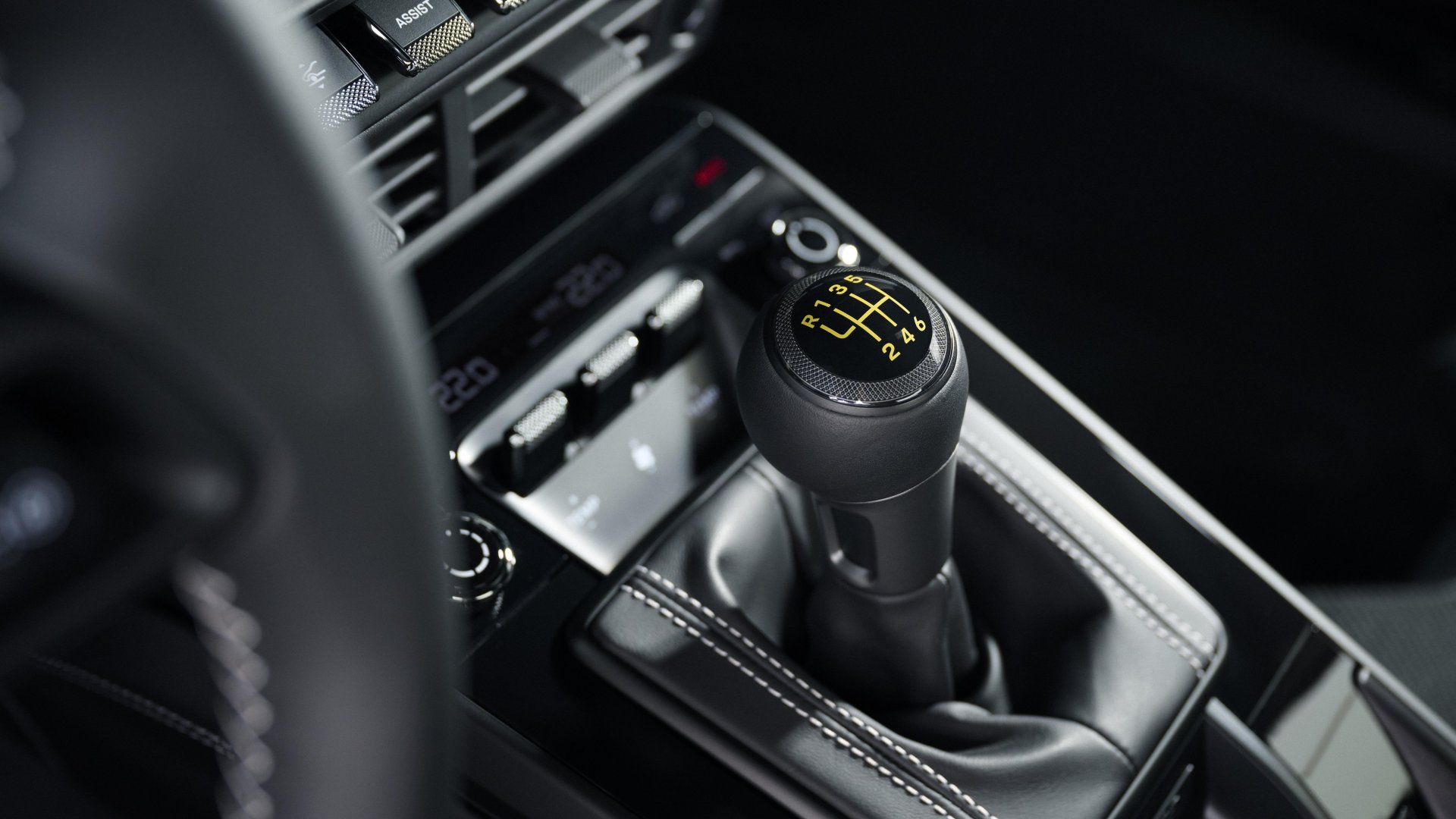
Of course, Porsche would hardly be spending time and money on such patents if the demand was not there, and in the US, the numbers leave little doubt. According to Resch, more than half of all 911 GT3s sold in the US are manuals, a figure that climbs to 80 percent for the GT3 Touring. Porsche had dropped the manual from the Carrera S with the 992.2 update, but it changed its mind after recognizing that the US is the largest market for manual 911s, which goes to show that customers still have a say in Zuffenhausen.
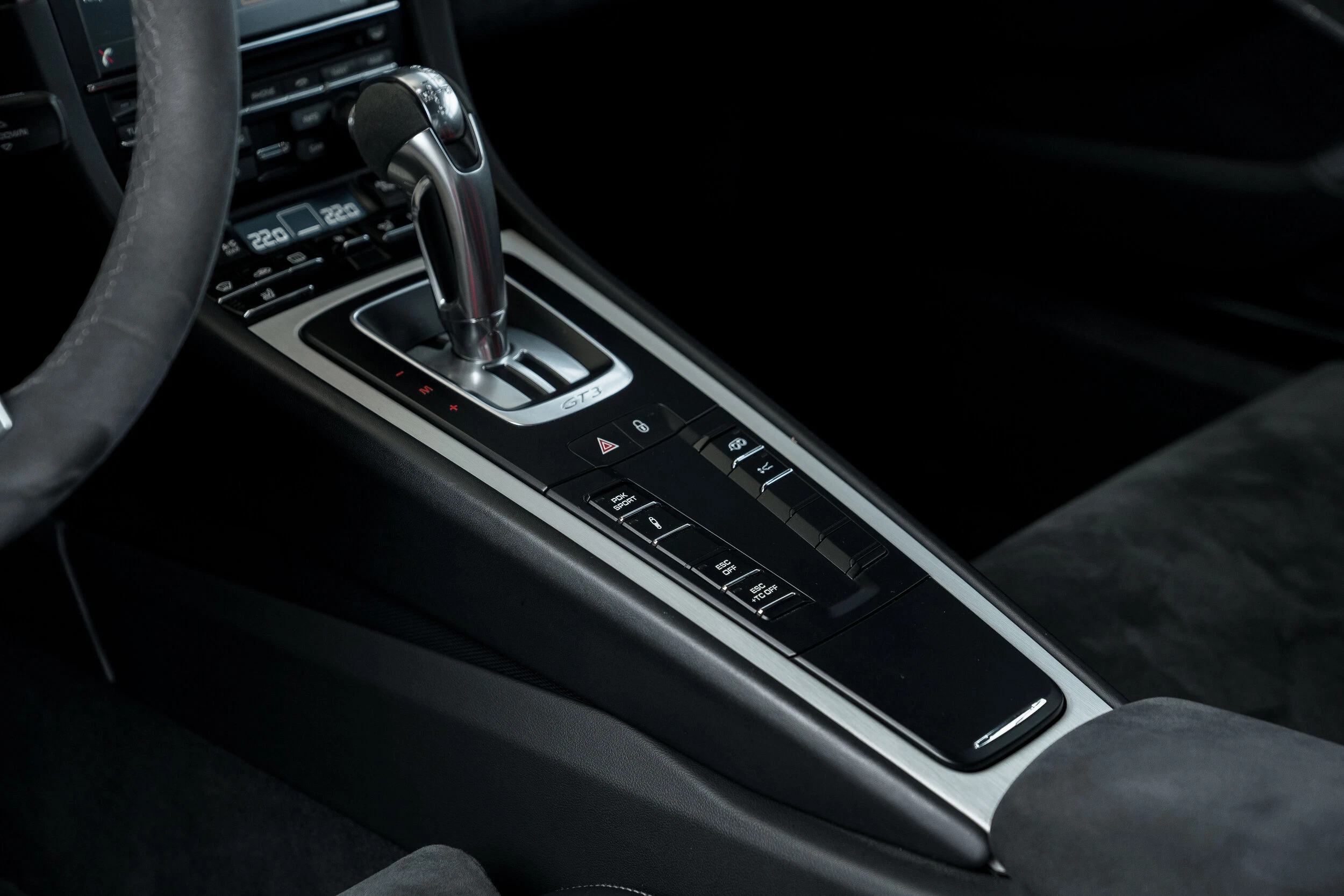
This is not the first time the factory has had to listen. When the 991-generation GT3 was launched in 2013 with only the PDK, the reaction from customers was anything but positive, and Porsche responded with the manual-only 911 R, a car that borrowed its name from the lightweight 911 R racer of 1967, followed by a manual option for the 991.2 GT3. Frank Moser, who headed the 911 and 718 model lines at the time, summed up the mood when he told The Drive that a manual “is always what the customer wants in the 911.” More recently, Resch told Road & Track that Porsche will continue to offer manuals “as long as we are legally allowed to” and as long as there is customer demand, which he expects to last well into the next decade.
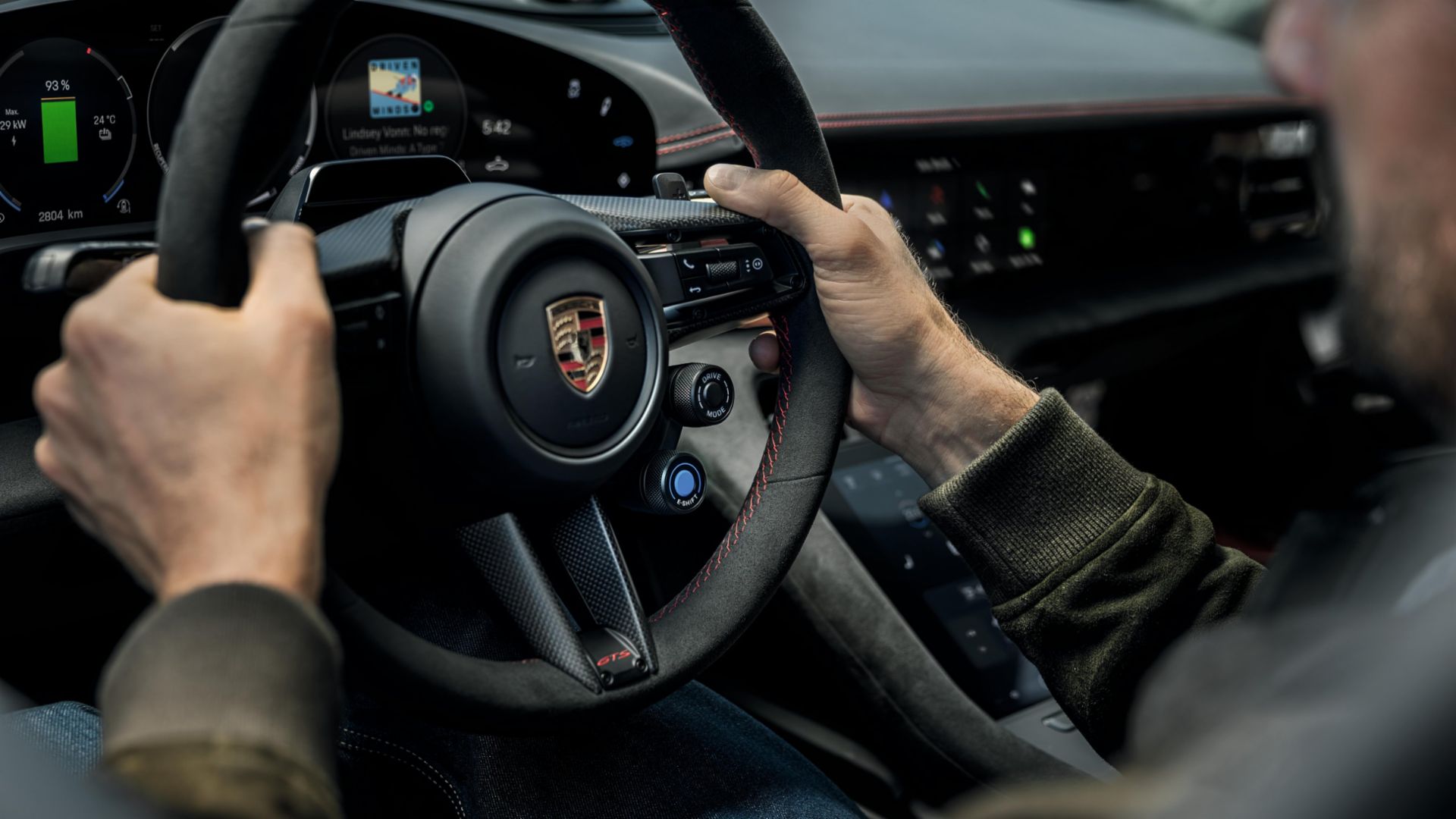
Porsche has also shown that it is not above using software to simulate a gearbox. In June, the Taycan received E-Shift, a simulated eight-speed transmission based on the characteristics of the PDK, and we explained how it works at the time. A by-wire manual for the hybrid 911 would simply take that idea a step further, with a clutch pedal and an H-pattern lever added to the mix.
What a Simulated Manual Would Mean for the 911
Purists will no doubt point out that a T-Hybrid with a by-wire clutch would still be a PDK car underneath, and they would be right. However, with Resch having already said that a conventional manual and the current hybrid are not compatible, the realistic choice for now lies between a simulated clutch pedal and no clutch pedal at all, and on that basis, the pedal wins by some margin. Ferrari’s Manuale has largely impressed reviewers, despite a few reservations, which suggests that a well-executed system can deliver much of the involvement drivers are looking for, and Porsche has never been short of gearbox expertise.
There may also be an upside for owners of the real thing. Should hybrid 911s eventually adopt a by-wire system, cars such as the GT3 and the new Carrera S MT could well become some of the last 911s with a mechanical manual gearbox, and collectors have a habit of noticing such things. None of this is guaranteed, of course, as neither filing confirms production plans, and Porsche has patented a great many ideas over the years that never reached the showroom. Still, two patents in six months for a clutch pedal on a dual-clutch gearbox suggest that someone in Stuttgart is taking the matter seriously.
And so the story has come full circle. In 1967, Porsche offered 911 drivers a gear lever without a clutch pedal, and almost six decades later, it may yet offer them a clutch pedal without a clutch.