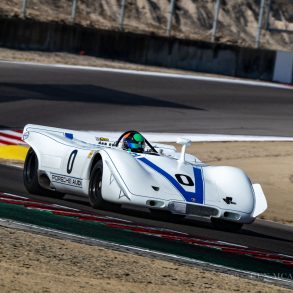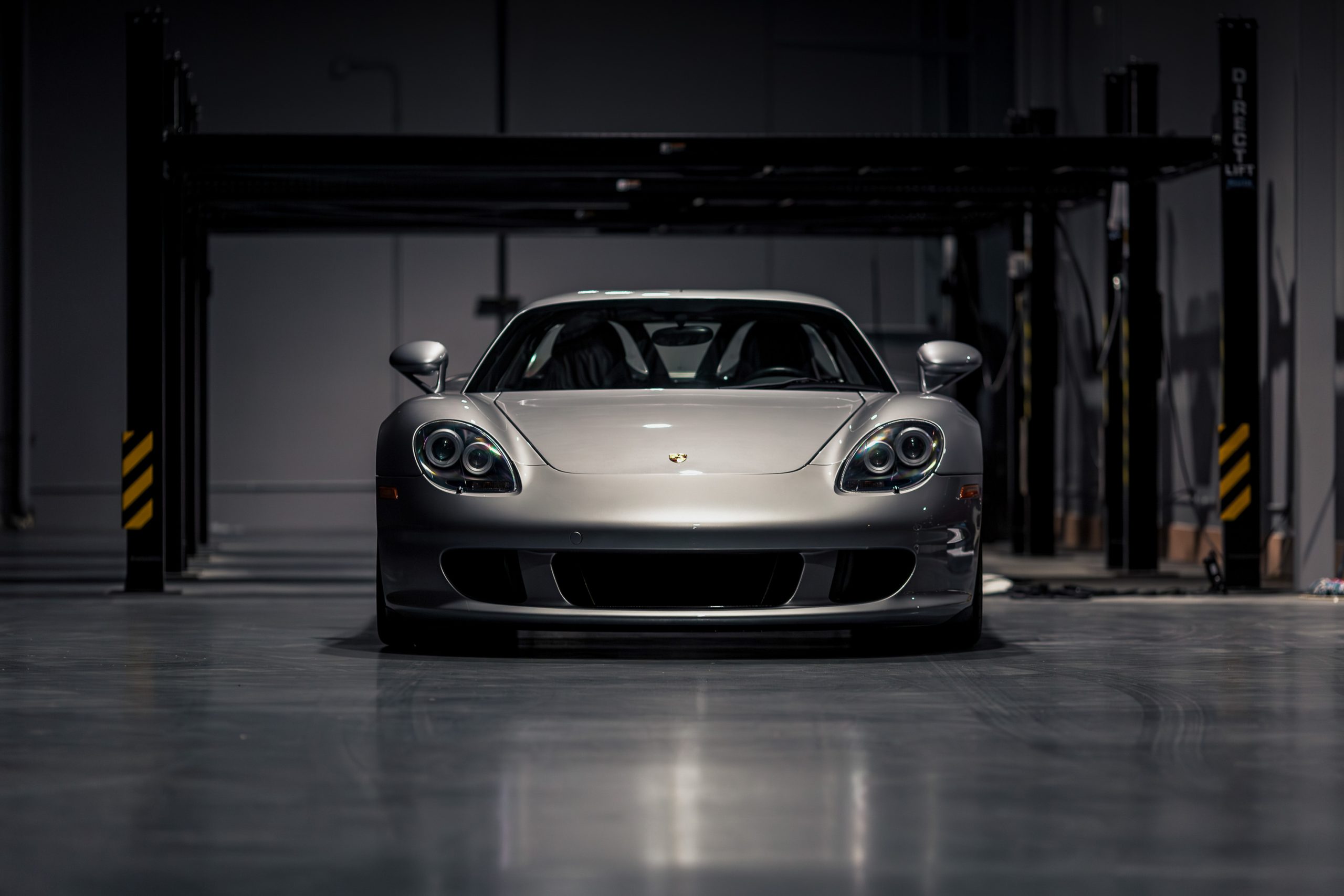


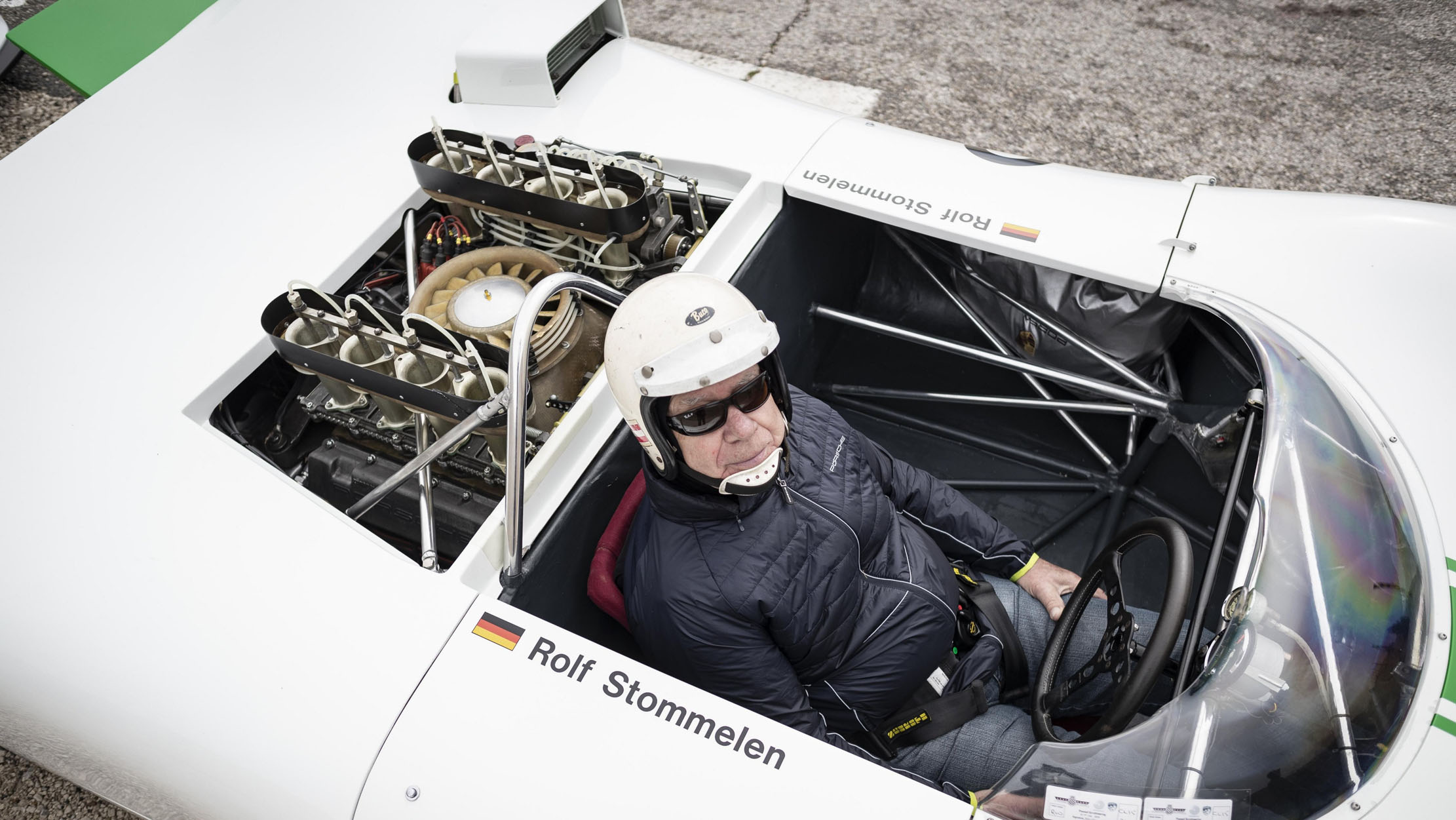
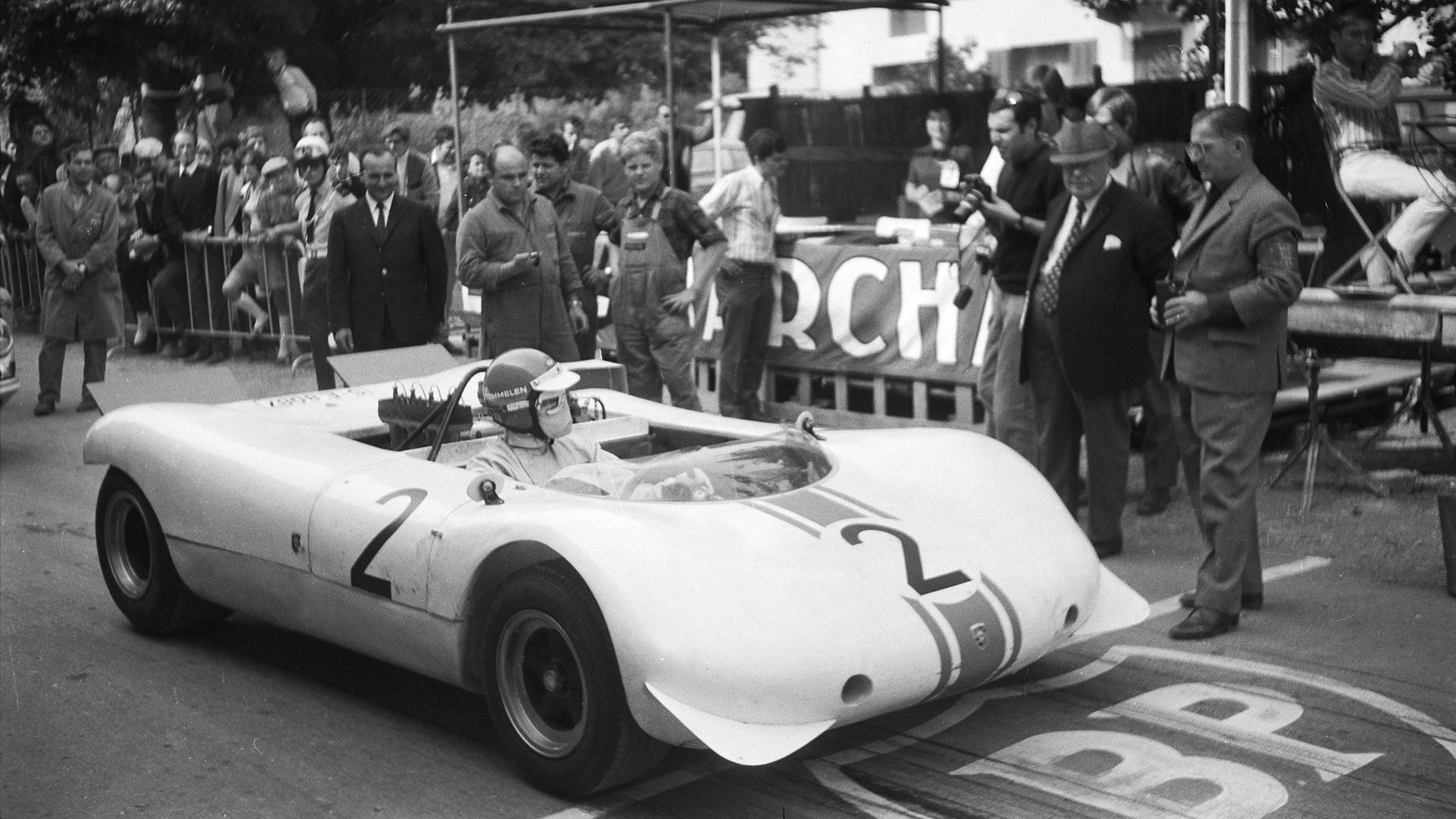
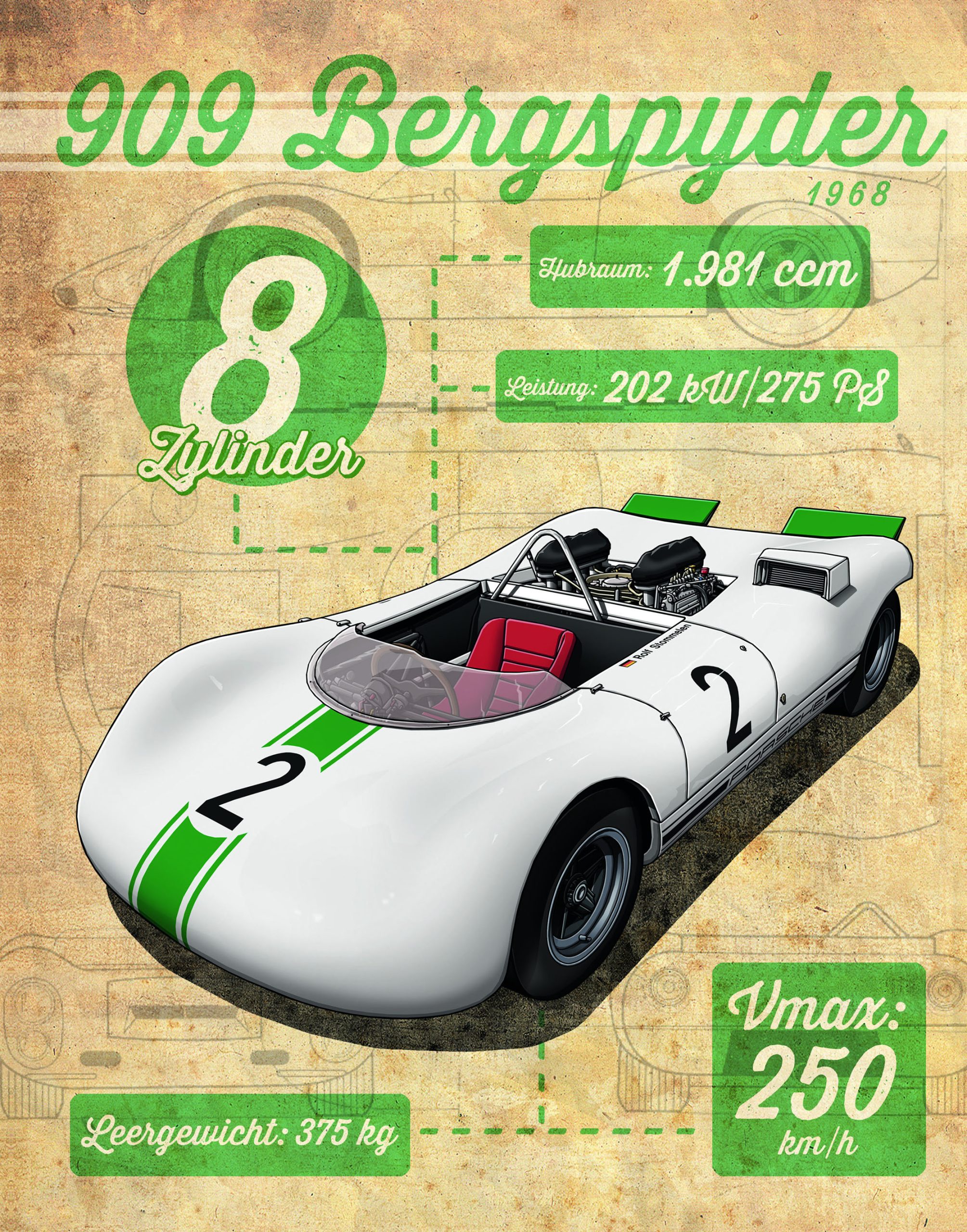
It was September 8, 1968, and Porsche had little left to prove in the European Hill Climb Championship. Five races in the 910/8 Bergspyder had delivered five victories, putting the title all but beyond reach with two rounds remaining. Naturally, Porsche showed up at Salzburg’s Gaisberg mountain with an entirely new car. The 909 Bergspyder was the kind of machine that could only have come from a racing department obsessed with finding speed in places nobody else thought to look. It weighed just 400 kilograms, making it the lightest Porsche ever built. At 3.48 meters long, nearly 1.80 meters wide, and just 75 centimeters tall, the 909 was tiny, impossibly low, and stripped of virtually anything that didn’t make it faster.
For Porsche, hill climbs weren’t simply another championship to win. They were laboratories.
The short, violent uphill sprints gave engineers an opportunity to push lightweight construction and packaging to extremes, then carry what they learned into the endurance cars that mattered at places like the Nürburgring, Targa Florio, and Le Mans. The 909 was perhaps the purest expression of that philosophy.
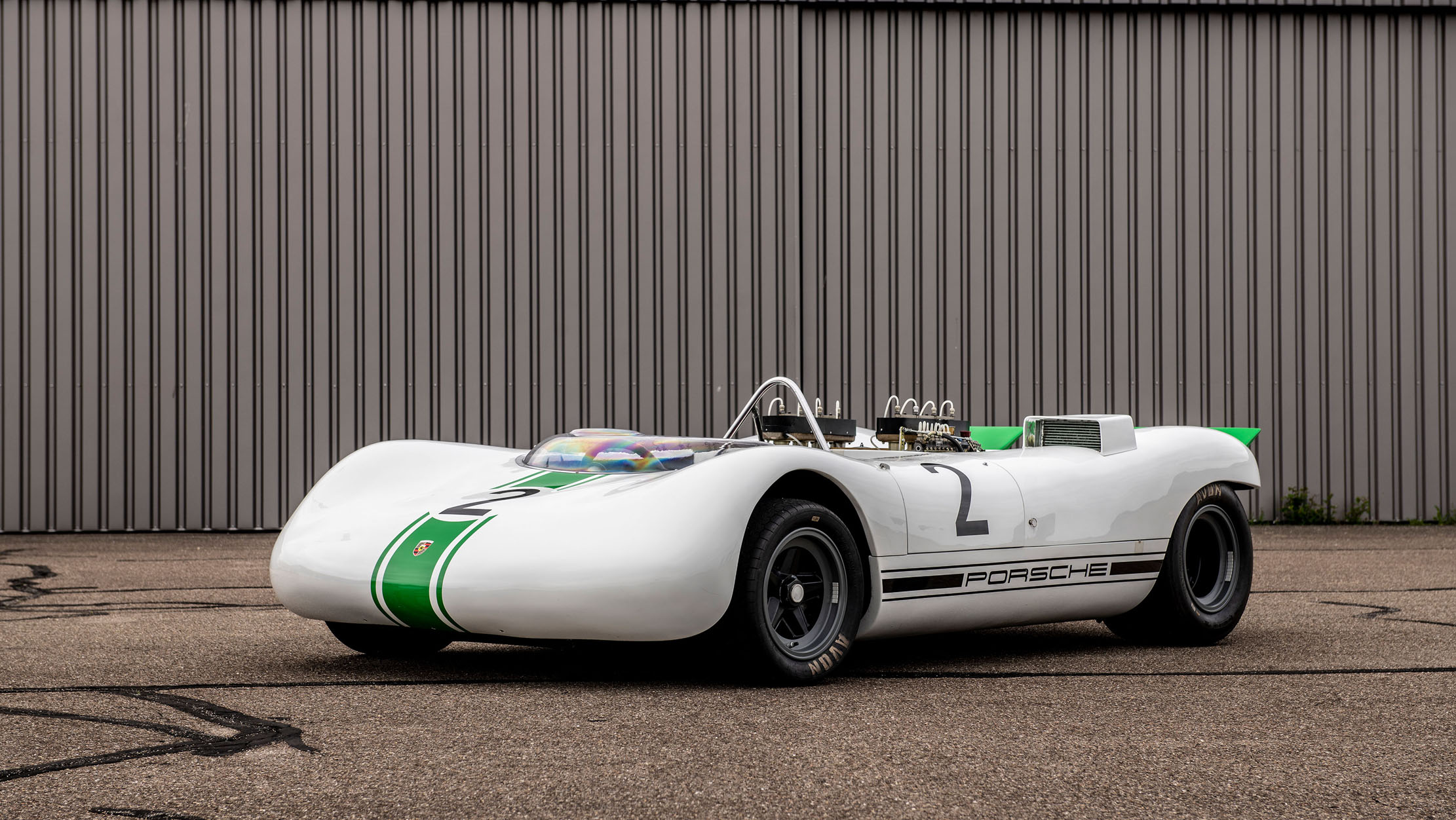
Some of its technology came from the already exotic 910/8. There were titanium chassis springs and brake calipers, an aluminum space frame, titanium and magnesium engine components, and ultralight beryllium brake discs. The GFRP body weighed just 10 kilograms. Everywhere the engineers looked, there was another opportunity to remove a few grams.
Then there was the fuel tank.
Sitting beside the engine was a metallic sphere roughly twice the size of a soccer ball, held in place by three straps. It looked more like something from an aerospace program than a racing car. The spherical tank was built around a pressure vessel made from titanium only 0.8 millimeters thick. Inside was a flexible rubber bladder filled with gasoline. Before a run, nitrogen was pumped into the space between the bladder and the titanium shell at approximately 15 bar. The pressure forced fuel through a hose to the engine’s mechanical injection system.
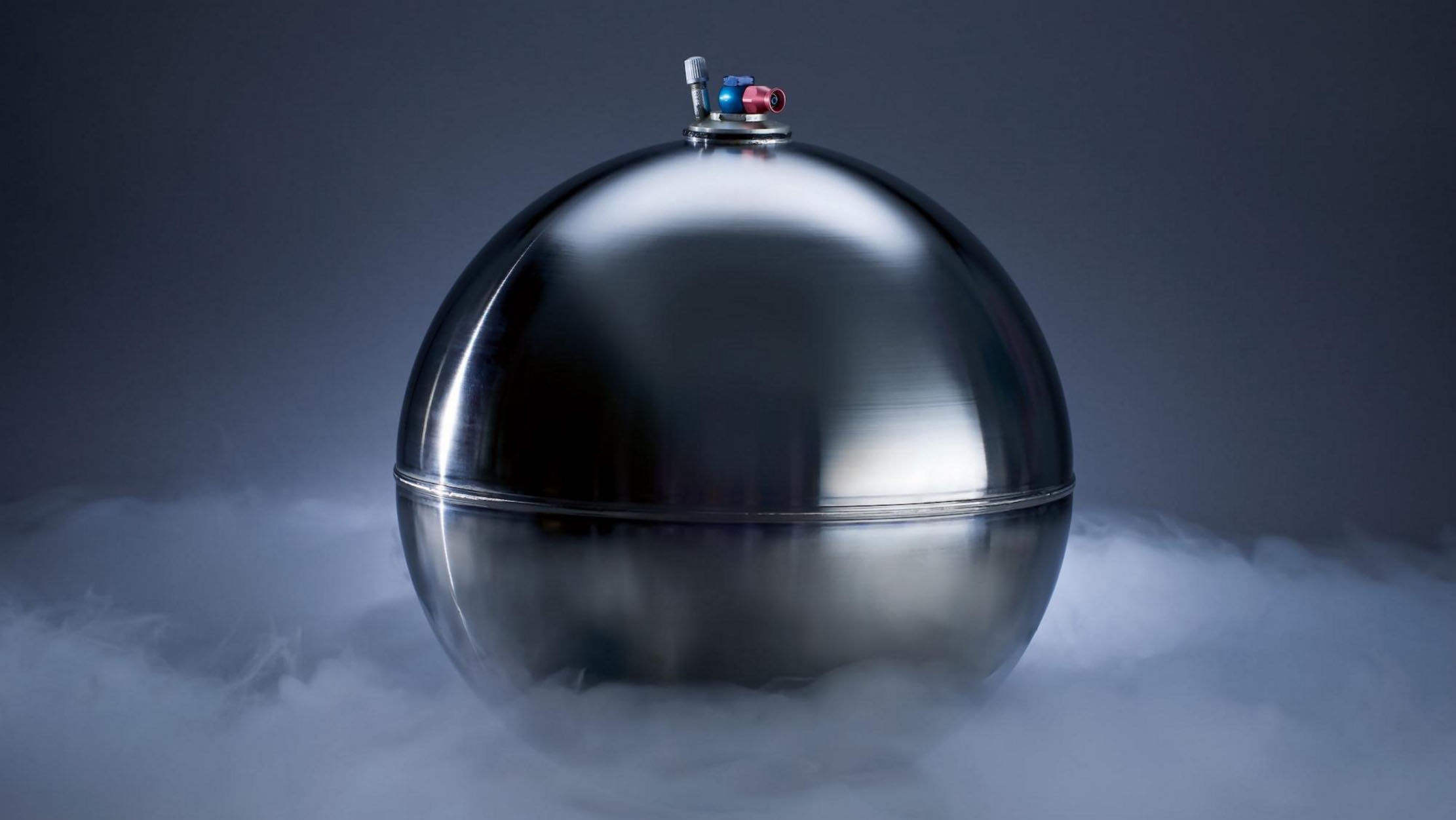
The objective was simple: eliminate the conventional fuel lift pump and everything that went with it.
The potential weight saving was as much as seven kilograms. Seven kilograms may not sound transformative until you remember that the entire car weighed 400. Porsche was fighting for fractions of a kilogram, and here was an idea that could potentially eliminate nearly two percent of the car’s total mass.
The 909’s other major innovation would prove much more important.
Porsche radically reconsidered where everything should sit in the chassis. The limited-slip differential was positioned at the very rear, while the seat shell, engine, and five-speed transmission were pushed far forward. The driver went forward with them—so far that his feet extended ahead of the front axle. There wasn’t much protecting them, either. Beyond the driver’s shoes were essentially the thin aluminum tubes of the space frame and the lightweight bodywork. That arrangement becomes even more remarkable when you consider what was sitting behind him.
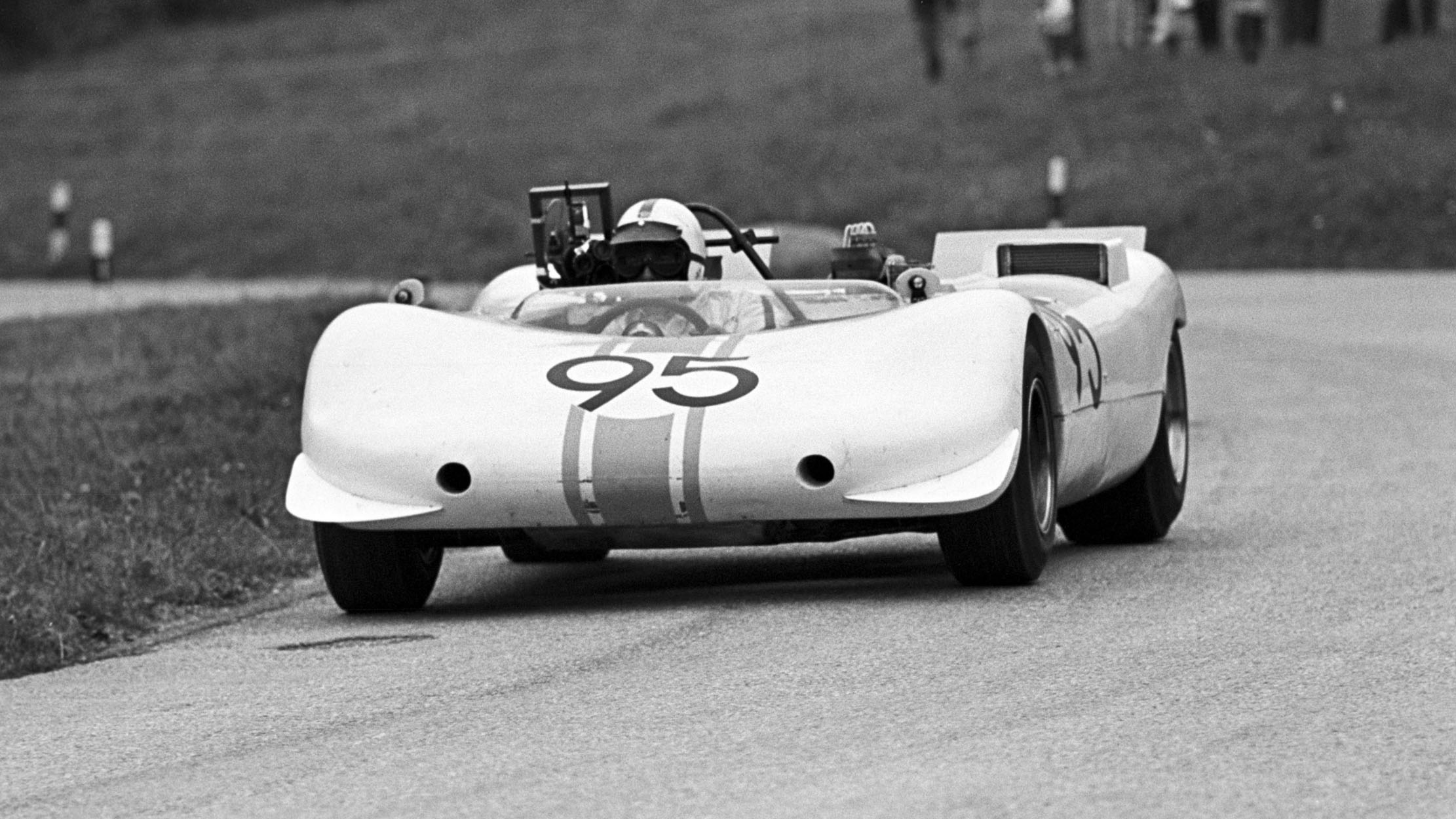
The 909’s two-liter flat-eight produced 275 PS. With almost no mass to move, it could launch the car from zero to 100 km/h in just 2.5 seconds. Its power-to-weight ratio was a staggering 1.4 kg/PS, putting it remarkably close to contemporary Formula 1 machinery. Depending on gearing, top speed could reach 250 km/h. In a 400-kilogram car with your feet hanging out beyond the front axle, 250 km/h must have concentrated the mind.
For all the engineering effort behind it, the 909 barely had time to establish a racing career.
At the Gaisberg, the pressurized fuel system didn’t exactly deliver the breakthrough Porsche had hoped for. The flat-eight ran excessively rich and suffered persistent misfires, leaving Rolf Stommelen third. Porsche modified the arrangement for the season finale on Mont Ventoux, combining the spherical tank with a conventional fuel pump. Stommelen finished second.
And then the 909 was done.
Porsche withdrew from the European Hill Climb Championship and redirected its resources toward the World Sportscar Championship and the biggest target of all: Le Mans. Only two 909 Bergspyders were ever built.
But one of the car’s most important ideas survived.
The 909’s extreme approach to weight distribution helped shape the 908/3, Porsche’s compact, purpose-built weapon for the Nürburgring and Targa Florio. When the 908/3 arrived in 1970, its combination of low weight, centralized mass, and extraordinary agility made it devastatingly effective on circuits where cornering mattered more than outright top speed.
The spherical fuel tank was another story. It disappeared along with the 909.
By the end of Porsche’s hill-climb campaign, the company had collected nine titles in 11 European Hill Climb Championships. Winning had become almost routine. What the 909 reveals is what was happening behind those victories: engineers willing to try ideas that bordered on absurd if there was even a possibility they might make the car lighter or faster. The pressurized titanium sphere belonged to the second category. The lessons in weight distribution belonged emphatically to the first.
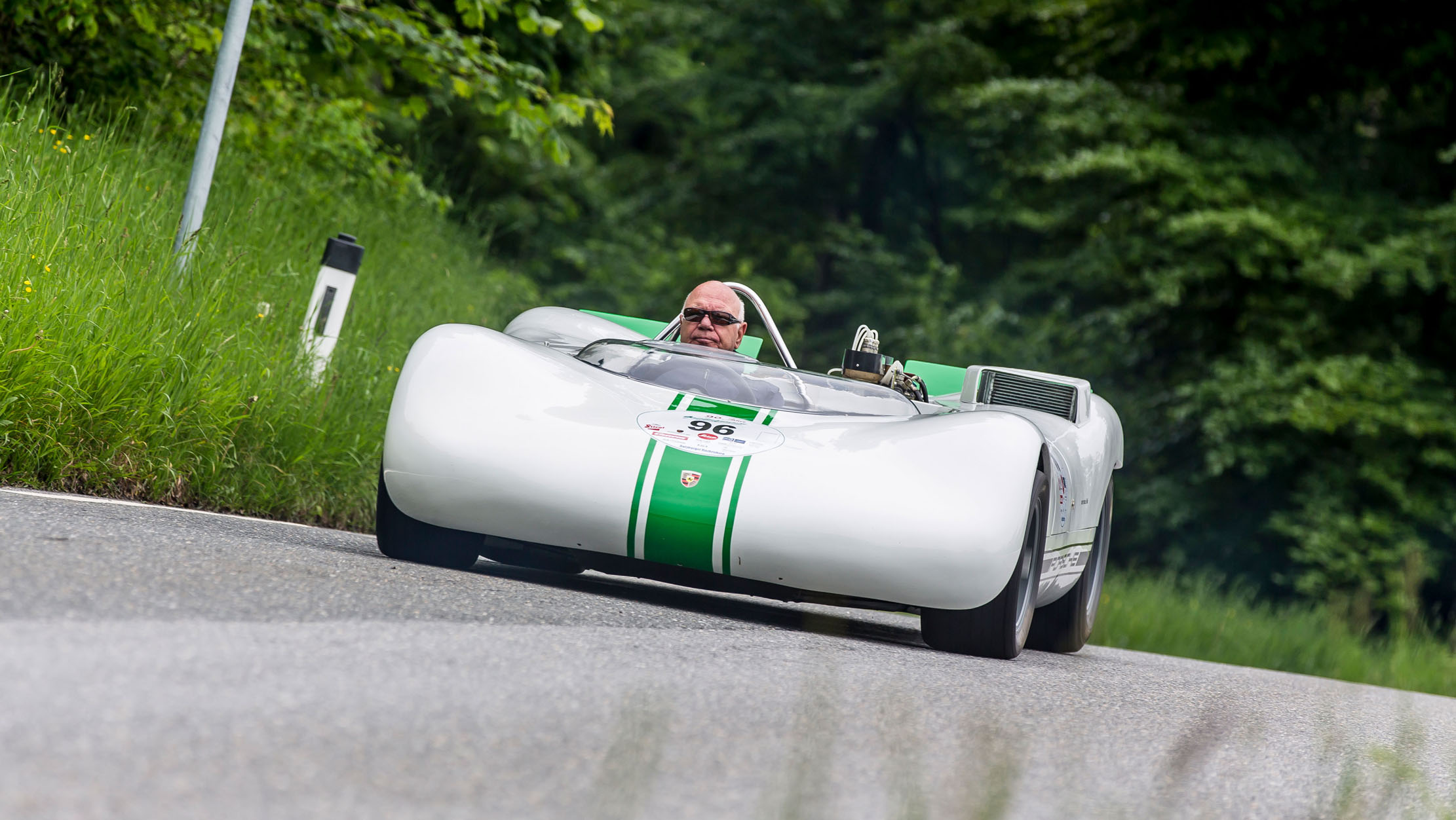
More than half a century later, that strange titanium ball remains a perfect artifact of Porsche’s racing mentality in the 1960s—a period when nothing was considered too exotic, too expensive, or too unconventional in the pursuit of speed. Even the fuel tank had to earn its weight…
Above contents © 2026 Dr. Ing. h.c. F. Porsche AG reviewed and edited by Rex McAfee , @rexmcafee 🏁
#Porsche #Porsche909 #Bergspyder #PorscheMotorsport #VintageRacing #HillClimb #RaceCarEngineering #MotorsportHistory #PorscheRacing #ClassicPorsche