

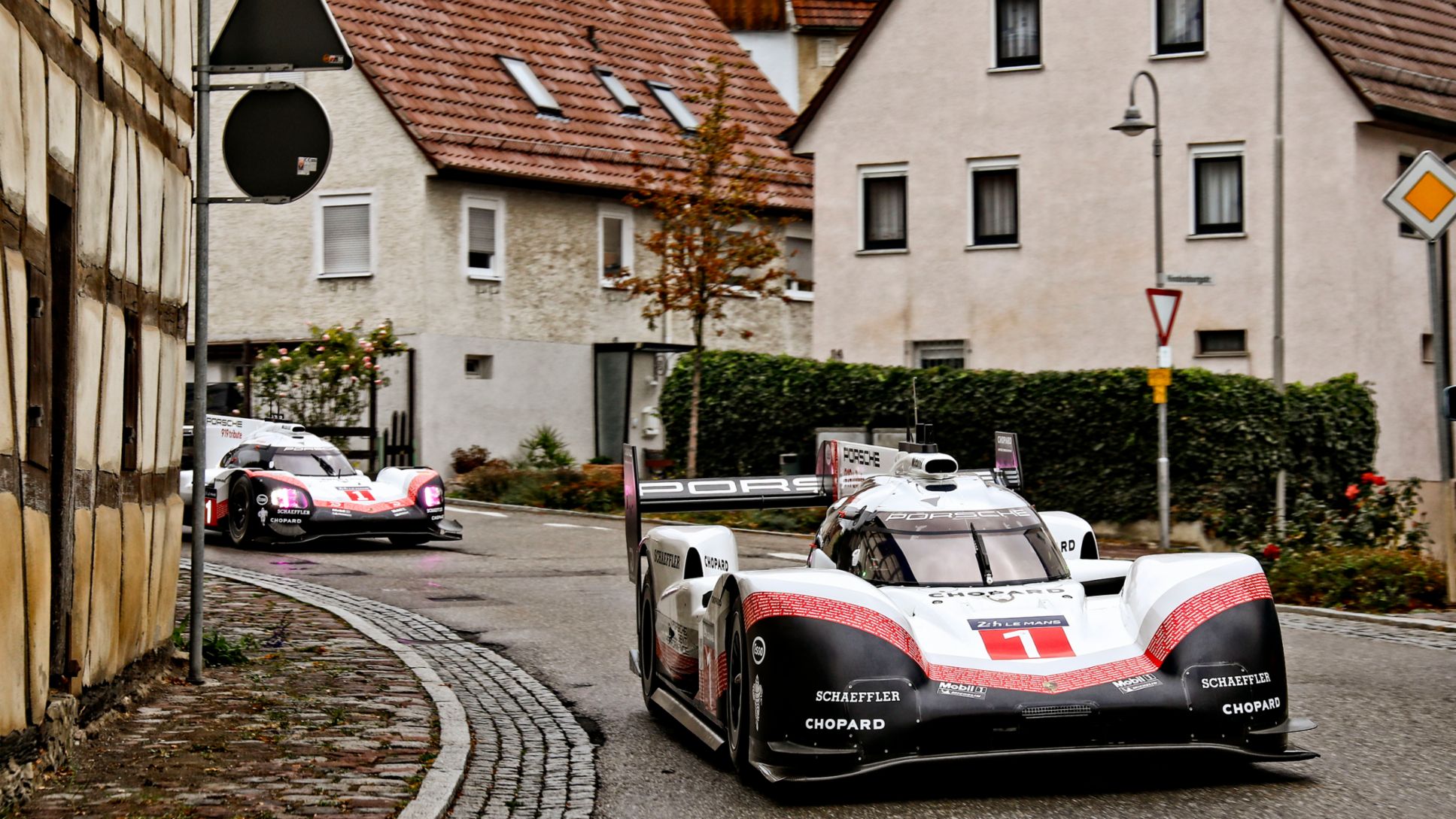
The Porsche 919 Hybrid retired at the end of the 2017 season with a record that requires very little explanation: three consecutive overall victories at the 24 Hours of Le Mans, six world championship titles collected across three campaigns and a reputation as the most complex racing car the company had ever built. For most manufacturers that would be where the story ends, with the cars going quietly into a museum and the engineers being reassigned to other departments. The Weissach-based brand, however, has rarely built expensive prototypes purely for the silverware, and the most consequential thing to come out of the LMP1 program was never going to be found on a results sheet.
It was a decision about voltage, taken at the very beginning of the project in 2013, at a moment when none of the components required to act on it were available anywhere in the world. Porsche settled on 800 volts for the 919’s electrical system, spent four seasons proving the concept in the least forgiving environment the sport could offer and then carried the whole body of knowledge across the road into the production side of the company. In other words, the technology that now underpins every electric Porsche sold to the public was signed off in a race team meeting room, years before anyone outside the building had heard of the Mission E.
The 919 Hybrid
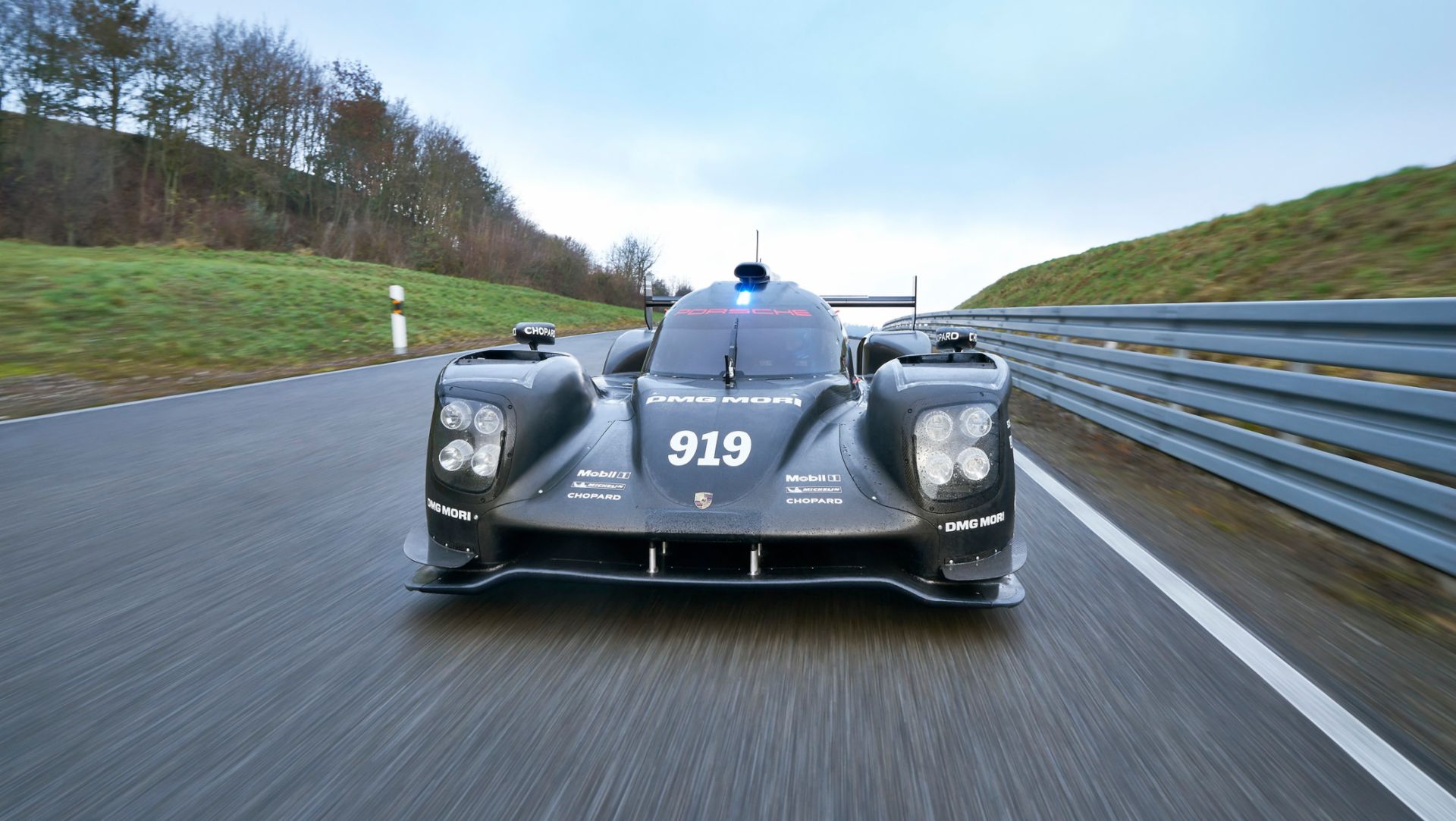
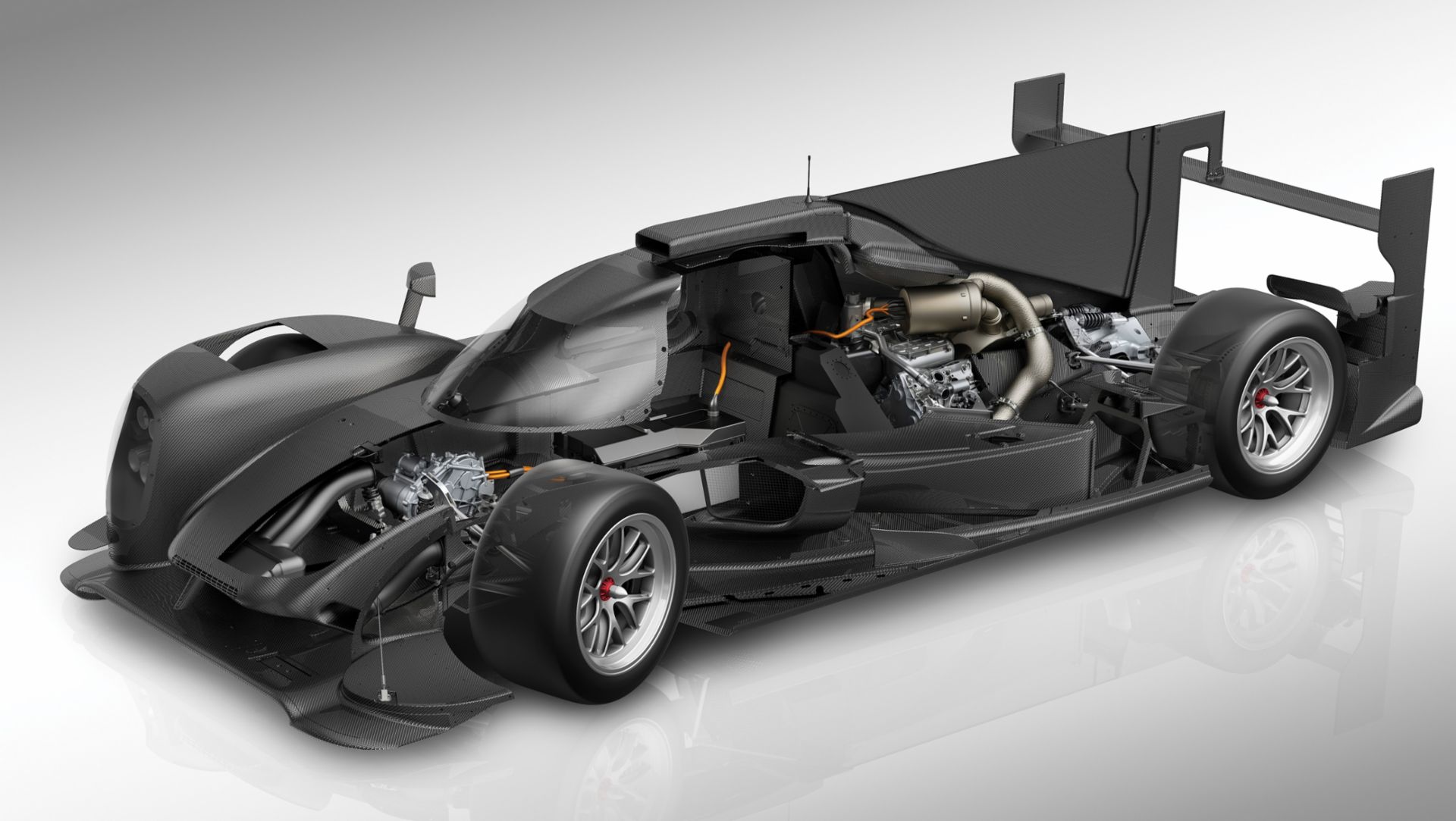
Porsche came back to the top class of endurance racing in 2014 with a car assembled around an unusually small combustion engine and an unusually ambitious hybrid system. Designated the 9R9, the engine was a 2.0-liter turbocharged V4 with direct injection, mounted longitudinally behind the driver and doing double duty as a load-bearing member of the chassis. On its own it delivered somewhere in the region of 500 hp, which was a genuinely modest figure by the standards of the category at the time, and it drove the rear wheels through a seven-speed sequential gearbox.
What set the car apart from its rivals sat on either side of that engine, because the 919 ran two entirely separate energy recovery systems rather than the single unit that the regulations technically required. A motor generator unit on the front axle collected kinetic energy under braking and fed it back to the front wheels as drive, while a turbine placed in the exhaust stream recovered thermal energy that would otherwise have left the car as heat. Audi went with a flywheel and Toyota with supercapacitors, but Porsche opted instead for a liquid-cooled lithium-ion battery built to its own specification, made up of hundreds of individual cells, each of them sealed in a cylindrical metal capsule roughly seven centimeters tall and less than two centimeters across.
The rules of the period rewarded teams for recovering more energy over a lap and then penalized them with a smaller fuel allowance for having done so, which made the whole exercise a question of management rather than outright output. The German manufacturer entered the 6 MJ class in its first season and moved up to the top 8 MJ category from 2015 onward. By the final year of the program the front axle alone was contributing more than 400 hp, with combined system output sitting somewhere near 900 hp, and around 260 people were working on the car at Weissach under technical director Alexander Hitzinger, with Fritz Enzinger overseeing the LMP1 effort as a whole.
The 800-Volt Decision
Establishing a system voltage is the first fundamental choice anyone makes when designing an electric drivetrain, since more or less everything downstream of it follows from that single number: the layout of the battery, the design of the inverters and control electronics, the construction of the motors, the cabling and, in the case of a road car, the charging hardware. Porsche itself has described the choice of 800 volts as the bravest call the LMP1 team made, and the reason it counted as brave had nothing whatsoever to do with the underlying engineering, which was well understood. The difficulty was that the parts simply did not exist yet.
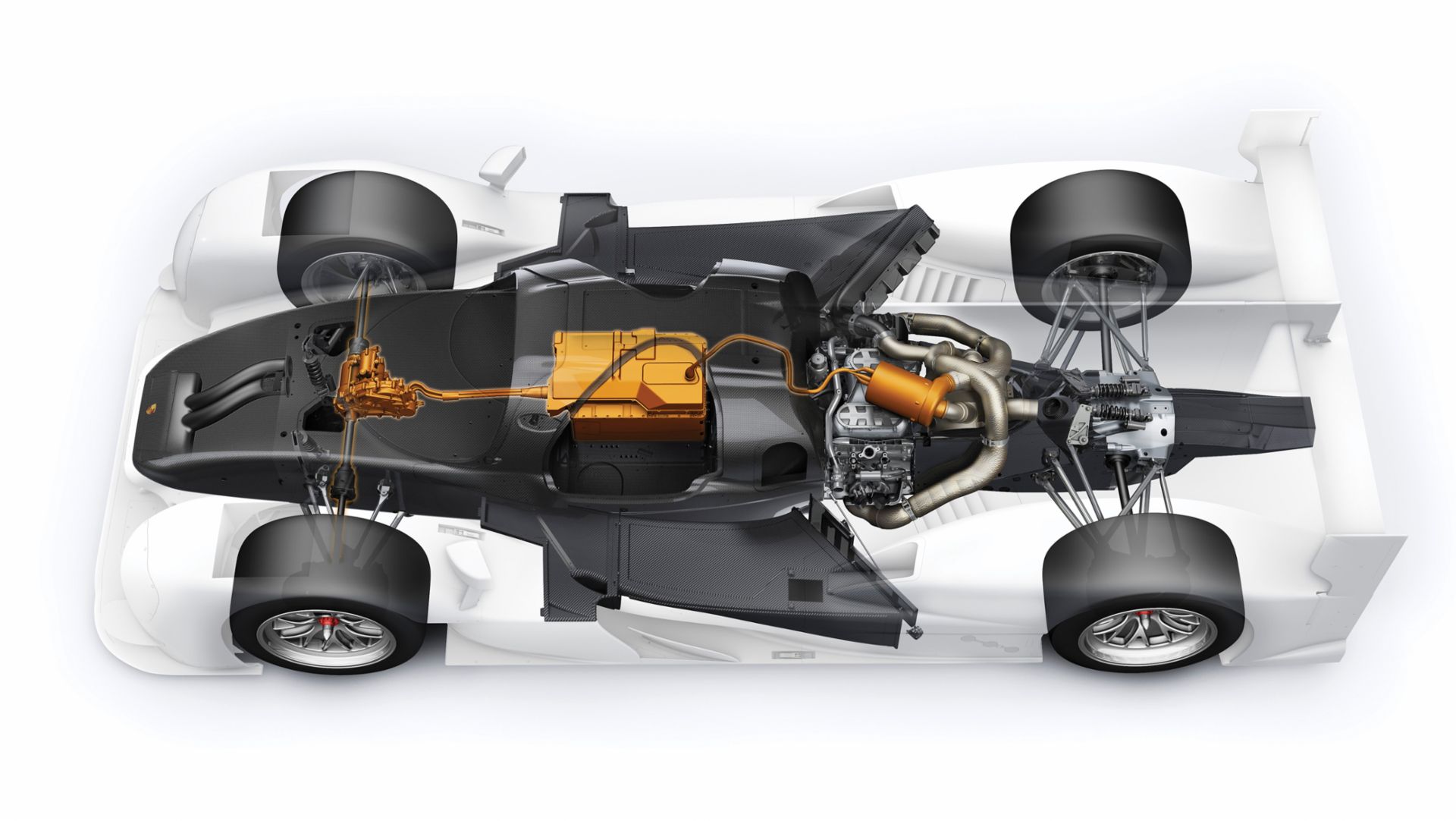
The logic behind the number is not complicated. Doubling the voltage halves the current required to move a given amount of power, lower current permits thinner conductors, and thinner conductors mean less copper, less mass and considerably less resistive heat for the cooling system to deal with. In a prototype built down to the category’s minimum weight and expected to run flat out for twenty-four hours at a stretch, that arithmetic is very much worth chasing. In 2013, however, no supplier anywhere was selling inverters, connectors, contactors or storage rated to work reliably at that level, so the team built what it needed itself and then handed the results over to the harshest validation program imaginable.
One might wonder how much of that effort was genuinely transferable to a car with license plates, and the answer turns out to be nearly all of it. What came out of the four seasons was not merely a voltage figure but a working understanding of how to cool a battery and an electric motor under sustained load, how to make high-voltage connections that survive vibration and repeated heat cycling, how to write management software that keeps hundreds of cells alive through an entire night of racing and how to package the lot without compromising the monocoque. None of that knowledge could have been purchased from a supplier.
Mission E and the Taycan
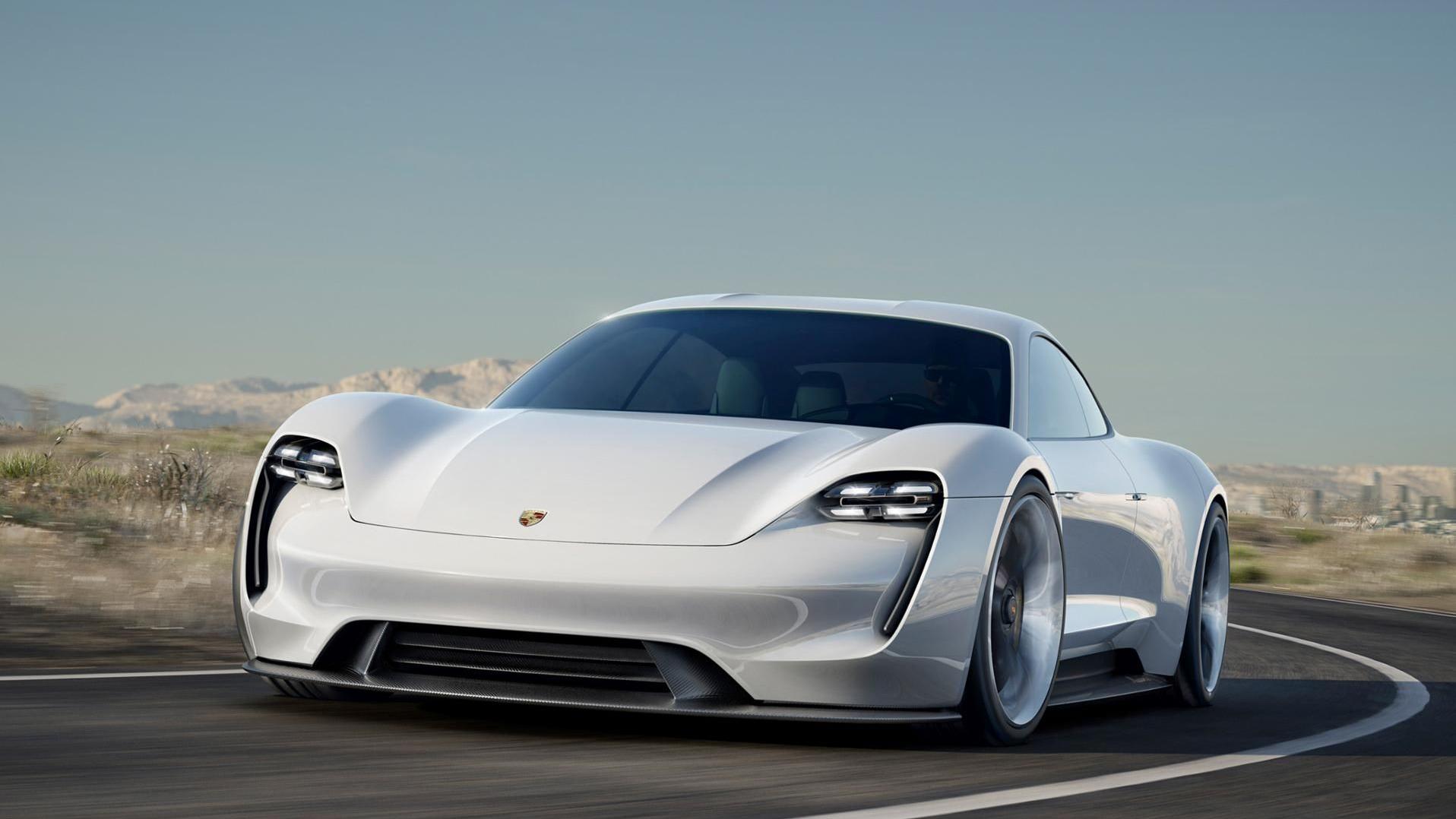
The transfer happened rather more quickly than most people appreciate. Porsche presented the Mission E concept at Frankfurt in September 2015, roughly three months after the 919 had taken the first of its Le Mans wins, and the concept was built around the same 800-volt architecture. The company has since stated plainly that its production development engineers adopted the technology directly from the race car, and that the expertise gained in cooling, connection technology, battery management and overall system design came out of the LMP1 program.
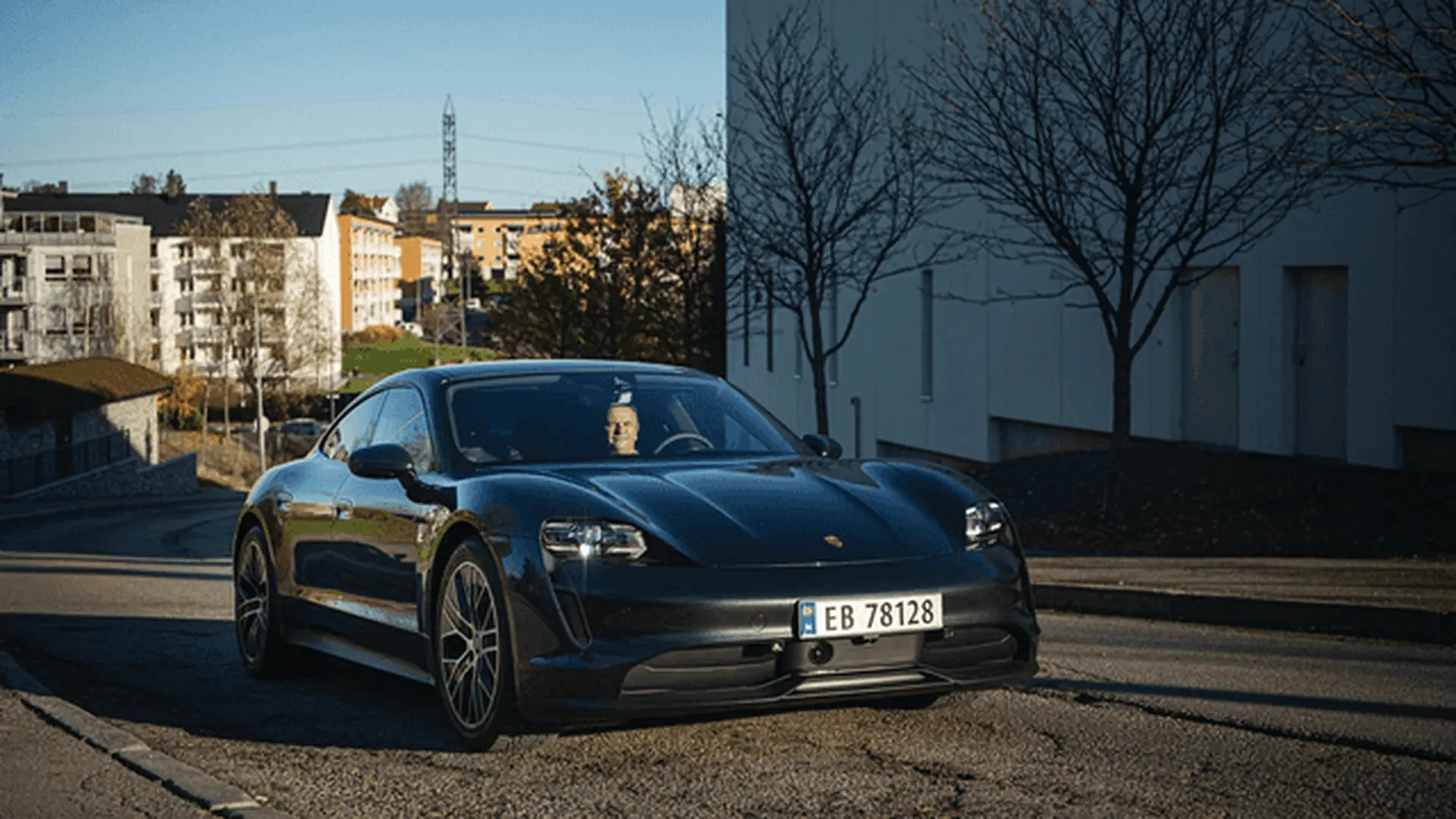
The relationship between the two cars goes further than a shared design philosophy. Porsche has noted that the electric motor driving the 919’s front axle is similar in construction to the modules that would go on to power its first fully electric road car, which means the permanently excited synchronous machine that survived four Le Mans campaigns was, in an engineering sense that matters, a close relative of the units fitted to a production sedan. When that sedan reached customers in September 2019, it did so as the first series vehicle anywhere built on an 800-volt system, at a time when every other manufacturer in the segment had settled on 400 volts.
On the Road
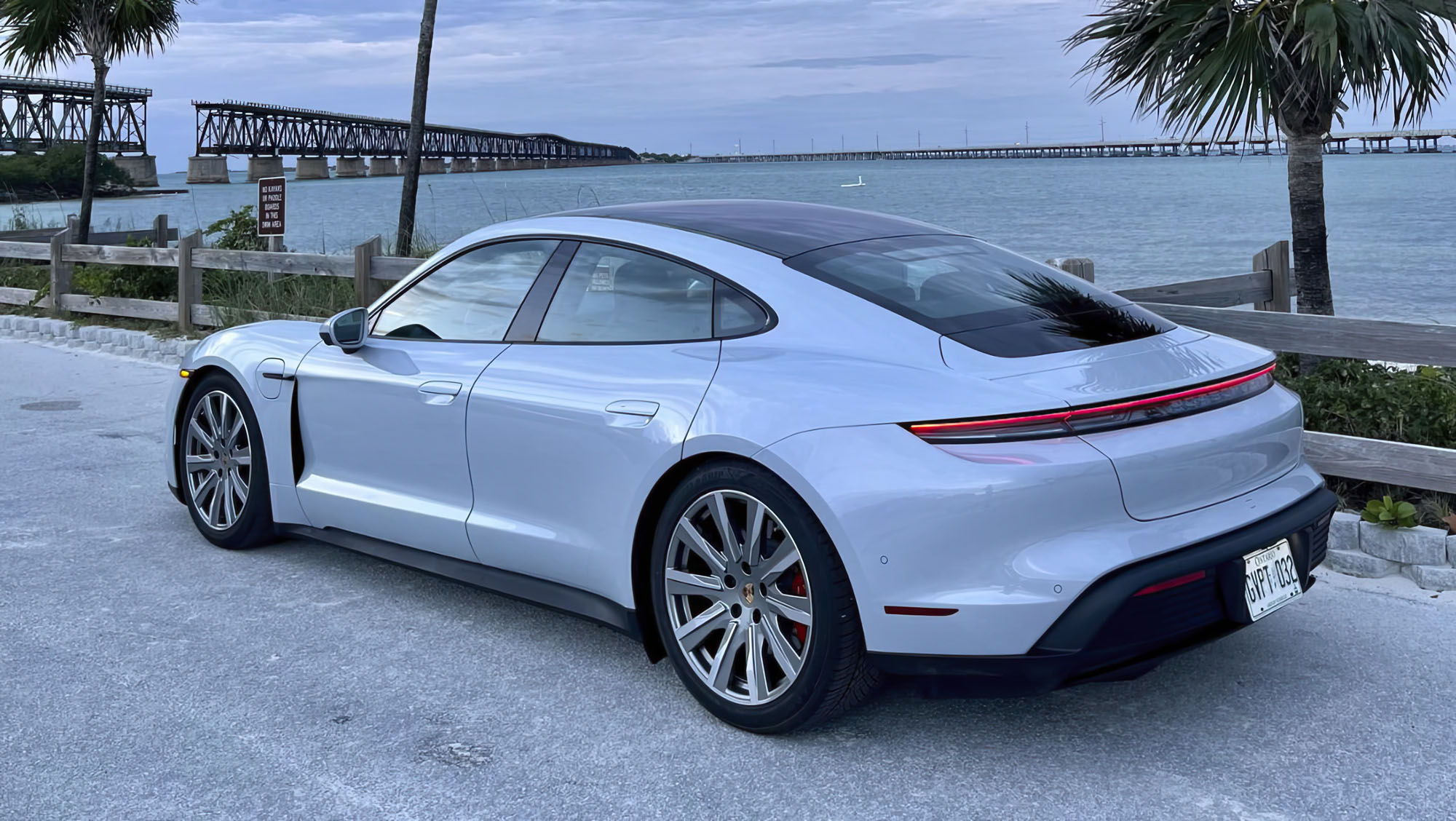
The benefit that gets quoted most frequently is charging speed, and it is real enough. The current Porsche Taycan will accept up to 320 kW at a suitable DC charger and takes eighteen minutes to move from 10 to 80 percent of its battery capacity, while the rear-drive model fitted with the larger pack is rated at as much as 678 km (421 miles) on the WLTP cycle. On the far more common 150 kW units found at most motorway services, the same charge occupies around thirty-three minutes.
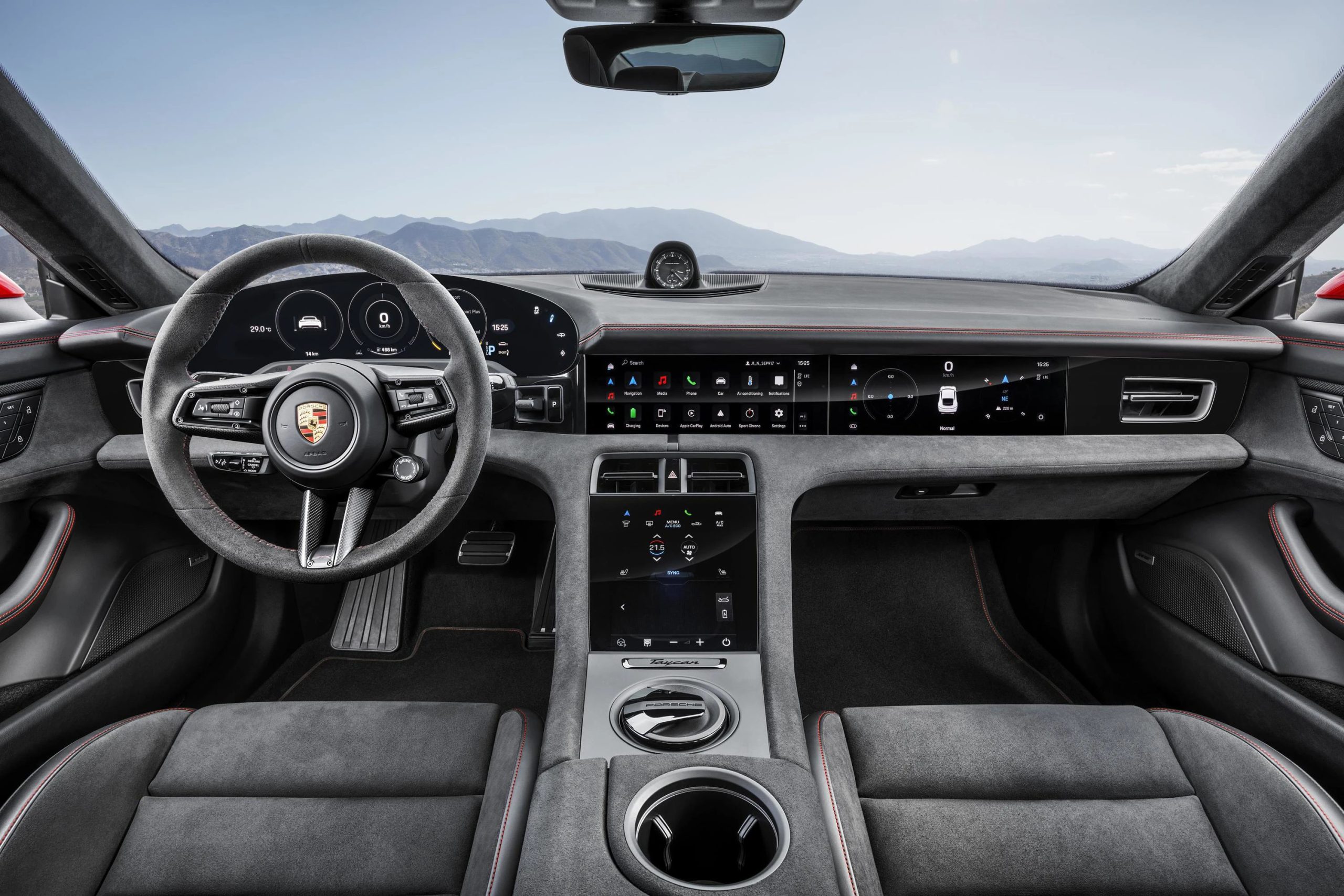
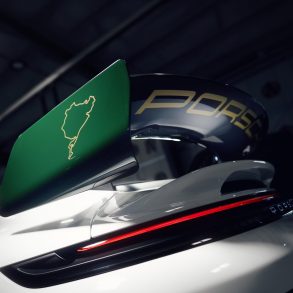
The advantage that gets discussed rather less often is the one an owner notices on a circuit. Less current flowing through the cabling, inverters and motors means less waste heat generated in the first place, and a car that generates less heat can produce its peak output repeatedly instead of once. Porsche made a point of this from the very start of the road car program, and the Turbo GT eventually proved it in the most public manner available by lapping the Nürburgring Nordschleife in 7:07.55 during 2024. That car is rated at 1,019 horsepower with launch control engaged, or 1,092 hp under Porsche’s own peak measurement method, and the fact that it can repeat the performance more than once in an afternoon traces back to a decision taken in a Weissach office more than a decade earlier.
The 919 Evo
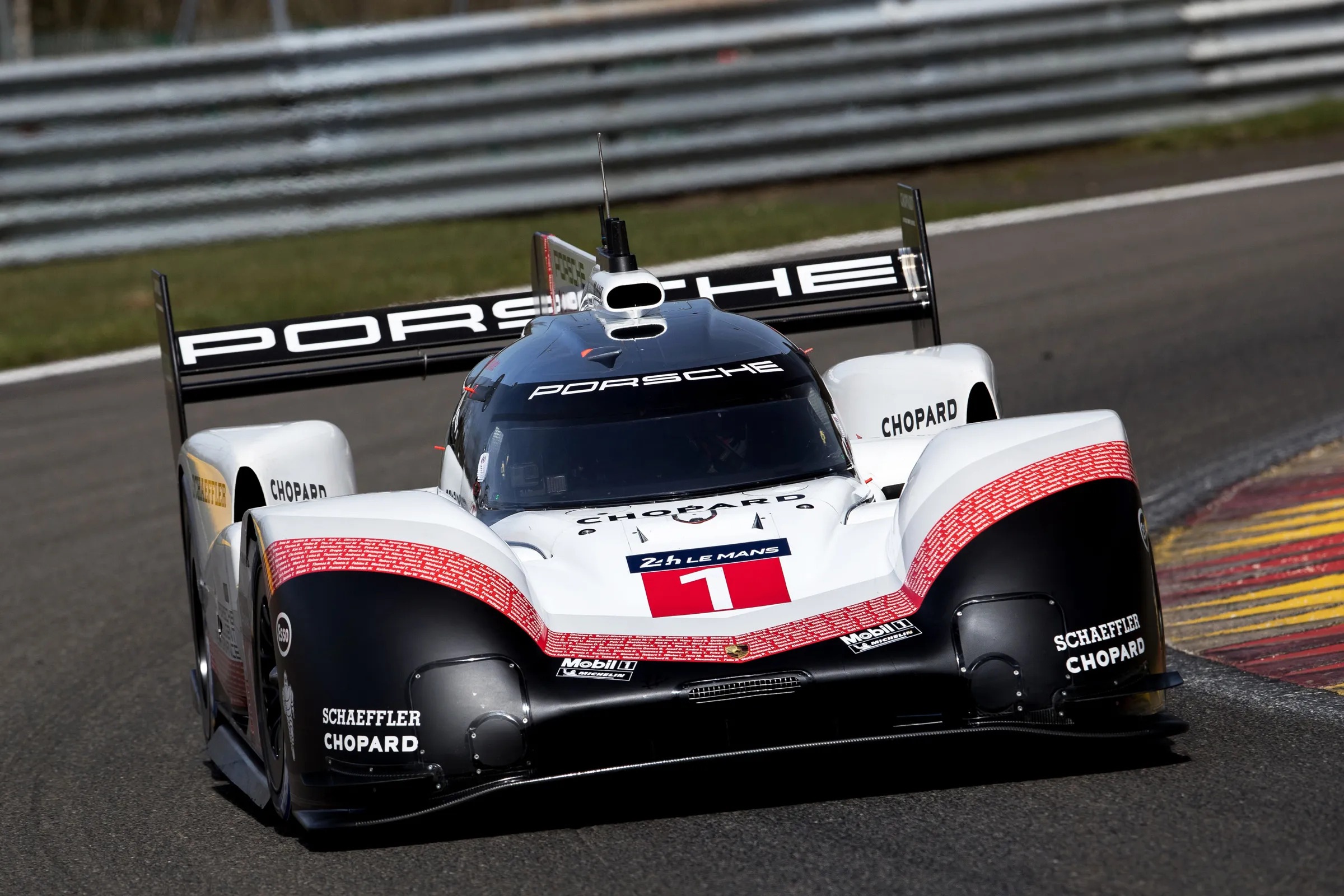
Porsche withdrew from LMP1 at the end of 2017 and redirected its motorsport budget toward Formula E, but before the cars were handed over to the museum the engineers were given permission to build the version the rulebook had never permitted. Stripped of the WEC’s fuel flow and energy recovery restrictions, the 919 Evo produced 1,160 horsepower at a weight of 849 kg, and it was turned loose on two circuits during 2018.
On April 9 of that year, Neel Jani took it around Spa-Francorchamps in 1:41.770, a time quicker than the Formula One pole position Lewis Hamilton had recorded there the previous season. On June 29, Timo Bernhard drove the same car around the Nordschleife in 5:19.55, some fifty-two seconds inside the 6:11.13 lap record Stefan Bellof had set in 1983. Those two runs closed the program for good, and by the time they were completed the technology responsible for them had already moved to the other side of the building, where it remains in production today.