

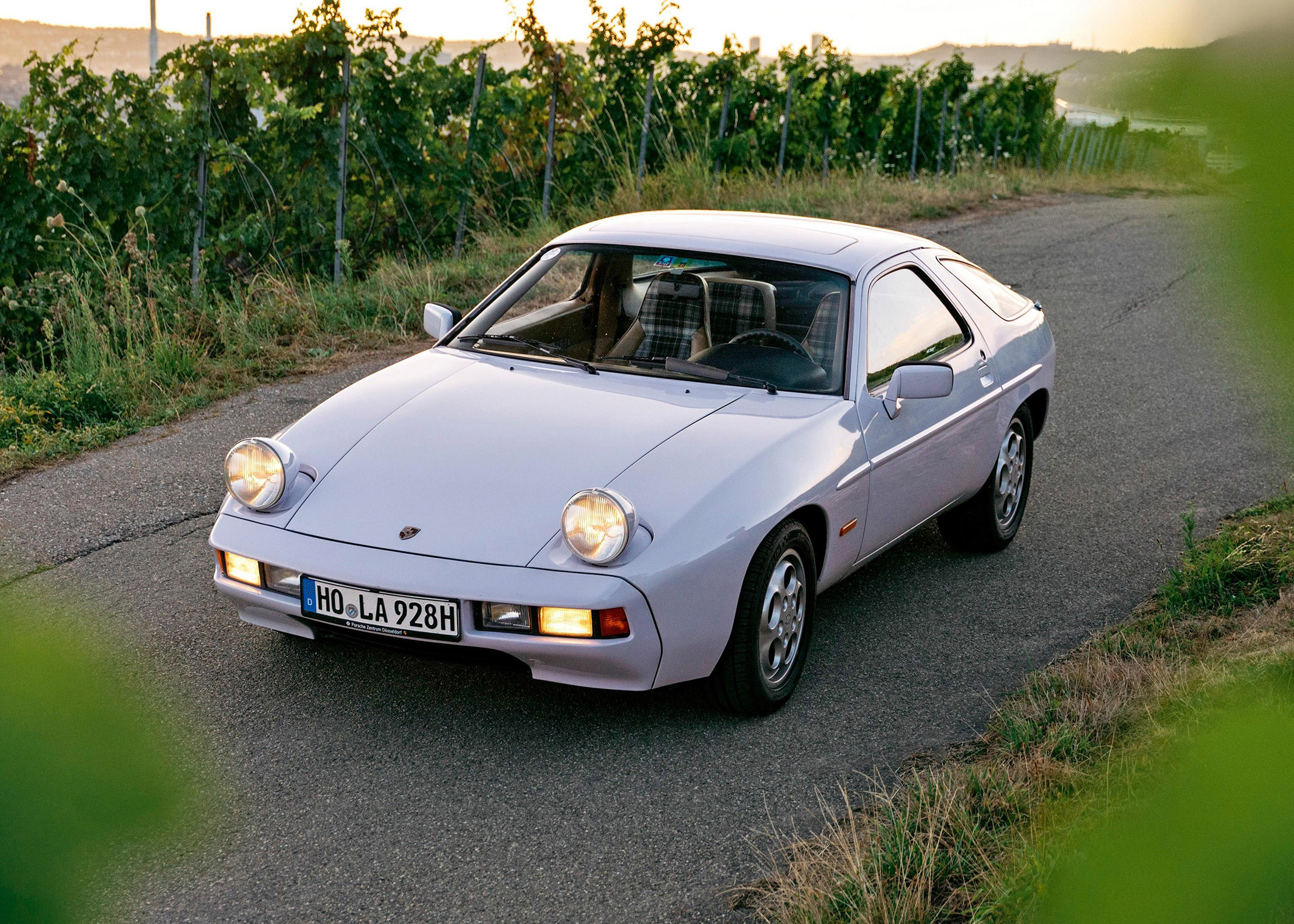
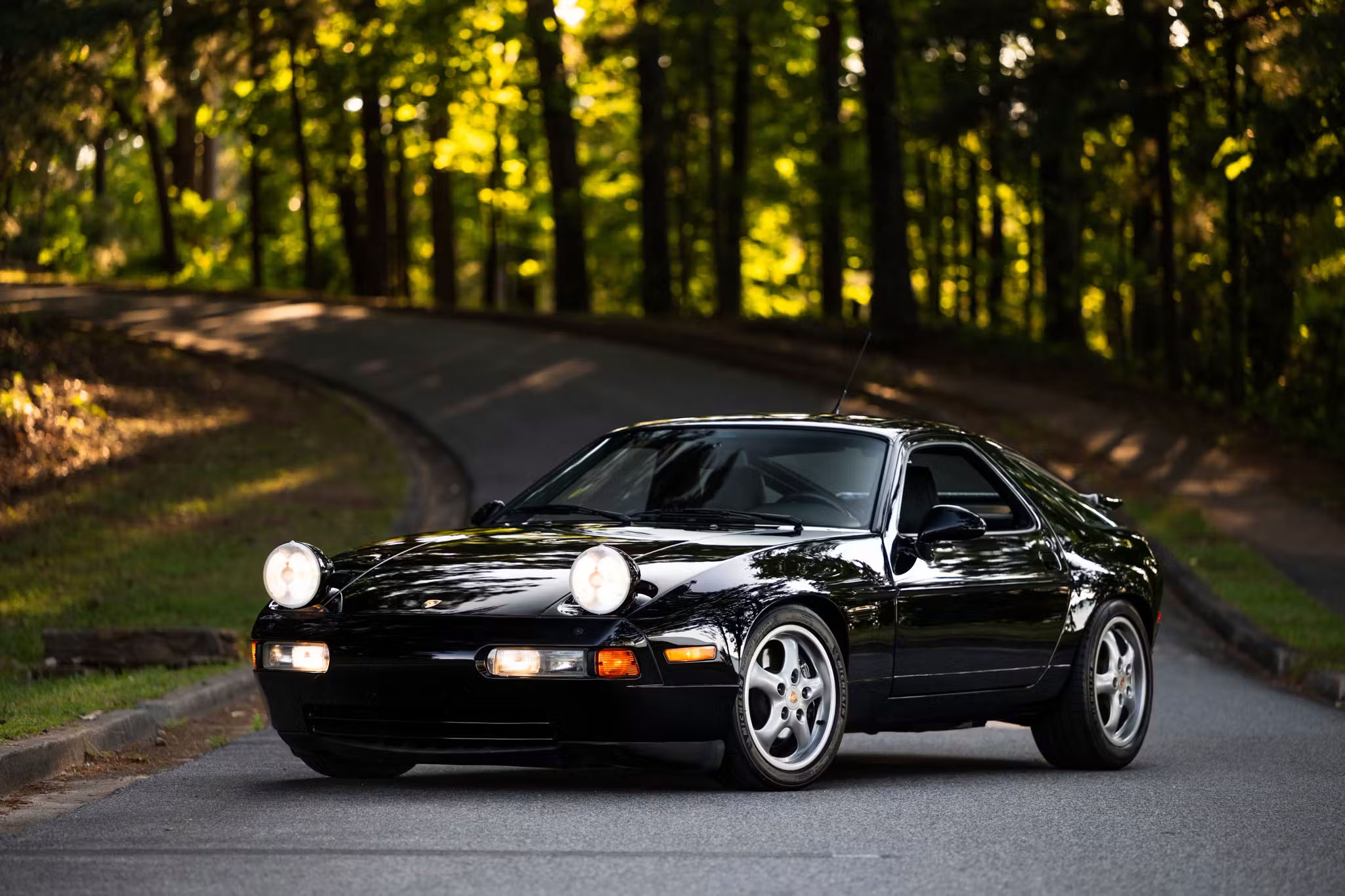
Reaching for the rotary switch that activates the 928’s pop-up headlights is one of the defining rituals of Porsche’s transaxle era. The simple motion perfectly captures the marriage of form and function that defined the avant-garde grand tourer. Unveiled at the Geneva International Motor Show in the spring of 1977, the 928 marked Porsche’s first entry into the world of V8-powered grand touring cars. Turn the prominently positioned headlight switch on the left side of the cockpit, and the concealed lamps rise smoothly from deep within the front fenders before rotating forward to illuminate the road ahead. In daylight, the 928’s nose presents an uninterrupted, streamlined profile. Seconds later, two distinctive round headlights emerge, transforming the car’s appearance and becoming one of the most recognizable signatures of a memorable era in sports car design.
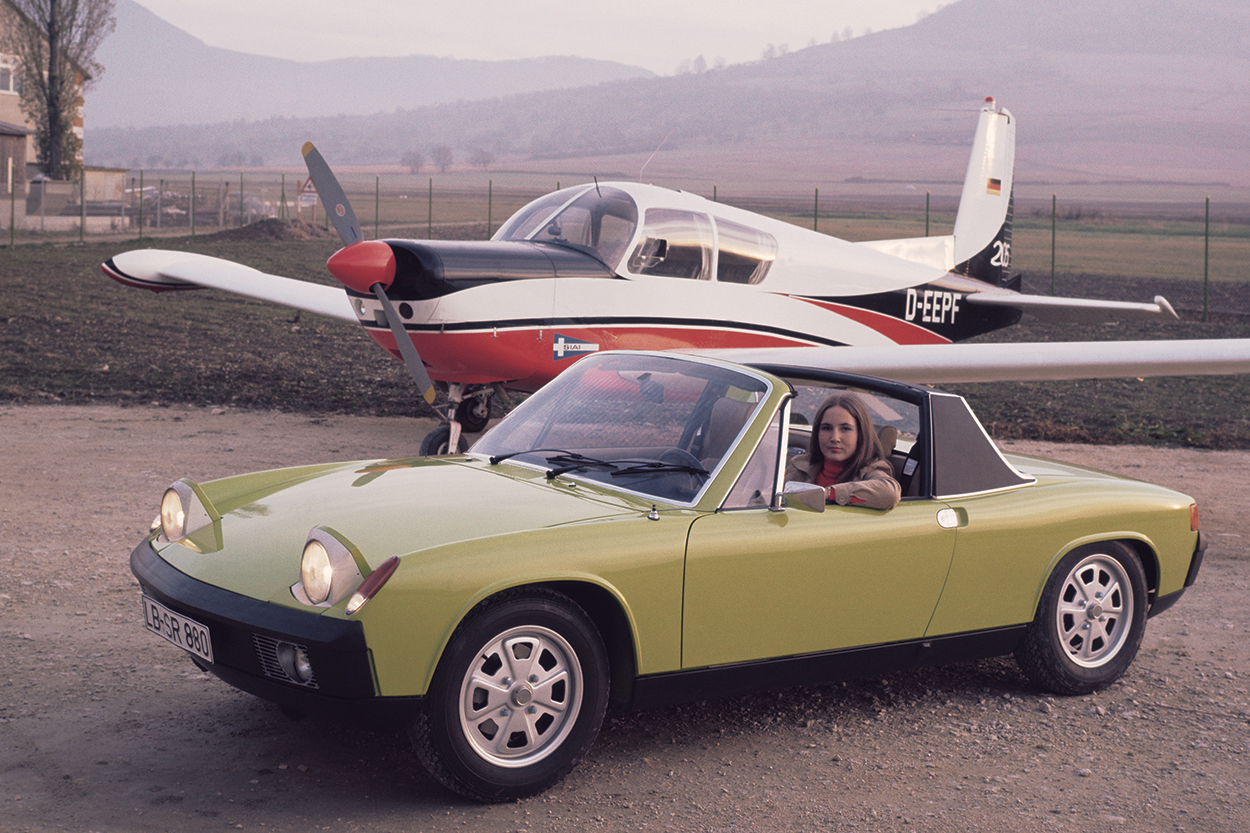
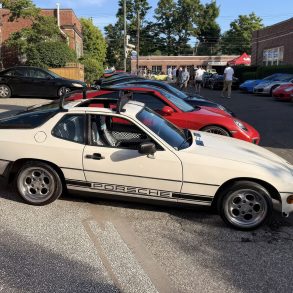
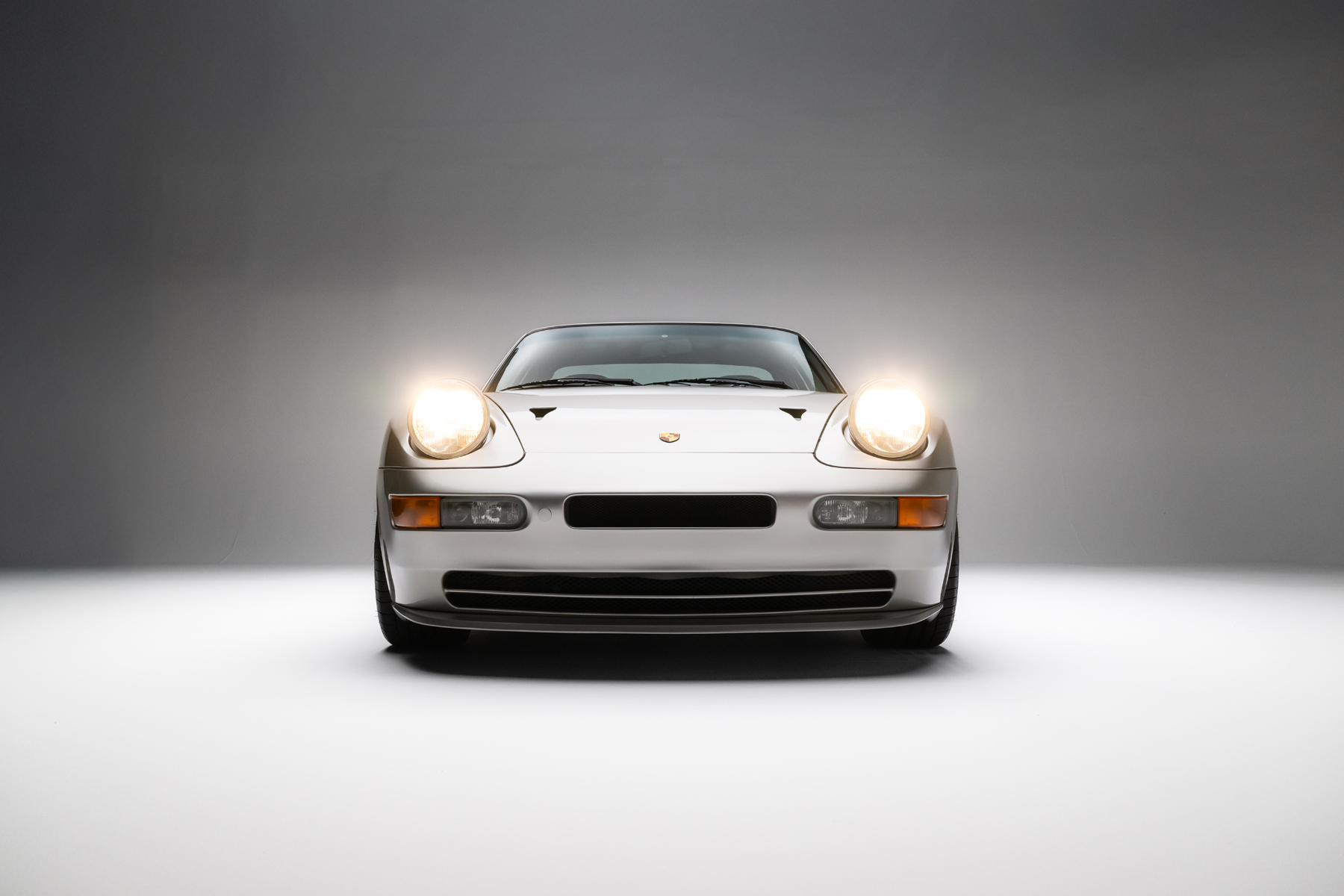
Porsche’s transaxle lineup employed two distinct pop-up headlight designs. The 928 used a forward-rotating mechanism, while the four-cylinder models—the 924 introduced in 1976 and the 944 that followed in 1981—featured headlights that rotated backward as they opened, echoing the design of the mid-engine 914 launched in 1969. When the 968 arrived in 1991 as the final evolution of the transaxle family, it returned to the 928’s forward-rotating concept. Even with the headlights closed, however, the 928 remained visually distinct. Its exposed lenses set it apart from the 924 and 944, whose body-colored covers blended almost seamlessly into the hood. While the differences were largely stylistic, pop-up headlights became a defining design element across Porsche’s transaxle range throughout the mid-1970s and beyond.
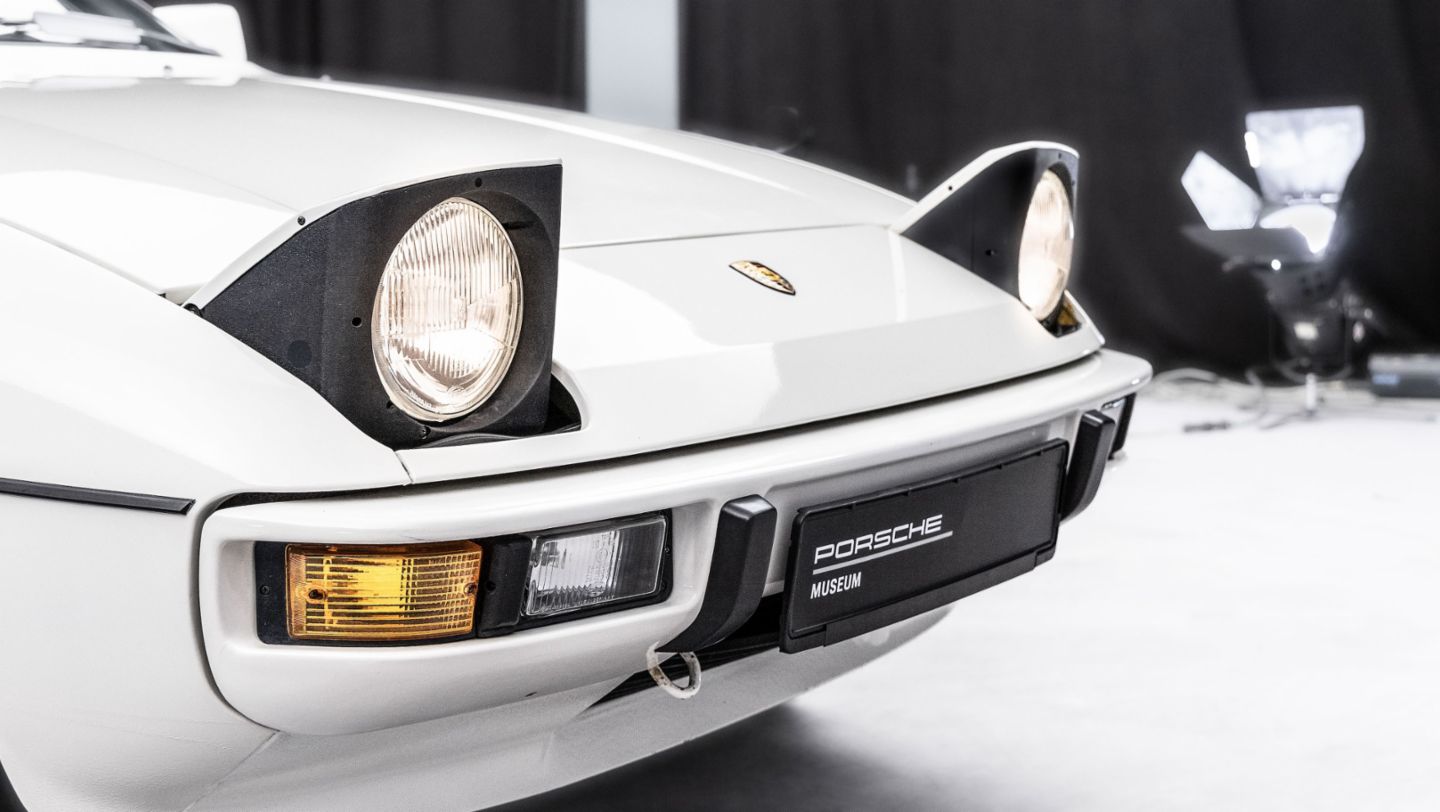
Harm Lagaaij of the Netherlands, Porsche Chief Designer from 1989 to 2004, was a young designer primarily involved in the development of transaxle models 924 and 928 at that time. “It wasn’t just design and optimal aerodynamics that played a key role in development, but also the lighting technology available at that time and the laws in place back then,” he recalls. “The height of the headlights had to comply with precisely defined guidelines. But at the same time, it was clear that a bigger headlight meant better illumination with the lighting technology available back then. There was just one solution: pop-up headlights.” For many years, Lagaaij drove the 928 personally through its various stages of development. “The car has extraordinary illumination. But only because the headlights are so huge.”
Beyond the primary headlights, every transaxle model incorporated additional lighting functions within the bumpers. The pop-up headlight era ultimately drew to a close with the arrival of the first Boxster in 1996, followed by the 996-generation 911 in 1997. Advances in lighting technology allowed every function to be integrated into a single aerodynamic housing, eliminating the need for retractable lamps. Yet the experience remains unforgettable. As the headlights rise, they seem to extend the already long hood into the darkness ahead—a subtle mechanical performance that continues to define the character and charm of Porsche’s transaxle sports cars.

Above contents © 2026 Dr. Ing. h.c. F. Porsche AG reviewed and edited by Rex McAfee , @rexmcafee 🏁
#Porsche #Porsche928 #Transaxle #ClassicCars #SportsCars #PopUpHeadlights #AutomotiveHistory #GrandTourer #CarDesign #VintagePorsche