By the early 1960s, Porsche was no longer the fragile, survival-mode company of the late 1940s.The Porsche 356 had matured into a reliable revenue stream especially the later B and C versions, were selling consistently, particularly in the United States. The German manufacturer had already launched the 911 and continued selling the 356 alongside it while motorsport was strengthening the brand’s reputation.
In this context, a fixed roll bar convertible was first discussed as early as 1962, but shelved purely due to limited production capacity. But when tightening American safety regulations in the mid-1960s threatened to ban convertibles outright, Porsche had a ready-made solution already developed: The Targa bar, a fixed roll-over hoop positioned behind the front seats on a Porsche 911. Rather than compromise the Targa bar was invention. Now, 60 years later, that same bar is still the most recognizable silhouette in the 911 lineup.
A Problem That Became a Patent

To understand how the Targa was born, we have to go back to 1962. Before the 911 had even reached production, Porsche coachbuilder Karosseriewerk Reutter, and Karmann sat down to work through the options for an open-top version of what was then still called the 901. Three configurations were on the table: a classic soft top, a roadster with a reduced frame, and a fixed roll bar convertible. The third option was the most technically compelling and won the internal debate on merit, but limited production capacity meant the idea was set aside rather than killed outright.

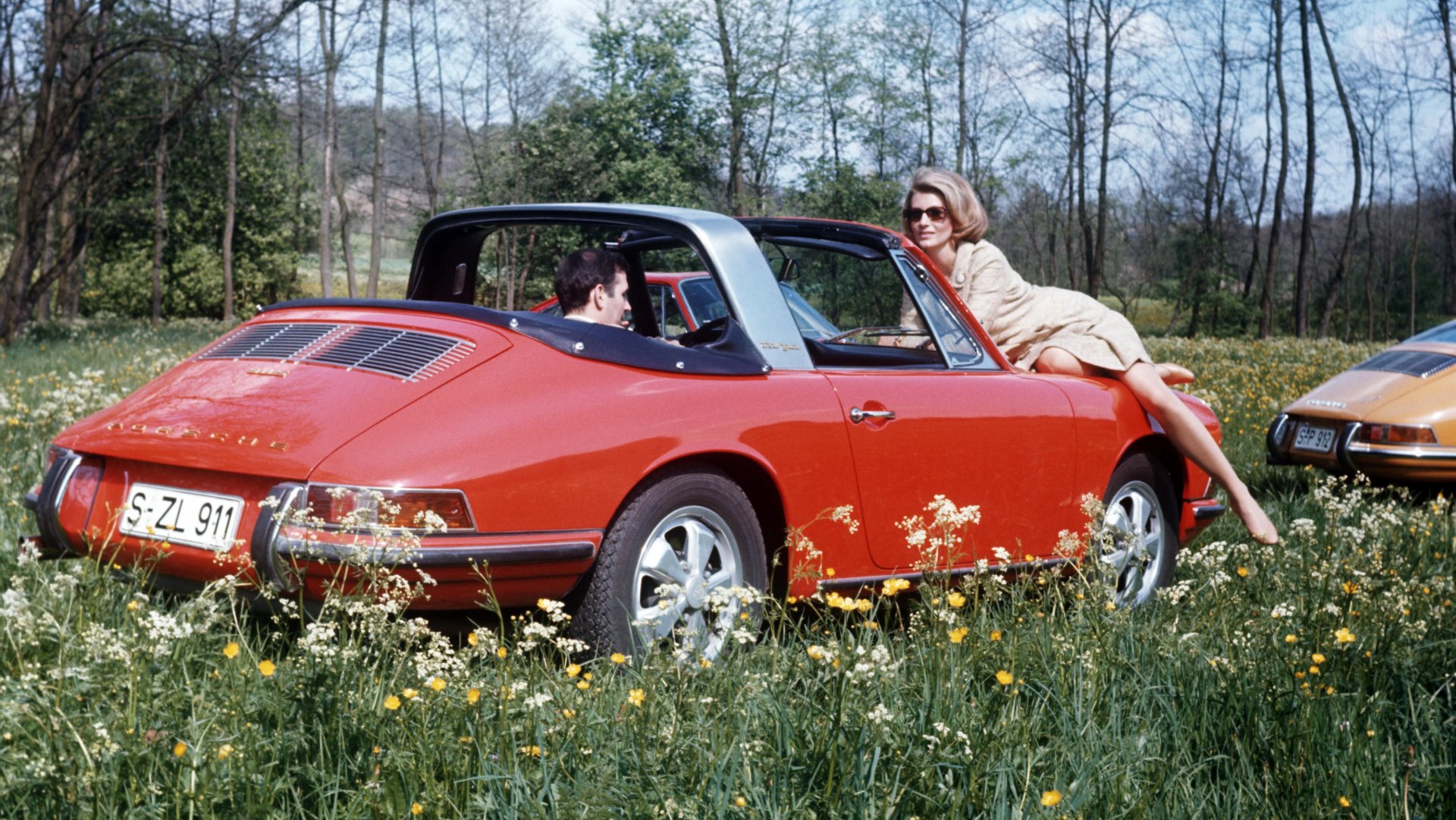
But when US regulators began tightening safety requirements for open-top cars in the mid-1960s, Porsche didn’t have to start from scratch. The concept was already there sitting in a drawer waiting, refined and ready to be developed into a production solution. Porsche patented the Targa concept in August 1965 and unveiled the car at the Frankfurt IAA the following month. It was marketed with four distinct configurations: roof panel in place, roof panel removed, rear window up, and rear window folded down. The company’s advertising slogan at launch captured exactly what the car was: “Now there’s a vehicle that combines the freedom of the convertible with the safety of a coupe.”

The name came from former Director of Sales Harald Wagner, who suggested shortening Targa Florio, the legendary Sicilian road race where Porsche had built much of its motorsport reputation, to simply Targa. What nobody in the room knew at the time was that the word means “number plate” in Italian. The copywriters working on the sales brochure were the ones who figured that out.
The Original Targa and What Made It Right

By autumn 1966 the Targa was in showrooms, available across the 911, 911 S, and 912. The recipe was three things: a brushed stainless steel roll bar behind the seats, a removable roof section above them, and a plastic rear window you could zip down on a warm day. Ferdinand Alexander Porsche shaped the bar into something that read as intentional design rather than regulatory hardware, which was no small feat. A year into production, Porsche gave buyers the option of a fixed heated glass rear window instead of the plastic fold-down, and the takeup was immediate. It was standard equipment by 1968 and stayed that way, setting the Targa’s silhouette in stone for the next twenty years.
The clearest proof of how well Porsche got the concept right came with the G-Series in 1973. The body was substantially updated with new box-shaped bumpers to meet US impact regulations, yet the Targa roof design required no modification at all. It carried over unchanged, which in engineering terms is about the highest compliment a design can receive.
The Generations That Defined It

The 964: Last of the Classic Roll Bar
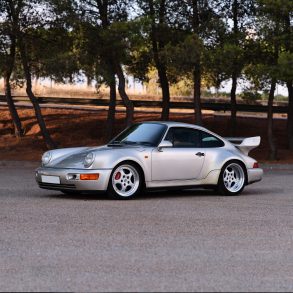
If you attend any important air-cooled auction today, you’ll find 964 Targas drawing the kind of attention that reflects what they represent. The 964 generation arrived in 1988 with a thorough overhaul of the 911, bringing all-wheel drive to the Carrera 4, ABS, power steering, the retractable rear spoiler, and roughly 85 percent new parts under bodywork that kept the classic 911 shape intact. The Targa was on offer for both Carrera 2 and Carrera 4 buyers, and both carried the bar, the removable panel, and the wraparound glass exactly as the car had always had them. Production ran through 1993, by which point Porsche had built 87,663 Targa models across the first three generations of the 911. The 964 was the last of them built to the original brief, and prices have reflected that for years.
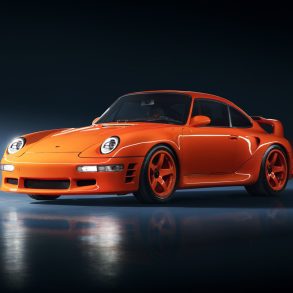
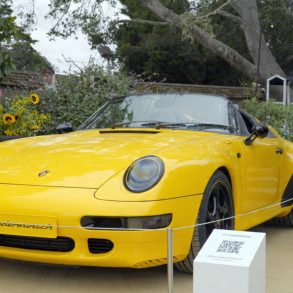
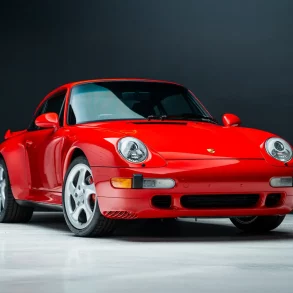
The 993 Targa, which arrived in 1995, is a different story depending on who you ask. Porsche removed the roll bar and replaced it with a tinted heat-insulating glass roof that retracted electrically. It was a considered decision, not a careless one, and the result was a quieter, more refined experience with the roof closed and a genuinely panoramic feel when it opened. That has not stopped it from being the most argued-about Targa in the car’s history. The 993’s place in the collector market is secure on its own terms as the final air-cooled 911, but the bar’s absence still comes up every time one changes hands.
The panoramic roof carried through the 996 and 997 generations, with the glass surface growing to over 1.5 square meters on the 996 before the 997 brought in lighter materials and polished aluminium trim. The 997 also locked in the all-wheel drive requirement that has defined every Targa since, sold exclusively as the Targa 4 and Targa 4S. It took until 2014 and the 991 for the bar to come back, but when it did, Porsche committed fully. The classic silhouette returned alongside a fully automatic roof mechanism that took 19 seconds to cycle: rear glass up, soft top folding into a Z behind the seats, the whole thing disappearing neatly out of sight. For anyone who had grown up with the original, the 991 Targa felt like a correction.
The Current Targa: Type 992 and 992.2

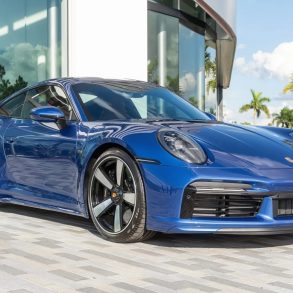
When the 992 generation launched in 2019, the Targa followed in May 2020. The roll bar, the movable roof section, the wraparound rear window, the 19-second open sequence, and the all-wheel drive restriction all made the jump to the new platform without modification. The 992’s wider body and revised chassis gave the car a noticeably more aggressive stance than the 991, but the silhouette read the same from twenty meters away as it always had.
Four years later the 992.2 arrived with something worth paying attention to. The Targa 4 GTS picked up T-Hybrid technology, built around a new 3.6-litre boxer, an eTurbo electric exhaust turbocharger, a compact high-voltage drive battery, and an electric motor sitting inside the eight-speed PDK. For a car that has spent most of its life being the most relaxed way to drive a 911, the GTS version of the 992.2 Targa is a different proposition. The bar is still there, the roof still takes 19 seconds, and the all-wheel drive configuration hasn’t moved. The only thing that changed is how hard it can go when you ask it to.
Sixty Years and Counting
The Targa hasn’t been the fastest 911 nor the most track focused, and will never be neither. It wasn’t conceived for maximum performance, but to solve a bureaucratic burden and ended up becoming an icon. Sitting between coupe and cabriolet it occupies a space that Porsche invented and has owned ever since.
That bar that Harald Wagner named after a Sicilian road is still there on the 992.2, doing exactly what it was designed to do in 1965: giving drivers open air while complying with safety regulations. Six decades of 911 development, eight generations of engineering progress, and the solution Porsche had sitting in a drawer in 1962 is still the right answer.