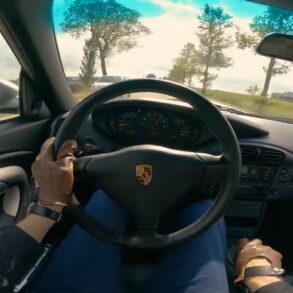


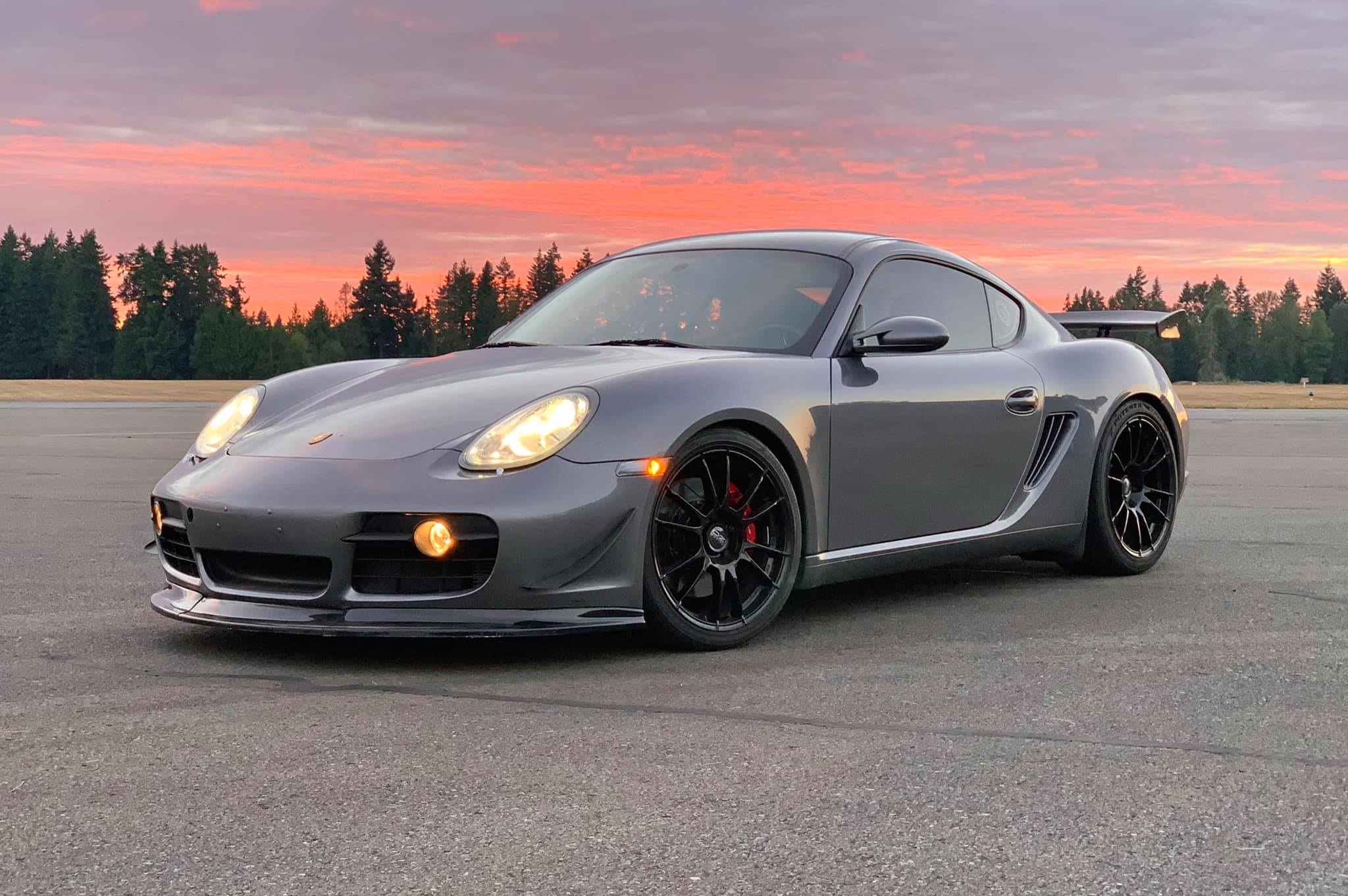
If you spend enough time at any Porsche Club paddock, there’s a good change you’ll hear the same story. A guy buys a nice Cayman, clean title, one owner, service records in a binder. He runs it at a couple of driver’s ed weekends and has a wonderful time, and by the following spring the passenger seat is in his garage, the carpet is in a contractor bag and a fabricator is welding a cage into the car. A good chunk of what he paid for a tidy, street-legal Porsche went toward parts that now live on a shelf, and more track people have started to wonder why they paid for those parts at all.
Why the Title Brand Stops Mattering at the Track Gate
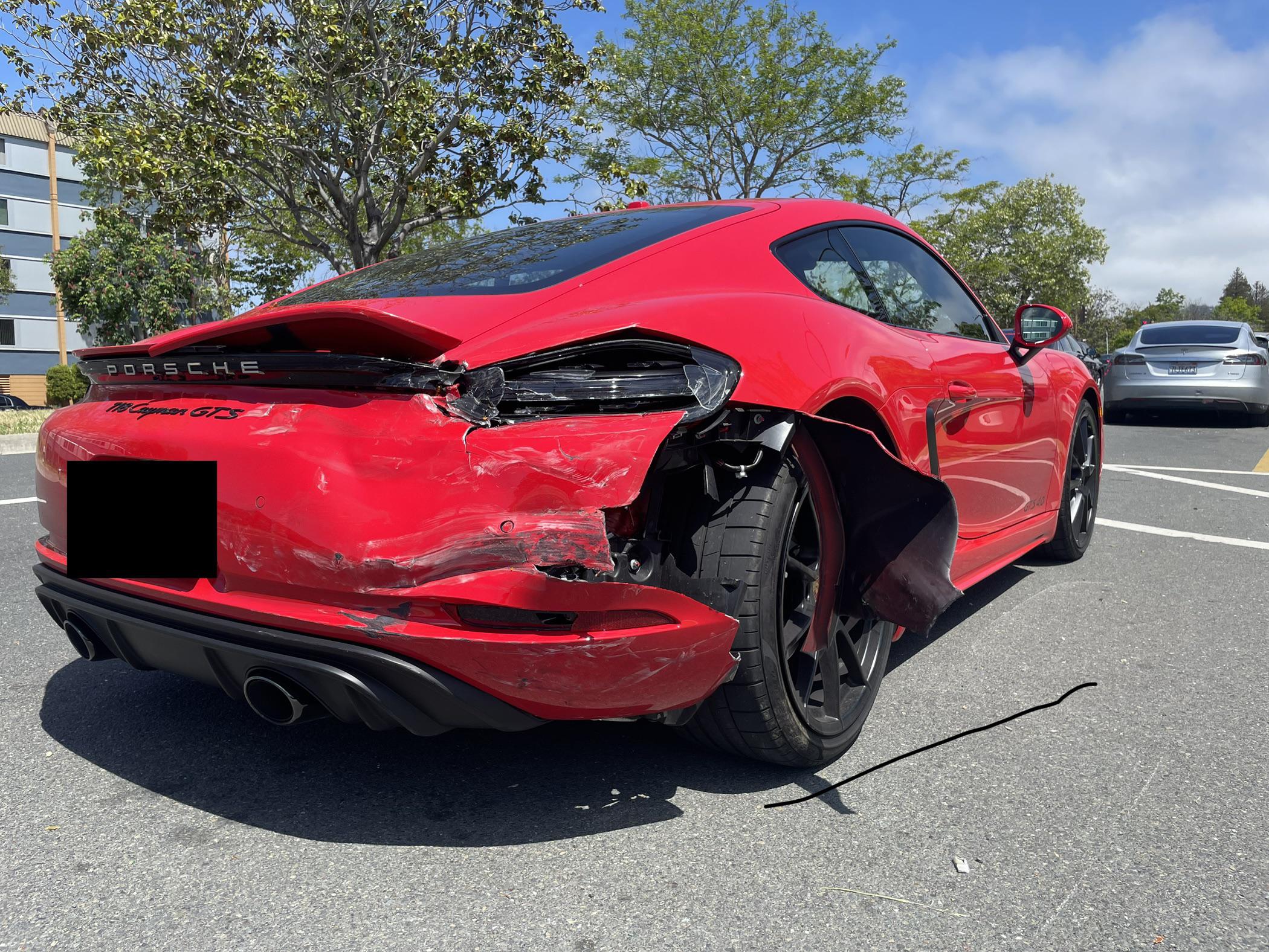
A salvage brand is a problem on the street because the street is where the law applies. Registration, insurance and resale all get harder with a branded title, and nearly all of that goes away once the car lives on a trailer. The tech inspector at a PCA driver’s education event wants to see decent brake pads, fresh fluid, tight lug nuts, a battery that won’t fly loose and a helmet that isn’t older than your nephew. He has never once asked to see a registration card.
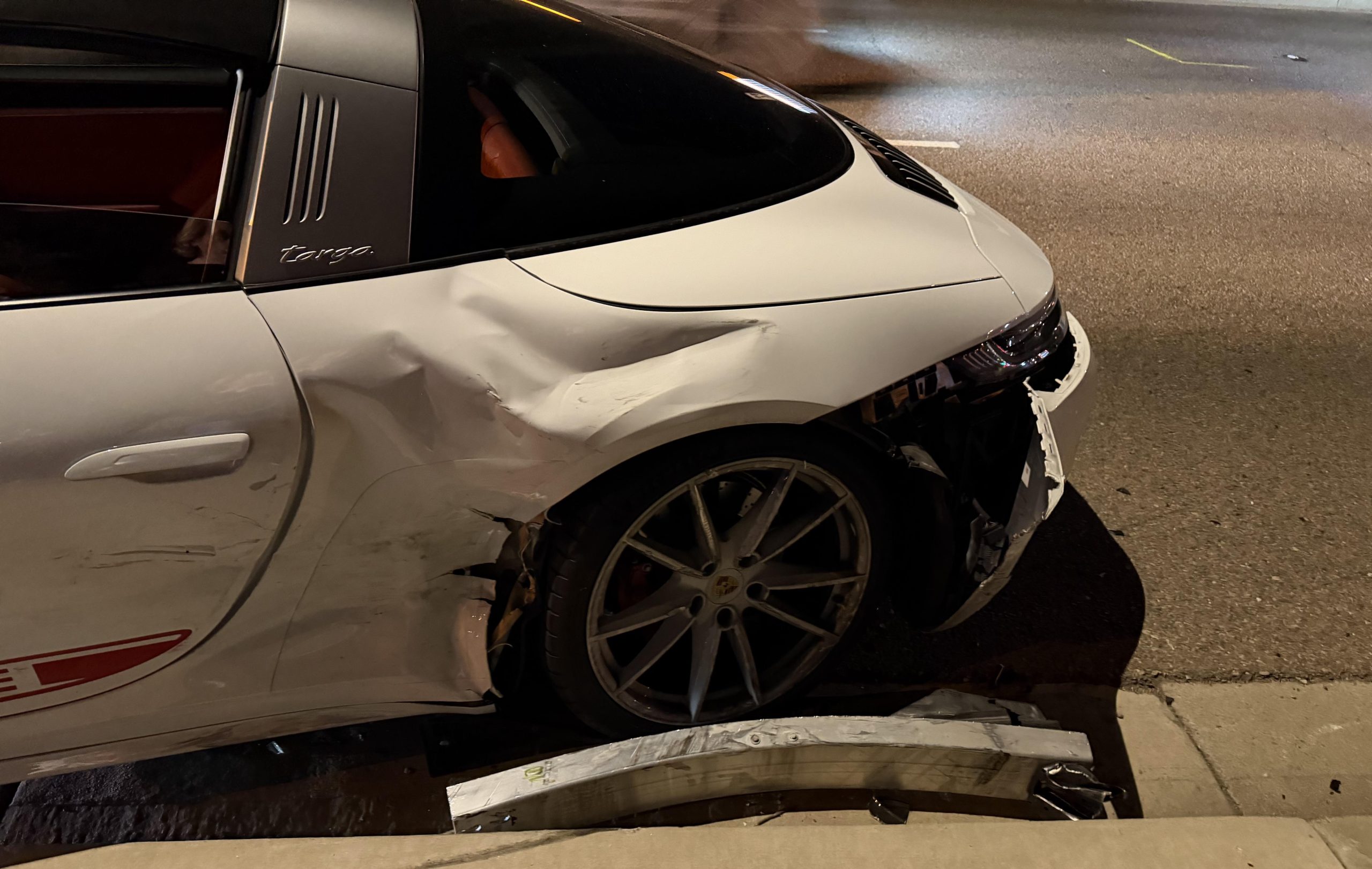
Club racing works the same way. The PCA Club Racing Rule Book says a car has to have a Porsche chassis and a Porsche drivetrain to be eligible, and it has to carry a PCA logbook and the required safety gear. How an adjuster classified the car after it met a guardrail never comes up.
It rarely comes up at sale time, either. Race cars get bought by racers, who want the logbook, a list of what’s been done and ideally the name of a shop they’ve heard of, and few of them ask about the title before they ask about the oil sump.
The structure underneath matters more on a track car than it would on the street. A car that spends its weekends at the edge of grip, braking hard from triple digits a few dozen times a session, needs a straight shell, so the bent rail that earned the brand deserves far more attention than the brand itself.
Picking the Right Wreck
The 987 Cayman is the car most people land on, and for good reasons. The coupe body is much stiffer than the Boxster’s, the engine sits in the middle where it belongs, and there are enough of them in PCA classes that you’ll always have someone to race. If the budget stretches to a 2009 or later 987.2, you also get the direct-injection 9A1 engine, which dropped the intermediate shaft bearing entirely.
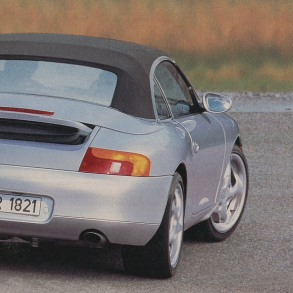
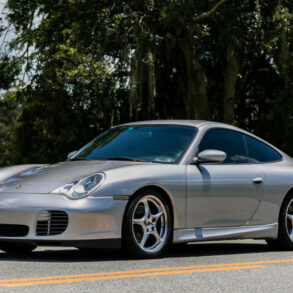
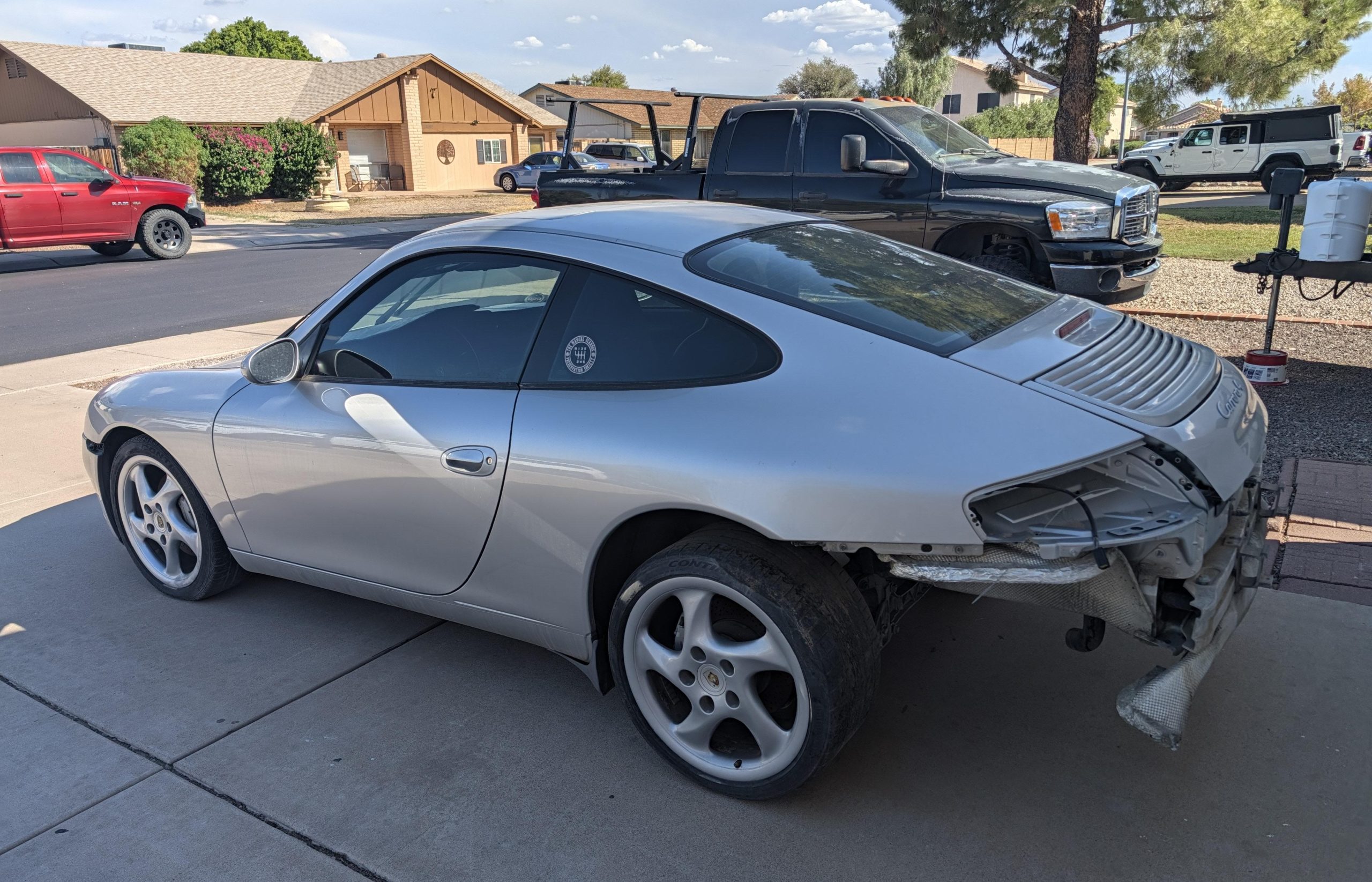
The 996 Carrera makes sense for anyone who simply has to have a 911. A 986 Boxster [internal link: Stuttcars 986 page] is the cheapest way in, and plenty of fast drivers learned in one.
With salvage cars the damage matters about as much as the model, and the ideal is a car hurt somewhere the build was going to disturb anyway. A front-end hit on a 987 or 996 tends to take out the bumper cover, the two radiators tucked behind it and the A/C condenser, and on a street car that bill adds up quickly. On a race car, the A/C is coming out regardless. Theft recoveries often show up with the interior already stripped, which saves you a weekend with a trim tool. Hail damage stops being a factor the moment the car gets a wrap.
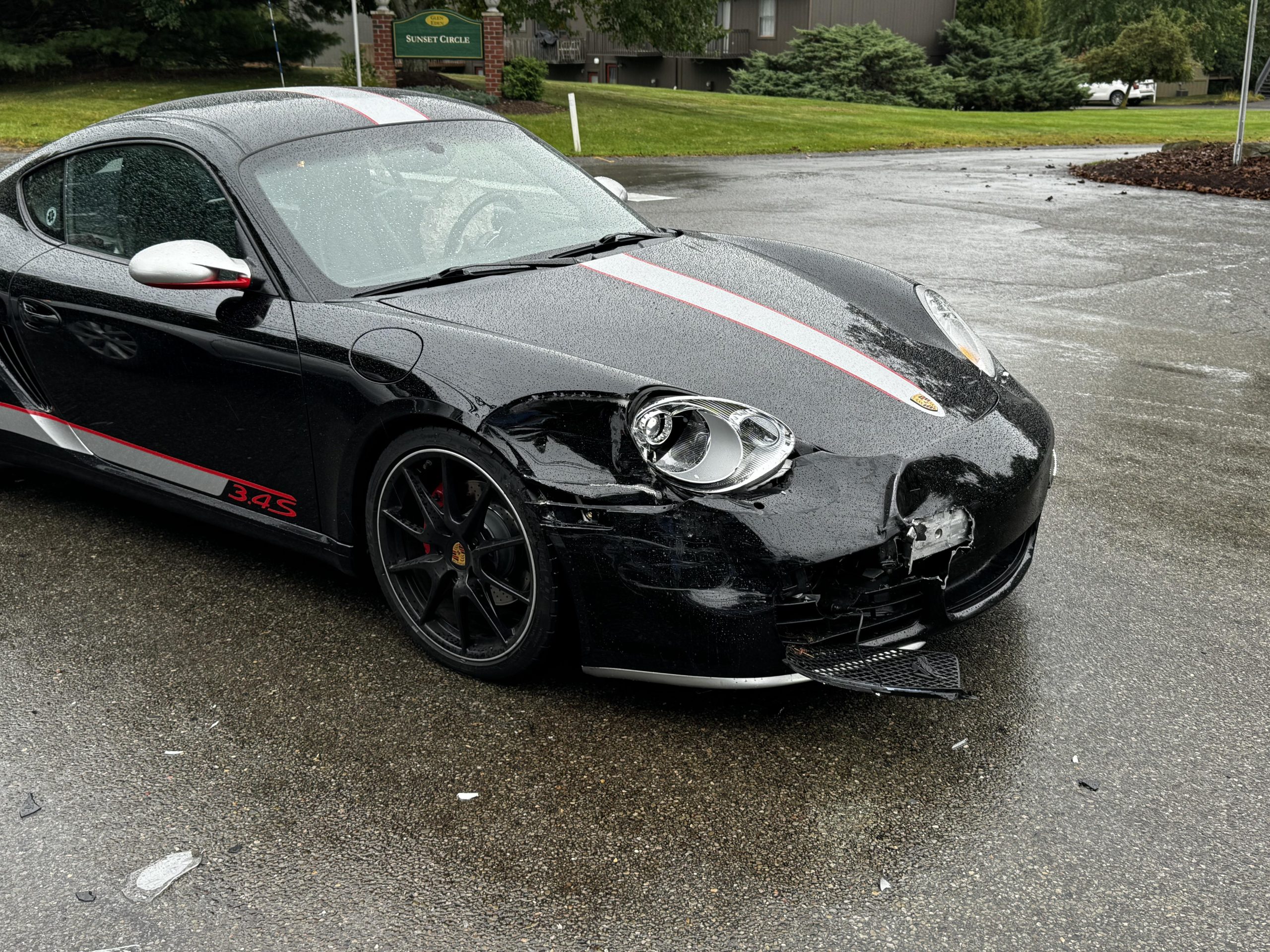
Walk away from anything with damage near the suspension mounts, a kinked frame rail, a wavy roof line or a rollover in its past. Floods too. These cars have a lot of wiring and a lot of modules, and none of it takes kindly to water.
Finding one is mostly a matter of patience. Check cars4.bid every few days for a couple of weeks and you’ll start seeing Caymans and Boxsters with smashed noses and clean rear halves. Between the photos and the damage codes, you can cross most of them off without ever leaving the house.
Turning a Write-Off Into a Race Car
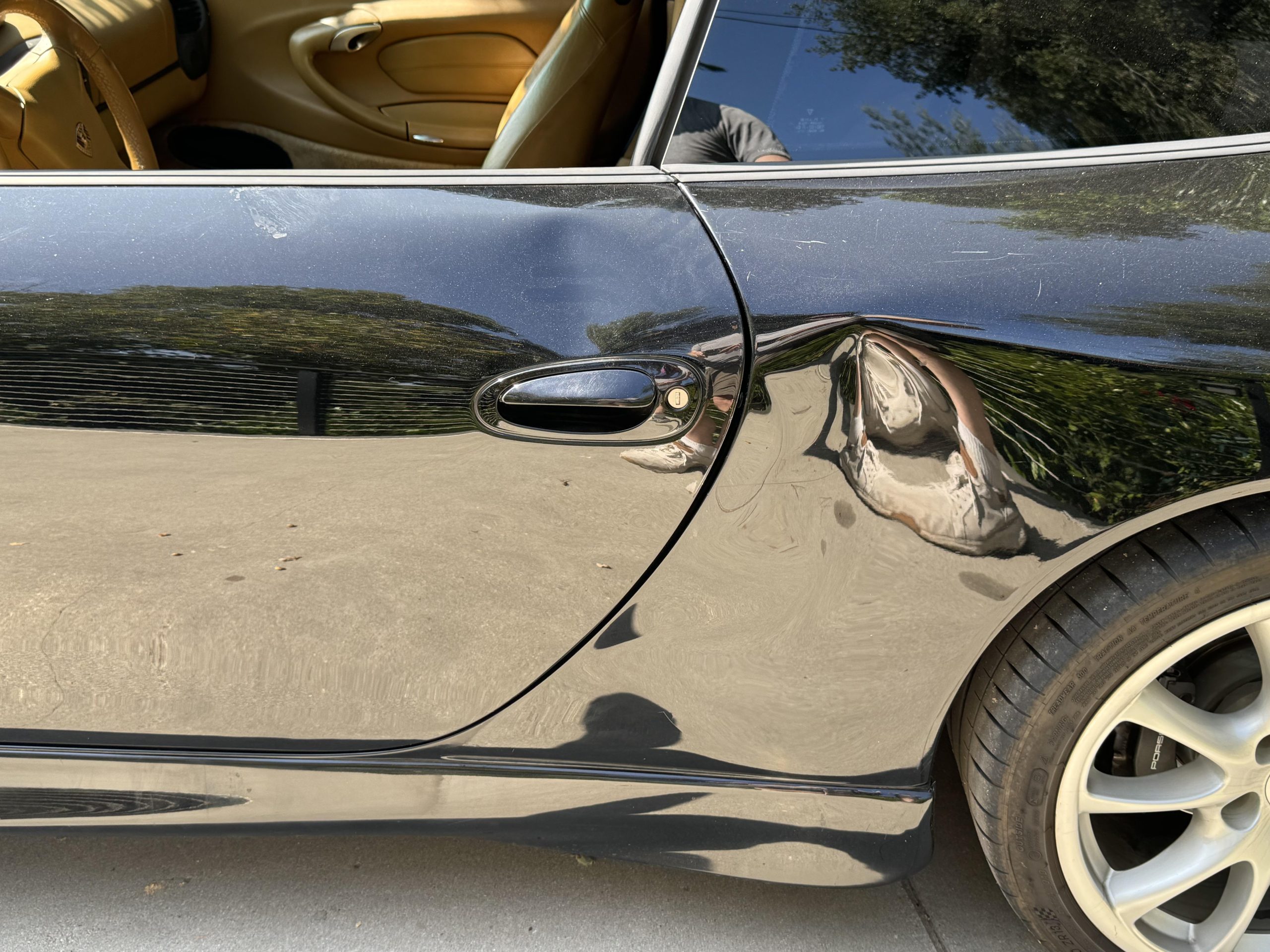
Before buying a single part, take the car to a collision shop that has a frame bench and have the chassis measured against Porsche’s factory specs. That measurement tells you if you own a race car or a parts car, and it has to happen before the cage goes in. Once a cage is welded into a shell that’s slightly off, the shell stays slightly off, forever, and the alignment shop will be trying to fix a problem that lives in the metal.
If it passes, the rest is a familiar sequence. Interior out. Cage in, followed by a fixed-back seat, harnesses and a fire system, all built to the rule book for the class you plan to run. Brakes get high-temp fluid, track pads and ducting. Last comes an alignment and corner balance.
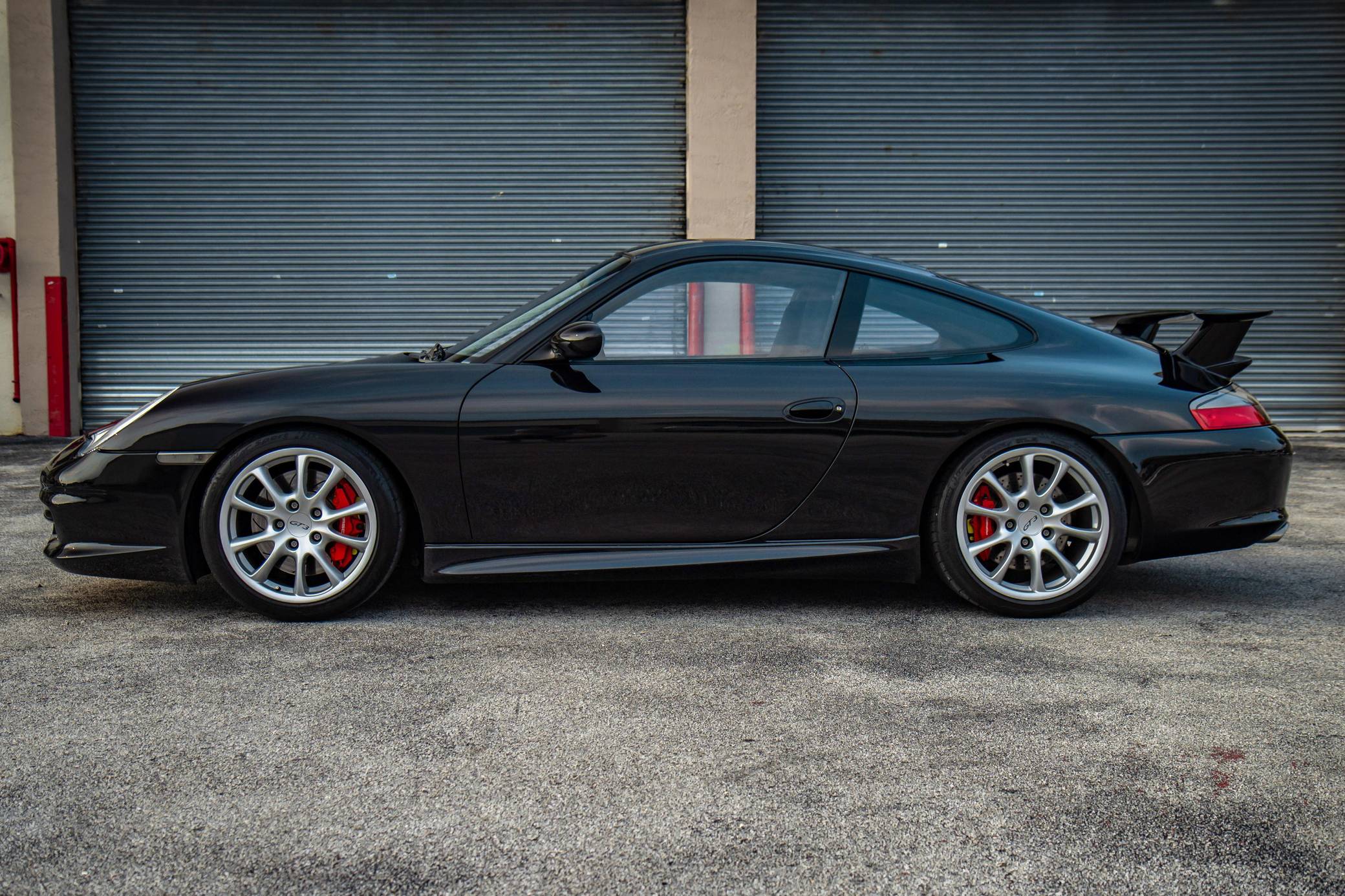
Any car with the M96 or M97 engine needs one more thing, and it goes on the list right next to the cage. That covers every 986, every 996 Carrera and the 2006 to 2008 Caymans and Boxsters. In long, fast corners, oil can slosh away from the pickup and leave the engine briefly dry. An extended, baffled sump is the usual cure, and skipping it on a track car is how people end up shopping for engines.
Then there’s the driver. PCA Club Racing wants a current helmet, a head and neck restraint, a fire-resistant suit, gloves and shoes, with specific certifications spelled out in the rule book. Most people run driver’s ed for a season or two first, where the requirements are lighter, before applying for a racing license.