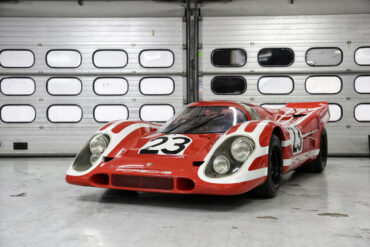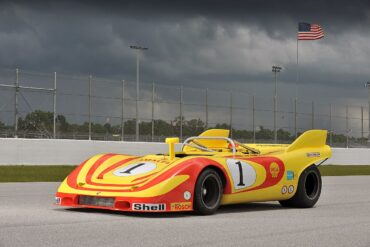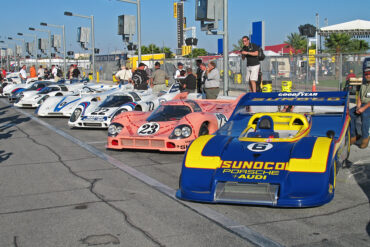

By 1969, Porsche develops the 917 Spyder with a view to competing in the extremely popular North American racing series, the Canadian American Challenge Cup (Can-Am). Three units featuring 4.5-litre twelve-cylinder naturally aspirated engines are constructed in Zuffenhausen, and Jo Siffert takes one to the US to compete in the Can-Am races, ultimately placing fourth overall. The car becomes known as the 917 PA Spyder, with “PA” standing for “Porsche + Audi” as they are the two sales organisations in the US at the time.
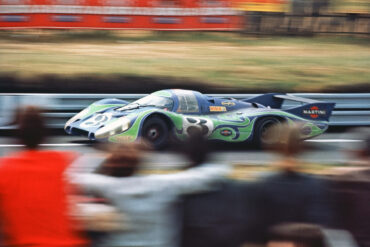
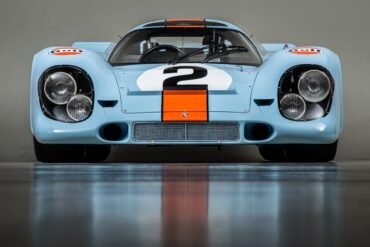
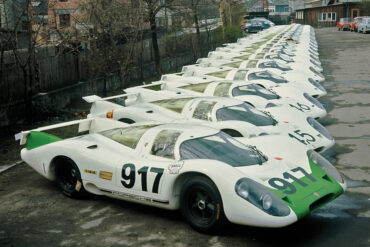
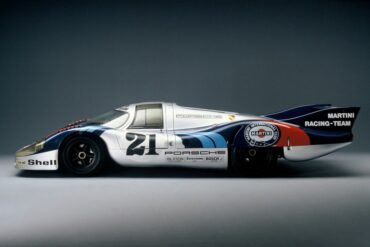
Although the longtail 917 was introduced first, it was meant only for the Le Mans. This meant, the short tail 917 K ("Kurz" in German for short) was raced first. The only engine available in 1969 was the 4.5-litre flat 12. The factory team enters one 917 K also for the Nürburgring 1000 km race, where it scores 8th. The factory team would not enter 917 K for racing anymore in the season, only private teams will.
For the 1969 racing season an absolutely new Porsche 917 with 4.5-litre 12-cylinder engine was created. Ferdinand Piëch relied on the skilfulness of Hans Mezger, who was responsible for the overall construction of the vehicle and its engine. The aim was to create the fastest racing car ever. Short and long tail versions were developed, called as the 917 K ("Kurz" = short in German) and the 917 LH ("Langheck" = long tail). The first car was assembled in December 1968.