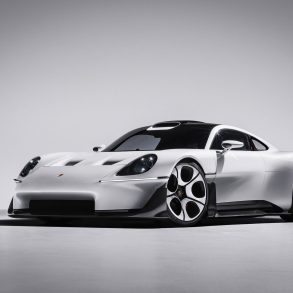


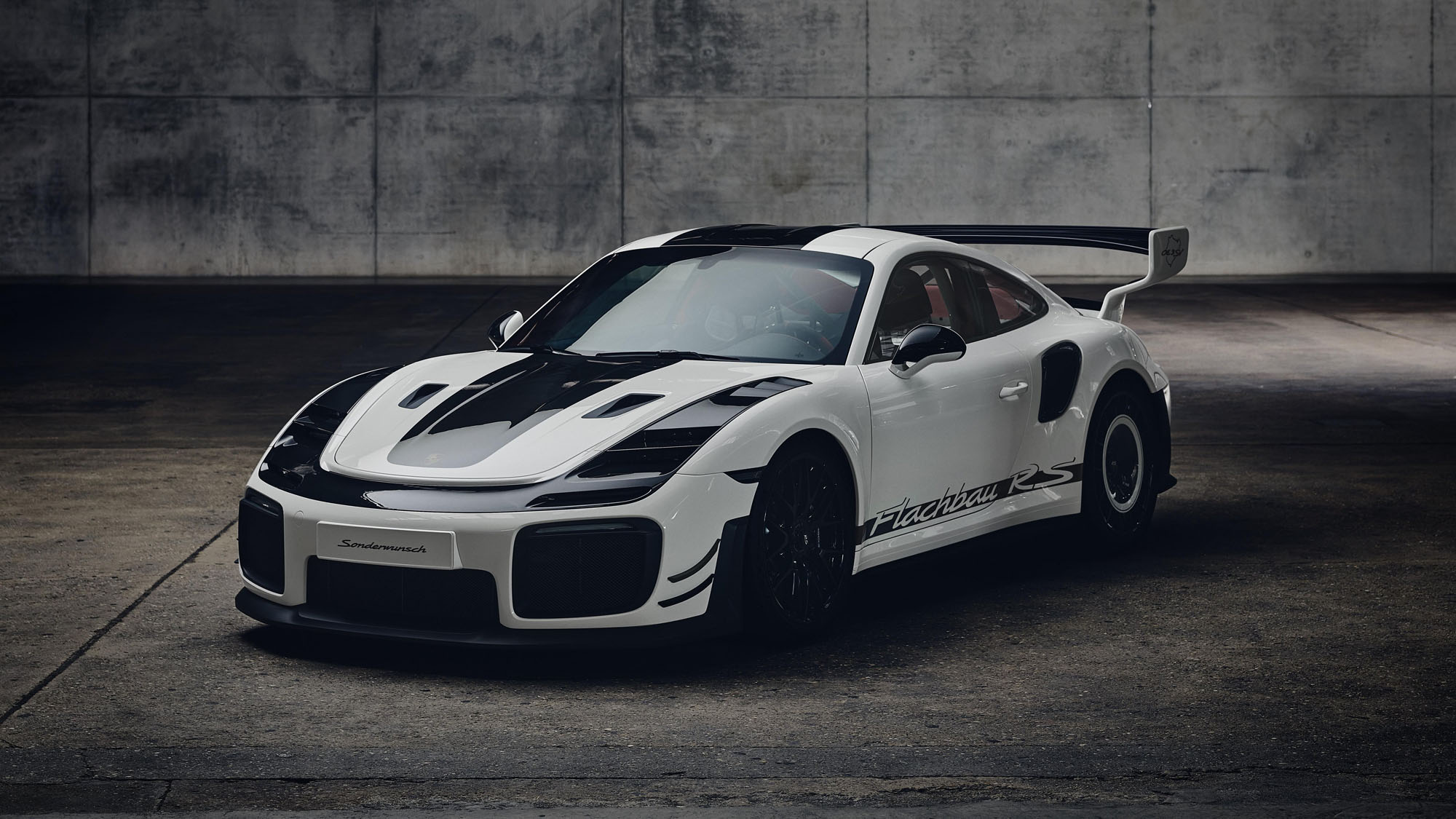
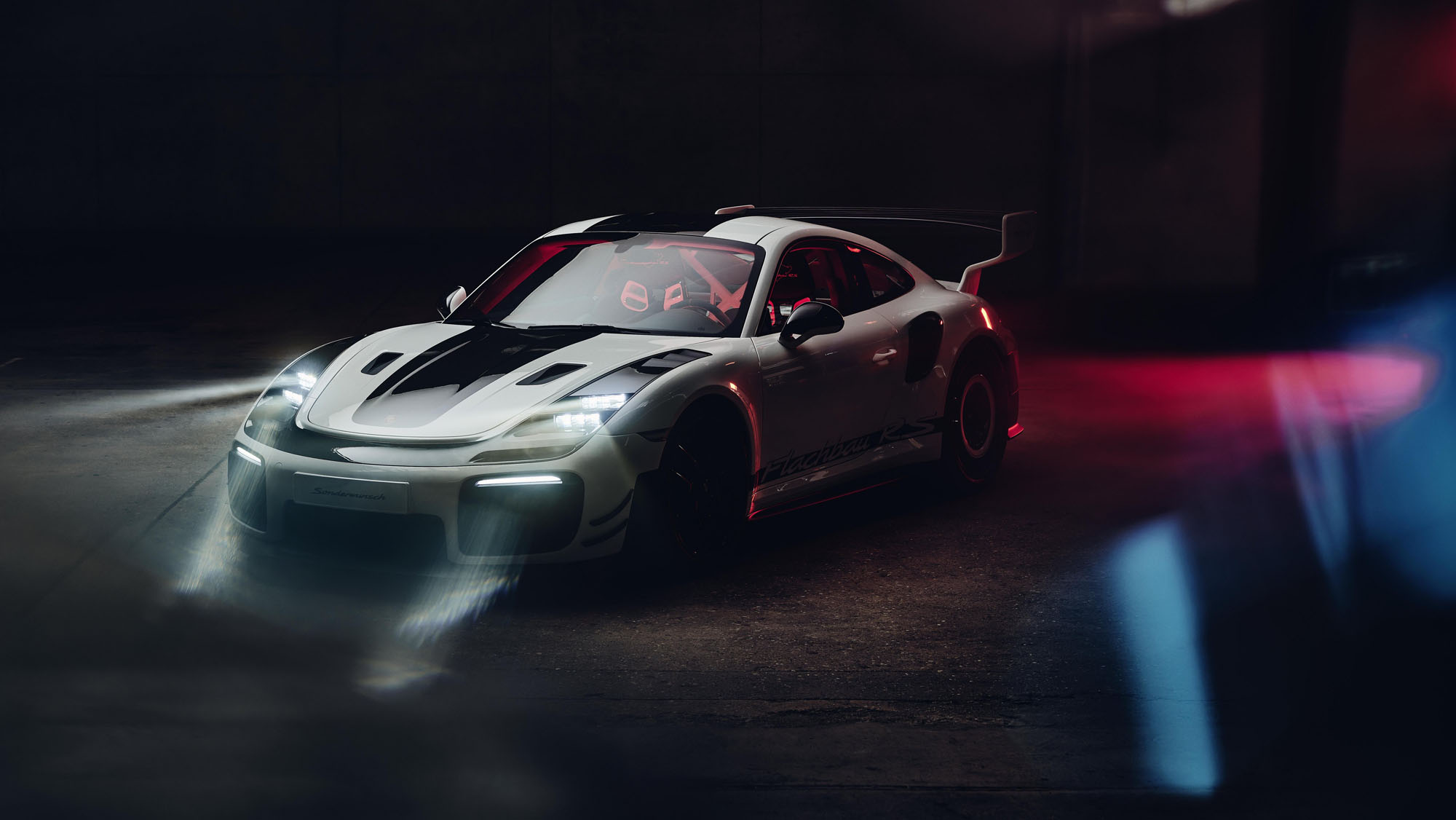
“Even greater performance and a Flachbau look, combined with a rear wing à la 911 GT3 R rennsport, please.” That was the brief from a Porsche enthusiast who commissioned the Sonderwunsch department to transform his like-new 911 GT2 RS into a factory one-off. Working with Manthey, Porsche created a road-legal collector’s car inspired by the legendary 935/78 Le Mans racer known as ‘Moby Dick’.
The Flachbau, or slantnose, has deep roots at Porsche. During the 1980s, the company offered a modified 911 Turbo (Type 930) with redesigned front wings and pop-up headlights inspired by the Porsche 935. Just 948 examples were sold between 1982 and 1989, making Flachbau models among the rarest 911 variants.
New Found Interest
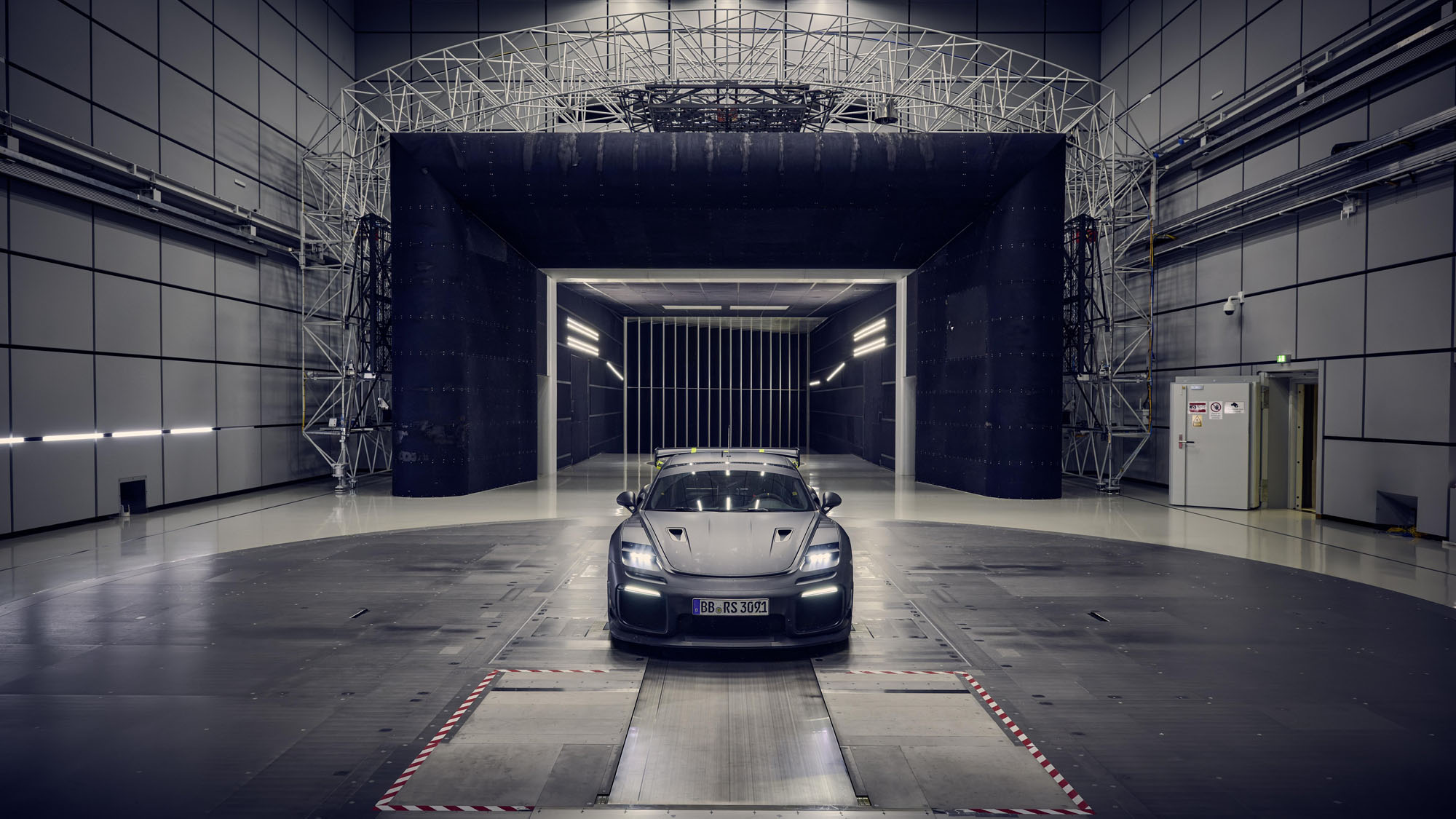
Interest surged when Porsche registered the names ‘Flachbau’ and ‘Flachbau RS’ with the European Patent Office in May 2025. The reason is now clear: an extensive transformation of a 2018 911 GT2 RS (Type 991.2) with Weissach Package. A team from Sonderwunsch, Style Porsche, Weissach, Porsche Motorsport, and Manthey spent nearly three years developing the car. “Converting the car to a slantnose model proved to be very challenging, even though we left the drive unchanged, in agreement with the customer,” explains Alexander Fabig, Vice President Product Offering & Individualization at Porsche. “Our aim was to reinterpret the iconic look of the 935 without compromising on safety, technology or road legality. Thanks to thorough lightweight measures, this one-off car now weighs 31,6 kg less than before. That may sound unspectacular at first, but the 911 GT2 RS with Weissach Package is a sports model that is already uncompromisingly optimized in terms of weight reduction.”
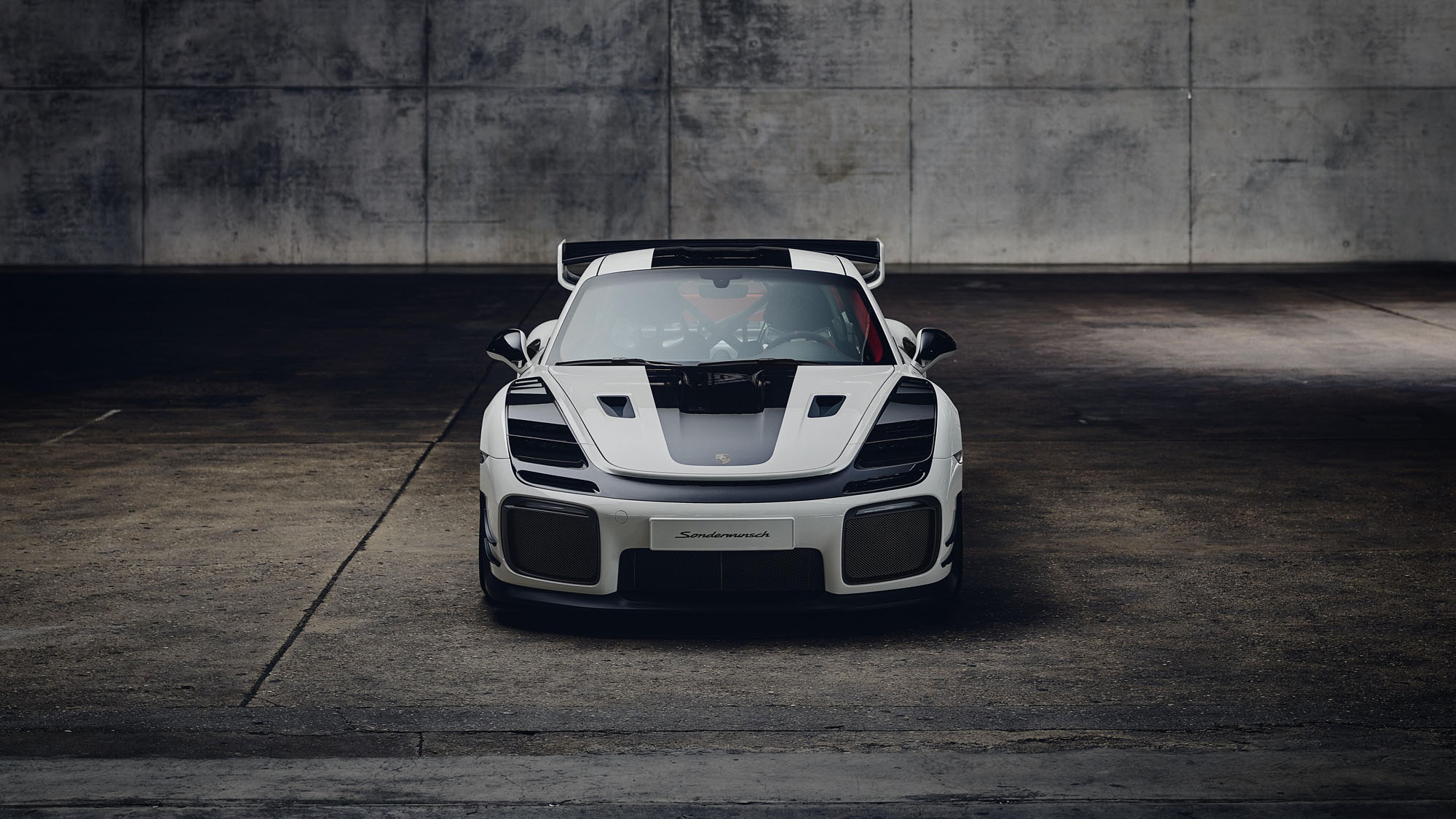
Retired Porsche designer Grant Larson led the design. He also created the modern 935 unveiled in 2018. “The new Flachbau RS is a modern, fitting reinterpretation of the iconic 935 Moby Dick design,” says Larson. “In addition to the flatter front wings, a key feature is the staggered headlight arrangement with very narrow LED units.”
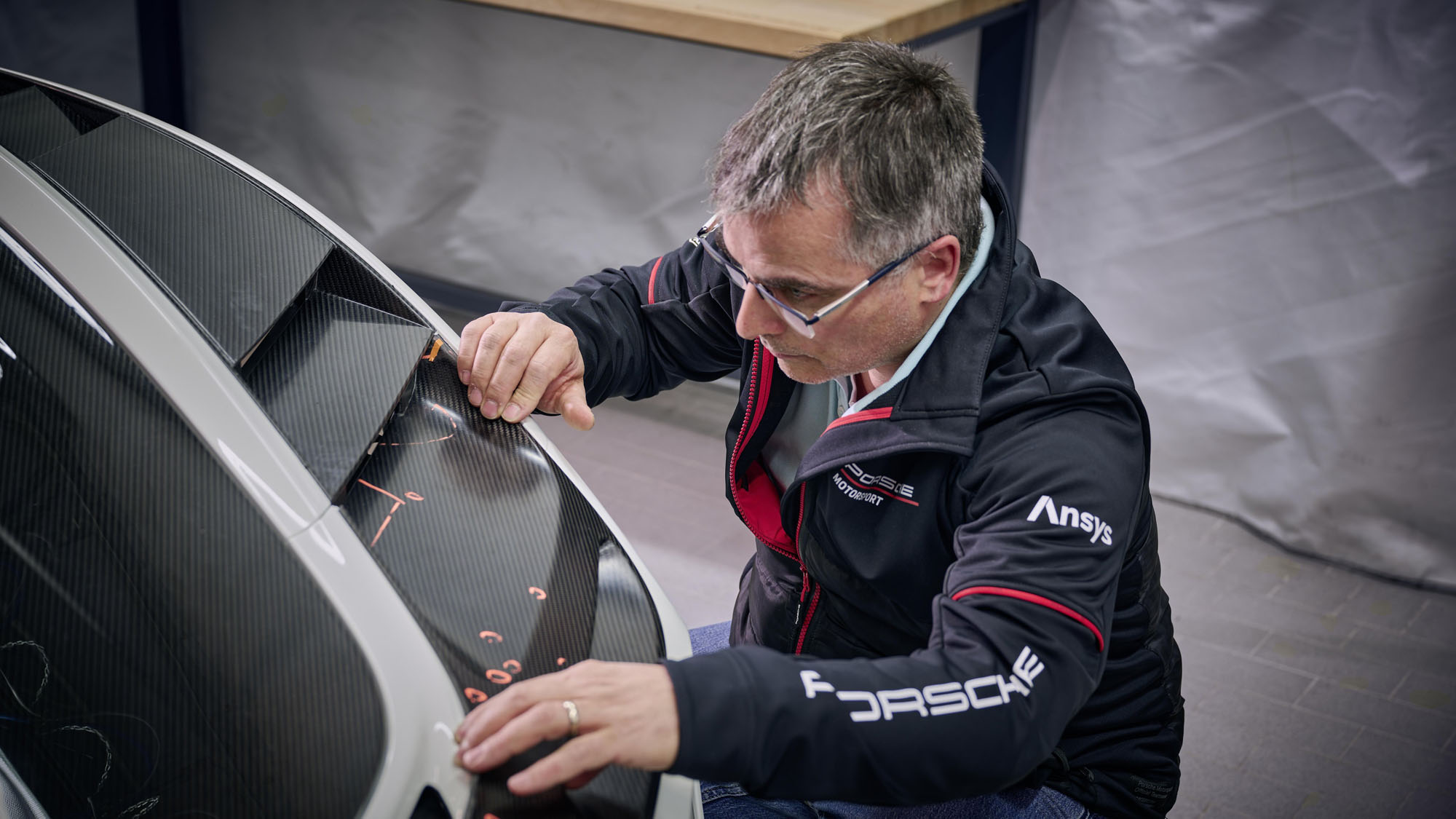
“The colour scheme also deliberately plays on tradition and modern reinterpretation: “We have combined Grand Prix White with sections painted matt black and other areas with exposed carbon fibre,” Larson continues. “This creates contrast, and the U-shaped contrast element at the front echoes a design feature of the Martini-liveried 935/78 – the famous ‘Moby Dick’. Porsche developed a special white tone for this one-off car. A historic 911 in Grand Prix White from the Porsche AG collection served as the reference, which the experts used to precisely match the colour shade.
Purist design: the Flachbau body
The Flachbau RS replaces the GT2 RS’s familiar front end with lower wings featuring louvered air outlets that relieve pressure inside the wheel arches. The new shape required changes to the fuel filler mechanism and a completely redesigned bumper, supplemented by Manthey aerodynamic flaps.
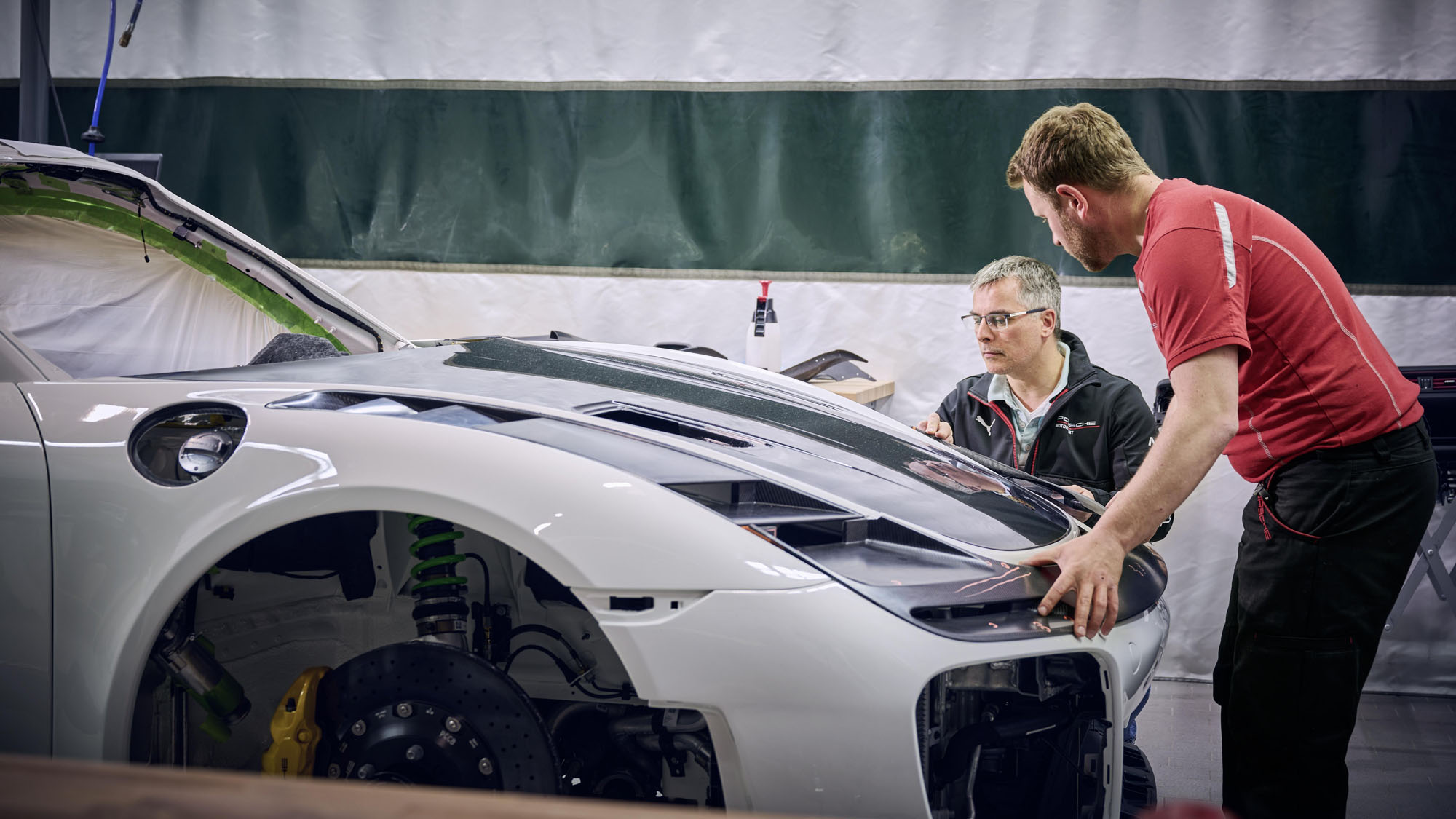
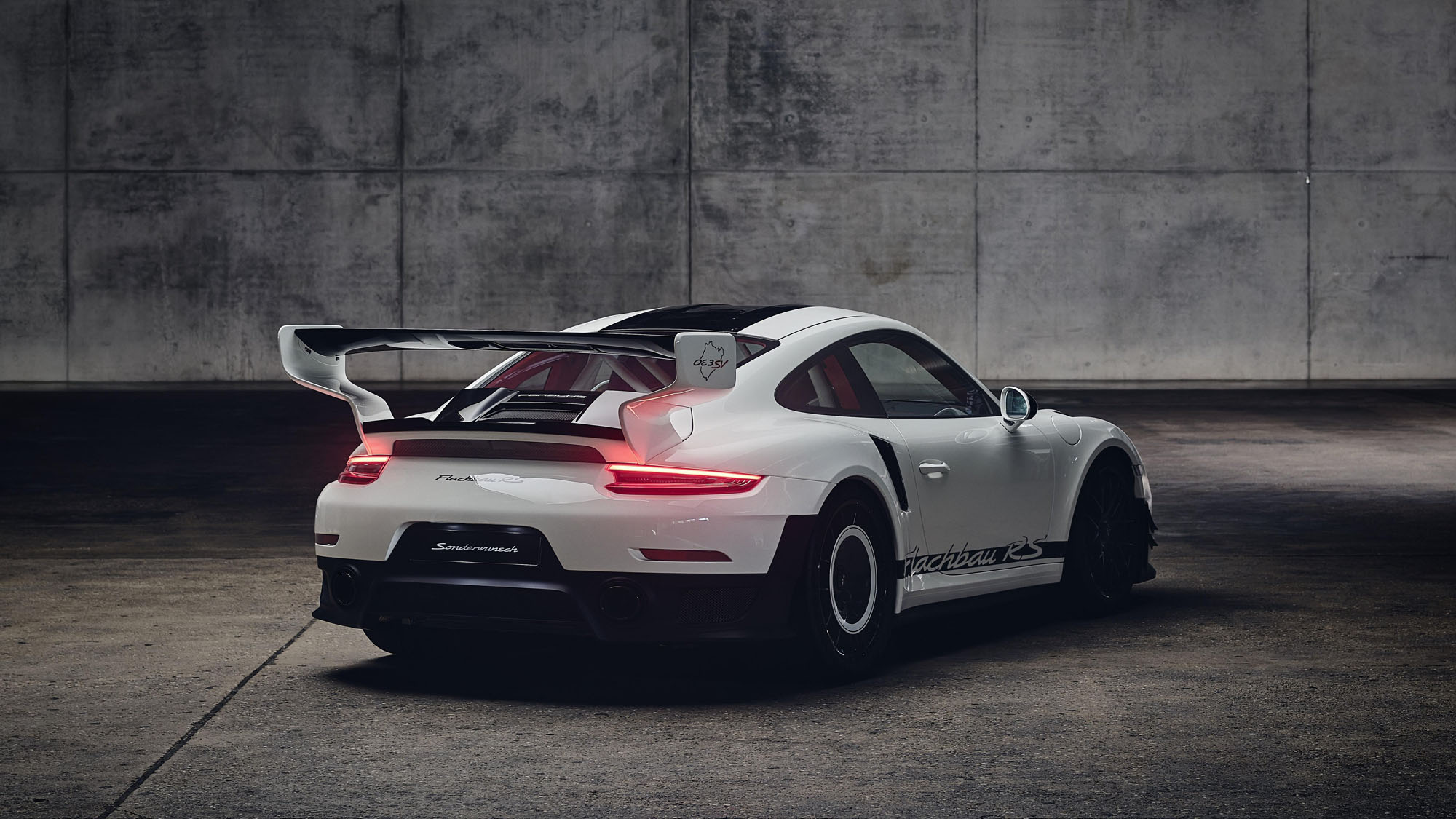
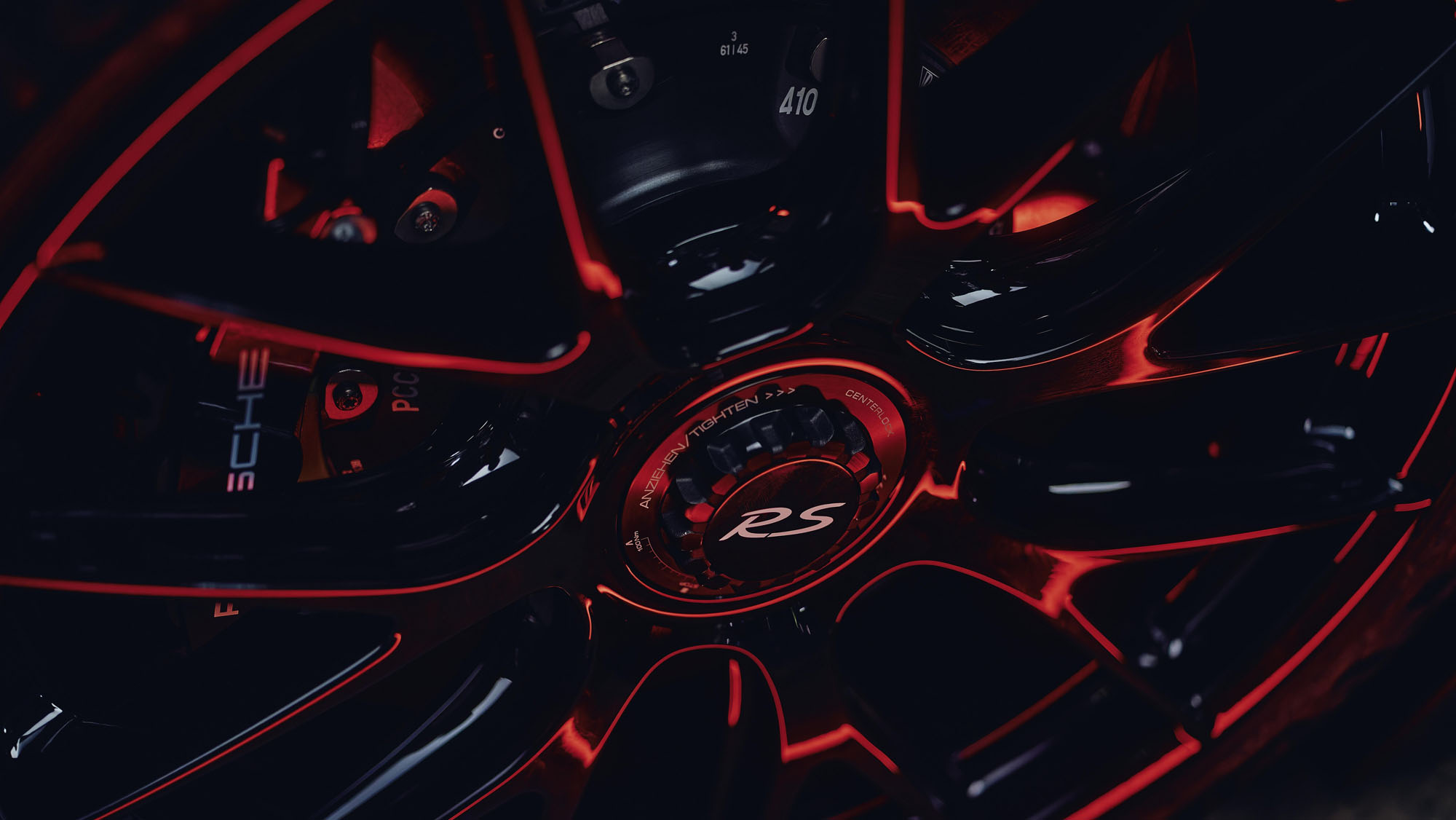
The traditional round headlights are gone. Three narrow LED elements for high beam, low beam and daytime running lights are stacked vertically, reinforcing the car’s distinctive slant nose profile. Grand Prix White, first offered on the 911 in 1974, covers the body. Black exposed carbon fiber forms the center stripe and U-shaped hood graphic, while Grand Prix White aerodiscs cover the rear wheels. Deep-black brake calipers complete the look.
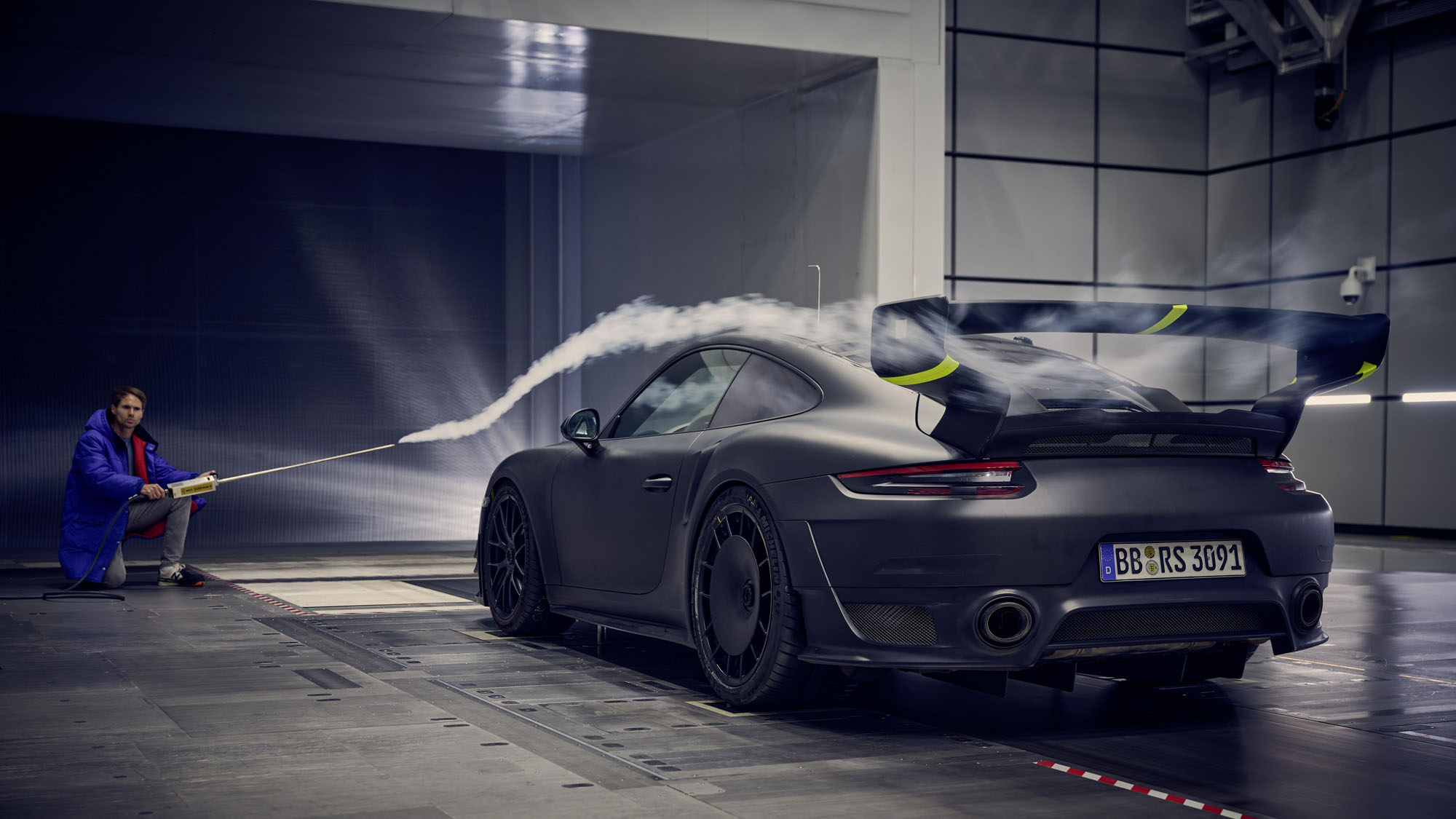
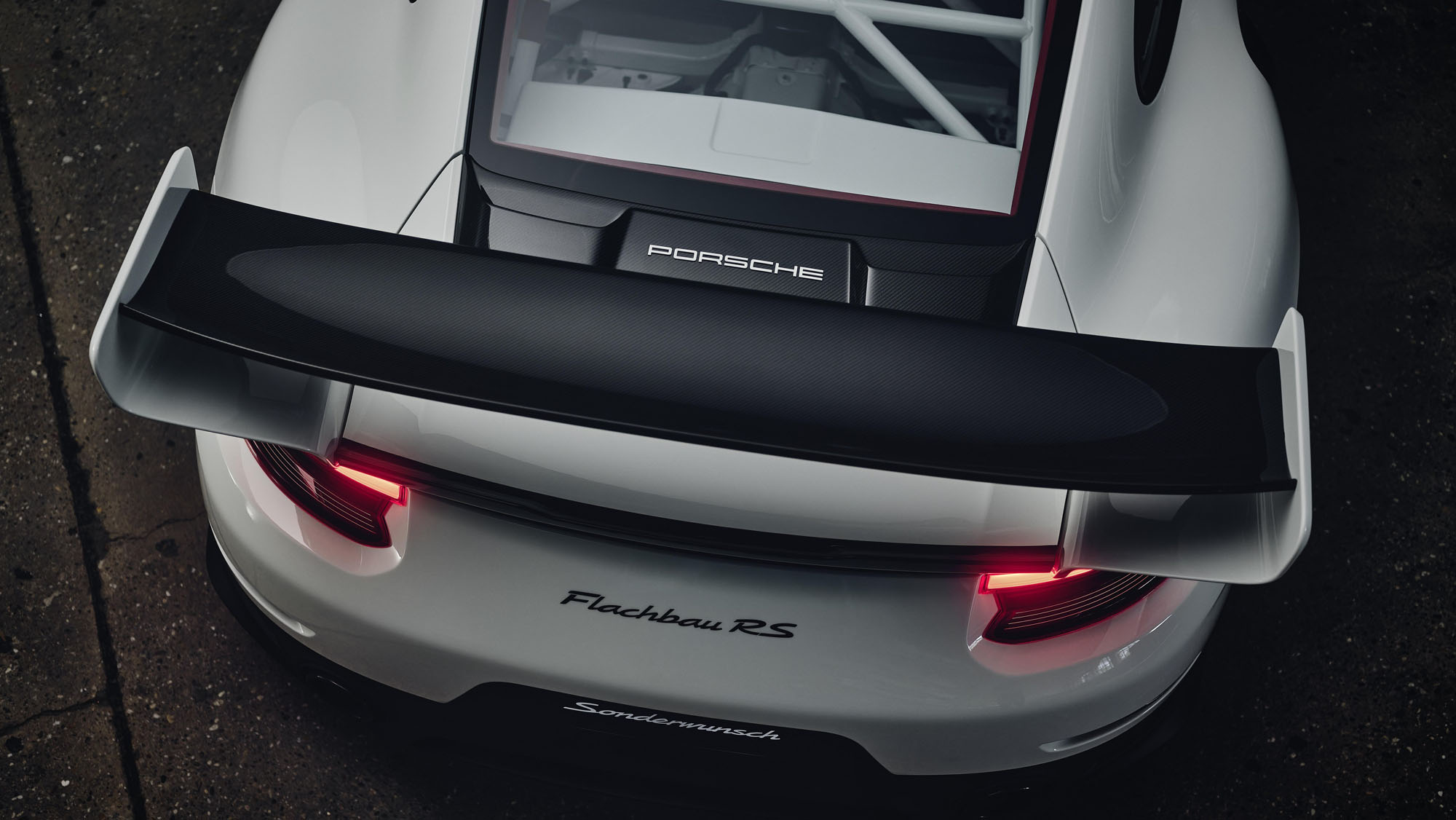
Aerodynamics were developed around a Manthey underbody and rear diffuser, carbon-fiber rear aerodiscs and a new wing inspired by the 911 GT3 R rennsport. The wing sits about five centimeters higher and can be manually set in three positions. At 340 km/h in its ‘High Downforce’ setting, the car generates 554 kg of rear-axle downforce.
Spartan perfection: the interior
The front cabin retains its red Alcantara, black leather and exposed carbon fiber, but behind the seats the Flachbau RS takes a decidedly racing-oriented approach.
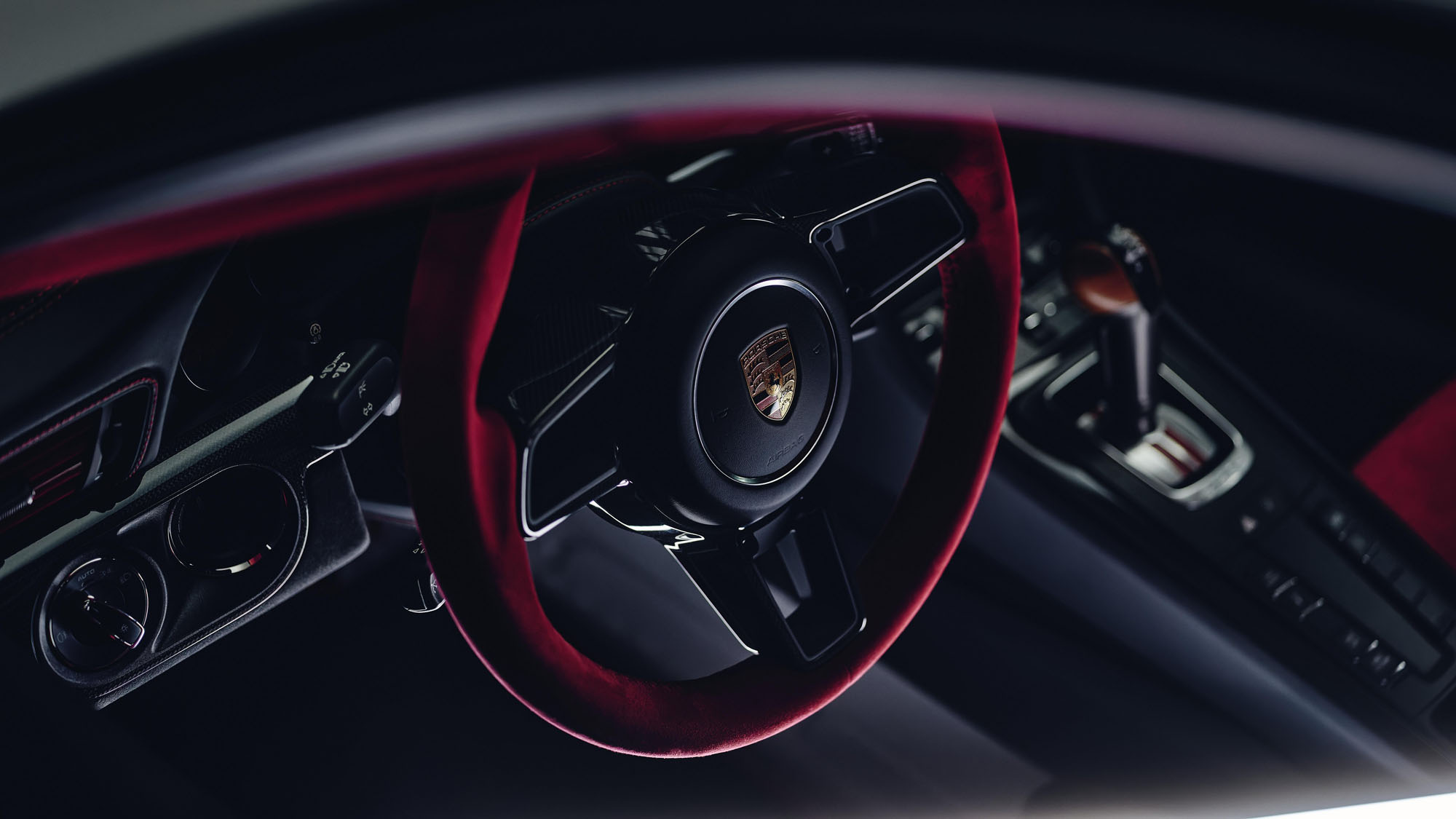
Porsche removed the PCM system, audio components, much of the sound insulation and numerous floor coverings. The PCM screen was replaced by a leather-trimmed storage compartment. Exposed Grand Prix White metal, carbon trim and a visible wiring harness underscore the stripped-down character, with unnecessary individual wires removed to save additional weight.
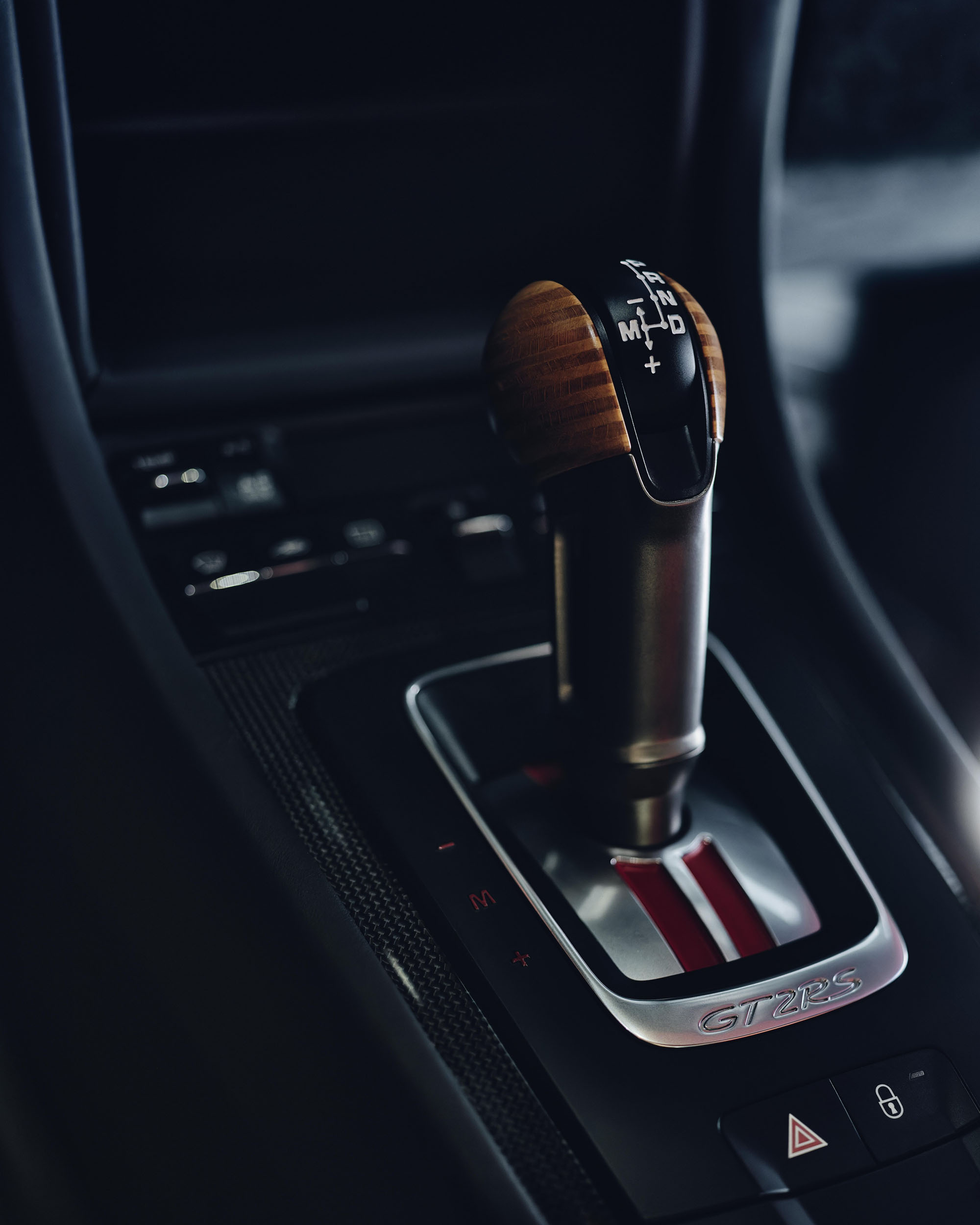
The carbon-fiber bucket seats carry embroidered ‘Flachbau RS’ lettering and a stylized outline of the Nordschleife. A gold-colored passenger-side dashboard badge reads ‘Sonderwunsch,’ accompanied by a plate engraved ‘Factory One-Off 2026 | Flachbau RS’.
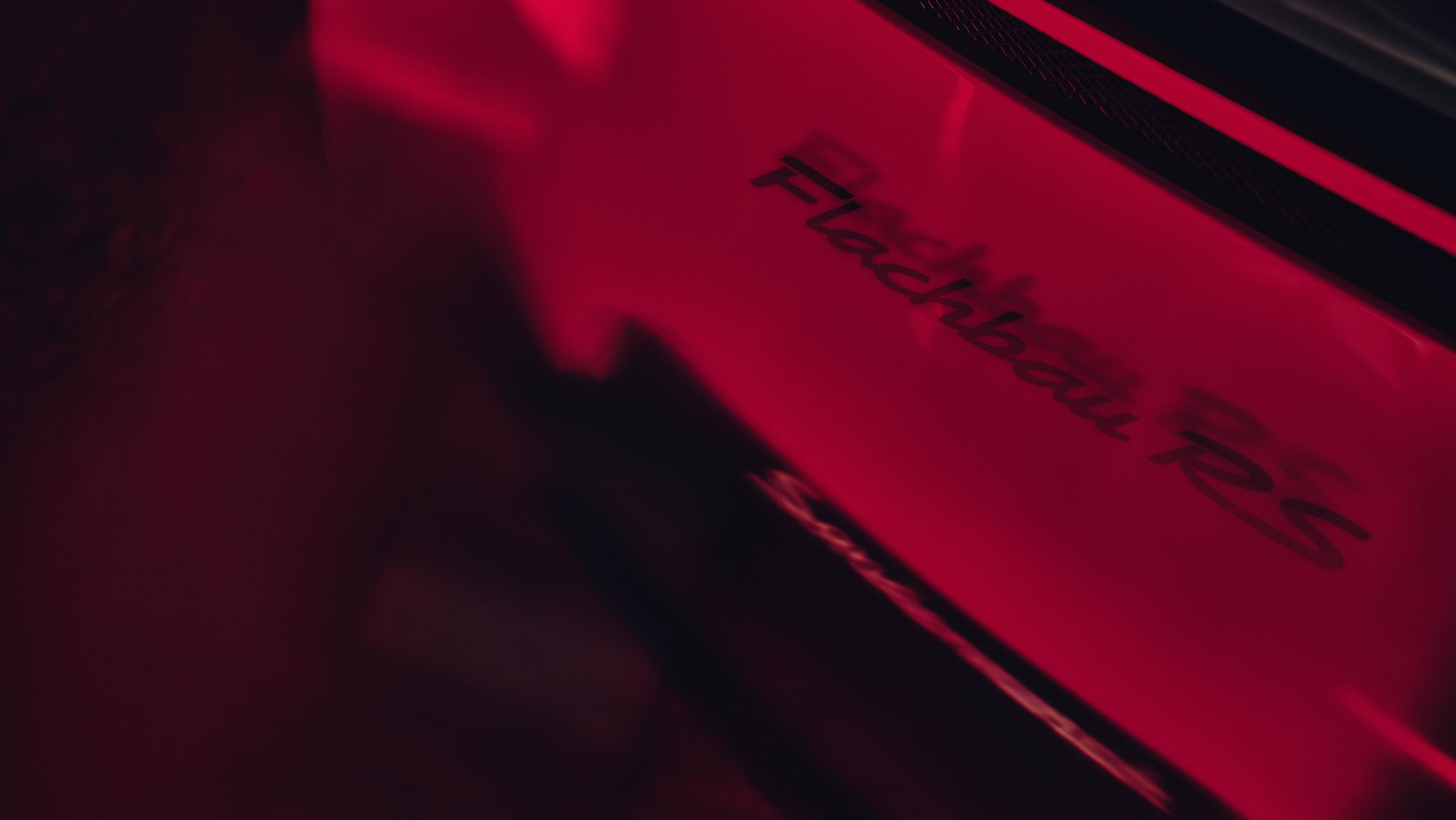
Even the warning triangle and towing eye were reconsidered. Their conventional mounting points were removed, with the required equipment placed in a removable ‘emergency box’ that can be taken out for track use.
Extensive testing: at Weissach and on the Nordschleife
Before physical testing began, Porsche conducted digital crash simulations, airbag validation, structural analysis and Computational Fluid Dynamics studies. Only after those tests were completed did production begin on tooling for the new components.
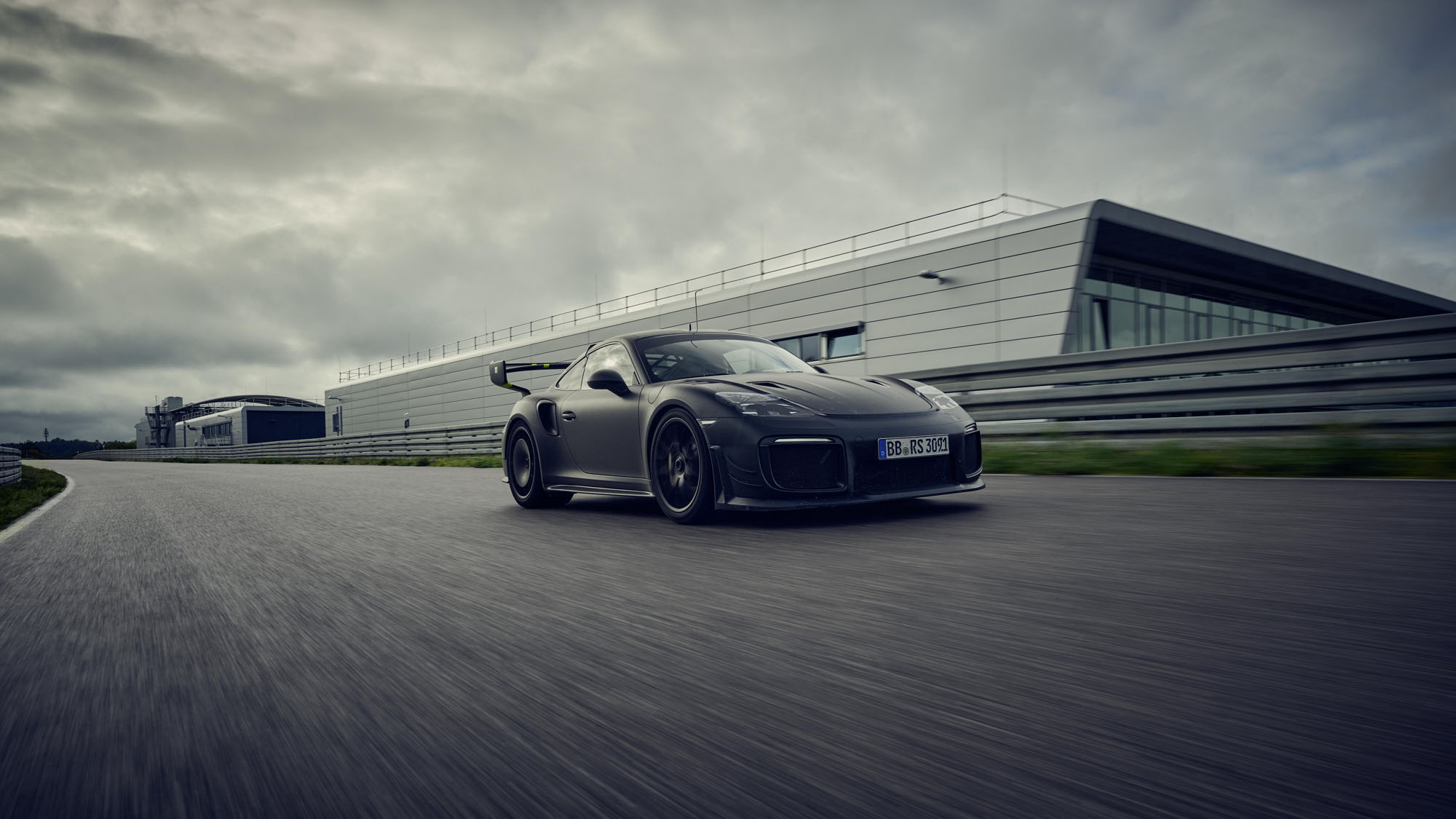
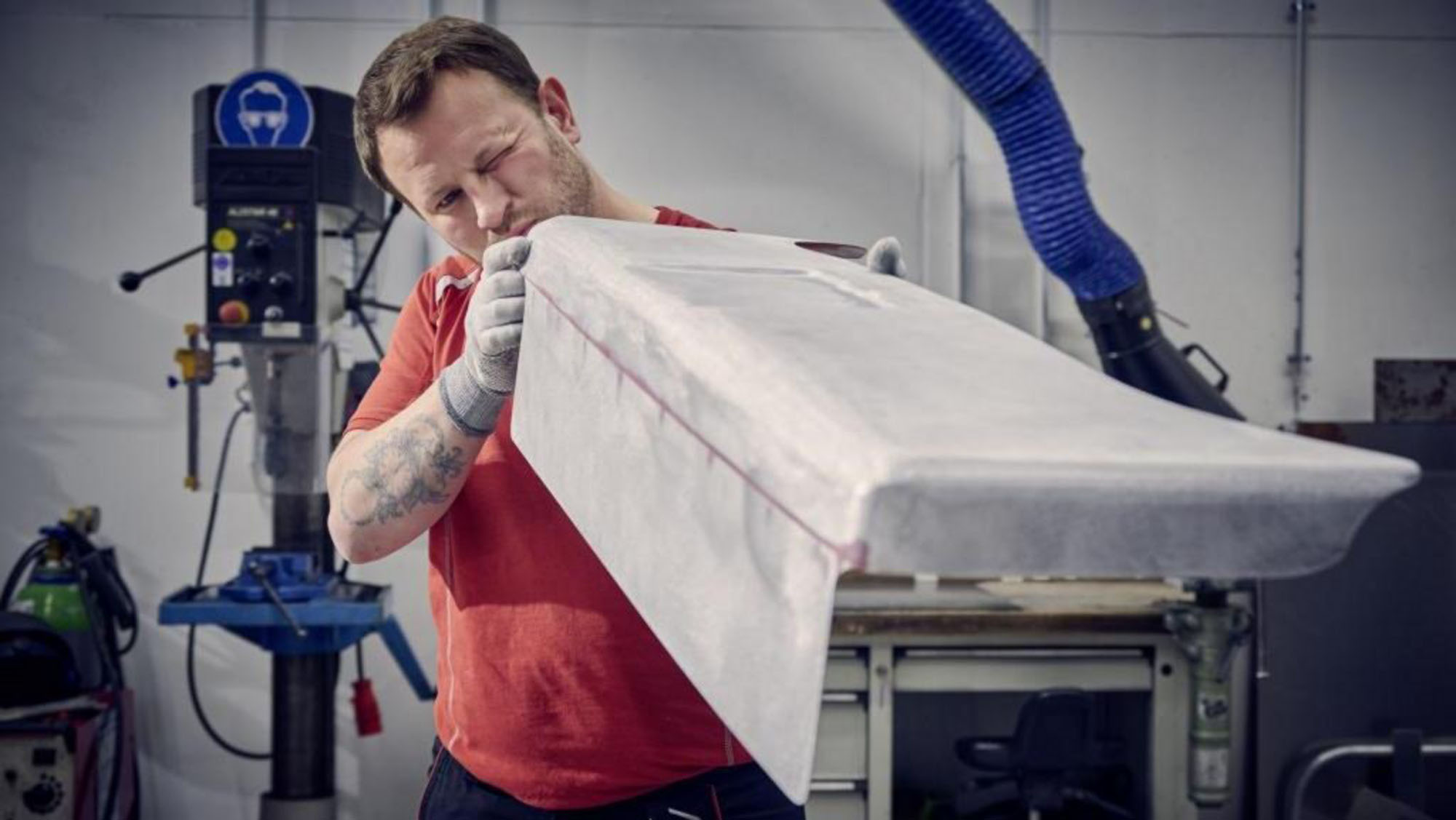
The rear wing underwent vibration testing on a hydropulse rig and static load testing with sandbags. Porsche then built three test vehicles for wind-tunnel and lighting work, road testing and track validation.
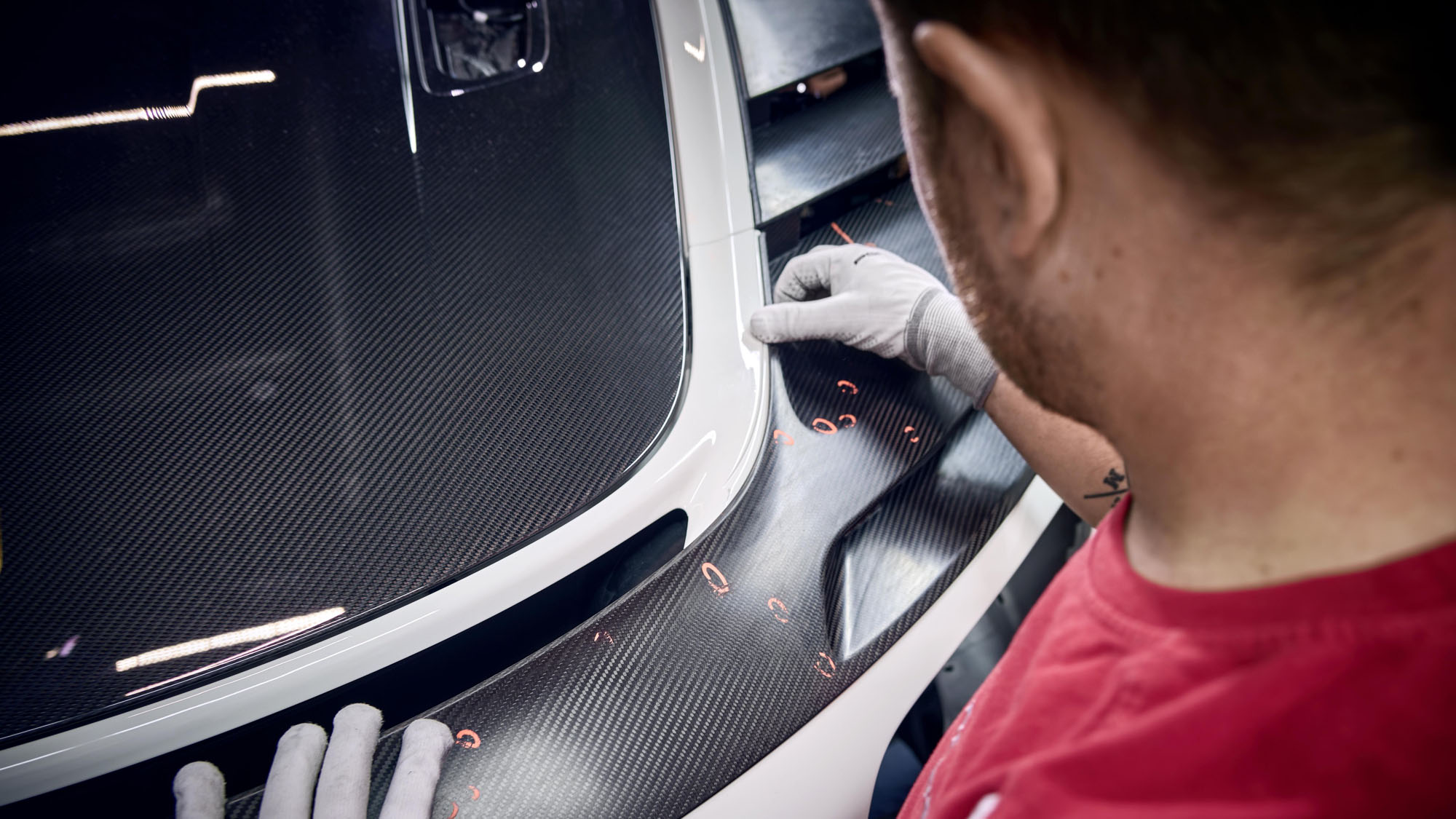

Testing included runs at Mendig airfield, 50 laps of the Nürburgring-Nordschleife and endurance work at Weissach. Combined, the tests subjected the rear wing to loads equivalent to roughly 150,000 kilometers of customer use.
“On the Nordschleife, it becomes immediately clear how cleanly aerodynamic concepts work,” says Porsche test driver Lars Kern, who drove the sports car on the famous track. “The Flachbau RS remains extremely stable and precise even at very high speeds. This is exactly the kind of feedback needed in order to validate such a radically altered body design.”
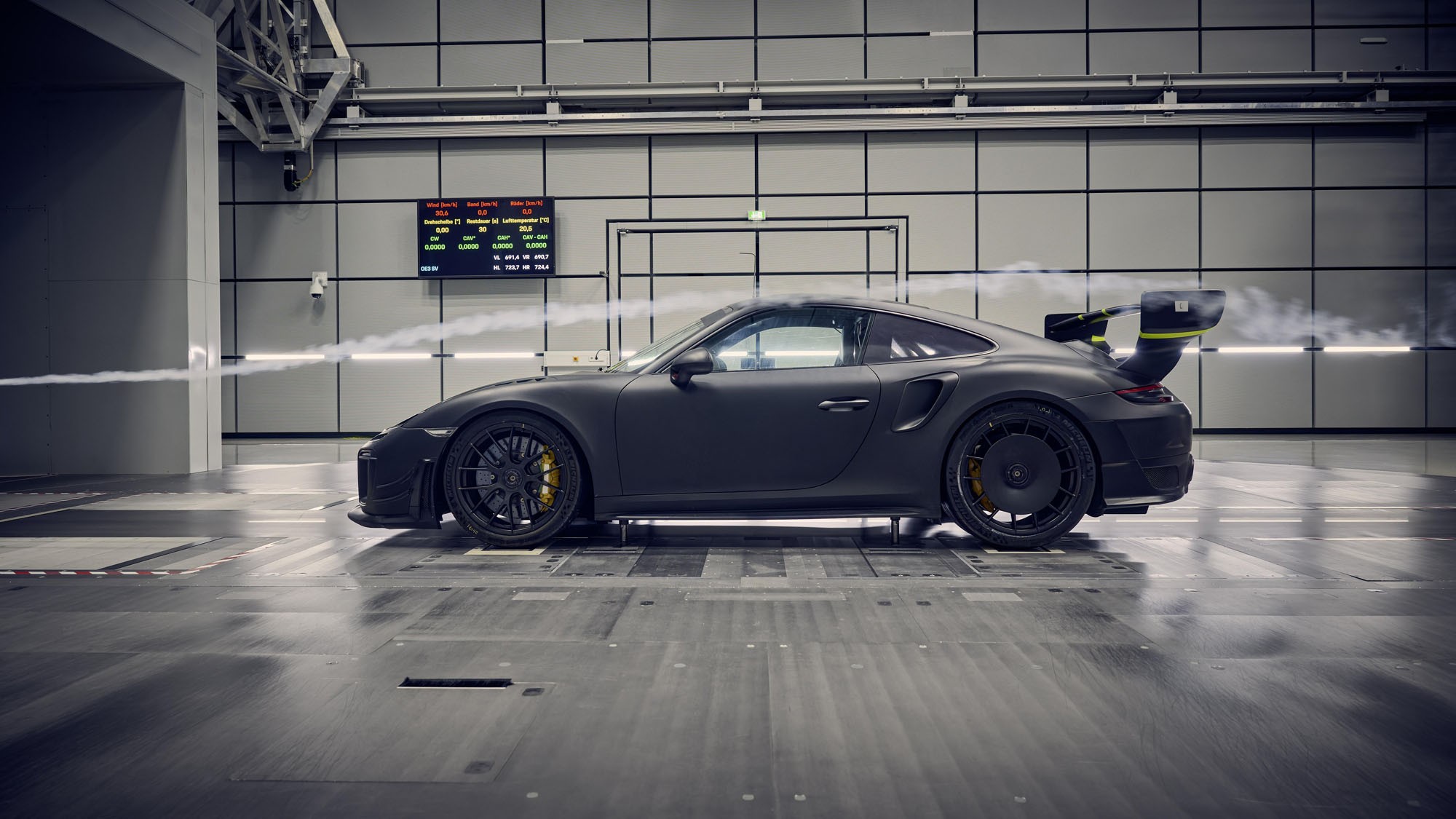
The camouflaged prototype also attracted considerable attention. Videos of the slantnose test car at the Nürburgring accumulated more than 100,000 social-media views within hours.
About the Porsche 935
Developed from the Type 930 911 Turbo, the Porsche 935 became one of the most successful production-based racing cars of its era. Beginning in 1976, it helped Porsche win four consecutive World Championship for Makes titles and scored major victories at Sebring, Daytona and Le Mans. The dramatically elongated 935/78 became known as ‘Moby Dick’.
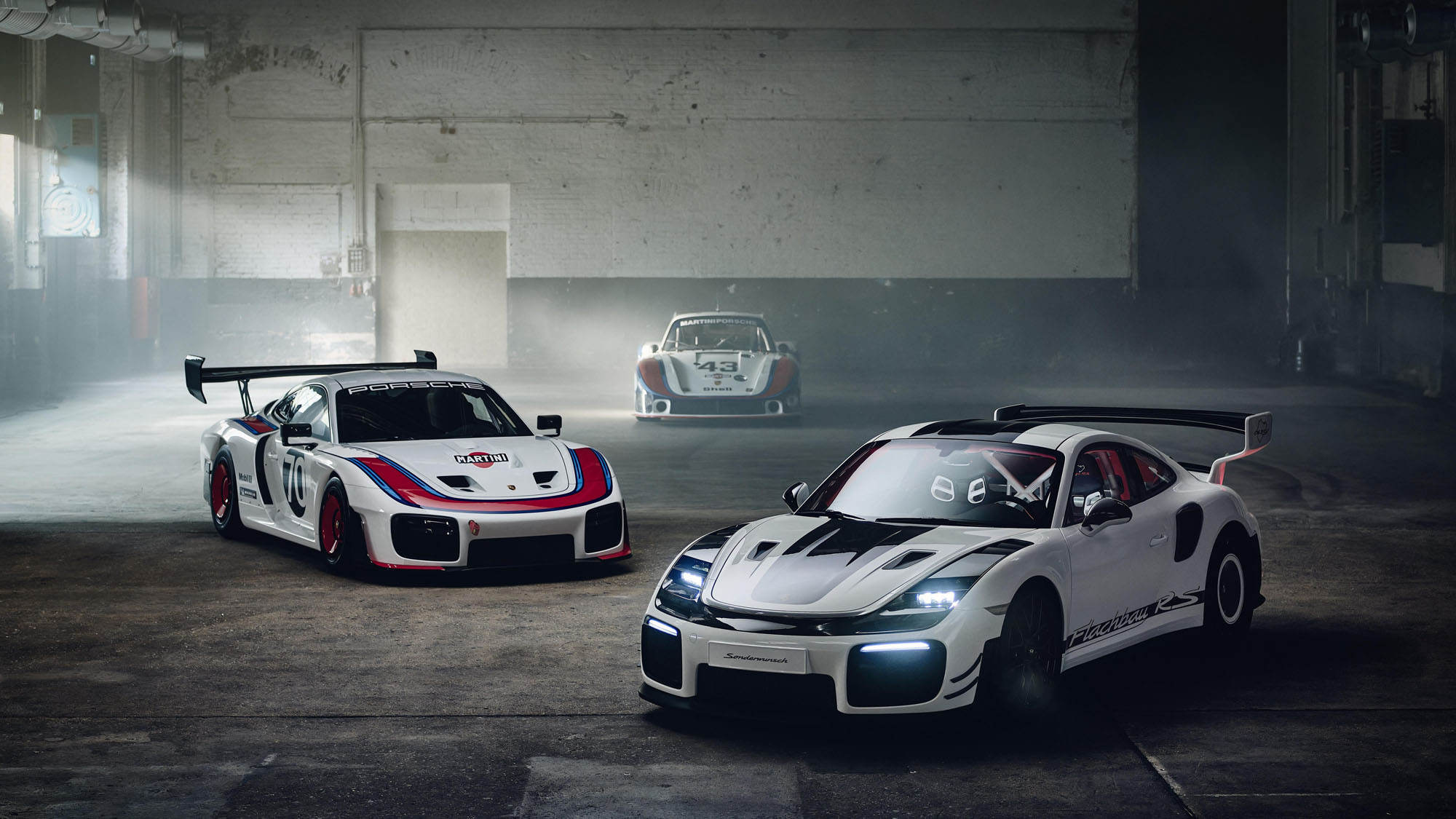
Porsche revived the concept in 2018 with a modern 935 celebrating 70 years of Porsche sports cars. The 700 PS clubsport racer was limited to 77 examples.
Above contents © 2026 Dr. Ing. h.c. F. Porsche AG reviewed and edited by Rex McAfee , @rexmcafee 🏁
#Porsche #Porsche911 #Porsche935 #GT2RS #FlachbauRS #Sonderwunsch #Manthey #Nurburgring #PorscheMotorsport #ClassicPorsche