A very late number identified a Porsche planned for the future to cope with the changing environment. An elite group of its engineers brainstormed to create the methods and materials that would address the coming challenges.
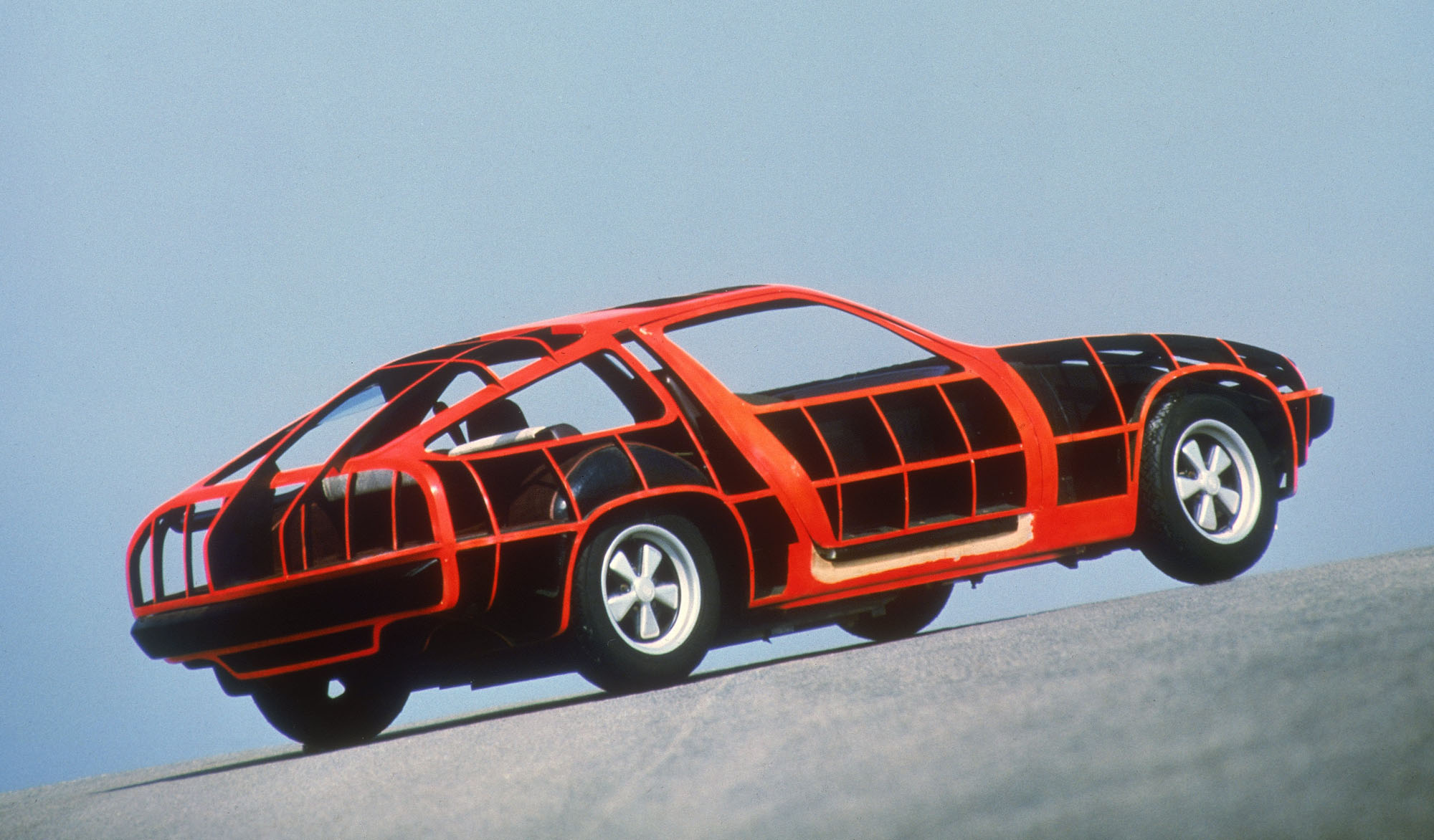
Pictured at a jaunty angle, the Type 995 shows a rear end that is built in two different sections to assess optional concepts.
In the late 1970s Germany’s Federal Ministry for Research and Technology launched a national program to inspire and guide car producers toward more efficient, lower-emission and potentially smaller passenger cars. This sounds like a huge challenge and it was. But some rationality was powering the initiative. A concentration of negative factors was steadily pressing on Germany’s automobile producers. First and foremost were the 1973 and 1979 oil crises. These highlighted the vulnerability of oil-dependent transportation. Linked with this was a growing concern over the role of the automobile in creating excess air pollution and its sister, heavy fuel consumption. This in turn raised questions about car weight and bulk — two parameters that tended to expand steadily year by year.
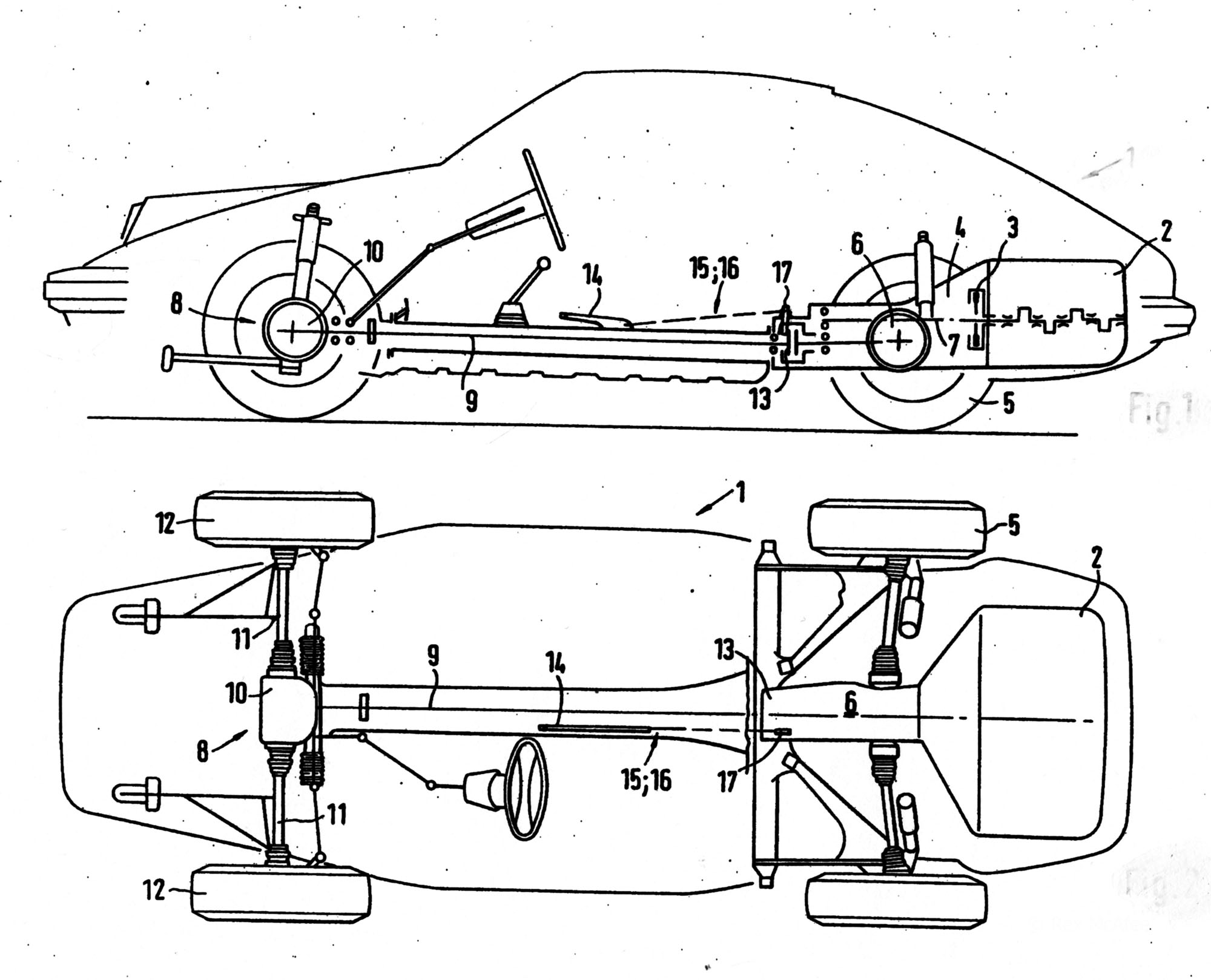
A study with a rear engine shows it driving forward to power all four wheels. But this didn’t have a good basis for further development.
Known as the Bundesministerium für Forschung, BMFT for short, Germany’s Federal Office for Technology stepped into the complex issue of forecasting the challenges and solutions of the 1980s motor vehicles looming ahead. Its in-house experts spread the word to Opel, Audi, Daimler-Benz, Volkswagen and Porsche to probe what they proposed building for the coming decade.
No Subscription? You’re missing out
Get immediate ad-free access to all our premium content.