

Story and photos By Joseph Chinea
Every Porsche has a story. The 911 has mythology. The 944 has had its moment in the sun. The 924S has something rarer: it has the truth on its side, and almost nobody knows it.
That’s what makes this car special. Not just my car — the model itself. And then, yes, my car.
The car they got wrong
The 924S was born into a no-win situation. The 911 faithful dismissed the whole transaxle line as “not real Porsches.” The 944 crowd treated the 924S as the budget knockoff of their car. It was built for only two model years, 1987 and 1988, and then Porsche moved on as if it had never happened.
But here’s what those dismissals miss: the 924S is the 944’s 2.5-liter engine in the lighter, earlier 924 body.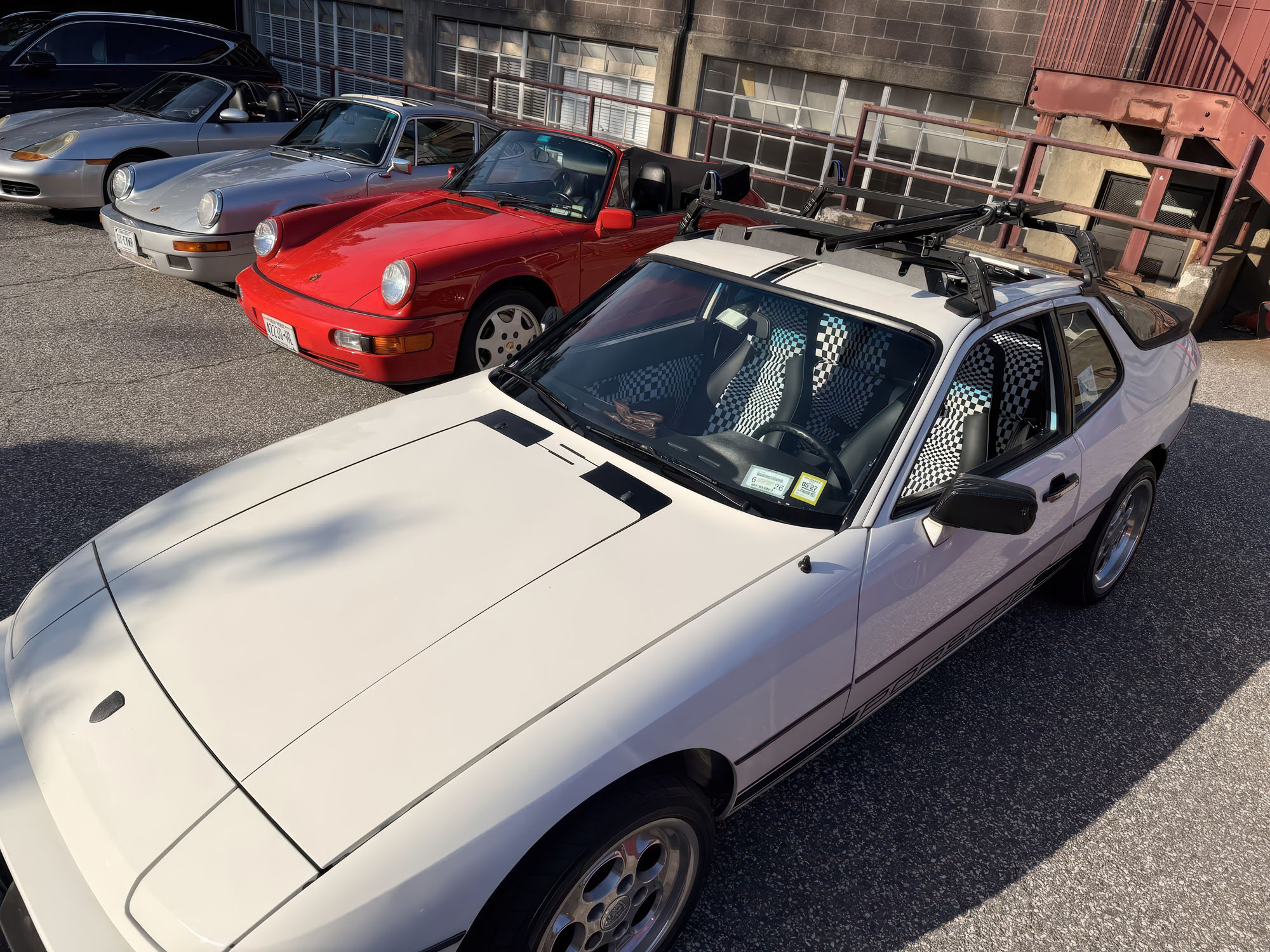
It’s the sweet spot of the transaxle program — the balance and poise the 924 chassis was always praised for, finally paired with the power it always needed. In 1988, 160 horsepower in a car this light and this balanced wasn’t a compromise. It was the formula, perfected, right before Porsche canceled it. The market is starting to figure this out. The 944’s prices climbed. The 924S sat still, waiting. Underdogs don’t stay underpriced forever. They stay underpriced until the story gets told.
What makes this one special
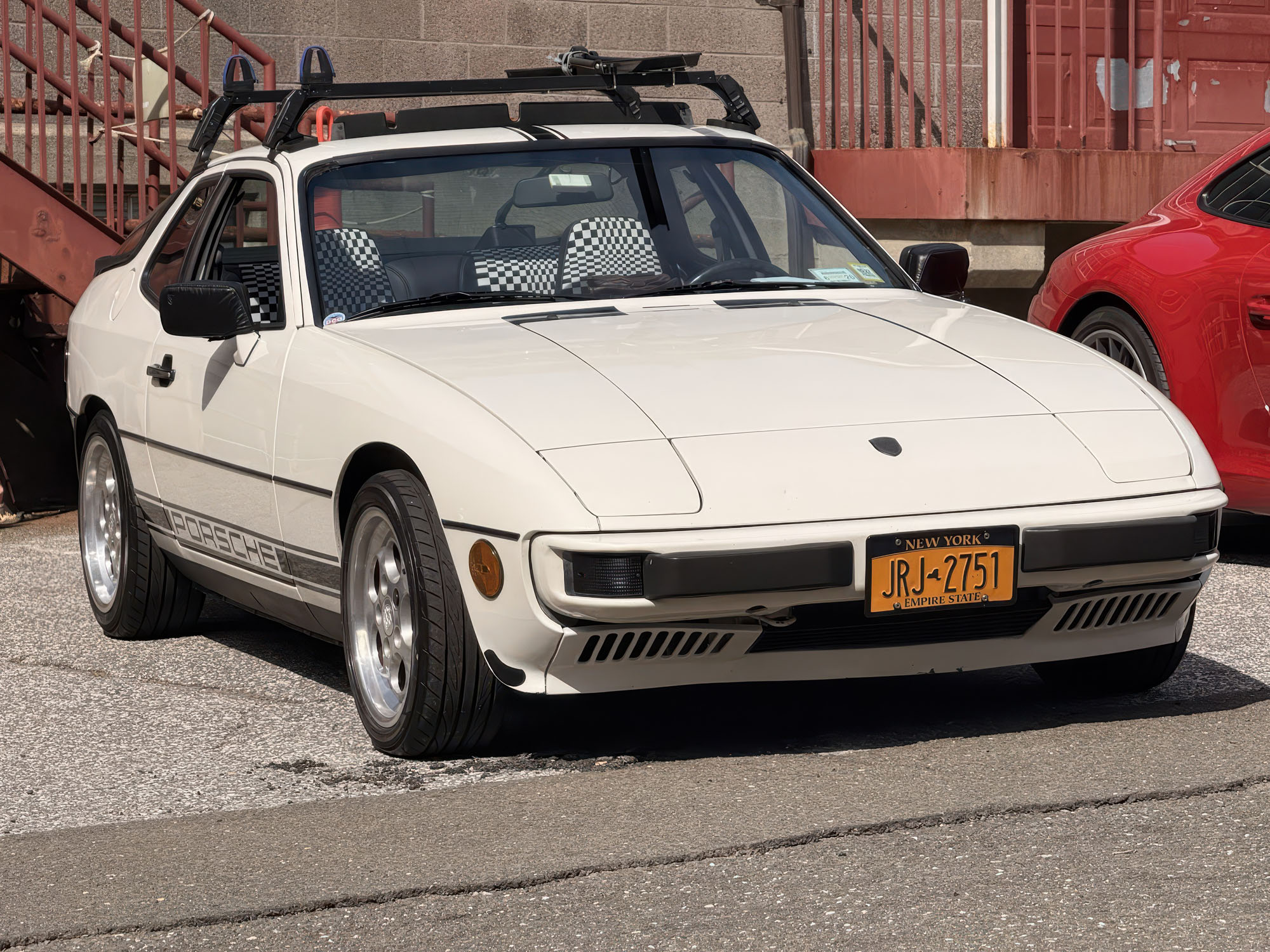
Mine is a 1988 — the final year — one of 2,193 built for North America, finished in Alpine White. That’s the foundation.
What makes it special is what I did with it. I didn’t restore this car to some factory ideal. I built the 924S that Porsche never quite offered: a full Pasha checkered interior with matching door cards, installed to make the car pop.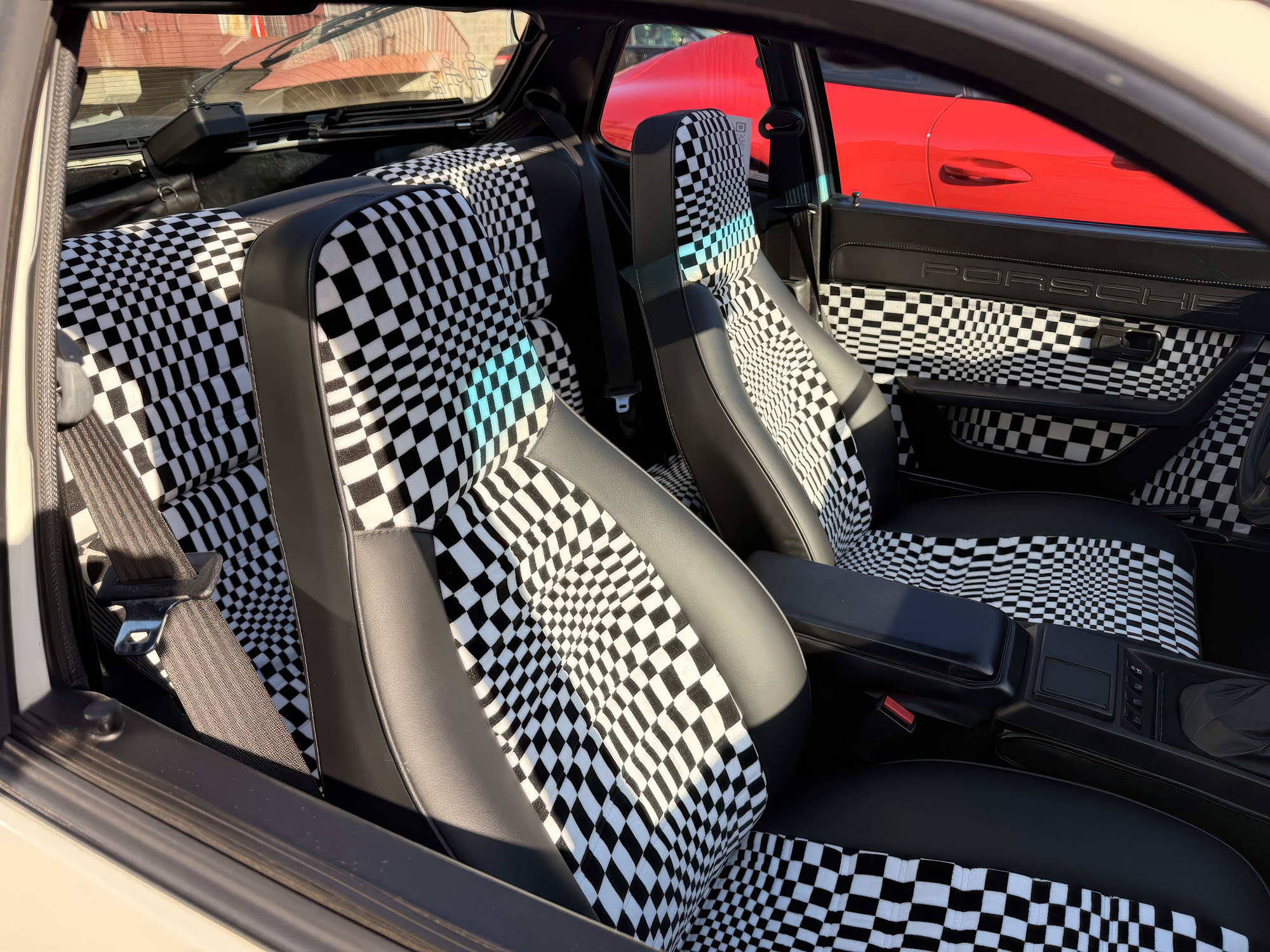
A Saratoga glass roof panel overhead. A Porsche/Eckel roof rack with its ski carriage that I hunted down and bought myself because the accessory barely exists anymore. A clear timing-belt cover I sourced so the engine bay starts conversations. Factory-correct decals I installed by hand. Sixteen-inch Turbo phone dials with Porsche key locks. The 924 Turbo front valance. The rear wiper. The black PORSCHE side stripes.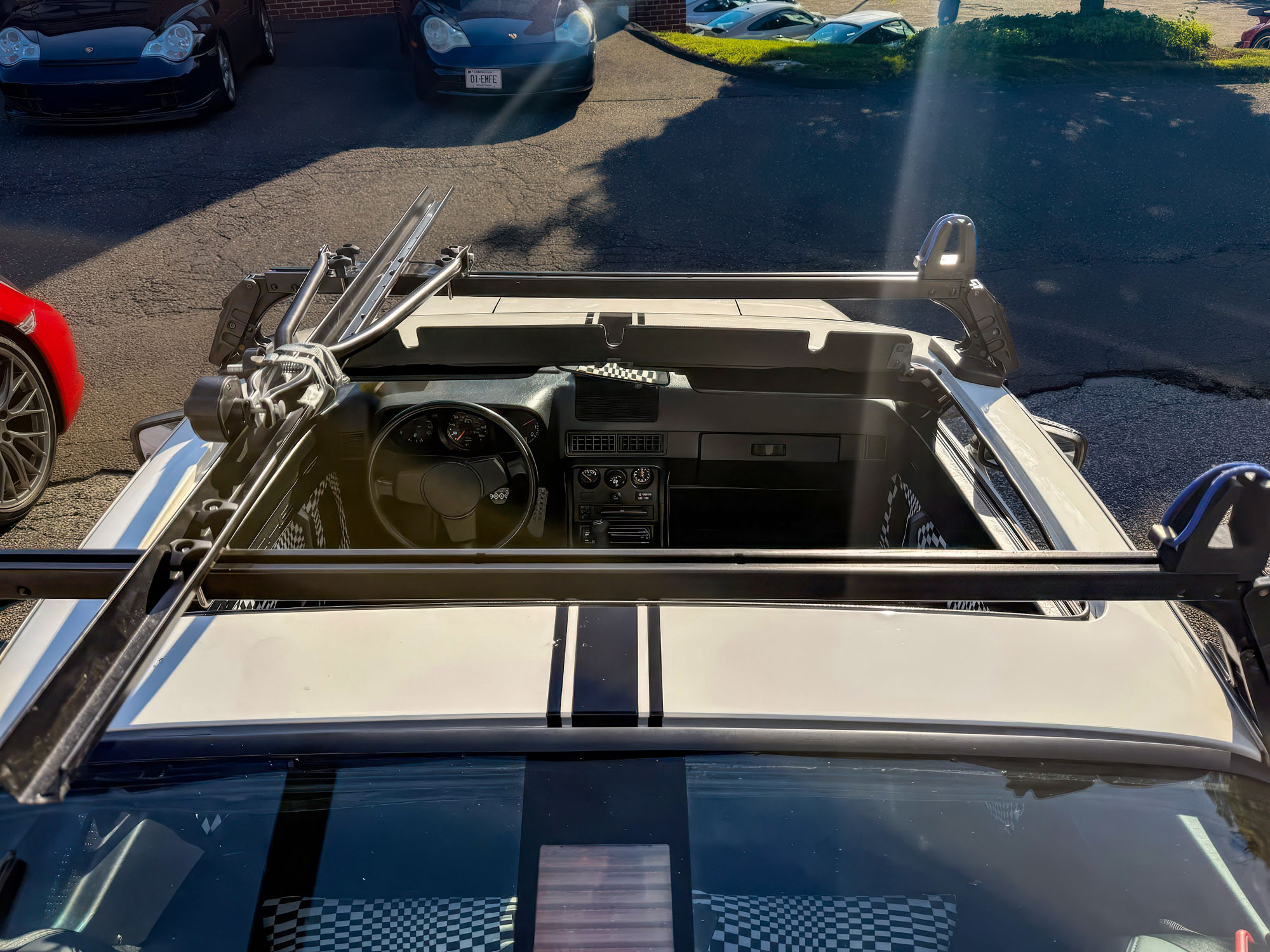
None of it was an accident. Every piece was a decision. The result is a combination I haven’t seen duplicated — not because the individual parts are impossible to find, but because nobody else thought to put them together on this car.
The part you can’t photograph
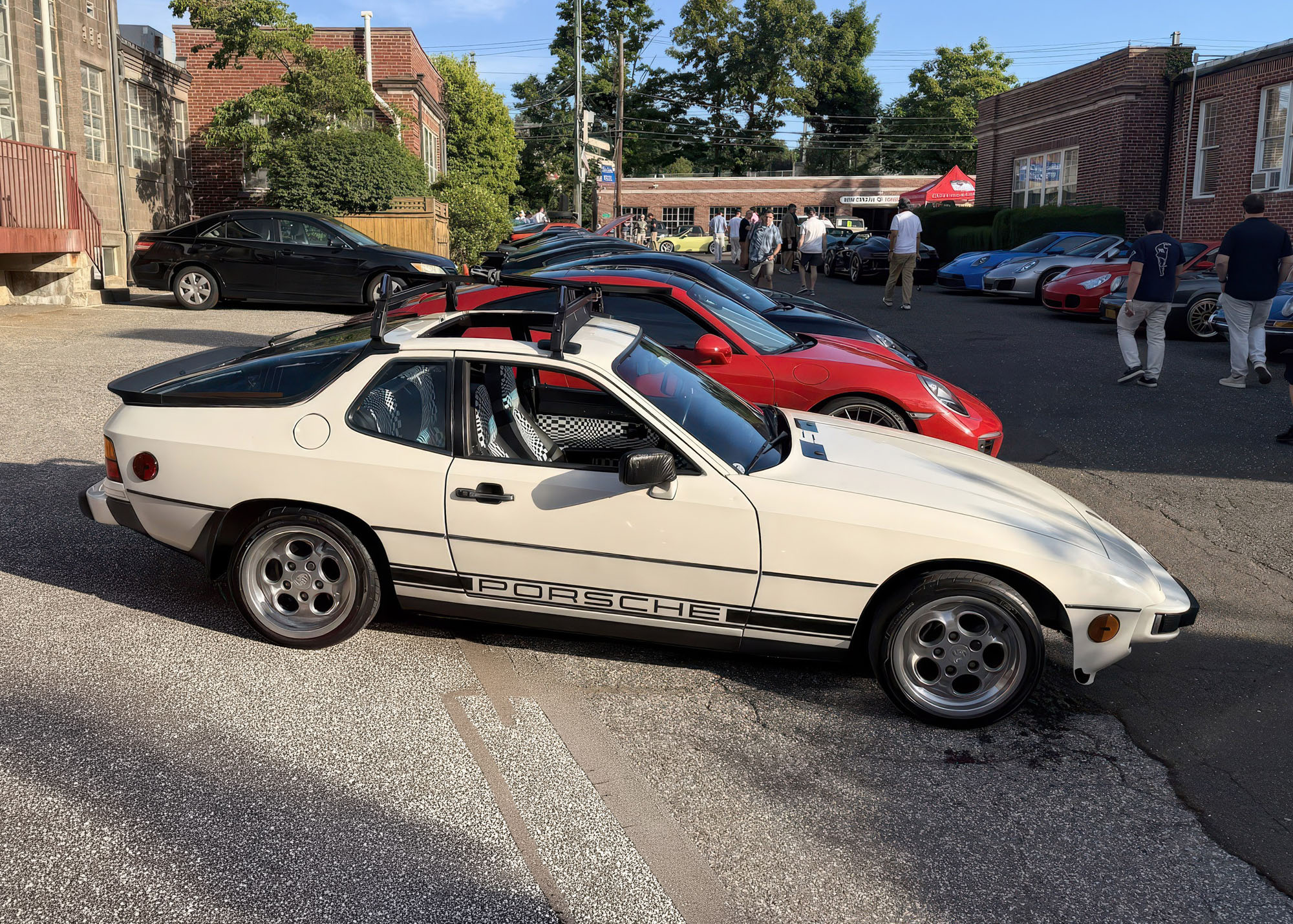
Here’s what the spec sheet will never capture: what this car does to people. At every cars-and-coffee, every show, every gas station, the same thing happens.
Someone walks past the 911s, past the 944s, and stops at the white 924S with the checkered seats and the roof rack.
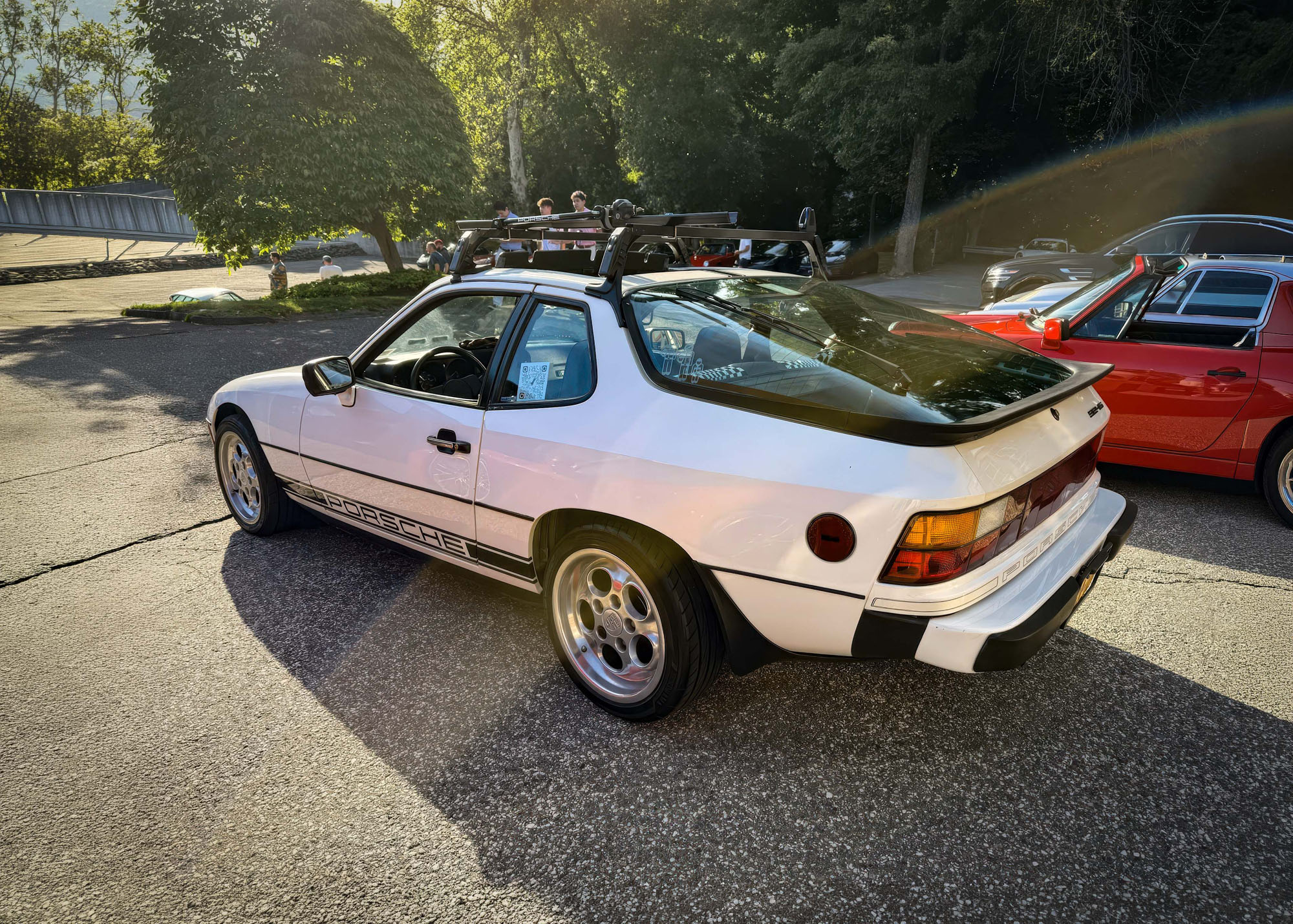
They lean in. They ask questions. They tell me about the 924 their uncle had, the one that got away, the one they always meant to buy.
This car doesn’t just attract enthusiasts — it unlocks them.
That’s the real answer to “what makes it special.”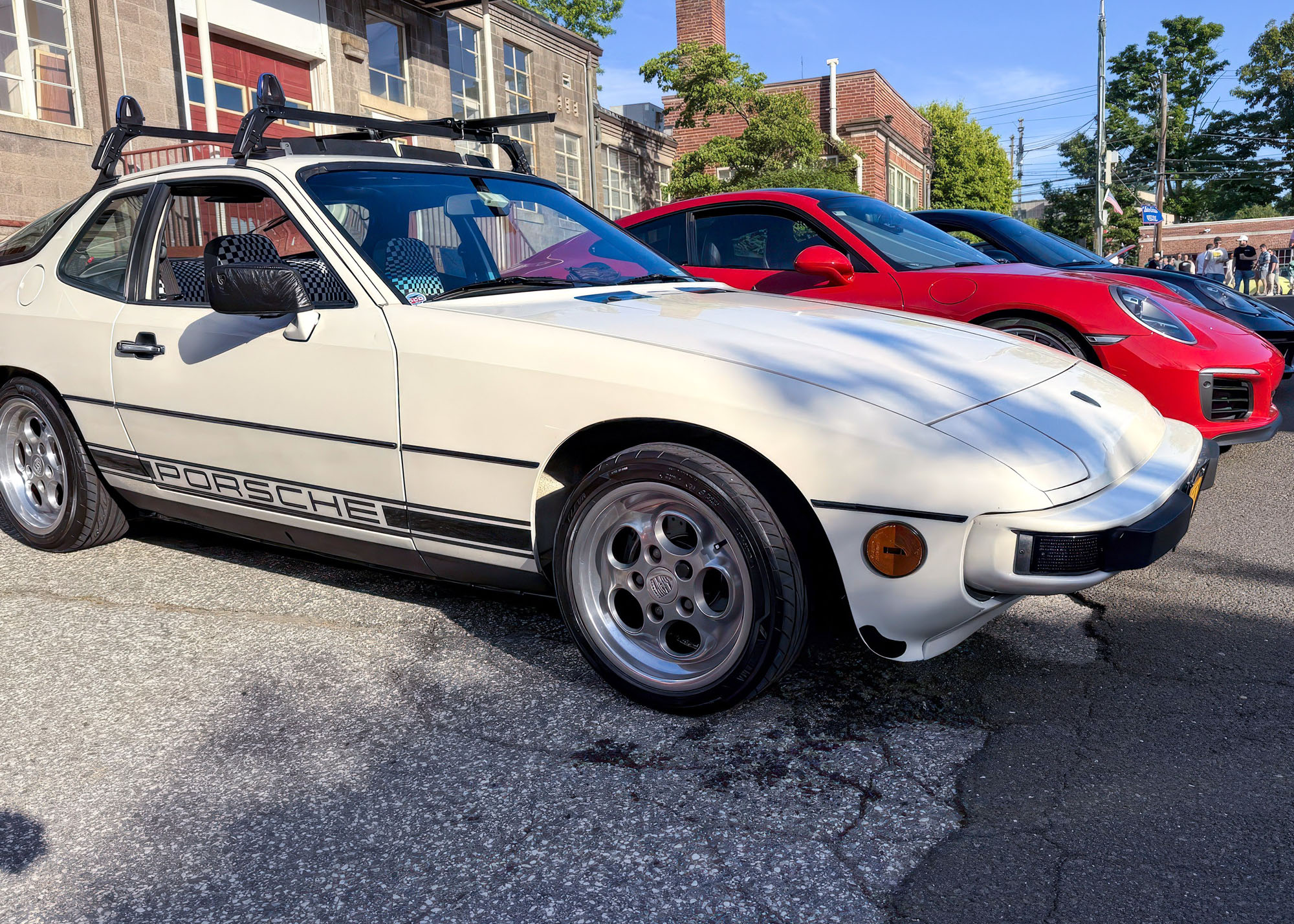
It’s not the production number, though 2,193 is a hell of a number. It’s not the Pasha or the rack or the glass roof, though I’d stack them against any spec sheet in the transaxle world.
It’s that this car makes people feel something — curiosity, nostalgia, the itch of a missed opportunity — and then it makes them talk.
A special car isn’t the one with the biggest price tag. It’s the one people remember after they’ve walked the whole field. They remember this one.