Porsche 924 Spare Parts Catalogs (1976 – 1979 Model Year) These official Porsche PET Diagrams and codes for the Porsche...
Porsche Option Codes – Porsche 924 (1988 Model Year) Looking to decode your 1988 Porsche 924 option codes? Want to...
Porsche Option Codes – Porsche 924 (1987 Model Year) Looking to decode your 1987 Porsche 924 option codes? Want to...
Porsche Option Codes – Porsche 924 (1986 Model Year) Looking to decode your 1986 Porsche 924 option codes? Want to...
Porsche Option Codes – Porsche 924 (1985 Model Year) Looking to decode your 1985 Porsche 924 option codes? Want to...
Porsche Option Codes – Porsche 924 (1984 Model Year) Looking to decode your 1984 Porsche 924 option codes? Want to...
Porsche Option Codes – Porsche 924 (1983 Model Year) Looking to decode your 1983 Porsche 924 option codes? Want to...
Porsche Option Codes – Porsche 924 (1982 Model Year) Looking to decode your 1982 Porsche 924 option codes? Want to...
Porsche Option Codes – Porsche 924 (1981 Model Year) Looking to decode your 1981 Porsche 924 option codes? Want to...
Porsche Option Codes – Porsche 924 (1980 Model Year) Looking to decode your 1980 Porsche 924 option codes? Want to...
Porsche Option Codes – Porsche 924 (1979 Model Year) Looking to decode your 1979 Porsche 924 option codes? Want to...
Porsche Option Codes – Porsche 924 (1978 Model Year) Looking to decode your 1978 Porsche 924 option codes? Want to...
Porsche Option Codes – Porsche 924 (1977 Model Year) Looking to decode your 1977 Porsche 924 option codes? Want to...
Porsche Option Codes – Porsche 924 (1976 Model Year) Looking to decode your 1976 Porsche 924 option codes? Want to...
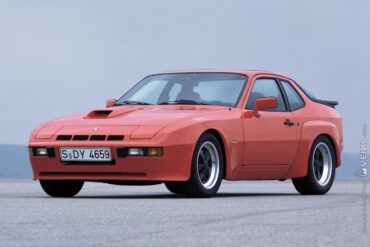
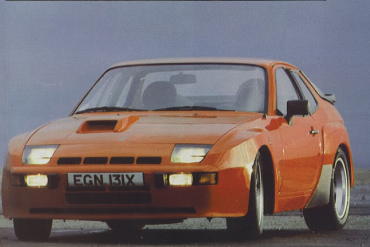
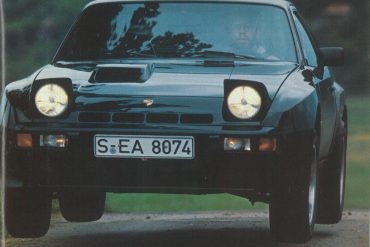
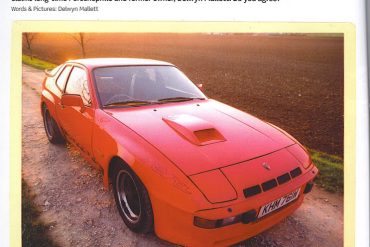
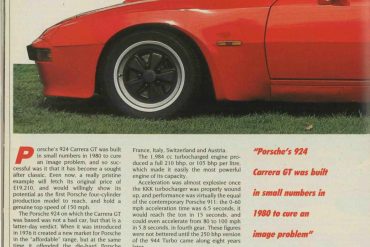
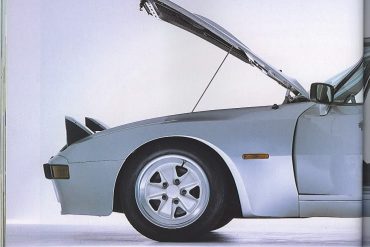
In 1979, Porsche unveiled a concept version of the 924 at the Frankfurt Auto show wearing Carrera badges. One year later, in 1980, Porsche released the 924 Carrera GT, making clear their intention to enter the 924 in competition. By adding an intercooler and increasing compression to 8.5:1, as well as various other little changes, Porsche was able to develop the 924 Turbo into the race car they had wanted, dubbing it the "924 Carrera GT". 406 examples (including prototypes) of the Carrera GT were built to qualify it for Group 4 racing requirements.
It is a fact that most of us with an interest in roadgoing or race cars, will have a favourite...
Anatole Lapine who was in charge of styling at Porsche under two disparate CEOs, Fuhrmann and Schutz, looks back on...
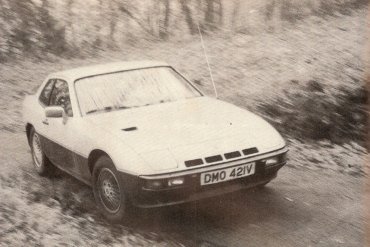
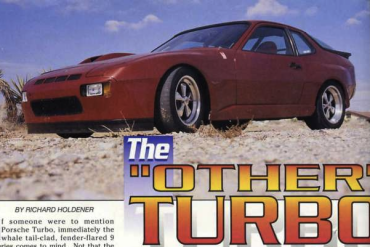
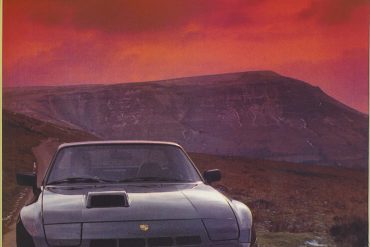
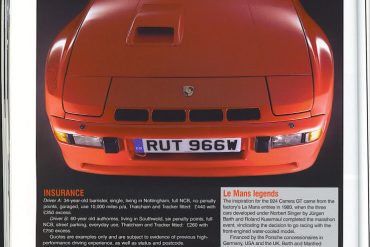
Porsche upgraded the performance of its 924 with the introduction of a turbocharged model in 1979. While the lower end of the engine remained unchanged, many improvements were made to the upper end of the engine as well as the drivetrain. On the outside, the car gained alloy wheels, a distinctive NACA duct in its hood, and a rear spoiler. Horsepower increased from the naturally aspirated 125 bhp to 170 bhp in the turbo.
The 1972 season broke, ushering in with it a new era of racing. The Porsche 917 had reigned supreme for...
More books have been written about Porsche than any other car company so the publication in English of another tome...
Every now and then a truly good book comes along, one that is not only excellent in its content, but...
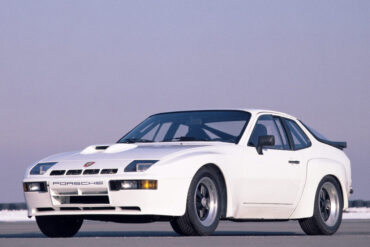
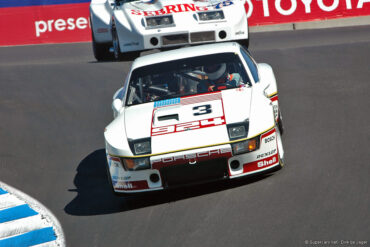
After the end of production of the 400 Porsche 924 Carrera GT road sports cars at the beginning of December 1980, a small evolution series of pure competitive cars was launched: the Porsche 924 Carrera GTS. The two-liter engine of the Porsche 924 Carrera GTS turbo-charged with a maximum of 1.0 bar and classified in Group 4 according to the FIA Regulations developed 245 hp (180 kW) at a speed of 6,250 revs./min. and accelerated from 0 to 100 km/h in 6.2 seconds.
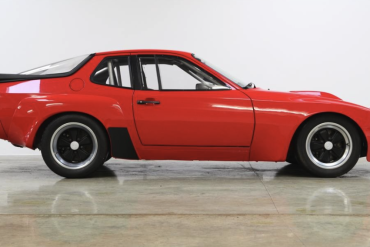
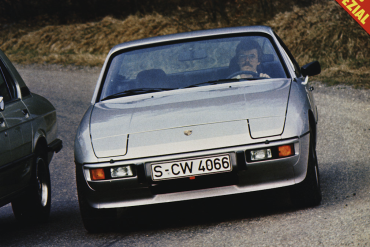
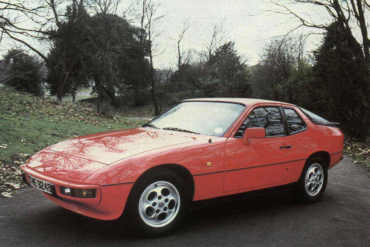
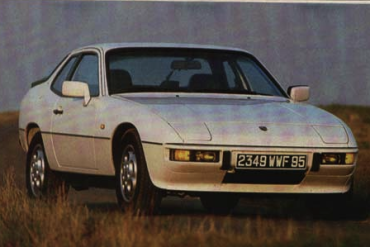
The base model Porsche 924 was produced for model years 1976 to 1986. During its production run, VW decided to stop manufacturing the engine blocks used in this version (the 2.0 L 924), forcing Porsche to continue production for model year 1987 with a more powerful engine, calling it the 924S. The base model 924 had a production run of 121,000 vehicles approximately.
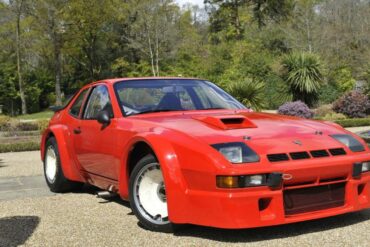
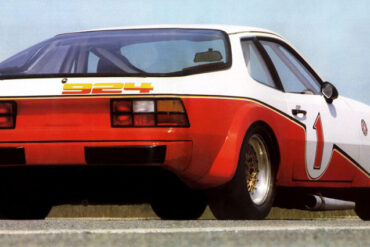
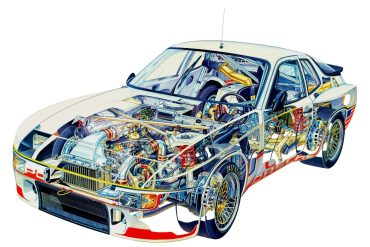
The Carrera GTR was the ultimate 924 Street/Race Car in 1981. The GTR had larger flares, larger wheels and tires, improved brakes and a whopping 375 horsepower from the 2.0L turbocharged dry-sump engine. At $75,000, the GTR would have cost over $200,000 in today’s money, but what you got was a 180 mph screamer for the street, but in full race trim.
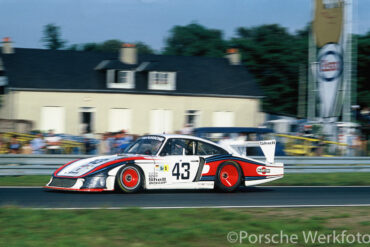
GTP cars were produced in 1980, three of which were special LeMans race cars. The cars had the 2.0L turbocharged 924 engine with a huge front-mounted intercooler and increased boost to increase output to 320 HP and 285 lbs/ft of torque. The engine used Bosch mechanical fuel injection and with a weight of 2050 pounds had a top speed of 180 mph. It was third in the GTP class, with an 6th place finish overall, and another finished fifth in class and 12th overall.
These cars were designed by the factory to race in SCCA D Production Championship starting in 1979. The Porsche project number of these race cars was 933. Only 16 were built by the factory. However, if you had the right connections, you "could" buy the parts as a kit from Porsche to convert your street car into a fully race-ready 924.
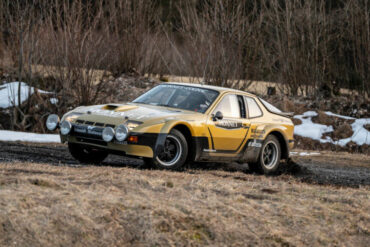
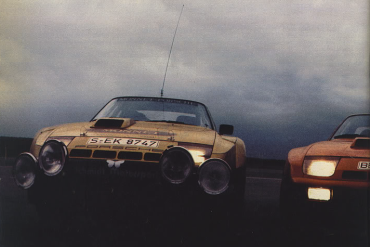
As a top-secret project, the Porsche Museum workshop and the Porsche Heritage department worked on a special front-engined sports car from 1981. 40 years ago, starting on May 15, this car competed in the Deutsche Rallye-Meisterschaft (German Rally Championship). Behind the wheel was non other than Walter Röhrl, with Christian Geistdörfer next to him.
No More Content