

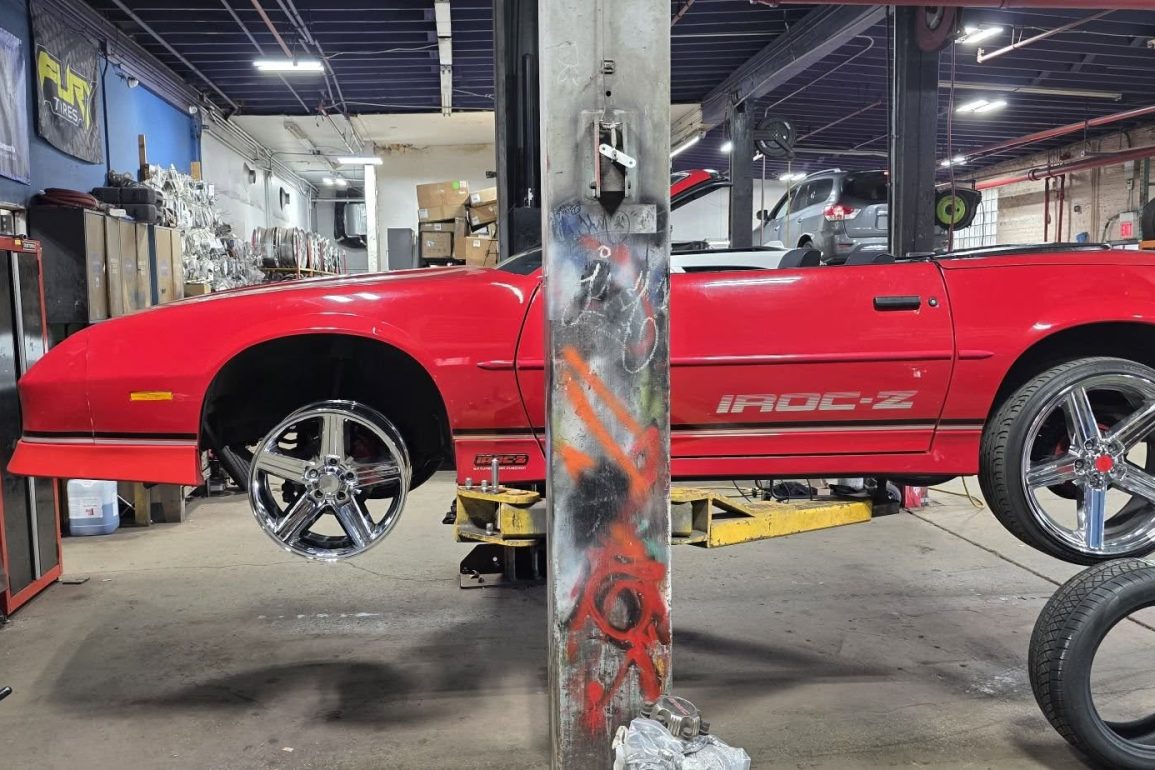
The hardest part about buying IROC wheels isn’t finding them. It’s figuring out which version you’re actually looking at. The design itself is iconic: a five-spoke face rooted in the 1973 International Race of Champions series. It became a street-performance symbol when the third-generation Camaro IROC-Z hit the pavement in 1985. That look never left. It just got replicated, reinterpreted, and rebuilt by a dozen different manufacturers, each one targeting a different vehicle, a different budget, and a different kind of buyer.
Here’s the challenge: When you search for “IROC wheels,” you’re not shopping for one brand’s catalog. You’re looking at completely different products that happen to share the same visual heritage. A period-correct Hawks reproduction built for third-gen Camaro restorations. A Factory Reproductions replica designed for modern Camaros. A 24″ chrome street wheel from AudioCityUSA built for big-body show cars. A U.S. Mags forged setup engineered for elite restomods. Same five-spoke attitude. Totally different specs, construction, sizing, and purpose.
Most buyers don’t realize that distinction until after they’ve already placed the order, which is exactly when it becomes expensive. The wheel that works perfectly on one build can be completely wrong for another, even if both vehicles are Chevys and both buyers want “the IROC look.”
The question that matters:
It’s not “Who sells IROC wheels?” It’s “Which manufacturer’s version of this design was built for my specific vehicle, my fitment requirements, and my build direction?” Get that right, and the IROC look becomes the centerpiece of your build. Miss it, and you’re explaining why the wheels you bought don’t quite work the way you thought they would.
The 60-Second IROC Rims Decision Tree
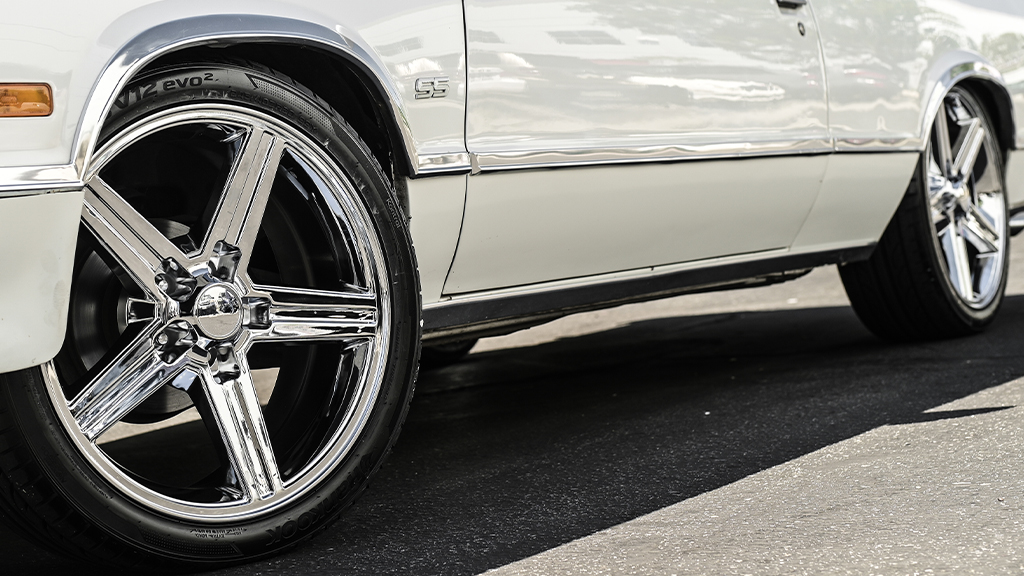
Navigating the aftermarket is about narrowing your focus to the brands that actually engineer for your specific chassis. Use this three-question decision tree to quickly identify which IROC rim manufacturers align with your platform, budget, and end-state goals.
Question 1: What Are You Building?
| Your Build Type | Recommended Manufacturer |
|---|---|
| 3rd-Gen Camaro or Firebird (1982–1992) — restoration and heritage builds | Hawks Restoration Parts (OE-style reproductions) |
| Modern Camaro (2010–2024) — street builds, performance, or tribute cars | IROC Motorsports or Factory Reproductions |
| G-Body or Classic Chevy Street Car — Monte Carlo, El Camino, Malibu, or Impala | Factory Reproductions or Impact / Rev Replicas |
| Big-Body Cruiser or Show Car — full-size sedans and high-presence builds | Large-format street wheels (22″–26″ sizing) |
| Premium Restomod or Pro-Touring — custom chassis and high-performance engineering | U.S. Mags (forged) or Factory Reproductions |
Question 2: What’s Your Wheel Budget?
| Budget Range (Set of 4 Rims) | Recommended Manufacturer |
|---|---|
| Under $2,000 | Impact / Rev Replicas or Factory Reproductions (entry-level) |
| $2,000–$4,000 | IROC Motorsports, Hawks, or large-format street wheels |
| $4,000+ | U.S. Mags (fully custom forged construction) |
Question 3: What Matters Most to Your Build?
| Primary Build Priority | Recommended Manufacturer |
|---|---|
| Period correctness — maintaining 1980s authenticity and era-right specs | Hawks Restoration Parts |
| Modern fitment precision — Camaro-specific engineering without spacers or mods | IROC Motorsports |
| Value and daily usability — street-ready aesthetics at a practical price point | Impact / Rev Replicas |
| Full customization — one-of-one offsets, widths, and forged durability | U.S. Mags |
| Restomod flexibility — modern sizing backed by known manufacturer standards | Factory Reproductions |
| Maximum visual impact — dominant street presence via large-format diameters | Large-format street wheels |
Got your one or two finalists? Keep reading to understand why manufacturer choice changes fitment, then dive into the specific details for your category.
Why IROC Rims Specs Vary by Manufacturer
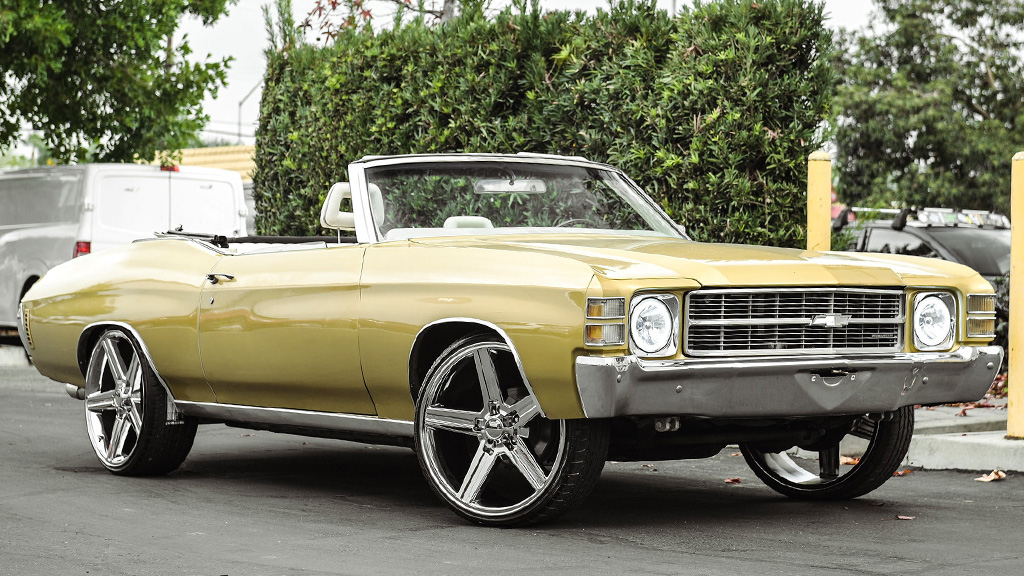
Here’s the reality most buyers miss: A wheel can look perfect in photos and still be completely wrong for your car. That’s especially true with IROC rims, because the same basic five-spoke design gets built across completely different manufacturer categories with completely different fitment assumptions.
| Wheel Type | Built For | What Happens If You Use It Wrong |
|---|---|---|
| IROC Motorsports Camaro-specific | Modern Camaros (2010+) with current bolt patterns and brake packages | Put it on a third-gen F-body or G-body Monte Carlo and the bolt pattern, offset, and brake clearance won’t match. |
| Hawks third-gen OE reproduction | 1982–1992 Camaro/Firebird with 5×4.75″ bolt pattern and period-correct backspacing | Perfect on an IROC-Z restoration. Makes zero sense on a 2016 Camaro SS. |
| 24″ large-format street/show | Big-body Impalas, cruisers, and show builds that need the right tire and offset | Forcing it on a G-body El Camino without checking backspacing and clearance creates rubbing. |
The Five Fitment Specs That Change by Manufacturer
Understanding these specs before you evaluate manufacturers will save you from expensive mistakes.
1. Bolt Pattern
Not every 5-lug IROC rim fits every 5-lug Chevy. Third-gen Camaros use 5×4.75″ (5×120.65mm). Many modern Camaros use 5x120mm or 5x115mm. These measurements are NOT interchangeable. A wheel being “5-lug” tells you nothing. You need the exact bolt pattern for your year, make, model, and trim.
If you are looking at 26 inch IROC rims 5 lug options, confirm the exact bolt pattern before ordering. A 5-lug wheel is not automatically universal, especially across Camaros, Impalas, Caprices, El Caminos, and other Chevy builds.
2. Offset
Offset controls where the wheel sits inside the fender: how far in (tucked) or out (aggressive) from the mounting surface. Two 20×9 IROC rims can sit completely differently depending on offset:
- A Camaro-specific wheel might use +38mm offset (more tucked for modern suspension).
- A G-body-friendly wheel might need +20mm offset (less tucked for older platform clearances).
Same diameter, same width, totally different stance and clearance. Different manufacturers target different offsets for different platforms.
3. Backspacing
Backspacing measures the distance from the mounting surface to the inner edge of the wheel. This determines whether the inside of your wheel clears suspension arms, steering components, and brake calipers. On G-bodies, El Caminos, and classic Chevys, backspacing is often MORE critical than offset, because inner clearances are tight. A wheel with the wrong backspacing will hit suspension components even if it looks right from the outside.
4. Width and Tire Pairing
Width affects tire choice, stance, and fender clearance:
- A 17×9 reproduction uses different tires than a 20×11 modern Camaro wheel.
- A 24×10 show wheel requires low-profile tires that change ride quality entirely.
Manufacturers build different widths for different applications. A width that works for one IROC rim doesn’t automatically work for another.
5. Brake Clearance
Spoke design and barrel shape vary by manufacturer. A wheel that clears stock brakes might not clear a big brake kit. Always verify caliper clearance for the specific wheel model you’re considering.
The rule that prevents mistakes: Verify the exact wheel model for your specific vehicle. Don’t buy by design similarity. Don’t assume fitment transfers between manufacturer categories. Understand these five specs BEFORE you start comparing manufacturers.
Now you’re ready to evaluate manufacturers intelligently.
The Five IROC Rims Manufacturer Categories
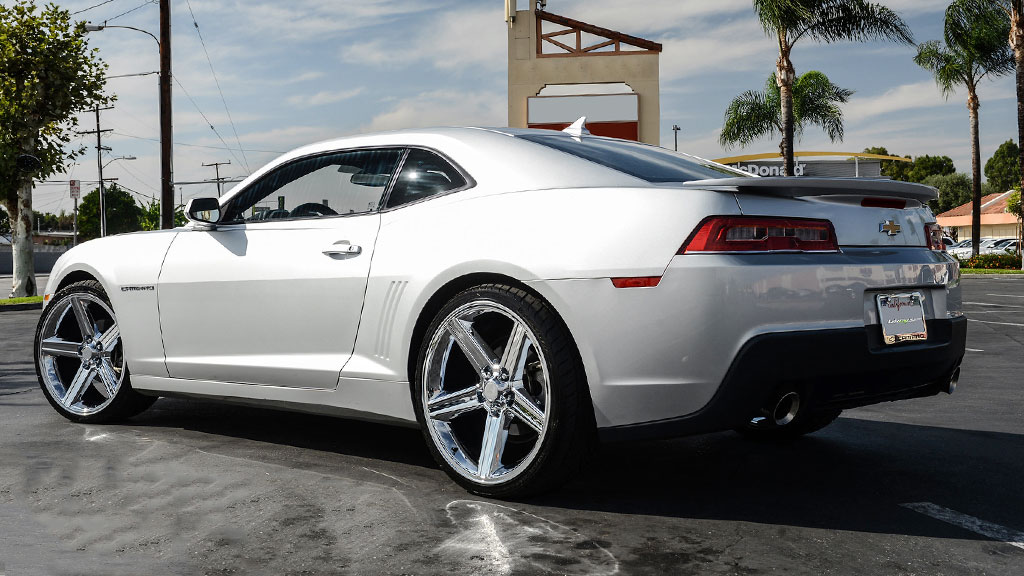
Before diving into details, here’s how the IROC rim market breaks down.
| Manufacturer (Build Application) | Build Specs and Construction | Price Range |
|---|---|---|
| IROC Motorsports (modern Camaro / tribute) | Camaro-specific: staggered 20×10 and 20×11 setups, street-engineered cast construction | $1,500–$2,600 |
| Hawks Restoration (3rd-gen F-body restoration) | OE-style: 17×9 sizing optimized for modern performance tires on 1982–1992 platforms | $1,400–$1,700 |
| Factory Reproductions (restomod and street builds) | Cast replica: manufacturer-backed one-piece cast wheels available in 20″ to 22″ diameters | $1,700–$2,000 |
| Impact / Rev Replicas (budget-focused builds) | Alloy replica: one-piece entry-level alloy wheels in 20″ to 24″ sizes | $1,000–$2,000 |
| U.S. Mags (high-end / premium custom) | Two-piece forged: fully custom offsets and finishes, broad 17″ to 28″ size range | $5,000–$11,000+ |
Additional category: Large-format street/show wheels (22″–26″) are available through various retailers. These require extra verification, because the manufacturer isn’t always clearly identified.
Now let’s break down each category so you can make the right choice for your specific build.
IROC Motorsports: When You’re Building a Modern Camaro
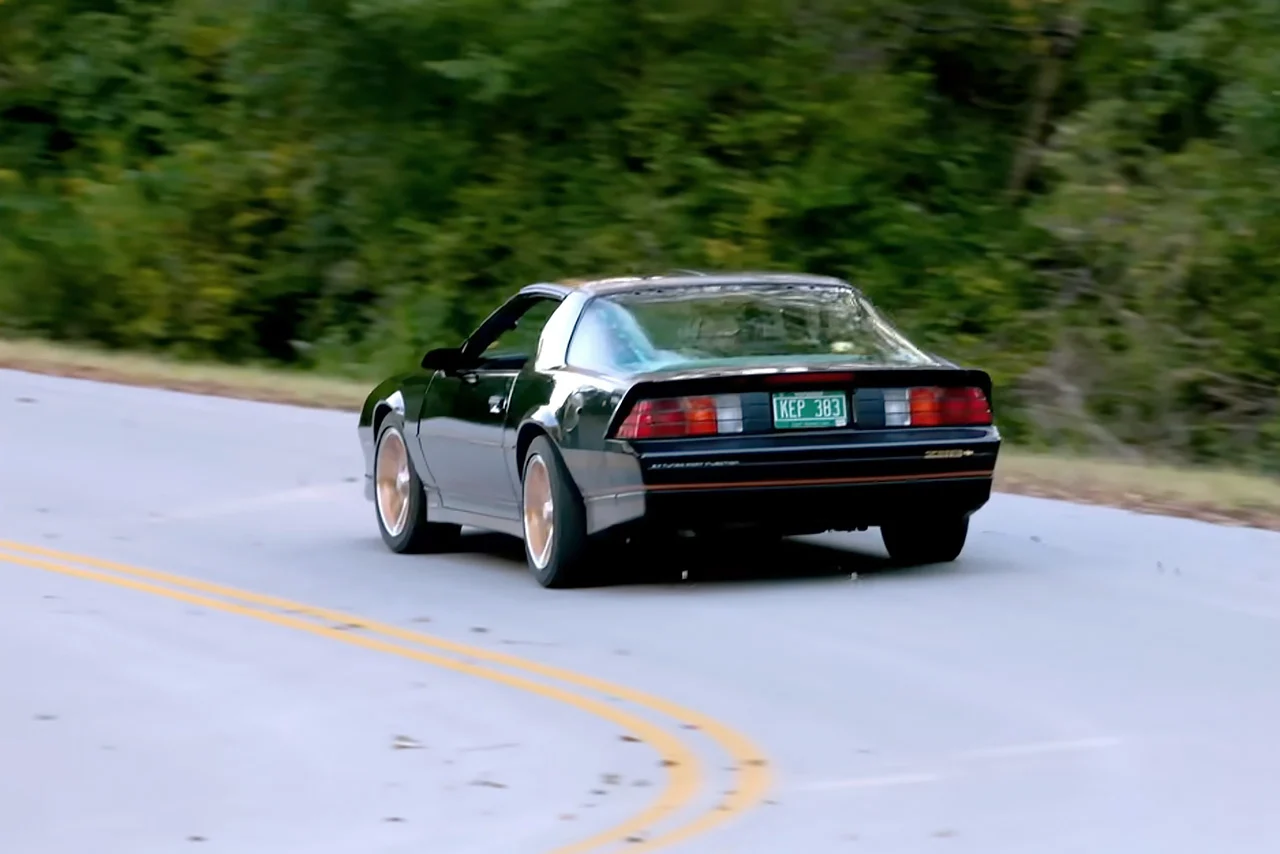
If you own a 2010–2024 Camaro and want the IROC-Z look, this decision is simple. IROC Motorsports doesn’t make you guess whether a wheel “might work” on your modern Camaro. It builds its IROC-Z wheel sets specifically for Gen 5 and Gen 6 Camaros, with a staggered 20×10 front and 20×11 rear setup engineered around your car’s bolt pattern, brake packages, and suspension geometry.
Current pricing runs roughly $1,500 to $2,600 per set, depending on finish and options. You’re not adapting a wheel designed for something else. You’re buying a wheel designed for your exact platform. That eliminates the guesswork around bolt pattern, offset, brake clearance, and whether you’ll need spacers or modifications.
Before You Order
- Confirm your exact model year and trim level to account for specific factory brake package clearances.
- Document existing wheel specs and brake hardware to identify potential fitment conflicts with aftermarket upgrades.
- Decide between a staggered configuration for stance or a square setup for rotation before finalizing your order.
Who Should Skip This
Don’t try to force this onto a third-gen F-body, G-body, or classic Chevy. This is a Camaro-first setup. If you don’t own a 2010–2024 Camaro, you’re fighting specs that weren’t built for your car.
Hawks Restoration Parts: When Authenticity Matters
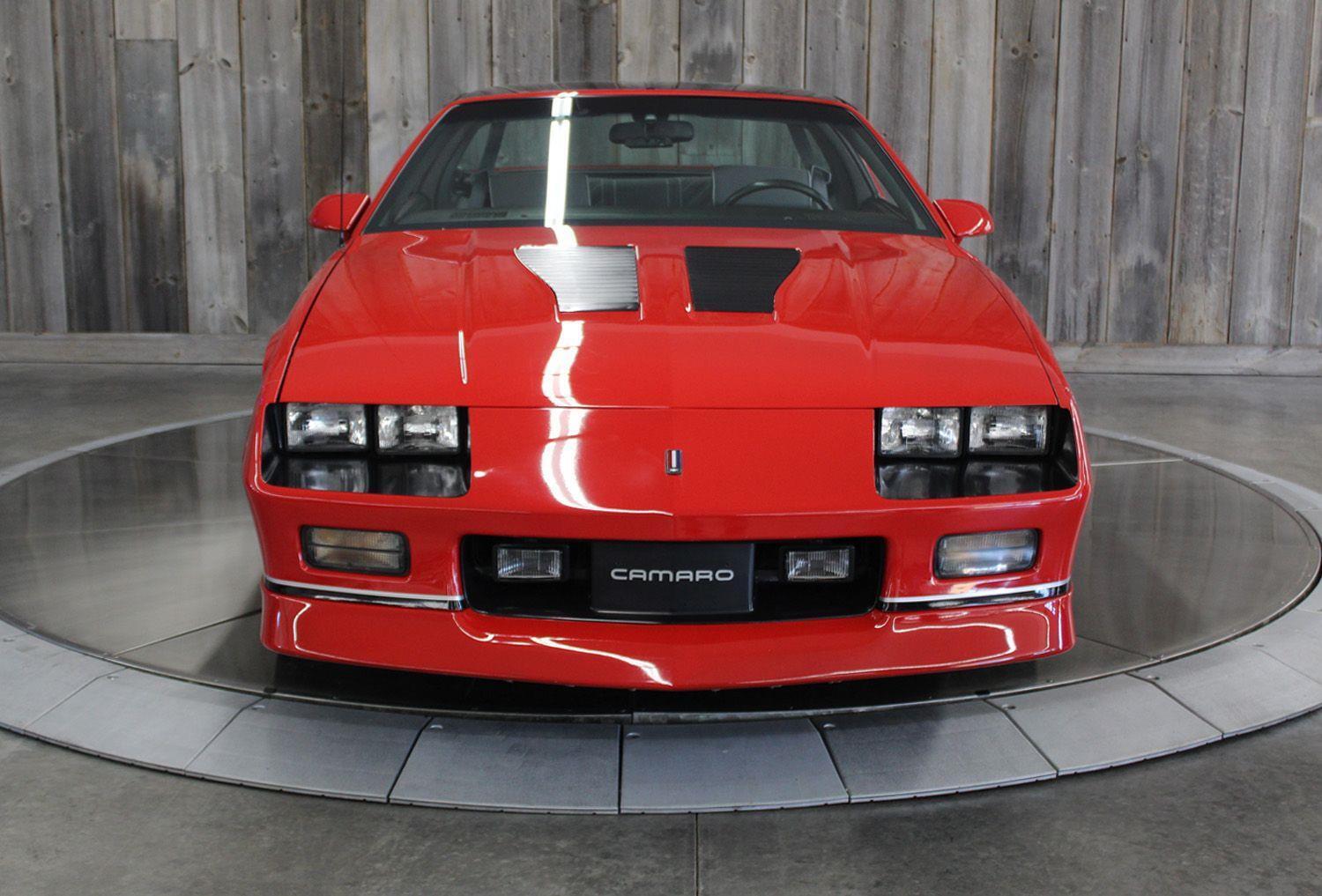
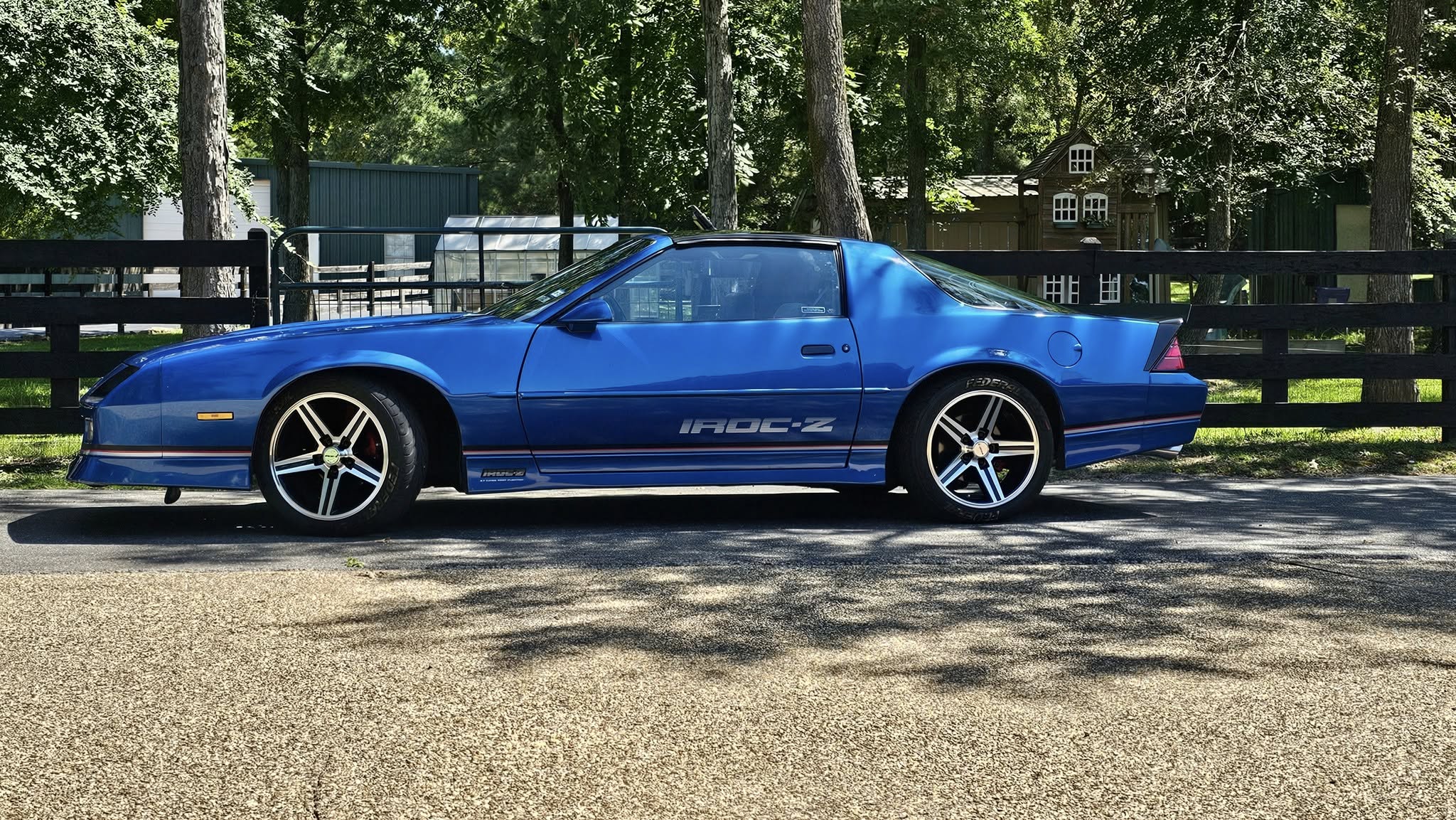
Restoration guys, this is your stop. If you’re building or restoring a third-generation Camaro or Firebird, and the question is “Does it look right for 1987?” rather than “How big can we go?”, Hawks Restoration Parts delivers OE-style reproduction wheels that honor the original design while making practical improvements.
Its IROC-Z wheel kits are modeled after the original 16×8 wheels found on 1985–1987 IROC-Z models, then upsized to 17×9 for modern tire availability, better grip, and a slightly more aggressive stance without losing period-correct proportions. Complete kits run around $1,700 (center caps and lug nuts included). Wheels-only pricing sits around $1,400. Specs: +12mm offset, 5.5″ backspacing, 5×4.75″ bolt pattern for 1982–1992 Camaro and Firebird applications.
This isn’t about chasing trends or maximum diameter. It’s about what OE-plus should actually mean: keeping the original design intent but making it better for real-world use. You get modern tire compatibility and improved grip without losing the look that made the third-gen IROC-Z iconic.
Before You Order
- Verify your F-body year to guarantee a true bolt-on fitment for the 1982–1992 chassis.
- Measure backspacing on lowered cars to prevent wheel contact with struts or frame rails.
- Confirm the 17×9 sizing to ensure you prefer a classic, meaty tire profile over a large-format show look.
- Adjust steering stops as needed to prevent the wider 17×9 footprint from rubbing at full lock.
- Commit to a period-correct build that prioritizes heritage proportions over modern wheel sizing trends.
Who Should Skip This
If you want 22″, 24″, or 26″ show presence, this isn’t your category. If you’re building a modern Camaro, look at IROC Motorsports or Factory Reproductions. Hawks is for third-gen restorers who care about getting the period details right.
Factory Reproductions: The Restomod Sweet Spot
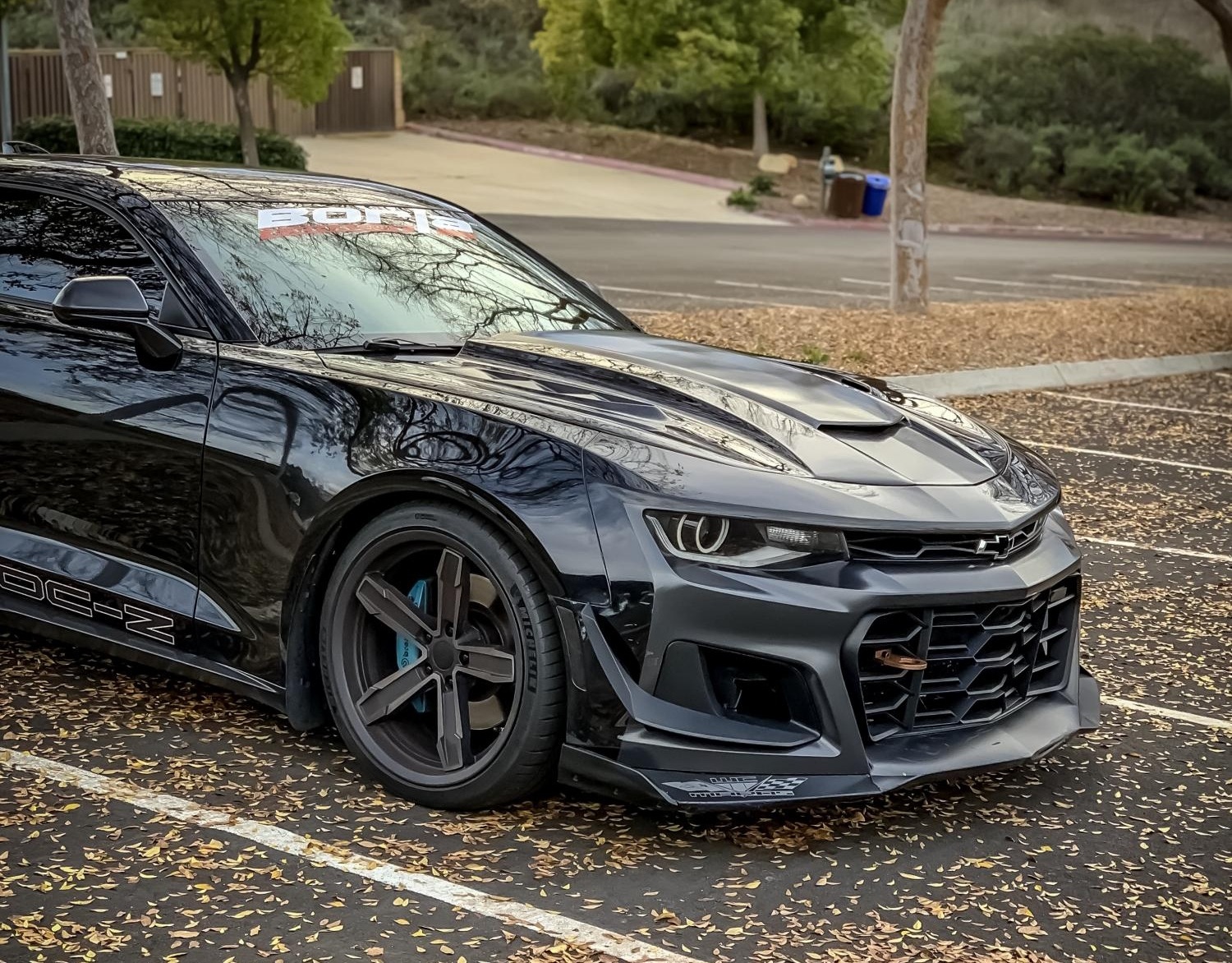
This is where modern sizing meets manufacturer accountability. Factory Reproductions sits in the middle of the market. It offers manufacturer-backed replica wheels with modern sizing, broader vehicle applications, and a balance between restoration accuracy and street usability.
There are two lines:
Z10 IROC-Z Camaro Wheel. Built for 2010+ Camaros (5th and 6th gen). Blends classic IROC styling with modern sizing. One-piece cast aluminum. Available in 20×10 and 20×11. Runs about $1,900 per set.
FR11 IROC Replica. Built for restomods and wider applications. Works on more vehicles with multiple bolt pattern options (5×4.75″ and 5×5″). Available in 20×9 and 22×9. Runs about $1,700–$2,000 per set.
You get the IROC look without being locked into one specific vehicle application. These wheels work on modern Camaros, G-body Monte Carlos, classic Chevy street cars, and restomod builds.
You’re not paying forged-wheel pricing, but you’re getting manufacturer-backed specs and quality control that budget replicas don’t always provide.
Before You Order
- Confirm your exact bolt pattern to avoid mixing up classic Chevy 5×4.75″ and truck-specific 5×5″ hubs.
- Match the wheel offset to your specific chassis to ensure the rim sits flush without fender rub.
- Select a square setup for tire rotation convenience or a staggered setup for a more aggressive rear stance.
- Measure backspacing on lowered builds to verify inner clearance against suspension and frame components.
Who Should Skip This
If you need exact third-gen OE correctness, go to Hawks. If you need fully custom forged specs and offset control, go to U.S. Mags. If you’re on the tightest possible budget, Impact / Rev Replicas might make more sense. Factory Reproductions is the sweet spot for everyone else who wants modern sizing, known specs, and manufacturer accountability.
Impact / Rev Replicas: The Value Play
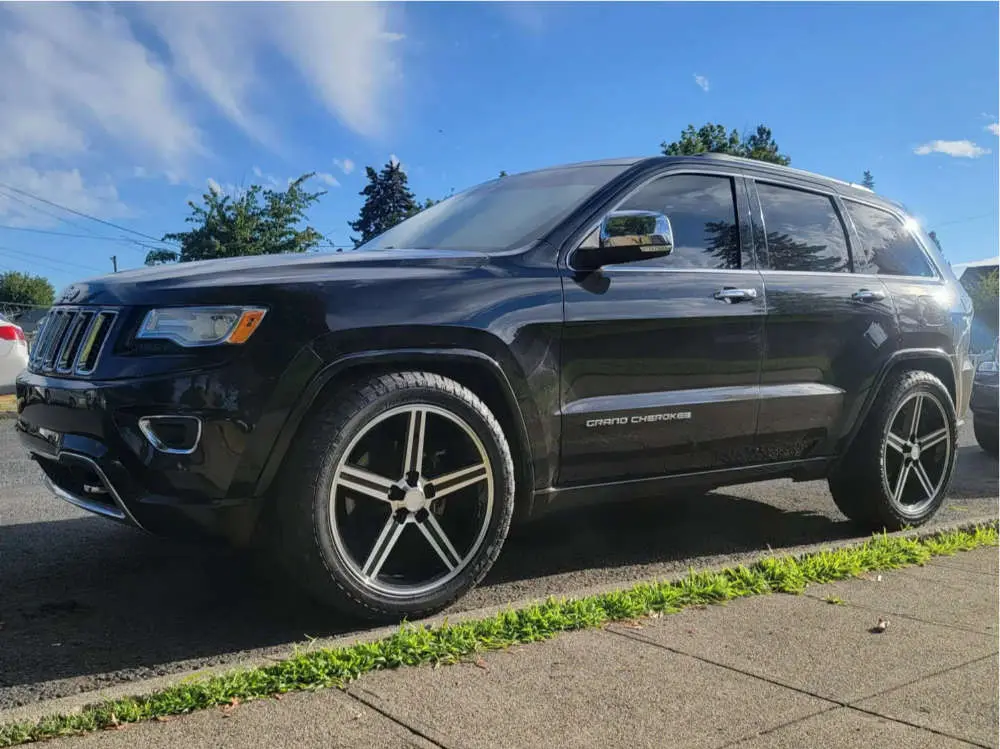
Here’s the deal: The IROC look doesn’t require a $5,000 wheel budget. If your build is a daily-driven street car, a cruiser, or a weekend warrior where the wheel matters but isn’t the only priority, Impact Replicas and Rev Replicas deliver the five-spoke IROC aesthetic at prices that make sense for real-world builds. Dealers list Impact Replicas IROC wheels in 20″, 22″, and 24″ diameters, with widths from 8.5″ to 10″, priced roughly $1,000–$1,800 per set before tires.
Warning: This is where builds go wrong. A recognizable design and an attractive price make it easy to skip the details, but visual similarity is not a fitment guarantee. Confirm bolt pattern, offset, and backspacing against your specific vehicle before placing the order. Every time.
Before You Order
- Confirm your exact bolt pattern measurement to ensure the wheel seats properly on the hub.
- Match the wheel offset to your specific platform to avoid fender rubbing or frame interference.
- Verify backspacing against suspension components like control arms and struts to prevent internal contact.
- Ensure the barrel and spoke design provide ample clearance for your specific brake calipers.
- Secure verified technical data on hub bore and offsets directly from the source before buying.
- Test-fit bare wheels on the hub to confirm all clearances before mounting tires and voiding return policies.
- Verify the wheel load ratings to ensure they meet the weight requirements of full-size B-body or truck platforms. (This is critical for Caprice and Impala builds, where the vehicle weight is significantly higher than that of the F-body chassis the design was originally intended for.)
Who Should Skip This
If you’re building a premium restomod where the wheel is a focal point, spend more and get Factory Reproductions or U.S. Mags. If you’re restoring a third-gen Camaro to period-correct specs, Hawks is the right answer. If you want Camaro-specific engineering without fitment questions, IROC Motorsports is worth the premium.
But if you’re building a daily driver or street car on a realistic budget, and you’re willing to verify specs carefully, this category delivers the look without breaking the bank.
U.S. Mags: When the Build Deserves Custom
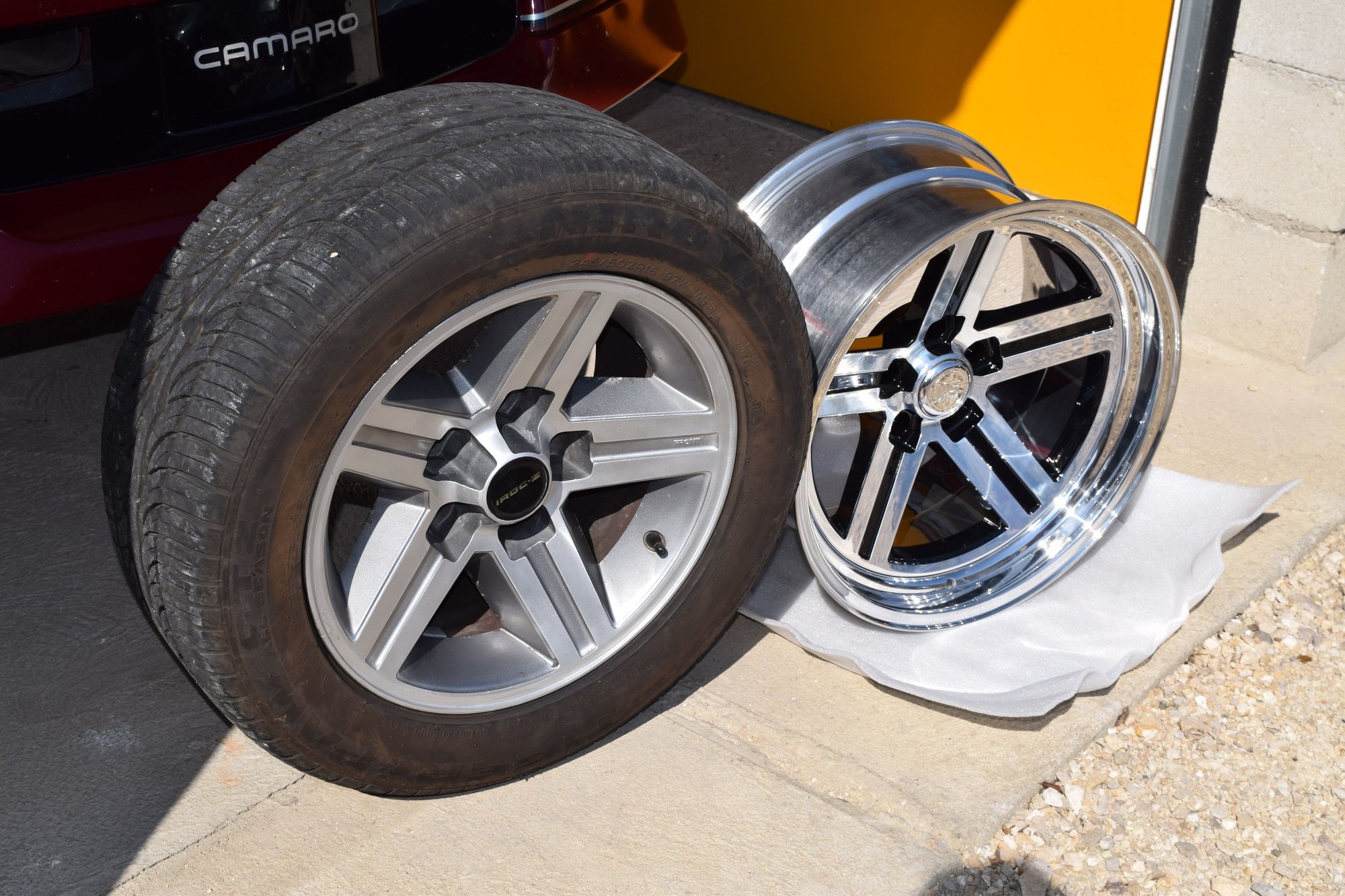
This is the custom lane, and it only makes sense if the rest of your build is operating at this level. U.S. Mags offers the US550 IROC Concave, a two-piece forged wheel with official sizing from 17″ through 28″. Current MSRP runs from $1,235 per wheel for a 17×7 up to $2,628 per wheel for a 28×12, roughly $5,000 to $11,000 per set before custom-finish premiums.
What You’re Actually Paying For
Personalized IROC design: custom width, custom offset, custom finish, forged construction, and concave face options. You’re specifying the exact specs you need for your suspension geometry, brake clearance, and stance goals.
Pre-Order Essentials for Custom Forged Builds
- Collaborate with authorized specialists to dial in your custom sizing, offsets, and finishes.
- Provide precise measurements of your suspension and brakes to guarantee perfect fitment.
- Budget for premium performance tires that match the engineering of a forged wheel.
- Account for the four- to eight-week lead time required for custom-manufactured orders.
Who Should Skip This
If you’re building a daily driver or budget street car, this isn’t your category. If you’re just trying to get the IROC look at any price, spending $8,000 on wheels is misallocated budget. If the rest of your build is bolt-on parts and stock suspension, forged custom wheels don’t match the build level.
When your build involves high-dollar suspension and big-brake kits, “off-the-shelf” is a liability. This is the only category that offers the millimetric precision required to clear your hardware and nail the perfect stance.
Large-Format Street/Show IROC Rims: The 22″–26″ Presence Play
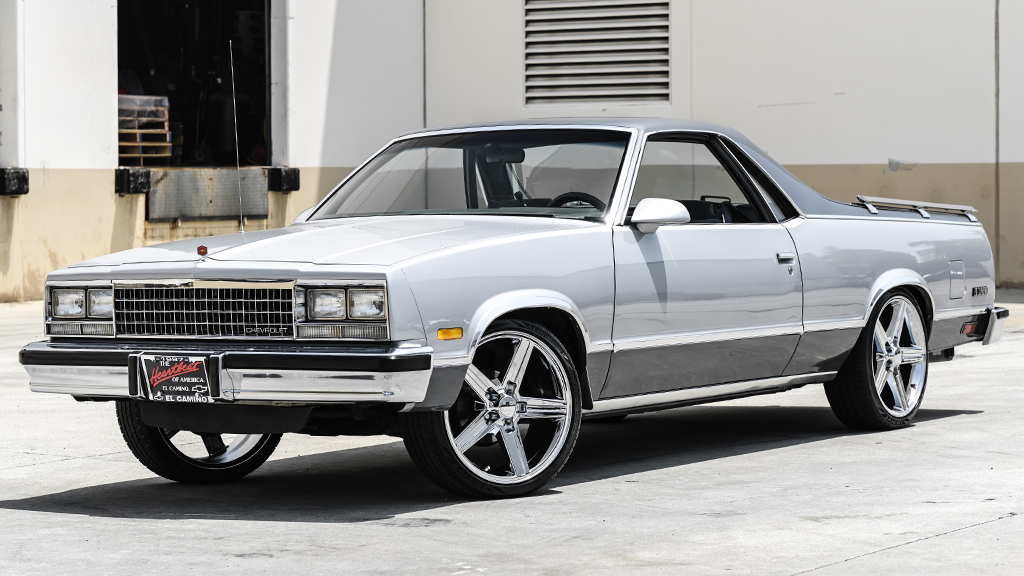
This lane is for buyers who want the wheel to dominate the vehicle’s side profile. Large-format IROC rims in 22″, 24″, and 26″ setups, finished in chrome, black machined, or gold over chrome, create massive visual impact. This isn’t subtle. This isn’t a period-correct restoration. This is a big, bold, street/show presence where the wheel becomes the focal point of the entire build.
- Typical sizing: 22″–26″ depending on retailer inventory
- Typical pricing: $1,000–$4,000 per set before tires
- Common finishes: chrome, black machined, gold over chrome, custom colors
- Construction: often cast street-wheel construction (verify by specific product)
- Best applications: Impala, Caprice, El Camino, custom Camaro, big-body cruisers, show builds
The Key Warning
Retailer-listed doesn’t always mean manufacturer-identified. When you see “IROC wheels 24-inch chrome” on a retailer’s site, you’re not always told WHO manufactured that wheel. That doesn’t automatically make it a bad product. It means you need the retailer to show clear specs, verify fitment for your specific vehicle, and tell you exactly what you’re ordering.
The Fitment Reality
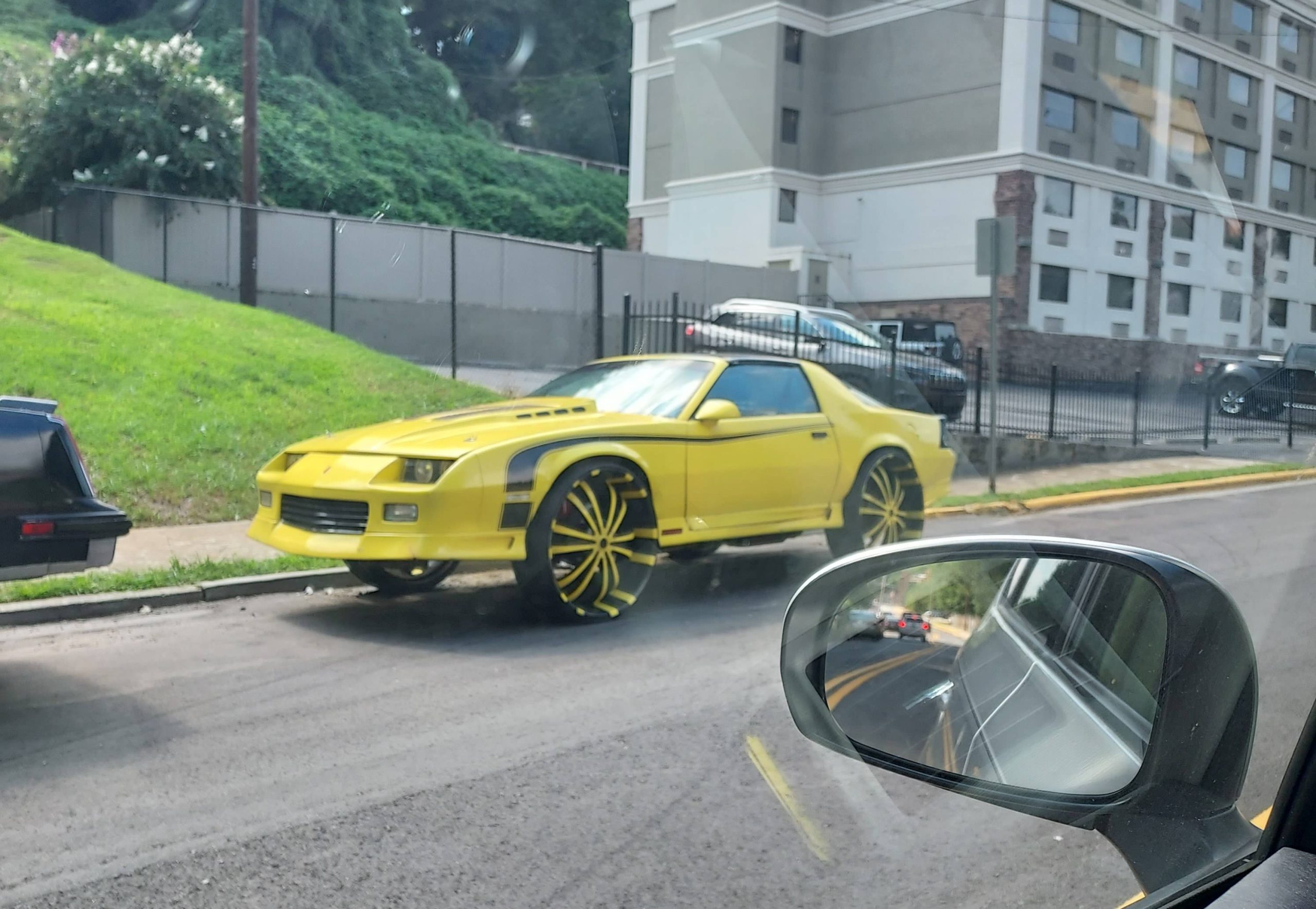
The bigger the rim, the tighter the margin for error. A 24″ or 26″ setup can look incredible on the right body with the right tire, offset, and suspension. On the wrong car, or with assumed specs, it looks forced immediately and creates several problems:
- Fender rubbing at full steering lock
- Inner clearance issues with suspension components
- Brake caliper interference
- Harsh ride quality from a minimal tire sidewall
- Speedometer error from incorrect overall diameter
Pre-Order Essentials for Large-Format Wheels
- Verify the actual manufacturer to ensure the engineering and quality standards match your build level.
- Cross-reference all technical specs against your vehicle requirements to eliminate the zero margin for error in large diameters.
- Factor in the harsher ride quality and increased road hazard risks of 24-inch-plus low-profile tire setups.
- Confirm sufficient barrel and spoke clearance for your specific calipers or big-brake upgrades.
- Perform a dry test-fit of bare wheels to verify total clearance before committing to tire mounting.
- Account for speedometer recalibration if your new tire diameter deviates significantly from the factory rolling height.
- Accept the trade-off of prioritized street presence over traditional handling and ride comfort.
Who Should Skip This
If you’re building a daily driver, smaller diameters (18″–20″) will give you better ride quality and tire options. If you’re restoring a third-gen Camaro or building a period-correct car, this completely misses the point. If your vehicle doesn’t have the body size to carry large wheels proportionally, they’ll look forced.
When presence is the primary goal, large-format rims offer unmatched visual scale for cruisers, provided you’ve accounted for the technical fitment and ride compromises involved.
Total Project Cost Reality Check

Most buyers forget that the rims are just the starting point. An $1,800 wheel purchase becomes a $3,200 project. A $4,000 wheel purchase becomes a $6,000 project. Here’s why.
| Cost Component | Typical Range and Why It’s Required |
|---|---|
| Wheels (set of 4) | $1,000–$11,000+. The starting point. |
| Tires (set of 4) | $600–$2,000+. Depends on size: 18″ tires cost less than 24″ low-profile tires. |
| Mounting and balancing | $80–$200. Ensures safe operation and prevents vibration. |
| TPMS sensors | $150–$300. Required for modern vehicles with tire pressure monitoring. |
| Lug nuts/bolts | $50–$150. Must match wheel seat type (conical, ball, mag). |
| Hub-centric rings | $20–$60. May be needed for proper hub centering. |
| Alignment | $80–$150. Recommended after wheel and tire changes. |
| Professional installation | $100–$200. Ensures correct torque and fitment verification. |
Considering these additional costs, does your current budget plan focus more on an entry-level street setup or a fully customized forged build?
Real Budget Examples by Manufacturer Category
| Build Tier and Setup Focus | Project Cost Breakdown |
|---|---|
| Budget build (Impact / Rev Replicas) | Wheels: $1,200 · Tires (20″ all-season): $650 · Hardware, TPMS, and mounting: $350 · Four-wheel alignment: $100 · Estimated total: $2,300 |
| Mid-range build (Factory Reproductions) | Wheels: $1,900 · Tires (20″ performance): $850 · Hardware, TPMS, and mounting: $400 · Four-wheel alignment: $120 · Estimated total: $3,270 |
| Camaro-specific build (IROC Motorsports) | Wheels: $2,400 · Tires (staggered 20″ performance): $1,100 · Hardware, TPMS, and mounting: $450 · Four-wheel alignment: $120 · Estimated total: $4,070 |
| Show build (24″ large-format) | Wheels: $2,800 · Tires (24″ low-profile): $1,400 · Hardware, TPMS, and mounting: $450 · Four-wheel alignment: $120 · Estimated total: $4,770 |
| Premium forged build (U.S. Mags) | Wheels: $8,500 · Tires (custom performance): $1,800 · Hardware, TPMS, and mounting: $500 · Four-wheel alignment: $150 · Estimated total: $10,950 |
The lesson: A $1,200 wheel purchase is never a $1,200 project. Budget for the complete setup, not just the wheels.
5 Common Mistakes That Cost IROC Rim Buyers Money

Mistake 1: Buying by Diameter Alone
- Why it happens: “20-inch IROC rims” sounds simple and specific.
- The reality: Diameter tells you nothing about bolt pattern, offset, width, or brake clearance.
- The fix: Verify complete specs (bolt pattern, offset, width, and backspacing) for your specific vehicle before ordering.
Mistake 2: Assuming “5-Lug” Means Universal
- Why it happens: “My car is 5-lug, these wheels are 5-lug, they’ll fit.”
- The reality: 5×4.75″ is not 5x115mm, and neither is 5x120mm. These are NOT interchangeable.
- The fix: Verify the EXACT bolt pattern with measurements, not just lug count.
Mistake 3: Forcing Camaro-Specific Wheels onto G-Bodies
- Why it happens: Both are Chevys, both have IROC heritage, “should work.”
- The reality: Camaro-specific wheels are engineered for Camaro bolt patterns, offsets, and brake clearances.
- The fix: Choose the manufacturer category based on your actual vehicle, not visual similarity.
Mistake 4: Mounting Tires Before Test-Fitting
- Why it happens: Excitement to see the final look.
- The reality: Most retailers won’t accept returns once tires are mounted.
- The fix: Test-fit bare wheels on your vehicle first, and verify clearances before mounting tires.
Mistake 5: Choosing Finish Based on Looks, Not Maintenance Reality
- Why it happens: Chrome looks incredible in photos.
- The reality: Chrome demands weekly cleaning, immediate salt rinsing, and consistent waxing.
- The fix: Match finish to your actual maintenance habits. If you won’t clean weekly, don’t buy chrome.
The Complete IROC Rims Pre-Order Verification Checklist

Before you order IROC rims, verify every item on this checklist.
Your Vehicle Specs
- Year, make, model, and trim level confirmed
- Exact bolt pattern verified (with measurements, not just “5-lug”)
- Current wheel size and offset documented
- Brake package identified (stock, performance, or big brake kit)
- Suspension modifications noted (lowered, stock, or lifted)
- Wheel well measurements taken if lowered or modified
Wheel Specs from Manufacturer/Retailer
- Bolt pattern matches vehicle exactly (not “close enough”)
- Offset confirmed for your specific platform
- Width appropriate for your vehicle and tire size
- Backspacing verified for suspension clearance
- Brake clearance confirmed for your caliper size
- Load rating verified for vehicle weight
- Hub bore size confirmed (hub-centric rings needed?)
Tire Planning
- Tire size calculated to maintain proper overall diameter
- Tire width matched to wheel width
- Load rating and speed rating appropriate for the vehicle
- Aspect ratio acceptable for ride quality expectations
- Tire availability and cost researched
Purchase Details
- Manufacturer clearly identified (not just “IROC rim”)
- Model number and specifications documented
- Authorized dealer status confirmed
- Return policy understood (mounted vs. unmounted)
- Warranty terms reviewed
- Total cost calculated (wheels, tires, mounting, hardware, and installation)
- Lead time confirmed if ordering custom specs
Installation Planning
- TPMS sensors ordered if needed
- Lug nuts/bolts confirmed for wheel seat type
- Hub-centric rings ordered if needed
- Professional installer selected (with experience in your vehicle type)
- Alignment scheduled after installation
- Test-fit plan confirmed BEFORE mounting tires
Don’t skip this checklist. Five minutes of verification can prevent $2,000+ mistakes.
How to Choose the Best IROC Rim Retailer
Your choice of retailer matters just as much as your choice of manufacturer. Here’s what separates good retailers from problematic ones.
What Every Good IROC Rim Retailer Should Provide
- Clear manufacturer identification: You need to know WHO made the wheel, not just what it looks like. If the listing says “IROC wheels” without a manufacturer name or model number, that’s a red flag.
- Complete specifications listed: Bolt pattern (exact measurements), offset, width, backspacing, hub bore, and load rating, all clearly displayed. “5-lug” or “fits Camaros” isn’t enough.
- Vehicle-specific fitment tools: Tools or expert support to match wheels to your year, make, model, and trim. Generic fitment guides that don’t account for brake packages and trim levels aren’t sufficient.
- Real fitment specialist access: Fitment questions need expert answers from people who know IROC rims specifically. Email-only support or generic call centers don’t cut it.
- Transparent warranty information: Know what’s covered and what’s excluded BEFORE buying. Vague “limited warranty” language is a warning sign.
- Clear return and cancellation terms: Understand the policy on mounted vs. unmounted wheels upfront. This should be clearly stated, not buried in fine print.
- Authorized dealer confirmation: Can they confirm they’re an authorized dealer for the brands they sell? Gray market wheels may void manufacturer warranties.
Retailer Red Flags That You Shouldn’t Ignore
The aftermarket is flooded with retailers competing on price alone, but an “impossible” deal on a set of IROC rims almost always carries a hidden cost in poor machining, incorrect offsets, or zero manufacturer accountability.
To protect your investment and your build, you need to recognize the warning signs of a seller who prioritizes a quick sale over a correct fitment. Use this checklist to identify retailers who prioritize high-volume sales over technical accuracy and safety.
- They can’t identify the manufacturer of the wheel they’re selling.
- They only list diameter and finish without complete specs.
- They offer no fitment support or vehicle-specific guidance.
- Their prices are far below market with vague descriptions.
- They can’t confirm authorized dealer status for the brands they carry.
- They keep return policies unclear or hidden.
- They sell “universal fit” wheels without vehicle-specific verification.
- They can’t answer basic fitment questions about offset, backspacing, or bolt pattern.
What a Good IROC Rims Retailer Looks Like
For buyers shopping IROC rims online, AudioCityUSA demonstrates what strong retailer support looks like, not because it manufactures every IROC rim (it doesn’t), but because its approach directly addresses the biggest risks in this category.
What makes it a solid choice:
- Hands-on fitment verification: It doesn’t just ship and pray. A specialized fitment team always confirms your specs. In a category as fitment-sensitive as IROC rims, having a second pair of expert eyes on your offset and bolt pattern is the only way to avoid a $2,000 mistake.
- Data-driven product listings: You’re not forced to guess based on a low-res photo. Every listing is backed by a full spec sheet, including construction type, exact offset ranges, and hub bore data. It’s the level of transparency a professional builder expects.
- Institutional knowledge: With over 35 years in the aftermarket wheel industry, the team has seen every clearance issue and suspension conflict imaginable. That depth of experience translates directly into fewer headaches for you during the installation phase.
- Turnkey wheel-and-tire packages: It has eliminated the logistical nightmare of matching tires to large-format rims. By bundling the mounting, balancing, and hardware into a single package, it ensures the entire setup arrives ready to bolt on, not just sit in your garage.
- Road Force balancing as standard: Standard spin balancing doesn’t cut it for 22″ or 24″ IROC setups. It uses Road Force technology to simulate actual driving pressure, which is the only way to guarantee a vibration-free ride on large-diameter wheels.
- Comprehensive inventory depth: The catalog covers the full IROC spectrum, from conservative 18s for daily drivers to massive 26-inch show setups. Whether you’re seeking a chrome-plated classic look or a modern black-machined finish, there’s enough variety to match your specific vision.
AudioCityUSA isn’t the only retailer option, but it’s a good example of what to look for: manufacturer identification, complete specs, expert fitment support, package options, and post-purchase verification.
Other Reputable IROC Rim Distributors
Custom Offsets
- Multiple IROC-style manufacturers with detailed specs
- Extensive fitment galleries showing real customer builds
- Community-driven fitment data (see what actually works on specific vehicles)
- Good for researching how different IROC rims look on your platform
Fitment Industries
- Broad aftermarket wheel selection, including IROC options
- A gallery feature that shows wheels on actual vehicles
- Fitment expertise and customer support available
- Wheel-and-tire packages offered
Specialty Classic Muscle Retailers
- Often carry Factory Reproductions and OE-replica options
- Better expertise on period-correct Camaro and G-body fitment
- May offer restoration-specific services
- Higher prices, but better authenticity for restoration builds
Direct Manufacturer Websites
- Factory Reproductions, U.S. Mags, and other manufacturers sell through authorized dealer networks
- Dealer locators help find authorized retailers near you
- Ensures warranty validity and proper fitment support
Local Wheel Shops with Muscle Car Expertise
- In-person fitment verification before ordering
- Can physically measure your vehicle’s clearances
- Test-fit wheels before mounting tires (huge advantage)
- Installation and alignment in one place
- Potentially higher prices, but you’re paying for hands-on expertise
How to Prevent Mistakes When Buying Your IROC Rims
- Know your vehicle specs. Year, make, model, trim, bolt pattern, brake package, and suspension mods.
- Identify your manufacturer category. Use the 60-second decision tree from the beginning of this guide.
- Find authorized retailers. Verify dealer status, compare service offerings, and check reviews.
- Confirm complete fitment. Bolt pattern, offset, width, and backspacing for your specific vehicle.
- Order with documentation. Save confirmations and request fitment verification in writing.
- Test-fit before mounting. Verify clearances, and only mount tires after confirming a perfect fit.
Closing the Deal: Selecting the Right IROC Rims
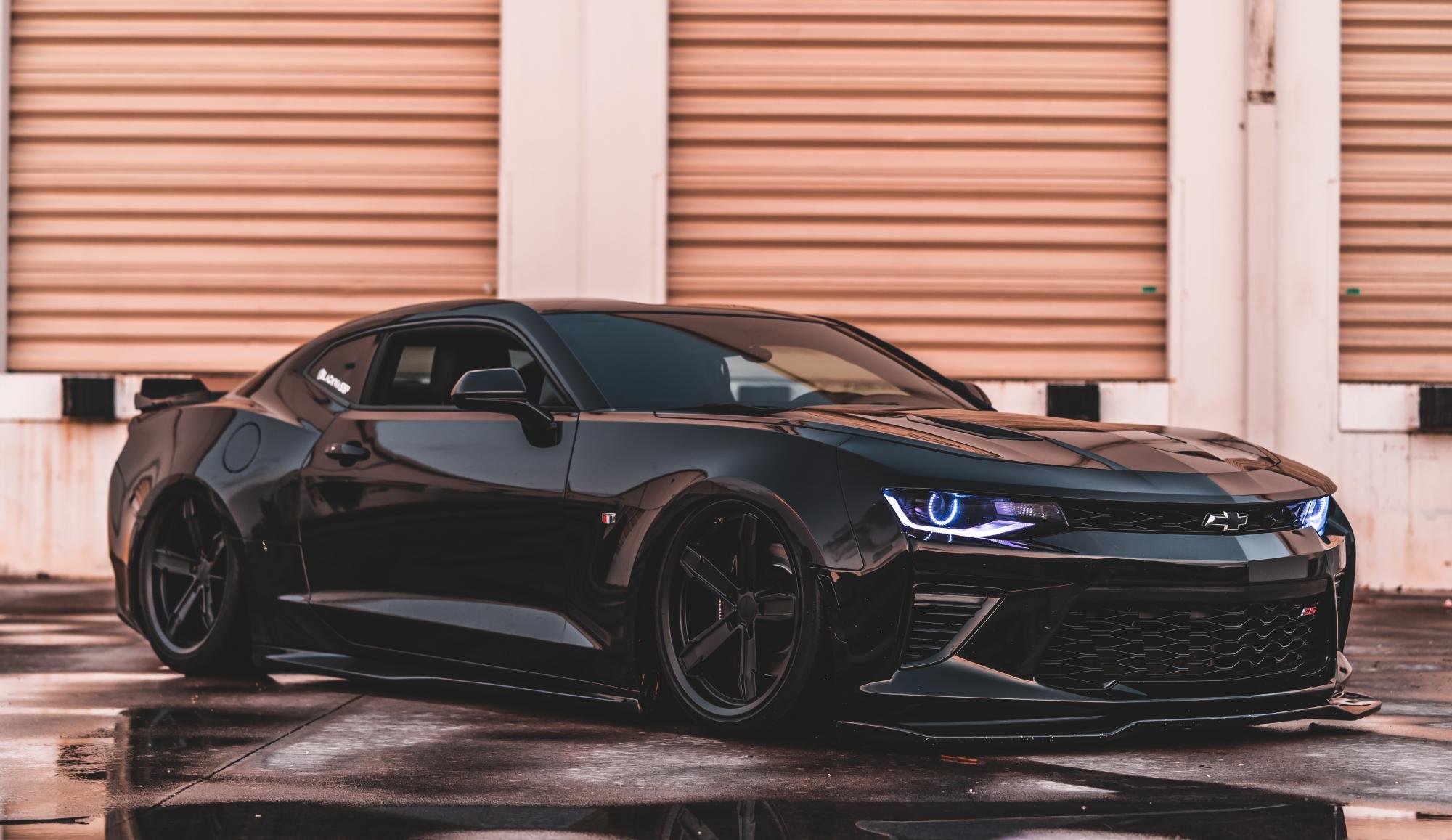
Choosing a set of IROC rims is the fastest way to bridge the gap between classic Chevy heritage and modern street performance. IROC rims carry Camaro culture, Chevy street heritage, and old-school American performance attitude in a design that still looks right decades after the original IROC-Z hit the streets.
But buying IROC rims isn’t as simple as picking the best-looking photo and the lowest price. The market is a collection of manufacturers building different versions of the same visual design for different vehicles, budgets, and build goals.
Before you order ANY IROC rim:
- ✓ Use the 60-second decision tree to identify your manufacturer category
- ✓ Understand the five fitment specs that change by manufacturer
- ✓ Verify complete specs using the pre-order checklist
- ✓ Calculate total project cost (wheels, tires, and installation)
- ✓ Choose a retailer with fitment support and expert verification
- ✓ Test-fit bare wheels before mounting tires
The smart buy: Choosing the manufacturer category built for your vehicle, verifying every spec before ordering, and test-fitting before committing to tires.
Get this right, and your IROC rims become the defining piece of your build: the wheel that makes the car look intentional, complete, and connected to the heritage that inspired it.
Get it wrong, and you’ll spend more fixing the mistake than you would have spent buying the right version the first time.
Start with the 60-second decision tree. Verify with the checklist. Buy from a retailer with fitment support. Test-fit before mounting.
That’s how you nail an IROC rim purchase without expensive surprises.