
Breaking the Mold: Why Porsche’s Best Engineering Often Happens Without a 911 Badge
For over sixty years, the 911 has been the gravity well around which the entire Porsche universe orbits. Its silhouette is the brand’s signature, its flat-six is the brand’s heartbeat, and its success is the brand's primary legacy. But to suggest that the 911 is the only Porsche that matters is to ignore some of the most daring, innovative, and soul-stirring machines ever to roll out of Stuttgart. In fact, some of Porsche’s most pivotal moments—and its most extreme performance benchmarks—have occurred when the engineers were allowed to look past the 911’s iconic curves.
From the mid-engine "giant killers" of the 1950s to the V8-powered transaxle cruisers that nearly replaced the 911 entirely, Porsche’s "other" cars are a testament to a brand that refuses to be a one-hit wonder. These are the cars that saved the company from bankruptcy, the supercars that rewrote the laws of physics, and the track weapons that proved balance is often more valuable than tradition. Whether it’s the analog scream of a V10 or the futuristic hum of a Taycan, these are the 20 greatest Porsches that dare to be different.
These Are The Porsches That Prove the 911 Isn't the Only Icon in Zuffenhausen.
The story of Porsche is one of daring diversification and engineering risks that reached far beyond the rear-engine layout. From the very beginning, Porsche’s most radical breakthroughs occurred when they stepped out of the 911’s shadow. The mid-engine 550 Spyder, known as the "Giant Killer," didn’t just win races; it established the mid-engine blueprint that would eventually lead to the analog perfection of the Carrera GT and the high-tech mastery of the 918 Spyder. These flagship machines proved that while the 911 was the heart of the brand, its brain was often focused on mid-engine balance and hypercar innovation.
In the 1970s and 80s, Porsche faced a crossroads that almost saw the 911 retired entirely. The "Transaxle Era" introduced a new family of front-engine, water-cooled machines like the 924, 944, and the V8-powered 928. While purists initially balked, these cars were engineering triumphs of weight distribution and daily usability. The 928, in particular, was a futuristic grand tourer that won European Car of the Year, proving Porsche could build a world-class luxury machine. These "other" sports cars kept the lights on during lean years and cultivated a new generation of enthusiasts who valued the precision of a 50/50 weight balance over the quirky physics of a rear-heavy chassis.
The most dramatic chapter in Porsche’s history arrived not on a racetrack, but on the suburban streets with the launch of the Cayenne. At the time, an SUV with a Porsche badge was seen as high heresy, but it was a calculated gamble that saved the company from financial ruin. The Cayenne—and later the Macan—translated Porsche’s sports car DNA into a package that could handle both the school run and the Nürburgring. By becoming a leader in the performance SUV and luxury sedan markets, Porsche secured the massive profits necessary to continue developing the niche, track-focused sports cars that purists love.
Today, that spirit of innovation continues with the Taycan, a car that successfully transitioned the Porsche driving feel into the electric age. These non-911 machines have done more than just pad the bottom line; they have served as the pioneers for the brand’s most significant technological leaps. Whether it was the 959’s all-wheel-drive system or the 918’s hybrid powertrain, the "special" Porsches have always been the ones that dared to break the mold. For the enthusiast, these cars offer a different kind of thrill—one defined by balance, variety, and the courage to evolve beyond a single icon.
In the end, the 911 may be the legend, but the "others" are the architects of the brand’s survival and its future. They represent the moments when Porsche’s engineers were at their most creative, unshackled from tradition and focused purely on performance. From the raw, open-top spirit of the 718 Spyder to the silent, brutal acceleration of the Taycan, Porsche’s non-911 masterpieces prove that the soul of the shield is found in the pursuit of the perfect drive—no matter where the engine is placed.
About Our Picks
This post is an ode to great Porsche cars that aren’t 911s. We picked some current models that we love that anybody can walk into a dealership and buy today. We also went back in time to a few of our favorite supercars and some forgotten regular models that are still relevant and fun driving cars for collectors and newbies to the brand. There is a real breadth of accomplishment in the cars, across many generations, body types and budget ranges. As always we had limited space so we had to make some tough choices.
The Supercar Icons
The Alpha Porsches: Rewriting the Hypercar Blueprint
The absolute peak of what is possible when Porsche engineers are given a blank sheet of paper and no budget constraints. Each of these "Holy Trinity" members defined its era by introducing technology that seemed like science fiction at the time. They are not just cars; they are Porsche’s way of planting a flag at the summit of the automotive world and daring the rest of the industry to catch up.
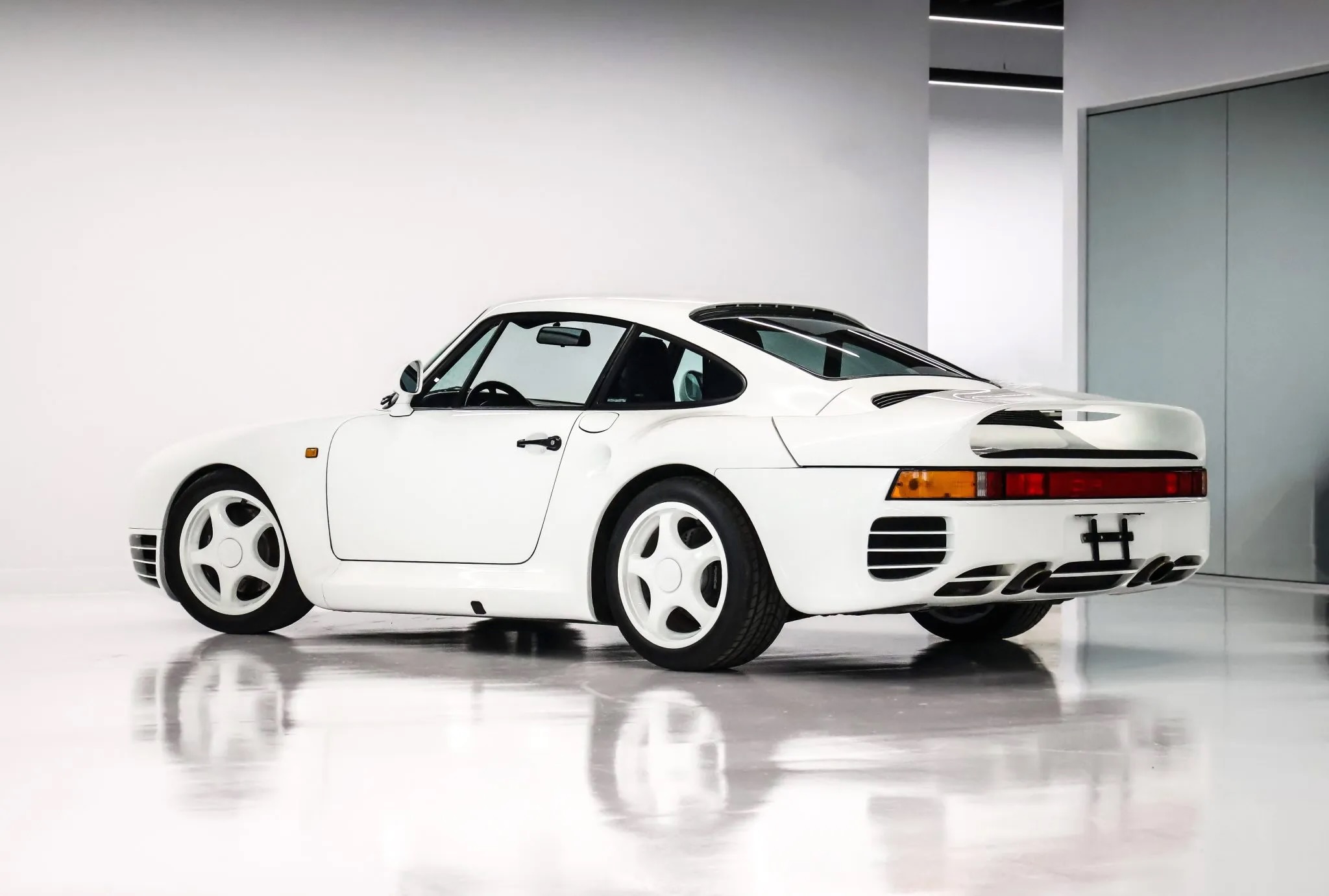
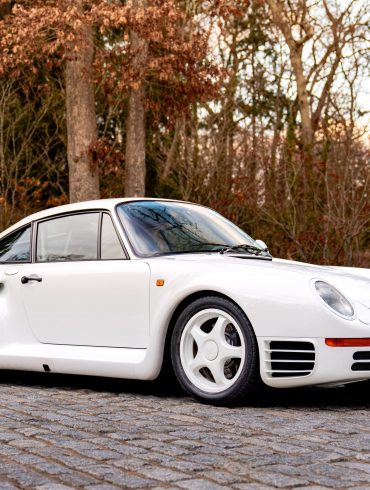
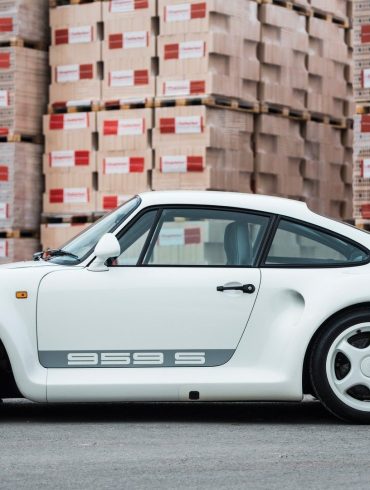
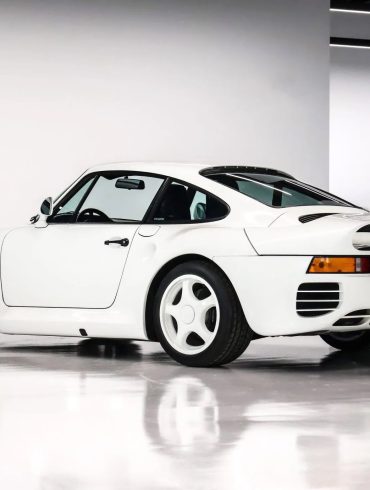
1986 Porsche 959
The most technologically advanced car of its era, it introduced the world to sequential turbocharging and intelligent all-wheel drive. It wasn't just a supercar; it was a rolling laboratory that predicted the future of performance decades before its time.
Why It Made The List
The Porsche 959 was simply the most advanced supercar made in the 1980s, from any manufacturer. In fact, it was so high tech, so far ahead of its time, there are modern supercars today in 2022 that have less tech and/or equipment.
It is also exceedingly rare and expensive, as less than 340 total were made across both the road homologation specials and the race cars that bore the 959 tag. Released in 1986, it came equipped with, and keep in mind this is 1986:
Hollow magnesium-alloy wheels with built in tire pressure monitoring systems
An electronically controlled center differential that adjusted the all wheel drive torque distribution hundreds of times per second
Automatically adjusting suspension that kept the car absolutely flat through any corner
A twin-sequential turbocharged 2.85L engine, with a smaller turbo for low revs that helped spin up a bigger one for the main powerband, that produced 444 HP
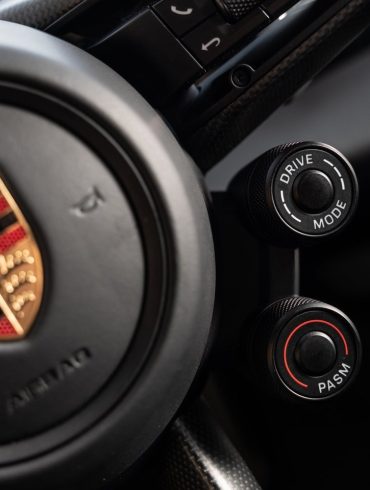
And the first implementation of something we take for granted in Porsches today, multiple driving modes
It also had the world’s most advanced ABS system at the time of its release, developed side by side with Bosch, who are still a world leader in ABS systems today. Considering that it weighed just about 3,500 but was not any longer, really, than a 911 of the time, it sure as hell eclipsed any performance number that same 911 could throw at it. In fact, it accelerated so hard, a shocking 3.6 seconds 0 to 60 in the 1980s, that even some new Type 992 911s today, in 2022, can’t match it.
Two variants of the road car were made. The most popular variant was the Komfort, which had all of the racing technology, materials, and power, but toned it down just enough to make it a daily-driver level of supercar. The less sold, more hardcore variant was the Sport, which was quite literally a Le Mans-level GT race car with headlights and a place to put your license plates.
Production lasted just two years, 1987 and 1988, with 292 road cars.
Key Data & Specifications
Engine: 2.85-liter twin-turbo flat-six
Power: 444 hp
Torque: 369 lb-ft
Transmission: 6-speed manual
Drivetrain: Variable all-wheel drive
0–60 mph: 3.6 seconds
Top Speed: 197 mph (world’s fastest production car at launch)
Known For
Inventing the blueprint for the modern high-tech supercar
Being the most technologically advanced road car of the 1980s
Learn More
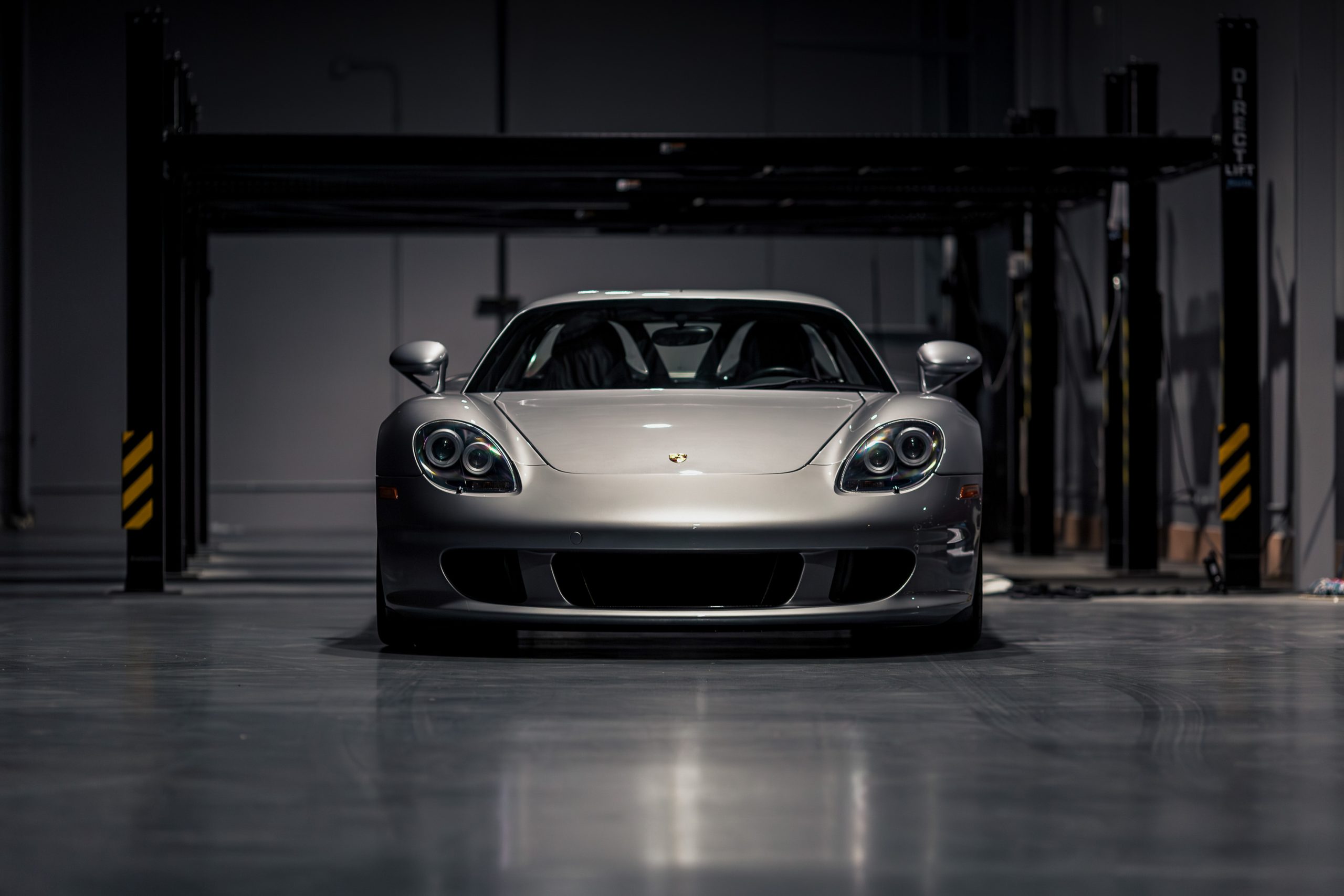
2004 Porsche Carrera GT
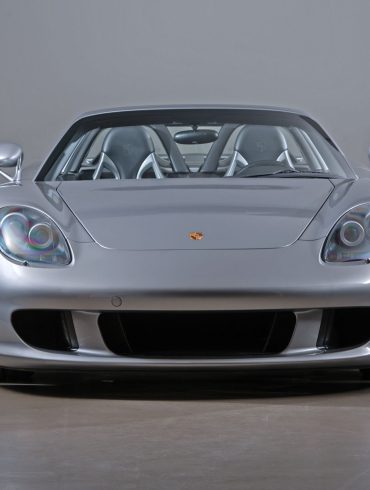
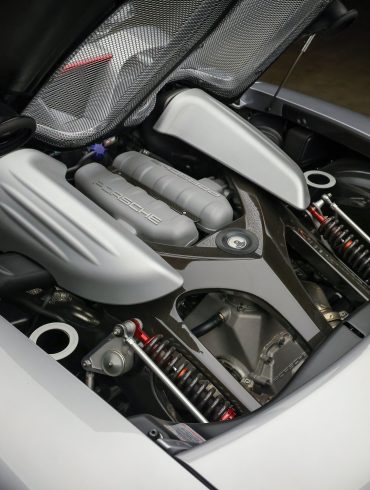
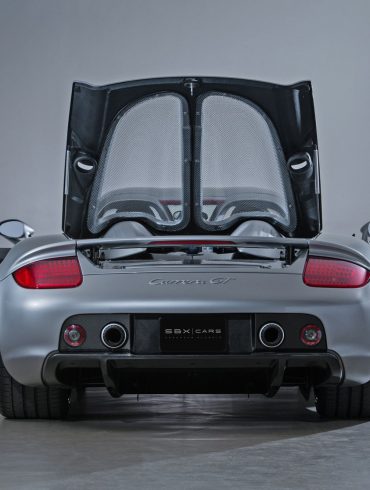
Renowned for its screaming 5.7L V10 derived from a canceled Le Mans project, this is the ultimate analog supercar. With a manual and no electronic stability control, it offers one of the rawest and most rewarding driving experiences in history.
Why It Made The List
Porsche has famously kept its focus on making sports cars, and until the past 10 years had avoided calling 98% of their models a supercar. They subscribe to the idea that a performance car must be usable and drivable in the real world, and design and engineer like that was tattooed to the inside of their eyelids. Which is why when Porsche does make a supercar, they do not mess about.
With only the 959 and the 911 GT1 Strassenversion being the only real supercars from Stuttgart until the early 2000s, when Porsche decided to take their decade old Formula One V10 engine and see if it would work in a road car, the result was the Carrera GT. It featured a detuned and larger displacement version of the last F1 engine Porsche had built in the early 1990s, at 5.7 liters and with 603 HP, a six-speed manual transaxle, and exactly zero driver aids.
To the supercar purists, this was a car that seemed made for them. It had a tricky clutch, had a defined limit that it could be driven to, but if you even peered over the edge of that limit, the Carrera GT would bite your head clean off. If you could launch it properly, it would clear 60 MPH from a standstill in under 3.5 seconds, and keep howling its high-pitched scream all the way to 205 MPH.
It featured a chassis made of carbon fiber and aluminum, with carbon fiber body panels, ferocious brakes made of carbon ceramic, and a motorsports-grade clutch pack, the only kind that could be mated to the high-strung V8, made out of silicon carbide, one of the hardest substances known to exist. As mentioned, it also featured absolutely no driver aids. No stability control, no traction control, and it had ABS only because it was required for it to be legally sold on some continents. It originally wasn’t supposed to even have an airbag in the steering wheel!
1,270 Porsche Carrera GTs were eventually built between 2004 and 2007, less than the planned 1,500 units. The “official” reason is the changing airbag regulations in the US, but the more realistic reason is that the model, while popular, was also ridiculously expensive and as mentioned, could quite literally kill you if you pushed it a millimeter over the limit. However, if you could get close to that limit and were wide awake and in control of your faculties, there have been very few supercars that can match the sheer, visceral adrenaline rush that the GT can shove through your brain.
Key Data & Specifications
Engine: 5.7-liter naturally aspirated V10
Power: 603 hp @ 8,000 rpm
Torque: 435 lb-ft @ 5,750 rpm
Redline: 8,400 rpm
Transmission: 6-speed manual
Chassis: Carbon-fiber monocoque
0–60 mph: ~3.5 seconds
Top Speed: ~205 mph
Known For
The last manual, naturally aspirated V10 hypercar
A no-compromise, race-derived driving experience that modern cars cannot replicate
Learn More
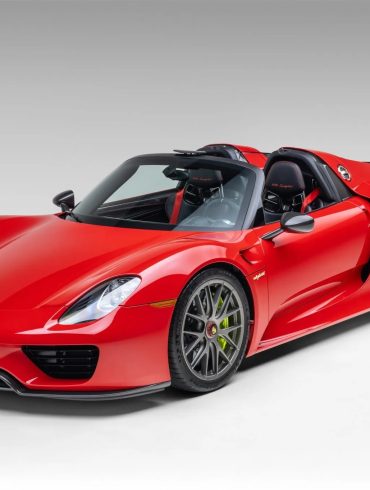
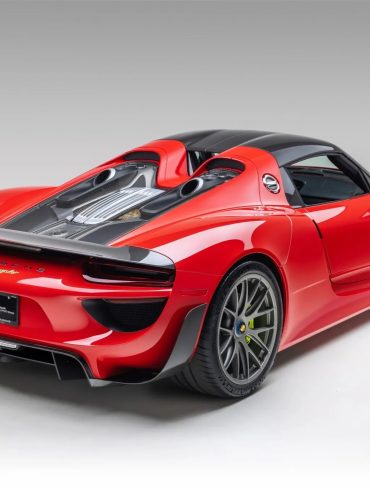
2015 Porsche 918 Spyder
The 918 proved that hybrid technology could be synonymous with soul-stirring speed. Its combination of a high-revving V8 and electric motors delivers a staggering 887 hp and a sub-2.5 second 0-60 mph time.
Why It Made The List
Porsche’s first hypercar was powered by both combustion and electricity.
As part of what, in recent years, has become known as the Holy Trinity of Hypercars (the other two being the McLaren P1 and the Ferrari LaFerrari), the Porsche 918 Spyder helped open the door for performance hybrid road cars. Until that point, hybrids were often used to save fuel, extend range, and were generally seen as “hippy” cars. After the 918 Spyder, no one thought that about hybrids ever again.
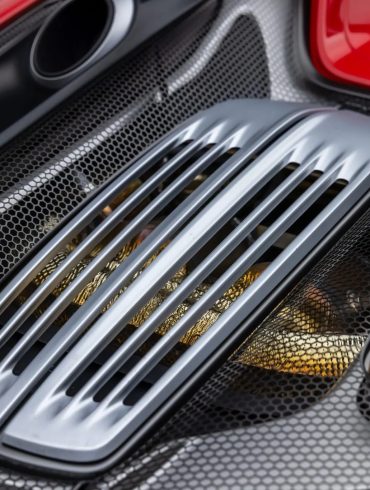
In the middle of the car sat a 4.6L V8, derived from the V8 that sat in the middle of the RS Spyder LMP2 race car, that absolutely monstered out 608 HP. The hybrid system involved two motors, one on the front axle and one in the transaxle, which combined generated another 279 HP, giving the 918 887 HP. The hybrid system was also quite intelligently designed, as it could drive the car all on its own for a short distance,, work with the engine to extend range, or, if it detected a foot going to the floor, would kick both hybrid motors into full power, catapulting the 918 at tremendous speed down whatever road it was on.
Production of the 918 Spyder began in September 2013, with the first deliveries to customers expected to be in December of 2013. To ensure that the best spectrum of customers were able to buy one of the 918 production units, the first half of the allotment was sold to people that Porsche selected and invited to buy, based on their history with the company. The second half, however, was sold as first-come-first-served via the extensive Porsche dealership network around the world.
At an asking price of $845,000 US Dollars in 2013, it was definitely not cheap, so when the second half of the allotment was announced as ready for orders, it sold out within a week in December 2014. Production proceeded smoothly, and ended on time in June, 2015, with the last customer receiving his car a couple of months later.
Once the 918 Spyder was out in the wild, independent testing showed that it could repeatedly hit 60 from a standstill in 2.6 seconds, 100 MPH in under 5 seconds, and the most incredible stat, 0 to 180 MPH in just 17.5 seconds. It was repeatable, verified by multiple magazines and reviewers, and still stands today as the fastest accelerating road-going Porsche, although the Type 992 Turbo S and GT3 models come close.
An RSR racing variant was teased at the 2011 North American International Auto Show, demonstrating the technology that had gone into the Type 997 GT3 R Hybrid and Hybrid 2.0 cars, but unfortunately there was no racing series at the time for a GT hybrid car, only prototype cars. However, some of the parts from that RSR demonstrator were reproduced for the Weissach Package, an $84,000 weight saving and aerodynamic upgrade package offered by Porsche for any new or existing 918.
It is cemented in history both for its incredible speed and amazing technology, as well as being one of the three hypercars, and so far Porsche’s only road-legal hypercar, that brought performance hybrid technology to the masses.
Key Data & Specifications
Engine: 4.6-liter naturally aspirated V8 + dual electric motors
Total Power: 887 hp
Torque: ~944 lb-ft (combined)
Redline: 9,150 rpm (V8)
Transmission: 7-speed PDK
Drivetrain: All-wheel drive
0–60 mph: ~2.2 seconds
Top Speed: ~214 mph
Known For
Redefining hybrid performance with genuine driver engagement
Being one of the most complete and usable hypercars ever built
Learn More
Mid-Engine Perfection
The Giant Killers: Heart-of-the-Chassis Purity
The mid-engine layout is the purest configuration for a sports car, and Porsche has used it to create some of the most agile "giant killers" in history. This lineage stretches from the 550 Spyder, to the modern 718 Spyder RS. By placing the engine directly behind the driver, Porsche creates a visceral, telepathic connection to the road.
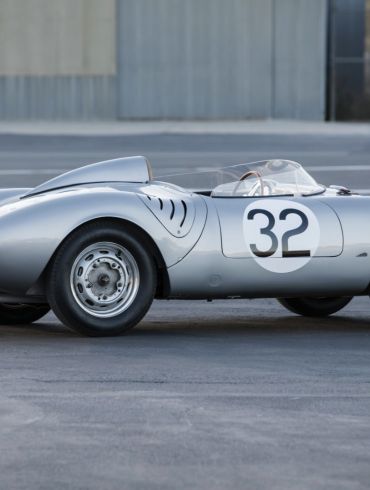
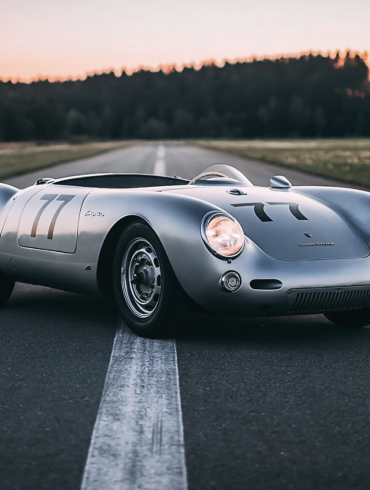
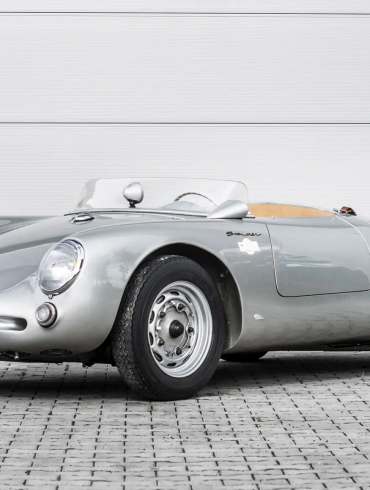
1953 Porsche 550 Spyder
Known as the "Giant Killer," this lightweight racer was Porsche’s first purpose-built competition car. It cemented the brand’s racing legacy by winning the Targa Florio and becoming an eternal cultural icon.
Why It Made The List
The Type 550 Spyder had humble beginnings. Originally just “the next model number” after the 356, Ferry Porsche saw that many of those 356’s were being used by customers as race cars, and that they were placing well in those races. The 550 then became Porsche’s very first purpose built race car, with a maniacal focus on performance and the will to win. It soon became known as the “Giant Killer,” as nobody had seen anything like it in the 1950s.
Now, we can hear you saying “But you said race cars don’t qualify for this list!” You are 100% correct, which is where the real magic of the 550 Spyder comes to the fore: It was completely road legal. An oft-used turn of phrase for many supercars today is “a race car for the road,” but this 550 literally was a race car for the road, as it was meant to be able to drive to the Mille Miglia or the Targa Florio, win, and then drive back home with the winner’s trophy in the passenger seat.
It moved the flat-four rear engine of the 356 to the middle of the car, revolutionary at the time, and had a specifically shaped, low body to reduce drag as much as possible. It used a tubular steel frame, over which aluminum body panels were placed. The engine also got a healthy kick in power to 110 HP, which in that weighed about as much as a feather meant that it was ridiculously fast.
An evolution model, the 550A Spyder, was the first of the 550s to win an event outright, the 1956 Targa Florio. Very few original 550 Spyders were made, and even less 550As, and almost all were used for racing. The 550 Spyder, however, is known most famously as the car that James Dean was killed in, just a few days before he was to race it.
With very few original examples left, the rest having either been destroyed in racing accidents or having to be restored, a proper, numbers matching, original condition 550 Spyder could run you up to $10 million or more at an auction. Even restored models will sell well into the mid-millions, and they are exceedingly rare to find out on the road or at a concours d’elegance event.
Details
Years: 1953-1956
Production: 90 units (550), 40 units (550A)
Body style: 2-door coupe & roadster
Layout: Mid-engine, rear-drive
Engine: 1.5L (1,498 cc) DOHC Flat four
Power: 110 hp to 135 hp
Transmission: 4 and 5-speed manual
Learn More
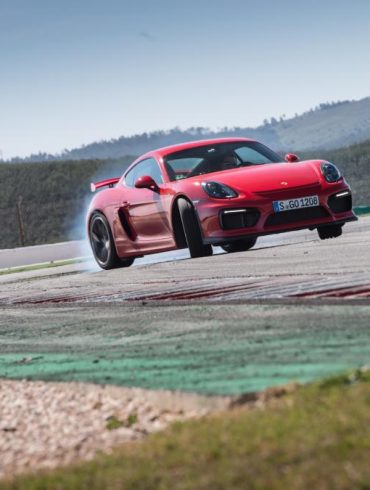
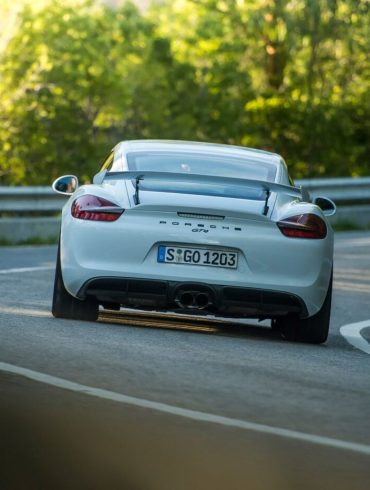
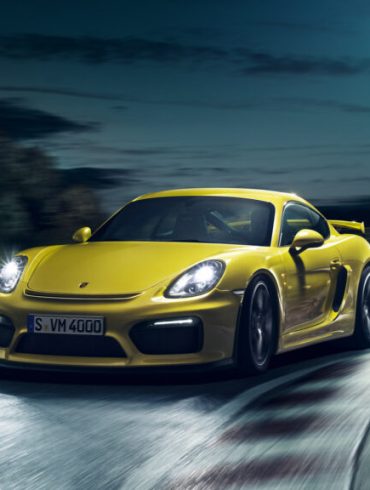
2016 Porsche Cayman GT4 (981)
This was the moment the Cayman finally "grew up," inheriting the 3.8L engine from the 911 Carrera S. It was a love letter to enthusiasts, offered exclusively with a six-speed manual and GT3-grade suspension.
Why It Made The List
When Porsche introduced the Cayman to the world, the hard-topped brother of the Boxster, it was instantly a hit. It was a laser scalpel in a skilled drivers’ hands, and for the less surgically oriented, it was still a damned good handling car. However, one thing it seemed to lack, mostly because it would have made it as good as a 911 for half the price, was that last tenth of performance to make it properly fast.
Fast forward to 2015, and out of absolutely nowhere, Porsche announces that the Cayman is getting a high performance, hardcore model, to be called the GT4. It was the first time that Porsche Motorsport out of Weissach was allowed to work some of its performance magic on a Cayman, and to say that they did a spectacular job is not understating the fact at all.
Components from the Type 991 911 GT3 were brought in, the engine from a Type 991.2 Carrera S was sourced, the wizards of Weissach got to the suspension and chassis, and when it was all put together, even Porsche couldn’t hide their delight. A snarling, angry Cayman with a 3.8L flat-six that puts down 385 HP through a close-ratio 6-speed transmission. That transmission also sits on dynamic mounts, which are soft to absorb driveline vibration when in road mode, and harden to increase power transfer and responsiveness in track mode.
The GT4 isn’t the fastest car in a straight line, nor is it the fastest around a track. What it is, however, is a car that you will never miss an apex in, a car that seems to talk to you telepathically, that seems to respond to your thoughts as you think of them. Its 6-speed manual feels connected and mechanical, the clutch bite is perfect and communicative, and the whole thing feels less like a performance car you sit in, and more like a car that you wear. People will often say that a great car feels like an extension of your body. The Cayman GT4 feels like you were born sitting in it.
Engine & Drivetrain Specifications
Engine: 3.8L naturally aspirated flat-six
Power: 385 hp @ 7,400 rpm
Torque: 309 lb-ft @ 4,750 rpm
Transmission: 6-speed manual
Drive: Rear-wheel drive
Known For
First true GT-department Cayman and they nailed it on the first go
Modern classic with strong long-term value and amazing driving dynamics
Learn More
1964 Porsche 904 Carrera GTS
A masterpiece of mid-century design, the 904 was the first Porsche to use a fiberglass body. It was a dual-threat machine, equally comfortable winning on the racetrack as it was being driven to the circuit.


Why It Made The List
The Porsche 904 Carrera GTS stands as one of the most important non-911 Porsches ever built because it represents Porsche’s first fully realized prototype conceived simultaneously for road and race. Created to meet FIA GT homologation requirements, the 904 was not adapted from a production car—it was engineered from scratch with competition as its primary purpose. In doing so, Porsche laid the groundwork for every great mid-engine sports car that followed, both within the brand and beyond it.
What made the 904 revolutionary was its construction. It was Porsche’s first car to use a fiberglass body bonded to a steel ladder frame, dramatically reducing weight while improving rigidity—an advanced solution for the early 1960s. Styled by Ferdinand Alexander Porsche, the car’s low, slippery silhouette was dictated by aerodynamics, not ornamentation. Everything about it felt modern, focused, and intentional, especially when compared to the front-engined sports cars it was built to defeat.
Under the rear decklid sat the legendary 2.0-liter Carrera four-cam flat-four, an engine derived directly from Porsche’s racing program. Though modest in displacement, it delivered razor-sharp throttle response, a sky-high redline, and exceptional durability—traits that allowed the 904 to excel across disciplines. The car won outright races, dominated its class, and proved equally capable on tight hill climbs, twisty circuits, and endurance events. Few cars of any era have been so universally effective.
What elevates the 904 Carrera GTS into the top tier of Porsche history is its philosophical clarity. It was lightweight before that was fashionable, mid-engined before it was the norm, and engineered with racing priorities without apology. With just over 100 examples built, it remains rare, valuable, and deeply respected—not as a museum piece, but as the blueprint for Porsche’s future. For many enthusiasts, the 904 is not just the greatest non-911 Porsche—it’s one of the purest sports cars ever made.
Details
Engine: 2.0-liter air-cooled flat-four (Carrera four-cam)
Power: ~180 hp
Transmission: 5-speed manual
Drivetrain: Mid-engine, RWD
Chassis: Steel ladder frame with fiberglass body
Weight: ~1,430 lbs (650 kg)
Production: ~106 units
Known For
Being Porsche’s first purpose-built prototype homologation road car, designed from the outset for racing
Introducing lightweight composite construction and a mid-engine layout that defined Porsche’s competition future
Learn More
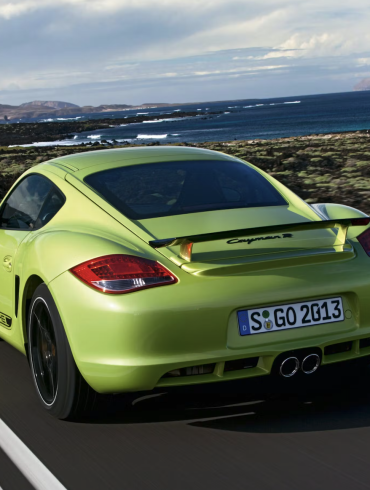
2012 Porsche (987.2) Cayman R
The Lightweight Purist. Proof that adding lightness is the most effective way to build a sports car.
Why It Made The List
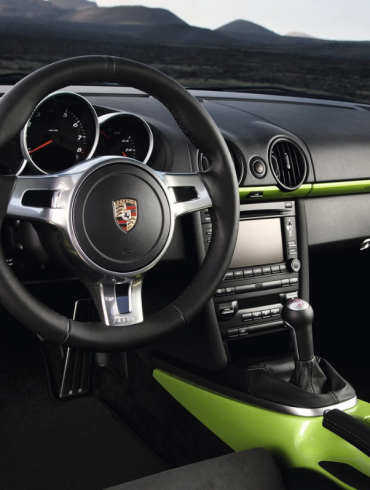
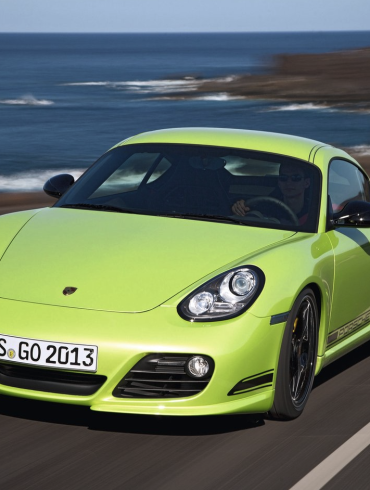
The Cayman R is essentially the "911 R" of the Cayman lineage, born during an era when Porsche was still perfecting the balance between analog feel and modern speed. To create the R, engineers didn't just add power; they obsessively shaved weight. By stripping 121 lbs through the use of aluminum doors, lightweight bucket seats, and the removal of the radio and air conditioning, Porsche created a car that feels incredibly "small" and alert around the driver.
The 987.2 platform is particularly beloved because it represents the pinnacle of Porsche’s hydraulic steering era. Unlike the electric steering in newer models, the Cayman R’s wheel provides a granular, telepathic level of feedback from the front tires. When combined with a 20mm lower ride height and a standard mechanical locking rear differential, the R becomes an extension of the driver’s nervous system, rewarding precise inputs with immediate, unfiltered rotation.
Visually, the Cayman R is a standout, particularly in its signature Peridot Metallic green paint. It sits on lightweight 19-inch wheels borrowed from the Boxster Spyder and features fixed rear spoilers and retro side decals. It is a car that values the quality of the drive over raw performance stats, making it a blue-chip collectible that captures the spirit of the legendary 1967 911 R.
Details
Engine: 3.4L Naturally Aspirated Flat-6
Power: 330 hp @ 7,400 RPM
Torque: 273 lb-ft @ 4,750 RPM
Transmission: 6-Speed Manual / 7-Speed PDK
Drive: Rear-Wheel Drive
Known For
Exceptional power-to-weight ratio and being the final high-performance hydraulic steering Cayman.
Early collector favorite
Distinguished by its aluminum doors, fabric door pulls, and lack of a traditional instrument cowl.
Learn More
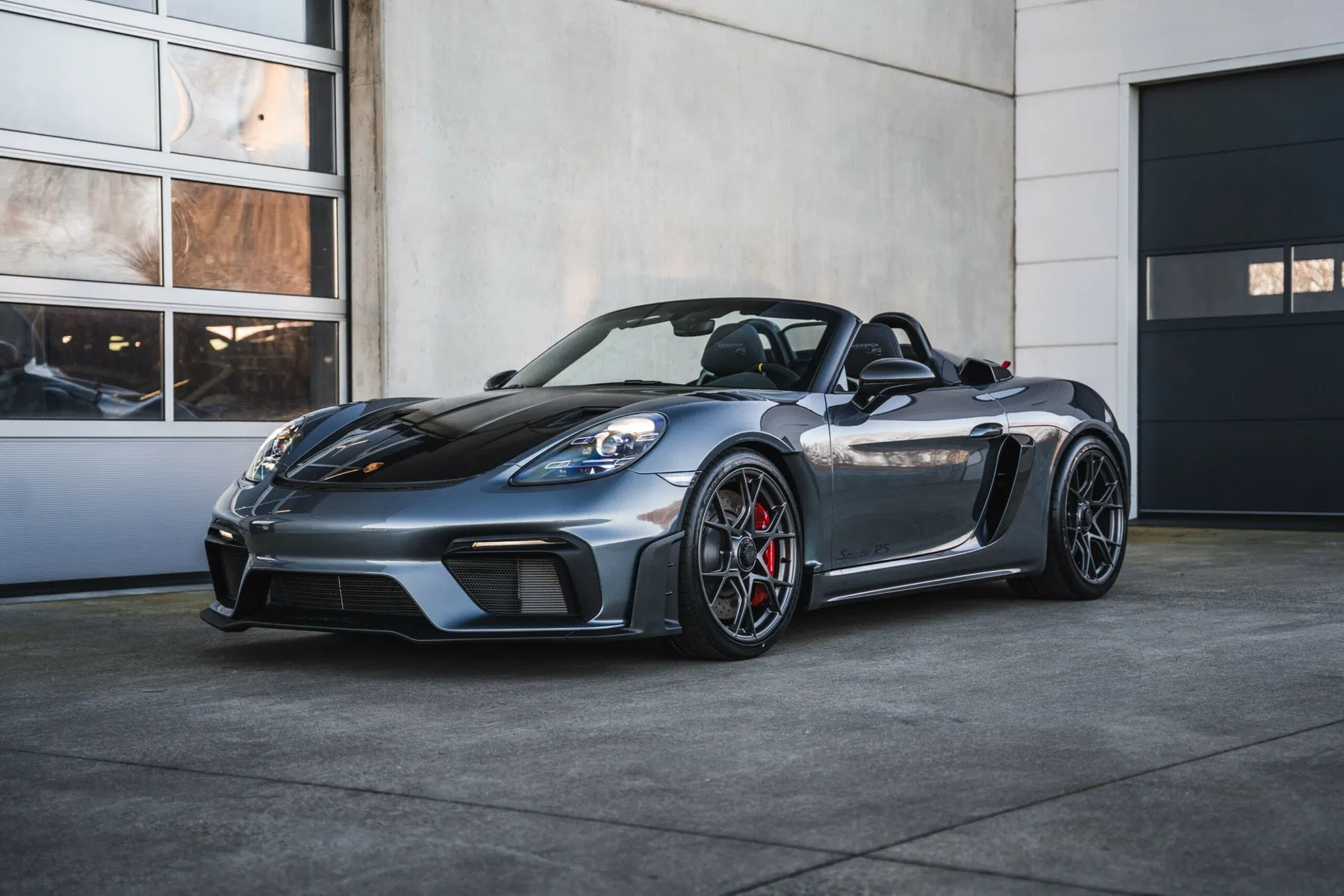
Porsche 718 Spyder RS
One of the Greatest Porsches Ever! The Ultimate Peak: A GT3 Engine with the Roof Cut Off
Why It Made The List
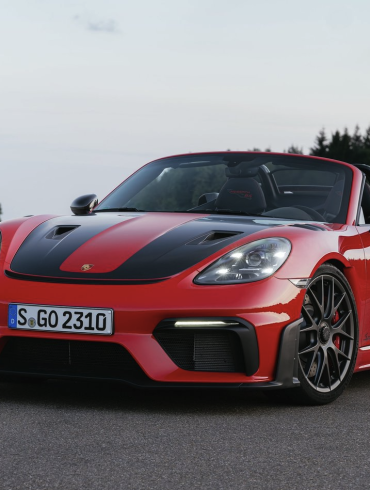
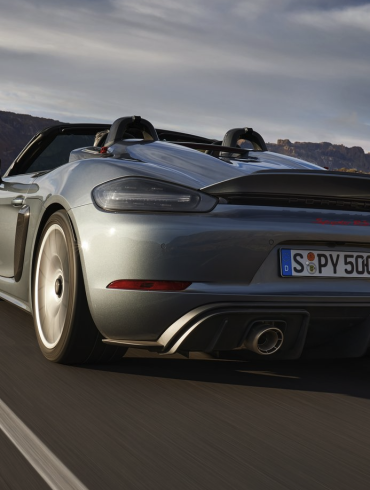
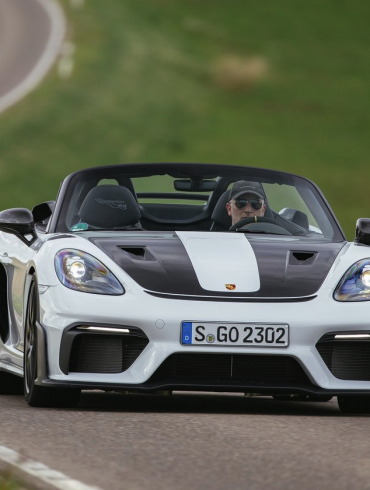
The 718 Spyder RS is the definitive "no compromises" Boxster. For the first time in history, Porsche allowed its mid-engine roadster to borrow the legendary 4.0-liter naturally aspirated engine from the 911 GT3. This isn't just a fast roadster; it is a mechanical symphony that revs to an eye-watering 9,000 RPM, featuring air intakes positioned right next to the driver's ears to intensify the induction roar.
Unlike previous Spyder models that focused on a balance of road and track, the RS is a pure track weapon. It features a significantly lightened chassis, the most aggressive aerodynamics ever seen on a Boxster, and the lightning-fast PDK transmission as the only gearbox option to ensure maximum performance. The roof is a rudimentary "sun sail" designed for emergency use, reinforcing the car's mission as an open-air sensory assault.
Driving the Spyder RS is a visceral experience that few modern cars can match. It represents the "final shout" of the internal combustion Boxster platform before the transition to electric, and it does so with enough power to outpace supercars twice its price.
Details
Engine: 4.0L Naturally Aspirated Flat-6 (GT3 Engine)
Power: 493 hp @ 8,400 RPM
Torque: 331 lb-ft @ 6,750 RPM
Transmission: 7-Speed PDK (Dual-Clutch)
Drive: Rear-Wheel Drive
Known For
The first and only Boxster to house the high-revving 911 GT3 engine.
Features a lightweight manual roof and a 9,000 RPM redline for an unparalleled aural experience.
Learn More
1970 - 1972 Porsche 914/6
The collaboration between VW and Porsche resulted in this quirky, mid-engine targa that utilized the 2.0L flat-six from the 911. Though misunderstood at launch, its balance and agility have made it a highly prized collector's item today
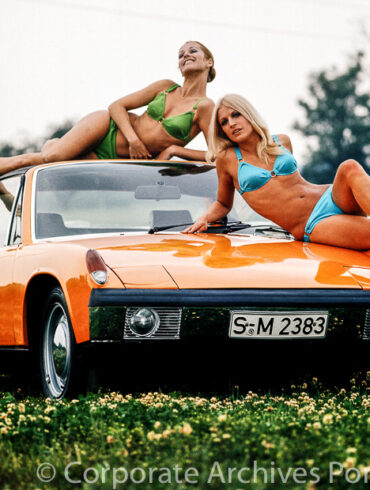
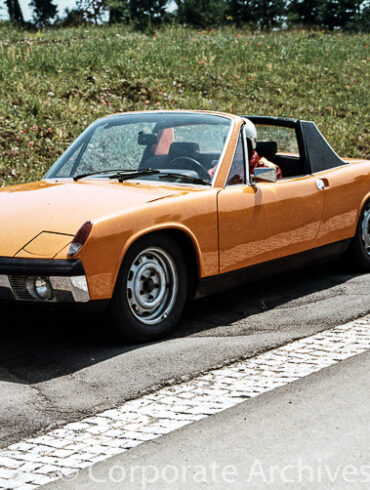
 The start of first heat at Riverside, led by the 914/6 pace car.
Why It Made The List
The Porsche 914/6 stands as one of the most important—and long underrated—non-911 Porsches ever built. Conceived as a joint project between Porsche and Volkswagen, the 914/6 was intended to offer true Porsche performance in a smaller, lighter, more accessible package. While its boxy styling and shared origins initially clouded its reputation, time has revealed the truth: this was Porsche’s first serious mid-engine road car, and a direct ancestor to every Boxster and Cayman that followed.
What separated the 914/6 from its four-cylinder siblings was its heart. Borrowed from the contemporary 911T, the 2.0-liter air-cooled flat-six transformed the chassis, delivering a free-revving character and unmistakable Porsche sound in a package weighing just over 2,000 pounds. Combined with the car’s mid-engine balance, low center of gravity, and compact footprint, the 914/6 offered handling precision that even early 911s struggled to match. On a winding road, it was devastatingly effective.
The motorsport credentials cemented its legacy. The 914/6 proved formidable in competition—most famously winning its class at Le Mans in 1970 and serving as the basis for the ultra-rare 914/6 GT, a factory-built race car that dominated rallies and circuit racing alike. Today, the 914/6 is recognized for what it always was: a lightweight, driver-focused Porsche built with clarity of purpose.
Details
Engine: 2.0-liter air-cooled flat-six (from 911T)
Power: ~110 hp
Transmission: 5-speed manual
Drivetrain: Mid-engine, RWD
Weight: ~2,050 lbs (930 kg)
Production: ~3,300 units
Known For
Being Porsche’s first true mid-engine road car, establishing a layout philosophy that defines modern Porsche sports cars
Achieving real motorsport success, including a class win at the 1970 24 Hours of Le Mans
Learn More
The Transaxle Era (Front-Engine)
Balanced Revolution: The Master of the Front-Engine Gamble
For nearly two decades, Porsche’s "Transaxle" family of front-engine cars didn't just exist alongside the 911—they were designed to replace it. From the entry-level 924 to the V8-powered 928 "Land Shark," this era proved that Porsche’s DNA was about precision engineering and balance, regardless of where the motor was mounted.
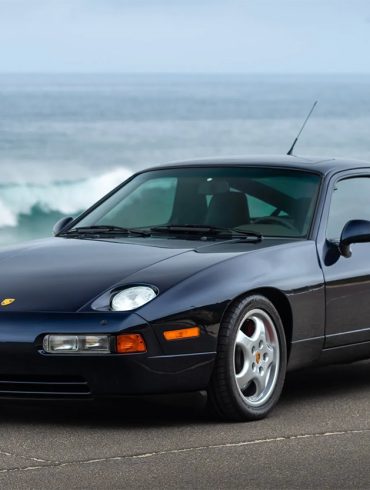
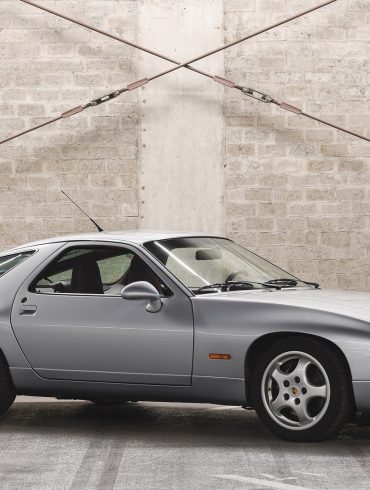
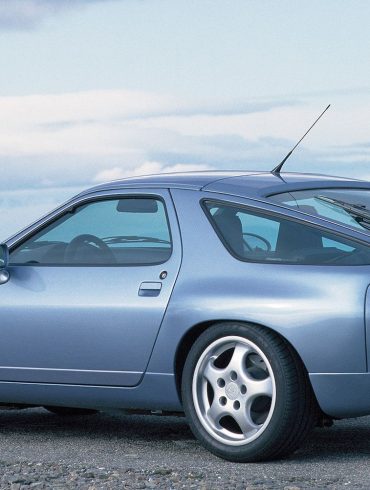
Porsche 928 GTS (Manual)
The Porsche 928 GTS with a manual gearbox is the final, perfected expression of Porsche’s front-engine grand touring vision—powerful, elegant, and quietly dominant.
Why It Made The List
The Porsche 928 GTS stands as one of the greatest non-911 Porsches ever built because it represents the absolute peak of the 928 program. By the time the GTS arrived, Porsche had spent nearly two decades refining the concept of a front-engine V8 Porsche capable of crossing continents at extreme speed and total comfort. The manual-equipped GTS is the version where everything finally came together—performance, reliability, presence, and driver engagement.
Power came from a 5.4-liter naturally aspirated V8, producing around 345 horsepower and immense torque delivered with turbine-like smoothness. Paired with the rare 5-speed manual transmission, the GTS transformed the 928 from an effortless GT into a genuinely engaging driver’s car. Combined with Porsche’s near-perfect transaxle balance and the Weissach rear axle, the car delivered extraordinary stability at speed while still feeling composed and confidence-inspiring on challenging roads.
Visually, the GTS marked the most muscular and resolved 928 design. Wider rear fenders, a revised rear light bar, and larger wheels gave the car real presence without excess. Unlike the stripped-back ethos of Porsche’s lightweight specials, the 928 GTS embraced luxury—leather, sound insulation, and long-distance comfort—without sacrificing performance. It was a different philosophy from the 911, but no less authentic to Porsche’s engineering mindset.
What elevates the manual 928 GTS today is rarity and perspective. Manual examples are exceptionally scarce, especially compared to automatics, and represent the version enthusiasts always wanted but few buyers originally ordered. As Porsche’s last front-engine V8 flagship before the company returned its full focus to rear- and mid-engine sports cars, the 928 GTS (Manual) stands as a quiet triumph—a reminder that Porsche didn’t just master the 911 formula, it mastered every formula it committed to.
Details
Engine: 5.4-liter naturally aspirated V8
Power: ~345 hp
Torque: ~369 lb-ft
Transmission: 5-speed manual (rare)
Drivetrain: Front-engine, RWD
Weight: ~3,500 lbs (approx.)
0–60 mph: ~5.4 seconds
Top Speed: ~171 mph
Known For
Being the final and most powerful evolution of the Porsche 928, representing the peak of the transaxle GT era
Pairing a 5.4-liter V8 with a rare manual gearbox, making it the most desirable 928 for enthusiasts
Learn More
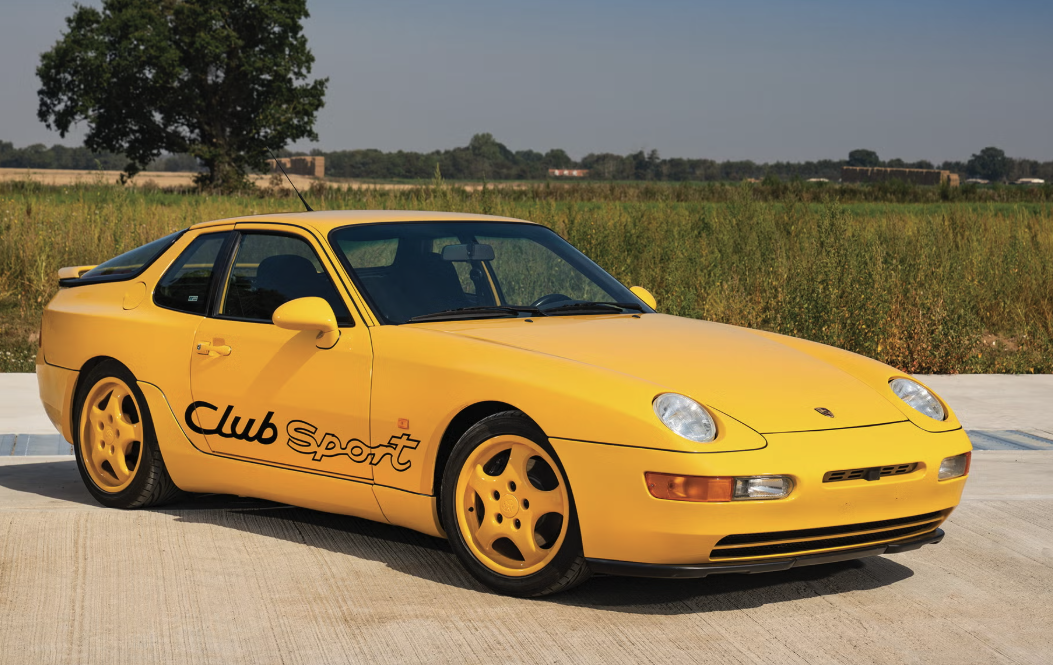
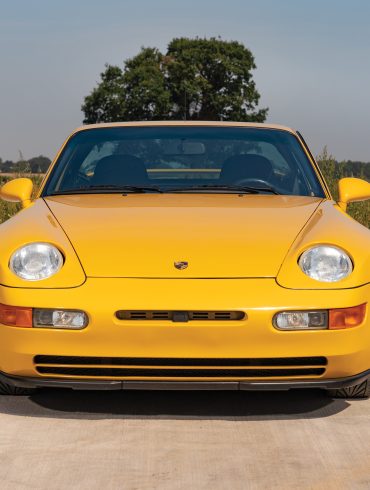
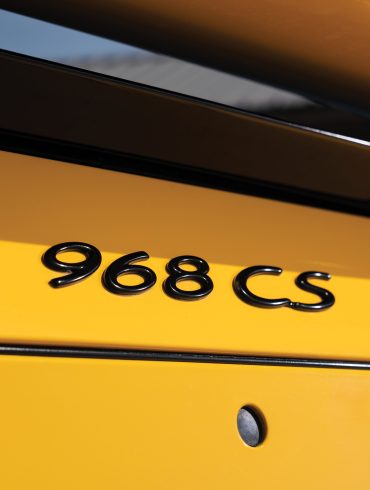
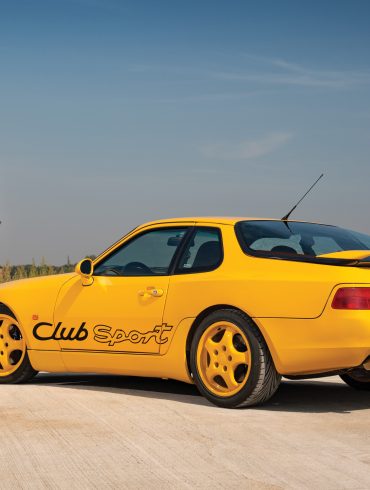
Porsche 968 Clubsport (CS)
This stripped-out, track-focused version of the 968 is widely considered one of the best-handling front-engine cars ever built. By removing the rear seats and sound deadening, Porsche created a pure, lightweight weapon for the enthusiast driver.
Why It Made The List
For 1993 thru 1995, Porsche offered a light-weight “Club Sport” variant of the Porsche 968, specifically developed for owners looking to run their cars at the racetrack. It was literally a car that had anything not absolutely needed to make the car run removed, including much of the sound deadening and even the rear seats. Electrical options (like power windows and seats) were replaced by manually operated components, although Recaro racing seats were included, mostly due to both their lightweight design and improved side-bolsters for improved driver restraint during track driving conditions.
It had wider and taller wheels and tires than the base 968, at 17 inches and 225 width front and rear for the rubber. The suspension was dropped by 20 mm and stiffened to enhance cornering. The steering wheel was almost literally lifted from a race car, a three spoke lightweight design without an airbag and a thick, grippy rim.
It was well received on debut, being named Performance Car of the Year by the UK based magazine Peforrmance Cars. It was only officially sold in the UK, Europe, Japan, and Australia, although it has wound its way around the globe to touch almost every corner of Earth. It also proved its original design goal, as a 968 CS was entered into the 1993 Sandown 6 Hours in Australia, which it ended up winning overall. It marked the Australian competition debut of the car, and nothing moves cars through showrooms like winning at its first official appearance.
It was the last Porsche car with a four cylinder transaxle powertrain, and was the perfect way to send off the model and body style.
Details
Model: Porsche 968 CS Coupe
Years: 1993 - 1995
Production: 1,923 units
Engine: 3.0 L Nat Aspirated Inline 4
Power: 236 bhp @ 6200 rpm
Torque: 225 lb-ft @ 4100 rpm
0 - 60 mph: 6.10 seconds
Top Speed: 160 mph
Known For
Being the lightest and most focused version of the Porsche 968, built explicitly for driver engagement
Representing the ultimate evolution of Porsche’s front-engine transaxle platform
Learn More
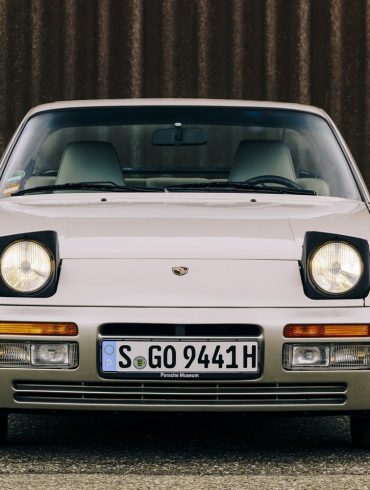
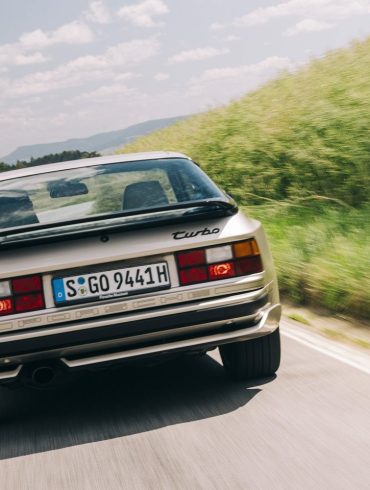
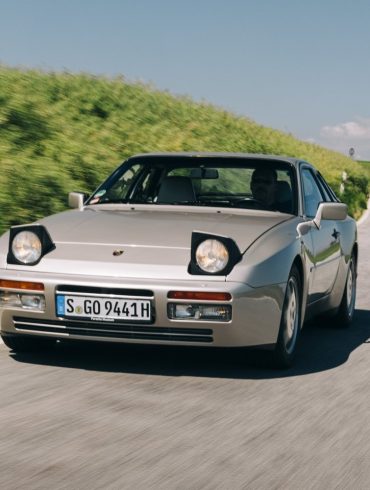
Porsche 944 Turbo S
With near-perfect 50/50 weight distribution, the 944 Turbo S proved that front-engine Porsches could handle just as well as their rear-engine siblings. It remains a benchmark for the "transaxle" era, blending 80s styling with genuine track capability.
Why It Made The List
Unless you knew exactly where to look, and even then what to look for, you could be forgiven for thinking that the 944 Turbo S was a “regular” 944. It’s what you can’t see that makes it one of the most special four cylinder models ever released by Porsche.
To start with, it carried a turbocharged version of the 944’s base M44/40 inline four engine, using a KKK K26-8 turbine to generate 250 HP and 258 lbs-ft of torque. This engine combination, used on only the Turbo S and the subsequent 944 Turbo, received the new designation of M44/52. That extra power, nearly 100 HP more than a standard 1988 944, made the car an absolute monster off the line, and would keep it accelerating until the speedometer hit 162 MPH.
However, Porsche knows that power and handling go hand in hand, and so the 944 Turbo S, of which only around 1,000 were made, came automatically with suspension option M303. That option put Koni adjustable shocks at all four corners, with ride height adjusting collars on the front struts, progressive rate springs, durometer suspension bushings, and chassis stiffening brackets where the shocks were mounted. For dynamics, the car had hollow front and rear torsion bars, with the ones at the front being a meaty 26.8mm thick.
The only thing that identifies the Turbo S from its Turbo brethren and even the rest of the 944’s is there are discrete identification plates, such as the engine code plate inside the engine bay, the engine itself, and very subtle interior differences that you’d need to a be a fully paid up member of Anoraks-r-us to be able to spot from a distance.
Details
Engine: 2.5-liter turbo inline-four
Power: 250 hp
Transmission: 5-speed manual
Drivetrain: Front-engine, rear-wheel drive (rear transaxle)
Suspension: M030 sport suspension
Brakes: 928 S4–derived four-piston setup
0–60 mph: ~5.5 seconds
Production: Limited 1988 run (Turbo S later became the Turbo specification for 1989)
Known For
Being the most powerful and capable factory-built Porsche 944, with performance rivaling contemporary supercars
Delivering near-perfect balance and handling, thanks to Porsche’s transaxle architecture
Learn More
Porsche 924 Carrera GT
A wide-bodied, turbocharged homologation special that brought legitimate racing pedigree to the 924 platform. Only 400 were built, making it one of the rarest and most aggressive-looking transaxle cars in existence.
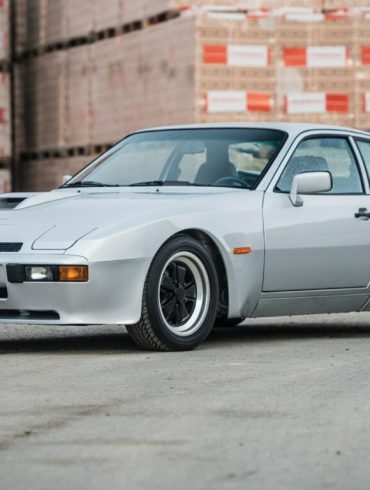
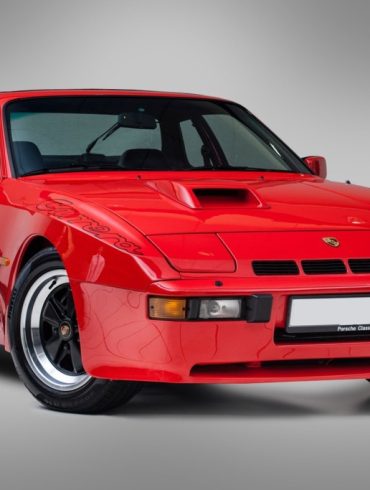
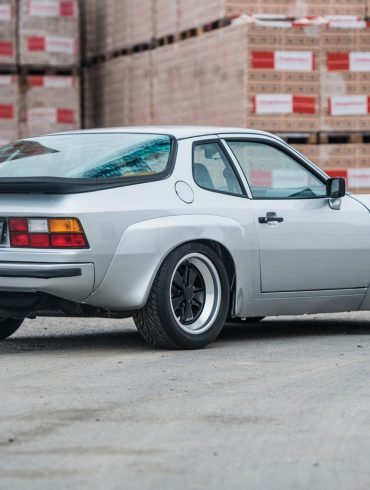
Why It Made The List
The 1980 Porsche Carrera GT was one of those cars that a company makes, puts it on sale without any marketing, and through word of mouth alone sells out of them. Originally unveiled as a concept car at the 1979 Frankfurt Auto Show, it was secretly the development prototype for a 924 race car that needed a homologation special to be eligible for the 1980 season.
The 924 Carrera GT was about as hardcore of a sports car as you could get from Stuttgart without mentioning the 911. It was a stripped down, stiffened, and more powerful version of the 924 that was designed for track use and little else. It had an intercooler, with the engine tuned to run at 8.5:1 compression to allow for the turbocharged air to boost power way above what a “base” 924 could generate.
There were two versions of the homologation special, the 924 Carrera GT, which produced 210 HP, and the 924 Carrera GTS, which had the wick turned up even higher for 245 HP. Both versions included a factory installed roll cage, race seats, and not much else in terms of interior trim. To add further complexity to the naming of the car, the left hand drive production car was known as the 937 924 Carrera GT, while the right hand drive variant was a 938 924 Carrera GT.
Enough cars were produced and sold that the FIA approved the car for racing, and three 924 Carrera GTR’s were entered into the 24 Hours of Le Mans, which had the wick turned all the way up, to 375 HP from a modified and race-prepared version of the 2.0L inline-four. Those three cars placed 6th, 12th, and 13th overall, a very strong showing for a GT car when it was racing against things like 935/79’s and 917’s.
In 1981, Porsche developed a one-off variant that was known as the 924 Carrera GTP, or GT Prototype. It was fitted with a 2.5L turbo inline-four, which had four valves per cylinder, dual overhead cams, twin balance shafts, and chucked out a monstrous 420 HP. The car raced at the 1981 24 Hours of Le Mans, placing seventh overall. That engine would become the basis for the one that would come in the 944 Turbo and Turbo S later on in the decade.
It was one of those cars that appeared out of nowhere, a homologation special that truly was special. It was released during an era where you could literally buy a race car that was road legal, something that sadly doesn’t happen often, if at all, today in 2022. For that reason, that it was a properly hardcore race car that could carry license places, it sits here on our list.
Details
Engine: 2.0-liter turbo inline-four
Power: ~210 hp
Transmission: 5-speed manual
Drivetrain: Front-engine, rear-wheel drive (rear transaxle)
Body: Lightweight composite wide-body panels
Production: 406 units
Known For
Being a true homologation special, built to take the 924 racing and win
Introducing the wide-body, turbocharged formula that defined Porsche’s transaxle performance cars
Learn More
SUVs, Sedans & EVs
Defying Gravity: When Performance Met Practicality
These models prove that Porsche’s soul isn't found in a specific body style, but in the way a vehicle moves. Whether it’s a Cayenne defying physics on a mountain pass or a Taycan delivering soul-crushing electric acceleration, these cars brought Porsche’s racing-grade engineering to the daily commute.
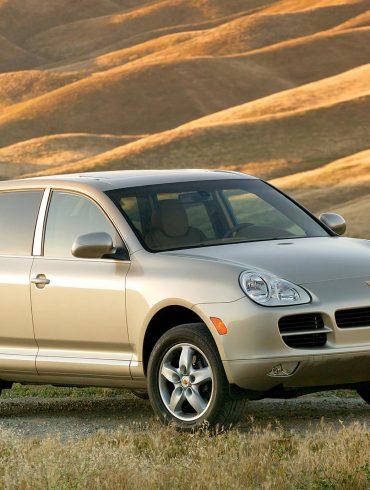
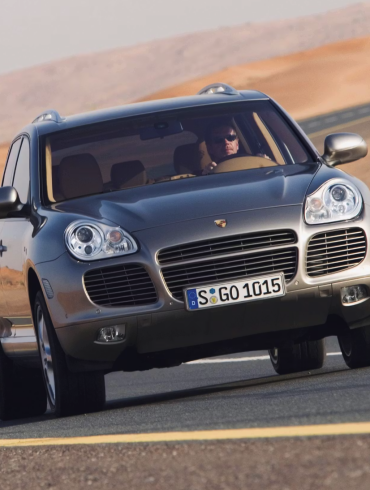
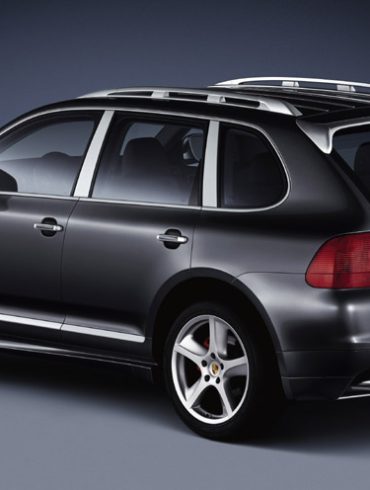
2003 Porsche Cayenne Turbo
The car that famously "saved Porsche" from financial ruin, the Cayenne proved that an SUV could actually drive like a sports car. It paved the way for every performance SUV that followed, blending off-road grit with Autobahn speed.
Why It Made The List
The original 955 Turbo is the car that started the high-performance SUV revolution. When it launched, it was the fastest SUV in the world, capable of outrunning many contemporary sports cars while still being a legitimate off-roader. It featured a 4.5L twin-turbo V8 and an adjustable air suspension that could raise the car to provide nearly 11 inches of ground clearance.
What makes the 955 Turbo special is its "over-engineered" nature. Porsche was so determined to prove that an SUV could be a "real" Porsche that they built it to withstand extreme abuse. It featured a heavy-duty four-wheel-drive system with a low-range transfer case and a locking center differential—features that have largely been phased out of modern performance SUVs in favor of weight savings.
Today, the 955 Turbo is gaining status as a "Youngtimer" classic. Its 911-inspired "egg" headlights and muscular stance have aged better than critics originally predicted. It remains a testament to Porsche’s engineering courage, proving that you could have 911-levels of turbo boost in a package that could also tow a boat or cross a desert.
Details
Engine: 4.5L Twin-Turbo V8
Power: 450 hp @ 6,000 RPM
Torque: 457 lb-ft @ 2,250 – 4,750 RPM
Transmission: 6-Speed Tiptronic S
Drive: All-Wheel Drive
Known For
The original "Super SUV" that combined sports car speed with genuine heavy-duty off-road hardware.
Highly over-engineered, featuring a 4WD system with low-range that is rare in modern performance vehicles.
Learn More
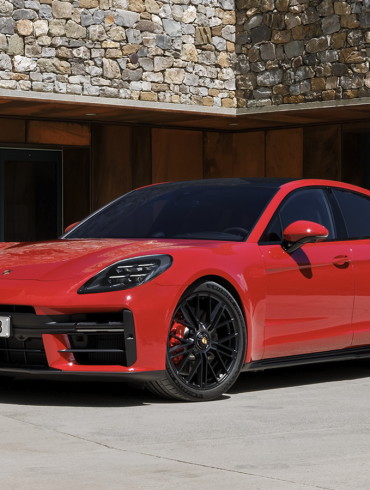
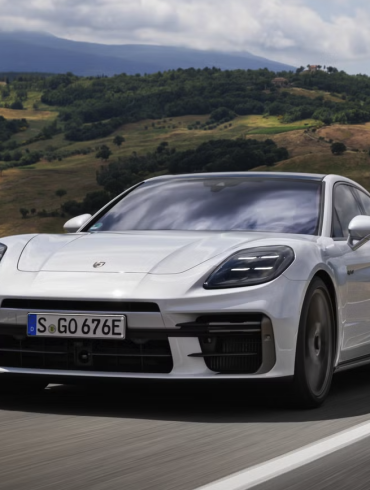
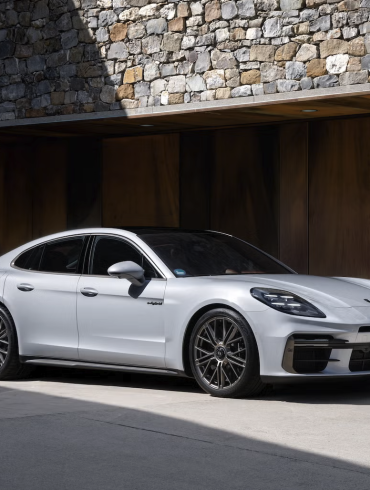
Panamera Turbo S E-Hybrid (2025–Present)
The Hyper-Sedan of the Future. This model proves that a luxury four-door sedan could be a hp monster. It combines executive comfort with brutal acceleration, effectively bridging the gap between a limousine and a supercar.
Why It Made The List
The Porsche Panamera Turbo S E-Hybrid earns its place among the greatest non-911 Porsches because it represents the absolute peak of Porsche’s modern performance philosophy. This isn’t a luxury sedan with speed added as an afterthought—it’s a full-blooded Porsche flagship that happens to have four doors, rear seats, and the ability to cross continents in silence. In typical Porsche fashion, the engineering brief was clear: make the fastest, most complete Panamera ever, without excuses.
At the heart of the Turbo S E-Hybrid is a twin-turbocharged V8 paired with a high-output electric motor, producing a combined output north of 770 horsepower. The result is acceleration that rivals—and often humiliates—traditional supercars, delivered with instant electric torque followed by relentless V8 thrust. Crucially, the hybrid system isn’t there for novelty or efficiency alone; it fundamentally reshapes how the car delivers power, making it feel effortless, elastic, and endlessly capable in any scenario.
What elevates the Panamera Turbo S E-Hybrid beyond brute force is chassis sophistication. Porsche’s latest suspension technology, rear-axle steering, torque vectoring, and adaptive damping work together to make a large luxury sedan feel improbably agile. The steering retains real Porsche weight and accuracy, while body control remains composed even when driven far harder than a car of this size has any right to be. It doesn’t hide its mass—it manages it with authority.
In the broader context of Porsche history, the Panamera Turbo S E-Hybrid is significant because it redefines what a top-tier Porsche can be.
Details
Engine: 4.0L Twin-Turbo V8 + Electric Motor
Power: 771 hp (Combined)
Torque: 737 lb-ft (Combined)
Transmission: 8-Speed PDK (Dual-Clutch)
Drive: All-Wheel Drive (PTM)
Known For
Being the most powerful and fastest Panamera ever produced, rivaling modern supercars
Successfully integrating hybrid technology without sacrificing driving engagement or Porsche character
Learn More
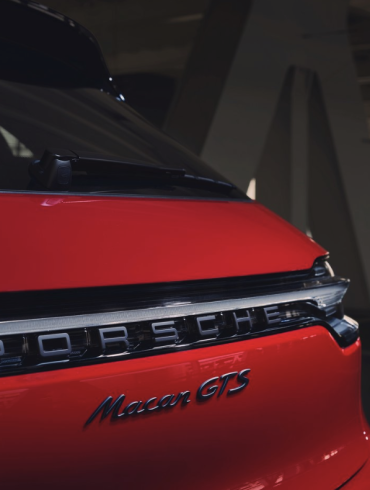
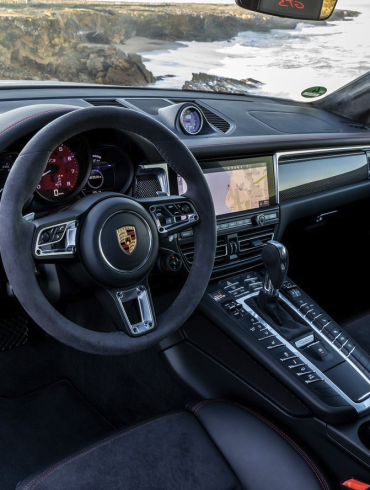
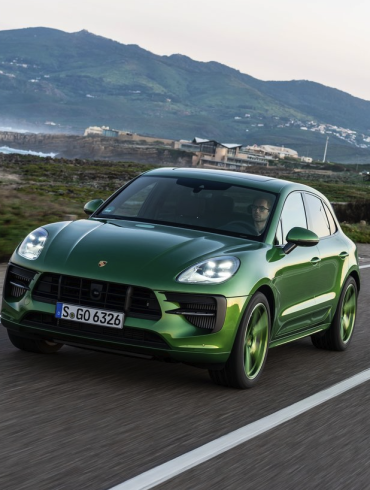
Porsche Macan GTS (2020–2021)
The 2020–2021 Porsche Macan GTS is the rare performance SUV that earns its badge—not through excess power or size, but through balance, precision, and genuine Porsche DNA.
What Makes It Special
The Porsche Macan GTS earns its place among the best non-911 Porsches ever made because it represents a moment when Porsche perfected the performance SUV formula. By the time the GTS arrived in this final pre-refresh form, Porsche had distilled everything it learned from earlier Macans into a version that felt cohesive, focused, and unmistakably Porsche. It wasn’t the most powerful SUV in its class—but it was the one that felt the most right.
Power came from a 2.9-liter twin-turbocharged V6, producing 434 horsepower, paired with Porsche’s lightning-quick PDK and an exceptionally well-tuned all-wheel-drive system. More important than the numbers was the calibration: throttle response, transmission behavior, and torque delivery were all sharpened to make the Macan GTS feel alert and eager rather than heavy or detached. On a winding road, it behaved less like an SUV and more like a tall hot hatch with extraordinary grip.
Where the Macan GTS truly separated itself was chassis tuning. Porsche lowered the ride height, stiffened the suspension, and fine-tuned steering weight and feedback to a level no rival could match. The result was uncanny body control, precise turn-in, and confidence that encouraged enthusiastic driving in a vehicle shape that had no business being this engaging. It became the benchmark by which all other performance compact SUVs were judged—and usually found lacking.
In hindsight, the 2020–2021 Macan GTS represents a sweet spot Porsche rarely hits: modern enough to be refined and usable, yet analog enough to feel connected and soulful.
Details
Engine: 2.9L twin-turbo V6
Power: 434 hp @ ~5,700 rpm
Torque: 405 lb-ft @ ~1,900–5,600 rpm
Transmission: 7-speed PDK
Drive: All-wheel drive
Known For
Being the most dynamically engaging Macan ever produced, setting the benchmark for performance SUVs
Delivering true Porsche steering and chassis feel in a compact SUV format
Learn More
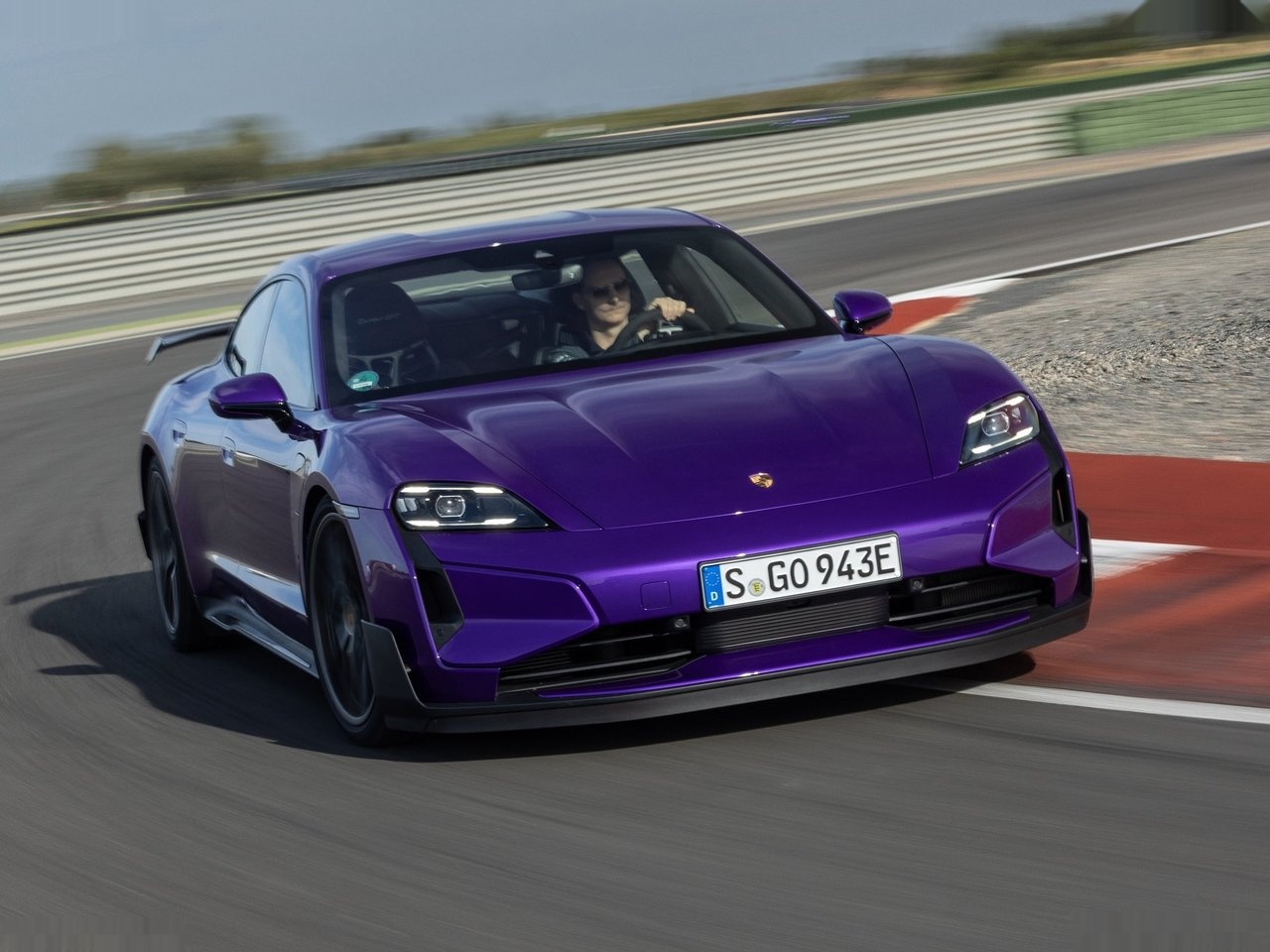
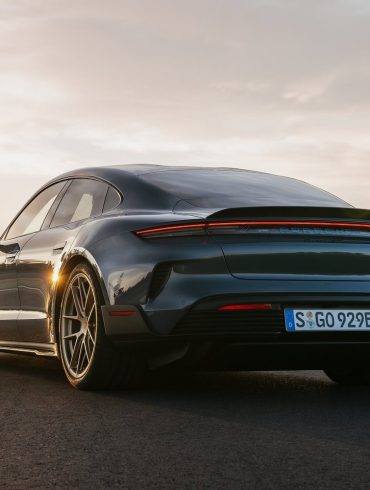
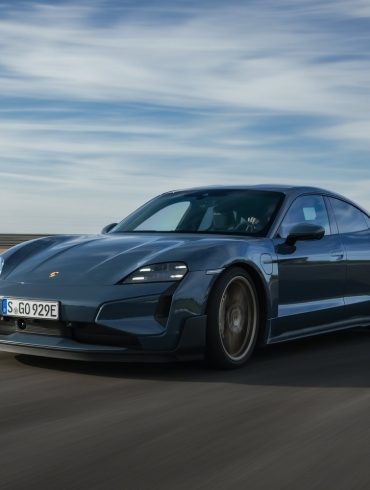
Porsche Taycan Turbo GT
The Taycan Turbo GT isn’t the fastest electric Porsche—it’s the fastest Porsche ever built, redefining performance without combustion. It isn't just fast either, its one hell of a driver's car. A true Porsche.
Why It Made The List
The Porsche Taycan Turbo GT earns its place among the greatest non-911 Porsches because it marks a clean break from the past—and wins anyway. This is Porsche’s most extreme road car to date, conceived to prove that electrification can surpass every internal benchmark the brand has ever set. It’s not an EV trying to feel like a sports car; it’s a Porsche that happens to be electric, engineered with the same single-minded focus as the company’s greatest performance icons.
At the core is a dual-motor, all-wheel-drive powertrain delivering over 1,000 horsepower with overboost, unleashing acceleration that borders on the surreal. The Taycan Turbo GT doesn’t just launch hard—it warps forward with relentless force, pinning occupants as if physics has briefly taken a break. Yet the power delivery is controlled and repeatable, a key distinction from early high-performance EVs. This is sustained, engineered speed, not a one-hit party trick.
Where the Turbo GT truly separates itself is chassis discipline. Porsche stripped weight wherever possible, introduced GT-specific suspension tuning, and offered the Weissach Package, which deletes the rear seats and adds aerodynamic and mass-reduction measures normally reserved for track specials. The result is an EV that turns in sharply, manages its mass intelligently, and delivers real steering precision—an area where most electric performance cars still fall short.
Historically, the Taycan Turbo GT matters because it resets the hierarchy. Just as the 959 redefined what a supercar could be in the 1980s, this car redraws the performance map for the modern era. It proves that Porsche’s identity is not tied to engine layout or fuel type, but to execution. Among non-911 Porsches, the Taycan Turbo GT stands as a watershed moment—the car that confirmed Porsche’s future could be even faster, sharper, and more dominant than its past.
Details
Powertrain: Dual-motor electric AWD
Output: 1,000+ hp with overboost
Transmission: Single-speed reduction gear
Drivetrain: All-wheel drive
0–60 mph: ~2.0 seconds
Chassis Highlights: GT-specific suspension tuning, weight reduction, active aero
Production: 2024–present (top-tier Taycan variant)
Known For
Being the most powerful and fastest-accelerating Porsche ever produced, regardless of powertrain
Offering the Weissach Package, transforming a luxury EV into a near track-focused weapon