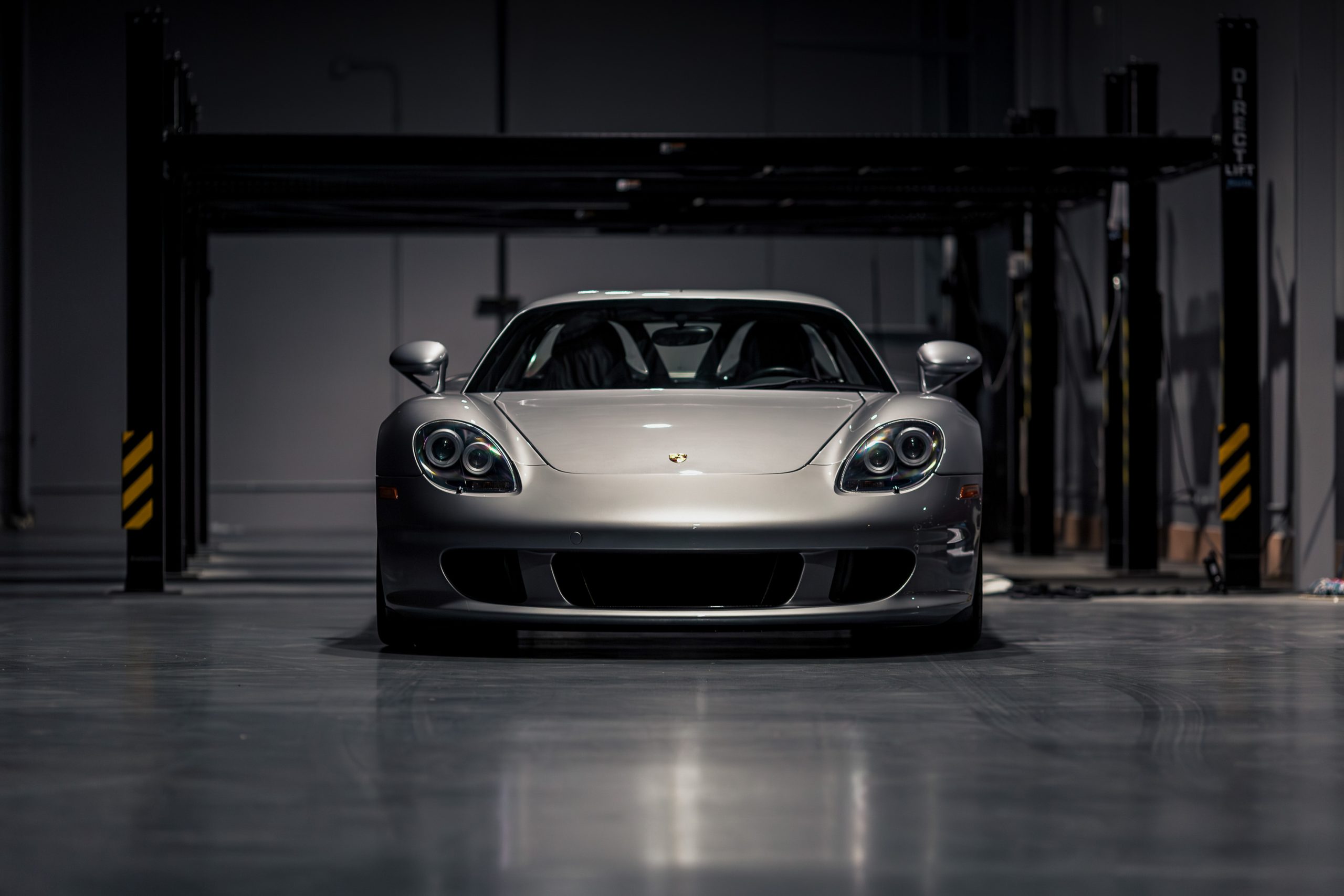

The Best Porsche Special Edition & One-Offs
The Apex of Zuffenhausen: Where Engineering Meets Obsession & Scarcity.
From track-bred homologation legends to bespoke one-offs commissioned by the brand's most discerning collectors, these cars represent the absolute pinnacle of performance and automotive art. Explore the "white whales" of the Porsche world.
Hidden Gems For The Porsche Enthusiast
Rare, Limited, and Legendary. The Best of the Best Limited & Special Editions.
With a legacy spanning decades, Porsche has grown to become a brand synonymous with performance, luxury and overall automotive brilliance. The German carmaker’s history is a storied journey marked by groundbreaking engineering, iconic designs and the relentless pursuit of performance. In some cases, the art of owning Porsche vehicles has been dialed up by several notches, with collectors focusing on limited-series models. There’s no denying the unique allure of a special edition Porsche. These limited-production masterpieces often boast exclusive features, enhanced performance and collectible value. Porsche’s model range is extensive, ranging from sports cars to sedans and SUVs. However, when it comes to collector value, high-performance sports cars and classic Porsches often take center stage, a fact reflected in our curated list of some of the standout Porsche special edition models.
While a one-off is a solo performance, Porsche’s Special Editions are the greatest hits of the brand’s history. These are limited-production runs—often numbered with a silver plaque on the dashboard—created to celebrate a milestone, satisfy a racing regulation, or push a specific engineering philosophy to its breaking point. What makes these editions the "best of the best" is their focus. Unlike mass-produced models, these limited runs often receive high-performance components usually reserved for motorsport, alongside artisanal finishes from the Exclusive Manufaktur studio. They represent a "sweet spot" in the market: more attainable than a one-off, yet far more significant and investment-grade than a standard production car. These are the models that define eras and remain the benchmark for what a driver’s car should be.
Porsche Masterpieces: One of One Rarities & The Art of the Sonderwunsch.
Long before "bespoke" became a corporate buzzword, Porsche was quietly operating the Sonderwunsch (Special Request) department. Formally established in 1978 but rooted in the 1950s—starting with a single request for a rear windshield wiper—this program represents the absolute ceiling of automotive personalization. In this world, the assembly line stops, and the craftsmen take over.
These are not merely cars with custom paint; they are "Factory One-Offs" where Porsche’s engineers in Weissach develop entirely new parts, body panels, and mechanical configurations to satisfy the imagination of a single individual. From road-legal Le Mans racers to cars finished in colors named after the owner's dog, these one-of-one rarities are the most intimate expressions of the Porsche brand. They are the "White Whales" of the automotive world—destined to be the centerpieces of the world's most private collections.
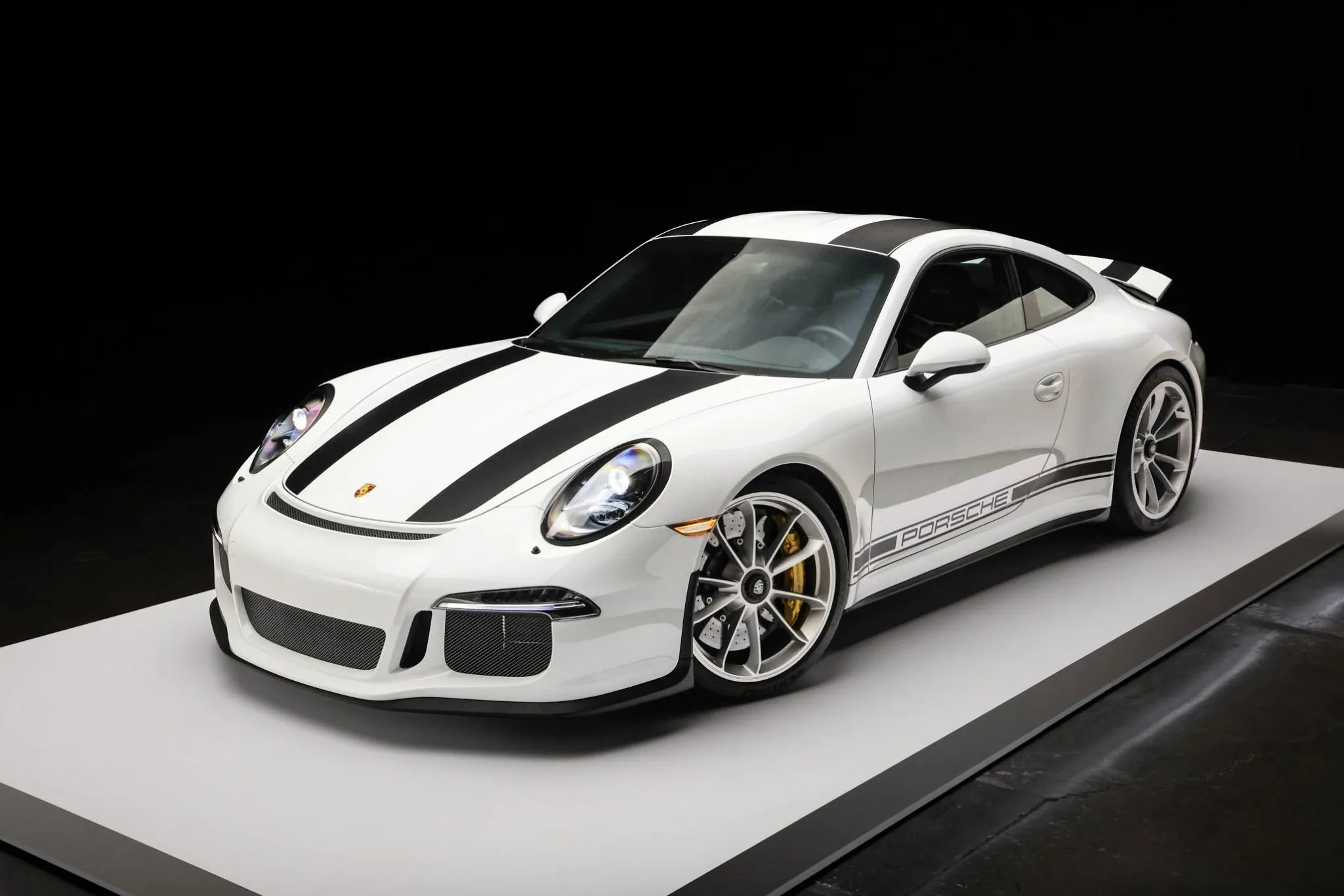
Special Editions: Rare, Limited, and Legendary
Celebrating Porsche’s Most Significant Limited Productions. These Are The Limited Legends That Redefined the Crest.
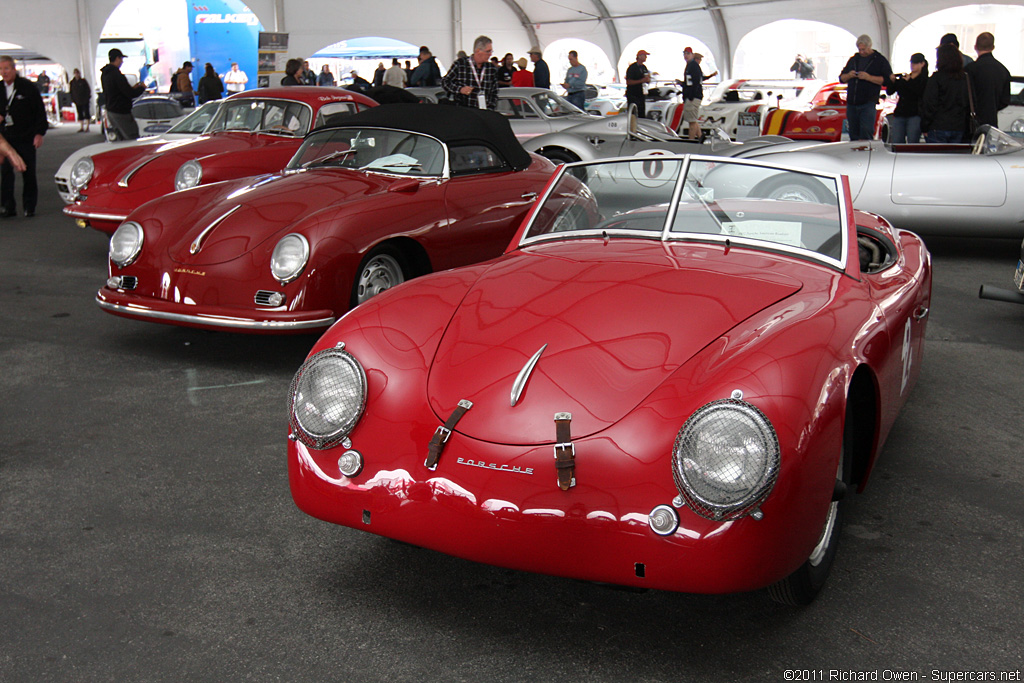
1952 Porsche 356 America Roadster
With only 16 units ever built, this was a stripped-down, aluminum-bodied racer designed specifically for the U.S. market. It is widely considered the spiritual ancestor of the legendary Speedster, embodying the "less is more" philosophy.
Why It's On The List
This isn’t technically a Speedster, but the Type 540 (Typ 540 K/9-1 to be very precise) – known more commonly as the America Roadster – started the idea. The American Roadster was the direct predecessor of the Speedster. U.S. importer Max Hoffman convinced Porsche it needed a lightweight convertible to compete with the best from Jaguar and Austin-Healey. It only had an emergency folding roof and could keep up with larger sports cars of the era. But the production methods used to create the America Roadster’s aluminum body proved to be too expensive, and in 1952 Porsche built only 21 units before its discontinuation in 1953. All but one of which were sold in the United States.
In early 1952, Max Hoffman requested a 356-based car for weekend racers that was simpler, lighter and no frills in nature. The 356 Type 540 America Roadster was the result.
Although the America Roadster turned out to be a commercial failure, Max Hoffman was convinced there was still a market for a simplified and lightened 356. He continued to lobby Porsche for such a car and, in September 1954 the 356 Speedster was launched at the Frankfurt Motor Show. The Speedster went on to become an enormous success. It not only won hundreds of races but went down in history as one of Porsche’s most iconic models.
Details
Coachbuilder: Heuer/Gläser
Production: 21
Engine: Air Cooled Flat-4
Displacement: 1488 cc / 90.8 in³
Compression: 8.2:1
Power: 70 bhp @ 5000 rpm
Driven wheels: Rear Engine / RWD
Curb weight: 605 kg / 1334 lbs
Known For
Max Hoffman convinced Porsche it needed a lightweight convertible to compete with Jaguar and Austin-Healey.
Learn More
2019 Porsche 935 Tribute
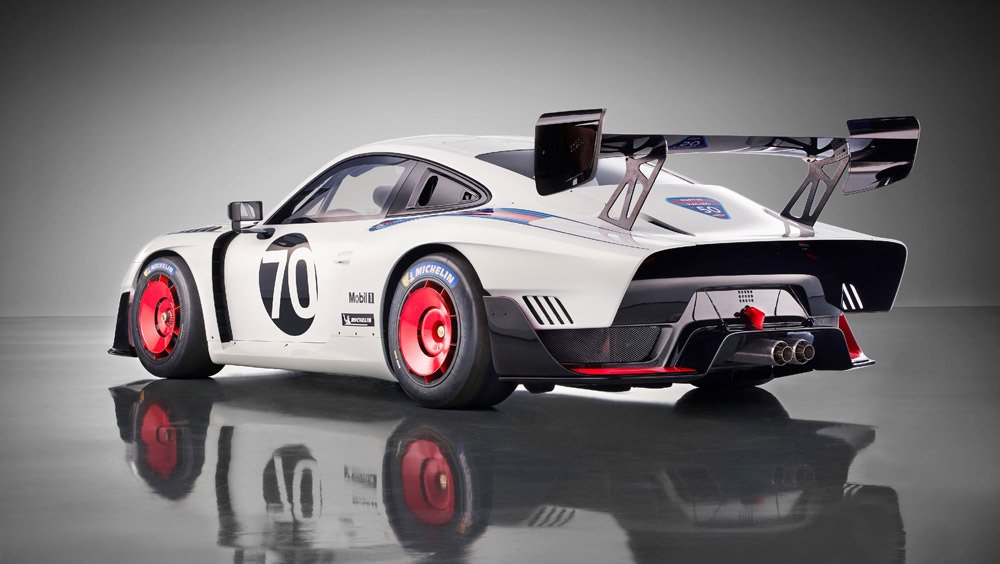
A modern tribute to the legendary "Moby Dick" racer, this track-only special was built on the bones of a GT2 RS. Limited to 77 units, it features a full carbon-fiber body and fan-style wheels that evoke the golden era of Group 5 racing.
Why It's On The List
The 935 tribute car was a non-street-legal collector’s car built in a series of 77 cars. It was built from the 911 991.2 GT3 R racing car, fitted with the engine and transmission from the 911 991.2 GT2 RS street car and with the bodykit showing some design details from the 935 cars. The problem: it was not as powerful as the 1978 935 was with even smaller engine and the modern car is much heavier, so the power-to-weight ratio was almost 60% better 40 years earlier.
Porsche rarely ventures into the realm of track-only supercars, but when they do, the results are nothing short of spectacular. Take the 2019 Porsche 935, for example. The special edition car reimagined as a modern interpretation of the iconic Porsche 935/78, was launched as part of Porsche’s 70th-anniversary celebrations.
Built on the bones of the formidable 911 GT2 RS, it packs a 690 hp twin-turbo flat-six and a lightning-fast PDK gearbox. However, its most striking feature is its bodywork, a lightweight carbon-fibre design that takes cues from the original 1978 935, especially the longtail rear section and classic Martini livery.
A proper race car, the interior layout includes a full-on safety roll cage and a single racing bucket seat with a six-point harness. 77 units of the 2019 Porsche 935 were made, each priced north of $800,000.
Details
Official photos: 2018 September 27
Official premiere: 2018 September 27, Rennsport Reunion, Laguna Seca, USA
World market launch: 2019 June
Years: 2019
Production: 77 units
Engine: 3.8 L Twin Turbo Flat-6
Power: 691 bhp @ 7000rpm
Torque: 553 ft lbs @ 2500rpm
0 - 60 mph: 2.70 seconds
Top Speed: ~ 211 mph
Known For
Built from the 911 991.2 GT3 R racing car, the 935 tribute car is a non-street-legal collector's car limited to 77 cars
Learn More
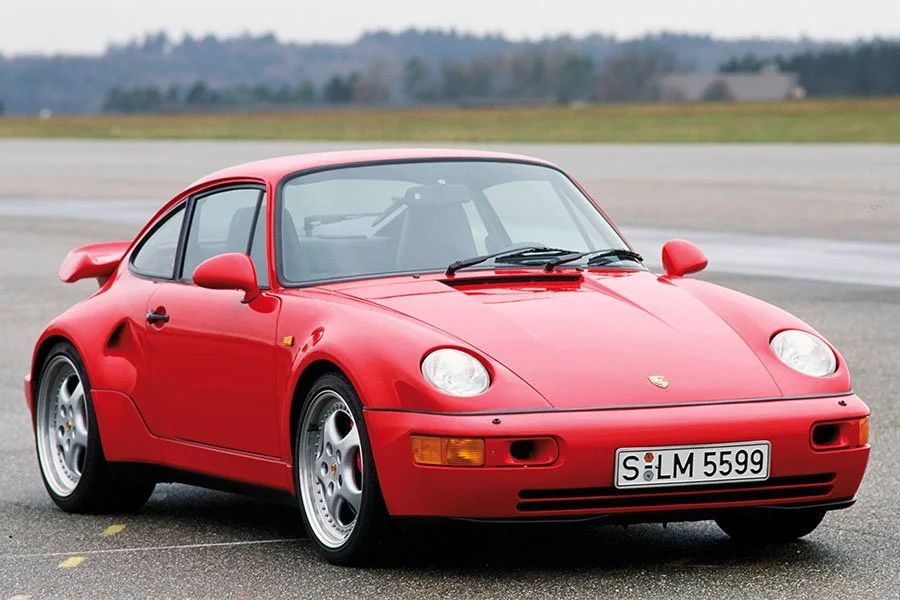
1994 Porsche 911 Turbo S X85 Flachbau
This is one of the rarest and most desirable 911 models, with only 75 units produced globally. Thirty-nine examples, with the internal code ‘X85’, were earmarked for the US market.
Why It's On The List
Towards the end of Porsche 964 production Porsche offered a limited series of Turbos known as the 3.6 S. The ’36S’ package included specific body kits that varied depending on market as well as the X88 ‘S’ motor.
The Porsche factory had 93 Turbo chassis left. These were all transferred to Porsche Exclusiv and hand built as the very special 964 Turbo 3.6 S. They were offered with normal, or ‘Flachbau’ slant nose front ends. While the vast majority of Turbo S’ were fitted with the ‘Flachbau’ nose as a no-cost option, the Turbo S could also be had with the traditional 964 nose as well. In all, 76 Flatnose cars were made while 17 non-Flatnose (known as Package option) cars were made.
Easily identifiable by the ‘flat-nose’ front end, the 911 Turbo S Flachbau was on the 964 generation 911 Turbo. At the time, these unique Porsches were converted to the ‘S’ specification by the Porsche Exclusive department. Bigger turbochargers and other mechanical tweaks boosted the power output to 385 hp, about 25 hp more than the base 911 Turbo.
Other styling highlights, apart from the flattened nose, include air intakes on the rear quarter panels, a unique front splitter, a rear wing with louvres and quad exhaust tips. In August 2022, one of these cars was sold at an RM Sotheby’s auction for $1.35 million.
Details
Model: 911 Turbo 3.6 S "Flatnose" (964)
Years: 1994
Production: 75 units (flatnose)
Engine: 3.6 L Turbo Flat 6 (M64/50)
Power: 380 bhp @ 5750 rpm
Torque: 384 ft lbs @ 5000 rpm
0 - 60 mph: 4.0 seconds
Top Speed: 174 mph
Known For
These cars were also fitted with the X88 option, which increased power to 380 horsepower as well as added an auxiliary oil cooler. The boost in power was thanks to the addition of a bigger turbocharger (the K27 7006 turbocharger with more boost), upgraded camshafts, cylinder heads and adjusted valve timing.
Learn More
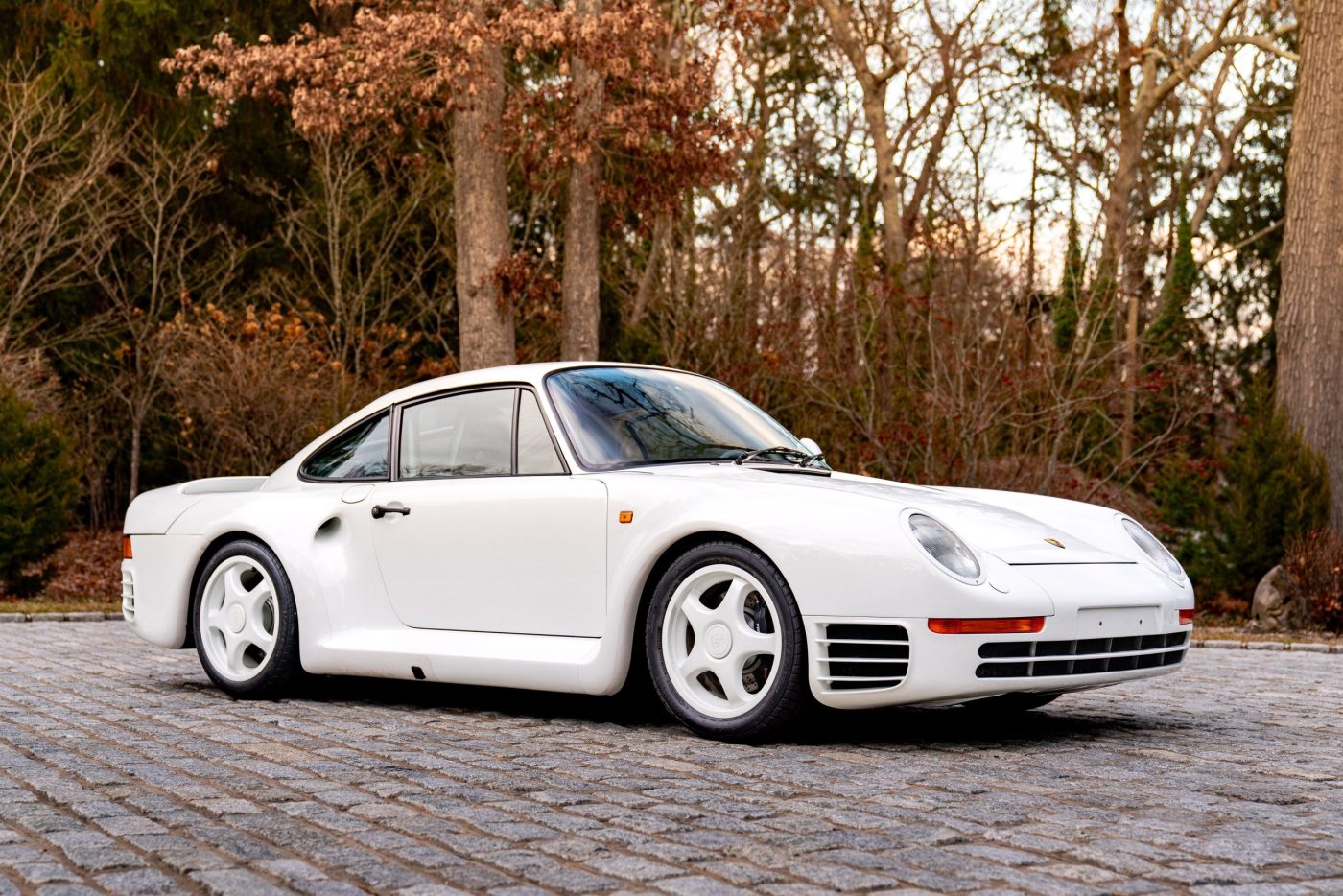
Porsche 959 Sport
While the 959 was already a marvel, the "Sport" version took it further by removing the self-leveling suspension and air conditioning to save weight. Only 29 were produced, making it the rarest variant of Porsche’s first true supercar.
Why It's On The List
The Porsche 959 is widely regarded as one of the greatest cars of its era, and it is mentioned in the same breath as other legends like the Ferrari F40. A technological tour de force, the 959 set the foundation for cars like the Porsche Carrera GT and 918 Spyder.
Porsche made 292 examples of the 959. The Sport model is even rarer, limited to just 29 examples. The 959 Sport is an extreme variant of the already iconic 959.
Built with an uncompromising focus on performance, it is distinguished from the more luxurious Comfort model with a stripped-down interior and a significant weight reduction.
The 959 Sport also got larger turbochargers, resulting in a significant power bump. At the time, the 959 was the fastest production car in the world, capable of top speeds north of 200 mph.
Details
Model: Porsche 959 Sport
Years: 1986 - 1988
Production: 29 units
Engine: 2.85 L Twin-Turbo Flat-6
Power: 508 bhp @ 6500 rpm
Torque: 369 ft lbs @ 5000 rpm
0 - 60 mph: 3.70 seconds
Top Speed: 211 mph
Known For
Details on the 959 S are scarce; Porsche made just 29 examples of it, with the 2.8-liter flat-six engine featuring larger turbochargers and the company claiming an “official” output of 508hp and 413 lb-ft of torque, over the standard 959’s 444hp and 369 lb-ft of torque. Top speed was “rated” at 210 mph.
Learn More
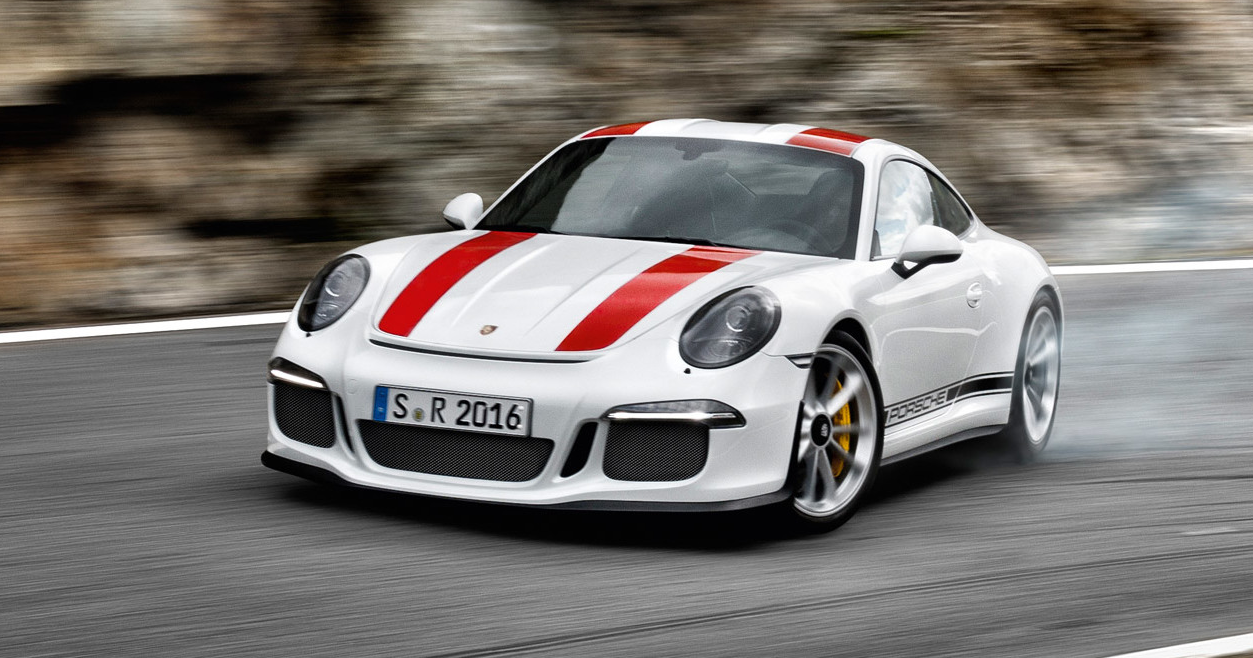
2016 Porsche 911 R
The 911 R was the catalyst for Porsche’s "return to manual." It proved that enthusiasts cared more about the feeling of a gear change than a tenth of a second on a lap time. Its wingless silhouette will age better than the aero-heavy RS cars.
Why It's On The List
The Porsche 911 R (991.1) was never meant to dominate spec sheets or lap-time charts—and that’s exactly why its long-term investment case is so compelling. Introduced in 2016 as a philosophical statement rather than a marketing exercise, the 911 R represented Porsche’s rare moment of self-correction: a public admission that enthusiasts were right. Lightweight, naturally aspirated, manual, and deliberately understated, the 911 R marked a turning point in how Porsche approached driver-focused cars—and history consistently rewards those inflection points.
At its core, the 911 R pairs the Mezger-derived GT3 4.0-liter flat-six with a six-speed manual gearbox in a body stripped of wings, rear-wheel steering, and unnecessary drama. This wasn’t about building the fastest 911—it was about building the most emotionally correct one. That intent matters in the collector market. Cars created to satisfy engineers and drivers, rather than marketing departments, age with a credibility that compounds value over time.
Rarity further strengthens the case. With 991 units produced worldwide, the 911 R was limited from day one—and unlike many modern “limited” cars, Porsche has not repeated the exact formula. Yes, Touring models followed, but they exist because of the 911 R, not in place of it. The original remains singular: the first modern GT car to reject wings, the first to re-center the manual gearbox, and the car that reset Porsche’s GT philosophy for the next decade.
The 911 R represents a cultural milestone for Porsche. It directly led to the reintroduction of manual options across the GT lineup, the creation of the Touring sub-brand, and a renewed focus on analog engagement in an increasingly digital era. Cars that change a company’s trajectory—quietly or loudly—almost always become reference points in hindsight.
Details
Model: Porsche 911 R (991)
Model Years: 2016
Production: 991 units
Engine: 4.0 L Watercooled Flat 6 (MA1/76)
Power: 500 bhp @ 8250 rpm
Torque: 339 ft lbs @ 6250 rpm
0 - 60 mph: 3.7 seconds
Top Speed: 200 mph
Known For (Engine)
Within months of release, cars with an MSRP of roughly $185,000 were being listed for $600,000 to $1,000,000. This speculation frustrated Porsche so much that they released the GT3 Touring, effectively "crashing" the 911 R market back down to earth.
Learn More
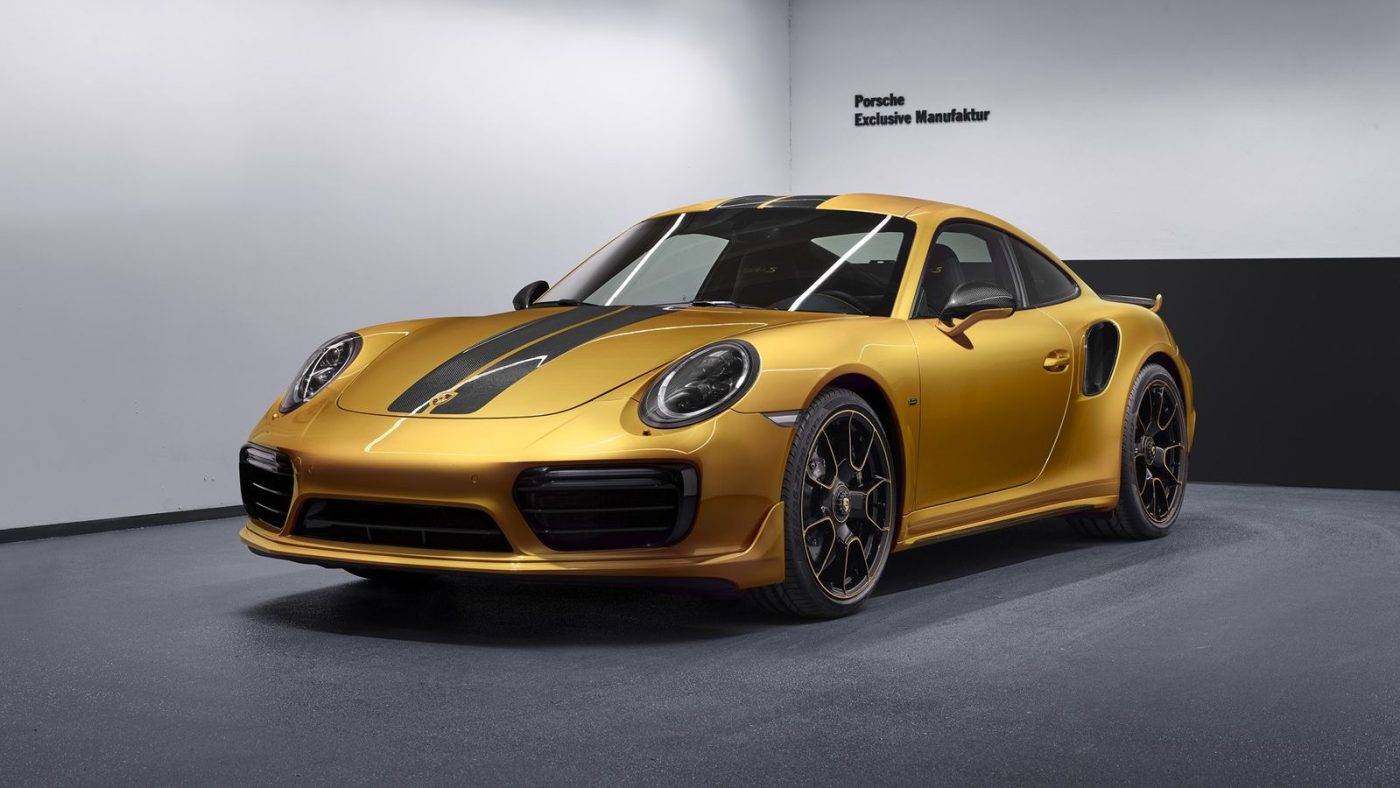
Porsche 911 Turbo S Exclusive Series (991.2)
Widely regarded as one of the finest modern limited-edition Porsches because it succeeds on every level. It is devastatingly fast, beautifully made, genuinely rare, and deeply usable—qualities that rarely coexist in the collector car world.
Why It's On The List
The Porsche 911 Turbo S Exclusive Series represents a rare moment when Porsche fused its most ferocious all-weather supercar with true factory exclusivity. Limited to just 500 examples worldwide, this was not a cosmetic special or a trim-package exercise—it was a fully realized flagship designed to sit above even the already outrageous Turbo S. In an era when “limited edition” often meant little more than badges and paint, the Exclusive Series stood apart as a genuinely elevated expression of the 911 Turbo philosophy.
At its core, the Exclusive Series pushed the Turbo S to new mechanical heights. Power climbed to 607 horsepower, making it the most powerful production 911 of its time, while retaining the devastating real-world pace that defines the Turbo lineage. The combination of all-wheel drive, near-instant torque, and relentless traction meant this car could deploy its performance anywhere, anytime—on damp roads, cold mornings, or long-distance autobahn runs—without sacrificing refinement or usability. It was brutally fast, yet effortlessly approachable, a hallmark of Porsche engineering at its best.
Where the Exclusive Series truly separated itself was in craftsmanship. Carbon fiber replaced traditional materials throughout the body, including a unique exposed-weave hood and roof, while the exterior featured bespoke gold accents inspired by Porsche’s racing heritage. Inside, the car showcased an unprecedented level of hand-finished detail: woven carbon trim, exclusive leather patterns, and subtle branding that felt restrained rather than theatrical. This wasn’t luxury for luxury’s sake—it was precision, executed with obsessive attention to detail.
This edition distilled decades of Turbo evolution into a single, definitive statement car, one that celebrated power, confidence, and technical mastery rather than raw aggression.
Details
Model: 911 Turbo S Exclusive (991.2)
Model Years: 2018 - 2019
Production: 500 units
Engine: 3.8 L Turbocharged Flat 6 (MDB.CB)
Power: 607 bhp @ 6750 rpm
Torque: 553 ft lbs @ 2250 rpm
0 - 60 mph: 2.8 seconds
Top Speed: 205 mph
Known For
Limited to just 500 units worldwide, this special edition Turbo S pushed the boundaries of what a 911 could be. At launch, it was the most powerful Turbo S variant ever made.
Beyond the standard Turbo S’s already impressive power, the Exclusive Series boasted an extra 27 hp, a boost that guaranteed an extra dose of exhilarating performance.
Learn More
Porsche 911 Speedster Heritage Design Package (991.2)
As a limited-edition Porsche, the 991.2 Speedster Heritage Design Package succeeds because it feels honest. It blends history, engineering, and restraint into a cohesive whole that will age gracefully.

Why It's On The List
The Porsche 911 Speedster Heritage Design Package is widely regarded as one of the most emotionally resonant limited-edition Porsches of the modern era because it represents far more than a styling exercise—it is a rolling tribute to Porsche’s origins, engineered with uncompromising intent. Limited to 1,948 examples worldwide in honor of Porsche’s founding year, the 991.2 Speedster was conceived as a farewell: to the naturally aspirated GT engine, to the 991 generation, and to an era of increasingly analog Porsche driving experiences.
At its heart lies a 4.0-liter naturally aspirated flat-six derived from the GT3, producing 502 horsepower and paired exclusively with a six-speed manual transmission. There is no PDK option, no rear seats, and no concessions to convenience beyond the essentials. The engine revs freely, rewards commitment, and delivers power with clarity rather than brute force. In a time when performance cars were becoming faster but less involving, the Speedster doubled down on driver engagement, making every mile feel intentional and earned.
The Heritage Design Package elevated the Speedster from a great driver’s car to a historically significant one. Finished in classic GT Silver Metallic with white racing livery, gold badging, and vintage Porsche crests, the car visually echoes the earliest 356 Speedsters while remaining unmistakably modern. The interior continues the theme with two-tone leather, heritage graphics, and period-inspired details that feel authentic rather than nostalgic for nostalgia’s sake. It’s one of the rare cases where heritage design enhances, rather than distracts from, the car’s purpose.
For collectors and enthusiasts alike, it stands as one of the finest modern Porsches ever built—not because it is the fastest, but because it so perfectly captures why people fell in love with the brand in the first place.
Details
Model: Porsche 911 Speedster (991.2)
Model Years: 2019
Production: 1,948 units
Engine: 4.0 L Watercooled Flat 6 (MDG.GA)
Power: 502 bhp @ 8400 rpm
Torque: 346 ft lbs @ 6250 rpm
0 - 60 mph: 3.8 seconds
Top Speed: 192 mph
Known For
Porsche only made 1,948 examples of this 911 Speedster, one of which was the final 991-generation Porsche 911 off the assembly line.
The 911 Speedster Heritage Design Package is a throwback to Porsche’s golden era. The exterior boasts a striking two-tone paint job, complemented by black alloy wheels and heritage badging. Inside, the cabin is a subtle blend of classic and modern luxury with black leather sports seats accented by crisp white stitching and the embroidered Heritage Design logos.
Learn More
1973 Porsche 911 Carrera RS 2.7 (Lightweight)
While 1,580 RS 2.7s were made, the "Sport" or "Lightweight" version (M471) is the true collector’s prize with only 200 units. It defined the "RSt" formula by stripping away every gram of unnecessary weight to create the ultimate analog experience.
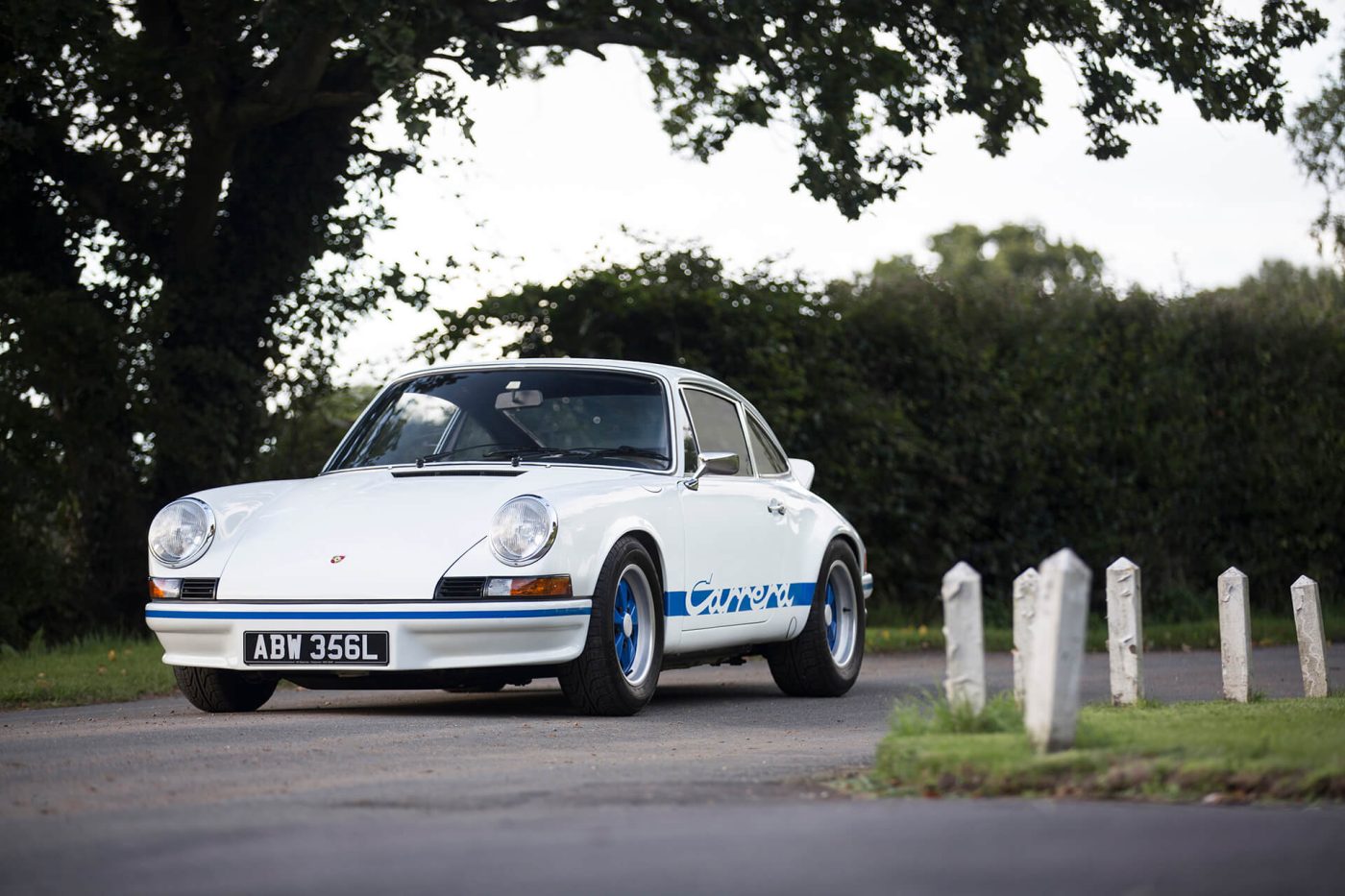
Why It's On The List
The Porsche 911 Carrera RS 2.7 Lightweight is not just one of the greatest limited-edition Porsches ever built—it is the car that defined what a Porsche RS should be. Conceived as a homologation special for Group 4 racing, the Carrera RS 2.7 was created with a singular goal: reduce weight, increase performance, and sharpen the 911 into a competition-ready weapon. The Lightweight (M471) version stripped the concept to its purest form, establishing a blueprint that Porsche still follows more than five decades later.
At the heart of the RS was the now-legendary 2.7-liter air-cooled flat-six, producing 210 horsepower—an extraordinary figure for the era given the car’s sub-1,000 kg curb weight in Lightweight trim. Thinner steel body panels, lightweight glass, minimal sound deadening, and pared-back interior equipment transformed the 911 into something urgent and alive. Every control felt mechanical and direct, and the car’s responses were instantaneous, making it as thrilling on a mountain road as it was effective on the racetrack.
Visually, the Carrera RS became iconic almost by accident. The “ducktail” rear spoiler—developed to improve high-speed stability—was Porsche’s first production rear wing and a functional design breakthrough. Combined with wider rear arches, bold side graphics, and purposeful stance, the RS looked exactly like what it was: a race car barely tamed for the road. Nothing about it was decorative; every detail served performance.
Today, the Carrera RS 2.7 Lightweight is revered not just for its rarity, but for its clarity of purpose. It is a car without compromise, distraction, or excess—pure intent translated into metal. Every modern GT3 RS, every lightweight Porsche special, traces its lineage directly back to this car. That enduring influence, combined with its unmatched driving purity, cements the 1973 RS 2.7 Lightweight as one of the most important and desirable limited-edition Porsches ever created.
Details
Model: 911 Carrera RS 2.7 Lightweight
Model Years: 1973
Production: 200 units
Engine: 2.7 L Aircooled Flat 6
Power: 210 bhp @ 6300 rpm
Torque: 188 ft lbs @ 5100 rpm
0 - 60 mph: 5.5 seconds
Top Speed: 150 mph
Known For
What truly elevates the 1973 RS 2.7 Lightweight is its historical impact. It was the first 911 to wear the RS badge, the first production Porsche to prioritize aerodynamics so visibly, and one of the earliest examples of Porsche openly embracing weight reduction as a core philosophy. The car dominated in competition, succeeded commercially beyond expectations, and permanently altered Porsche’s product strategy—ensuring that homologation specials and driver-focused variants would remain central to the brand’s identity.
Learn More
1992 Porsche 911 Carrera 4 Leichtbau (964)
Built using surplus parts from the 953 Paris-Dakar rally effort, this car featured the advanced all-wheel-drive system of the 959 in a lightweight 964 body. Only 22 were hand-assembled by the customer racing department.
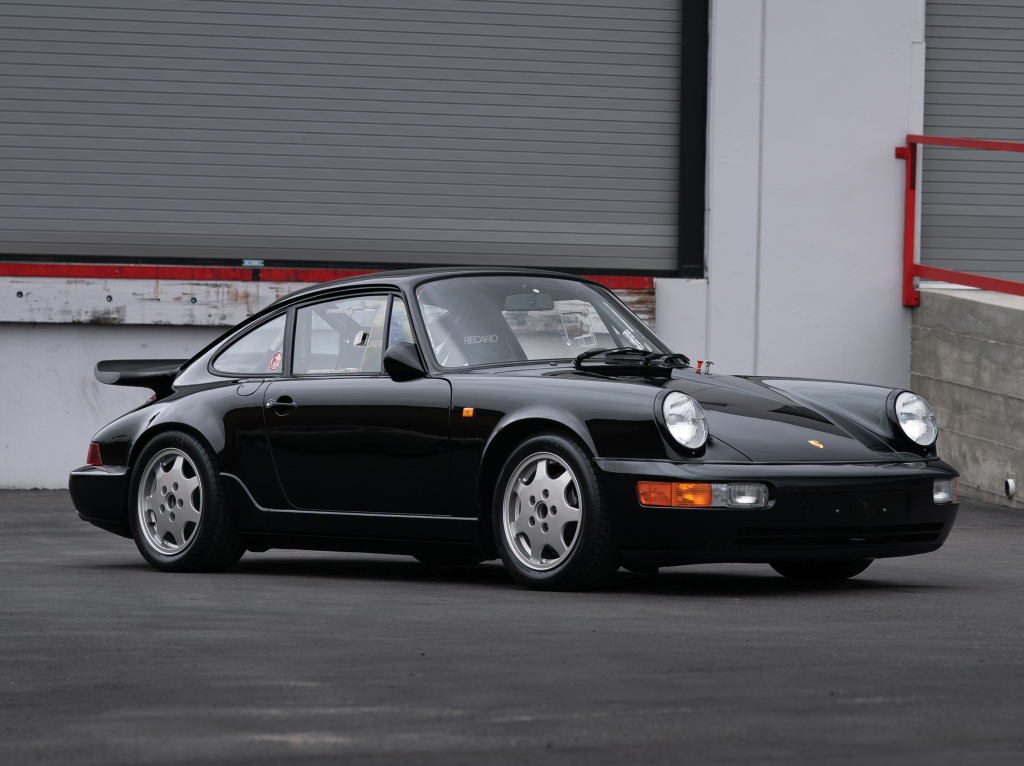
Why It's On The List
The Porsche 911 Carrera 4 Leichtbau is one of the rarest and most misunderstood limited-edition Porsches ever built—and that’s precisely what makes it so special. Developed quietly by Porsche Motorsport, the Leichtbau (German for “lightweight”) was conceived as a spiritual successor to the legendary 1973 Carrera RS 2.7, but adapted for the far more complex and technologically advanced 964 platform. Produced in extremely small numbers (believed to be fewer than 25 examples), it represents a moment when Porsche stripped a modern 911 back to its rawest form for the most devoted enthusiasts.
Mechanically, the Carrera 4 Leichtbau retained the 964’s naturally aspirated 3.6-liter flat-six, but the real story was weight reduction. Porsche removed virtually every non-essential item: sound deadening, rear seats, power accessories, and insulation were all deleted, while thinner glass, a welded roll cage, lightweight doors, and pared-back interior trim further reduced mass. Even the all-wheel-drive system—normally a liability for weight—was retained and recalibrated, giving the car extraordinary traction while still delivering a level of focus unheard of in road-going Carreras.
What elevates the 964 Carrera 4 Leichtbau into the top tier of Porsche special editions is its philosophy. Unlike later RS models that became more formalized and publicly celebrated, this car was built in near secrecy, intended for a small group of insiders who understood Porsche’s racing DNA. It bridged the gap between classic homologation specials and the modern GT department, proving that even as the 911 grew more complex, Porsche could still create something brutally focused and uncompromising.
Today, the Carrera 4 Leichtbau is revered as a unicorn—an experimental RS that never officially carried the badge.
Key Features
Weight Reduction: Used aluminum doors, front lid, fiberglass rear lid, plexiglass windows, and a lightweight safety cage.
All-Wheel Drive: Retained the sophisticated, manually adjustable Type 953 all-wheel-drive system from the Paris-Dakar rally, allowing manual differential adjustment.
Engine: A 3.6-liter flat-six producing around 300 horsepower (without catalytic converters/mufflers).
Performance: Achieved incredibly fast acceleration (0-60 mph in under 4 seconds) due to low weight and short gearing, though top speed was limited to around 125 mph.
Interior: Featured two Recaro race seats, a sport steering wheel, and often no sunroof, enhancing rigidity.
Suspension: Equipped with adjustable Cup suspension and a Matter roll cage.
Significance
Limited Production: Only about 20-22 examples were built.
Track-Focused: A true road-legal race car, it combined the classic 911 experience with advanced technology and significant weight savings.
Collectibility: Sits at the crossroads of classic and modern Porsches, highly sought after by collectors.
Learn More
Porsche 718 Boxster 25 Years
The Porsche 718 Boxster 25 Years proves that a special edition doesn’t need excess or extremity to matter—sometimes heritage, restraint, and intent are enough. It is restrained, cohesive, and authentic.
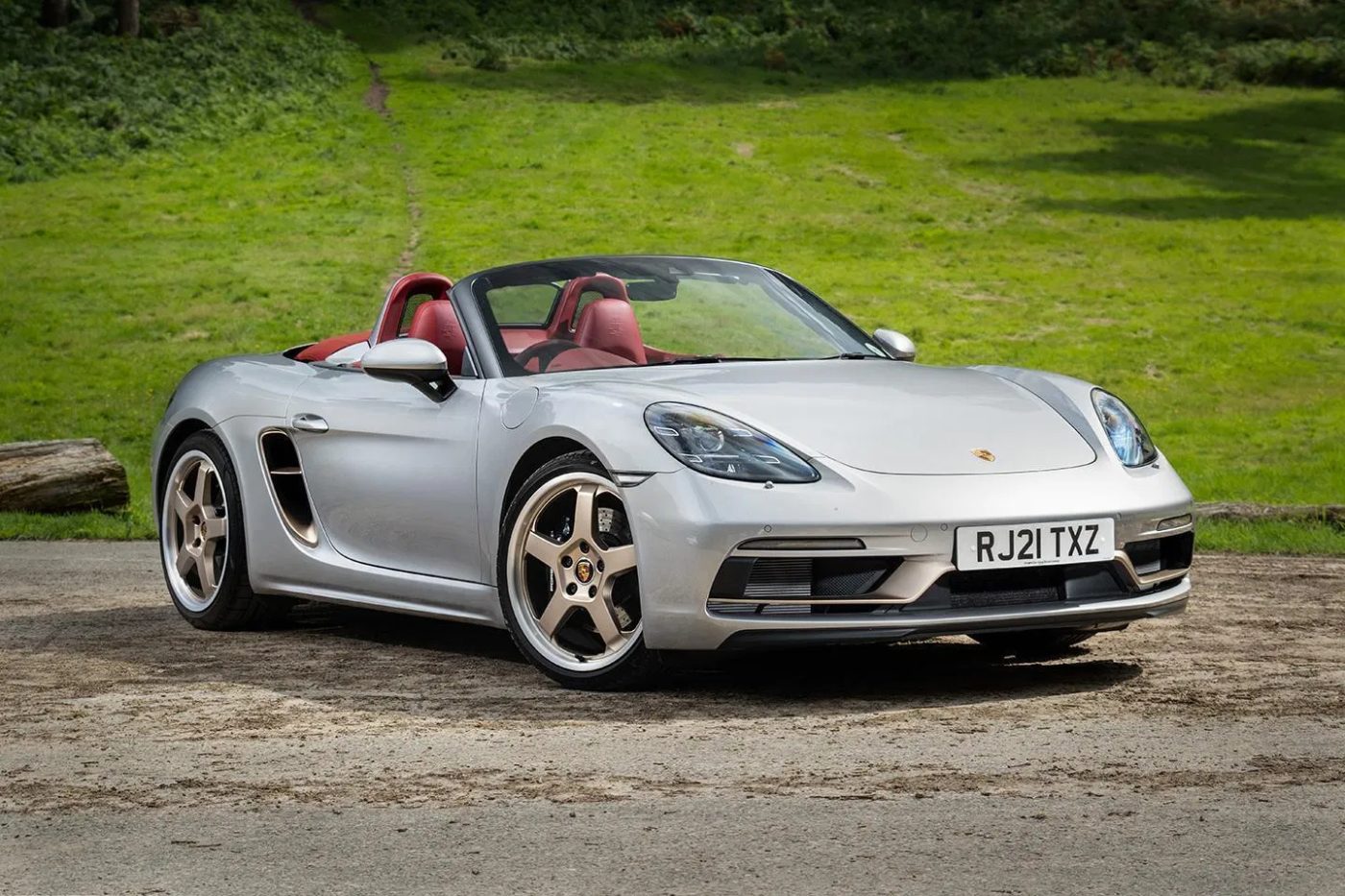
What Makes It Special
The Porsche 718 Boxster 25 Years may not generate the fevered headlines of Porsche’s most extreme Sonderwunsch one-offs, but it remains a genuinely thoughtful and deserving special edition. Unveiled to commemorate 25 years of the Boxster, Porsche’s modern entry point into the sports car world, this model exists to celebrate continuity rather than spectacle.
At the heart of the 718 Boxster 25 Years is a clear visual and philosophical link to the 1993 Boxster Concept, the car that previewed Porsche’s mid-engine revival. Most distinctive are the bespoke 20-inch “Neodyme” wheels, whose design and satin gold finish directly reference the concept car. This theme continues with subtle exterior accents, special badging, and a curated palette of GT Silver Metallic, black, or white, reinforcing the idea that this edition is about lineage and design continuity rather than loud differentiation.
Mechanically, Porsche wisely left the formula alone. Based on the 718 Boxster GTS 4.0, the 25 Years edition retains the naturally aspirated 4.0-liter flat-six, delivering the sound, response, and balance that define the best modern Boxsters.
What ultimately earns the 718 Boxster 25 Years its place among Porsche’s notable special editions is perspective. It celebrates not a racing victory or an experimental one-off, but the importance of accessibility—the idea that Porsche’s most influential cars are sometimes the ones that welcome people in.
Key Data & Specifications
Base Model: 718 Boxster GTS 4.0
Engine: 4.0L naturally aspirated flat-six
Transmission: 6-speed manual or 7-speed PDK
Drivetrain: Mid-engine, RWD
Unique Features: 20-inch Neodyme wheels inspired by the 1993 concept, anniversary badging, curated paint options (GT Silver, black, white)
Production: Limited edition (global allocation)
Known For
Celebrating 25 years of the Boxster, Porsche’s modern mid-engine entry sports car
Paying direct homage to the 1993 Boxster Concept through unique wheels, colors, and design details
Learn More
2014 Porsche 911 Carrera S Martini Racing Edition
The 2014 Porsche 911 Carrera S Martini Racing Edition turns one of motorsport’s most iconic liveries into a road-going statement—celebrating Porsche’s racing soul with clarity, confidence, and restraint.
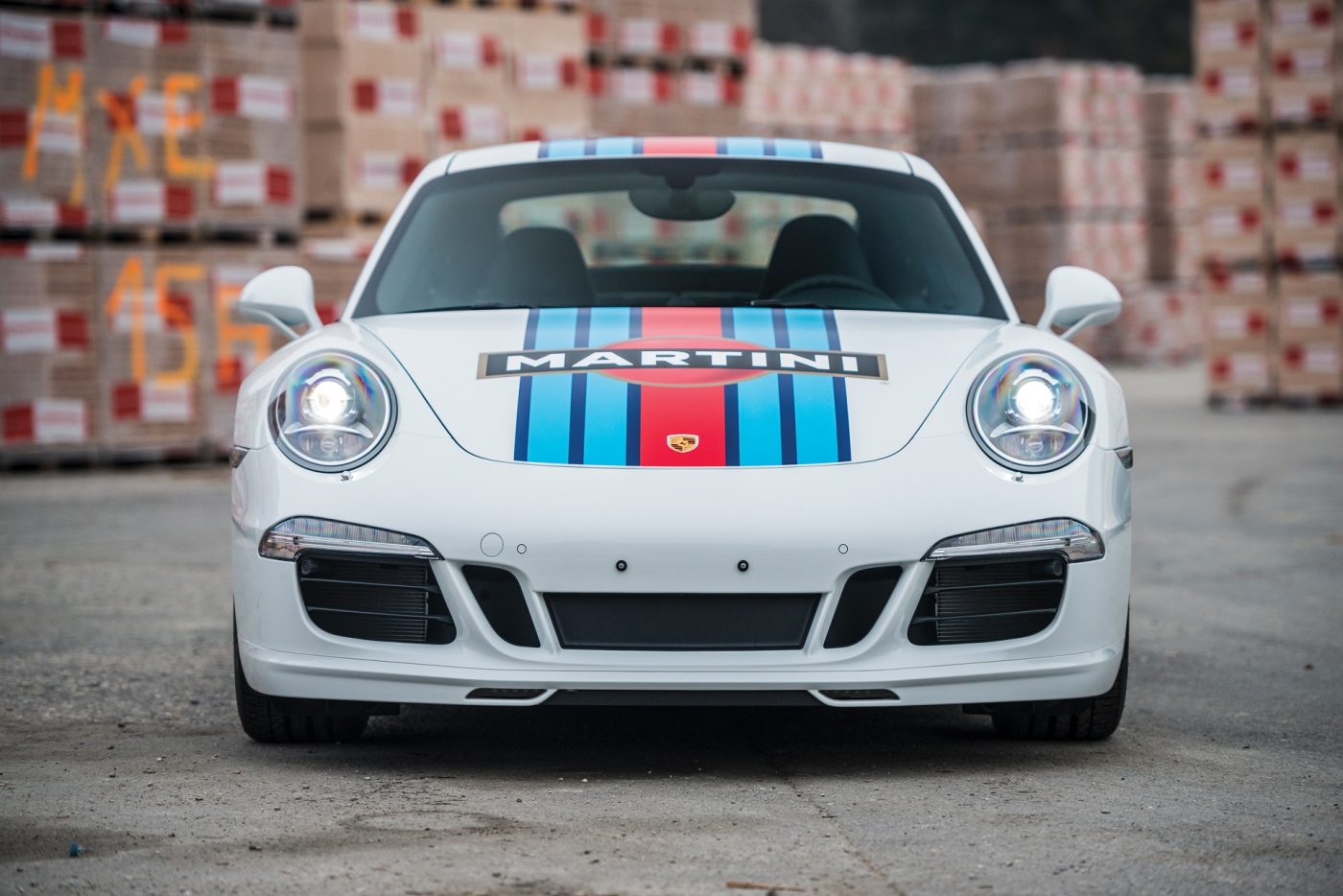
What Makes It Special
The Porsche 911 Carrera S Martini Racing Edition is a special edition that resonates far beyond its mechanical changes, because its purpose is symbolic as much as it is aesthetic. Created as a tribute to Porsche’s legendary partnership with Martini Racing, this limited-run 911 transforms the brand’s competition history into something instantly recognizable and emotionally charged. With just 80 units produced worldwide, it was never meant to be subtle—it was meant to be remembered.
Based on the 991.1 Carrera S, the Martini Racing Edition retained the car’s superb mechanical foundation. Its 3.8-liter naturally aspirated flat-six produced 400 horsepower and 325 lb-ft of torque, delivering the smooth, rev-hungry character that defined the early 991 generation. Performance was unchanged, and deliberately so—this edition was about celebrating Porsche’s racing identity, not rewriting the Carrera S formula that was already so well balanced and engaging.
Visually, the car succeeds because it commits fully to the theme. The signature Martini Racing stripes running down the center make the car unmistakable from any distance, while black accents on the front splitter and side skirts add aggression without excess. The look is completed by black 20-inch center-lock wheels, a detail normally reserved for more hardcore variants, giving the car a subtle motorsport edge beneath the iconic livery.
Inside, the Martini story continues with blue and black leather sport seats featuring the Martini Racing logo, tying the exterior identity directly to the driving experience.
Key Data & Specifications
Base Model: 2014 Porsche 911 Carrera S (991.1)
Engine: 3.8-liter naturally aspirated flat-six
Power: 400 hp
Torque: 325 lb-ft
Transmission: Manual or PDK (Carrera S specification)
Drivetrain: Rear-engine, RWD
Unique Features: Martini Racing center stripes, black exterior accents, black 20-inch center-lock wheels, Martini-branded interior
Production: 80 units worldwide
Known For
Being one of just 80 examples worldwide, making it one of the rarest modern Carrera special editions
Featuring the iconic Martini Racing livery, one of the most recognizable designs in Porsche motorsport history
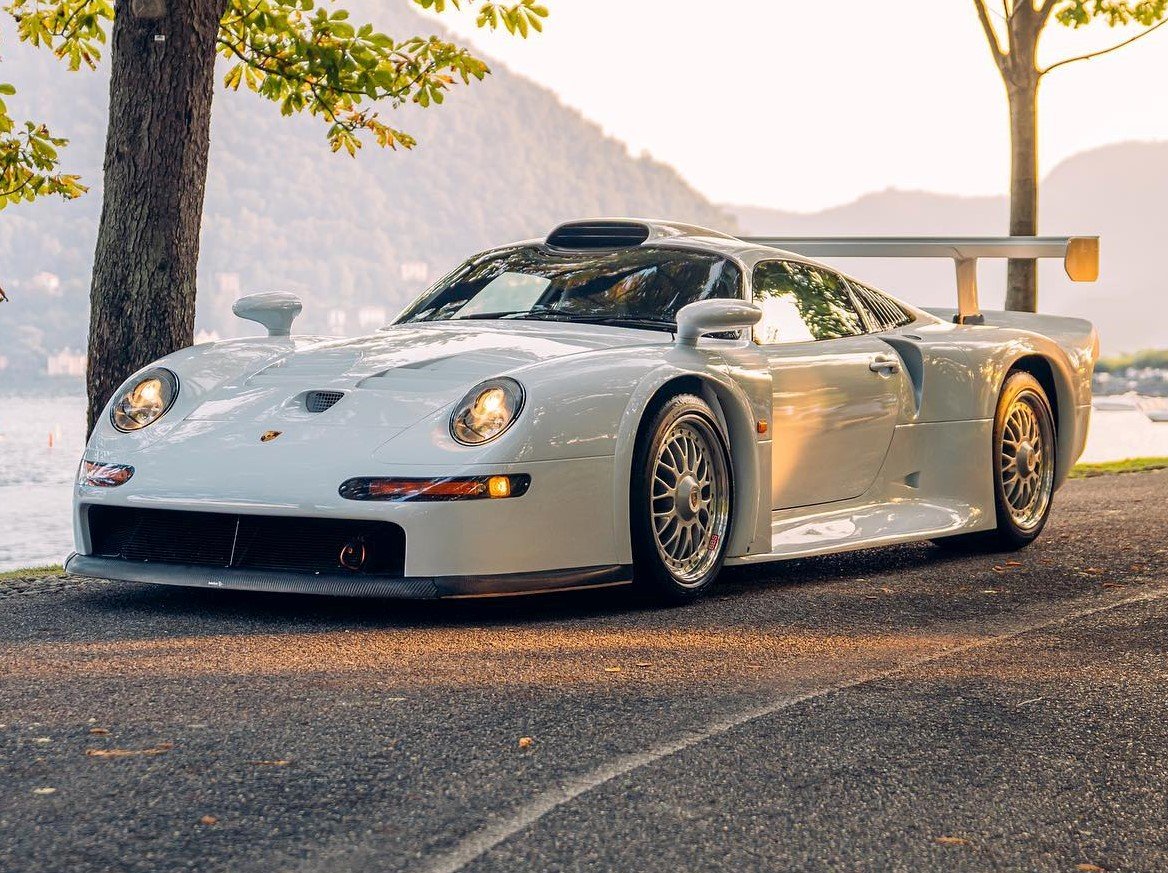
Porsche 911 GT1 Strassenversion
Technically a Le Mans winner for the road, this mid-engine beast was created to satisfy GT1 class homologation rules. Roughly 20–25 units exist, featuring a full carbon-fiber chassis and a twin-turbo flat-six that produces over 530 hp.
What Makes It Special
The Porsche 911 GT1 Strassenversion stands among the most extreme special-edition Porsches ever created because it exists for one reason only: to go racing and win. Built to satisfy GT1 class homologation regulations, the Strassenversion (German for “road version”) was Porsche’s legal loophole—a barely civilized variant of its Le Mans prototype required so the race car could compete. Unlike most homologation specials, this one made almost no attempt to disguise its true purpose.
Despite the “911” name, the GT1 Strassenversion is fundamentally mid-engined, sharing little with a production 911 beyond its headlights and brand lineage. Its full carbon-fiber monocoque chassis, race-derived suspension, and aggressive aerodynamics came straight from the track. Power came from a twin-turbocharged flat-six producing over 530 horsepower, delivering brutal acceleration and race-car immediacy that few road cars—then or now—could match. This was a Le Mans machine that happened to tolerate license plates.
What elevates the GT1 Strassenversion into the upper echelon of Porsche special editions is its historical consequence. The race-bred GT1 went on to win overall at Le Mans in 1998, making the Strassenversion one of the very few road cars directly linked to an outright Le Mans victory. With roughly 20–25 examples ever produced, it remains extraordinarily rare and deeply significant—a car that represents the absolute peak of Porsche’s willingness to bend reality in pursuit of motorsport dominance.
Key Data & Specifications
Engine: Twin-turbocharged flat-six
Power: 530+ hp
Transmission: 6-speed manual
Drivetrain: Mid-engine, RWD
Chassis: Full carbon-fiber monocoque
Body: Race-derived composite panels with extreme aero
Production: Approx 20–25 road cars
Known For
Being a true Le Mans–winning race car adapted for the road, built solely for GT1 homologation
Featuring a full carbon-fiber chassis and mid-engine layout, unlike any other road-going “911”
Learn More
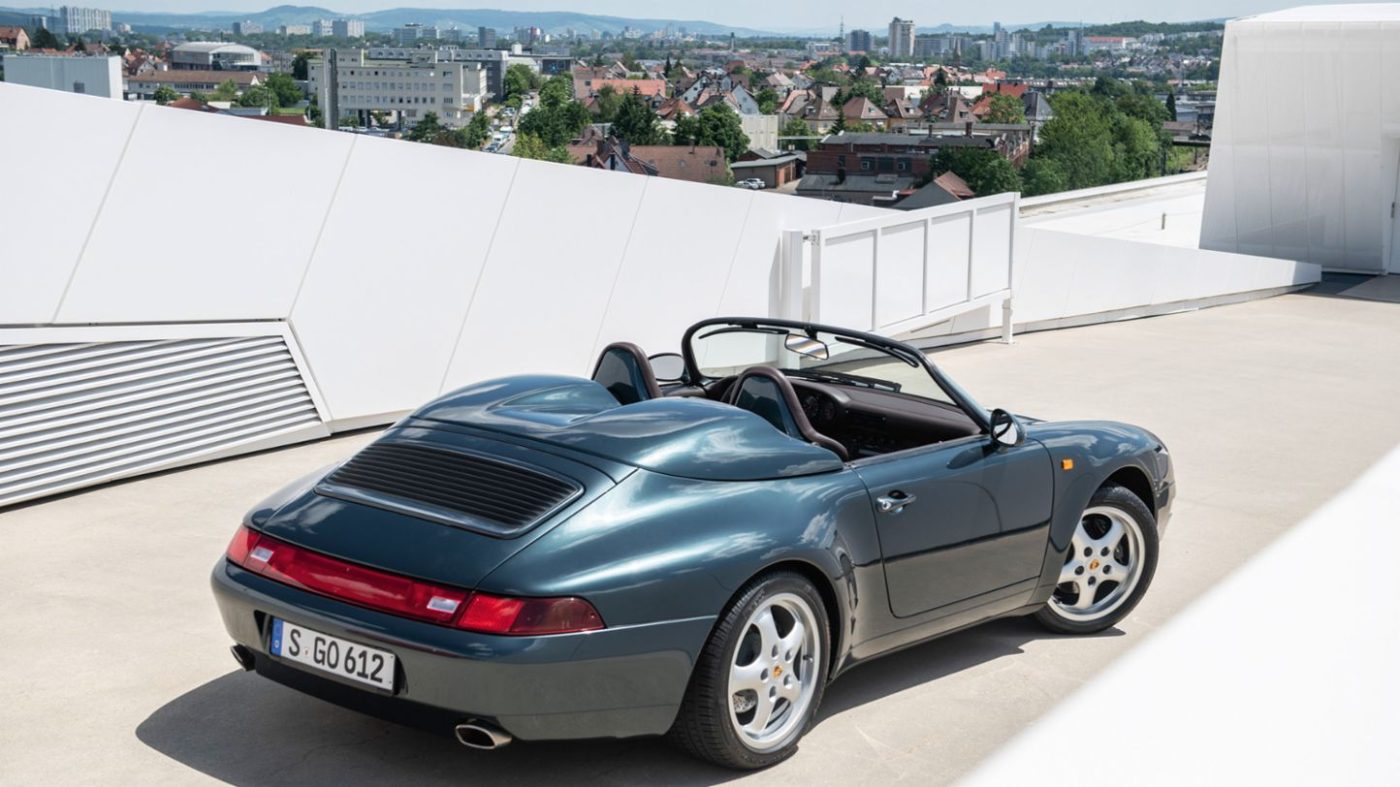
1995 Porsche 993 Speedster
Porsche never officially mass-produced a 993 Speedster; only two were ever built by the factory. One was a 60th-birthday gift for Ferdinand Alexander Porsche, and the other was later commissioned by Jerry Seinfeld through Exclusive department.
What Makes It Special
The Porsche 993 Speedster occupies an almost mythical place in Porsche history because it was never approved for series production. Unlike earlier Speedsters, Porsche chose not to build a 993-generation version—yet two cars were quietly completed by the factory through the Exclusive department. These were not prototypes or show cars; they were fully realized, road-going Speedsters, created as deeply personal commissions that bypassed the normal product plan entirely.
The first 993 Speedster was built as a 60th-birthday gift for Ferdinand Alexander Porsche, the legendary designer of the original 911. That provenance alone elevates the car beyond rarity into symbolism. The second example was later commissioned by Jerry Seinfeld, one of the world’s most prominent Porsche collectors, through the Porsche Exclusive department—further cementing the model’s status as an insider’s Porsche, known only to those closest to the brand.
True to Speedster tradition, the 993 Speedster featured a low, raked windshield, a double-hump rear deck, and a stripped, open-top configuration focused entirely on driving pleasure. Mechanically, it was based on the naturally aspirated 993 Carrera platform, preserving the purity, sound, and balance that define the final air-cooled generation. There were no performance theatrics or forced rarity gimmicks—just an honest, elegant reduction of the 911 to its essentials.
What makes the 993 Speedster one of the greatest special-edition Porsches ever created is not performance statistics or auction results, but intent. It exists because Porsche chose to honor people—its designer, its most passionate collectors—rather than markets or regulations. With only two factory-built examples, it is rarer than nearly every homologation special and hypercar Porsche has ever produced. More importantly, it stands as a reminder that some of the most important Porsches were never meant for the public at all.
Key Data & Specifications
Base Model: Porsche 911 Carrera (993)
Engine: Naturally aspirated air-cooled flat-six
Transmission: Manual
Drivetrain: Rear-engine, RWD
Body Style: Speedster with low windshield and double-hump rear deck
Production: Two factory-built examples only
Known For
Being a factory-built Speedster Porsche officially never put into production, with only two examples in existence
One car built for Ferdinand Alexander Porsche, the other commissioned by Jerry Seinfeld through Porsche Exclusive
Learn More
Porsche 911 Turbo S Leichtbau (964)
The most unhinged road-going Turbo Porsche ever built

What Makes It Special
The Porsche 964 Turbo S Leichtbau exists at the intersection of homologation logic and mechanical madness. Built in tiny numbers and stripped of nearly every non-essential component, this was Porsche asking a simple question: what happens if we take the already ferocious 964 Turbo and remove restraint? The answer was one of the most extreme, intimidating, and collectible road-going 911s ever produced.
Unlike other Turbo models, the Leichtbau was never meant to broaden appeal. It was conceived to support racing programs and to satisfy Porsche’s internal belief that lighter was always better, even when paired with forced induction. Weight reduction was aggressive and unapologetic—thinner glass, stripped interior, minimal sound deadening, fixed-back seats, and lightweight body panels all contributed to a car that felt far closer to a competition special than a luxury supercar.
On the road, the Turbo S Leichtbau is an exercise in respect. Turbo lag is pronounced, boost arrives violently, and the rear-engine, rear-drive layout leaves little margin for error. There are no electronic safety nets to save a careless driver. This is not a forgiving car—but it is a thrilling one, delivering a rawness and intensity that later GT2 models would refine but never truly replicate.
Key Data & Specifications
Engine: 3.3-liter turbocharged air-cooled flat-six
Power: ~381 hp
Torque: ~369 lb-ft
Transmission: 5-speed manual
Drivetrain: Rear-wheel drive
Weight: ~2,860 lbs
0–60 mph: ~4.0 seconds
Top Speed: ~180 mph
Known For
Being the lightest, rawest, and most extreme turbocharged air-cooled 911
Blending homologation thinking with outright intimidation
Learn More
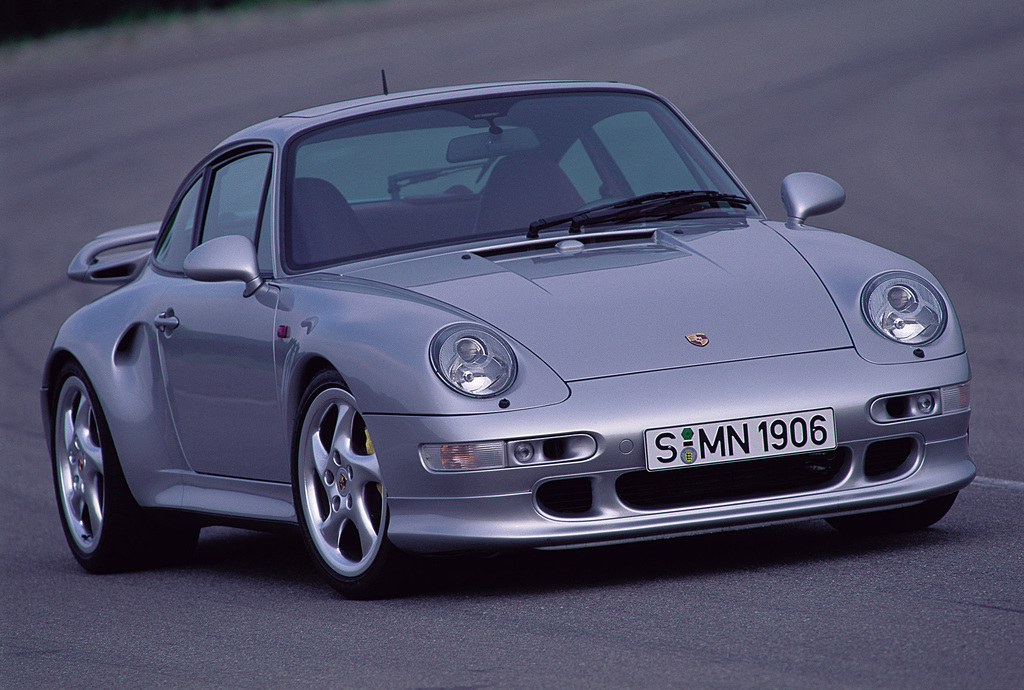
1998 Porsche 911 Turbo S (993)
As the final hurrah for the air-cooled 911, this special edition was the most powerful factory-built 993 ever made. It featured distinctive yellow brake calipers and air intakes on the rear fenders, with only 345 units produced worldwide.
What Makes It Special
The Porsche 911 Turbo S stands as the ultimate factory expression of the air-cooled 911. Released as a final hurrah for the 993 generation, it was not merely a trim package or cosmetic sendoff, but the most powerful factory-built 993 ever produced. As Porsche prepared to transition to water cooling, the Turbo S was designed to leave an unmistakable impression—one rooted in excess, confidence, and technical mastery.
At its core was an uprated version of the legendary 3.6-liter twin-turbocharged air-cooled flat-six, pushing output beyond the standard Turbo and firmly into supercar territory for the late 1990s. Paired with all-wheel drive and a six-speed manual gearbox, the Turbo S delivered immense real-world performance with devastating acceleration and effortless high-speed stability. It represented the peak of what Porsche engineers could extract from the air-cooled platform after decades of refinement.
Visually, Porsche ensured the Turbo S announced itself without resorting to theatrics. Distinctive yellow brake calipers, unique to the Turbo S, became an instant identifier, while additional air intakes on the rear fenders subtly hinted at the car’s enhanced cooling and performance demands. These details were functional first, aesthetic second—very much in keeping with Porsche’s engineering-led philosophy. The result was a car that looked purposeful rather than flamboyant.
What ultimately cements the 1998 Turbo S as one of Porsche’s greatest special editions is timing. With only 345 units produced worldwide, it closed the book on the air-cooled Turbo lineage at its absolute zenith. Every Turbo S that followed—faster, more complex, more digital—owes its existence to this car. As the final and most extreme air-cooled 911 Turbo, it remains a cornerstone of Porsche collecting and a symbol of an era that will never be repeated.
Key Data & Specifications
Model: Porsche 911 Turbo S (993)
Years: 1997 - 1998
Production: 345 units
Engine: 3.6 L Turbocharged Flat 6
Power: 424 bhp @ 5750 rpm
Torque: 400 ft lbs @ 4500 rpm
0 - 60 mph: 3.6 seconds
Top Speed: 184 mph
Known For
Being the most powerful factory-built Porsche 993 ever produced, marking the peak of the air-cooled Turbo era
Serving as the final special edition of the air-cooled 911, with instantly recognizable Turbo S details
Learn More
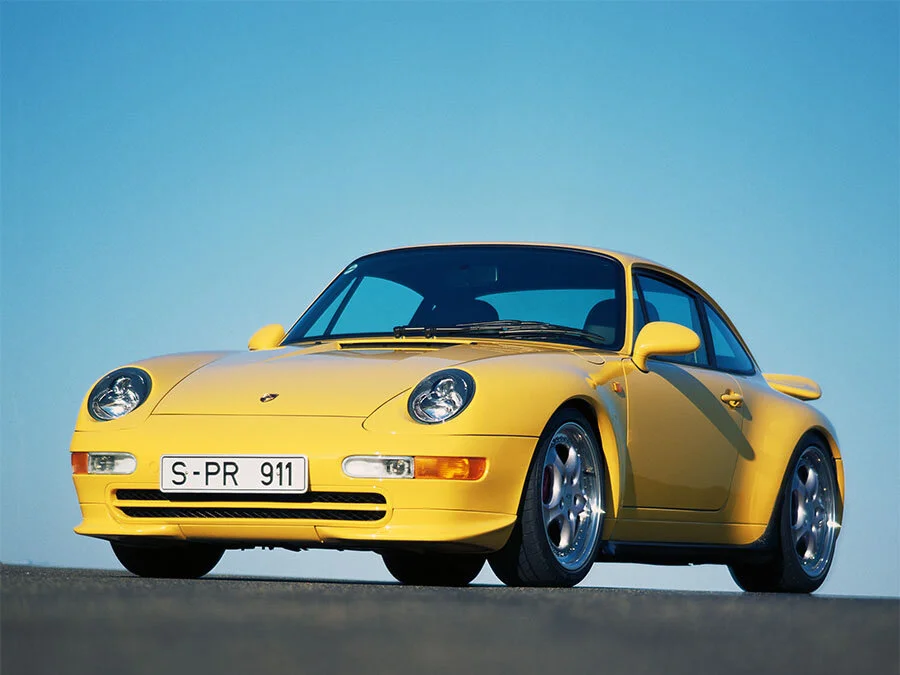
Porsche 911 Carrera RS 3.8 (993)
The final air-cooled RS, combining old-school character with modern precision in a way Porsche would never repeat.
What Makes It Special
The Porsche 911 Carrera RS 3.8 (993) occupies a singular place in Porsche history because it represents both an ending and a culmination. Introduced in 1995, it was the final air-cooled RS, but it was also the most technically advanced air-cooled 911 Porsche ever produced. Unlike earlier RS models that felt raw and sometimes unfinished, the 993 RS 3.8 combined old-school mechanical character with a level of precision and composure that hinted at the modern era to come—without sacrificing purity.
What makes the 993 RS so special is how completely Porsche refined the air-cooled platform before closing the chapter. The wider body, derived from the Carrera 4 shell, dramatically improved rigidity. Multi-link rear suspension brought newfound stability and confidence, taming the traditional 911 lift-off reputation without muting feedback. The result was an RS that felt serious, planted, and devastatingly effective, yet still unmistakably air-cooled in sound, vibration, and feel.
The 3.8-liter engine elevated the experience even further. This wasn’t about headline power figures—it was about response, torque, and durability. The engine pulled harder everywhere than earlier RS models, making the car feel more muscular and authoritative, particularly at high speeds. Where earlier RS cars felt nervous and alive, the 993 RS felt controlled and relentless, more endurance racer than homologation special. It was the moment Porsche proved that air-cooled performance had not yet hit its ceiling.
Rarity and context seal its status among the greatest RS Porsches ever made. Built primarily for Europe and produced in extremely limited numbers, the 993 RS 3.8 was never intended to be widely owned or adored—it was a tool for serious drivers. With the switch to water cooling immediately following, Porsche would never again have the opportunity to evolve the air-cooled RS concept. That finality matters. The 993 RS is not just the last of something—it is the most complete expression of what an air-cooled RS could be.
Key Data & Specifications
Engine: 3.8-liter air-cooled flat-six
Power: ~300 hp
Induction: Naturally aspirated
Transmission: 6-speed manual
Drivetrain: Rear-wheel drive
Known For
Being the final and most refined air-cooled RS Porsche ever built
Blending classic 911 character with near-modern chassis precision
Learn More
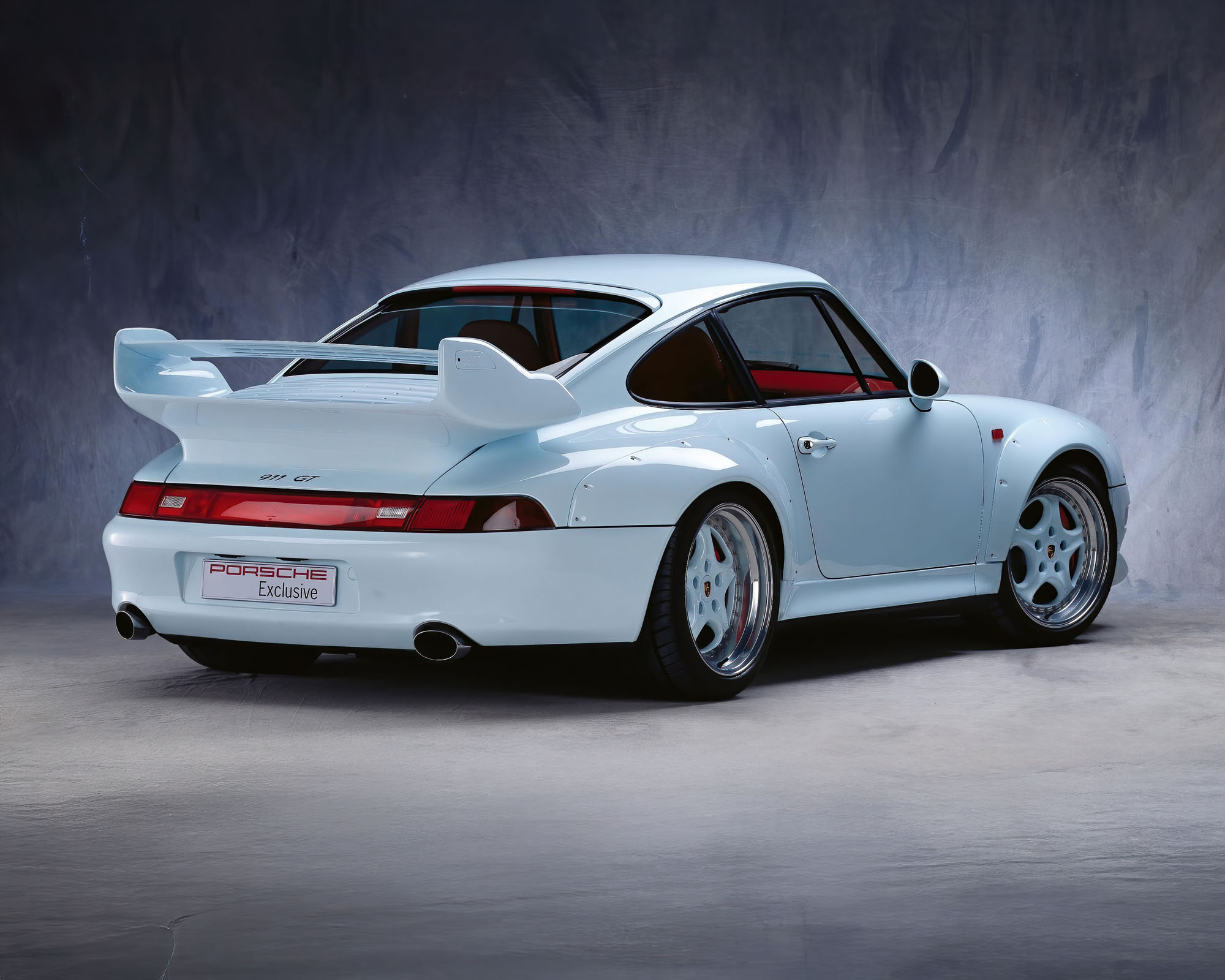
Porsche Masterpieces: One of One Rarities
This Is The World of Porsche Factory One-Offs and Customizations, Where Dreams Become One-of-One Realities.
Porsche 917 “Kurzheck” Street Version (1975)
The Porsche 917 Kurzheck Street Version is the most audacious expression of Porsche’s racing DNA—a full-blooded endurance champion that crossed into the real world without asking permission.
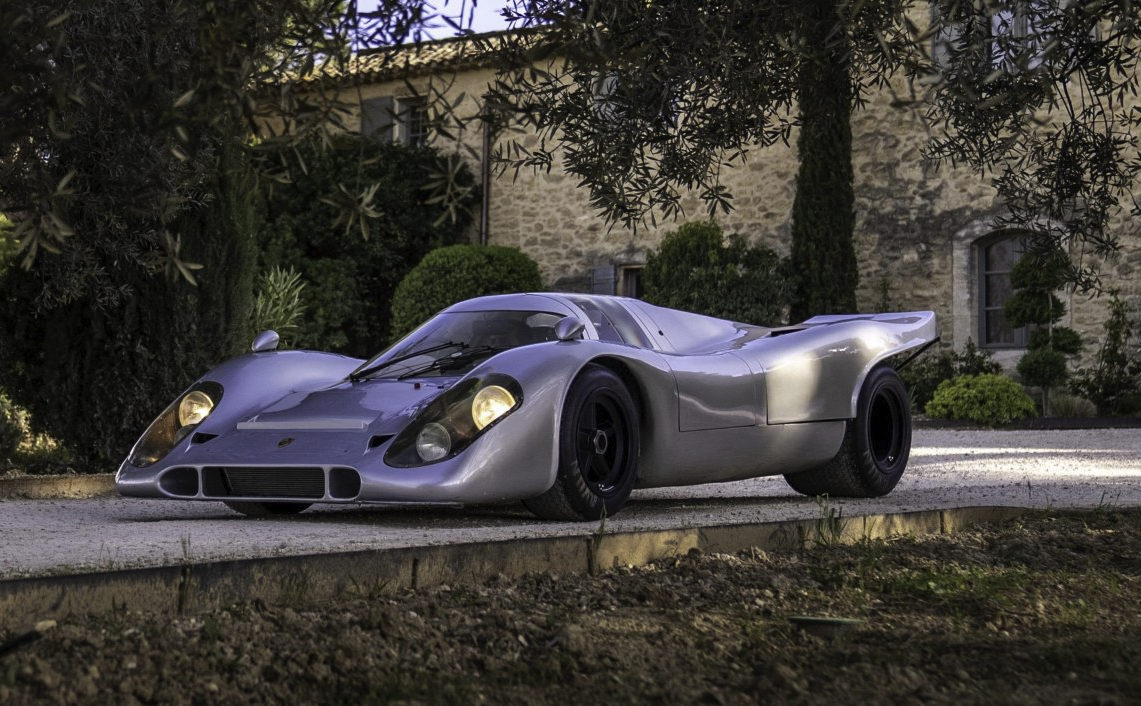
What Makes It Special
The Porsche 917 Kurzheck Street Version stands as perhaps the most outrageous one-off Porsche ever created—a Le Mans–winning prototype that crossed the thin line between race car and road car with almost no compromise. Built at the request of Italian industrialist and Martini heir Count Gregorio Rossi di Montelera, this was not a marketing exercise or homologation trick. It was a personal commission to make the most dominant endurance racer in history barely road legal, and Porsche agreed.
At its core, the 917 Kurzheck (short-tail) was still fundamentally a race car. The tubular spaceframe chassis, magnesium components, massive flat-12 engine, and aerodynamic bodywork were all carried over directly from Porsche’s World Sportscar Championship weapon. To make it usable on public roads, Porsche added the bare minimum: turn signals, horn, mufflers, a revised ride height, leather-trimmed seats, and a slightly softened suspension. Even then, driving the car on the street required bravery, mechanical sympathy, and a very high tolerance for noise, heat, and drama.
What makes the street-going 917 so special is not just its rarity—believed to be truly one of one—but the sheer audacity of the concept. This was a car capable of well over 200 mph, with performance so extreme that it redefined endurance racing, yet it wore license plates and was reportedly driven on public roads between Paris and southern France. No other Porsche before or since has blurred the boundary between competition and road use so completely, and no modern manufacturer would even attempt such a thing today.
Details
Engine: 4.9–5.0L air-cooled flat-12
Power: ~600 horsepower
Transmission: 5-speed manual
Drivetrain: Rear-wheel drive
Chassis: Aluminum tubular spaceframe
Top Speed: 200+ mph
Production: One-off street conversion
Known For
Being the only truly road-legal Porsche 917, derived directly from a Le Mans–winning prototype
Representing the purest race-to-road translation in Porsche history, with virtually no compromise
Porsche 963 RSP (2025)
The Porsche 963 RSP is Porsche’s most extraordinary modern one-off: a genuine Le Mans prototype modified just enough to live on select public roads, built as a bespoke tribute and a bridge between past and present racing legends.
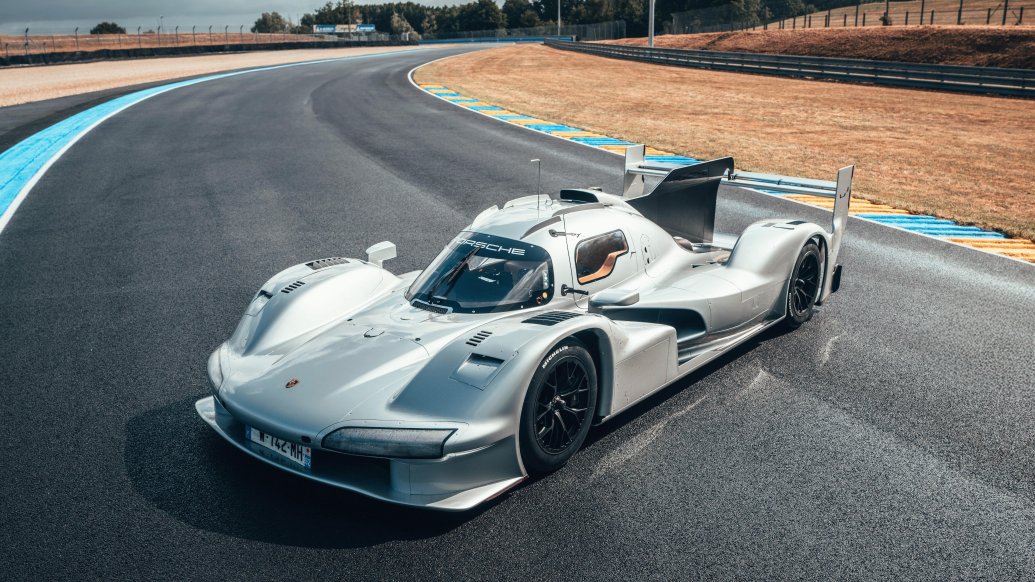
What Makes It Special
The 963 RSP began life as the Porsche 963 LMDh race car, a top-tier endurance prototype that competes in both the FIA World Endurance Championship and IMSA WeatherTech SportsCar Championship. To celebrate Porsche’s racing heritage—and specifically to echo the spirit of the famed 917 road-legal prototype from 1975—Porsche collaborated with Roger Searle Penske, legendary team owner and motorsport figure, to create a one-off road-drivable version of the 963. What resulted is not merely a showpiece but a functional, hybrid-powered hypercar that carries almost all the performance DNA of its racing sibling straight into a bespoke road format.
Mechanically, the 963 RSP retains the 4.6-liter twin-turbocharged V8 hybrid powertrain shared with the competition 963, generating approximately 680 PS (~671 hp) and combining the brute force of combustion with electrified assistance for explosive acceleration. Derived from the RS Spyder racing program and evolved through its use in the Porsche 918 Spyder, this power unit remains race-bred yet has been re-tuned for smoother delivery on regular fuel and modified to suit limited road operation. Suspension, dampers, and ride height are adjusted for real-world surfaces, and essential elements like headlights, taillights, turn signals, and even Michelin wet-weather tyres were added so that, under special permitting, the car may be driven on public roads under defined conditions.
Visually, the 963 RSP is stunningly distinctive: painted in Martini Silver—a direct nod to the legendary Count Rossi 917 street car—and finished with bespoke bodywork and a richly appointed tan leather and Alcantara interior. Rather than the typical racing wrap seen on prototypes, this unique carbon-fiber and Kevlar-bodied hypercar was hand-painted and includes subtle retro touches that link it to Porsche’s storied past while firmly planting it in the present.
Details
Engine: 4.6 L twin-turbo V8 + hybrid system (derived from 918 Spyder/RS Spyder lineage)
Power: ~680 PS (671 hp) total output
Transmission: Race-derived sequential gearbox
Drivetrain: Mid-engine hybrid prototype layout
Body: Carbon fiber & Kevlar prototype bodywork with bespoke road-legal lighting and aero
Road Capability: Modified ride height, dampers, and accessories for approved public-road operation under special permission
Known For
Being a true one-off Le Mans prototype adapted for limited road use, faithful to Porsche’s racing heritage.
Bringing race-spec hybrid performance and bespoke craftsmanship together in a singular, historically significant car.
Learn More
1989 Porsche 959 "Gold" for Qatari Royalty
While seven were technically made for the family, each was a unique one-off color; the most famous features gold-plated tailpipes and the family crest in place of the Porsche emblem. It represents the absolute peak of 80s excess.

What Makes It Special
The Porsche 959 Gold originated from a special commission in 1989 when Sheikh Abdul Aziz Khalifa Althani of Qatar’s royal family ordered a small batch of seven Porsche 959s from the newly established Porsche Exclusive division, each in a completely unique color and with equally distinctive interiors. One of these was finished in a striking all-gold exterior and matching interior, complete with gold-plated details and bespoke touches that pushed bespoke personalization to levels seldom seen from the factory at the time.
While the standard Porsche 959 was already a technological marvel—one of the first true supercars with advanced all-wheel drive, twin-turbo flat-six power, and performance that rivaled the fastest cars of the era—it was the bespoke nature of the gold 959 that made it singular. Porsche Exclusive didn’t just paint the car gold; the design flowed through every element from the exterior paint to the leather upholstery, coordinating wheels, and even gold accents on the exhaust tips. The result was a vehicle that wasn’t merely rare—it was an expression of personal taste and wealth unlike any other Porsche of its generation.
Technically the car remained a 959 underneath its one-off bodywork and finishes—powered by a 2.8-liter twin-turbocharged flat-six that produced around 444 horsepower, paired with an advanced all-wheel-drive system and a six-speed gearbox featuring Porsche’s iconic “gelände” off-road gear. This combination made the 959 one of the most sophisticated and capable high-performance road cars of the late 20th century. What set the gold-clad version apart was not performance alone but its symbolic status as a bespoke masterpiece commissioned at a time when supercars were just beginning to blend exotic performance with personal luxury.
Details
Engine: 2.8 L twin-turbo flat-six
Power: ~444 hp
Transmission: 6-speed manual
Drivetrain: All-wheel drive
Production: 337 total 959s (seven bespoke for Qatari royalty)
Known For
Being one of seven bespoke Porsche 959s commissioned by Qatari royalty in 1989, each uniquely finished and personalized.
Featuring an all-gold exterior and interior with gold-plated details, representing one of the most luxurious and flamboyant factory-built custom Porsches ever.
1989 Porsche 928 GT "Flachbau"
A one-off experiment by the Sonderwunsch department to see if the popular 911 Slantnose look could be applied to the 928. It remains the only 928 with these distinct pop-up headlights and a unique front fascia.

What Makes It Special
The 928 GT “Flachbau” began life as a 928 GT — the sportier, more engaging variant of Porsche’s front-engined V8 grand tourer — but was transformed in 1989 into something entirely unique at the behest of its original owner through Porsche’s Exclusive/Sonderwunsch program. Rather than the standard circular pop-up headlights typical of the 928, this one-off car received covered pop-up headlights and a flatter, more rakish nose reminiscent of the slant-nose (Flachbau) 911s of the era, creating an appearance that blurred design boundaries between Porsche’s distinctly different models.
What makes this Flachbau 928 so remarkable is how subtly and convincingly it reshaped the 928’s identity without losing its essence as a grand tourer. While the frontal revision is its headline feature, the build also included wider side skirts and rear wheel arches (option codes XB2 and XC1), aerodynamically optimized mirrors, and other bespoke touches that gave it an aggressive yet harmonious stance. These changes were complemented by the GT’s enhanced performance package — including a manual transmission and a slightly more potent version of the 5.0-liter V8 producing around 326 horsepower, along with a limited-slip differential and sport suspension — ensuring the car was as engaging to drive as it was to behold.
Details
Engine: 5.0 L V8
Power: ~326 hp (243 kW)
Transmission: 5-speed manual
Drivetrain: Front-engine, RWD
Unique Features: Covered pop-up headlights (XA2 option), widened skirts (XB2), extended rear arches (XC1), aerodynamically improved mirrors
Known For
Being the only factory-built Porsche 928 ever fitted with a slant-nose/Flachbau “pop-up” front end through the Sonderwunsch program.
Combining bespoke exterior revisions with the performance enhancements of the 928 GT, creating a one-off that is both visually distinctive and driver-focused
2018 Porsche 911 Turbo "Project Gold"
Built from a brand-new 993 body shell found in the warehouse, this was a factory "re-manufacturing" of an air-cooled car using modern techniques. It is a one-of-one creation that sold for over $3 million to benefit the Ferry Porsche Foundation.
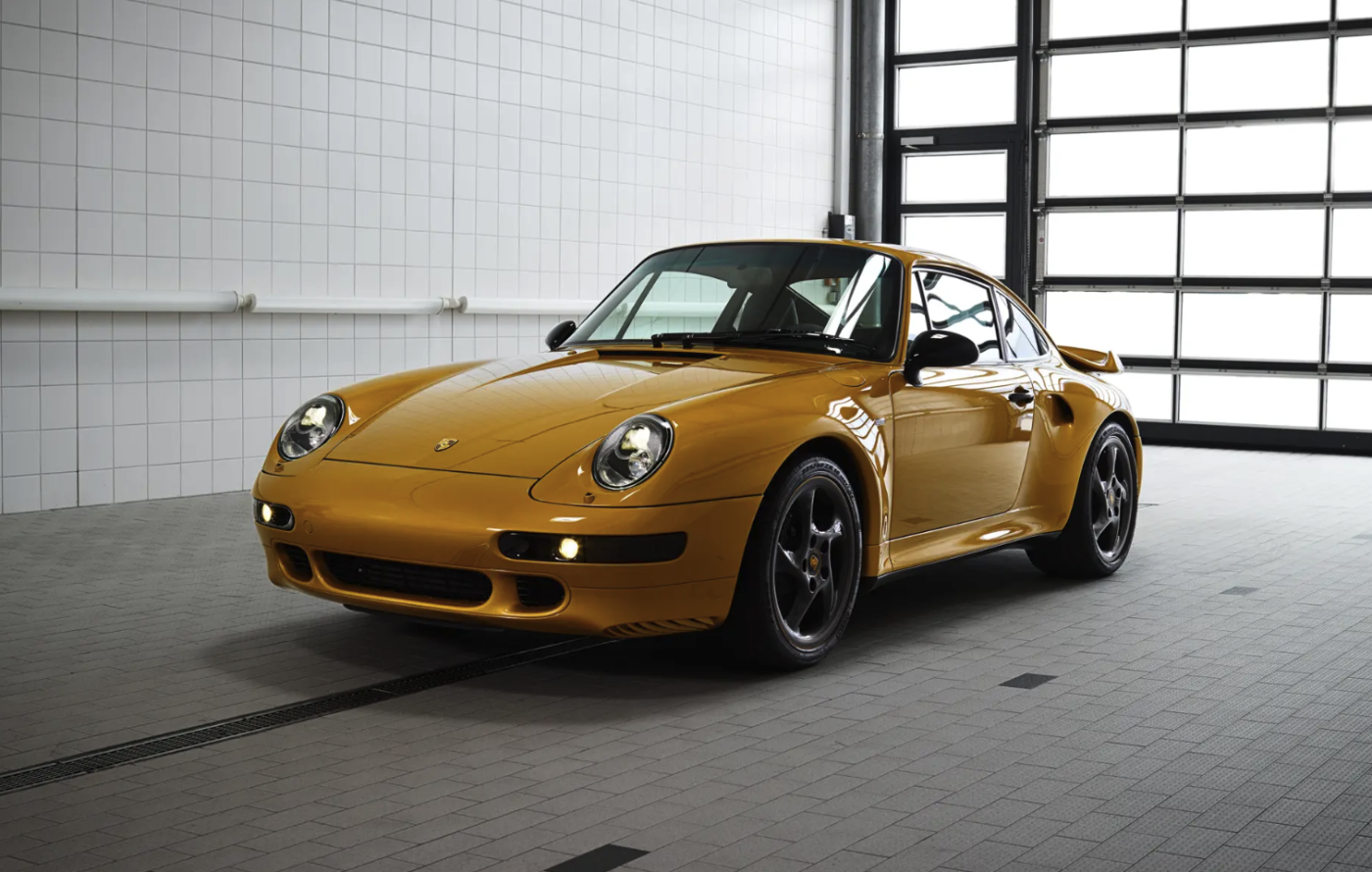
What Makes It Special
“Project Gold” was conceived by Porsche Classic as part of the 70th anniversary celebration of Porsche sports cars, and it represents the very last air-cooled 911 Turbo ever manufactured—despite being built in 2018 using genuine new-old-stock components and modern assembly techniques. The project began with a genuine 993-series Turbo body shell discovered in Porsche’s warehouse, which was meticulously restored, protected, and assembled with thousands of original parts sourced through Classic’s extensive catalog. The intention was not simply to restore an old car, but to build a brand-new one that honored the engineering and ethos of Porsche’s air-cooled era while carrying forward design cues from contemporary Porsche models such as the 991 Turbo S Exclusive Series.
Underneath its striking Golden Yellow Metallic paint and bespoke interior lies the heart of a 993 Turbo S—its 3.6-liter twin-turbo flat-six developed to 450 horsepower, a configuration right at the pinnacle of air-cooled performance and shared with only a handful of original Turbo S models. The drivetrain, all-wheel drive system, and other key mechanical components were all new builds from genuine Porsche Classic parts.
When it was offered at the RM Sotheby’s Porsche 70th Anniversary Auction in Atlanta in 2018, Project Gold captured the imagination of collectors worldwide, selling for over $3.1 million.
Details
Engine: 3.6 L twin-turbocharged air-cooled flat-six
Power: ~450 hp (993 Turbo S specification)
Transmission: 6-speed manual or automatic (built from Porsche Classic parts)
Drivetrain: All-wheel drive (Porsche’s proprietary system)
Body: Original 993 Turbo shell restored and assembled as new
Color: Golden Yellow Metallic with bespoke interior detailing
Known For
Being the last air-cooled 911 Turbo ever built, assembled new in 2018 from original Porsche Classic parts to celebrate Porsche’s 70th anniversary.
Selling at auction for over $3 million with proceeds benefiting the Ferry Porsche Foundation, underlining its significance as both a collector piece and charitable milestone.
Porsche 911 Classic Club Coupe
Built for the Porsche Club of America, this one-off transformed a beat-up 996 Carrera into a masterpiece with a 996 GT3 engine, a ducktail spoiler, and a double-bubble roof. It sold for $1.2 million.
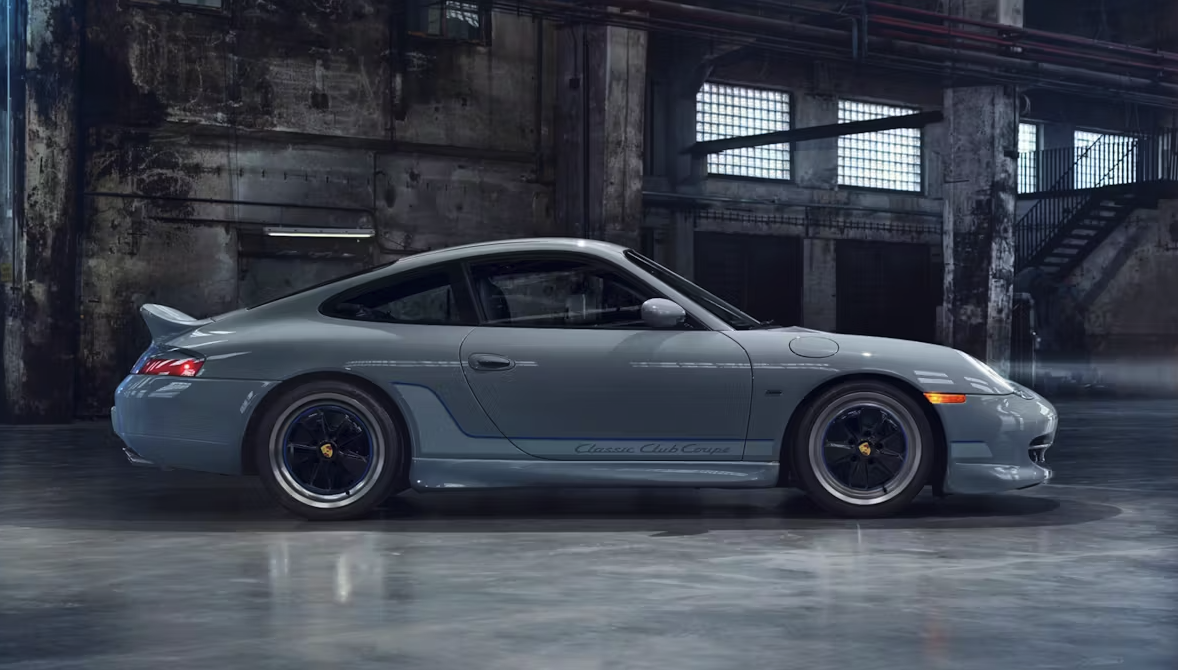
What Makes It Special
The Classic Club Coupe was conceived under the Sonderwunsch (Special Wishes) program in collaboration with the Porsche Club of America (PCA), who wanted to honor the long history of Porsche enthusiasts in the United States with something truly singular. Based on a 1998 996 Carrera, the car was painstakingly restored and extensively re-engineered by Porsche Classic at the original factory workshop in Zuffenhausen. They created a unique vehicle that echoes the spirit of beloved Porsche classics.
What truly sets the Classic Club Coupe apart is its heart and soul under the skin. The chassis, brakes, and engine are all sourced from a 996.2 GT3, a revered performance variant known for its rev-happy 3.6-liter naturally aspirated flat-six that produces 381 hp, along with race-grade suspension and stopping power — a massive upgrade over the standard Carrera drivetrain. Porsche Classic engineers also strengthened the body-in-white, rebuilt every major component, and ensured the car’s dynamics were worthy of its performance pedigree.
Aesthetically, the Classic Club Coupe is a celebration of Porsche design heritage. It wears Sport Grey Metallic paint with light grey and Club Blue accents, a fixed ducktail spoiler reminiscent of the 1972 911 Carrera RS 2.7, a double-bubble roof, and 18-inch forged Fuchs wheels — all visually nodding to iconic Porsches of the past while maintaining a uniquely modern flair. Inside, bespoke touches like woven leather Pepita seats and PCA-themed embroidery tie the car directly back to its enthusiast roots.
It sold at auction at Porsche’s 75th anniversary Broad Arrow sale for $1.2 million.
Details
Base Chassis: 1998 Porsche 911 Carrera (996)
Engine: 3.6 L naturally aspirated flat-six from 996.2 GT3 (~381 hp)
Transmission: GT3-spec gearbox and drivetrain components
Brakes/Suspension: 996 GT3 components for enhanced handling
Unique Features: Fixed RS-style ducktail spoiler, double-bubble roof, bespoke Sport Grey & Club Blue livery, 18″ forged Fuchs wheels, PCA interior accents
Known For
Being a true one-off Porsche Classic and PCA collaboration that elevated the 996 platform into a bespoke, heritage-inspired sports car.
Selling for $1.2 million at auction, making it the most valuable 996-based car in existence and proving the rising collector interest in this generation.
Learn More
1997 Porsche 911 GT2 (993) "Coppa Florio"
This is the only 993 GT2 ever finished in the light blue "Coppa Florio" color with a full "Can Can Red" leather interior. It is widely considered the most visually striking and personalized air-cooled GT2 in existence.

What Makes It Special
The Porsche 911 GT2 Coppa Florio occupies a unique place in Porsche history as the only 993-generation GT2 finished in Coppa Florio light blue, paired with a full Can Can Red leather interior. Built through Porsche’s Exclusive/Sonderwunsch program, this car took what was already the most extreme air-cooled 911 of its era and infused it with a level of individuality rarely seen on a GT2. In a model line defined by aggression, austerity, and motorsport purpose, the Coppa Florio stands apart as both brutal and beautiful.
Mechanically, nothing was softened. The 993 GT2 was Porsche’s rear-wheel-drive, twin-turbo homologation special—lighter, louder, and far more demanding than the contemporary Turbo. With its wide bodywork, massive rear wing, stripped interior, and race-bred hardware, the GT2 was infamous for rewarding only the most skilled drivers. The Coppa Florio retained all of that intensity, ensuring that its bespoke appearance never came at the expense of authenticity or performance.
What makes this car truly special is the audacity of its specification. Coppa Florio blue is elegant, almost delicate—completely at odds with the GT2’s reputation as the “widowmaker” of the 993 range. The contrast is heightened further by the Can Can Red leather interior, a color more commonly associated with luxury and flair than homologation specials. Yet the combination works brilliantly, turning the GT2 into a rolling statement piece that balances violence with sophistication. It is personalization at the highest level, executed by the factory with absolute confidence.
Details
Engine: 3.6-liter twin-turbocharged air-cooled flat-six
Power: ~430–450 hp (varies by GT2 specification)
Transmission: 6-speed manual
Drivetrain: Rear-wheel drive
Body: Lightweight wide-body GT2 shell with fixed rear wing
Production: Extremely limited overall GT2 run; Coppa Florio is one-of-one
Known For
Being the only Porsche 993 GT2 ever finished in Coppa Florio light blue, paired with a full Can Can Red leather interior
Representing the most personalized and visually dramatic air-cooled GT2 ever produced through Porsche’s Exclusive/Sonderwunsch program
Learn More
2024 Porsche 928 S "Boo"
A radical reimagining of a 1981 928 S for singer Álvaro Soler, featuring a 360-degree immersive sound system and a matching guitar. The interior is a mix of heritage fabrics and modern technology, bridging the gap between classic and contemporary.

What Makes It Special
The Porsche 928 S Boo represents one of the most unconventional and creative one-off Porsches of the modern era. Commissioned through Porsche’s Sonderwunsch program for singer and songwriter Álvaro Soler, the project began with a 1981 Porsche 928 S and evolved into a deeply personal reinterpretation that blends automotive heritage, contemporary design, and music culture. Rather than restoring the car to factory condition, Porsche treated the 928 as a blank canvas—one that could express identity, emotion, and creativity as much as performance.
At the heart of the “Boo” concept is sound. The car features a bespoke 360-degree immersive audio system, designed to envelop occupants in a concert-like listening experience that goes far beyond traditional in-car audio. This theme extends beyond the cabin: a custom-built, matching guitar was created as part of the project, reinforcing the idea that this 928 is not just transportation, but an extension of its owner’s artistic world. Few Porsches—if any—have ever placed music so centrally within their design philosophy.
Visually and tactually, the interior is where the car truly bridges eras. Heritage-inspired fabrics, textures, and patterns reference the early-1980s origins of the 928, while modern materials, lighting, and digital elements subtly bring the cabin into the present. The result is neither retro nor futuristic, but a carefully balanced fusion of old and new. It’s a reminder that Porsche’s luxury GT experiments—once misunderstood—are fertile ground for modern reinterpretation.
Details
Base Car: 1981 Porsche 928 S
Engine: Front-mounted V8 (928 S specification)
Drivetrain: Front-engine, rear-wheel drive (transaxle layout)
Interior: Bespoke mix of heritage fabrics and modern materials with custom audio integration
Special Features: 360-degree immersive sound system, custom guitar, Sonderwunsch one-off design elements
Production: One-of-one
Known For
Being a one-off Sonderwunsch reinterpretation of a 1981 Porsche 928 S, created for musician Álvaro Soler
Integrating a 360-degree immersive sound system and a matching custom guitar, making music central to the car’s identity
2021 Porsche 911 GT3 (992) "Le Mans 1985"
A one-off tribute to the 956 that won Le Mans in 1985, featuring a bespoke livery and custom wheels that mimic the original racer. It was one of the first projects to showcase the revived Sonderwunsch "Factory One-Off" pillar.
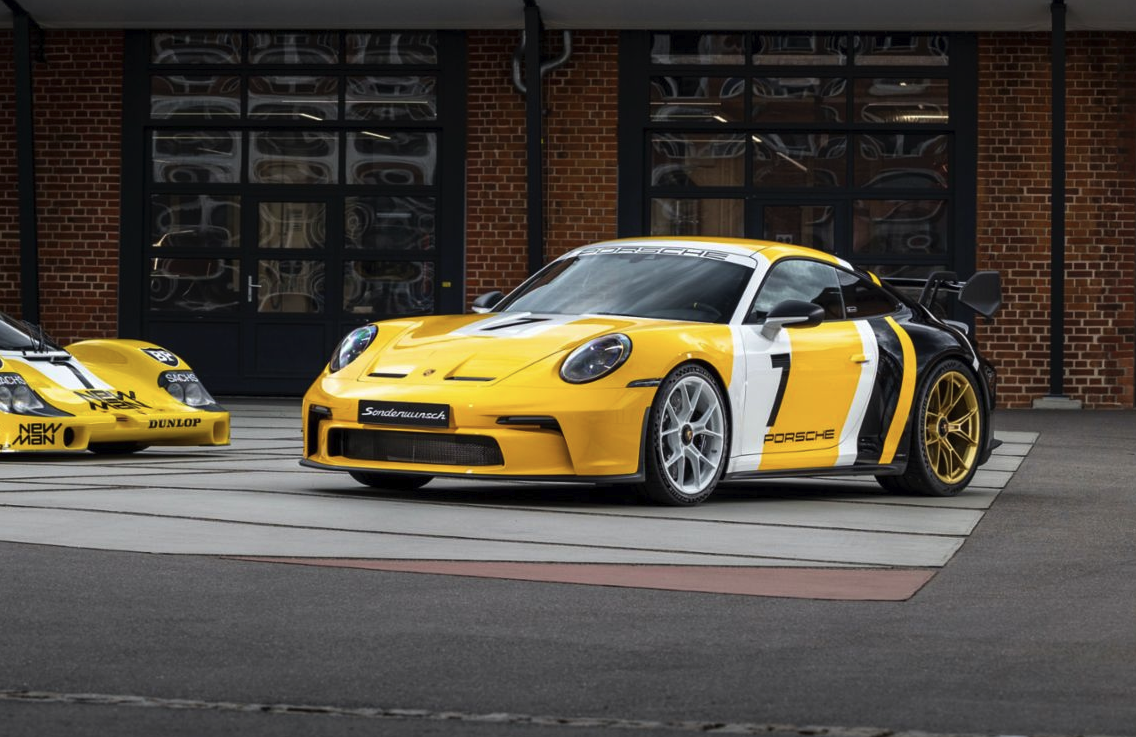
What Makes It Special
The Porsche 911 GT3 Le Mans 1985 is a landmark Sonderwunsch creation, not just for what it represents, but for how it was built. Created as a one-off tribute to the Porsche 956 that won the 1985 24 Hours of Le Mans, this GT3 was among the very first cars to showcase Porsche’s revived Sonderwunsch “Factory One-Off” program. Rather than being a customer-applied wrap or aftermarket homage, this was a ground-up, factory-approved, deeply integrated design exercise—executed with the same seriousness Porsche applies to motorsport.
The foundation was the 992-generation GT3, already considered one of the most complete driver’s cars Porsche has ever produced. Its 4.0-liter naturally aspirated flat-six, motorsport-derived chassis, and obsessive focus on balance made it the perfect modern canvas for a racing tribute. Crucially, nothing about the mechanical package was diluted or softened—the car remained every bit a GT3, with the Sonderwunsch work focused entirely on visual identity, craftsmanship, and historical storytelling.
What makes the “Le Mans 1985” GT3 extraordinary is its bespoke execution. The exterior livery directly references the iconic Rothmans-era 956, carefully reinterpreted to suit the modern 911’s surfaces rather than simply copied. Even more striking are the custom wheels, designed specifically for this project to visually echo the original race car’s competition wheels—an obsessive detail that underscores how far Porsche was willing to go to get the tribute right. This wasn’t graphic design; it was industrial design rooted in motorsport history.
As a one-off, the 911 GT3 “Le Mans 1985” matters because it signaled a philosophical shift. It showed that Sonderwunsch had evolved beyond color and trim into something closer to factory-sanctioned automotive storytelling—where heritage, engineering, and modern performance intersect in a single, unrepeatable car. In that sense, this GT3 is not only one of the most tasteful racing tributes Porsche has ever built, but also a blueprint for the future of factory one-offs.
Details
Base Car: 2021 Porsche 911 GT3 (992)
Engine: 4.0-liter naturally aspirated flat-six
Transmission: PDK or 6-speed manual (GT3 specification)
Drivetrain: Rear-wheel drive
Special Features: Bespoke Le Mans 1985 tribute livery, custom wheels inspired by the Porsche 956, factory Sonderwunsch execution
Production: One-of-one
Known For
Being one of the first factory one-off builds under the revived Sonderwunsch “Factory One-Off” program
Paying tribute to Porsche’s 956 Le Mans victory in 1985 through bespoke livery and custom-designed wheels
Porsche 935 Street
This custom build was commissioned by Mansour Ojjeh, founder of TAG Group. It was the first model completed by the Porsche Exclusive division (after the carmaker’s formal recognition of the Sonderwunsch programme).
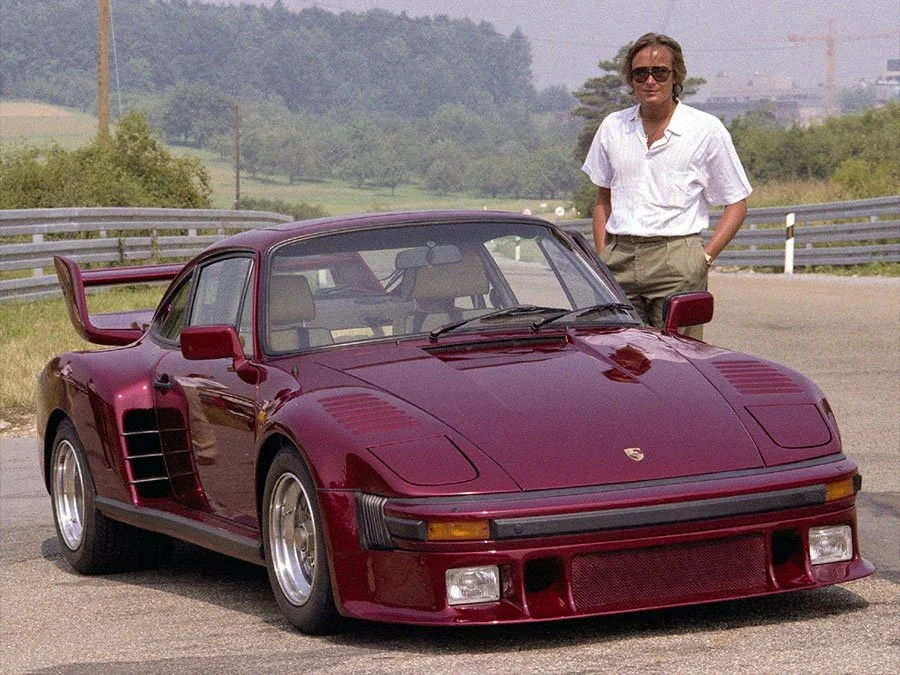
What Makes It Special
The Porsche 935 Street occupies a singular and foundational place in Porsche history. Commissioned by Mansour Ojjeh, founder of the TAG Group and a key power broker in global motorsport, this extraordinary car was the first model completed by Porsche Exclusive following the formal recognition of the Sonderwunsch (Special Wishes) program. While customers had requested bespoke Porsches before, the 935 Street marked the moment Porsche institutionalized the idea of factory-built one-offs—cars created without compromise, dilution, or mass-production constraints.
The starting point was fearsome: the Porsche 935, a turbocharged endurance racer derived from the 911 that dominated international GT competition in the late 1970s. Transforming such a car into something usable on public roads required extraordinary engineering restraint—and extraordinary indulgence. Porsche retained the race car’s wide bodywork, dramatic aerodynamics, and turbocharged flat-six character, but softened it just enough for road use. Lighting, sound insulation, interior trim, and road legality considerations were added, yet the car never pretended to be civilized. It remained intimidating, theatrical, and unapologetically extreme.
Visually, the 935 Street is unforgettable. Its exaggerated fender flares, flat nose, and long tail made it look closer to Le Mans than Stuttgart traffic. Unlike later “tribute” cars, this was not inspired by racing—it was racing, translated directly to the street. The interior reflected its patron’s stature, blending bespoke luxury materials with unmistakable motorsport DNA, reinforcing that this was a personal commission for someone deeply embedded in Porsche’s competitive success.
Details
Base Platform: Porsche 935 race car (911-derived)
Engine: Turbocharged air-cooled flat-six
Transmission: Manual
Drivetrain: Rear-wheel drive
Body: Extreme wide-body with race-derived aerodynamics
Interior: Bespoke luxury trim commissioned for Mansour Ojjeh
Production: One-of-one
Known For
Being the first officially completed car by Porsche Exclusive, marking the formal birth of the Sonderwunsch program
Translating the fearsome Porsche 935 race car into a road-going one-off with virtually no visual compromise