


Current Porsche 911 Turbo S (992.2) – Reviews, Pricing, Specs & Buyers Guide
The Porsche 911 Turbo S has long been the pinnacle of the 911 lineup, a rolling testament to Porsche’s engineering mastery, blending uncompromising supercar performance with genuine everyday usability. The introduction of the 992.2 generation marks a monumental shift, ushering in the era of electrification for the flagship model. This isn’t just a facelift; it’s a re-engineering that fundamentally changes the character and capability of this automotive icon. The 992.2 Turbo S Coupe is, quite simply, the most powerful and fastest production 911 ever created.
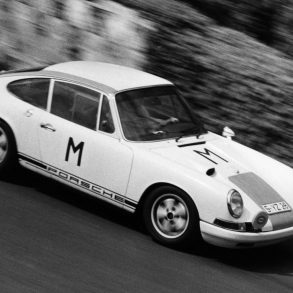
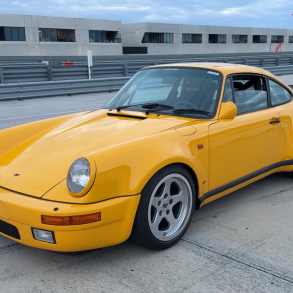
The 911 Turbo story goes back to the wild 930 of the 1970s, but in modern times the Turbo S has become the everyday supercar benchmark – devastatingly quick, yet usable in all weather.
For the second phase of the 992 (commonly called 992.2), Porsche has been steadily rolling out electrified models: first the Carrera GTS T-Hybrid, then, in September 2025 at the Munich show, the new Turbo S T-Hybrid as the flagship.
Key strategic moves:
- Hybridization is performance-first. Porsche is very clear that this is not a plug-in for CO₂ credits; the small 1.9 kWh battery and e-turbos are there to kill lag and boost power, echoing lessons from the 919 Hybrid LMP1 car.
- The Turbo S has always been PDK-only and AWD, so adding hybrid weight and complexity is much easier to sell to customers than on, say, a GT3. PistonHeads sums it up: a car called “Turbo” should have the latest forced-induction tech, so e-turbos and a 400-V system feel totally appropriate.
- The result is a car that’s heavier but massively faster, dropping around 14 seconds from the outgoing Turbo S’s Nürburgring lap to about 7:04.
In the 992.2 hierarchy, the Turbo S now sits above the GTS hybrids and below only future special models like a GT2 RS, as the ultimate all-round 911.
Model Year Updates: The T-Hybrid Revolution
The shift from the 992.1 to the 992.2 is defined by the integration of the new T-Hybrid powertrain technology. Porsche has adopted a mild-hybrid setup, which, unlike the hybrid systems in many other performance cars, is focused almost entirely on boosting performance and responsiveness, not just efficiency
| Feature | 992.1 Turbo S (Pre-Facelift) | 992.2 Turbo S (Facelift) |
| Powertrain | 3.7L Twin-Turbo Flat-Six (Pure ICE) | 3.6L Twin-eTurbo Flat-Six T-Hybrid |
| System Horsepower | 640 hp (650 PS) | 701 hp (711 PS) |
| System Torque | 590 lb-ft (800 Nm) | 590 lb-ft (800 Nm) |
| 0–60 mph (0–100 km/h) | 2.6 seconds (2.7s for 0-100 km/h) | 2.4 seconds (2.5s for 0-100 km/h) |
| Weight (Curb) | Approx. 3,649 lbs (1,655 kg) | Approx. 3,829 lbs (1,737 kg) |
| Brakes (Rear) | 390 mm Ceramic Composite | 410 mm Ceramic Composite |
| Rear Tire Width | 315 mm | 325 mm |
| Tachometer | Analog with Digital Sides | Fully Digital Curved Display |
Despite a notable increase in curb weight due to the hybrid components, the 992.2 Turbo S is significantly faster on track, demonstrated by its impressive Nürburgring lap time improvement over its predecessor. This gain is a direct result of the relentless application of cutting-edge technology to chassis control and powertrain response.
Specifications: Power, Performance, and Precision
The 992.2 Turbo S is a technical masterpiece, with its specs sheet reading like a blueprint for a street-legal race car.
Engine and Powertrain
At the core of the T-Hybrid system is a newly developed 3.6-litre flat-six boxer engine (downsized from the 992.1’s 3.7L unit). However, the smaller displacement is more than offset by the electrification.
- Combustion Engine Output: 631 hp (640 PS) and 560 lb-ft (760 Nm).
- Electric Motor: An integrated electric motor within the 8-speed PDK transmission contributes an additional 80 hp (61 PS) and 139 lb-ft. The combined system output is capped at a staggering 701 hp (711 PS) and 590 lb-ft (800 Nm).
- Twin e-Turbochargers: This is the game-changer. The Turbo S utilizes twin exhaust gas turbochargers, each featuring an integrated electric motor that sits between the turbine and compressor wheels. This motor acts like a miniature electric supercharger at low engine speeds, effectively eliminating turbo lag by spinning the compressors instantly. When off-boost, the e-turbos can act as generators, feeding power back to a compact 1.9 kWh high-voltage battery. The instantaneous torque delivery from the electric motor and the responsive e-turbos creates a torque curve that is incredibly flat and responsive across the entire rev range.
Performance Figures
The performance of the 992.2 Turbo S borders on the absurd, placing it firmly in hypercar territory while retaining the daily-driver usability the 911 is known for.
- 0–60 mph: 2.4 seconds (with Sport Chrono Package).
- 0–100 km/h (0–62 mph): 2.5 seconds.
- 0–124 mph (0–200 km/h): 8.4 seconds.
- Top Speed: 200 mph (322 km/h).
Design and Aerodynamics: Subtle Aggression
Porsche’s design philosophy is one of constant, subtle evolution, and the 992.2 adheres to this mantra. The visual changes are minor, focusing on aerodynamic efficiency and cooling.
Exterior
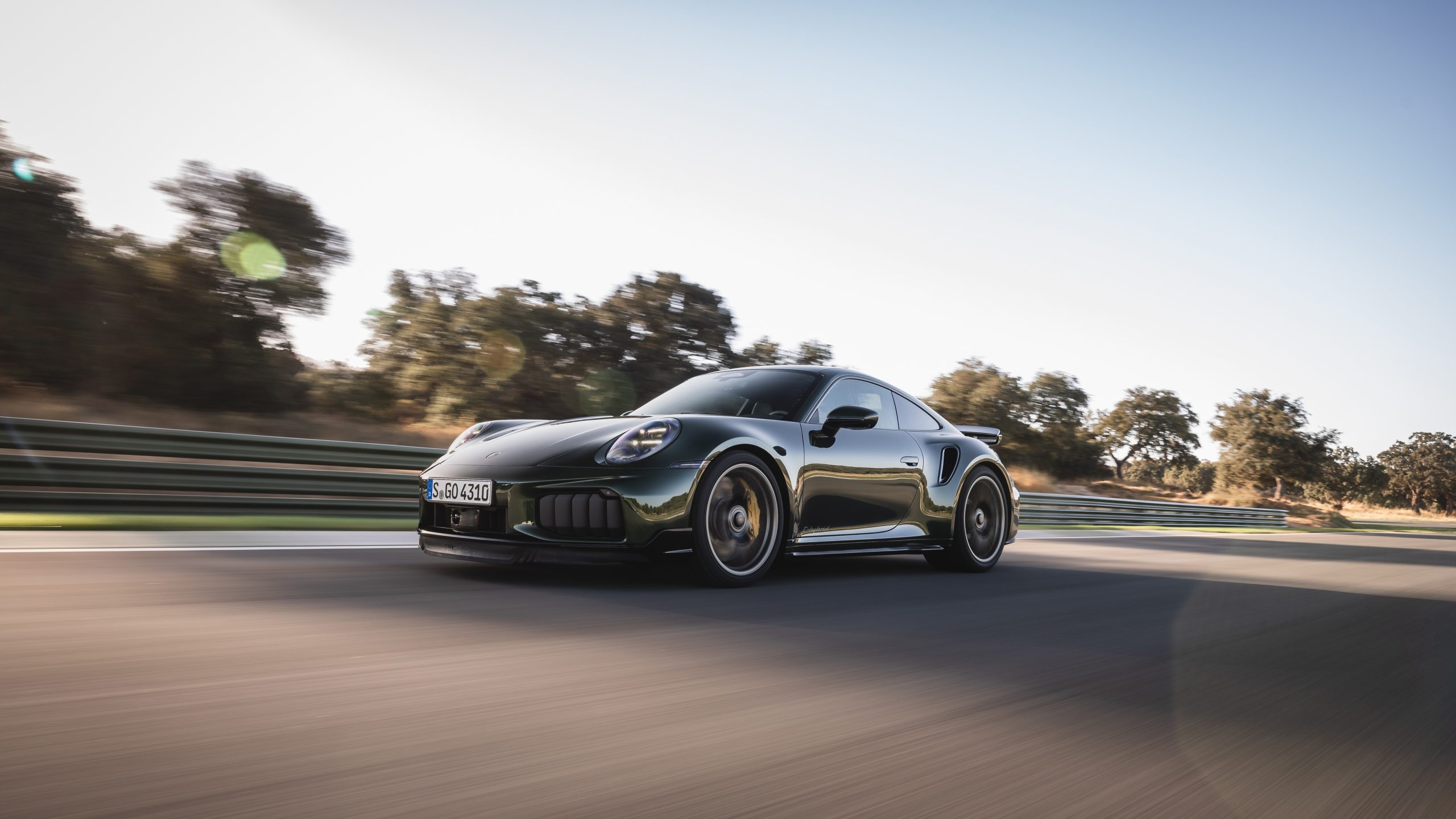
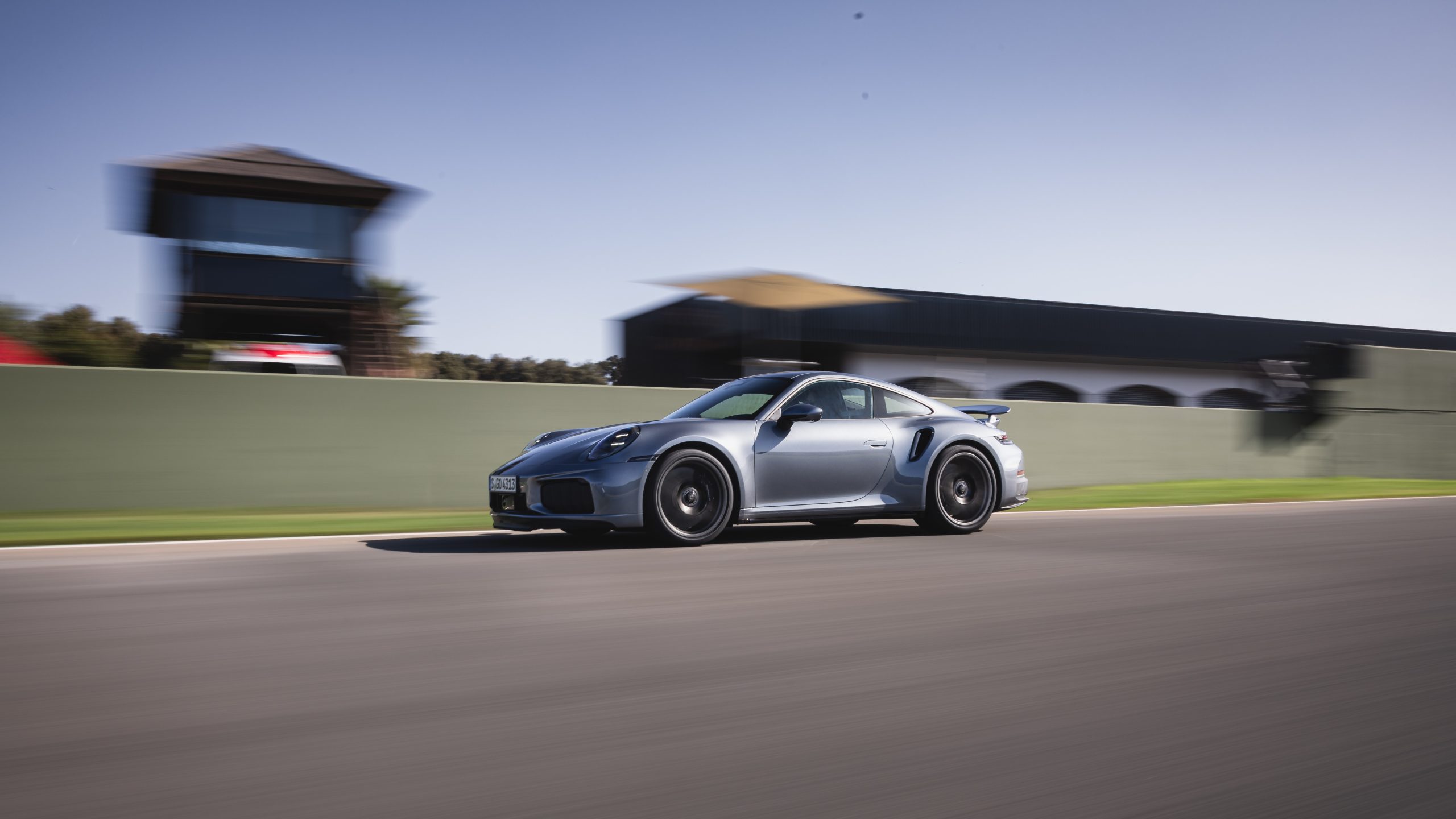
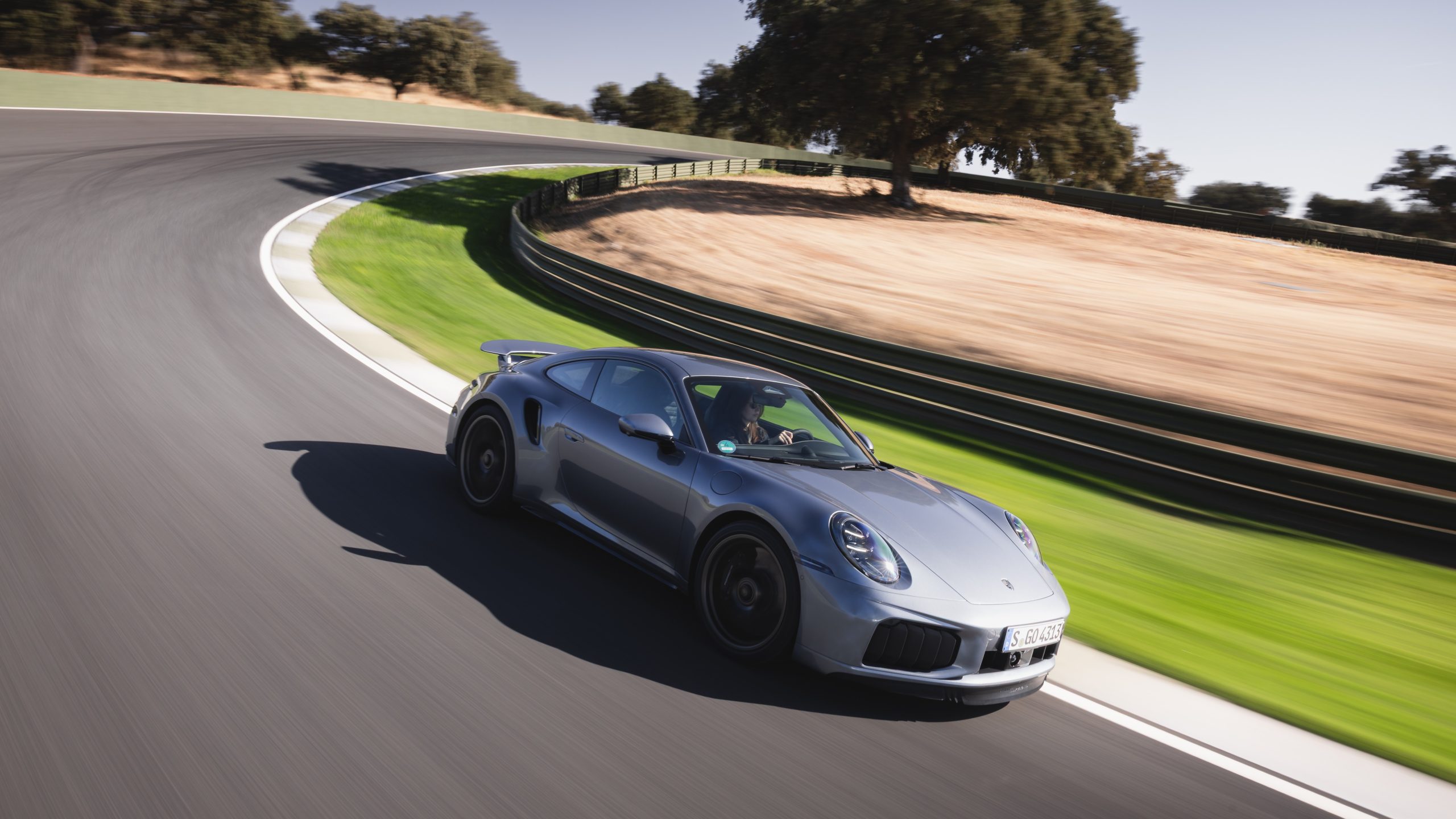
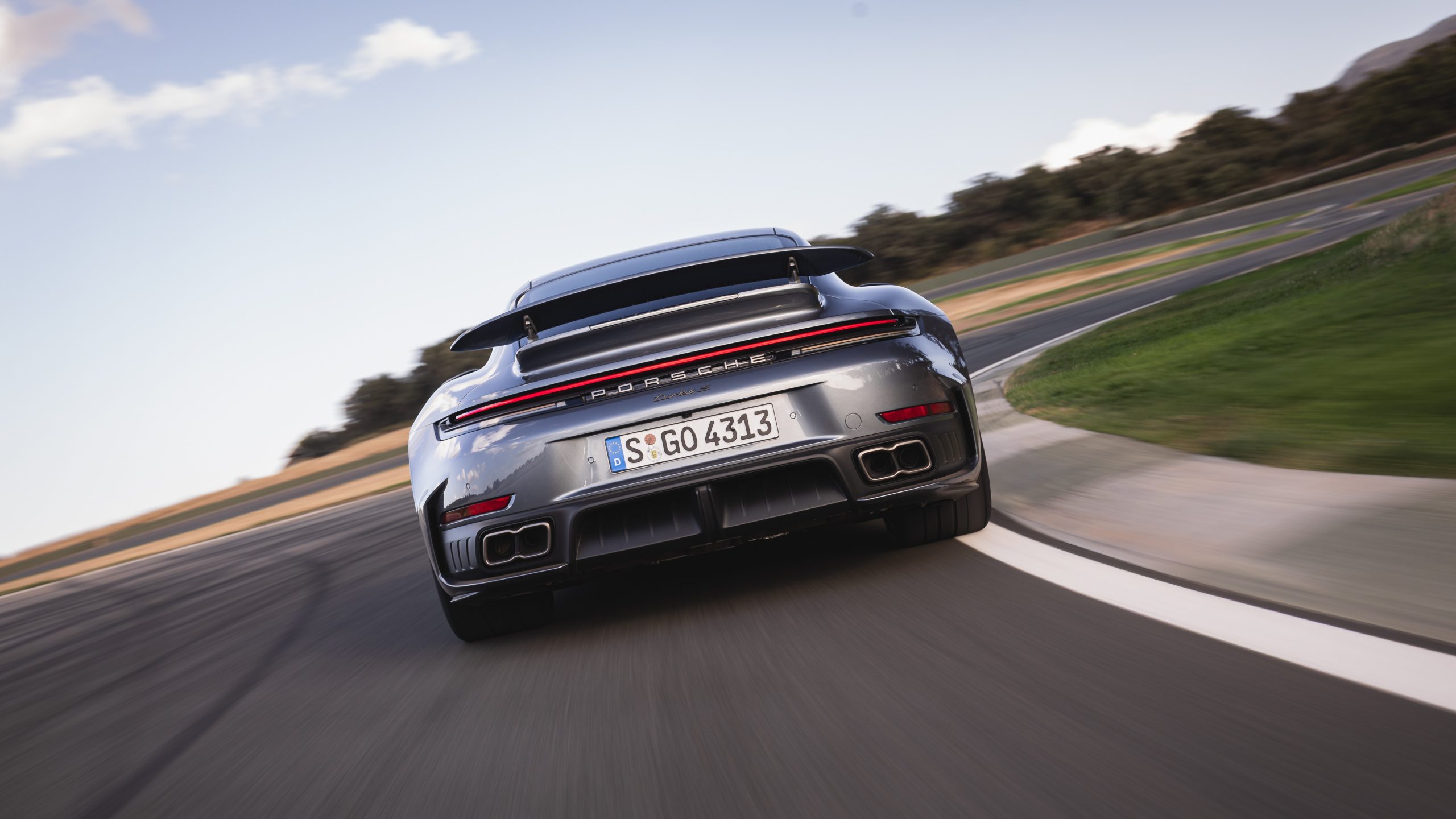
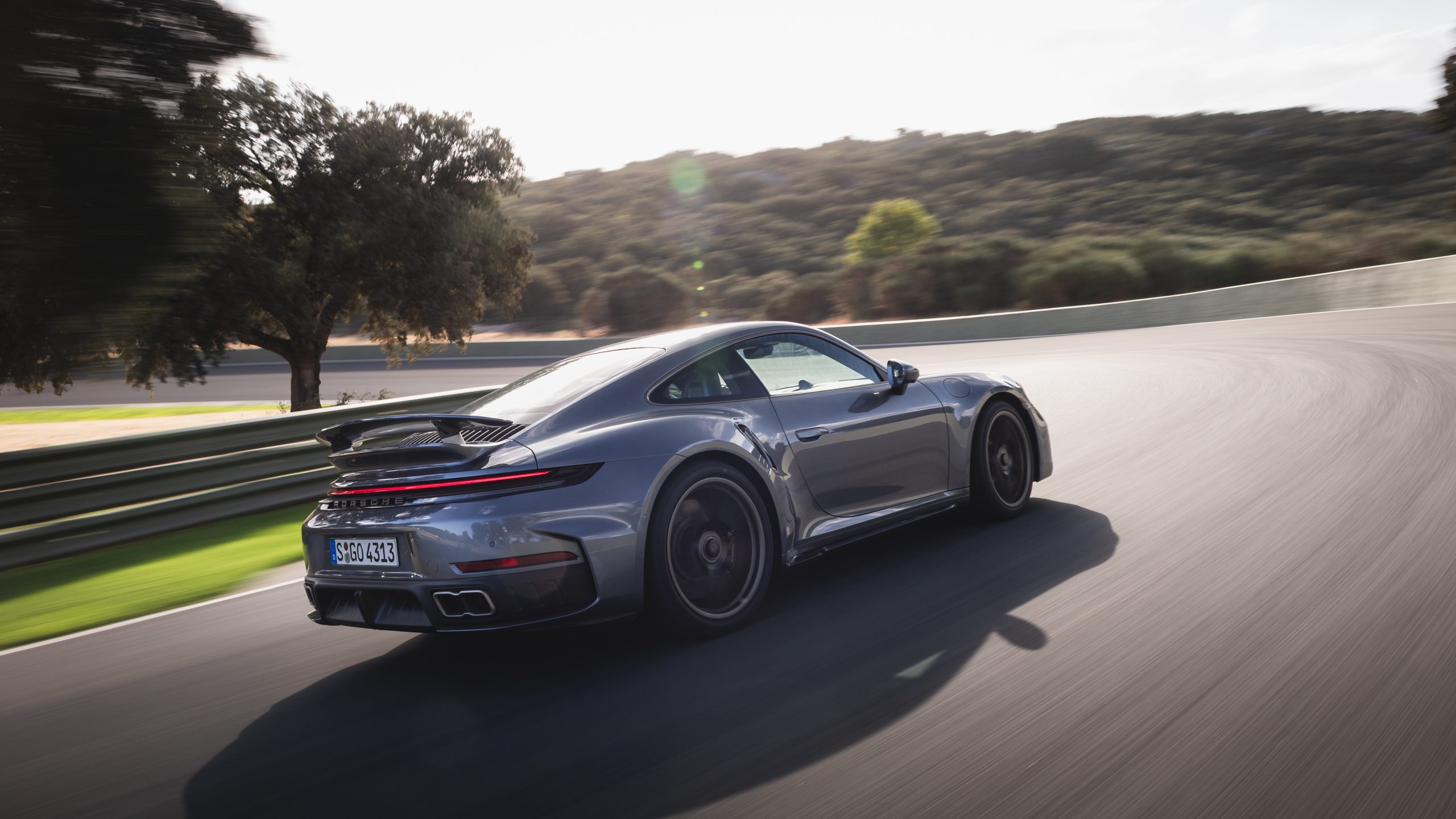
The hallmark wide-body stance of the Turbo S is retained, but with subtle refinements. The front track is wider, and the new design incorporates active, vertically arranged cooling air flaps in the front fascia. These flaps open or close to manage cooling needs and aerodynamic drag dynamically.
- Active Aerodynamics: The system, known as Porsche Active Aerodynamics (PAA), includes an active front diffuser/spoiler lip and the iconic, extendable, and tilting rear wing, which are all coordinated to provide optimal downforce or minimal drag depending on the driving situation. The aerodynamic enhancements contribute to a reported ten percent reduction in drag coefficient compared to the 992.1.
- Wider Footprint: Rear tire width has increased to 325 mm, helping to put the immense power down to the tarmac.
- “Turbonite” Accents: A new, bespoke color accent called “Turbonite” is used for badges, wheels, and interior trim, offering a subtle, dark-hued distinction unique to the Turbo S.
Chassis and Handling
The weight gain is expertly counteracted by advanced chassis technology. The Turbo S comes standard with every dynamic tool in Porsche’s arsenal:
- Porsche Ceramic Composite Brake (PCCB): Standard equipment, the system has been upgraded with enlarged rear discs (410 mm) for even greater stopping power.
- Porsche Dynamic Chassis Control (PDCC): Now an electrohydraulically controlled system (ehPDCC), this active anti-roll system instantaneously eliminates body roll in corners, keeping the car incredibly flat and poised.
- Porsche Active Suspension Management (PASM): The active damping system constantly adjusts the dampers to provide the best balance of comfort and performance.
- All-Wheel Drive (PTM): Porsche Traction Management (PTM) intelligently distributes torque, able to send a substantial amount to the front axle for relentless, all-weather grip.
- Rear-Axle Steering: A vital component for the 911’s agility, it steers the rear wheels in the opposite direction at low speeds for maneuverability and in the same direction at high speeds for stability.
Interior and Technology
The cabin maintains its luxurious-yet-focused ambiance but receives the general 992.2 technological update.
- Digital Instrument Cluster: The most significant change is the move to a fully digital, curved 12.65-inch instrument cluster, replacing the traditional five-dial setup with the analog central tachometer—a change that marks a major departure from 911 tradition.
- Infotainment: The latest generation of Porsche Communication Management (PCM) with a central touchscreen offers enhanced connectivity and features.
- Luxurious Appointments: The Turbo S comes standard with Adaptive Sport Seats Plus and extensive use of high-quality materials, with myriad customization options through Porsche Exclusive Manufaktur.
Reception: The King is Crowned
The initial reception for the 992.2 Turbo S has been overwhelmingly positive, particularly in how effectively Porsche has integrated the T-Hybrid system. Reviewers note that despite the extra weight, the car feels more agile and responsive than its predecessor, a testament to the seamless operation of the electric motor and e-turbos.
- Instantaneous Response: The elimination of turbo lag is frequently cited as the most transformative change. The immediate torque delivery at low revs makes the mid-range acceleration feel relentless, often surprising drivers who are accustomed to the sheer force of the previous generation.
- Usability vs. Performance: Reviewers consistently praise its dual nature. It remains an incredibly comfortable and high-quality daily driver with a usable front trunk and rear jump seats, yet it can transform into a weapon capable of demolishing lap times. As one review put it, the car is an exercise in “zero compromise.”
- Chassis Wizardry: The enhanced ehPDCC and wider rear tires mean the handling is even more composed and confidence-inspiring. The car’s ability to mask its size and weight is lauded as a true engineering marvel.
A Controversial Digital Shift
The main point of contention among purists remains the complete transition to a digital instrument cluster, signaling a break from the classic 911 aesthetic. However, for a model line defined by being the technological spearhead, many concede the move is inevitable to accommodate modern connectivity and display features.
Actual Reviews
Auto Express
Auto Express’ first review of the 992.2 Turbo S concludes that hybrid power “hasn’t dented its appeal – no chance.” They highlight:
- Explosive, lag-free acceleration thanks to the e-turbos.
- Remarkable traction and cross-country pace.
- A balance between everyday usability and crazy performance that few rivals match.
Road & Track
Road & Track’s first drive calls it “the supreme all-rounder, again”, noting that:
- The new powertrain feels noticeably stronger across the whole rev range.
- Turbo lag is effectively gone; response is instant.
- The chassis changes (especially PDCC and tyres) make it even more stable and confidence-inspiring at very high speeds.
CarThrottle / Enthusiast Media
CarThrottle emphasizes just how much quicker the car is despite the extra weight, pointing to the Nürburgring time, bigger brakes and new PDCC as key contributors. They also observe that top speed is actually lowered slightly to 200 mph, a trade made for downforce and tyre efficiency.
The Bottom Line: Price and Value Proposition
The 911 Turbo S has always commanded a premium, reflecting its position as the ultimate 911. The 992.2 generation, with its complex and revolutionary T-Hybrid technology, sees a corresponding increase in price. Starting well into the high six figures (USD/EUR/GBP), it competes directly with traditional supercars from Ferrari and Lamborghini.
However, the value proposition remains the same: the Turbo S is the only car at this performance level that offers such a potent combination of brutal speed, all-wheel-drive security, everyday comfort, and genuine practicality. It is the hypercar for all seasons, all roads, and all drivers—a true, unrivaled king of the performance automotive world.
Videos & Reviews
Pictures & Gallery




Press Release
September 7, 2025
New Porsche 911 Turbo S Celebrates World Premiere in Munich
Range-topping 911 adopts T-Hybrid tech to make major advances in street and track performance
- Most powerful production 911 with 701 hp (523 kW) system output
- 0 to 60 mph in 2.4 s. (-0.2 s. vs. previous Coupe using Launch Control)
- Circa 14 seconds quicker around the Nürburgring than the predecessor
- Unique combination of performance, comfort, exclusivity, and daily usability
- First 911 Turbo using innovative T-Hybrid drivetrain with two electric exhaust gas turbochargers
Porsche is presenting the new range-topping 911 at the IAA Mobility trade show in Munich: the new 2026 911 Turbo S is the most powerful production 911 to date thanks to an innovative twin-turbo powertrain with T-Hybrid technology. The 701 hp (523 kW) all-wheel drive sports car combines outstanding performance with a high degree of exclusivity, long-distance comfort and everyday usability.
Atlanta. The new Porsche 911 Turbo S has big shoes to fill. Its predecessor was already considered the benchmark for a sports car that blends performance, long-distance comfort, exclusivity and everyday usability. Now the 911 Turbo S raises the bar once again. Available as a coupe and Cabriolet, the new generation debuts with significantly improved performance, a more muscular design, refined aerodynamics, an optimized chassis and an extensive list of optional equipment for personalization.
“The 911 Turbo S is the most complete and versatile way to drive a Porsche 911. Whether in daily use, on long highway trips or on the track – we have been able to make the new 911 Turbo S even more comfortable, more customizable and at the same time significantly faster than its predecessor,” says Frank Moser, Vice President of the 911 and 718 model lines.
Innovative twin-turbo T-Hybrid powertrain
The newly developed, high-performance T-Hybrid powertrain achieves a system output of 701 hp (523 kW), a 61-hp increase over the previous model. This makes the new 911 Turbo S the most powerful production 911 to date. The maximum torque of the powertrain is 590 lb.-ft. and is available over an extremely wide range of 2,300 to 6,000 rpm. Peak horsepower is available across an especially broad powerband between 6,500 and 7,000 rpm.
The T-Hybrid technology, which first appeared last year in the current 911 Carrera GTS, has been developed further for the 911 Turbo S. While a single electric exhaust gas turbocharger (eTurbo) is integrated into the T-Hybrid system in the GTS, two eTurbos are used in the new 911 Turbo S. The turbines and compressors were specifically designed to meet the requirements of the top-of-the-range model. The two eTurbos not only contribute to the considerable increase in power, but they also improve responsiveness.
The particularly compact, 1.9-kWh high-voltage battery is the same as the energy storage unit in the 911 Carrera GTS. An eight-speed PDK with an integrated electric motor sends power to the Porsche Traction Management (PTM) all-wheel drive system. The Turbo S Coupe is capable of a 0-60 mph sprint in 2.4 seconds (-0.2 seconds compared to its predecessor). It takes 8.4 seconds to reach approximately 124 mph, which is an improvement of 0.5 seconds. The top track speed of the new 911 Turbo S is 200 mph.
Significantly quicker around the Nürburgring Nordschleife
The new 911 Turbo S has a curb weight of 3,829 lbs., which is a 180-lb. increase from its predecessor, but a modest one considering the additional components of the performance hybrid system. The additional weight is more than compensated for in all areas relevant to driving dynamics. The best proof of this is the lap time on the
Nürburgring Nordschleife. As part of the final development drives conducted in fall of 2024, a lightly camouflaged 911 Turbo S achieved a time of 7:03.92 minutes under the supervision of a notary – in the region of 14 seconds quicker than its predecessor.
“You don’t feel the weight gain. On the contrary – the car is much more agile, has more grip and is significantly faster than its predecessor in all relevant sections of the track,” says Porsche Brand Ambassador Jörg Bergmeister, who was involved in the development and testing of the new 911 Turbo S and set the official lap time.
Brakes and tires with optimized performance
The new Porsche 911 Turbo S improves in many areas to match its more potent powertrain. This includes a new generation of tires that offer significantly improved dry handling while maintaining good wet performance. The rear tires now measure 325/30 ZR 21, making them 10 mm wider than those of the previous car. Dimensions for the front tires remain the same as before at 255/35 ZR 20. The standard Porsche Ceramic Composite Brake (PCCB) system is fitted with new brake pads, the material mixture of which comes from motorsport and is designed with the increased power and associated braking demands in mind. The new pads are useful from both a performance standpoint and in offering improved brake pedal feel. The front brake rotors have a 420-mm diameter as before, while the rear rotors grow to a diameter of 410 mm, which is a 20-mm increase compared to the rear rotors of the previous 911 Turbo S. This means that the new model is equipped with the largest PCCB system that Porsche has ever installed in a two-door model.
Intelligent active aerodynamics
An updated design optimizes cooling for both the powertrain and brakes while delivering enhanced aerodynamics. Active, vertically arranged cooling air flaps in the front of the vehicle and an active front diffuser work in conjunction with an active front spoiler and an extendable, tilting rear wing to reduce drag or lift as the scenario demands. As a
result, the drag coefficient of the 911 Turbo S Coupé is reduced by up to 10 percent compared to its predecessor in the most efficient position. In addition, the active aerodynamics aim to improve wet braking behavior: In wet mode, the cooling flaps in the front close to help protect the front brake rotors from excessive water spray.
Chassis for improved agility and stability
An electro-hydraulically controlled Porsche Dynamic Chassis Control (ehPDCC) system is included as standard equipment. The system, also available as an option on the the 911 Carrera GTS T-Hybrid, uses the 400-volt electrical system and high-voltage battery to operate. It reduces body roll when changing direction and increases agility when entering and exiting corners, actuating more quickly than the hydraulic PDCC system used in the previous 911 Turbo S. The system works with cross-connected active coupling rods, in which pressure is built up by oil volume flow depending on the driving situation. This improves comfort and agility at the same time. For enhanced everyday usability, an optional front axle lift is available as an option. Because it uses the same 400-volt system as the ehPDCC system it can lift the front end faster than the system associated with prior models. Continuing in the footsteps of previous 911 Turbo models, front and rear track widths are greater for the Turbo S than the contemporary 911 Carrera models.
A new Sport Exhaust System is included as standard equipment and features a muffler and exhaust tips made of titanium, which save weight while enhancing both aesthetics and sound of the car. Changes to the 3.6-liter boxer engine, which uses asymmetrical timing, result in a sharp, throaty sound.
Exclusive appearance and high-quality materials
With the new 911 Turbo S, Porsche continues the styling strategy already in place on Turbo models from other product lines. Numerous contrasting elements are designed in
Turbonite, a color reserved for Turbo variants. These include the Porsche crest and the “turbo S” lettering at the rear. In addition, Turbonite accents in the slats of the engine grille and around the windows differentiate the range-topping model. The selection of wheels for the 911 Turbo S also includes new center lock designs in Turbonite.
As is typical for a 911 Turbo model, the body is wider than on the current 911 Carrera models. The rear quarter panels also feature intakes that channel process air to the engine. On the redesigned rear fascia, striking ventilation openings additionally emphasize the width. Oval shaped titanium exhaust openings are available as an option.
The interior also features many accents in Turbonite including the door panels, steering wheel, dashboard and center console surrounds. The instrument cluster, and Sport Chrono stopwatch get the same treatment, along with deviated stitching in Turbonite. The seat belts and several buttons in the center console are also finished in this color. Carbon fiber trim inserts with integrated Neodyme accents create a sporty and especially premium looking interior along with a perforated black Race-Tex headliner.
The 911 Turbo S coupe is delivered as a two-seater as standard, but rear seats are optionally available at no additional charge. The Cabriolet is only offered in a 2+2 seat configuration. Porsche equips the new 911 Turbo S with HD Matrix Design LED headlights as standard. The Sport Chrono Package including tire temperature gauge, the specifically tuned Porsche Active Suspension Management (PASM) chassis, the ehPDCC system, and the titanium Sport Exhaust System are also standard equipment. In the interior, adaptive 18-way Sport Seats Plus with memory function and “Turbo S” lettering on the headrests are fitted as standard. The Turbo S-specific embossing on the seat surfaces and door panels is a reinterpretation of the design features of the original 911 Turbo.
Additional customization is possible through Porsche Exclusive Manufaktur including Turbo Exclusive Design wheels with carbon fiber blades painted in Neodyme, a lightweight roof in visible carbon fiber, Exclusive Design rear lights and air intakes in the rear side section trimmed in carbon fiber. The attention to detail is more extensive than ever before. For example, carbon fiber windshield wiper arms are available as an option for the first time, offering 50 percent weight savings over the standard component. As in the past, customers may choose from colors beyond the standard palette through the Paint to Sample program. The interior can also be enhanced with details such as decorative stitching in contrasting colors, personalized leather embossing, and personalized painted vehicle keys.
The 911 Turbo S for the wrist
The Porsche Design watch configurator offers the possibility of designing your personal “sports car for the wrist” – tailored to your 911 Turbo S down to the last detail. The new black dial with design elements in Turbonite reflects its relationship to the car it references. In addition to Turbonite, all exterior colors (including Paint to Sample colors) are available for the color ring around the dial, while the titanium case features a black titanium carbide coating. The strap is made of original Porsche vehicle leather and stitching thread. A highlight is the hot stamping with the lettering “turbo S”. The timepiece is powered by the COSC-certified Porsche Design caliber WERK 01.200 movement, which features a flyback complication. The individually selectable winding rotor is designed to look like the wheels of the car it is matched to. Caseback engraving is also available. The 911 Turbo S chronograph is made by hand in Porsche’s own watch manufactory in Grenchen, Switzerland.
U.S. market arrival and pricing
The new 2026 Porsche 911 Turbo S is available to order and carries an MSRP of $270,300 for the coupe and $284,300 for the Cabriolet. Prices exclude a $2,350 fee for delivery, processing and handling. Arrival in U.S. Porsche Centers is expected by Spring, 2026. The Total Manufacturers Suggested Retail Price (MSRP) shown excludes taxes, title, registration, other optional or regionally required equipment, dealer charges, and any potential tariffs.