

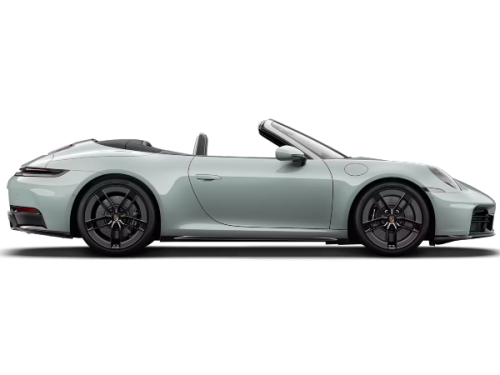
Current Porsche 911 Carrera 4S Cabriolet (992.2) – Reviews, Pricing, Specs & Buyers Guide
The Porsche 911 has always been the definitive everyday sports car, and within that legendary lineage, the Carrera 4S Cabriolet is arguably the most versatile and luxurious expression of the breed. It offers the potent performance of the ‘S’ trim, the all-weather confidence of ‘4’ all-wheel drive, and the sheer sensory pleasure of open-top motoring.
The introduction of the 992.2 generation marks a crucial mid-cycle evolution, bringing significant power bumps, chassis revisions, and a dramatic shift in interior technology. This comprehensive guide explores what makes the 992.2 Carrera 4S Cabriolet the ideal synthesis of performance, prestige, and practicality.
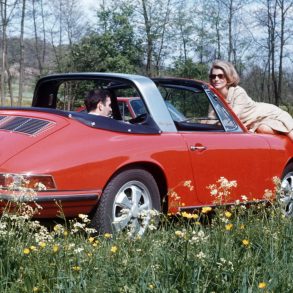
While the original 911 in 1963 was a coupe, the need for an open-top version was immediate. Porsche first responded with the Targa in 1965, but a true Cabriolet (fully convertible soft-top) wouldn’t arrive until the 1983 model year with the 911 SC. This car marked a major turning point, confirming that a fully open 911 could be structurally sound, safe, and immensely enjoyable.
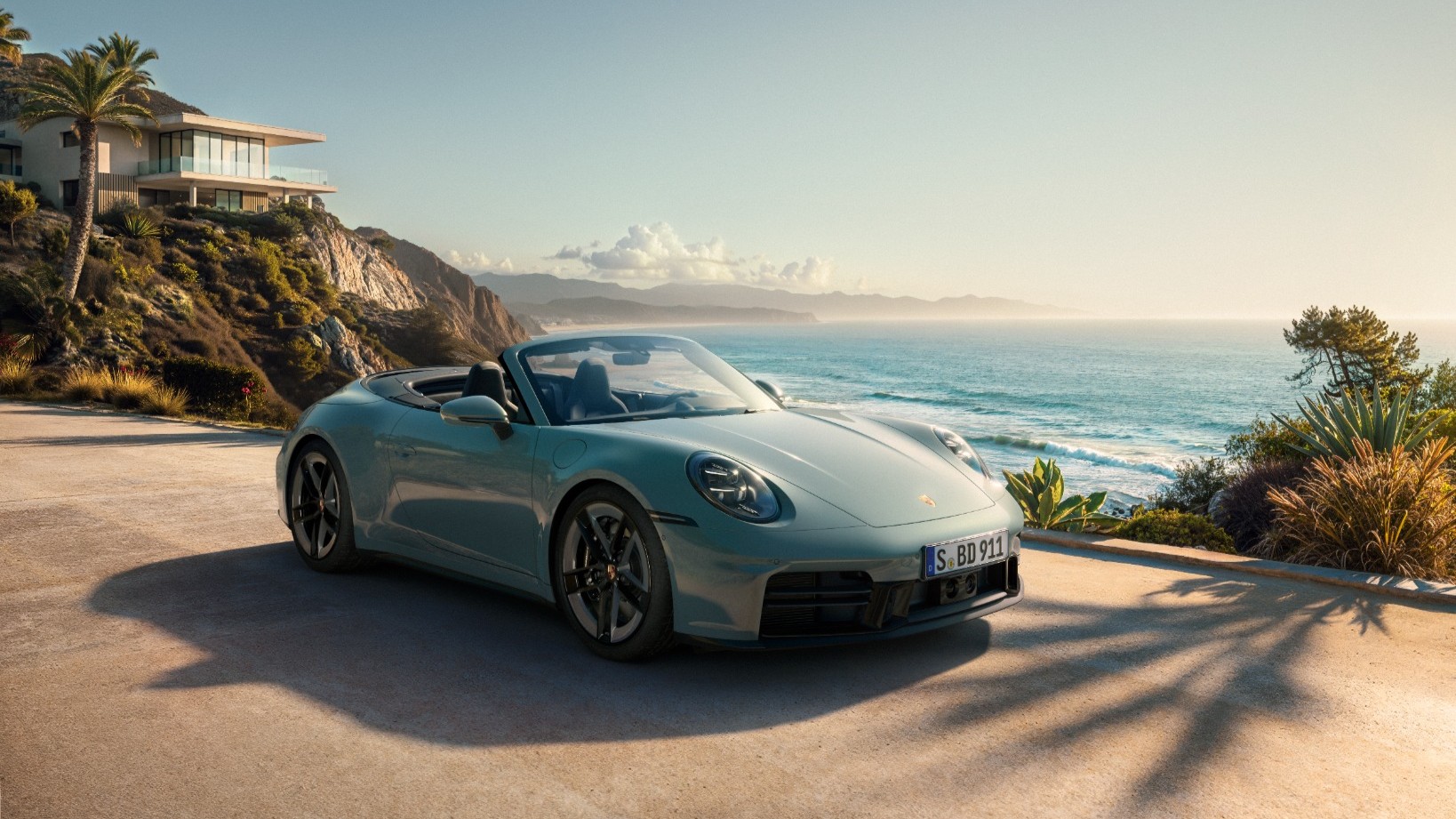
Since then, the 911 Cabriolet has become a staple, praised for retaining much of the coupe’s structural rigidity and dynamic excellence while offering the unfiltered sound and sensory immersion of open-air driving. The 992.2 continues this tradition, featuring a sophisticated, lightweight fabric roof that maintains the sleek 911 silhouette when raised, and stows quickly and neatly beneath a body-color panel.
Performance Specifications: Power Upgraded
The 992.2 refresh sees the Carrera 4S benefit from the most significant non-hybrid power increase in the lineup. It effectively inherits hardware and performance levels once reserved for the prior generation’s GTS models, providing a noticeable leap over the 992.1 Carrera 4S.
Engine and Drivetrain
The heart of the Carrera 4S Cabriolet is the renowned 3.0-liter twin-turbocharged flat-six (Boxer) engine
| Feature | 911 Carrera 4S Cabriolet (992.2) Specs |
| Engine | 3.0L Twin-Turbo Flat-Six (Boxer) |
| Max Power (hp) | 473 bhp @ 6500 rpm (A 30hp increase over 992.1) |
| Max Torque (lb-ft) | 390 lb-ft @ 2000-5000 rpm |
| Transmission | 8-speed Porsche Doppelkupplung (PDK) (Standard) |
| Drivetrain | Porsche Traction Management (PTM) All-Wheel Drive |
| 0-60 mph (with Sport Chrono) | 3.3 seconds |
| Top Speed | 191 mph |
Key Enhancements:
- Turbocharger Technology: The 992.2 Carrera 4S is equipped with turbochargers derived from the previous 992.1 GTS models, and intercooler technology borrowed from the 911 Turbo. This combination delivers the 473 hp output, providing a more immediate throttle response and a stronger pull throughout the rev range.
- No Hybrid: Unlike the new GTS model which introduces the T-Hybrid system, the 4S retains a pure combustion-engine setup. This keeps the weight lower than the hybrid models and preserves the classic flat-six sound and feel for purists.
- All-Wheel Drive (AWD): The “4” in the name signifies the Porsche Traction Management (PTM) AWD system. This system is heavily rear-biased but can rapidly and seamlessly shift torque to the front axle when needed. This results in phenomenal launch control and year-round usability, making the 4S the choice for varied climates.
Chassis and Dimensions
The Cabriolet body requires additional structural reinforcement compared to the Coupe to maintain torsional rigidity. This results in a slight weight penalty, which is often imperceptible on the road but gives the car a supremely solid feel.
- Braking System: The 992.2 Carrera 4S adopts the larger braking system from the previous generation GTS, featuring 408 mm front and 380 mm rear discs (with standard red calipers).
- PASM (Standard): Porsche Active Suspension Management is standard, continuously adjusting the damping for the optimal balance of comfort and dynamic control.
- PTV+ (Standard): Porsche Torque Vectoring Plus, including an electronically controlled rear differential lock, is also now standard on the 4S, enhancing cornering agility and stability.
- Mixed Wheels: Standard staggered 20-inch front and 21-inch rear wheels.
Model Year Updates (992.1 to 992.2)
The shift to the 992.2 generation is defined by a philosophical change in both exterior design and interior driver engagement.
Exterior and Aerodynamics
The changes are subtle but functional, adhering to Porsche’s “evolution, not revolution” philosophy.
- New Front Fascia: The front bumper is redesigned, featuring a cleaner lower section.12 Crucially, the turn signals and fog lights are now fully integrated into the standard Matrix Design LED headlights.13 This frees up space for larger, more functional air intakes and active air flaps, improving cooling and aerodynamics.
- Rear Design: The rear features a revised light bar treatment and the license plate is positioned higher. The exhaust tips are now integrated into the bumper design and a Sport Exhaust system with silver tailpipes is standard on the 4S.
- Cabriolet Roof Mechanism: The advanced cloth soft-top is carried over, utilizing magnesium panels for stiffness and lightness. It can be raised or lowered in approximately 12 seconds at speeds up to 31 mph, a crucial feature for sudden changes in weather. The standard powered wind deflector can be deployed when the top is down to significantly reduce cabin turbulence.
The Digital Cockpit Transformation
The interior is where the 992.2 makes its most controversial update, moving away from classic 911 tradition:
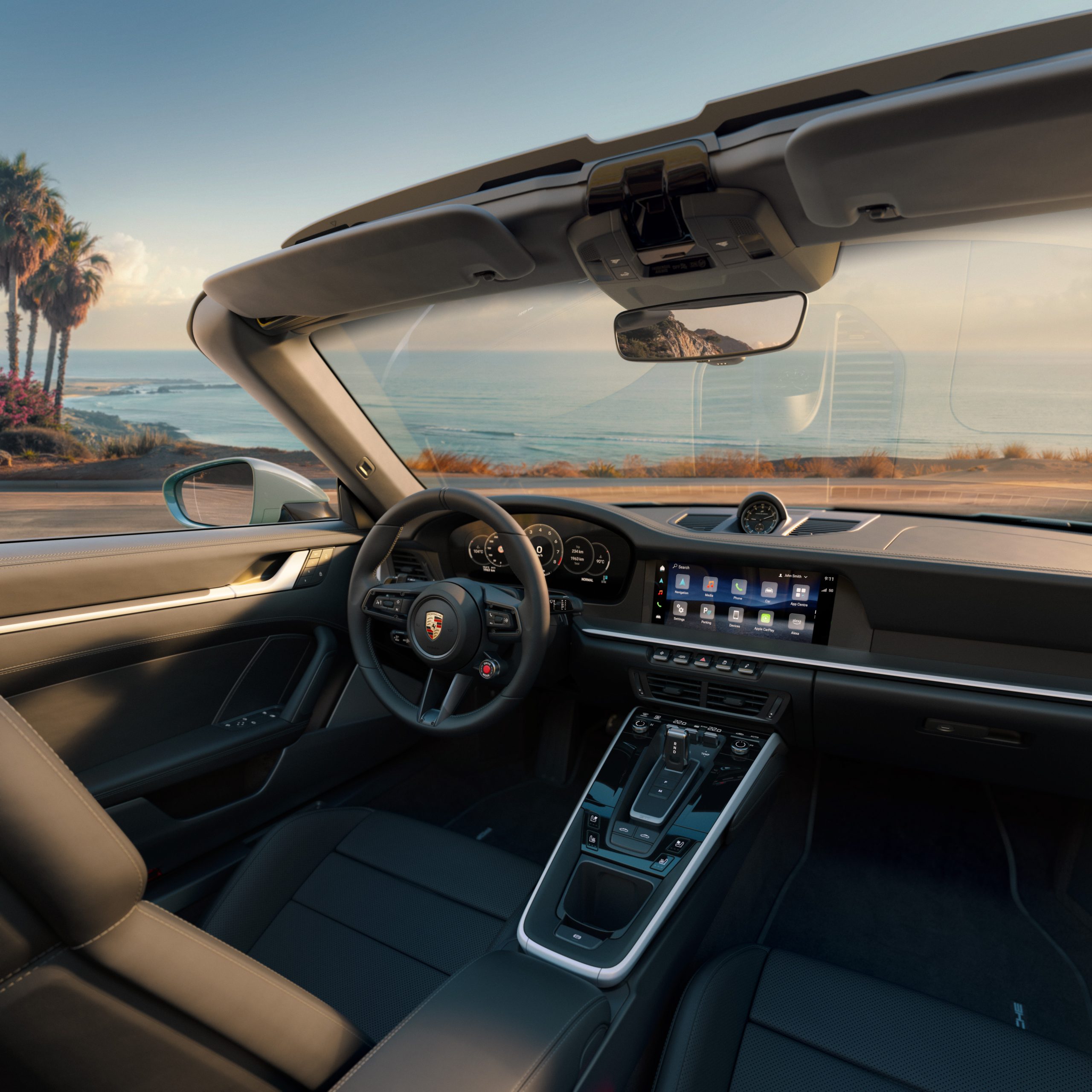
- Fully Digital Instrument Cluster: The iconic analogue central tachometer is gone. It is replaced by a curved 12.6-inch digital screen. While this screen is highly customizable and features a ‘Classic’ view to simulate the five-dial layout, the loss of the physical needle has been widely debated among purists.
- New Ignition Switch: The traditional key-slot on the left of the steering column is replaced by a modern Start/Stop button.
- Infotainment: The 10.9-inch Porsche Communication Management (PCM) touchscreen is updated with faster processing and enhanced connectivity features.
- Standard Interior Features: Cabriolet models, like the Targa, are always equipped with the 2+2 seating arrangement (rear seats are standard and cannot be deleted). The 4S also receives a more generous standard leather package compared to the base Carrera.
Driving Experience and Reception
The Carrera 4S Cabriolet has always been praised for its split personality: a comfortable, refined cruiser one moment, and a ballistic, track-capable machine the next.
On the Road
The 992.2 iteration enhances this dichotomy:
- Effortless Speed: The 473 hp from the upgraded flat-six is delivered with a near-zero-lag responsiveness thanks to the Turbo-derived technology. The 8-speed PDK is regarded as one of the best dual-clutch transmissions ever made, offering lightning-fast shifts in Sport Plus mode and imperceptible changes in Normal mode
- Open-Top Dynamics: Unlike older convertibles, the 992 Cabriolet suffers from minimal “cowl shake” or structural flex. The chassis feels incredibly taut, allowing the driver to fully exploit the car’s dynamic capability. The ability to drop the top significantly enhances the aural experience, letting the driver enjoy the raw induction noise and the distinctive flat-six engine note.
- All-Weather Confidence: The ‘4’ system gives the Cabriolet immense stability. Even when the car is driven aggressively or faced with wet conditions, the PTM system ensures traction, making the 4S a viable choice for all-year use where RWD counterparts might struggle.
Media Reviews and Owner Consensus
The critical reception for the 992.2 4S has been overwhelmingly positive, focusing on its blend of increased performance and everyday luxury.
- Praise for Performance: Reviewers note that the performance boost puts the 4S squarely in territory once held by specialty models, offering a performance bargain relative to the more complex T-Hybrid GTS.
- Cabriolet Rigidity: Journalists consistently highlight the immense torsional rigidity of the Cabriolet body, confirming that it drives nearly identically to the coupe, which is a significant engineering feat.
- The Digital Debate: The digitalization of the cockpit is the primary point of criticism. While acknowledging the technology is clear and functional, many long-time Porsche aficionados regret the loss of the traditional analogue gauges, viewing it as a symbolic departure from the driver-focused purity of the 911.
- The Ultimate All-Rounder: The consensus is that the 4S Cabriolet is perhaps the most complete 911 for daily use. It provides all the style and performance one could want, with the security of AWD and the thrill of a convertible, making sacrifices almost irrelevant.
Ownership Guide: Customization and Competition
Pricing and Value Proposition
The Carrera 4S Cabriolet commands a premium over the 4S Coupe, reflecting the complexity of the soft-top mechanism and the inherent luxury of the body style. Its position in the lineup is strategic: it offers a significant performance advantage over the base Carrera 4 Cabriolet but avoids the higher price point and new T-Hybrid complexity of the Carrera 4 GTS Cabriolet.
Essential Optional Equipment
Porsche’s configurator is a minefield of highly desirable options. For the 4S Cabriolet, specific choices enhance both its performance and its open-air capability:
- Sport Chrono Package: Nearly mandatory, it optimizes the engine/gearbox mapping, includes the drive mode switch on the steering wheel, and enables the 3.3 second 0-60 mph launch control time.
- Rear-Axle Steering (RAS): Essential for dynamic drivers. It virtually shortens the wheelbase at low speeds for greater agility and parking ease, and effectively lengthens it at high speeds for superior stability.
- Front Axle Lift System: Crucial for protecting the low nose from steep driveways and speed bumps, greatly improving daily usability.
- Porsche Ceramic Composite Brakes (PCCB): Pricy, but offers incredible longevity, lower unsprung mass (improving ride quality), and no brake dust—a boon for maintaining a pristine finish on open wheels.
- Premium Sound System: With the roof down, an upgraded audio system (e.g., Burmester or Bose) is a worthwhile investment.
Key Competitors
The Carrera 4S Cabriolet is in a hotly contested space, but its unique blend of attributes sets it apart:
- Mercedes-AMG SL 63: A direct, luxurious competitor offering a traditional roadster feel, a powerful V8, and an all-wheel-drive system. It prioritizes comfort slightly more than the 911.
- McLaren GT / 570S Spider (Used Market): Offers more exotic styling and raw drama, but lacks the 911’s practical 2+2 configuration and daily drivability.
- Aston Martin Vantage Roadster: Focuses on muscular design and luxurious materials, offering a more bespoke, Grand Touring experience.
Final Verdict
The Porsche 911 Carrera 4S Cabriolet (992.2) stands as one of the most compelling all-weather, open-top sports cars in the world. It successfully navigates the balance between the visceral thrill of a convertible and the surgical precision of a 911 Coupe. The 992.2 facelift has refined its performance to near-GTS levels while incorporating a suite of standard chassis technologies that make it more agile, more stable, and more usable than any predecessor.
If the goal is to own a sports car that can confidently tackle the daily commute, carve through a mountain pass in any season, and provide the unadulterated joy of top-down motoring, the Carrera 4S Cabriolet is not just an excellent choice—it is arguably the best choice.
Pictures & Gallery
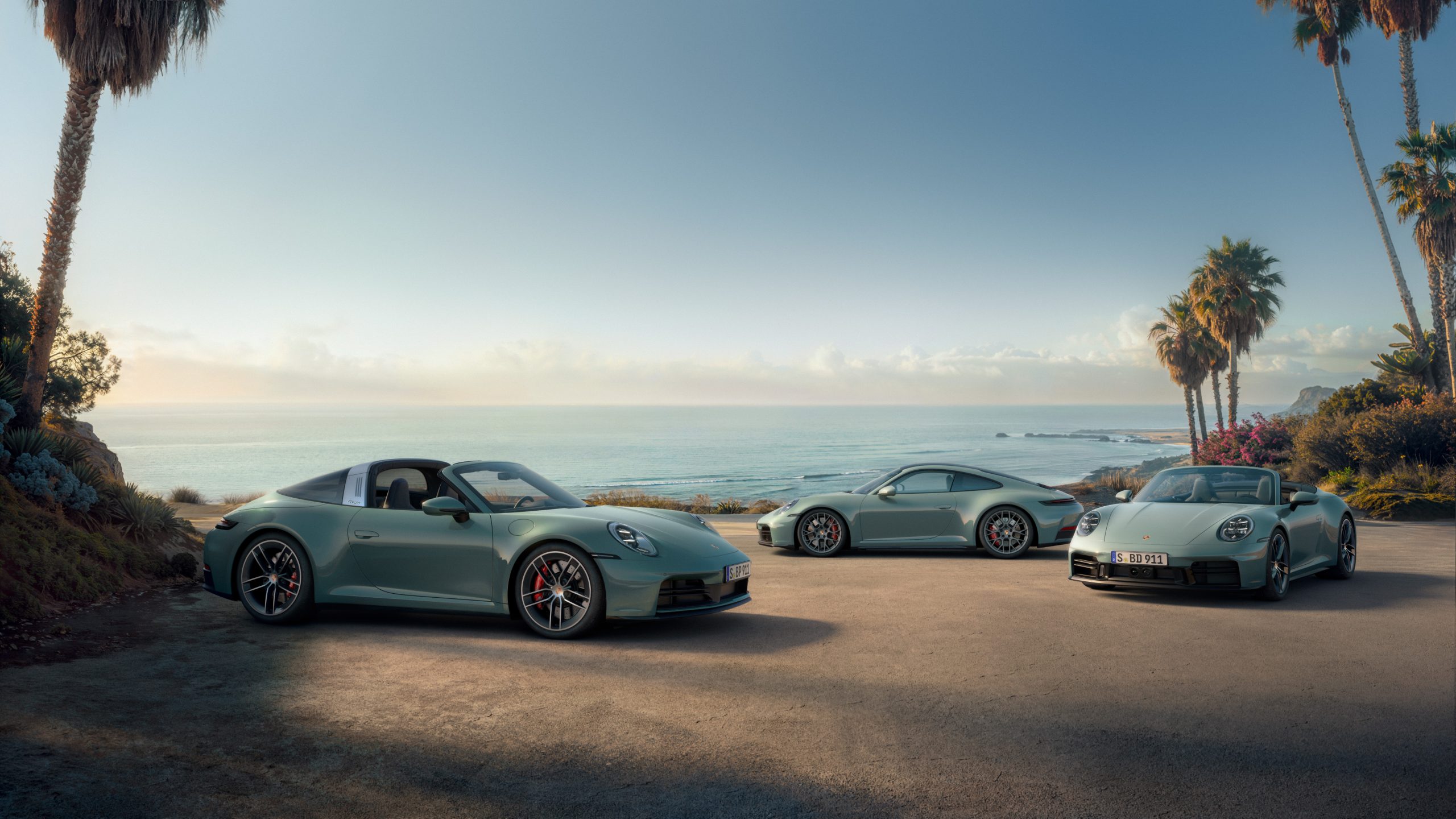
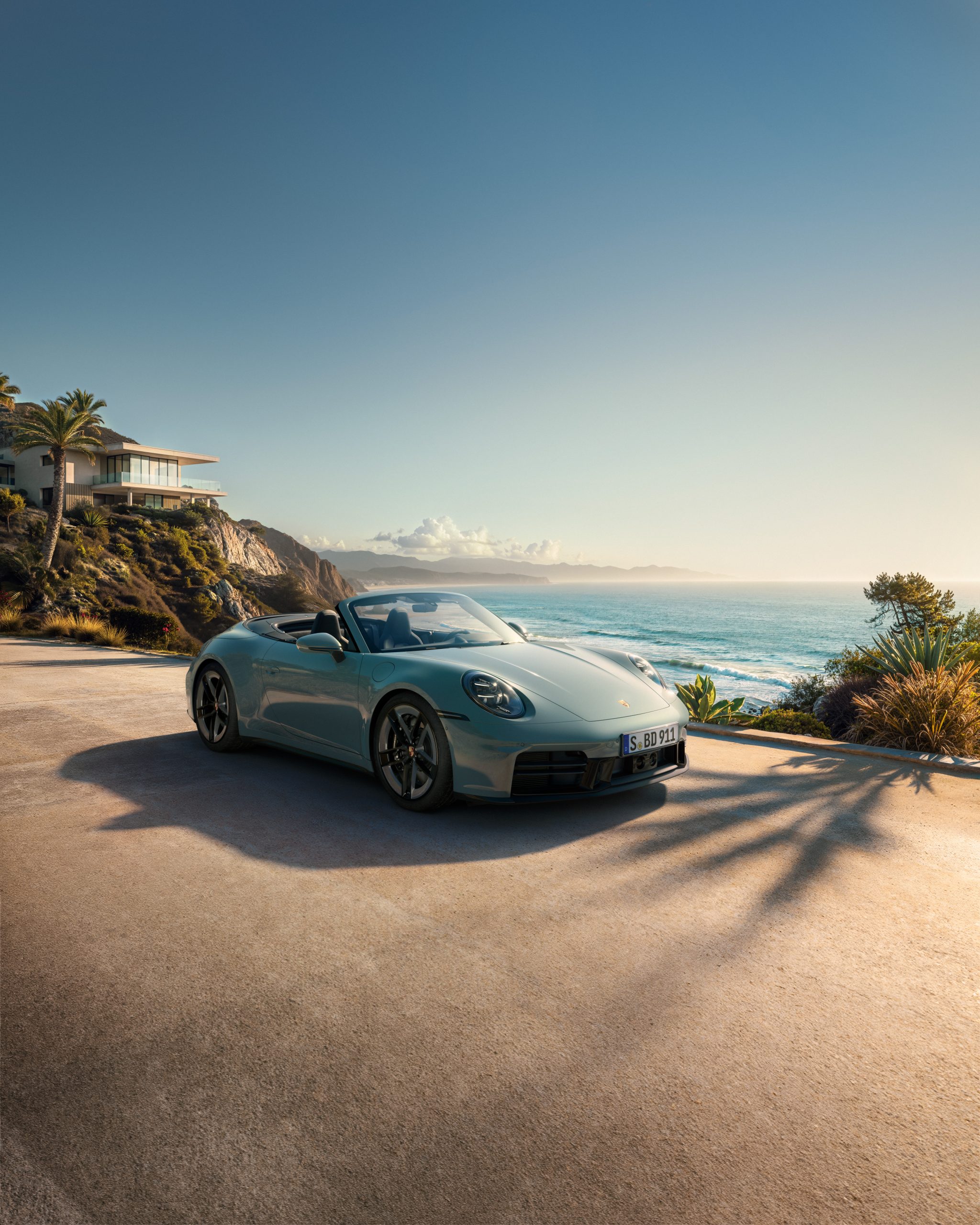
Press Release
July 2, 2025
Porsche announces three new 911 model variants with all-wheel drive and 473 hp
911 Carrera 4S, 911 Carrera 4S Cabriolet and 911 Targa 4S announced for MY 2026 Porsche is expanding the 911 model range with three all-wheel drive models for the 2026 model year: The 911 Carrera 4S coupe and Cabriolet, as well as the Targa 4S. All three models gain more power, improvements in standard equipment and enhanced brakes compared to their predecessors. With their arrival, the range of new 911 models with all-wheel drive grows to six variants.
Atlanta. Porsche is expanding the 911 model range with three new variants. The 911 Carrera 4S is available as a coupe and Cabriolet. Together with the Targa 4S, they bridge the gap between the standard 911 Carrera – which is not available with all-wheel drive – and the significantly more powerful GTS models. Like on the rear-wheel drive 911 Carrera S models, additional options for individualization and extended standard equipment are distinguishing features.
All-wheel drive variants are popular among customers buying a 911 “S” variant. In fact, within that specific subset, almost half in the U.S. choose a model powering all four wheels. The three new model variants continue to offer customers a great degree of choice within the 911 product range to meet varied use cases and demands. As with every other model equipped with Porsche Traction Management (PTM), the torque split is rearbiased by default. If required, PTM directs more torque to the front axle. As on its predecessors, the front differential is water cooled and uses an electromechanically controlled clutch.
Improved performance
The new all-wheel drive variants of the 911 adopt the upgraded engine of the Carrera S. Its 3.0-liter twin-turbo six-cylinder boxer engine produces 473 hp (353 kW) and 390 lb.-ft. of torque. That is 30 hp (22 kW) more than in the predecessor. This increase in performance is partly due to the optimized intercooling, the design of which comes from the 911 Turbo. An eight-speed Porsche dual-clutch transmission (PDK) transmits power to all four wheels. The 911 Carrera 4S coupe accelerates from 0 to 60 mph in 3.1 seconds using Launch Control with the optional Sport Chrono Package, and is capable of a top track speed of 191mph.
Upgraded standard equipment
Porsche has significantly enhanced the standard equipment for the Carrera 4S and Targa 4S models. From a performance perspective, the improvements include Sport Exhaust with tailpipes in silver, brakes taken from the previous generation 911 Carrera GTS models measuring 408 mm on the front axle and 380 mm on the rear axle. Uprated dampers with optimized hydraulics are more responsive and improve ride quality over the preceding model. Performance-focused standard features of the prior model remain, including Porsche Torque Vectoring Plus (PTV+) and staggered 20/21-inch Carrera S wheels. Porsche Ceramic Composite Brakes (PCCB) are available as an option, as is PASM Sport Suspension, which lowers the ride height by 10 mm. Rear axle steering is optionally available on the Carrera 4S and Carrera 4S Cabriolet. The system offers increased agility at low speeds and greater stability at high speeds. If equipped, this system also includes a quicker steering ratio and revised front axle kinematics. The 911 Targa 4S has rear-axle steering as standard.
Like all current 911 Carrera Coupe models, the Carrera 4S comes as a two-seater with the option to add rear seats for no additional cost, while the Cabriolet and Targa are equipped with rear seats as standard. The new models feature an upgraded interior. Compared to the preceding Carrera 4S models, the interior comes with extended leather upholstery as standard including the seats, headrests, upper dashboard, upper door panels, and – if equipped – the rear seats. In addition, Matrix Design LED headlights and wireless smartphone charging are standard equipment.
The new 911 Carrera 4S ($154,200), 911 Carrera 4S Cabriolet ($167,400) and 911 Targa 4S ($169,100) are available to order through U.S. Porsche Centers immediately excluding $2,250 for delivery, processing and handling. The Total Manufacturers Suggested Retail Price (MSRP) shown excludes taxes, title, registration, other optional or regionally required equipment, dealer charges, and any potential tariffs. U.S. deliveries of all three models are expected to begin in the fourth quarter of 2025.
60 years of the 911 Targa:
For 60 years, the 911 Targa has combined the enjoyment of a convertible with the yearround comfort of a coupe. The 911 Targa debuted in September 1965 at the IAA in Frankfurt and, like so many Porsche innovations, the elegant, wide Targa bar is inspired by motorsport. With a removable roof and folding rear window, the design allowed for the open air sensations of a convertible while providing the benefit of a fixed bar. Porsche derived the name Targa from the famous Targa Florio race in Sicily.
Today, the Porsche 911 Targa is an icon in its own right, further developed technically and formally over six decades. With the 993 generation (1993), there was no need to remove the roof manually. Since 2006, the 911 Targa has been available exclusively with all-wheel drive. The current Targa roof design, which launched in 2014, provides a fully automatic roof mechanism that opens in 19 seconds and references the style of the early Targa models. The glass rear window lifts up and moves backwards to allow the roof panel to fold away the roof segment folds elegantly. The wide bar and the surrounding rear window form a clear reminiscence of the original model. The roof module of the current Targa is available in four color variants: black, blue, red and brown.