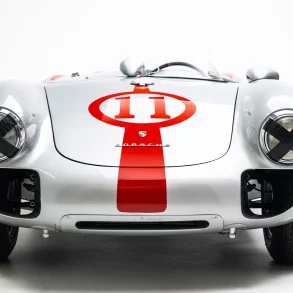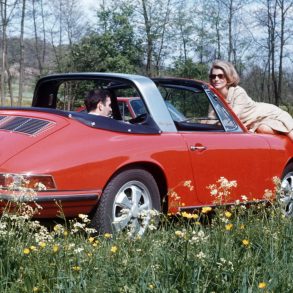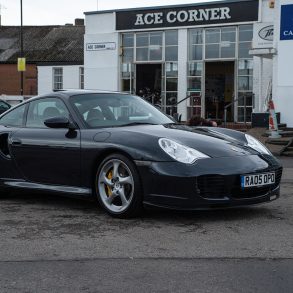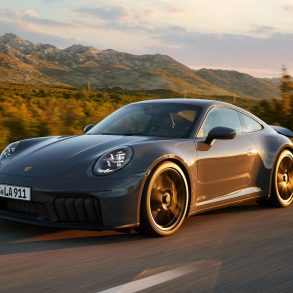


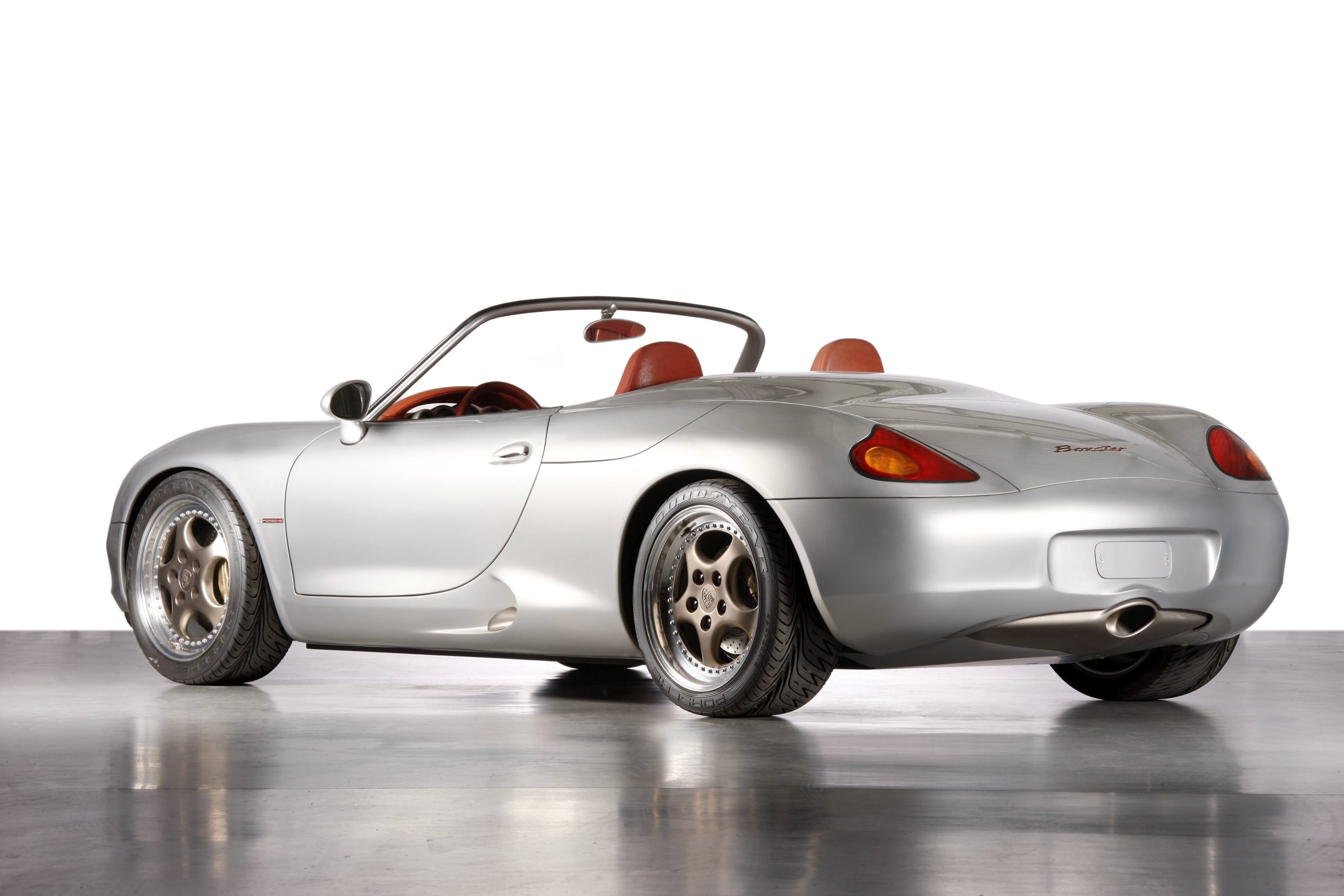
In January 1993, Porsche presented a show car at the Detroit Motor Show that deviated so profoundly from its production philosophy to date that it shocked and surprised the public and company employees in equal measure. Clearly drawing inspiration from the 550 Spyder and the 718 RSK of the 1950s, this show car brought the taught and graceful lines of its ancestry into the ‘90s.

To place this event in context, it is worth mentioning a few significant milestones from 1993. What were you doing in June that year when the Steven Spielberg blockbuster, Jurassic Park, was released? Can you recall when, later that same month, Australian Geoff Brabham paired with Frenchmen Christophe Bouchut and Eric Hélary took the Peugeot 905 Evo 1B to victory in the 24 Hours of Le Mans? This would give the French manufacturer its second consecutive victory at the 24 Hours of Le Mans.Later that year, on 1 November, the European Union was officially established. These are just a couple of landmark events to help place the birth of the Boxster in your personal motoring calendar.
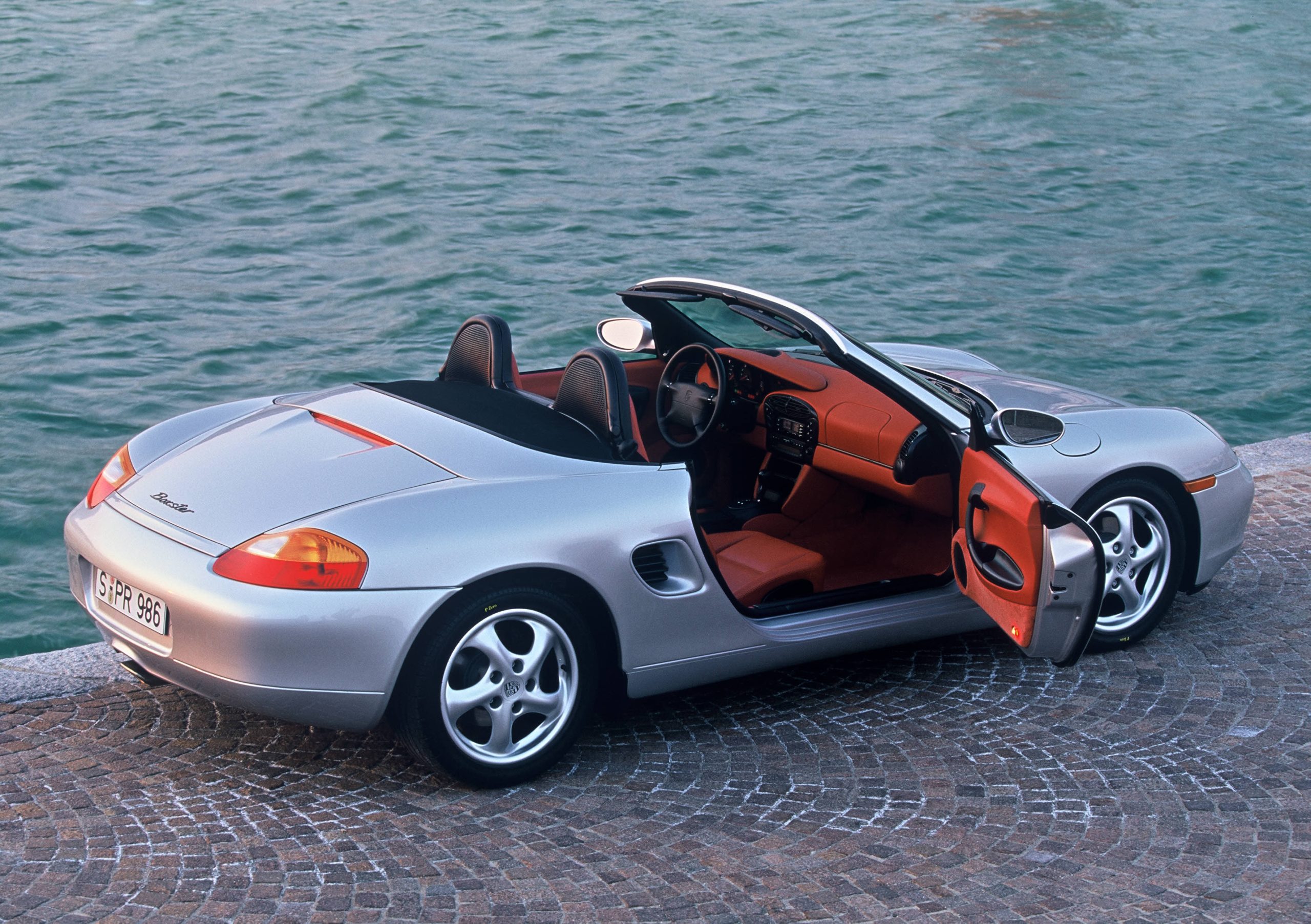
The design story of the Boxster, Type 986 in Porsche speak, began two years earlier in October 1991, as designer Grant Larson recalls, “We had just stopped the 989, the first four-door Porsche development, and we immediately switched over to the 986 and 996. The idea was to come out with a new platform for Porsche, and to get a little bit more commonality back [into the model line].”
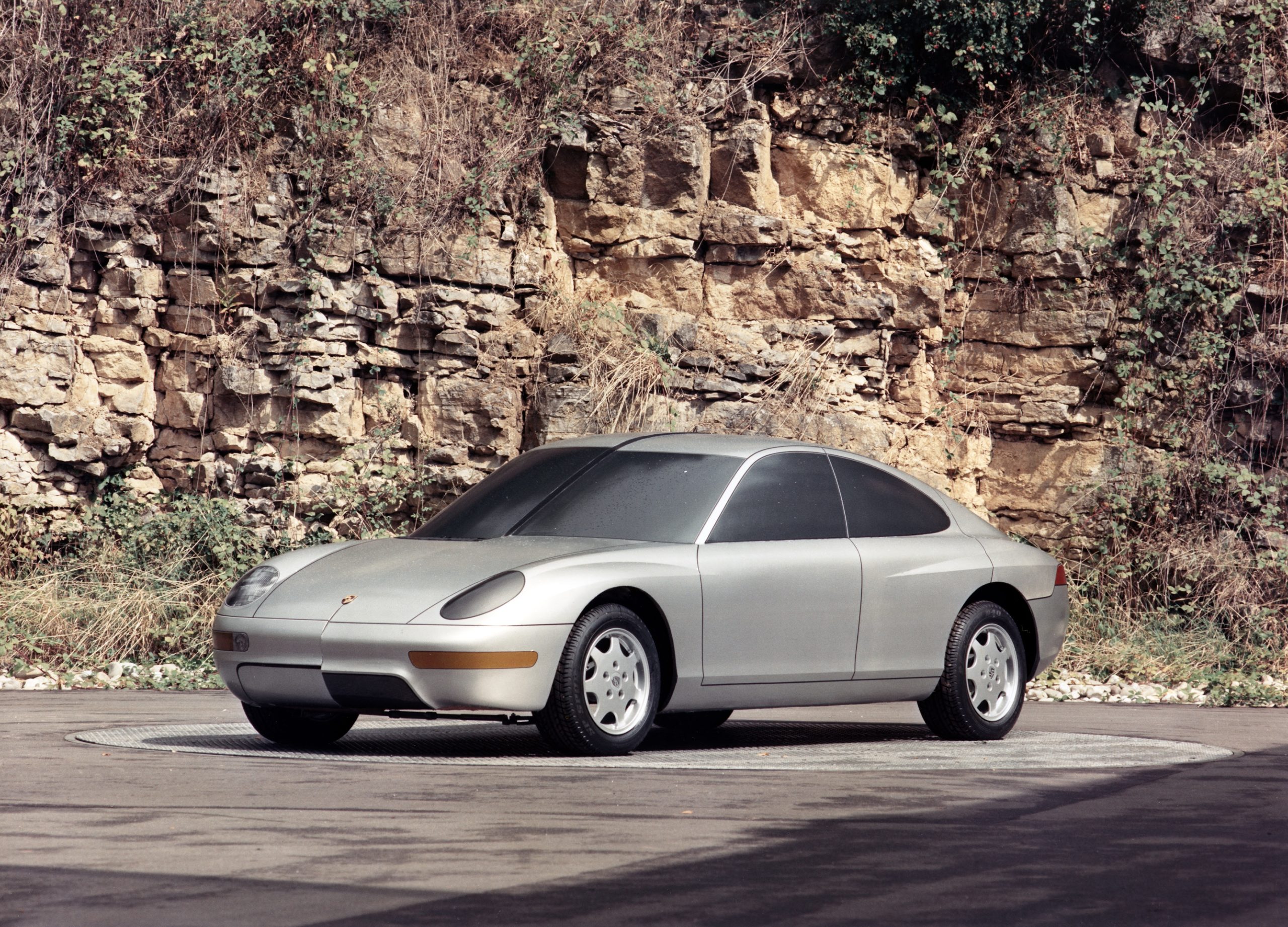
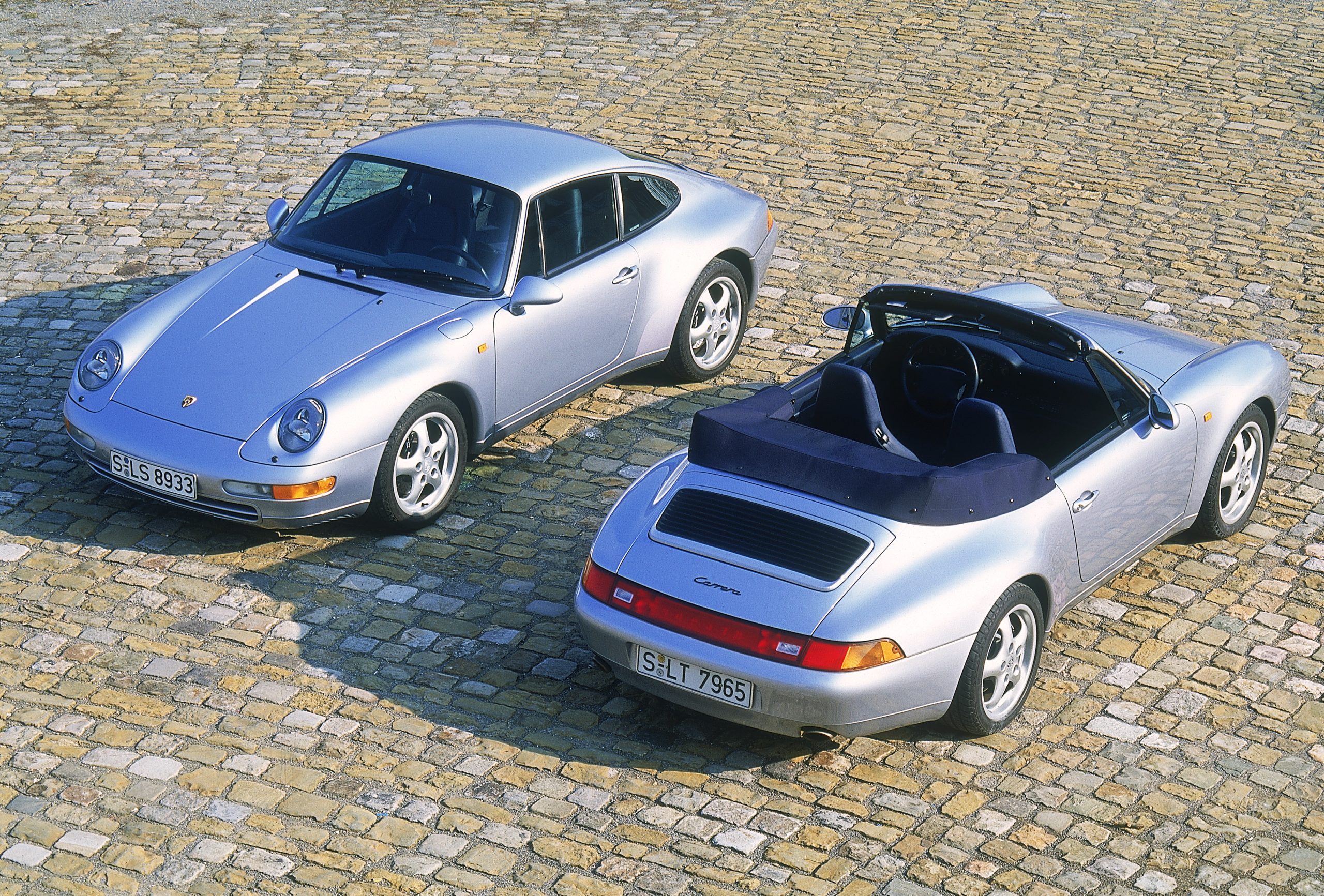
At that time, Porsche had three different models in their line-up: the six-cylinder 911, the V8-engined 928, and the four-cylinder 944/968 transaxle cars. However, they all had one thing in common: they were all old. The 911 was still running the air-cooled boxer engine, while the front-engined transaxle cars had by now run their course after almost two decades. The idea was therefore to continue with the 911 as the top model, while sharing some components with a new lower-level entrant. Sharing components, however, was going to be a challenge, as one car was rear-engined while the other was mid-engined.
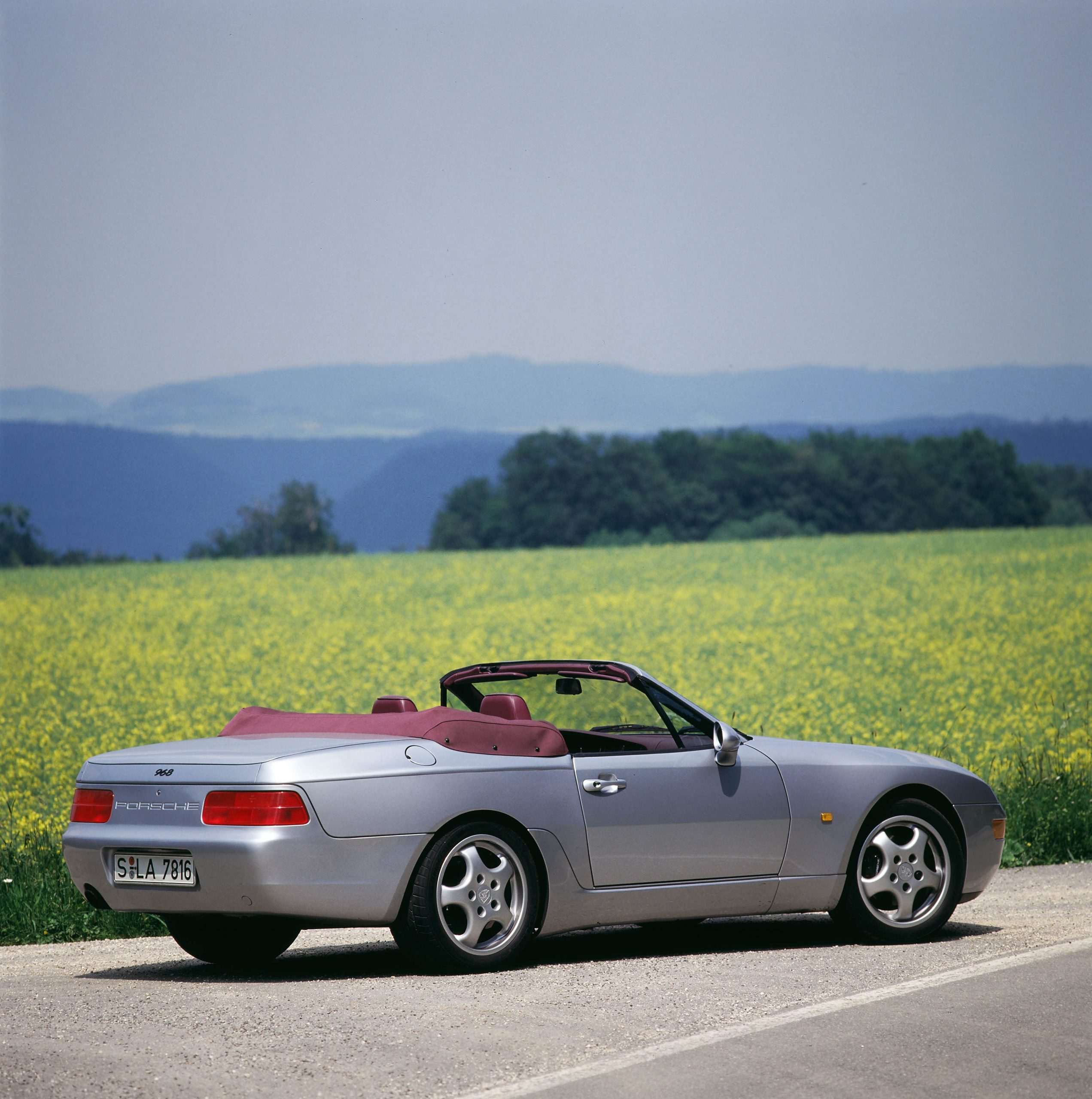
Previously, Larson had spent three years at Audi before moving to Porsche in 1989. During these formative years as a young designer, Larson attended as many motor shows as possible around Europe and Japan. He noticed that Japan, in particular, was ‘on a roll’ as regards show cars, with Japanese manufacturers investing heavily, both financially and in R&D terms, to inject new ideas and freshness into their industry. It struck Larson at the time that the European manufacturers, and German manufacturers in particular, were not doing this. As it happened, just after he left Audi for Porsche, Audi created the quattro Spyder, a futuristic-looking, technical study of what a mid-engined supercar might look like.
Chief Designer at Porsche, Harm Lagaaij, and his design team attended the Tokyo Motor Show in 1991, and Larson remembers noticing that Porsche seemed to be the only German manufacturer not showing a show car. As a result, Lagaaij phoned the design studio back in Weissach and told them to get started on ‘some ideas’ for a show car. “That was a wake-up call for us,” Larson recalled, “it encouraged us at Porsche that we should do a show car too because we had been considering the technical aspects of a mid-engined roadster based on a turned-around 911.”
In 1991, Grant Larson was assigned by Harm Lagaaij as the design representative to attend the annual brainstorming session with the Advanced Engineering team, which included engineers from various departments, including suspension, engine, and marketing.Larson’s idea was to create a show car to demonstrate to the world the basic idea behind their plan, rather than develop a new suspension or a new way to bend an aluminium fender.
“It was only in October that year that we nailed down that the Boxster would be an open car, and with the support of Harm Lagaaij, we sold the idea to the development chief. We then started in the spring of 1992 with the intention of showing it in Geneva in 1993,” Larson shared.
Completely new thinking was required this time around because Porsche had grown up on rear-engined cars, followed by front-engined transaxle cars, and was now considering a mid-engined car. The idea, technically, was to share the platform with the new, still-to-be-designed 911 (Type 996), from the B-pillar forward.
Rather than following contemporary market trends, Larson turned to the Porsche history book for inspiration. He explained, “Of course, we weren’t going to take what we had in the market and just evolve it, but rather play a little bit more on the history in an updated, timeless sense. So I tried to wrap up all those things in one form language, but at the same time, of primary importance to us, was that every car had to be instantly recognisable as a Porsche.”
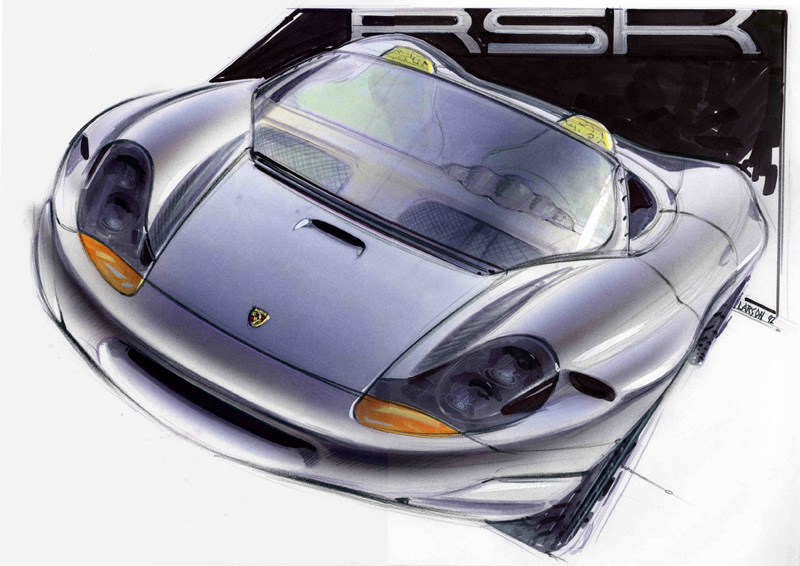
The idea that emerged was to create a car that harked back to the romantic days of the 1950s, drawing on the innocent, simple styling of the James Dean-era 550 Spyder. The resultant form language played with full convex and concave aspects, with a distinct lack of hard lines or chamfers.
For Grant Larson and his colleagues, the goal was the show car first and foremost. But as he said in our interview, there is never the intention when creating a show car to make it exactly like the production version. The production car is the version that must carry the model into the future, but Larson was worried that his show car was too timeless, that it didn’t push the envelope enough. However, when you have someone like F. A. Porsche, looking over your shoulder and commenting on your design, you are obliged to take notice. Larson, “His tastes were extremely conservative, timeless and very product orientated, and he disliked the tail lamps, it was just too modern and trendy for him. That was one of the reasons we toned things down a little bit and made it a little bit more timeless.”
Running parallel with the development of the show car were four full-size series-production cars, one each from Wolfgang Möbius (928 designer), Steve Murkett, Matthias Kulla, and Pinky Lai. Those models, according to Larson, struggled with production realities while he enjoyed the luxury of staying ‘undercover’ to do a car, as a designer would have liked it.
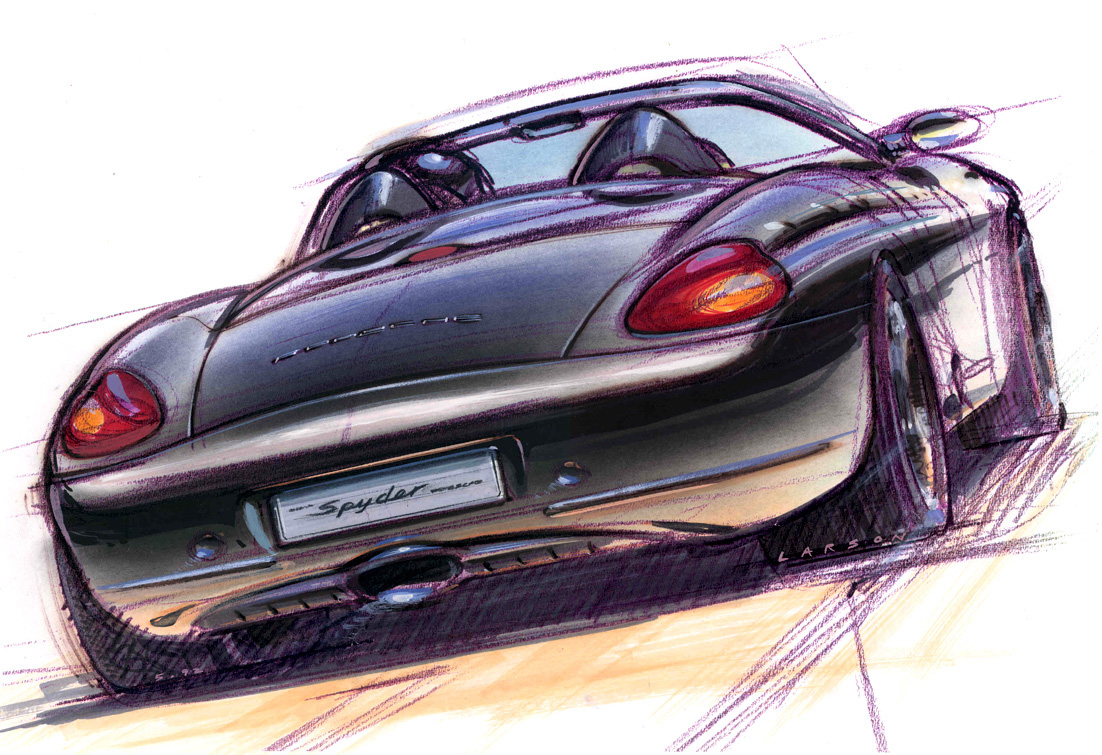
The project didn’t have a name at this stage, and so the names ‘Spyder’ and ‘RSK’ were used in some early drawings. Later on, the project was given the nickname ‘Expo’, short for ‘Exponat’, which means ‘show car’ in Porsche design-speak.
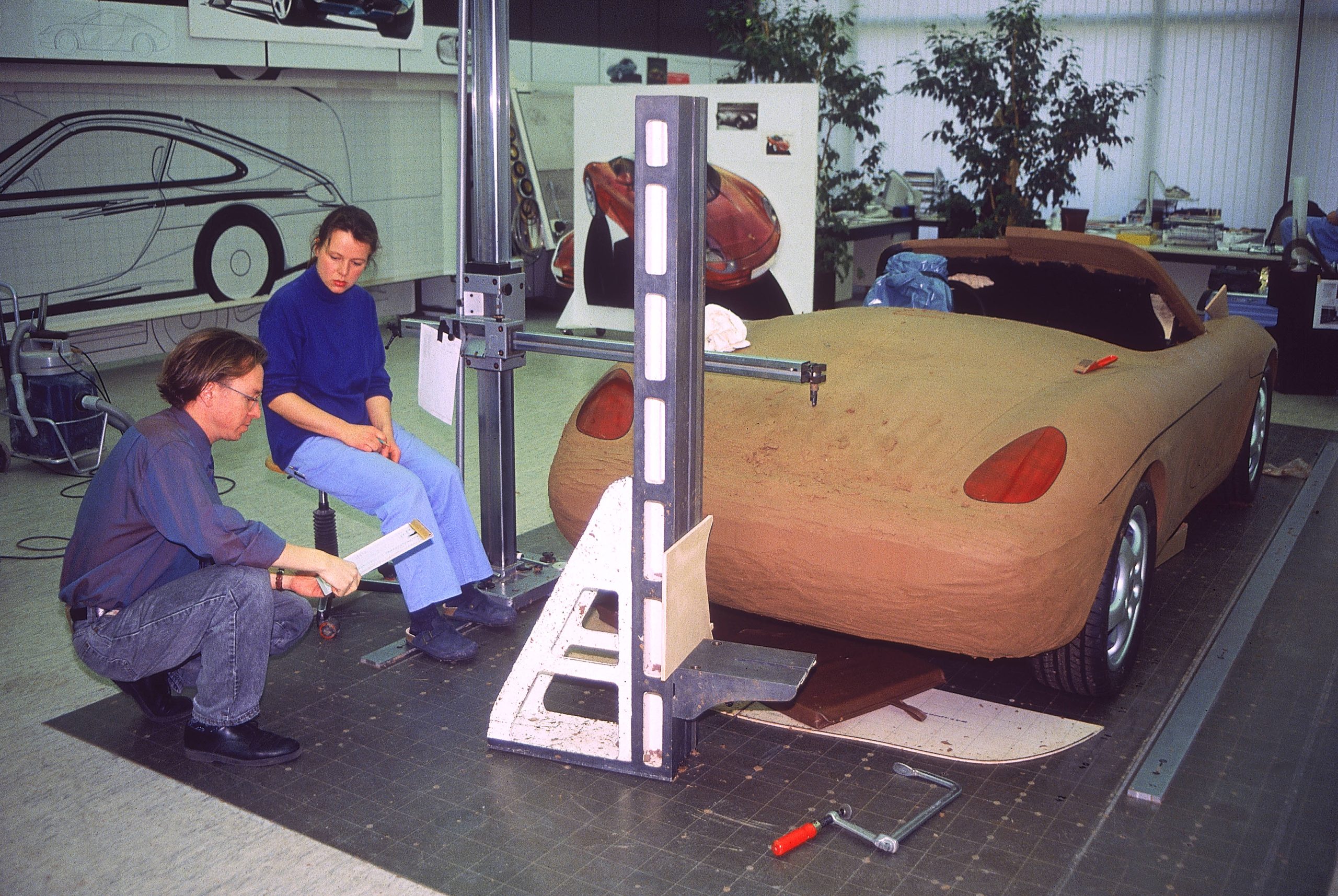
“I have to give credit to Peter Müller, the clay modeller who basically sculpted the show car not from data, but from my sketches. He was a brilliant, enthusiastic and talented person. Helmut Flegl, who led the Advanced Engineering team, of course, played a key role in earlier years in the 917 racing successes,” Larson mentioned.
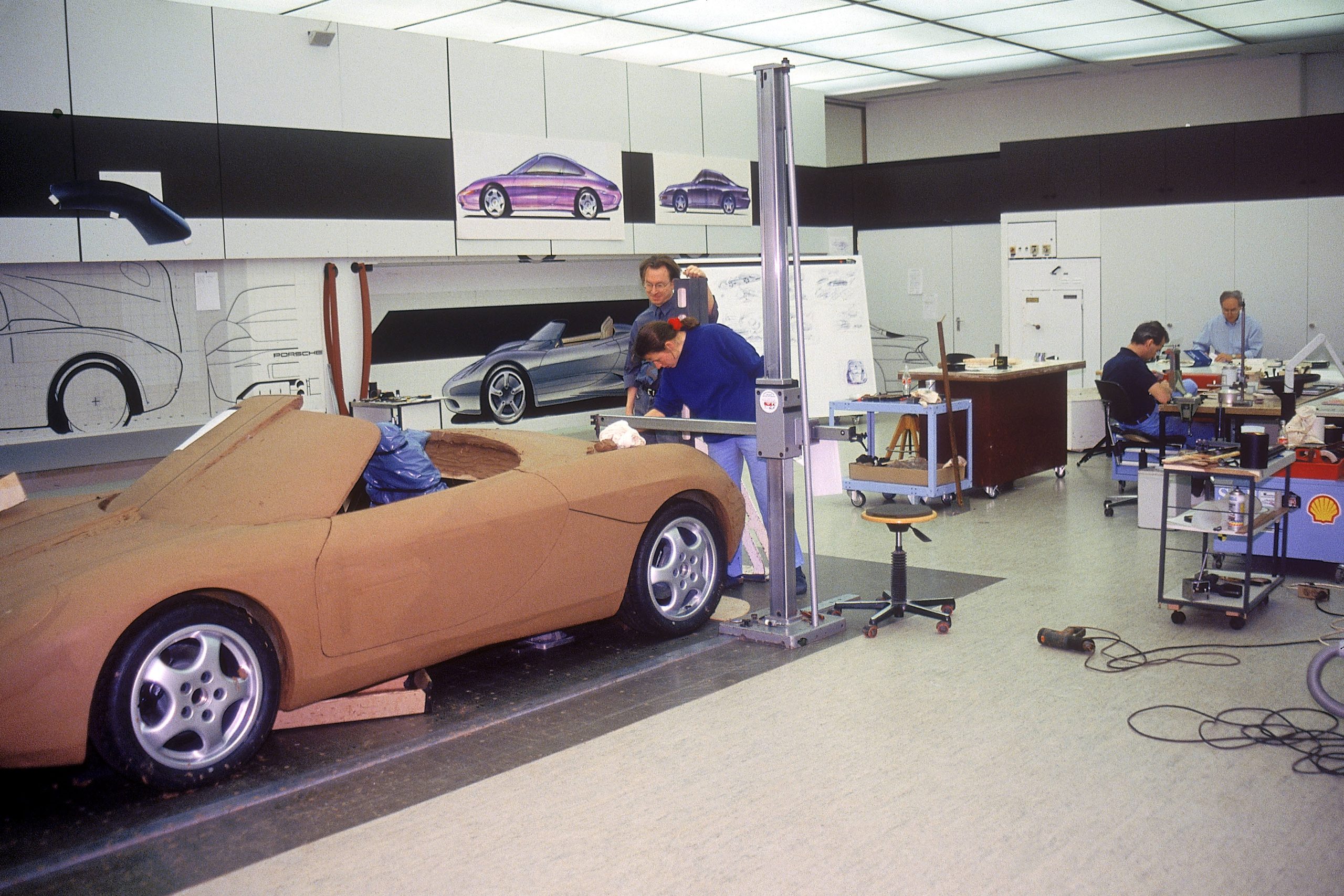
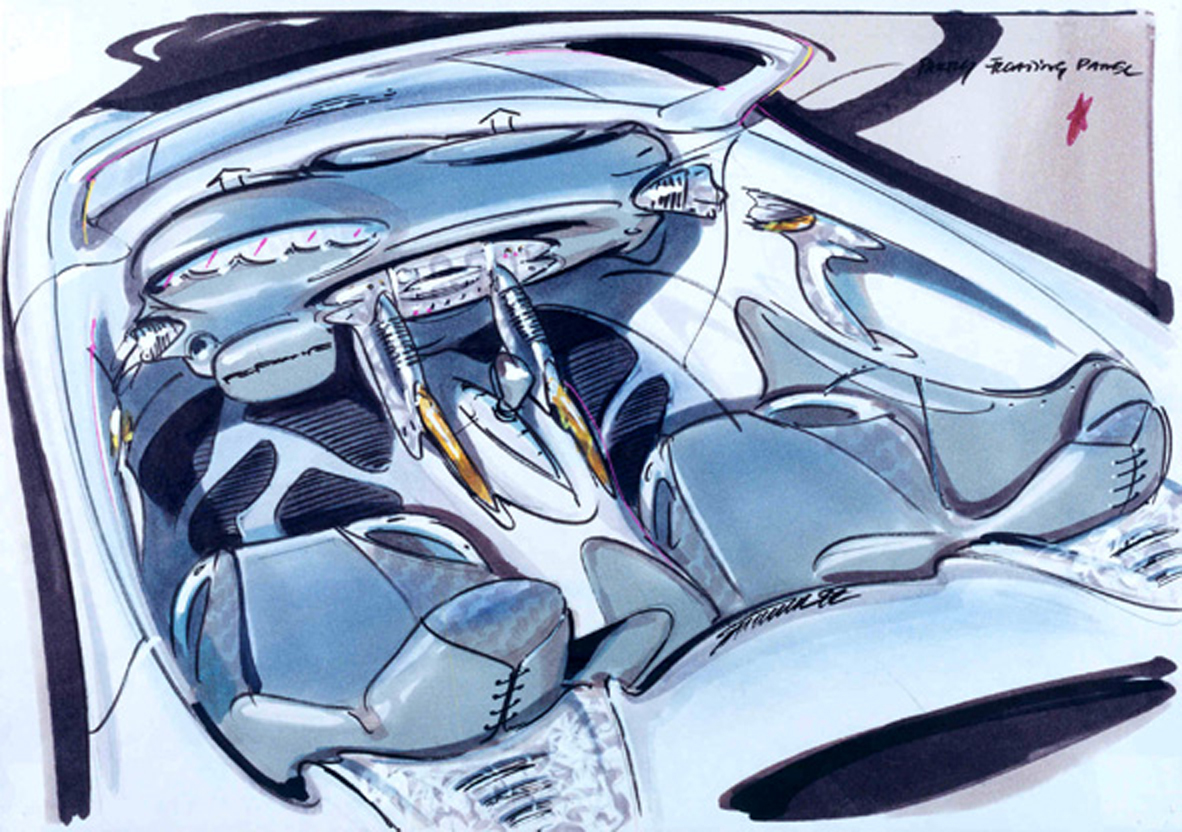
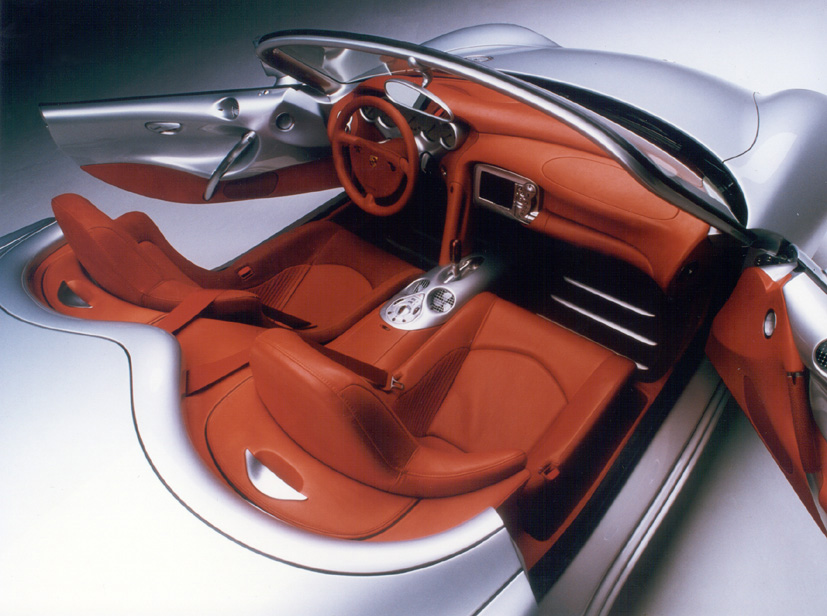
While Grant Larson was responsible for the exterior design of the Boxster, the interior of the show car was done by Stefan Stark, while Matthias Kulla completed the interior for the production version. For technical reasons, the production model deviated from the styling study in several respects, although it remained a two-seat mid-engined roadster. The one problem Porsche faced was that it had not developed a completely new car for many years, and so when the opportunity presented itself, those working on the production version all wanted to leave their mark on the new model.
As a result, the car ended up too long with the track width too narrow, and basically nothing fitted properly, as Larson elaborated, “Without the show car, the production car would not have been as small and compact as it was. We had 18-inch wheels on the show car, but the production version had 15-inch wheels, which were a bit small for a car, even back in the early 1990s.”
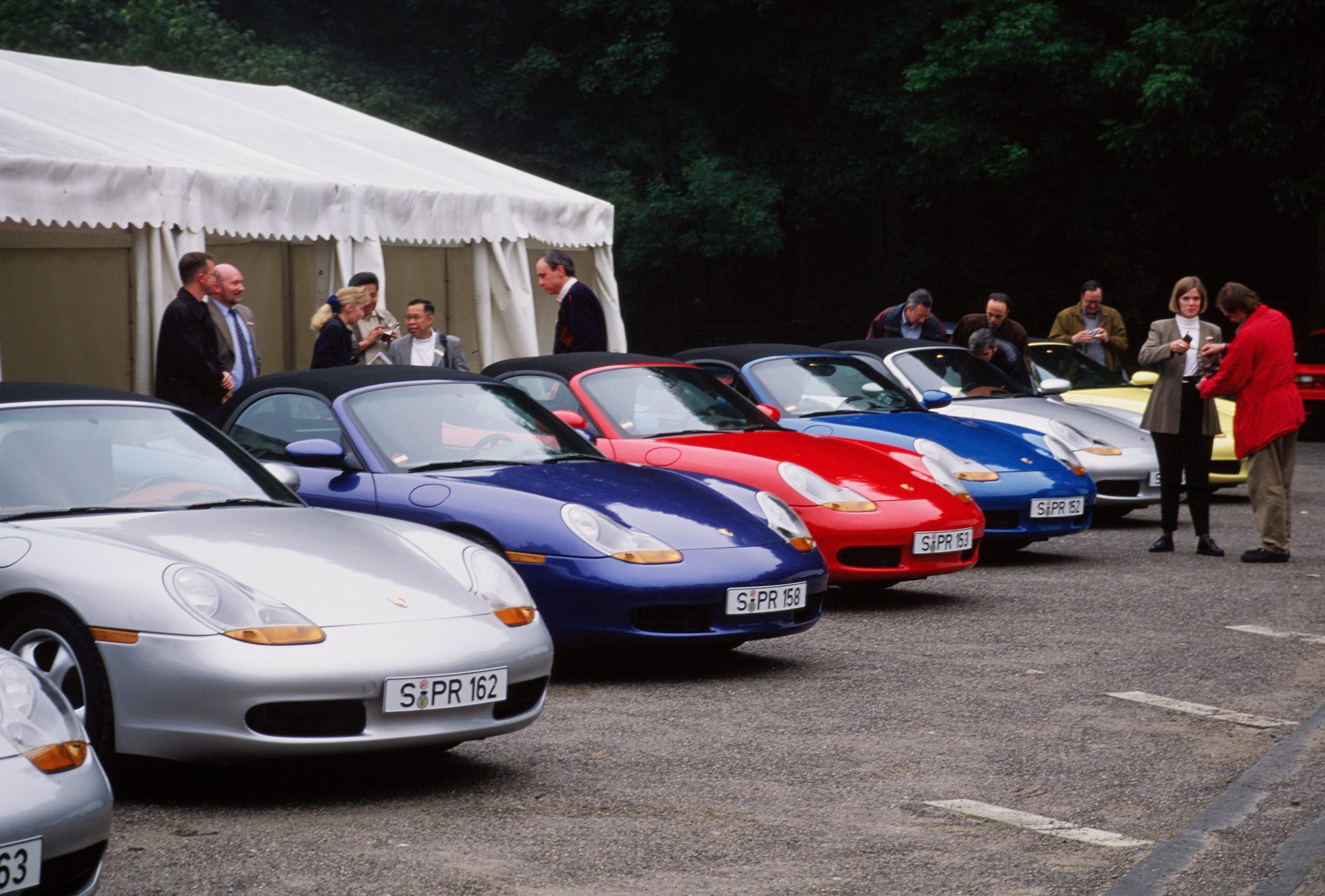
The ‘packaging’ of the Boxster’s rear end proved to be a bit problematic. The design specs called for a front and rear trunk of roughly equal size, and with the engine sitting ahead of the back wheels, the proportions here had to be just right. The rear bumper, the exhaust system with catalytic converters and the engine height had to be positioned perfectly, while this space also had to accommodate the innovative Z-folding roof system.
BOXSTER GETS THE CHOP
Grant Larson recounts the time they had to cut the Boxster…
“There is one particularly amusing event that occurred during the development of the Boxster show car. We were working to a very tight time schedule with the car, and we spent a lot of time designing the centre of the rear area, including the exhaust system and the plan view of the whole rear end. Although it took a considerable time to shape and model, the rear end was too short, so we had to extend the car by about eight centimetres, which is a significant increase. Back then, with the technology we had, you had to go up and down the entire length of the car, taking X, Y, and Z coordinates, writing them down, and adding a factor of 80 to those values; it was a really complicated process at the time. At that time, we didn’t have digital scanning, point clouds, or the technology we have today.
“The car was mounted on a plate, so we set up a sort of rig that held the rear end piece in the position we had so lovingly modelled, and we got the company lumberjack over. He cut it out with a big, giant chainsaw. Since it was attached to this rig, we then slid it back onto the measuring plate by the desired amount and filled in the gap thus created. What was so funny was that, on the one hand, you are in the Porsche design studio, working very precisely and technically with high-tech equipment, but in this case, we had to bring in the company lumberjack to do the cutting. He was a big bearded character, as you might imagine him, always running around in overalls and a plaid flannel shirt.”
At this time, Porsche was not in a happy state, with only ‘old’ models to offer, and so with the Boxster and the new water-cooled 996 both on the drawing board at the same time, resources were somewhat stretched. For budget, timing, and manpower reasons, the Boxster and the 996 had to share more components than they would have liked.
But just how similar were the two models? Grant Larson explains, “We were located right next door to each other. The cars are basically identical from the B-pillar forward; all the technical pinpoints, like the base of the windscreen, the position of the wipers, and all the underpinnings, like the strut towers, were all the same. We were really under the gun to produce cars that finally earned some money, but, with too much similarity, some of those aspects, of course, worked against us.”
In the initial stages, the Boxster and 996 Carrera each had their own front bumper and headlights. Eventually, the decision was made to use the Boxster headlights on the Carrera and the Carrera bumper on the Boxster, creating nearly identical cars in the front view. While sharing the doors, bonnets and ‘faces’ was acceptable, for the young designer, the identical front bumper was the straw that broke the camel’s back, and Larson took the matter up with his boss Harm Lagaaij.
Two decades earlier, Lagaaij had himself been a young designer who, when faced with designing the Porsche 924, his first major project, had to contend with restrictions imposed by VW. Lagaaij, therefore, understood the position well and gave the go-ahead for Larson to design a Boxster front bumper in record time. “I remember the next day I walked in and told my studio engineer that we were going to do a new front bumper for the Boxster. And he said, ‘No, it can’t be done, there is no time.’ And I said, yes, we will find the time, and everything went really quickly because we worked every Saturday and some Sundays and holidays too.”
Around the summer of 1992, Larson and his colleagues were asked to ‘set the car up with the idea of making a race version’. With the instruction to ‘trick the car out a bit’, they got to work fitting a lower windshield. Of course, it had no roof, but it did have a single driver-side roll bar and some racing graphics. Larson picks up the story, “We had the racing department people around and they said it was interesting, but even back then the philosophy was that the racing car for Porsche was, and always will be, the 911.”
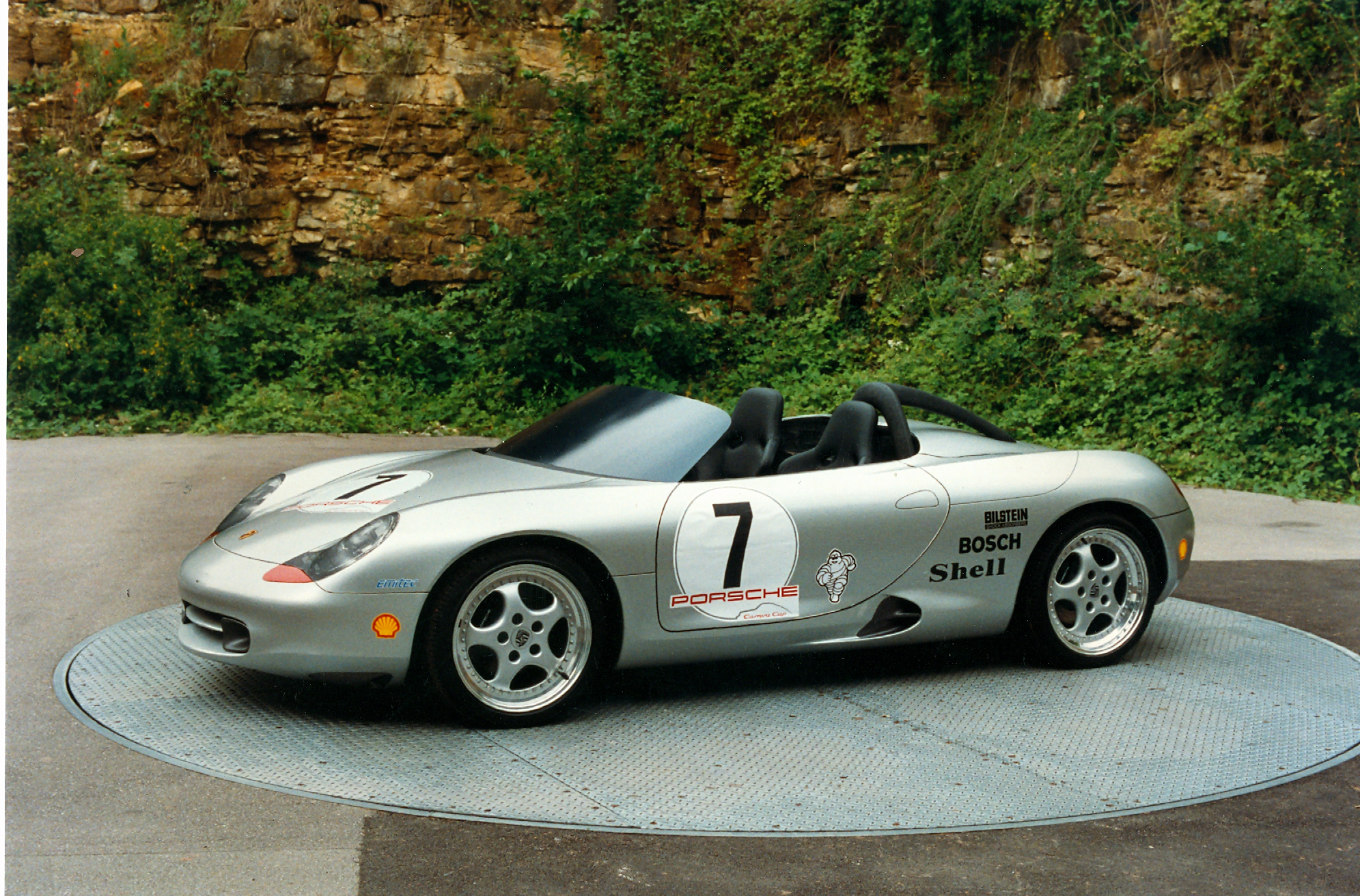
In the autumn of 1992, some months ahead of the planned Geneva reveal and during one of the Boxster’s interim presentations, Larson recalled, “I was standing next to Harm Lagaaij, Arno Bohn and Ulrich Bez, and they said,‘Instead of Geneva, let’s go to Detroit!’ And that was it, my jaw dropped.” The fall-out of this change in plans was that the design engineers lost three months of development and construction time on the car, and as a result, many planned features could not be included. Larson admits, “I was a little bit worried thinking this car is going to have my name on it, so it had to be really good, but I didn’t really have sleepless nights because I felt really good about the car. Besides that, I was really tired in the evenings!”
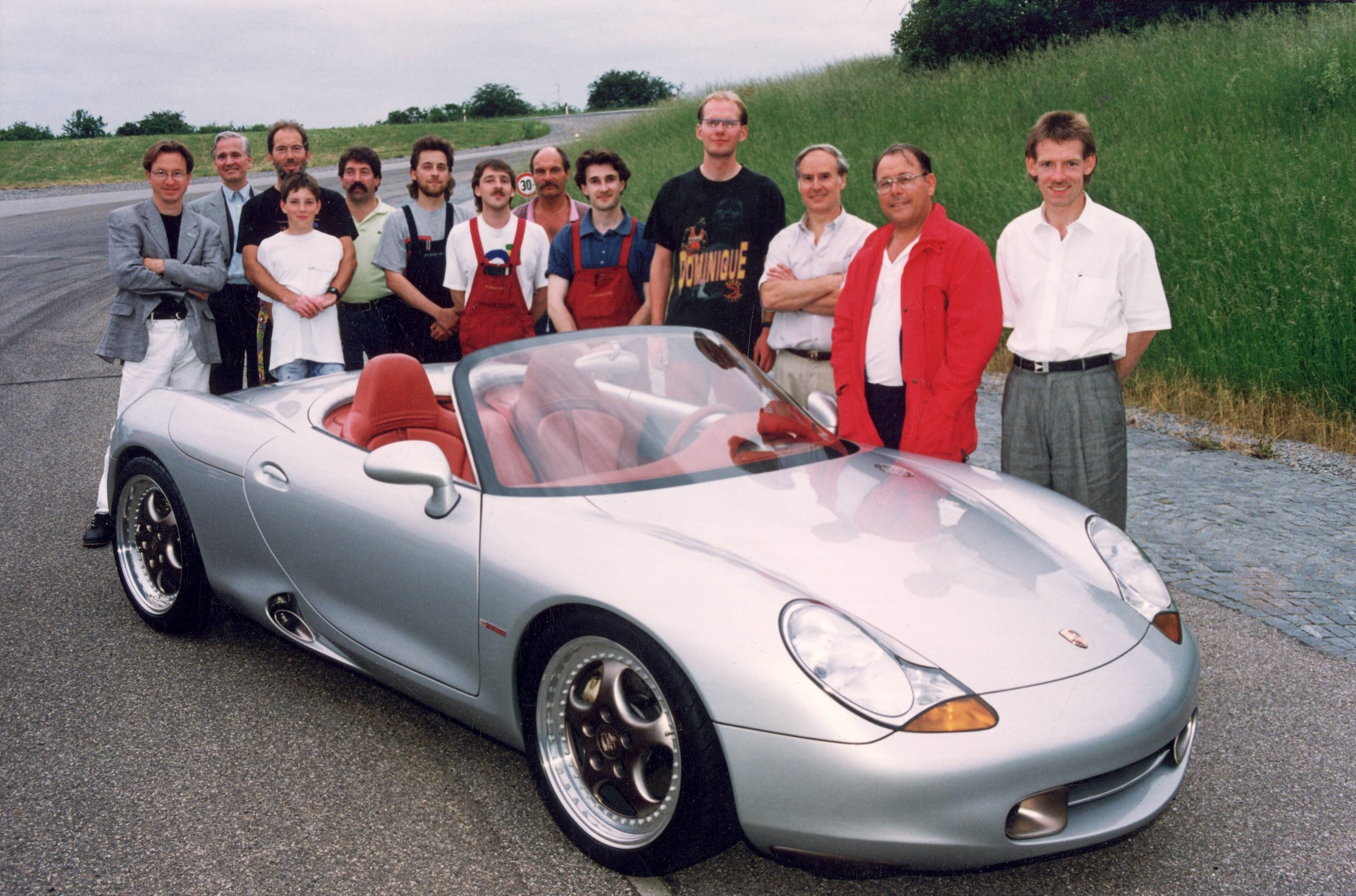
As the Boxster neared completion, how was it viewed from within the company? “It was a big secret, so a lot of people were really surprised at the car, it’s not like today where everything is communicated and planned to death,” Larson revealed.
Prior to the 2 ½ week shutdown every year, management would hold its Christmas speech, and that year it was in building number four, the largest Weissach workshop. When Horst Marchart gave his Christmas speech in December 1992, he presented the new car to the employees, but they clearly weren’t expecting this show car. However, before it could be loaded onto the aeroplane and sent to Detroit (January 1993), management had to be brought up to speed, as they would be presenting the car at the show and at least have some knowledge of the product, as Larson put it.
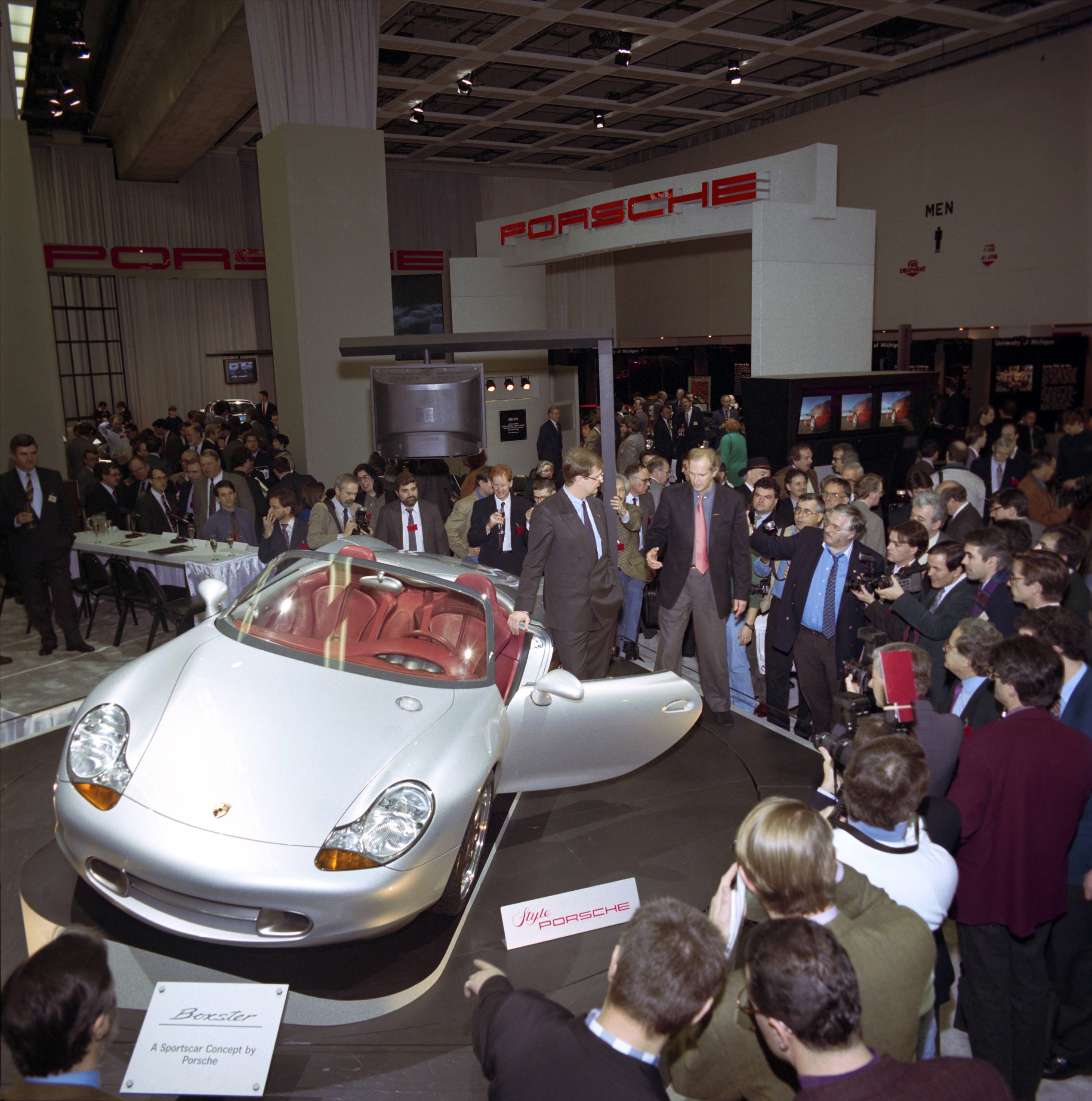
In the lead-up to a new model launch, the marketing department of any motor manufacturer will undertake extensive research to ensure the vehicle’s target market has been correctly identified. Because you cannot predict the future, you can only rely on past trends. However, in the case of the Boxster, there was no predecessor, so they could only make an educated guess. “The intention with the Boxster was to create a US$39,000 entry-level car, the same price as the outgoing 968. The idea was to attract a younger group of people, with the target including fifteen per cent female buyers,” Larson revealed.
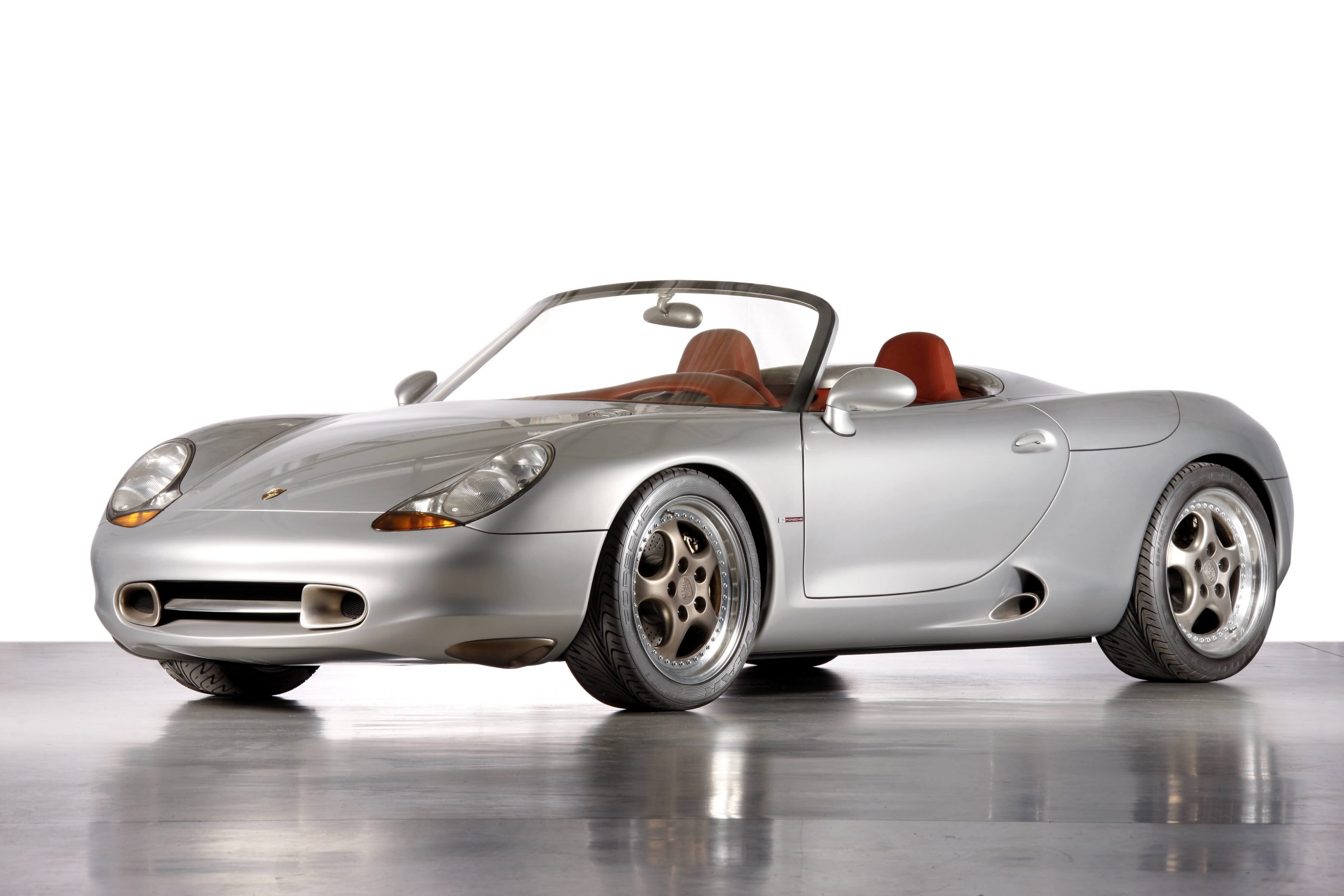
While the 911 had its dedicated following in the market, the front-engined models had also carved their own niche in the sports car world. However, the mid-engined car brought to market a level of practicality, performance, and affordability that was altogether different, and the question was, who would this newcomer be aimed at? Dimensionally, a mid-engined car will always have a longer wheelbase than a similar-sized 2+2 rear-engined car, but in this instance, the Boxster and the 911 were identical from the B-pillar forward (or from the door shut). However, due to internal differences, the leg length in the 911 was slightly longer.
| Wheelbase | Length | Width | Height | |
| 1997 Boxster | 2415 | 4315 | 1780 | 1290 |
| 1998 911 (996) | 2350 | 4430 | 1765 | 1305 |
In the world of Porsche, the last 968 was manufactured in the summer of 1995, while the Boxster only began production in the spring of 1996, with the first vehicles delivered in the autumn, making them 1997 models. This means that for a period of around twelve months, Porsche had only one model keeping the company afloat: the 911.
The Boxster was launched around the same time as the Mercedes-Benz SLK and the BMW Z3. Although it arrived a little later, the Jaguar F-type concept, shown at the Detroit Motor Show in 2000, was a potential knockout. Designed by Keith Helfet, the F-type had the potential to capture a significant share of the industry. Despite thousands of deposits being taken, the car was ultimately cancelled by Jaguar.
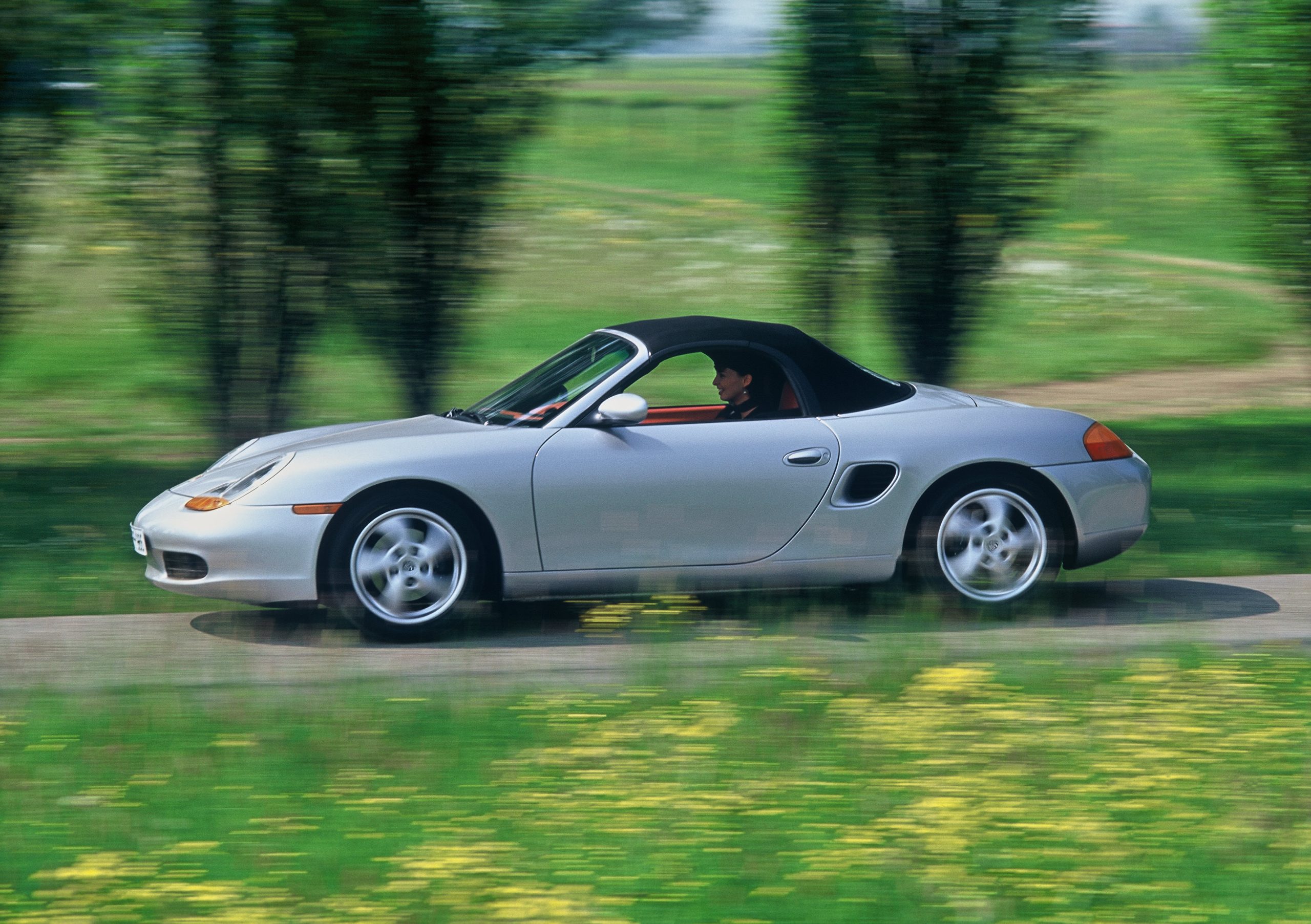
Asked if Porsche was worried about these strong competitors, Larson responded, “I thought that perhaps the Boxster was the inspiration for Jaguar to consider a downsized small roadster; it was a logical step for them at the time. I thought it was a really good car, and I think competition is always good because it gives you a higher bar to reach for.”
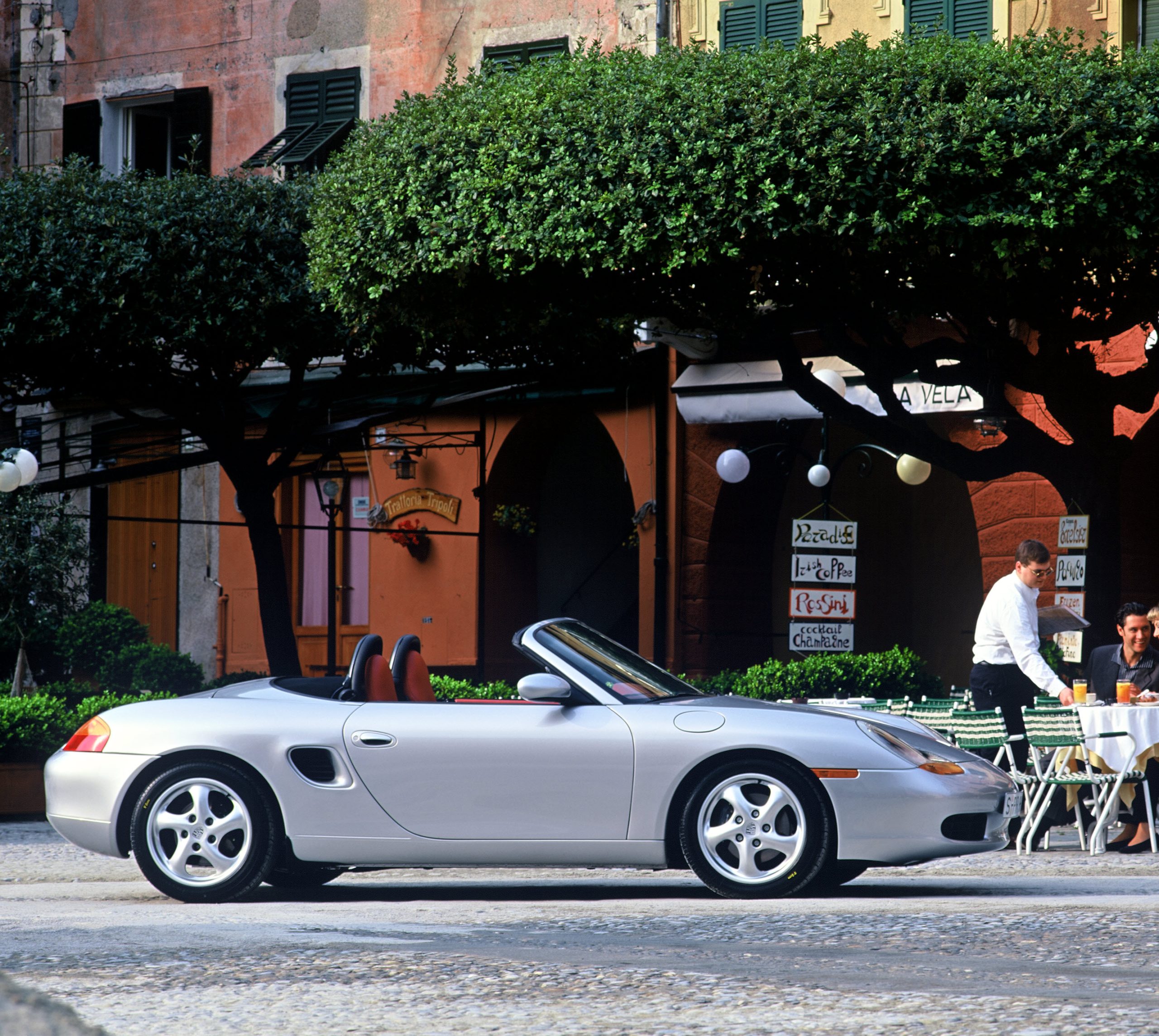
Driving the new Boxster back in South Africa in 1997, the author recalls the car’s generous interior space, its simplicity, and its stability on the road. Our test route took us north of Johannesburg into the Magaliesburg Mountains, through rugged, rocky outcrops on the twisting road to our photo shoot destination, with the midday African sunshine hot on our necks. The intention was to show the visual similarities with the 356 A Speedster, from which the Boxster had taken at least some of its design language. It was a glorious day…
Grant Larson’s Road to Porsche
“I would have never anticipated a career like this, never in a million years. I was this little Midwestern kid, but as you grow up, there are certain things that influence your future.”
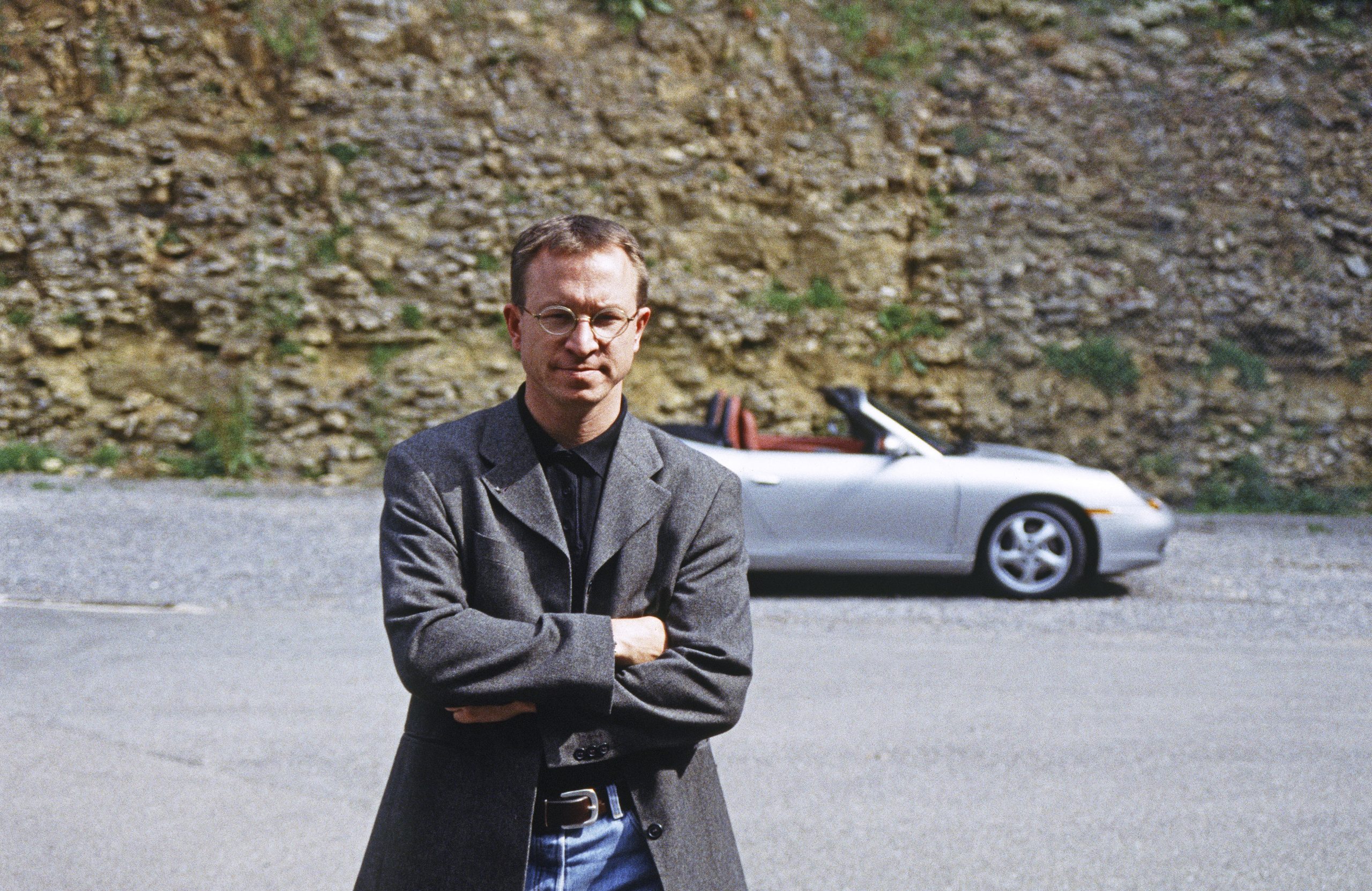
Grant Larson was born in Billings, Montana. Before getting into his studies, the young Larson put his enthusiasm to work, serving as curator and chief car duster for the 70+ car collection at the Brooks Stevens Automotive Museum in Mequon, Wisconsin, from 1973 to 1977. Here, he learned at an early age the meaning of automotive form, sculpture, and elegance.
He then attended the Milwaukee Institute of Art and Design in Milwaukee, Wisconsin (1976-1979), where he earned a Bachelor of Fine Arts in Industrial Design. During this time, he served as a Design apprentice at Brooks Stevens Design, Mequon, Wisconsin, from 1977 to 1980. Here, he worked on projects ranging from automotive and small vehicles to recreational and outdoor power equipment, as well as model-making.
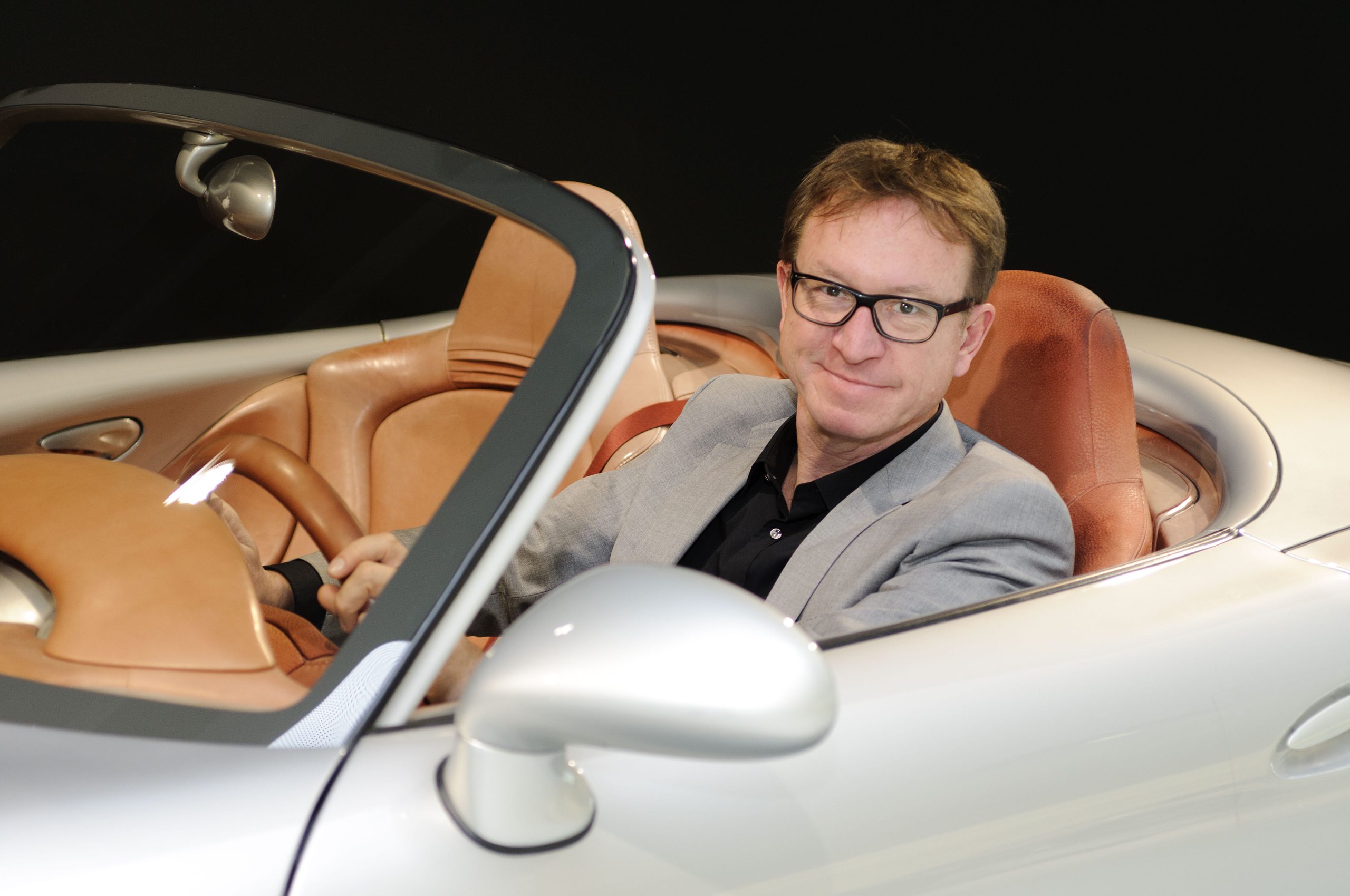
This was followed by a second degree from the Art Centre College of Design, Pasadena, California (1983-1986), where he obtained a Bachelor of Science Degree in Transportation Design (with Distinction). Armed with both degrees, Larson moved straight into the sharp end of the industry at Audi AG, Munich, Germany. Here, he worked as the Exterior Designer in the Advanced Design Studio (1986-1989).
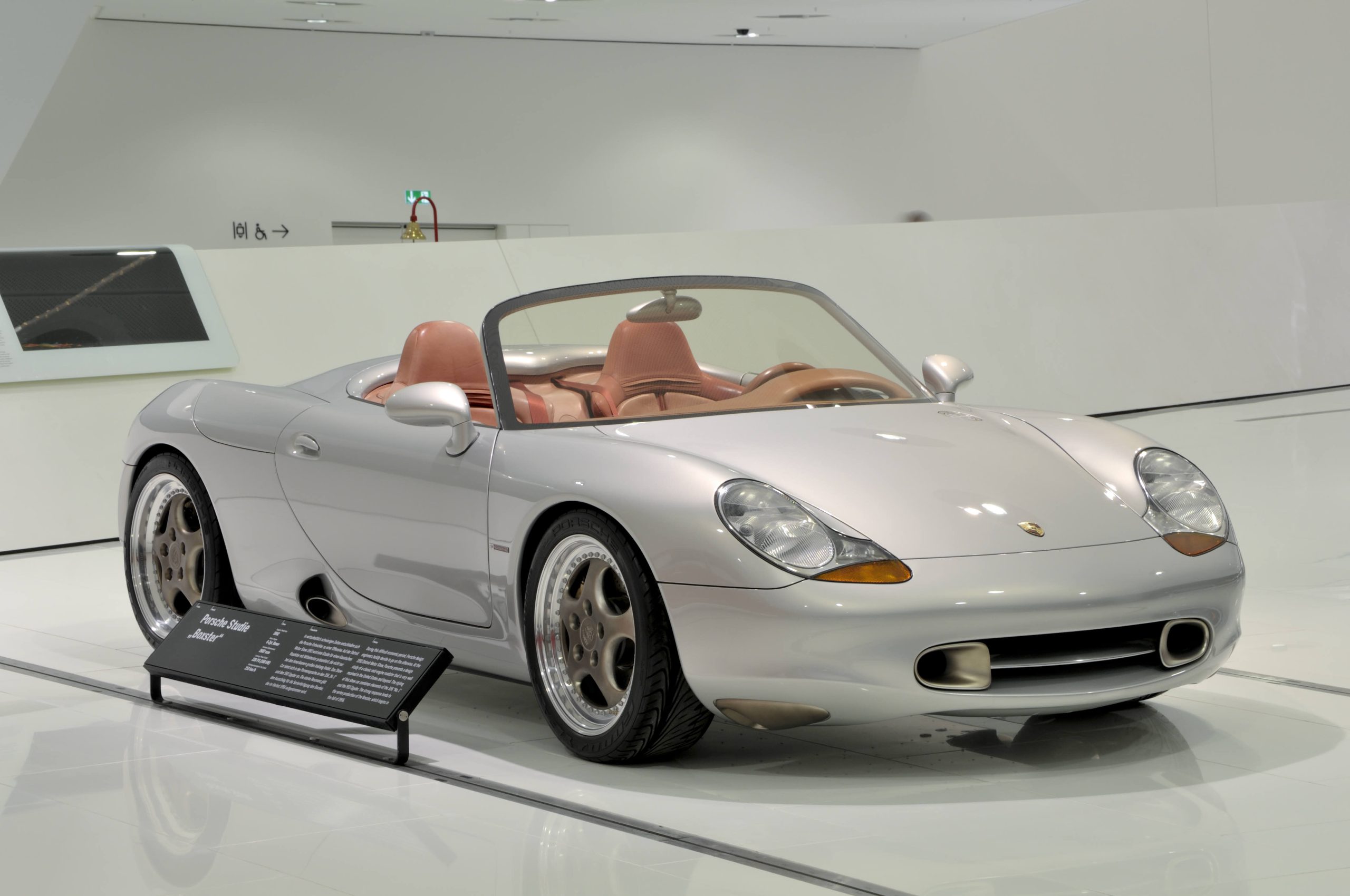
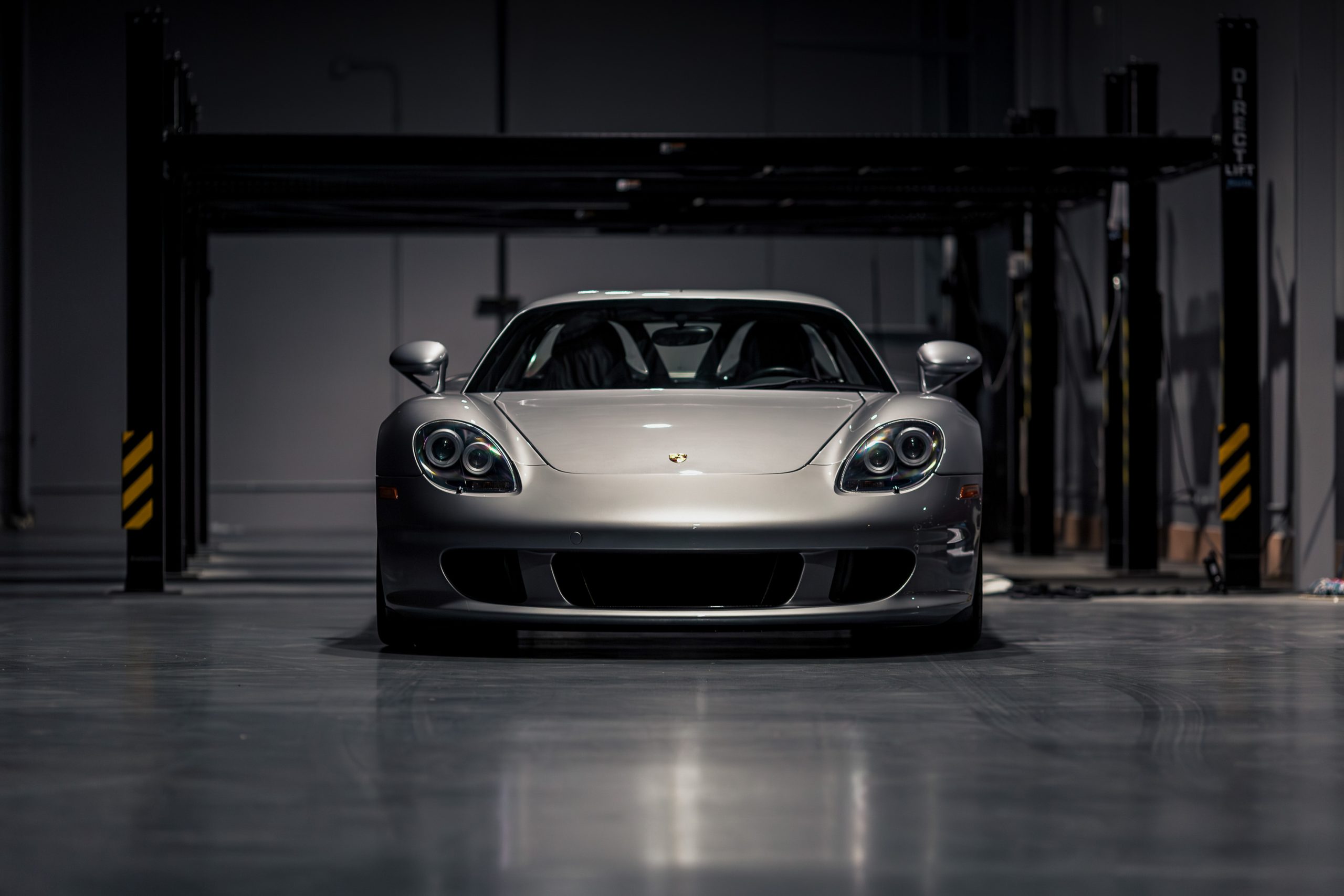
After Audi, Larson moved to Porsche AG in Weissach, Germany, where he began his work as an Exterior Designer. His projects at Porsche have included: Boxster show car and production car – Detroit 1993; Carrera GT show car – Paris 2000; 997 series Carrera and Turbo; Principal designer Panamera; 911 Sport Classic limited edition; Boxster Spyder; 997 and 991 Speedsters and the 991 Targa. He was responsible for the limited-run 935 (2018), GT3R rennsport and the Unseen Bergspyder based on the 981; the list goes on. Presently, he is the Director of Special Projects at Sonderwunsch, where he caters to customers of the One-Off program.