


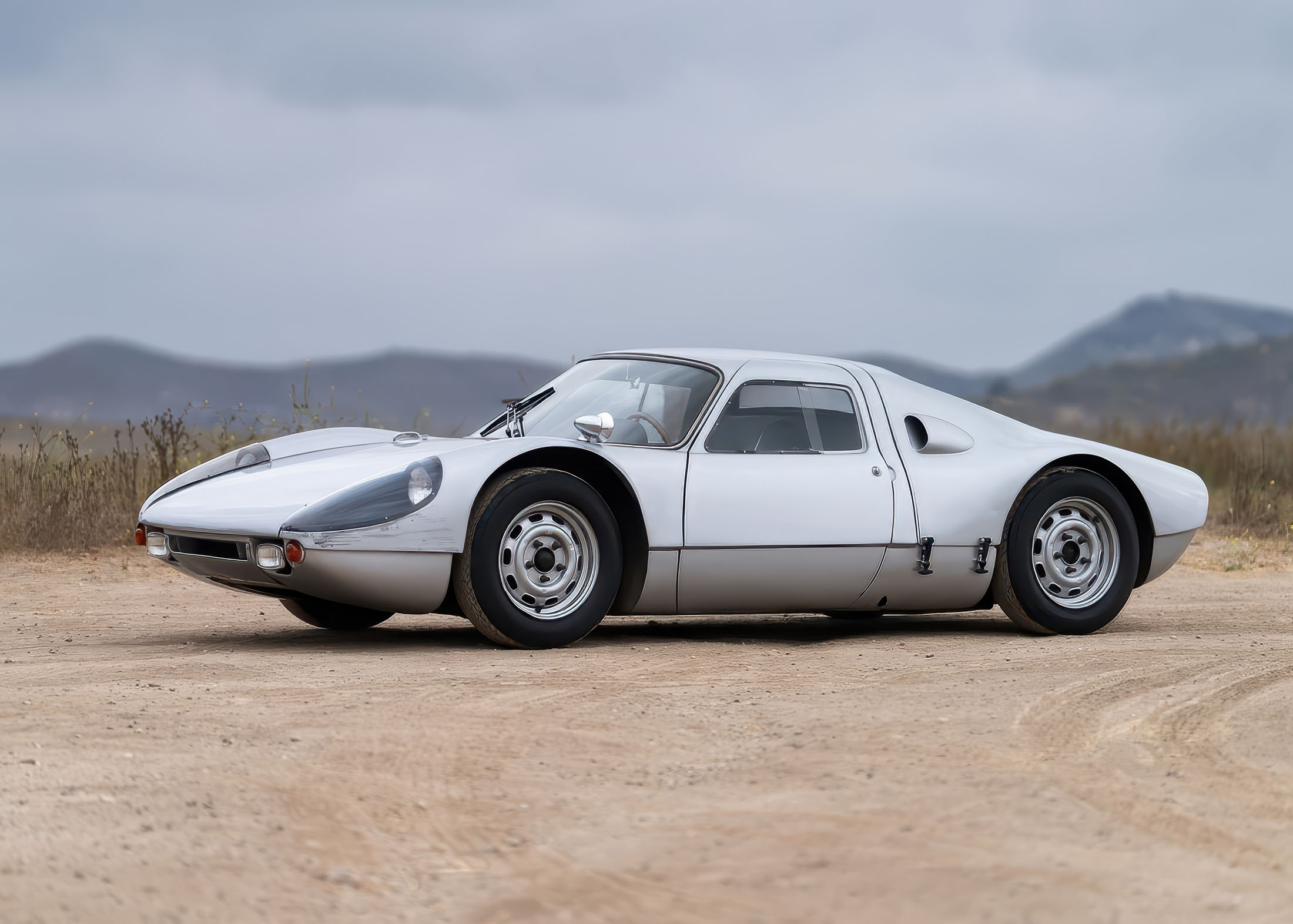
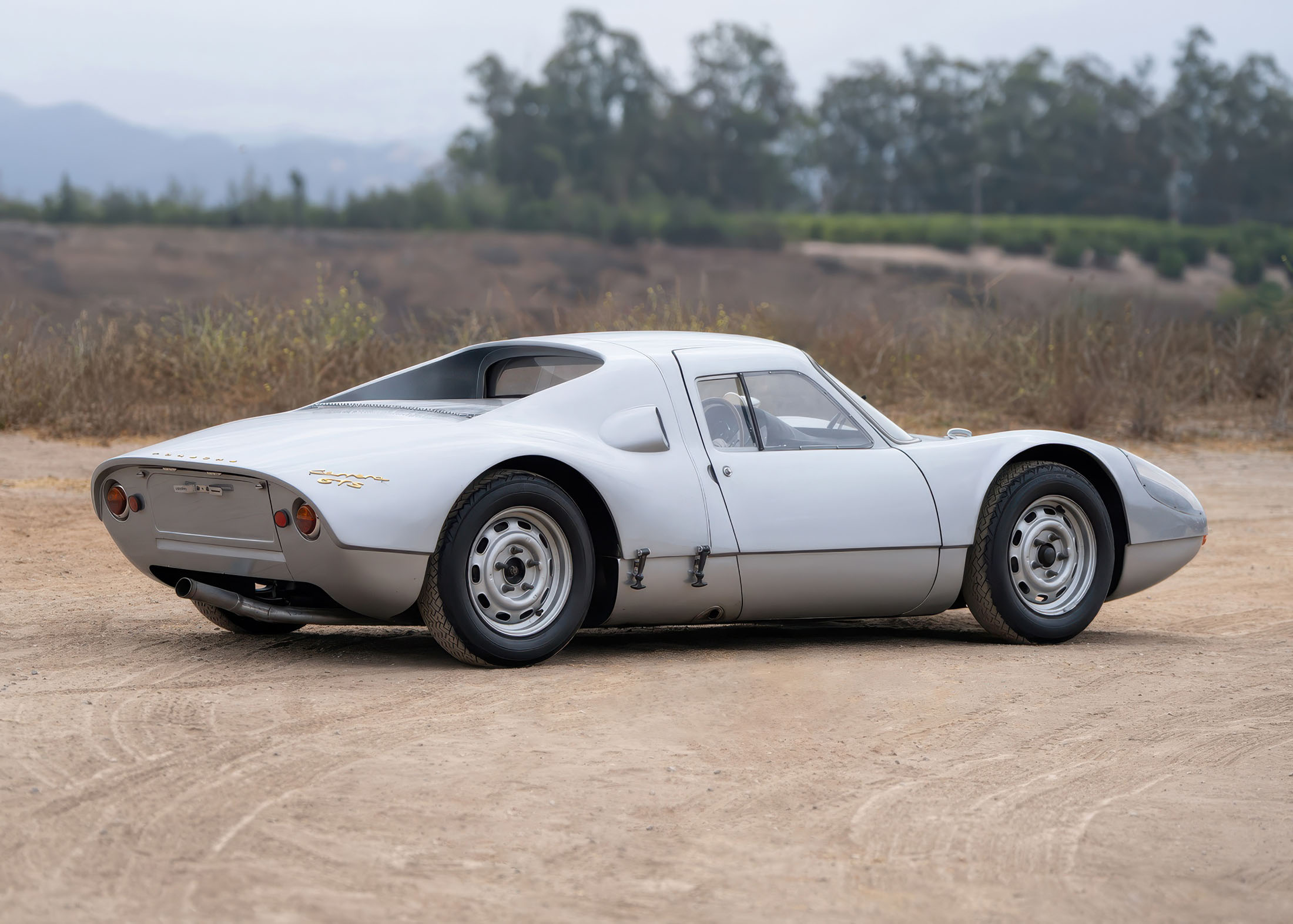
1964 was a defining year for Porsche, as the introduction of the 911 and 904 Carrera GTS ushered in a new era. Styled under the direction of F.A. “Butzi” Porsche, both models established design and engineering principles that would shape the company’s future on road and track.
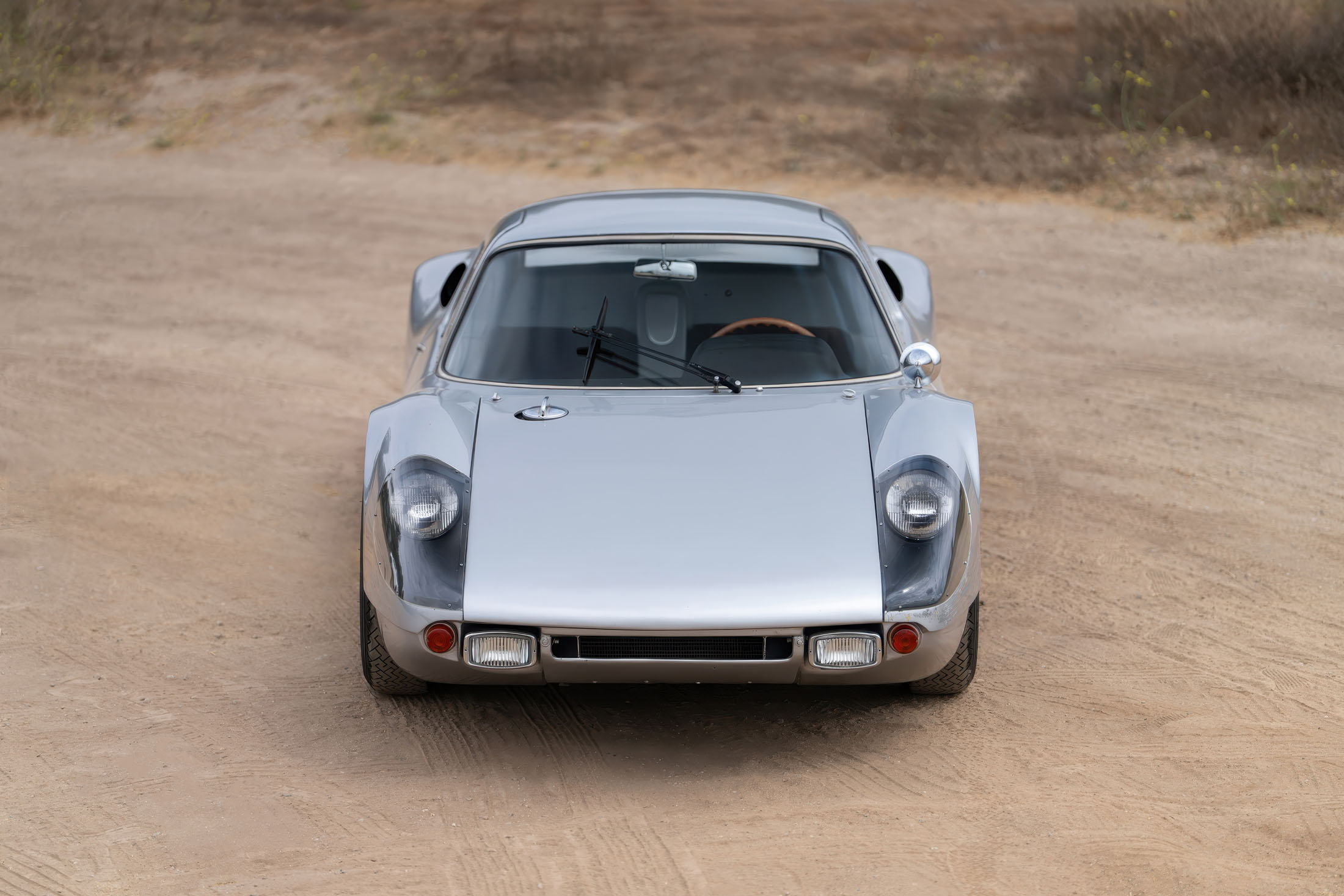
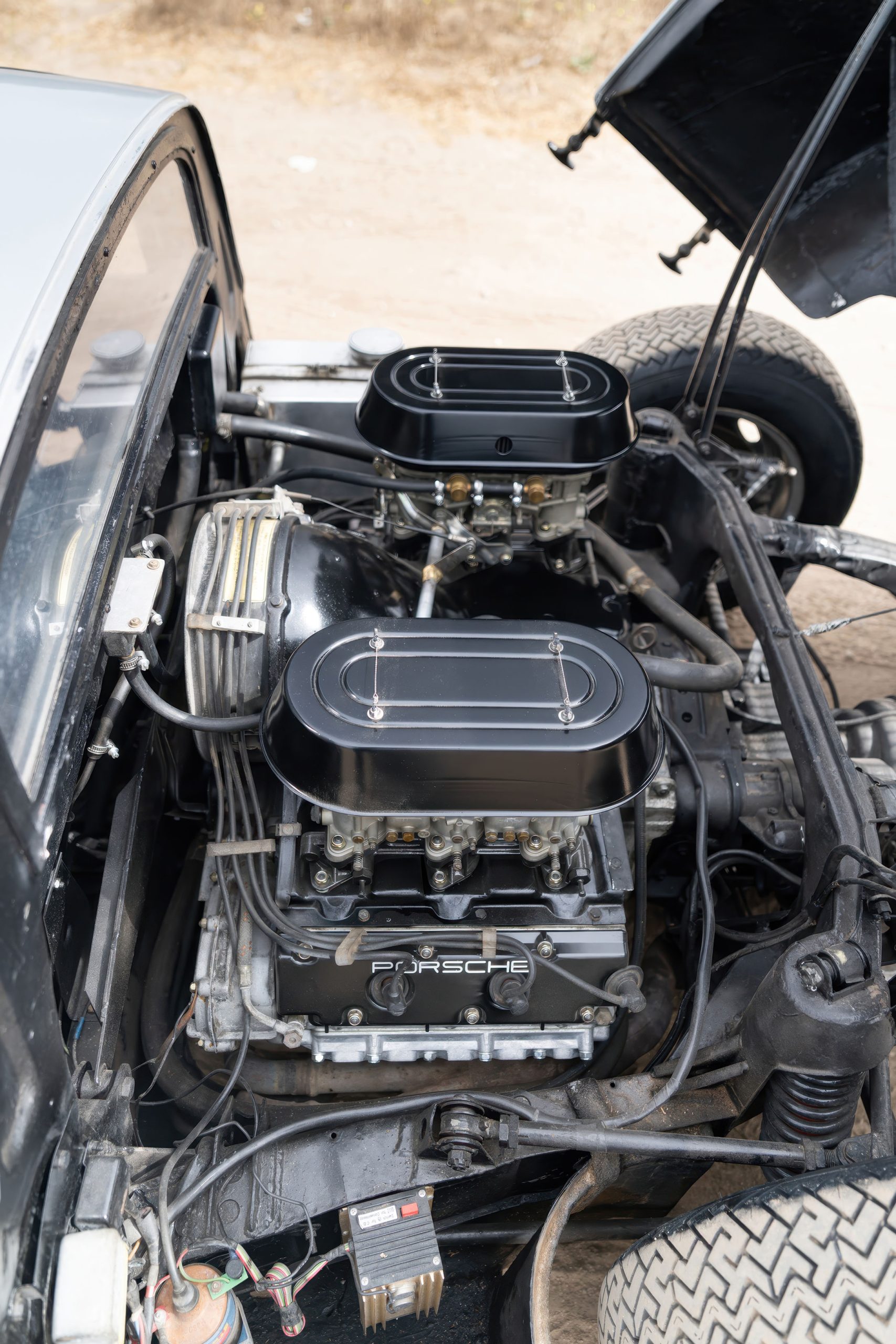
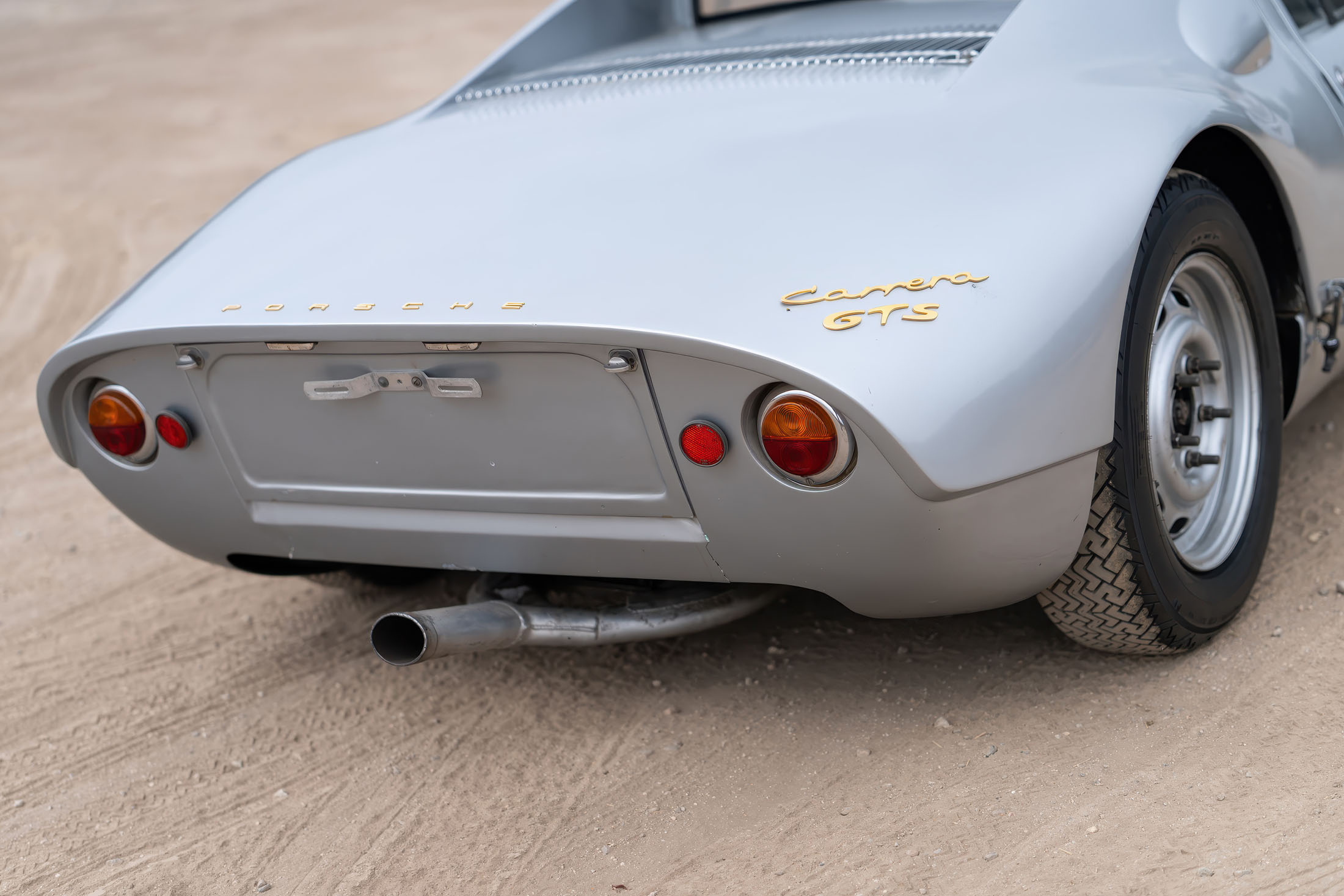
The 904 was Porsche’s first production model with fiberglass construction, its lightweight body bonded to a boxed steel chassis to create an exceptionally rigid structure weighing just 650 kg. Its advanced aerodynamics also enabled substantially higher speeds than Porsche’s earlier Spyder models. Power came from the ultimate production development of Ernst Fuhrmann’s four-cam, four-cylinder engine. The two-liter Type 587/3, fitted with a plain-bearing crankshaft, produced approximately 180 bhp.
Campaigned by the Porsche works team and privateers, the 904 excelled in endurance racing, rallies, and hill climbs, accumulating more than 300 class and 145 overall victories. It was also the last Porsche competition model conceived as a genuine dual-purpose machine, equally at home on the road and racetrack.
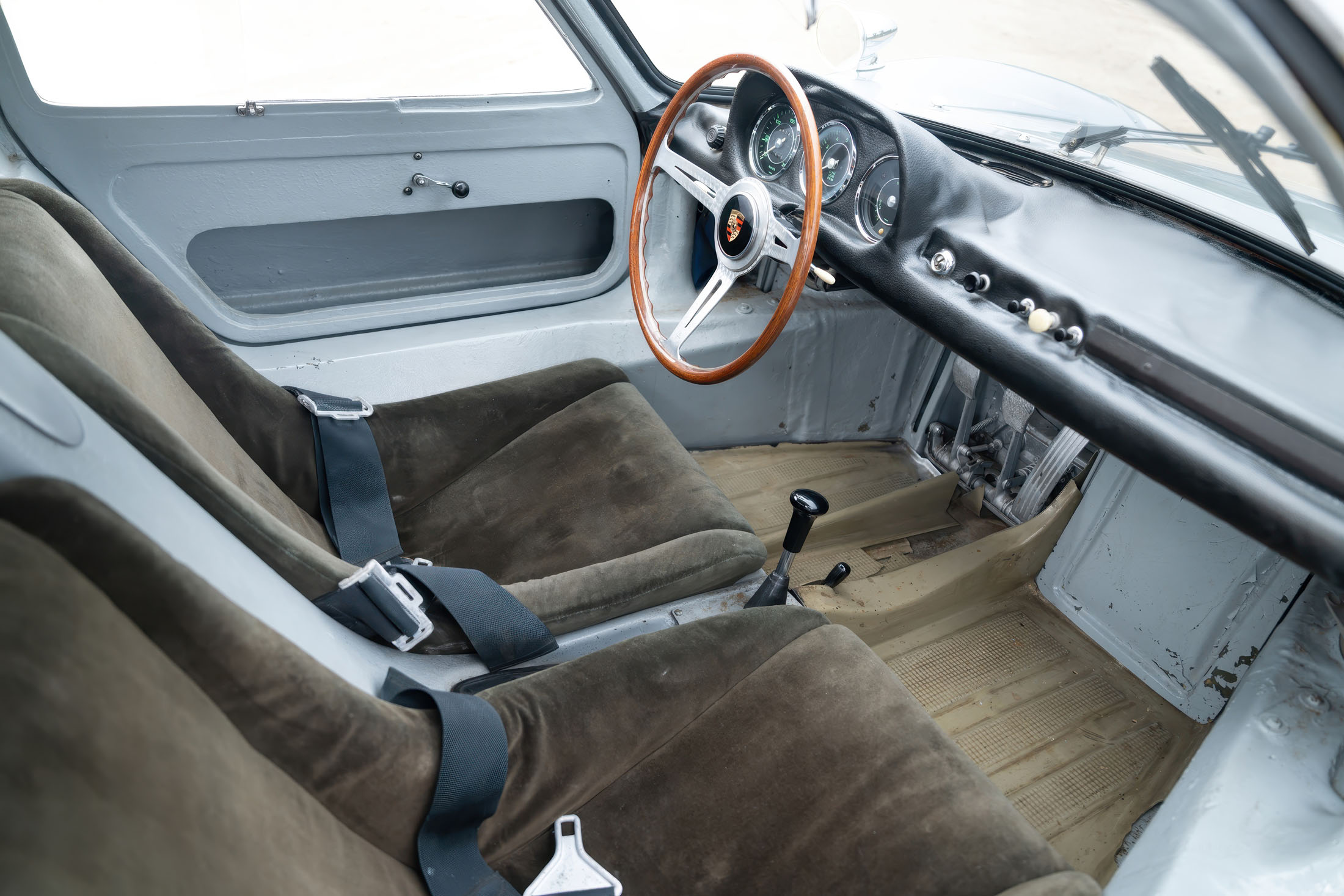
Chassis 904-043 was completed on March 6, 1964, in the rare combination of orange paintwork and blue velour upholstery. Only three of the 107 production 904s were originally finished in orange. Soon after completion, 904-043 was delivered through famed Florida Porsche dealer Brumos to Jack Ryan of RBM Motors, a Volkswagen dealer in Griffin, Georgia.
Ryan acquired the Carrera GTS with help from his friend Bill Bencker, a longtime Brumos associate and accomplished amateur racer. The pair had hoped to receive a 904 for the 1964 Daytona Continental, but their allocated car went instead to a European customer. Chassis 904-043 subsequently became available and was flown to Atlanta, then trailered to Jacksonville only days before its debut at the 12 Hours of Sebring.
Wearing race No. 39 and driven by Ryan and Bencker, the Porsche endured an eventful Sebring debut. Front-end damage early in the race was followed by a rod-bearing failure, yet the pair covered enough distance to be classified 31st Overall.
Ryan continued campaigning 904-043 throughout 1964 in SCCA and USRRC events across the Southeast. His consistent results earned 4th Overall in the SCCA E-Modified standings. The car also competed in the prestigious Bridgehampton Double 500 before concluding the season at Bahamas Speed Week, where it scored class victories in both the Nassau Tourist Trophy and Trophy Race.
For 1965, Ryan overhauled the 904 and recruited Ted Tidwell, a champion powerboat racer and Porsche driver known as the “King of the Hill” for his success at North Carolina’s Chimney Rock Hill Climb.
At the Daytona Continental in February, Ryan, Bencker, and Tidwell faced Cobra Daytona Coupes, Ferrari 250 GTOs, and factory-supported Porsches, bringing 904-043 home an impressive 9th Overall and 3rd in Class.
A month later, the team returned to Sebring. Prepared with flared front fenders, American Racing magnesium rear wheels, and Goodyear Blue Streak tires, the Porsche, driven by Ryan and Tidwell as race No. 43, finished 28th Overall and 5th in Class. Ryan again closed his season at Nassau, entering the Tourist Trophy, Porsche Race, and Trophy Race.
In 1966, Ryan turned his attention to racing a Porsche 911 and advertised 904-043 in Competition Press for $7,500. By the late 1960s, the car was offered through Kendon Porsche in Harbor City, California. Its original four-cam engine had suffered damage, and buyers were offered the car either as-is or with the engine rebuilt.
Eugene Dodd of Indianapolis, an active Porsche Club of America member and SCCA racer, subsequently acquired the car. Dodd sold its original four-cam engine to noted Porsche authority Jim Perrin and installed a 911 T engine. In 1970, he sold 904-043 to Dean Bangert of Orland Park, Illinois, who later advertised it in Autoweek.
That advertisement caught the attention of New Mexico ophthalmologist Dr. David Stinchcomb, who purchased the Porsche in January 1973. When spring arrived, Stinchcomb and a friend traveled to Chicago to collect the car and drove it approximately 1,200 miles home to Albuquerque.

The remarkable journey was chronicled in “Trial by 904” in the December 1974 issue of Porsche Panorama, where Stinchcomb praised the car’s reliability, extraordinary performance, and purity of line while describing the unforgettable experience of beginning the long journey through Chicago’s darkened suburban streets.
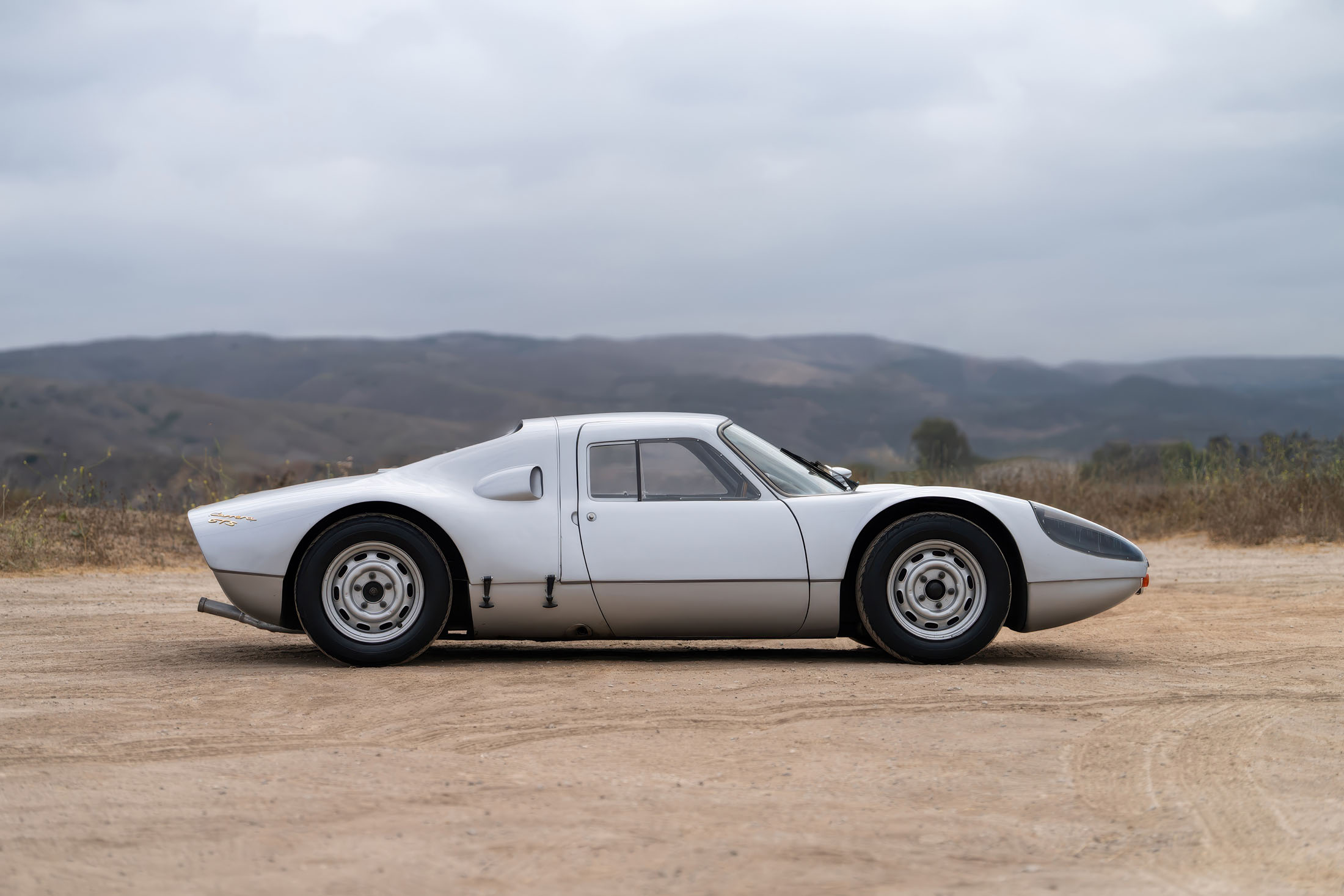
904-043 remained in Dr. Stinchcomb’s care for more than five decades. During his ownership, it was repainted silver and regularly displayed at Roadrunner Region PCA events, with occasional appearances at gatherings in Texas and Colorado.
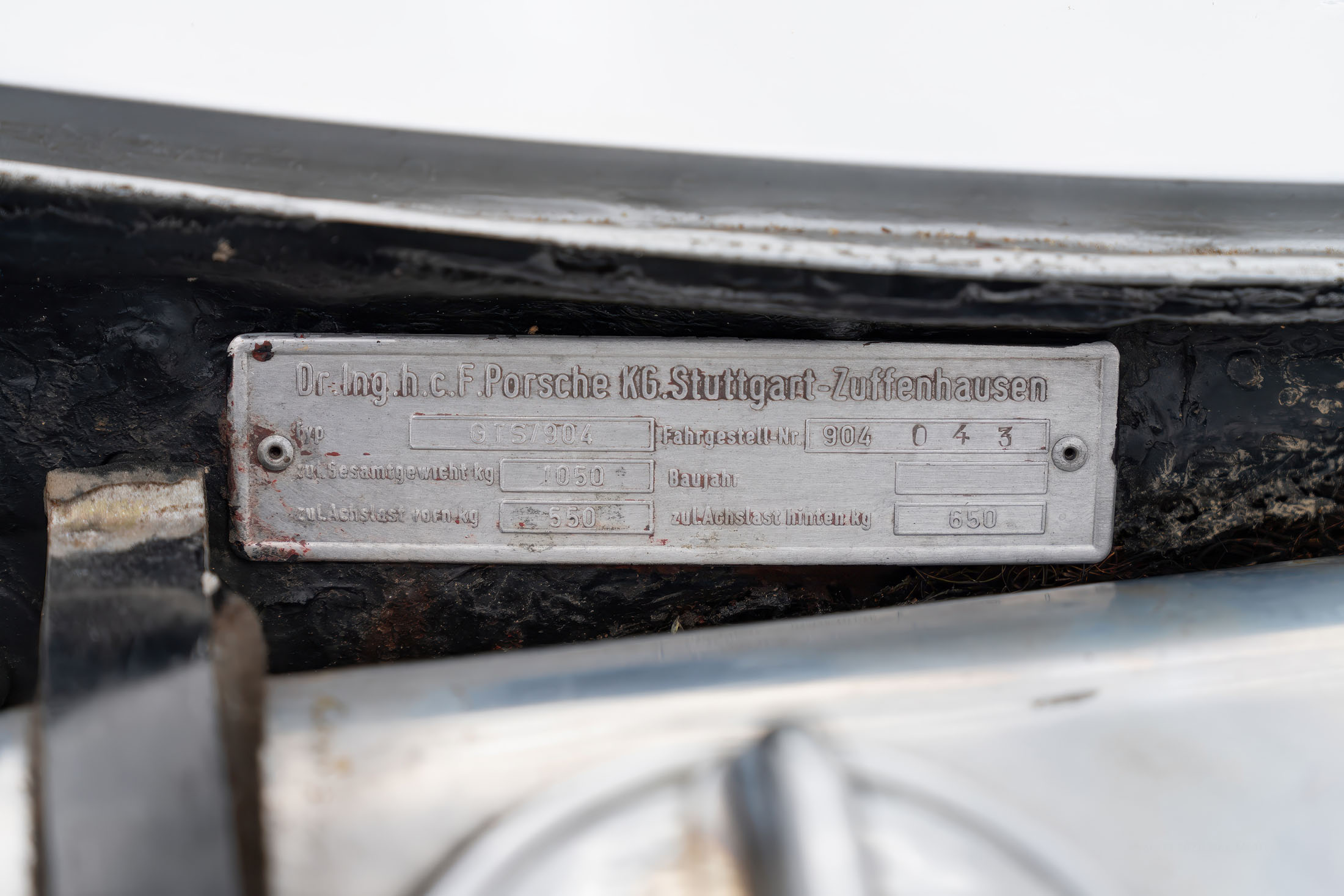
At one such event, Stinchcomb encountered the owner of the Porsche’s original matching-numbers engine. An agreement was eventually reached to reunite the surviving components, including the original case, cylinder heads, and crankshaft, all of which accompany the car today. Along with its transaxle (904-045), chassis tag, and data plate, these important original elements underscore the car’s unusual authenticity.
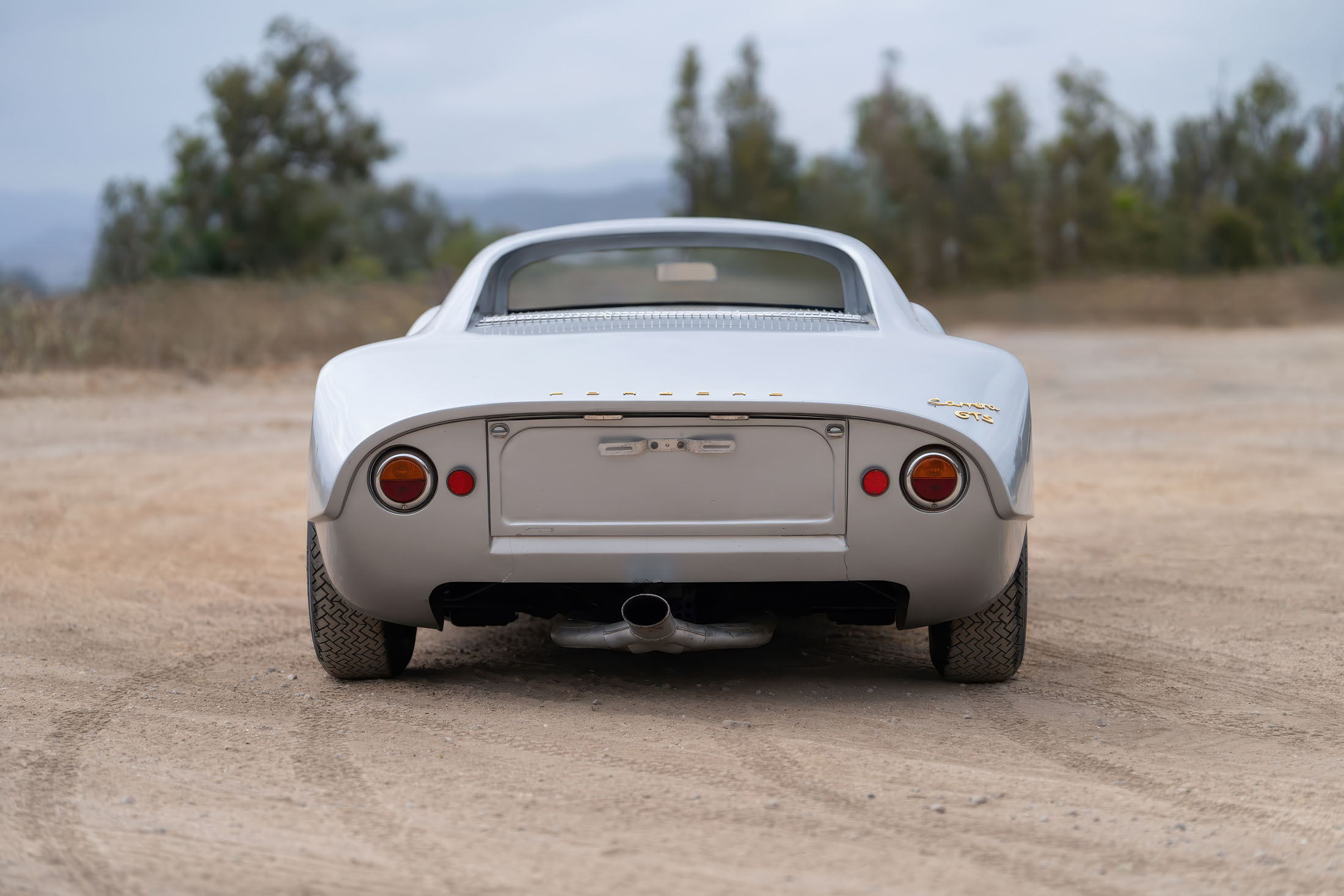
More recently acquired from Dr. Stinchcomb after his extraordinary 50-year custodianship, 904-043 is now offered for the first time in decades. Its rare original orange-and-blue color scheme, documented competition history at Sebring, Daytona, Bridgehampton, and Nassau, long-term enthusiast ownership, and surviving original components distinguish it as an exceptional example of Porsche’s groundbreaking 904 Carrera GTS.
Above contents © 2026 Gooding Christie’s, reviewed and edited by Rex McAfee , @rexmcafee 🏁
#Porsche #Porsche904 #904CarreraGTS #Porsche911 #ClassicPorsche #VintagePorsche #PorscheMotorsport #ClassicCars #HistoricRacing #SportsCarRacing
Thank you, great story,fantastic car…. I fell in love with the 904 as a kid,my first slot car was 904 lol, close as I ever got to one
0
Definitely a huge departure for Porsche; fiberglass sprayed over a steel frame etc. I had a Revell 906 slot car and it’s still the closest thing to ownership I’ll ever have!
0