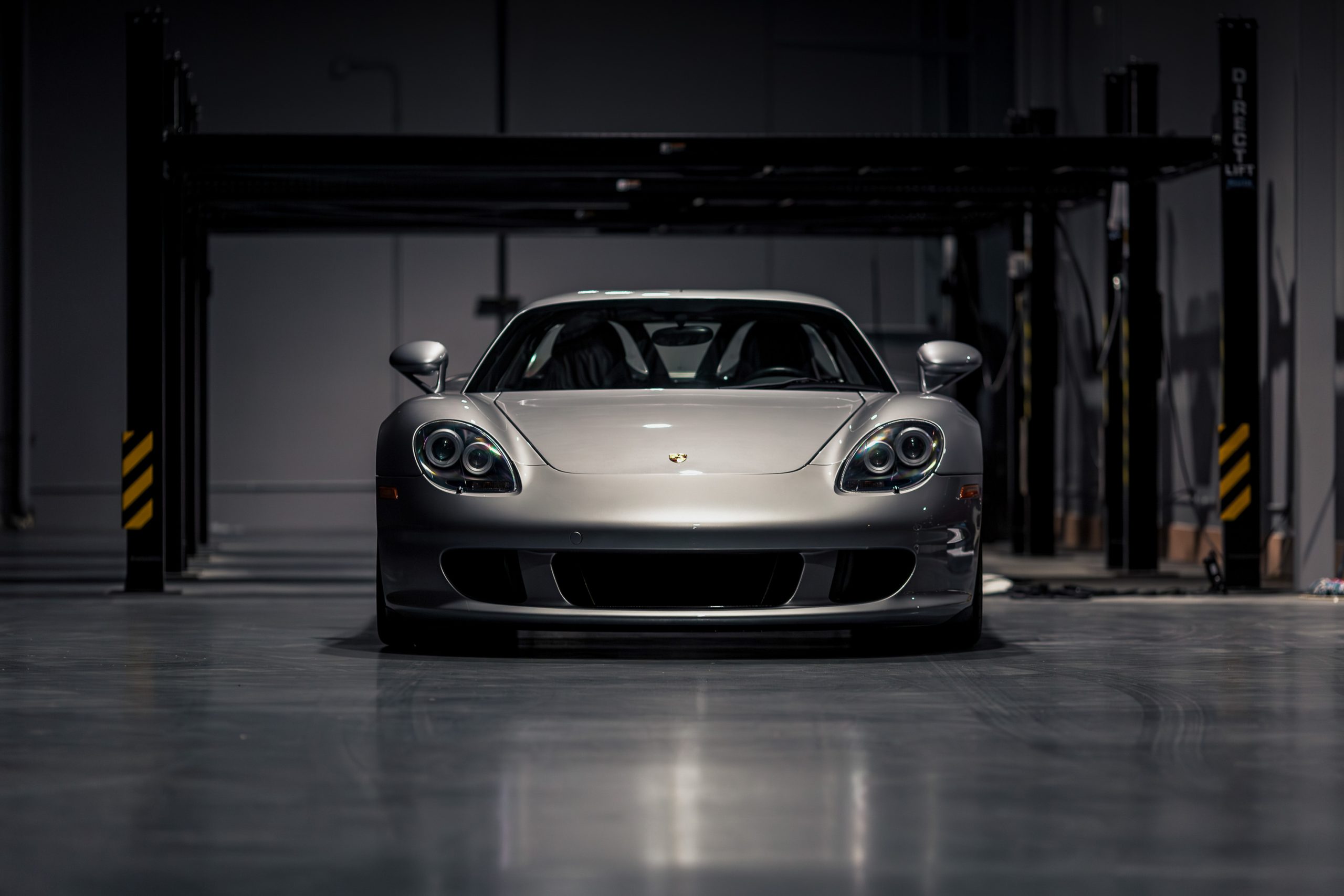

Born to Race: The Most Iconic Porsche Race Cars Ever
The wide array of available Porsche models may overwhelm a new enthusiast. We hope to narrow the options and make the selection task a little easier. We asked our team of Porsche experts and enthusiastic members and they didn't let us down. This page is a culmination of their opinions and experience. If you want to understand which racing cars most impacted Porsche's history and brand, this is the page for you.
Decades of Motorsport Dominance Distilled Into The Machines That Mattered Most. From air-cooled legends to turbocharged monsters, these Porsche race cars didn’t just compete—they defined entire eras of racing.
Porsche started racing with lightweight versions the 356 but things really took off with the “giant killer” 550 Spyder. Dedicated race cars like the 550, 718, RS, and RSK models were the focus of Porsche’s race program through the mid-1960s.
Porsche first expanded its 8 cylinder flat engine to 2.2 liters in the 907, then developed the 908 with full three liters in 1968. Based on this 8 cylinder flat engine the 4.5 liter flat 12 917 was introduced in 1969. The Porsche 917 is considered one of the most iconic racing cars of all time and gave Porsche their first 24 Hours of Le Mans win. The 917 went on to destroy the competition in the cutthroat Can-Am racing series.
Porsche has had success with 911 racing variants since the beginning of that models history, winning the Monte Carlo rally. In the 1970s Porsche won the Targa Florio, Daytona and Sebring with the Porsche 911 Carrera RSR. The 911 also went on to win Le Mans in 1979 in the Porsche 935. Since then the 911 has campaigned both by Porsche and by privateers in thousands of motorsports series with great success. Even today, Porsche churns out specific racing models that enthusiastic buyers can snap up and drive in global races in addition to its formal race programs it competes in. Recent success in LMP1 with its Le Mans winning 919 Hybrid shows that Porsche can still mix it at the top.
In celebration of that history we pick the best racing cars Porsche has ever produced and tell you all about them. But first a primer on Porsche and racing.
A Primer – Porsche’s Start in Motorsports
Porsche has a long history and its illustrious racing and motorsport heritage is a big part of that story. You name the motorsports venue and series and there is a good chance Porsche has competed and and had success. 24 Hours of Le Mans, Rally racing, Formula 1, Indy, Carrera Cup (clearly) and much more.
It all started pretty early for Porsche. Because of his work with Lohner, Ferdinand Porsche was commissioned by Daimler to design a car that could be used to compete in the Prinz-Heinrich-Fahrt (the Prince Henry Trial.) While several designs were presented, Ferdinand’s model – the 22/80 PS – was selected to represent Austro-Daimler in the race. When the 22/80 PS finished in the top three spots of the Prinz-Heinrich endurance race event, the car was christened as the “Prince Henry”.
Then from 1925 to 1927 Porsche designed the 2-liter, 8-cylinder Mercedes Type S that won 21 of 27 races in the “Regenmeister.” The car was said to be almost unbeatable. This success led to Porsche being contracted to design a series of race cars (and the engines that powered them) that were to be driven in the Gran Prix of Germany. Known as “The Great Auto Union Project,” the development of the race car would keep the young Porsche engineering firm busy through most of the 1930’s.
In 1933, the governing body of the Grand Prix Circuit announced a new racing formula. Both Ferdinand and Ferry set to work on designs that would meet the new 750kg formula regulation. The early result of this effort was an experimental vehicle known as the P-Wagen project.
In 1946, Piero Dusio, an Italian soccer player, businessman and racing driver, approached the firm to design a new Grand Prix race car. Ferry recognized that this might be the opportunity he’d been seeking to free his father from prison. Dusio gave the Porsche firm just 16 months to complete the car. Dubbed the Porsche Type 360 Cisitalia, the Grand Prix racer featured a supercharged, mid-mounted, 1.5 liter flat-12 cylinder engine that produced 385bhp at 10,500rpm. It was paired to a complex four-wheel drive transmission assembly. It never advanced beyond the testing phase, due mostly to the limited timeframe in which the car was to be completed so that it could compete in the Grand Prix circuit. Despite this, the car was also the first ever to bear the “Porsche” name.
The rest as they say is history. Now, onto the cars.
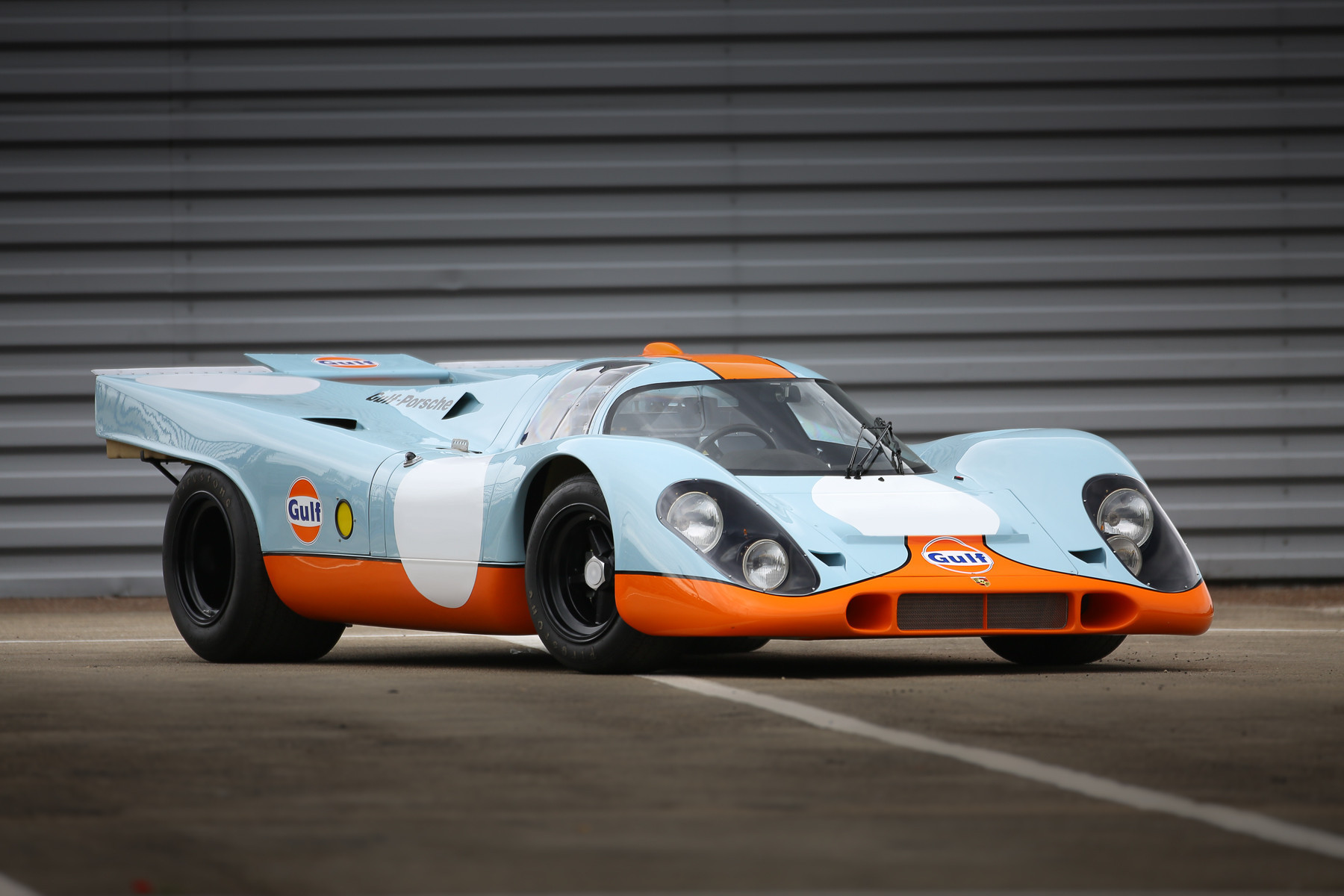
Historic, Iconic & Dominant (Pre-1990s)
The Cars That Built Porsche’s Racing DNA
Before lap records and hybrid systems, Porsche built its reputation by out-thinking and out-lasting the competition. These historic race cars defined endurance racing, rewrote the rulebook, and established Porsche as the most feared name in motorsport long before the modern era.
Porsche 917 (K, LH, & 917/30)
The car that gave Porsche its first overall Le Mans win in 1970, the 917 is famous for its air-cooled Flat-12 engine and the 917/30 variant which produced over 1,100 hp for Can-Am dominance.
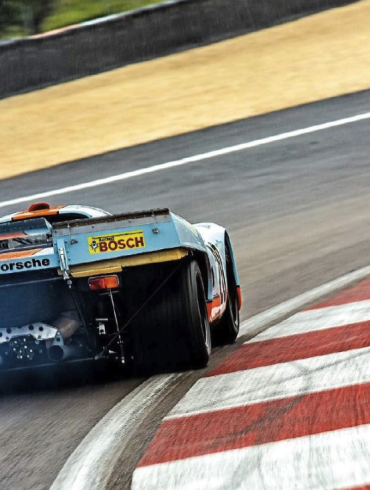
 Le Mans 24-Hours, 12-13 June 1971: Despite setting the fastest time in qualifying, the No. 18 Gulf Porsche 917 LH driven by Pedro Rodriguez and Jackie Oliver was forced to retire while lying in second place at 02h00 on Sunday morning, when an oil line came off inside the cockpit, spraying Rodriguez with hot oil. © Corporate Archives Porsche AG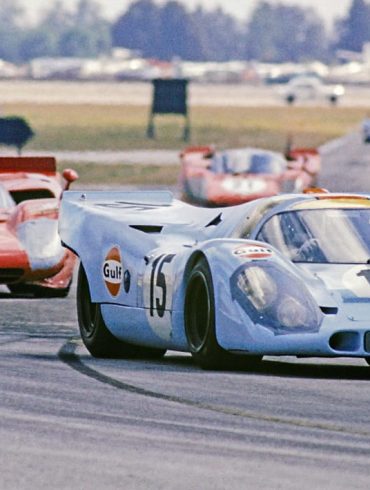
Why It Made The List
Few cars, of any make, can match the legendary Porsche 917. Developed in a time of motorsports turmoil, as regulations were being changed to reduce top speeds of race cars, it emerged as one of the fastest, most reliable, and winningest Porsches ever.
The 917 emerged from the regulation change implemented by the CSI, the at-the-time separate sporting arm of the FIA, in 1968, which limited prototype cars (Group 6) to 3.0L engines, and sports cars (Group 4) to 5.0L engines, with a requirement of 50 road-going homologation versions. Before these changes, Porsche had a very successful sports car race history, with the 904 Carrera GTS, the 906 Sports Car, and the 907 Sports Car winning in their classes. However, Piech wanted more than just class wins, he wanted the overall win at races, and the fact of the matter was that the Porsches could not keep up with the Ford GT40 and Ferrari P-series prototypes.
When the regulations took effect in 1968, Stuttgart offered forward the 908, a 3.0L flat-eight prototype, while behind the scenes, work on the 917 had already begun. Because many manufacturers balked at having to invest in 50 homologation specials to produce their Group 4 cars, the CSI reduced that number to 25, and Piech pounced. He saw his chance to get an outright win as the 7.0L Ford GT40 had to cut power and engine size, and the Ferrari P-series were retired from competition.
Introduced in 1969 at the Geneva Motor Show, the Porsche 917 had a 4.5L flat-twelve engine, stellar looks, and caught the attention of both customer racing teams and the CSI alike. To allow the car to race, the CSI wanted to see the 25 homologation models, and set the inspection date for barely over a month later. This led to one of the most famous efforts at Stuttgart, the “secretary car,” as everyone from every department, including the secretaries, were drafted in to build 917s.
When the CSI arrived, there were 25 917s lined up outside of the factory, although only 5 actually ran, and the rest had tractor engines in them, with bodies draped over the frame, to give the appearance of being completed. Piech offered the CSI inspectors the opportunity to drive any of the 25 units, but that offer was declined, as Piech had surmised it would be, since the CSI wanted more manufacturers in the Group 4 class.
Eventually, those 25 cars would be completed, and the 917 started racing in 1969… and failed horribly. It was discovered that the 917 was incredibly unstable at high speed, and while it had been homologated in time for Le Mans, factory drivers and customer teams alike preferred to race the 908 Spyder, which finished 1st through 5th at the 1969 1,000 KM of Nurburgring, while the sole 917 entered finished in 8th place.
Three 917s were entered in the 1969 24 Hours of Le Mans, two from the factory and a factory model loaned to John Woolfe Racing. One of the 917s set the fastest speed in practice down the Mulsanne Straight, as well as set the fastest lap, so word began to percolate that Porsche might have a challenger. Unfortunately, John Woolfe suffered a fatal crash in the 917 on the first lap, as he had not done up his seat belts properly after the traditional Le Mans sprint-across-the-track start. Further compounding things, both factory 917s dropped out after 300 laps with identical clutch bell housing failures.
Things changed for 1970, however, as Piech had ordered the 917 back to the drawing board to rectify the stability issues, which created the now legendary 917 Kurzheck (Short tail), better known as the 917K, which was astonishingly stable at any speed. Simultaneously, a 917 Langheck (Long tail), or 917LH, was created to achieve top speed down the Mulsanne Straight. The development worked, and in 1970, driven by Hans Herrmann and Richard Attwood, a 917K crossed the line first overall, giving Porsche their first win at Le Mans.
After Porsche had won Le Mans twice back to back, development began on more models of the 917, including a turbocharged version of the 917’s flat-twelve for CAN-AM, and a flat-sixteen prototype. That CAN-AM model eventually became the 917/10, developed in collaboration with Mark Donahue, a legendary race car engineer, and Penske Motorsport, which eventually was capable of handling up to 18 to 20 PSI from the turbo, which put down over 800 HP to the rear wheels.
In the hands of Penske Motorsport, the Porsche+Audi liveried car, driven by Mark Donahue and then George Follmer, would go on to win the 1972 CAN-AM championship outright, as no other car on the grid could keep up. It was often cited as one of the ugliest, loudest, meanest, wildest race car on the grid, but it got the job done.
For 1973, a 5.4L version of the CAN-AM engine was created by Valentin Shaffer, which was placed into the 917/30, producing a nigh unbelievable 1,100 HP when the turbos were turned up to full. In race trim, it ran at 900 HP, and in the hands of Mark Donahue, absolutely decimated the 1973 CAN-AM championship, practically winning every race.
That same car also set a lap speed record of 222 MPH (356 KPH) around the Talladega Oval in Alabama during a race, and to this day, that still stands as one of the fastest race laps ever run, by any car on any circuit.
The 917 program, which ran for most of the 1970s, was one of the most vitally important periods for Porsche Motorsport. From this era, the dangerously fast 956 was born, the legendary 935 911 program was greenlit, and the 917, in K, L, /10, and /30 trims, was the dominant race car in the world, bar none. Without the 917… Porsche’s racing history would have been a lot different.
Details
Years: 1969 - 1973
Designer: Hans Mezger
Layout: Rear mid-engine, RWD
Engines: 4.5 L Type 912 Flat-12, 4.9 L Type 912 Flat-12, 5.0 L Type 912 Flat-12, 5.4 L Twin Turbo Flat-12
Transmission: 4 or 5-speed manual
Achievements
Delivered Porsche's first overall victory at the 24 Hours of Le Mans in 1970, followed by a second consecutive overall win in 1971, where it finished 1st, 2nd, and 3rd overall. The 917 shattered endurance racing records, including a distance record at Le Mans (1971). Beyond Le Mans, the 917 conquered the Can-Am Championship in 1972 and 1973
Learn More
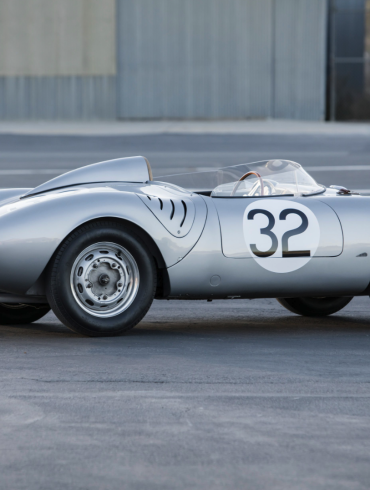
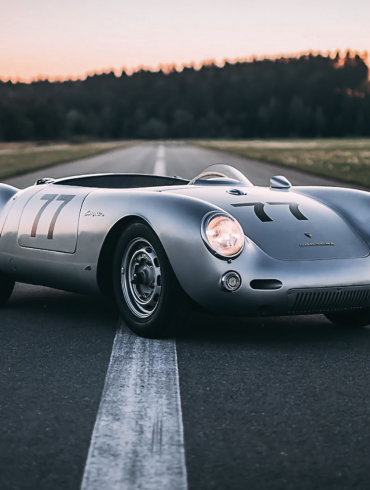
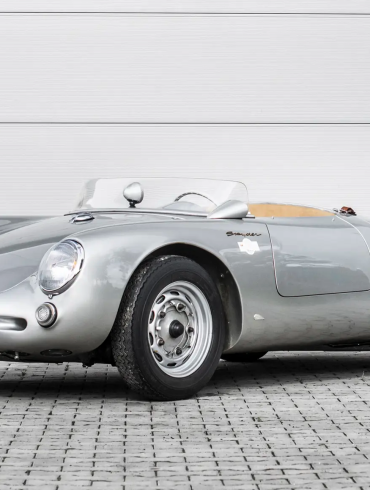
Porsche 550 Spyder
Known as the "Giant Killer," this lightweight mid-engine car defeated much larger engines to win the 1956 Targa Florio and became a cultural icon. Cementing its reputation through intelligence, not horsepower.
Why It Made The List
Before 1953, Porsche cars had been used for racing, but none of them had been outright designed from the very start to be a racer. That was changed when the 550 Spyder came about, which would become the car that cemented Stuttgart as a center for racing performance and excellence.
The 550 Spyder was one of the few Porsche cars that was designed from the outset to be mid-engined, which was seated in a lightweight tubular steel flat frame. Overtop, lightweight steel and sometimes aluminum was hand shaped into a monocoque body.
Adding just enough controls to drive the car and provide driver information, it was a sparse, spartan car, but with the simplifications, it weighed just 1,212 lbs, or 550 kg, with a 1.5L flat-four engine producing anywhere from 110 to 135 HP.
This made it ridiculously fast for the time, and it won the very first race it entered, at the Nurburgring in 1953. All said, of the original specification, 90 units were sold. Due to how the car was manufactured, it was also deemed as road legal in many countries around the world, and seeing a 550 Spyder drive to the race track, take part in a race, and then drive away was not uncommon.
Updated a few years later with a steel space frame and more grunt from the engine, the 550A Spyder was a pure race car. It made its racing debut at the 1956 1000 KM of Nurburgring, but its most famous success was in Italy.
During the 1956 edition of the legendary Targa Florio, one of the toughest road races of all time, Umberto Maglioli was the first to cross the finish line in a 550A RS Spyder.
To do this, he had to outpace Ferrari’s, Maserati’s, Alfa Romeo’s, and the like, all of which were extremely competitive. It was the first of 11 Porsche victories before the Targa Florio ended in the late 1960s.
Details
Years: 1953-1956
Production: 90 units (550), 40 units (550A)
Body style: 2-door coupe & roadster
Layout: Mid-engine, rear-drive
Engine: 1.5L (1,498 cc) DOHC Flat four
Power: 110 hp to 135 hp
Transmission: 4 and 5-speed manual
Achievements
Class victories at the 24 Hours of Le Mans in 1954 and 1955, including a remarkable 4th overall finish in 1954. Its crowning achievement came with an overall victory at the 1956 Targa Florio. The 550 also claimed class wins in the Carrera Panamericana, dominated European hill climb championships, and became a standout in early SCCA racing in the United States.
Learn More
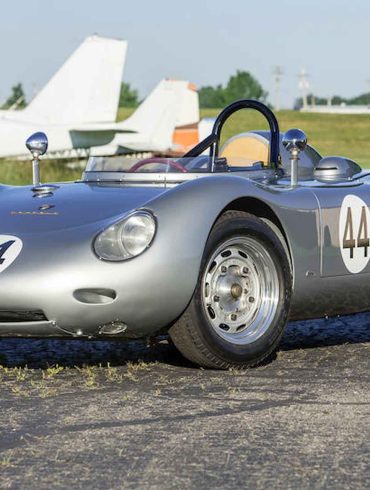
Porsche 718 RSK
A mid-engine masterpiece that dominated its class and influenced every Porsche racer that followed.
Why It Made The List
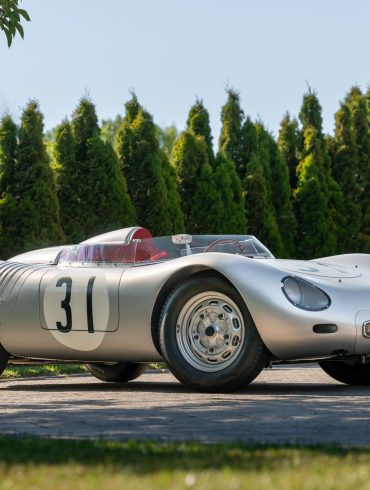
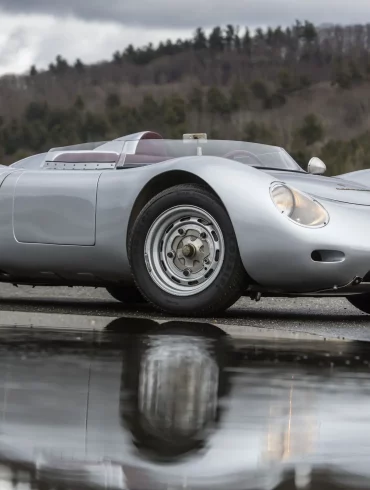
The namesake of the current Boxster and Cayman models, the Porsche 718 was the direct successor to the 550A RS Spyder.
Named the 718 RSK, it debuted in 1957 and was soon winning around the world. The RSK after the model number breaks down into “RennSport” (RS), and the K designated a new front torsion bar springs that formed the shape of a K if you laid it down on its spine, with the two arms pointing upwards.
The 718 soon became known as the “Giant Killer,” as while Ferrari’s and Aston Martin’s of the time were weight down with big V12 engines and long hoods with small cabins, the mid-engined Porsche was lighter, nimbler, and due to the steel space frame and suspension setup, extremely rigid.
This made it nearly telepathic in response to driver inputs, and it soon became the top tier Porsche racer, taking part in everything from Le Mans to the 12 Hours of Sebring.
There were a number of regional differences for the different race series it entered, such as the RS60 with 160 HP and meant to race (and won) at Sebring and the Targa Florio. The RS61 was an evolution of that car, while the wild W-RS upped the engine to 2.0 liters, upped the cylinder count to a flat-eight, and upped the power to 240 HP, with the car still weighing in at a sparse 640 kg, or 1,411 lbs.
While it managed only 8th at Le Mans, it participated in Formula One as Porsche’s entry for a full season before they switched to focus on the 904, and it dominated many European Hill Climb contests. Despite only 3 being made of the W-RS, it is still considered the ultimate evolution of the 718.
Details
Years: 1957-1962
Production: ~ 78 units
Assembly: Germany
Chassis: Spaceframe
Engine: Type 547 1,498 cc (91.4 cu in) DOHC F4 boxer
Transmission: 5-speed manual
Weight: 570 kg
Designer: Wilhelm Hild
Achievements
Earned multiple class wins at the 24 Hours of Le Mans, regular top-10 overall finishes, and playing a key role in Porsche’s overall victory at the 1959 Targa Florio. It also achieved strong results at the Nürburgring 1000 km, dominated European hill climbs, and became a highly successful platform in SCCA racing.
Learn More
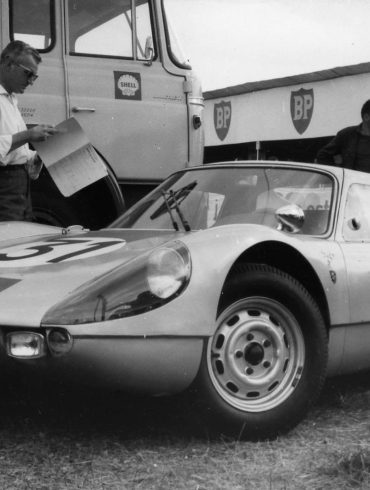
Porsche 904
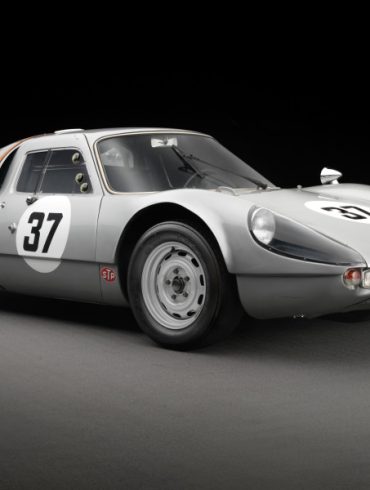
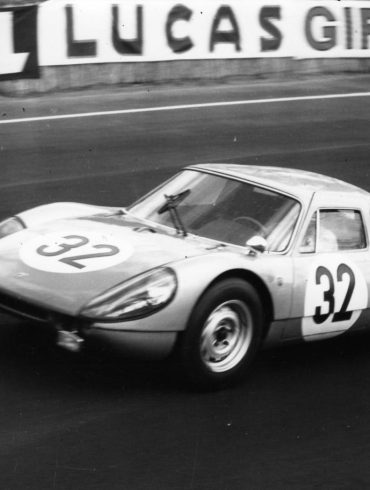
It was a pivotal "bridge" model that moved Porsche from its early lightweight Spyders into the dominant prototype era of the late 1960s. In its debut year (1964), it achieved a legendary 1st and 2nd overall finish at the Targa Florio.
Why It Made The List
In 1962, Porsche withdrew from Formula One at the end of the season, deciding instead to focus on sports car racing. This was because of a new set of regulations regarding GT cars for endurance and sprint races announced by the FIA, and the 904 was the car that was designed and built to meet all of them.
Expertise that was gained while developing and then racing both the 550 and 718 RSK race cars were instrumental in the design of the 904, which was meant first as a road-going car because of the homologation regulations needing 100 production cars. However, while those 100 cars were fitted out with comfortable interiors, heaters, and the like, the chassis had been designed to hold any of a variety of engines, depending on what series the car would race in.
The original, dedicated engine for the car was going to be shared over from the Porsche 901, a flat-six unit that is extremely familiar to many enthusiasts, as the 901, after some trademark issues, was renamed to the 911. Eventually, the 587/2 flat-four from the last years of the 356B was used, as it married well with the balance of the car and its light weight, while giving enough performance, 180 HP, to be competitive.
Of the 120 units produced, a large percentage were sold to customers or customer racing teams, meaning that other engine options were developed as the car’s popularity grew. It was winning hill climb events, road rallies, and the like, so Porsche developed 2.0L flat-eight known as the Type 771 which produced 210 HP.
A flat-six eventually made it into the car, although all six of the 904/6 cars were Porsche works race cars. It was the unit from the 911 that came across, bringing with it 200 HP and all of the development expertise that had created it in the first place. This made the 904/6 extremely reliable, something that is a bit of a hallmark of almost every Porsche racing car since.
The 904 won a large portion of races it was entered into, including an outright win at the 1963 Targa Florio, and it absolutely dominated the 2.0L class in 1964, pretty much taking the sports car championship it was designed for in a clean sweep. In 1965, the 904 again was the class of the field, but other manufacturers had started to develop cars that could compete with it. The 904 ended production in 1965, with its replacements, the 907 and 908, taking up its torch.
Details
Years: 1964–1965
Production: 120 units
Designer: Ferdinand Alexander Porsche
Body style: 2-door coupe, 2-door roadster (Bergspyder)
Layout: Rear mid-engine, RWD
Engine: 2.0 L Flat 4, 2.0 L Flat 6 (904/6), 2.0 L Flat 8 (904/8 & Bergspyder)
Achievements
Achieved an overall victory at the 1964 Targa Florio, where it defeated more powerful competitors through balance and reliability. The 904 also secured class wins and strong top-10 overall finishes at the 24 Hours of Le Mans, excelled at the Nürburgring 1000 km, and became a dominant force in GT and sports car racing across Europe and the United States.
Learn More
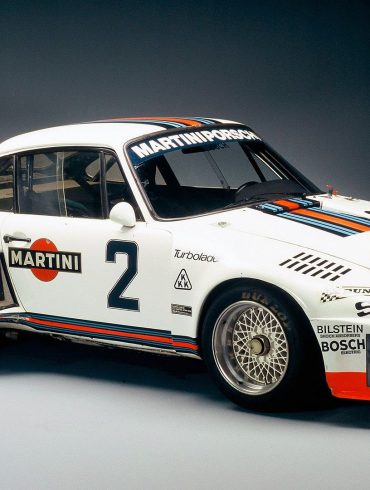
Porsche 935
Turbo brutality unleashed, proving Porsche could dominate silhouette racing just as ruthlessly as prototypes. At full strength they produced 845 hp and achieved a top speed of 366 km/h at Le Mans.
Why It Made The List
Porsche 935/77
From 1977 into the 1980s, Porsche 935s were the popular choice in Group 5, GTP, and GTX racing both in Europe and North America. Later versions were made by Kremer, Joest, Gaaco and Fabcar left little room for any challenge to Porsche dominance. The culmination of these efforts resulted in a first overall at the 1979 24 Hours of Le Mans.
The 935 was initially offered as version of their 935 for private racing teams that raced alongside the technically superior Martini-sponsored factory cars. These were based of the 1976 the Porsche Carrera RSR 2.1 Turbo which contested the 24 Hours of Le Mans in 1974 provided a basis for the 935. Due to the more relaxed Group 5 regulations, engineer Norbert Singer could drastically alter the outer-bodywork of the standard 930 unitary steel monocoque. This allowed for much larger fender flares and a huge rear wing. Half way through the 1976 season, Porsche relocated the front headlights to the Flachbau or flatnose design. The design retained the 930 Turbo bodyshell which was stiffened by an aluminum roll cage. The attached front and rear sections were made from fiber-glass and 5-inch wheel arches were fitted covering 15-inch tires in the rear. Plexiglass windows and other lightweight construction meant that the car was produced 90 kg underweight which was offset by ballast.
Using the 1.4 equivalency factor given to turbocharged engines, Porsche could assemble a 2.9-liter engine that fit well within the 4-litre restriction. To offset the smaller displacement, a huge KKK turbocharger was fitted which helped the 2808cc flat-6 produce close to 600 bhp. This number varied depending on the boost which ranged from 1.35 and 1.55 bar.The engine used dual-ignition, a 908-style fuel pump, plunger-type fuel injection and spraybar lubrication. Consumption was rated at 4.38 mpg. A knob on the dashboard controlled the boost which could vary the power from a reliable 550 bhp to 650 bhp in sprint mode. Some private teams opted for the larger 2994cc engine which raised power to 630 bhp but they were forced to carry 122 extra lbs of ballast. The suspension and wheels were also drastically upgraded including coil springs, adjustable anti-roll bars, and larger ventilated discs. Naturally, the car was completely stripped and Porsche managed to reduce weight to 900 kg. With ballast the car could then meet the required 970 kg formula.Porsche offered the car again in 1978 with the twin-turbocharged specification and running boards as on the factory team cars. That year IMSA champion was Peter Gregg driving the Brumos Racing 935. The World Championship of Makes was secured by the 935 after winning 7 rounds. The German Nation Championship was also contested by 12 separate 935s of which the Gelo-entered cars were fastest.
Through 1984 the 935 won over 150 races worldwide, including more than 20 class wins. It scored an overall win in the 1979 24 Hours of Le Mans making it one of only 2 cars since 1953 to win at Le Mans overall yet not be in the top prototype class. It also won the 24 Hours of Daytona and the 12 Hours of Sebring six times each. It was also undefeated in the German DRM between 1977 and 1979, posted victories in the IMSA GTX class, and won many races on the famous Nürburgring Nordschleife, including three 1000km Nürburgring. The 935 also took Porsche to victory in the FIA World Championship for Makes each year from 1976 to 1979. In 1980 and 1981, Lancia won the title with their Beta Montecarlo 1.4t, by regularly winning the sub 2.0 L category, and occasionally defeating Porsche in the big category.
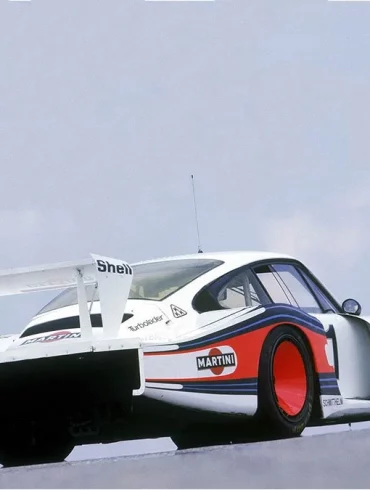
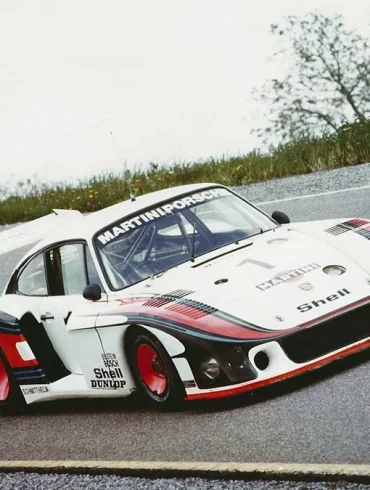
Porsche 935/78 ‘Moby Dick’
The most iconic 911-based race car to ever turn a wheel in anger? Almost any Porsche enthusiast would agree that the 1978 935/78 was the car. Not just a great Porsche, but the car that defined Stuttgart’s utter dedication to racing and winning.
Racing under the FIA’s Group 5 “silhouette series” regulations, where the race car had to mostly resemble the road car it was based on, Norbert Singer took great liberties with the design, to the point that he was literally at the margins set out in the rules, if not half a millimeter over. Everything about the 935/78 was turned up to 11, making it both an instant classic and an iconic race car.
The car, like the 935/77, used the unitary steel monocoque of the Type 930 911, but unlike the /77, the front and rear subframes were replaced with aluminum. Both the front and rear body was lengthened, giving the car a much shallower nose to cut through the air better, and a tail that stuck out so far that it resembled a whale. This was where the term “Whale-tail” was derived from for the spoilers that started to show up on 911s in the 1980s, as well as the car being nicknamed “Moby Dick.”
The car was absolutely slammed to the limit, lowering the car a juicy 75 mm from the base 930. The entire floor was replaced, creating a smooth undercarriage that naturally created ground effect aerodynamics. The tail, which extended almost 2 feet beyond where the rear of the engine was visible through the chassis, was hollow and shaped to create a massive venturi effect, in effect sucking the car hard to the road. That was aided by a massive wing on top of the whale tail, that was there more for high speed stability than pure downforce.
The engine, a 3.2L flat-six, had to use production car internals in the block, but the cylinder heads were free to modify, again something discovered by Norbert Singer reading the regulations very carefully. Thus, the 935/78 had the first implementation of water cooled cylinder heads in a Porsche race car, as well as having dual overhead cams per bank (four total cams) and four valves per cylinder. Of course, being a 935, this engine was paired with a KKK turbocharger that was bigger than the one on the 935/77.
When dialed up to qualifying spec, the turbo produced nigh on 25 PSI (1.7 bar) of boost, with over 850 HP at the flywheel possible. When run in race trim at 21.8 PSI (1.5 bar), it still was throwing down 750 HP at the flywheel, and just about 680 to 700 HP at the wheels. The radiators to cool this monster were mounted in the side vents of the massive rear wheel wells, a design inspiration that would make it to pretty much every 911 Turbo since the 1970s, while underbody airflow was used to cool the block and transmission.
The car first appeared at the 6 Hours of Silverstone, where it won outright while coming close to setting the largest margin between the winner and second place at the race. As it was designed to race at Le Mans, the car was not used again until the sports car championship returned to Le Circuit de la Sarthe that year. In the hands of Rolf Stommelen and Manfred Schurti, the 935/78 set a new top speed record for a silhouette race car of 227 MPH (366 KPH) down the Mulsanne Straight, a speed that no other factory works 911 based race car has been able to achieve since.
Despite the incredible speed, the car suffered from engine problems and spent time in the pits, eventually coming home eighth overall. Yet, it had beaten every other car in the silhouette prototype class in top speed, and firmly etched itself into the history books. The works 935/78 was raced only two more times before being permanently retired and placed in the Porsche Museum, where it still sits today.
A few customer teams made “replica” 935/78s from blueprints of the works car, but the actual Moby Dick itself, despite the enormous cost to design and develop, took part in only four events. Yet, those four events were enough to make this car a legend.
Details
Years: 1976 - 1978
Designer: Norbet Singer
Layout: Rear engine, RWD
Engines: 3.0–3.3 L Type 935 twin-turbo Flat 6 & 1.4 L Turbo Flat 7 (Baby)
Transmission: 4-speed manual
Achievements
The Porsche 935 is one of the most dominant customer-based race cars ever built, achieving an overall victory at the 1979 24 Hours of Le Mans. The 935 dominated IMSA GT, World Championship for Makes, and Group 5 racing worldwide, collecting hundreds of wins. In privateer hands it proved nearly unbeatable, with variants like the Kremer K3 defeating factory prototypes.
Learn More
Porsche 911 RSR 2.14 Turbo
If the 917 was the car that put Porsche on the map for overall wins, the RSR 2.14 Turbo was the car that saved the 911's racing career by dragging it into the forced-induction era. One of the most historically important experimental racers.
Why It Made The List
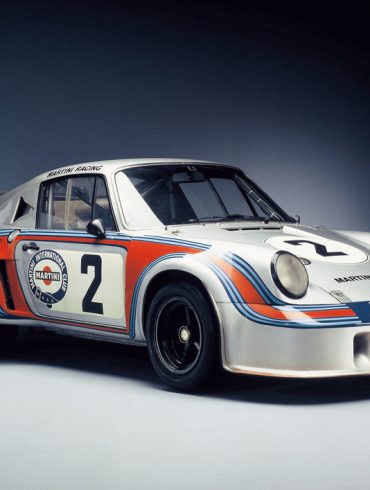
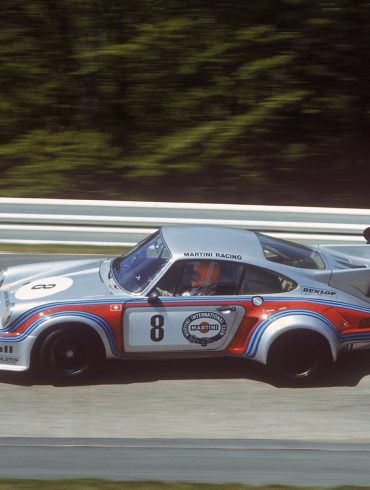
The 1974 Porsche 911 RSR 2.14 Turbo is a car that not only inspired a full decade of racing cars after it, but also was one of the milestone cars in Porsche’s entire history. It was a car of firsts, and despite its extreme rarity, it was also a research and development lab on wheels that would set the standard for the next 20 years of 911 road cars.
Until 1974, Porsche had been showing the world through excellent cars like the 550 Spyder and the 718 RSK that a lightweight car with a small engine could, quite literally, run laps around big, heavy, large engined GT cars. It was actually during the development of the 917, especially the 917/10 and 917/30 for CAN-AM, that the inspired decision was made to show the world what small displacement forced induction engines could do.
To showcase turbocharging, in hopes to create interest for the newly announced 1975 911 Turbo road car, the RSR was created to fit tightly within the FIA’s Group 5 regulations, especially the requirement for the engine to be at 3.0L or less in displacement. While they could have gone mad and made a twin-turbo 3.0L flat-six, in the interests of keeping the 911’s near perfect balance and dynamics, a 2.14L flat-six was developed instead. It did get two turbos, however, both of them some of the largest, at the time, turbines that KKK had ever made.
The engine was also a technical powerhouse. The crankcase was made of magnesium, the connecting rods were made of ultra-strong but ultra-light forged titanium, two large-capacity oil pumps for redundancy, mechanical direct fuel injection developed by Porsche and Bosch, a dual ignition system, and even had sodium-cooled intake valves, which was seriously space-aged technology in the 1970s. The engine, with all the tech and design, ended up being able to produce an astounding 500 HP and 405 lbs-ft of torque.
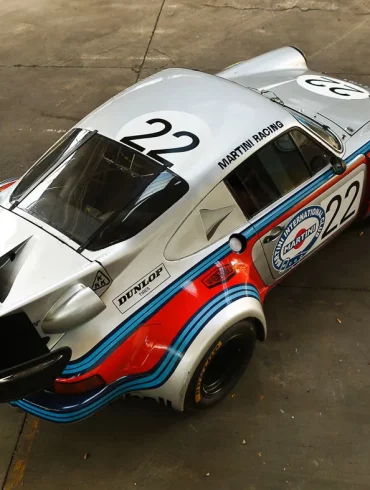
That engine was then mounted into a steel tubular space frame chassis, and the car was draped in fiberglass body panels, engineered to be at the minimum spec needed to save as much weight as possible. Those body panels were also shaped to create as much aerodynamic downforce as possible, including the rear deck lid that would become the inspiration for the 935/78’s “whale tail” spoiler. All said and done, the car weighed a scant 825 kg, or 1,819 lbs.
During testing for the 1974 24 Hours of Le Mans, even Porsche were stunned when the tiny car with the tiny but giant heart lapped the course a full 11 seconds faster than the RSR 3.0 from the previous years. A combination of the incredibly mid-range torque and the top-end power meant that the car was seriously threatening the 200 MPH threshold down the Mulsanne Straight, a feat that a Porsche just a few years later would smash through.
Four total 911 Carrera RSR 2.14’s were made, with all four turning their first laps in competition at the 1974 1,000 KM of Monza. Dubbed R5, R9, R12, and R13, they were all title sponsored by Martini, using the classic livery that just works on a Porsche. Due to their massive technical innovations, however, the cars had to race in the Group 5 Prototype class, alongside dedicated prototype cars like the Matra-Simca MS670C and the Gulf Mirage GR7. Despite racing cars that were massively above its class, the RSR 2.14s were able to achieve second place finishes at both the 6 Hours of Watkins Glen and the big race, the 24 Hours of Le Mans.
As a result, not only did Porsche sell a lot of 911 Turbos in 1975, for every generation since the Turbo model has been the flagship. Yes, there are 911s in every section of the sports car market, but it’s the Turbo, ever since Porsche proved what you can do with six cylinders, a small displacement engine, and two stonkingly huge turbines, that has led the charge in every Type since the 1980s.
Details
Production: 4
Engine: Flat-6
Power: 450 bhp @ 8000 rpm
Body / frame: Unitary Steel Monocoque
Driven wheels: RWD
Front suspension: Bilstein Shock Absorbers, Titanium Springs
Rear suspension: Bilstein Shock Absorbers, Titanium Springs
Achievements
Achieved a 2nd overall finish at the 1974 24 Hours of Le Mans - an extraordinary result for a 911-based GT car competing against pure prototypes. The car’s success directly informed the development of the Porsche 917/10 and 917/30 Can-Am cars as well as the later 911 Turbo (930) road car.
Learn More
Porsche 936 Spyder
The first turbocharged car to win Le Mans overall (1976), it secured 3 total victories at the Circuit de la Sarthe using a 2.1L turbocharged Flat-6.
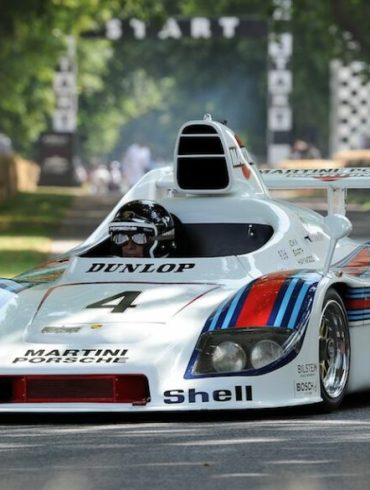
 Porsche Number 4 crossed the line within set parameters at 4:03.29 p.m. to seal Porsche’s fourth Le Mans victory. Its story was one of dogged determination and survival against the odds.
 1980 Porsche 936 Charles Nearburg
©Dennis Gray
1980 Porsche 936 Charles Nearburg
©Dennis GrayWhy It Made The List
Quite late in 1975, Porsche decided they wanted to participate in the newest prototype class of the FIA World Sportscar Championship in 1976, known as Group 6, and developed the 936 Spyder in just a few months. That meant that Porsche was entering cars in both Group 5 with the 935, and Group 6 with the 936.
This was able to be achieved as the 936 Spyder took a lot of cues from the 908/03 and 917/10 race cars of the previous years, both influences which can be seen in the open cockpit and air snorkel design, and tail section respectively. The car was built as an aluminum tubular frame, covered with a lightweight plastic body. Beneath the massive air snorkel lay a turbo 2.1L flat-six from the 1974 RSR 2.14, modified to output 540 HP.
In pre-season testing in February of 1976, the first race-ready car, named the “black widow” as it used an unpainted black plastic body, stormed around Le Castellet Circuit in France. It surpassed everyone’s expectations, proving to be incredibly stable at high speed, responsive while cornering, and giving the car a good kick up the backside when the loud pedal met the floor.
The 1976 World Sportscar Championship was to consist of 7 races outside of the 24 Hours of Le Mans. With title sponsorship from frequent partner Martini, five 936s under the team name of Martini Racing won 6 of 7 rounds, with the only non-936 win going to a Porsche 908/3 at the first round at the Nurburgring. Even then, that was only because the 936 debuted at the second round at Monza.
The 936 also decimated the field at Le Mans, with Jacky Ickx and Gijs van Lennep taking the overall win. The feat was repeated in 1977 with the 936/77, an evolution of the car that was lighter, shorter, and had a second turbo on the engine to give it 20 more HP. Facing an armada of four Renault Alpine works cars and two Renault factory-supported Mirage teams, Jacky Ickx, Jurgen Barth, and Hurley Haywood put in the performance of their lives, winning overall. The final year the 936 raced, before the next car in our list replaced it, the 936/81 lifted the overall victory trophy one last time at Le Mans.
Details
Years: 1976 - 1981
Chassis: Aluminum monocoque
Layout: Rear mid-engine, rear-wheel-drive layout
Engines: 2.1 L Turbo Flat 6 and 2.65 L Turbo Flat 6 (1981)
Transmission: 5-speed manual
Achievements
The Porsche 936 is one of the most successful endurance prototypes ever built, winning the 24 Hours of Le Mans outright three times (1976, 1977, and 1981) against factory-backed rivals from Renault, Alpine, and others.
Learn More
Porsche 908
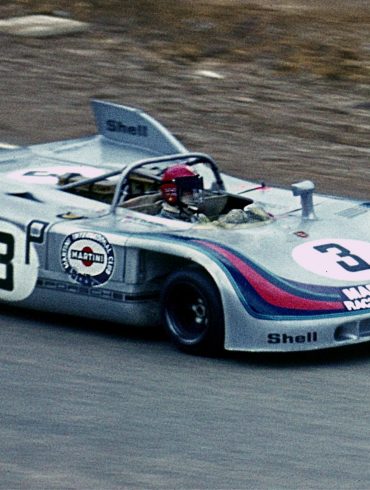
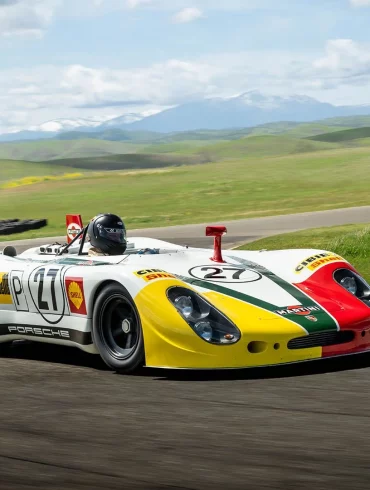
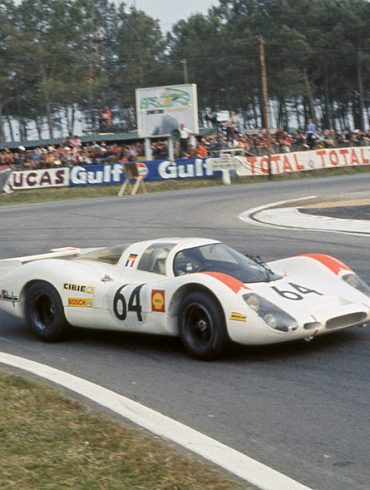
The Porsche 908 is a masterclass in agility and longevity, serving as the high-revving bridge to the 917 era and securing Porsche’s first-ever World Sportscar Championship in 1969.
Why It Made The List
In the late sixties, Ferdinand Piëch wanted Porsche at the top of motor sports and the 908 was his answer.
In facing the best that both Ferrari and Ford could produce, it sparked a new generation of Porsche prototypes that led to their most successful era. For the first time, Porsche competed in all championship races in 1968 with hopes of overall victory.
This new era began when the 908 Coupés supported the much smaller 907 midway through that year’s season.
The 908 was the first car built for the Group 6 Prototype class of the World Sportscar Championship. Cars of this type were limited to 3.0L engines, which Porsche managed with a flat-eight engine that produced 350 HP, hence the 908 designation. The car had a stellar debut, but during 1968, several mechanical gremlins caused Ford’s 1968 GT-40 Mk IV to take the title.
Despite this, because of its aluminum space frame, low, sleek body, and superb power-to-weight ratio as it weighed only 1,500 lbs, when the 908 had all of the gremlins worked out, it was enormously successful. It won the 1968 and 1969 Spa-Francorchamps 1000 KM outright, and while it never won a 24 Hours of Le Mans, in three different decades it raced there and placed on the podium.
The 908 had several iterations and evolutions, from the 908/2 and 908/3 of 1969 and 1970 respectively, to the final edition, the 908/3 Spyder Turbo in 1980. Instead of picking just one, we felt it was better to group them up under one heading, as once they were running consistently after that first year, they also helped pave the way for the legendary 917.
Details
Years: 1968 - 1971
Production: ~ 31 units
Chassis: Spaceframe chassis
Layout: Rear mid-engine, RWD
Bodystyle: Coupe, Spyder
Engine: 3.0 L Flat 8 (908/01, 02, 03), 2.1 L turbo Flat 6 (908/03)
Transmission: 5-speed manual
Designer(s): Wilhelm Hild
Achievements
Earned multiple overall victories in the World Sportscar Championship, including wins at the Nürburgring 1000 km, Monza, Watkins Glen, and the Targa Florio. The lightweight 908/03 proved nearly unbeatable in events like the 1969 and 1970 Targa Florio. At Le Mans, the 908 finished 2nd overall in 1969, losing by just 120 meters after 24 hours.
Learn More
Porsche 959 Rally
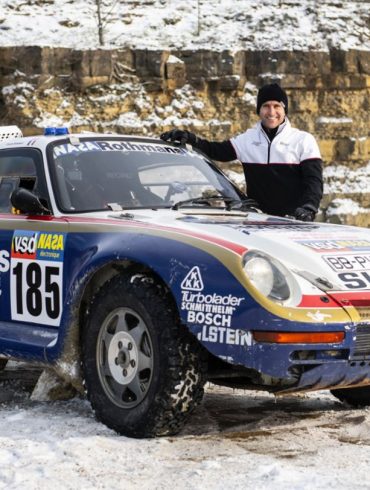
After a failure in 1985 where all three cars retired, Porsche returned in 1986 to claim 1st and 2nd place overall (and 6th for the support car). This was unheard of for a "supercar" in a race dominated by heavy trucks and rugged SUVs.
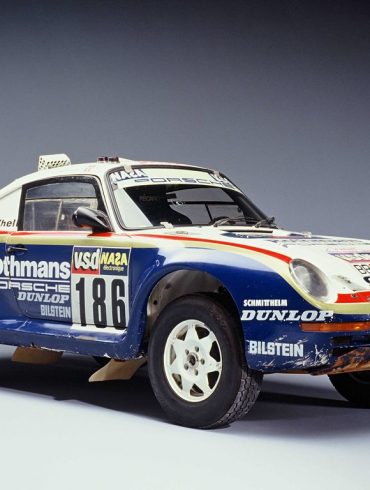
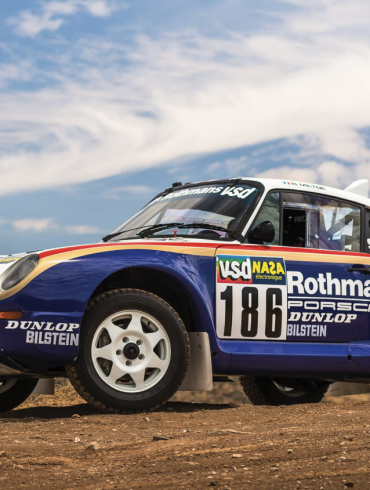
Why It Made The List
When the FIA created the Group B Rally class, very few restrictions were placed on the cars. The only real rule was that there had to be homologation versions made, and the cars needed to adhere to a few minimum weight requirements. The rest was left almost completely wide open, which created a “gold rush” of technology and development that quite literally advanced automotive technology tenfold over the course of four years.
Part of that leap was the first true Porsche supercar, the 959. Designed in secret, the car, which was based on a Type 930 911, was given a twin-turbo flat-six engine that mixed water and air cooling, an electronically controlled all-wheel-drive system, on the fly electronically adjustable suspension, some of the first types of tire pressure monitoring systems, and a body that was shaped by some of the earliest uses of computer-simulated aerodynamics (known as Computer Aided Fluid Dynamics Simulation in 2023, or CFD for short).
The 959 Rally was developed by the motorsports department in Weissach, taking the Group B rally car and turning it into a desert storming monster, meant to challenge and win the 1985 Paris-Dakar. This was fortunate, as the original plan, to run the 959 Group B in the FIA World Rally Championship, was curtailed by the FIA’s outright cancellation of the class after multiple spectator and driver/co-driver deaths due to the cars being beyond control.
The 959 Rally participated in the 1985 Paris-Dakar, with three cars entered. Its refinements included a massive 330 liter fuel cell, a full, robust body shell of resin-impregnated fiberglass, a chassis that was light but reinforced for the brutal trials of the Sahara desert, and a robust 6-speed gearbox that was so over-engineered that it looked like it had barely been used after the race.
The 959 placed first, second, and sixth in their outing in 1985, with a Sahara-crossing speed record being set at 242 KPH, or 150 MPH. Keep in mind, while the homologation special 959s, of which 292 units, including the development units, were built, could go much faster on paved surfaces, the 959 Rally’s were reaching that speed on sand. The 959 is legendary in and of itself for being the single most technologically advanced car produced by anyone in the 1980s, but when you realize that three of them were roaring across the open desert at over twice freeway speed, it becomes a near mythical car, and is the perfect way to cap off this list of the greatest race cars that Porsche has made in its lifetime.
Details
Years: 1985 - 1986
Production: 7 units
Engine: 2.85 L Twin-Turbo Flat-6
Power: 444 bhp @ 6500 rpm
Torque: 369 ft lbs @ 5,000 rpm
0 - 60 mph: 4.1 seconds
Achievements
Achieved a dominant 1–2 overall finish at the 1986 Paris–Dakar Rally after a promising but ultimately unlucky debut in 1985. The 959 outpaced purpose-built rally raid machines across deserts, mountains, and extreme endurance stages. The 959 Rally one of the most technically important Porsches ever built.
Learn More
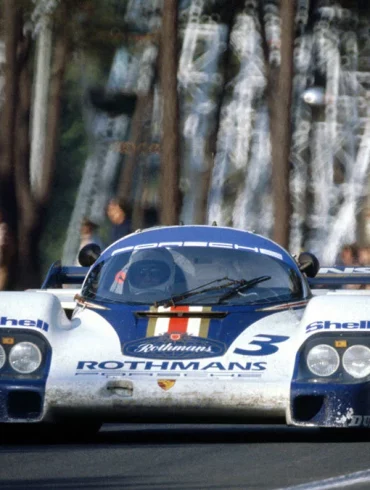
Porsche 956
Rewrote the rules of endurance racing, pairing groundbreaking ground-effect aerodynamics with turbocharged reliability to dominate Group C. Four straight Le Mans victories and total control of the WSC made it the car that defined an era.
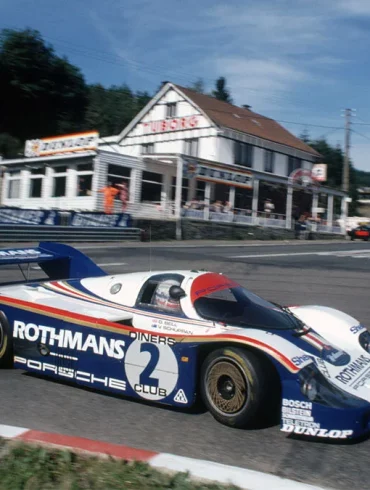
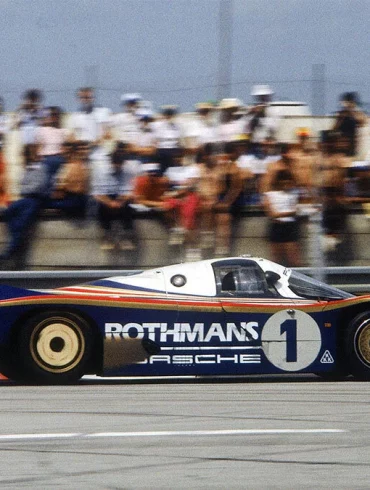
Why It Made The List
The Porsche 956 was born out of a moment of major regulatory change in international endurance racing. In the early 1980s, the FIA introduced Group C, a new formula focused on fuel efficiency rather than outright engine size. Porsche responded with remarkable speed and clarity, developing the 956 in record time under the leadership of Norbert Singer. The result was not just compliance with a new rulebook, but the creation of a car that redefined what an endurance prototype could be—lighter, faster, more efficient, and more aerodynamically advanced than anything that came before it.
Technically, the 956 was revolutionary. It was Porsche’s first aluminum monocoque chassis, replacing the tubular frames of earlier prototypes and dramatically increasing stiffness and safety. Aerodynamically, it fully exploited ground-effect tunnels, producing immense downforce without excessive drag—perfectly aligned with Group C’s fuel limits. Power came from a 2.65-liter twin-turbocharged flat-six, derived from the 911 Turbo and refined from the 936 program, producing roughly 620–640 horsepower in race trim. Combined with a curb weight of around 800 kg (1,760 lb), the performance envelope was staggering for the era.
On track, the Porsche 956 was immediately and brutally dominant. It won the 24 Hours of Le Mans on its debut in 1982, finishing 1st, 2nd, and 3rd overall, and went on to secure four consecutive Le Mans victories from 1982 to 1985. Across the World Sportscar Championship, the 956 claimed multiple manufacturers’ titles, winning at virtually every major endurance venue including Spa, Silverstone, Fuji, and the Nürburgring. Its combination of speed, reliability, and fuel efficiency made it the car to beat—often by a wide margin.
One of the 956’s most enduring achievements came not in a race, but during qualifying. In 1983, Stefan Bellof set a legendary 6:11.13 lap of the Nürburgring Nordschleife, a record that stood for more than three decades and remains one of the most iconic laps in motorsport history. The lap perfectly encapsulated the 956’s character: immense downforce, relentless acceleration, and stability at speeds previously thought impossible on the 20.8-km circuit.
Equally important to the 956’s legacy was its role as a customer race car. Porsche produced multiple chassis for privateer teams, who went on to win races and championships alongside the factory effort. This democratization of elite endurance performance expanded Porsche’s dominance far beyond a single works team and cemented its reputation as the premier endurance racing manufacturer of the era. The success of customer teams also directly influenced the evolution of the 956 into the even longer-lived 962.
Beyond trophies and lap records, the Porsche 956 changed endurance racing at a fundamental level. It proved that aerodynamic efficiency and fuel strategy could outperform raw displacement, reshaping prototype design philosophy for decades. Its architecture influenced nearly every Group C competitor that followed and established design principles still visible in modern Le Mans Hypercars.
Details
Years: 1982 - 1986
Designer: Norbet Singer
Chassis: Aluminum monocoque
Layout: Rear mid-engine, rear-wheel-drive layout
Engines: 2.65 L Porsche Type-935 Twin-Turbo Flat-6
Transmission: 5-speed manual or dual clutch semi-automatic
Premiere: 1982 May 15 at Silverstone
Achievements
The Porsche 956 is one of the most dominant endurance race cars ever built, winning the 24 Hours of Le Mans four consecutive times (1982–1985) and completely overwhelming the Group C era. It captured multiple World Sportscar Championship titles, scored victories at nearly every major endurance venue, and held the Nürburgring Nordschleife lap record for decades.
Learn More
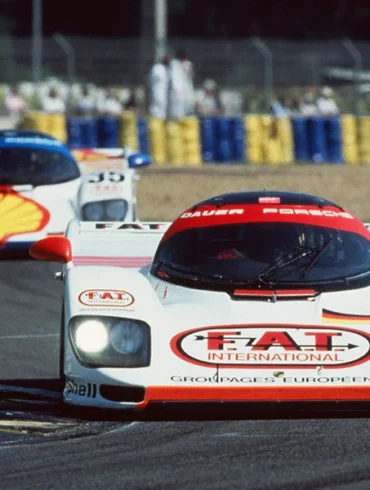
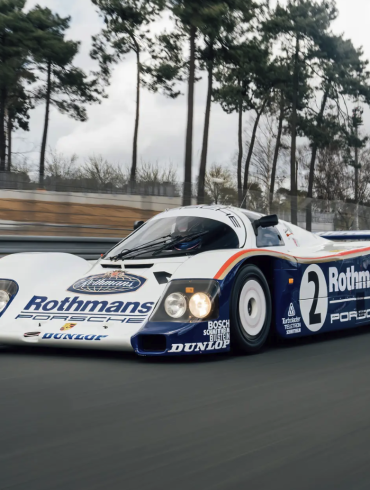
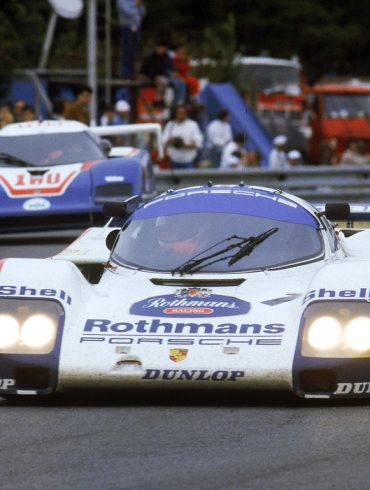
Porsche 962
Took the 956’s brilliance and turned it into the longest-running reign in prototype racing history. Winning Le Mans, Daytona, Sebring, and championships on both sides of the Atlantic, it became the ultimate race car. One of the most successful ever.
Why It Made The List
The Porsche 962 was developed as a direct evolution of the already-dominant 956, created to satisfy new safety regulations—particularly in the United States—while extending Porsche’s grip on global endurance racing. IMSA rules required the driver’s feet to sit behind the front axle line, forcing Porsche engineers to redesign the monocoque and lengthen the chassis. Rather than compromising performance, Porsche used the opportunity to refine the concept, producing a car that was safer, more adaptable, and ultimately even more successful than its predecessor.
Technically, the 962 retained the core strengths that made the 956 unbeatable while improving usability and longevity. It featured an aluminum monocoque chassis, advanced ground-effect aerodynamics, and a turbocharged flat-six engine available in several configurations, including 2.65-liter, 3.0-liter, and later larger-displacement twin-turbo units depending on series and regulations. Power outputs ranged from roughly 620 hp to over 700 hp, while curb weight remained around 850 kg (1,870 lb). The combination of efficiency, stability, and brute force made the 962 devastatingly quick over long distances.
On track, the Porsche 962 delivered one of the most sustained periods of dominance in motorsport history. It won the 24 Hours of Le Mans outright in 1986 and 1987, while Porsche-powered 962s filled podiums throughout the late 1980s. In North America, the 962 became the defining car of IMSA GTP, scoring multiple manufacturer and driver championships and claiming overall victories at Daytona and Sebring year after year. Few race cars have ever been as competitive across such different tracks, formats, and rulebooks.
One of the 962’s defining strengths was its adaptability. Porsche designed the car to be endlessly evolvable, and customer teams took full advantage. Independent constructors such as Kremer, Joest, Brun, and Dauer developed their own 962 variants, refining aerodynamics, suspension, and bodywork. These cars continued winning long after factory involvement slowed, proving that the 962 wasn’t just fast—it was fundamentally right. Its competitiveness across nearly a decade is almost unmatched in top-level motorsport.
The 962’s success also reshaped the relationship between factory teams and privateers. Porsche’s willingness to sell complete, competitive cars allowed private teams to win outright at the world’s biggest races, a rarity at the top tier of endurance racing. This customer-driven ecosystem kept grids full, competition fierce, and Porsche permanently at the front, even when rivals arrived with newer designs.
Beyond results, the 962 became an icon of its era. Its brutal turbocharged acceleration, unmistakable silhouette, and long-tail Le Mans bodywork defined the visual language of Group C and IMSA GTP racing. The car’s engineering principles—efficiency-first aerodynamics, modular design, and endurance-focused reliability—set standards that modern prototype racing still follows today.
Details
Years: 1985 - 1986
Production: 7 units
Engine: 2.85 L Twin-Turbo Flat-6
Power: 444 bhp @ 6500 rpm
Torque: 369 ft lbs @ 5,000 rpm
0 - 60 mph: 4.1 seconds
Achievements
Extended and surpassed the dominance of the 956, winning the 24 Hours of Le Mans outright in 1986 and 1987 and becoming one of the most successful race cars in history across two continents. The 962 dominated IMSA GTP in North America, capturing multiple championships and overall wins at Daytona and Sebring, while also remaining a front-runner in Group C competition in Europe.
Learn More
Modern Era & Record Breakers (Post-1990s)
Engineering Extremes, Measured in Trophies and Lap Times
From Le Mans domination to Nürburgring records, these modern Porsche race cars represent peak engineering, relentless development, and data-driven performance. Faster, safer, and more complex than ever, they continue Porsche’s tradition of winning at the highest possible level.
Porsche 911 GT1 98
A massive landmark in Porsche's history, representing the moment the 911 transitioned from a modified road car into a purpose-built carbon-fiber prototype. It was the ultimate evolution of the GT1 project that began in 1996.
Why It Made The List
Any Porsche enthusiast worth their salt was waiting for this car to show up on this list, so here it is!
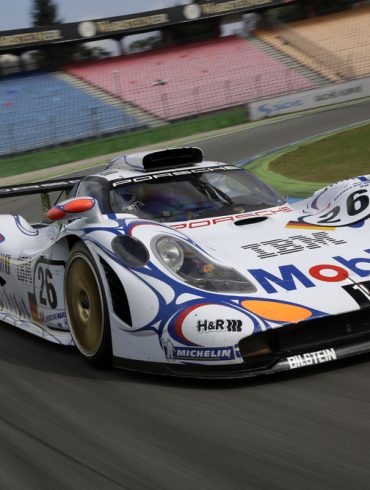
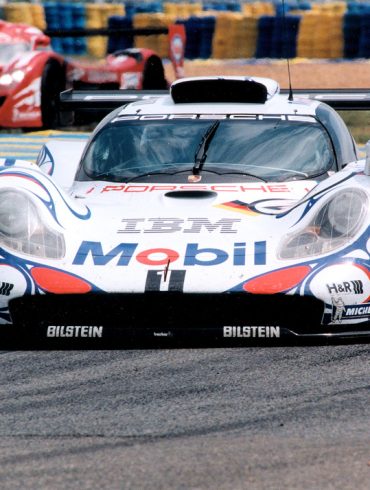
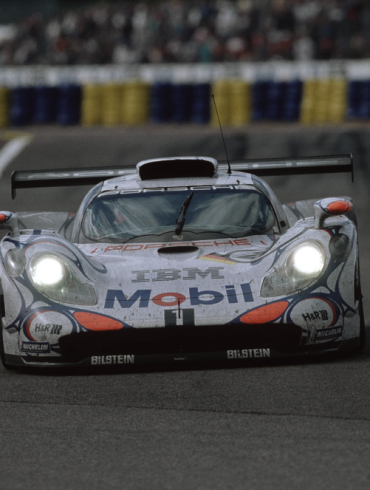
The 1998 Porsche 911 GT1-98 was the culmination of over three years of research, development, and evolution, the final (and best) version of the 911 GT1 project. Starting with a Type 993 911 GT2 that was upgraded to race car status, the project was initially a failure as the car was nowhere near the level of the Ferrari F40 LM’s and McLaren F1 GTR’s that were dominating the GT1 class.
After the 1996 911 GT1 and the 1997 911 GT1 Evo, Porsche brought the completely new, totally redesigned 1998 911 GT1-98 to fight against the Mercedes-AMG CLK GTR and the Toyota GT-ONE, both extremely powerful and fast cars. The GT1-98 had a much more prototype-style body compared to the previous two iterations, and was made entirely of carbon-fiber, the first time a Porsche race car’s entire chassis and monocoque was one continuous carbon fiber structure.
The GT1-98 carried a heavily modified Type 993 911 flat-six, at 3.2L with two KKK turbos, to produce 592 HP. That engine was mated to a 6-speed sequential transaxle. The car weighed only 950 KG (2,094 lbs), so it was anything but slow, especially with its new, slippery body, but it struggled throughout the 1998 International GT Championship to match pace with the Mercedes. This was mostly blamed on the air-restrictor rules in place at the time for turbo engines, which starved the top end power of the twin-turbo, allowing the naturally aspirated V8 of the CLK-GTR to simply haul it away into the distance.
However, in either a stroke of wild luck or fated-to-be, the 1998 24 Hours of Le Mans was anything but a typical race. The Porsches ran flawlessly, while it seemed that every other manufacturer in the GT1 class had upset some racing deity. The BMW V12 LM retired after a wheel bearing failure. The CLK-GTRs suffered oil starvation as there were defects in their oil pumps, spending many laps in the pits. Even the vaunted Toyota GT-ONE, easily the fastest car on track, suffered gearbox issues and had to spend tens of laps in the pits getting them replaced.
This meant that the 911 GT1-98, albeit not slow, but slower than most of the GT1 field, came in first and second overall. This was a milestone win for Porsche, as with 16 overall victories, they became the winningest team at Le Mans in history. That fact alone cemented the 911 GT1-98 into the history books, but it was also a notable race in that the GT1-98 that came in first, driven by Laurent Aiello, Stephane Ortelli, and Allan McNish spent the least amount of time of any manufacturer, including the lower classes, pushed back into the garage. Even then, it was only to allow for brake pad changes to be done quicker with more mechanics on the car.
Of all the 911 GT1’s that were made, we chose the GT1-98 simply because while it was not competitive across the rest of the races of the year, all the planets aligned on the 6th and 7th of June, 1998, and Porsche’s legendary reliability earned them the win. It is also notable as being the only 911 GT1 to quite literally fly, as during the Petit Le Mans at Road Atlanta in October of that year, the #26 GT1-98 was running a high rear downforce setup that pushed the nose up over a crest, allowing air to catch under the body, lifting the car into the air where it did a full backflip, landing on the tail at the start of the second rotation and spearing off into the retaining wall beside the track.
The driver, Yannick Dalmas, was completely fine, a testament to the carbon fiber monocoque construction of the Porsche. In fact, as the 1998 season required homologation versions of the LM-GT1 cars, the now very rare and very collectible 911 GT1 Strassenversion, the road going version of the race car, is lauded as one of the safest homologation specials made in history. A little fun fact, but unless you’re literally a billionaire, you probably won’t ever own one, as they are extremely rare cars that are often the crowning jewel of a collection.
Details
Years: 1998
Engine: 3.2 L Twin-Turbo Flat 6
Achievements
The Porsche 911 GT1-98 delivered one of the most decisive victories in modern endurance racing by scoring an emphatic overall win at the 1998 24 Hours of Le Mans, finishing 1st and 2nd overall against fierce factory opposition from Toyota, Mercedes-Benz, and Nissan. Its Le Mans triumph marked Porsche’s 16th overall Le Mans victory.
Learn More
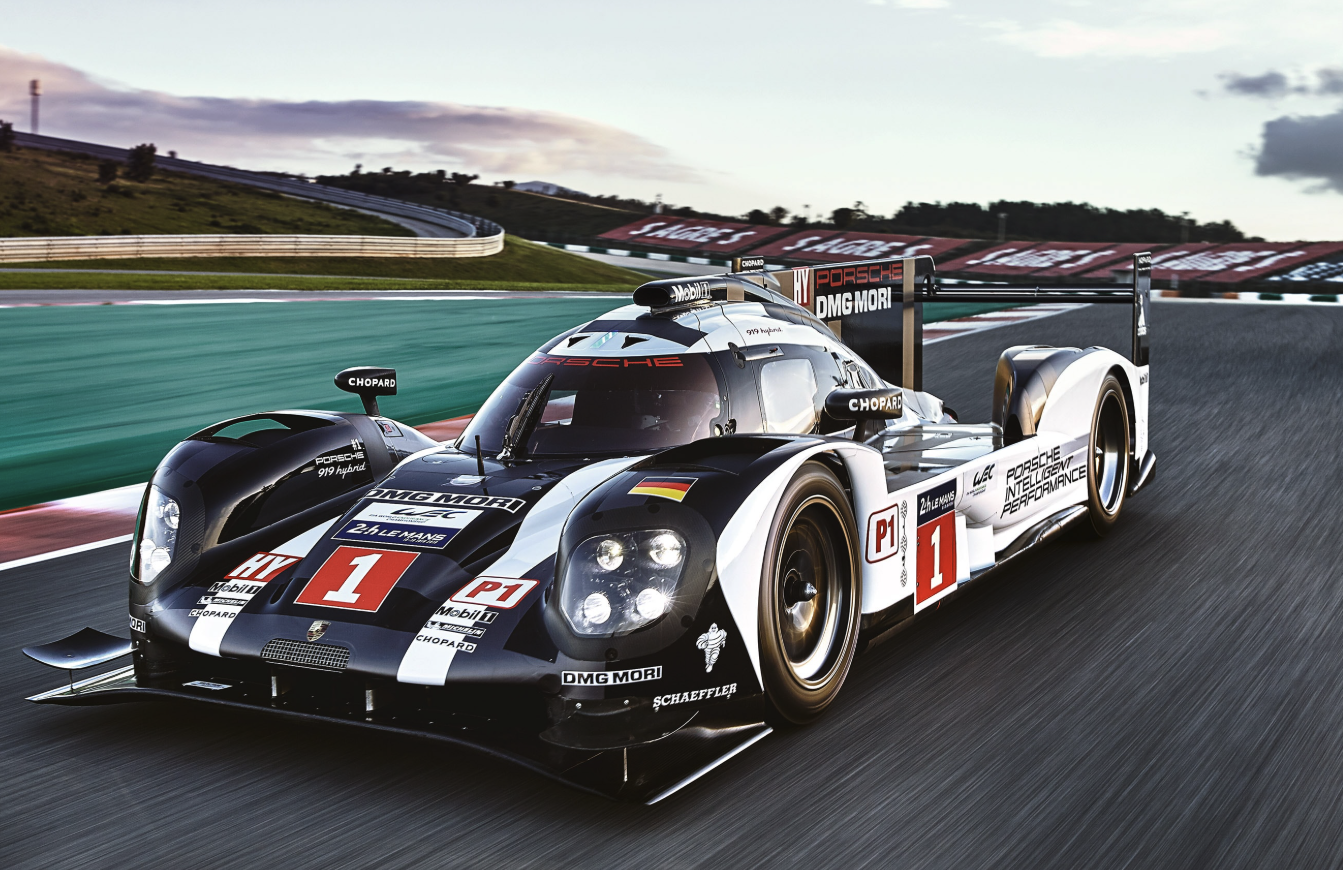
Porsche 919 Hybrid
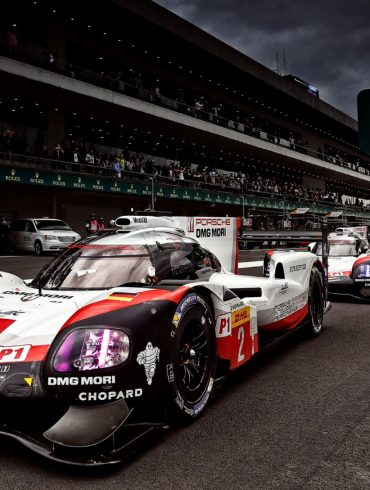
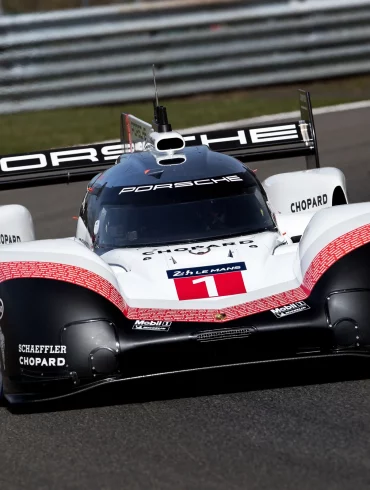
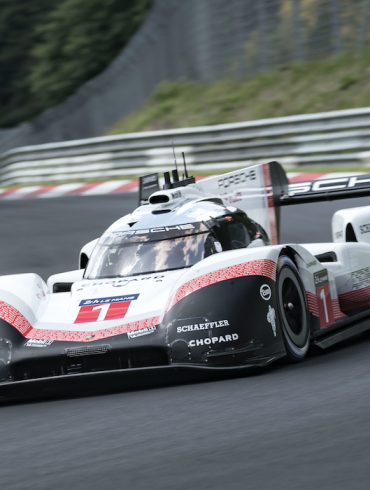
The Porsche 919 Hybrid is defined by its incredible hat-trick of overall Le Mans victories and three consecutive World Endurance Championships (2015–2017), which re-established Porsche as the undisputed king of endurance racing in the modern era. An unrestricted version of the 3-time Le Mans winner holds the all-time Nürburgring lap record.
Why It Made The List
In racing, the term “domination” is rarely used, as to utter the d-word means accepting the fact that one team, one driver, one car, or any combination of those three showed up and no one else had a chance. Yet, the word domination is carried by the Porsche 919 LMP1 Hybrid, one of the greatest race cars ever made.
Stuttgart had not hoisted an overall Le Mans victory trophy since 1998, with the 911 GT1. After pulling out of the very expensive top level Le Mans Prototype 1 (LMP1) class, they focused more on GT racing, with the 911 race cars, with a brief foray into LMP2 racing with the RS Spyder. While there were many class wins, and a couple overall wins during the years between 1998 and 2014, when the first 919 LMP1 Hybrid debuted, none of those overall wins came at the prestigious 24 Hours of Le Mans.
When the 2014 iteration debuted, it was one of the, if not the, most advanced LMP1 car on any grid. It used a 2.0L V4 engine with a turbo designed by Porsche and Garrett, combined with a front-axle based hybrid-electric motor, with energy being stored in a battery pack that took up the right half of the cockpit. The engine produced 500 HP all on its own, making it one of the highest specific output V4 engines ever made. Add on top of that the Porsche-designed hybrid motor that provided another 402 HP, and the car, which weighed 875 kg (1,929 lbs), is one of the few cars outside of Formula One that has a power-to-weight ratio greater than 1:1.
The 919 LMP1 Hybrid made its debut at the 2104 6 Hours of Silverstone, where it finished third behind the two Toyota LMP1 Hybrids. This started a (friendly) rivalry between the two teams, but it was at Le Mans that Porsche realized that they needed to become a bit more ruthless. The top 919 came in 11th overall, and that, quite simply, was not good enough for Stuttgart.
The d-word started in 2015, when a totally revamped, reworked, and updated 919 debuted, claimed by Porsche to be “90% different and better.” It immediately claimed pole position at the endurance races at Silverstone and Spa, and for the first time since 1998, achieved pole position at Le Mans. The 2015 919 LMP1 Hybrid monstered the field at Le Mans, and Porsche, just one year after placing 11th, took the overall win and second place, with their third car coming in 5th. The 919 did not lose a single race after Le Mans, handily winning the 2015 WEC Championship.
After that win, the 2016 and 2017 variants of the 919 LMP1 Hybrid were simply unmatched in technology, power, and victory, dominating over the technical powerhouses that were Audi Team Joest and Toyota Motorsports, their main LMP1 rivals. The 2016 and 2017 Le Mans races were won overall by Porsche, they came second in the 2016 WEC Championship, and won it again overall in 2017.
Due to the rising cost, literally into the hundreds of millions of dollars, to continue racing in LMP1, Porsche retired from the class after 2017, and created one more version of the 919, the incredible 919 Evo. A car that was not bound by any rules of regulations, it was a technical showcase of what the 919 was truly capable of. This was showcased in June of 2018, when the 919 Evo lapped the Nurburgring Nordschleife, a 12.94 mile (20.8 km) circuit, in an Earth-shattering 5 minutes 19.546 seconds, a record that it holds to this day as the outright and overall lap record at the track.
To give you an idea of just how fast and powerful that lap was, with the systems not bound by any rules, the 919 Evo put down 1,144 HP and achieved a top speed of 230 MPH (370 KPH), with its average speed at 145.6 MPH (234.3 KPH). Quite simply, no other car has even come close to that average speed.
The Porsche 919 LMP1 Hybrid was simply dominant, in everything it did. Full stop.
Achievements
One of the most advanced and successful endurance race cars ever built, delivering three consecutive overall victories at the 24 Hours of Le Mans (2015, 2016, and 2017) and securing multiple FIA World Endurance Championship titles in the highly competitive LMP1 hybrid era. Its legacy was cemented after retirement when the unrestricted 919 Hybrid Evo shattered lap records at Spa-Francorchamps and the Nürburgring Nordschleife.
Learn More
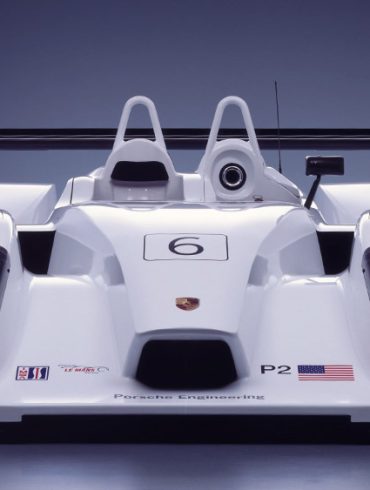
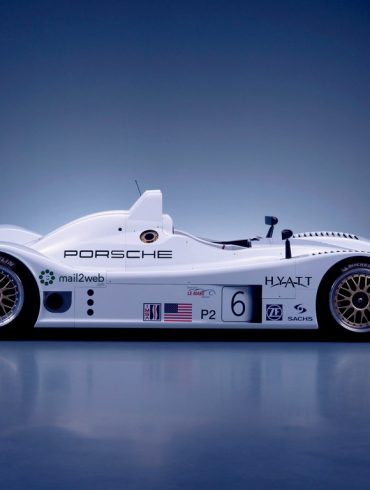
Porsche RS Spyder (2005 – 2006)
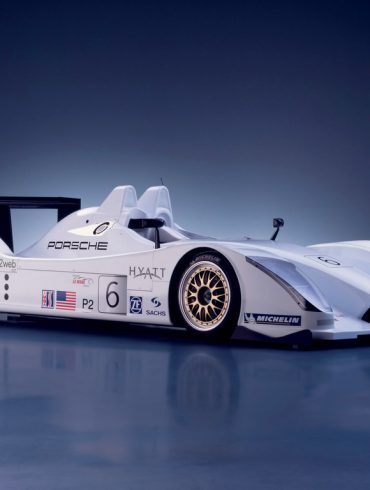
Porsche created the first prototype racecar it has designed and constructed since the 1998 24 Hours of Le Mans winning Porsche 911 GT1 as a commission. An LMP2 car so fast it embarrassed top-class competitors.
Why It Made The List
Porsche created the first prototype racecar it has designed and constructed since the 1998 24 Hours of Le Mans winning Porsche 911 GT1 as a commission. The Porsche RS Spyder was commissioned by Porsche Cars North America, Inc. (PCNA) and Porsche Motorsport North America (PMNA) for racing customers who compete in the LMP2 (Le Mans Prototype 2) class of the American Le Mans Series (ALMS).
It featured a completely new Porsche engine, transmission, and chassis, all incorporating the latest in Porsche automotive technology and created to conform to new 2006 rules and regulations of international sanctioning body Automobil Club de l’Ouest (ACO).
The heart of the new Porsche LMP2 is its newly-designed 3.4-liter, 90-degree, V8 engine. Limited to 480 horsepower at 10,100 rpm by ACO air restrictor regulations, the power plant is lightweight with a very low center of gravity. It features four valves per cylinder, a dry sump lubrication system, and an air intake manifold with single cylinder throttle valves. The engine is mated to a Porsche-engineered sequential six-speed constant mesh transmission. A structural part of the car, the gearbox is operated by a paddle shift system on the steering wheel and incorporates a triple-disc carbon fiber racing clutch.
The RS Spyder debuted with Penske Racing in the 2005 ALMS season and quickly became dominant in LMP2. In 2006 and 2007, Penske secured consecutive LMP2 championships, often beating faster LMP1 cars from Audi due to the Porsche’s agility and reliability. The car’s most notable achievement was the 2008 12 Hours of Sebring overall victory, marking the first time an LMP2 car won the race outright.
The RS Spyder played a key role in refining hybrid and aerodynamic technologies later used in Porsche’s Porsche 919 Hybrid and influenced the design of the Porsche 918 Spyder.
It remains a benchmark for privateer prototype success and a pivotal project in Porsche’s endurance racing heritage. The car’s technology lineage continues to inform Porsche’s motorsport and hybrid systems development.
Details
Category: LMP2 prototype
First race: 2005 Monterey Sports Car Championships
Engine: 3.4 L V8 naturally aspirated
Achievements
Instantly reestablished Porsche as a force in top-level prototype racing, dominating the American Le Mans Series (ALMS) LMP2 class from its debut. In 2005 and 2006, the RS Spyder captured multiple race wins, poles, and both the LMP2 Drivers’ and Manufacturers’ Championships.
Learn More
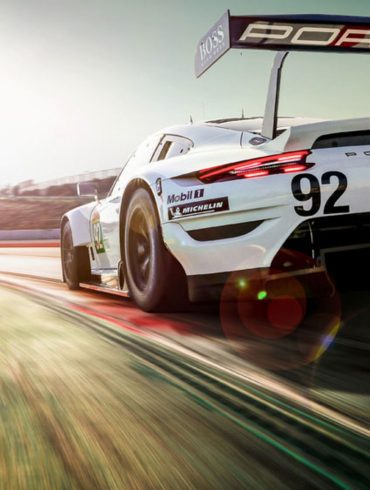
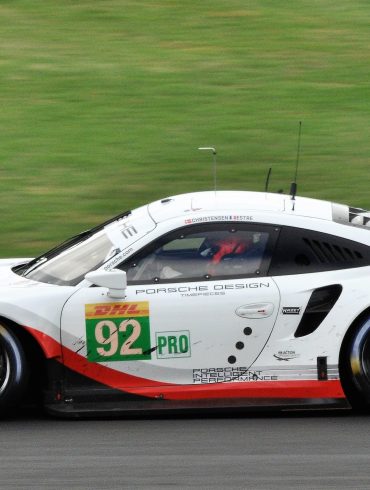
Porsche 911 RSR (991)
The radical mid-engine 911 that rewrote decades of rear-engine dogma and dominated GT racing. Became one of the most successful GT race cars of the modern era.
Why It Made The List
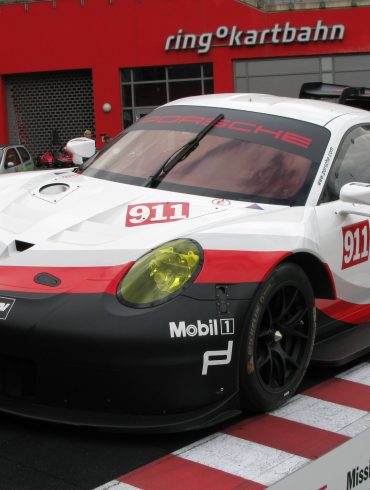
The Porsche 911 RSR (991 generation) is a factory-built GT endurance race car derived from the Porsche 911 (991) platform and developed for GTE/GTLM competition in series like the FIA World Endurance Championship and IMSA. The 991-based RSR marked a major technical shift for Porsche, including a move to a rear-mid–engine layout in later versions, to better compete against pure mid-engined rivals.
The first 991-generation 911 RSR debuted in 2013. Unlike previous GT3-based RSRs, it was homologated from the Carrera 4S road car because the GT3 street model arrived too late for the rules timeline. It retained a 4.0 L naturally aspirated flat-6, but with extensive race development and around 375 kW (≈510 hp) depending on air-restrictor size. Development focused on better weight distribution, revised suspension with front double wishbones, and highly optimized aerodynamics including top-mounted rear wing supports to clean up airflow to the diffuser.
For the 2017 WEC/IMSA season, Porsche radically reworked the 991 RSR by moving the flat-6 engine ahead of the rear axle, effectively creating a rear mid-engine 911 race car while retaining the silhouette required by GTE rules. This improved polar moment of inertia and balance versus traditional rear-engine 911s, aligning the car more closely with competitors from Ferrari and Ford. Porsche also introduced advanced aero and safety systems, including a sophisticated collision-avoidance display to help drivers manage multi-class traffic in endurance races.
In 2019, Porsche launched a heavily revised 911 RSR based on the 991.2 platform. Around 95% of the car was new relative to the prior RSR: the engine grew to 4.2 L (the largest boxer engine ever used in a works 911) while maintaining roughly 515 hp, with improvements aimed at torque and drivability over long stints. The exhaust was rerouted to side exits ahead of the rear wheels, improving diffuser design and reducing damage risk in contact. This car was tasked with defending Porsche’s WEC GTE titles in 2019–21.
Details
Generation: 991 and 991.2-based race car (GTE/GTLM)
Production years (RSR line): 1999–2023, with 991 RSR from 2013 and 991.2 from 2019
Engine layout: Rear-engine (early 991 RSR), rear mid-engine from 2017-spec onward
Engine: 4.0–4.2 L naturally aspirated flat-6, ~500–515 hp depending on BoP
Class: FIA GTE / GTLM endurance racing (Le Mans, WEC, IMSA)
Achievements
It achieved a class victory at the 24 Hours of Le Mans in 2018 (GTE Pro), along with FIA World Endurance Championship titles and wins across Europe, Asia, and the Americas. In IMSA WeatherTech SportsCar Championship competition, the 991 RSR delivered GTLM championships and marquee wins at Daytona and Sebring.
Best for Track Days (Road Cars & Specialty)
Race Cars You Can Actually Drive
These Porsches blur the line between street and circuit, delivering real racing capability without a pit crew or transporter. Built for drivers who want maximum engagement and track performance, they’re the closest thing to a race car you can own.
2019 Porsche 935
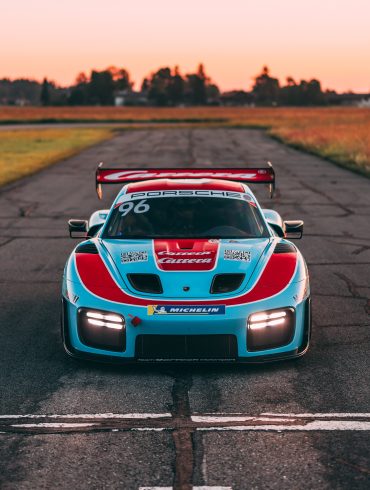
A modern-day reimagination of the 1978 Porsche 935/78 'Moby Dick' that raced in the 24 Hours of Le Mans.
Why It Made The List
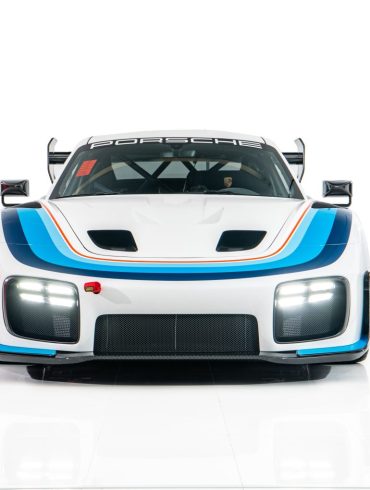
The 2019 Porsche 935 is a track-only beast. While that may seem like a disadvantage, what it means is that Porsche engineers were able to really stretch the capabilities of the 911 GT2 RS (991.2) Clubsport racecar platform, the car on which the 935 is based.
You can also think of the 935 as an extremely dialled-up version of the already formidable 911 GT2 RS.
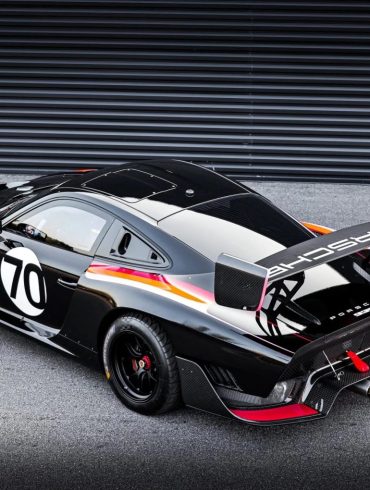
The car is immediately recognizable with its elongated profile. The stretched bodywork is a nod to the original 935. The design also helps with the car's aerodynamics while it's being pushed to the limits at the race tracks.
Other highlights of the 935 include spoiler end plates from the 919 Hybrid LMP1 race car, wing mirrors from the Le Mans-winning 911 RSR and a massive wing that stretches almost 2 metres across the width of the car.
The interior has also been adapted for life on the circuit, with add-ons like a full FIA roll cage, bucket racing seats, six-point racing harness and an escape hatch.
Engine & Drivetrain Specifications
Engine: 3.8L twin-turbo flat-six
Power: 700 hp @ 7,000 rpm
Torque: 553 ft-lbs @ 2,500 rpm
Transmission: 7-speed dual-clutch automatic transmission
Powertrain: Rear-wheel-drive
Known For
The 2019 Porsche 935 was launched as a limited-series model, capped at 77 units.
The car was offered with a range of seven optional tribute liveries as a nod to the carmaker's past racing success.
Learn More
Porsche 911 GT3 RS (992.1)
The most extreme GT3 RS yet is one that also manages to be quite civilized on public roads.
Why It Made The List
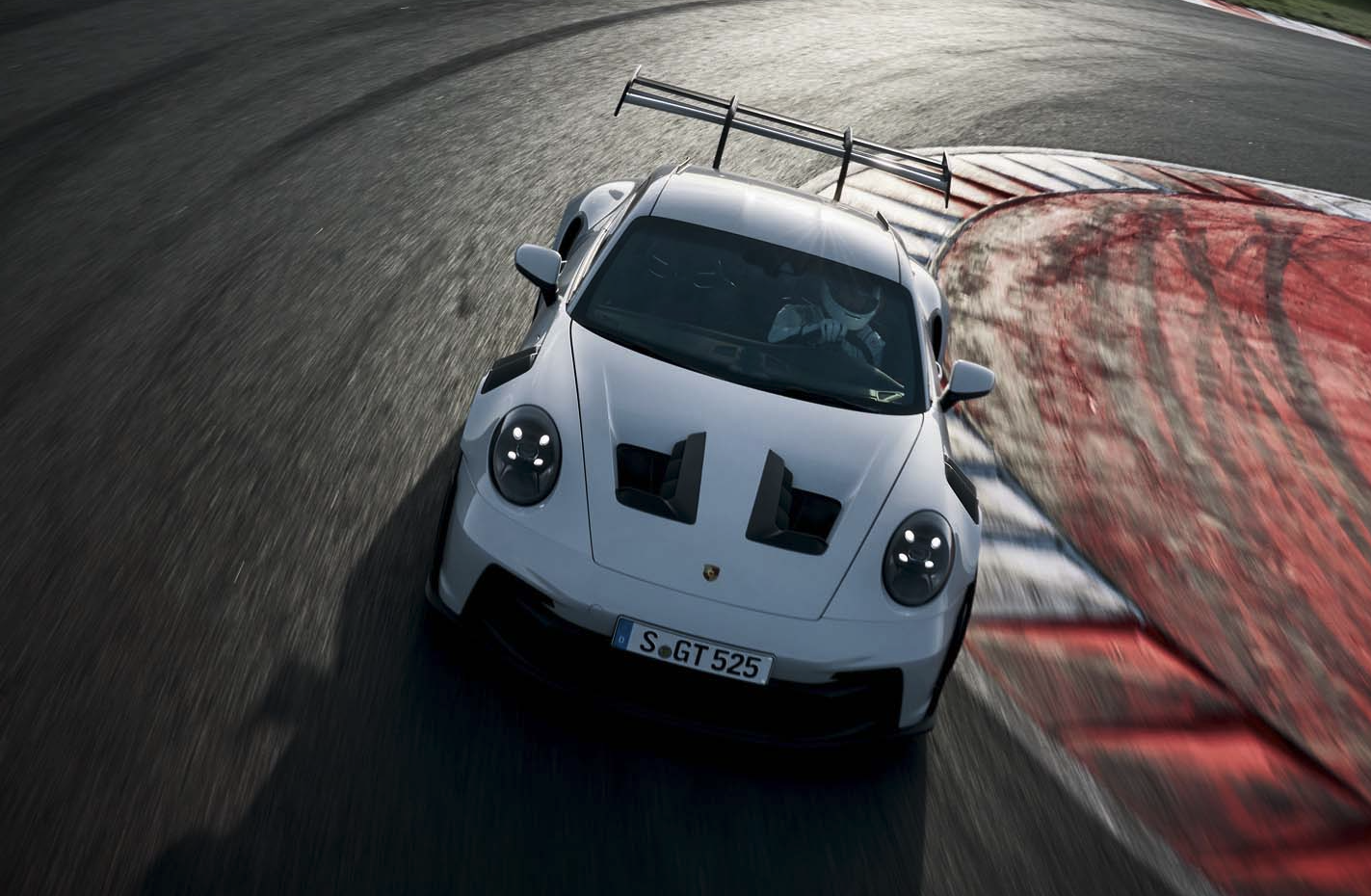
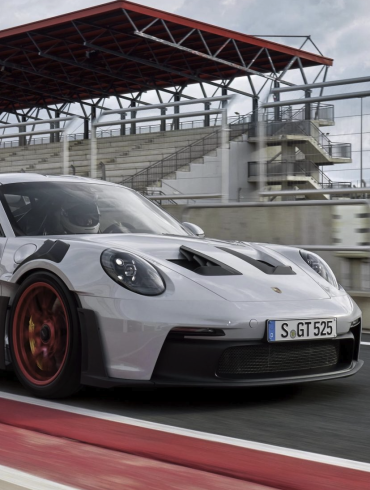
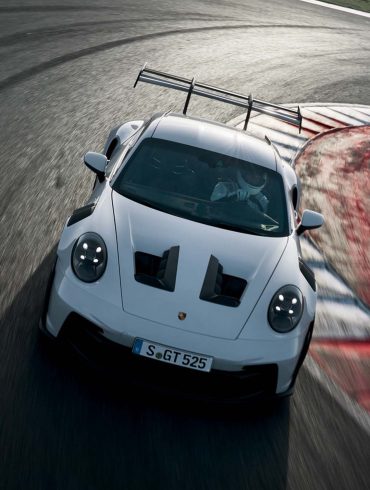
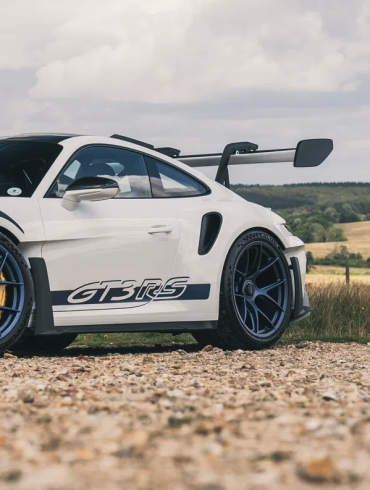
The 992.1-gen 911 GT3 RS is a platform that showcases the best of Porsche's engineering brilliance and cutting-edge innovation. It is arguably the biggest single step in the RS lineage since the 996-gen GT3 RS debuted back in 2004.
It was first presented in August 2022 for the 2023 model year, and it did not take long before the positive reviews started flowing in.
Porsche describes the car as 'the most extreme street-legal Porsche GT car ever.' There are a lot of facts that lend credence to that statement. The 911 GT3 RS boasts insane amounts of grip and balance, aided by the chassis setup and an aerodynamics package that heavily incorporates technology from Formula One, the pinnacle of motorsports.
Prioritizing downforce has slightly compromised top speed, but the 911 GT3 RS still delivers explosive acceleration from a standstill. It can rocket to 60 mph in 3 seconds and continue to a top speed in excess of 184 mph (296 km/h) top speed.
Engine & Drivetrain Specifications
Engine: 4.0L naturally aspirated flat-six
Power: 518 hp @ 8,500 rpm
Torque: 343 lb-ft of torque
Transmission: 7-speed dual-clutch auto
Powertrain: Rear-wheel-drive
Known For
The 911 GT3 RS has a DRS system similar to the one in F1 Cars; this helps it maximize downforce and minimize drag, enhancing overall track performance.
The massive rear wing on the GT3 RS is the first production wing on a Porsche to be higher than the roof of the car.