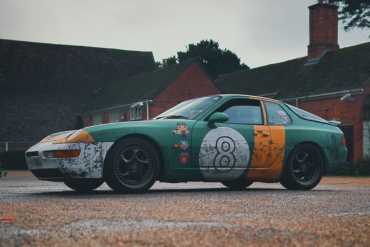
The Porsche 968 Sport was introduced exclusively to the UK market in January 1994. Built alongside the lighter Club Sport on the same production line, it shared identical suspension and chassis number sequences. However, the Sport added several comfort features, including central locking, electric windows and mirrors, an electric tailgate...
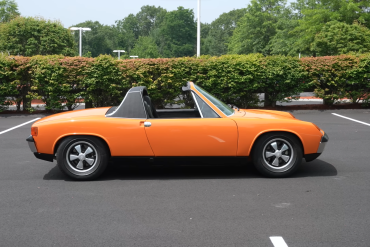
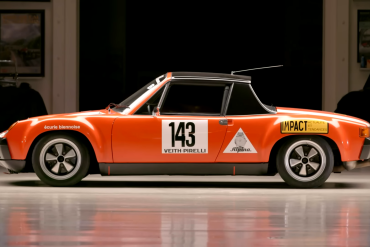
The Porsche 914 has long lived in the shadow of its more celebrated siblings, but the rare 1970 914/6 proves there’s far more to this mid-engine targa than its reputation suggests. While most 914s made do with a modest flat-four producing around 80 horsepower, the six-cylinder version borrowed a 2.0-litre...
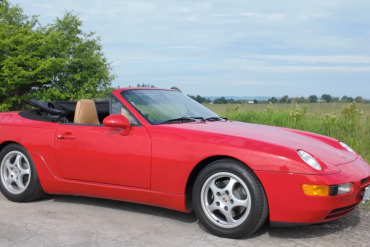
Jakub and Yuri from TheStraightPipes take a drive in a 1994 Porsche 968 Cabriolet from Porsche’s Heritage Fleet to see how an older, entry-level Porsche stacks up against modern cars. Powered by a naturally aspirated 3.0-liter four-cylinder making 236 hp and 225 lb-ft of torque, the front-engine, water-cooled 968 uses a...
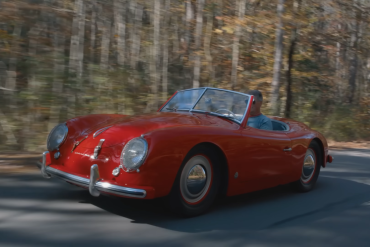
The America Roadster emerged from the crucible of American racing, guided by influential figures like Max Hoffman and John von Neumann, both firm believers that race results translated directly into showroom demand. In early 1952, Hoffman pushed Porsche to build a weekend racer derived from the 356—something lighter, cheaper, and...
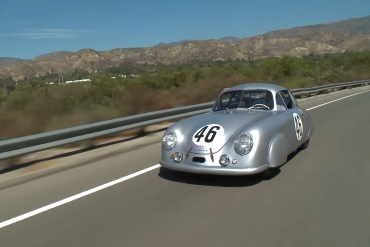
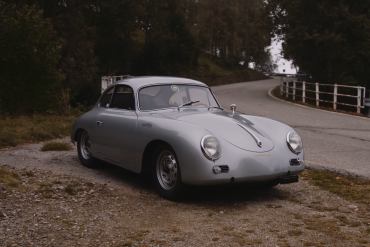
The Porsche 356 SL Gmünd coupe is an automotive royalty, one of the very first Porsches ever raced. Restored by Rod Emory, this rare car was built in Austria before the company relocated to Stuttgart, Germany. This particular car,number 46, made history at Le Mans, competing in the 1100cc class...
Doug DeMuro reviews a rare 1993 Porsche 968 Clubsport, a stripped-out, track-oriented version of Porsche’s front-engine 968. Sold outside North America and limited to roughly 2,000 units worldwide, the Clubsport was designed as a lightweight alternative to the standard model, shedding around 200 pounds to reach a curb weight of about...
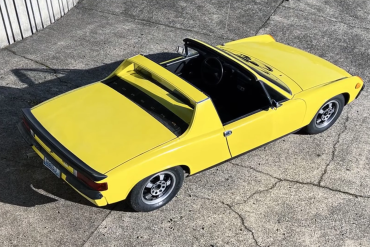
The Porsche 914 has long divided opinion over whether it’s a “real” Porsche, especially since many collectors own 911s and 356s but avoid the 914. Confusion stems from Europe, where four-cylinder 914s were sold as Volkswagens, while in the U.S. both versions were badged as Porsches. The car traces back...
Porsche’s long-standing relationship with Volkswagen was reinforced in 1969 with the debut of the 914, a Porsche-developed, mid-engine Targa sports car built by Karmann in Osnabrück. Volkswagen needed a successor to the ageing Karmann-Ghia, while Porsche was seeking an additional, more affordable model to expand its range. Unveiled at the...
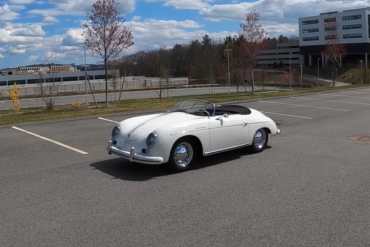
Drawing heavily from the Gläser-built 356 America of 1953—and even keeping the Type 540 designation—the now-legendary, Reutter-built Speedster arrived in 1954. Its creation was largely driven by Porsche’s U.S. importer, Max Hoffman, who clearly understood American buyers and persuaded the factory to produce models tailored specifically to that market. Built...
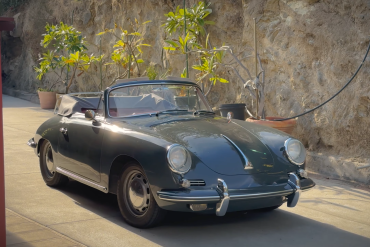
Originally conceived as a sporting offshoot of Dr. Ferdinand Porsche’s Volkswagen Type 1 Beetle, the Porsche 356 marked the brand’s first series-production car. The most common configuration was the 2+2 coupé, later joined by a cabriolet and the open-top Speedster roadster. A major update arrived in 1956 with the 356A,...
This video from Winding Road Magazine follows a test drive of the often-overlooked 1995 Porsche 968, a front-engine Porsche that evolved from the 944 but arrived during an uncertain period in the brand’s history. As Porsche explored alternatives to the 911 and experimented with front-engine GT cars, the 968 emerged as...
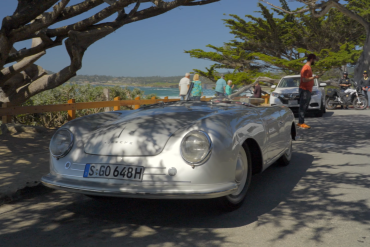
The Porsche 356 No.1 is not just a museum piece—it is a functioning, road-certified prototype and the origin point of Porsche as a car manufacturer. It is the first Porsche sports car ever registered for road use, dated June 8, 1948—the official birth of Porsche as a car manufacturer rather...
Conceived as Porsche’s first series-production car, the 356 achieved immediate acclaim when it debuted in 1948, finding success both on the road and in competition. Light, compact, and agile, it embodied Ferry Porsche’s guiding philosophy: a small car with sufficient power is more rewarding to drive—and far more enjoyable—than a...
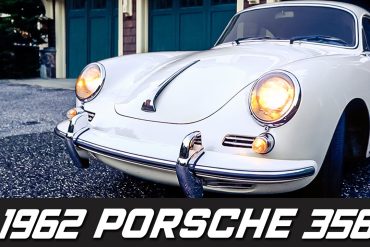
The Porsche 356B represents the core of Porsche’s early philosophy: light weight, mechanical simplicity, and driver engagement over outright power. The example reviewed here is the base model, identified by the badge on the rear decklid, positioned below the 356B S and the range-topping Super 90. While the Super 90...
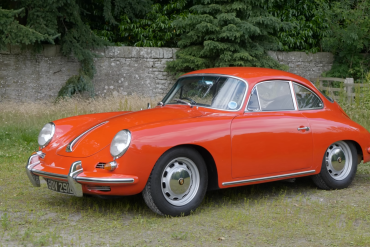
By 1964, the 356 was nearing the end of its production run, overlapping briefly with the car that would replace it—the model originally known as the 901, later renamed the 911. As the last and most refined version of the 356, the SC retained the familiar four-speed manual gearbox but...
Under the leadership of Ferdinand Porsche’s son, Ferry Porsche, the 356 was envisioned as a lightweight, nimble two-seat sports car. It featured independent suspension at all four corners and a rear-mounted, air-cooled four-cylinder engine. Erwin Komenda penned the now-iconic body shape, which was initially hand-formed in lightweight aluminum before later...
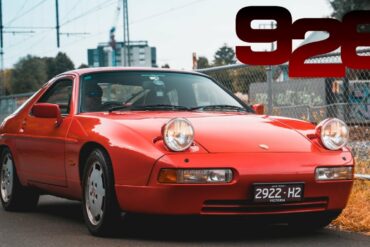
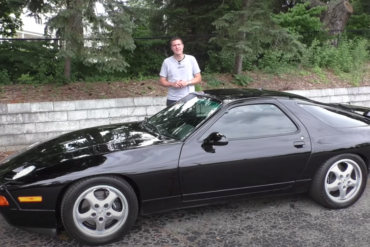
Review of Owning a Porsche 928 S4 Outlaw Garage catchup with George and his pristine Porsche 928 S4 for an owners tour and guide. We walk around the Porsche 928 and take a close look at the car before we turn the key on this Porsche 928’s V8 engine and...
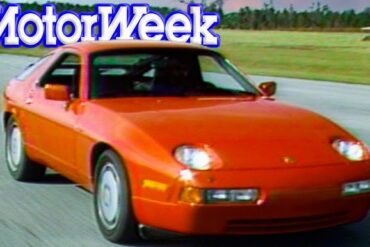
First Drive 1979 Porsche 928 Porsche 928 Review Back in 1987Casey Putsch finally drives the anti snob Porsche 928 from 1979 with the Pasha interior. Here are the first drive review thoughts! Thank you to Avalon King Armor Shield Ceramic Coating. This stuff really works!  ...
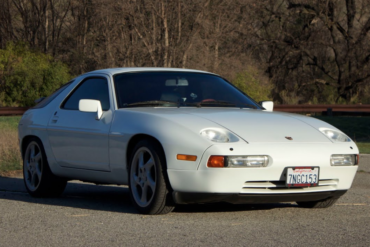
Porsche 928 S4 Video Review This absolutely stunning Porsche 928 S4 is, what we’ll call a “survivor” car with only 32,000 miles on the odometer from new. Aside from a set of “Turbo Twist” wheels, a Nardi steering wheel, and a cat-back exhaust, it’s completely stock and about as close...