
The Porsche Alpha List: The Best Porsches to Buy for Investment
As buyers pivot from chasing lap times to seeking "analog icons," specific models - from the final air-cooled masterpieces to the last of the manual-transmission GT cars - have emerged as blue-chip assets that offer both emotional and financial returns.
The Porsche Investment Index: Top Porsche Icons Outperforming the Market
The wide array of available Porsche models may overwhelm a new enthusiast. We hope to narrow the options and make the selection task a little easier. We asked our team of Porsche experts and enthusiastic members and they didn't let us down. This page is a culmination of their opinions and experience. If you're shopping for a Porsche that is truly underrated or not loved but is still awesome, this is the page for you.
Note: We are focused on production Porsches since the world of motorsports Porsches is a totally different animal.
The Investment Thesis: Why These Porsches—and Why Now
Porsche has quietly become one of the most reliable long-term plays in the collector car world, not because of hype, but because of consistency. For decades, Porsche has built cars with a clear engineering philosophy, motorsport relevance, and an unusually strong throughline between road and race. That continuity matters. It creates a market where buyers understand what they’re getting, collectors trust the brand’s legacy, and values tend to rise steadily rather than spike and crash.
The most important factor driving future appreciation is irreproducibility. Many of the cars we’ve highlighted exist because of regulatory loopholes, transitional engineering moments, or internal Porsche decisions that simply wouldn’t be approved today. Naturally aspirated engines, manual gearboxes, hydraulic steering, lightweight construction, and homologation intent are all disappearing at once. As modern cars become heavier, more automated, and more digital, these older—or deliberately old-school—Porsches feel increasingly special in a way that transcends nostalgia.
Another key driver is demand broadening, not shrinking. The Porsche buyer base today is global, younger, and more educated than it was 20 years ago. Enthusiasts are no longer fixated solely on the most obvious halo cars. Instead, they’re looking deeper—at transitional models, overlooked trims, and cars that deliver exceptional driving experiences without requiring seven-figure checks. This is why values are rising not just at the very top, but also in the mid-market and even below $200k.
Finally, Porsche benefits from something few brands can claim: usable collectibility. Many of the best investment Porsches can actually be driven, serviced, and enjoyed without fear. That emotional return on ownership matters. Cars that sit unused tend to become abstract assets; cars that are driven build loyalty, stories, and long-term desirability. Over time, that emotional connection translates directly into value.
Pro Tips for Buying Porsches as Investments (Without Losing the Plot)
The biggest mistake new buyers make is chasing the model name instead of the example. In the Porsche world, condition, documentation, and originality matter far more than simply owning the “right” car. A well-documented, properly maintained example of an underrated model will almost always outperform a tired, questionable example of a more famous one. Service history, known ownership, matching numbers, and honest wear are what sophisticated buyers look for when the time comes to sell.
It’s also critical to separate internet fear from real-world ownership. Models like the 997.1 Carrera, 996-era cars, or early water-cooled platforms are often burdened with exaggerated reputational issues. In reality, many of these concerns are well understood, manageable, and already addressed on enthusiast-owned cars. Buyers who do their homework—and buy cars that have been sorted rather than neglected—are often rewarded with better driving experiences and stronger appreciation curves.
Timing matters, but patience matters more. Porsche investments tend to reward those who think in five- to ten-year horizons, not those looking for quick flips. The strongest performers are often cars that feel “slightly undervalued but inevitable.” If you find yourself asking, “Why hasn’t everyone figured this out yet?”, you’re probably looking in the right place. Once consensus arrives, most of the upside is already gone.
Lastly, don’t ignore enjoyment as part of the equation. The best Porsche investments are often the ones you’re happy to keep if the market pauses or corrects. If you genuinely enjoy driving the car, maintaining it, and living with it, you’ve already won half the game. In the long run, the Porsches that deliver both financial return and emotional satisfaction are the ones collectors never regret buying—and those are almost always the cars that age the best.
True Porsche Collector Tier ($1M+)
These are "Blue Chip" investments. You aren't just buying a car; you're buying a piece of automotive history.
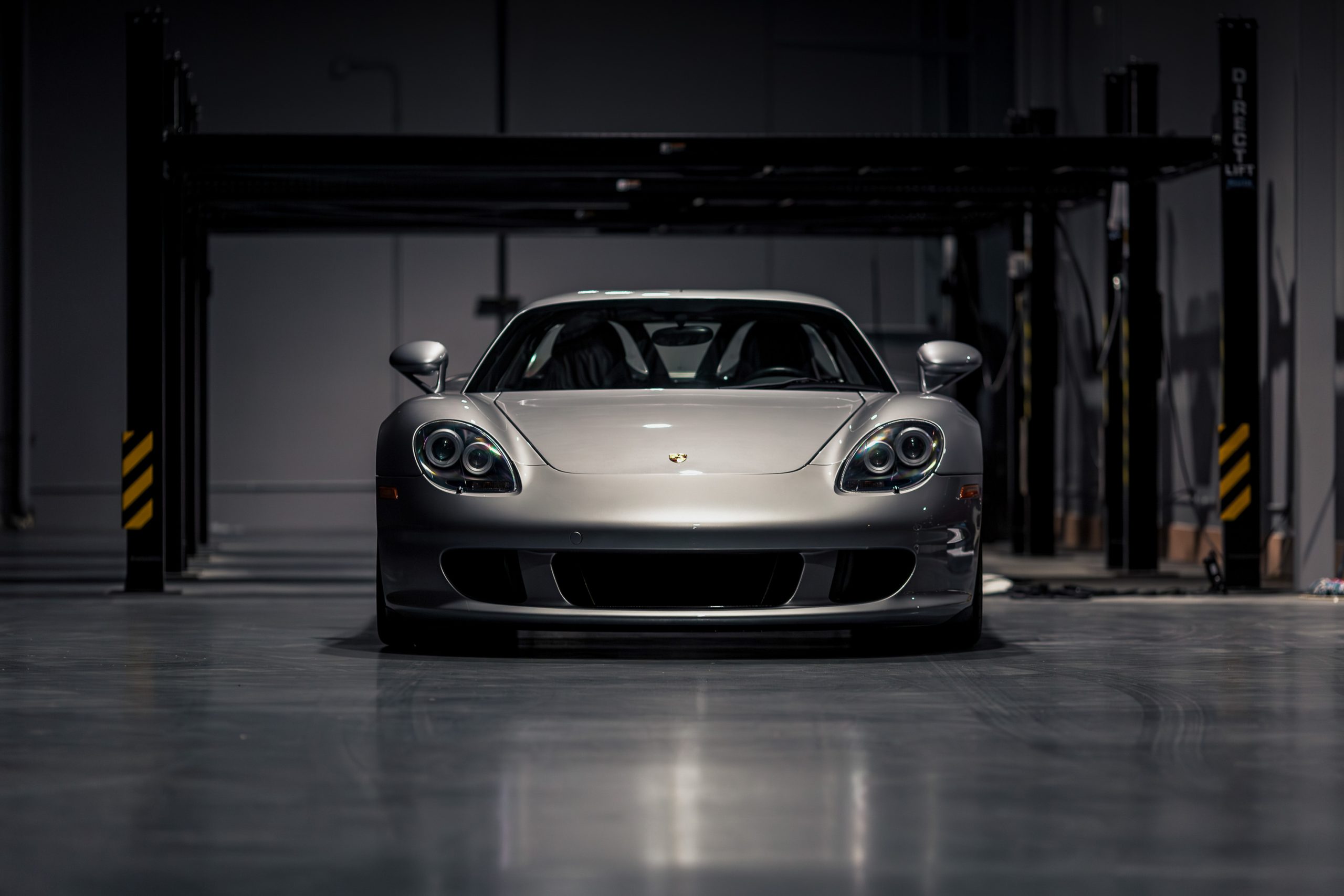
Porsche Carrera GT (2004–2006)
The standard Carrera GT is already a high-end classic, but one-off or factory-approved special cars inhabit a rarified valuation bracket that only widens with age.

Why Porsche’s Most Analog Hypercar Is Becoming a Cornerstone Investment
The Porsche Carrera GT has already cleared the “modern classic” hurdle and is now firmly entering blue-chip territory—and the reasons go far beyond nostalgia or raw performance. The Carrera GT represents a convergence of engineering freedom, motorsport DNA, and mechanical purity that Porsche will never replicate. As the collector market increasingly prioritizes irreproducible experiences, the Carrera GT’s long-term investment case continues to strengthen.
At its core, the Carrera GT exists because of an abandoned Le Mans prototype program. Its 5.7-liter naturally aspirated V10 was never conceived as a road-car engine—it was a racing engine adapted reluctantly for street use. That origin story matters. Cars born from motorsport necessity rather than marketing intent tend to age exceptionally well in the collector market, because their existence is tied to a moment that cannot be recreated. Today’s hypercars are filtered through regulation, hybridization, and software layers; the Carrera GT is unapologetically mechanical.
Equally important is what Porsche chose not to include. No hybrid assistance. No torque vectoring. No stability-heavy safety net. A carbon monocoque, rear-wheel drive, and a manual transmission with a notoriously demanding ceramic clutch put the burden squarely on the driver. This is not a car that flatters—it’s a car that demands respect. As driving skill becomes less relevant in modern performance cars, vehicles that still require it gain cultural and financial gravity.
Production numbers further support the Carrera GT’s upward trajectory. With just 1,270 units worldwide, it is meaningfully rarer than most contemporary halo cars—and many examples are already locked away in long-term collections. Attrition, low-mileage hoarding, and a shrinking pool of pristine examples all quietly push values higher over time. Unlike speculative modern exotics, the Carrera GT’s supply is fixed and increasingly illiquid.
Finally, the Carrera GT benefits from a broader market shift toward analog authenticity. As electrification accelerates and internal combustion becomes increasingly managed—or eliminated entirely—the Carrera GT stands out as one of the last truly visceral hypercars ever built. It isn’t just fast; it’s theatrical, intimidating, and emotionally overwhelming. That kind of experience does not depreciate—it compounds.
Investment & Collector Status
In 2026, the Carrera GT has transitioned from a "used supercar" to a "blue-chip historical asset."
The "Why"
Hagerty recently placed this on their 2026 Bull Market list. It is the definitive analog supercar—V10, manual, and no stability control. As modern hypercars become more digital, the raw nature of the CGT is seeing a massive surge in demand.
Rarity
While 1,500 were planned, only 1,270 units were produced before changing US airbag regulations forced Porsche to end production in 2006.
Market Value
Values have seen a vertical climb. Ten years ago, these were $400k cars. Today, a "standard" GT Silver or Basalt Black example commands $1.5M to $1.8M.
If you find a Paint-to-Sample (PTS) car in colors like Signal Orange, Arancio Borealis, or Fayence Yellow, the price can easily exceed $2.5M.
The Maintenance Factor
To an investor, "clutch life" and "major service" are the two most important phrases. A full engine-out service is required every four years, and a clutch replacement can cost upwards of $25,000–$30,000.
Start Your Search
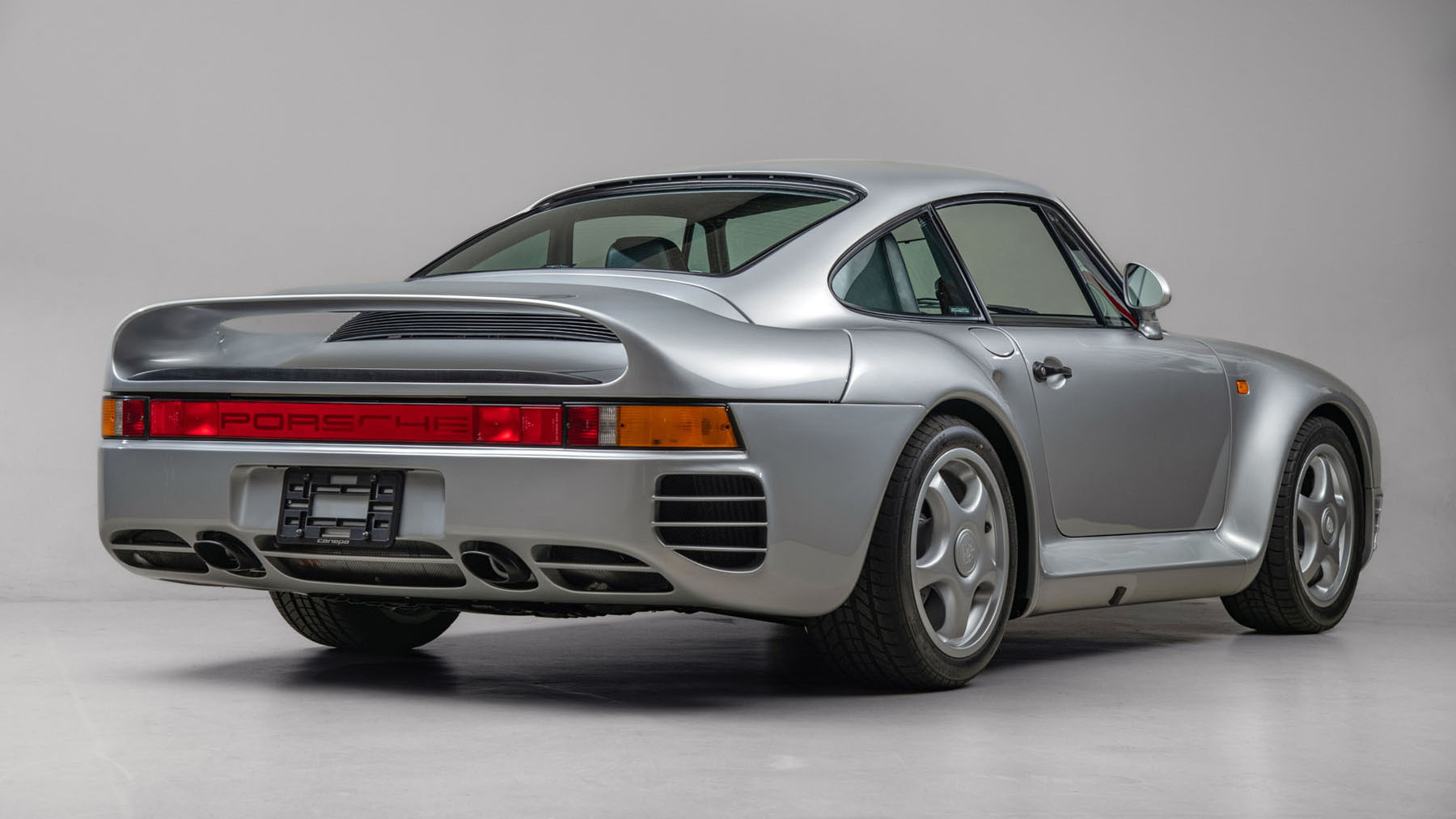
Porsche 959 (Comfort or Sport)
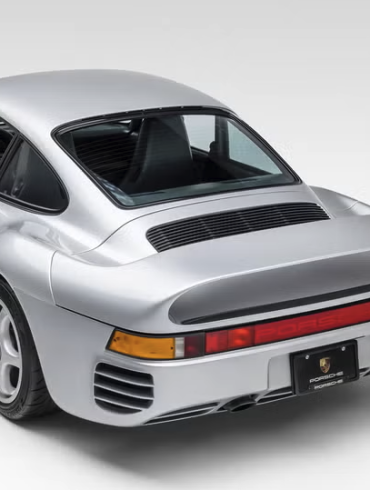
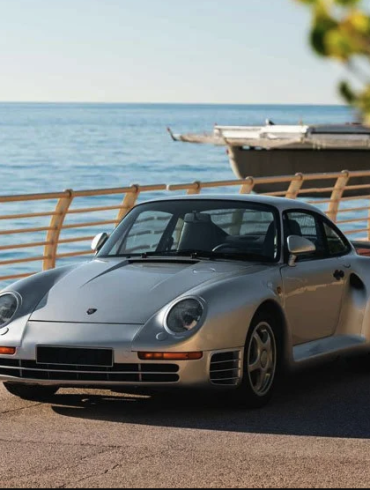
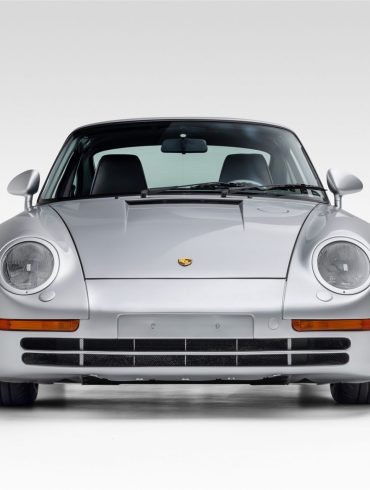
The 959 was the first "modern" supercar. For years it trailed the Ferrari F40 in value, but the gap is closing as Gen-X and Millennial collectors appreciate its technological complexity and usability.
Why Porsche’s First Hypercar Is Still Being Repriced—Upward
The 959 was the first "modern" supercar. For years it trailed the Ferrari F40 in value, but the gap is closing as Gen-X and Millennial collectors appreciate its technological complexity and usability.
The Porsche 959 is no longer “just” an ’80s icon; it has become a benchmark for how the market values foundational technology cars. As Porsche’s first true hypercar, the 959 didn’t chase existing supercar formulas—it invented new ones. All-wheel drive with variable torque distribution, adaptive suspension, composite bodywork, and a twin-turbo flat-six were revolutionary at launch. Today, collectors increasingly recognize that cars which change the rules tend to appreciate more reliably than cars that simply perfect them.
A key driver of future value is the 959’s unrepeatable context. The car exists because Porsche was chasing Group B dominance and used the road car to legitimize a no-limits engineering exercise. That regulatory moment is gone forever. Modern homologation doesn’t allow this level of experimentation, and Porsche itself has moved away from “blank-check” engineering programs. When collectors look for cars that could not be built again—by law, cost, or philosophy—the 959 rises to the top.
The split between Komfort and Sport variants further strengthens the investment case. Komfort cars deliver a uniquely usable, luxurious take on the 959’s technology, appealing to collectors who value originality and road manners. The Sport, built in far smaller numbers with weight reduction and fewer comforts, occupies a rarified tier akin to lightweight homologation specials. As with other Porsche lines (RS Touring vs Lightweight, Komfort vs Leichtbau), this bifurcation creates internal scarcity that the market historically rewards over time.
Another tailwind is the 959’s long arc of normalization and access. For years, regulatory hurdles—particularly in the U.S.—suppressed demand and distorted pricing. As those barriers disappeared and knowledge spread, the buyer pool broadened dramatically. What we’re seeing now isn’t speculative heat; it’s a structural repricing as the car takes its rightful place alongside the Carrera GT and 918 as a pillar of Porsche’s hypercar lineage. Importantly, values have been firm even during market cool-offs—an indicator of true blue-chip status.
Finally, the market’s shift toward historical authenticity over raw performance strongly favors the 959. In a world of electrification and software-defined cars, the 959’s visible mechanical ingenuity—boosted flat-six, manually adjustable ride height, and period-correct futurism—feels increasingly special. It is both a time capsule and a technological ancestor, a combination that compounds desirability rather than dates it.
Investment & Collector Status
For decades, the 959 sat in the shadow of the Ferrari F40. However, the market has recently pivoted toward the 959 because it is more "usable"—you can actually drive it to dinner without a support crew.
The "Why"
The 959 is the reason every modern 911 Turbo is all-wheel drive. It is the reason we have active aerodynamics and torque vectoring. While the F40 is a tribute to the past (the last "raw" car), the 959 was a letter to the future. For an investor, it represents the absolute peak of 20th-century automotive ambition.
Rarity
Only 337 units were ever built (including prototypes). The Sport version is the true "unicorn," with only 29 units produced.
Market Value
Komfort: In 2026, clean examples trade between $1.8M and $2.3M.
Sport: These are now firmly $3M+ assets.
Canepa SC: A specialized "reimagining" by Bruce Canepa (the man who fought to make the 959 legal in the US) can push values toward $4M, as these cars are upgraded to modern standards with 800+ hp.
The Maintenance Factor
Buying a 959 is like adopting a high-maintenance exotic pet. The hydraulic suspension and early 80s engine management systems require specialized technicians. A "standard" major service can easily run into the six-figure range if the car has been sitting.
Start Your Search
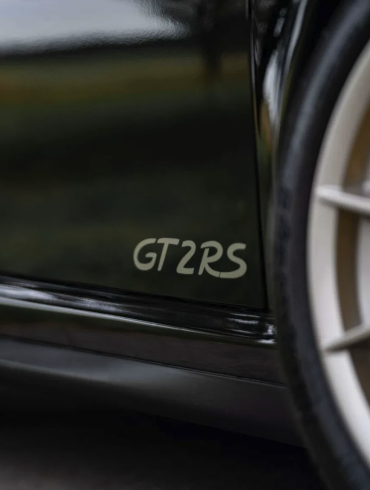
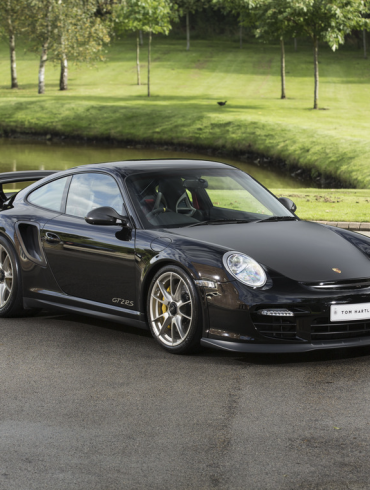
Porsche 911 GT2 RS (997) (2011)
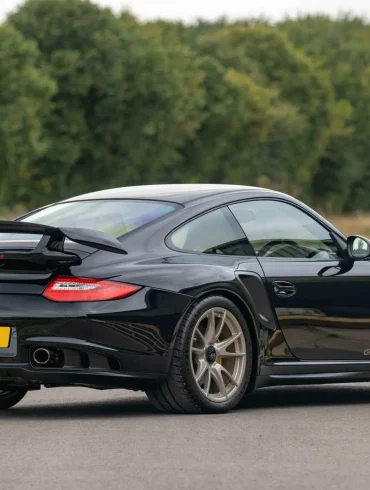
Only 500 were made. It is the last manual "Widowmaker." It represents the absolute ceiling of the analog 911 experience before PDK became the standard for GT cars.
Why the Most Violent 911 of the Analog Era Is Being Repriced—Upward
The Porsche 911 GT2 RS (997) is no longer a niche car for only the bravest drivers—it is becoming recognized as a cornerstone modern collectible. Its combination of rarity, mechanical purity, and uncompromising intent places it in the same long-term appreciation conversation as the GT3 RS 4.0 and Carrera GT.
The Porsche 911 GT2 RS (997) occupies a singular position in the modern Porsche hierarchy: it is the most extreme, least forgiving, and most unfiltered road-going 911 Porsche has ever sold. For years, it lived in the shadow of later RS cars and newer performance benchmarks. Today, collectors are beginning to understand that what once made the 997 GT2 RS intimidating is exactly what makes it a long-term investment-grade car.
At its core, the 997 GT2 RS represents a philosophy Porsche has already abandoned. Rear-wheel drive only. Enormous turbocharged power. Minimal electronic intervention. Aggressive weight reduction. No attempt to make the car friendly, accessible, or broadly appealing. Porsche built it to homologate a racing idea and to push the 911 platform to its absolute limit—not to sell in volume or win comparison tests. That intent matters enormously in the collector market.
The numbers still shock even now. At the time of launch, the GT2 RS was the most powerful production 911 ever built, with a power-to-weight ratio that eclipsed contemporary supercars. But unlike modern GT cars that achieve speed through software, rear-wheel steering, and active systems, the 997 GT2 RS delivers its performance mechanically. Turbo lag, boost surge, and raw traction demands are part of the experience—not flaws to be engineered out. That kind of engagement is no longer politically or commercially viable.
Rarity further strengthens the investment case. With roughly 500 units worldwide, the 997 GT2 RS is far scarcer than most modern RS cars and significantly rarer than later GT2 RS models. Importantly, many examples have been driven hard, modified, or tracked—meaning truly original, low-mileage cars with clean histories are becoming increasingly difficult to find. As with all top-tier Porsches, scarcity combined with attrition quietly accelerates value growth.
The market is also undergoing a broader philosophical shift that favors the 997 GT2 RS. Collectors are moving away from chasing peak lap times and toward cars that represent endpoints—the last, the most extreme, the least repeatable. The 997 GT2 RS checks every one of those boxes: last manual GT2 RS, last truly analog turbo monster, and the final expression of a Porsche willing to scare its owner a little. Later GT2 RS cars may be faster, but none are as raw or as culturally honest.
Investment & Collector Status
The 997-generation Porsche 911 GT2 RS is often referred to by collectors as "The Peak." If the 911 Carrera RS 3.0 represents the pinnacle of the air-cooled analog era, the 997 GT2 RS is the ultimate expression of the water-cooled manual era.
The "Why"
The 997 GT2 RS is a "scary" car in the best possible way. It requires a level of driver skill that modern 700hp hypercars have largely automated away. It is the end of a 50-year lineage of manual, turbocharged, rear-wheel-drive 911s.
Rarity
Only 500 units were produced globally. To put that in perspective, Porsche built nearly 1,000 units of the 918 Spyder and roughly 1,000 units of the 991 GT2 RS.
Market Value
In 2026, values have surged as collectors look for "finality" models. While they traded for $300k–$400k for years, pristine, low-mileage examples (especially in the launch color of GT Silver) are now regularly crossing $750,000, with exceptional cars pushing toward the $1M mark.
The "Mezger" Factor
As Porsche moves toward smaller-displacement turbocharged engines and hybrids, the 3.6L Mezger block is viewed as the "indestructible" racing engine. Owning the most powerful version of it is the ultimate flex for a Porsche purist.
Start Your Search
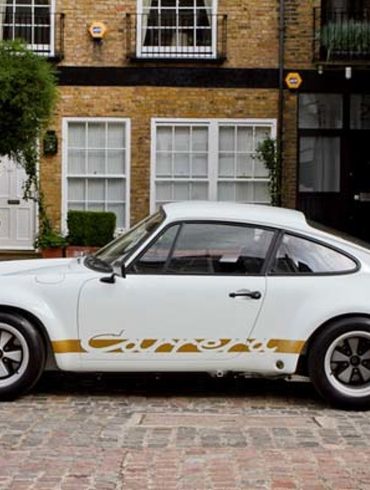
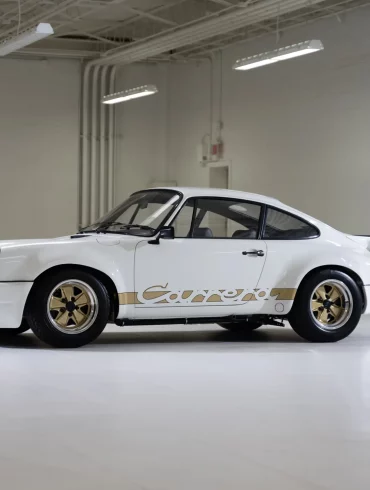
Porsche 911 Carrera RS 3.0
The RS taken off the leash—and turned into a weapon. The road-going RSR that almost shouldn’t exist
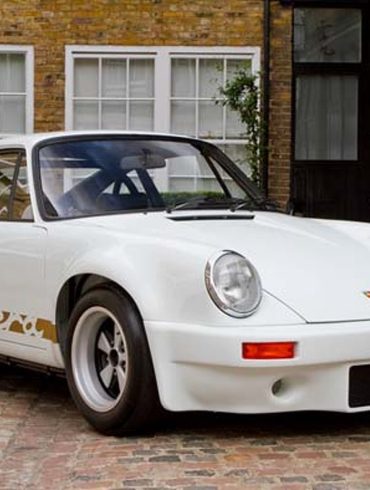
Why the Road-Going RSR That Almost Shouldn’t Exist Is a Blue-Chip in Waiting
The Porsche 911 Carrera RS 3.0 is one of the rarest cases where engineering intent, accident, and timing combined to create a car the market is still fully catching up to. Built during a chaotic regulatory moment in the mid-1970s, the RS 3.0 was never meant to be a commercial success or a halo product. It exists because Porsche’s racing department needed a road-legal bridge to the RSR—and that singular purpose is exactly why its long-term investment case is so strong.
Unlike the legendary RS 2.7, which was quickly embraced and mythologized, the RS 3.0 arrived at the wrong time. Emissions pressure, oil crises, and shifting buyer tastes meant the market simply didn’t know what to do with a wide-body, motorsport-derived 911 that was more serious, heavier, and more expensive than its predecessor. As a result, production was brutally low. Today, that lack of contemporary enthusiasm reads not as a flaw—but as pure scarcity created by indifference, one of the most powerful drivers of appreciation in collector markets.
What makes the RS 3.0 especially compelling is how close it sits to the RSR in spirit and hardware. The wide bodywork, massive brakes, reinforced chassis, and 3.0-liter engine derived directly from Porsche’s racing program make this far more than a “road RS.” It is, functionally, a detuned RSR with license plates—something Porsche would almost never dare to sell again. Modern homologation cars are filtered, softened, and heavily managed; the RS 3.0 is not.
From a market perspective, the RS 3.0 benefits from being chronically undervalued relative to its significance. It sits below the RS 2.7 in name recognition, yet above it in rarity and motorsport proximity. As collectors become more educated—and as the conversation shifts from nostalgia to factory intent—the RS 3.0 increasingly looks like a mispriced asset. This is the same reappraisal arc seen with cars like the 964 RS 3.8 and early RSRs: initially misunderstood, later canonized.
Another important tailwind is generational collector behavior. Buyers entering the top end of the Porsche market today are less concerned with posters and mythology and more focused on story, engineering honesty, and uniqueness. The RS 3.0’s narrative is airtight: built reluctantly, sold poorly, raced heavily, and never repeated. In a world where limited editions are often marketing exercises, that authenticity carries compounding value.
Investment & Collector Status
The Porsche 911 Carrera RS 3.0 is the car that purists describe with a hushed tone. If the 1973 RS 2.7 is the "Golden Child" of the Porsche world, the 1974 RS 3.0 is its aggressive, track-addicted older sibling that graduated from a military academy. It is arguably the most significant "homologation special" Porsche ever produced for the road because it wasn't just inspired by racing—it was a racing car that Porsche begrudgingly legalized for the street. The RS 3.0 is the definition of a "destination" car. You don't "stumble" into owning one; you seek it out as the centerpiece of a world-class collection.
The "Why"
The RS 3.0 represents the absolute peak of the naturally aspirated, air-cooled, mechanical 911. It is the bridge between the classic long-hoods and the turbocharged monsters that would follow. For an investor, it is "inflation-proof" because it isn't just a car; it is the street-legal twin of the most successful privateer racer in Porsche history.
Rarity
With only 55 road cars made, they appear at auction far less frequently than the 2.7 RS (of which ~1,580 were produced).
Market Value
While a 1973 RS 2.7 might fetch $600k–$900k, a genuine 911 Carrera RS 3.0 is a $2M to $2.5M+ asset.
The "Tribute" Warning
Because of its immense value and iconic look (wide flares and whale tail), the market is flooded with clones. A genuine car must have the specific 911 460 XXXX chassis designation.
Porsche 911 Turbo S (993)
The ultimate final chapter of the air-cooled saga. Produced at the very end of the 993’s life cycle, it was a high-performance swan song created by Porsche's Exclusive Department.
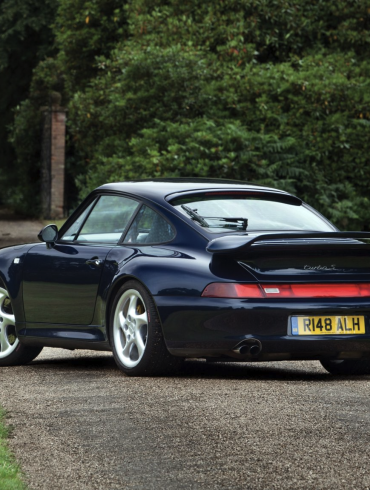
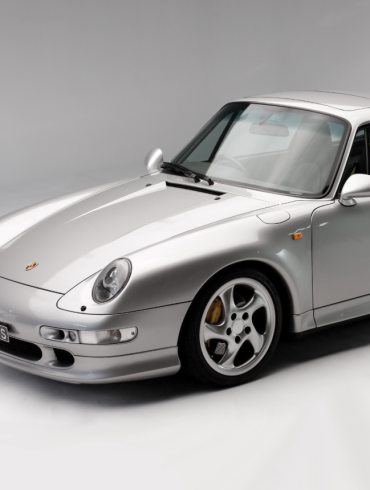
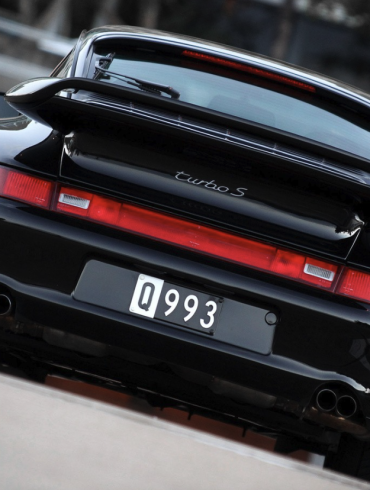
Why the Ultimate Air-Cooled Turbo Is a Long-Term Blue-Chip Investment
The Porsche 911 Turbo S (993) sits at the absolute summit of air-cooled Porsche production—and the market is increasingly treating it as such. Already rare, already expensive, and already revered, the 993 Turbo S is still climbing because it represents a convergence that will never happen again: the final air-cooled 911, the ultimate factory Turbo, and a hand-finished, low-volume flagship built at the very end of an era.
At a technical level, the 993 Turbo S was Porsche pushing the outgoing platform as far as it could possibly go. Twin turbos, all-wheel drive, massive brakes, aggressive aero, and factory power upgrades elevated it well beyond the standard Turbo. But unlike later water-cooled super-Turbos, the 993 Turbo S still feels mechanical and analog—boost builds with drama, steering remains hydraulic and communicative, and the car demands respect rather than managing the experience for you. That combination of performance and rawness is increasingly scarce.
Rarity is the second pillar of its investment thesis. Depending on market and specification, production numbers are measured in the dozens, not hundreds. Many were built as Sonderwunsch or Porsche Exclusive cars, further fragmenting supply and making truly comparable examples almost nonexistent. In the collector market, cars with no true peers tend to appreciate disproportionately because pricing becomes narrative-driven rather than benchmark-driven.
The 993 Turbo S also benefits from being the final expression of two closing chapters at once: air-cooling and the original Turbo ethos. Subsequent Turbo S models became faster, safer, and more refined—but they lost the edge and menace that defined the Turbo name in the first place. Collectors increasingly view the 993 Turbo S as the last “dangerous” Turbo Porsche ever built, a car that still carries the Widowmaker DNA but with maturity and engineering polish.
Finally, the broader market context strongly favors the 993 Turbo S. As top collectors consolidate around cars that represent endpoints rather than beginnings, the most extreme final versions are consistently repriced upward. We’ve seen this pattern repeatedly with RS models, lightweight homologation cars, and last-of-line flagships across marques. The 993 Turbo S fits that pattern perfectly—and Porsche’s brand strength amplifies it further.
Investment & Collector Status
It is the fastest and most powerful air-cooled 911 ever sold to the public (excluding the homologation GT2). And history suggests that it will only move upwards over time.
It is no longer simply appreciating - it is being canonized. Its combo of ultra-low production, air-cooled finality, factory-built extremity, and unmatched status places it among the most secure long-term investments available.
The "Why"
The 993 Turbo S is the perfect blend of 90s technology and 60s heritage. It has all-wheel drive and twin turbos, yet it still retains the compact dimensions and the distinctive mechanical "whirr" of an air-cooled motor. For an investor, it is the safest place to put money in the 911 market. For collectors looking to anchor a portfolio, the 993 Turbo S is a reference point.
Rarity
While roughly 6,000 standard Turbos were produced, the Turbo S is significantly more exclusive, with only 345 units built. In the U.S, only 183 units were officially made.
Market Value
A "standard" 993 Turbo might command $250k–$350k while a genuine Turbo S with pristine examples regularly selling for $850k to $1.2M.
Because many were ordered in conservative colors like Arctic Silver or Black, finding a "high-impact" color like Speed Yellow, Riviera Blue, or Arena Red can add a $100k+ premium.
Start Your Search
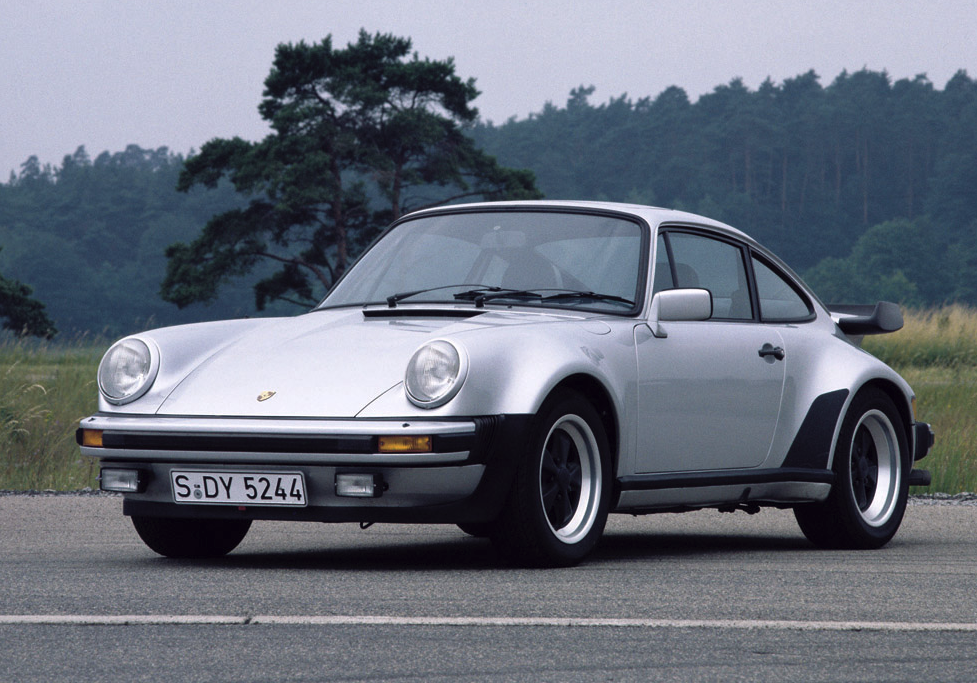
Mid-Market Porsche Tier ($200k to $1M)
This is the most active segment in recent years, as high-net-worth enthusiasts look for "attainable" icons. This group also includes cars you can drive and enjoy and have lots of headroom in terms of price growth in coming years.
Porsche 911 Turbo - 3.3 Liter - 930 (1978 to 1989)
A visceral 911 experience. It is a car that demands your full attention, punishes your mistakes, and provides a rush that modern, sanitized supercars simply cannot replicate. The "analog violence" is only becoming more desirable.
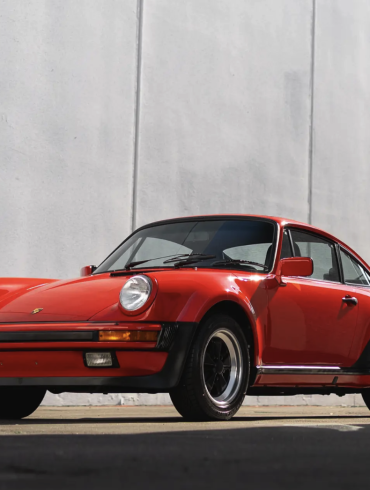
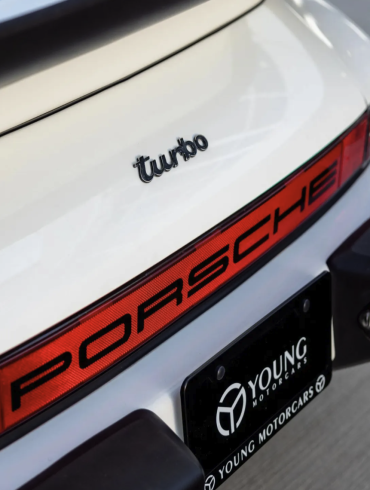
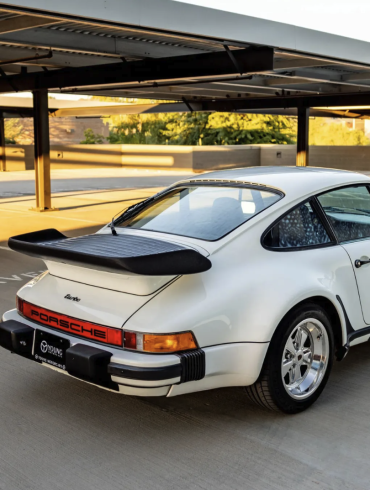
Why the Original Widowmaker Turbo Is Entering Its Blue-Chip Era
The Porsche 911 Turbo 3.3-liter (930) is one of the most culturally significant Porsches ever built—and the market is increasingly treating it that way. While early 3.0-liter Turbos established the legend, it was the intercooled 3.3-liter cars that cemented the 930 as an icon, blending fearsome performance with visual drama and real-world usability. Today, that combination is driving a renewed and durable appreciation cycle.
At a fundamental level, the 930 represents Porsche’s first truly successful attempt to tame turbocharging for the road—without sanitizing it. The 3.3-liter engine brought an intercooler, improved durability, and more usable torque, but it retained the defining trait that made the Turbo famous: boost delivered on its own terms. Lag, surge, and rear-engine weight transfer weren’t engineered out—they were embraced. In a modern context, where turbocharging is invisible and algorithmically managed, the 930’s raw behavior feels increasingly special.
Just as important is the 930’s visual and cultural permanence. The wide body, massive rear wing, deep front spoiler, and unmistakable stance created a design language Porsche still references today. This isn’t nostalgia—it’s brand DNA. Few cars are as instantly recognizable across generations, and cars that define a brand’s silhouette tend to perform exceptionally well as long-term investments.
From a supply perspective, the 3.3-liter Turbo benefits from a long production run that masks real scarcity. Many cars were driven hard, modified, or poorly maintained during eras when they were “just used 911s.” Truly original, well-documented examples—especially matching-numbers cars with factory colors and correct equipment—are becoming increasingly difficult to source. As always in the Porsche market, attrition quietly fuels appreciation.
The 930 also benefits from a broader collector shift toward analog turbo cars. As forced induction becomes universal and invisible, collectors are seeking the moment when turbocharging still felt dangerous and dramatic. The 930 doesn’t just represent that era—it defines it. It is the turbocharged equivalent of an early RS: uncompromising, characterful, and mechanically honest.
Investment & Collector Status
For investors and enthusiasts alike, the 930 occupies a rare position: a car that is thrilling to own, instantly recognizable, and deeply embedded in Porsche’s identity. As the market continues to reward authenticity over refinement, the original intercooled Turbo stands poised not just to hold value—but to continue appreciating.
The "Why"
The Porsche 911 Turbo 3.3 (930) is no longer simply a “classic Turbo”—it is increasingly viewed as a cornerstone Porsche collectible. It combines motorsport relevance, unmistakable design, historical importance, and an unrepeatable driving experience. Values have already moved meaningfully, but the long-term trajectory remains upward.
Rarity
Over the lifespan of the 3.3L Turbo (1978–1989), Porsche produced approximately 18,772 units globally. This includes all body styles: Coupes, Targas, and Cabriolets.
Market Value
Driver-Quality (Early 80s): Expect to pay $160k – $190k.
Low-Mile Originals: These are consistently crossing $300k+.
1989 G50 Models: Pristine examples are now trading between $350k and $450k.
The Slant Nose (Flachbau): Factory-built "M505" cars that are genuine, documented are $400k – $600k.
The Maintenance Factor
Owning a 930 is a "high-zinc" lifestyle. These engines generate immense heat, which can lead to things like Broken Head Studs. If the car isn't properly cooled down after a hard run, oil can "coke" (carbonize) in the turbocharger, leading to premature failure.
Start Your Search
Porsche 911 R (991.1) (2016)
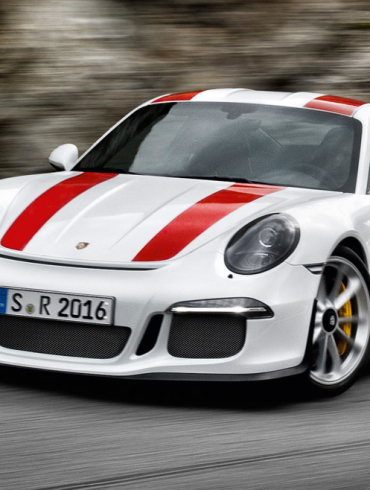
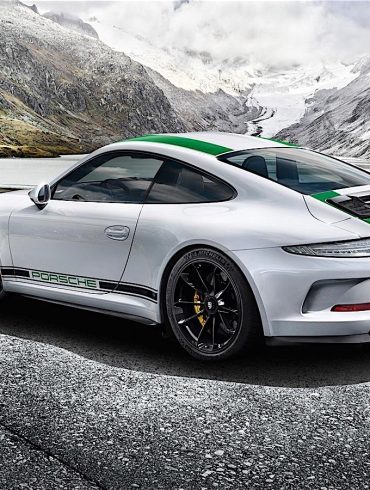
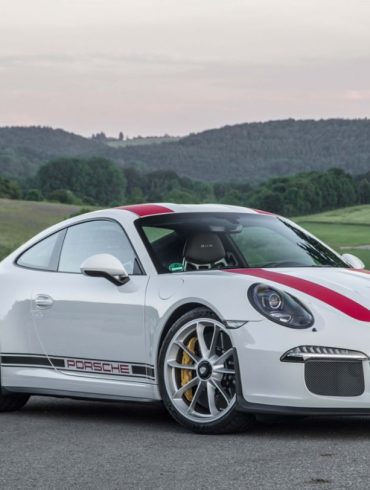
The 911 R was the catalyst for Porsche’s "return to manual." It proved that enthusiasts cared more about the feeling of a gear change than a tenth of a second on a lap time. Its wingless silhouette will age better than the aero-heavy RS cars.
Why Porsche’s Quietest GT Car Is Becoming One of Its Most Important Investments
The Porsche 911 R (991.1) was never meant to dominate spec sheets or lap-time charts—and that’s exactly why its long-term investment case is so compelling. Introduced in 2016 as a philosophical statement rather than a marketing exercise, the 911 R represented Porsche’s rare moment of self-correction: a public admission that enthusiasts were right. Lightweight, naturally aspirated, manual, and deliberately understated, the 911 R marked a turning point in how Porsche approached driver-focused cars—and history consistently rewards those inflection points.
At its core, the 911 R pairs the Mezger-derived GT3 4.0-liter flat-six with a six-speed manual gearbox in a body stripped of wings, rear-wheel steering, and unnecessary drama. This wasn’t about building the fastest 911—it was about building the most emotionally correct one. That intent matters in the collector market. Cars created to satisfy engineers and drivers, rather than marketing departments, age with a credibility that compounds value over time.
Rarity further strengthens the case. With 991 units produced worldwide, the 911 R was limited from day one—and unlike many modern “limited” cars, Porsche has not repeated the exact formula. Yes, Touring models followed, but they exist because of the 911 R, not in place of it. The original remains singular: the first modern GT car to reject wings, the first to re-center the manual gearbox, and the car that reset Porsche’s GT philosophy for the next decade.
The market’s evolving taste also favors the 911 R. As GT cars become faster, heavier, and more complex, collectors are increasingly prioritizing feel, usability, and restraint. The 911 R delivers all three in a way that few modern cars can. It’s thrilling without being intimidating, special without being fragile, and engaging without demanding race-track commitment. That balance makes it attractive not just to collectors, but to owners who actually drive their cars—an important driver of long-term desirability.
Perhaps most importantly, the 911 R represents a cultural milestone for Porsche. It directly led to the reintroduction of manual options across the GT lineup, the creation of the Touring sub-brand, and a renewed focus on analog engagement in an increasingly digital era. Cars that change a company’s trajectory—quietly or loudly—almost always become reference points in hindsight.
Investment & Collector Status
For investors seeking a modern Porsche with genuine historical weight—and for enthusiasts who value purity over provocation—the 911 R stands as one of the clearest examples and repriced upward for decades to come. Now seeing a second "bull run," moving back toward the $450k – $550k range.
The "Why"
No longer a speculative darling—it is being institutionalized as a modern Porsche classic. Its fixed production, naturally aspirated engine, manual-only and historical significance place it firmly among the safest modern Porsche investments. While prices have already reflected its importance, the long-term trajectory remains upward.
Rarity
Only 991 units exist globally.
Market Value
After dipping to the $300k range post-Touring launch, the 911 R has climbed back up. A standard car (White or Silver with Red/Green stripes) trades for $450,000 – $550,000.
There are fewer than 100 Paint-to-Sample (PTS) 911 Rs worldwide. Expect to pay $700,000+.
The "Flipping" Controversy
Within months of release, cars with an MSRP of roughly $185,000 were being listed for $600,000 to $1,000,000. This speculation frustrated Porsche so much that they released the GT3 Touring, effectively "crashing" the 911 R market back down to earth.
Start Your Search
Porsche 911 Turbo (997.2) (Manual)
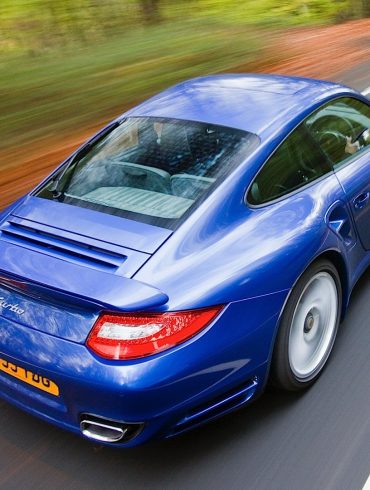
The 997.2 Manual represents the perfect "Goldilocks" 911. It has the hydraulic steering that purists crave (which the 991 lost), the manual transmission that the Turbo lost, and the reliability that the early water-cooled cars lacked.
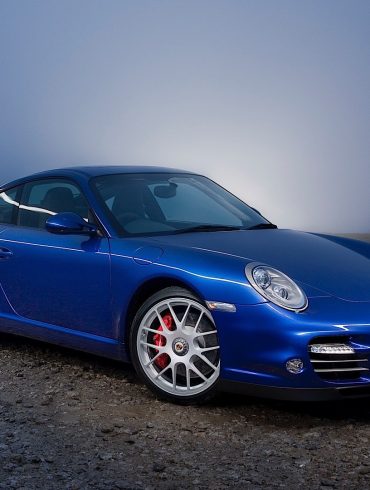
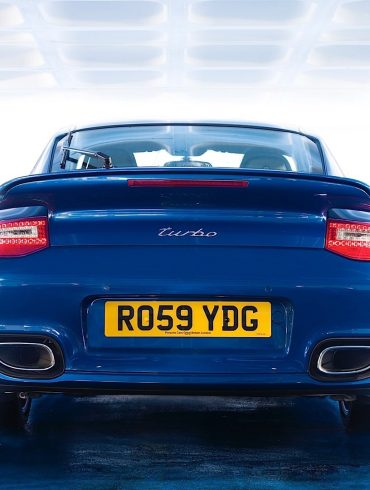
Why the Last Manual Mezger Turbo Is Quietly Becoming a Blue-Chip 911
This is the car for buyers who want a Turbo that still feels dangerous in the right way—and for investors looking for a modern classic with genuine historical weight.
The Porsche 911 Turbo (997.2) with a manual gearbox sits at a rare crossroads that the market is only now fully appreciating. It is the final Turbo powered by the legendary Mezger engine, the last era before pervasive electronic mediation, and one of the very last truly analog-feeling Turbo 911s Porsche would ever build. For years it lived in the shadow of GT cars and later Turbo S models. Today, that understatement is exactly why its investment case is so compelling.
At the heart of the 997.2 Turbo is the Mezger flat-six—an engine with direct lineage to Porsche’s racing program and a reputation for durability that borders on myth. Unlike later Turbo engines designed primarily for refinement and emissions compliance, the Mezger unit feels purposeful and mechanical. Pair that engine with a three-pedal manual, and you have a configuration Porsche will never repeat in a Turbo again. That finality matters. History shows that the last manual versions of high-performance flagships consistently outperform their automatic counterparts over time.
The driving experience further strengthens the case. The 997.2 Turbo manual delivers enormous real-world performance without insulating the driver from the process. Boost arrives with authority, steering remains hydraulic and richly communicative, and the car demands engagement rather than managing it for you. Later Turbos became astonishingly fast—but also astonishingly easy. The 997.2 Turbo is fast and involving, a combination that increasingly defines long-term desirability as buyers tire of effortless speed.
From a supply-and-demand perspective, this car checks every investment box. Manual Turbos were ordered in relatively small numbers compared to PDK, and many examples have been driven, modified, or tracked—quietly shrinking the pool of top-tier cars. Clean, low-mileage, well-documented examples are already becoming difficult to source, and when they appear, they tend to transact privately rather than publicly. That illiquidity is a classic signal of a market transitioning from “used car” to collectible asset.
Just as important is where the 997.2 Turbo sits in Porsche’s broader narrative. It represents the end of the old Turbo philosophy—brutally fast, mechanically honest, and slightly intimidating—before the model evolved into a hyper-refined, all-weather supercar. Collectors increasingly value these endpoints, especially when they coincide with legendary engines and disappearing transmissions.
Investment & Collector Status
This is a textbook example of a car being repriced by knowledge rather than hype. Its Mezger engine, last-of-its-kind manual, hydraulic steering, and modern usability place it in a strong position for long-term appreciation. Prices have been firm rather than volatile—exactly what you want to see in a healthy investment-grade Porsche.
The "Why"
The Porsche 911 Turbo (997.2) with a manual transmission is the ultimate "sleeper" in the modern collector market. For years, it sat in the shadow of its predecessor, the 997.1, because it lost the legendary "Mezger" engine. However the recent market has pivoted. The 997.2 Manual is now recognized as the "End of the Line"—the last time you could ever buy a flagship 911 Turbo with three pedals.
Rarity
While global production of the 997.2 Turbo (non-S) coupe totaled only 3,301 units, the "take rate" for the manual gearbox plummeted to an estimated 10–15% as buyers favored the faster dual-clutch technology. This leaves a global pool of roughly 330 to 500 manual coupes, with the North American market estimated to have received fewer than 200 examples.
Market Value
While a PDK 997.2 Turbo might trade for $120k–$140k, a Manual Coupe has seen a massive "manual premium." You can expect to pay $190k to $250k.
Interestingly, the 997.2 Turbo S was faster and more expensive when new—was only available in PDK. This has created a unique situation where the "standard" Turbo (if manual) is now more valuable to collectors than the Turbo S.
The Unicorn Spec
A 2012 or 2013 (last years) manual coupe with Center-Lock wheels and PCCB (Ceramic Brakes). Finding one of these is like finding a needle in a haystack; they are often traded privately before they hit auctions.
Start Your Search
Porsche 718 Spyder RS
This is the last mid-engine, internal combustion Porsche ever made. As the 718 EV hits showrooms, the "last of the line" status of the RS is driving prices well above MSRP.
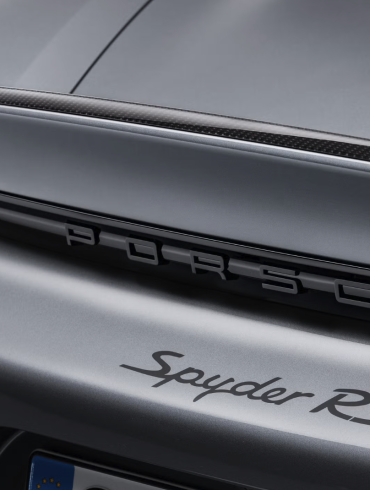
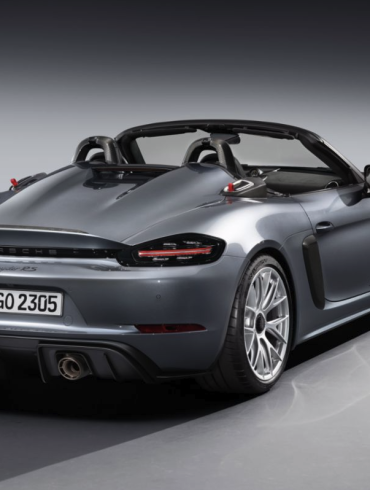
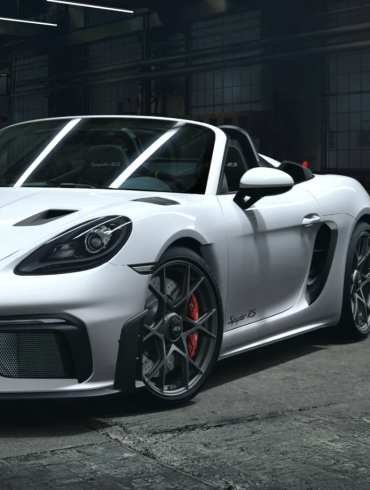
Why the Most Extreme Open-Top Porsche of the Modern Era Is Already an Investment Car
The Porsche 718 Spyder RS is one of those cars whose long-term value case is obvious not because of hype—but because of finality. It represents the absolute peak, and very likely the end, of Porsche’s naturally aspirated mid-engine RS philosophy. When collectors look back on the internal-combustion Porsche era, the Spyder RS will stand out as the moment Porsche decided to give enthusiasts everything, knowing full well it could never do it again.
At the center of the Spyder RS is the GT3-derived 4.0-liter flat-six, revving to 9,000 rpm and delivered without turbocharging, hybrid assistance, or artificial sound enhancement. In an era defined by downsizing and electrification, this engine is already an anachronism. What elevates the Spyder RS further is context: this is the first and only open-top RS car in the 718 lineup, pairing a motorsport-grade engine with minimal weather protection and maximum sensory exposure. That combination is inherently collectible.
Just as important is the car’s philosophical positioning. Porsche has long used the RS badge sparingly, reserving it for cars with uncompromising intent. The Spyder RS is not a lifestyle roadster—it is a track car with a roof removed, unapologetically loud, demanding, and raw. It exists because Porsche knew the 718 platform was nearing the end of its combustion life and chose to send it off with a statement rather than a compromise. Cars built with farewell intent tend to age extremely well.
From a supply standpoint, production is limited not just by allocation but by relevance. The market understands that there will be no electric or hybrid equivalent to this car. The upcoming electric Boxster/Cayman generation effectively guarantees that the Spyder RS will remain a one-generation, one-moment artifact. As a result, early cars are already being absorbed into collections rather than flipped—an early indicator of long-term value stability rather than speculative churn.
Finally, the Spyder RS benefits from a broader shift in collector psychology. Enthusiasts are increasingly prioritizing experience over outright speed, and few modern Porsches deliver an experience this intense. Open cockpit, high-revving NA engine, RS chassis tuning, and minimal intervention create a driving environment that simply will not exist again under future regulations. That irreproducibility is the backbone of any strong investment thesis.
Investment & Collector Status
The 718 Spyder RS is not a speculative modern Porsche—it is a future reference car. Its combination of RS pedigree, naturally aspirated GT engine, open-top configuration, and end-of-era timing places it squarely in the same early-value trajectory once occupied by cars like the 911 R and GT3 RS 4.0. While values may fluctuate short term, the long-term arc is clear.
For collectors seeking a modern Porsche with genuine historical significance—and for investors who understand how Porsche’s “last of” cars perform over time—the Spyder RS is one of the most convincing upward bets in the current market.
The "Why"
This is the last mid-engine, internal combustion Porsche ever made. The Porsche 718 Spyder RS is a car that collectors in 2026 are calling the "Grand Finale." It is the ultimate expression of the mid-engine platform, serving as a farewell to the internal combustion 718 before the model line transitions to full electrification.
Rarity
While not a numbered limited edition, production is naturally capped by the 718 assembly line's sunset. We estimate several thousand have been made.
Market Value
Currently, the Spyder RS is trading for $200k – $250k (MSRP was ~$160k). Many collectors view it as a "baby Carrera GT"—it offers a similar high-revving, mid-engine, open-top experience for a fraction of the $1.5M price tag. Our take is that its going to fall below $200k in the short term, before it becomes a must-buy car for much more.
Why it’s a "Future Classic"
The 718 Spyder RS is a "perfect storm" car. It combines the best engine Porsche currently makes (the GT3 4.0L) with the most balanced chassis they’ve ever designed (the 718 mid-engine) and removes the roof. In the future, when everything is silent and electric, this car will be remembered as the peak of mechanical, high-RPM drama.
Start Your Search
Under $200k Porsche Bargains Primed to Grow
These are the "entry-level" investment cars that are expected to outpace the market in the next 5 years.
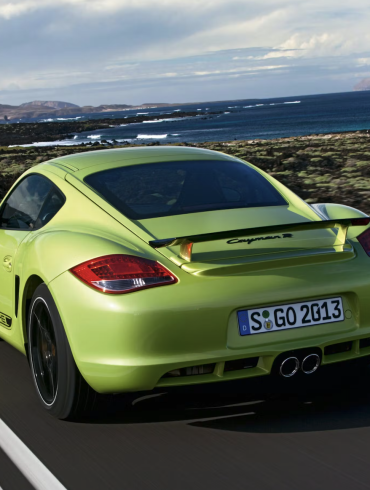
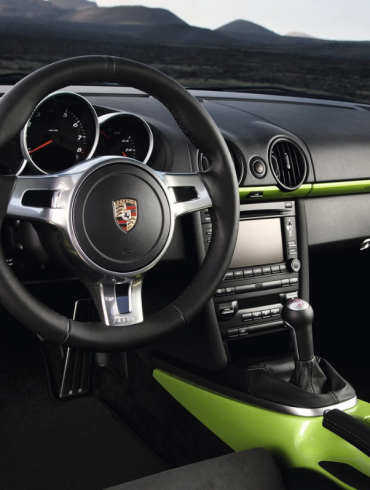
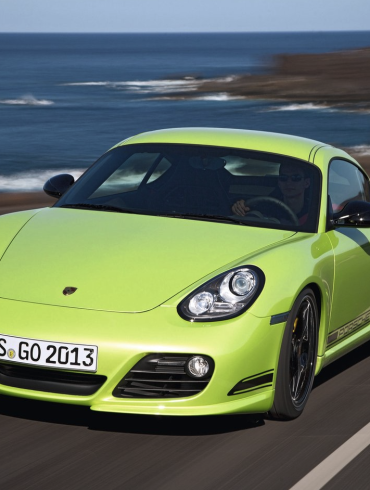
Porsche Cayman R (2012)
It was originally a slow seller, but in 2026, it has ascended to cult-hero status. It represents the absolute zenith of the compact, hydraulic-steering era—a car that prioritizes driver feedback over raw horsepower.
Why the First “RS-in-Spirit” Cayman Is Being Repriced—Quietly and Permanently
The Porsche 987.2 Cayman R is one of those cars that looks obvious in hindsight—but only after you understand what it represents. Long before GT4s, RS variants, and mid-engine hype became mainstream, the Cayman R was Porsche’s first admission that the Cayman chassis could be something special, not just sensible. Today, that realization is driving a steady and durable appreciation curve.
What makes the Cayman R compelling as an investment starts with intent. This wasn’t a trim package or marketing exercise—it was a lightweight philosophy applied to a platform Porsche had previously restrained. Weight was cut aggressively (aluminum doors, lighter interior, reduced sound deadening), suspension was lowered and stiffened, gearing shortened, and power modestly increased. Crucially, this was all done before Porsche began positioning the Cayman as a GT-adjacent car. The Cayman R is the concept car for everything that followed.
The drivetrain matters enormously here. The 987.2 uses the direct-injection 3.4-liter flat-six—free of the earlier M96/M97 anxieties—and paired it with a proper six-speed manual. Throttle response is crisp, power delivery is linear, and the car feels alive at real-world speeds. As later Caymans became faster, heavier, and more electronically mediated, the Cayman R retained something increasingly rare: mechanical clarity without excess.
Rarity is another quiet accelerant. Production numbers were low to begin with, and many cars were driven hard—as intended. Clean, original, well-documented examples are no longer easy to find, especially manuals with desirable specs. Unlike later GT cars, Porsche has never repeated the Cayman R’s exact formula: naturally aspirated, lightweight, manual-only emphasis, and no aero theatrics. That makes it a one-generation, one-moment car.
Perhaps most important is where the Cayman R sits in Porsche’s historical arc. Collectors are increasingly looking for firsts as much as lasts. The Cayman R is the first Cayman Porsche ever allowed to be truly uncompromised—and the car that proved the mid-engine platform deserved the GT treatment. As the market continues to reassess non-911 Porsches through that lens, the Cayman R’s significance becomes impossible to ignore.
Investment & Collector Status
For investors and enthusiasts alike, the Cayman R offers something increasingly hard to find: a Porsche that is already special, already rare, and still early in its appreciation curve. It isn’t loud about its significance—but markets tend to reward cars that let the engineering do the talking.
The "Why"
The Porsche Cayman R (987.2) is a textbook example of a car transitioning from “used enthusiast favorite” to recognized modern collectible. It combines lightweight philosophy, a naturally aspirated engine, manual transmission, low production, and historical importance—all without relying on hype or badges.
Rarity
Only 1,621 units were produced worldwide. Documentation shows only 563 units reached the U.S. and 61 reached Canada
Because the PDK was a popular option, finding a 6-speed manual car with the factory carbon-fiber bucket seats in a signature color like Peridot Metallic (Lime Green) is a genuine "needle in a haystack" mission for collectors.
Market Value
While you could buy these for $50k a decade ago, in 2026, a high-mileage driver is $85,000, and low-mileage, high-spec collector cars are regularly crossing $120,000.
The GT4 Rivalry
For a long time, the 981 GT4 overshadowed the Cayman R. However, purists have begun to realize that the R is smaller, lighter, and offers that "old-school" hydraulic steering feel that even the GT4 lacks.
Start Your Search
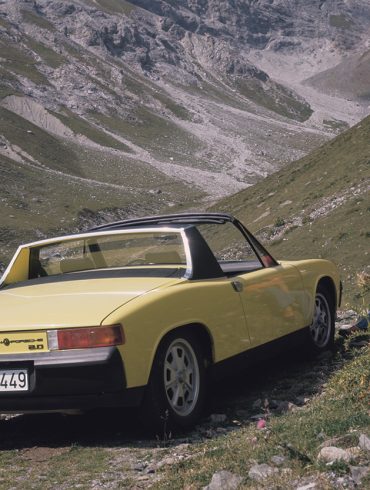
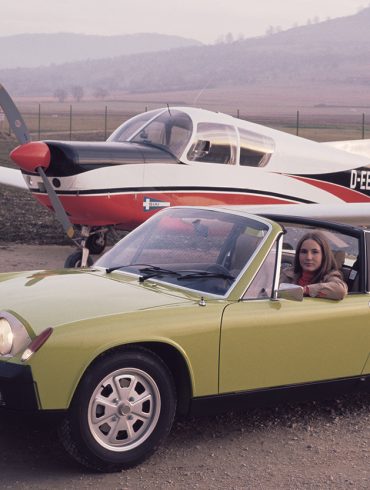
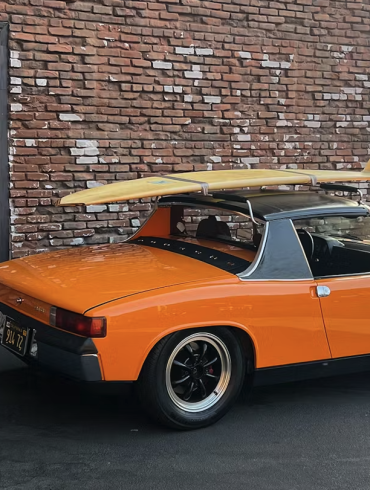
Porsche 914-4 2.0L (1973–1976)
The ultimate "redemption story". Long dismissed as a "VW-Porsche" hybrid, it has emerged in 2026 as one of the smartest entry-level investments for collectors who prioritize purity and balance over raw straight-line speed.
Why the Thinking Enthusiast’s Porsche Is Quietly Becoming a Smart Investment
The "ugly duckling" days are over. As 911s and even 912s have climbed toward six figures, the 914 2.0L has become the go-to choice for enthusiasts who want an air-cooled experience without the "911 Tax."
The Porsche 914-4 2.0L has spent most of its life misunderstood—and that is precisely why its investment case is strengthening now. Long overshadowed by the six-cylinder 914-6 and dismissed because of its Volkswagen association, the 2.0-liter four-cylinder version was, in reality, the best-developed, most usable, and most balanced 914 Porsche ever sold. As the collector market matures and prioritizes engineering intent over badge hierarchy, the 914-4 2.0 is being re-evaluated on its merits rather than its misconceptions.
What separates the 2.0 from lesser four-cylinder 914s is that it was not a compromise model—it was the flagship of the 914-4 range. Porsche-engineered cylinder heads, stronger torque, improved drivability, better brakes, and chassis refinements transformed the car into something genuinely special. Combined with the mid-engine layout and extremely low curb weight, the 914 2.0 delivers a purity of balance that Porsche would not fully revisit until the Boxster decades later. That kind of architectural significance tends to age very well in the collector market.
From a driving standpoint, the 914 2.0 offers something increasingly scarce: engagement at sane speeds. Steering is light and transparent, the chassis rotates naturally, and the car rewards momentum and precision rather than brute force. As modern sports cars become faster, heavier, and more insulated, the appeal of a simple, communicative mid-engine Porsche grows stronger—especially one that can be driven hard without fear or financial anxiety.
Rarity and attrition further strengthen the investment outlook. While production numbers were healthy in period, rust, neglect, and decades of “cheap Porsche” ownership have dramatically thinned the population of correct, original cars. Well-preserved, rust-free examples—especially those with original fuel injection, proper interiors, and documented histories—are no longer easy to find. As always in the Porsche world, survival matters more than build totals, and the surviving pool is shrinking.
Perhaps most importantly, the 914-4 2.0 benefits from a broader collector shift toward mid-engine Porsche history. With the Boxster and Cayman now central to Porsche’s identity—and with internal combustion versions nearing their end—the market is increasingly tracing that lineage backward. When viewed through that lens, the 914 is no longer an oddball; it is the origin story. And the 2.0 is the best, most complete version of that story you can realistically own.
Investment & Collector Status
The Porsche 914-4 2.0L sits at the intersection of affordability, historical importance, and growing enthusiast respect. It is not a speculative hype car—it is a slow-burn revaluation candidate, driven by education rather than trend-chasing. For buyers who want a Porsche that delivers genuine driving joy and long-term value—without following the crowd.
The "Why"
The 914 2.0L is the last "affordable" air-cooled Porsche that still offers a visceral, mechanical connection. It’s simple to work on, parts are relatively plentiful, and its "retro-cool" angular design has finally come back into fashion.
Rarity
While the 914-4 was a massive commercial success for Porsche, the high-performance 2.0L four-cylinder remains relatively rare compared to the entry-level variants. Out of approximately 115,000 four-cylinder 914s built between 1969 and 1976, the 2.0L model only appeared for the final four model years. North American estimates suggest that roughly 20,000 to 25,000 units were originally delivered with the 2.0L engine.
Market Value
A clean, driver-quality 2.0L sells for $35,000 – $45,000. Exceptional, "Survivor" examples with original fuel injection and rare colors (like Ravenna Green or Olympic Blue) are pushing past $70,000. Look for the 1974 "Bumblebee" (Black/Yellow) or "Creamsicle" (White/Orange) editions. Only 1,000 were made and these are now $80,000+.
The "Hell Hole" Warning
Investors must check the "Hell Hole"—the area under the battery tray. Because batteries leaked onto the frame rails, many 914s suffered fatal rust here. A car with a "dry" battery tray area commands a 20% premium.
Start Your Search
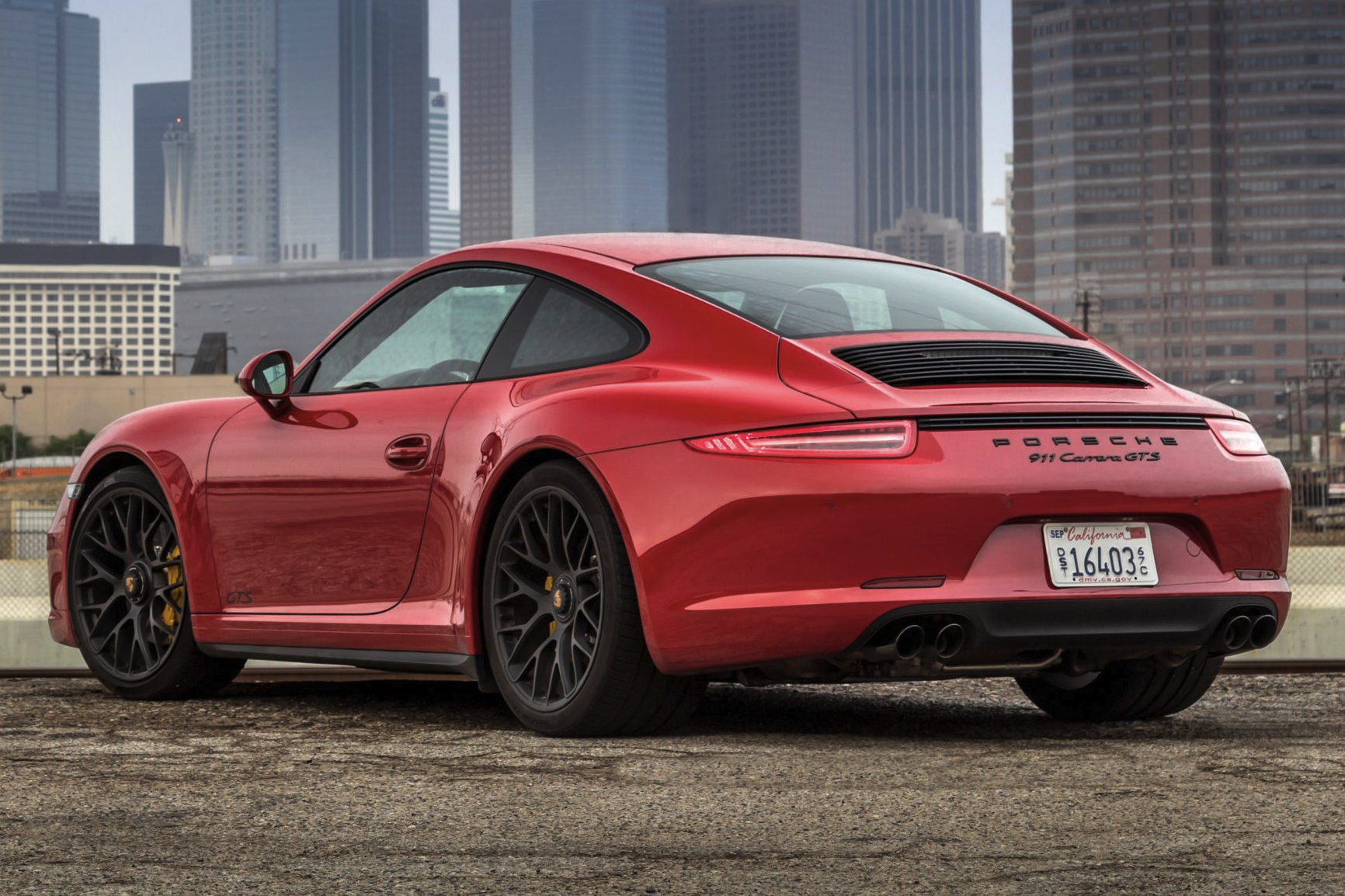
Porsche 911 Carrera GTS (991.1) Manual
A "Goldilocks" Porsche. It is faster and more aggressive than a Carrera S, but more usable and comfortable than a GT3. It has the sound of the old world and the reliability of the new. For an investor, it is a safe bet.
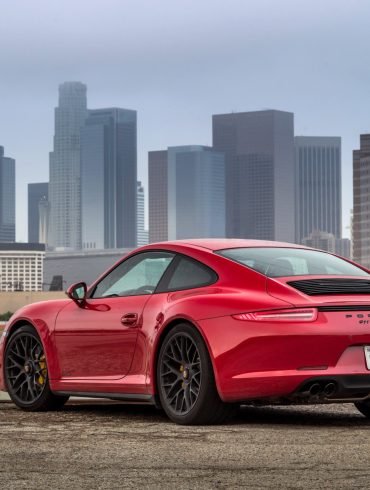
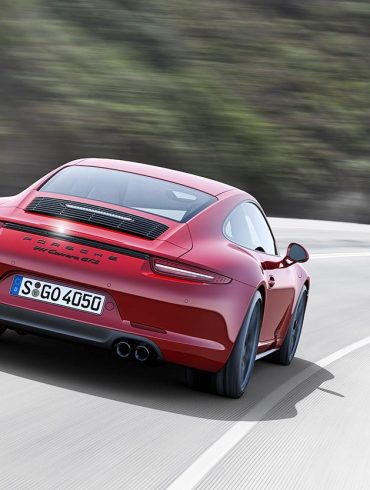
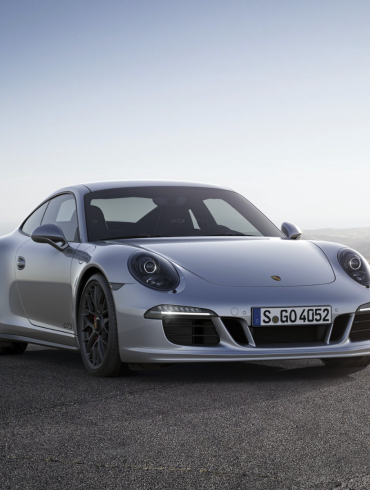
Why the Last Naturally Aspirated, Hydraulic-Steering Carrera Is a Long-Term Winner
The Porsche 911 Carrera GTS (991.1) with a manual gearbox is one of those cars whose importance becomes clearer with time. It arrived at a fleeting overlap—when Porsche still offered a naturally aspirated flat-six and hydraulic steering in a modern, daily-usable 911—right before turbocharging and electric assist permanently changed the Carrera line. That timing alone makes the 991.1 GTS manual an investment-grade outlier.
What truly elevates the car is cohesion. The 3.8-liter NA engine delivers linear, rev-hungry character; the hydraulic rack provides real texture through the wheel; and the GTS tuning (lower ride height, wider track, sport exhaust, center-lock wheels on many cars) sharpens the whole package without tipping into GT-car compromise. It’s not trying to be extreme—it’s trying to be right. History shows that Porsches which nail that balance tend to age exceptionally well.
Rarity adds a quiet tailwind. While the 991.1 generation wasn’t limited overall, manual GTS cars were a minority, especially as buyers gravitated toward PDK late in the run. Many examples have been driven hard—as intended—further thinning the pool of clean, original cars. As with so many Porsches that later become collectible, attrition does more for values than initial production totals ever suggest.
The broader market context also favors the 991.1 GTS manual. Subsequent 991.2 Carreras went turbocharged, gaining speed but losing sound and immediacy. GT models, meanwhile, have become more expensive and more specialized, pulling them away from the “own it, drive it anywhere” brief. The 991.1 GTS manual sits in the sweet spot between those worlds—modern reliability and usability, with an analog soul that Porsche will not replicate.
Finally, collector psychology is shifting. Buyers are increasingly prioritizing experience over peak numbers, and the GTS delivers one of the most complete real-world 911 experiences of the last decade. It’s fast without being overwhelming, special without being fragile, and engaging without demanding race-track commitment. That makes it desirable not just to collectors, but to long-term owners—an important driver of durable appreciation.
Investment & Collector Status
The Porsche 911 Carrera GTS (991.1) Manual is being reclassified from “great used 911” to “last-of-its-kind modern Carrera.” Its naturally aspirated engine, manual transmission, and perfectly judged GTS specification combine to create a formula Porsche has already moved beyond. As the market continues to reward cars that represent endpoints rather than evolutions, the 991.1 GTS manual stands out as one of the clearest upward-trend candidates in the modern 911 landscape.
The "Why"
The 991.1 Carrera GTS with a manual transmission is the car that represents the "Modern Peak" of the naturally aspirated 911. While the subsequent 991.2 generation moved to smaller, turbocharged engines, the 991.1 GTS retained the high-revving, big-displacement 3.8L flat-six that had defined the 911 for decades. Its the best "one-car garage" Porsche solution.
Rarity
While total 991.1 GTS production was a few thousand units, the specific combination of RWD + Coupe + Manual is the "purist spec." Data from 2025 indicates only ~115 RWD Manual Coupes were sold in the U.K. North American estimates suggest fewer than 500 RWD Manual Coupes sold.
Market Value
While a 991.1 Carrera S manual might trade for $85k–$100k, a GTS Manual Coupe has seen a significant climb. High-quality examples are trading between $145,000 and $165,000.
The "Manual Premium": Because roughly 70-80% of GTS buyers chose the PDK, the manuals are becoming increasingly difficult to source.
Start Your Search
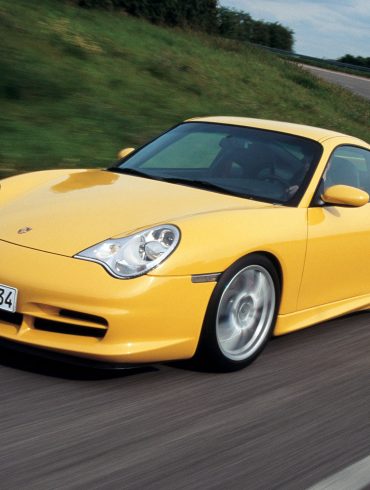
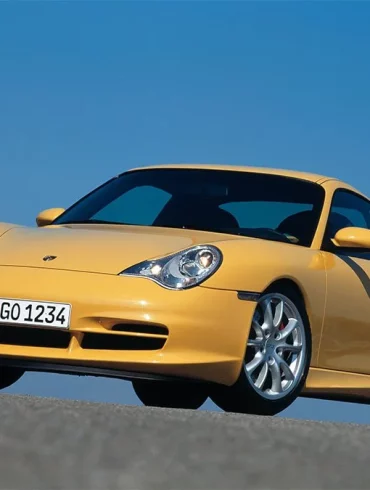
Porsche 911 GT3 (996.2) (2004 - 2005)
The 996.2 GT3 is the most honest car in the GT3 lineage. It doesn't have the luxury of the 997, the speed of the 991, or the tech of the 992. It is just a racing engine in a lightweight shell with a manual gearbox.
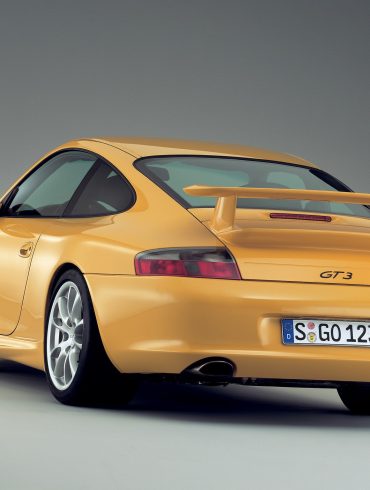
Why the First Truly Great GT3 Is Being Rewritten as a Cornerstone Investment
The Porsche 911 GT3 (996.2) is one of the most important modern Porsches—and one the market took far too long to fully understand. Long overshadowed by later GT3s with more power, better interiors, and cleaner styling, the 996.2 GT3 is now being recognized for what it really is: the moment Porsche’s GT formula fully clicked. As collectors shift their focus from “latest and fastest” to “first and purest,” the investment case for the 996.2 GT3 has become increasingly compelling.
At the heart of the car is the Mezger engine, but this is more than just another Mezger-powered 911. The 996.2 GT3 refined the raw idea introduced in the 996.1 and delivered a car that finally balanced durability, usability, and motorsport character. Dry-sump lubrication, race-derived internals, a high-revving naturally aspirated powerband, and a manual-only gearbox created a road car that felt genuinely homologation-driven rather than track-inspired marketing. This engine lineage would go on to define Porsche GT cars for over a decade—but the 996.2 is where it matured.
What makes the 996.2 GT3 especially attractive today is mechanical honesty. No rear-wheel steering, no adaptive dampers, no torque vectoring, no drive modes. Steering is hydraulic and alive, the chassis is rigid and communicative, and the car rewards commitment rather than managing it for you. Later GT3s became faster and more forgiving; none became more transparent. As modern performance cars increasingly insulate the driver, this kind of clarity has become a prized—and finite—commodity.
Rarity and survival further strengthen the investment thesis. Production numbers were modest by modern standards, and many cars lived hard lives as track tools—exactly as Porsche intended. As a result, truly original, unmodified, well-documented examples are becoming increasingly scarce. The market consistently rewards GT cars that were used when new but preserved later, and the 996.2 GT3 is now firmly entering that phase of its lifecycle.
Just as important is the broader reappraisal of the 996 generation itself. As early water-cooled cars shed outdated stigma and gain historical context, standout models like the GT3 are being separated from the noise. Collectors are realizing that the 996 GT3 isn’t compromised by its era—it is defined by it. It represents Porsche learning how to translate racing DNA into a road car without dilution, before comfort and scale began to soften the edges.
Investment & Collector Status
The 996.2 GT3 is transitioning from “enthusiast favorite” to foundational modern collectible. Its Mezger engine, manual-only configuration, stripped-back philosophy, and role as the first fully realized GT3 place it in a category the market increasingly rewards. Prices have already firmed, but the long-term arc remains upward. For investors and for drivers who want the most honest GT3 experience.
The "Why"
While Europe received the 996.1 GT3 in small numbers, the 996.2 (released in 2004) was the first time the GT3 badge officially landed on U.S. shores. It arrived during the peak of the 996’s "fried egg" headlight controversy and was immediately recognized as the car that redeemed the generation. It has transitioned from the "cheap GT3" to a "Pure Analog Holy Grail."
Rarity
While Porsche built roughly 2,313 units of the 996.2 GT3 globally, its rarity in North America is what drives the current market. Approx 958 units were delivered to North America.
The GT3 RS Shadow
While Europe got the 996.2 GT3 RS (682 units), the U.S. did not. For American collectors, the standard 996.2 GT3 is effectively the "RS" of the generation.
Market Value
For a long time, the 996.2 GT3 was a $70,000 car. Today, those days are long gone. Clean, well-documented examples are now trading between $140,000 and $180,000. Cars in "Hero Colors" like Speed Yellow or Guards Red command a significant premium over the more common Arctic Silver.