

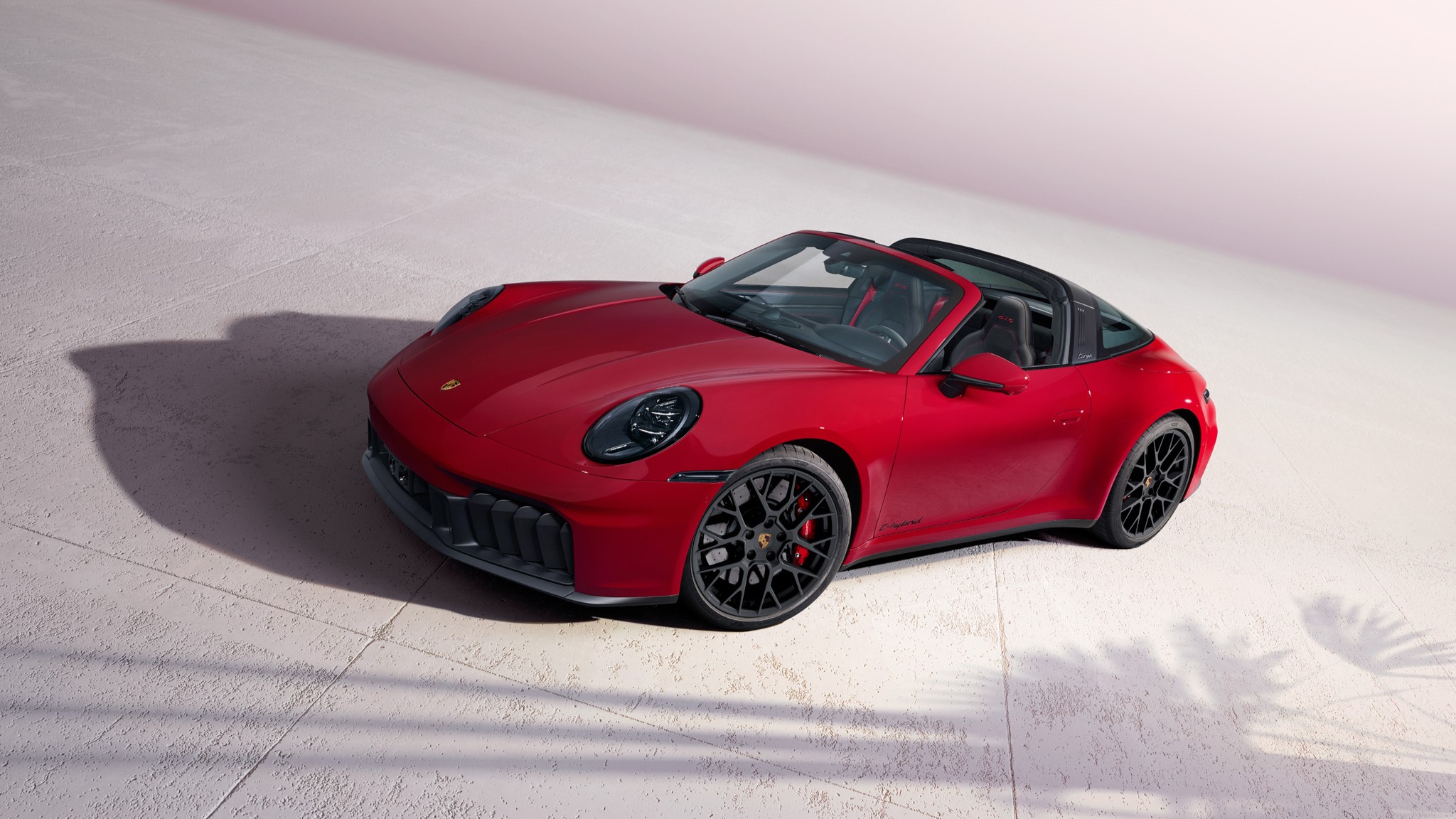
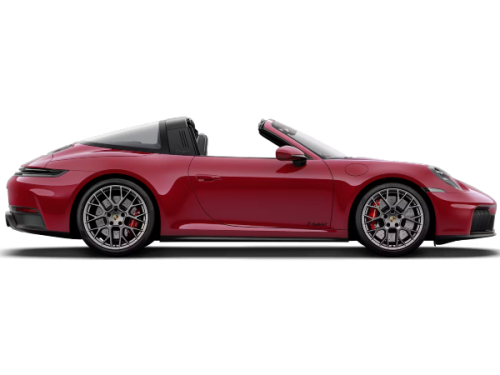
Current Porsche 911 Targa 4 GTS (992.2) – Reviews, Pricing, Specs & Buyers Guide
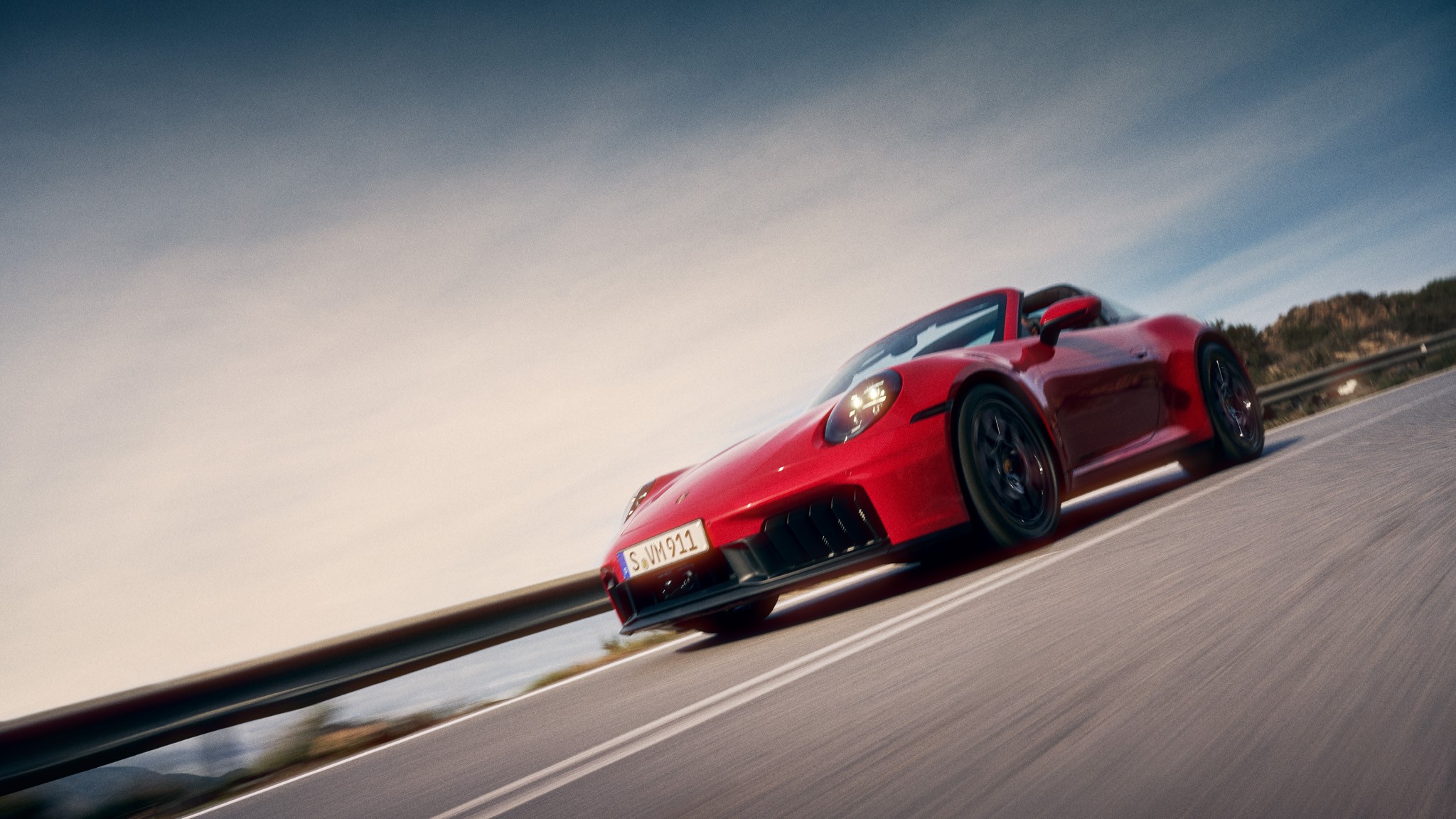
The Porsche 911 Targa 4 GTS (992.2) is the car that answers a question nobody quite dared ask out loud: what happens when you take the most nostalgic 911 body style and make it the first hybrid Targa in history?
You get a car that mixes heritage and high-tech in a way only Porsche seems to pull off: the classic stainless-style hoop and wraparound rear glass, now sitting on top of a 532 hp T-Hybrid powertrain, all-wheel drive, and one of the most sophisticated chassis setups ever fitted to a road-going 911.
This guide walks through the story, specs, performance, model-year context, reviews, and buying considerations for the 992.2 Targa 4 GTS.
Story & Position in the 911 Family
The Targa has always been the “romantic” 911: born in the 1960s as a “safety cabriolet” with a roll-over bar in response to looming U.S. safety regulations, named after the Targa Florio road race and evolving through soft rear windows, glass roofs and, now, a fully automatic roof ballet.
For 2025, Porsche used the Targa 4 GTS as one of the launch canvases for its new T-Hybrid concept. Official press material literally frames it as “Hybrid technology meets heritage”, underscoring the idea that this isn’t electrification for its own sake; it’s meant to support the core 911 values while keeping the flat-six alive in an era of tightening regulations.
Within the 992.2 lineup, the Targa 4 GTS sits here:
- Above the Carrera / Carrera S / Carrera T models in power and price
- Below the Turbo/Turbo S and GT cars in outright extremeness
- As the only T-Hybrid Targa, and AWD only
If you want open-air feeling with a fixed hoop, plus the first hybrid 911 powertrain, this is your car.
Powertrain: The T-Hybrid Flat-Six
Mechanically, the Targa 4 GTS shares its core hardware with the other 992.2 GTS models:
Engine & Hybrid System
From detailed technical data and independent testing:
- Engine:
- 3.6-litre eTurbo flat-six, rear-mounted
- 478 hp from the combustion engine alone
- 420 lb-ft (ICE), 449 lb-ft combined
- 10.5:1 compression, 7,500 rpm redline
- Electric hardware:
- Electric exhaust turbocharger (“eTurbo”) with a small motor between turbine and compressor to spool boost instantly and harvest energy (up to ~11 kW) from exhaust gas.
- Permanently excited synchronous motor integrated into the 8-speed PDK gearbox, adding up to ~40 kW (53 hp) and 110 lb-ft as needed.
- 1.9 kWh 400-V lithium-ion battery, roughly the size of a conventional 12V battery, mounted in the front trunk area.
- System output:
- 532 hp @ 6,500 rpm
- 449 lb-ft combined
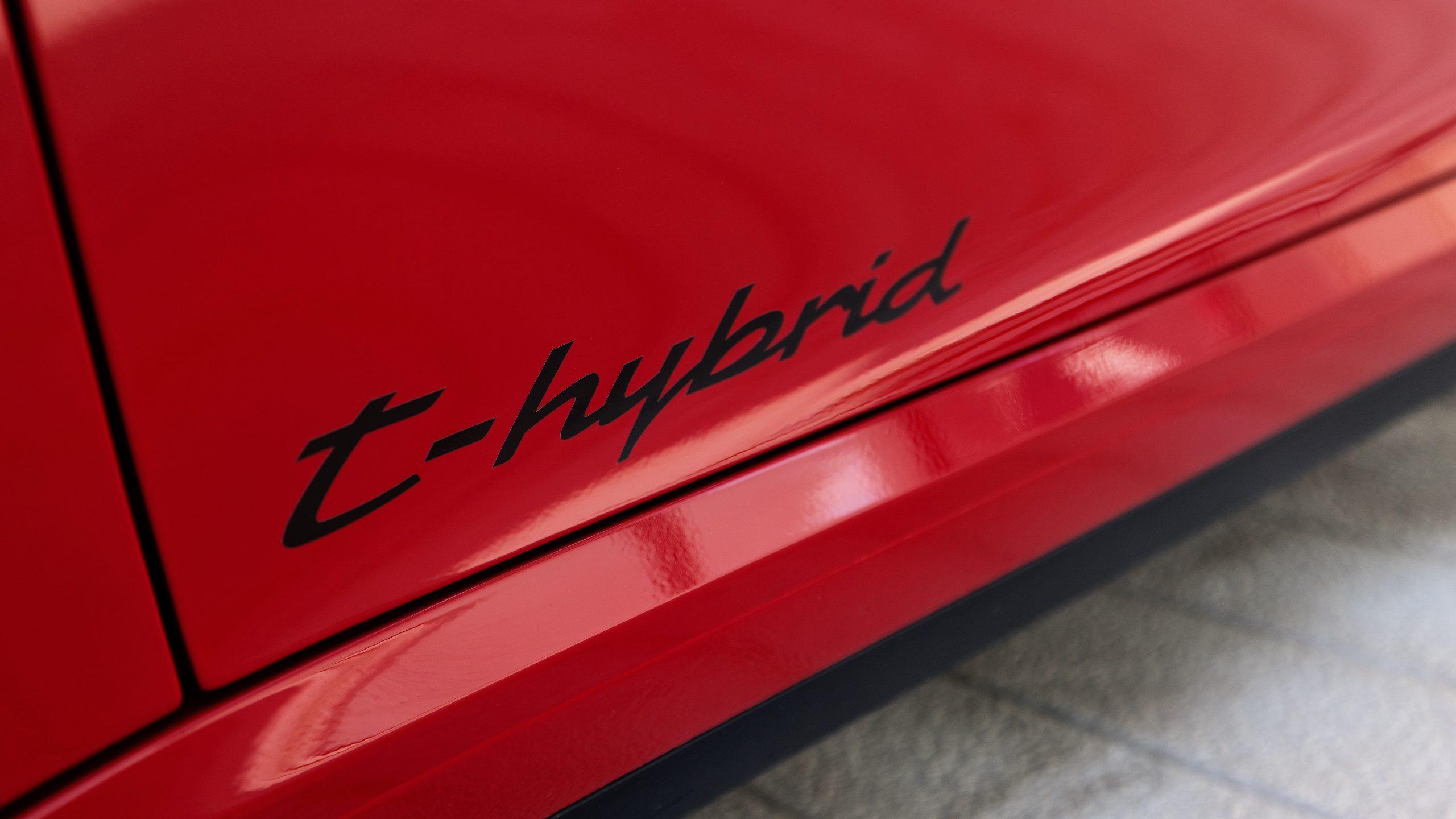
This is not a plug-in hybrid. There is no EV-only mode; the battery is there to support performance, supply energy to chassis systems like PDCC, and help meet emissions targets without turning the 911 into a part-time EV. Reviewers keep coming back to the same point: if you weren’t told it was a hybrid, you’d just think it was an incredibly responsive turbo car.
Drivetrain, Chassis & Performance
All-Wheel Drive and PDK
The “4” in Targa 4 GTS means active all-wheel drive (PTM) as standard. Power goes through:
- Active AWD system sending torque to the front as needed
- 8-speed PDK dual-clutch transmission only – no manual option on any T-Hybrid 911
Stuttcars lists the car as rear-engined, active AWD, with a power-to-weight ratio of about 7.27 lb/hp.
Performance Figures
From The Drive’s instrumented breakdown and factory numbers:
- 0–62 mph (100 km/h): 3.0 s
- 0–60 mph (dealer claim): ~3.0 s
- Top speed: 194 mph
- Curb weight: ~3,869 lb (Targa 4 GTS as tested)
- EPA fuel economy: 17 mpg city / 23 mpg highway / 19 mpg combined
That puts the Targa 4 GTS in old Turbo S territory for straight-line speed, despite the open roof and added structure. MotorTrend’s broader GTS testing suggests the hybrid GTS variants are notably quicker than the previous 992.1 GTS cars, shaving around 0.4 s off the 0–62 mph sprint for AWD models.
Suspension & Brakes
Like all 992.2 GTS models, the Targa 4 GTS gets serious underpinnings:
- PASM Sport suspension with 10 mm lower ride height vs Carrera
- Rear-axle steering standard, improving high-speed stability and reducing turning circle
- Optional PDCC (Porsche Dynamic Chassis Control) now powered by the HV system for quicker, more precise roll control
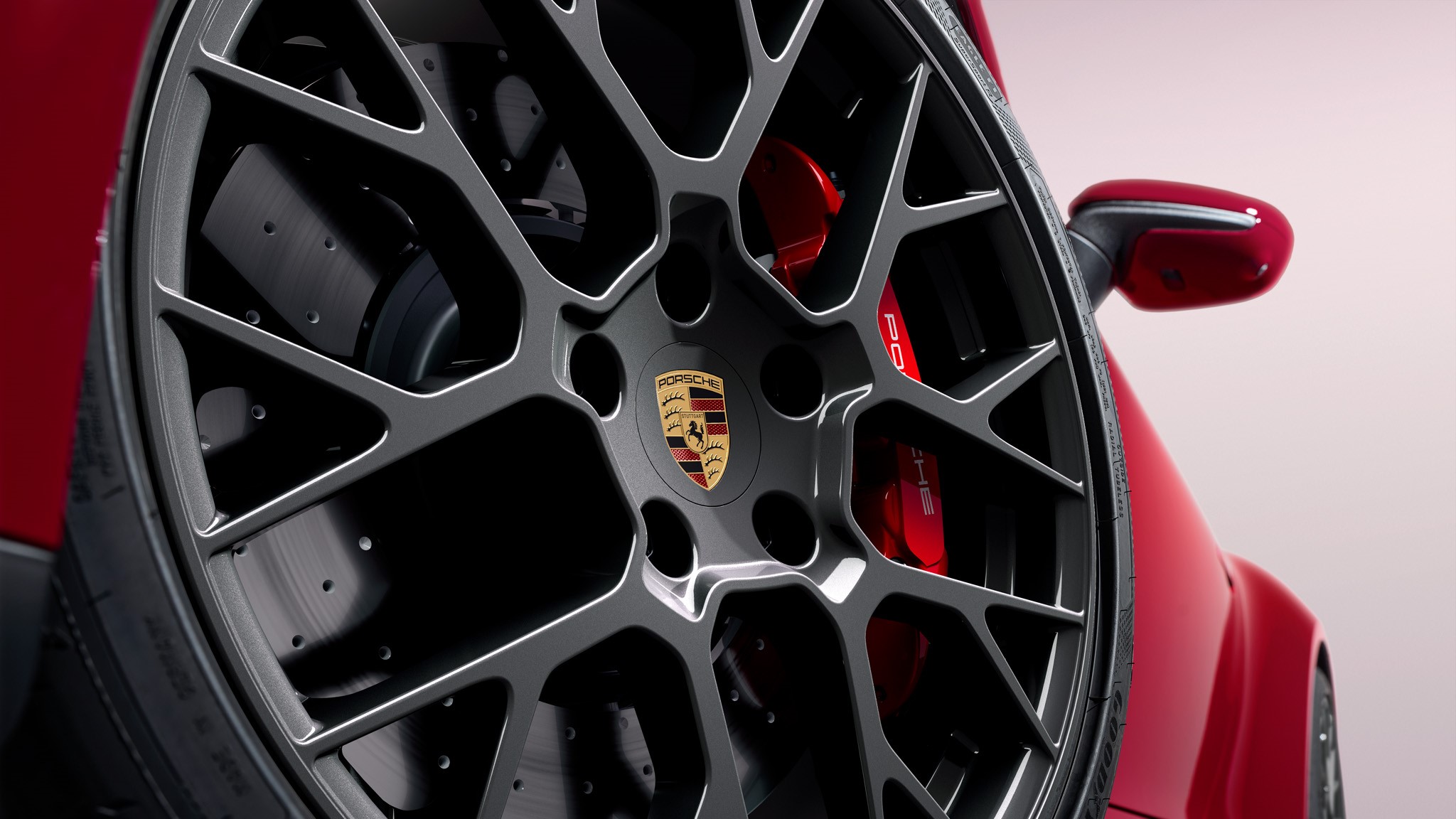
- Big steel brakes with 408 mm / 380 mm discs; PCCB ceramics available as an option
- Standard 20″/21″ wheels with 245/35 ZR20 (front) and 315/30 ZR21 (rear) Goodyear Eagle F1 or similar UHP tyres
On the road, The Drive calls the steering “responsive and well-weighted” and notes that grip from the wide tyres and AWD system makes the car approachable yet devastatingly quick on tight German backroads.
Design, Roof System & Interior
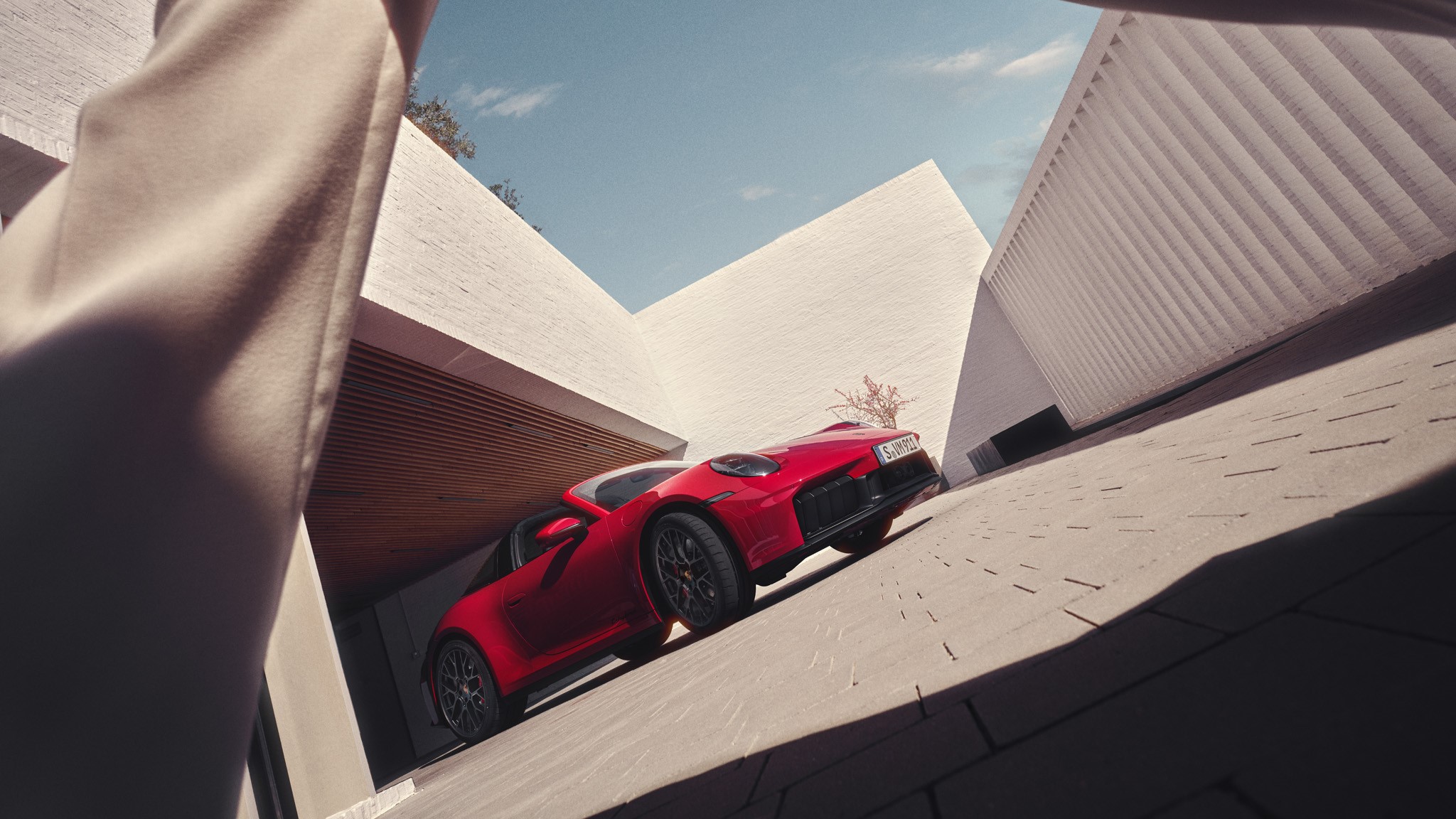
Targa Look, 992.2 Details
Visually, the 992.2 update is subtle but purposeful. Across the new 911 range, Porsche has:
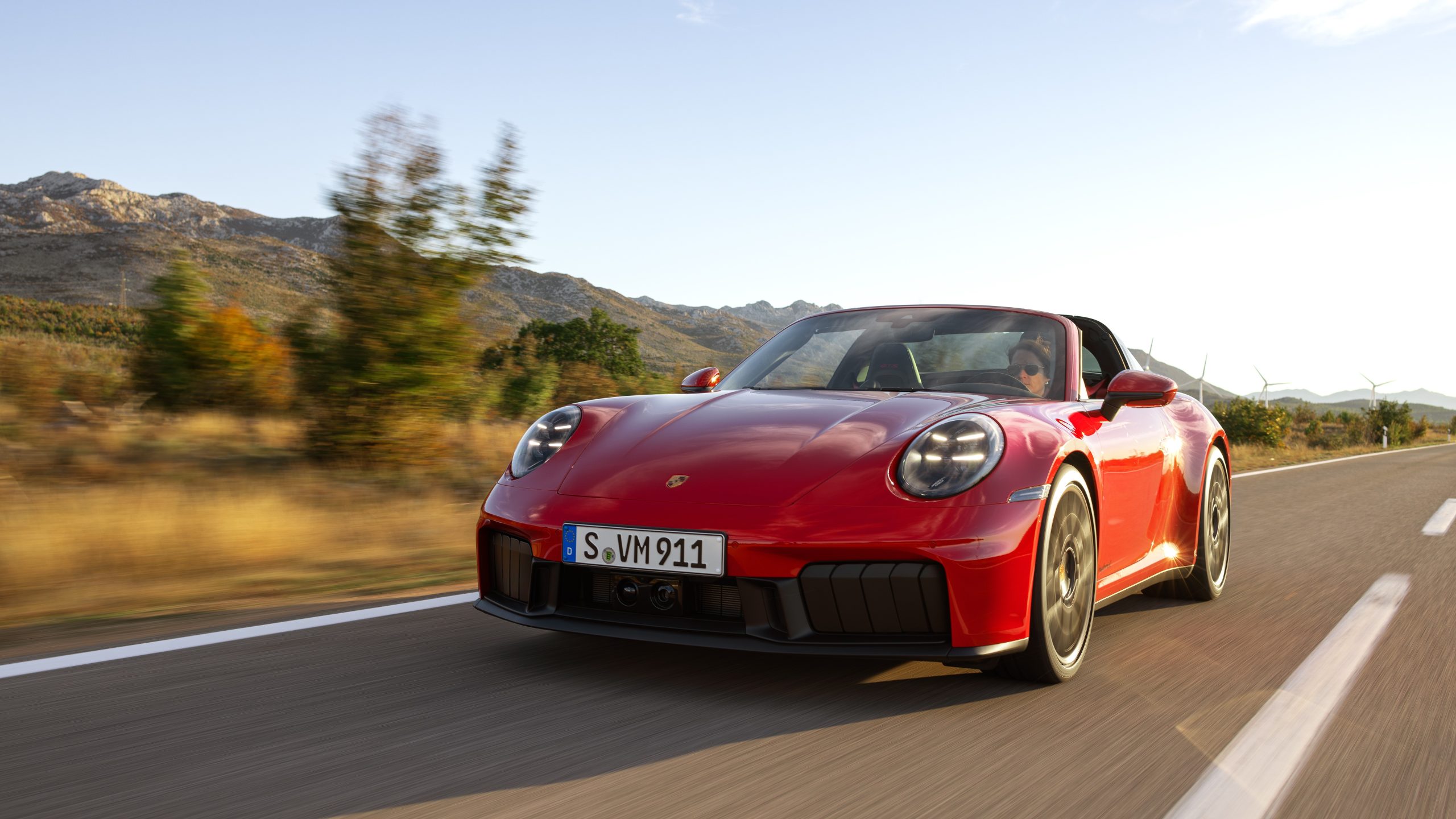
- Moved all lighting functions into the Matrix LED headlamps, enabling larger front intakes
- Given GTS models distinct bumpers with vertical active aero flaps and adaptive underbody diffusers
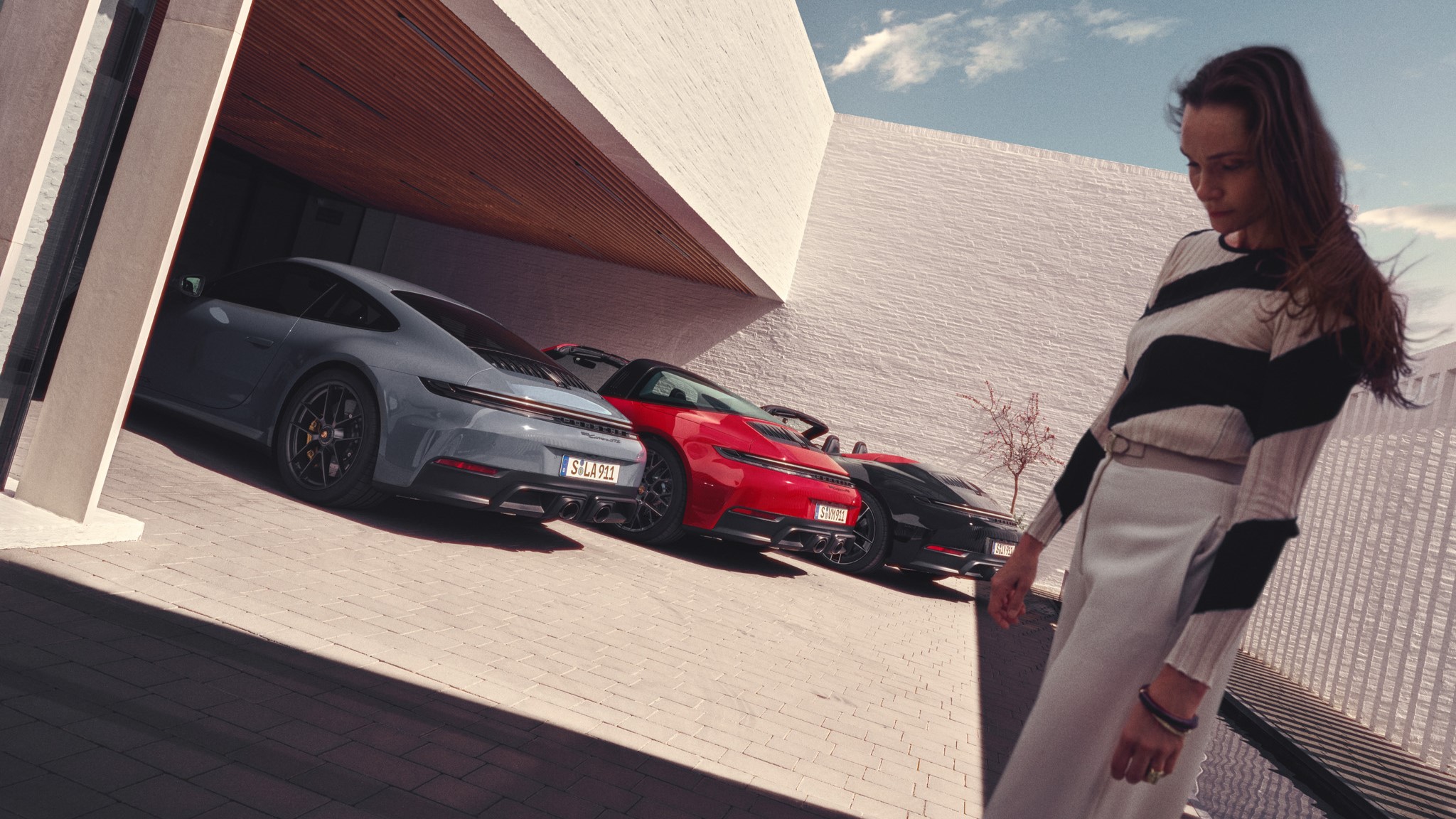
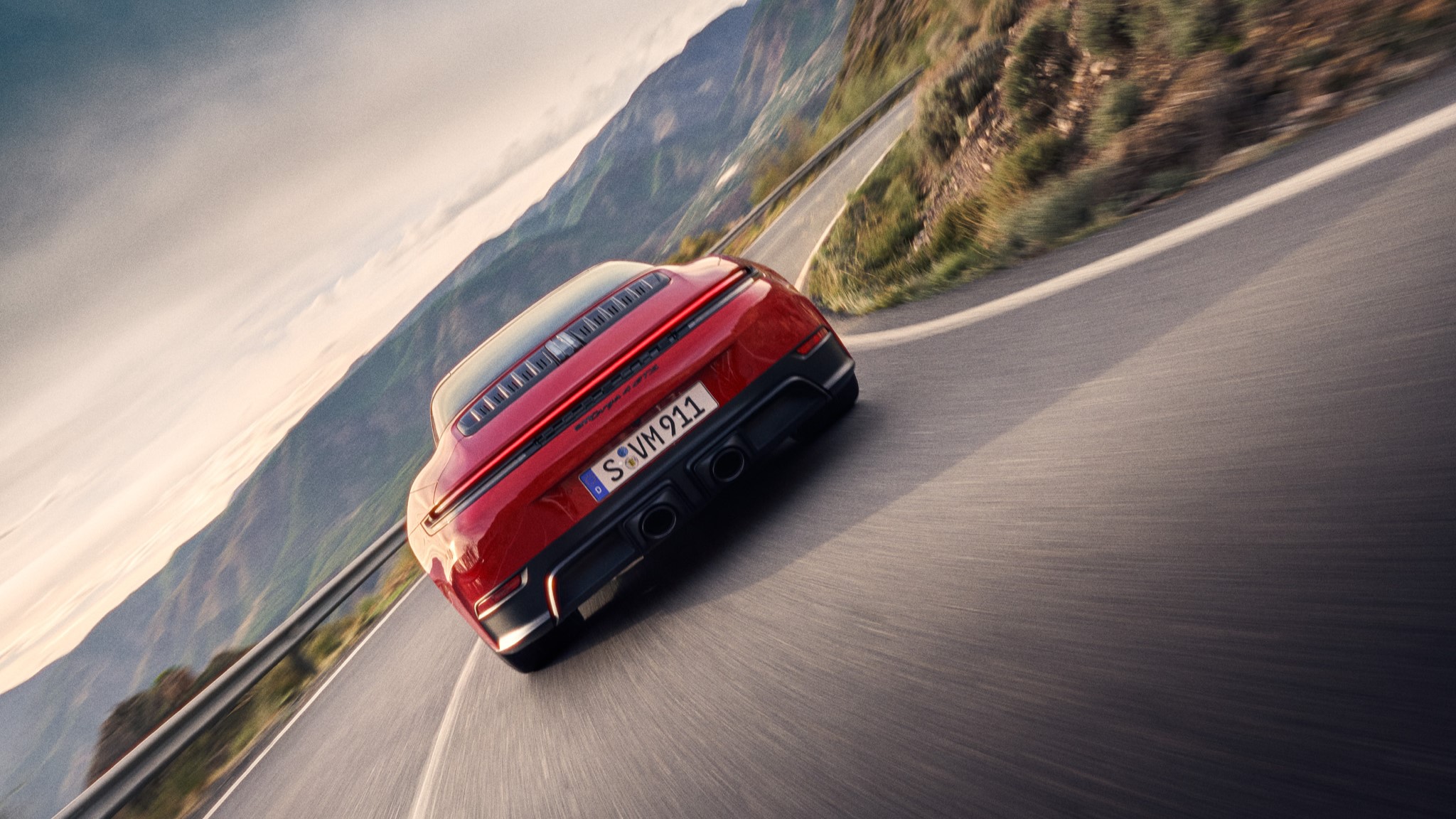
- Revised the rear with a chunkier light bar, cleaner bumper design and a new decklid grille
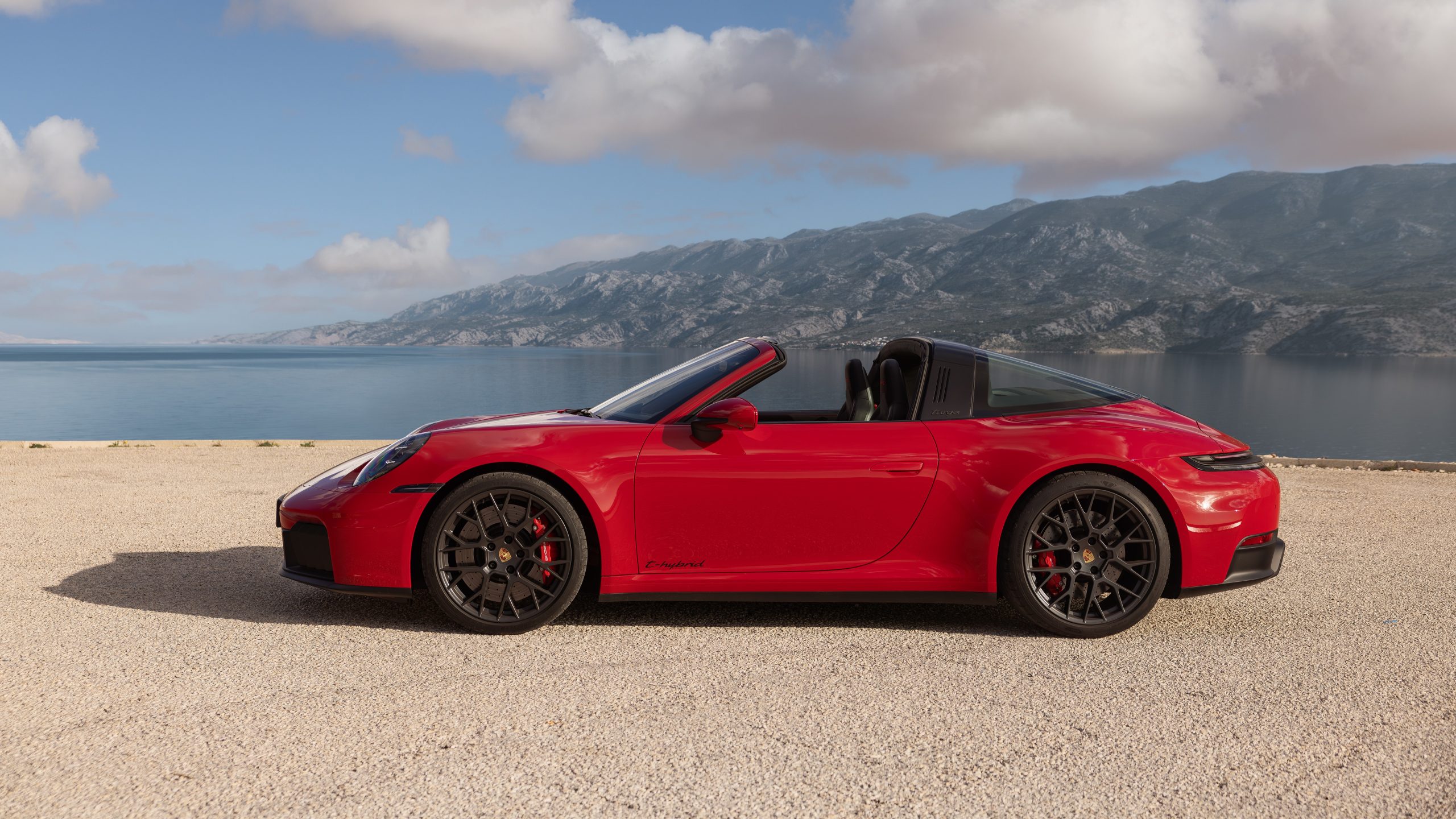
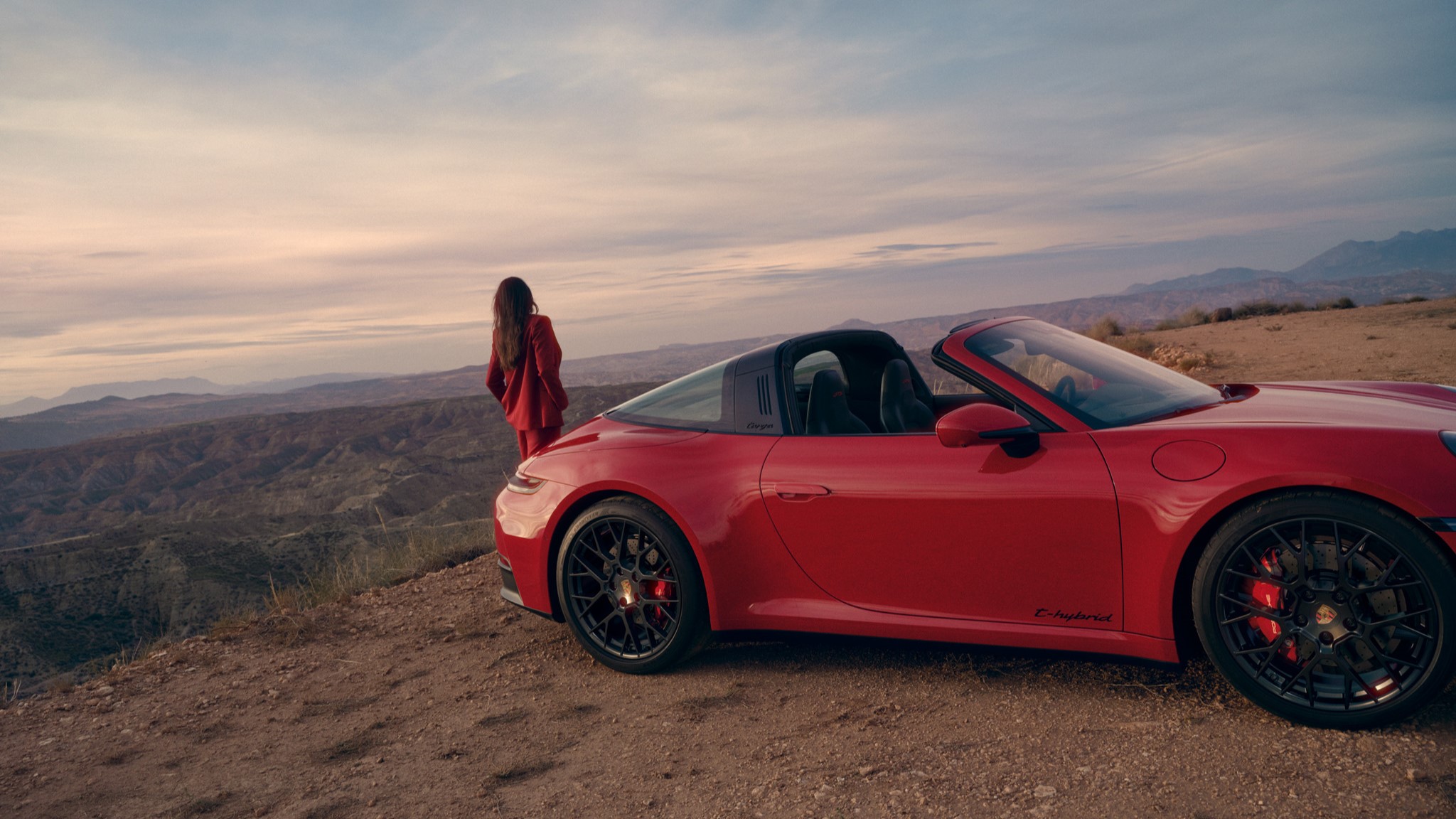
On the Targa, you still get the hallmark:
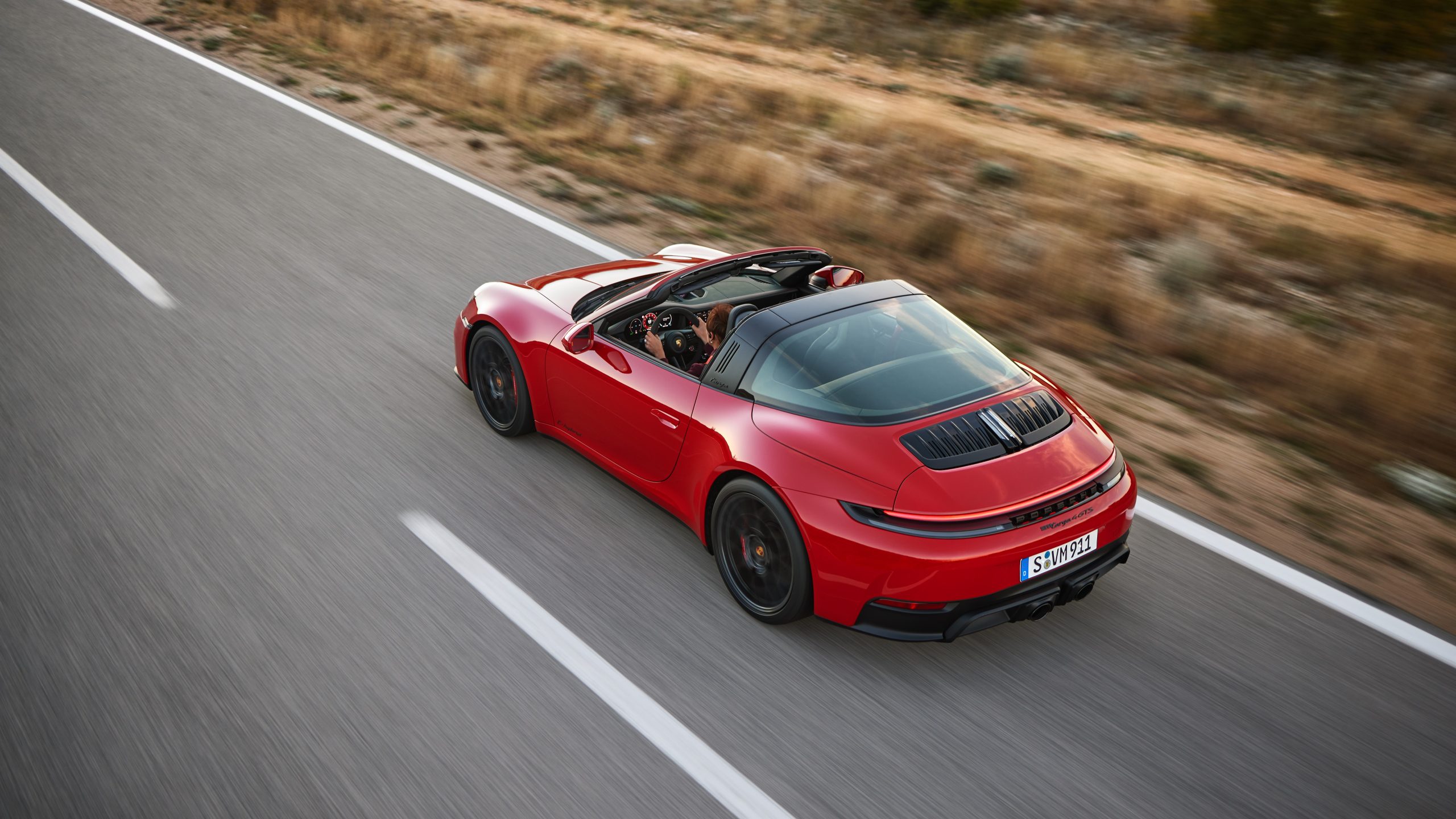
- Contrasting Targa bar (available in different finishes)
- Large wraparound rear glass
- Fully automatic roof choreography: the centre roof panel and rear glass clamshell dance takes around 19 seconds and works at low speeds, preserving the “theatre” the Targa is famous for.
The Drive notes that with the top up, the Targa looks more cohesive than the cabriolet, while top-down it delivers open-air fun with less buffeting and wind noise than a full convertible.
Interior & Digital Cockpit
Inside, the Targa 4 GTS shares the 992.2 cabin changes:
- New 12.6-inch fully digital instrument cluster, with variable layouts and a “classic” five-dial view mimicking older 911s.
- Central 10.9-inch PCM with deeper Apple CarPlay, native apps (Spotify, Apple Music) and optional video streaming when parked.
- Start button on the left (no more twist key stub).
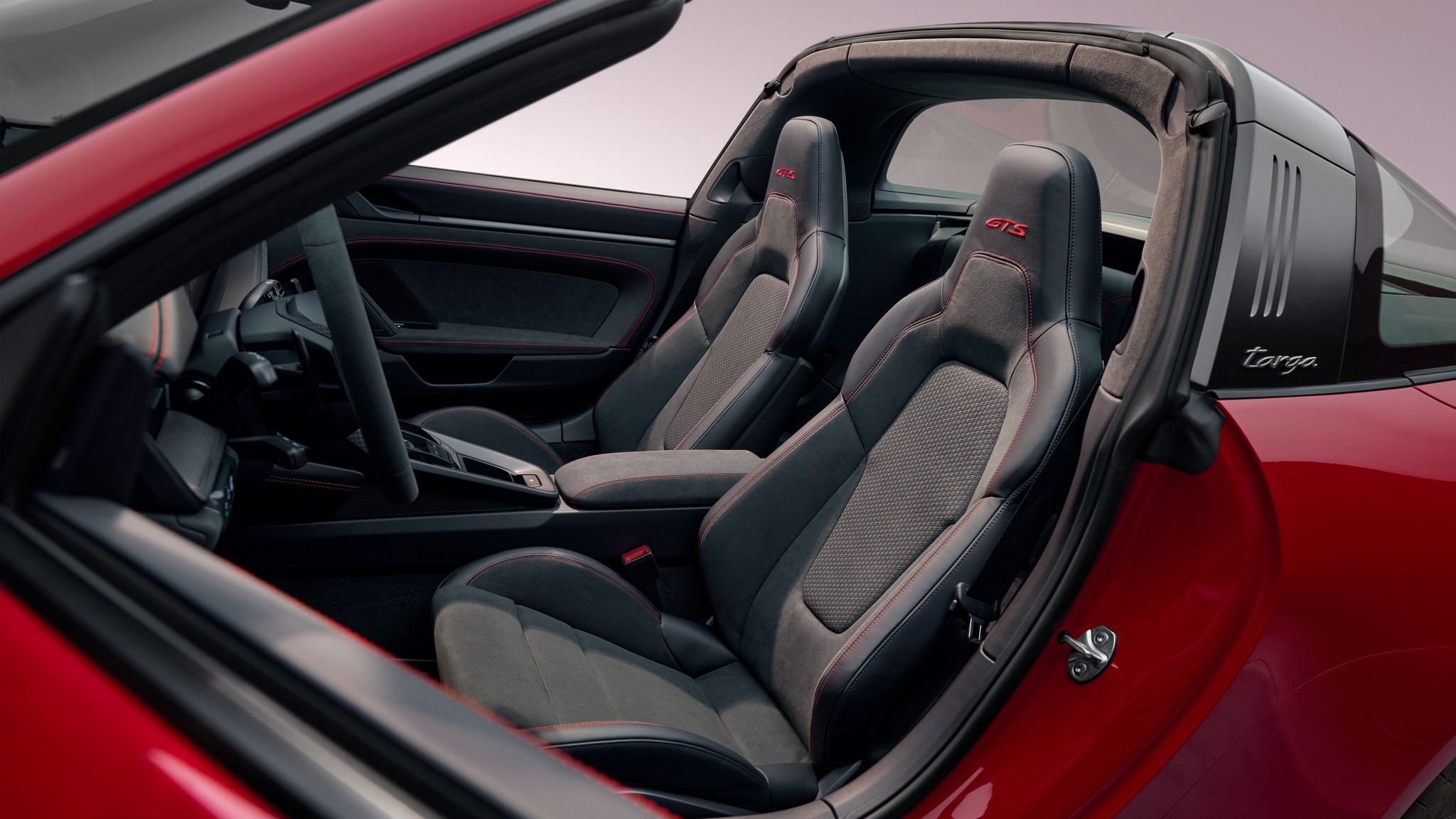
- GTS-specific seats and trims, often with Race-Tex and contrasting stitching; four seats retained in the Targa body.
The Drive’s reviewer calls the build quality “excellent” and notes that the only obvious sign you’re in a hybrid is an extra powertrain display in the digital cluster; otherwise, it just feels like a very modern 911 interior – for better (tech and polish) and worse (no more analogue tach).
Model-Year Context & Updates
Because the Targa 4 GTS T-Hybrid arrives as part of the 992.2 facelift for MY2025, its main “model-year update” is essentially its entire existence:
2025:
- Launch of the 992.2 family with updated Carrera and new GTS T-Hybrid models.
- Targa 4 GTS debuts as the sole hybrid Targa, always AWD, always PDK.
2026 and beyond (early indications):
- Porsche introduces non-hybrid Carrera 4S and Targa 4S models using a revised 3.0-litre twin-turbo flat-six, sitting below the hybrid GTS in performance and price.
- GTS hardware (T-Hybrid, eTurbo, HV chassis integration) remains at the top of the “regular” 911 lineup until Turbo/GT derivatives adopt similar tech.
So if you’re looking at the Targa 4 GTS over the next few years, expect mainly equipment and colour tweaks, plus the arrival of less powerful non-hybrid Targa options rather than big changes to the GTS itself.
Reviews & Reception
The Drive
The Drive’s dedicated Targa 4 GTS review is one of the most detailed early looks and very positive:
Praises:
- Immediate, lag-free response from the eTurbo flat-six
- Hybrid integration that feels “markedly unhybrid” in normal driving
- Strong steering feel and approachable handling on narrow, twisty roads
- Targa roof for style and lower wind noise compared with a cabriolet
Verdict:
“It’s the kind of hybrid that even the die-hard enthusiasts who hate most things new can easily get behind… It drives just like a modern 911 should.”
Score: 9/10, with the main caveats being price and the reality that the 911 was already brilliant without hybrid tech.
Top Gear (whole 2025 911 range)
Top Gear’s 2025 911 review—covering the hybrid GTS models as a group—calls the new hybrid GTS “an engineering nerd’s dream”, while emphasising that the 911 “remains the definitive sports car.” They suggest buyers choose hybrid GTS for tech and performance or stick with non-hybrid Carreras for “simple pleasures.”
MotorTrend & Others (GTS family)
MotorTrend’s tests of the GTS T-Hybrid (coupes and cabs) conclude that:
- The hybrid GTS is quicker and more efficient than the outgoing 992.1 GTS despite a ~100 lb weight gain.
- The powertrain is the key to its appeal: it feels naturally aspirated in response but turbocharged in sheer shove.
- Ride quality is firm but controlled; on smooth roads and track it shines, but rough surfaces remind you this is still a focused GTS.
Collectively, media reception frames the Targa 4 GTS as proof that hybridization doesn’t have to ruin the 911 recipe—if anything, it underlines how carefully Porsche integrated the tech.
Key Specs Snapshot – 911 Targa 4 GTS T-Hybrid (992.2)
- Model years: 2025–present
- Engine: 3.6-litre eTurbo flat-six (T-Hybrid)
- Hybrid system: PDK-integrated motor + eTurbo + 1.9 kWh 400V battery
- System power: 532 hp @ 6,500 rpm
- System torque: 449 lb-ft
- Drivetrain: Active AWD (Targa 4), 8-speed PDK
- 0–62 mph: 3.0 s
- Top speed: 194 mph
- Curb weight: ~3,869 lb
- Fuel economy (EPA): 17 / 23 / 19 mpg (city / hwy / combined)
- Seating: 2+2
- Base price (as tested range): roughly $186k–$200k+ in the U.S., before options and fees
Options & How to Spec One
Some highlights if you’re configuring (or shopping used):
- Sport Chrono Package – a must if you care about those sub-3s 0–60 runs and track telemetry.
- PDCC – worth it if you regularly drive hard or hit circuits; makes the Targa feel flatter and more tied down.
- PCCB ceramics – expensive, but great for fade resistance and reducing unsprung mass.
- Wheels/tires – the standard 20/21 setup looks right and delivers huge grip, but you may want to avoid ultra-aggressive tyre compounds if you drive mainly in the wet/cold.
- Interior trims – Race-Tex and extended leather packages help the high-tech cabin feel more special, especially given the new all-digital cluster.
Buying Advice: Who Is the 911 Targa 4 GTS For?
You gravitate to the Targa 4 GTS if:
- You love the Targa look and experience—that hoop, that rear glass, that roof mechanism.
- You want the first hybrid Targa 911, with performance that brushes against supercars while retaining real-world usability.
- You value all-weather traction, but don’t want a conventional cabriolet.
- You’re okay with no manual, and you appreciate sophisticated tech done in a way that still feels “911”.
You might prefer something else if:
- You’re a manual die-hard → look at 992.2 Carrera T or forthcoming non-hybrid Carrera S/4S and Targa 4S.
- Ride comfort is top priority and your roads are terrible → consider a non-GTS Targa or softer wheel/suspension configurations.
- You don’t care about hybrid tech at all and just want traditional 911 feel at a lower price → the 992.2 Carrera / Carrera T will scratch that itch.
Final Word
The Porsche 911 Targa 4 GTS (992.2) is one of those fascinating “bridge” cars in 911 history—like the first water-cooled 996 or the early Turbo PDK models. It’s the moment when hybrid tech stops being a rumor and becomes reality, not in a halo hypercar, but in a car you might actually daily. Roof open, flat-six wailing, eTurbo whooshing, and that iconic hoop framing the sky behind you, it still feels unmistakably like a 911. The fact that it happens to be a hybrid just makes the story more interesting.
Videos & Reviews
Pictures & Gallery
Press Release
May 28, 2024
The 2025 Porsche 911 models
- 911 Carrera GTS: first ever production Porsche with innovative, lightweight THybrid with newly developed 3.6 liter six-cylinder boxer engine, electrically driven
turbocharger and in-transmission electric motor - 911 Carrera receives updated 3.0-liter six-cylinder boxer engine
- New styling integrates active air intake flaps on 911 Carrera GTS
- Fully digital cockpit and further increased connectivity
Stuttgart. Porsche has significantly updated the latest generation of the iconic 911. The new 911 Carrera GTS is the first road-legal 911 model to feature a lightweight, performance-focused hybrid powertrain, at the core of which is a newly developed engine displacing 3.6 liters. The new 911 Carrera GTS Coupe accelerates from 0 to 60 mph in 2.9 seconds – 0.3 seconds quicker than before – and on to a top track speed of 194 mph. The 911 Carrera has also been enhanced and will be available at launch powered by an updated version of the 3.0-liter twin-turbo boxer engine that is more powerful than before. In addition to their more powerful engines, the new 911 models feature new design, further improved aerodynamics, new colors, a fresh interior, enhanced standard equipment and more extensive connectivity.
Inspired by Motorsport: Innovative Performance-Hybrid
For the new 911 Carrera GTS models, the engineers utilized expertise developed in racing as the baseline for the concept of the hybrid system. “We developed and tested various ideas and approaches to decide on a hybrid system that optimally suits the 911. The result is a unique powertrain that is well-integrated into the overall concept and enhances the performance significantly,” said Frank Moser, Vice-President of the 911 and 718 model lines
A new, strengthened eight-speed dual-clutch transmission (PDK) with an integrated, permanently excited synchronous motor is part of the powertrain on the 911 Carrera GTS. It supplements the power of the boxer engine at idle with up to 110 lb.-ft. of torque and develops up to 40 kW.
The 911 GTS also uses a newly developed, electrically driven turbocharger. An integrated electric motor, placed between the compressor wheel and the turbine wheel, speeds up the turbocharger very quickly to develop boost. This electric motor in the turbocharger also functions as a generator and can develop up to 11 kW using the exhaust gas stream.
The electric turbocharger is not equipped with a wastegate and allows for the use of a single turbocharger compared to the two that were used previously while simultaneously improving throttle response and performance.
Both the electrically driven turbocharger as well as the electric motor housed in the transmission are paired with a light and compact high-voltage battery. Its size and weight are comparable to a conventional 12-volt AGM starter battery, but it can retain up to 1.9 kWh of energy (gross) and operates at 400 volts and is located under the front hood where the previous 12 volt battery was located. To optimize weight distribution, the 12 volt battery is a lightweight lithium-ion battery located behind the parcel shelf in the rear.
The heart of the T-Hybrid powertrain is a newly developed 3.6 liter boxer engine. Thanks to the high-voltage system, the compressor for the air conditioning system can be powered electrically, so there is no need for a belt drive, making the engine more compact. This provides for the room above the flat engine to house the pulse inverter and DC-DC converter. A bore increase to 97 millimeters and a stroke enlarged to 81 millimeters raise the displacement compared to previous 911 Carrera GTS models by 0.6 liters. The new engine features the camshaft adjustment system – VarioCam – and a valve control using roller rocker arms. It can retain the ideal combination of fuel and air (Lambda = 1) over
the full range of engine speed.
By itself, the new boxer engine develops 357 kW (478 hp) and 420 lb.-ft. of torque. The total system power is 398 kW (532 hp) and 449 lb.-ft. The power increase compared to the previous 911 Carrera GTS models is 45 kW (59 hp). When accelerating, the new 911 Carrera GTS outperforms its predecessor in particular when starting off from a standstill. The efficient, performance-focused hybrid achieves a heightened level of performance without the level of weight increase typically associated with conventional hybrid systems. The U.S. curb weight increase of the new 911 Carrera GTS Coupe compared to the predecessor is a moderate 103 lbs.
The 911 Carrera continues to be powered by a 3.0 liter twin-turbo boxer engine, which has been significantly updated. It is now equipped with the intercooler used in the 911 Turbo models, which is placed above the engine directly beneath the rear decklid grille. The turbochargers of the new 911 Carrera were adopted from the previous 911 Carrera GTS models. With these modifications, the new 911 Carrera now makes 290 kW (388 hp) – 9 hp up on the model it replaces – and up to 331 lb.-ft. of torque. The 911 Carrera Coupe can accelerate from 0 to 60 mph in 3.9 seconds (3.7 seconds with optional Sport Chrono Package) and reach at top track speed of 183 mph. Compared to the previous model, this represents an improvement of 0.1 second and 1 mph, respectively.
Optimized suspension and active aerodynamics
The suspension of the 911 Carrera GTS was extensively updated as well. For the first time, rear axle steering is included as standard equipment. It optimizes the stability of the vehicle at higher speeds while simultaneously reducing the turning circle. The optional roll-stabilization system Porsche Dynamic Chassis Control (PDCC) is integrated into the high-voltage system of the performance hybrid. This allows for the use of an electro-hydraulic control system, making the system even more flexible and precise. A standard sport suspension with adaptive dampers (PASM) and a ride height reduction of 10 millimeters compared to the standard 911 Carrera offer a driving experience characteristic of GTS models.
A total of seven different wheel designs in 19-/20- or 20-/21-inch combinations are available for the new 911 Carrera models. For the first time, 911 Carrera Exclusive Design wheels are available with carbon fiber aeroblades, which can reduce the drag coefficient and optimize efficiency. At the rear axle, the 911 Carrera GTS models are equipped as standard with 21-inch wheels measuring 11.5 inches in width and fitted with 315/30 ZR 21 tires. At the front, 245/35 ZR 20 tires on 8.5 x 20-inch rims are mounted. At the rear, 10 mm wider tires compared to the previous model accommodate the increased power level of the new 911 Carrera GTS models, benefiting performance and traction.
Refreshed exterior design
Porsche has enhanced the exterior design of the new 911. A large part of these updates focuses on optimizing the aerodynamics and the performance of the sports car, including the new, model-specific front fascia. Furthermore, Porsche has integrated all of the light functions into the standard LED Matrix design headlights of the 911 with its characteristic four-point design. This allows for larger air intakes in the front fascia as the lights previously mounted in this area are now integrated into the headlights.
On the 911 Carrera GTS models, the front fascia incorporates five visible, vertically aligned active air flaps as well as a further flap which closes off the bypass on each side and is not visible from the exterior. They are complemented by adaptive front diffusors in the underbody, which are being used for the first time and work together with the cooling air flaps. These elements direct the air flow as needed: when little power is needed, closed air flaps optimize the aerodynamics of the car. When extracting high levels of power from the engine, for example on track, they funnel a high amount of air to the radiators. The sensors of the assistance systems are integrated into a high-gloss area below the front
license plate mount.
The newly designed rear light band with “PORSCHE”-lettering enhances the impression of width and low stance of the car. A new rear decklid grille with five strakes per side forms a visible unit with the rear window and flows seamlessly into the automatically extending, variable rear spoiler. The rear license plate is mounted higher than before, and the rear fascia is simplified. Model-specific exhaust systems integrate elegantly into the pronounced diffusor fins. A sport exhaust system is optionally available for the 911 Carrera models, while the 911 Carrera GTS models are equipped with a GTS-specific sport exhaust system as standard.
An optional Aerokit is available to further increase performance of the 911 Coupe models. It includes a SportDesign front fascia with a unique front spoiler lip, special side skirts and a weight-optimized, fixed rear wing, all of which reduce lift.
Fully digital cockpit and extended connectivity
As standard, Porsche delivers the new 911 coupe models as a pure two-seater with no rear seats. Optionally, a 2+2 seat configuration is available for no additional cost. Inside, the traditional 911 design DNA is paired with modern technology: the Porsche Driver Experience offers an intuitive and quick operation of key functions that are central to the driver. Important functions are placed directly on or next to the steering wheel. This includes the standard drive mode switch, the updated control stalk to operate assistance systems and – for the first time in a 911 – a start button, placed, of course, to the left of the steering wheel. The storage compartment in the center console of the new 911 offers a cooled storage space for smartphones with an inductive phone charging area.
For the first time, the 911 features a fully digital instrument cluster. The 12.6-inch curved display integrates elegantly into the new operating and display concept and can be extensively customized depending on the driver’s preference. It offers up to seven different display views, including an exclusive classic display based on the historic five tube design with a centrally positioned tachometer which has been a hallmark of the 911 from the start.
The operation of the Porsche Communication Management (PCM) is still conducted using the high-resolution central display measuring 10.9 inches diagonally. Porsche has optimized the customization of drive modes and the operation of assistance systems in the new 911. Additionally, the updated models feature new connectivity functions. A QRcode makes logging in using the Porsche ID in the PCM easier. Apple CarPlay® is also integrated more deeply into the vehicle and information from the system can be displayed in the instrument cluster if desired, directly from within the Apple® ecosystem; for example via the voice assistant Siri®. For the first time, video streaming is offered as an option and available for use while the car is parked. Apps such as Spotify® and Apple Music® can be used as native apps in the PCM without connecting a smartphone.
Pricing and availability
The new 2025 911 Carrera is available to order now as a Coupe or Cabriolet with rearwheel drive. Additionally, the 2025 911 Carrera GTS is also available as a rear and allwheel drive model (911 Carrera GTS and 911 Carrera 4 GTS) in Coupe or Cabriolet form, and as a Targa variant (exclusively available with all-wheel drive). Both powertrains are fitted with PDK as standard. Deliveries of the new 2025 911 Carrera models to U.S. Porsche Centers are expected to start in the fall, and at the end of 2024 for the 911 Carrera GTS models. The current 911 Turbo, Turbo S and GT3 RS models will continue to be offered for the 2025 model year, with pricing unchanged for these variants. The full list of Manufacturer’s Suggested Retail Pricing (MSRP) for the 2025 Porsche 911 mode range is listed below. MSRP does not include tax, title, registration, dealer charges or a $1,995 delivery, processing and handling fee.
- 2025 Porsche 911 Carrera: $120,100
- 2025 Porsche 911 Carrera Cabriolet: $133,400
- 2025 Porsche 911 Carrera GTS: $164,900
- 2025 Porsche 911 Carrera GTS Cabriolet: $178,200
- 2025 Porsche 911 Carrera 4 GTS: $172,700
- 2025 Porsche 911 Carrera 4 GTS Cabriolet: $186,000
- 2025 Porsche 911 Targa 4 GTS: $186,000
- 2025 Porsche 911 Turbo: $197,200
- 2025 Porsche 911 Turbo Cabriolet: $210,000
- 2025 Porsche 911 Turbo S: $230,400
- 2025 Porsche 911 Turbo S Cabriolet: $243,200
- 2025 Porsche 911 GT3 RS: $241,300