

Current Porsche 911 Carrera 4 GTS Coupe (992.2) – Reviews, Pricing, Specs & Buyers Guide
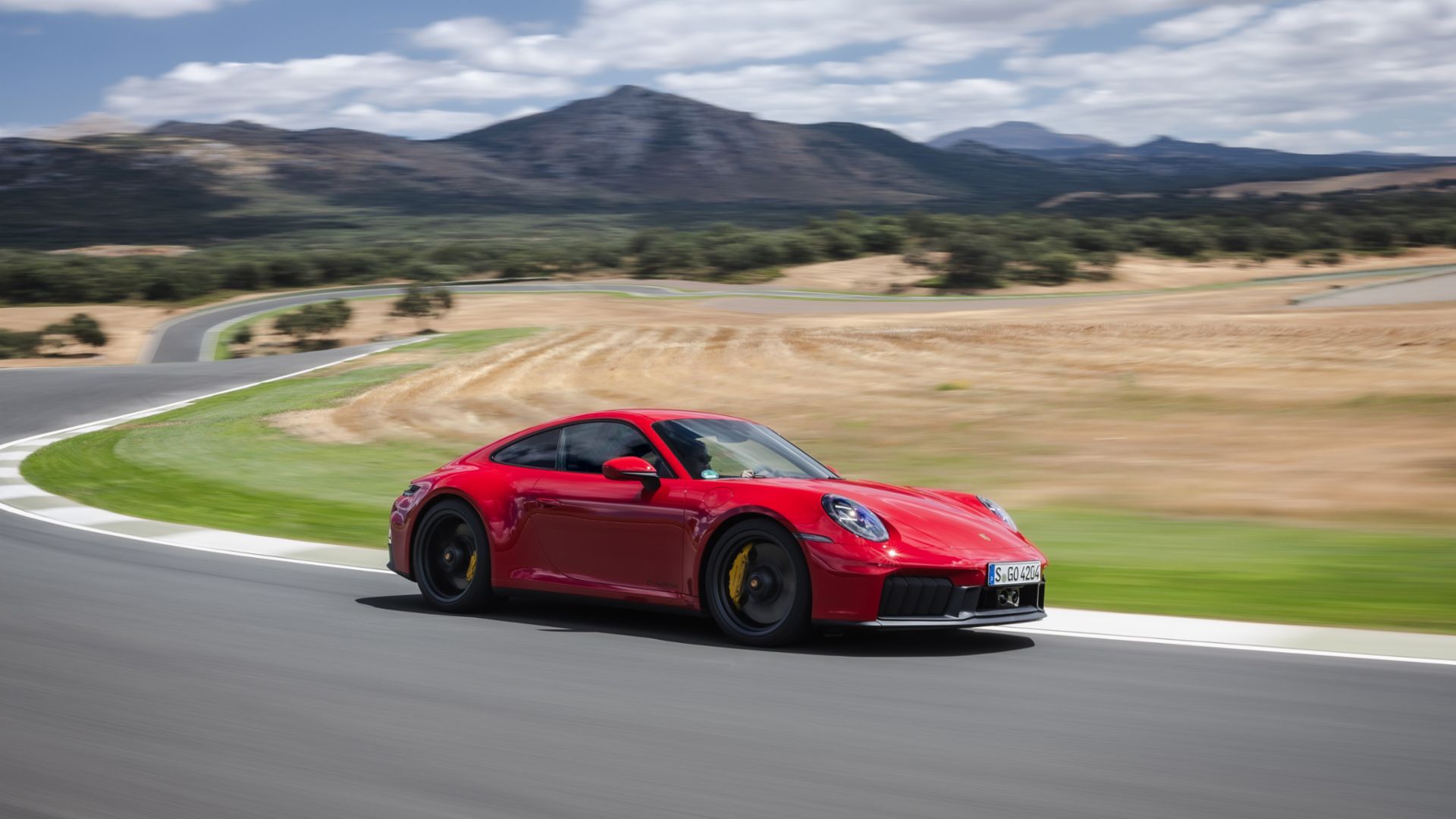
The Porsche 911 Carrera 4 GTS Coupe (992.2) is the car that answers a very specific question: What if you could have the first hybrid 911, all-weather traction, and classic 911 character—without stepping into Turbo money or GT-car compromises?
As part of the 992.2 facelift, the Carrera 4 GTS becomes the all-wheel-drive expression of Porsche’s new T-Hybrid system: a compact, performance-oriented hybrid setup designed to kill turbo lag, improve consistency, and make the car faster everywhere—without turning it into a silent, EV-like cruiser. It’s still a proper 911: rear engine, flat-six, 2+2 seating, and a driving experience that’s more analog in feel than the spec sheet suggests.
This guide walks through the specs, story, tech, reception, model-year context, options, and buying advice for the 992.2 Carrera 4 GTS Coupe.
The Story: First Hybrid 911, Now With AWD
Porsche pulled the wraps off the 992.2 range in May 2024, with the Carrera GTS as the headline: the first road-legal hybrid 911. The GTS launched in several flavors—GTS (RWD) Coupe, 4 GTS (AWD) Coupe, GTS Cabriolet, 4 GTS Cabriolet, and Targa 4 GTS—all using the same T-Hybrid architecture, just with different drivetrains and bodies.
Historically, the GTS badge has marked the “sweet spot” in the 911 lineup: more focused than a Carrera S, less extreme than a GT3 or Turbo. For 992.2, Porsche chose this sweet-spot model to debut hybridization—making a statement that this tech is meant for drivers, not just regulators. Stuttcars’ deep-dive on the 992.2 GTS describes it as Porsche’s “new doctrine” for the 911, blending tradition and electrified performance in the car most enthusiasts would naturally gravitate towards. Within that family, the Carrera 4 GTS Coupe is the T-Hybrid with active all-wheel drive: same power, same engine, but with front-axle drive and Porsche Traction Management for extra stability and year-round usability. Porsche’s own tech sheet lists it as “Active all-wheel drive” with the same powertrain outputs as the RWD GTS.
Powertrain & T-Hybrid Tech
At the heart of the Carrera 4 GTS is a completely new 3.6-liter flat-six and a clever two-motor hybrid system:
- Engine:
- 3.6 L eTurbo flat-six
- 478 hp from the engine alone
- 420 lb-ft from 2,000–5,500 rpm
- 10.5:1 compression, 7,500 rpm redline
- Hybrid components:
- Electric turbocharger (eTurbo) with a small motor between turbine and compressor to spool boost instantly and recoup up to ~11 kW under exhaust flow.
- PDK-integrated electric motor (around 40–53 hp, 110 lb-ft depending on source) mounted in the 8-speed dual-clutch transmission.
- 400-V lithium-ion battery, about 1.9 kWh, mounted in the nose (physically similar in size to a 12-V battery).
- System output:
- 532 hp @ 6,500 rpm
- 449 lb-ft combined
Unlike Porsche’s E-Hybrid systems in the Cayenne and Panamera, the T-Hybrid doesn’t do EV-only driving and can’t be plugged in. It’s there to boost response and performance, not turn the 911 into a part-time EV. As Stuttcars puts it, it’s a “sports car first, hybrid second” setup that uses electricity to deliver 26.1 psi of boost and broader, meatier torque than the previous twin-turbo 3.0 GTS. Crucially, Porsche designed the system to work with both RWD and AWD—the same hybrid stack powers the rear in the GTS and both axles in the Carrera 4 GTS, giving you full T-Hybrid punch plus front-axle traction.
Drivetrain, Chassis & Performance Numbers
From Porsche’s official U.S. spec sheet for the GTS models:
- Driveline:
- Active all-wheel drive (PTM)
- 8-speed PDK dual-clutch (PDK only; no manual on any T-Hybrid GTS)
- Performance (factory):
- 0–60 mph: 2.9 seconds (Carrera 4 GTS, with Launch Control)
- Top track speed: 194 mph
- ¼-mile: 11.1 seconds (with Launch Control)
- Dimensions & weight (Carrera 4 GTS Coupe):
- Length: 179.3 in
- Width (w/o mirrors): 72.9 in
- Height: 51.4 in
- Wheelbase: 96.5 in
- Curb weight: 3,635 lb
- Power-to-weight: 6.83 lb/hp
- Brakes & wheels:
- 6-piston front / 4-piston rear fixed-caliper brakes
- Steel rotors: 408 mm front / 380 mm rear
- Standard wheels: 20″/21″ Carrera GTS alloys
- Standard tires: 245/35 R20 (front) / 315/30 R21 (rear)
- Fuel economy (U.S. rating, GTS family):
- City: 17 mpg
- Highway: 23 mpg
- Combined: 19 mpg
Real-world testing so far has focused mostly on the RWD GTS coupe and Cab, but their numbers—Car and Driver clocked the RWD GTS at 2.5 s to 60, 10.6 @ 131 mph; MotorTrend recorded 2.6 s and 10.7 @ 129.7 mph—show that Porsche’s factory times are conservative. The 4 GTS’s extra traction should make it at least as consistent off the line, especially in poor conditions.
Suspension, Steering & AWD Character
All GTS T-Hybrid models share a very serious chassis package:
- PASM Sport suspension with a 10 mm drop vs. Carrera
- Rear-axle steering standard on GTS (tight turning circle and high-speed stability)
- Porsche Dynamic Chassis Control (PDCC) available, now powered by the high-voltage system for faster, more precise roll control
- Active aero with vertical cooling flaps and adaptive underbody elements
- GTS-specific Sport Exhaust
The Carrera 4 GTS adds AWD hardware on top of this. The front axle is driven via PTM, shuffling torque forward as needed. Stuttcars notes that the T-Hybrid system was engineered explicitly to support this AWD layout from the outset—this isn’t an afterthought.
In practice, that means:
- Harder launches with less drama, especially in less-than-ideal conditions
- More security in cold/wet climates, without the nose-heavy feel some front-biased AWD systems suffer from
- A subtly different steering feel vs the RWD GTS—slightly more “locked in” on throttle—but still very much a rear-engined 911 in balance.
Design & Interior: Subtle Outside, Big Changes Inside
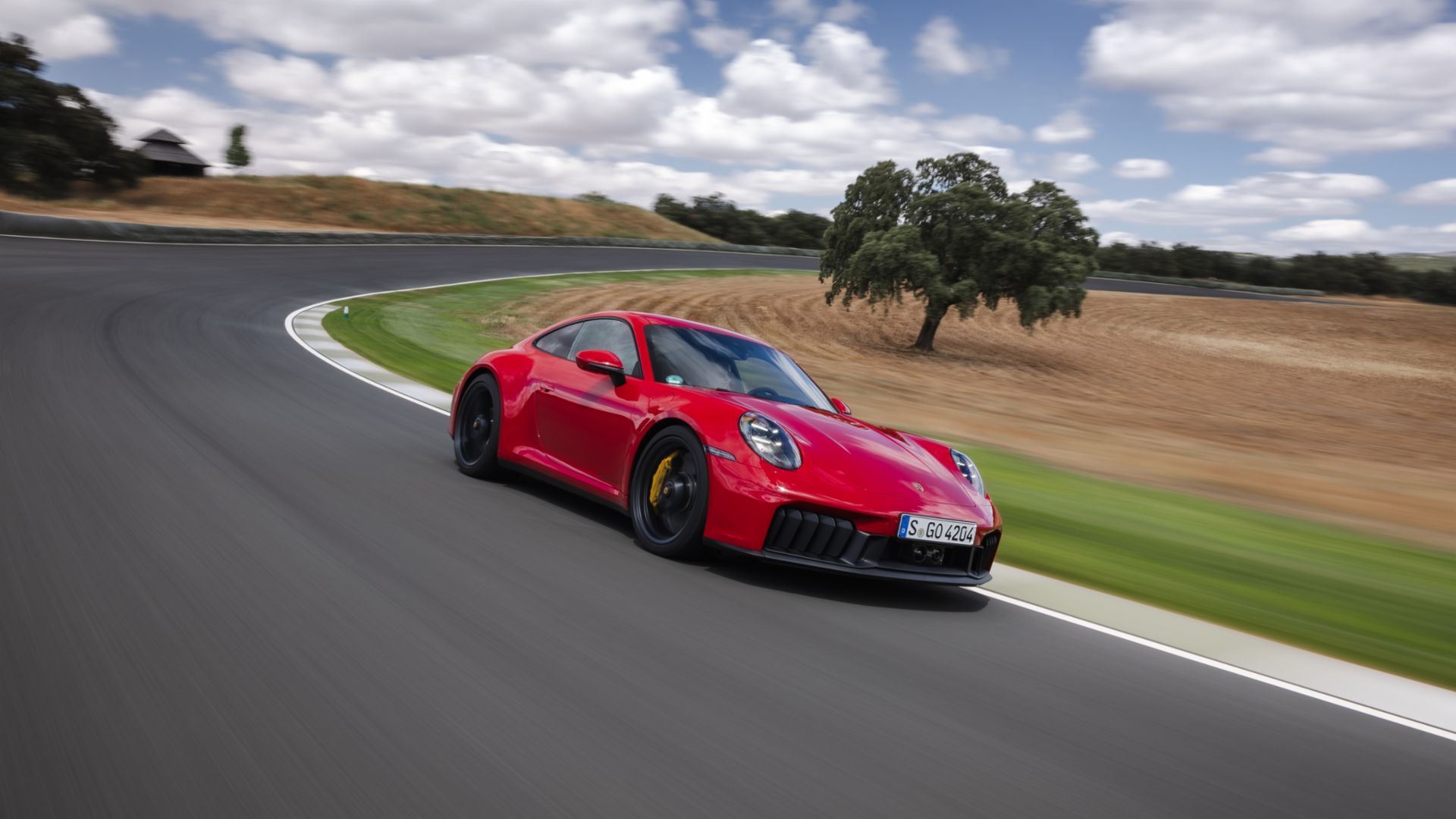
Visually, the 992.2 facelift is evolutionary:
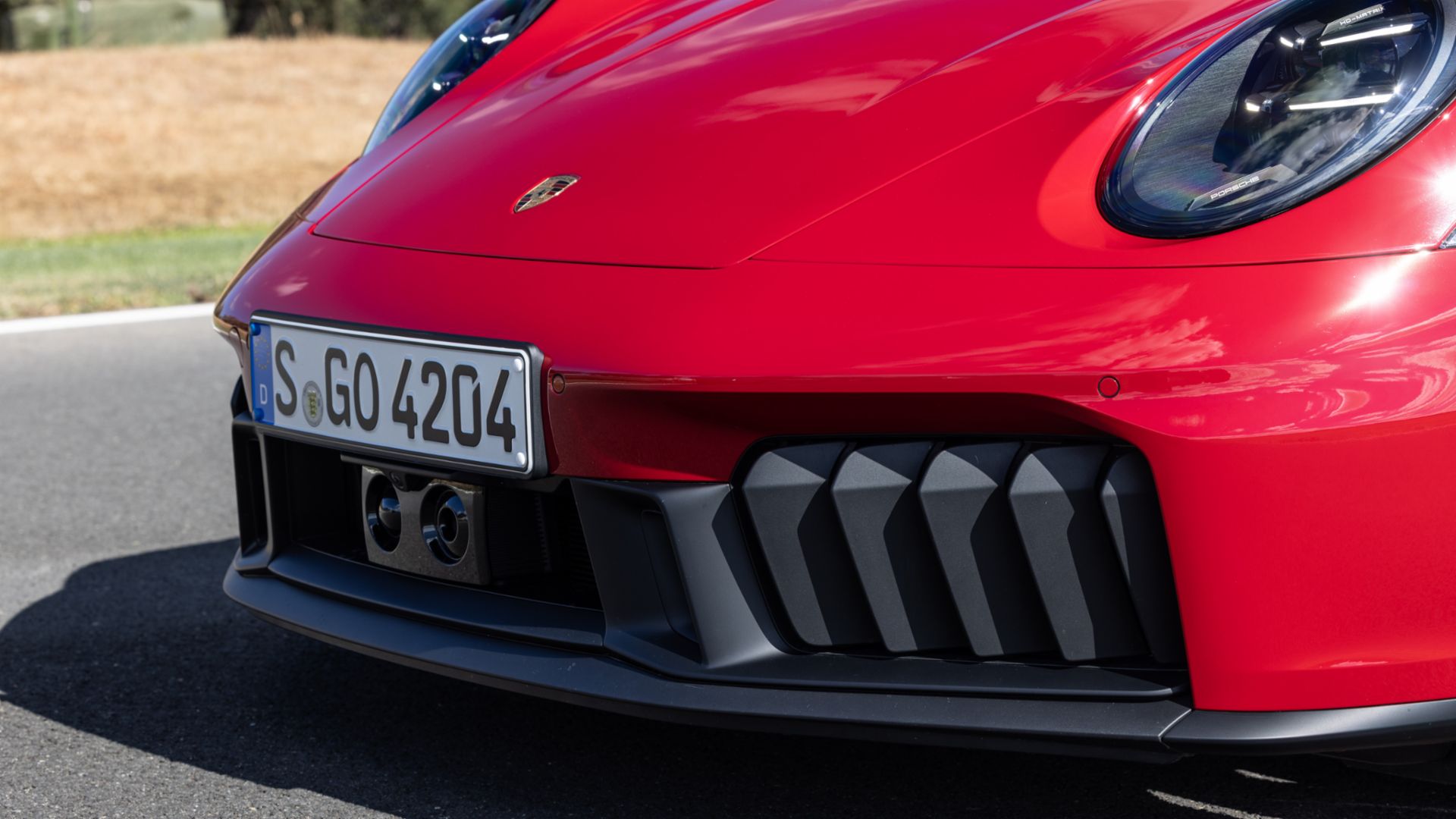
- All front lighting functions now live inside the round Matrix LED headlamps, so the front bumper is cleaner with larger intakes for cooling.
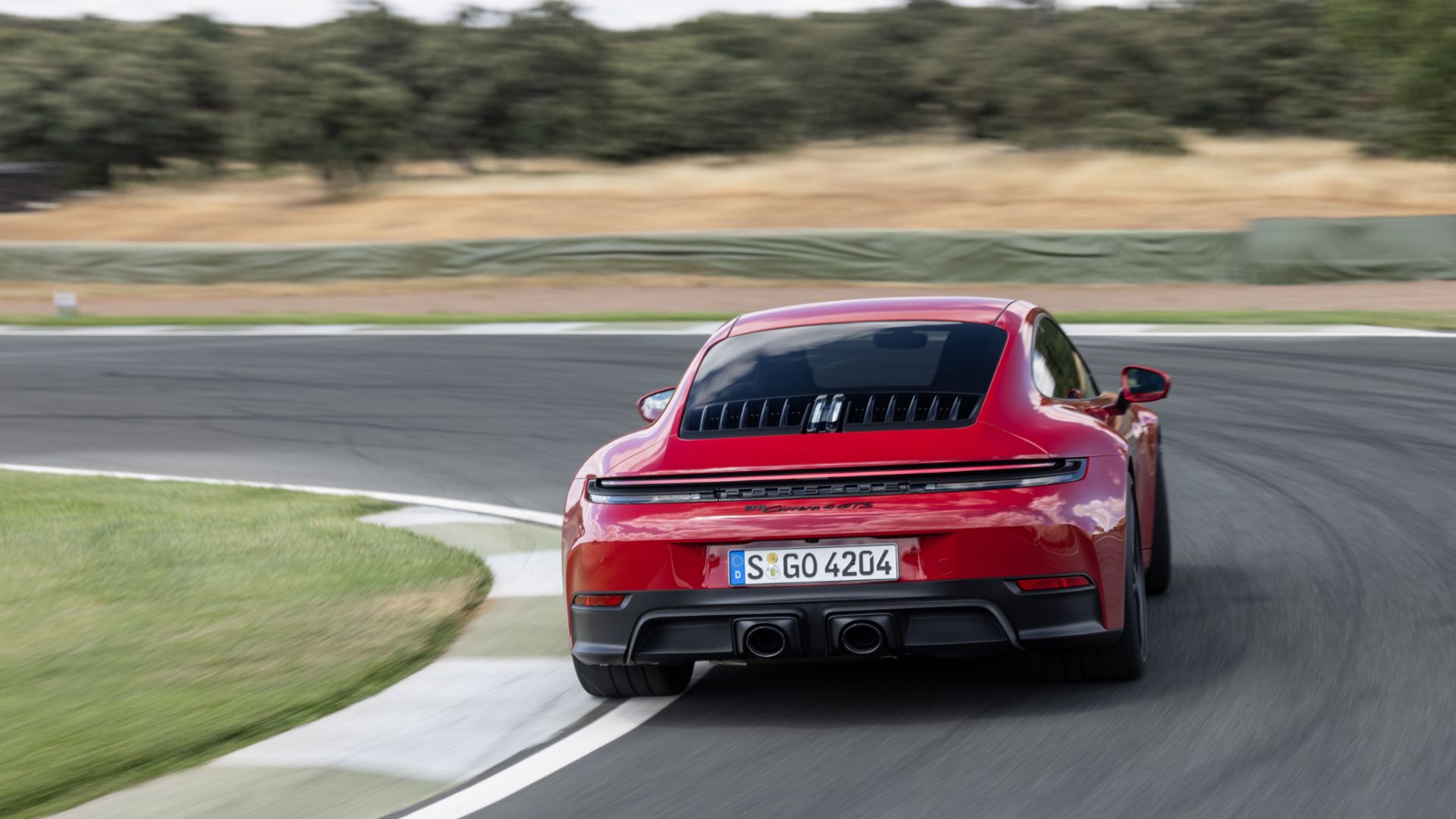
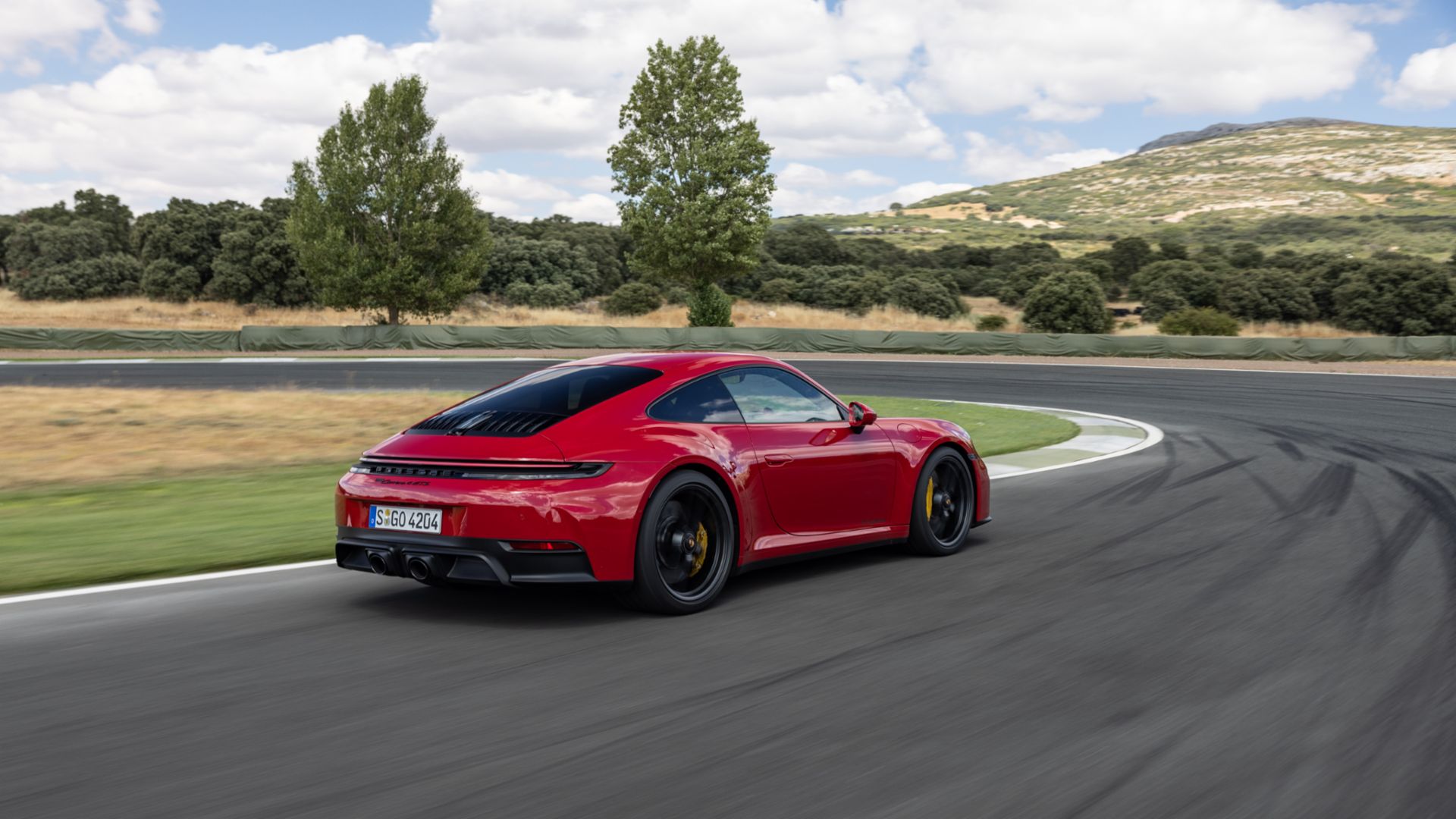
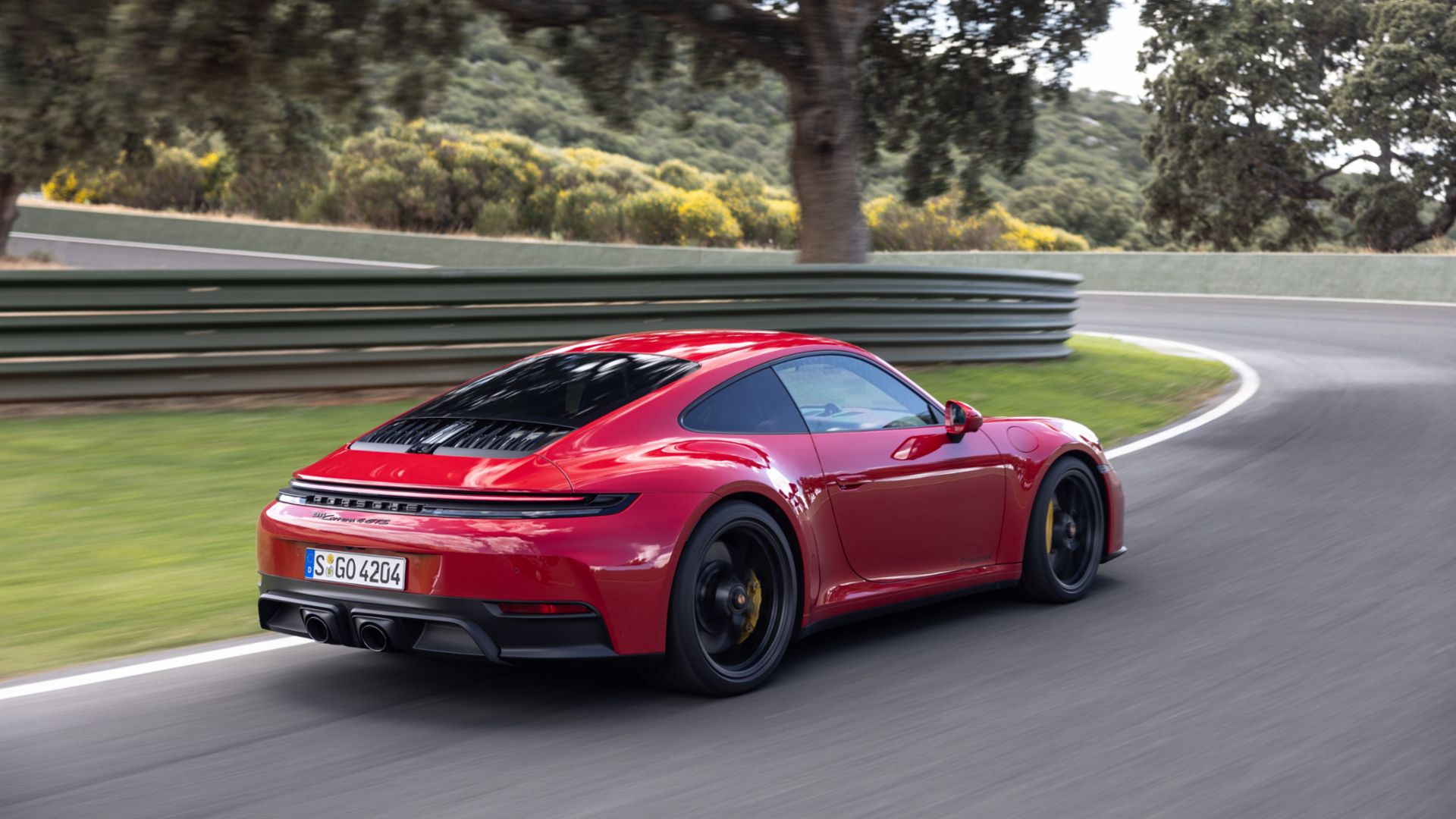
- At the rear, there’s a thicker full-width light bar, revised badging, and a reworked decklid grille with fewer, wider slats.
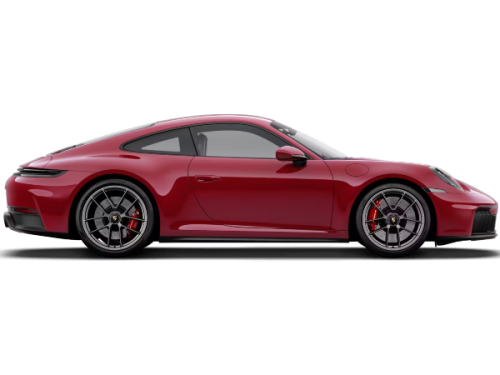
- GTS models can be identified by their central exhaust outlets and the small active aero shutters in the front bumper.
Inside, though, the change is bigger:
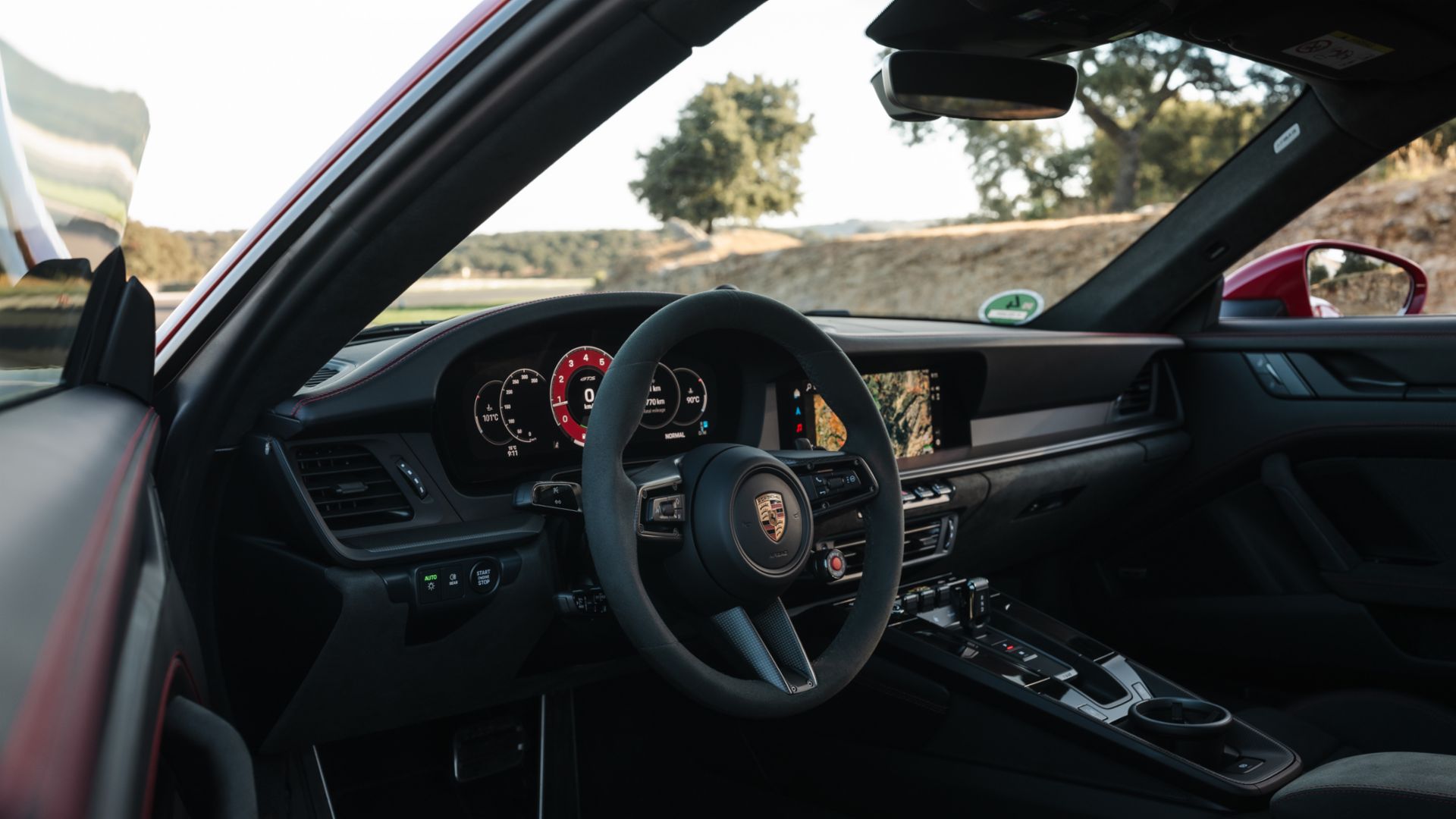
- A new 12.6-inch fully digital instrument cluster replaces the traditional analog tach; multiple “skins” mimic classic 5-dial layouts, but purists will miss the real needle.
- Central 10.9-inch PCM is updated with deeper Apple CarPlay integration, native apps (Spotify, Apple Music, etc.), and even video streaming when parked.
- There’s now a start button on the left instead of the old twist “key lozenge”.
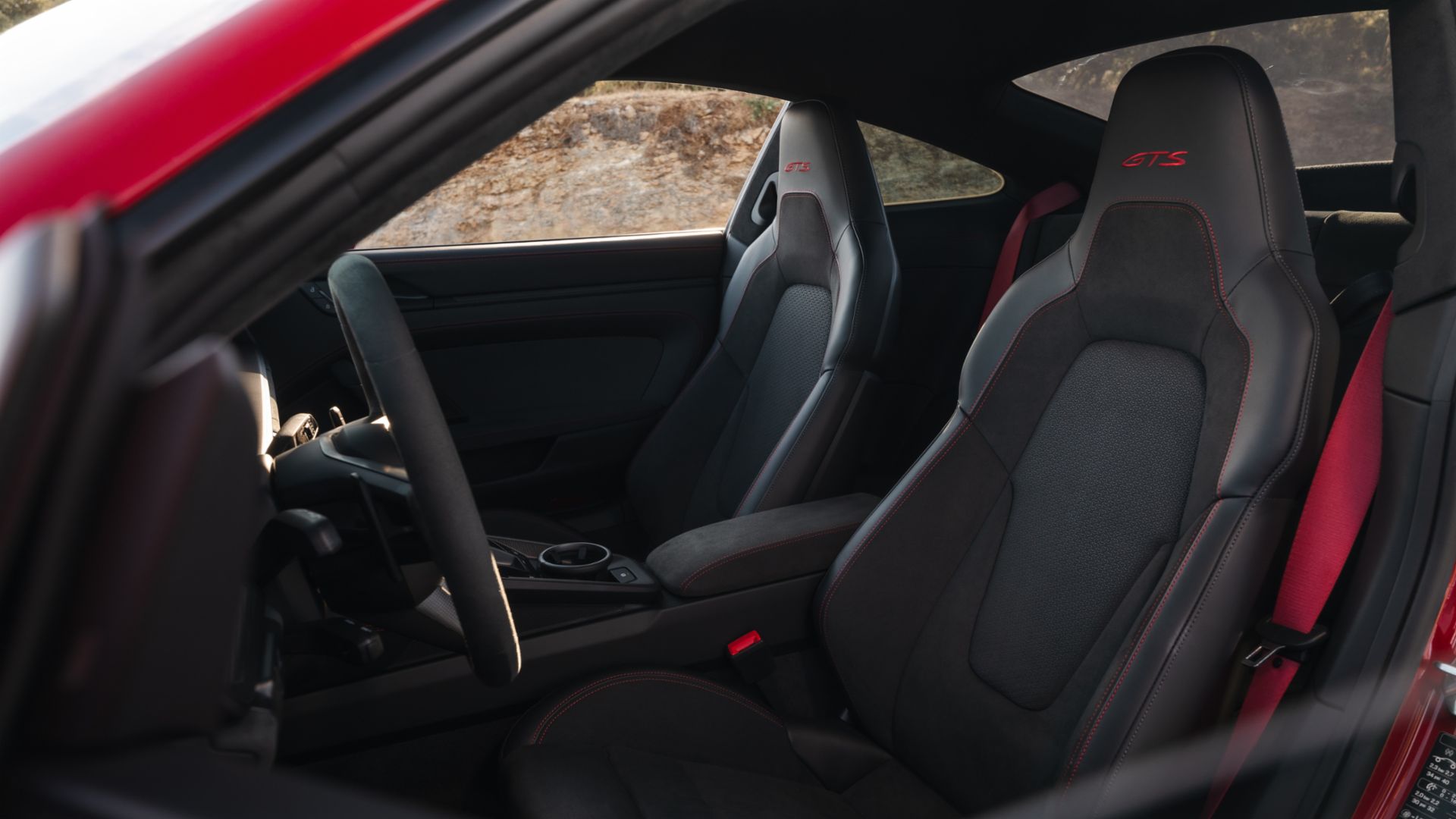
- The GTS coupe comes standard without rear seats—a nod to offsetting hybrid weight—but you can add the 2+2 back at no extra cost if you want the classic 911 layout.
Top Gear praises the 992.2’s cabin as beautifully made, modern and usable, while also calling out the loss of the analog tach and key-like starter as “little things that chisel away at the 911’s personality.”
Reviews & Reception
Car and Driver
C&D’s instrumented test of the GTS coupe (RWD) recorded:
- 0–60 mph: 2.5 s
- ¼-mile: 10.6 s @ 131 mph
They call the new GTS “a stealth hybrid,” noting that the 478-hp engine and 53-hp motor combine for 532 horses, and that the eTurbo and PDK motor make lag essentially vanish. Downsides? A punishing ride on poor concrete, elevated starting price, and noticeable road noise from the big tires. For buyers, that’s important context: the Carrera 4 GTS shares those fundamentals, with AWD adding more security and traction but not magically softening the chassis.
MotorTrend
MotorTrend calls the GTS T-Hybrid “the most capable, complete, and best Carrera model for real-world and daily-driving duty,” praising the seamless hybrid integration, huge performance, and high-speed composure.
Top Gear
Top Gear’s 2025 911 review describes the hybrid GTS as “an engineering nerd’s dream”, with wicked electric-turbo noises and “ridiculously quick” performance, while criticizing the loss of analog instruments and noting that some mechanical “chunter” has been smoothed out. Overall, they still conclude:
“The 911 remains the definitive sports car… Hybrid GTS is an engineering nerd’s dream, or pick the Carrera for simple pleasures.”
We position the GTS as the new center of gravity for the 992.2 lineup, with T-Hybrid tech representing Porsche’s latest, and most motorsport-inspired, production car hybrid tech. The system was built to work both as RWD and AWD, specifically naming the Carrera 4 GTS as a launch configuration, and frame T-Hybrid as a way to make performance and efficiency partners, not rivals.
Options & How to Spec a Carrera 4 GTS
If you’re building (or shopping) a 4 GTS Coupe, a few options make a big difference:
-
Sport Chrono Package
Essential if you care about acceleration numbers and track driving: launch control, steering-wheel mode dial, dynamic engine mounts, and extra telemetry. -
PDCC (Porsche Dynamic Chassis Control)
Now powered by the high-voltage system, PDCC makes the car feel flatter and more precise at big speeds and on track. Great if you regularly drive hard or hit circuits. -
PCCB (ceramic brakes)
Overkill for some, but if you plan frequent track days or live in mountain regions, the fade resistance and unsprung weight reduction are worthwhile. -
Rear seats (no-cost)
The coupe comes rear-seat-delete by default; add them back for extra luggage space, kids, or just noise damping. C&D explicitly recommends adding them to muffle tire roar. -
GTS suspension delete (no-cost in some markets)
Car and Driver and Top Gear both note how stiff the GTS ride can be; Porsche offers a no-cost option that raises the ride 0.4 in and uses softer bars/springs while keeping PASM. If you want GTS performance without GT-car harshness, this is a smart tick. -
Interior & materials
GTS already gains more leather and sportier trim; many buyers go for Full Leather or Race-Tex to match the car’s character. With the new digital cluster and bigger screens, interior color and material choices play a bigger role in how “premium” the cabin feels.
Buying Advice: Is the Carrera 4 GTS the One to Have?
You should prioritize the 4 GTS Coupe if:
-
You want the most advanced 911 powertrain currently available below Turbo/GT cars.
-
You live somewhere with real weather and want serious performance and year-round traction.
-
You like the idea of a “sports car first, hybrid second” approach—no plugs, no EV antics, just more shove and responsiveness.
You might be better in something else if:
-
You want a manual: there is no manual option on T-Hybrid GTS; you’d look at Carrera T or future non-hybrid S variants.
-
You’re extremely sensitive to ride quality and cabin noise: the GTS tune is firm and the 315-section rear tires generate a lot of roar on coarse surfaces. Consider the suspension-delete option or a non-GTS Carrera if comfort is priority.
-
You don’t care about AWD or hybrid tech and mainly want “simple pleasures”: Top Gear explicitly recommends the non-hybrid Carrera for that brief.
Snapshot: Key Specs – 911 Carrera 4 GTS Coupe (992.2)
From Porsche’s U.S. technical data sheet:
- Model years: 2025–present
- Engine: 3.6 L eTurbo flat-six + electric motor (T-Hybrid)
- System output: 532 hp @ 6,500 rpm / 449 lb-ft
- Driveline: Active AWD, 8-speed PDK
- 0–60 mph: 2.9 s (with Launch Control)
- Top speed: 194 mph
- ¼-mile: 11.1 s
- Curb weight: 3,635 lb
- Fuel economy (EPA): 17 / 23 / 19 mpg (city / hwy / combined)
- Brakes: 408 mm front / 380 mm rear steel rotors, 6-piston front / 4-piston rear
- Wheels/tires: 20″/21″ GTS wheels, 245/35 R20 & 315/30 R21
Final Word
The Porsche 911 Carrera 4 GTS Coupe (992.2) is arguably the modern 911 for the enthusiast who wants it all: the first-ever hybrid 911 tech, real-world usability, all-weather traction, and performance that brushes up against GT2 RS acceleration figures. Yes, it’s complex, expensive, and firmer than some will like. But if you’ve been waiting for a 911 that uses hybridization to amplify the traditional 911 experience rather than overwrite it—and you want the security of AWD—the Carrera 4 GTS is exactly that car.
Videos & Reviews
Pictures & Gallery
Press Release
May 28, 2024
The 2025 Porsche 911 models
- 911 Carrera GTS: first ever production Porsche with innovative, lightweight THybrid with newly developed 3.6 liter six-cylinder boxer engine, electrically driven
turbocharger and in-transmission electric motor - 911 Carrera receives updated 3.0-liter six-cylinder boxer engine
- New styling integrates active air intake flaps on 911 Carrera GTS
- Fully digital cockpit and further increased connectivity
Stuttgart. Porsche has significantly updated the latest generation of the iconic 911. The new 911 Carrera GTS is the first road-legal 911 model to feature a lightweight, performance-focused hybrid powertrain, at the core of which is a newly developed engine displacing 3.6 liters. The new 911 Carrera GTS Coupe accelerates from 0 to 60 mph in 2.9 seconds – 0.3 seconds quicker than before – and on to a top track speed of 194 mph. The 911 Carrera has also been enhanced and will be available at launch powered by an updated version of the 3.0-liter twin-turbo boxer engine that is more powerful than before. In addition to their more powerful engines, the new 911 models feature new design, further improved aerodynamics, new colors, a fresh interior, enhanced standard equipment and more extensive connectivity.
Inspired by Motorsport: Innovative Performance-Hybrid
For the new 911 Carrera GTS models, the engineers utilized expertise developed in racing as the baseline for the concept of the hybrid system. “We developed and tested various ideas and approaches to decide on a hybrid system that optimally suits the 911. The result is a unique powertrain that is well-integrated into the overall concept and enhances the performance significantly,” said Frank Moser, Vice-President of the 911 and 718 model lines
A new, strengthened eight-speed dual-clutch transmission (PDK) with an integrated, permanently excited synchronous motor is part of the powertrain on the 911 Carrera GTS. It supplements the power of the boxer engine at idle with up to 110 lb.-ft. of torque and develops up to 40 kW.
The 911 GTS also uses a newly developed, electrically driven turbocharger. An integrated electric motor, placed between the compressor wheel and the turbine wheel, speeds up the turbocharger very quickly to develop boost. This electric motor in the turbocharger also functions as a generator and can develop up to 11 kW using the exhaust gas stream.
The electric turbocharger is not equipped with a wastegate and allows for the use of a single turbocharger compared to the two that were used previously while simultaneously improving throttle response and performance.
Both the electrically driven turbocharger as well as the electric motor housed in the transmission are paired with a light and compact high-voltage battery. Its size and weight are comparable to a conventional 12-volt AGM starter battery, but it can retain up to 1.9 kWh of energy (gross) and operates at 400 volts and is located under the front hood where the previous 12 volt battery was located. To optimize weight distribution, the 12 volt battery is a lightweight lithium-ion battery located behind the parcel shelf in the rear.
The heart of the T-Hybrid powertrain is a newly developed 3.6 liter boxer engine. Thanks to the high-voltage system, the compressor for the air conditioning system can be powered electrically, so there is no need for a belt drive, making the engine more compact. This provides for the room above the flat engine to house the pulse inverter and DC-DC converter. A bore increase to 97 millimeters and a stroke enlarged to 81 millimeters raise the displacement compared to previous 911 Carrera GTS models by 0.6 liters. The new engine features the camshaft adjustment system – VarioCam – and a valve control using roller rocker arms. It can retain the ideal combination of fuel and air (Lambda = 1) over
the full range of engine speed.
By itself, the new boxer engine develops 357 kW (478 hp) and 420 lb.-ft. of torque. The total system power is 398 kW (532 hp) and 449 lb.-ft. The power increase compared to the previous 911 Carrera GTS models is 45 kW (59 hp). When accelerating, the new 911 Carrera GTS outperforms its predecessor in particular when starting off from a standstill. The efficient, performance-focused hybrid achieves a heightened level of performance without the level of weight increase typically associated with conventional hybrid systems. The U.S. curb weight increase of the new 911 Carrera GTS Coupe compared to the predecessor is a moderate 103 lbs.
The 911 Carrera continues to be powered by a 3.0 liter twin-turbo boxer engine, which has been significantly updated. It is now equipped with the intercooler used in the 911 Turbo models, which is placed above the engine directly beneath the rear decklid grille. The turbochargers of the new 911 Carrera were adopted from the previous 911 Carrera GTS models. With these modifications, the new 911 Carrera now makes 290 kW (388 hp) – 9 hp up on the model it replaces – and up to 331 lb.-ft. of torque. The 911 Carrera Coupe can accelerate from 0 to 60 mph in 3.9 seconds (3.7 seconds with optional Sport Chrono Package) and reach at top track speed of 183 mph. Compared to the previous model, this represents an improvement of 0.1 second and 1 mph, respectively.
Optimized suspension and active aerodynamics
The suspension of the 911 Carrera GTS was extensively updated as well. For the first time, rear axle steering is included as standard equipment. It optimizes the stability of the vehicle at higher speeds while simultaneously reducing the turning circle. The optional roll-stabilization system Porsche Dynamic Chassis Control (PDCC) is integrated into the high-voltage system of the performance hybrid. This allows for the use of an electro-hydraulic control system, making the system even more flexible and precise. A standard sport suspension with adaptive dampers (PASM) and a ride height reduction of 10 millimeters compared to the standard 911 Carrera offer a driving experience characteristic of GTS models.
A total of seven different wheel designs in 19-/20- or 20-/21-inch combinations are available for the new 911 Carrera models. For the first time, 911 Carrera Exclusive Design wheels are available with carbon fiber aeroblades, which can reduce the drag coefficient and optimize efficiency. At the rear axle, the 911 Carrera GTS models are equipped as standard with 21-inch wheels measuring 11.5 inches in width and fitted with 315/30 ZR 21 tires. At the front, 245/35 ZR 20 tires on 8.5 x 20-inch rims are mounted. At the rear, 10 mm wider tires compared to the previous model accommodate the increased power level of the new 911 Carrera GTS models, benefiting performance and traction.
Refreshed exterior design
Porsche has enhanced the exterior design of the new 911. A large part of these updates focuses on optimizing the aerodynamics and the performance of the sports car, including the new, model-specific front fascia. Furthermore, Porsche has integrated all of the light functions into the standard LED Matrix design headlights of the 911 with its characteristic four-point design. This allows for larger air intakes in the front fascia as the lights previously mounted in this area are now integrated into the headlights.
On the 911 Carrera GTS models, the front fascia incorporates five visible, vertically aligned active air flaps as well as a further flap which closes off the bypass on each side and is not visible from the exterior. They are complemented by adaptive front diffusors in the underbody, which are being used for the first time and work together with the cooling air flaps. These elements direct the air flow as needed: when little power is needed, closed air flaps optimize the aerodynamics of the car. When extracting high levels of power from the engine, for example on track, they funnel a high amount of air to the radiators. The sensors of the assistance systems are integrated into a high-gloss area below the front
license plate mount.
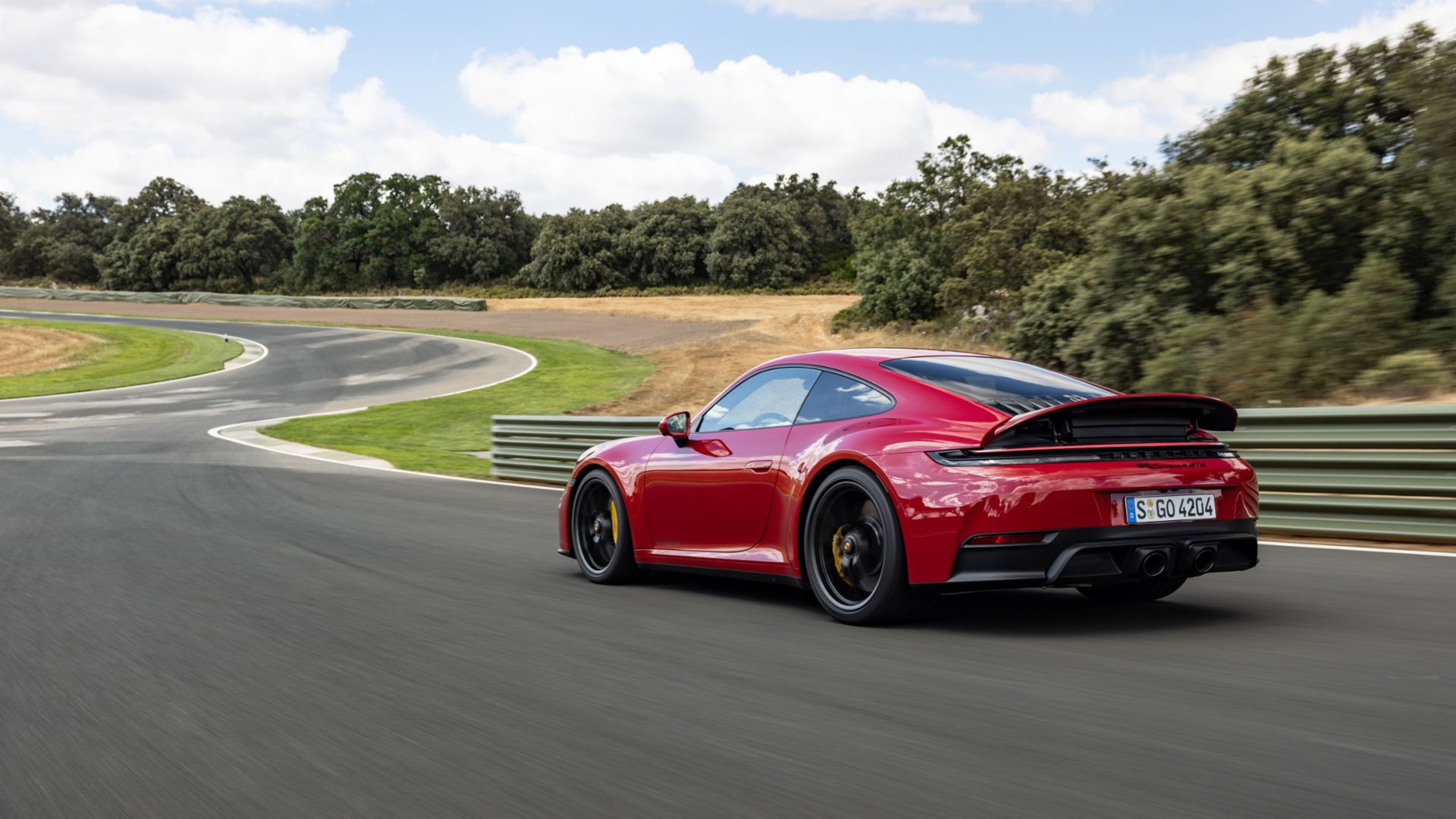
The newly designed rear light band with “PORSCHE”-lettering enhances the impression of width and low stance of the car. A new rear decklid grille with five strakes per side forms a visible unit with the rear window and flows seamlessly into the automatically extending, variable rear spoiler. The rear license plate is mounted higher than before, and the rear fascia is simplified. Model-specific exhaust systems integrate elegantly into the pronounced diffusor fins. A sport exhaust system is optionally available for the 911 Carrera models, while the 911 Carrera GTS models are equipped with a GTS-specific sport exhaust system as standard.
An optional Aerokit is available to further increase performance of the 911 Coupe models. It includes a SportDesign front fascia with a unique front spoiler lip, special side skirts and a weight-optimized, fixed rear wing, all of which reduce lift.
Fully digital cockpit and extended connectivity
As standard, Porsche delivers the new 911 coupe models as a pure two-seater with no rear seats. Optionally, a 2+2 seat configuration is available for no additional cost. Inside, the traditional 911 design DNA is paired with modern technology: the Porsche Driver Experience offers an intuitive and quick operation of key functions that are central to the driver. Important functions are placed directly on or next to the steering wheel. This includes the standard drive mode switch, the updated control stalk to operate assistance systems and – for the first time in a 911 – a start button, placed, of course, to the left of the steering wheel. The storage compartment in the center console of the new 911 offers a cooled storage space for smartphones with an inductive phone charging area.
For the first time, the 911 features a fully digital instrument cluster. The 12.6-inch curved display integrates elegantly into the new operating and display concept and can be extensively customized depending on the driver’s preference. It offers up to seven different display views, including an exclusive classic display based on the historic five tube design with a centrally positioned tachometer which has been a hallmark of the 911 from the start.
The operation of the Porsche Communication Management (PCM) is still conducted using the high-resolution central display measuring 10.9 inches diagonally. Porsche has optimized the customization of drive modes and the operation of assistance systems in the new 911. Additionally, the updated models feature new connectivity functions. A QRcode makes logging in using the Porsche ID in the PCM easier. Apple CarPlay® is also integrated more deeply into the vehicle and information from the system can be displayed in the instrument cluster if desired, directly from within the Apple® ecosystem; for example via the voice assistant Siri®. For the first time, video streaming is offered as an option and available for use while the car is parked. Apps such as Spotify® and Apple Music® can be used as native apps in the PCM without connecting a smartphone.
Pricing and availability
The new 2025 911 Carrera is available to order now as a Coupe or Cabriolet with rearwheel drive. Additionally, the 2025 911 Carrera GTS is also available as a rear and allwheel drive model (911 Carrera GTS and 911 Carrera 4 GTS) in Coupe or Cabriolet form, and as a Targa variant (exclusively available with all-wheel drive). Both powertrains are fitted with PDK as standard. Deliveries of the new 2025 911 Carrera models to U.S. Porsche Centers are expected to start in the fall, and at the end of 2024 for the 911 Carrera GTS models. The current 911 Turbo, Turbo S and GT3 RS models will continue to be offered for the 2025 model year, with pricing unchanged for these variants. The full list of Manufacturer’s Suggested Retail Pricing (MSRP) for the 2025 Porsche 911 mode range is listed below. MSRP does not include tax, title, registration, dealer charges or a $1,995 delivery, processing and handling fee.
- 2025 Porsche 911 Carrera: $120,100
- 2025 Porsche 911 Carrera Cabriolet: $133,400
- 2025 Porsche 911 Carrera GTS: $164,900
- 2025 Porsche 911 Carrera GTS Cabriolet: $178,200
- 2025 Porsche 911 Carrera 4 GTS: $172,700
- 2025 Porsche 911 Carrera 4 GTS Cabriolet: $186,000
- 2025 Porsche 911 Targa 4 GTS: $186,000
- 2025 Porsche 911 Turbo: $197,200
- 2025 Porsche 911 Turbo Cabriolet: $210,000
- 2025 Porsche 911 Turbo S: $230,400
- 2025 Porsche 911 Turbo S Cabriolet: $243,200
- 2025 Porsche 911 GT3 RS: $241,300