

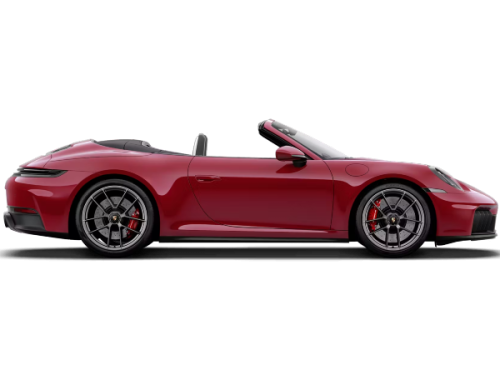
Current Porsche 911 Carrera 4 GTS Cabriolet (992.2) – Reviews, Pricing, Specs & Buyers Guide
The Porsche 911 Carrera 4 GTS Cabriolet (992.2) is the moment Porsche finally said: “Yes, the 911 can be hybrid… and still be absolutely wild.” It combines the first-ever hybrid 911 powertrain with all-wheel drive and open-top motoring, slotting between the Carrera S and the Turbo while feeling, in many ways, closer to the latter. If you want a modern 911 that does everything—daily driver, mountain-road weapon, autobahn missile, sunset cruiser—this is the sweet spot.
This guide walks through the story, specs, model-year details, real-world reviews, and what to look for if you’re speccing or eventually shopping one.
Context & Story: The First Hybrid 911, Now as an Open-Top 4 GTS
The 992.2 update to the 911 family brought relatively subtle exterior tweaks but a huge technical shift: the GTS line became the first hybrid 911, using Porsche’s new “T-Hybrid” performance-hybrid system.
Porsche deliberately chose the GTS as the first hybridized 911 rather than the Turbo or GT cars. The GTS has always been the “driver’s 911” – more focused than the base Carrera, less extreme than GT3/Turbo – so it’s the ideal testbed for new tech that still has to feel like a classic 911. The Cabriolet version adds a layer of theatre: everything the hybrid powertrain does, you hear and feel more intensely with the roof down.
The Carrera 4 GTS Cabriolet arrives as part of the 992.2 GTS range (Carrera GTS, Carrera 4 GTS, GTS Cabriolet and Targa 4 GTS). Official Porsche press materials and specs group the 911 Carrera 4 GTS Cabriolet with the 2025 “new 911” rollout, while some technical databases list the car as a 2026 model year.
Either way, this is the open-top, all-wheel-drive expression of Porsche’s new hybrid 911 concept: a car designed not to save fuel in city traffic, but to make a 911 faster, sharper and more responsive while still meeting tightening emissions rules.
Powertrain & T-Hybrid Tech
Under the decklid is a 3.6-litre single-turbo flat-six (“eTurbo”) paired with a compact hybrid system. The internal-combustion engine produces 478 hp on its own, with the electric motor and eTurbo bringing total system output to 532 hp and 449 lb-ft of torque.
Key elements of the T-Hybrid system:
- 3.6-litre eTurbo flat-six – New displacement, single electrically assisted turbo instead of the old twin-turbo setup. The eTurbo spools almost instantly thanks to an integrated electric motor, effectively eliminating lag.
- Electric motor integrated into the PDK – A compact motor sits within the 8-speed PDK dual-clutch gearbox, able to add torque directly through the transmission.
- 1.9 kWh high-voltage battery – Small and light by hybrid standards, designed for short bursts of power and support for chassis systems, not for EV-only driving.
- 400V architecture powering chassis tech – The hybrid system also feeds electric roll-stabilisation (PDCC), rear-axle steering and other systems in some configurations, integrating performance and efficiency into one package.
Crucially, this is not a plug-in hybrid. There’s no EV-only mode; instead, the battery is kept relatively small and light, with energy mainly used to boost performance, spool the turbo, and help the car meet future emissions standards without becoming a heavy GT.
Performance: Official Numbers vs Real-World Tests
For the 911 Carrera 4 GTS Cabriolet (992.2), Porsche quotes:
- Power (combined): 532 hp
- Torque (combined): 449 lb-ft
- 0–60 mph: 3.0 s (with Sport Chrono)
- Top speed: 194 mph
- Drivetrain: All-wheel drive (active AWD)
- Transmission: 8-speed PDK only
Independent testing has been even more dramatic:
- MotorTrend tested the (rear-drive) 2025 Carrera GTS Cabriolet and recorded 0–60 mph in 2.7 seconds and a 10.9-second quarter-mile at 127.3 mph – with a curb weight just shy of 3,800 lb.
- Edmunds measured the Carrera 4 GTS coupe at 0–60 mph in 2.8 seconds and a 10.7-second quarter-mile, making it nearly as quick as a 911 Turbo S from a few years ago.
The Cabriolet 4 GTS, with AWD and the extra bracing required for a soft-top, will be marginally heavier than the RWD GTS cab, but the hybrid powertrain largely erases any penalty. Realistically, you’re looking at supercar-grade acceleration in something that can also commute, cross continents and carry two small kids in the back.
Brakes and chassis hardware back up those numbers:
- Standard Porsche Active Suspension Management (PASM) Sport with a 10 mm lower ride height than a base Carrera
- Cast-iron 408 mm / 380 mm rotors with red multi-piston calipers; carbon-ceramic PCCB is optional.
- 20/21-inch GTS wheels with 245/35 R20 front and 315/30 R21 rear tyres provide a seriously wide contact patch.
MotorTrend’s cabrio test car stopped from 60 mph in just 97 ft and pulled 1.01 g on the skidpad, figures that would have made a 997 GT3 blush.
Chassis, Steering & Open-Top Character
Even by 911 standards, journalists keep coming back to the steering and composure of the new GTS models. MotorTrend praised the GTS Cabriolet’s “precise steering” and “never-ending power,” while noting that the suspension skews firm, especially on broken pavement, but transforms on a proper road or circuit.
Edmunds and others have highlighted how “it’s still very much a 911”:
- Excellent stability at speed
- Confident, fade-free brakes
- The hybrid integration is effectively invisible; you just notice more shove everywhere, especially off medium-speed corners.
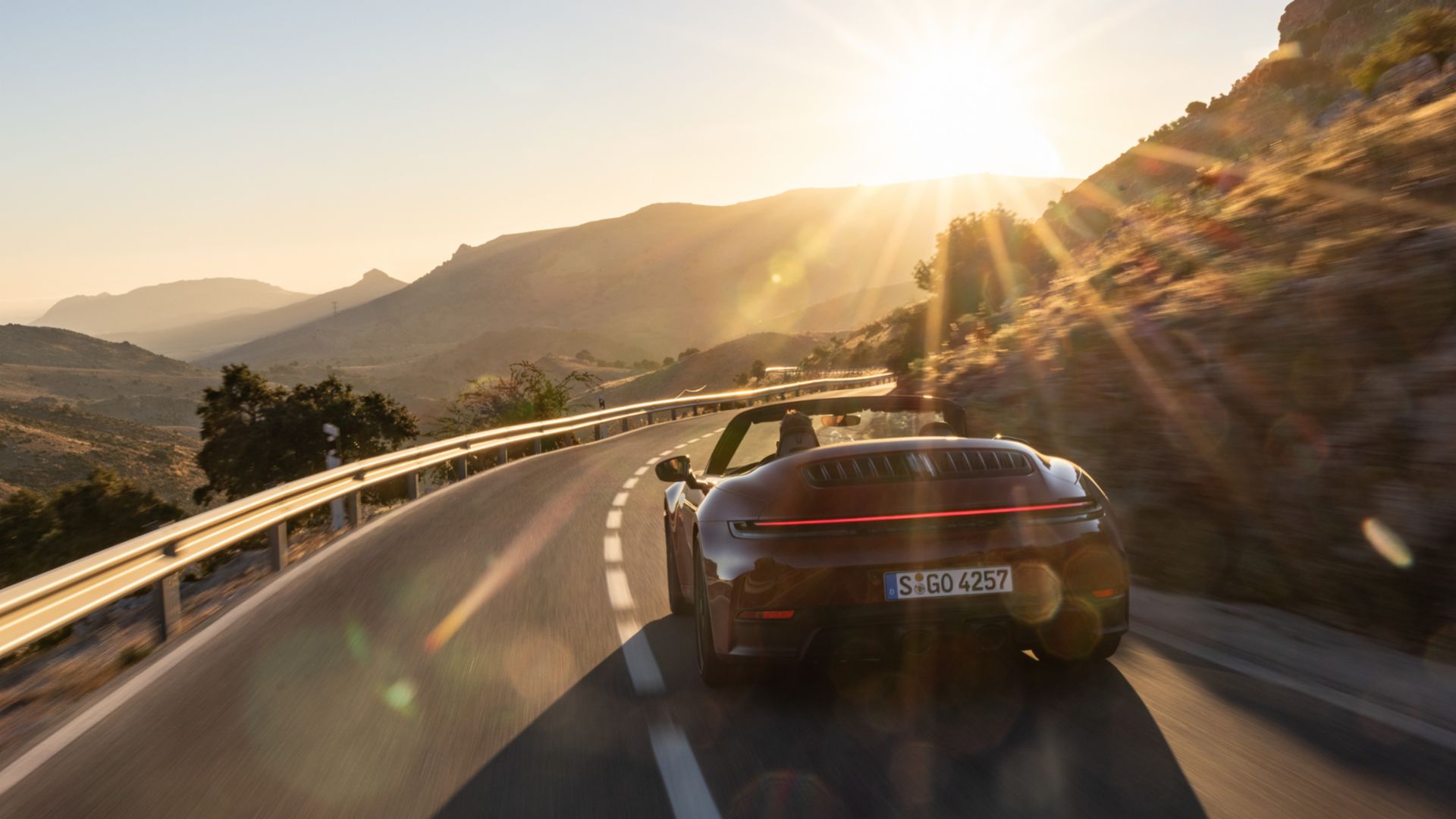
With the roof down, the experience gets an extra layer: you hear the eTurbo whoosh, the flat-six howl, and the PDK’s rifle-bolt shifts far more clearly. Testers remarked that wide-open throttle in the GTS Cab delivers the same blistering performance as the coupe, but with an extra dose of sensation and theatre that only a cabriolet can offer.
For those worried about comfort, Porsche offers the softer Carrera S suspension tune as an option on some markets, trading a bit of ultimate sharpness for better ride quality—worth considering if your roads are rough and you spend more time cruising than chasing lap times.
Design & Interior: Subtle Evolution, Fully Digital
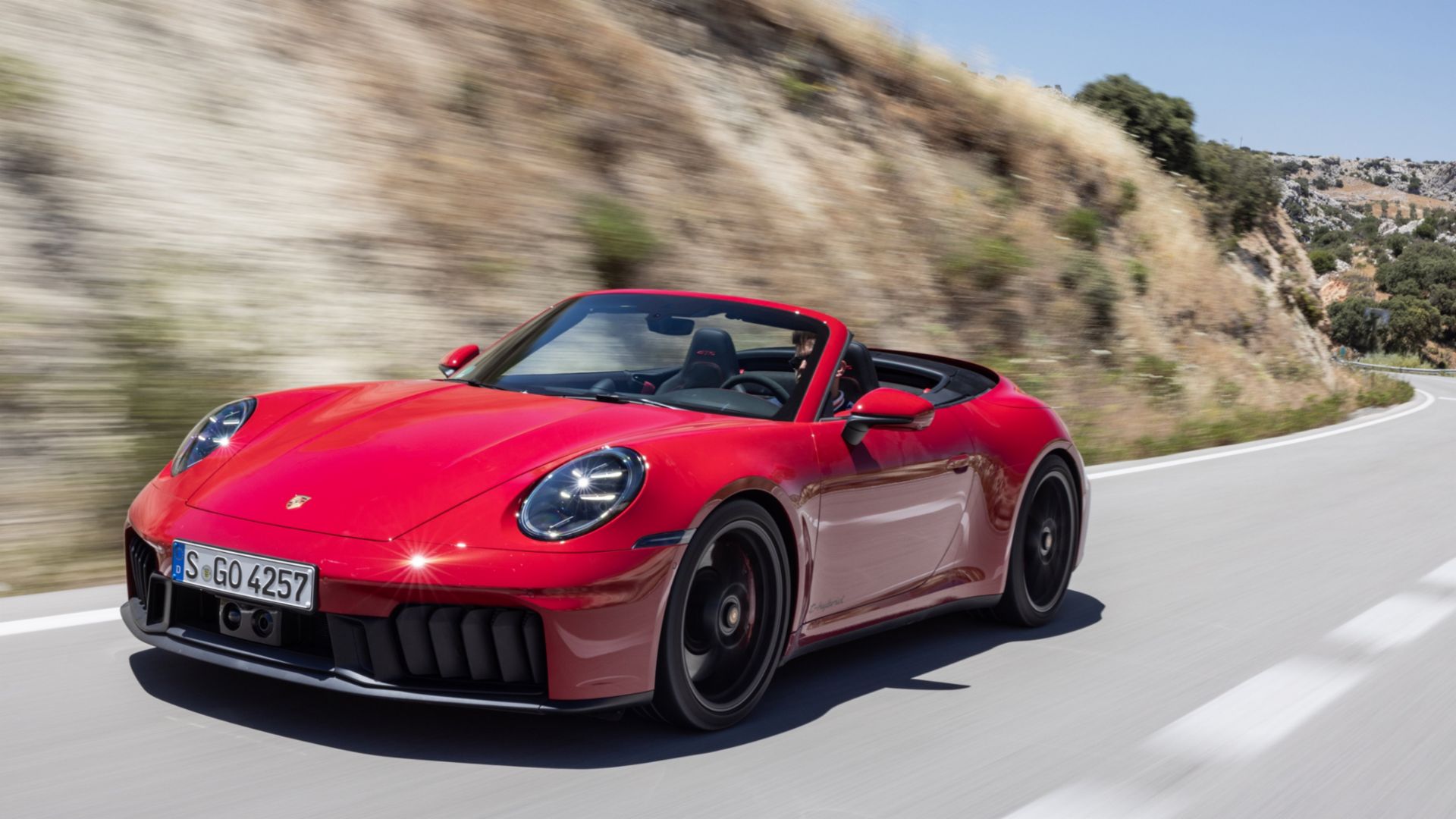
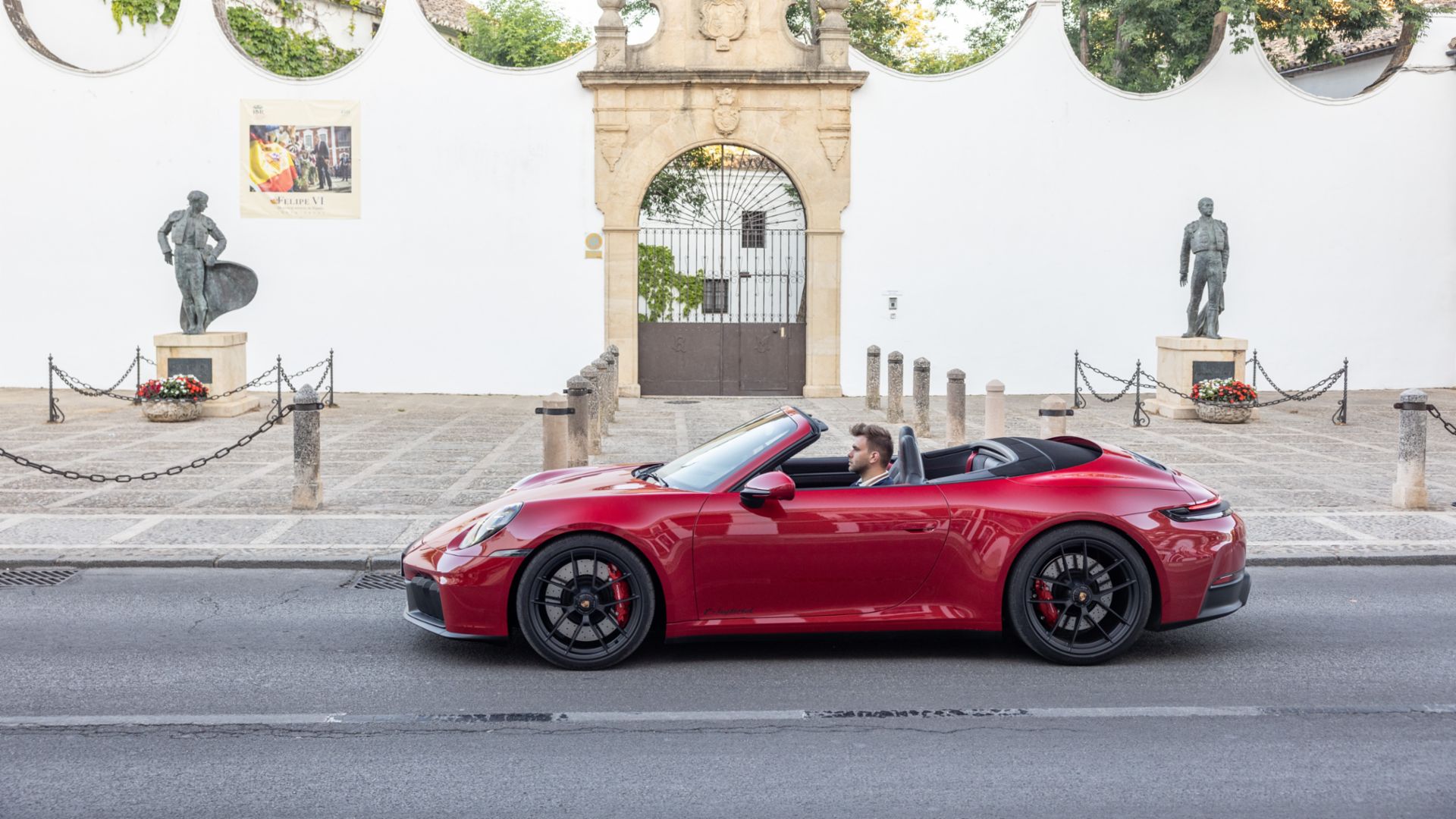
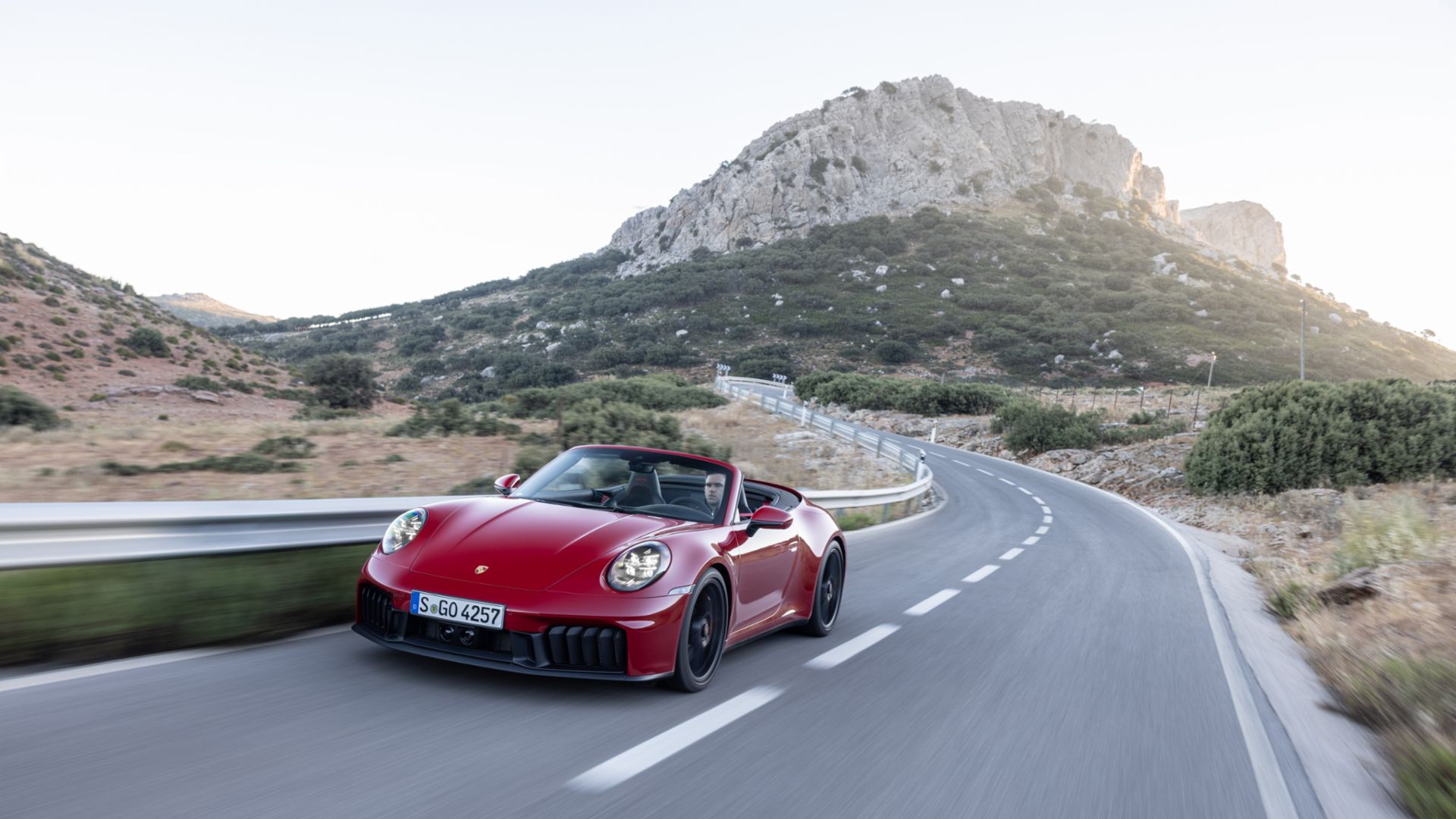
Outside, the 992.2 4 GTS Cabriolet is a classic “if you know, you know” car:
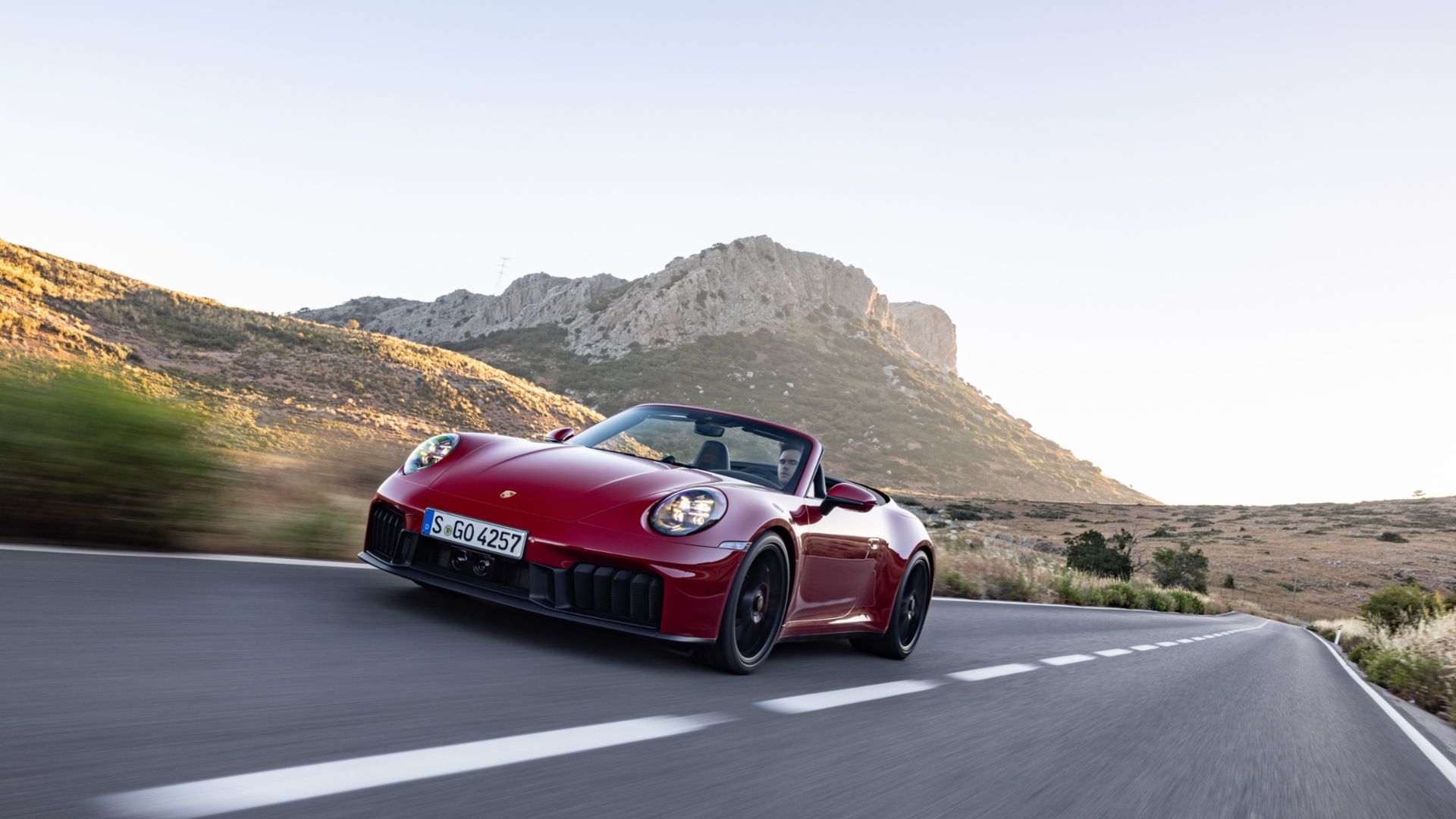
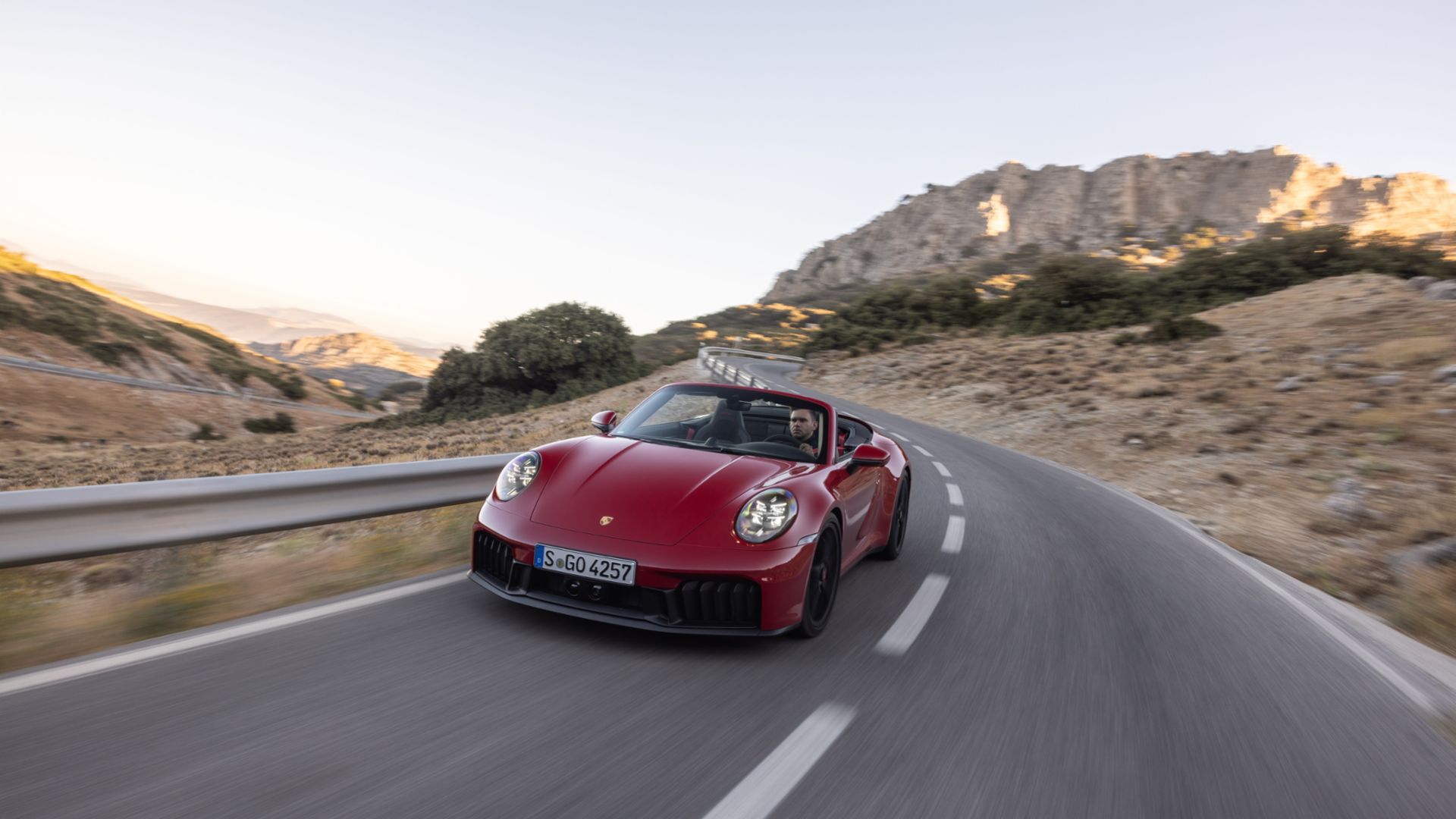
- Revised front bumper and intake design with more integrated active aero elements.
- GTS-specific trim: darker exterior details, centre-lock wheels on some configurations, and the signature low stance.
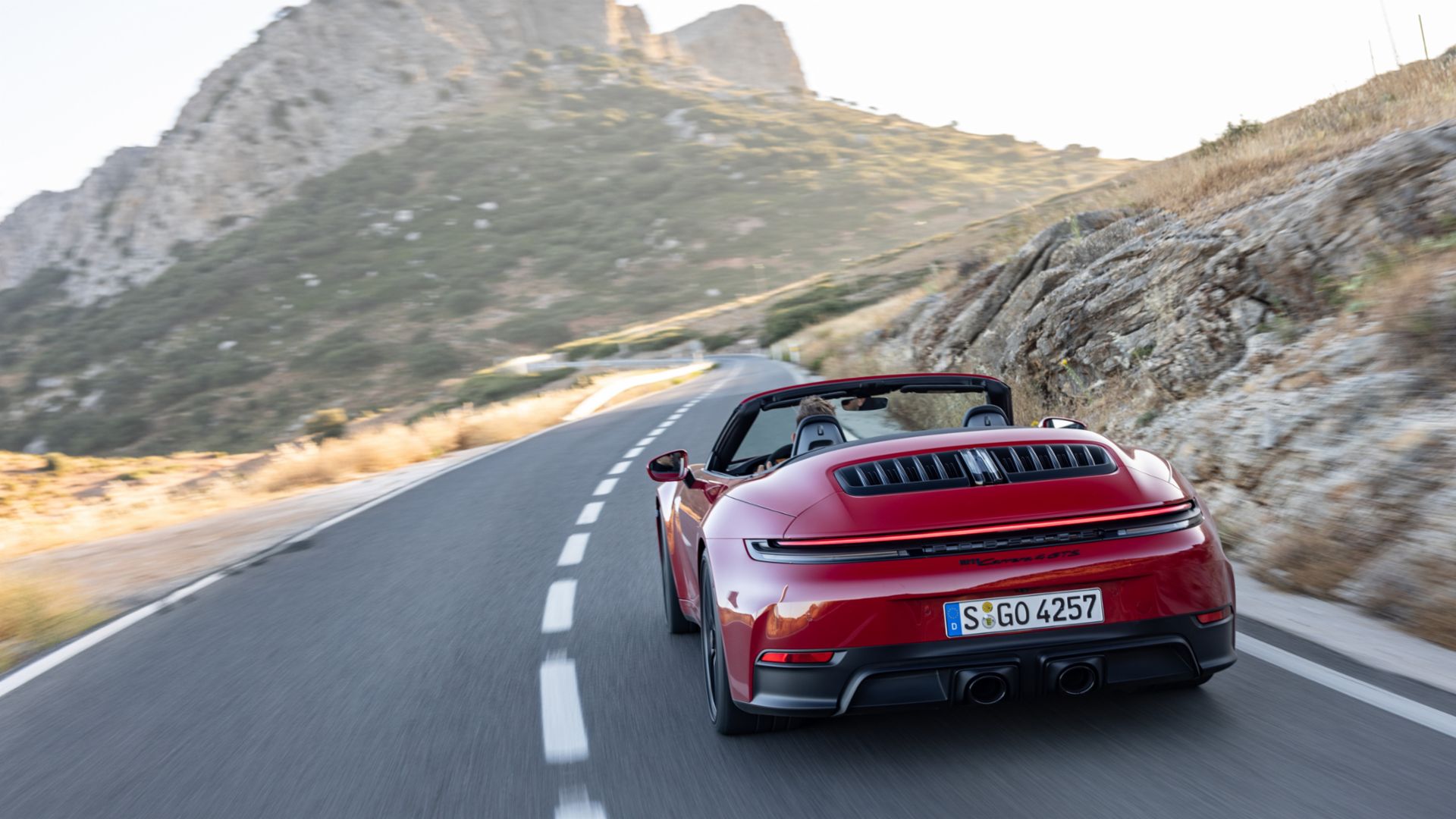
- Wide-body shell and discrete “Carrera 4 GTS” script at the rear so nerds can spot the AWD hybrid hero at a glance.
The fabric roof remains fully electric and can be opened or closed in around 12 seconds at speeds up to roughly 30–31 mph, making it genuinely usable in day-to-day traffic.
Inside, the 992.2 update makes the 911 cabin more digital:
- A fully digital instrument cluster replaces the traditional analogue tach, although the central rev counter is visually preserved.
- Updated PCM infotainment with more connectivity and app integration, plus extended driver-assistance features (adaptive cruise, lane-keeping, etc.).
- GTS-specific seats and trim, with extensive Race-Tex (Alcantara-style) and leather options, plus available lightweight bucket seats.
It’s still a 2+2, and while the rear seats are tight for adults, they’re usable for kids or extra luggage, maintaining that classic 911 “usable sports car” vibe. Cargo space remains a front trunk plus a small shelf area behind the rear backs.
Pricing & Positioning
Official and dealer information gives a range of base prices for the Carrera 4 GTS Cabriolet:
-
U.S. configurator and Porsche USA: from around $197,700 MSRP for the 911 Carrera 4 GTS Cabriolet (gasoline hybrid).
-
Many dealers and third-party sites quote $186,000 as a base for a 2025 911 4 GTS Cabriolet, with typical “as-tested” prices creeping into the low-$200k range once you add popular options.
In other words, it’s firmly in the territory where buyers are cross-shopping 911 Turbos, Audi R8s on the used market, or even mid-engine exotics. But reviewers consistently argue that the GTS hits a unique sweet spot: it’s a monster in a straight line, yet still feels agile, compact, and genuinely usable as a daily.
Model-Year Updates & 992.2 vs 992.1
Because the 4 GTS Cabriolet is effectively “born” with the 992.2 update, the big changes compared with the earlier 992.1 4 GTS Cab are baked in from day one:
Compared with the previous 992.1 4 GTS Cabriolet:
- Power jumps by 59 hp and torque by up to 29 lb-ft, thanks to the hybridised 3.6-litre drivetrain.
- Real-world performance is significantly quicker; Edmunds and MotorTrend found hybrid GTS models out-accelerate the old car and even nibble at Turbo/Turbo S territory.
- Chassis tech is upgraded, with standard rear-axle steering on many GTS configurations and optional PDCC integrated into the high-voltage system.
- Interior moves to a fully digital cluster and updated infotainment.
Within the 992.2 lifecycle, you can expect mainly equipment tweaks, special colours and packages, and possibly minor software updates as model years roll on. The core mechanical package is already at a very high level.
Reception & Reviews
Early reception from the press has been surprisingly positive, especially given how nervous many enthusiasts were about a “hybrid 911”:
- Car and Driver called the new Carrera GTS “significantly faster than its predecessor” and praised how seamlessly the hybrid system blends with the flat-six, noting that it still feels entirely like a 911.
- Edmunds gave the 2025 911 range an expert rating of 8.3/10, highlighting performance, steering feel and build quality, while owner feedback mentions the usual 911 complaints (pricey options, some squeaks and rattles, tech quirks).
- MotorTrend, after extensive testing of the GTS Cabriolet, concluded that the open-top hybrid GTS combines “never-ending power” with precise steering and genuine everyday usability, though they did note the firm ride and very high price.
Overall, the narrative is clear: the hybrid tech is not sacrilege; it’s an enhancement. Most reviewers agree that if you didn’t know there was a battery onboard, you’d just think Porsche had found another big step in turbo and chassis tuning.
Buyer’s/Owner’s Perspective: Who Is the 4 GTS Cabriolet For?
If you’re thinking of ordering (or one day buying used), here’s where the 911 Carrera 4 GTS Cabriolet (992.2) really makes sense:
- You want the fastest “normal” open-top 911 short of a Turbo S. The numbers are outrageous, especially for something that looks and feels so familiar.
- You drive year-round. All-wheel drive plus a modern soft-top and effective climate systems make it a genuine four-season sports car in many climates.
- You care more about feel than lap times. A GT3 or Turbo might be quicker on track, but the GTS Cab arguably delivers more theatre and variety in daily life.
- You’re comfortable with complexity. The hybrid system adds another layer of engineering; as these cars age, specialists and good documentation (like your own Stuttcars spec pages) will be key.
Things to consider:
- Expect very high option prices—carbon-ceramic brakes, lightweight buckets, special colours and extended leather all add up fast.
- Suspension can feel stiff on poor roads; if you’re more boulevard than B-road, consider the softer suspension tune and smaller wheel/tyre combos where available.
- Long-term, the hybrid hardware may be the big unknown for maintenance and values, though Porsche’s track record with complex tech (PDK, PASM, etc.) has generally been strong.
Final Thoughts
The Porsche 911 Carrera 4 GTS Cabriolet (992.2) is one of those “bridge” cars collectors often end up loving in hindsight: first hybrid 911, open-top, all-wheel drive, and very much a product of its era’s tech and regulations—without sacrificing the emotional, rear-engined feel that defines a 911.
It’s brutally fast, intensely capable, and dripping with everyday usability. Roof down, hybrid system humming away in the background, flat-six howling as the eTurbo does its thing, it feels like a greatest-hits album of everything Porsche has learned about the 911 over six decades—just with a new, electrified guitar solo in the middle.
Videos & Reviews
Pictures & Gallery
Press Release
May 28, 2024
The 2025 Porsche 911 models
- 911 Carrera GTS: first ever production Porsche with innovative, lightweight THybrid with newly developed 3.6 liter six-cylinder boxer engine, electrically driven
turbocharger and in-transmission electric motor - 911 Carrera receives updated 3.0-liter six-cylinder boxer engine
- New styling integrates active air intake flaps on 911 Carrera GTS
- Fully digital cockpit and further increased connectivity
Stuttgart. Porsche has significantly updated the latest generation of the iconic 911. The new 911 Carrera GTS is the first road-legal 911 model to feature a lightweight, performance-focused hybrid powertrain, at the core of which is a newly developed engine displacing 3.6 liters. The new 911 Carrera GTS Coupe accelerates from 0 to 60 mph in 2.9 seconds – 0.3 seconds quicker than before – and on to a top track speed of 194 mph. The 911 Carrera has also been enhanced and will be available at launch powered by an updated version of the 3.0-liter twin-turbo boxer engine that is more powerful than before. In addition to their more powerful engines, the new 911 models feature new design, further improved aerodynamics, new colors, a fresh interior, enhanced standard equipment and more extensive connectivity.
Inspired by Motorsport: Innovative Performance-Hybrid
For the new 911 Carrera GTS models, the engineers utilized expertise developed in racing as the baseline for the concept of the hybrid system. “We developed and tested various ideas and approaches to decide on a hybrid system that optimally suits the 911. The result is a unique powertrain that is well-integrated into the overall concept and enhances the performance significantly,” said Frank Moser, Vice-President of the 911 and 718 model lines
A new, strengthened eight-speed dual-clutch transmission (PDK) with an integrated, permanently excited synchronous motor is part of the powertrain on the 911 Carrera GTS. It supplements the power of the boxer engine at idle with up to 110 lb.-ft. of torque and develops up to 40 kW.
The 911 GTS also uses a newly developed, electrically driven turbocharger. An integrated electric motor, placed between the compressor wheel and the turbine wheel, speeds up the turbocharger very quickly to develop boost. This electric motor in the turbocharger also functions as a generator and can develop up to 11 kW using the exhaust gas stream.
The electric turbocharger is not equipped with a wastegate and allows for the use of a single turbocharger compared to the two that were used previously while simultaneously improving throttle response and performance.
Both the electrically driven turbocharger as well as the electric motor housed in the transmission are paired with a light and compact high-voltage battery. Its size and weight are comparable to a conventional 12-volt AGM starter battery, but it can retain up to 1.9 kWh of energy (gross) and operates at 400 volts and is located under the front hood where the previous 12 volt battery was located. To optimize weight distribution, the 12 volt battery is a lightweight lithium-ion battery located behind the parcel shelf in the rear.
The heart of the T-Hybrid powertrain is a newly developed 3.6 liter boxer engine. Thanks to the high-voltage system, the compressor for the air conditioning system can be powered electrically, so there is no need for a belt drive, making the engine more compact. This provides for the room above the flat engine to house the pulse inverter and DC-DC converter. A bore increase to 97 millimeters and a stroke enlarged to 81 millimeters raise the displacement compared to previous 911 Carrera GTS models by 0.6 liters. The new engine features the camshaft adjustment system – VarioCam – and a valve control using roller rocker arms. It can retain the ideal combination of fuel and air (Lambda = 1) over
the full range of engine speed.
By itself, the new boxer engine develops 357 kW (478 hp) and 420 lb.-ft. of torque. The total system power is 398 kW (532 hp) and 449 lb.-ft. The power increase compared to the previous 911 Carrera GTS models is 45 kW (59 hp). When accelerating, the new 911 Carrera GTS outperforms its predecessor in particular when starting off from a standstill. The efficient, performance-focused hybrid achieves a heightened level of performance without the level of weight increase typically associated with conventional hybrid systems. The U.S. curb weight increase of the new 911 Carrera GTS Coupe compared to the predecessor is a moderate 103 lbs.
The 911 Carrera continues to be powered by a 3.0 liter twin-turbo boxer engine, which has been significantly updated. It is now equipped with the intercooler used in the 911 Turbo models, which is placed above the engine directly beneath the rear decklid grille. The turbochargers of the new 911 Carrera were adopted from the previous 911 Carrera GTS models. With these modifications, the new 911 Carrera now makes 290 kW (388 hp) – 9 hp up on the model it replaces – and up to 331 lb.-ft. of torque. The 911 Carrera Coupe can accelerate from 0 to 60 mph in 3.9 seconds (3.7 seconds with optional Sport Chrono Package) and reach at top track speed of 183 mph. Compared to the previous model, this represents an improvement of 0.1 second and 1 mph, respectively.
Optimized suspension and active aerodynamics
The suspension of the 911 Carrera GTS was extensively updated as well. For the first time, rear axle steering is included as standard equipment. It optimizes the stability of the vehicle at higher speeds while simultaneously reducing the turning circle. The optional roll-stabilization system Porsche Dynamic Chassis Control (PDCC) is integrated into the high-voltage system of the performance hybrid. This allows for the use of an electro-hydraulic control system, making the system even more flexible and precise. A standard sport suspension with adaptive dampers (PASM) and a ride height reduction of 10 millimeters compared to the standard 911 Carrera offer a driving experience characteristic of GTS models.
A total of seven different wheel designs in 19-/20- or 20-/21-inch combinations are available for the new 911 Carrera models. For the first time, 911 Carrera Exclusive Design wheels are available with carbon fiber aeroblades, which can reduce the drag coefficient and optimize efficiency. At the rear axle, the 911 Carrera GTS models are equipped as standard with 21-inch wheels measuring 11.5 inches in width and fitted with 315/30 ZR 21 tires. At the front, 245/35 ZR 20 tires on 8.5 x 20-inch rims are mounted. At the rear, 10 mm wider tires compared to the previous model accommodate the increased power level of the new 911 Carrera GTS models, benefiting performance and traction.
Refreshed exterior design
Porsche has enhanced the exterior design of the new 911. A large part of these updates focuses on optimizing the aerodynamics and the performance of the sports car, including the new, model-specific front fascia. Furthermore, Porsche has integrated all of the light functions into the standard LED Matrix design headlights of the 911 with its characteristic four-point design. This allows for larger air intakes in the front fascia as the lights previously mounted in this area are now integrated into the headlights.
On the 911 Carrera GTS models, the front fascia incorporates five visible, vertically aligned active air flaps as well as a further flap which closes off the bypass on each side and is not visible from the exterior. They are complemented by adaptive front diffusors in the underbody, which are being used for the first time and work together with the cooling air flaps. These elements direct the air flow as needed: when little power is needed, closed air flaps optimize the aerodynamics of the car. When extracting high levels of power from the engine, for example on track, they funnel a high amount of air to the radiators. The sensors of the assistance systems are integrated into a high-gloss area below the front
license plate mount.
The newly designed rear light band with “PORSCHE”-lettering enhances the impression of width and low stance of the car. A new rear decklid grille with five strakes per side forms a visible unit with the rear window and flows seamlessly into the automatically extending, variable rear spoiler. The rear license plate is mounted higher than before, and the rear fascia is simplified. Model-specific exhaust systems integrate elegantly into the pronounced diffusor fins. A sport exhaust system is optionally available for the 911 Carrera models, while the 911 Carrera GTS models are equipped with a GTS-specific sport exhaust system as standard.
An optional Aerokit is available to further increase performance of the 911 Coupe models. It includes a SportDesign front fascia with a unique front spoiler lip, special side skirts and a weight-optimized, fixed rear wing, all of which reduce lift.
Fully digital cockpit and extended connectivity
As standard, Porsche delivers the new 911 coupe models as a pure two-seater with no rear seats. Optionally, a 2+2 seat configuration is available for no additional cost. Inside, the traditional 911 design DNA is paired with modern technology: the Porsche Driver Experience offers an intuitive and quick operation of key functions that are central to the driver. Important functions are placed directly on or next to the steering wheel. This includes the standard drive mode switch, the updated control stalk to operate assistance systems and – for the first time in a 911 – a start button, placed, of course, to the left of the steering wheel. The storage compartment in the center console of the new 911 offers a cooled storage space for smartphones with an inductive phone charging area.
For the first time, the 911 features a fully digital instrument cluster. The 12.6-inch curved display integrates elegantly into the new operating and display concept and can be extensively customized depending on the driver’s preference. It offers up to seven different display views, including an exclusive classic display based on the historic five tube design with a centrally positioned tachometer which has been a hallmark of the 911 from the start.
The operation of the Porsche Communication Management (PCM) is still conducted using the high-resolution central display measuring 10.9 inches diagonally. Porsche has optimized the customization of drive modes and the operation of assistance systems in the new 911. Additionally, the updated models feature new connectivity functions. A QRcode makes logging in using the Porsche ID in the PCM easier. Apple CarPlay® is also integrated more deeply into the vehicle and information from the system can be displayed in the instrument cluster if desired, directly from within the Apple® ecosystem; for example via the voice assistant Siri®. For the first time, video streaming is offered as an option and available for use while the car is parked. Apps such as Spotify® and Apple Music® can be used as native apps in the PCM without connecting a smartphone.
Pricing and availability
The new 2025 911 Carrera is available to order now as a Coupe or Cabriolet with rearwheel drive. Additionally, the 2025 911 Carrera GTS is also available as a rear and allwheel drive model (911 Carrera GTS and 911 Carrera 4 GTS) in Coupe or Cabriolet form, and as a Targa variant (exclusively available with all-wheel drive). Both powertrains are fitted with PDK as standard. Deliveries of the new 2025 911 Carrera models to U.S. Porsche Centers are expected to start in the fall, and at the end of 2024 for the 911 Carrera GTS models. The current 911 Turbo, Turbo S and GT3 RS models will continue to be offered for the 2025 model year, with pricing unchanged for these variants. The full list of Manufacturer’s Suggested Retail Pricing (MSRP) for the 2025 Porsche 911 mode range is listed below. MSRP does not include tax, title, registration, dealer charges or a $1,995 delivery, processing and handling fee.
- 2025 Porsche 911 Carrera: $120,100
- 2025 Porsche 911 Carrera Cabriolet: $133,400
- 2025 Porsche 911 Carrera GTS: $164,900
- 2025 Porsche 911 Carrera GTS Cabriolet: $178,200
- 2025 Porsche 911 Carrera 4 GTS: $172,700
- 2025 Porsche 911 Carrera 4 GTS Cabriolet: $186,000
- 2025 Porsche 911 Targa 4 GTS: $186,000
- 2025 Porsche 911 Turbo: $197,200
- 2025 Porsche 911 Turbo Cabriolet: $210,000
- 2025 Porsche 911 Turbo S: $230,400
- 2025 Porsche 911 Turbo S Cabriolet: $243,200
- 2025 Porsche 911 GT3 RS: $241,300