

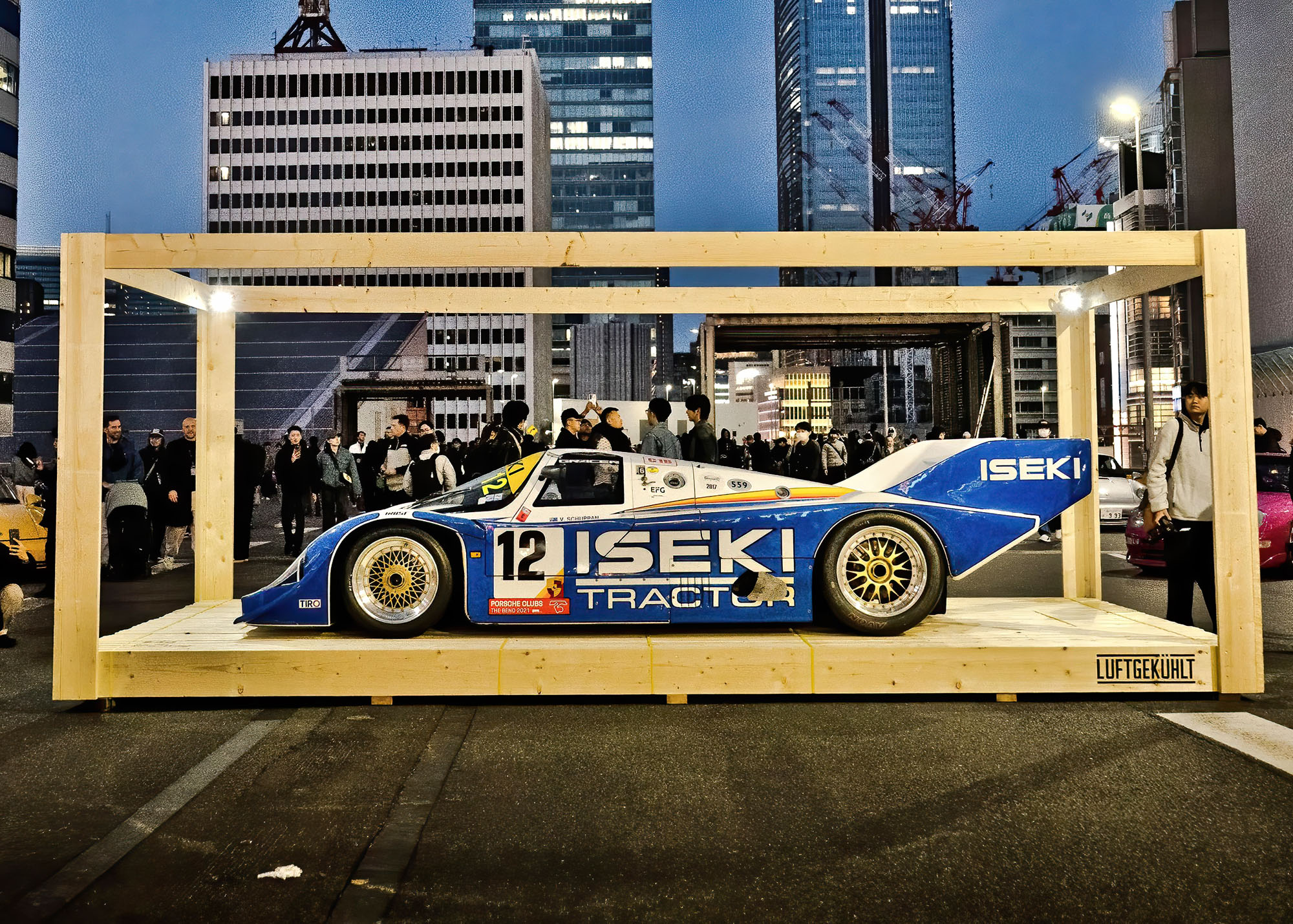
The fan-favorite Porsche gathering headed to Japan for the first time, transforming a stretch of Tokyo’s former KK Line Expressway into a celebration of the brand’s legendary air-cooled era.
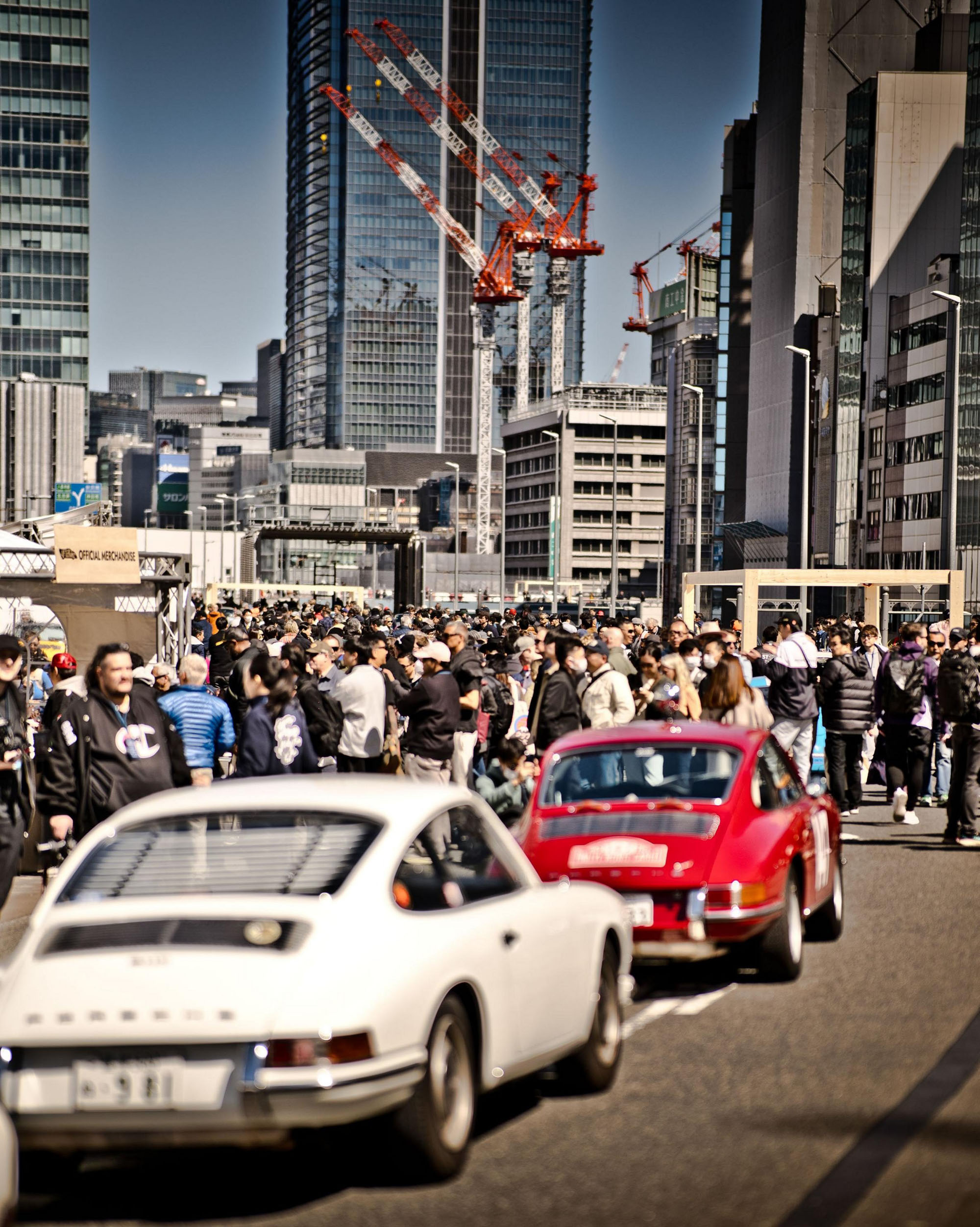
Partially opened in 1959 and completed in 1966 after a 13-year construction effort, the two-kilometer Tokyo Expressway — better known locally as the KK Line — served for more than six decades as a crucial link between the neighborhoods of Kyobashi and Shimbashi. In 2025, however, the elevated roadway was officially retired as part of Tokyo’s evolving transportation network, much of which is shifting underground. Plans are already underway to redevelop the site into a public green space in the heart of the city.
During the interim, the dormant landmark provided an unlikely but fitting stage for Luftgekühlt, the immersive Porsche culture event that originated in the United States and has steadily expanded to key automotive destinations around the globe. A Japanese edition of the event — with its distinctive blend of storytelling, design, and historic machinery — had long been in discussion.
At a glance
- The internationally renowned Luftgekühlt series makes its first stop in Tokyo
- The decommissioned KK Line becomes a stage for air-cooled Porsche culture
- Around 11,600 visitors see approximately 220 vehicles on display
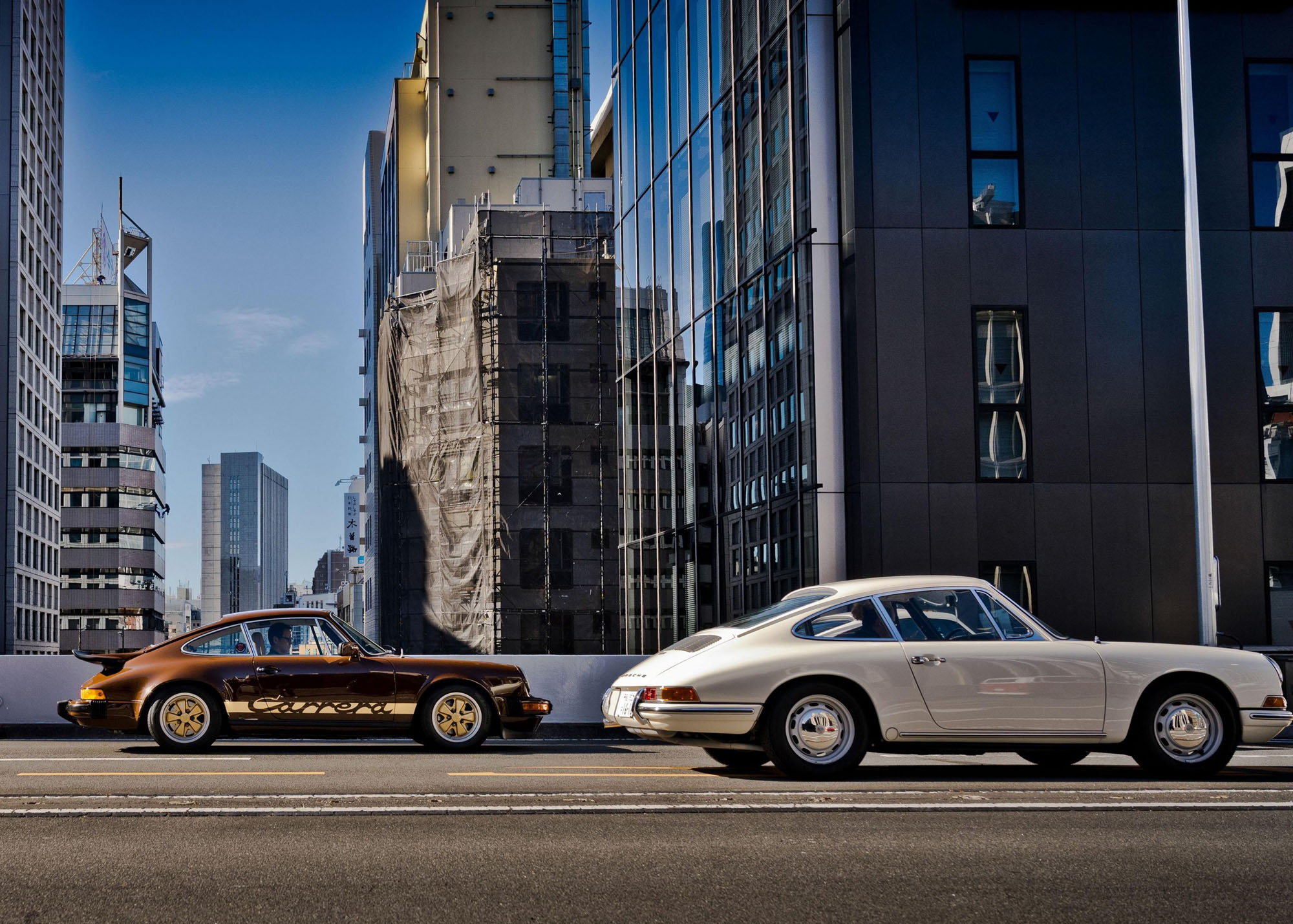
“When I was racing here in the WEC, I would always lay over for an extra day or two to look at different venues,” says Patrick Long, the brand’s founder and former Porsche factory driver. “So, the discussion’s been going on for more than a decade, with our on-the-ground partner Kohey Takada.” The significance of the location was not lost on local enthusiasts. “A generation of people have only ever driven on this elevated expressway, and locals were really excited to walk around up here, celebrating the air-cooled world,” adds Jeff Zwart, Luftgekühlt’s creative director.
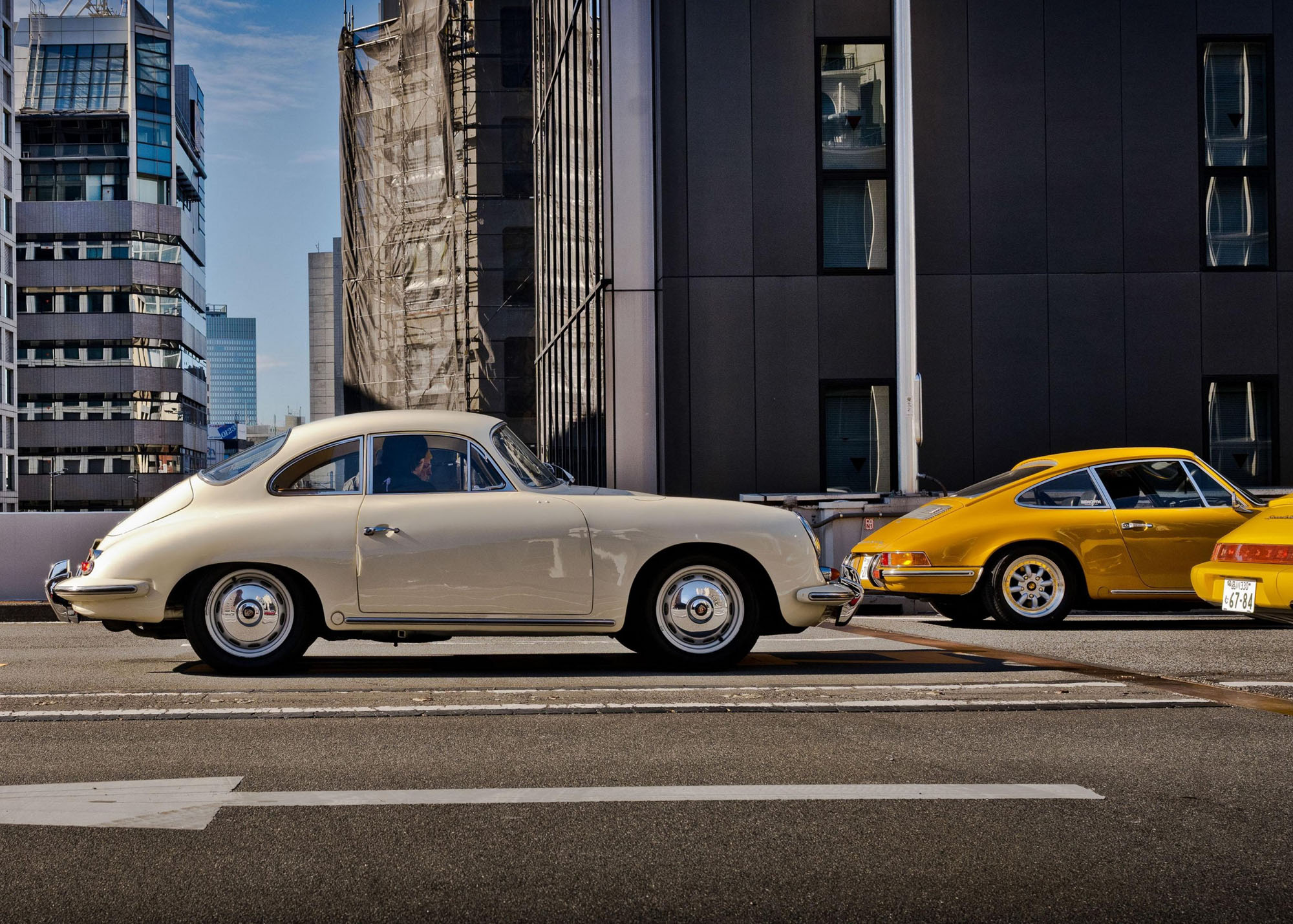
The Luftgekühlt team is known for staging events in unexpected locations — previous editions have taken place at the Universal Studios Backlot in California, the restored Dworzec Świebodzki railway station in Wrocław, and the American Tobacco Campus in North Carolina. Even by those standards, the Tokyo edition — officially supported by Porsche Japan — offered something entirely new.
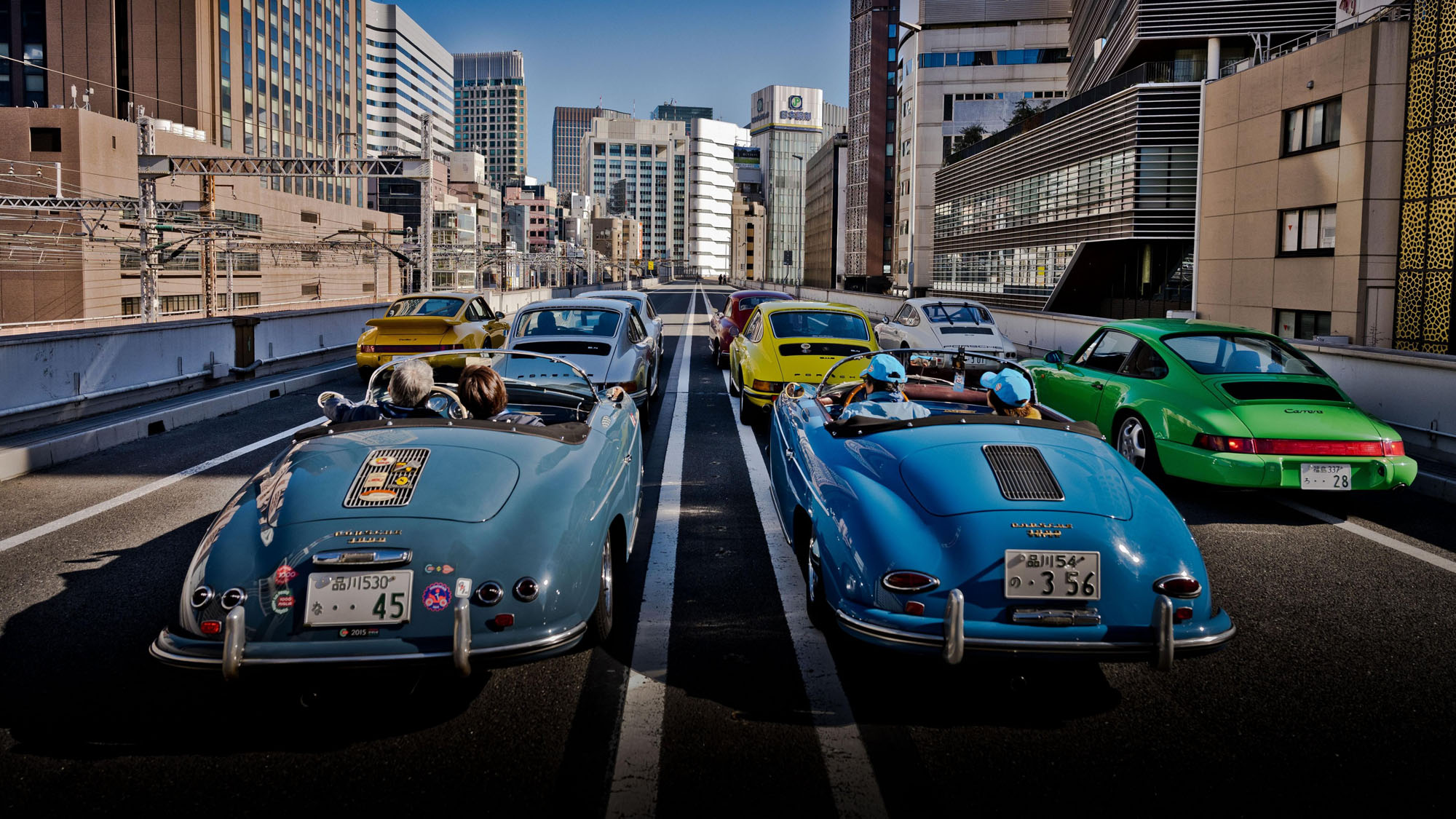
Spectacular setting for air-cooled classics
It marked the first time Luftgekühlt had used such a central urban setting. To fully capture the energy of Tokyo’s skyline and nightlife, the event also ran later than usual, continuing into the evening hours.
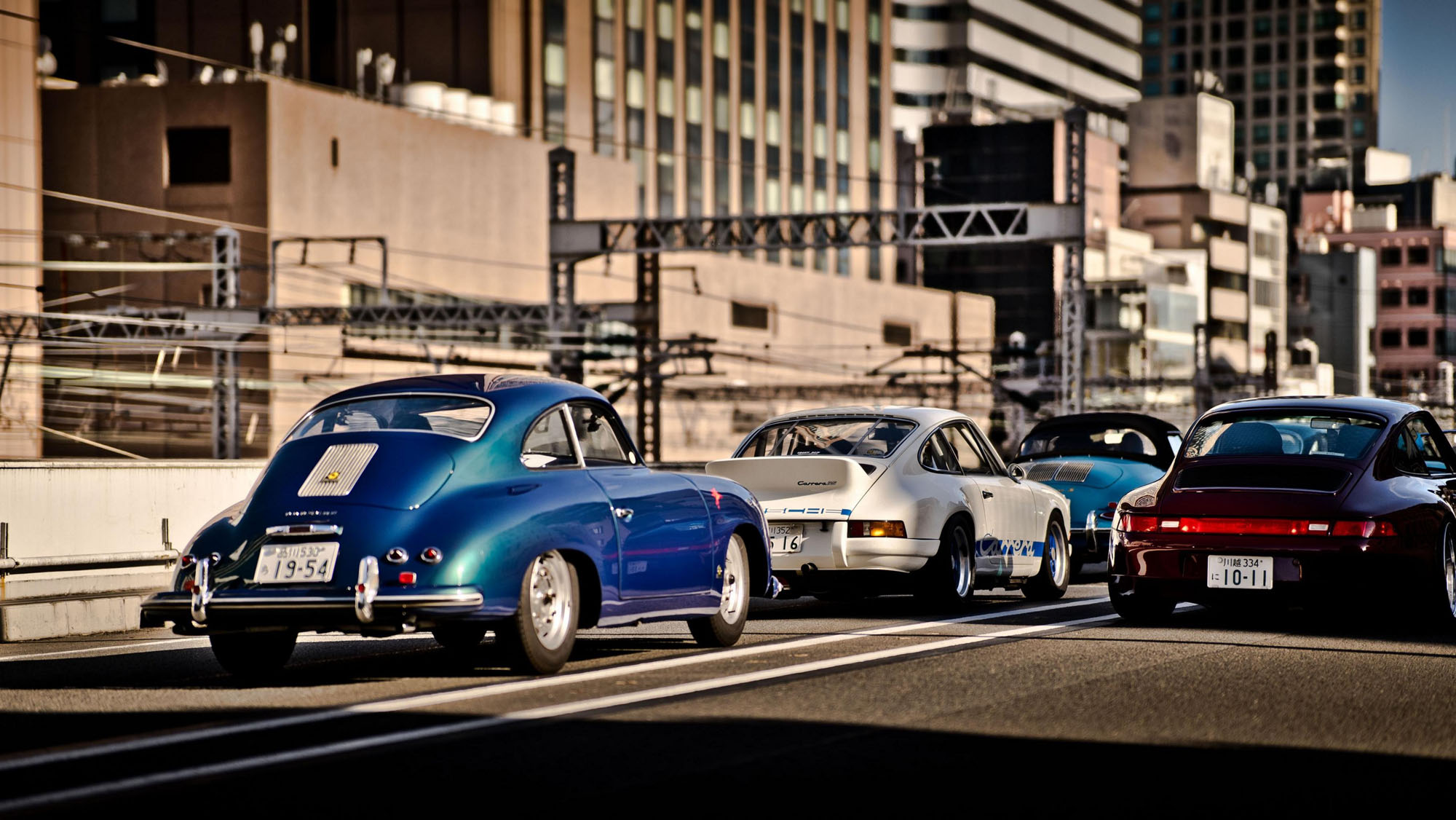
“When people see the imagery of this show, it will be something completely unique, not only to Luft’s portfolio but also to what you usually see online of Tokyo at night,” explains Long.
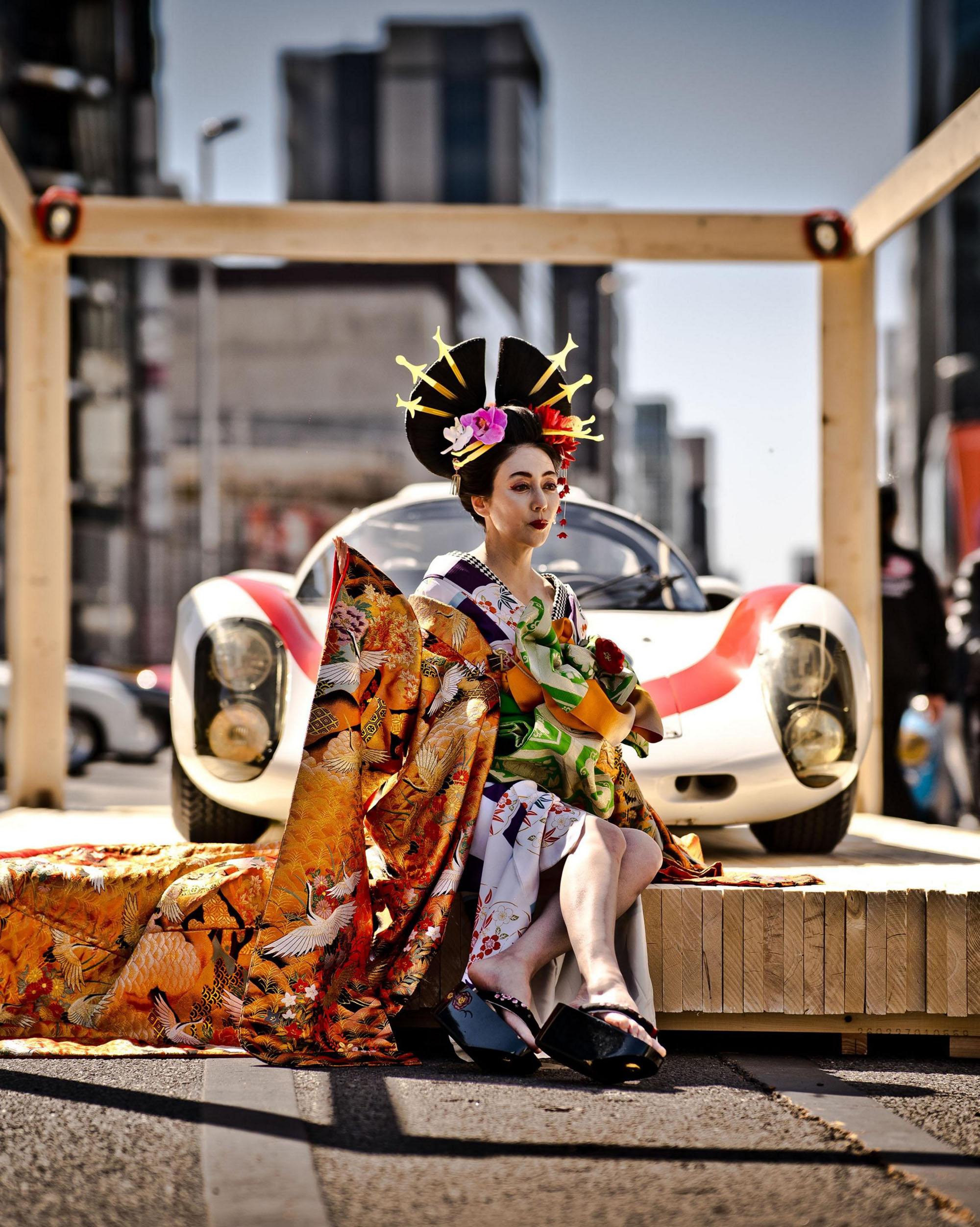
“The idea was to run the event into that photographic moment — experiencing the cars from daylight through to night.”
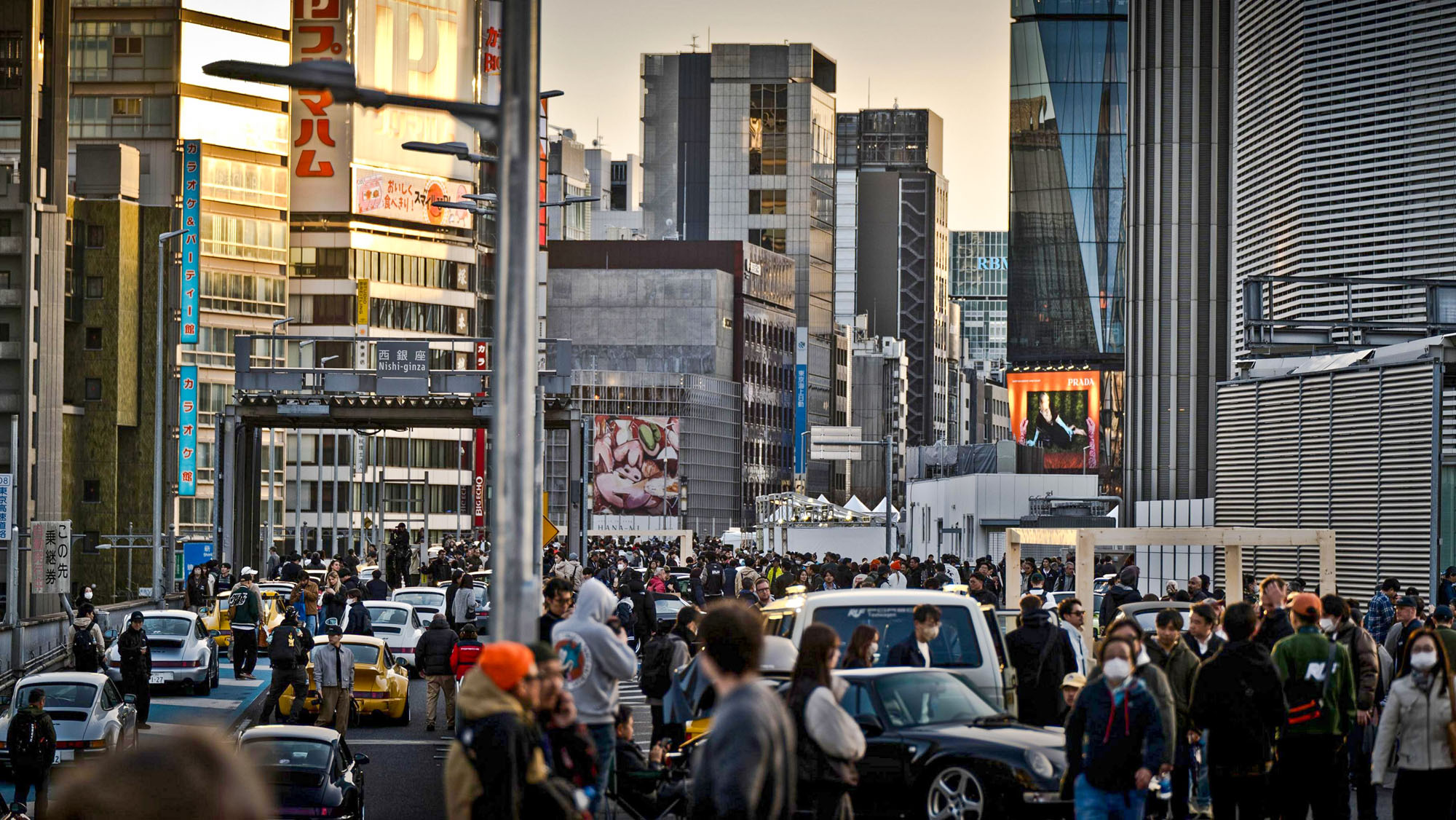
For Zwart, whose role revolves around visual storytelling, the setting offered a rare creative opportunity.
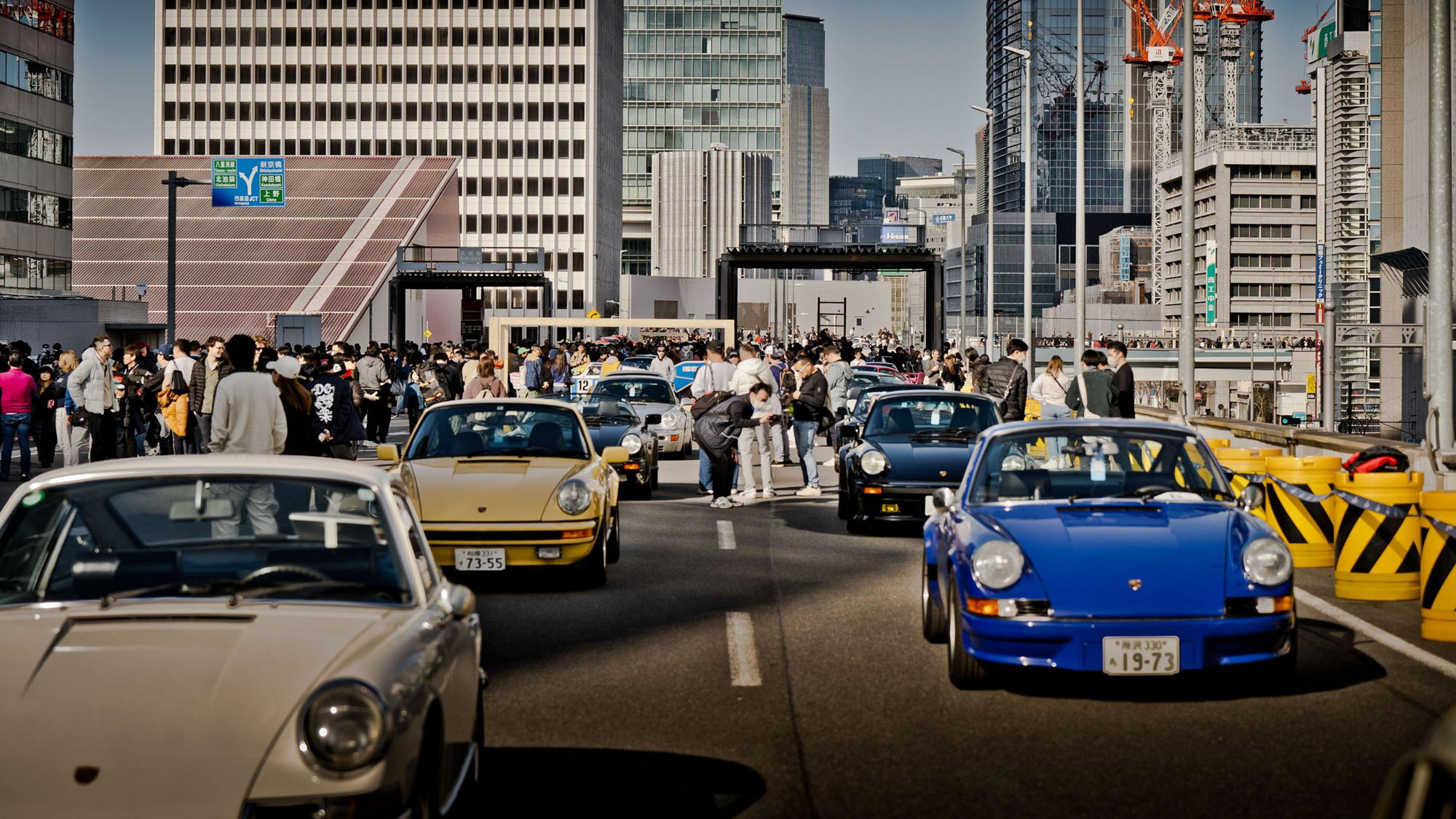
“My job description is almost: make a car look great in a location,” he says. “When I see a site where I can envision hosting our storytelling and our style of presentation of the air-cooled world, that becomes really exciting to me.”
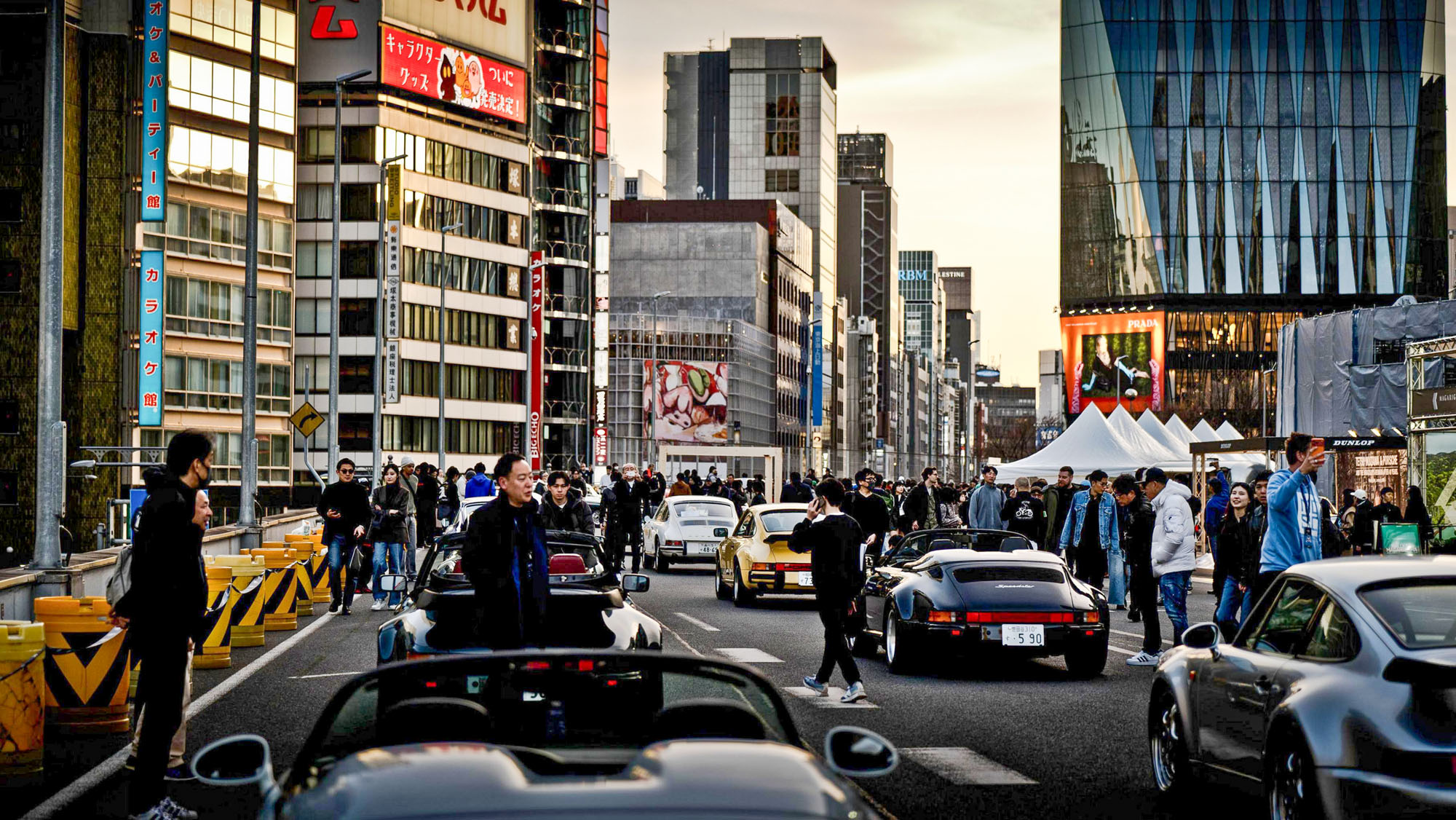
“And what surrounds us here in a 360-degree way is an absolute modern, bustling, world-class city centre – and then you go up an on-ramp and you’re suddenly in your own world. And we have this contrast between this modern environment and the basis where all Porsches came from: the air-cooled era,” says Zwart.
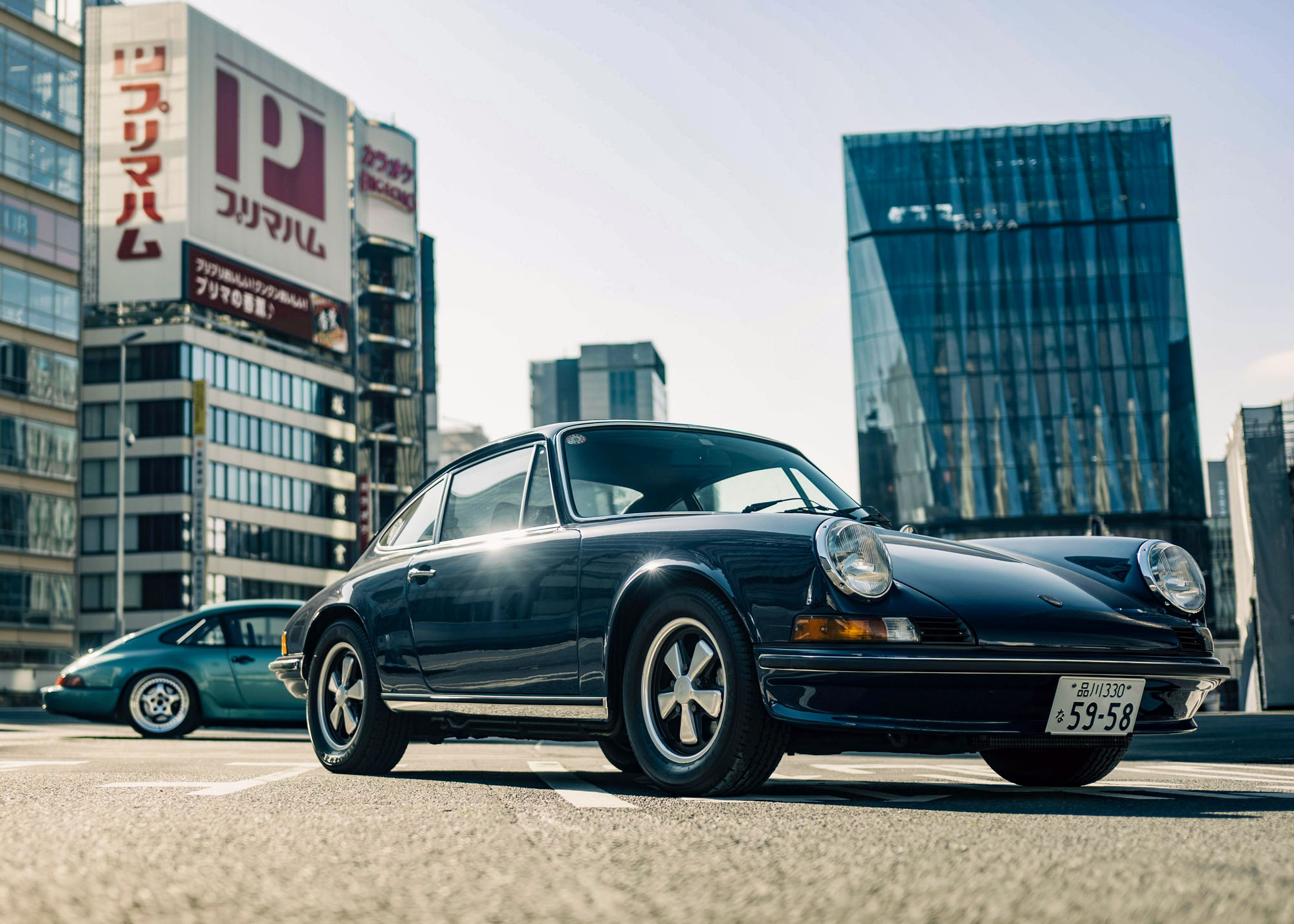
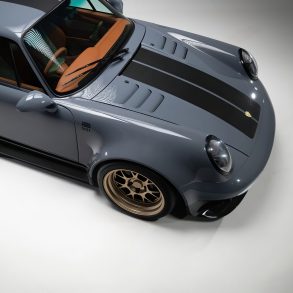
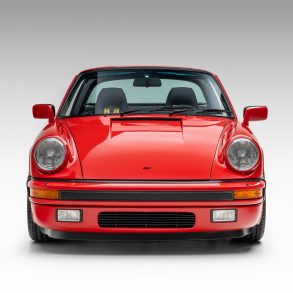
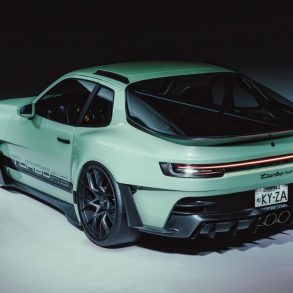
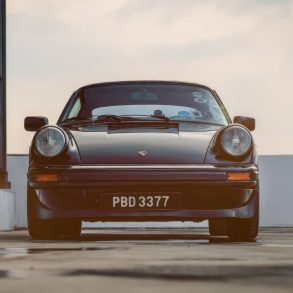
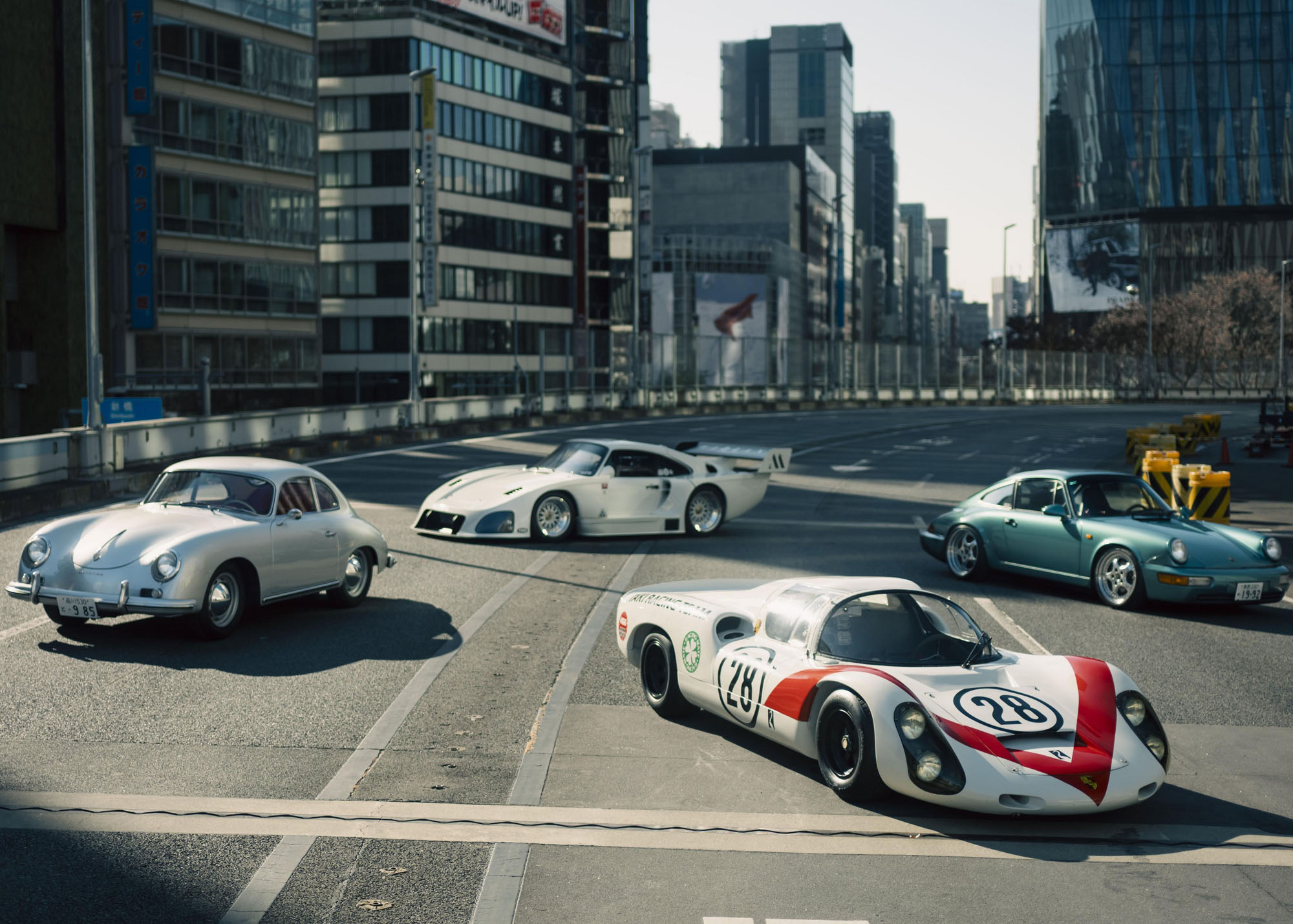
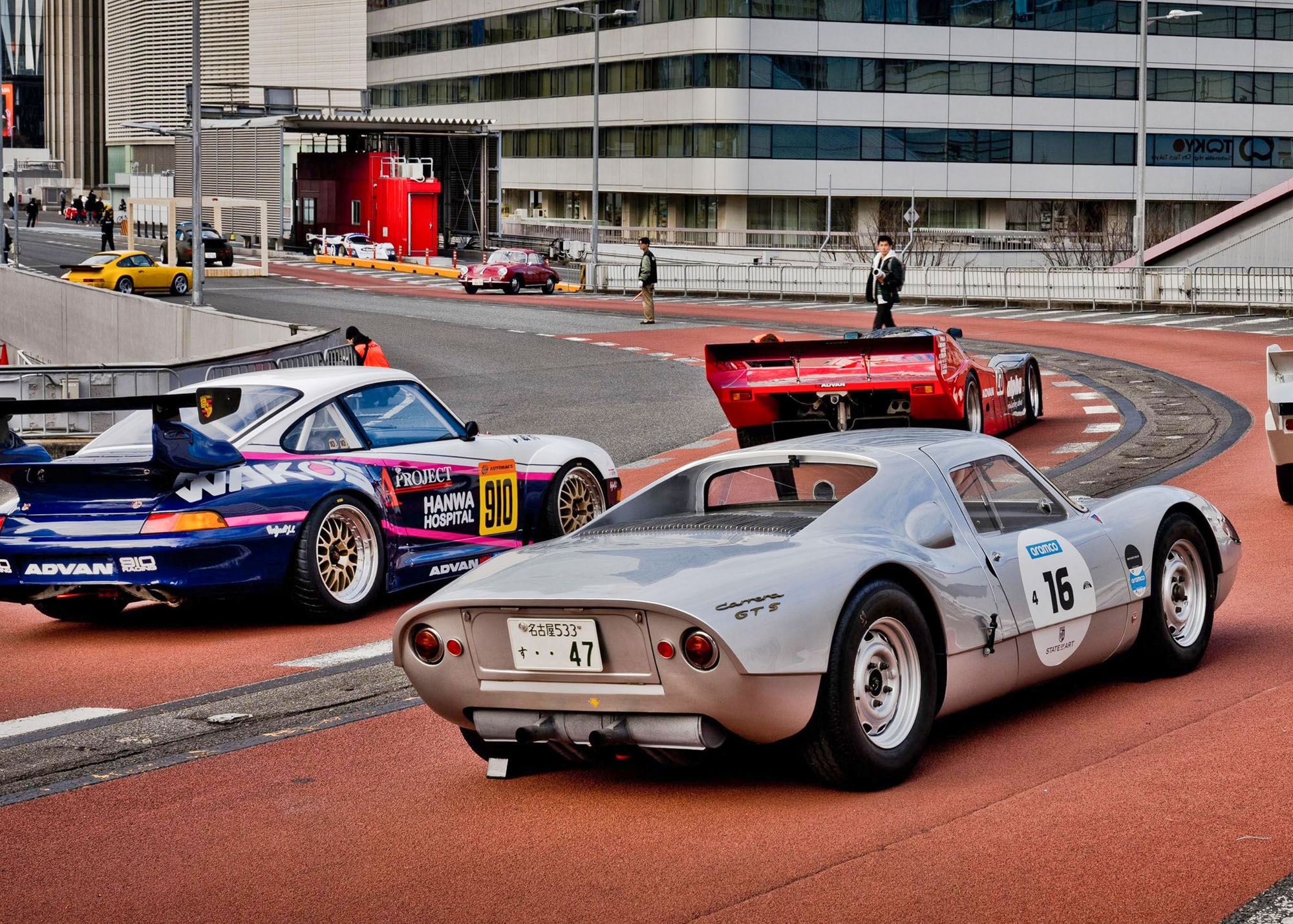
The display itself featured an impressive cross-section of Porsche road and racing history connected to Japan, including notable prototype racers fielded by Japanese teams that competed successfully both domestically and abroad.
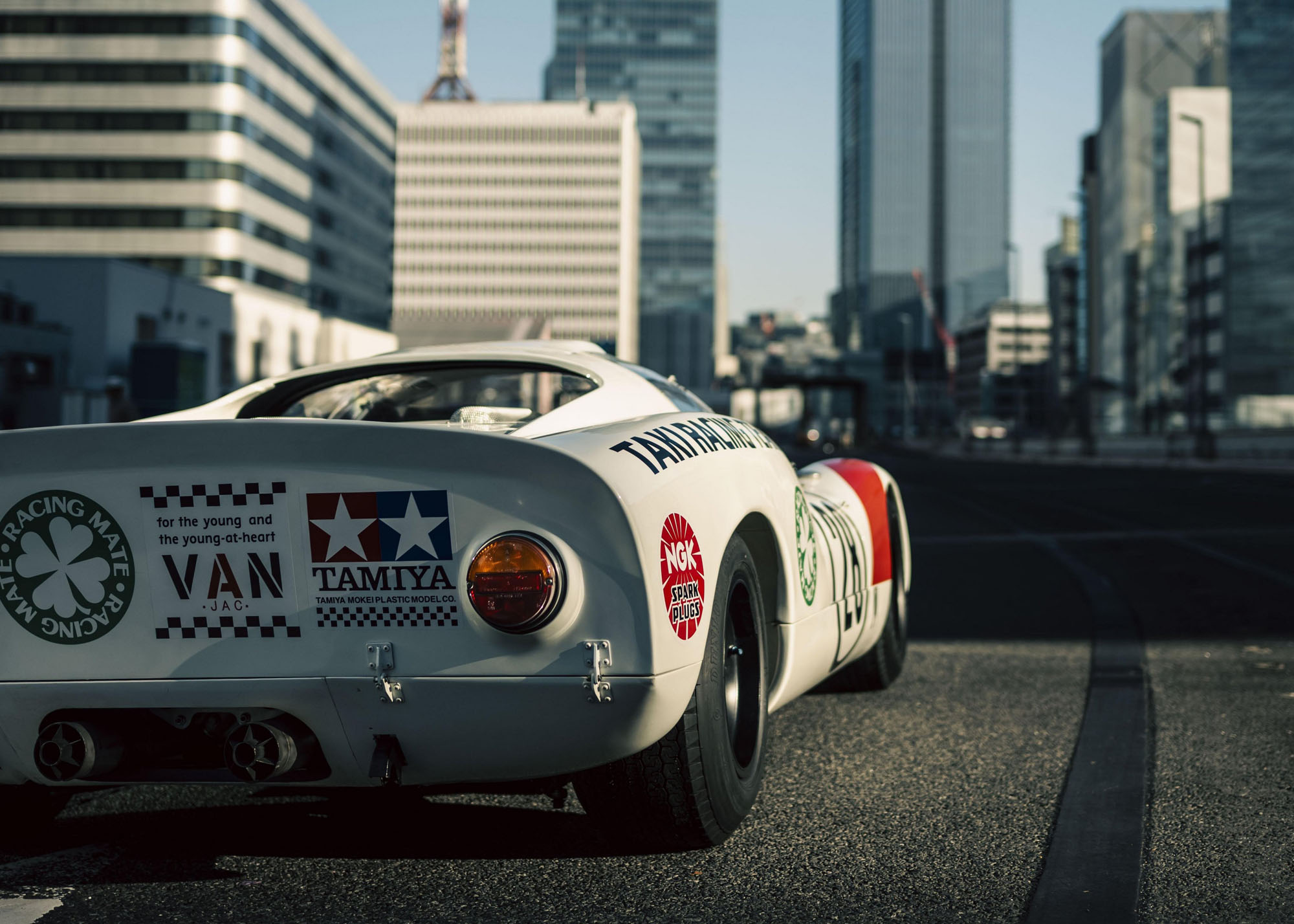
Among the highlights was the No. 28 Porsche 910 driven by Tetsu Ikuzawa for Taki Racing Team. The car finished second overall and first in class at the 1968 Japanese Grand Prix at Fuji International Speedway, making it one of the most celebrated Porsches in the country’s motorsport history.
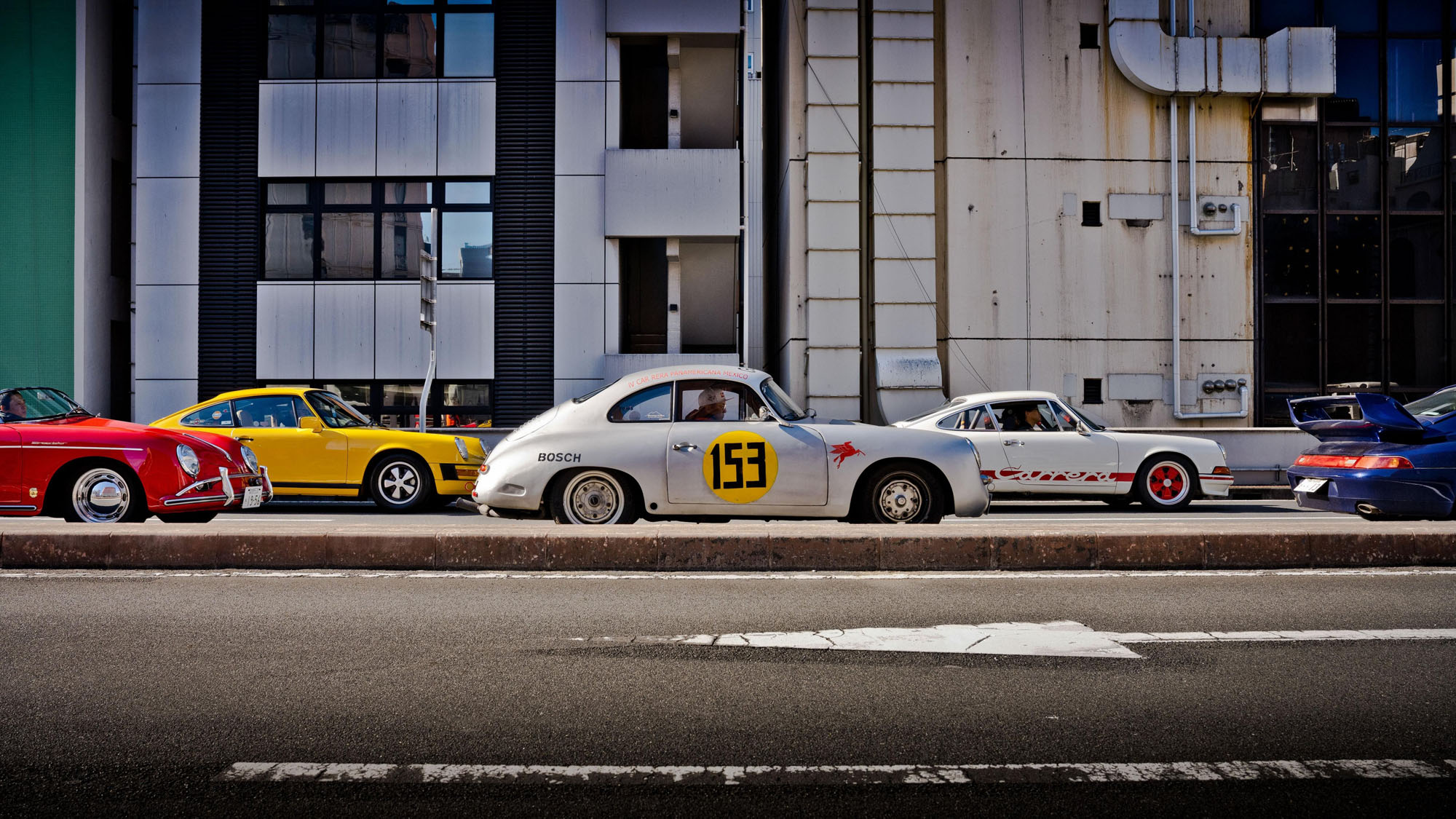
Equally eye-catching on the road-car side were four examples of the ultra-rare 964 N/GT — often referred to as the “Macau” 964. Only 20 were ever produced, each painted in a unique color.
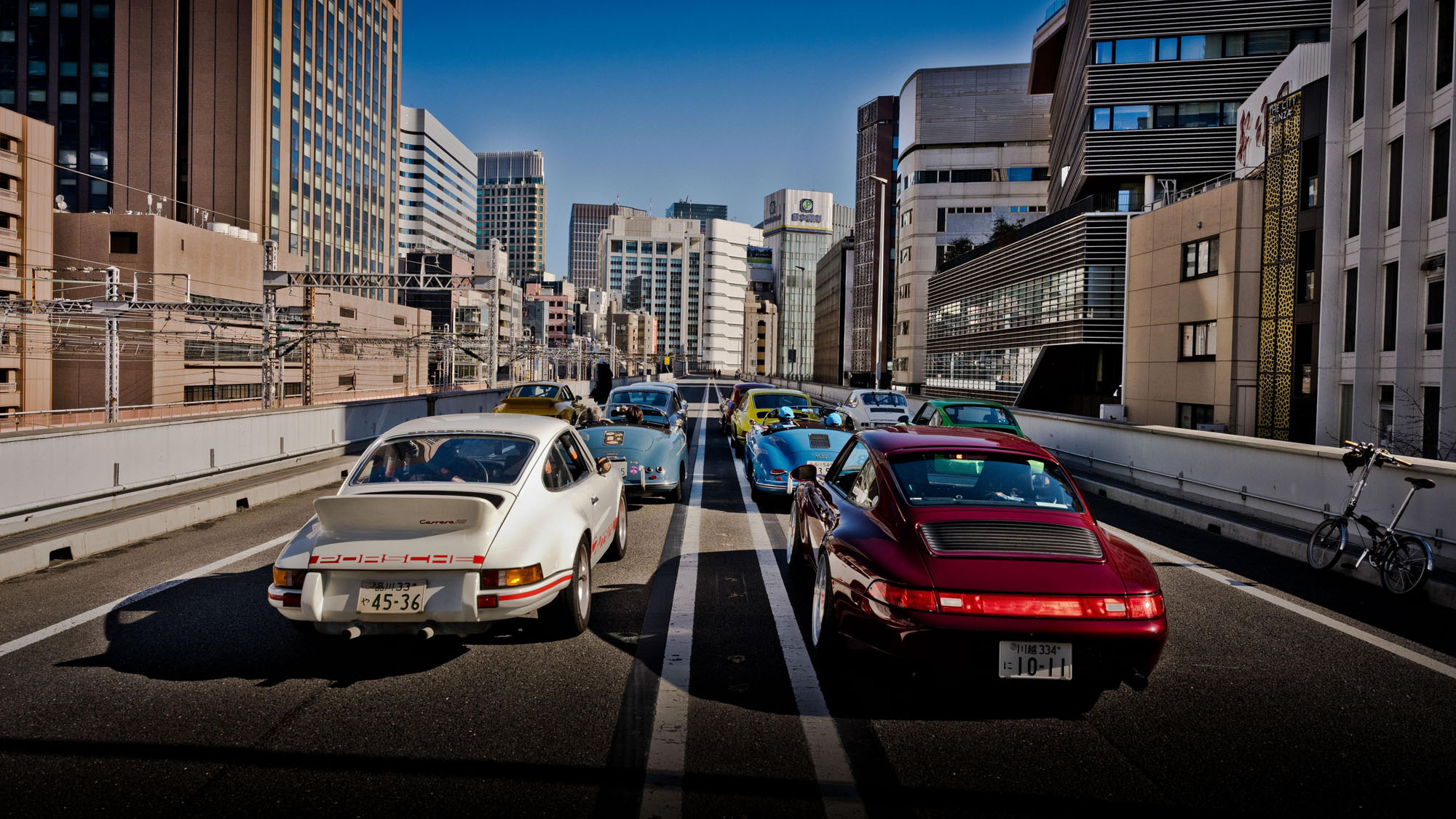
Porsche Japan also played a prominent role at the event with a display under the theme “Classic to Modern.” Alongside the historic cars of Luftgekühlt were contemporary models including the Taycan Turbo GT and the all-electric Macan. The brand also showcased elements of the Porsche Experience Center Tokyo, pairing modern performance with heritage icons such as the 356 and the 1973 911 Carrera RS. Visitors could also browse a selection of merchandise from the newly launched Luftgekühlt x Porsche Lifestyle collection.
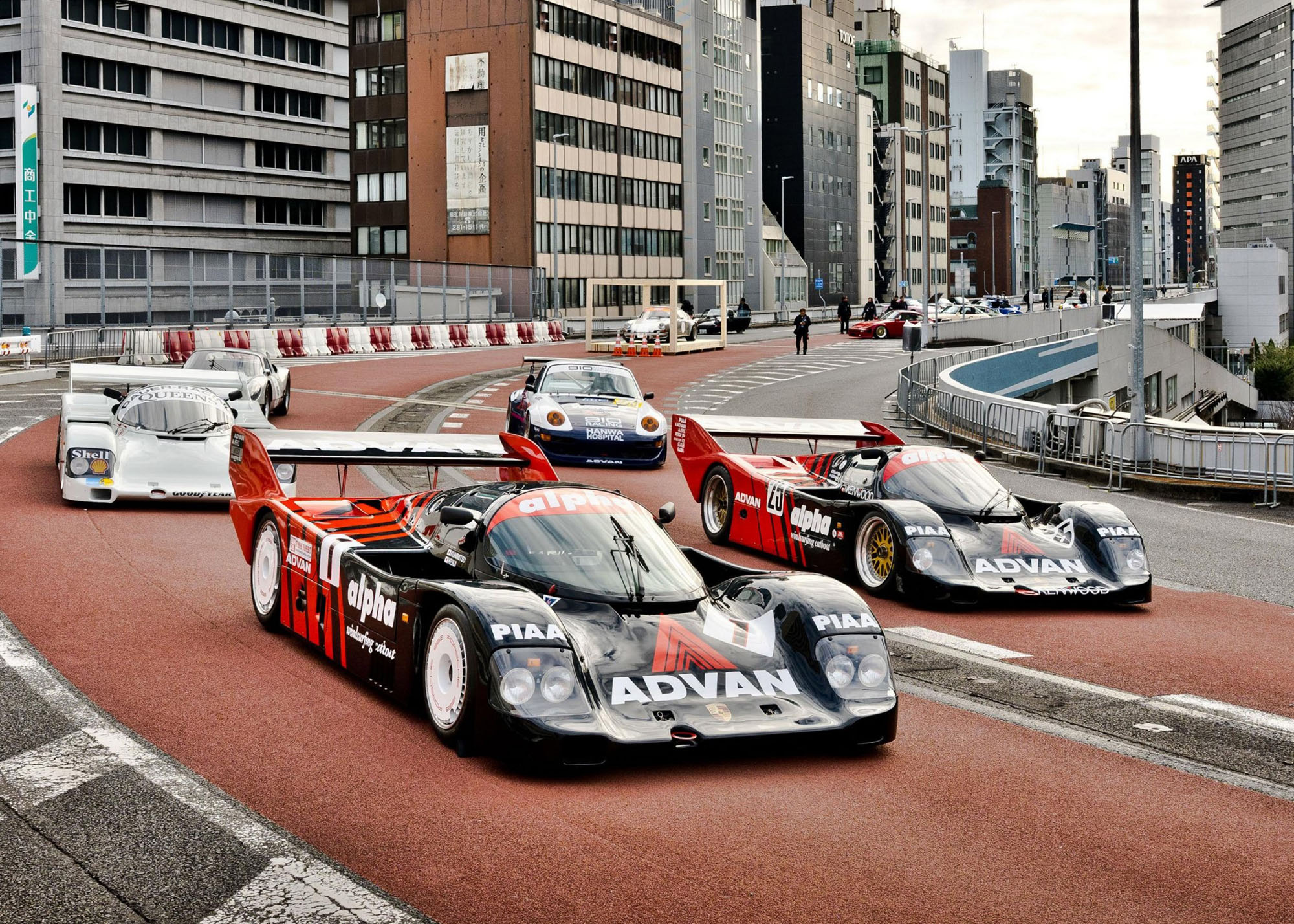
The debut Asian edition drew enthusiasts from across the globe. In total, roughly 11,600 visitors attended the gathering, with more than 220 vehicles displayed along the KK Line — the maximum number permitted on the former expressway.
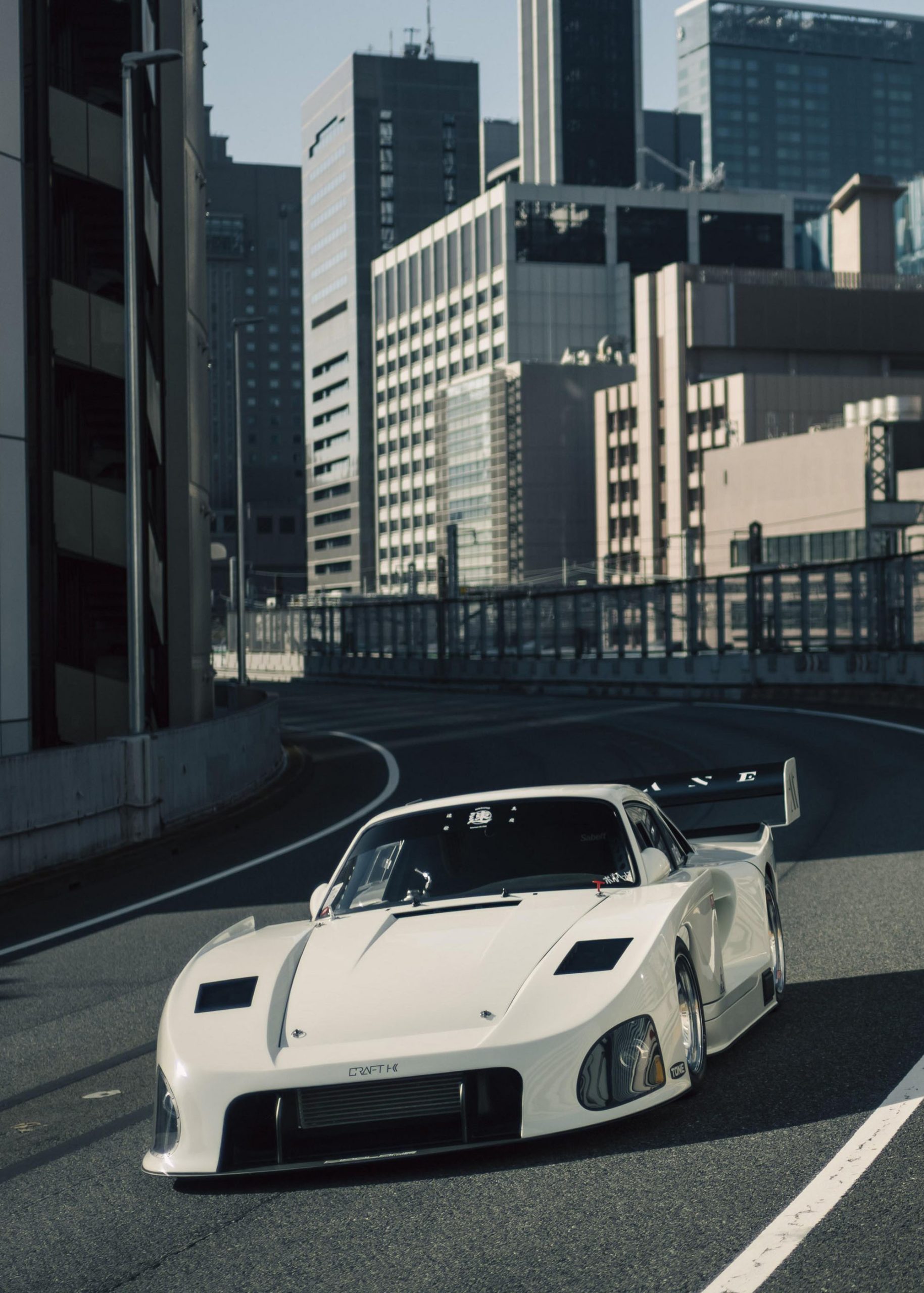
“It’s all about coming together for this common celebration,” beams Long. “It’s not just about the best or the most expensive, it’s telling the entire story of Luftgekühlt and air-cooled enthusiasm – a little bit of everything. It’s about knocking down those barriers of exclusivity to get people together. We want to observe, admire and learn about these cars, but the human aspect of it is something that we always keep as an equal priority.”
Above contents © 2026 Dr. Ing. h.c. F. Porsche AG reviewed and edited by Rex McAfee , @rexmcafee