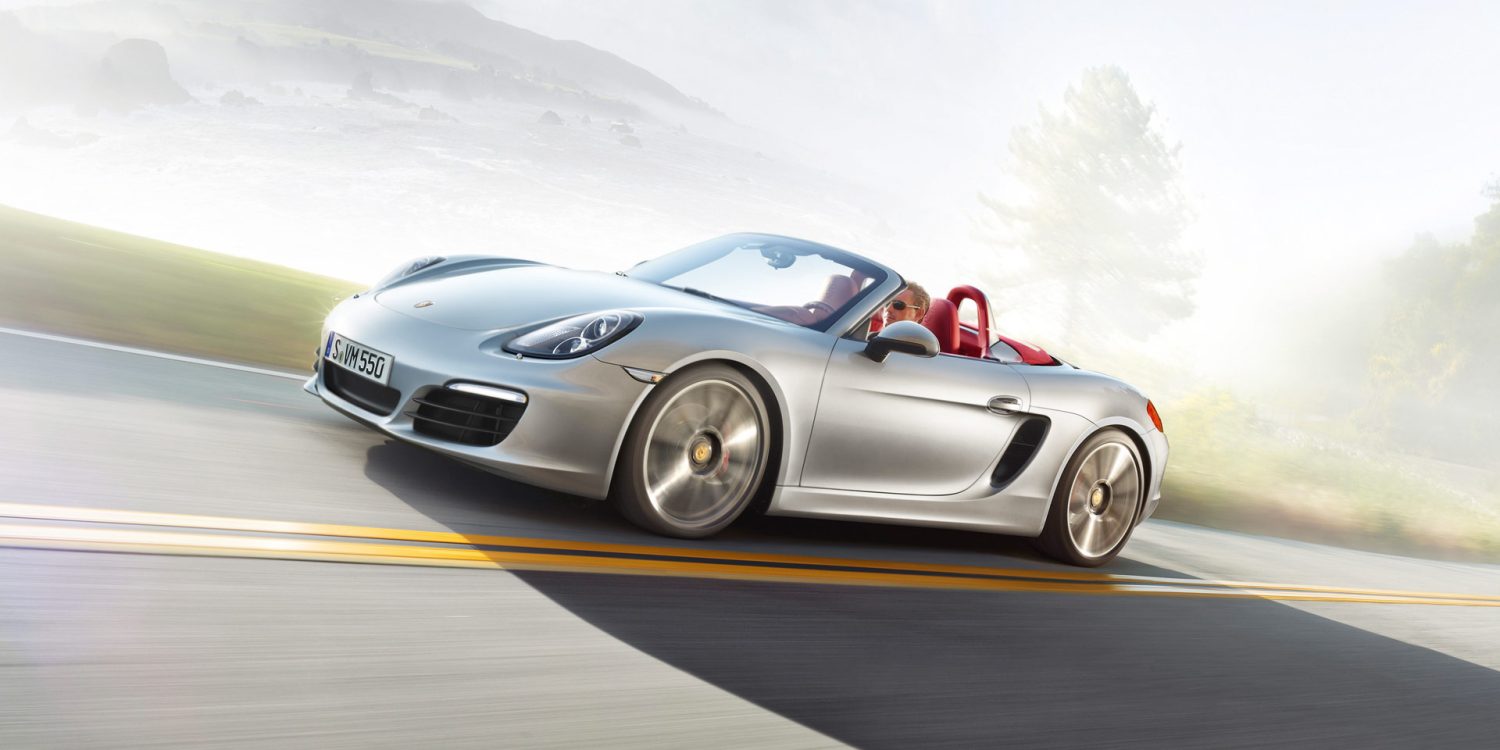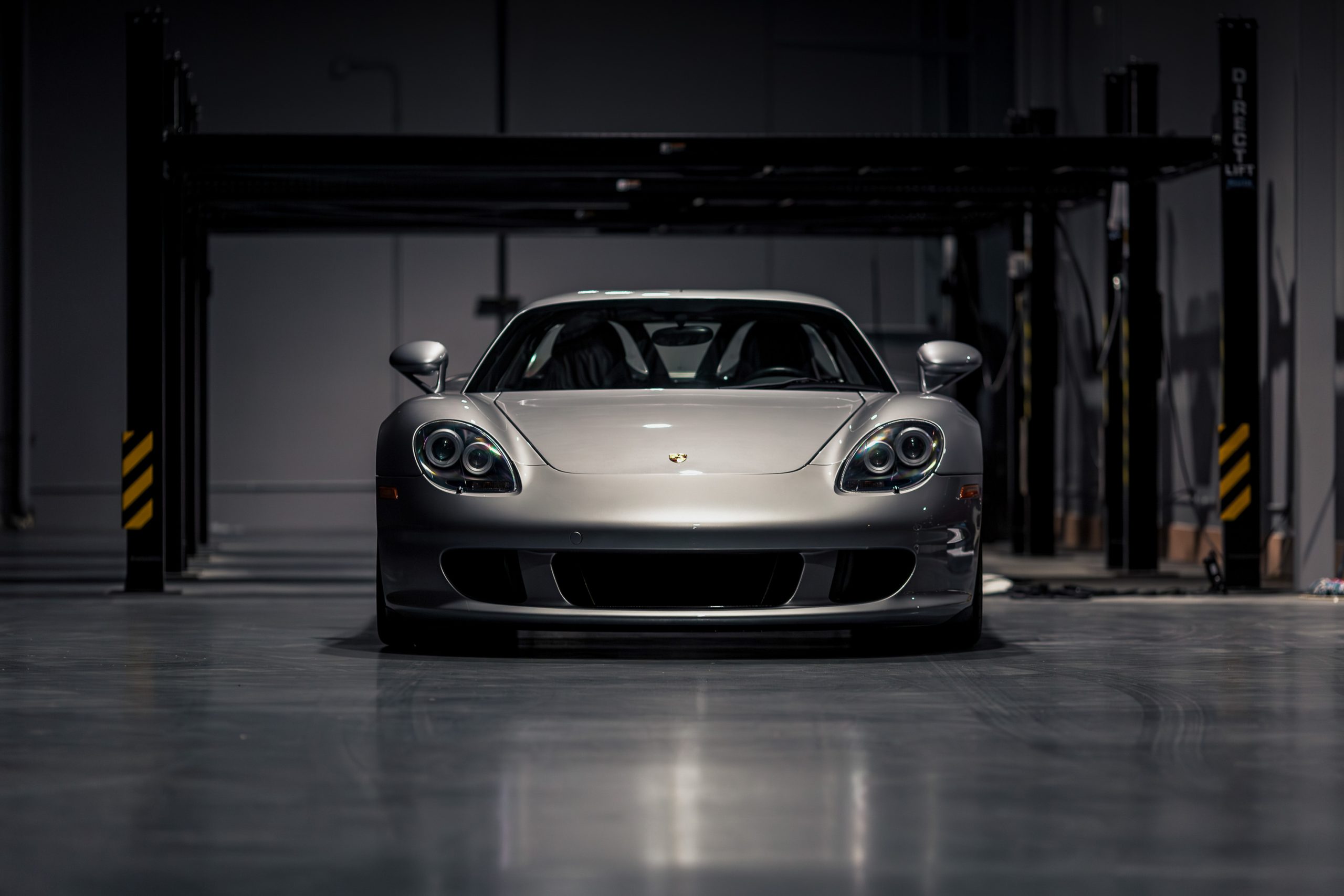
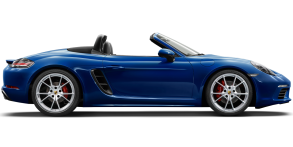

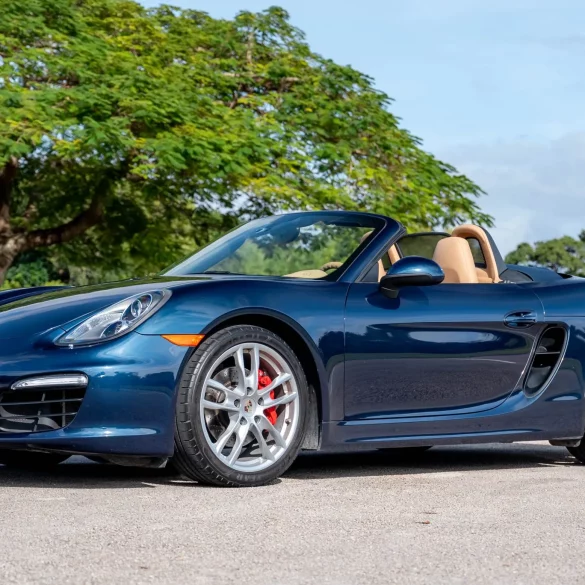
This 2014 Porsche Boxster S is finished in Dark Blue Metallic over Luxor Beige leather and is modified with an Espresso leather-trimmed dashboard and center...


The third-gen Boxster (981) is widely considered one of the finest open-top sports cars Porsche has ever produced. Introduced in the early 2010s, the 981 brought a dramatic step forward in design, performance, and build quality, while retaining the naturally aspirated flat-six engines and hydraulic steering. This is when the Boxster stepped out of the 911’s shadow.
For today’s buyers, the 981 Boxster offers an ideal blend of modern refinement and classic Porsche character. It’s faster, stiffer, and more confidence-inspiring than earlier Boxsters, yet still delivers a raw, emotional driving experience that later turbocharged generations moved away from. Here at Stuttcars, its our favorite generation.
Refine Search: All Boxsters / Boxster (Base) / Boxster S / Boxster GTS / Boxster Spyder
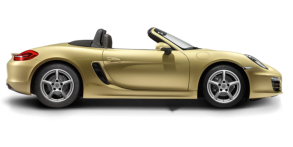
Browse Porsche Boxster (981s) listed by our community alongside a curated selection of the most interesting and well-kept examples for sale across the web. We highlight only standout third generation Boxsters - making it easier to find the right car without the endless searching.
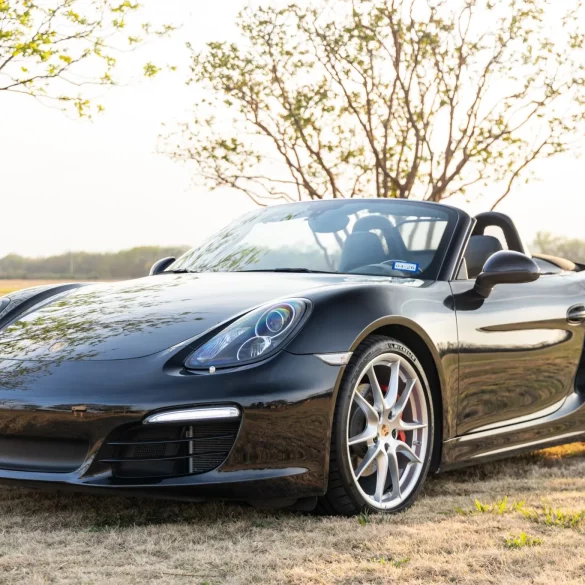
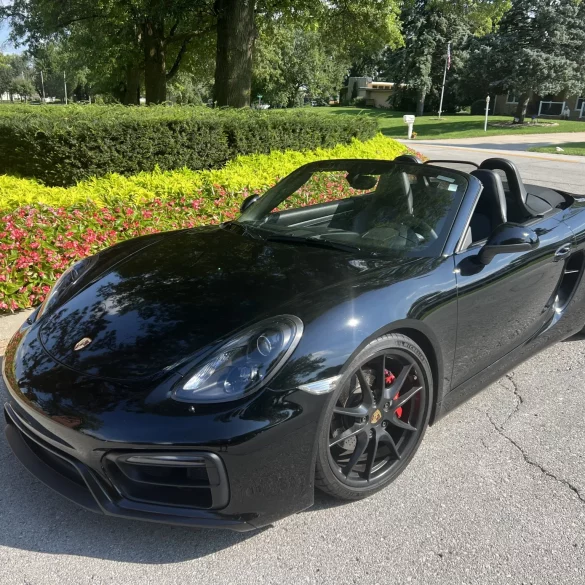
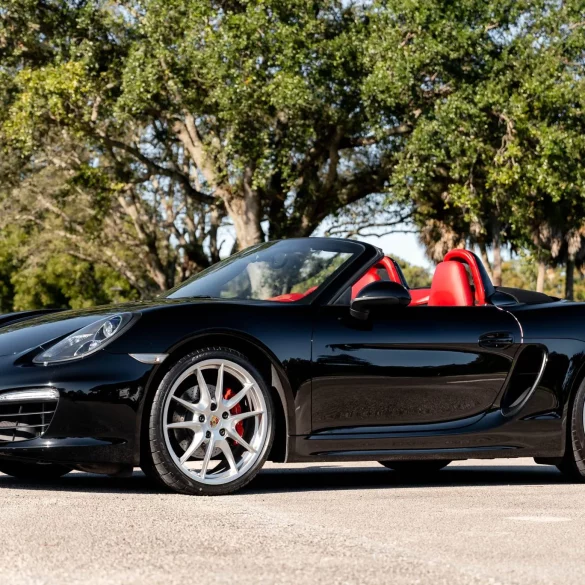
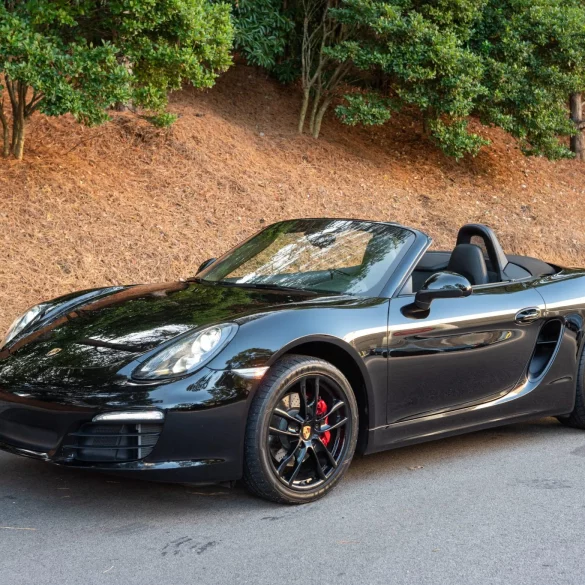
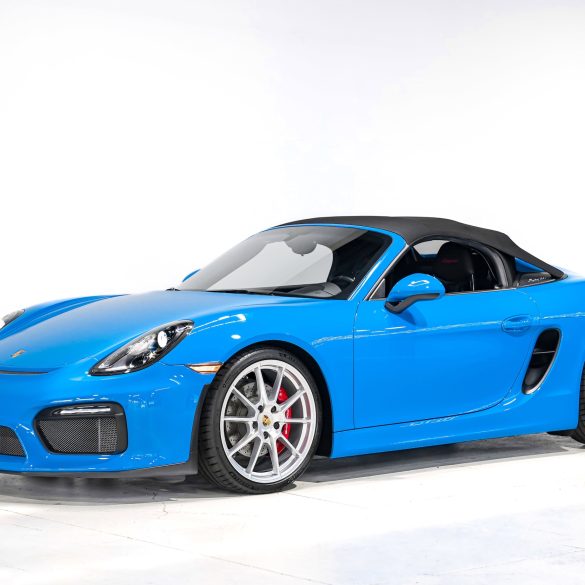
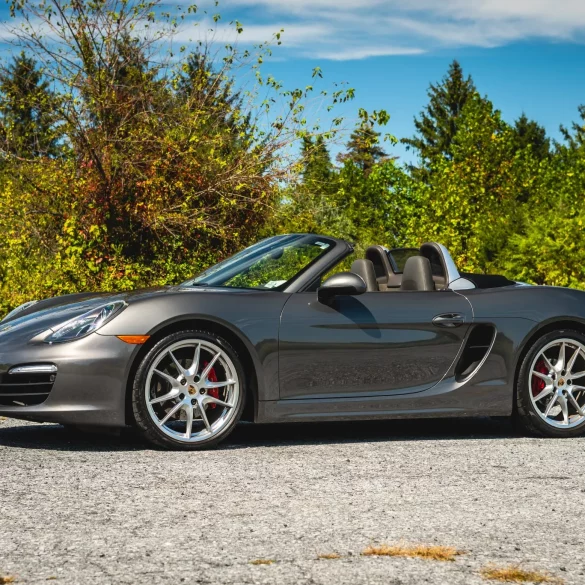
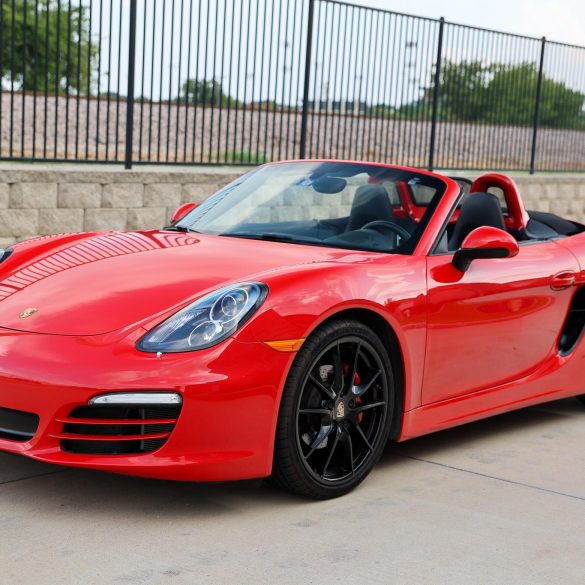
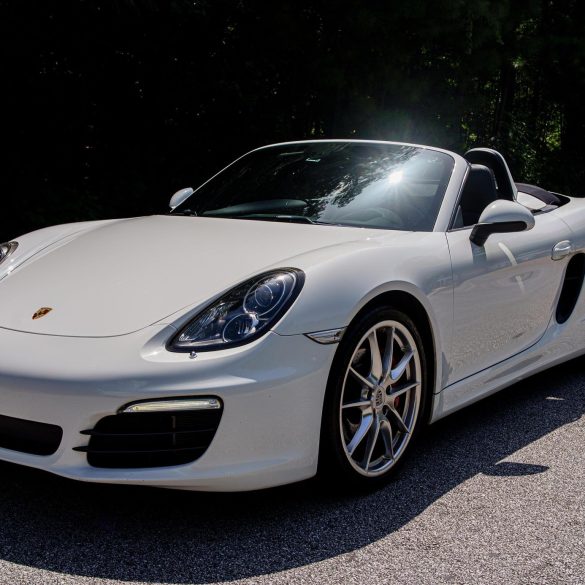
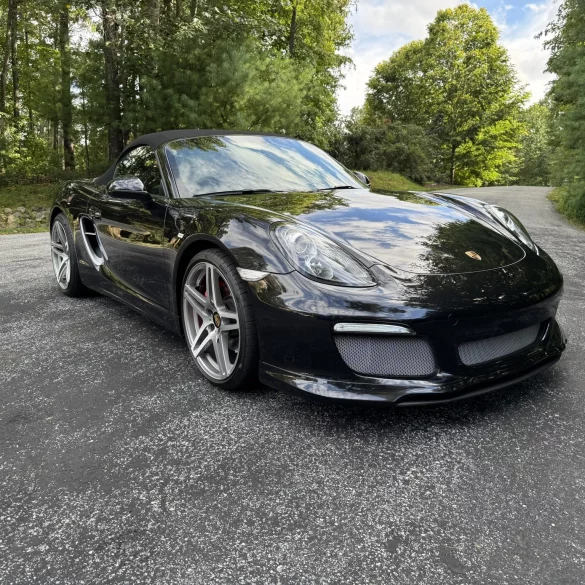
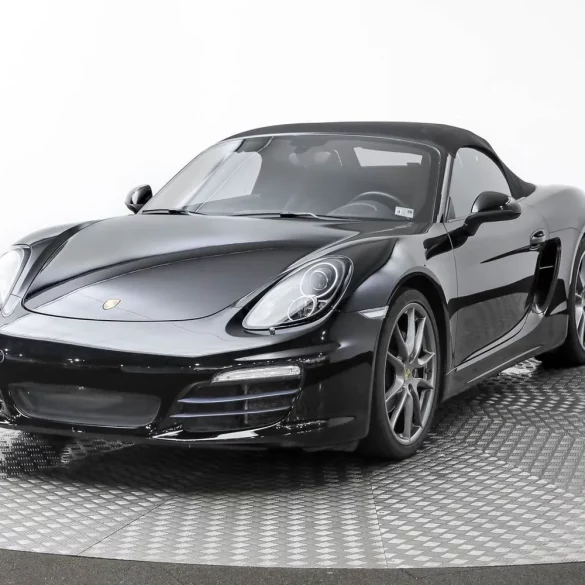
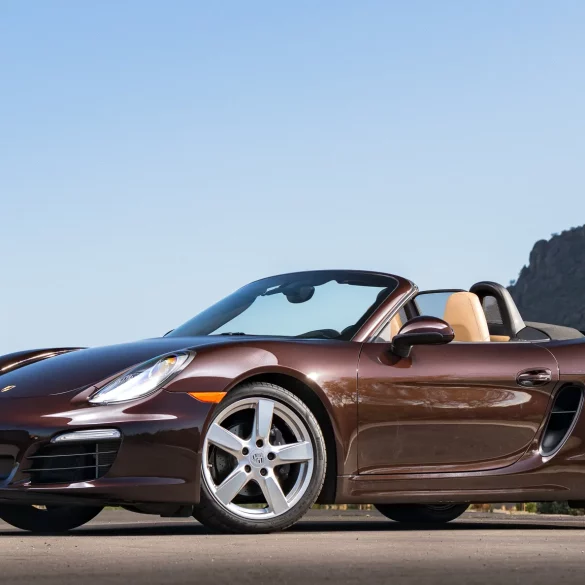
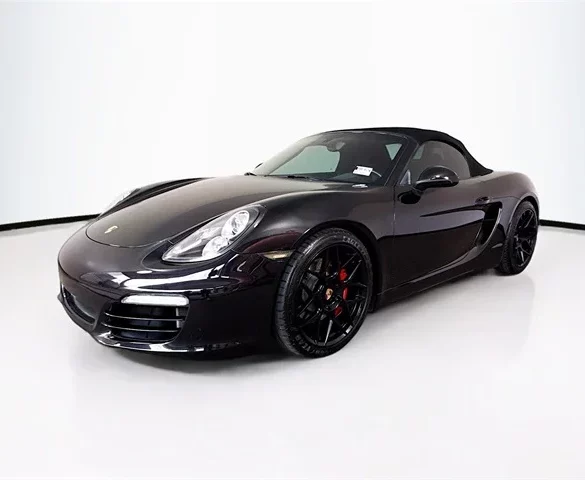
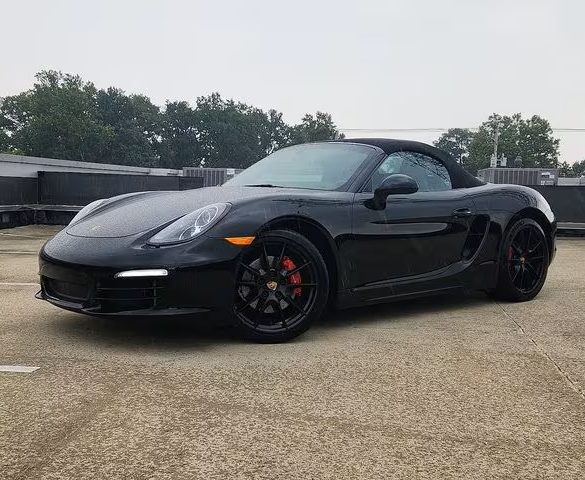
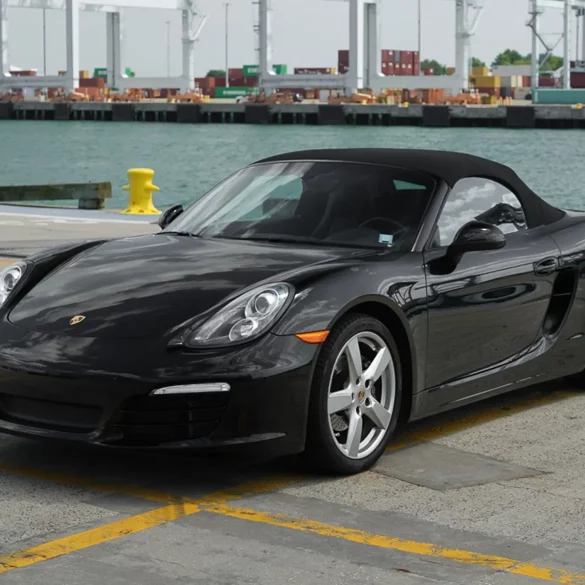
The 981 Boxster GTS is widely considered the most collectible and best-value variant of the generation. It combines a stronger version of the naturally aspirated flat-six, sport-tuned chassis components, larger brakes, and unique styling cues (like center exhausts and GTS trim) that set it apart from other 981 models. Enthusiast demand for the GTS remains high because it delivers near-track capability while remaining comfortable on the street — a combination that helps it hold value better than base or “S” models.
The 981 Boxster S is another strong performer in the used market. Compared with the base 981, the S has a larger, more powerful flat-six, stronger brakes, suspension upgrades, and additional standard features. Because many buyers view the S as the “sweet spot” — performance that’s meaningful without the premium pricing of the GTS — it tends to command higher prices in good condition and retains value relatively well over time.
Across the entire 981 range, low-mileage cars, rare color/interior combinations, and factory-ordered options (sport seats, PASM, LSD, Sport Chrono, etc.) often outperform similar spec cars with more mundane configurations. Well-documented, original-condition 981s with desirable options are far easier to resell — and tend to maintain stronger values than “plain Jane” examples, even if they share the same base model year and engine.
Although automatic gearboxes (PDK) are very capable, manual transmissions hold special appeal among purists and collectors — especially for the 981 generation with its beautiful flat-six. As manuals become scarcer in the overall used sports car market, properly maintained 981 Boxsters with a 6-speed manual often command a premium over their PDK counterparts, making them a smart choice if long-term value matters to you.
Base 981 Boxsters (non-S) — These are terrific drivers and often the most affordable way into the 981, but because they lack the performance punch and spec of the S or GTS, they generally depreciate more quickly than their higher-trim siblings.
Highly modified or poorly documented cars — Regardless of trim, 981s with heavy aftermarket mods (engine/ECU tunes, lowered suspension, non-OEM parts), missing maintenance records, or a questionable history tend to sell for less and hold value poorly.
If value retention and desirability are priorities when shopping a 981 Boxster:
Target the Boxster GTS first — it’s the most sought-after and tends to appreciate (or at least depreciate less).
Consider the Boxster S with strong service history — a balance of performance and everyday usability.
Prefer manual transmission when possible, especially for enthusiasts or future collectors.
Value low mileage, documented maintenance, and desirable options even if the base model is not an S or GTS.
The 2014–2016 Boxster GTS is widely regarded as the best 981 variant to buy if you want performance, desirability, and long-term value. The GTS combines the refined 3.4 L naturally aspirated flat-six with higher output (around ~340 hp), upgraded suspension, larger brakes, Sport Chrono enhancements, and distinctive styling — making it the top dog of the 981 lineup in the eyes of many enthusiasts and buyers alike. Its performance, handling balance, and strong enthusiast demand help it hold value well compared with other 981 trims.
The Boxster S with the flat-six is another great choice, especially in later years (2015–2016). These cars benefit from the matured 981 platform with improved reliability and refined interior features. The Boxster S delivers a strong blend of performance, comfort, and usability — and later 981s tend to have had common early mechanical “gremlins” sorted out through factory updates and improved service awareness in the used market. They’re often excellent all-around choices for daily driving and spirited weekend use, without the premium of a GTS.
Across trims, 2016 tends to be one of the most desirable individual model years simply because it represents the final year of the 981 production run. Late-year cars often have the benefit of any accumulated production improvements, updated parts, and sometimes additional features or refinements compared with earlier 981 cars — and buyers often prefer “last-of-the-line” models when evaluating used sports cars.
Early production 981 Boxsters from 2013 are generally fine — there are no headline reliability disasters tied to that model year — but your risk profile should be slightly higher compared with later 981s. Early cars were some of the first examples of Porsche’s updated flat-six engines and revised electronics/chassis calibration, and as with many first model years of updated designs (across many brands), minor quirks or early-production bugs can surface.
This isn’t a “year to avoid completely,” but it does underscore the importance of strong maintenance records and a clean PPI (pre-purchase inspection). If you find a well-documented 2013 with great service history, it can still be a solid buy — just be more cautious than you would with a car built several years into the generation.
While base-engine 981 Boxsters (i.e., non-S cars) aren’t mechanically flawed, they tend to depreciate more quickly and command lower resale values than 981 S or GTS variants in similar condition. If you’re buying with long-term value retention in mind, base cars are not “bad,” but they are less preferable compared with S or GTS versions.
While the 981 generation avoided the most infamous early Porsche engine issues (like the 986’s IMS bearing failures), you should still verify documented engine care. Confirm regular oil changes with quality synthetic oil at the correct intervals, and check for any history of rear main seal (RMS) leaks, valve cover gasket seepage, or coolant leaks. A smooth, responsive engine with no rough idle, smoke at startup, or unusual noises (ticking, knocking, rattling) is one of the most important indicators of long-term reliability. Don’t buy sight unseen without a solid pre-purchase inspection (PPI) that includes a compression check and leak-down test.
The 981 Boxster was offered with both 6-speed/7-speed manual and Porsche’s acclaimed PDK dual-clutch automatic. With manuals, check for clutch wear, smooth pedal engagement, and the absence of chatter or slipping—even when the engine is cold. With PDK, ensure the gearbox shifts crisply and precisely with no hesitation, delay, or “surging” on light throttle; PDK fluid and filter service history is essential because deferred PDK service is a surprisingly common oversight. Either transmission can be excellent, but confirming proper maintenance and flawless operation drastically reduces your risk of expensive repairs later.
Older Boxsters tend to show age in their cooling systems: water pumps, thermostats, radiator hoses, expansion tanks, and the thermostat housing can weaken or fail over time. Check for dried coolant residue at hose junctions, swelling or cracking in plastic components, and temperature stability during test drives. A failing cooling component can quickly turn into an overheating event—especially if a coolant leak goes unnoticed—so documented cooling system service, recent belt replacement, and clean coolant inspection are all strong positives.
The 981’s chassis rewards engagement, but that experience deteriorates quickly if aged suspension parts (control arms, bushings, sway bar links) or worn steering components are present. During a test drive, listen for clunks, thumps, or rattles over bumps; notice any vague steering feel or unusual tire wear patterns; and pay attention to whether the car tracks straight without excessive shimmy or wander. Replacing worn suspension bits on a 981 can get costly, so a tight, responsive feel is a sign the car’s been well cared for and will behave predictably on both road and track.
The 981’s soft top is much more refined than earlier generations, but it’s still subject to age-related wear—motors, cables, seals, and the fabric itself can degrade. Operate the top multiple times; it should open and close smoothly, quietly, and completely. Also inspect drainage/door seals and check for water staining, musty odors, or damp carpeting, which can be signs of blocked drains. Water intrusion can damage electronics and interior trim, and fixing it after the fact is far more expensive than addressing it before you buy.
One of the most popular and worthwhile options on a 981 is the Sport Chrono Package. This adds a dash-mounted stopwatch, configurable performance modes (including Sport and Sport Plus), and sharper engine/transmission response. On manual cars, it typically includes launch control-ready features, and on PDK cars it enhances shift logic. Cars with Sport Chrono tend to feel more engaging and track-capable, and enthusiasts value this option enough that it helps with resale appeal.
PASM upgrades the damping system from fixed-rate struts to electronically controlled adaptive shock absorbers. The result is a noticeable improvement in both ride quality and body control; the system smooths rough roads on comfort settings and offers taut feedback in sportier modes. Because the 981 already drives well, this option often elevates it to “balanced daily / weekend warrior” status and is one a lot of buyers specifically seek out.
For buyers who care about traction and handling precision — especially with a potent flat-six — a limited-slip differential (LSD) is an excellent option. LSD helps put power down more predictably, improves corner exit grip, and enhances driver confidence without resorting to aftermarket mods. On a mid-engine sportscar like the 981, a factory LSD is a meaningful dynamic upgrade and can make the car safer and more fun in spirited driving.
The Sport Brake Package (bigger rotors, upgraded calipers) and larger, lightweight wheels help reduce fade, improve stopping performance, and cut unsprung mass. These options work especially well in conjunction with Sport Chrono and PASM. Non-stock aftermarket wheel/brake combos are common, but factory performance brakes and proper wheels (18″ or larger OE Porsche wheels) are easy for buyers to value and price accordingly.
The cockpit on a 981 is already driver-oriented; adding Sport Seats or Sport Seat Plus elevates that experience with better bolstering, increased comfort on long drives, and improved lateral support—great for enthusiastic cornering. In the used market, cars fitted with sport seats are often more desirable because they reflect a thoughtful choice by the original buyer and deliver a noticeable comfort/performance upgrade over standard seats.
While handling and performance options are often prioritized by enthusiasts, a higher-spec Burmester® Audio System, BOSE® Sound, or enhanced infotainment/navigation package adds real everyday value. Cars that are enjoyable to live with tend to attract more buyers when resold and often command stronger prices compared with blunt-instrument base audio/cabin spec.