

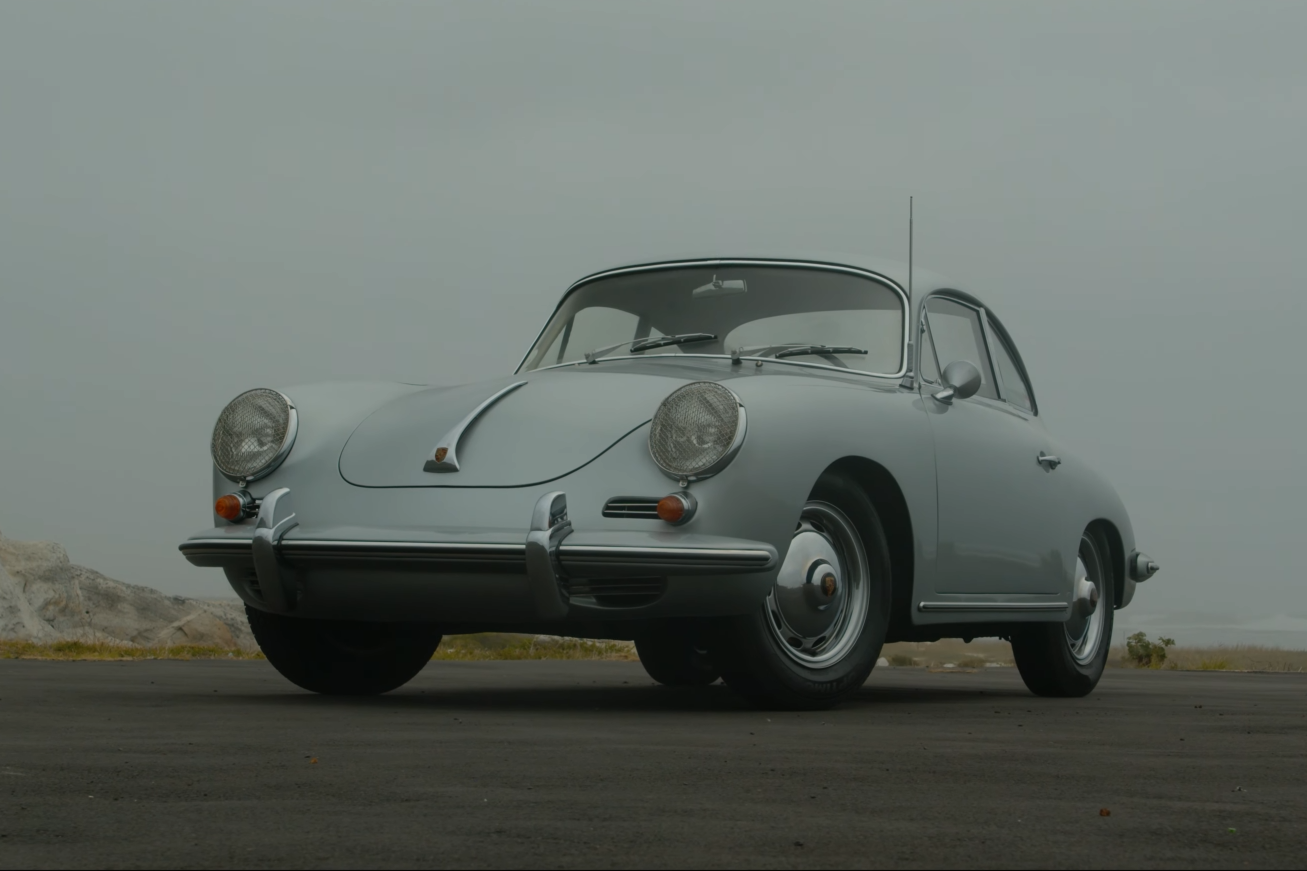
Conceived as Porsche’s first series-production car, the 356 achieved immediate acclaim when it debuted in 1948, finding success both on the road and in competition. Light, compact, and agile, it embodied Ferry Porsche’s guiding philosophy: a small car with sufficient power is more rewarding to drive—and far more enjoyable—than a larger, overpowered one.
The introduction of the 356 B in 1959 brought meaningful updates, including higher-set headlamps, improved brakes and transmission, redesigned rear seating, and a larger rear window, all of which enhanced comfort, handling, and overall usability.Featuring four-wheel independent suspension and a four-speed manual gearbox, the 356 B showcased the engineering depth that defined Porsche’s earliest cars and influenced generations to follow.
The Super 90 took things further, upgrading the air-cooled 1.6-litre flat-four with a revised intake manifold, larger twin carburettors, increased compression, and a strengthened crankshaft. With a curb weight well under one tonne, it delivered 90 horsepower to the rear wheels—double the output of the earliest 356s and 30 horsepower more than the base 356 B.
A featured video from Cars.co.za on YouTube traces the story of a Porsche 356 B Super 90, exploring its background through the eyes of a devoted owner. It highlights the car’s acquisition, its uniquely engaging driving character, and its close connection to the road, while also reflecting on its motorsport heritage and lasting place in Porsche history.
Source: Cars.co.za